Learn AI Filmmaking at NYFA
In NYFA’s 4 Week AI Filmmaking Workshop, students learn the core disciplines of filmmaking, directing, writing, and editing, while integrating generative AI as a powerful creative and production tool. This fully online intensive is designed for filmmakers, content creators, and visual storytellers who want to build strong cinematic fundamentals while exploring new agile approaches to storytelling through AI assisted visualization and iteration. Following NYFA’s hands-on philosophy, students learn under the guidance of industry professionals and develop finished narrative work that reflects both technical control and emotional intent.
No prior AI or Filmmaking experience is required.
Workshop Description
The 4 Week AI Filmmaking Workshop immerses students in a production focused course of study that mirrors traditional filmmaking practice while introducing a new creative development loop of write, visualize, repeat. Students first learn filmmaking fundamentals including story structure, scene craft, directing for impact, blocking, coverage, and editorial continuity. These skills are then paired with cinematic AI tools that support rapid iteration, visualization, and finishing.
Throughout the program, students develop scenes through writing, directing, performance, and editing while using AI to explore shot design, alternate coverage, look development, and visual experimentation. Emphasis is placed on film language, narrative clarity, and continuity so that AI enhances rather than replaces cinematic intention. By the end of the workshop, students complete multiple short AI enhanced projects and a final short film in narrative, music video, or documentary format.
NYFA also offers the opportunity to learn filmmaking from anywhere through a range of online workshops designed for artists at every stage of their creative journey.
To learn more about NYFA’s filmmaking programs, see NYFA’s Course Catalog or request more information.
Directing
Students learn how directors shape audience experience through camera placement, blocking, staging, and shot selection. Using scene breakdowns, workshops, and guided exercises, students translate scripts into beats, objectives, coverage, and editorial decisions. Performance direction is explored across live action, animated, and synthetic talent.
AI tools support this process through look tests, shot exploration, previs passes, alternate coverage design, and rapid iteration based on creative notes. All directing work remains grounded in story, emotion, and character intention.
AI Imaging, Video, and Literacy
This area builds practical AI literacy for filmmakers. Students learn how generative models function, including business and ethical considerations, and how to maintain control over image and video outputs. Through guided labs, students create cinematic images such as styleframes, keyframes, character contact sheets, or environment explorations, as well as video creation pipelines using text to video, image to video, and video to video workflows.
Students will learn prompt craft focusing on filmic lensing, lighting, blocking, and action. Performance and dialogue fundamentals are introduced through lip sync, facial targets, and timing alignment. Hybrid performance capture methods such as real acting references and motion capture inputs used as control strategies.
Editing
Students study editing as both a storytelling and problem solving tool. Instruction focuses on rhythm, pacing, emotional timing, and continuity while addressing common AI challenges such as spatial drift, screen direction, eyelines, and geography. Students practice directing for the edit by redesigning scenes through pickups and AI driven iterations.
Editing instruction also includes practical workflows such as media organization, versioning, AI assisted sound and music basics, exports, and color management. In this agile filmmaking model, production and post production are treated as a continuous creative loop.
Writing
Students develop story fundamentals including theme, character, conflict, stakes, and change alongside screenplay craft such as scene design, cinematic syntax, and dialogue. Writing is taught through iterative cycles that combine outlining, page writing, visualization, and revision.
AI is used responsibly as a support tool for ideation, feedback, and exploration while maintaining authorship and originality. This script to visual prototyping loop strengthens cinematic thinking and supports faster creative discovery.
Graduates of the 4 Week AI Filmmaking Workshop develop production ready skills that translate across traditional and emerging workflows. Students will learn to:
• Write and break down scenes into beats, objectives, and coverage
• Direct performances and design shots with emotional intention
• Generate cinematic AI imagery and shot based video while maintaining continuity
• Edit for narrative clarity and pacing within AI enhanced workflows
• Apply ethical, legal, and professional standards throughout production
• Complete 2 polished short form AI enhanced films
This program is delivered through a synchronous education meeting virtually 3 times a week.
Class Schedule: The class meets twice weekly on Mondays and Wednesdays for two hours, starting at 4:00 p.m. PST.
Open Lab: Students also have access to a 3-hour Open Lab, providing a dedicated space for project iteration and troubleshooting.
Instructional Format: These sessions are a blend of lectures and hands-on learning where students work alongside the professor. The curriculum fluctuates between deep dives into traditional crafts (Directing, Editing, and Writing) and AI instruction; while some sessions may focus exclusively on one area, most will be a hybrid mix of both.
Community & Support: Beyond live hours, students are integrated into a dedicated community messaging service for asynchronous collaboration and peer feedback. Additionally, students can book one-on-one instructional sessions with TAs or the professor to refine their specific narrative projects.
To complete the program and earn a Certificate of Completion, students must successfully complete:
- Complete an AI-enhanced Micro Project (15–30 seconds): A polished mise-en-scene micro-film demonstrating storytelling, intentional directing, cinematic AI imaging/video control, and editorial assembly.
- Complete an AI-enhanced Short Project (45-90 seconds): A second polished narrative micro film demonstrating performance/lipsync, scene coverage, and continuity.
Students will work with a range of generative AI tools (both cloud-based and local), along with standard editing software and select physical production equipment such as lighting and cameras. Because the technology is evolving quickly, specific software, hardware, and equipment recommendations will be shared prior to the start of the workshop to ensure students are working with the most current tools. A reliable internet connection and external storage are recommended to support media intensive workflows.
Faculty
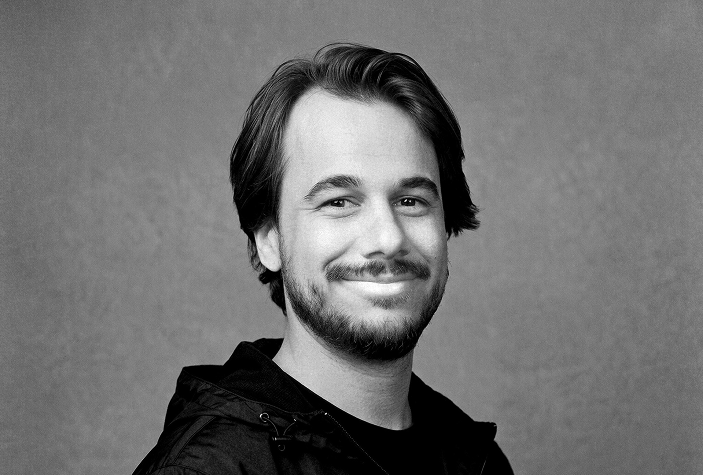 Matt Galuppo has worked in advertising, animation, and entertainment for over 10 years. He began his career in VFX working on films such as Avengers 2, Inception, and Godzilla before taking on directing and supervisor roles for clients like Netflix, Nintendo, Riot Games, and Comedy Central. Off that success, he founded a boutique, nimble, turnkey studio where he led CG animation on the Emmy and NAACP Image Award-winning children’s show “Tab Time” for YouTube Originals.
Recently, he worked as an Animation and Visual Effects Supervisor for TCL, where he lead teams of artists developing AI-enhanced creative pipelines – breaking ground on spatio-temporal consistency for use in original content – completing AI effects for films that have premiered both at the Chinese Theatre in LA and at the Sundance Film Festival, and John Travolta’s directorial debut at the upcoming Cannes Film Festival.