NYFA Producing Dept. Hosts Evening with Producer Carla Singer

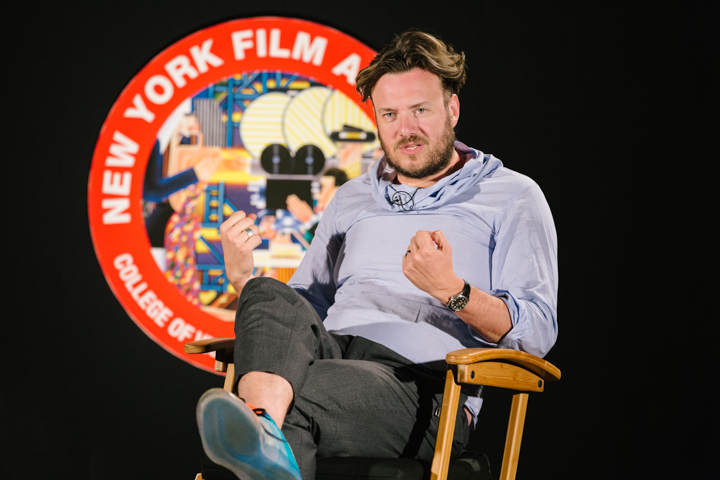
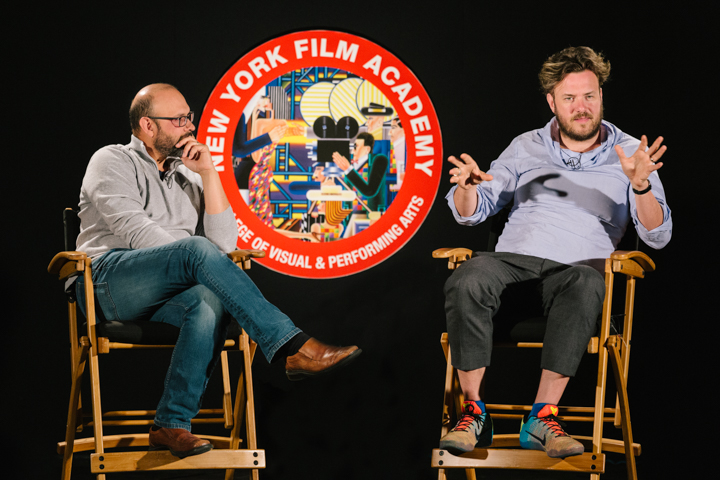
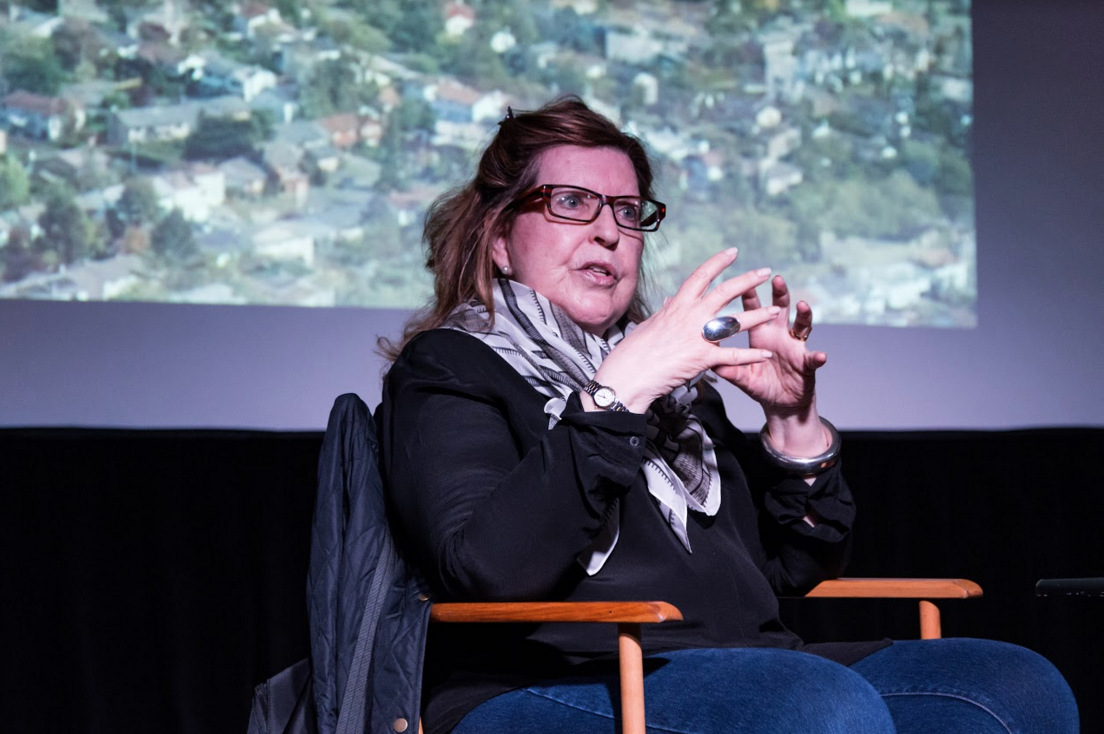
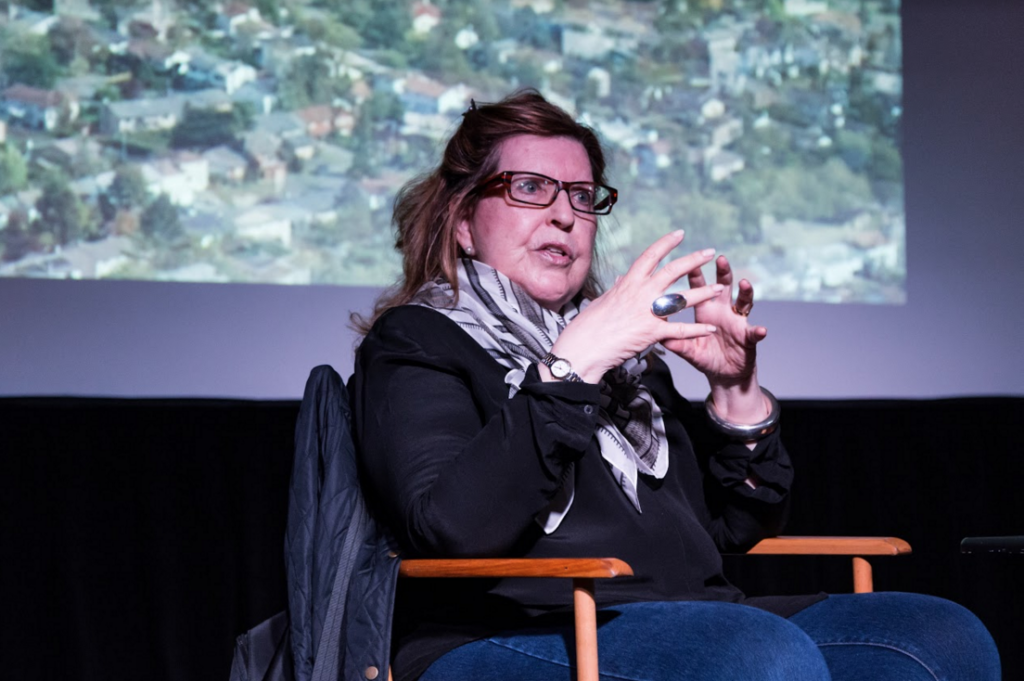
Last week, the Producing Department at the New York Film Academy hosted an evening with producer Carla Singer. The event was moderated by NYFA NY Chair of Producing Neal Weisman.
carla singer

Singer is president and executive producer of Carla Singer Productions, an independent production company that has produced over 30 television movies as well as documentaries and reality series. Her credits include “Freshman Father,” a Hallmark Channel movie, and Disney Channel films “T*witches,” and “T*witches Too.” For TNT, the company executive produced “The Portrait” starring Gregory Peck and Lauren Bacall, as well as “Forgotten Prisoners: The Amnesty Files.” At TBS Ms. Singer produced a documentary “The Black West,” which was nominated for a Cable Ace award. She also produced “A Refusenik’s Diary” for PBS, for which she received an Emmy.

Her extensive credits include the made-for-television movies “A Marriage of Convenience” starring Jane Seymour, “Indefensible: The Truth About Edward Brannigan” starring Brian Dennehy, “Taken Away,” “Angel Flight Down” and “Cold Heart of a Killer.”

Singer became vice president of drama programming for CBS Television at a time when hardly any women were accepted into upper management at the networks. As a female pioneer for the network, and the industry in general, Singer helped create the extremely successful drama series, “Murder She Wrote,” as well as “Scarecrow and Mrs. King” and “The Equalizer.”
carla singer with neal weisman
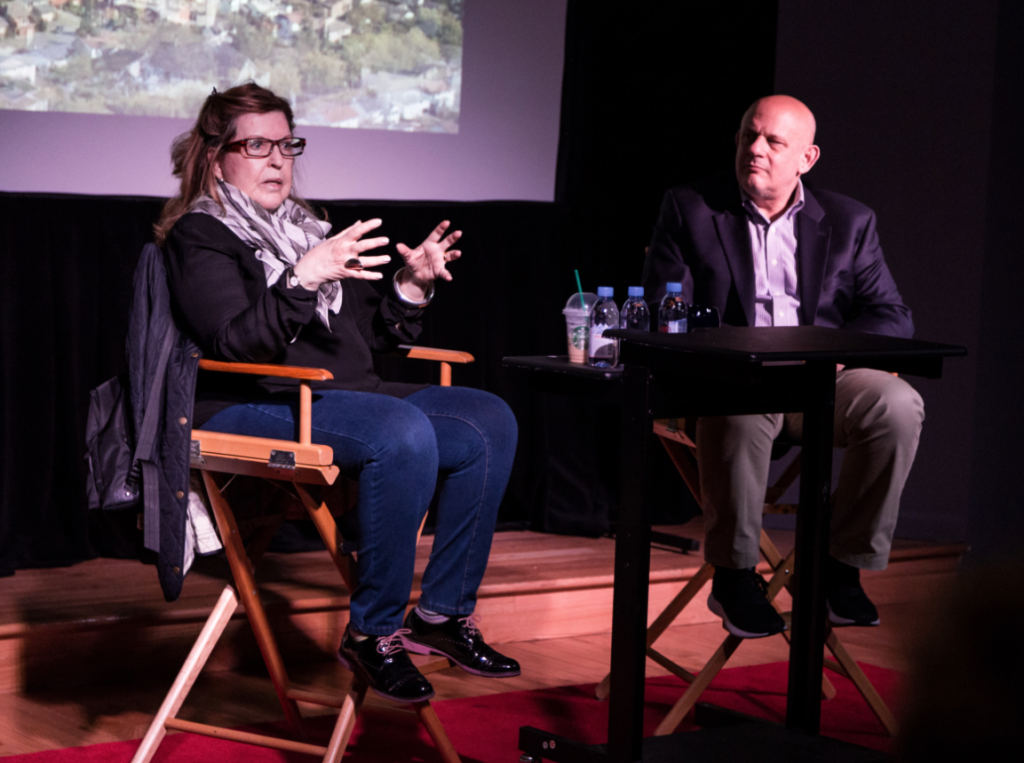
Producer Carla Singer with NYFA Producing Chair Neal Weisman

However, Singer’s career certainly wasn’t handed to her. Beginning her career in Israeli TV, Singer recalled working as an assistant director, but was credited and paid for the role of a PA due to the fact that she was a woman. Her career would continue to be an uphill climb due to her gender, but Singer kept one foot in front of the other and pressed on to tremendous success. While she feels there is still gender inequality in film and TV, Singer does acknowledge the progress since her beginnings.

“You have to be very persistent,” said Singer. “You have to be risk tolerant. You have to take that risk — even if it’s scary.” Singer recalled two times in her life where she took a pay cut in order to work in a position that could propel her career into the direction she was confident would lead her on the right path.

Singer advised students to appreciate and take advantage of the creative talent around them. After all, the people you’re working with now are going to be your network, and are going to climb the proverbial latter with you.

While many of us get caught up in the creative aspect of filmmaking, Singer did advise producing students that, “It’s a business, and you need to make money. Even though that’s a bit crass. You should keep that in your head.” 

“Carla Singer proved to be an inspiration to the cross section of NYFA Producers, Screenwriters, and Actors who attended the event,” said Weisman. “Emphasizing the need to take career risks and seek mentors, her wisdom gained from decades of television experience was both informative and motivating.”

During our 4-Week-Producing Workshop, we comprehensively explore the entire line of work a producer takes on. We prepare our students with a hands-on education and enable them with the skills to become independent, successful producers.
NYFA Game Design Mentor Meetup with Aaron Pulkka

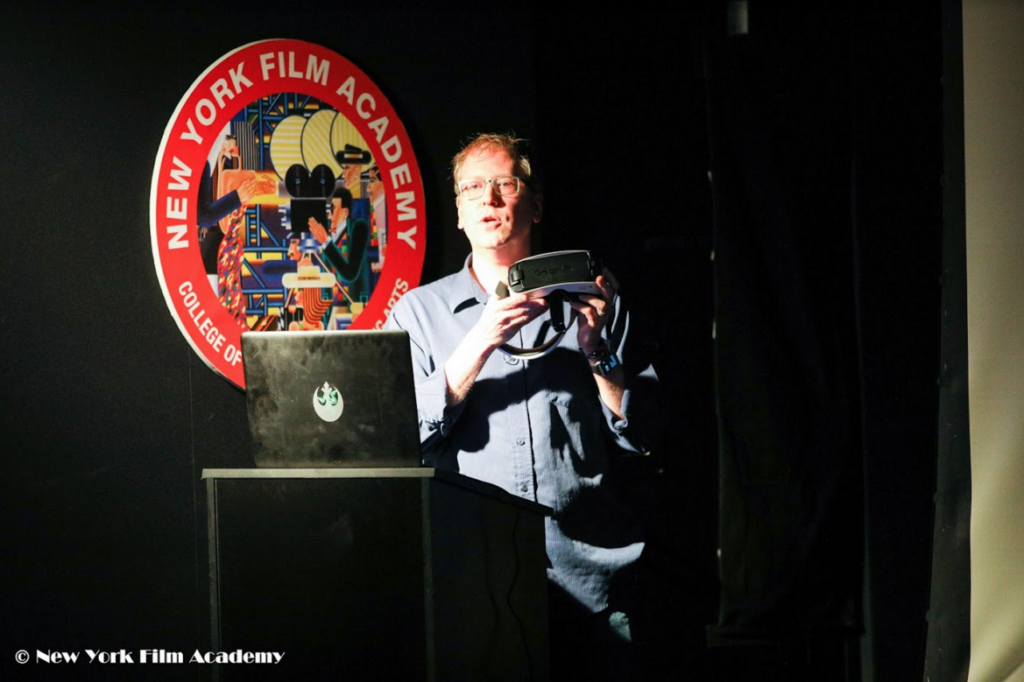
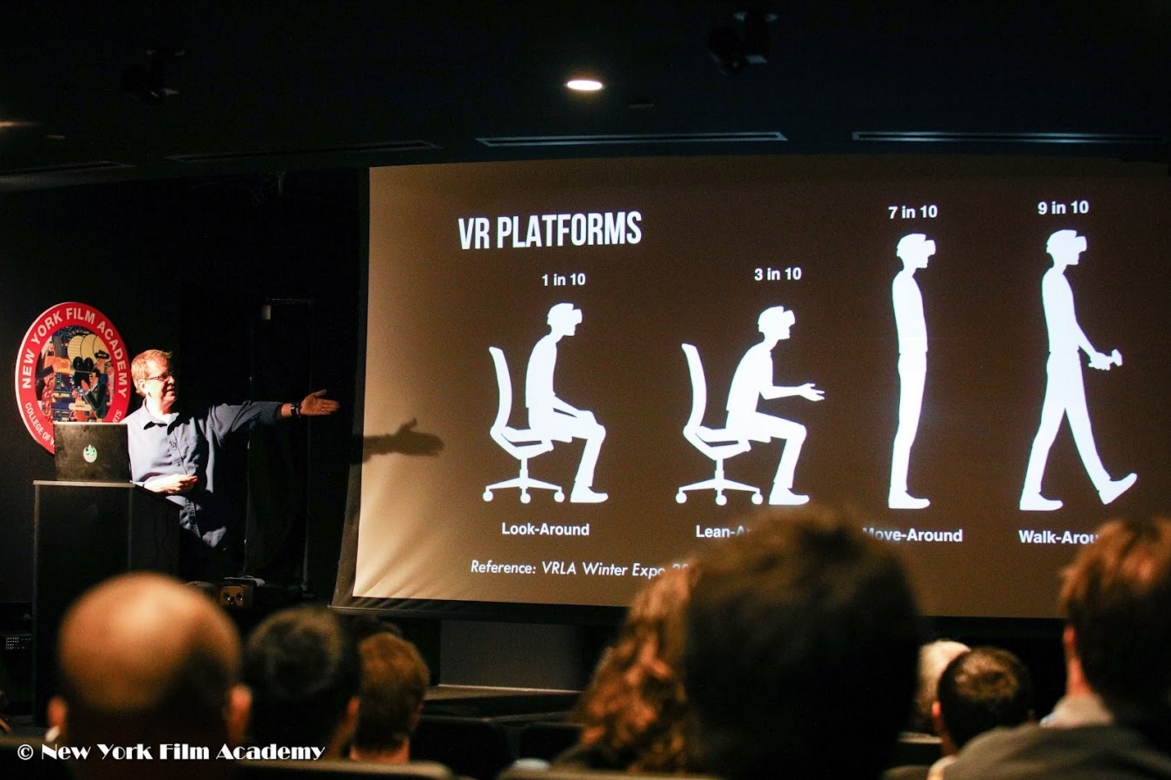
This past week the New York Film Academy Game Department held a Game Mentor Meetup. The special event focused on the history and development of Virtual Reality. VR pioneer and NYFA Instructor Aaron Pulkka led the discussion.

nyfa vr games

Before the presentation, high school students hoping to attend NYFA, current NYFA students, and instructors from nearly every department gathered outside of the theater. Pizza, soda, and snacks were served. Through mouthfuls of hot cheese, participants buzzed over which VR headset was worth the price tag, which game best utilized its VR feature and whether the future of VR relied on lasers or motion capture and other topics.

With full bellies and buzzing brains, the students filed into the Riverside theater. Pulkka spoke for over an hour giving first-hand knowledge of the rise of Virtual Reality. Pulkka worked on the “Aladdin’s Carpet Ride” at Walt Disney World in Florida, which first utilized VR in 1998, and many other groundbreaking projects.

He also broke down the key factors of establishing a VR world. The gamer must move in the space, but space cannot come to the gamer or they will be too disoriented to keep playing. This is known as an explicit camera. Light and sound help establish where in space the gamer is supposed to be.

pullka

Pulkka then walked the students through the different kinds of headsets. The Play Station 4 has sold three times as many VR headsets as the next leading brands, but there’s an HDMI cable limiting the player’s movements. Google Cardboard costs anywhere from $2 to $30, but you have to have an expensive smartphone and the games are limited.

A highlight of the night was Pulkka’s demonstration of the Microsoft Hololens augmented reality headset. He created a VR program in Unity and output it to the Hololens. He then walked around the room dropping giant 3D cubes on the audience.

A great lesson was the difference between VR and 360-degree videos. Pulkka says, “If you can’t interact with the world it’s not VR. 360 videos, like the ones you see on YouTube or Facebook, are not considered VR.”

After the presentation, the audience spilled into the lobby to converse about all they learned and enjoy cupcakes. A group of students was overheard excitedly chattering about their VR projects. Game students are free to explore VR in any of their Game Studio semester projects. And there is one VR class currently available documentary students with more planned in the future.

The New York Film Academy would like to thank those who participated in this exciting conversation. You can join the conversation by watching the discussion here.

New York Film Academy Los Angeles Faculty Senate President Jenni Powell Crews The Gathering 2017

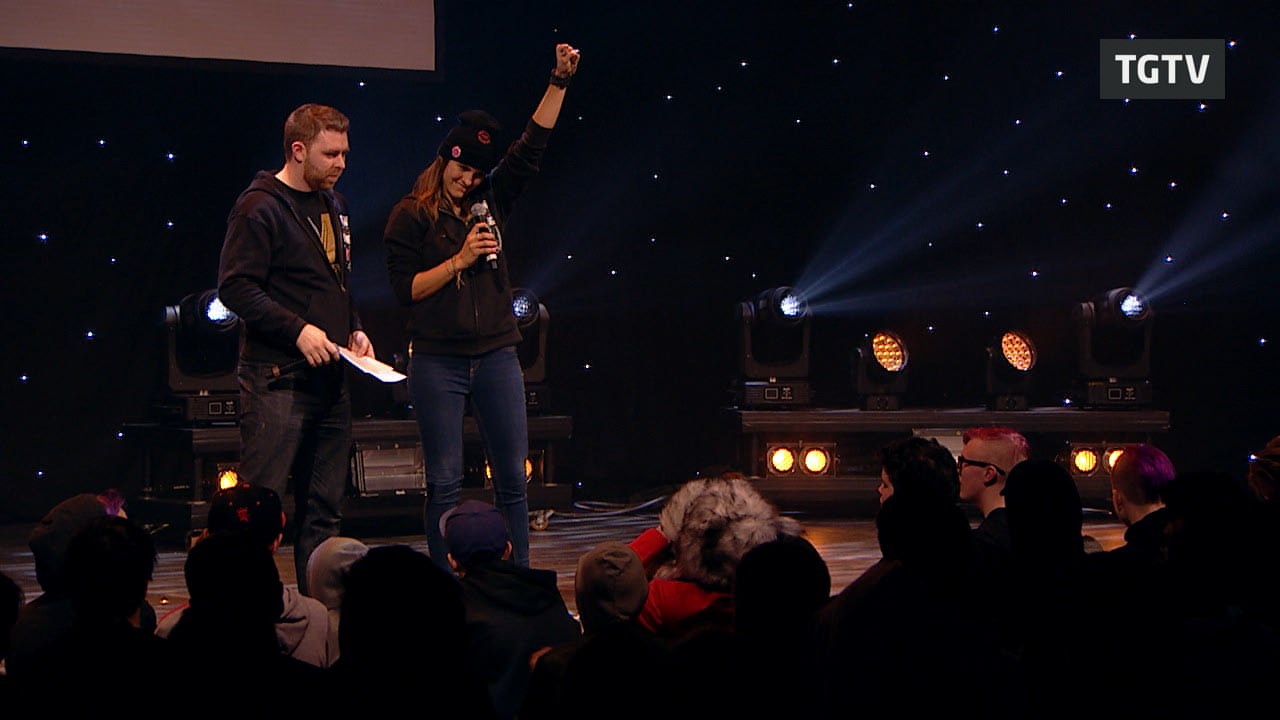
It’s a cold Wednesday morning and thousands of young people are standing outside what looks like a giant Viking Ship turned upside down. A light snow falls from the sky and sticks to the ground, as well as to the tarp-covered equipment most of the people have with them, many using computer chairs as make-shift dollies holding PC towers, wooden structures that resemble book shelves, and more energy drinks and sodas than should ever be consumed by a human being, let alone about 7,000 of them. This is the opening day of The Gathering, the world’s second largest computer party in the World (behind DreamHack), held every year over Easter Weekend in Vikingskipet Olympic Arena in Hamar, Norway.

The event started in 1992 and was originally created as a demo party, but over the course of 25 years has expanded to so much more, including game development, coding, graphic design, filmmaking, Cosplay, e-sports, and much much more.

One truly defining characteristic of the event is that it is almost totally volunteer run by a Crew of over 500 people, most of them who had been doing so for many years.  The event is hosted by the organization KANDU (Kreativ Aktiv Norsk Dataungdom or Creative Action Norwegian Computer Youth), which is an organization aimed at promoting the use of technology to youth across Norway (as well as to the international attendants of The Gathering, of which I am one of many).

This is my forth year in a row as a member of the Crew at the event. Many people wonder how a transmedia producer from America ended up at a Norwegian computer party. At the time I first attended, I was working for Felicia Day’s Geek & Sundry, and a fan of that network, who also is a long-time Crew Member at The Gathering (who incidentally, is also an International Crew member, hailing from Denmark), reached out to see if Geek & Sundry would like to be involved. I jumped at the chance and organized a small group of Geek & Sundry talent to attend and create live content for the event. That first year was truly magical, as has been every year since — even now as I’ve moved on from Geek & Sundry and am now a faculty member of the New York Film Academy.

Why do I and literally thousands of others keep coming back to this unique event year after year? I think to pinpoint that, one needs to know more about exactly what The Gathering is and what makes it special. I spoke with Jørgen Vigdal, one of the organizers of this year’s event, and he has this to say: “The Gathering is about creating a venue … that gathers people and makes them create, learn, and hopefully (inspires participants) to want to do more than just play with a computer.”

One year, in my personal experience, I was able to run a complete live streaming stage, producing multiple shows a day with a full production crew with multiple cameras, jibs, and other state-of-the-art equipment. Another year I helped produced four hours of television-quality content in just as many days — the most insane production schedule I’ve ever had in my career, but also one of the most fulfilling production experiences I’ve had. (Right up there with winning my first Emmy!)

Every year, The Gathering takes on an overall theme that focuses on an aspect of either computer gaming or technology in general and explores it both through gaming but also through educational lectures and presentations. This year’s theme is #Secrets, and centers around the important issues of cyber security and protections from hacking.

Vigdal continues, “We know that the participants are very involved in social media. Many of them are sharing a lot of pictures and information. Perhaps they are writing on social media or in other social networks such as Slack or Discord. We don’t want to scare them but we want to show them some of the consequences. Hopefully by learning what a hacker can do or what a social engineer can do with the information that gets published, they would be more careful or be more aware of it.”

Christian Funk (Kaspersky Lab Head of Global Research & Analysis Team), one of the speakers of the event, had this to add: “There’s all this (security) stuff going on and being offered to the community … people have to know about it. And there are some gaming companies that are trying to straddle keeping it usable for people and (keeping) security, and we are now at a stage where they are getting together really, really nicely.”

As the popularity and international reach of the event grows, the organizers are continuing to evolve with the times.  As Vigdal explained, “The Gathering and KANDU are having a more focused vision and plan for the next three years.  That’s good for us because we want to focus on specific areas. There’s many sponsors and there are many communities that want us to focus even more on professional e-sports. Many people can say that The Gathering is doing e-sports and in some ways, we are. But at the same time, what we are really doing is entry level e-sports for the participants. We are not holding any large prizes, we are doing the production locally and we are focusing on the participants in the Ship, not on everything outside.”

If getting together with 7,000 of your closest friends for four days of gaming, creative competitions, educational lectures, concerts, computer programming and design, and lots lots more, The Gathering might just be for you and if you can make it out to Hamar, Norway for Easter, perhaps you’d like to join us at TG18.

ACTOR DOLPH LUNDGREN SCREENS “ROCKY IV” AT NYFA LA

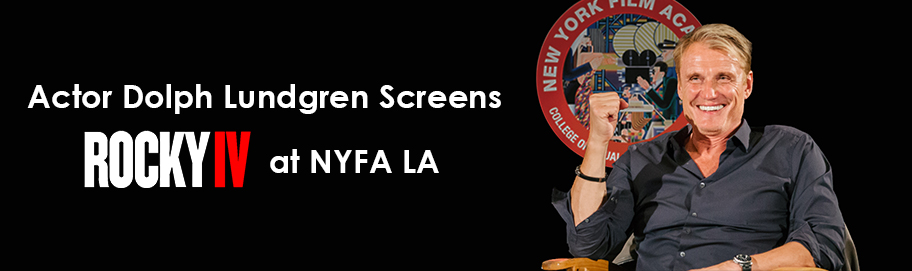
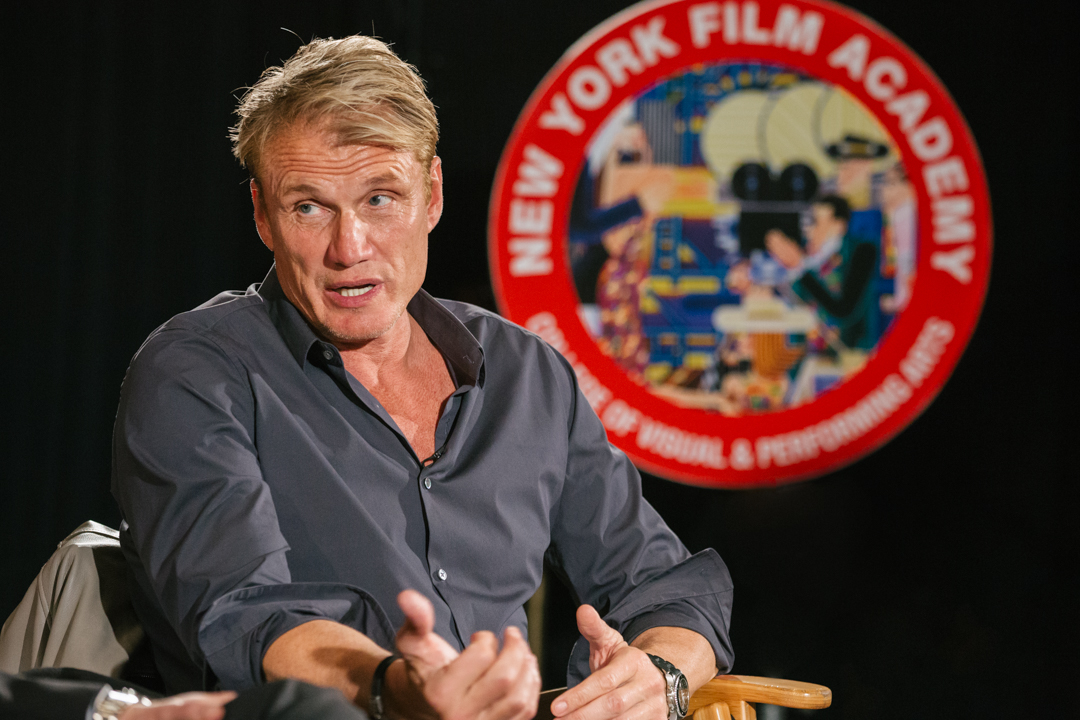
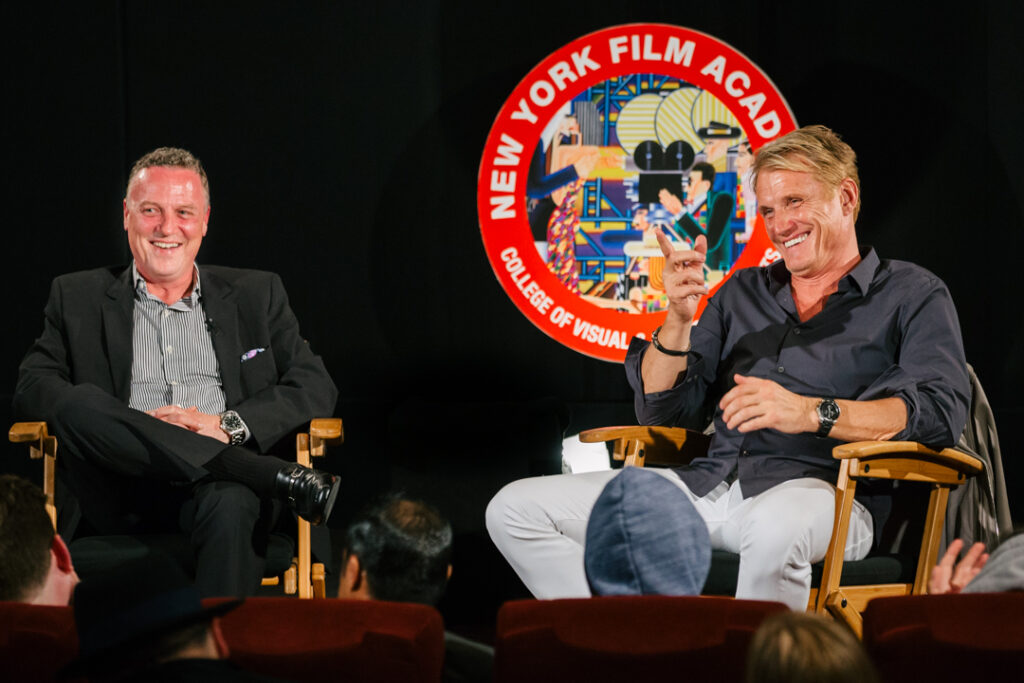
Los Angeles welcomed actor Dolph Lundgren to an exclusive screening of “Rocky IV” at theater 12 on the Warner Bros. lot. Lundgren’s Q&A that followed the film was moderated by NYFA Admissions Director Chris Devane.

Perhaps best known from his iconic role as Ivan Drago in “Rocky IV,” Lundgren said, “Drago is the Frankenstein myth created by the system. Dr. Frankenstein is the bad guy and the monster is just the creation. That’s why I think this character resonates.”

Of course, Lundgren has acted in other major Hollywood films, including the James Bond film “A View to Kill” as well “Masters of the Universe,” in which he played He-Man. More recently, he’s been venturing into television. He hosted his own series “Race to the Scene.” He’s played himself in the Nickelodeon animated series “Sanjay and Craig,” and government strongman, Konstantin Kovar, in the CW’s “Arrow.”

“My greatest challenge is you want to make it fresh for yourself all the time,” responded Lundgren to a student. “You have to find something fresh in the material for you to be excited about the role. I always have a secret about the character. I don’t tell anyone, not even the director. It takes something to make you excited to come to set every day.”

Lundgren also credited his dialect coach, who not only helped him perfect his Russian accent, but also was a Meisner trained actor. He helped Lundgren play the second level since Drago was so stoic they would have him behave embarrassed at certain lines, and these behaviors were not in the script.

Lundgren will be appearing in the upcoming films, “Nordic Light,” “Black Water,” and “Dead Trigger.” He has also recently joined Warner Bros. much anticipated “Aquaman” film opposite Jason Momoa, which will be shooting at Village Roadshow Studios — where NYFA Australia Gold Coast students also have the opportunity to film.

NYFA Podcasts

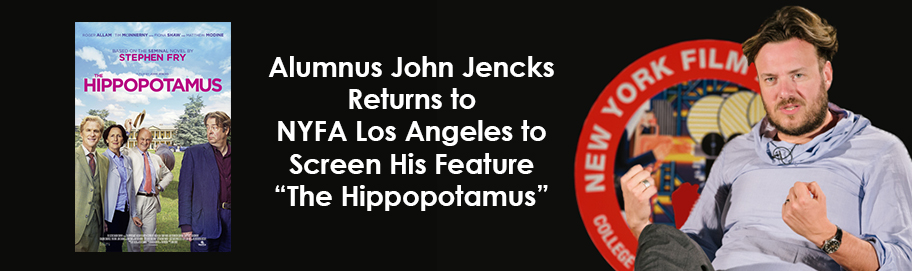
Filmmaking Alumnus John Jencks Returns to NYFA to Screen “The Hippopotamus”

Earlier this month, New York Film Academy Filmmaking alumnus John Jencks returned to NYFA Los Angeles to screen his feature film, “The Hippopotamus,” starring NYFA Board Member Matthew Modine.

Having grown up in the UK, Jencks recalls his time as a student, hitting up three movies a day at the local theater. His fascination with films took a step further when he worked on a commercial shoot in Portgual with his friends. “I enjoyed the camaraderie of it all,” he said. Ultimately, Jencks relished the multitude of challenges and coming up with different solutions.

john jencksIt was at that point that Jencks wanted to create his own projects under the tutelage of industry professionals in Los Angeles, where his father happened to live and teach at a local university.

“I chose NYFA because they give you a camera and let you go on with it,” he said. “It’s an environment where I can make a lot of mistakes and then work them out with industry professionals.”

While at NYFA, Jencks quickly found his clique who he bonded with and shot a series of short films that helped build his reel and filmmaking experience. After graduating from NYFA, he got a job at the production company, Muse. “I was the first person at work and the last person to leave, but as long as I kept a smile on my face, they’d keep giving me more and more responsibility,” said Jencks about his time with Muse.

From there he took a job as a 3rd AD on a feature film that was filming in Utah. The film, “Blind Dating,” which starred Chris Pine, introduced Jencks to a fairly large budget production.

He then went on to produce “Lying” which premiered at the Director’s Fortnight in Cannes, though things didn’t go quite as he’d hoped. “I was booed by the crowd. I believe the film may have been too pretentious, even for the French,” he quipped. Nevertheless, Jencks pressed on in his career, starting his own production company, Electric Shadow Company.

Jencks has now been working in the film industry for over 10 years as a producer, writer and director. His short film, “Go Away, Please!” (2009) won the Shooting People prize at London Short Film Festival. His debut feature, “The Fold,” starred Catherine McCormack and got its cinematic release in 2013.

Interestingly enough, back in 2002, while staying at producer Roger Corman’s home, Jencks noticed Stephen Fry’s novel, “The Hippopotamus,” resting alongside his guest bed. “I laughed and laughed,” said Jencks. “I responded very well to the protagonist and antagonist. I thought this story would do well if we were able to take the essence of it and provide a traditional narrative structure.”

Years later he acquired the rights to the novel and directed the film under his production company.

When it comes to directing his actors, Jencks talks about using the script as the blueprint to abide by, and how he interprets it is a really interesting journey. His job is to ensure each and every talented actor is on the same page. “You have to tie everything together. That’s the job of the director,” he adds.

Aside from his directing credits, Jencks has executive producer credits on “Swallows and Amazons” (Andrew Scott, Rafe Spall and Kelly Macdonald); “The Trust” (Nic Cage and Elijah Wood), “Terminal” (Margot Robbie, Simon Pegg, Mike Myers) and “The Crow” remake.

As for his role as executive producer, Jencks says he trusts his directors and tries not to get involved with the creative.

john jencks
NYFA Dean of the College Sonny Calderon with John Jencks

Outside of the entertainment business, Jencks is a family man and a keen advocate of human rights. He’s closely involved with Reprieve and Just for Kids Law.

He is the proud custodian of the internationally renowned “Garden of Cosmic Speculation” designed and created by his father, architect and landform artist Charles Jencks and late mother Maggie Keswick Jencksat, at their family home near Dumfries. His parents are also the founders of Maggie’s Cancer Caring Centres, which now have 17 units at major NHS cancer hospitals throughout the UK and overseas.

For those with an affinity for wine, Jencks is also passionate about natural wine and is a part owner of Aubert and Mascoli Ltd, which supplies organic and biodynamic wine to some of the UK’s best restaurants and various discerning private clients.

International Documentary Association Virtual Reality Event at NYFA LA

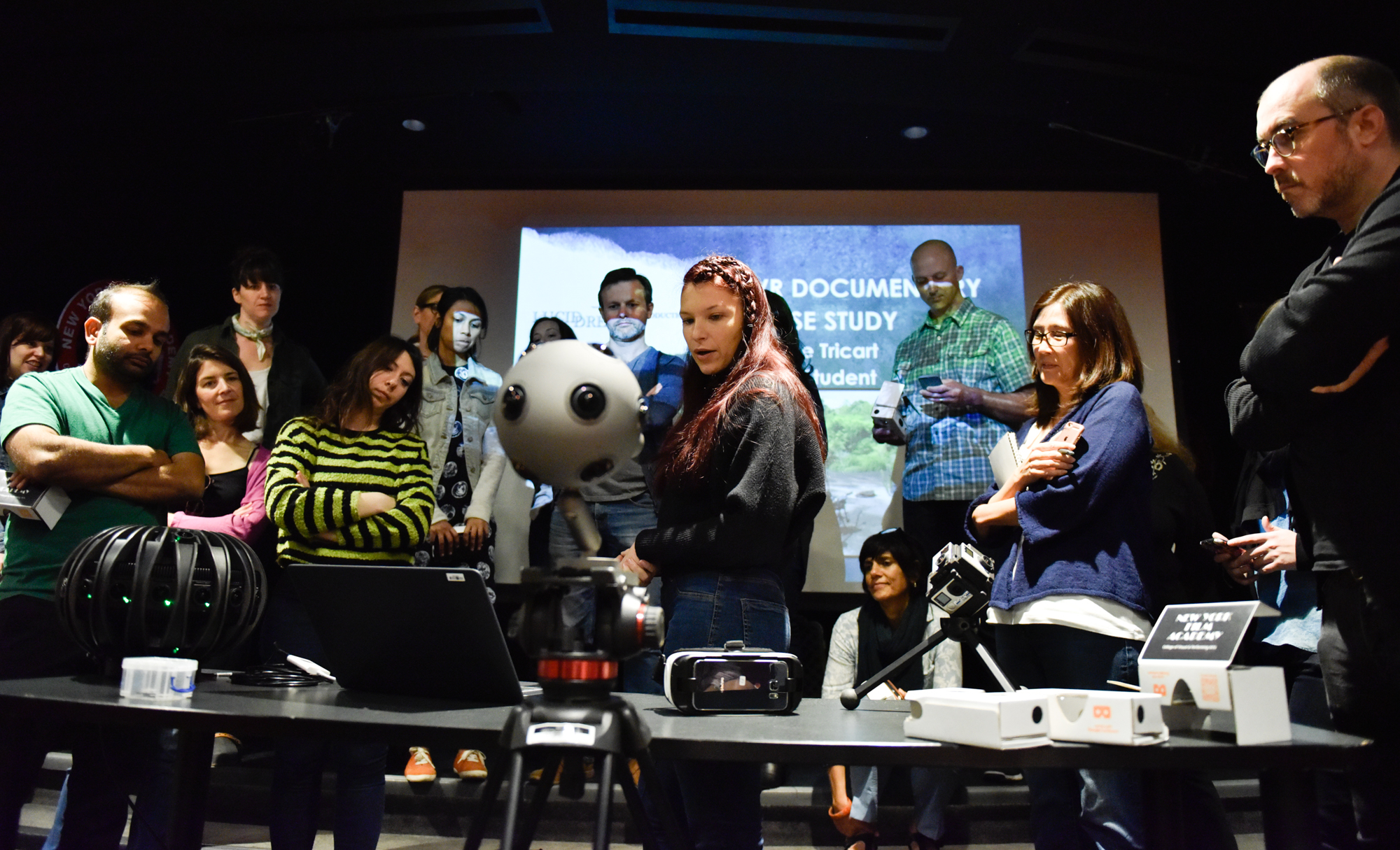
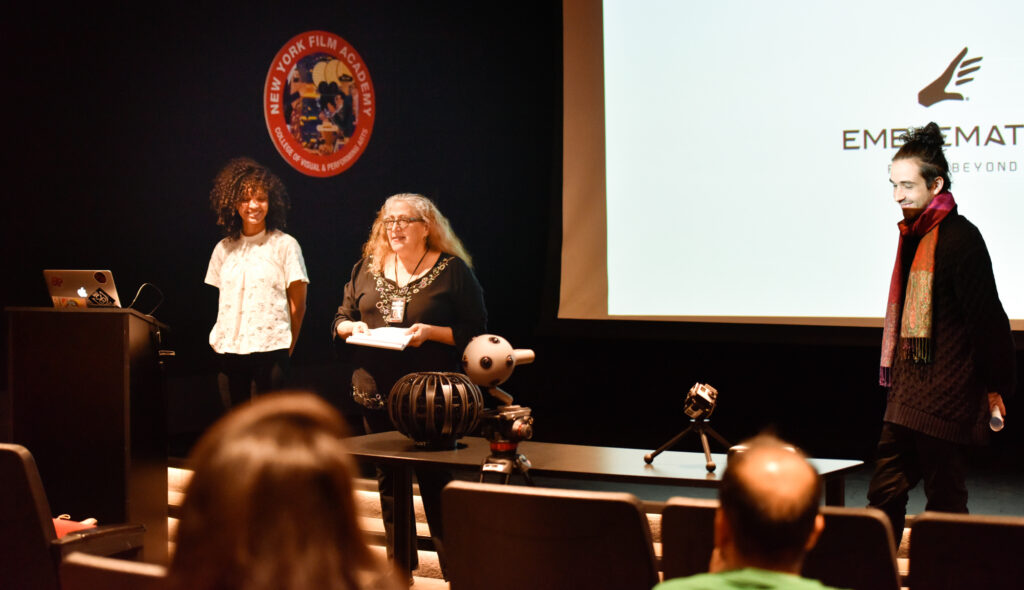
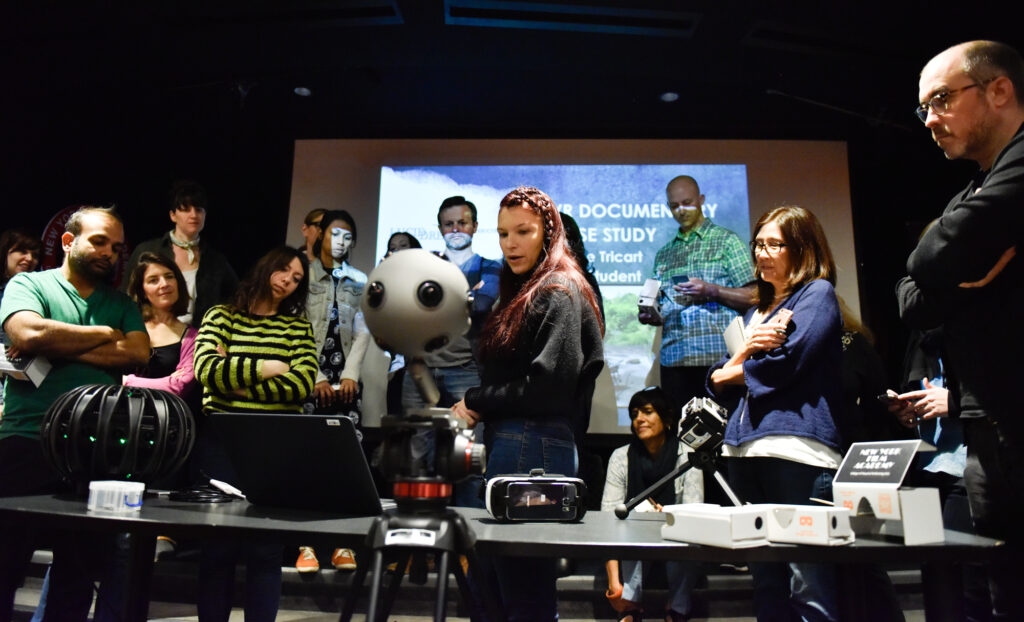
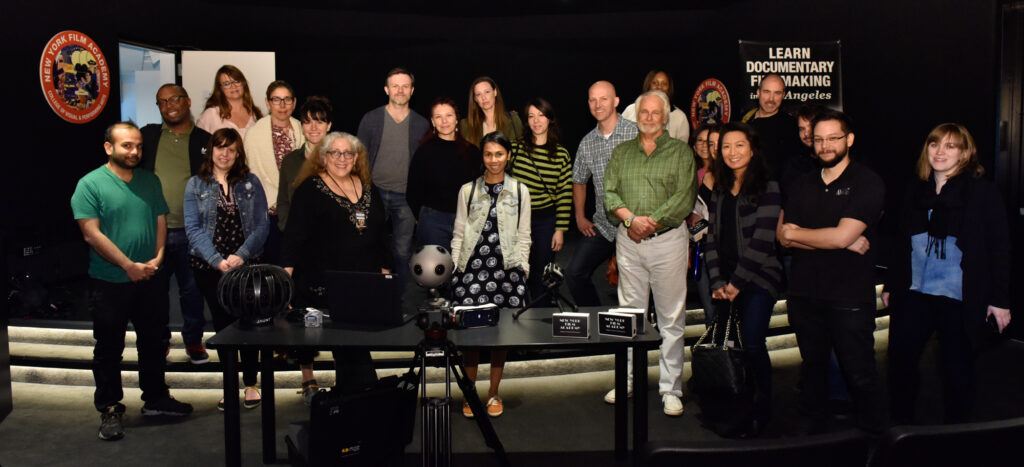
This past week the New York Film Academy sponsored a special event for members of the International Documentary Association (IDA) at the NYFA’s Los Angeles Campus. Entitled, VR 101 for Documentary, the workshop was moderated by VR Director and Cinematographer Celine Tricart and featured speakers from ground-breaking VR production company The Emblematic Group, and a VR camera demo from AbelCine, a leading provider of equipment and services to the production, broadcast and new media industries.

IDA Event

Virtual Reality has been threatening to conquer the gaming world for decades but new cellphone technology used with inexpensive VR viewers like the Google Cardboard have allowed for first widespread distribution of Virtual Reality projects, particularly documentaries. Platforms like the New York Times, OpDocs, Jaunt VR and Frontline VR, are releasing new material often called “immersive journalism.” The goal of NYFA’s VR Workshop was to allow IDA documentarians to “look under the hood” of VR to begin to understand what it takes to direct, produce and edit in this new medium.

In VR and all 360-degree formats virtually all the film grammar developed over one hundred years of “flatties” or 2-dimensional films do not apply. No cutting to a close-up or a wide shot, in fact not much cutting at all for fear of inducing motion sickness in the viewer. All the “tricks” filmmakers use to direct the attention of the viewer are not possible in a 360-degree universe where the viewer decides what to look at when, and to some extent for how long.

ida nyfa la

Using sound and light to direct the viewer’s attention, defining the difference between 360 video and VR, and creating a new cinematic language were key talking points for the speakers. Senior Producer of The Emblematic Group Cedric Gamelin and Marketing Manager Ivana Coleman expounded on the possibilities of storytelling in this new medium, showing the audience examples of the Emblematic Group’s work in both live action and animated VR documentary shorts. Nicholas Samero and Sean George of AbelCine demonstrated a number of different VR cameras, from the 2-camera Kodak 4K 360 to the 8 -camera Nokia Ozo, and the 24-camera Jaunt VR.

The afternoon was spent in a NYFA edit room where Tricart took participants through the post –production workflow for VR that includes downloading the media from all of the cameras, stitching the images from the various cameras together, editing scenes together, and outputting the edited media. Then each participant was able to view the VR scenes they had cut together.

nyfa ida vr

Barbara Multer-Wellin, Chair of Documentary for the Los Angeles campus recommend checking out the Op-Docs Video Channel, Jaunt VR, and Frontline VR to begin exploring Virtual Reality Documentaries. Multer-Wellin has already begun to include elements of VR in her classes and hopes to expand the program soon.

When asked what she learned from the presentation Multer-Wellin said, “We (filmmakers) are used to having a lot of control. In VR, you’re giving the audience the control with the ability to make cuts themselves with their eyes. This is exciting but it is also kind of scary.” Celine Tricart said she loves VR because. “It’s like the very beginning cinema. All the rules have been thrown out the window and we’re making it up as we go along.”

ALUMNUS JOHN JENCKS RETURNS TO NYFA LOS ANGELES TO SCREEN HIS FEATURE “THE HIPPOPOTAMUS”

Having grown up in the U.K., New York Film Academy filmmaking alumnus John Jencks recalls his time as a teen, hitting up three movies a day at the local theater. His fascination with films took a step further when he worked on a short film in Portugal with his friends. “I enjoyed the camaraderie of it all,” he said. “I relished the multitude of challenges and coming up with different solutions.”

It was at that point that Jencks wanted to create his own projects under the tutelage of industry professionals in Los Angeles, where his father happened to live and teach at a local university. This inspired him to take a one-year filmmaking course at the New York Film Academy Los Angeles.

“I chose NYFA because they give you a camera and let you go on with it,” he said. “It’s an environment where I can make a lot of mistakes and then work them out with industry professionals.”

While at NYFA, Jencks quickly found his group, who he bonded with and shot a series of short films that helped build his reel and filmmaking experience. After graduating from NYFA, he got a job at the production company Muse. “I was the first person at work and the last person to leave, but as long as I kept a smile on my face, they’d keep giving me more and more responsibility,” said Jencks about his time with Muse.

From there he took a job as a 3rd AD on a feature film that was filming in Utah. The film, “Blind Dating,” which starred Chris Pine, introduced Jencks to the experience of a fairly large-budget production.

He then went on to produce “Lying,” which premiered at the Director’s Fortnight in Cannes, though things didn’t go quite as he’d hoped. “I was booed by the crowd. I believe the film may have been too pretentious, even for the French,” he quipped. Nevertheless, Jencks pressed on in his career, starting his own production company, Electric Shadow Company.

Jencks has now been working in the film industry for over 10 years as a producer, writer and director. His short film “Go Away, Please!” (2009) won the Shooting People prize at London Short Film Festival. His debut feature, “The Fold,” starred Catherine McCormack and got its cinematic release in 2013.

Earlier this month, Jencks returned to NYFA Los Angeles to screen his feature film “The Hippopotatmus,” starring NYFA Board Member Matthew Modine.

Interestingly enough, back in 2002, while staying at producer Roger Corman’s home, Jencks noticed Stephen Fry’s novel “The Hippopotamus” resting alongside his guest bed. “I laughed and laughed,” said Jencks. “I responded very well to the protagonist and antagonist. I thought this story would do well if we were able to take the essence of it and provide a traditional narrative structure.”

Years later he acquired the rights to the novel and directed the film under his production company.

When it comes to directing his actors, Jencks talks about knowing the script as the blueprint to abide by, and how to interpret it is a really interesting journey. His job is to ensure each and every talented actor is on the same page. “You have to tie everything together. That’s the job of the director,” he adds.

Aside from his directing credits, Jencks has executive producer credits on “Swallows and Amazons” (Andrew Scott, Rafe Spall and Kelly Macdonald); “The Trust” (Nic Cage and Elijah Wood), “Terminal” (Margot Robbie, Simon Pegg, Mike Myers) and “The Crow” remake, which is currently in pre-production.

Actor Dolph Lundgren Screens “Rocky IV” at NYFA LA

Star of “Rocky IV” and “The Expendables,” Dolph Lundgren, visited the Los Angeles campus of New York Film Academy this past week. Students from all majors filled the number twelve theater on the Warner Brothers lot. NYFA LA Admissions Director, Chris Devane hosted the evening.

dolph lundgren

Lundgren is well known for his roles as a karate-kicking villain in the James Bond film “A View to Kill” and He-Man in “Masters of the Universe.” Recently he’s been venturing into television. He hosted his own series “Race to the Scene.” He’s played himself in the Nickelodeon animated series “Sanjay and Craig,” and government strongman, Konstantin Kovar, in the CW’s “Arrow.”

Devane asked a question from a student at the NYFA Australia campus. The student, Andy, asked, “What was your greatest challenge working as an actor?”

Lundgren responded, “My greatest challenge is you want to make it fresh for yourself all the time. You have to find something fresh in the material for you to be excited about the role. I always have a secret about the character. I don’t tell anyone, not even the director. It takes something to make you excited to come to set every day.”

https://youtu.be/nof2f3ydjhM

One of the instructors in attendance, Aviv Rubenstein, asked, “Upon viewing this movie (“Rocky IV”) as an adult, it seems like Drago is more of a reluctant soldier. You don’t say, ‘I will break you.’ You say, ‘I must break you.’ How much of that is in the script, how much of that is in your performance, and how much of that is in the directing?”

“You’re completely correct. Some of it was in Stallone’s script. Drago is the Frankenstein myth created by the system. Dr. Frankenstein is the bad guy and the monster is just the creation. That’s why I think this character resonates,” Lundgren said.

lundgren at nyfa

Lundgren also credited his dialect coach who not only helped him perfect his Russian accent but also was a Meisner trained actor. He helped Lundgren play the second level since Drago was so stoic they would have him behave embarrassed at certain lines, and these behaviors were not in the script.

The New York Film Academy would like to thank Mr. Lundgren for taking the time to speak with our students. You can catch Dolph Lundgren in his upcoming films, “Nordic Light,” “Black Water,” and “Dead Trigger.” Lundgren has also recently joined Warner Bros. “Aquaman” film opposite Jason Momoa, which will be shooting at Village Roadshow Studios — where NYFA Australia Gold Coast students have the opportunity to film.


Environmental Biology’s Field Trip to LA Natural History Museum

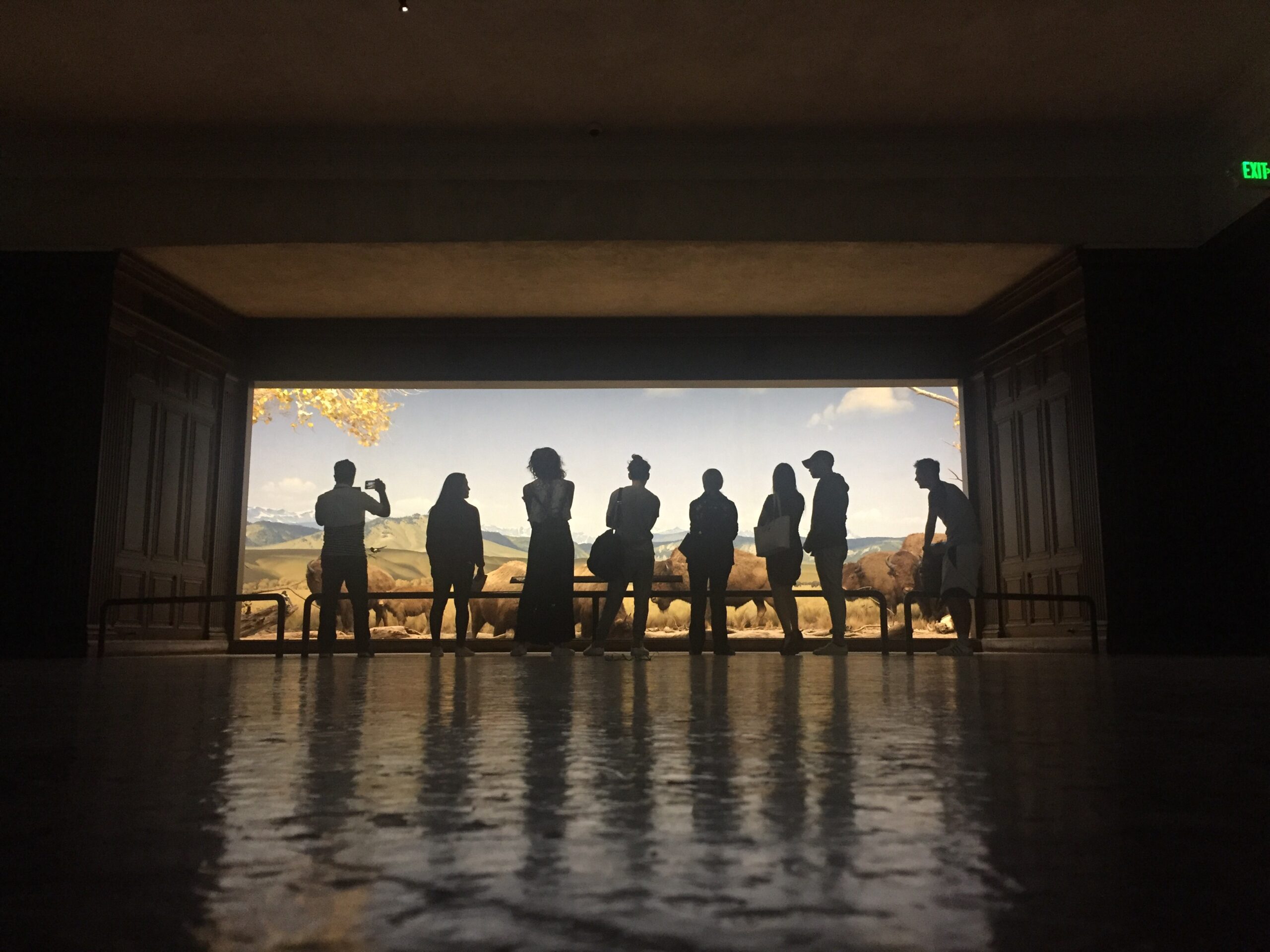
The New York Film Academy prides itself in its “learn by doing” approach to curriculum instruction; students are not just lectured on concepts but are able to get their hands on equipment and physically learn the tools and techniques they will need in their trade. This concept was extended this week in the Sciences here at NYFA as Environmental Biology instructors took every one of their 120 students to the Los Angeles Natural History Museum. They visited five exhibits in particular that reinforced class curricula; students observed specialized adaptations of today’s mammals in the North American Mammal Hall and the African Mammal Hall, they witnessed the evolution of the modern human in the Age of Mammals exhibit (where famous Lucy is housed!), colossal dinosaur fossils awed in the Age of Dinosaurs exhibit, and species of native plants and animals were identified in the museum’s serene Nature Gardens.

environmental biology

Learning a concept from a PowerPoint in class can’t compare with seeing it unfold in front of your eyes. It is one thing to be lectured on natural selection in a classroom, for example, and another to observe the changes in mammal skeletons over thousands of years as they became what they are today, and speculate as to the reasons why. Pig-sized horses just couldn’t run away fast enough from predators of the era, so they developed longer and longer legs until they could! Those with short legs died before they could reproduce and pass on their short-legged genes. The result is the modern day, long-legged horse. This concept was reinforced in the Age of Dinosaurs exhibit, where students were asked to come up with what types of adaptations a modern dinosaur might have in order to live on today’s planet.

Students were also able to put their ecology chops to the test, as they had to organize living plants and animals in the Nature Gardens into the food web of California’s native ecosystem. They discovered that when you take a moment to document all the life around you, you realize that, even in Los Angeles, we are surrounded! The idea here was that an appreciation of nature and the life around us not only reinforces concepts of biodiversity learned in class, but also hopefully instills more application of conservation in student’s lives.

Instructors were thrilled at the profusion of “wows” and wide eyes. Such engagement in a subject so outside of their core film school curriculum is impressive and inspiring!