5 Of The Best Space Documentaries Now Streaming

What lies beyond the confines of our own atmosphere is mind-boggling in the truest sense of the word, so it’s little wonder that space—and the stuff in it—makes for compelling subject matter when it comes to documentaries.

That said, it’s a double-edged sword for students at documentary filmmaking school looking to focus on the cosmos. For one thing, space documentaries have to rely on inventive ways to represent the subject matter visually since there’s usually no direct footage or images of deep space objects or abstract concepts.

Secondly, it’s tricky to balance the writingyou don’t want to lose 99.98% of the viewers who don’t know the intricacies of Minowski spacetime, but at the same time you don’t want to patronize them with details most 8th graders know.

What follows is a roundup of titles that serve as near-perfect examples of space documentaries which manage to tick all the right boxes. Set your warp drives to maximum as we chart:

The Best Space Documentaries Currently Streaming

1. Life in Our Universe

Life in our universe documentary

A six-part series lead by the hugely engaging (and award-winning) Dr. Laird Close, Life in Our Universe charts the progress of scientists and uncovers how our civilization is conducting the hunt for others. The question of whether or not life exists amongst the stars has always been an exciting one, and this series does the magnificence of the question justice.

Streaming on: Netflix

2. In the Shadow of the Moon
best space documentaries

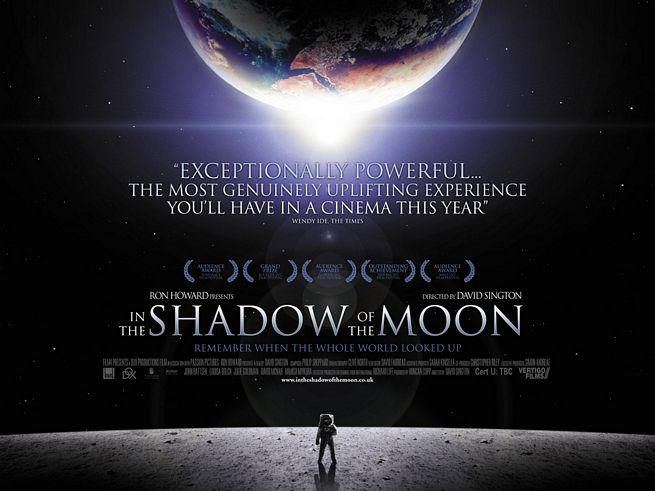
By far the most comprehensive documentary about the Apollo lunar landings ever produced, this British-made documentary managed to do something never done before: bringing all of the key players of the moon landings together to reminisce on their experiences (even those who had previously been interview shy.)

Even those who think they know it all will be surprised at the amount of detail coveredif you loved Andrew Chaikin’s book A Man on the Moon or the HBO series it spawned (entitled From the Earth to the Moon), you’ll love this.

Streaming on: 4oD (may not be available in all regions)

3. NASA: The Space Shuttle

https://youtu.be/6aDDcyIk_0Y

Just as interesting as space itself are the marvels of technology that got us there, and this YouTube documentary is both a fascinating look back at the Space Shuttle fleet as well as a celebration of its time in service (even more poignant given that the last Space Shuttle was retired in 2011.) But we can sell this documentary about rocket ships with just one line: it’s narrated by William Shatner.

Streaming on: YouTube

4. The Journey to the Centre of the Universe

In the span of just 90 minutes, this National Geographic documentary covers a lot of ground—namely, from the sands of our own planet to the borders of the known Universe. While the special effects are somewhat rudimentary by current standards, it’s nevertheless one of the best space documentaries on YouTube.

Steaming on: YouTube

5. Cosmos

Screen Shot 2015-05-29 at 02.15.47

No list of the best space documentaries available for streaming would be complete without a hat-tip to Cosmos. These days Neil DeGrasse Tyson’s reputation as a compelling astrophysicist speaks for itself, and although the show has been aimed at a broad audiencemeaning the science is a little entry-level at timesit doesn’t make it any less enjoyable. Extremely impressive special effects, excellent animations, and every bit as good as you’ve no doubt heard.

Streaming on: Netflix

Know of any other fantastic space documentaries currently streaming that we should be watching? You know what to do – descend on down to the comments below and jettison your suggestion!


So What Exactly IS A Film Producer?

Of all the jobs in film that we’ve covered so far, there’s one in particular that seems to cause a lot of confusion. Namely, we’re talking about film producers.

And it’s not hard to see why the job title causes so much confusion. Such is vagueness of the term ‘producer’ that we’ve even met film producers who have struggled themselves to describe the job in a few concise sentences.

So as much as trying to define the term ‘film producer’ is akin to successfully nailing jelly to a wall, today we’re going to do just that and definitively explore:

What Exactly IS a Producer?

From the start, we can state that a producer wears many different hats during the course of a movie’s completion, , such as choosing the right script and coordinating the moving parts of making a film such as writing, directing, and editing. Overall, film producing can be two essential duties by the producer: Development and Financing.

Development: Long before pre-production can start, there naturally needs to be something to produce! It’s up to the producer to find and discover a story worth committing to celluloid—a property that they own—whether it comes in the form of an original screenplay, a novel that’s ripe for adaptation, or even the life story or personal tale from an interesting subject.

Of course, it’s not as easy as just reading a book, thinking “that’d make a good film,” then assembling the crew. A film producer must initiate and enter into negotiations with whoever’s responsible for the source material, with the ultimate aim being to acquire the rights on their terms.

Financing: Once the film rights have been bought, the monetary fun doesn’t stop there. Producers are the ones who pitch the movie to studios (or their employer) in the hopes of securing financing, and thereafter managing said finances throughout the life of the production to make sure everything is delivered on time and on budget.

Even once the movie is in the can, the financing duties still aren’t over. Distribution of the final product also needs to be sorted out, and that’s squarely in the remit of the producer.

So A Producer Handles the Cash, Basically?

Not quite! It’s a large part of the job of being a film producer, but depending on personal style, he or she may get personally involved with a number of tasks.

The hiring of the director and screenwriting staff is nearly always handled by the producer, but from here things vary by the individual. Depending on the scale of the project, the producer may wish to get involved with hand-selecting any or all members of team.

Sometimes, however, that is left in the care of the director. On multi-million dollar productions, practicality may dictate that a hierarchy of producers are required that the executive producer can delegate to. From top to bottom, the chain of command runs:

  • Executive Producer
  • Co-executive Producer
  • Line Producer
  • Supervising Producer
  • Producer
  • Co-producer
  • Coordinating Producer
  • Consulting Producer
  • Associate Producer
  • Segment Producer
  • Field Producer
  • Edit Producer
  • Post Producer

How much the executive producer passes down the chain varies from movie to movie, but to make matters more complicated, the individual producer titles listed above also come with separate duties—for instance, a coordinating producer will organize scheduling and the division of labor, while a supervising producer may have a big hand in script rewrites and the edit producer will oversee post-production.

So Production Staff are Like Management?

It’s not quite as simple as that. While producers generally have the final say on anything they decide to get involved in, more often than not a good producer delegates by hiring professionals that can do their respective jobs without supervision, allowing them to focus on the bigger picture.

But as we all know, the creation process behind filmmaking is a very fluid one and subject to change at any given moment.

Sometimes, you’ve got to put the finance book down, roll your sleeves up, and get your hands dirty.

Countdown to E3 2015: 4 Predictions for Nintendo

Predictions for Nintendo E3 Presentation

When thinking about Nintendo this coming E3, many will only have one thing on their mind: the Wii U sure is struggling to sell, isn’t it?

Even though the latest console got a big head start by releasing a full year before its competitors, it has been surpassed in terms of units sold by both the Xbox One and PlayStation 4. It appears gamers have made it very clear what they are interested in when spending their hard-earned cash: good third-party support and specs.

And while many continue posting their “Nintendo is doomed” comments, those who have been around long enough know that it’ll take more than one poor selling console to take this Japanese company out. Nintendo not only has a treasure-trove of IPs to use, which has resulted in many amazing exclusives for the Wii U, but the 3DS and Amiibo figures continue to sell wildly. Add in their new partnership with DeNa, and you’ve got both Sony and Microsoft remembering that Nintendo is still in the fight.

Looking to convince both their fans and those who jumped ship to other platforms, here are three things we expect Nintendo to show this coming E3…

1. Amiibo Info

Considering how incredible the Amiibo craze has been the last few months, leading to more than 10 million figures sold, we’d be fools not to anticipate an announcement or two. While most would be satisfied with just hearing that production will increase so they can actually get their hands on the figures they want, we have a feeling Nintendo is preparing something more.

The most obvious possibility would be the reveal of more figures based on characters that are currently not part of Amiibo, as well as more details on future titles that support Amiibo. Even better would be the reveal of a game (or new series) based completely around them. Since this has worked brilliantly for Skylanders and Disney Infinity, we’d be surprised if Nintendo wasn’t working on a similar title.

2. Gameplay of Star Fox , Zelda, and Miyamoto’s Other Title

Last year we caught our first glimpse of the next Legend of Zelda, as both Eiji Aonuma and Shigeru Miyamoto led us through a gorgeous demo. We also got to see an action-packed trailer of Link – who everyone thought was a girl for some reason – jumping off his horse to send a cool-looking arrow into the glowing eye of a huge enemy. This time we’ll get more gameplay and details, including an official release date for this very anticipated title.

Receiving much less attention was the next Star Fox, which Miyamoto himself briefly demonstrated during last year’s Nintendo video. We’re pretty sure that he’ll be showing off this new title in more depth this coming June, along with the robot fighting game we have yet to see.

It’s a stretch but we’re counting on a Holiday 2015 release for Star Fox, especially since Zelda will not be coming until 2016.

3. The Big Surprises

This is the part where fans the world over start getting goosebumps. A trailer begins with music and scenery that feels strangely familiar, all before an iconic character appears – sometimes one we haven’t seen in years.

Whether you’re a supporter or not, there’s no denying that some of the most exciting moments in E3 history have been given to us by Nintendo. If you don’t believe us, listen to the reception by the audience when Twilight Princess was first shown.

As mentioned before, it’s hard to guess which games Nintendo will surprise us with considering all the series they have under their belt. The one many are hoping for is a new Metroid game, but the chance of F-Zero or the next 3D Mario game are also a possibility.

Some popular 3DS titles might also hop over to Wii U in order to help sell some units – Animal Crossing, Fire Emblem, and Kid Icarus being a few examples. The reveal of Pokken Tournament for Wii U is also certainly not out of the question.

4. No New Hardware Announcements + DeNa Game Reveals

Even though Nintendo followers are excited to hear what their favorite game company is cooking up for them, it’s very likely that we won’t hear anything at all. Instead, the BigN will focus on the current systems in hopes that Wii U sales pick up and 3DS sales don’t continue winding down.

We’re also confident that Nintendo will reveal at least one title that, like Xenoblade Chronicles 3D, can only be played on the New 3Ds.

What Reggie and crew will be doing is showing off some of the titles they hope to take over the App Store and Android markets with. These first games will most likely utilize the big IPs like Mario, Pokemon and Zelda, which is pretty exciting if you’re a smartphone gamer.

After testing the freemium waters with Pokemon Shuffle, which has been downloaded more than 4 million times, there’s no telling how many games Nintendo will seek to release in 2015 alone.

Image Source

Learning From The Best: Platformers

Learn from the best platformers

If there’s one type of game that is currently seeing an incredible revival, it’s the platformer. Whether you’re talking 2D or 3D, gamers have proven their willingness to toss cash toward a good platformer that challenges their quick reflexes, timing, and more. The following are a few game design tips take from excellent titles that all developers should consider while crafting their own platforming experience:

Have Different Worlds To Enjoy

There are plenty of prime examples to use for this point but we’d like to go with one of the best: the original Banjo-Kazooie.

From desert pyramids and haunted mansions, to a poisonous bog and giant snowman, Rare gave us plenty of levels set in fresh and imaginative places.  Since no one wants to see the same scenery over and over, anyone considering designing a good 3D platformer will certainly take a page from Rare’s beloved title.

Give Your Character A Varied Moveset

Super Mario 64 blew us all away in 1995 for, among countless reasons, making us feel like Mario could do just about anything. You could crouch to crawl and do backflips, run to do a triple jumps and long jumps, or hit A at just the right time to wall kick or do a side somersault. And then there’s the B button that allowed you to dive, punch, kick in the air, pick up objects, and more.

Thanks to the impressive number of actions players could perform with Mario (including flying!), most of us still remember the first times we picked up that crazy N64 controller to play Super Mario 64 and couldn’t put it down.

Make Sure Movement Feels Good

Even if your game does have a wide variety of actions to do, no one will care if moving feels cumbersome or difficult; the latter being why Sonic has had trouble transitioning to 3D. In games like Sonic Adventure, fast movement combined with an unpredictable camera lead to many silly deaths.

On the other hand, a good 3D platformer should challenge a player’s quick reflexes and precision, which means animations must be able to start from the previous animation at any time. Super Mario 64 is once again the perfect example as it lets players run, jump, and then wall kick a few times up a gap, all without barely any delay between animations.

Don’t Forget the Collectibles, Power-Ups, Etc.

No matter what the main objective of your platformer is, be it reach the end of the level, defeat a certain enemy, or grab a specific item, there should be plenty of things to collect along the way.

These collectibles should also go toward something so the player feels they are worth grabbing, such as the rings in Sonic the Hedgehog games (100 earns you an extra life).

As for power-ups, the Super Mario Galaxy games are definitely worth looking at. Being able to turn into a bee and ghost was awesome, as was the mushroom that turned you into a metal spring and allowing Mario to bounce higher than ever.

Toss In Segments That Feel Different

Even if your 3D platformer has fun gameplay and good levels, you’ll want to mix things up once in a while so players don’t get bored of the same thing.

Even the original 1985 Super Mario Bros. does this by offering the occasional water level as well as pipes leading to rooms where you got to crush blocks and collect coins. Though these segments are short and simple, like collecting as many bananas as you can while riding animals in Donkey Kong Country, they can still serve to break things up and give players a breather from the regular gameplay.

Image Source

Could Social Media Be Good For Broadcast Journalism?

Social media's impact on broadcast journalism and news

Social media’s impact on broadcast journalism is reshaping the way in which we all get, share and discuss news. According to a recent Pew Research study, about two-thirds of U.S. adults use Facebook, and approximately half of those users get news from the site. That means that roughly thirty percent of the population gets news from Facebook, while ten percent access news from YouTube, followed by eight percent from Twitter.

Nowhere is the effect of social media on news consumption more evident than in the coveted 18-34-year-old demographic. According to the recent Media Insight Project report, conducted by the American Press Institute (API) and the Associated Press-NORC Center for Public Affairs, Millennials spend much less time with traditional media like television and newspapers than previous generations.

However, that doesn’t make them less interested in news – 85% said keeping up with news was at least “somewhat important” to them, 69% get news daily and 86% “see diverse opinions on social media.”

What does this mean for broadcasters?

While some in the industry worry it spells trouble for them, that isn’t always the case. Many viewers continue to watch the evening news on a regular basis, while updates from their favorite station’s Facebook or Twitter feed fill in the gaps between regularly slotted news times. When viewers miss something or want more info about a topic, often the first place they’ll go is the Facebook page of the media outlet that aired the story.

For some younger viewers who spend less time watching regular news broadcasts, a shared story on social media might lead them to a broadcaster’s website, increasing ad revenue – and the likelihood of viewing the channel when they do turn on the TV.

When Millennials want to know more about a new topic, search is still the dominant method used (57%), but news sites are the second most common (23%), with only 7% saying they seek more information on Facebook, according to the API study.

This is especially good news for broadcasters when you consider that most news topic searches bring up results from media outlets, including local and national television stations.

Sharing news on social media helps generate new likes or follows for a news outlet’s social media profiles, and it’s happening more frequently: The Pew study says half of social media users have shared news stories, pictures or videos, and almost as many (46%) have discussed news topics on social platforms.

The more a video or story is shared, the more traffic is generated for the media outlet.

The one downside is that users who go directly to a broadcaster’s website spend, on average, about three times longer browsing the site than those who navigate there from a social media platform. However, time spent on the site is roughly the same between users who arrived there from a routine web search and users who were referred from social networks.

Some types of news fare better in social media land than others.

By far the most popular topic is entertainment – the Pew study shows almost three-quarters of Facebook users view this type of story regularly.

About two-thirds of users frequently view stories about people or events in their community, making social media especially important for local news organizations like television and radio stations in small markets. However, the API report says that 45% of Millennials regularly follow five or more “hard news” topics, so these are still very important in social networks.

While social media offers many opportunities for broadcasters to expand reach and increase ad revenue, it also offers new opportunities to learn about news as it happens.

Two Keys For Success In The New Media Landscape

The ease with which the average person can upload a video of breaking news means that anyone can report on a big event. It can be tempting for reporters to run with news they first see on social platforms, but it’s important to remember that the same rules apply to social media as any other news source: Fact-checking before repeating a story is essential.

A recent ING study shows that about one-third of journalists don’t think social networks are good sources of accurate information, but only 20% say they always check their facts before publishing. Roughly half of those surveyed also thought the average user was more trustworthy than an organization, possibly because organizations are likely to spin a story in their favor.

The good news is that the many hoaxes, pranks, and situations of misinformation found on social media lead users back to reputable news sources – like broadcasters. If readers are skeptical of a story’s veracity, they are more likely to consult a trusted media outlet’s social profile for confirmation.

As long as broadcasters maintain accuracy standards, this gives them a distinct advantage: Millennials in the API study said when they seek more information on a subject, their two most important criteria are that they “know the source well” (57%) and that the digital source is “transparent and rich with references and links.”

Keeping these two things in mind can help broadcasters succeed in the new landscape of news and social media.

Becoming a Producer – Tried and Tested Career Paths

In previous posts, we’ve discussed the nature of what a movie production—specifically, how to become a movie producer, which continues to be a difficult role to surmise in just a few lines.

Having explored the job in greater depth, today we’re going to move onto a natural follow-on question:

What’s The Best Career Path to Become a Film Producer?

As with many jobs in film, there’s a degree of interchangeability within the industry—training in one field can often be carried over into different roles, and freelancers who have built up a network of contacts can sometimes find themselves filling in for other members of a production team.

That said, there are some very definite career paths that are well-trodden for those who are looking to become producers (despite the job itself being a mish-mash of responsibilities.) Here’s a break down of some of the best starting points:

Have Money

Okay, this is admittedly a little flippant, but there is a real message here: producing movies is all about cold, hard cash. If you’ve got a lot of it yourself, you can instantly become a film producer the second you commit some of it to your first project.

But this leads onto the main point about producing; assuming you’re not a multi-millionaire with some spare cash lying around, you’ll instead need to convince others that they should give you money and that it’ll be safe in your hands.

For that, you’ll want the most direct career path into film producing, which would be:

Producing School

Formal training at a top producing school is the most efficient way of letting potential investors know that you’re not a rookie, and not as much of a big gamble when it comes to laying down money.

When you come out of producing school, you’ll be able to hit the ground running with intimate knowledge of the business side of filmmaking (as well as key skills such as how to construct and manage a budget, putting together a crew, and negotiating contacts.) It’ll also give you a broader understanding of the industry as a whole—meaning you’re equally as adept at doing work on a TV documentary series as a big feature film—being able to prove you’ve got the chops for it is usually the deciding factor when it comes to landing your first producing job and snowballing your career.

Business School

There’s a reason why movie producers are often referred to as “suits.”

Since film production is remarkably similar to running a business, a slightly less direct career path—but one that is no less effective—is to get a degree in business management or similar before networking your way into the film industry from the outside. A minor in marketing or PR can also help in this regard, both in terms of being able to market your own skills and also to successfully promote any movie you’re in charge of.

Junior Production Positions

Between formal education and on-the-job training, one of the most tried and tested methods of making it in film production is to start off in a junior role and work up.

Seek out work as either an associate or segment producer to get yourself started; the former involves handling day-to-day duties during principal photography, while the latter has a great degree of autonomy over a single part of the script. Both are fairly junior roles and the job market is reasonably open to beginners who have qualifications under their belt, so it’s a good place to start climbing the career ladder and working your way up to more senior positions within a production team.

Jumping From Sideline Post-Production Jobs

As mentioned at the beginning of this post, a lot of skills you’ll learn in the film industry are interchangeable; as such, there are plenty of opportunities to jump across professions.

One career path that can lead you quickly to the lower rungs of the production ladder can be found in post-production. For instance, associate and executive producers are always on the lookout for those who have strong video editing skills or the ability to coordinate a team of sound mixers, so it always pays to network well, develop numerous skills, and think outside the box as to how you can apply them in a production role.

If you’re interested in exploring the producing school route, our 1-Year Conservatory Producing program will provide you with the necessary skills and experiences to develop a successful career in the production industry.

Film Production Toolbox – Apps & Gadgets Every Producer Should Own

It’s ll-in weird and wonderful world these days, isn’t it?

From self-driving cars to personal computers so small you can wear them as a watch, we’re just one functional jetpack and a hover skateboard away from truly living in futuristic times. A neat aspect of this explosion of the gadget age is that it’s made producing films a lot more accessible; there is a plethora of apps and tools out there have simplified a lot of aspects to production that were once a bit of a nightmare.

The only problem is, if you’re an amateur filmmaker or still at producing school, we’re guessing you don’t have the budget to buy them all (who does?). As such, here’s our rundown of some of the more essential apps and pieces of kit that you should consider purchasing to make your job as a film producer a little easier.

Top Apps & Gadgets Every Producer Should Own

First up, we’ll cover the best apps for film producing that run across all stages of production. Many of these are not just indispensible for the production team, but are also useful for keeping the entire crew on the same page.

Scriptation

Scriptation is a free script reader and annotation app designed by industry professionals to make the script revision process more efficient and more ecofriendly. The app has been used in hundreds of productions including Stranger Things, The Greatest ShowmanModern Family, The Walking Dead, and Westworld, Silicon Valley, The Greatest Showman, and has been featured in American Cinematographer and Deadline.

Shotlister

iOS
(Free, pro version is $13.99/year)

Created by working filmmaker Zach Lipovsky, Shotlister is an essential app for pre-production and the most eloquent way we’ve seen so far to manage a shooting schedule. Create one-liners in advance, edit or rearrange them with just a few taps, and tick off each shot as you progress through the shooting day. It even works on the Apple Watch!

Videograde

iOS
($5.99)

As we’ve covered previously, a growing number of filmmakers are relying on their camera phones to capture footage. Videograde is a surprisingly powerful color correction tool which comes with an array of easy-to-apply filters and a proper RG&B channel mixer. The app has been completely overhauled recently, so if you owned it previously but haven’t used it in a while, you’ll be in for a treat—the latest updates have been fantastic.


Pocket Call Sheet

iOS
($6.99)

Say goodbye to the days when you used to have to print out and distribute call sheets to every crew member by hand. Pocket Call Sheet will save you countless hours even on the smallest of productions.

Let’s move on to some of the smartest gadgets a film producer can hope to own, starting with:

All-in-one iPhone Lens Kit

If you’re one of the pioneering iPhonographers we mentioned above, a lens kit can help get the quality of your footage to the next level. Pictured is the Olloclip kit, which works with all iPhones (from the 4 up) and also the Samsung Galaxy.

Camtrol

One of the most portable, functional and—more importantly—value for money camera stabilization systems out there, and one that will get you through pretty much any shooting scenario. Above is the Camtrol Moose (named for obvious reasons) which retails around $775, but other products in the range run as low as $150.

Camera Beltpack

Although it won’t win you any awards for fashion, a camera operator’s best friend can also be a producer’s given that he or she is likely to be carrying around similar amounts of equipment (and even just things like pens or ibuprofen) when out on location.

Portable Espresso Machine

Does this one even need explaining? A film crew can’t operate without rocket fuel, and when you rock up to the set with a portable espresso maker, you’ll instantly become everyone’s favorite producer!

Producing Movies? Produce Your Own Music, Too

Aside from writing up a comprehensive film business plan, acquiring the rights to music is often the one job that filmmakers dread the most.

And it’s not difficult to understand why. One of the first things you learn in producing school 101 is that you can’t simply throw anything you like on Spotify into the final mix, and that going about rights acquisition can be a lengthy, tedious and not to mention expensive process.

But there is a way to take the sting out of its tail, and even maximize the profit you stand to make from movie production. Today, we’re going to argue the case for becoming your own music publisher – but to put it in context, let’s first look at:

How to Buy Music For Your Film: The Traditional Way

Let’s say you want to use a track from a mid-level rock band in the background of a bar scene. Even if it’s only for half a minute, you still need to seek down and contact the license holder – often an arduous task in and of itself – and negotiate how much it’ll cost.

But not only is the price hugely variable, but the type of license you need is also wide-ranging. If you only purchase the Festival Use License but the movie then takes off and you want to distribute it, you’ll have fun either going back to negotiate for a Master Use License, or else having to re-edit the movie to replace the score.

It can also be fun having the licence holder come back to you asking for more money, because you originally stated the movie would only see low-level US theatre distribution but then ends up going global and selling well on DVD.

Oh, and don’t let the term ‘Master Use’ lull you into a false sense of security. you’ll probably also need the Synchronization Licence, too. All this is done through the music label…

… or the publisher.

Or both.

In most cases, you’ll have to pay two separate entities for the multiple licenses of one track.

How much will this cost? If only there was a standard answer, but expect to pay about $2,000 to $10,000 for every track you want to use (and note that’s the most ballpark-iest of ballpark figures.)

Getting all of this right is as much of a minefield as it sounds, and the penalty for getting it wrong – even through a genuine mistake or via factors outside of your control – can be a near-production killing lawsuit.

All in all, any alternative to the above sounds attractive…

Be Your Own Music Publisher

If you want to cut through the hassle of endlessly negotiating with music publishers, it might be worth considering the old adage “if you can’t beat ’em, join ’em.”

Instead of pouring exhorbitant amounts of money into limited use licenses, you may find the money better spent in hiring a producer to create original music. The benefits here are numerous:

– Greater creative control over the soundtrack of your movie

– As the publisher, you will retain most if not all of the ownership rights (depending on the deal you strike up with the composer or artists; see below on Composer Agreements)

– Ownership of rights means that you get to license to other people, and that can be immensely lucrative (much in the same way that it can be very expensive on the other side of the fence.)

So although getting started comes with some overheads, it can pay dividends in the long run.

How to Set Up A Music Production Company

Thankfully, this is a lot easier than it might sound: simply give ASCAP a call and they’ll walk you through the process of getting registered.

From there, you can approach artists or composers and seek what’s known as a Composer Agreement – essentially, who ultimately retains ownership over the final score. Usually, you’ll pay the musician an upfront fee as the producer, though if you’re unable to offer a desirable amount it’s not uncommon to trade some proportion of ownership back and forth until a deal  is made.

As you can imagine, starting a production company comes with its own learning curve but for the most part ASCAP will be able to help you put your best foot forward.

More importantly than anything, make sure you start small. Really, you’re in the best position to do this as someone working in film production, not to mention that there are even more benefits for you to reap as a filmmaker in need of compelling music.

Three Ways To Get Ignored By Gaming Sites

Pitching to gaming sites

Making sure your game is fun should be your first priority, but getting people to actually notice it is important too. One of the best ways to let the world know your game even exists is the internet; mainly, gaming websites. This is why so many game developers shoot e-mails at sites in hopes that they’ll write an article or review on their game. And as we’ve mentioned in other articles, like Four Things To Consider Early In Game Development, you’d be smart to begin marketing your game as early as possible.

Of course, you also have to consider that no video game news site can satisfy the request of every email they receive from developers. This means that only a select few games will get any attention from the guys and gals in charge of the site. Whether your game is one of them often depends on the quality of the actual email, not the game itself.

Here are a few surefire ways to get website writers to pass up on your press emails:

1. Have a terrible subject line

The subject line is number one on this list for a reason: it’s perhaps the most important part of the press email.

It is the first thing the person will read, which means it is likely to get sent straight into the virtual trash can if it isn’t up to snuff. If a site receives dozens, if not hundreds, of PR emails in one given day, you can be sure they’ll only bother opening the ones with subject lines that don’t read like they were written by a 1st-grader.

Make sure the subject line describes your game as much as possible with as few words as possible. This will allow the reader to immediately get an idea of what your game is about and what you want. Whether you’re running a Kickstarter campaign or need more votes on Steam Greenlight, make it clear and concise. Here are two examples of subject lines. Which do you think would get opened, and which would get deleted?

Subject Line #1: Hi! My name is Whatever and I’m making an awesome game for PC. It’s like Halo but better! Think you can help us get coverage?
Subject Line #2: Cool Studio would like to announce that Game Title is releasing for iOS this month. Press kit inside.

2. Make the email body a wall of text.

When browsing Facebook or the comments section of a site, chances are that you never sit there and read the 500 word rants someone left. So what makes you think that website writers and editors will bother reading your massive press email? The truth is, it’s not about word count, but how neat and presentable it looks.

Instead of getting wordy, simply provide the essentials: an intro sentence that talks about the game in a nutshell followed by important details like the genre, platform, release, date, etc.

150 to 200 words is all you need to inform the reader, especially when you also have an image or two and a trailer to show off. Last but not least, definitely toss in a download code in there so they don’t have to buy the game, and make sure it is very visible so they don’t miss it.

3. Don’t include a press kit.

In this day and age, failing to provide a link to a press kit of some kind is a big mistake if you want sites to help you get coverage. Many would argue that it isn’t necessary, but usually this is coming from people who have never worked for a game site. Those with experience will tell you that they absolutely love press kits for one reason: it means less work for them.

For those of you unaware, a press kit is basically a bunch of promotional material that is both convenient and informative.

For example, you can learn all you need to about Shovel Knight by checking out the fantastic press kit page Yacht Club has provided for it. Theirs is a perfect example because it has all the essentials: a good-sized description, list of key features, and quotes from other sites mentioning their game.

As you may have noticed, they also sprinkled around screenshots, links to social media pages, and videos as well. It also doesn’t hurt to have a section talking about you and your studio if you make it interesting. Your game is more likely to receive coverage if the writer/editor can easily pull info from your press kit, which also helps them get more excited about your game.

Image Source