5 Golden Rules to Becoming a Filmmaker

There’s no one ‘true’ path that can lead you to filmmaking success, but there are certainly a lot of best practices that can make the road a lot less bumpy.

If you’re at the beginning of what might feel like an impossible journey, don’t be daunted. Plenty of budding filmmakers have stood in the exact same place and gone on to great heights. Here’s five good rules of thumb to help you become a filmmaker.

1. Don’t Go It Alone

There are more than a few hobbies you can take up solo, such as painting or writing.

Filmmaking is not one of them.

Technically speaking, it’s not impossible to handle all of the duties incorporated with making a film by yourself, but it’s more likely to be a frustrating experience and not one that results in stellar work (which is why it’s hard to name any features which have a one-person film crew.)
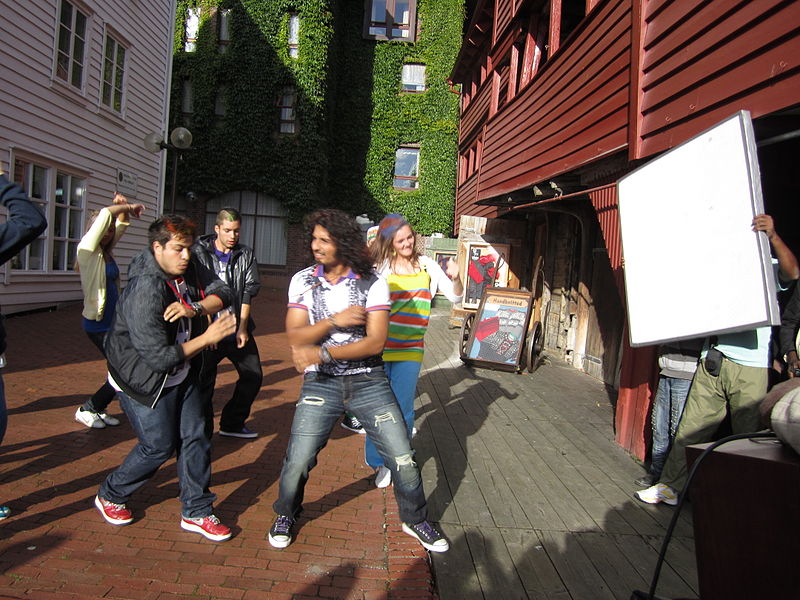
How to become a filmmaker

A far more productive approach – even on ultra-indie, zero budget projects – is to find a few people who are as passionate as you. It doesn’t even matter if none of you have any experience; you’ll learn by doing a lot quicker with more people on board, and also have a great deal more fun doing so.

But what about taking things to the next level? For that, it’s important to recognize that:

2. Rome Wasn’t Built in a Day

While anyone can be a filmmaker simply by virtue of picking up a camera and shooting film, becoming a professional filmmaker is a different thing altogether.

In an ideal world, those born with natural talent would be noticed right from the get-go and thrust into the limelight. Of course, we don’t live in an ideal world, so it’s important to have your own long-term plan in place. That may mean spending a lot of time working low-end runner and camera jobs before being given more senior roles, although attending filmmaking school and gaining recognizable qualifications in the field can put you way ahead of the game.

filmschool tips

In short, lucky breaks will undoubtedly come your way but don’t hang your hat on the hopes that they’ll arrive any time soon. Focus on honing your talent and putting in the hours, and the opportunities will fall into place naturally.

With that in mind…

3. Revel In The Small Victories

It’s always easy to compare your Chapter 1 with someone else’s Chapter 20, but ultimately it’ll get you nowhere.

Your career in filmmaking will, hopefully, be a long one and filled with many ups and downs along the way. Be sure to not give yourself too hard a time when things go wrong, and remember to enjoy those blissful moments in which everything comes together… even if it’s something as simple as having a choice of filter pay off in the final cut.

4. Don’t Just Shoot. Read.

These days, even being extraordinarily talented at the art of filmmaking isn’t enough. To really succeed in the industry, you also need to keep on top of the industry itself, and that includes all of the goings on in terms of trends, business developments, and who all the movers and shakers are.

film industry blogs

Reading the trade publications – things like Variety, Hollywood Reporter or TV Week – are a great place to start, but they aren’t exactly cheap. However, you can always make your own RSS feed using an app like Feedly to create a morning reading list of free blogs that cover industry news.

5. Be Kind to Others

The last bit of advice – and one that anyone can live by – is a fairly easy one to put into practice.

It may feel like Hollywood is a gigantic behemoth of an industry, and in terms of the money it generates, it is. However, it’s a surprisingly small place when it comes to making a name for yourself; it’s a community of sorts, and one in which your reputation is your main calling card. Karma spreads wildly, both good and bad, so be sure to put your best foot forward going in.

More than anything, pay it forward. If someone drops your name and hooks you up with a sweet filmmaking gig, don’t forget to do similar favors to others.
filmmaking community

It’ll cost you nothing, and either way, the filmmaking community is a great one…

… let’s keep it that way.
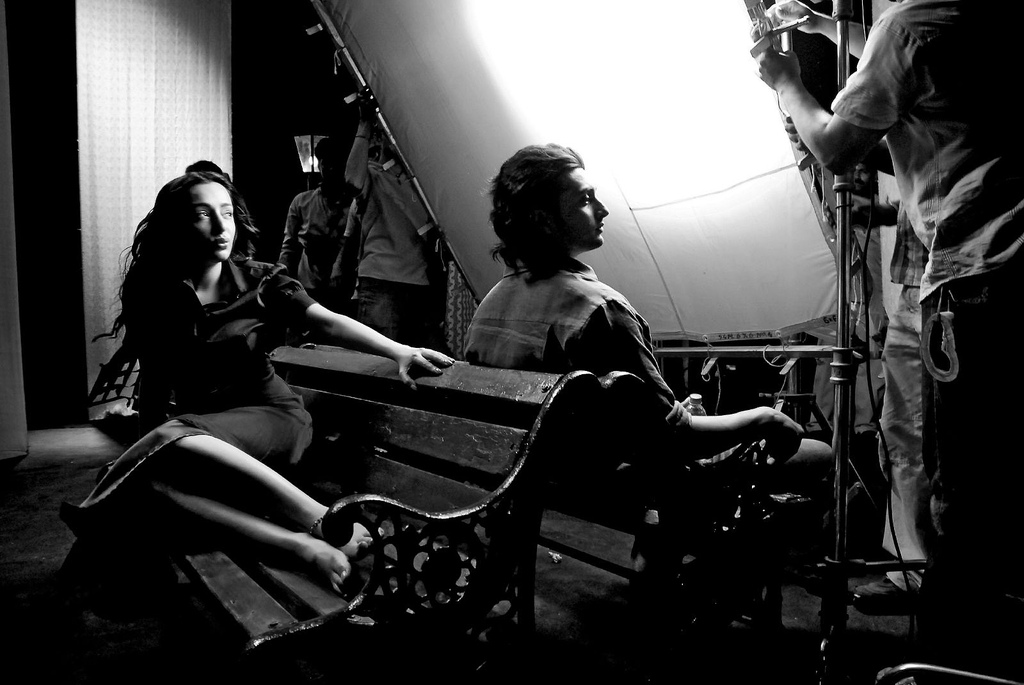
Six Tips for Becoming An Actor

Tips for becoming an actor

In the movie A League of Their Own Tom Hanks says, “If it wasn’t hard everyone would do it.” He was speaking of becoming a professional baseball player, but his words also apply to becoming an actor. It may not be easy, but there are proven pathways that any aspiring actor can take to further their dream.

Here’s our six tips on how to succeed in becoming an actor for film.

1. Study the Craft          

A person wouldn’t perform surgery without going to medical school, so why would a person perform on film or on stage without going to acting school? Studying the craft of acting is the best way to establish a foundation. Acting schools teach techniques and provide resources in a structured curriculum that helps beginners learn the acting ropes. Most accomplished actors have at least some formal training from an acting school.

If you can’t enroll full-time in an acting school, consider attending acting workshops and classes that are offered locally. You will have the chance to learn about acting and the entertainment industry while networking with other artists.

Additionally, actors can study on their own time by reading acting books and plays to increase their knowledge. Also, watching movies with an analytical eye is a great way to learn about film acting.

2. Audition, Audition, Audition

If training is practice, then auditioning is the actor’s game. After you have a solid base of skills and a monologue or two memorized, it is time to begin seeking out acting roles. Student films and community theatre are excellent places for beginning actors to audition. Another advantage of attending an acting school is that they offer auditioning opportunities for their students in films and plays.

Auditioning for roles is a skill, and the best way to develop your auditioning skills is by auditioning. As you progress up the audition ladder, auditions will become more demanding and experience in the audition room will serve you well.

3. Build Your Resume and Take Some Headshots

Once you have landed a few acting roles, put together a resume that you can bring to future auditions. An acting resume is a quick way to show casting directors that you are an experienced actor. Have a digital copy for e-mail submissions and updated hard copies on you at all times.

Good headshots are perhaps the most important component of a good resume. Headshots make the first impression on casting and should communicate type, personality, and emotion.

Believe it or not, you can start auditioning for acting roles without a headshot and resume. Have a friend with a nice camera snap a few photos and use them to show casting directors until you can have professional portraits taken.           

4. Get an Agent When You Are Ready

When the time is right, and you have accumulated enough experience, you can begin to research talent agencies in your area in the hopes of finding an agent. Talk to your friends and other actors about their agents and decide which agency is the best fit for you.

Having an agent is a nice luxury, but for a beginner it is more important to focus energy on improving as an actor. Even so, it is helpful to have the future in mind while building your acting career and searching for an agent is an inevitable step for a professional actor.

5. Practice Daily to Stay Sharp

Unemployment is a part of life as a working actor, but dry spells between jobs are no excuse to let acting skills go dull. Classes and workshops make excellent practice grounds for actors. Also, involvement in stage productions or on film sets, even if you aren’t acting, is a chance to improve by learning from others.

Actors can practice their craft independently with voice exercises, script analysis, and monologue practice. Any activity related to performance, such as singing and practicing impressions, are other fun ways to practice your skills.

6. Market Yourself

Actors are small business owners and need to market their services to continue working. Social media outlets like Facebook and Twitter provide exposure to a wide audience. Creating your own actor web site is a great way to advertise your skills and acts as a reference for casting directors. Finally, video sites like YouTube and Vimeo are excellent self-marketing opportunities to display your acting reels and past projects.

There are no rules to follow if you want to become an actor, but the steps above make a loose guideline. Most importantly, actors are doers who understand the challenge and rise to meet it. In A League of Their Own, Tom Hanks makes another great point about becoming an actor when he says, “It’s supposed to be hard…the hard is what makes it great.”

Ready to take your acting career to the next level with a degree? Explore our Acting for Film degrees and conservatory programs to find one that will help you land the next big gig.


Image Source

Localizing A National News Story

Making national news local

In today’s multimedia world, a piece of news, either local or national, can go viral in hours. Anything from a celebrity scandal to a cute animal picture to a politician’s faux pas can become the story of the day. Because of this phenomena, it’s become increasingly common for journalists to adapt these broad-appeal pieces for local audiences.

[su_note]Pursue a future in broadcast journalism. Learn more about the School of Broadcast Journalism at the New York Film Academy. [/su_note]

Helps Small-Market Broadcasters

Adapting national topics of interest for local audiences can be helpful in small markets where big news doesn’t happen every day. Imagine you’re an evening producer at a small-town television station. The weather is nice today, there weren’t any car accidents or fires, no one knocked over a convenience store, and that missing Golden Retriever has been found and reunited with his family. How are you going to fill the five, six and ten o’clock news broadcasts?

You could always lead with weather. So what’s if it’s sunny and clear and going to stay that way for the next week? If you’re lucky and you have an especially personable meteorologist, maybe he or she can kill two minutes talking about how nice it is outside and what a great day it would be for fishing or other outdoor activities. But eventually, you’re going to have to talk about something else.

Now what? Maybe you could get a local official to talk about a public safety issue, like wearing seat belts or preventing forest fires. That kills another two minutes, but if your audience is still conscious afterward, they’re going to want to hear about something else.

That’s where your viral news story comes in. You already know people find it interesting, because they’re arguing about it on Facebook, right? You might be able to pull a package from your station’s national network, but if you want to make the story new and fresh for your viewers, delivering local reactions is the best idea. Send a reporter to the park, the mall, or the nearest sidewalk to get responses from your own audience.

Not Just for Slow News Days

Slow news days in small towns aren’t the only opportunities to localize national stories. Even if there is ample neighborhood news, cute or funny viral videos make good kickers. News about serious topics can be adapted by interviewing local individuals who have had similar experiences. For example, if Caitlyn Jenner’s Vanity Fair cover is trending, you could interview local transgender people about their experiences transitioning.  Do they feel that Jenner’s experience was easier because of her celebrity status? Have they suffered discrimination in their local community? What local laws are in place regarding discrimination against transgender individuals? This provides a new angle that social media might not have covered, and helps viewers see a subject in the context of their own neighborhood.

Top 100 Markets Also Benefit

Localizing widespread news isn’t limited to broadcasters in small markets. Producers in bigger markets also want to engage viewers with social-media popularized stories that interest them. National news items can be adapted to a metro area by polling the audience to show how local viewers feel about an issue, or finding statistics on how many people in the area are affected by a problem. Local politicians are often willing to comment on the news item of the day.

Good for Both Television and Radio Broadcasters

National news stories offer opportunities to engage audiences for both television and radio journalists. TV stations can create packages with local angles on big news; radio broadcasters can do the same, but they often have additional opportunities. Call-in shows on local radio often feature a mix of local and national news topics. Deejays can adapt a national topic with only a few minutes of research. The radio host simply reiterates the facts of the story, takes calls from viewers, and asks questions about their responses.

When doing this type of segment, it’s important for the host to feature callers with differing opinions, so the conversation doesn’t start to sound one-sided. Regardless of his or her personal feelings about an issue,  the broadcaster should show both sides of an issue, especially with polarizing topics. As is the case with television news, asking callers how they see a national issue play out in their own community is important.

Gives a Boost to Social Media Sharing

Just sharing a viral story from a local TV or radio station’s national affiliate on social media can help the local broadcaster gain shares, likes and comments on social networks. This is most effective when the local affiliate adds a question and asks for audience opinions, instead of just re-posting the video or story.

Helps Local Broadcasters in Multiple Ways

Adapting a national news story for local audiences has many benefits: It helps small-market journalists through slow news days, improves social media reach, engages local audiences with stories they’re already interested in, and allows reporters to learn more about the opinions and concerns of their audience members.

Click here to learn more about how to adapt a national news story for local coverage.


Image Source

Learning From The Best: Fighting Games

Fighting Video Games

Last on our “Learning From The Best” series is a genre that only recently began making a comeback after a few years of seeing little attention. For many of us, it all started back in the late 80s and early 90s, when teenagers and adults alike flooded arcades to see who was the best at Street Fighter, The King of Fighters, and other great titles. Console gamers also enjoyed a rich library of fighting games throughout the decade, with groundbreaking (and often controversial) games like Mortal Kombat, Tekken, and Marvel vs. Capcom.

But eventually the genre started suffering a descent in popularity that would continue for nearly two decades. Plenty of great games from renowned franchises were released, but it was clear that fighting games were past their most prominent days. Fortunately, our fire for these games began growing again with the help of titles like Super Smash Bros, Street Fighter IV, and a few reboots.

The following are some ideas that we agree help make a fighting game both irresistible to play, and fun to watch:

Characters That Stand Out

It doesn’t matter how great a fighting game’s mechanics are, or how large their character roster is, if every fighter feels the same. In fact, they should not only have unique movesets, but should also look attractive and interesting. We’re not saying that one or few characters can’t play somewhat the same, like Ryu and Ken from Street Fighter, but there should be some variety or else your players will quickly get bored.

Besides the fast-paced gameplay, BlazBlue has always attracted gamers due to its colorful cast of characters. Robotic girls with floating swords, black blob-like creatures, giant red cyborgs, and the inevitable scantily-clad girl with animal ears; suffice to say, there’s no lack in diversity. But more importantly, every character not only looks different, but also plays nothing like the rest. Even if your fighting game ends up having less than 10 characters, make each one of them fun to play and you’ll have no problem gaining a crowd of fans.

A Great Story Mode

Truth be told, the average fighting game enthusiast isn’t likely to invest their time and money in a title simply for its single-player mode. This may be because this genre, which is far from the best in terms of a storytelling tool, is more about competing against other human players. However, it’s a huge plus when there’s a good story mode that lets you get familiar with characters, learn interesting backstories, and more.

A well-crafted game that ended up being a major success, both critically and commercially, Soul Calibur II had one of the better single-player modes of any fighting game at the time. It involved completing a variety of missions that offered interesting story texts as well as gold, which was used to buy new weapons and other unlockables. Watching the narrative unfold as you fight with characters wielding an arsenal of different weapons was far more enjoyable than the “fight through the roster” story modes that other games have.

A Fun, Approachable Combo System

There’s nothing more fun that putting together a string of hits that completely devastates your foe, especially when you’ve spent hours trying to perfect that very combo. At the same time, it’s easy for players to pick up a fighting game once and never touch it again if they find themselves frustrated by the fact that it only takes one failed block for their opponent to bring their health down to zero. In other words, combos should be fun to perform but not impossible to break out of.

Although there are plenty of good examples, we can’t help but go with Tatsunoko vs. Capcom. Despite being a Wii title with a roster filled with Japanese anime characters, it was praised for serving as the return of vs.-style gameplay. These titles have a mechanic called “Mega Crash” that can be performed at almost any time to break your opponent’s combo.

A Dab Of Innovation

To the average person, every fighting game appears the same. After choosing your characters (and sometimes stage), the players then press buttons either wildly or intelligently until one of the two is defeated. But to a game designer and avid fighting gamer, this is hardly the case. We know why Marvel vs Capcom, Tekken, and Guilty Gear, – or Dead or Alive and Killer Instinct – are different. To anyone considering developing their own fighting game, we recommend that you study how the little gameplay differences, not visuals or story, are what  truly what set them all apart.

Of course, there’s only one game series we can think of that was infused with enough novelty to truly feel unlike any other fighting game out there: Super Smash Bros. Now one of the most popular games of the genre, the original Smash was groundbreaking for its gameplay that involved trying to knock opponents off the stage instead of depleting a health bar. Four players, unique character playstyles, and a percent-based system are a few of the many ways Nintendo did what they do best: innovate.

[su_note]Want a career in game design? Learn more about the School of Game Design at the New York Film Academy. [/su_note]

In Celebration of James Horner’s Lifetime of Work

This morning, the world woke to the news that one of Hollywood’s most celebrated composers, James Horner, is no longer with us.

The tragic news was broken by his assistant, Sylvia Patrycja, just before midnight on June 22. It is understood that an earlier report of a light aircraft registered under Horner’s name crashing just outside of Los Angeles had been filed earlier in the day, but it was unknown at that time if the famed composer was on board.

James Horner

“We know it’s his plane, and we know we haven’t heard from him,” Jay Cooper, Horner’s long-time attorney, concluded in a statement to The Hollywood Reporter. “I’ve checked with the other reps.”

With the untimely passing of the 61 year old James Horner all but officially confirmed, we pay our respects to him here with a retrospective on the prolific composer’s incredible work over the decades.

The Lady in Red (1979)

James Horner’s first ever major film score, way back in 1979. While the movie itself, which centers around the escapades of John Dillinger, didn’t receive much fanfare on or following its release, the score itself was the stand out element.

However, it wasn’t until a few years later that Horner garnered widespread recognition with his scoring work on…

Star Trek II: The Wrath of Khan (1982)

The title that arguably put the Star Trek franchise back on top, and launched the young James Horner on to stratospheric heights. Curiously, the producers hired him off the back of his demo tapes and the fact that they were a big step away from the John Williams-esque sound everyone was trying to emulate… that, and because he was willing to work on a very small budget.

In hindsight, the Khan producers got themselves a bargain. By the time they came to re-hire him for Star Trek VI, they couldn’t afford his fee.

Aliens (1986)

https://www.youtube.com/watch?v=YmQ63XNfXeQ

After a string of notable movies throughout the first half of the eighties (including Hull, Cocoon, and Commando), Horner turned his attention to the incredible Aliens—an already great movie made even better through the film score, and one of the few sequel titles that critically rivals its predecessor.

It’s also an important milestone in Horner’s biography as the first title for which he was nominated for Oscar and Golden Globe. He would go on to be nominated for—and win—many more.

Field of Dreams (1989)

https://www.youtube.com/watch?v=lfi5nCTpEv4

A movie which James Horner very nearly turned down owing to scheduling conflicts, but took it on after being emotionally moved by a rough cut of the film. Horner was expected to create a huge orchestral soundtrack similar to his work on An American Tail, but ultimately delivered this atmospheric, ghostly masterpiece.

Both An American Tail and Field of Dreams also garnered Horner Oscar nominations.

Braveheart (1995)

By this point in time, James Horner was unstoppable. Between Aliens and Braveheart, he was producing scores for around five movies per year and had added titles such as The Land Before Time, Honey I Shrunk the Kids, Batteries Not Included, Willow and Hocus Pocus to his filmography.

1995’s Braveheart, however, was a true highlight in a career filled with highlights. Also part of his output this year were Jumanji and Apollo 13, all very differing scores in their own right.

Titanic (1997)

https://www.youtube.com/watch?v=_B8YL90G1Gk

Undoubtedly one of the most well-known film scores by Horner (and perhaps anyone save for John Williams), the Titanic movie’s score earned the composer more awards than we could possibly list here and remains the highest-selling orchestral film soundtrack of all time.

Avatar (2009)

https://www.youtube.com/watch?v=bVssxumkHI4

Fast forward over a decade—and with a slew of excellent scores in between—and we come to Avatar, James Horner’s third and final collaboration with James Cameron. As an example of Horner’s unparalleled work ethic, he worked solidly from 4AM until 10PM every day until completion, and promised Cameron that he wouldn’t take on any other work during production.

Alas, James Horner did not get to pen many more scores following Avatar‘s release, though there are still a few titles featuring his work coming this year.

Heartbreakingly, one of those titles is a documentary entitled Living in the Age of Airplanes which centered around his love of flying and prompted his assistant this week to write, “He died doing what he loved most.”

Rest well, Mr. Horner. You music will echo through the ages to come.

How to Get Started in Photography

Want to get started with photography, but don’t know where to begin?

You’re in the right place!

How to learn photography tips

Today we’ll be exploring some well-worn paths that many have taken to begin photography as either a rewarding hobby or even a lifelong career. First, however, you will need a camera with which to shoot, and that leads us into the first golden rule when it comes to learning photography:

1. You Don’t Need to Spend a Fortune

When you’re shopping for your first camera, it’s very easy to get blindsided by not only the huge array of options, but also the price.

Really, this is the single most off-putting thing for a beginner. When you see a camera like the Nikon D3X retailing for over $7,000 – and that’s before you even get to lenses – it’s easy to feel discouraged.

The good news? You don’t have to spend anywhere near that much to get started.

Getting started in photography

It doesn’t matter whether you’re rocking a high-end Hasselblad or are relying on a $150 point-and-shoot Canon, the principles of composition remain the same. Of course, you’ll want to upgrade at some point so that the quality of your work is as good as it can be, but you can begin your journey to photographic mastery on anything that captures images, no matter how cheap or basic it might be.

If you want to use an industry-grade camera regularly, but don’t want to buy one yourself, there’s always…

2. Photography School

While it’s true that anyone can self-teach photography, the benefits of attending photography school to learn the craft formally are undeniable. Naturally, it’ll accelerate the rate at which you gain usable knowledge of photography, but the sideline advantages are also plentiful.

Photography can be something of a lonesome pursuit, but being in a class with other like-minded individuals makes it a lot more enjoyable, not to mention the fact that it’s always creatively healthy to share different views and approaches. In addition, you’ll also get to put your hands on some of the latest technology, as well as get full access to what can otherwise be prohibitively pricey software… and for a beginner, that’s no bad thing.

3. Buddy Up

Since learning from others is a great way to find your own voice, it can pay dividends to find others in your area that share your passion for photography.

Even if you live in what you consider to be the middle of nowhere, you’d be surprised at the amount of people out there who are willing to meet up. The best place to start your search is via the Digital Photography Meetups page (or the Photography version if your interests lie in the traditional) – simply plug in your zip code and see who’s around.

In the off chance that your search turns up empty, why not be the one who makes the first step by putting out the initial call?

4. Try Something Different

A very common pitfall for those just starting out is to obsess over establishing one’s own style or niche. Go easy on yourself and try everything – differing subject matter, weird techniques, various post-processing effects, et cetera – and even though you might reject 90% of the methods or types of photography you try out, it’s the only way to have your own true “voice” come naturally to you.

how to learn photography

In short, never be afraid to experiment. You’ve got nothing to lose by doing so, and everything to gain.

5. Put Your Work Out There

Want to know something that really lights a fire under you?

Putting your work online – warts and all – for the entire world to see.

Whether its via your own photography website or something as simple as a Tumblr feed, uploading your photography can be a gratifying experience and one that drives you to improve as time goes by (especially if you treat it as a chronological record which you can look back on.)

It may sound terrifying at first, but really…

… what’s the worst that can happen?

Get yourself out there, and best of luck!

Square Enix Finally Gives Us What We Want

Sony E3 Final Fantasy VII Announcement

During their 2005 E3 press conference, Sony showed off the power of the PlayStation 3 in a way that Square Enix regretted for many years after. To confirm that they were supporting the new console, a tech demo was shown featuring a gorgeous new remake of the first few moments from Final Fantasy VII.

The 2,000 press members in attendance cheered joyously as they saw two of the most beloved characters in RPG history in what appeared to be a remake of the game. Instead, President Yoichi Wada would quickly confirm that it was merely a demo and nothing more, resulting in perhaps the biggest burn a developer has ever given its fans.

Gamers have, since then, clamored for a Final Fantasy VII remake where they can explore a familiar world and relive memorable scenes in HD. Square Enix would ignore the mass of requests and instead release the original title on the PlayStation Network as well as on other platforms like iPhone, Android, and Steam.

In fact, it would not be for another seven years that Square Enix would bring up the idea. In 2012, CEO Yoichi Wada explained in a shareholder meeting that a remake of the acclaimed RPG would not happen until a new Final Fantasy game exceeded the quality of the legendary 1997 title. The head of Square Enix even went on to say that remaking FF7 at the time would signal the end of the franchise.

Fast forward once again to June 15 of 2015, when Square Enix finally announced what many thought would never come. During Sony’s E3 press conference we saw our first glimpse of the official Final Fantasy VII remake via another beautiful re-imagining of Midgar. The reveal was followed with passionate applause and claims that, aside from Xbox One’s backwards compatibility, it was one of the best announcements of that E3 press conference.

If you were one of the many who were blown away by the original back in the PlayStation days, the following question is simple: why is an FF7 remake such a big deal?  But like any groundbreaking title from the past, it’s sometimes hard to explain to someone unfamiliar with just how innovative and important this particular JRPG was nearly eighteen years ago. Maybe this is why many are now wondering exactly how the remake will be handled.

The nostalgia factor has us remembering a powerful story linked together by meaningful characters, addicting gameplay, and a world unlike any other. However, anyone who takes a close look at the original title will realize just how poorly it has aged; not just in terms of visuals, but gameplay as well. Will Square Enix keep the same gameplay, turn-based combat and all, or will it lean more toward the real-time combat system of newer entries like the upcoming Final Fantasy XV?

Suffice to say, Square Enix has quite a challenge on their hands, as they work to create something that will please the nostalgic gamers as well as younger players. The latter might not have the patience for simple turn-based combat, random battles, and a storyline that by today’s standards isn’t as breathtaking as it was before. Even the original FF7 fanboys might be surprised by how much better the gameplay, story, and dialogue are in their minds after nearly 20 years.

Whatever direction they decide to go in, it’s just great to see them finally give fans what they’ve been asking for. Final Fantasy VII continued to be the most successful entry in the series with nearly 10 million units sold, which hopefully means that Square Enix will work hard to give us a remake that we won’t regret having asked for for nearly a decade.

[su_note]Want to design and develop video games? Learn more about the School of Game Design at the New York Film Academy. Campuses in New York and Los Angeles.[/su_note]

Image Source

Learning From The Best: Puzzle Games

Tips for designing a puzzle game

Although they’re certainly not for everyone, puzzle games offer a unique joy that few other genres can provide. There’s just something about confronting a problem that requires more than your average thinking to figure out, but even better is the feeling of satisfaction when everything finally ‘clicks’. Of course, most developers will tell you that designing a puzzle game is a puzzle itself – it requires quite a bit of thinking!

The following are a few ingredients for a puzzle game that not only draws players in but keeps them engaged after every challenge.

1. Simplicity Is Often Best

Some of the most popular puzzle games out there today consist of only one or two main mechanics. If you don’t believe us, consider the success match-3 games like Bejeweled, Candy Crush Saga, and Pokemon Shuffle have seen in the last few years. This is because most puzzle game enthusiasts are looking for the kind of challenge that is easy to get familiar with, but also has plenty of depth, which is easier to design when the puzzles are simple.

Arguably one of the greatest puzzle games of all time, and a perfect example, is none other than Tetris. Flipping a few different shapes around to fit them together and create horizontal lines sounds easy enough, right? It would be if the pieces didn’t start to fall faster and faster as you progress, creating a fun progression of difficulty that escalates the better you do. Sometimes, just adding a small twist to a solid gameplay mechanic is all you need to create a unique experience.

2. The Puzzles Should Have A Purpose And Feel Rewarding

Even if you come up with a ton of amazing puzzles to toss into your game, the player will probably feel empty after finding the solution if it didn’t push them closer to some kind of goal. In other words, the player should get the impression that there was a good reason for overcoming the puzzle, and that it didn’t exist just to stand in their way.

One of the better examples are the Portal games. When you think about it, these games are pretty much a string of puzzles you’re led through from start to finish. But thanks to amazing storytelling, the player feels satisfaction after every puzzle solved because they advance the story and are rewarded with more dialogue from GLaDOS.

3. Find Inspiration From Real Life

You can ask many puzzle game developers where they got their inspiration and we’re sure a good number will say it came to them while walking their dog or cooking a meal. Like any game genre, players tend to become more immersed into a game if it feels familiar to them – even puzzle games.

Consider World Of Goo, a game that blew everyone away when it released in 2008, and not just because it was made by two people in their spare time inside a Starbucks. This game involves using sticky blobs to build towers and bridges – things most of us see every day when we go outside or watch a movie, television show, and so on. 2D Boy somehow knew it’d be fun to use a group of gooey blobs to construct something capable of standing firm over various dangers.

4. The Puzzle Should Make Players Feel Smart

A prominent game designer recentlfy said that the key to crafting engaging puzzles is making the player feel smart after solving it even though the answer was obvious. This may sound silly at first, until you realize that every good puzzle game always presents the player with the tools needed to solve each challenge. That is to say, there was really only one solution to the problem, but it was only apparent after a bit of thinking on the player’s part.

Another tremendous puzzle game is Braid, which perfectly illustrates this idea. In Braid you are introduced with a new time-based mechanic in each world – rewinding time, zones unaffected by your time abilities, a shadow that appears after rewinding time, etc.

Players quickly get the hang of the world but eventually hit a puzzle that stumps them, which of course involves using the new mechanic in a specific way to solve it. This makes the player feel enlightened as they’re filled with a pleasure that only comes from figuring out a solution to a seemingly-impossible puzzle, even if afterwards the solution seems obvious.

[su_note]Want to design and develop video games? Learn more about the School of Game Design at the New York Film Academy. Campuses in New York and Los Angeles.[/su_note]

Image Source

5 Of The Best Space Documentaries Now Streaming

What lies beyond the confines of our own atmosphere is mind-boggling in the truest sense of the word, so it’s little wonder that space—and the stuff in it—makes for compelling subject matter when it comes to documentaries.

That said, it’s a double-edged sword for students at documentary filmmaking school looking to focus on the cosmos. For one thing, space documentaries have to rely on inventive ways to represent the subject matter visually since there’s usually no direct footage or images of deep space objects or abstract concepts.

Secondly, it’s tricky to balance the writingyou don’t want to lose 99.98% of the viewers who don’t know the intricacies of Minowski spacetime, but at the same time you don’t want to patronize them with details most 8th graders know.

What follows is a roundup of titles that serve as near-perfect examples of space documentaries which manage to tick all the right boxes. Set your warp drives to maximum as we chart:

The Best Space Documentaries Currently Streaming

1. Life in Our Universe

Life in our universe documentary

A six-part series lead by the hugely engaging (and award-winning) Dr. Laird Close, Life in Our Universe charts the progress of scientists and uncovers how our civilization is conducting the hunt for others. The question of whether or not life exists amongst the stars has always been an exciting one, and this series does the magnificence of the question justice.

Streaming on: Netflix

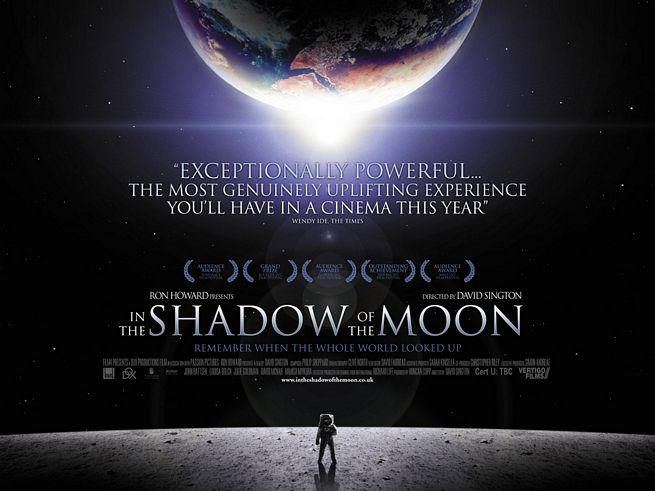
2. In the Shadow of the Moon

best space documentaries

By far the most comprehensive documentary about the Apollo lunar landings ever produced, this British-made documentary managed to do something never done before: bringing all of the key players of the moon landings together to reminisce on their experiences (even those who had previously been interview shy.)

Even those who think they know it all will be surprised at the amount of detail coveredif you loved Andrew Chaikin’s book A Man on the Moon or the HBO series it spawned (entitled From the Earth to the Moon), you’ll love this.

Streaming on: 4oD (may not be available in all regions)

3. NASA: The Space Shuttle

https://youtu.be/6aDDcyIk_0Y

Just as interesting as space itself are the marvels of technology that got us there, and this YouTube documentary is both a fascinating look back at the Space Shuttle fleet as well as a celebration of its time in service (even more poignant given that the last Space Shuttle was retired in 2011.) But we can sell this documentary about rocket ships with just one line: it’s narrated by William Shatner.

Streaming on: YouTube

4. The Journey to the Centre of the Universe

In the span of just 90 minutes, this National Geographic documentary covers a lot of ground—namely, from the sands of our own planet to the borders of the known Universe. While the special effects are somewhat rudimentary by current standards, it’s nevertheless one of the best space documentaries on YouTube.

Steaming on: YouTube

5. Cosmos

Screen Shot 2015-05-29 at 02.15.47

No list of the best space documentaries available for streaming would be complete without a hat-tip to Cosmos. These days Neil DeGrasse Tyson’s reputation as a compelling astrophysicist speaks for itself, and although the show has been aimed at a broad audiencemeaning the science is a little entry-level at timesit doesn’t make it any less enjoyable. Extremely impressive special effects, excellent animations, and every bit as good as you’ve no doubt heard.

Streaming on: Netflix

Know of any other fantastic space documentaries currently streaming that we should be watching? You know what to do – descend on down to the comments below and jettison your suggestion!