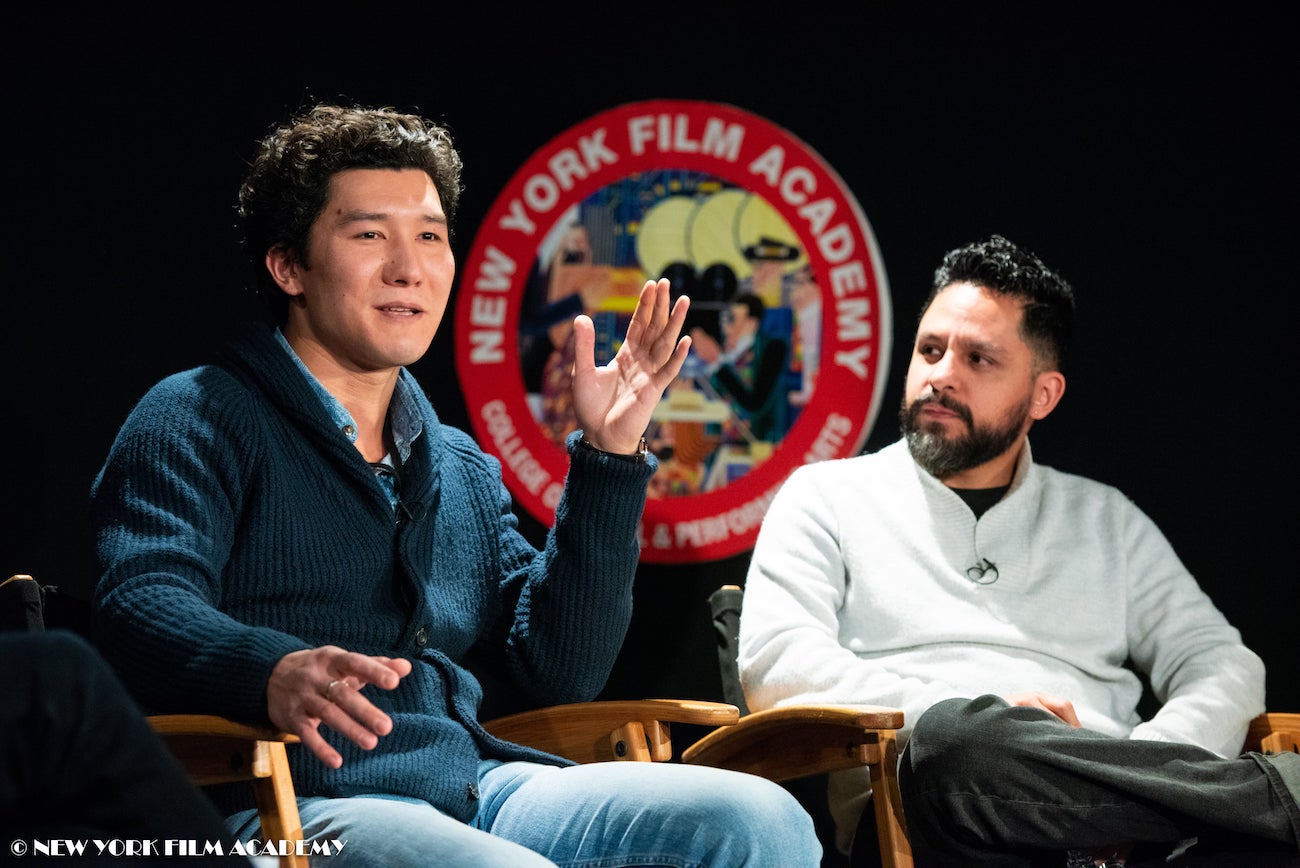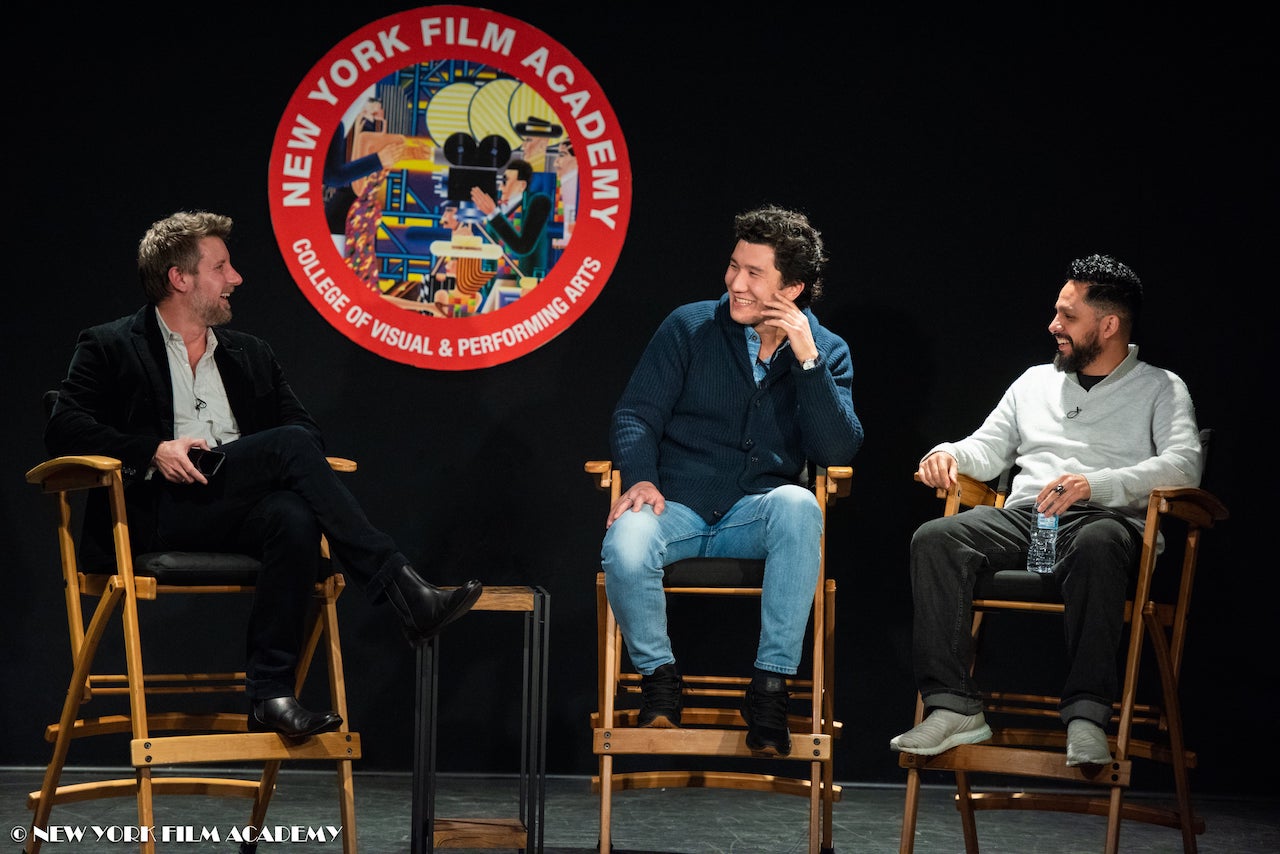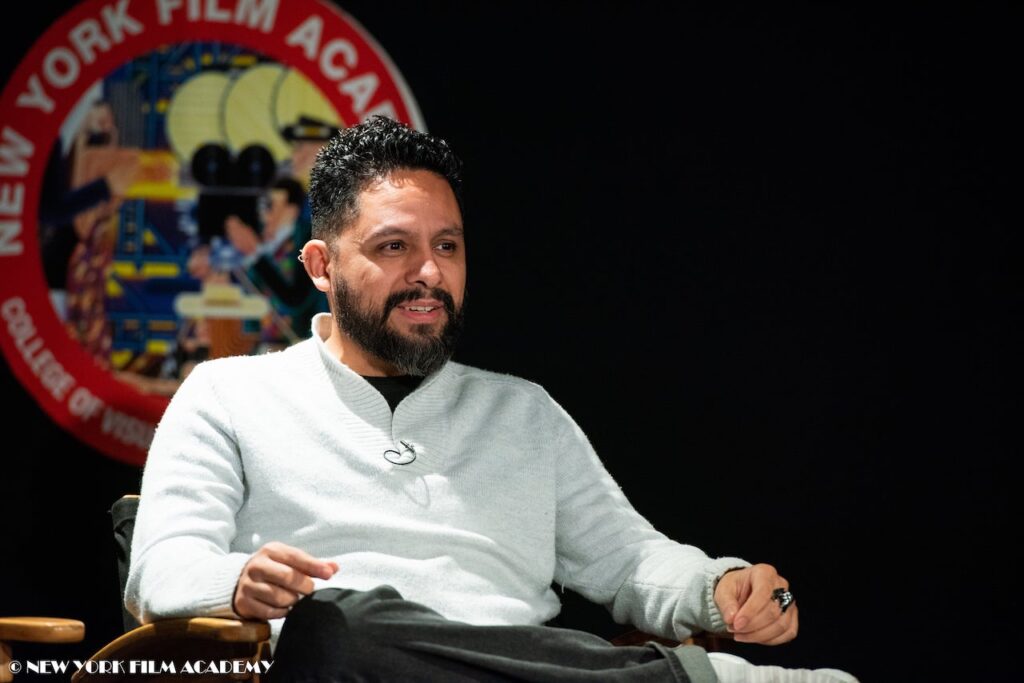
Q&A with New York Film Academy (NYFA) Filmmaking Alum Alexandre Kyriakidis

New York Film Academy (NYFA) Alum Alexandre Kyriakidis grew up watching movies, and eventually, started making his own. Kyriakidis attended NYFA’s 8-week and 12-week workshops in 2001 before going on to shoot multiple short films as well as over 50 music videos across the globe.

Kyriakidis hails from France from Greek and American parents, and has lived both in Europe and California, watching movies from his grandmother’s vast film collection nearly as early as he can remember. Those movies both inspired and influenced his own projects, which he started making at a young age and continues to make today.

Filmmaking runs in the family — Kyriakidis’s aunt is producer, director, and Oscar-winning actress, Jodie Foster. While Kyriakidis says their artistic sensibilities differ greatly, Foster has still appeared in some of his favorite films.

The New York Film Academy spoke with Alexandre Kyriakidis earlier this year about his background, his work, and about the four movies that had a lasting impact on his filmmaking aesthetic:

New York Film Academy (NYFA): Can you tell us a bit about yourself and what brought you to New York Film Academy?

Alexandre Kyriakidis (AK): I was born in France from a Greek father and an American mother, and have been living in Europe most of my life with some extended periods in the USA, in California mostly. I started making backyard films in high school until landing an internship at 14 years old for the French visual effects company DUBOI (they don’t exist anymore), who were doing Alien: Resurrection at the time.

What brought me to NYFA was that after graduating from high school I couldn’t find a film school that I liked; most of them would rely too much on theory and not enough on practice, and I also didn’t want to sit in classes for hours learning about the films of Rainer Werner Fassbinder for example, when I had already seen these films and built my own film education since I was a kid.

But then I learned about New York Film Academy and it suited me perfectly; it was all about practice and hands on, where just after the first day you would already touch and use the most important tool in filmmaking — the camera. It was all about living, breathing, and dreaming films.

NYFA: What was your time at NYFA like?

AK: It was the best time in my life, because nothing around me was important, nothing else mattered but films, and I was surrounded by people just like me — people who loved films more than anything.

I also met some of the most amazing people in my life, other students with whom I shared the same passion, other students with whom I can talk about movies that weren’t just blockbusters, and students from all over the world who became friends and with whom I still communicate today.
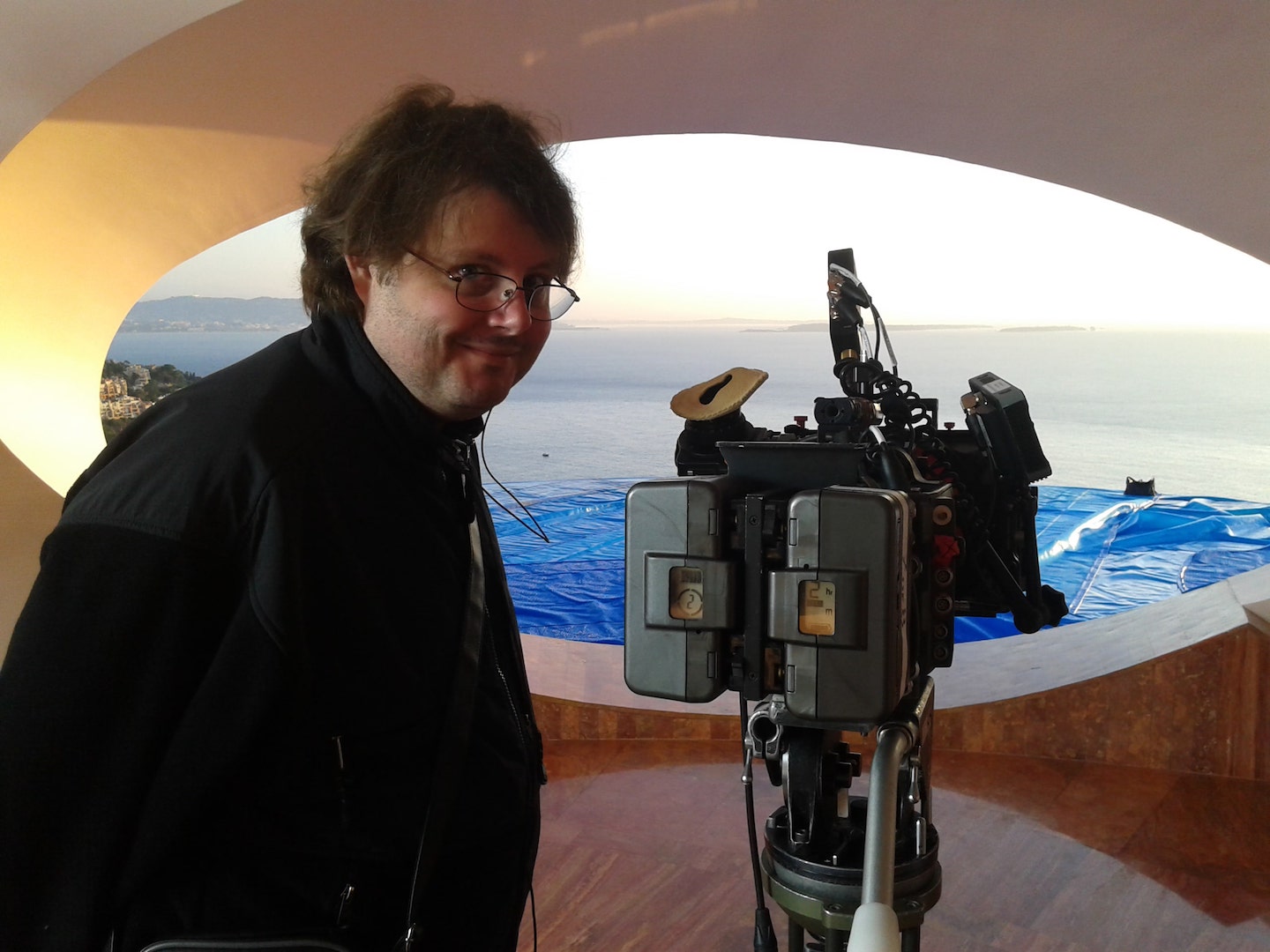
Alexandre Kyriakidis

NYFA: Why have you decided to focus on directing?

AK: I always wanted to tell stories, to make movies, but I wanted to be the person who was in charge of the creative aspect — deciding what was going to be on the screen, basically put on the screen what is in my head — and that is why I wanted to become a director.

I have had many influences from when I was a kid, and even today I’m influenced by many great filmmakers. But when I was a kid, four movies had a big impact on me, and three were directed by the same person.

First was Raiders of the Lost Ark by Steven Spielberg. I think I saw that film on VHS when I was four or five years old, and I remember seeing it in Greece at my godfather’s home. Looking back at it today, it’s a harmless film, but … leaves a big impact on you as a kid.

The other film was Robocop, that I saw on VHS at six, and when I first saw it, it felt like if I was watching something forbidden, something I wasn’t allowed to see … Then when I was eight, Total Recall was being replayed in Greece one night on a giant screen on the beach, and my dad and godfather took me to see it.

And then when I was ten, I was in Los Angeles one summer and my grandmother showed me Basic Instinct. So as you have guessed, Paul Verhoeven had a big impact on me.

After that my grandmother, who owned at the time a huge film collection, started to show me everything she owned, from the films of Werner Herzog, to the classic Italian films like Last Tango in Paris, as well as the films of Akira Kurosawa, the films of Stanley Kubrick, French films, German films, Soviet films — I basically saw everything, and I mean absolutely everything.

So my film education came from there, and it’s after seeing all these great works of art that I wanted to make films myself.

NYFA: What drew you to making music videos?

AK: I had always wanted to make music videos, but never really knew how to get into it. All I knew is that great directors like David Fincher, for example, started in music videos and still make some once in a while.

In my case, there is this guy I know in England who was starting his own music company after owning an event company for whom I shot videos in nightclubs, and he asked me to make a music video for a Romanian singer.

And I had never worked on a music video before, never learned how to make a music video, so really I didn’t know much, but I told him I would do it. A few weeks later we were shooting on the Mediterranean with a skeleton crew and a Canon 5D camera.

And after the success of that music video, a second music video was made for the same singer; again it was a success, eventually new artists were signed up, mostly metal and hard rock, so I ended up doing more music videos.

Eventually other music companies from all over Europe, even Russia, contacted me, and I made music videos for them. Some being hits, some doing well, others doing less well, and once in a while there is a controversial one that ends up in flaming internet debates.

Now even after making 50 music videos, I still feel that I’m learning more every day, and each one of these 50 are like making a new short film each time. A good thing about music videos is that they allow you to experiment, to test new tools or to try things you would never dare doing in a movie.

NYFA: What kind of music videos do you prefer working on? Is there a particular genre of music you feel lends itself better to the medium?

AK: I have done mostly rock, metal, and gothic music videos, but I have also done a lot of pop music videos in Eastern Europe, in Southern Europe, and in Russia. My first music video was a pop one.

My taste in music is rock with a preference for ’90s and ’80s rock. I have always been a rock fan, so I’m always enjoying making rock music videos.

But I still feel pop music videos are the ones that are the most fitted for music videos, because the songs are often so overproduced and have so much Auto-Tune in them that they are often recorded with a music video already planned.

Rock music is made for the stage, pop is made for the screen.

NYFA: Can you tell us about your short films? What are they about and what inspired you to make them?

AK: My first short film, Blues Stop was made right after NYFA, shot on Super 16mm. It’s a thriller about a Bible salesman who falls for a psychopathic, beautiful female serial killer who ends up framing him for murder. The film was never shown in its home country of France, but it was screened in festivals all over the world, including in Los Angeles.

My second short film, C22, made many years after my previous one, is a sexual thriller with a dose of action, a dose of horror — it’s about a kidnapping gone wrong. This film once again didn’t get shown in any festivals in France, but was shown in festivals all across the world, including North America.

And my third short film, Sfagi, is just a small-budget martial arts action movie about capturing a fugitive. Originally it was just going to be a demo reel for a group of martial artists and stuntmen, but I managed to convince them to make a short film.

You can check out Alexandre’s film below, though speaking with NYFA, he made it clear that since it was his first film straight out of school, he finds it very hard to share with anyone these days.

“I will always be proud of it,” he says, “on the other I have made so much progress since.”

But even in his first film, his talent is evident and shows the potential of his craft that would come later. Alexandre also made sure to give props to his experienced crew, many of who had just come offLove Actually and Neil Jordan’s The Good Thief. The director of photography of the film was focus puller on Star Wars: A New Hope.

NYFA: Besides Raiders and the films of Paul Verhoeven, what are some of your other favorite films or types of films?

AK: I don’t have a type of film, I like any film — science fiction, drama, horror, action, or comedy. I can enjoy just as much a classic heavy duty drama just like I can enjoy an old ’70s exploitation film.

But my all time favorite film, the one that is all the way up there, would be Gone with the Wind and then I would say the following: The Good, the Bad, and the Ugly, Blade Runner (the original one), Ran, Suspiria (the original one), One Flew Over the Cuckoo’s Nest, Léon: The Professional, Schindler’s List, and I can go on because I have actually done a list of my 200 favorite films of all time. But as you can see in just these titles, it’s very diversified.

NYFA: What did you learn at NYFA that you’ve applied directly to your filmmaking?

AK: I learned to think and not be impulsive. By that I mean back when I was at NYFA we still shot on film, meaning that each time we pressed the camera trigger it would mean money being lost — so if you failed your shot, or if an actor messed his lines, that is money lost that you will never see again… While today with digital we can shoot all day; sure it saves a lot of money, but you end up not thinking as much anymore before shooting. While I, because I learned on film, I tend to treat digital the same way I learned to treat film.

Also the fact that NYFA is very hands on, I’m not afraid to get my hands dirty… how many times was a prop in the way and I would just go and move it myself, instead of having the 1st AD call the Prop Master so he would come and move it? How many times have I picked up the camera myself and taken the shot myself, and little details like that?

NYFA: What other projects are you working on or do you plan to work on?

AK: I have been trying for years now raising enough money to make a feature film, it’s a vampire film — it’s at the same time a sexual thriller, a horror, and a romantic film. But it’s not easy.

I’m also trying to make another short film named Femme Fatale that is a tribute to the old “film noir” movies of the ’40s and ’50s. And I’m trying to finish a script named The Lobster Shift that is a mix between After Hours by Martin Scorsese, Into the Night by John Landis, and the Japanese anime Cat’s Eyes.

NYFA: How has your aunt, Jodie Foster, as either an actress or director, influenced your own work?

AK: Our works are the total opposite — she’s more cerebral than me while I’m more impulsive and react more by instinct. And you can notice it in her films, her films as a director are always very character-driven, while my works are more visually driven.

As an actress she happens to be in three of my all-time favorite 100 films — Taxi Driver of course, Silence of the Lambs obviously, and Bugsy Malone, a forgotten gem that happens to be Alan Parker’s first film.

It’s not an influence, but each one of my works — being a music video or a short film, even my scripts — she’s always the first person to see them (even sometimes before the actual producers or bands) or the first reader, especially when it comes to scripts; her advice and opinions are very precious, and help me to make them better.

NYFA: What advice would you give to students just starting out at NYFA?

AK: Be ready to live films 24/7 … try not going out at nights and have fun learning about your passion, and you are all in good hands.

The New York Film Academy thanks alum Alexandre Kyriakidis for taking the time to answer our questions and looks forward to following his continued success as a filmmaker!
New York Film Academy Los Angeles (NYFA-LA) Acting for Film Host Winter Season of Student Directed Plays

Starting in February, the New York Film Academy Los Angeles (NYFA-LA) Acting for Film department kicked off their series of workshop productions featuring plays directed by the students themselves.

The season kicked off with the first two plays—Dead Man’s Cell Phone by Sarah Ruhl, directed by Michael Gum (BFA Acting for Film) and Doll’s House Part 2 by Maame-Ekua Mensah (BFA Acting for Film.) Both plays were mentored by full-time NYFA instructor, Cathy Giannone.

“The Student Directed Plays are an experience that changes all that are involved,” states Giannone. “They are a valuable and important lesson in creativity and process. Everyone walks away having more confidence and a better understanding of the work.”

“I have learned quite a bit through directing Dead Man’s Cell Phone,” says student director Michael Gum. “As far as creatively, figuring out how to describe a vision in multiple ways so that everyone I am working with is on the same page.  Because the play is fantastical, bizarre, absurd, and at the same time talking about real issues, finding the balance of worlds and keeping everyone in the same world is one of the elements that I think is most important.”

Gum adds, “I also think that there are two important themes in the play. One: that while technology can be used to form connections, an obsession with it can alienate. And two: The difference between loving the idea of someone and actually loving someone. To me, both these themes are very relevant to today, particularly for students and those working to get in the film industry.”

[su_carousel source=”media: 31576,31575,31574,31573″ limit=”60″ link=”lightbox” target=”blank” width=”780″ height=”360″ title=”no” autoplay=”0″]

Student director Maame-Ekua Mensah had this to say about her experience directing Doll’s House Part 2: “I wanted to do this play to encourage the  audience to take a stand on their own opinions in the future, while still being able to see the logic in others’. The play discusses old perspectives on feminism, love, marriage, and commitment. We currently live in a society where it’s easier to agree with everyone because we are unable to keep the peace when someone has am alternative opinion. I believe people should be coming together, whether or not we have altering opinions, to advocate for the greater good for society. I believe that you can learn a lot from listening to your ‘opponents’ in life. Working on this play has also given me much insight on how to work with a cast and crew.”

[su_carousel source=”media: 31580,31579,31578,31577″ limit=”60″ link=”lightbox” target=”blank” width=”780″ height=”360″ title=”no” autoplay=”0″]

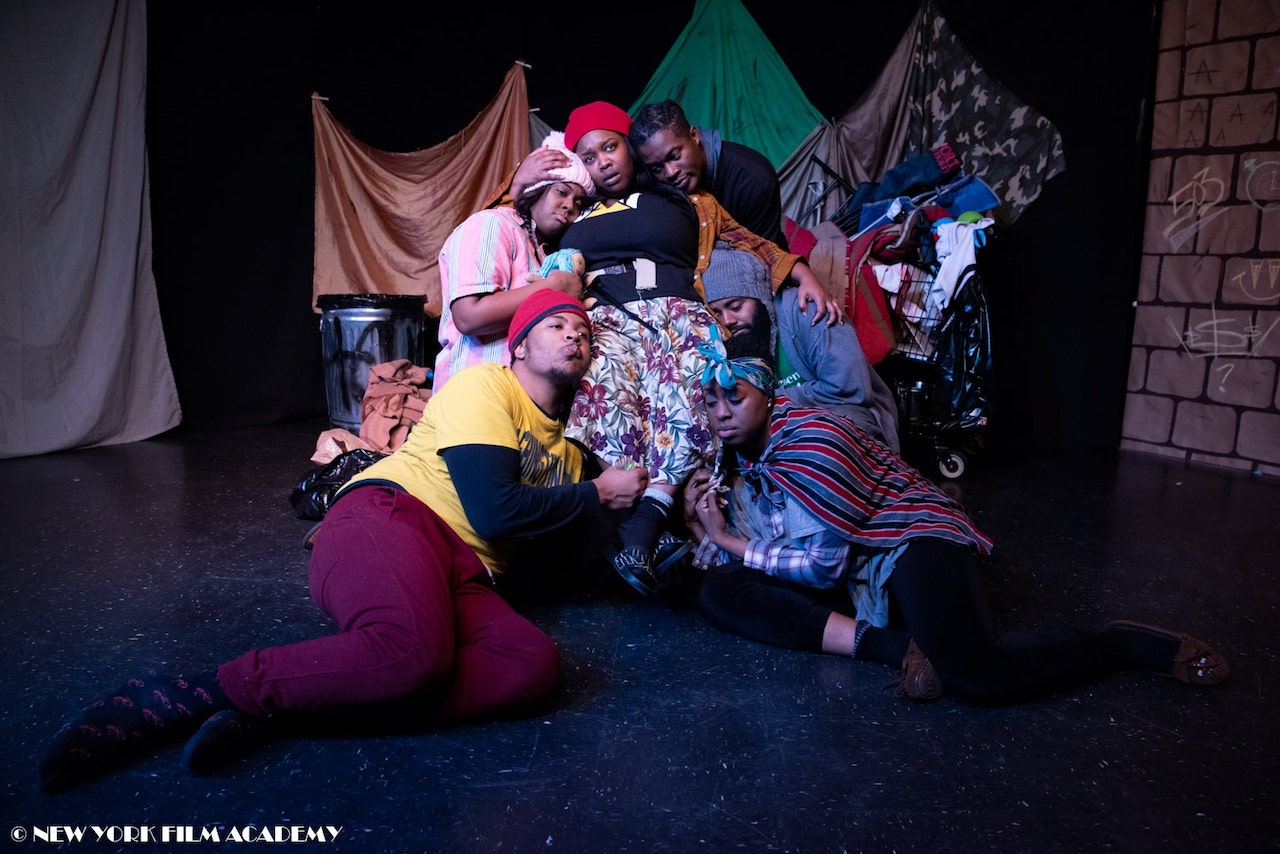
The third Student Directed Play by the NYFA-LA Acting School was a production of In the Blood, by Suzan-Lori Parks, directed by Hattie Sallie (BFA Acting for Film) and Cathy Giannone.

In the Blood tells the story of a homeless woman with five children by five different fathers in a society pitted against them. Speaking about her experience directing the play, student director Sallie says:

“I wanted to do this play because at the end of it, I cried and in the midst of the crying I asked myself ‘why?’ I wanted to explore my place in society and how I treat people who can do absolutely nothing for me. Then I decided that this would be an amazing, timeless play that I could put up because I wanted to try my hand at directing and I wanted the audience to take a look at themselves as well, have the kind of journey I had while reading In the Blood. 

“I learned so much from directing this play. I learned the importance of listening, hearing the writer’s intention, colors!!!. I think I have learned how to become a better actor because of it. I am so thankful for this opportunity because now I know the feeling of being on the other side of the casting process and how much I wanted the actors to come in and be ‘the one.’ I know how I loved when the actors came in prepared, when they worked with me, trusted me and not tried to be against me. I learned how much reading and replying to emails and text messages and notices are because I wanted my actors to let me know that they received all the information given. 

“I learned the importance of rehearsal—how you rehearse is the way you will perform—and how to communicate with actors, how to bring in the energy and uplift them when they needed encouragement. I could go on and on but I will leave it at: This was one of the best experiences of my life!”

In the Blood star MFA alum Demyra Ravyne Payne has this to say about her fifth production she’s acted in: “NYFA gives not only its students but its alumni the opportunity to do work we couldn’t do anywhere else. “I am very thankful for all the support NYFA has provided me.”

[su_carousel source=”media: 31583,31582,31581″ limit=”60″ link=”lightbox” target=”blank” width=”780″ height=”360″ title=”no” autoplay=”0″]

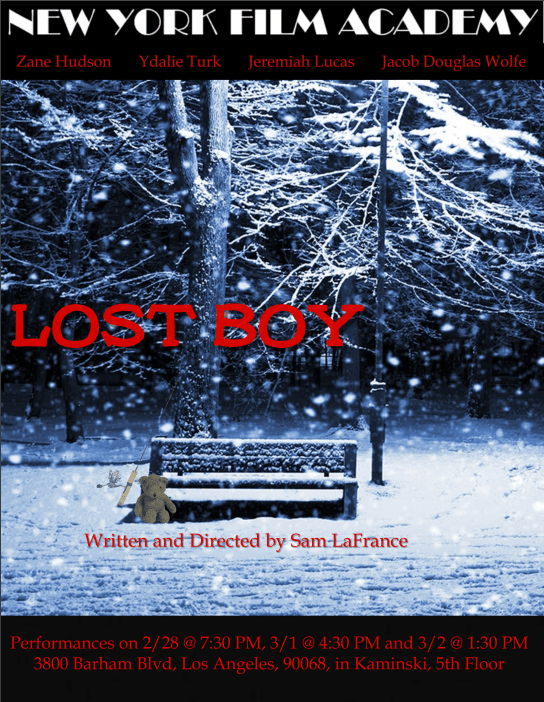
Thurs. Feb. 28 7:30pm The fourth Student Directed Play of the winter season was an original work from NYFA Acting for Film alum Sam LaFrance: Lost Boy, who also directed it, mentored by full time instructor David Robinette. 

The play tells the story of a man responsible for kidnapping a handful of children twenty-two years prior being released from prison.

“I saw a few Student Directed Plays and figured this would be a good opportunity to workshop one of my own projects,” says writer/director LaFrance. “It’s a great opportunity for anyone who loves theatre. You are completely immersed in it and that’s an amazing feeling.”

NYFA-LA Student Directed Plays Winter Season 2019
The final Student Directed play of the winter season was Tartuffe and was performed earlier this March. Tartuffe was written by Molière, translated by Richard Wilbut, and directed by Valerie Torres (MFA Acting for Film), mentored by full time NYFA instructor, Mary Sala.

[su_carousel source=”media: 31587,31586,31585,31588″ limit=”60″ link=”lightbox” target=”blank” width=”780″ height=”360″ title=”no” autoplay=”0″]

New York Film Academy congratulates the student directors of the NYFA Acting for Film Winter Season of Student Directed Plays on jobs well done! Bravo!
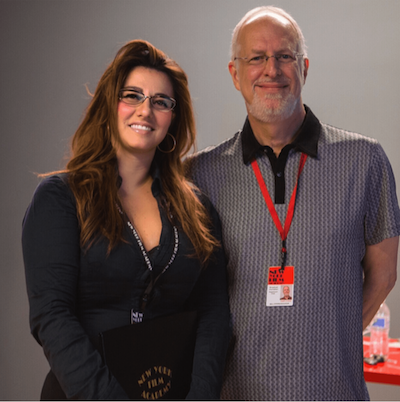
New York Film Academy (NYFA) Broadcast Journalism Alum Federica Polidoro Builds an Impressive Portfolio of Media Interviews

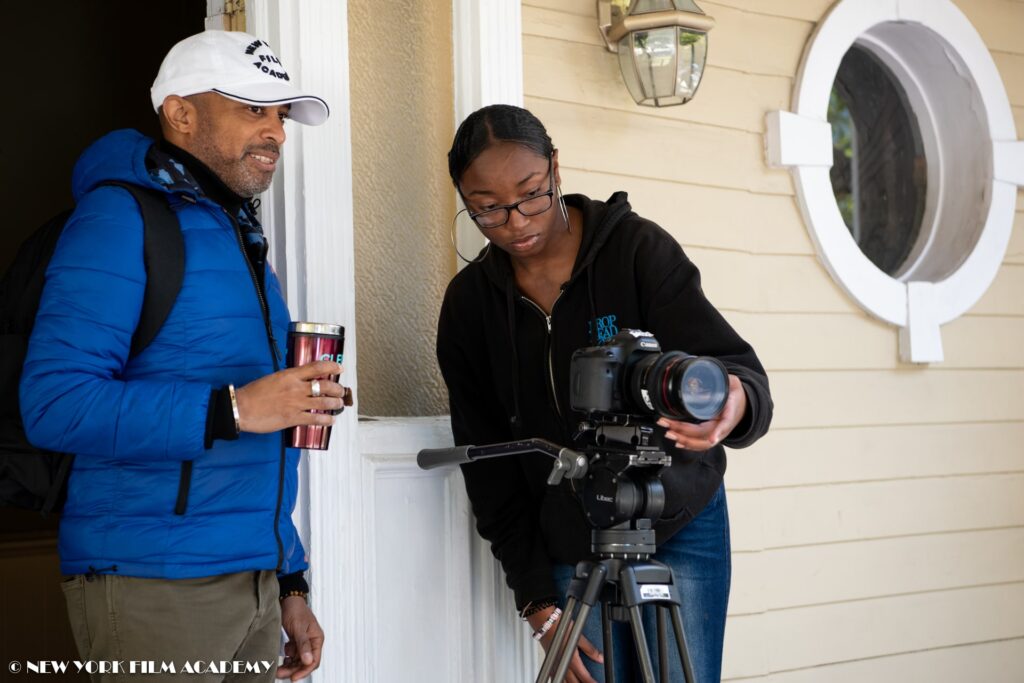
New York Film Academy (NYFA) Alum Federica Polidoro has kept busy since graduating the 4-week Broadcast Journalism workshop in July 2016, building a steady and impressive portfolio of interviews with several high-profile filmmakers and actors for multiple leading publications across the globe.

While at NYFA, Polidoro learned to to identify and make arrangements for story and interview subjects, choose and secure locations, prepare equipment, arrange preparation and setup of the locations, and make final technical checks. One piece she shot at NYFA was about the astrologer Angel Eyedealism. “NYFA is in my heart and I have wonderful memories about the program I attended,” Polidoro says about her experience at the Academy.

Federica Polidoro

Polidoro currently works as a freelance journalist for several primary publishing companies in Italy, and has already conducted several high-profile interviews, particularly in the film and arts industry.

One such Italian media company Polidoro freelances for is GEDI Gruppo Editoriale, and their national newspaper La Repubblica. This includes her work for Repubblica XL, the publication dedicated to music, comics, and entertainment, and L’Espresso, a prestigious weekly news magazine. Polidoro introduced for L’Espresso at the Cannes Film Festival last year, where they released interviews with filmmakers and actors including Sofia Coppola.

For Rolling Stone Italy, Polidoro reviewed Spike Lee’s BlacKkKlansman directly from Cannes, and was able to interview Best Supporting Actor Oscar nominee and NYFA Guest Speaker Adam Driver. She also interviewed veteran director Terry Gilliam about his decades-old passion project, The Man Who Killed Don Quixote, as well as legendary composer Philip Glass.

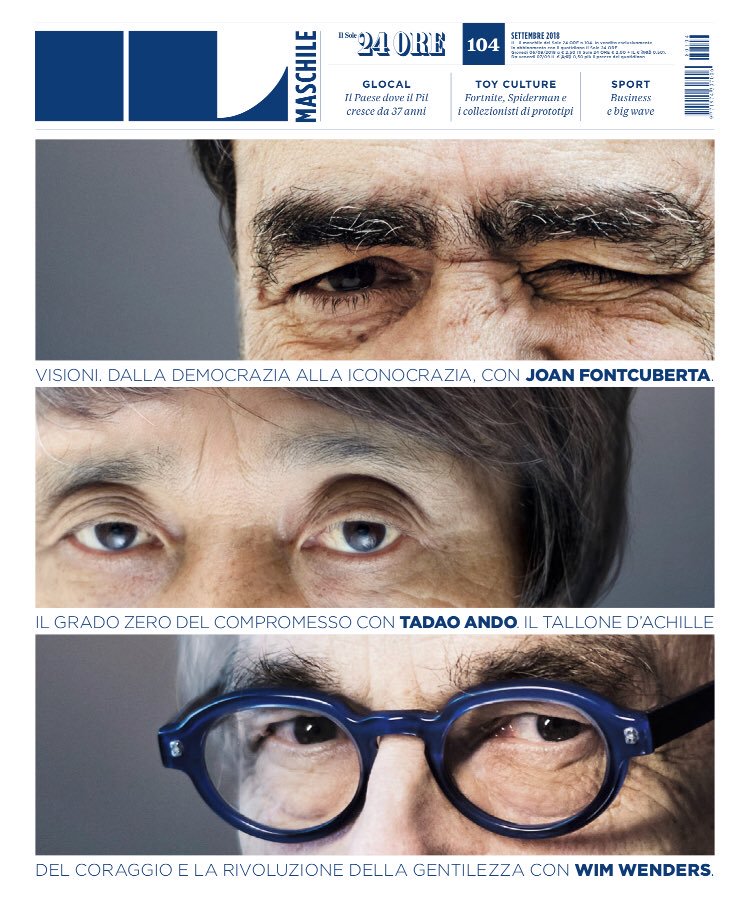
Polidoro also works with Gruppo 24 ORE’s Il Sole 24 ORE, primarily with their monthly magazine IL, where she has been able to write longer, more in-depth pieces. She earned a cover story when she interviewed filmmaker Wim Wenders (Wings of Desire; Paris, Texas), one of only a few directors to win the Palme d’Or, Golden Lion, Golden Bear, and an Academy Award.

Polidoro has also interviewed the Coen Brothers for their Netflix and Oscar-nominated film The Ballad of Buster Scruggs and Alfonso Cuarón about his critically lauded film Roma.

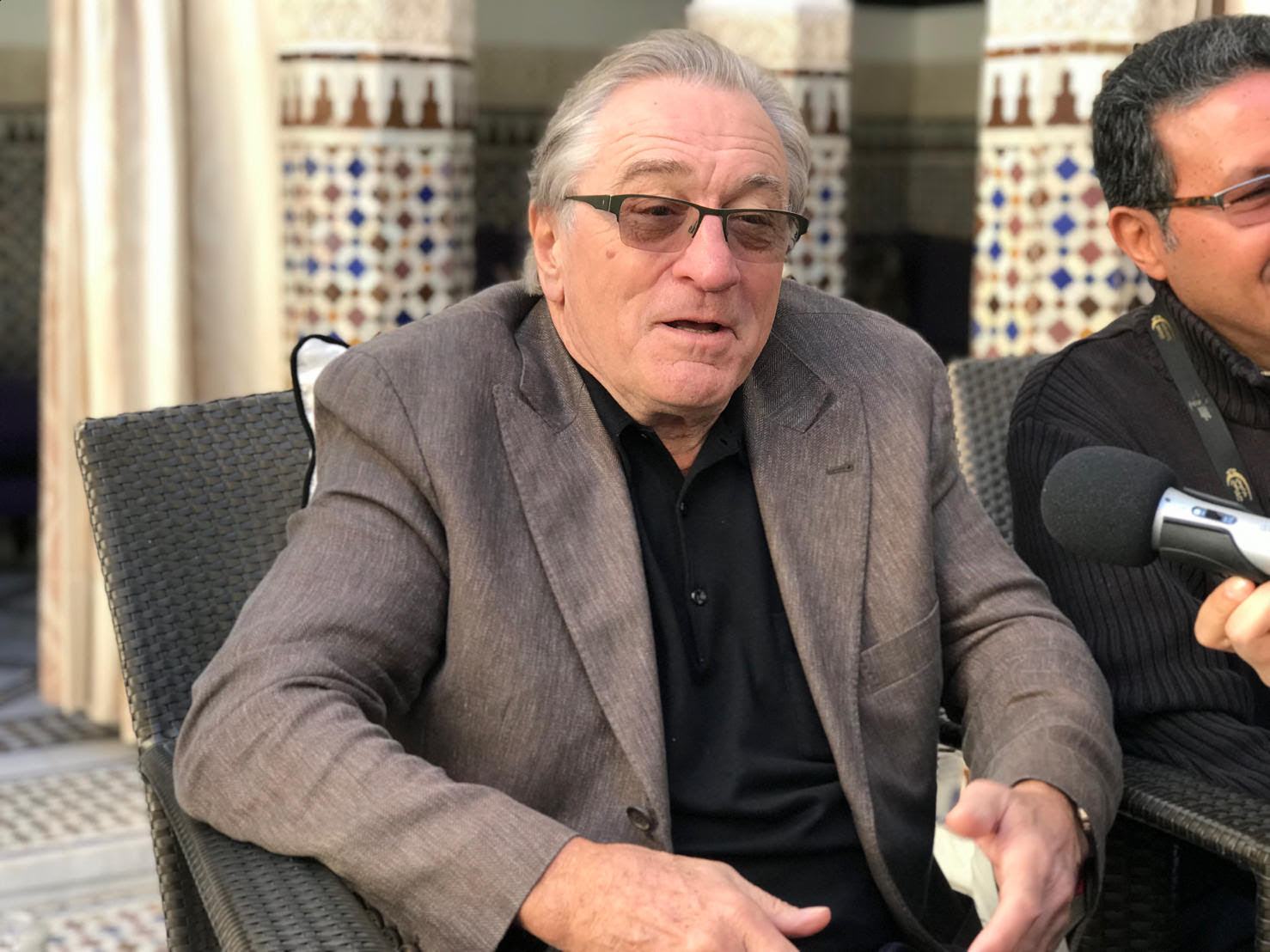
Recently, Polidoro was guest of King Mohammed VI and Prince Moulay Rachid of Morocco for the Marrakech Film Festival, together with other selected members of the international press (she was the only Italian female entertainment journalist of the group.)

At Marrakech, Polidoro interviewed Robert De Niro, Julian Schnabel, and Guillermo Del Toro, among others. Soon she will be launching video interviews for IL as well, starting with director James Gray, the Jury President of the Festival.

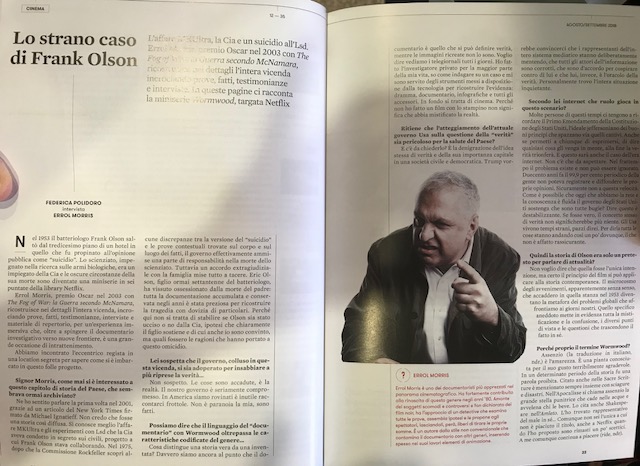
Polidoro has also recently become a contributor for Cineuropa, the first European portal dedicated to cinema and audiovisual in four languages, for which she interviewed Palme d’Or winner Christian Mungiu. She also works for Oprah Winfrey’s O Magazine, which published her interviews with filmmaker Errol Morris about Wormwood and filmmaker Paul Greengrass about 22 July, as well as a very intriguing interview with directors Verena Paravel and Lucien Castaing-Taylor about their documentary Caniba.

“There is something so exciting in talking with creators that you just become addicted and you finally just set your whole life to enjoy those rare, rarified, and immersive moments of overwhelming happiness and satisfaction,” Polidoro tells NYFA. 

The New York Film Academy congratulates Federica Polidoro on all of her hard-earned success so far, and looks forward to following her career in the future. We encourage everyone to check out her stories and interviews!

Film and TV Star Michael Chiklis Speaks at New York Film Academy (NYFA)

[vc_row][vc_column][vc_column_text]Emmy-winning actor Michael Chiklis joined the students of New York Film Academy (NYFA) for a discussion about techniques, reinvention, and the impact of image in the film industry. The event kicked off with a screening of the pilot of hit show The Shield, followed by a Q&A with the students. [/vc_column_text][vc_single_image image=”30630″ img_size=”large” alignment=”center” onclick=”zoom” css_animation=”none”][vc_column_text]Tova Laiter, NYFA Director of the Q&A Series, opened the talk with a comparison of two of Chiklis’ best-known projects: gritty crime drama The Shield, and Best Picture winner The French Connection. Both of the projects feature depictions of antihero cops, handheld cinematography, and a raw energy.


Such roles typify his career–Chiklis is perhaps best known for playing police officers, including LAPD detective Vic Mackey on The Shield, Commissioner Tony Scali on ABC police drama The Commish, and former police captain Nathaniel Barnes in Gotham. But it almost didn’t happen. In order to get his breakthrough role, he had to completely reinvent his image.


Chiklis had been typecast as a nice guy, a far cry from the hard-hitting cop roles he wanted to land. His wife told him, “You might be a wonderful actor but what you’re showing the community right now is a roly-poly affable guy.” He shaved his head, and began hitting the gym six days a week. By the time he auditioned for the role, he looked very different, and got the part immediately. His takeaway? “It’s not up to the studios or others to reinvent you. It’s up to you to do so.”[/vc_column_text][/vc_column][/vc_row][vc_row][vc_column][vc_single_image image=”30631″ img_size=”large” alignment=”center” onclick=”zoom”][/vc_column][/vc_row][vc_row][vc_column][vc_column_text]His time spent in roles like Detective Mackey has also given him a unique perspective on what makes a character appealing to viewers. “I knew that in order to hold onto an audience… he has to be compelling to watch but that there was going to have to be a lot about this guy that you actually like.”


Chiklis has portrayed The Thing in the Fantastic Four film series, and Jim Powell on the ABC science fiction comedy-drama No Ordinary Family. Additionally, he co-starred as Vincent Savino on the CBS crime drama, Vegas. In 2014, Chiklis joined the cast of American Horror Story for its fourth season, American Horror Story: Freak Show.


The New York Film Academy would like to thank TV & Film star Michael Chiklis for sharing his insights into acting and the entertainment industry with our students!

[/vc_column_text][/vc_column][/vc_row]

PDN Magazine Cover Features New York Film Academy (NYFA) Photography Alum Jon Henry

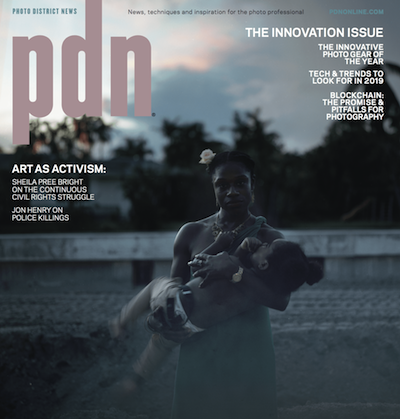
The work of New York Film Academy (NYFA) Photography school alum Jon Henry was recently featured on the cover of PDN Magazine, along with a feature profile of Henry included in the issue. PDN (Photo District News) Magazine is a monthly publication for professional photographers and was founded in 1980 by Carl S. Pugh.

Henry enrolled in the 1-year Conservatory at New York Film Academy’s Photography school in Fall 2010. NYFA’s esteemed Photography department has previously hosted PDN’s 30 2018: Strategies for Launching and Building a Career.

Jon Henry Stranger Fruit

Henry is an incredibly talented photographer who has found success since graduating NYFA. His work was previously featured on the cover of Jungle magazine.

His project Stranger Fruit is featured in the January 2019 issue of PDN. In the piece by PDN writer Dzana Tsomondo, Henry’s photos are described in great detail along with the cultural context that shaped them. Stranger Fruit uses the iconography of the pietà—the Virgin Mary and Jesus Christ—in response to the numerous murders of unarmed black men by police officers.

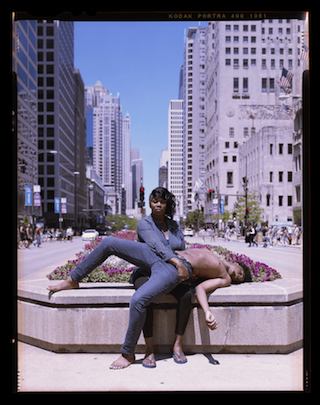
The images are centered on black mothers photographed with their children. The first photo Henry created, for Stranger Fruit, Untitled #10 Flushing, NY, directly references the pietà, which was perhaps most famously captured in a sculpture by Michelangelo. “When I started the project,” Henry tells PDN in the article, “I wanted something that was as close to the original as I could, but [to] still make it mine.”

Jon Henry Stranger Fruit
Untitled #19 Magnificent Mile, IL by Jon Henry

Henry was born and raised in Flushing, Queens. After Sean Bell was killed in Jamaica, Queens in 2008, Henry was inspired to make something in response, but it wasn’t until 2014 that Henry photographed Untitled #10. That year, and in the years before and since, several additional high-profile cases of unarmed black men being killed by police have shook the nation. 

Strange Fruit was shown at BRIC House in Brooklyn, NY and New Image Gallery at James Madison University in Virginia, and this month is showing at Drury University in Missouri in March. For further detail on Henry’s work and efforts, we encourage everyone to check out his profile in PDN Magazine.

The New York Film Academy congratulates Photography alum Jon Henry on the latest showcase of his important and visually arresting work! 

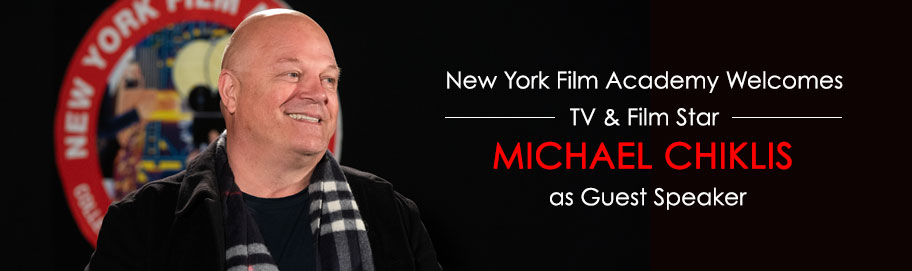
NEW YORK FILM ACADEMY (NYFA) WELCOMES TV & FILM STAR MICHAEL CHIKLIS AS GUEST SPEAKER

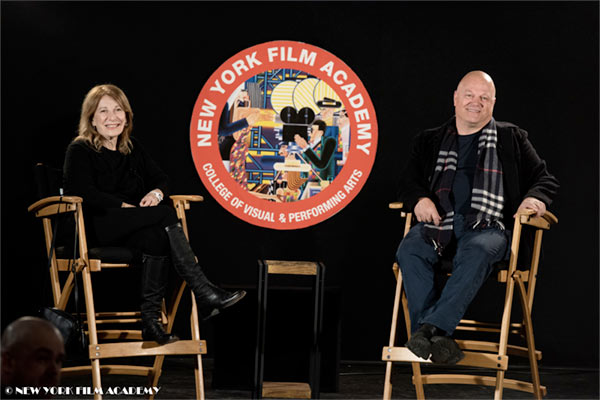
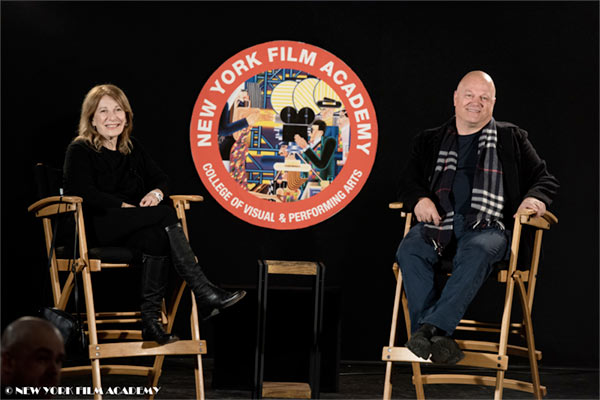
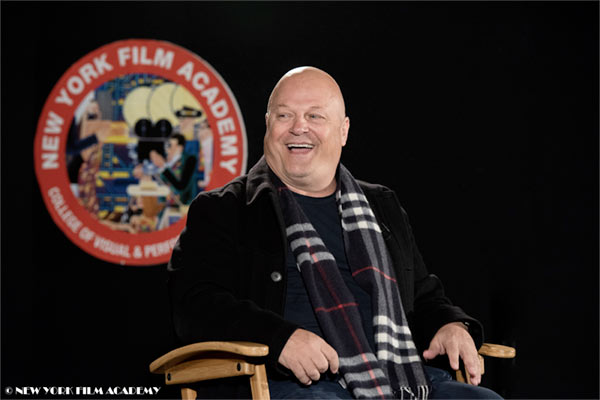
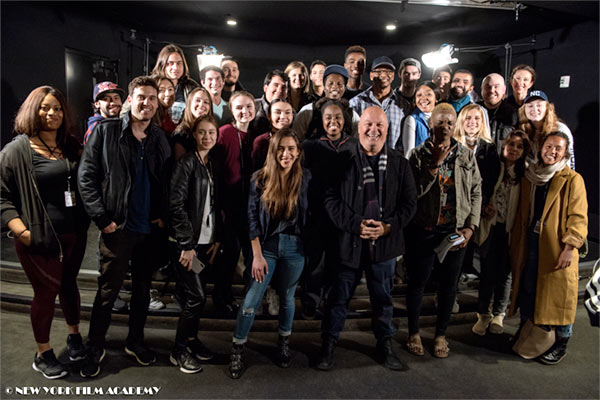
On Wednesday, February 27, New York Film Academy (NYFA) hosted a screening of the pilot episode of The Shield (2002-2008) followed by a Q&A with Primetime Emmy winner Michael Chiklis moderated by Tova Laiter, NYFA Director of the Q&A Series.

Chiklis is an actor perhaps best known for his role as LAPD detective Vic Mackey on the FX police drama The Shield, for which he won numerous awards. He is also known for playing Commissioner Tony Scali on the ABC police drama The Commish, The Thing in the Fantastic Four film series, and Jim Powell on the ABC science fiction comedy-drama No Ordinary Family. Additionally, he co-starred as Vincent Savino on the CBS crime drama, Vegas. In 2014, Chiklis joined the cast of American Horror Story for its fourth season, American Horror Story: Freak Show. The following year, he was cast as Nathaniel Barnes in the second season of Gotham.

Laiter opened up the Q&A by comparing the now retro pilot for The Shield to the Best Picture winner The French Connection in its depiction of an antihero cop, handheld cinematography, and general energy. Chiklis countered that he was a big admirer of Gene Hackman and in fact it was one of the reasons he went about reinventing his image after he read the great script for The Shield.

Chiklis had been typecast as a nice guy, but his wife said to him, “You might be a wonderful actor but what you’re showing the community right now is a roly-poly affable guy.” He shaved his head, was in the gym six days a week, and when he went in to audition for the role, he got it immediately! The take from this is: “It’s not up to the studios or others to reinvent you. It’s up to you to do so.”

Many members of the audience were curious about how Chiklis navigated playing a character as complicated as the detective he played in The Shield. Chiklis told the students, “I knew that in order to hold onto an audience… he has to be compelling to watch but that there was going to have to be a lot about this guy that you actually like.”

One member of the audience asked how Chiklis knew when a script was a good choice. Chiklis replied, “Pick half-a-dozen pieces that are lauded, that are critically acclaimed and you’ll see how some of them … jump off the page.” As a director and producer, his quest for quality is his prime motivator.

About auditioning, Chiklis advised students, “Know your strength and play to it. Never show desperation.”

The New York Film Academy would like to thank TV & Film star Michael Chiklis for sharing his insights into acting and the entertainment industry with our students!

These guests are not faculty and do not teach at NYFA, but they have appeared to share their stories and experience with our students. As guest speakers are scheduled based on their availability, NYFA cannot guarantee whether a guest speaker will visit during a student’s attendance or who that guest speaker may be. This guest speaker forum is not part of any NYFA curriculum and attendance at guest speaker events is purely voluntary. Students should be aware that guest speaker events do not represent a job opportunity nor are they intended to provide industry connections.

New York Film Academy (NYFA) Broadcast Journalism Department Visits ‘Rachael Ray’

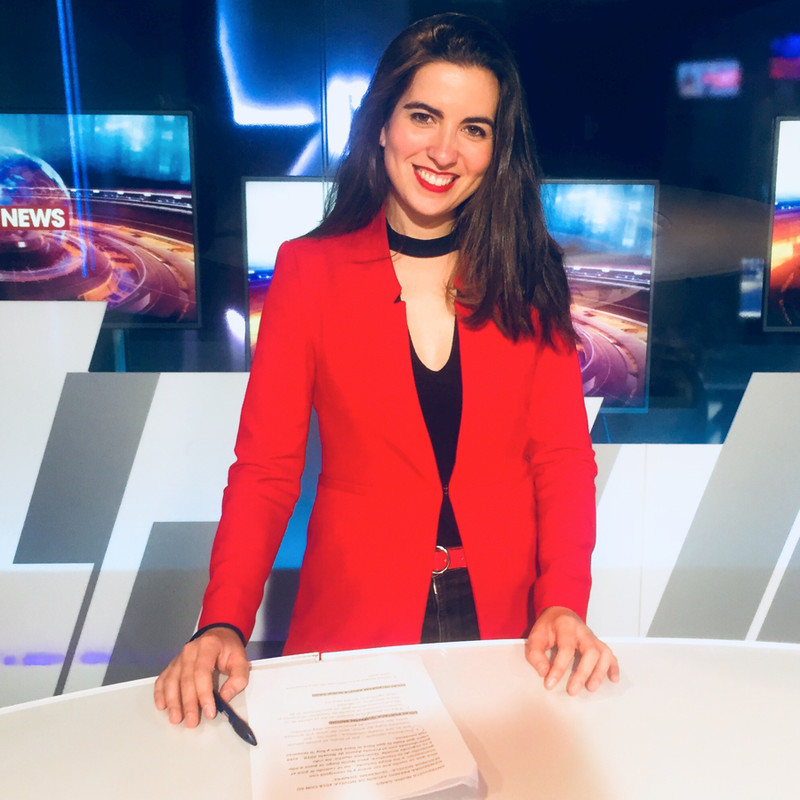
There is an old song (a very old song) that proclaims that “everything old is new again.” Take, for example, the morning news programs. They have been around forever. Yet last week BuzzFeed hired veteran New York TV news producer David Hatcher to executive produce their morning show. 

Of course, they don’t actually broadcast it. It is distributed via Twitter, and features items trending on that platform. The lesson here is that the digital production skills you learn at New York Film Academy (NYFA) can be used in a wide variety of places.

Someone who can attest to that is Alexandra Saeys. The NYFA grad is now creating branded content for a Madrid-based production company. In her own words, she’s “doing videos for brands and companies, so they can promote themselves in media and social networks.” 

It’s an another way you can utilize a skill set that encompasses digital production.

Studying in New York City opens up a whole world of possibilities. It’s one of the media capitals of the world. What happens here has an impact everywhere. (I know, spoken with all the humility of a real New Yorker…) 

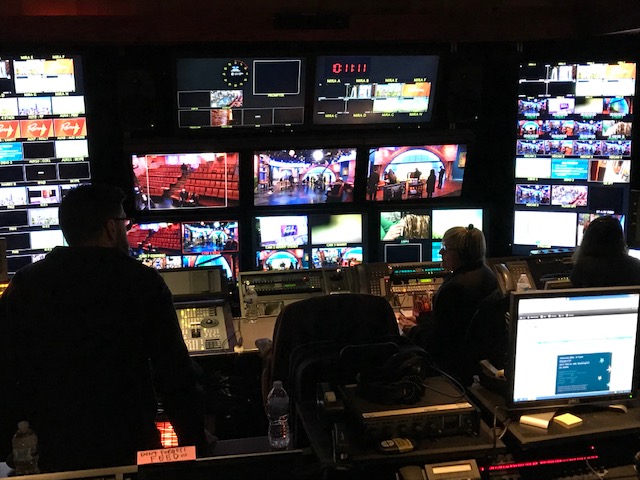
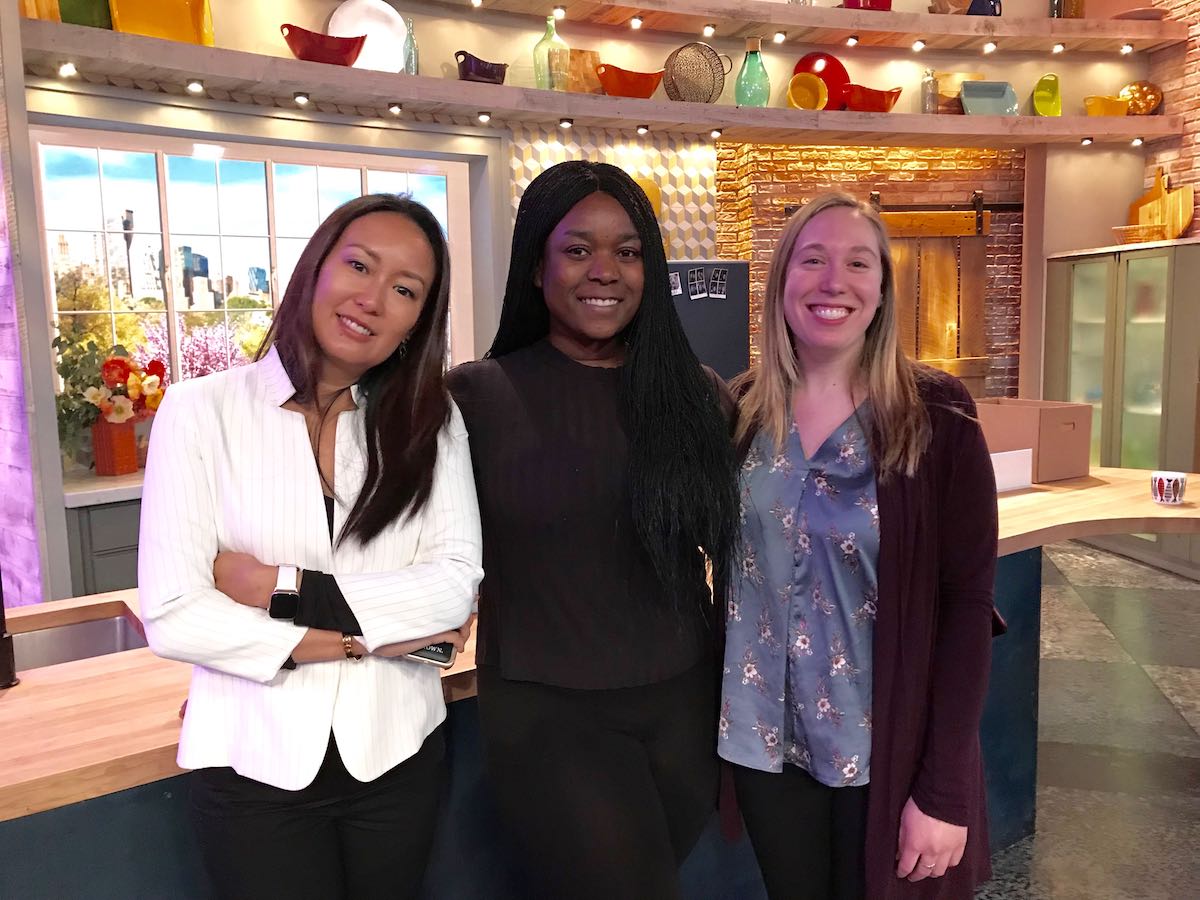
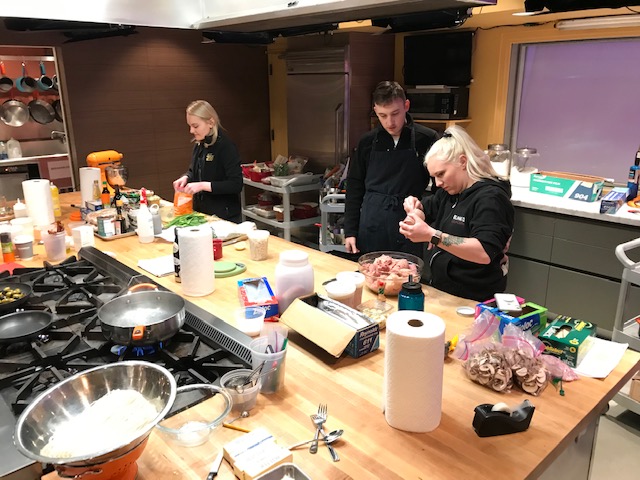
Last week we took a field trip to see how the popular Rachael Ray Show is produced. Now in its fourteenth season, this chat/lifestyle/cooking show continues to be an audience favorite. 

We got to go behind the scenes, as well as see how the show is produced from the control room.

Q&A with ‘El Freeman’ Filmmakers and New York Film Academy (NYFA) Alumni Elhas Rahim and Antonio Chavez

On Friday, February 15, New York Film Academy (NYFA) hosted a screening of El Freeman, followed by a Q&A with NYFA alumni Elhas Rahim and Antonio Chavez, co-directors of the film. The event was moderated by their former instructor, James Rowe. Rahim, who also acted in the film, is from Kazakhstan and Chavez is from Mexico—their film, El Freeman, explores the immigrant experience in America.

El Freeman

Rowe opened up the Q&A by asking Rahim and Chavez how they personally related to the story in the film. Rahim discussed how there was a time when, in America, he lived in his car and had to navigate being homeless and an immigrant in Los Angeles. This really helped him relate to the film’s themes of desperation and feeling like an outsider. 

Another experience that really shaped Rahim’s life—and ultimately the script for El Freemanwas when Rahim tried to save a young woman in Kazakhstan who was attempting to commit suicide by jumping into a river. Rahim almost drowned attempting to save her: “I felt like I [could] die,” he said. That experience pushed Rahim to do whatever necessary to get the script for El Freeman finished, as well as inspired the backstory for the romantic relationship in the film.

El Freeman

Rowe noted that in El Freeman Los Angeles is represented in a grittier, less glamorous fashion than it is in most Hollywood films. Chavez shared that the production team watched a number of films with an unrefined aesthetic to get inspiration: “You start caring more about the characters because you want to pull a bit away [from the fantasy of an idealistic Los Angeles].

One of the members of the audience asked Rahim about why he pushed for a lot of rehearsal before shooting the film. “I knew this film would be more on the acting side of [things],” he replied. Rahim wanted to work through the emotional moments of the script before arriving on set. The other benefit of this was that the actors were more likely to get good takes faster, which helped with an extremely limited shooting schedule.

The New York Film Academy would like to thank NYFA alumni Elhas Rahim and Antonio Chavez for sharing their experiences as immigrants in the American entertainment industry and their advice for our students and independent filmmakers.


Duke Youth Media Camp Teaches Youth Filmmaking Schools at New York Film Academy (NYFA)

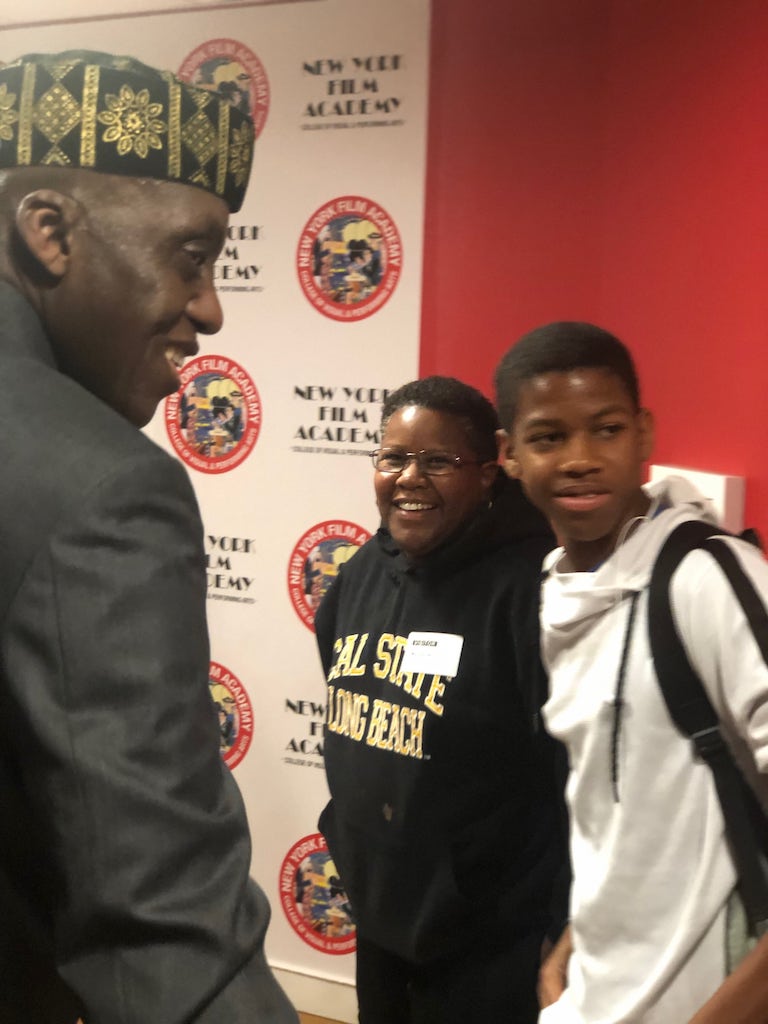
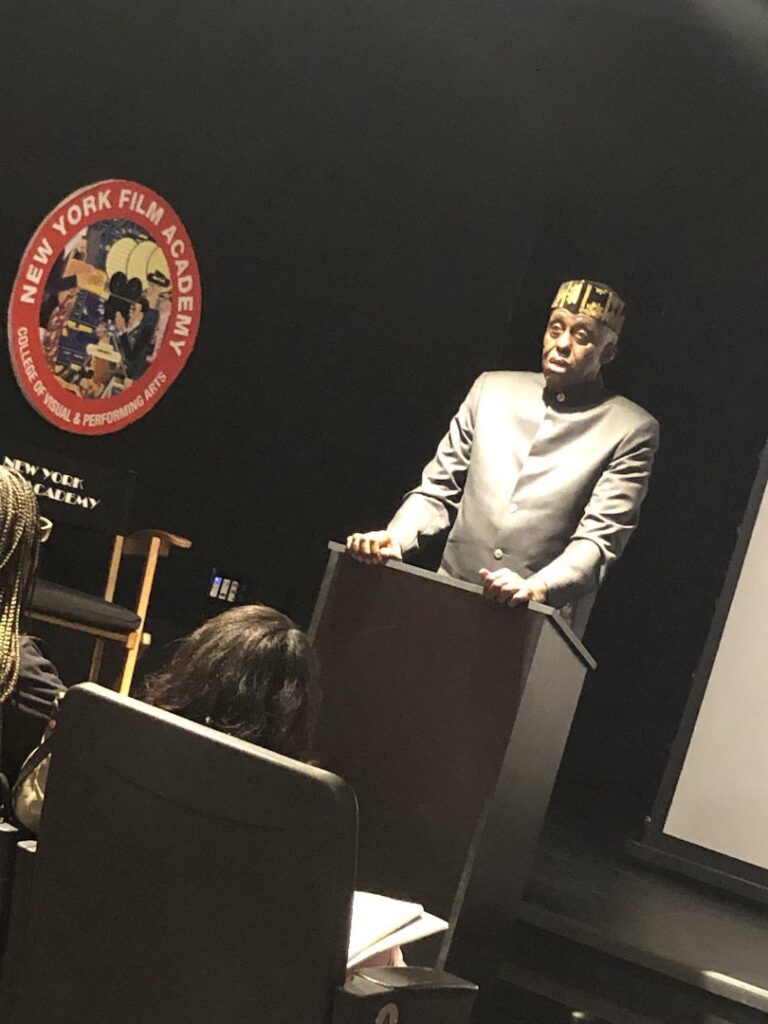
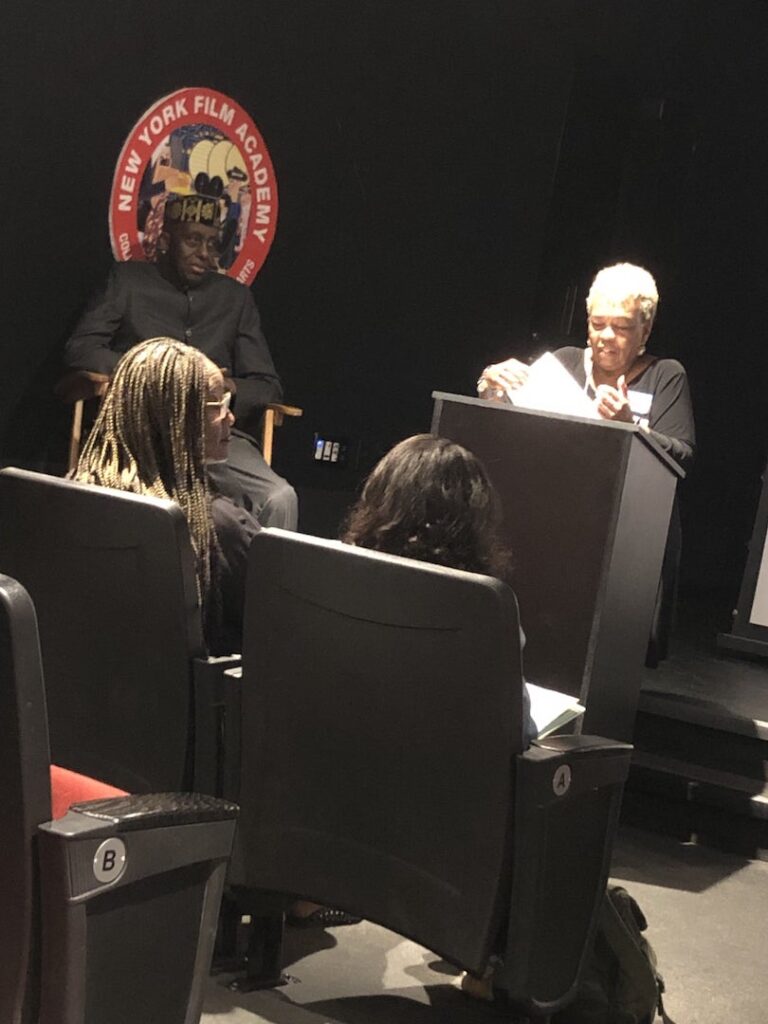
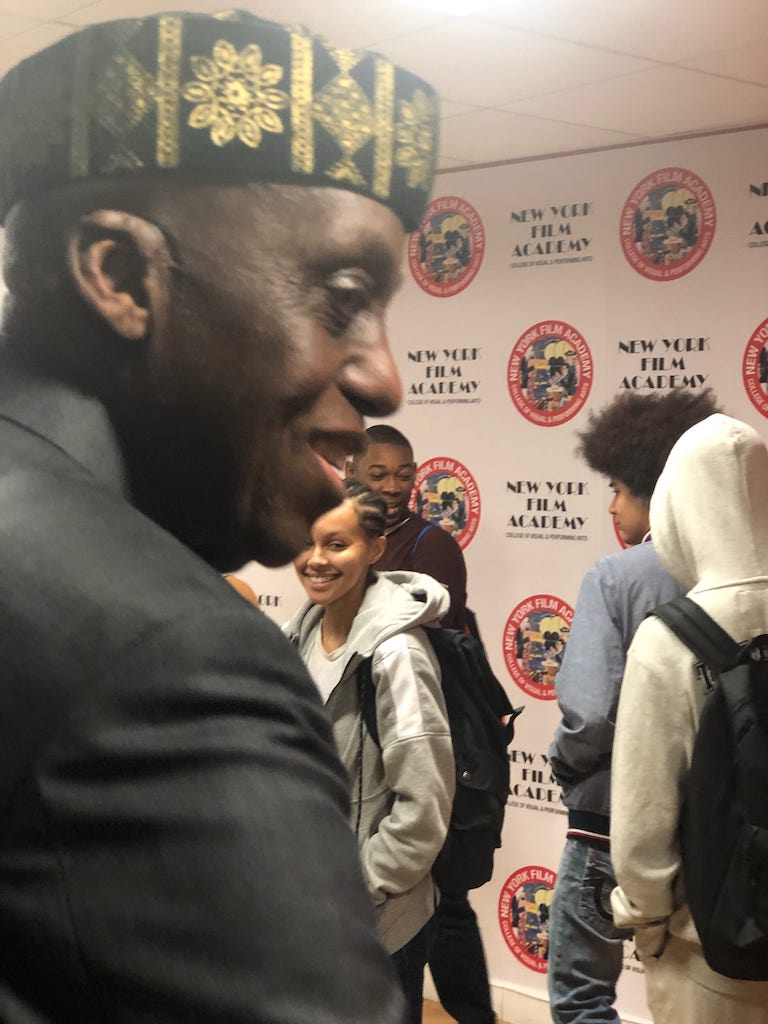
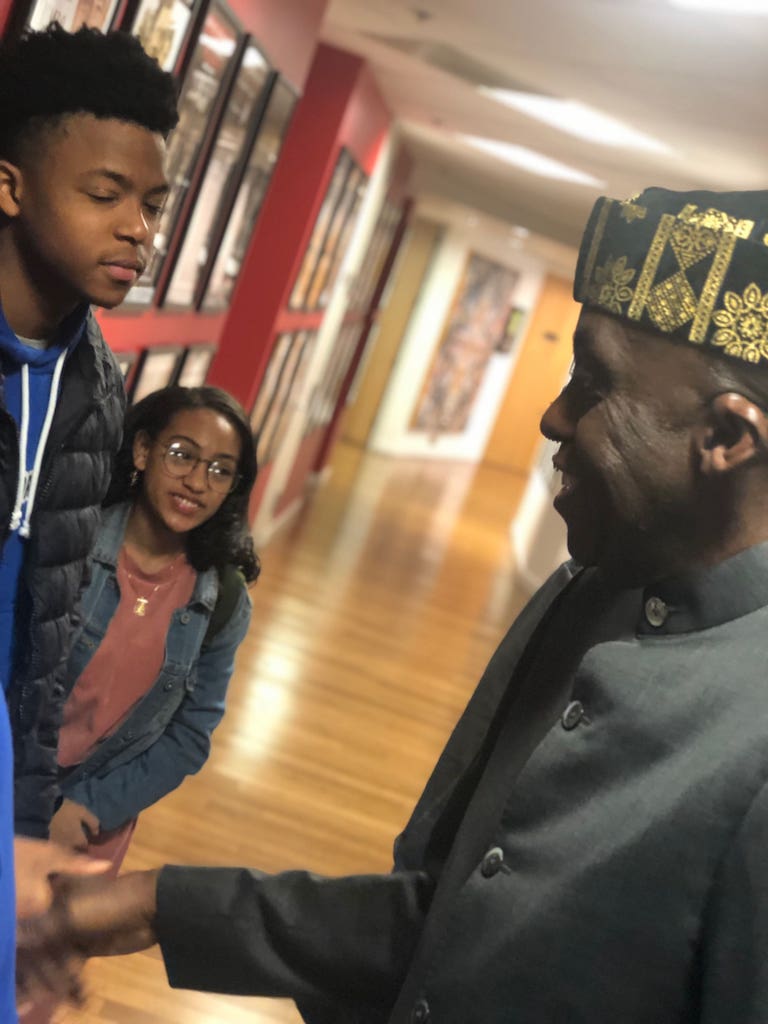
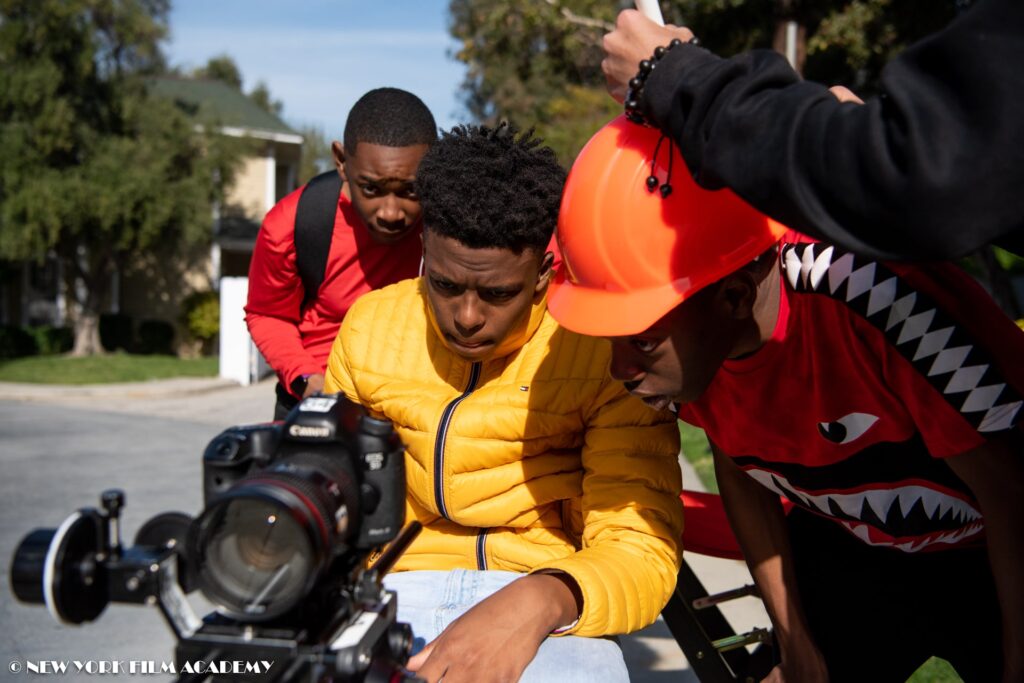
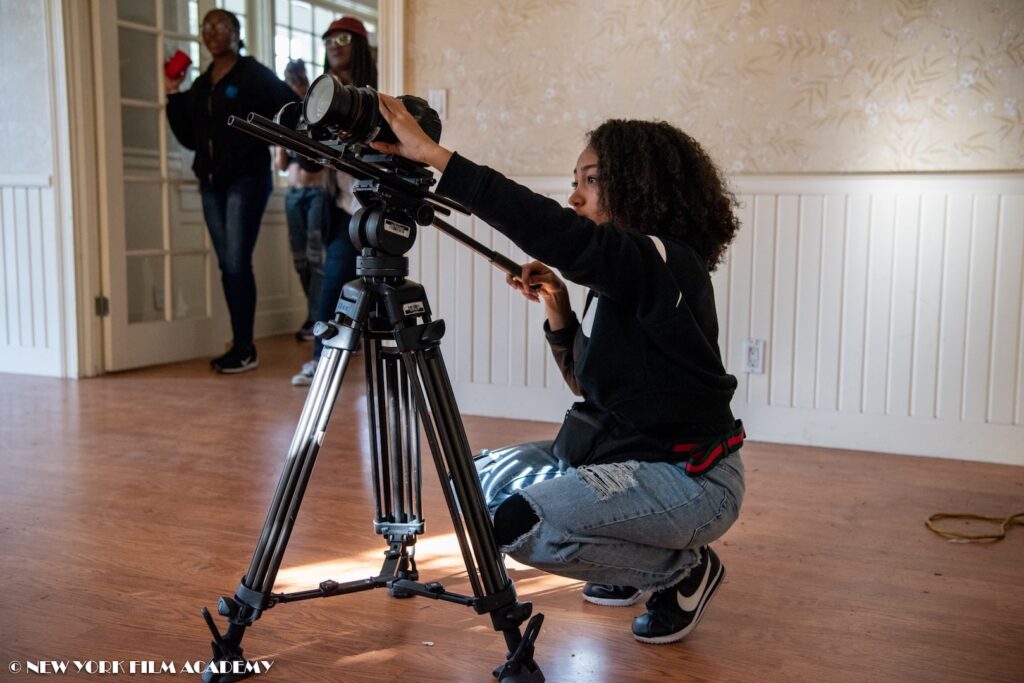
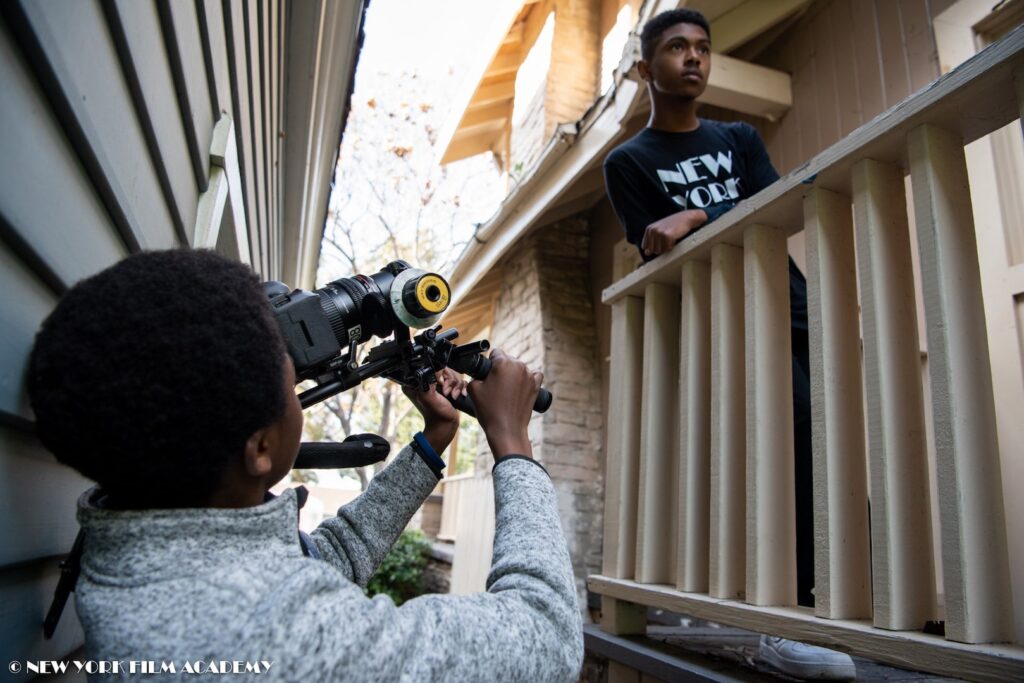
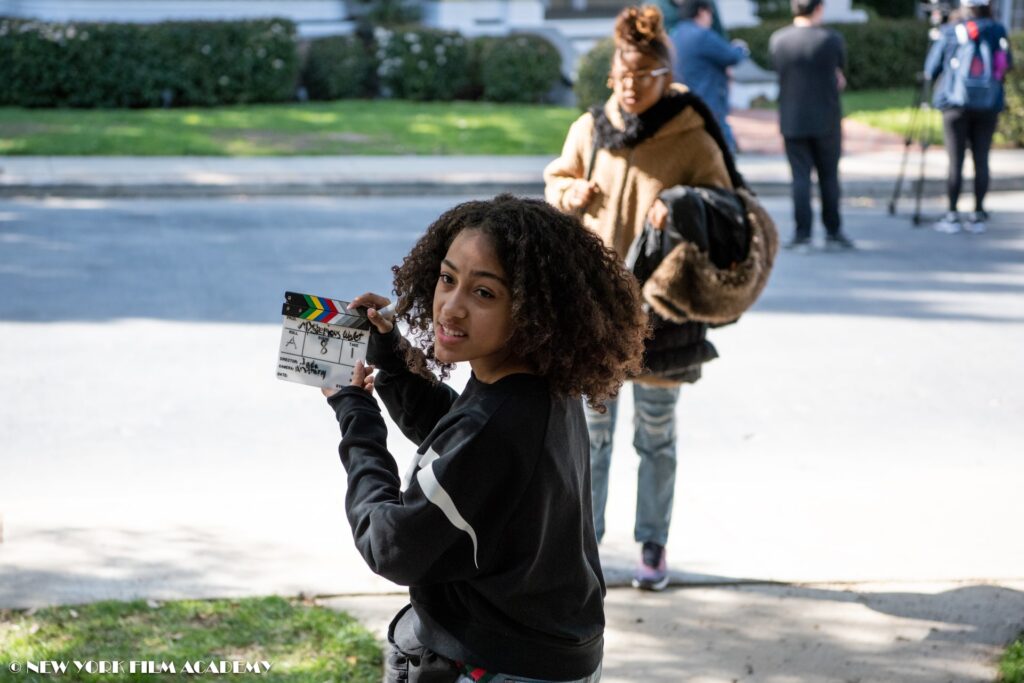
The Duke Youth Media Camp kicked off its collaboration with New York Film Academy (NYFA) on January 26 at our Los Angeles campus. The Duke Youth Media Camp is sponsored by the Duke Media Foundation, a nonprofit organization founded by Bill Duke in 2010.

Bill Duke is a veteran actor and director, known for his roles in several high-profile films and television series, including Predator, X-Men: The Last Stand, Mandy, Black Lightning, and American Gigolo. He’ll also be in the upcoming Steven Soderbergh film, High Flying Bird. At the 1991 Cannes Film Festival, Duke was nominated for the Palme d’Or for his film A Rage in Harlem. Additionally, Duke is a Filmmaking Instructor for New York Film Academy.

Bill Duke Camp

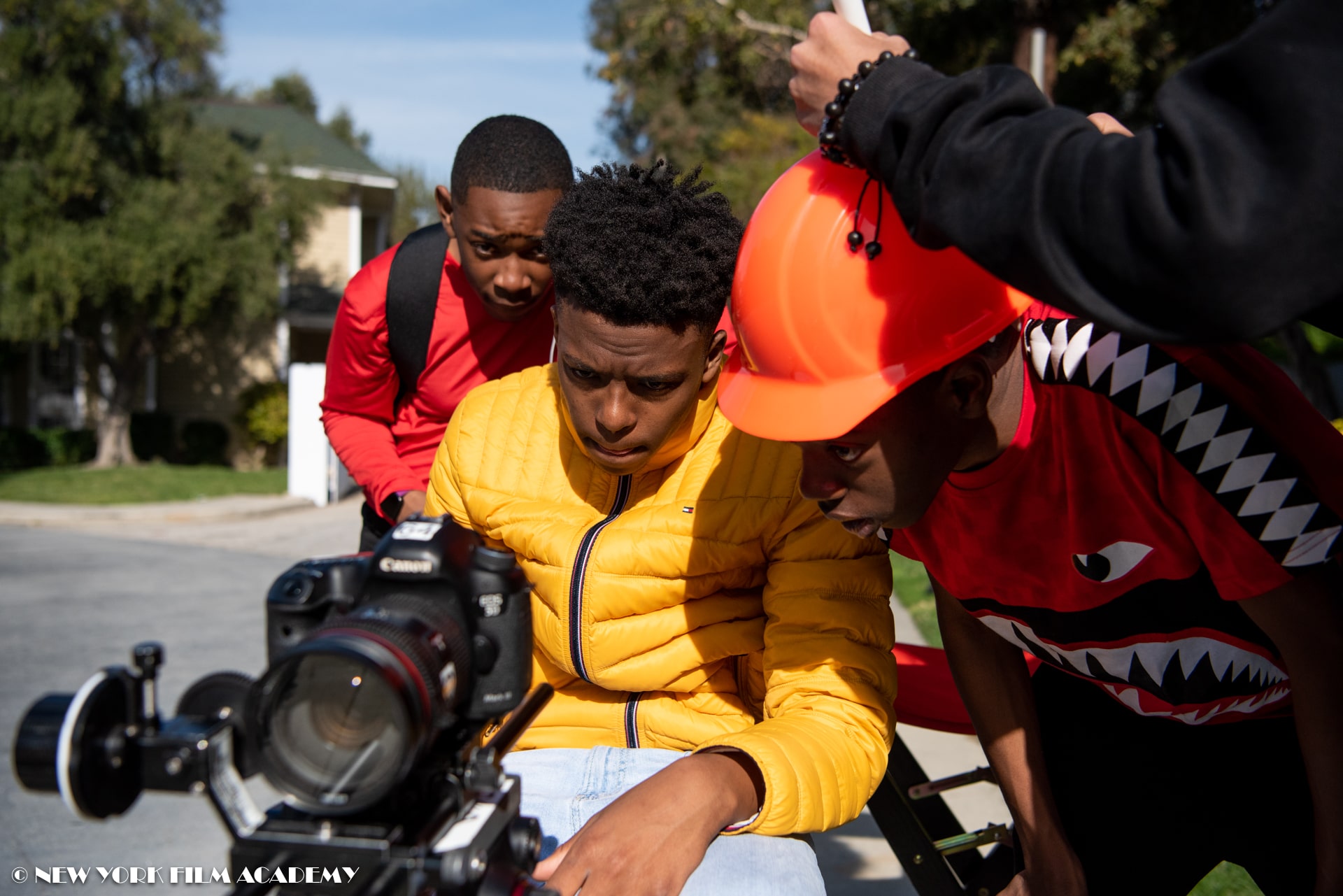
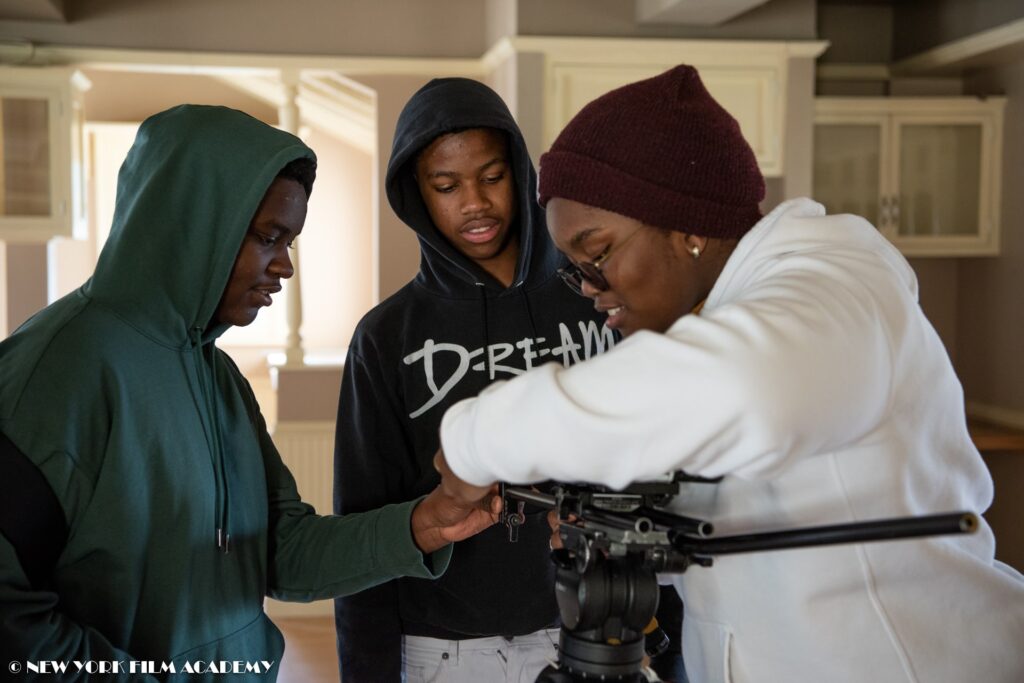
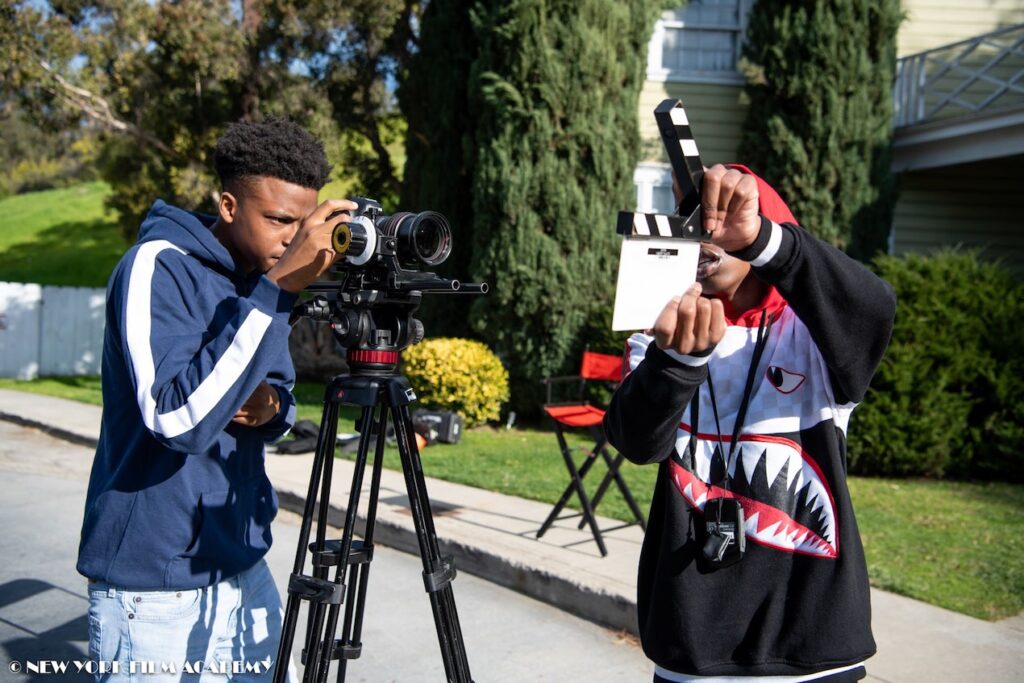
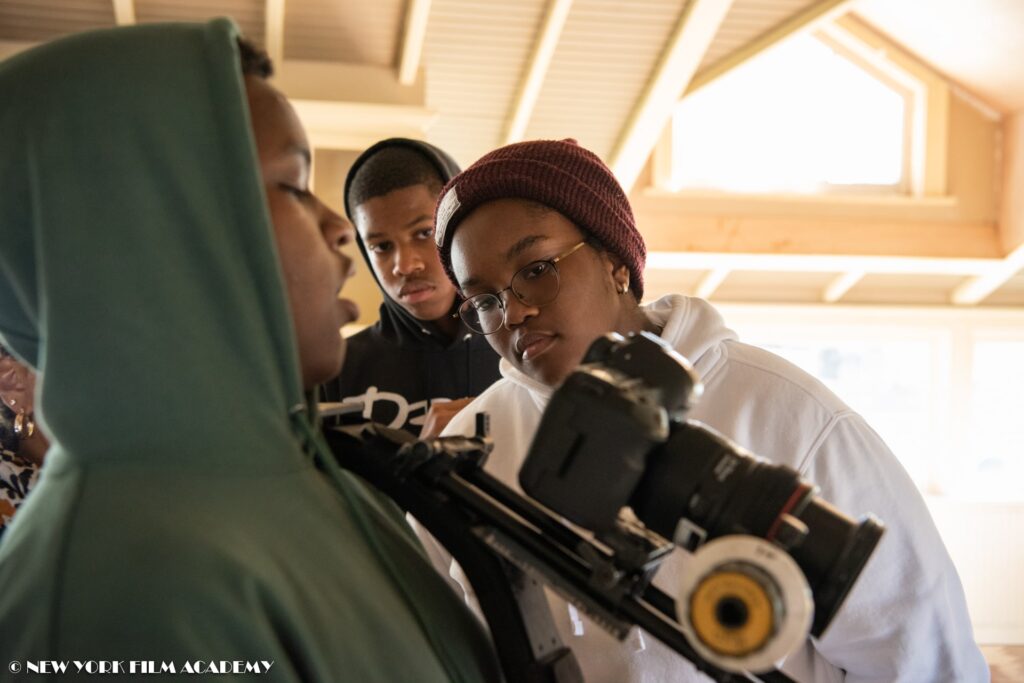
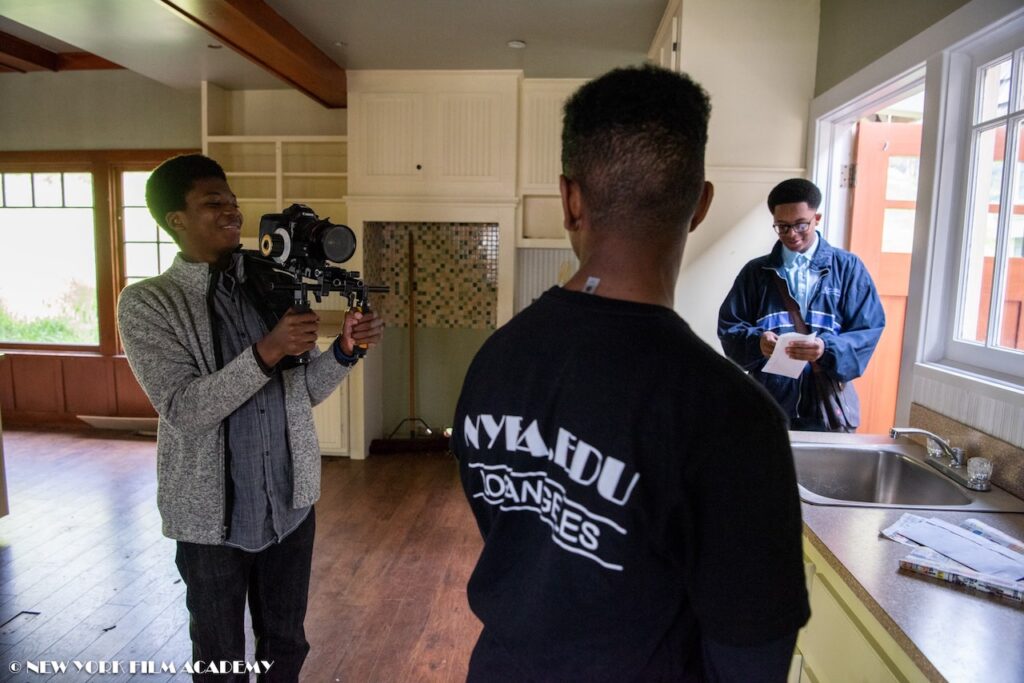
The Duke Youth Media Camp seeks to train and empower teens through hands-on instruction from New York Film Academy and Duke Media Foundation staff. The partnership between the institutions began in 2016. By teaching students the tools and skills needed in a constantly evolving media environment, the Duke Media Foundation and NYFA aim to help inner-city youth become more competitive with those who’ve typically had greater access to the education and equipment needed in a film, television, and digital media landscape.

“Duke Media Foundation is grateful to New York Film Academy of Burbank for partnering with us and enabling us to present the Duke Youth Media Camp program for at-risk youth in Southern California,” says Linda Broadous-Miles, Executive Director, Duke Media Foundation. “As a result, we are creating career paths in filmmaking and digital technology for young people who would otherwise never have this opportunity.”

Many of the alumni of the Camp have expressed a deep appreciation for the experience. One such alum, JaNarie Rhambo, says: “The Duke Youth Media Camp not only helped me mature in my career, but in my finances and personal life. My drive is amazing, my focus is sharp, and my leadership skills are toned. This was an experience I will NEVER forget because the staff who ran the program give their all to help the next generation mark their spot on the map! Mr. Duke and his program were a major catalyst in my entertainment career and I volunteer with them because of the great things they have done for me.”

Bill Duke

Parents of students attending the Camp are also grateful for the education their children receive. “My son and I are super excited about the Duke Youth Media Camp being held at the New York Film Academy in Burbank,” says Sharon Walker, a parent of one of the campers. “We both look forward to spending every Saturday at the camp. We appreciate all that Duke Youth Media Camp does to give our kids these great opportunities. Thank you so much Mr. Bill Duke and the New York Film Academy.”

This year’s Spring camp is now well underway after its January start. Mason Richards, the Chair of NYFA Community Outreach, hosted the Orientation on January 26. After the event, he told NYFA, “We’re excited to welcome another cohort of young filmmaking students who represent a cross-section of the LAUSD (Los Angeles Unified School District).”

Describing the event, Richards says, “The room [was] filled with lots of excitement as a cohort of 16 new students and their families shared their thoughts and aspirations about starting the program and gaining the opportunity to study the craft of filmmaking at our academy. Mr. Bill Duke shared his experiences as a director, actor, filmmaker, and writer—which was truly inspiring to everyone present, including myself. We’re looking forward seeing the projects that the students will write, edit and produce at NYFA-Los Angeles and shoot on the Universal Studios Backlot this Spring!”