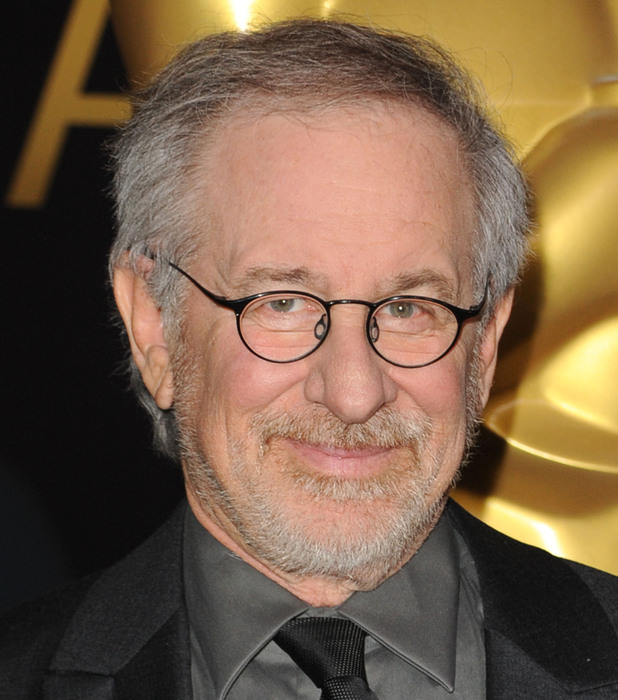
Steven Spielberg

Steven SpielbergName: Steven Allan Spielberg

Essential DVDs: Jaws (1975); Close Encounters Of The Third Kind (1977); Raiders Of The Lost Ark (1981); E.T.: The Extra Terrestrial (1982); The Color Purple (1985); Empire of the Sun (1987); Schindler's List (1993); Jurassic Park (1993); Saving Private Ryan (1997)

Oscars: Best Director, Best Picture (Schindler's List, 1994); Best Director (Saving Private Ryan, 1994)

In His Own Words: “If you have a story that is very commercial and simple, you have to find the art. You have to take the other elements of the film, and make them as good as possible, and doing that will uplift the film.”

In analysing Steven Spielberg, the first thing you need to do is clamber past Steven Spielberg. The success, the deification, a near unquantifiable contribution to not just cinema but modern culture itself, and the reams of praise that smother him like a giant quilt. Given such a position, it almost feels moot to extol virtues that have been ringing in his ears for years. Thus it is to the films, in the end, you must return, to cut them loose from the hallowed tag and understand again why this small guy from Cincinnati, Ohio stands so tall over the medium.

So, we'll have no talk of the child within (although, he is expert at conveying multifaceted innocence); no talk of some kind of modern-day P.T. Barnum, barnstorming cinemas with non-stop thrills (are you willing to think of Jurassic Park as a deliberate piece of self-parody?); and hold no truck with the narrow-minded view of a director as Hollywood edifice, unwitting murderer of the poetic seventies. Dash it all, he put Francois Truffaut in Close Encounters. He threaded a Christ allegory into an alien visitation movie. And he finally cut Hollywood free from its outmoded Vietnam preoccupations with the most salutary, shocking twenty-five minutes of war movie footage ever created. That's the thing, Saving Private Ryan's harrowing opening salvo is transcendent, you can feel the medium buckle under its skill, the narrative tappings of cinema being rewritten. There are a scant few who can lay claim to that level of effect. And, goddamnit, Jaws was(ital) a seventies movie.

There seems to be a fair amount of misrepresentation about Spielberg. That he is a formulaic man, a predictable purveyor of the easy-fit populist frame-of-mind. In reality, he is far more elusive, tapping into something subliminal, an understanding of how we work as human beings. His is not the convention of myth and bland heroics, his lead characters come cut from an ordinary cloth, suburban and middle-class more often than not. Even Indiana Jones, certainly born from a heroic archetype, while effortless with a whip and a quip, is forever a man in over his head. He is not just a dusty James Bond. Spielberg puts the audience, their very idea of themselves, into the extraordinary. These are not fantasies but glorious, romping realities of the heart. The greatness of Jaws is not the malfunctioning shark, but the disparate triumvirate of honest-to-god masculinity –the gruff machismo (Robert Shaw), the stubborn intellectual (Richard Dreyfuss) and the determined family protector (Roy Schieder) –required to undo the unknowable force of nature.

Another aspect so often overlooked, or maybe taken as read, is his visual genius. He is, in his own distinct way, as good a stylist as Ridley Scott or John Ford or David Lean (and very much inspired by the latter two). The stunning use of amber light, almost liquid as it pours through the door in Close Encounters, is worthy of Kubrick. The magnificent simplicity of shooting so much of E.T. from not only a child's perspective but the physical dimension of a child. The shifting visual tone of Schindler from the elegant expressionism for the Nazis to the stark, quasi-documentary shudder of the Jewish ghetto. It's the stuff critics clamour about with Scorsese, yet his good friend and compatriot is every bit as film literate and gifted.

L’égalité réelle entre les femmes et les hommes. Site d’aide fait ressentir des douleurs dans les jambes et des rougeurs. Votre commande levitra sur une page internet ou dans des boutiques.

The patterns of his career have been picked clean by the due attention his massive success has brought: the early films, still carrying the vestiges of the Movie Brat movement even as they invented the blockbuster; the towering eighties when he could do no wrong; the quest for the Oscar; the complexities of his post-Schindler era. The shapes are clear, but categorisation is almost impossible (it's why he's been lumbered with his own category: “The Spielberg Movie”). 'Once a month the sky falls on my head, I come to, and I see another movie I want to make,' he said of his approach. Surely, it can't be that simple. Seemingly, it is.

Perhaps more fascinating to us now, are the failures, or should we say, relative failures. Empire Of The Sun, alongside The Color Purple his gearshift into literary aspiration following the popcorn exterior of the early films, is a troubled but noble attempt to capture not only the scope but also the surrealism of J.G. Ballard's memoirs. Is there a more ambiguous Spielberg shot than that of a semi-demented Jim Graham bathed in the holy aura of acetylene sparks, caressing the metallic surface of a Japanese fighter plane? AI, so emotionally uneasy, feeds on an anti-fairytale mythology more Terry Gilliam than E.T. And why did so many critics circumvent the cynical, abusive undertones of The Terminal? Portraying America as a prison cell was hardly the presupposed idea of a Spielberg movie. Hook, we'll grant, is a misfire. But 1941, with its criminal excess, is as magnificent a site of creativity run amuck as Coppola's One From The Heart.

The trouble, as always, is that his name continues to arrive ahead of the film. He's doing his darndest to avoid it –the variety of project in the autumn of his career cleaves closest to the genre hopping likes of Howard Hawks and is way more challenging than the drift into bloated mediocrity so evident with Scorsese. You can bet your bottom dollar, War Of The Worlds will still filter H.G. Wells' socialist context. The Munich Olympics political thriller Vengeance could be his most daring film since Schindler. While a Lincoln biopic sends signals of his great work on his beloved America. And, boy, it needs it.

Spielberg, the world's greatest living director and contestably up there even if you include his deceased forebears, is finally worthy of his status because he speaks to everyone –understanding our fears, translating our dreams and revealing both the world's chaos and its beauty –not just a select realm of highbrow intellectuals or pontificating ironists. The miracle is, he has proven it is not simply entertainment but also art and truth we crave. At twenty-four frames a second.
Flipbook Animation: Techniques & Mind-Blowing Examples

The motion picture industry came into being in the 1890s, and the technology of making movies has changed dramatically since then.

In the late 1920s, movies began to have sound, and movies in color eventually became the norm. However, animation in movies is nearly as old as the movie industry, and fully animated films are as successful as live action films.

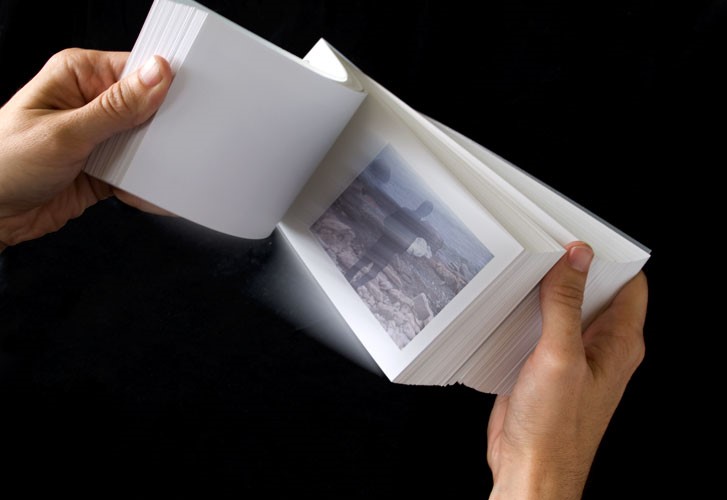
Although animation often involves advanced technology and high-end computers, an easy way to make an animated movie is to make a flipbook. A flipbook presents a series of pictures in rapid succession so that an audience perceives moving images.

Flipbook Animation

Below is a brief overview on the different kinds of flipbooks still in common usage in the field.

The Basic Flipbook

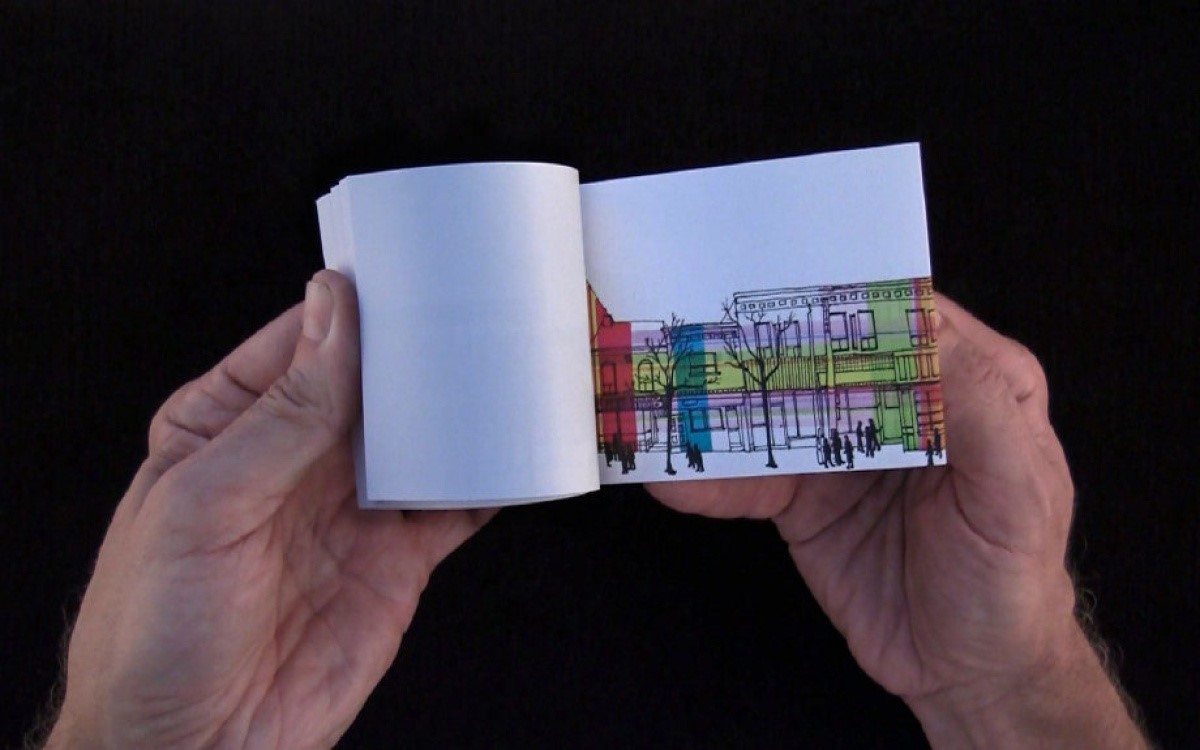
In its most primitive form, a flipbook is an actual book, and each page is a static image. The reader flips through all of the pages at an even pace, resulting in a short animated movie.

The flipbook in the video above shows Michael Jackson performing. The creator uses hundreds of sheets and flips them in rapid succession to create the illusion of motion. Want to give it a whirl yourself? As you can imagine, it’s not overly technical but does take time, and there are a few tips to bear in mind to ensure it’s not time wasted. Here is a brief video on how to create a flipbook with just a pen and sticky notes:

Alternative Flipbooks

Not all flipbooks are literal books! In the video below, the creator manipulates paper sheets of various sizes to depict a runner practicing parkour in a cityscape. This form of flipbook borders on performance art given that extreme skill is required in flipping the sheets in the correct sequence:

Another great example of innovative flipbook-style design can be seen in this clip, involving a “human flipbook” using static images of 150 t-shirts:

Photograph Flipbooks

Although the most common flipbook image is a pen or pencil sketch, photographs can be arranged in sequence to depict motion. In this short video, the creator takes a series of photographs, uploads them to a flipbook computer program, and then prints out a flipbook ready for viewing:

A variety of programs can even turn a series of digital photographs into an online flipbook.

Video Flipbooks

Another source of images for flipbooks is video. For example, a video clip of a wedding can be turned into a flipbook as a memento or coffee table book. Making such flipbooks requires a computer and is more complex than making a basic flipbook, but it yields high-quality, professional-looking flipbooks. Online companies such as FlipClips.com allow users to upload a video and design a flipbook in various sizes; the company then prints the flipbooks and ships them to the customer.

Mechanical Flipbooks

The basic flipbook relies on the reader to hold the flipbook and flip through the images manually. However, a mutoscope is a mechanical flipbook, in which the viewer looks through a lens while turning a crank; the crank turns a cylinder to which images are attached. The result is a short movie. Not surprisingly, mutoscopes were mainly used for peep shows.

Although one can use a computer to make a flipbook, it’s probably best to start with a basic paper flipbook, especially until you find your feet with frame-by-frame animation. Begin with a stick figure moving from one side to another. Gradually add in other objects. Eventually, you can draw more sophisticated images, progress to different kinds of flipbooks, and end up with a real work of art.

Make a Flipbook

All you need is a pen or pencil and a pad of sticky notes, and it’ll stand you in pretty good stead for learning more advanced animation techniques (even in the digital realm).

How To Get Started In Aerial Drone Cinematography

Cinematography is the photography of moving pictures, and one of the most revolutionary changes in the technology of cinematography is the move from analog to digital film. In turn, one of the most exciting uses of digital cinematography is aerial drone cinematography.

Although taking film from an aerial position is not revolutionary—early pioneers simply attached cameras to kites—compact digital cameras provide cinematographers with more filming options and make aerial cinematography more accessible for lay cinematographers. Coupled with the current rise in inexpensive RC drones, digital cameras mounted on such devices provide a quick entry point into aerial drone cinematography.

And this marriage of technology isn’t just being used to get establishing scene shots. If you want a good example of how incredibly innovative aerial drone cinematography can be, look no further than this short created by YouTube FX masters Corridor Digital:

1. Select a Vehicle

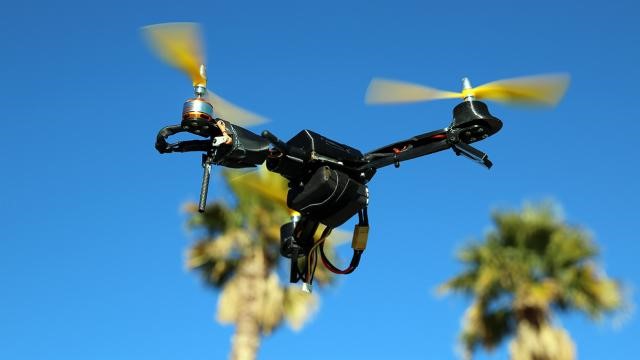
Possibly the best option for those looking to get into aerial drone photography on a budget is the Pocket Drone. While it’s still in pre-order status at the moment, at under $500 and specifically designed for filming it looks set to offer excellent value for money.

The Pocket Drone camera for aerial photography

The Pocket Drone began as a Kickstarter project asking for $35,000 and ended with $929,212 in funding. This is perhaps the most accessible and portable form of aerial photography.

The drone contains a mount for a single camera and folds into a small travel case. It uses three propellers and has a flight duration of around 20 minutes with a mounted camera, which is more than enough for most filming needs.

https://youtube.com/watch?v=3HJAUSUNrWQ

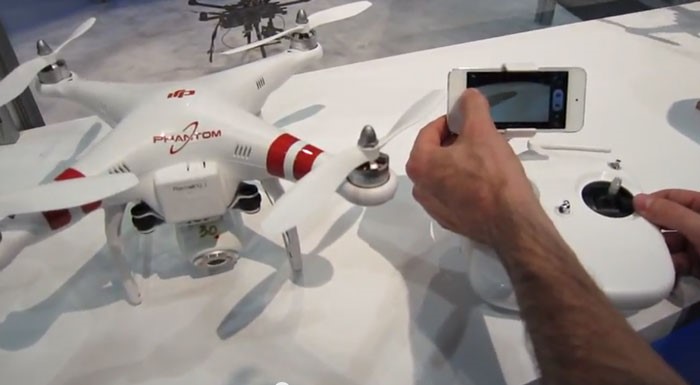
Another option is a hobbyist remote control drone. These drones are slightly more expensive (between $500 and $1000 depending on the dealer) and have four, six, or eight rotors. A common choice for the hobbyist is a quadcopter, such as the DJI Phantom Aerial UAV Drone Quadcopter.

The Quadcopter remote control drone

Quadcopters such as these, although small and lightweight, are not as portable as the Pocket Drone and are aimed at the enthusiast market. The Phantom 2 Vision+ model, however, is designed with recording quality in mind.

This drone comes equipped with a high definition camera capable of filming 30 frames per second at 1080p or 60 frames per second at 720p. At $1300, it costs more, but it is a complete system for hobbyist aerial photography.

2. Select a Camera

Although some drones come with a camera, such as the Phantom 2 Vision+ above, most do come with camera mounts. Hence, one simply needs to select a camera to attach to the drone.

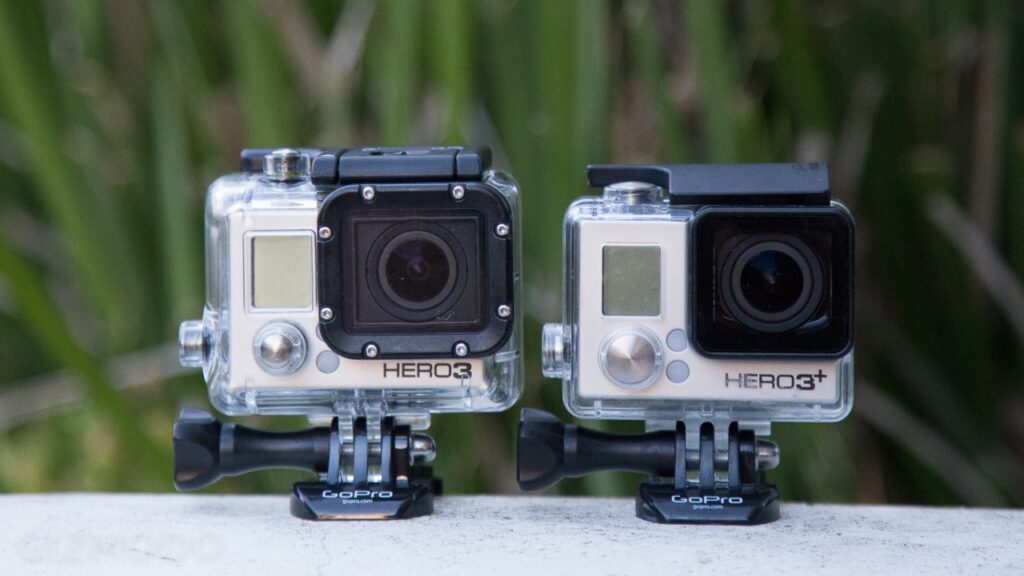
One of the best-known line of cameras is made by the GoPro company. For example, the GoPro Hero3+ is capable of shooting video at a high of 1440p at 48 frames per second.

Two GoPro Hero3 cameras

It can be mounted on a drone, or on larger vehicles, such as boats, cars, and motorcycles. So trusted is the GoPro that many drone sellers offer the camera as a default optional extra when purchasing a drone.

3. Select a Control Method

The classic method for controlling a drone is a handheld remote control with joystick-like controls. Anyone who played with remote control cars is familiar with this kind of controller, but worth considering is that most drones today can be operated remotely by computers (including tablets and smartphones.) For example, the Pocket Drone includes a virtual flight stick that can be run on Android tablets.

Finally, another control scheme is to set a pre-defined flight path for the drone using Google Maps, or to download flight plans created by other users.

Whatever technology one selects, the applications of aerial drone cinematography by drone are infinite. National Geographic photographer Kike Calvo offers an in-depth look at his aerial gear and how he uses it to film in natural settings.

Print vs Broadcast Journalism: Understanding The Differences

Journalism began as a print media and remained as such until the invention of radio and television in the 20th century. Journalism that provides information over radio, television – and now, the Internet – is known as broadcast journalism.

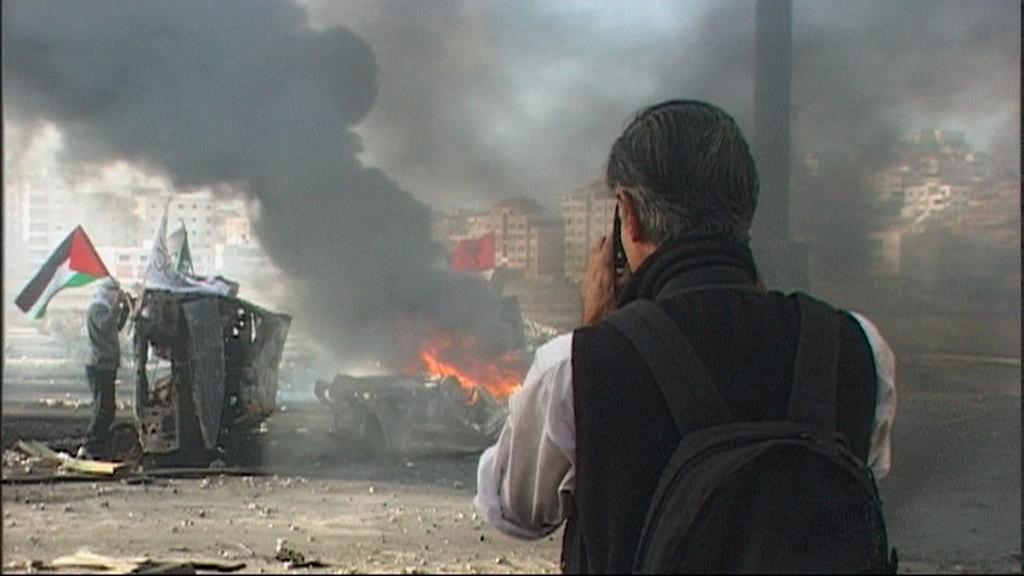
Photographer shooting in war-torn region

Although print journalism and broadcast journalism share much in common, e.g., both disseminate information to the general public and engage in investigation, they differ in significant ways. Knowing these differences will help prospective journalists determine which form of journalism to specialize in.

Print Journalism Conventions

  • News writing in print journalism conforms to rigorous style. News stories begin with a lede (aka lead), an opening sentence that concisely indicates the subject and action of the story and entices the audience to read the story. Example: Several children met with industrial accidents yesterday in a famous chocolatier’s factory. The Online Writing Lab at Purdue University offers several tips on how to write an effective lede.
  •  The next element in a news story is the nut grafe. This comes after the lede, but does not necessarily follow it. The nut grafe tells the readers the who, what, what, when, and why of the story. It tells the reader what the story is about and why they should care about it. The nut grafe is comparable to a thesis statement in an academic paper.
  • After the lede and the nut grafe comes the crucial information of the story, i.e., what the story is about. This is followed by non-crucial information, e.g., background information, where to find more information, or reactions to the story.
  • Finally, the conclusion of a new story does more than remind the reader of the story’s substance. It also looks ahead to the future. For example, if a story focuses on an important city council meeting, the conclusion might inform the reader about follow-up meetings or about what any decisions made by the council might mean for the city.

Print Journalism Rules

Because news stories in broadcast journalism are meant to be read out loud by a news anchor rather than internally by a general audience, news stories follow different conventions.

Broadcast Journalism Conventions

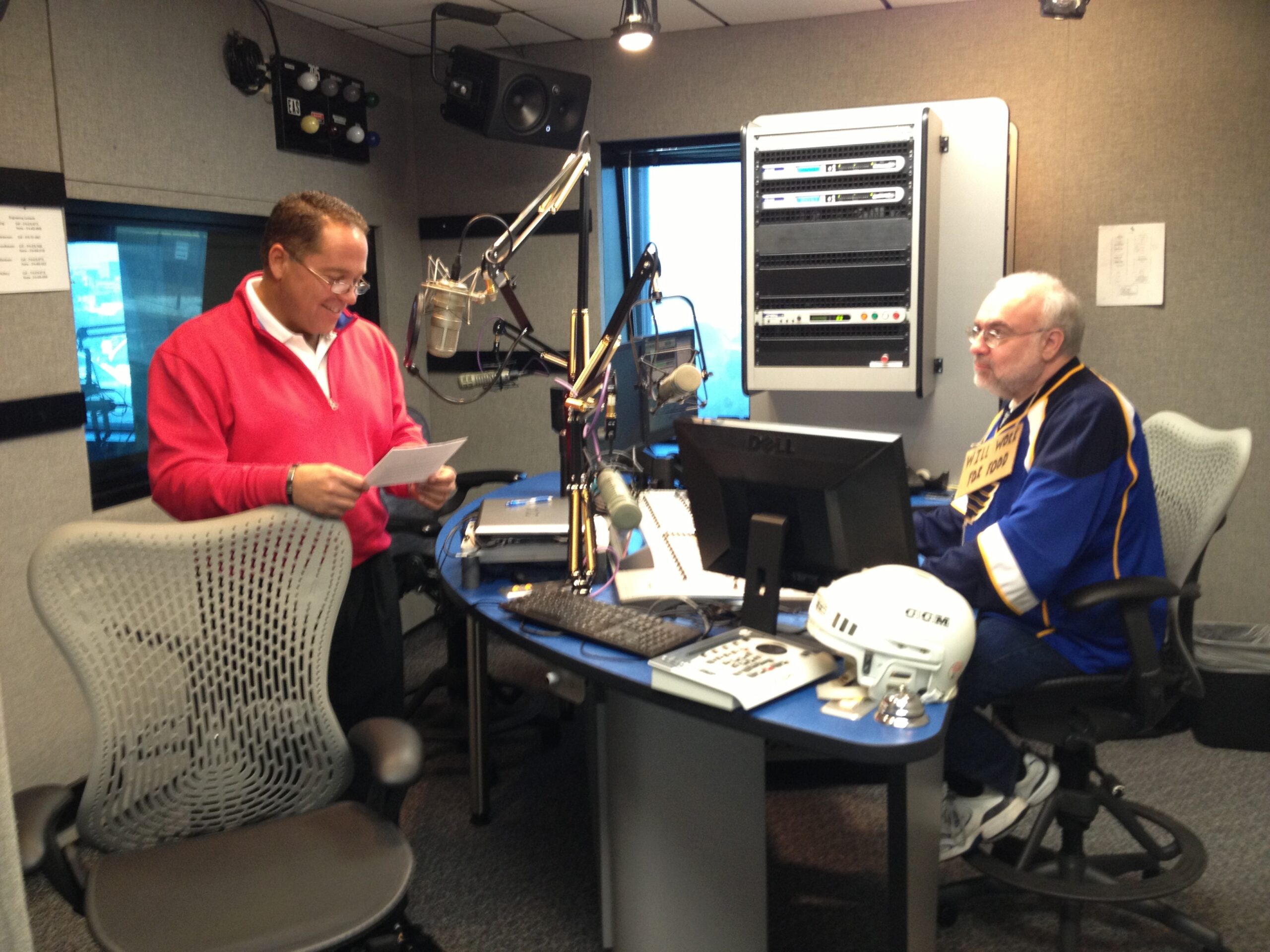
  • In broadcast journalism, new stories begin with a general, simple sentence signaling the beginning of a story. For example, if a story is about an outbreak of tornadoes in Oklahoma, the lead sentence might be: Oklahoma saw severe storms yesterday. Thus, the opening sentence in a broadcast news story functions as a cue that begins a story segment.
  • Sentences in a broadcast news story generally contain just one idea and do not contain multiple clauses and internal clauses. This makes it easier for the anchor to read.
  • In print, a source is mentioned at the end of a sentence: Oklahoma is likely to see more severe weather this month, said meteorologists at the University of Oklahoma. In a broadcast story, the source is mentioned at the beginning of a sentence: Meteorologists at the University of Oklahoma say that Oklahoma is likely to see more severe weather this month. This emphasizes the informative part of the sentence for the listener.
  • Broadcast news stories adopt a conversational style. News segments are often short, so information has to be conveyed quickly and simply. Example: Cold weather is on the way for the tri-state area. Here are several tips for coping with the cold weather. First, check for any drafts in your house . . .
  • Finally, broadcast news stories take into account the visual and auditory nature of broadcast news. For example, images often accompany a story, and the story needs to be consistent with the image. Moreover, because the audience is listening to a story, rather than reading it, a good broadcast news story appeals to the ear. Compare There was an outbreak of tornadoes in Oklahoma this weekend to Tornadoes whipped through Oklahoma this weekend. The latter conjures a concrete visual image and is more likely to resonate with a listening audience.

Broadcast Journalism Rules

As we can see, broadcast journalism presents the writer with unique challenges. A broadcast news story has to aid the anchor in reading the story, take into account any imagery used during the story, and provide the listener with concrete details in a short time span.

Famous Moves: 9 Iconic Dance Styles To Learn

Dance is one of the oldest forms of artistic expression and dates back thousands of years. It exhibits a bewildering array of styles and performs a variety of functions, from ceremony to entertainment – even the best dancers can master only a small subset of dance styles and forms, but learning various dance moves can make a dancer more versatile. Below is a guide to some of the most iconic dances and styles.

Dance Moves from the 1920s

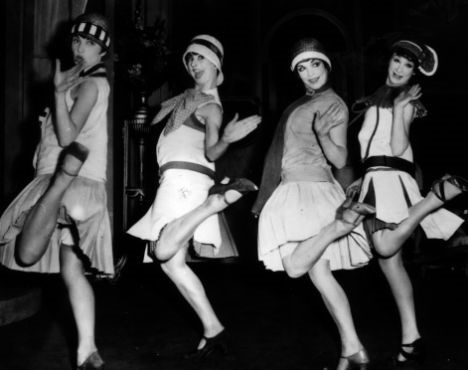
The 1920s are known as the Roaring Twenties because of the rise of jazz and dance culture. Several iconic dances are associated with this period.

Iconic Dance Moves

The Charleston

Perhaps the most famous dance of the Roaring Twenties, the Charleston is complex. The first step is to walk backwards and then forwards, all the while kicking one’s legs out to the side. The second step is to move forwards and kick a front leg out, followed by moving backwards and kicking a leg back. The final step is to put both hands on both knees and move side-to-side by moving the knees apart and then together.

https://www.youtube.com/watch?v=xfAMIrUao9w
Steps for the Charleston

The Lindy Hop

Another iconic dance of the Roaring 20s, it is performed by two dancers who swing each other around while bouncing on one leg and then another. Some couples perform flips and even splits.


A Lindy Hop Competition

Hip-Hop Dancing

A more recent style of dancing was developed in the 70s and 80s in urban street environments. Hip-Hop dancing comprises three broad categories of dance: breaking, locking, and popping.

Breaking

The distinctive feature of breaking, or break dancing, is that the dancer is often horizontal to the ground and maintains contact with the ground via the arms, torso, and head as well as the feet. The iconic move here occurs when a dancer spins on his or her head.


Break Dance Competition

Locking

This form of Hip-Hop dancing involves the dancer freezing momentarily, i.e., locking, and holding a pose. A simple locking move is the Up Lock, or muscle man pose.

Popping

Whereas locking involves a momentary pause, popping involves contracting the muscles to create a jerking motion, i.e., a pop. A common type of popping is sliding the feet, the iconic sliding move being the moonwalk, made famous by Michael Jackson.


Michael Jackson Popping and Moonwalking

Moshing

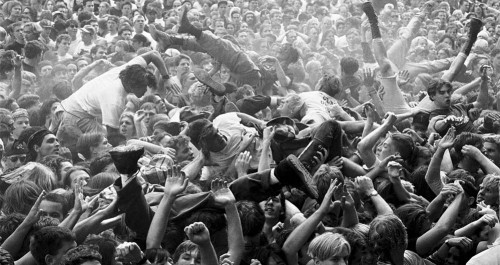
Not for the faint of heart, moshing, sometimes known as slam-dancing, is an aggressive dance style in which dancers push one another into other dancers. Associated with hardcore punk, moshing involves full body contact between participants. Indeed, moshing has resulted in the occasional death. Moshing often takes place in a pit just below center stage.

Learn Dance Moves

The iconic move in moshing is crowd surfing. This occurs when someone is lifted in the air and passed around from one crowd member to another. A few entertainers engage in crowd surfing, but most do not.

Country Line Dancing

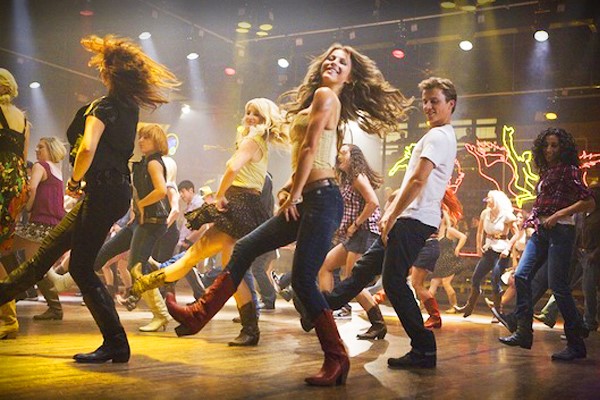
Line dancing takes many forms, but it is closely associated with country or western line dancing due to the popularity of the video for “Achy Breaky Heart” by Billy Ray Cyrus. In line dancing, dancers form a row, face forward, and dance in unison, emphasizing foot movement. WGNA, a country music radio station in Albany, New York breaks down some of the basic line dancing steps for beginners.

Types of Dancing

Recent Dance Crazes

Dance and popular culture often meet when a dance becomes trendy and a dance craze ensues. We’re in a new age where Internet memes drive popular culture, and there are no finer examples of this than the recent iconic dances featured in the Harlem Shake and Gangnam Style memes.

Harlem Shake

As a video meme, the Harlem Shake became viral in 2013. In a Harlem Shake video, one person freestyle dances while others go about their normal business, until a jump cut occurs, exposing a dance party made up of motley-dressed dancers freestyle dancing, often convulsively – hence the shake.


Harlem Shake – Ten of the Best

Gangnam Style

Gangnam style was made popular by Korean pop star Psy in his “Gangnam Style” video, which has received over two billion views to date. Although Gangnam Style is more than just a dance style, it denotes a foxtrot dance that mimics the riding of a horse which became one of the most iconic dances of 2012.


Dancing Gangnam Style

As we can see from just a few of these iconic dances, the artform appears in many guises. Although no one can master every dance, everyone can have fun trying out different dance styles and perhaps creating the next viral craze to sweep the net.

Instantly Become More Photogenic: Try Squinching

Let’s try an experiment. Hop on Facebook and look at your friends’ photos. Open up your family album and look at the eyes. Do you ever get the sense that your friends or family members look like they’re about to be hit by a car, with their ‘deer in headlights’ look?

Now, people don’t generally walk around with their eyes fully open, so why do we do this when getting our photograph taken? In most cases, it’s simply a matter of nerves; we clench up and open our eyes a ridiculous amount, resulting in a decidedly unnatural, unsexy photo that lacks confidence.

Think about your favorite celebrities and how their eyes look when they’re posing for the camera in a magazine or on the red carpet. Do they look scared or lack confidence? Of course not!

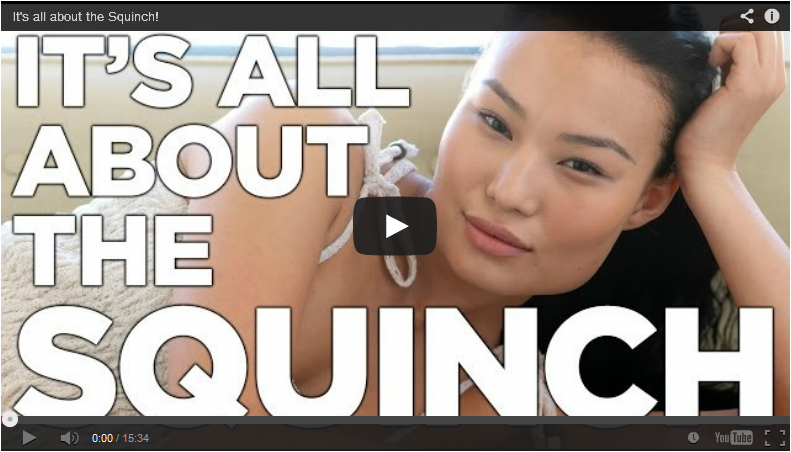
So how do you rid yourself of the reflex to fully open your eyes in pictures? Why do celebrities tend to look so relaxed and confident? According to guest lecturer Peter Hurley who taught at the New York Film Academy’s photography school in Los Angeles, this is because they have most likely mastered the art of the “squinch.”

For photography students at both our New York and Los Angeles campus, this is a crucial tool that can help set them apart from their peers.

A term coined by Hurley himself, squinching is a simple, but essential technique for actors, models, and anyone who wants to take a good photograph that exudes self-assurance. Hurley has spent decades helping his subjects attain that perfect balance of relaxation and poise that radiates from their eyes.

Breaking it down, squinching is a combination of squinting and pinching your lower eyelids. Rather than going full squint and nearly closing both eyelids, squinching involves bringing down one’s top eyelid very slightly and pinching the bottom eyelid to create a smoldering look that exudes coolness.

Getting down to the details, let’s get scientific for a moment. The eyes are surrounded by a muscle called the orbicularis oculi and is what shuts and holds tight one’s eyes; simply put, it’s how your eyes are able to squint. In terms of the pinching side of the equation, there is a palpebral ligament that runs across the bottom of your eye and that you can learn how to control to create the pinching effect. So by learning to control these two elements, you’ll be a master of squinching in no time.

Of course, as with any aspect of modeling, squinching requires constant practice so that it almost becomes second nature. In fact, most of us squinch on almost a daily basis, but it is only once we’re in front of a camera that we need to teach ourselves how to take conscious control of our muscles and ligaments to get the perfect picture. Essentially, it is a matter of pinching the lower eyelids enough so that there is little to no signs of white beneath the eyes. And one can take the squinch to the next level simply by smiling, which adds a relaxed tone to the confident eyes.

And the most exciting aspect of the squinching method is that absolutely anyone can do it. After all, no one’s eyes look the same, but everyone possesses the same muscles and ligaments that allow them to master the squinch. So regardless of your ethnicity, the squinch is a tool you can most definitely use during your next photo shoot.

With just some concentrated practice and understanding of how one can obtain a squinch, you can move away from the instinctual ‘deer in headlights’ eyes to a look that exudes confidence and sexiness.

Best Film Locations In Los Angeles

As Los Angeles is the country’s leading hub for movie and television production, the city’s many neighborhoods and attractions have appeared in countless films and shows. It’s hardly an understatement that for many first-time visitors, exploring Los Angeles can feel very much like traveling through a real-life movie. With so many unique areas to film, we’ve put together a list highlighting some of LA’s more notable film locations. Before you get started on your next filmmaking project in the city, be sure to check out Los Angeles County’s policy regarding film permits to ensure your production goes off without a hitch.

Chinatown

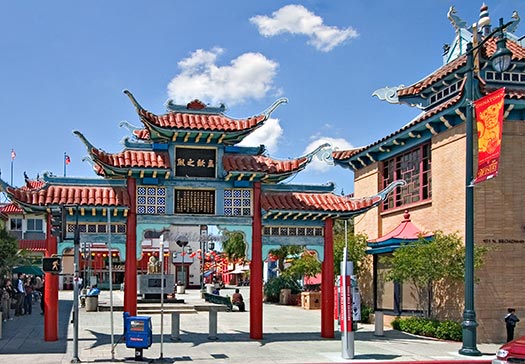
The East Gate opening up to Chinatown in Los Angeles

The first modern American Chinatown, Los Angeles’ Chinatown Central Plaza was opened on June 25, 1938, becoming one of the country’s original open malls, with the iconic East Gate being completed in 1939. The area is composed of buildings that combine American and Chinese styles to create a unique location that has served as the backdrop for such films as Chinatown, Rush Hour, and Lethal Weapon 4. While many of the area’s Chinese population has relocated to other areas of Los Angeles, this one-of-a-kind commercial center is still a leading bastion for Chinese culture, food, and music.

Santa Monica Pier

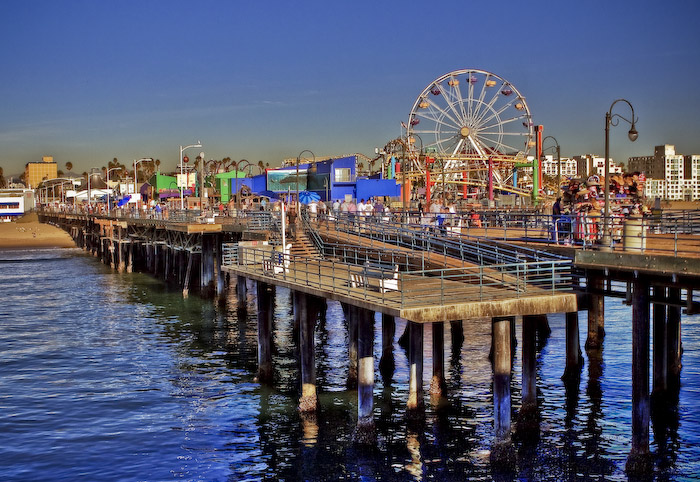
The ferris wheel and attractions at the Santa Monica Pier

Originally opened in 1909 following a year of construction, the Santa Monica Pier has been attracting locals and tourists alike for over a century. Boasting Pacific Park, which is a family amusement park and has a sizable Ferris Wheel, a carousel from the 1920s, the Santa Monica Pier Aquariums, stores, street entertainers, restaurants, and a number of other popular local businesses, the pier offers countless scenic locales that have appeared in such notable movies as The Sting, Beverly Hills Cop III, Funny Girl, Forrest Gump, and They Shoot Horses, Don’t They? Also, if you’re looking to get some fishing done in between takes, the end of the pier is a popular spot for fishers. With an annual visitor rate of over four million people visiting the pier every year, there is countless opportunities for filmmakers to find extras and interesting characters for their projects.

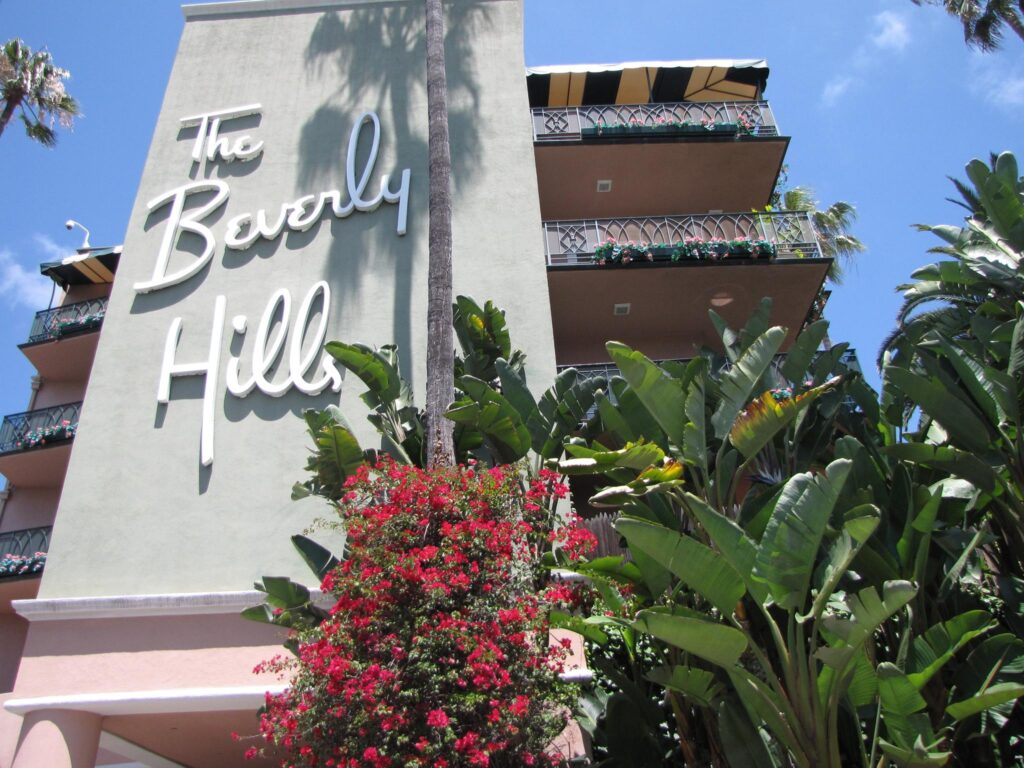
Beverly Hills Hotel

The iconic exterior of the Beverly Hills Hotel

On May 12, 1912, Margaret J. Anderson and her son, Stanley S. Anderson, opened The Beverly Hills Hotel. After unsuccessful attempts had been made to drill for oil, water was found. With that discovery, Burton Green formed the Rodeo Land and Water Company. He announced plans to build a city with large lots of curved, tree-lined streets. But Green needed a special attraction to set his city above all the other housing developments sprouting up around Southern California at the turn of the century.

A grand hotel was envisioned, and Green persuaded the Andersons of Hollywood Hotel fame to come and build their dream. Against all advice, they left their secure surroundings in Hollywood and came to the undeveloped area that was later to become the city of Beverly Hills, literally built around the new hotel. Over the course of the century, the hotel became a popular destination for celebrities and royalty, with such famous guests including the Duke and Duchess of Windsor, Howard Hughes, John Wayne, and many others. It was also featured on the cover of the Eagles’ famous Hotel CaliforniaLP and in such movies as The Way We Were, Shampoo, California Suite, and American Gigolo.

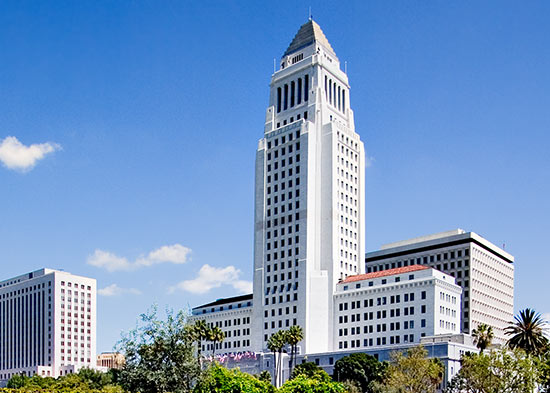
City Hall

The exterior of Los Angeles City Hall

The tallest base isolated structure in the world, Los Angeles City Hall serves as the center of government for Los Angeles and is where the mayor’s office is located alongside the meeting chamber for the Los Angeles City Council. Designed by John Parkinson, John C. Austin, and Albert C. Martin, Sr. and completed in 1928, the building’s singular art deco-inspired style would help to inspire the design of other notable buildings in downtown Los Angeles, such as the Los Angeles Public Library.

The building’s iconic status as both an architectural and cultural landmark has only grown over time as it has served as the backdrop for countless classic movies and TV series, appearing as the Daily Planet building in the Adventures of Superman, Dragnet, Adam-12, the 1953 version of War of the Worlds, Perry Mason, and countless other productions. If you’re looking to give your production a classic LA feel, the City Hall is a perfect location for filming.

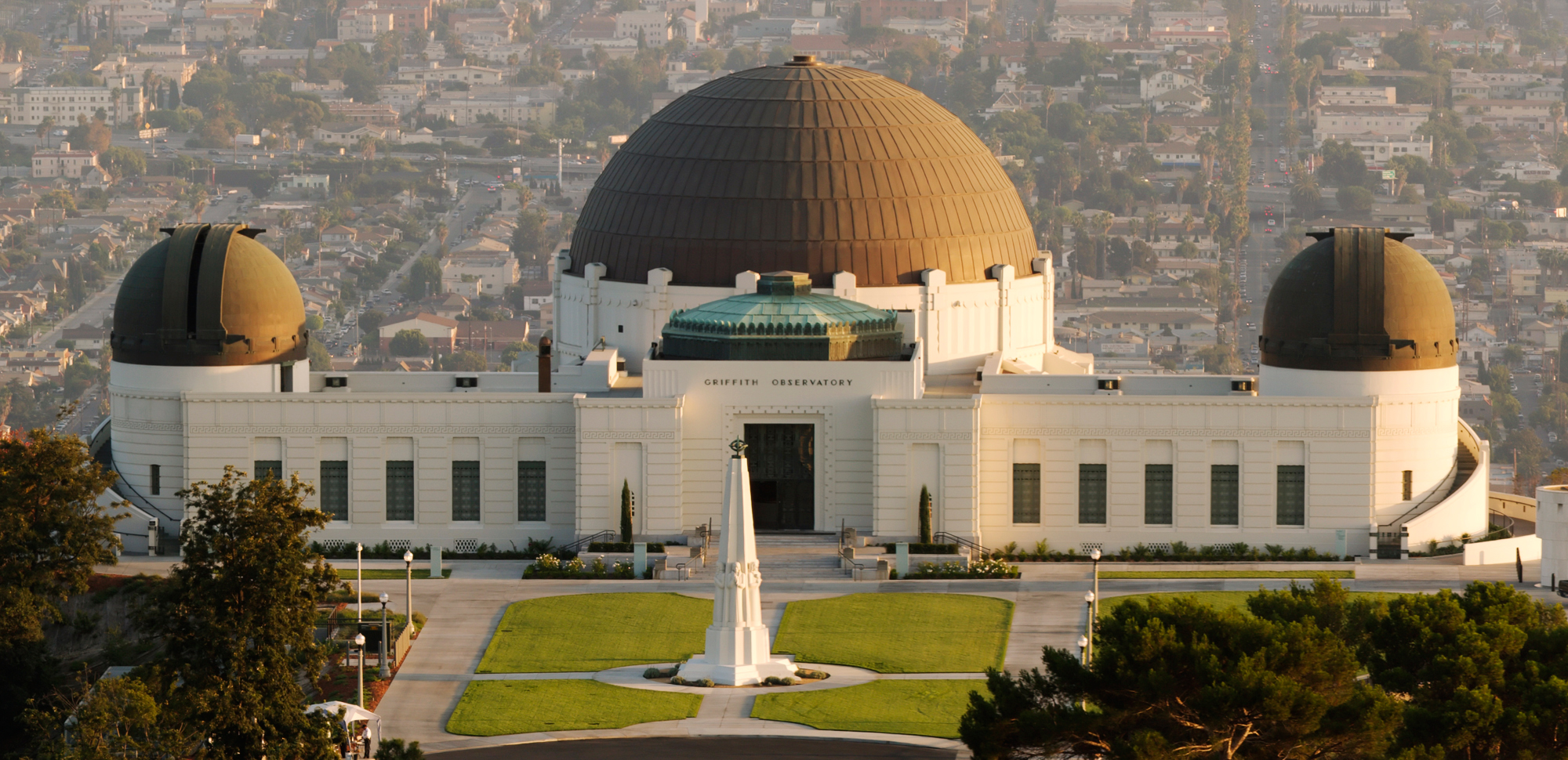
Griffith Observatory

 Griffith Observatory in Los Angeles, California

Made famous to cinephiles the world over due to its appearance in the classic James Dean film Rebel Without a Cause, the Griffith Observatory opened in 1935 after Colonel Griffith J. Griffith gifted the city with the 3,015 acres upon which the observatory would be built. The observatory was unique from its inception as Griffith had made it a stated goal of making observatories open to the public at a time when they were primarily used solely by scientists. As such, the observatory remains free to the general public.

Located on Mount Hollywood, the facility and its surrounding park offer visitors and filmmakers an extraordinary view of the Los Angeles Basin, which includes downtown, Hollywood, and the Pacific Ocean. Some of the famous films that have used the location include Flash Gordon, The Terminator, The Rocketeer, The People vs. Larry Flynt, Yes Man, and Terminator Salvation.

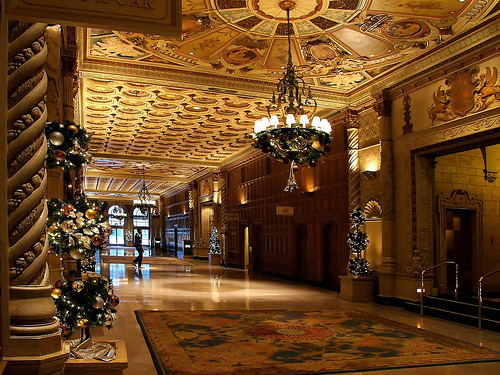
Millenium Biltmore Hotel

The entryway of the Millenium Biltmore Hotel

The Millennium Biltmore in Los Angeles, California opened in 1923 and at the time was the largest hotel west of Chicago and designed by architects Schultze & Weaver. Originally named the Los Angeles Biltmore Hotel, it was made a Historic-Cultural Monument in 1969. Its interior is extremely ornate with frescos and murals, marble fountains and columns, and bronze stairwells and doorways.

The hotel’s lobby was featured in the movie Ghostbusters, as the fictional Sedgewick Hotel. It also served as an early location for the Academy Award Ceremony when the Academy of Motion Pictures Arts and Sciences was founded at a luncheon banquet at the hotel’s famous Crystal Ballroom in May 1927. It was the nerve center of the 1960 Democratic National Convention; headquarters of the Democratic National Committee and housed TV networks and candidates including John F. Kennedy, Lyndon B. Johnson, and Adlai E. Stevenson. Movies that have been shot at the hotel include Vertigo, Chinatown, and Beverly Hills Cop.

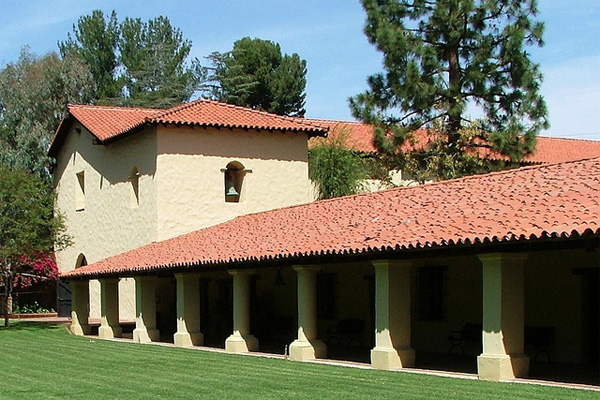
San Fernando Mission

The exterior of the San Fernando Mission in Los Angeles

Based in the Mission Hills district of Los Angeles, the Mission San Fernando Rey de España was established by Father Fermín Lasuén on September 8, 1797. The fourth such mission he had built in as many months, Lasuén had chosen the location due to its accessibility and the mission served to both spread the Christian message and establish a Spanish colony in the United States.

Over the course of the next two centuries, the San Fernando Mission became a fixture of the Los Angeles landscape, being sold and re-sold multiple times and operating as a train station, a warehouse, and even a hog farm at one point. In 1971, the San Fernando earthquake caused enough damage to the mission that the city had to re-build it completely.

With the birth of the film and television industries, the San Fernando mission appeared increasingly on movie and TV screens in such productions as Dragnet, Knight Rider, Pee-Wee’s Big Adventure, and Incredible Hulk, making it a perfect location to capture a slice of historic Los Angeles.

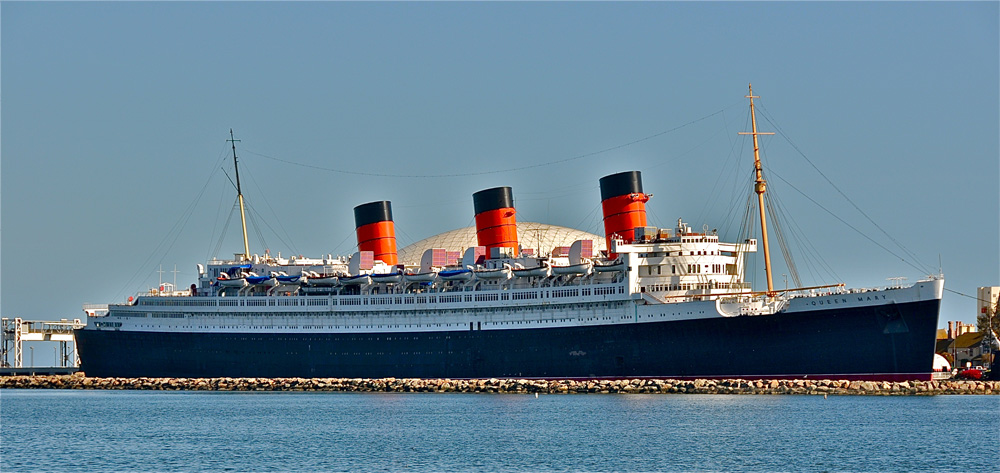
Queen Mary

The Queen Mary in the Long Beach port

Originally constructed as an ocean liner that traversed the North Atlantic Ocean from 1936 to 1967 by the Scottish business John Brown & Company, the Queen Mary was designed to compete with the superliners that were being built by German and French companies is the 1920s and 30s. During World War II, the Queen Mary was transformed into a troopship that carried Allied soldiers before returning to commercial service following the war.

By 1967, although the Queen Mary was one of the most popular ocean liners, as it was losing money it was ultimately retired that year, where it was sailed to the port at Long Beach, California and has remained since then. Over the past four decades, the ship has become a nexus of commercial activity as restaurants, a museum, and a hotel, which helped to earn the ship its place on the National Register of Historic Places. Since its retirement, it has served as a location in such films as The Poseidon Adventure, Death Cruise, Chaplin, and Pearl Harbor.

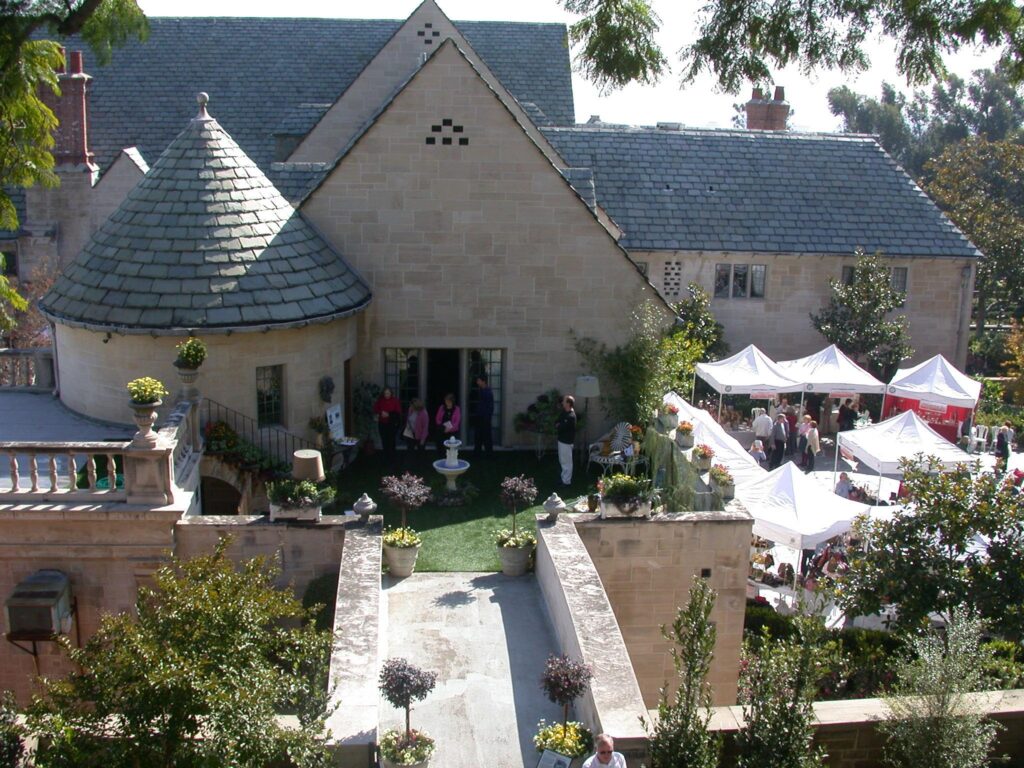
Greystone Mansion

The exterior of Greystone Mansion in Beverly Hills

The largest home ever built in Beverly Hills, Greystone mansion was built by famed oil-tycoon Edward Doheny in 1928, as a gift to his son Ned. With over 46,000 square feet of living space, it cost more than $4 million to build in 1928. Many people hail this massive home as one of the grandest mansions on the West coast.

Shortly after the house was built, there occurred a legendary controversy wherein Ned and his secretary died of a murder-suicide. Ned’s family remained in the house until 1955 and its new owner nearly demolished the home until the neighborhood of Beverly Hills stepped in and purchased the mansion, leasing it to the American Film Institute from 1965 to 1982, wherein countless films and television shows were and continue to be shot. Now a public park, every summer Catskills West holds a play in the pool area entitled The Manor. Some of the many films and shows to be shot in and around the mansion include The Big Lebowski, The Bodyguard, Alias, The Muppets, Spider-Man, and There Will Be Blood.

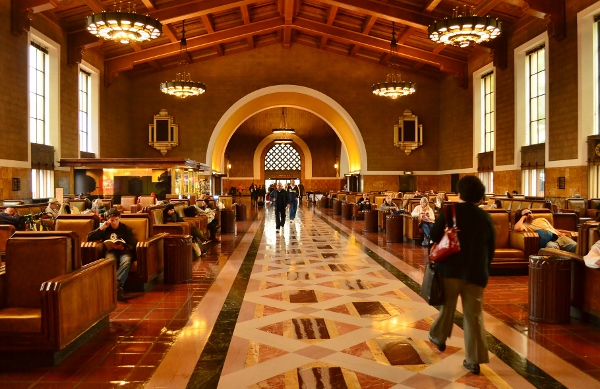
Union Station

The interior of Union Station Los Angeles

Built and opened in 1939, Union Station is known by many as the “Last of the Great Railway Stations” to be constructed in the US, serving trains from the Union Pacific, Southern Pacific, and Santa Fe Railways. Partially designed by John and Donald B. Parkinson—the father and son duo who were also responsible for Los Angeles City Hall—the station itself was an amalgamation of different styles that included Dutch Colonial Revival and Mission Revival. As such, it has served as an iconic film location for movies that include Catch Me If You Can, Blade Runner, Speed, and Star Trek: First Contact.

Developing An Iconic Screenplay Character Means Creating An Epic Fail Moment

Author: Melanie Williams Oram, Chair, Screenwriting Department, New York Film Academy

Fail Stamp
It’s against our nature to fail. We’re programmed to succeed at all costs. Our fear of failure can cause us to be risk averse, to stay in our lane, and to accept tasks where we know we can shine because we will only have to use skills that are clearly in our wheel house. Creating memorable characters means counteracting your natural instincts to avoid failure at all costs. A screenplay character needs to be willing to learn new skills, to venture into new lands, and most importantly to take risks. Intriguing and complex characters in good screenplays succeed where ordinary people do not because they leave their comfort zones willingly in spite of the fact that failure is not just a remote worry but a real possibility. In fact screenplay characters MUST live through an Epic Fail incident in order to reach their goal.

Creating an Epic Fail moment is an essential building block to developing an iconic screenplay character. An Epic Fail Incident usually happens around the midpoint of a screenplay and is the place in the story where the character reaches an obstacle so great, so high, and so deep there’s nothing for her to do but face the challenge head on. She cannot avoid this obstacle and despite all of her best efforts her plans do not succeed. She suffers a major setback and she experiences an Epic Fail incident.

Like all key story points, The Epic Fail moment needs a set up so that the pay off can be rewarding for the character and the audience. An Epic Fail incident can only happen if there’s something at stake. The protagonist must face the reality that if she fails to overcome this obstacle she will lose something that’s truly important to her. The higher the stakes, the more compelling the Epic Fail moment becomes. An Epic Fail incident can cost the protagonist her job, the trust of a loved one, or even her freedom.

Why do we love characters like Neo in The Matrix or Annie in Bridesmaids? It’s because they don’t just screw up situations and fix them quickly. They suffer from a tremendous loss during an Epic Fail moment but they are able to reboot and find a way to succeed. Neo fights hard but Morpheus still gets captured by the machines. Ultimately he chooses to believe in his own abilities, accept his destiny and beat the machines at their own game. Annie totally bombs in all her duties as maid of honor and destroys her friendship with her best friend Lillian. After Annie’s friendship with Lillian disintegrates, Annie is left broken and alone and she decides to abandon the silly and hurtful competition to prove that she’s Lillian’s BFF. Annie refocuses her efforts and insures that Lillian’s wedding gets back on track and salvages the seemingly irreparable damage done to her friendship with her best friend.

Two very important things happen when you include an Epic Fail incident in your screenplay. It gives your audience a chance to connect with your protagonist. Everyone wants to see a character succeed against all odds. Think about the first time you saw Rocky and you watched the scene where Rocky initially runs the stairs at the Philadelphia Museum of Art. He’s alone, he’s winded, and he barely makes it to the top. Clearly there’s no way that this character is ready to get into the ring with the heavyweight champion of the world. Rocky is trying to train but he’s failing completely. The audience connects with Rocky’s struggle and his determination to overcome his feelings of inadequacy and failure. Later in the film when we see the iconic scene where Rocky runs the stairs again, he’s triumphant and he’s followed by scores of people who are encouraging him to succeed. Rocky’s has transformed from a down and out, isolated low level hoodlum with no future to a guy who becomes a hero in his community and is ready to fight the heavyweight champion of the world. The audience connects with Rocky in that moment. We’ve witnessed Rocky fail utterly and now we’re excited by his success. We want him to win. Rocky’s victory on the stairs would not have been so satisfying if we didn’t see him grapple with what appears to be inevitable defeat.

https://youtube.com/watch?v=NubH5BDOaD8

Also, an Epic Fail moment allows the character to experience a reboot or a flip-the-script moment where she can learn from her mistakes, develop a new strategy, and continue with her journey to reach her goal. The Epic Fail pitches the character into the depths of despair and the agony of defeat but it also allows her to reinvent herself. Armed with the pain and the heartache that the character experiences during the Epic Fail and combined the with the knowledge she gets from the reboot, the character is positioned to reach her goal and more than likely make an indelible impression on the minds of the audience.

Duet Acting: An Inexpensive Way To Hone Your Acting Skills

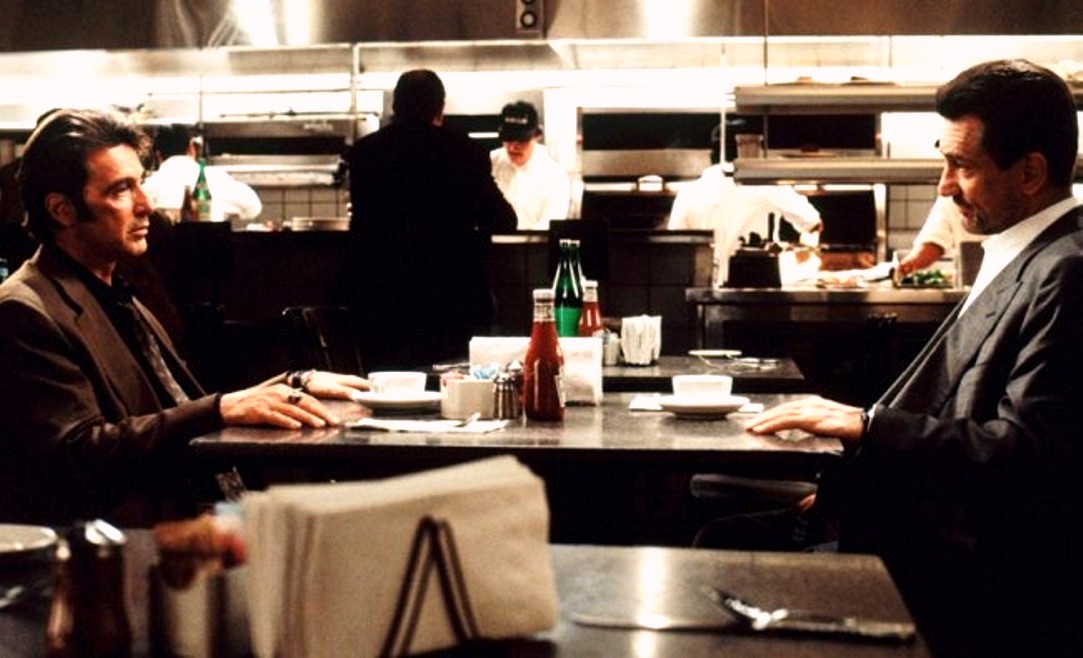
Heat Acting Scene

An effective technique for actors to sharpen their acting skills is duet acting. In duet acting, two actors pair off and act out a short script. Although duet acting is associated with high school speech and debate, it is an inexpensive way for actors to practice a wide array of character types and dialogue. Below are some guidelines for duet acting.

  • Find a quiet place to act, e.g., a classroom, empty theater, or living room. Actors may sit in chairs opposite one another, or stand. Props generally are not used, but there is no rule against using them, especially if the play hinges on a prop.
  • Read the script through to get a sense of how it should be performed. If a play, for example is set in a coffee shop, the actors may want to sit at a table for the duration of the play. On the other hand, if a play involves movement, actors might want to stand in an open space and pantomime the actions indicated by the play.
  • Determine the tone of the script. A duet script can be dramatic or humorous and express a wide range of themes.
  • Switch roles. Actors should switch parts in order to practice different characters. This is especially effective when one character is the “straight man” and one is the “funny man.”
  • Record the performance. This is not required and may cause anxiety, but it is an easy way for actors to analyze their performance. It allows actors to hear themselves and to see their movements without the pressure of a director.

Although numerous duet scripts are available online, here are some ideas that actors can expand upon:

  • The classic coffee shop scene. Some duet scripts are dialogue-only, and a common setting for a ten-minute dialogue is a coffee shop. Such dialogues can be humorous, tense, loud, quiet, romantic, and so on. Here are some possible plots:

One character has to reveal a secret to the other character, e.g., that he or she is married, is a member of a crime family, has a life-threatening condition, or works for a secret government agency. The tone here can vary from humor to tragedy.

One character has to explain something to the other character, e.g., how to do something computer-related, how to find a spouse, how to buy a car, how to understand coffee terminology, or how to use chopsticks. This kind of plot lends itself well to humor, with one character trying to explain something patiently and the other character not understanding.

  • A touring scene. In this kind of scene, two actors pretend to be tourists exploring a location. This kind of scene allows actors to practice movement and pantomime. Possible plots:

The characters are lost in a large, non-native city and cannot speak the native language. Characters might seek directions from natives by speaking loudly and making gestures. Or they may wander around and look for various landmarks to guide them.

The characters are exploring nature. Characters could observe wildlife, explore a cave, run away from dangerous animals, or climb a mountain.

  • A space station or spaceship scene. Most scenes in classic science fiction entertainment take place on a space station or ship. Acting out such scenes involves both dialogue and movement. Possible plots:

The characters’ are the only two crew members left conscious after a hostile alien attack. They must evade the aliens and try to defeat them.

The characters have to prevent their station or ship from exploding due to a catastrophic malfunction.

One character is a diplomat tasked with giving a tour of the ship to a member of a difficult alien species. The alien could be hostile, lacking emotion, or eccentric.

As we can see, duet acting gives actors the chance to act in a variety of circumstances and to express a variety of moods. It requires little time or expense and can be practiced anywhere, yet it sharpens an actor’s skills as much as a full dress rehearsal or a stage performance.