Clint Eastwood

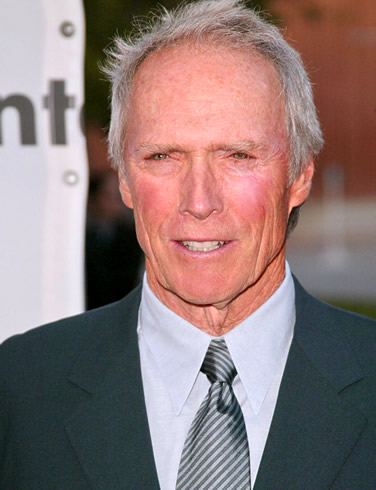
Clint EastwoodName: Clinton Eastwood Jr. aka Clint Eastwood

Essential DVDs: Play Misty For Me (1971) ; High Plains Drifter (1973); The Outlaw Josey Wales (1976); Pale Rider (1985); Unforgiven (1992); The Bridges of Madison County (1995); Midnight in the Garden of Good And Evil (1997); Mystic River (2003); Million Dollar Baby (2004); Gran Torino (2008)

Oscars: Best Director, Best Picture (Unforgiven, 1993); Best Director, Best Picture (Million Dollar Baby, 2005)

In His Own Words: “I love every aspect of the creation of motion pictures and I guess I am committed to it for life.”

When Clint Eastwood decided to direct the thriller Play Misty For Me, with its cautionary view of celebrity, in 1970 he inadvertently took the first step to a kind of cinematic respectability that had thus far eluded him. He was certainly successful by then, and popular. He had been almost constantly in work since his debut on television as Rowdy Yates in Rawhide. But the spaghetti westerns he had made with Siergio Leone were yet to be subject to the critical re-appreciation led by British writer Sir Christopher Frayling and, though finally they became hits with the public, were mostly thought of as curious rip-offs of their Hollywood inspirations. Dirty Harry, who made his debut in 1971 and continued through a series of four sequels of ever deteriorating quality was considered to be essentially fascist by a number of critics, a barely disguised vigilante movie typical of the decade and virtually indistinguishable from the likes of Death Wish. Other, kinder, commentators simply regarded it as an efficient enough policier(ital) with a charismatic star grittily directed by Don Siegel.

But with Play Misty Eastwood revealed not only a facility for directing, but a (until perhaps recently) savvy taste for good material. He made four westerns, both High Plains Drifter and Pale Rider were solidly made examples of the genre from a man who thoroughly understood it, but The Outlaw Josey Wales is the most fascinating of the early ones; a daring, postmodern riff on Western mythology (filtered with anti-war sentiment in its post Civil War setting) that begins a task that his later masterpiece would complete.

Until the success of Million Dollar Baby, there was a school of thought that had wished he’d retired after making Unforgiven. Made from a brilliant screenplay by David Webb Peoples that Eastwood had cannily kept in store until he was old enough for the lead, it was a perfect grace note on which to end a career; it is after all a film about age and endings.

There have been missteps in the last few years. Space Cowboys was a woebegone attempt at dealing with the familiar theme of aging in a poorly written comedy-adventure while True Crime had a typically incendiary performance from James Woods as a newspaper editor but little else to recommend it. But there were the superior literary adaptations of The Bridges of Madison County and Midnight in the Garden of Good and Evil to keep us going.

Mystic River showed a return to form, it was efficiently directed, though for some it was a little too reverent for its pulpy roots and the performance he coaxed out of at least two of his leads were so honed towards Oscar glory you almost felt they were wearing their tuxes under their workshirts. The austere, multi-layered Million Dollar Baby is another masterpiece, a thematic return to the concerns of Unforgiven—age and death were again the key subjects. Made guerrilla style in little more than a month and pretty much without anyone noticing, it maintained that Eastwood’s pre-eminence as one of Hollywood’s most daring and personal filmmakers.

Woody Allen

Woody AllenName: Allen Stewart Konigsberg aka Woody Allen

Essential DVDs: Sleeper (1973); Love And Death (1975); Annie Hall (1977); Manhattan (1979); Broadway Danny Rose (1984); Hannah and Her Sisters (1987); Crimes And Misdemeanors (1989); Manhattan Murder Mystery (1993); Bullets Over Broadway (1994), Match Point (2005), Midnight in Paris (2011), Blue Jasmine (2013)

Oscars: Best Screenplay, Best Director, Best Picture (Annie Hall, 1978); Best Screenplay (Hannah And Her Sisters, 1987); Best Orignal Screenplay (Midnight in Paris, 2011)

In His Own Words: “I don’t want to achieve immortality through my work, I want to achieve it by not dying.”

If ever a line has come back to haunt Woody Allen it is the one spoken by one of the aliens in Stardust Memories, an uncharacteristically sour moment of introspection he borrowed from Fellini: “We like your films, especially the early funny ones.” Allen’s weary response whenever this is thrown in his face is that not all of his early films were funny, and not all his later ones have been serious. The irony here is that most of his recent films, despite their intentions, have been about as funny as a burning orphanage. Still, he has a point.

With formative influences comprising The Marx Brothers and Ingmar Bergman, Allen’s oeuvre was always going to be a mixed bag. There were glimpses of the existentialist in Borsht Belt clothing as far back as 1972’s Everything You Always Wanted To Know About Sex (spoofing Antonioni in the female orgasm segment), 1973’s Sleeper (a sly Orwellian satire) and 1975’s Love And Death (philosophical debates on the battlefield, Tolstoy, Einstein, the whole bit). And throughout his career, he has flattered the urban sophisticates who make up the bulk of his audience with asides on Kierkegaard, McLuhan and Mahler, even as the masturbation one-liners came thick and fast (if you’ll pardon the expression). It should also be clear that you can’t mine his level of neurosis for belly laughs indefinitely without going completely off the dial.

His ‘serious’ films have not all been dreary experimental duds like September (1987) or Shadows And Fog (1992) either. Crimes And Misdemeanors, to cite the most obvious example, is a superbly wrought meditation on guilt and culpability that would’ve had Doestoevsky in fits.

As a true auteur, humour has always been Allen’s sharpest tool. He did Bergman far better in 1982’s delightful A Midsummer Night’s Sex Comedy than he did in either September or Interiors (1978), and sensibly delivered Hannah And Her Sisters (1986) with wistful smiles and a dollop of sentimentality, rather than the rain clouds of despond the material might have suggested in one of his more ‘Scandinavian’ moods. 1979’s Manhattan is, of course, Allen’s masterpiece and his Valentine to New York is as affectionate and wryly amusing as the city that made him deserves.

If Memories’ E.T. had professed a preference for these bitter-sweet, mid-career musings on life’s persistent questions — sex, death, religion, allergies, all the big ones — he would have been more in tune with public opinion. “When a thing is funny,” wrote George Bernard Shaw, “search it for a hidden truth.” Sound advice, which reveals that five minutes of the lobster scene from Annie Hall paints a more perceptive portrait of human relationships than an interminable two-hours of self-important, disingenuous shouty angst like Closer could ever hope to. It’s a hell of a lot funnier, too.

Orson Welles

Orson WellesName: George Orson Welles aka Orson Welles

Essential DVDs: Citizen Kane (1941), The Magnificent Ambersons (1942), Macbeth (1948); Touch Of Evil (1958)

Oscars: Best Screenplay (Citizen Kane, 1942); Honorary Award (1971)

In His Own Words: “I started at the top and worked down.”

“The biggest electric train set any boy ever had,” pronounced Orson Welles in 1940, surveying his new domain — or, at least, that corner of it occupied by RKO, the studio that had lured the 24-year-old wunderkind to Hollywood with the promise of absolute freedom to make his directorial debut in whatever fashion he saw fit. Having conquered both theatre and radio in spectacular style, Welles’ gargantuan ego was inflated to bursting point. He quickly abandoned plans to adapt Joseph Conrad’s Heart Of Darkness and opted instead, in a fit of monumental hubris, to launch an all-out assault on one of the most powerful men in America.

That Citizen Kane is an epic tour de force, fully justifying its reputation as the greatest American film ever made, goes without saying. But beyond its cataclysmic brilliance, it encapsulates everything that is so compelling about Welles. He must have known that Kane, a sublime hatchet job on media baron William Randolph Hearst, would bring the temple walls crashing round his ears, but he had the balls to do it anyway. Welles’ superhuman talent was forever wedded to a streak of willful iconoclasm that compelled him to punch the self-destruct button just to hear the sirens wail. Even so, his stature as a filmmaker rests as much on the battlelines he drew against the forces of mediocrity as it does on his supreme artistry. He paid the full price for his audacity. In Kane’s turbulent wake, RKO butchered The Magnificent Ambersons (1942) and Journey Into Fear (1943). They took away his new toy and showed him the door.

A pariah in Hollywood, Welles declined to eat crow. Scorning the iron rule of the studios, he took hired-gun assignments only out of necessity, usually appalling his paymasters with the results. Although recognized now as the masterpieces they are, both The Lady From Shanghai (1948) and Touch Of Evil (1958) went belly up, thanks to Welles’ absolute refusal to compromise.

It’s painfully ironic that of Welles’ many unfinished films, his most cherished was an adaptation of Don Quixote. He spent his exile in Europe vaingloriously tilting at windmills, seizing every scrap of work available to fund his own projects. His ambitions invariably outpaced his means, but his indomitable spirit shows through in the Falstaffian Chimes At Midnight (1966) and the mischievous F For Fake (1975). Even at his lowest ebb, hawking cheap sherry, Birdseye peas and ‘probably the blandest lager in the world’, he still had fire in his belly. Listening to the bootleg of one of these sessions is undeniably sad, but there is something manifestly heroic in this once-towering figure, brought down by magnificent obsession, railing at the quaking tape ops like Lear bellowing into the storm. It’s as if what’s at stake is not a two-minute spot for frozen vegetables but the thing he was permitted to hold in his grasp just once: a work of art that could change the world.

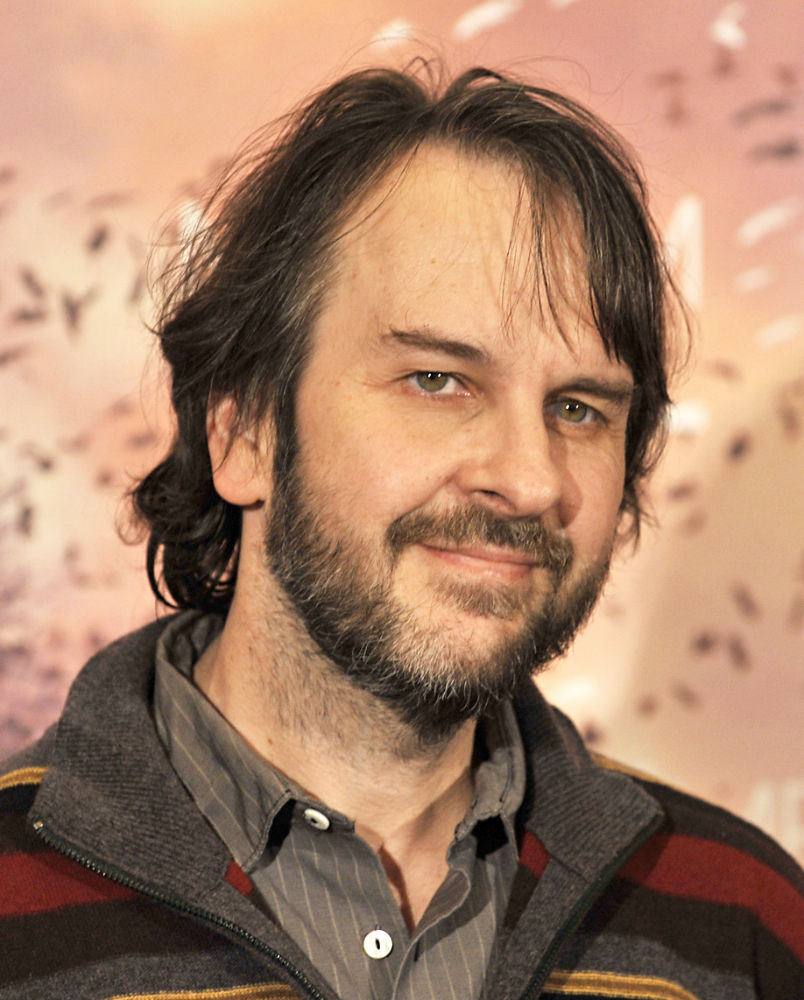
Peter Jackson

Peter JacksonName: Peter Jackson

Essential DVDs: Braindead (1992); Heavenly Creatures (1994); The Fellowship Of The Ring (2001); The Two Towers (2002); Return Of The King (2003)

Oscars: Best Director, Best Picture, Best Adapted Screenplay (Return Of The King, 2003)

In His Own Words: “What I don’t like are pompous, pretentious movies…I have a moronic sense of humour.”

Peter Jackson is a director who seemed to arrive on the Oscar podium a fully formed auteur without the decades of turmoil to back it up. Before making the biggest trilogy of all time, outside a dedicated fanbase and New Zealand, there was awareness of an ability to realise the most complicated book, bar The Bible, in a way that would be so stunningly lauded both by critics and fans. Yet the hints, not to say the talent or the tribulation, were to be found. He was adept at fabulation, with a particular brand of Gilliamesque schlock horror blended with wry humour (and impactful effect work on a very low budget); just try Braindead’s deranged blood bath. With Heavenly Creatures, the real-life tale of teenage murderers, he indicated that he could handle stories with weight and had a fine eye for casting (Kate Winslet, came care of Mr. Jackson, as would Orlando Bloom). With The Frighteners, hooded figures were swooping over Wellington, a comedy-horror throbbing with atmosphere. All roads, were in fact, leading to Bag End.

From the day he was given a Super-8 camera at the age of eight, Jackson had a fascination with special effects and a fearsome determination to find ways to project his imagination onto the screen. For his first junior project, World War II, he would burn holes directly into the celluloid to simulate the flash of gunfire. For his first major project, the alien gore fest, Bad Taste, he would commandeer his mother’s oven for baking prosthetics, forcing the family to live almost entirely on fried sausages. And when money eventually became more prevalent he would set up Weta digital to create the doughy fantasy land of Heavenly Creatures and eventually the gruesome hordes of Uruk-hai, mumakil and orcs that ravaged Middle-earth.

But none of Jackson’s films is remembered primarily for effects, because he never lets them become the focus. More than any other filmmaker he has managed to use CGI and prosthetics to help tell stories, rather than to simply provide spectacle. In Heavenly Creatures, the CG fantasylands gave a view into the heads of the heroines, always keeping character front and centre. In Rings the battles always rage around a nucleus of well-drawn characters (Jackson writes as vividly as he shoots).

Where George Lucas, whose lead Jackson seems to be following in terms of big budget independence from Hollywood, used his digital mastery to create a photo-realistic fantasy world without believable human inhabitants, Jackson breeds characters first and then erects magisterial settings around them. An intelligent treatment of material coupled with his ability to play to the crowd (even Rings still shows traces of the mischievous gruesome humour of Bad Taste and zombie gadabout Braindead) has won him almost unparalleled respect from audiences and critics. How many other directors could announce that they’re remaking a recognised classic like King Kong and be greeted with cheers rather than howls of derision? He’s fearless, and the best part is, he’s barely even started.

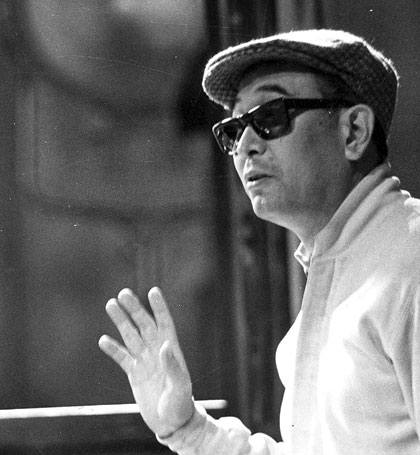
Akira Kurosawa

Akira KurosawaName: Akira Kurosawa aka The Emperor

Essential DVDs: Ikiru (1952); Seven Samurai (1954); Throne Of Blood (1957); Yojimbo (1961); Sanjuro (1962); Ran (1985)

Oscars: Honorary Award (1990)

In His Own Words: “For me, filmmaking combines everything. That’s the reason I’ve made cinema my life’s work. In films painting and literature, theatre and music come together. But a film is still a film.”

Strip away the literary fabric that now shrouds the works of Akira Kurosawa, delve beneath the Japanese costume and external architecture, and you will discover the throbbing heartbeat of the Everyman. His canon is neither esoteric nor arcane, simply a collection of works that explores universal themes: man’s labour for fulfillment; the necessity for humane action in the tornado of an oppressive world; that world’s propensity to disguise the truth beneath a veneer of deception. In fact Kurosawa has often been credited with reflecting an image of his native culture that Westerners can easily grasp; he made films that seem intrinsically Japanese, yet prove universally popular.

Significantly, while Kurosawa set out to reinvigorate a Japanese cinema subdued by defeat in WWII, the filmmaker himself drew much inspiration from the West. He trained as a painter in a Western art school, absorbing a love of non-Occidental literature and film as well as painting, dipping into this treasure trove throughout his career. He wove tales with the threads of Shakespeare (Hamlet in The Bad Sleep Well; Macbeth in Throne Of Blood), Dostoyevsky (The Idiot) and Gorki (The Lower Depth), while the genius of John Ford shone through the sweeping, painterly compositions of his epic period films.

Indeed, it was his visual inventiveness, perhaps above everything else, that cemented Kurosawa’s reputation, inspiring slavish remakes of his films (from 1957’s Magnificent Seven right up to last year’s King Arthur) and a list of fans that includes the cream of modern moviemakers, many of whom are featured within these covers, all drawn to the banner he thrust into the ground with his most famous film, Seven Samurai. All Kurosawa’s movies showcase the director’s dazzling technical artistry, but it is those that spin round the vortex of action which benefit most. Where better than the field of conflict to contrast benign judgements with malign, to offset social chaos with humane actions? Matching his style to his content, Seven Samurai remains the Kurosawa masterpiece, whipping up bold effects and contrasting moments – intense wind and rain, violent wipes to join the scenes, fast-tracking shots, montages of action, all hewn from a creative temperament that that embraced the unorthodox. He near perfected his much-loved bloody, violent montage.

Sift through the history of Japanese cinema and Kurosawa’s lustre may fade when compared to earlier filmmakers Yasujiro Ozu, Kenji Mizoguchi and Teinosuke Kinogasa, but without Kurosawa their work would not have found such a fertile audience in the West. Akira Kurosawa was a giant among Japanese filmmakers, both literally and metaphorically. Standing at almost six feet tall, he towered over most of his national peers; it is fitting that his action movies still tower over the innumerable imitators that have followed in their wake.

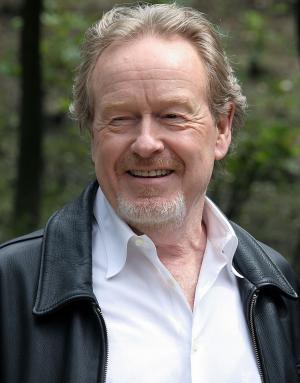
Sir Ridley Scott

Ridley ScottName: Sir Ridley Scott

Essential DVDs: Alien (1979), Blade Runner (1982), Thelma & Louise (1991), Gladiator (2000), Matchstick Men (2003)

Oscars: Best Picture (Gladiator, 2000)

In His Own Words: “I’m a filmmaker, not a documentarian. I try to hit the truth.”

Poor old Tony Scott. He may be one of the finest crafters of blockbuster action working today, but he will forever be huddled in the shadow of his elder brother; the auteur to his movie director. Even in their well-known childhood project, Boy On A Bicycle, it was older brother Ridley calling the shots.

Before music video directors were the great swirling pool from which future filmmakers would be fished, it was TV commercial directors who were prodded and preened for big-screen glory. Scott was one of the first to make the crossover, developing his ability to sell a product in 30 seconds into a knack for selling a story in 100 minutes. Scott’s searing sense of style is what he will be remembered for.

Even without words, a Scott film is recognisable by its play of light and shadow and near-lascivious love of sprawling wide shots and intricate detail. So exacting and skilful is the look of his films, that in the early days he was much accused of favouring style over content. The worlds he created were much bigger than the characters he placed in them. Scott’s cinematic debut, The Duellists, was praised, but for its visual sheen rather than its slight storyline. Even recognised classics Alien and Blade Runner focus far more on mood than on their heroes (it took James Cameron’s Aliens to help us learn more about Ripley besides her penchants for mammoth handguns and scanty knickers). But it’s in Scott’s ability to immerse an audience in an unknown world and to make aloof characters fascinating that he created his cult following. Those are also the two films that illustrate the care he has for his projects even years after, both being subject to reworked Director’s Cuts (a trend Scott popularised).

His power with visuals may be his trademark, but the former ad-man remains unafraid to venture into quieter character pieces. There’s chick-flick Thelma & Louise –that most un-Scott-like of projects –in which he delicately examined the inner clockwork of his heroines, winning the praise of both sexes and critics. Or Gladiator, a roaring sandstorm of Roman architecture and violence come to life around the outwardly granite, inwardly sensitive Maximus. But perhaps it’s the more recent Matchstick Men that shows his full versatility. A film with no room for flash, it’s as delicate a character construction as the title suggests, with one of the best performances Scott has elicited in Alison Lohman’s mysterious woman-child. The mark of a master of any field is that he never stops testing himself.

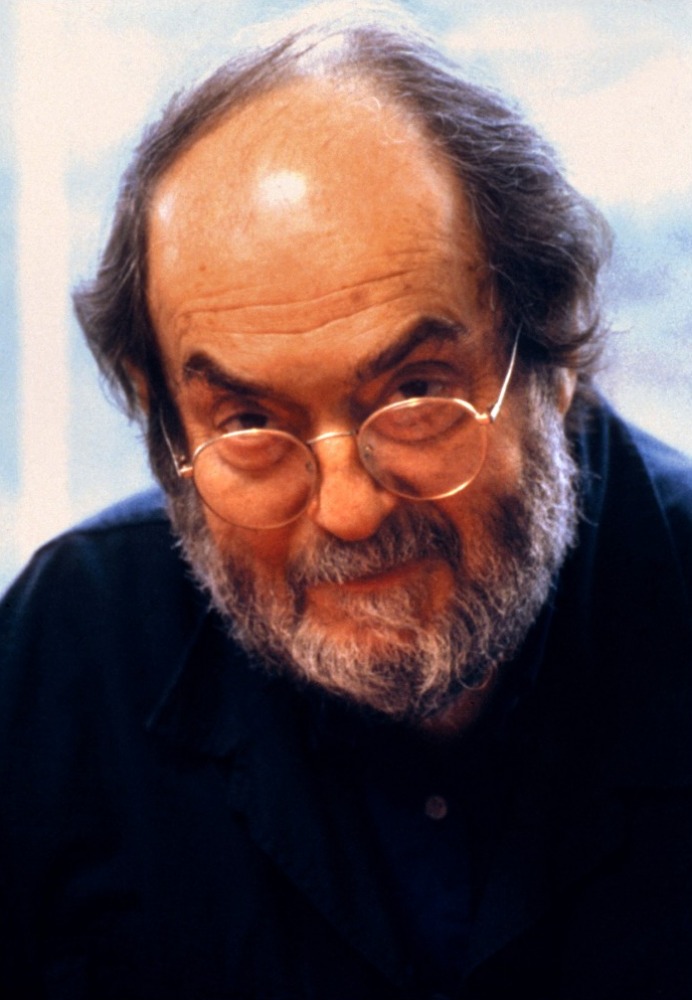
Stanley Kubrick

Stanley KubrickName: Stanley Kubrick

Essential DVDs: Paths of Glory (1957); Dr. Strangelove or: How I Learned to Stop Worrying and Love the Bomb (1964); 2001: A Space Odyssey (1968); A Clockwork Orange (1971); The Shining (1980); Full Metal Jacket (1987); Eyes Wide Shut (1999)

Oscars: Best Visual Effects (2001: A Space Odyssey)

In His Own Words: “Telling me to take a vacation from filmmaking is like telling a child to take a vacation from playing.”

On this day, we remember the legendary and visionary filmmaker, Stanley Kubrick.

If Stanley Kubrick was still alive and had kept to his familiar stately schedule of completing a movie every six or seven years, we’d have been able to enjoy a 13th project. But though the legendary, visionary director may be gone, we have the films; 12 made in half a century of work, each radically different from the others — there was science fiction and sex, heists and horror — yet familiar themes snake through them. There are meditations on the usual big subjects: war, violence, love, sex and death but if he had overriding concerns they cluster around notions of reason and irrationality; control and chaos; of man’s attempts to corral and master the world, to impose his will, and his inevitable failures.

The theme reveals itself in his first properly “Kubrickian” movie, The Killing (he disowned both Killer’s Kiss and Spartacus, the first as an amateur, practice, piece of work, the second as a studio picture on which he was a hired hand) in which a perfectly planned heist slowly unravels with deadly and then comic results. Dr. Strangelove, Paths Of Glory and Full Metal Jacket gaze, horrified, on the phenomenon of war, not so much on its injustice and violence, but on its insane, deadly illogicality. In Dr Strangelove a plan, The Doomsday Machine, supposed to prevent the apocalypse actually precipitates it; in Paths Of Glory a general winds up ordering his troops not to fire on the enemy but on each other, while the first act of Full Metal Jacket (and its best) has R. Lee Ermey (one of only two actors ever encouraged, indeed allowed to improvise dialogue on set –the other was Peter Sellers) turning his troupe of boys into inhuman killing-machines, but the unintended consequence is that one kills his tutor, and then himself. (Shades of HAL here, a being created to be perfect turns on his creators and destroys them.) For Kubrick, a man famously devoted to order and reason, these collapse into chaos and self-contradiction provoked a ghastly fascination.

If the intellectual content of Kubrick’s films has an admirable consistency, then so do his astonishing visuals. He once compared the experience of watching a film to be near to dreaming, and dream motifs and ideas repeat, mutate and develop, symbols that slip from one film to the next. There are the hotels: The Shining’s Overlook obviously but also The Orbiter Hilton in space in 2001, and the New York hotel foyer where Alan Cumming flirts with a nervy Tom Cruise in Eyes Wide Shut. Ballrooms recur in The Shining, Eyes Wide Shut and as the scene of the court-martial in Paths Of Glory. And, of course, there are the lavatories. He had an almost mischievous love of setting vital scenes in the room that has us at our most undeniably human. Jack Torrance confronts his demons and determines to kill his wife and child in the Overlook gents. Tom Cruise begins his odyssey reviving an OD victim, who will subsequently save his life, in a luxurious Manhattan penthouse bathroom while in Full Metal Jacket (starring NYFA Board Member and Master Class Instructor Matthew Modine) Vincent D’Onofrio unleashes his fury and his rifle in a barracks latrine. It’s a version of that old tension again, the perfections and profundities of drama set against the realities of life: we all have to go to the crapper.

https://youtu.be/x9f6JaaX7Wg

No other director has had such a sure technical grasp of the mechanics of filmmaking: the lenses and film stocks; the cameras and contraptions. He pushed the technical envelope with almost every movie he made: he shot by candle-light in Barry Lyndon; he pioneered the now overused Steadicam in The Shining while his last film, Eyes Wide Shut gains its hallucinatory luminousness from his daring, borderline crazy decision to “push-process” the entire movie, a dangerous strategy, usually only used in emergencies since the slightest miss-timing can destroy the negative. But Kubrick managed to marry this technical virtuosity to an almost spiritual understanding of cinema’s intangibles: the relationship of images to our subconscious; the feelings and attitudes that can be provoked by space, colour and movement –the things that make cinema a uniquely potent art form. 2001: A Space Odyssey is as near to a purely visual experience as cinema gets. What dialogue there is is deliberately banal and unhelpful, but the imagery: bones transforming to bomb platforms; a ballet in orbit performed entirely by spaceships; Bowman bathed in HAL’s amniotic-red light as he performs, in the film’s most ironically emotional scene, the termination of a machine, are unforgettable. They communicate more potently than words.

Red, in fact, forms another of Kubrick’s repeating motifs, it gushes out of elevators in The Shining, signals decadence and danger as the scarlet carpet in Eyes Wide Shut, it’s the colour of the typewriter that looms in shot at the house of Alex’s rape victim in A Clockwork Orange and her fetishistically ripped jump-suit.

He didn’t live to see critics tear into his last masterpiece Eyes Wide Shut though he may have been aware of them arming themselves during the dimwit hysteria that surrounded its filming. (None of his films received unalloyed praise immediately, but most were subject to the gradual, embarrassed shifting of critical opinion in the years that followed their release.) Many publicly lamented what they saw as Kubrick’s stunt casting of Cruise and Kidman, bemoaned the film as a crass celebrity fuck-fest and were secretly disappointed when said treat didn’t materialise. In fact, it might be his finest film, synthesising the pessimism of The Shining and the glorious optimism of 2001 into a human experience both intimate and recognisable, the stresses and contradictions of sex and marriage. And it unambiguously cements Kubrick’s belief that film is akin to a dream (mind-bogglingly some critics failed to notice the theme: the clue’s in the title guys). It certainly, like all of them, bears repeated, fascinated re-watching.

In matters of mystery, Stanley Kubrick once said, never explain. His films are, as they always will be, precise, elusive, beguiling. They often seem at first glance to be alien and cold, yet later we find that they can speak to us at our most human level. Unique against the cinematic landscape, they stand like monoliths in a desert.

Martin Scorsese

Martin ScorseseName: Martin Scorsese

Essential DVDs: Mean Streets (1973); Taxi Driver (1976), Raging Bull (1980); King of Comedy (1983), After Hours (1985), Goodfellas (1990), Age of Innocence (1993), Casino (1995), Kundun (1997), Gangs of New York (2002), The Aviator (2004), The Departed (2006), The Wolf of Wall Street (2013)

Oscars: Best Director and Best Picture (The Departed)

In His Own Words: “I think when you’re young and have that first burst of energy and make five or six pictures in a row that tell the stories of all the things in life you want to say, maybe those are the films that should have won me the Oscar.”

When the Academy convenes in a year a Martin Scorsese film is in contention, the phrase “America’s greatest living director” seems to magnetically attach itself to sentences containing the director’s name. It’s rather odd, then, that Scorsese has never won an Oscar. His collaborators —editors, actors, actresses, cinematographers, production designers —have reaped awards in their droves. But not little Marty.

It seems inconceivable, a travesty. After all, this is the man who detonated Travis Bickle upon New York’s unsuspecting underbelly in Taxi Driver. The man who unflinchingly traced the self-destructive descent of Raging Bull’s Jake La Motta. The man who with Goodfellas seduced a generation with the glamour of life as a gangster, before gleefully rubbing their noses in its repugnant, violent flipside. But then that’s the problem with Scorsese –at his best it feels like he’s almost too raw, too honest, too dark for the mainstream to let him into its comfortable bed.

It’s the nature of his material: abrasive and challenging. He refuses to flinch from the ugliness of the lives he portrays; typically those of alienated and morally compromised characters stumbling through modern life, grasping at some elusive metaphysical salvation. Vietnam veteran Travis Bickle, a pressure-cooker of frustration, disgusted with both New York’s festering nightlife and his crippling inability to communicate finds salvation in violence. Jake La Motta, the boxer forced to compromise his integrity who viciously avenges his lack of self-esteem on his wife and family. Henry Hill, the Bronx kid seduced by the exhilaration of being a gangster, only to taste a cocaine-charged cocktail of paranoia and brutality. Three of Scorsese’s most resonant central characters, all rooted in New York. Which is no coincidence.

The son of Sicilian immigrants, Scorsese was raised in Manhattan’s Little Italy, and arguably his best work all derives from this teeming milieu. As he saw it, the two career options in the “spaghetto” were those twin pillars of Sicilian life: organised religion and organised crime. You either worshipped God or the godfathers, and the pull between these two opposite poles, each with its own system of beliefs, ethics and punishments, plays out through Scorsese’s films. Even his earliest works are replete with religious themes and iconography, as if in atonement for his own lapsed Catholicism (Scorsese had originally studied to become a priest). Boxcar Bertha sees a criminal crucified to a train carriage. Mean Streets finds Harvey Keitel’s Charlie wrestling with the conflicting demands of his mob bosses and his Catholic conscience. The logical culmination was The Last Temptation Of Christ, whose portrayal of Jesus (not to mention a fallen Mary) brought ecclesiastical brickbats.

In stark counterpoint to such spiritual explorations is the violence that pervades much of Scorsese’s work. Ugly, unflinching, flirting with the gratuitous: Scorsese can’t seem to make up his mind if he is repulsed or titillated, as often can’t we, his audience. While the climactic carnage in Taxi Driver serves a cathartic purpose, and the sickening homicides of Goodfellas reprimand the audience for buying into gangsterism’s glamour, Casino’s crescendo of ultra-graphic brutality seems less justifiable. Again, not the stuff of Oscar success.

Even at his most brutal, however, Scorsese’s vision is breathtakingly cinematic. Never more so than when set loose among New York’s steaming sidewalks and skyscraping edifices. In the same way Michael Mann has captured the definitive on-screen aesthetic for Los Angeles, Scorsese has defined his home city. He catalogues life under the toenails of the Big Apple’s tower blocks with the same mixture of fascination and repulsion found in so many of his characters. His daubing of colour among night time cityscapes – the neon-lit processions of human detritus in Taxi Driver and Bringing Out The Dead; the drab, alienating décor of After Hours; even the sweltering, tawdry glow of Casino’s Las Vegas horizon of advertising hoardings — impeccably generates mood and atmosphere.

Never one to milk a trick or a flourish for its own sake, Scorsese is the consummate director. When necessary, his camerawork takes a back seat, remaining muted and distant, as in the sinister, absurd King Of Comedy. Elsewhere, virtuoso steady-cam shots come laden with meaning: we too feel the excitement that electrifies Karen (Lorraine Bracco) in Goodfellas as she is lead through the exclusive back entrance into the mobsters’ night club inner sanctum, traversing kitchens, tables full of respectful wiseguys and finally to stage-front where a comedian is in full flow. The scene then cuts to Henry (Ray Liotta) completing a robbery, accompanied by the stand-up’s pat one-liners. The amoral elation of the successful life of crime is conveyed with immense concision and ease.

Such eloquent inter-cutting speaks volumes of Scorsese’s long term collaborator, editor Thelma Schoonmaker. Working on every Scorsese film since Raging Bull (for which she won an Oscar), her contribution gives the director’s arsenal of steady-cam work, tracking shots and framing its proper deployment. The combination of their skills creates films that exhilarate on every level: visually, intellectually, emotionally, even aurally (it wasn’t Tarantino who trailblazed rock music scores). Her collaborative contribution is only matched by Scorsese’s on-screen avatar Robert De Niro (who plays leading roles in eight of Scorsese’s finest films) and Paul Schrader, writer of Taxi Driver, Raging Bull, The Last Temptation Of Christ and Bringing Out The Dead.

Following the early 80s, and the Heaven’s Gate-spurred clamp-down on big budget director-led projects, Scorsese veered between small scale independent (the underrated After Hours) and crowd pleasing studio picture (Colour of Money, Cape Fear). Flying the New York coop, films such as Kundun and Age Of Innocence have spanned continents, centuries and genres, to varying degrees of success.

Most recently, his scope — and budgets — have widened further. The Best Director nomination he received for the long anticipated, flawed, though magnificent, Gangs Of New York only highlighted the keenness among the Academy to atone for earlier omissions. But seeing as even his return to form with The Aviator —despite its Academy-pleasing focus on Hollywood heritage —fell short of that elusive gong, the sight of little, hyper-sensitive Marty, brow furrowed, shrinking into his chair at yet another rejection, could be a fixture for a few years to come.

Alfred Hitchcock

Alfred HitchcockName: Alfred Joseph Hitchcock

Essential DVDs: The 39 Steps (1935), The Lady Vanishes (1938), Rebecca (1940), Shadow Of A Doubt (1943), Notorious (1946), Strangers On A Train (1951), Rear Window (1954), Vertigo (1958), North By Northwest (1959), Psycho (1960), The Birds (1963)

Oscars: The Irving Thalberg Award (1968)

In His Own Words: “I am a typed director. If I made Cinderella, the audience would immediately be looking for a body in the coach.”

Take a flight of fancy and imagine if Alfred Hitchcock was plying his trade in Hollywood today. Back at his old Universal stomping ground, he’d probably knock off a Collateral or two, play himself on The Simpsons, exec produce episodes of Alfred Hitchcock Presents CSI Leytonstone (the place of his birth) and still find time for the odd curio designed to rub everyone up the wrong way –perhaps a shot for shot remake of Good Will Hunting.

Yet the thing is you don’t have to imagine Hitchcock in modern movies, the seeds of his brilliance are scattered around the current crop of Hollywood helmers. The powers of audience manipulation of Spielberg. The controlled precision of Mann. The detached glee of the Coens. The twisted sexual subtext of Lynch. The shameless self-promotion of Tarantino. The waistline of Michael Moore. It is all present in Hitchcock. Every filmmaker working over the past thirty years has been touched by Hitchcock’s greatness, some lightly (The Wachowski’s Vertigo-inspired rooftop chase in The Matrix), others wholesale (Mel Brooks High Anxiety, Brian De Palma’s career). However many times he has been deigned a Vaunted Auteur –Tarantino once dubbed the study of his work “Film Buff 101” –Hitchcock’s influence, 25 years after his death is still without parallel.

Hitchcock’s is a career spanning 54 years, traversing 65 films, two continents and practically every technical revolution (silents, sound, colour, even, as in Dial M For Murder, 3D). There were some bizarre experiments: remaking his own 1934 film, The Man Who Knew Too Much, some 22 years later, passing off ten long takes as one seamless shot (Rope) and creating a whole drama within the confines of a lifeboat (erm Lifeboat). There were some departures from house style; the romantic frippery of Mr And Mrs Smith, the courtroom drama of The Paradine Case and, in musical parody Elstree Calling, the bizarre spectacle of an Alfred Hitchcock directed custard pie fight. En route, there have also been some misfires; Stage Fright, Torn Curtain, Topaz. But even the clunkers bore great bits –witness the fistfight in Torn Curtain that demonstrates how hard it is to actually kill a man –and a Hitchcock film always sang with the possibilities of cinema.

From his early UK work –Number 13 to Jamaica Inn –to the slicker stylish US output –Rebecca to Family Plot –cinema’s greatest heavyweight filmmaker (at his lardiest in the late ’30s, Hitchcock weighed in at 300lbs) delivered that rare thing: crowdpleasing bravura cinema that can be lapped up by the masses yet still complex enough to be pored over by speccy four-eyed academics. No filmmaker can count as many great fllms on a CV; (deep breath) The 39 Steps, The Lady Vanishes, Rebecca, Shadow Of A Doubt (reputedly Hitchcock’s own personal fave), Notorious, Strangers On A Train, Rear Window, Vertigo, North By Northwest, Psycho, The Birds. And these are just the can’t-argue-with masterpieces. In the process, he also invented the Filmmaker As Public Figure, cameoing in his own films (starting with The Lodger), extending his persona to books and TV and offering colourful, usually completely false, soundbite in interviews.

Renowned for a mastery of must see- must-talk-about set-pieces –shower stabbings, crop duster dust-ups, avian attic attacks –Hitchcock’s real skill was making silly, often implausible stories engaging and compulsive. Poke around the narrative foundations of The 39 Steps or Vertigo or North By Northwest and you’ll discover that they are built on a bedrock of coincidence and absurdity. Yet the cinematic sleight of hand is so deft, the atmospheres are so intoxicating that you never once question it. What partly makes the films so rich is the dynamic between Hitchcock’s cold, calculated approach and the human passions (and perversions) of the characters trapped in his murky world. Late in life, Hitchcock admitted that two of his then current guilty pleasures were Burt Reynolds redneck-pleaser Smokey And The Bandit and Disney’s pooch parable Benji. Both share an uncomplicated lightness that rarely permeated his own work. While there is playfulness (especially in the Brit flicks and To Catch A Thief), Hitchcock’s movies boasts a pessimism rare in American cinema.

Influenced by Russian horror merchant Val Lewton, Spanish surrealist Luis Bunuel and German Expressionist Fritz Lang –Hitchcock cited Lang’s Der Mude Tod (1922) as his favourite film –Hitchcock forged a consistent universe that sprung almost fully formed from his Catholic psyche, a world dominated by emotional dysfunction, voyeurism, sexual guilt, innocent men accused, icy blondes, overpowering mothers and psycho killers all played out against purposefully dodgy rear screen projections and often ending with a chase over a famous landmark. Marked by consistent collaborations with genius artisans –composer Bernard Herrmann, cinematographer Robert Burks, editor George Tomasini and graphic guru Saul Bass –it remains among the most coherent visions in movie history: take his name off the credits and you could still identify the director in a heartbeat.

Hitchcock’s oft-misquoted pronouncement that actors are “like cattle” –he actually said actors should be treated like cattle –belies the fact that many of Hollywood’s finest did their best work under his direction. Cary Grant, Ingrid Bergman, Anthony Perkins, Sean Connery (in Marnie, Hitchcock makes manifest the darkness implied in James Bond) and, in particular, James Stewart found depths and tones that they never found anywhere else. Allied to his underrated skill with actors is the thrill of technical assurance, the sense that the camera and the cut are always exactly in the right place at the right time. The style is distant, elegant and succinct –when Hitchcock received the Irving Thalberg Award at the 1968 Oscars, he made the shortest acceptance speech of all time: “thank you” –assembled with a precision that makes Swiss clockmakers look slapdash by comparison. Yet in all the buttoned-down formalism, there are moments of wild expressionism –the Dali designed dream sequence in Spellbound, the flashes of red to indicate Marnie’s psychological scarring –that surprise and overwhelm you.

Before he died in 1980, he’d joked that he wanted the motto “This Is What Happens To Little Boys When They Are Naughty” chiselled on his tombstone. It is a fitting epitaph for someone who spent a career revelling in life beyond niceness and convention. Yet perhaps what he ended up with is equally apt, an ode to complicity and his love of bad jokes: “I’m in on a plot”. And, thankfully, he let the rest of the world in too.