With cinema’s popularity at an all-time high in Mumbai, India, filmmakers continue to flock to the region to begin their careers. As noted in a recent Vogue India article, the New York Film Academy recently held its first two programs in Mumbai: the 8-week filmmaking workshop and the 4-week acting for film workshop.
“We have always seen aspiring filmmakers and actors from India come attend workshops in NYC or LA—we knew there was a great interest and hunger to tell stories coming from this region,” said NYFA President Michael Young to Vogue India.
NYFA Mumbai workshops are held at the Urmi Estate (95 Ganpatrao Kadam Marg, Lower Parel [West] Mumbai, Maharashtra 400 013, India). The Urmi Estate is a modern 41-story skyscraper located in the heart of the city.
“This is our 25th anniversary and we know that Indians are the number one producers of films—there is a lot of potential and extremely talented people in the country,” added Vice President and Head of NYFA Mumbai Kitty Koo.
Notable NYFA alumni from India include Imran Khan, Sana Saeed, Kangana Ranaut, Athiya Shetty. And Rakesh Varre, who recently played Setu Patti in the blockbuster sensation, “Baahubali 2: The Conclusion.”
As is the case with all of NYFA’s locations and workshops, the Mumbai filmmaking workshops focus on learning in a hands-on film environment where students have the opportunity to make a fully-realized final film.
The acting for film workshops provide students with a strong foundation of acting skills with a specific focus on the basic elements of the craft of acting, using Stanislavski’s System, scene study, and monologue work as starting points. Students also participate in courses aimed specifically at training the actor for the technical requirements of acting on a film set.
Students in Mumbai also have the opportunity to transfer to NYFA’s NYC, South Beach, or LA locations to continue their education.
Beginning her career in Los Angeles as a literary agent assistant at the William Morris Agency in 1982, Denise Meyers always felt the drive to pursue screenwriting as her main career in life.
“I thought that since I’d watched hundreds of movies growing up, I understood what went in to a good screenplay,” said Meyers in an interview with the Black List. “I wasn’t a terrible writer, but I wasn’t a great writer either.”
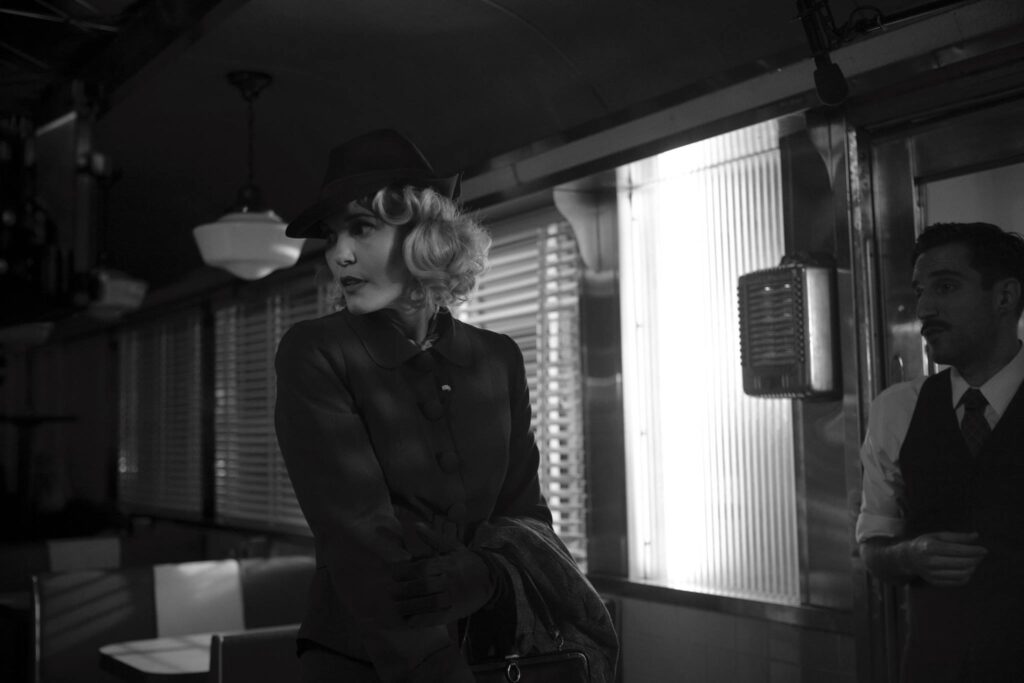
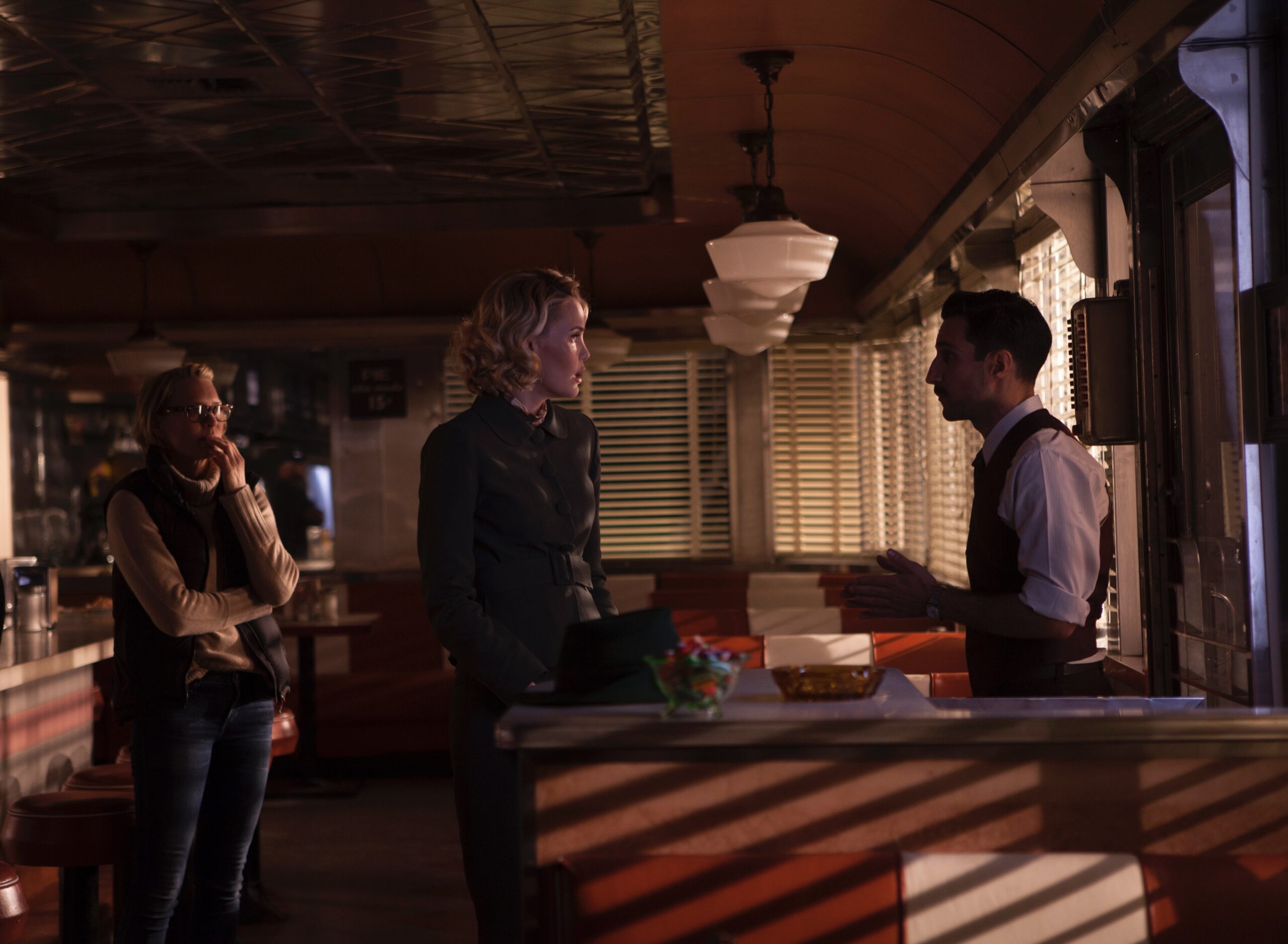
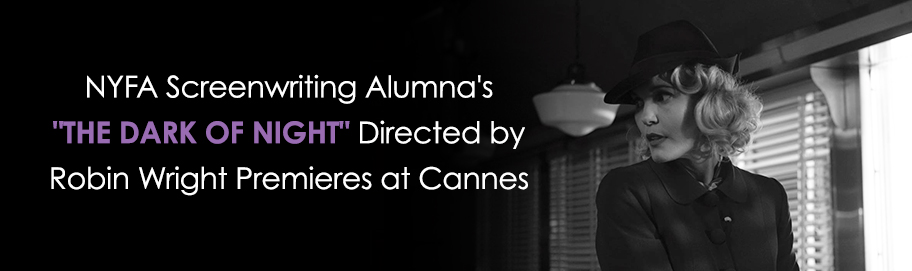
still from “The Dark of Night”
After 12 years of exhausting her contacts with her material and getting nowhere fast, Meyers moved onto a different career as a gourd artist, but, at the end of the day, her heart wasn’t in it as much as screenwriting.
“I set a goal for myself to learn how to write screenplays the way they are supposed to be written, with no expectation that I would ever get any farther in the film business than I had ever been before,” said Meyers. “I wanted to master the art form, in the same way I taught myself how to work with gourds.”
Meyers took advantage of an 8-Week Screenwriting scholarship at the New York Film Academy Los Angeles, where she hoped to truly master the craft.
“I won an eight-week screenwriting scholarship to NYFA a few years ago, and the experience was invaluable,” she said. “I use everything I learned at NYFA in every script I have written since then, and it has helped elevate my career beyond what it was before.”
Since attending NYFA, Meyers has won a number of screenwriting competitions, including a spot on the Athena List (with a script she wrote at NYFA), the Atlanta Film Festival, Table Read My Screenplay Austin, and several others.
From there, she wrote a short screenplay called “The Dark of Night,” which won the grand prize at Table Read My Screenplay Austin in 2015.
“Denise Carlson, an instructor at NYFA, told me about a short script writing contest she had plans to participate in called the NYC Midnight Short Screenwriting Contest,” Meyers recalls. “Twelve hundred people from across the globe signed up to participate, so there were groups of 40 people each who were given a genre, a character and a setting. My group received the following prompts; suspense, a diner, and an unemployed man or woman. We had eight days to write 12 pages, then, if we survived each heat, we were given a new genre, character and setting. I came up with the idea almost immediately, though God knows where it came from. The story is set in 1930. A woman on her way to Chicago for a job interview seeks refuge in the diner where she encounters a waitress, a drifter, and a cop, each with dark and dangerous secret.”
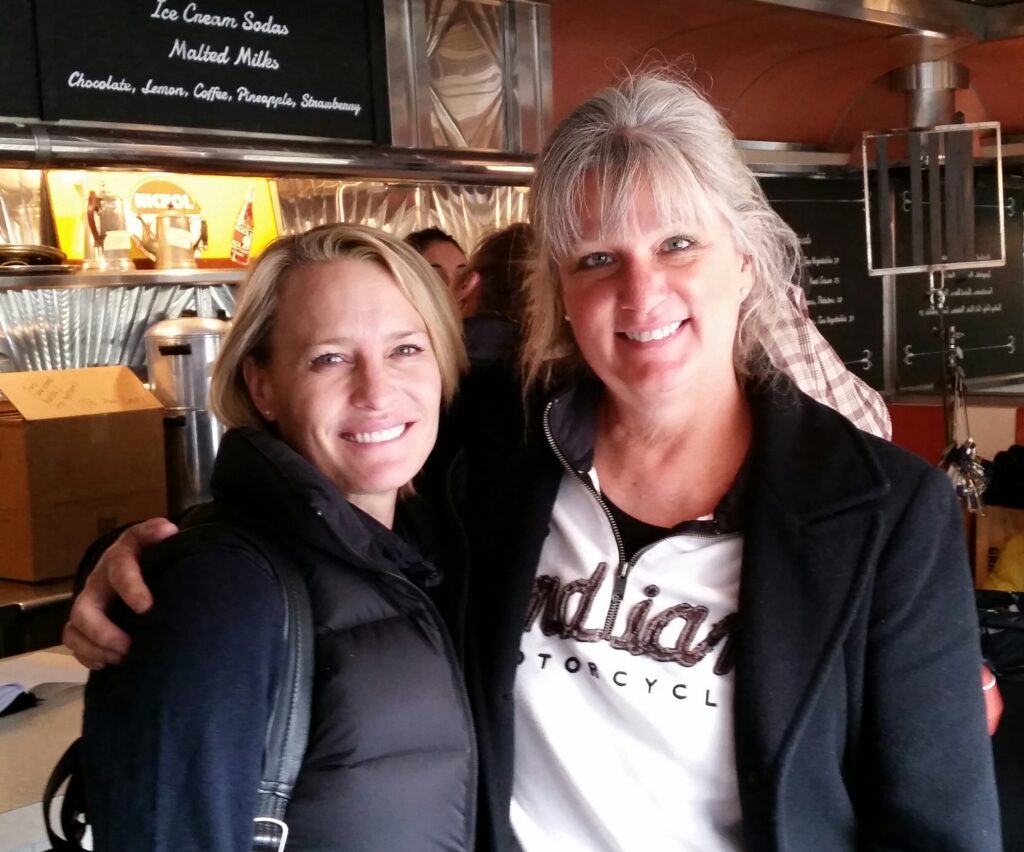
Meyers gave the script to Robin Wright’s assistant and, before she knew it, she was getting a call from Wright who wanted to direct the film, along with some of her cast members from “House of Cards.” In fact, 80 crew members from “House of Cards” signed on to work on the film including the director of photography, Dave Dunlap, and costume designer, Jessica Wenger. Boris Maldin, the producer of “House of Cards,” loaned his cameras and equipment.
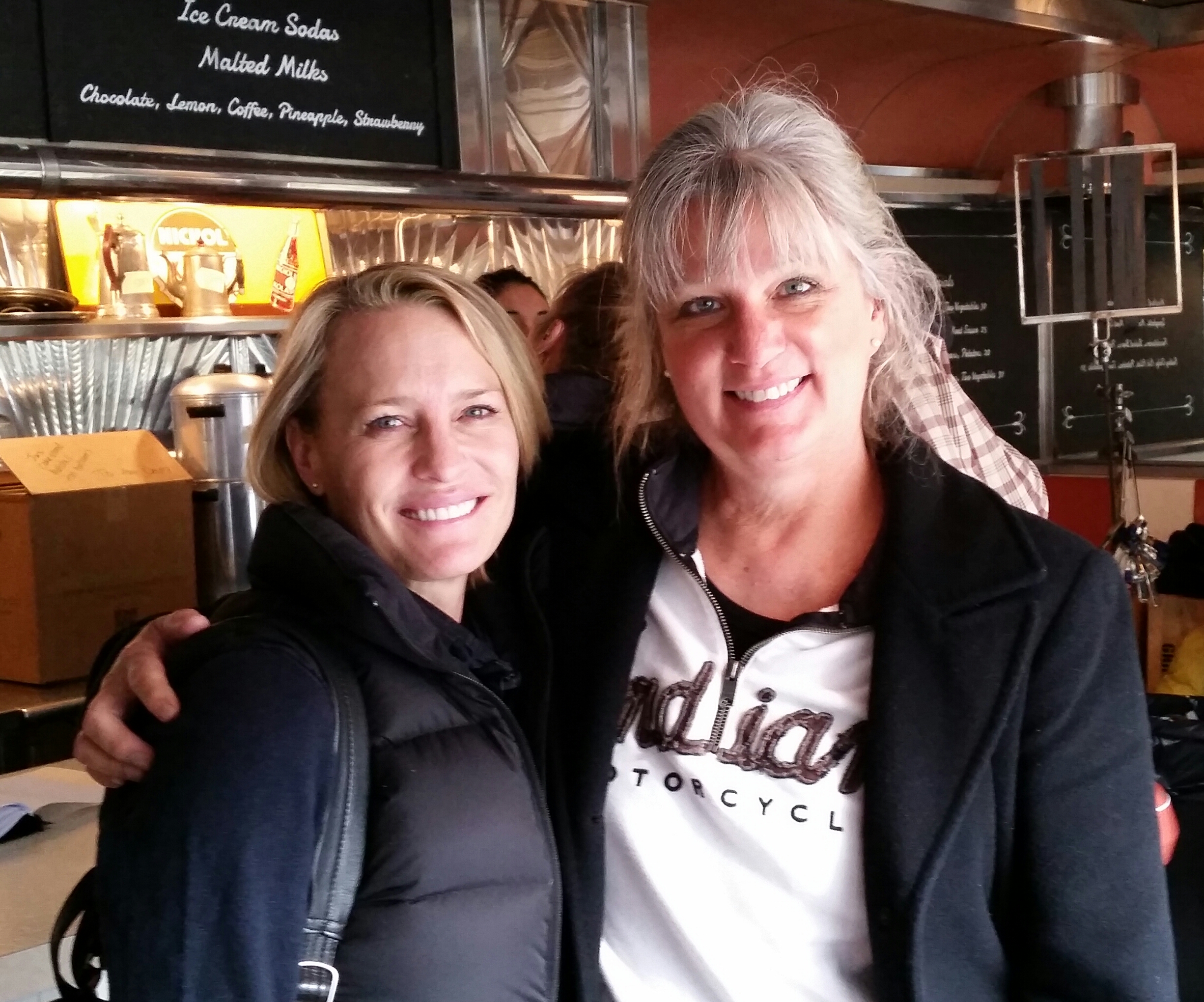
Robin Wright with Denise Meyers
After that, Leslie Bibb, Sam Rockwell, Callie Thorne and Michael Godere signed on to act in the film for scale.
Meyer’s “The Dark of Night” recently premiered at the Cannes Film Festival. The black and white film noir is about a woman seeking refuge from a storm who takes matters into her own hands when she encounters a drifter and a waitress at an isolated diner where everyone has a secret and nothing is what it seems.
Meyers says she just finished a one-hour pilot episode based on “The Dark of Night” that she is developing with TV producer Michelle Rubenstein. She also completed a new feature about Frank Lloyd Wright and Mamah Cheney that she hopes to get in front of Brad Pitt, and is currently working on a World War II drama about a battle in the Pacific that only a handful of people know about. Finally, she’s working on a web series based on her experiences as an award-winning screenwriter who still fixes toilets for a living.
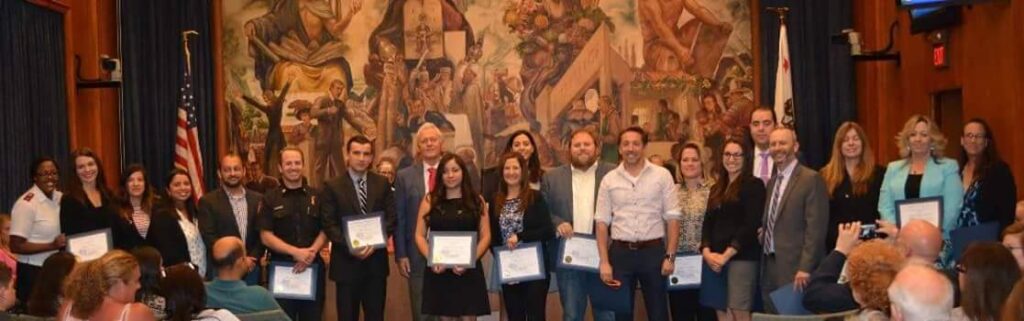
New York Film Academy instructor and NYFA Podcast Host Eric Conner was recently honored as a graduate of the Burbank Leadership Program. The Mission of Leadership Burbank is to identify, educate, and motivate current and emerging leaders in Burbank to develop ideas and solutions that make Burbank a strong, sustainable and vibrant community.
Conner recently stepped down as Dean to spend more time with his growing family. “This was something a little bit different. I wanted to serve the whole community not just a piece of it,” said Conner.
As a citizen of Burbank, he began looking around and seeing an opportunities to connect more with the community. As VP of Education for the Temple Emanu El, he started building relationships with individual citizens. Conner MC’d the platinum anniversary, which included esteemed guests U.S. Representative Adam Shiff, Senator Anthony Portantino, Former Burbank Mayor Jess Talamantes, and Councilman Bob Frutos.
Leadership Burbank was, in essence, a class. I’ve taken classes once a month since September. The class was two-dozen people representing the Police Department, Fire Department, Clergy, local school district, and Salvation Army. A veterinarian, it’s a cross section of Burbank.
“I think what they’re trying to do is cultivate the next batch of civil leaders. For me, since I grew up in Delaware, which is so small, it didn’t take much to get involved in things. Delaware has one congressman and my mother was his treasurer. She helped raise money for a retirement board while still working a full-time job.” Community Outreach runs in Conner’s blood.
Classes were held all over town including the Burbank airport and churches in order to introduce members to key organizations in Burbank. “There are so many elements of an airport that you don’t think about until you’re in there,” Conner stated. A few years ago there was an accident at the airport. A plane skidded off the runway and through a gate. “We studied what changes were made to make the airport safer. I really liked that class.”
Part of his leadership included building a Wellness Center for Burrow’s High School. “The Wellness Center is a place where high school students with mental health issues, gender identity issues, anxiety, or depression can congregate and seek help. The space is conducive to helping mental health victims through art therapy.”
The New York Film Academy donated Summer Camp experiences to both the Emanu El 75th Anniversary Celebration and the Gala to support the Wellness Center. Conner was touched at the gesture. “This is something I sought on my own. To have NYFA to two separate organizations was really cool. The school’s been doing a lot to connect to the community.”
Conner intends to use the lessons learned from this course to one day apply for a cabinet seat or chair a board in the near future. “Burbank has its foot in Mayberry. There are two VCR repair shops within walking distance of my house and they advertise themselves that way. Burbank Leadership is trying to push and expand Burbank. These are things I’ve started to think about after I became a homeowner here.”
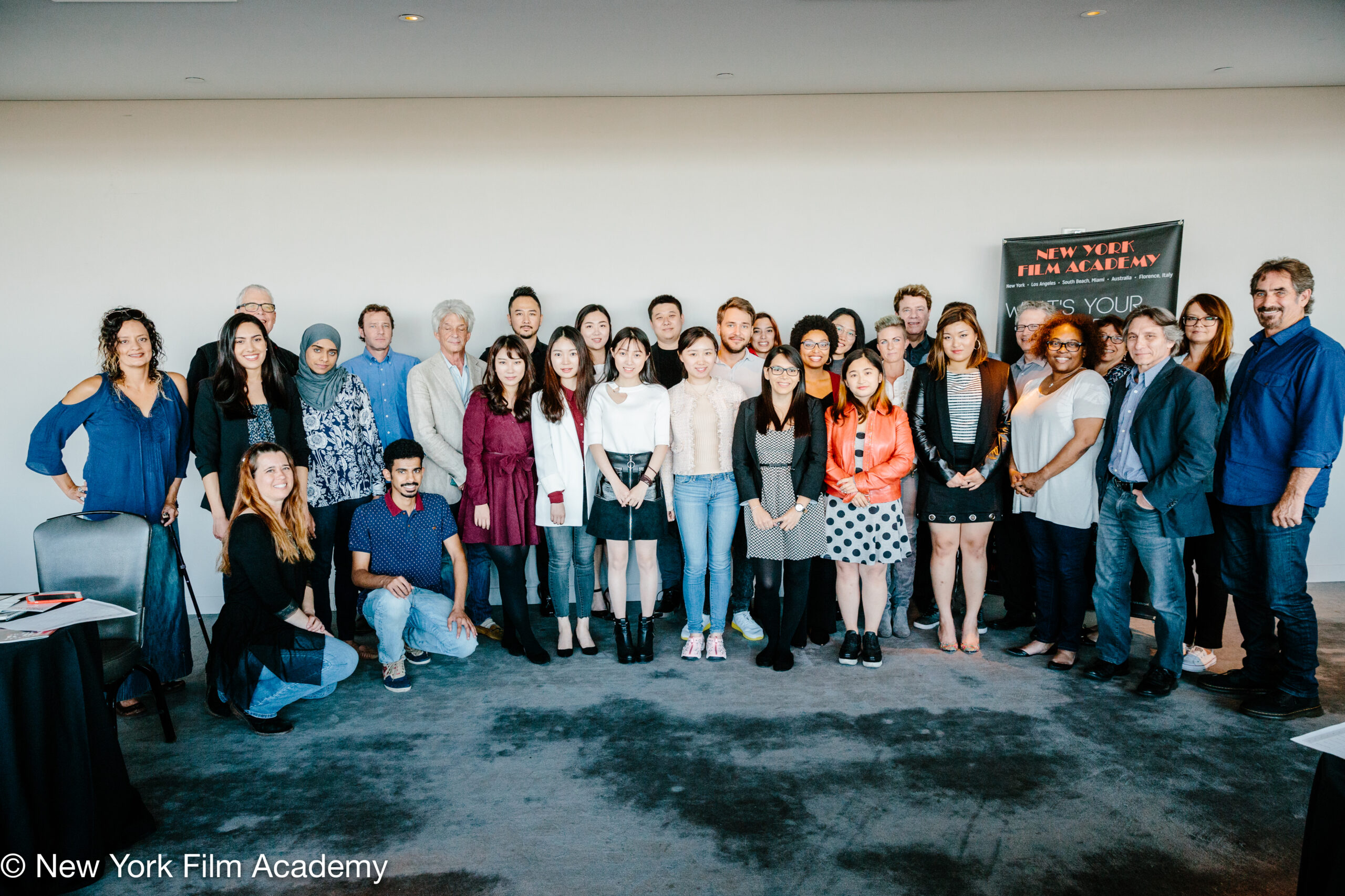
On Wednesday, May 17 graduating Producing students gathered in the grand Panorama Ballroom at the Andaz Hotel on the Sunset Strip in Hollywood for the New York Film Academy’s annual Pitch Fest. Veterans of the Hollywood film industry spread across the hall to hear what could be their next project. The extravagant evening was organized by Rich Thorne, Producing Department Faculty Chair and Heather Ritcheson, Producing Coordinator.
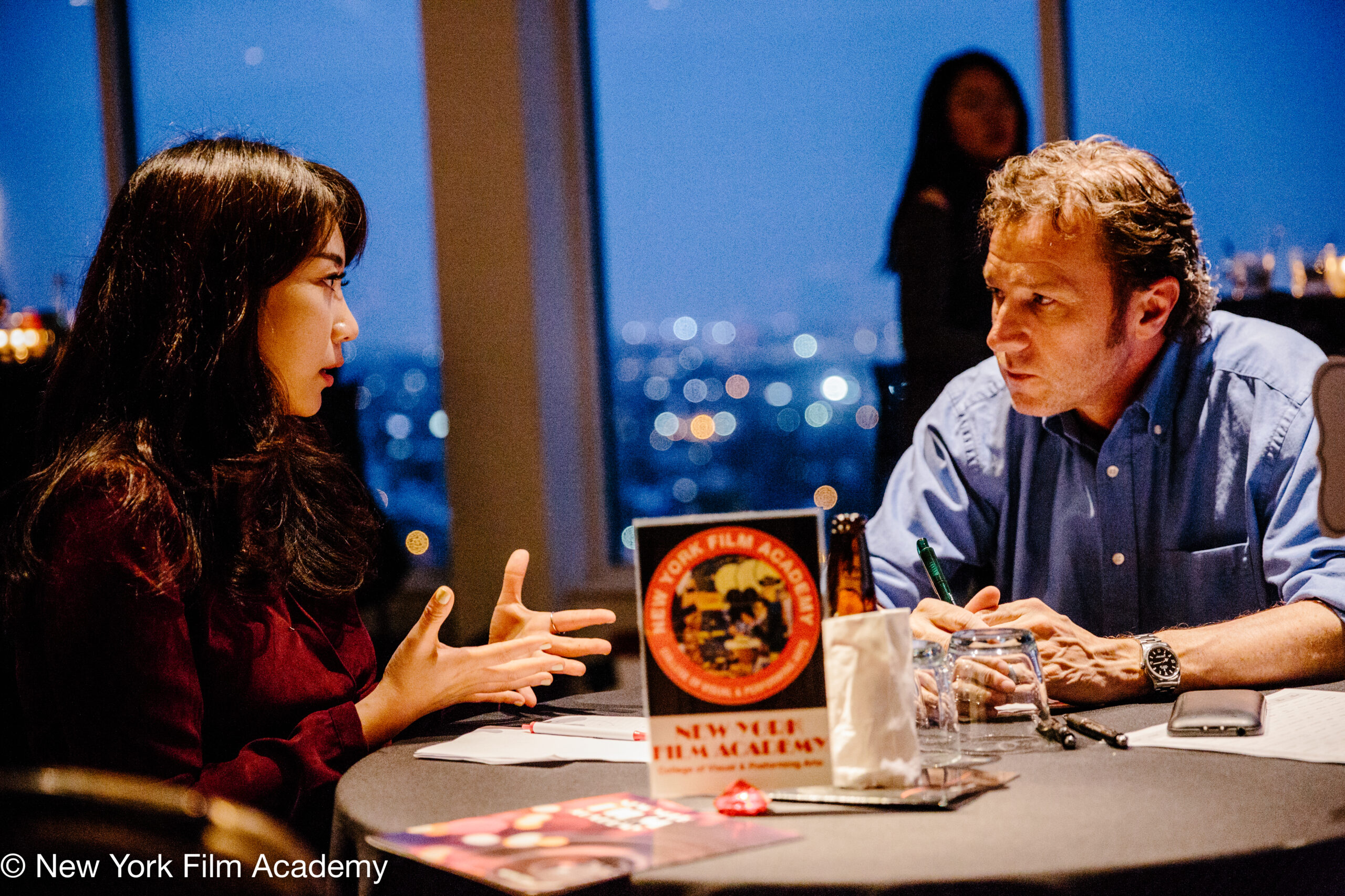
Each student was allowed three minutes to present their films to each professional volunteer. They could pitch one project with a teaser presentation or pitch two projects. Afterward, students had twenty minutes with their professional advisor for critique, advice, marketing advice, and possible partnership. Volunteers were asked to hold nothing back from the students. Only honest opinions and expertise were acceptable.
At the end of the night, there was serious interest in three projects from visiting producers. “For those who didn’t get interested in their projects they got the benefit of real-world advice and a lot of them said the difference between pitch fest with the faculty two semesters ago and this one with the professionals was immeasurable,” Richeson said.
When asked her thoughts on the evening, Volunteer April Wright, Programmer for Sundance and AFI Fest, Foundation Manager at Women in Film said, “I was impressed with the professionalism of the students and the caliber of their ideas.”
Marlon Schulman, Founder, and CEO of Horror Equity Fund, Producer and Attorney felt similar stating, “Thanks for the terrific education and prep the graduates clearly had experienced. It allowed us to hear pitches that were interesting, well-prepared and yet open to suggestion, perspective, and possible improvement. Great!”
The New York Film Academy would like to thank Michael Barlow, Kimberley Browning, Brian Herskowitz, John Morrissey, Diana Romero, Arnold Rudnick, Marlon Schulman, Rich Thorne, Russ Ward, and April Wright. We’d also like to congradulate all of our graduating producers including Amari Agee, Batool Hassan Alarfah, Mujahed Aljumaiaah, Larissa da Rosa Beck, Xiangrong Du, Thomas Freeman, Yizhen Hou, Ah Reum Jung, Jianhyue Lin, Junhao Ma, Zoe Pelloux, Nikita Sapronov, Yoselin Pamela Solorzano, Huidi Sun, Zhikun Yu, Jihan Zhang, Ziyi Zhao.
Denise Meyers began her career in Los Angeles as a literary agent assistant at the William Morris Agency in 1982. While she knew she didn’t want to pursue the career of an agent, she soon realized that screenwriting was her true calling.
“I thought that since I’d watched hundreds of movies growing up, I understood what went in to a good screenplay,” said Meyers in an interview with the Black List. “I wasn’t a terrible writer, but I wasn’t a great writer either.”
After 12 years of exhausting her contacts with her material and getting nowhere fast, Meyers moved onto a different career as a gourd artist, but, at the end of the day, her heart wasn’t in it as much as screenwriting.
“I set a goal for myself to learn how to write screenplays the way they are supposed to be written, with no expectation that I would ever get any farther in the film business than I had ever been before,” said Meyers. “I wanted to master the art form, in the same way I taught myself how to work with gourds.”
Meyers took advantage of an 8-Week Screenwriting scholarship at the New York Film Academy Los Angeles, where she hoped to truly master the craft.
“I won an eight-week screenwriting scholarship to NYFA a few years ago, and the experience was invaluable,” she said. “I use everything I learned at NYFA in every script I have written since then, and it has helped elevate my career beyond what it was before.”
Since attending NYFA, Meyers has won a number of screenwriting competitions, including a spot on the Athena List (with a script she wrote at NYFA), the Atlanta Film Festival, Table Read My Screenplay Austin, and several others.
From there, she wrote a short screenplay called “The Dark of Night,” which won the grand prize at Table Read My Screenplay Austin in 2015.
“Denise Carlson, an instructor at NYFA, told me about a short script writing contest she had plans to participate in called the NYC Midnight Short Screenwriting Contest,” Meyers recalls. “Twelve hundred people from across the globe signed up to participate, so there were groups of 40 people each who were given a genre, a character and a setting. My group received the following prompts; suspense, a diner, and an unemployed man or woman. We had eight days to write 12 pages, then, if we survived each heat, we were given a new genre, character and setting. I came up with the idea almost immediately, though God knows where it came from. The story is set in 1930. A woman on her way to Chicago for a job interview seeks refuge in the diner where she encounters a waitress, a drifter, and a cop, each with dark and dangerous secret.”
Meyers gave the script to Robin Wright’s assistant and, before she knew it, she was getting a call from Wright who wanted to direct the film, along with some of her cast members from “House of Cards.” In fact, 80 crew members from “House of Cards” signed on to work on the film including the director of photography, Dave Dunlap, and costume designer, Jessica Wenger. Boris Maldin, the producer of “House of Cards,” loaned his cameras and equipment.
After that, Leslie Bibb, Sam Rockwell, Callie Thorne and Michael Godere signed on to act in the film for scale.
Meyer’s “The Dark of Night” recently premiered at the Cannes Film Festival. The black and white film noir is about a woman seeking refuge from a storm who takes matters into her own hands when she encounters a drifter and a waitress at an isolated diner where everyone has a secret and nothing is what it seems.
Meyers says she just finished a one-hour pilot episode based on “The Dark of Night” that she is developing with TV producer Michelle Rubenstein. She also completed a new feature about Frank Lloyd Wright and Mamah Cheney that she hopes to get in front of Brad Pitt, and is currently working on a World War II drama about a battle in the Pacific that only a handful of people know about. Finally, she’s working on a web series based on her experiences as an award-winning screenwriter who still fixes toilets for a living.
“Christmas Eve,” a film made in collaboration with the New York Film Academy’s Industry Lab, had its debut screening at NYFA’s Los Angeles campus. The red carpet was rolled out for Director Richard Freidman and the cast of the film including Mary-Margaret Humes, Scott Bailey, Vince Lozano, Anthony Emerson, Aaron Parilo, Bethany Caroll, Sarah Castro, Mark Adair-Rios, Hailey Garibay, and Ashley Romans.
“Christmas Eve” is a dark comedy that takes place over the course of a day and follows a heap of interlinking characters. A botched robbery, a detective trying to reconnect with his mother, a down on his luck photographer, and a drug addicted mall Santa.
Not only was this “Christmas Eve’s” debut, but also a special ending was cut together that turned out to be a huge surprise for the actors. Friedman wanted to end the film on a more upbeat note than originally planned. Using clever editing techniques he re-worked the ending but didn’t tell anyone in the cast.
“Watching their reactions was one of my favorite parts of the evening,” Friedman said.
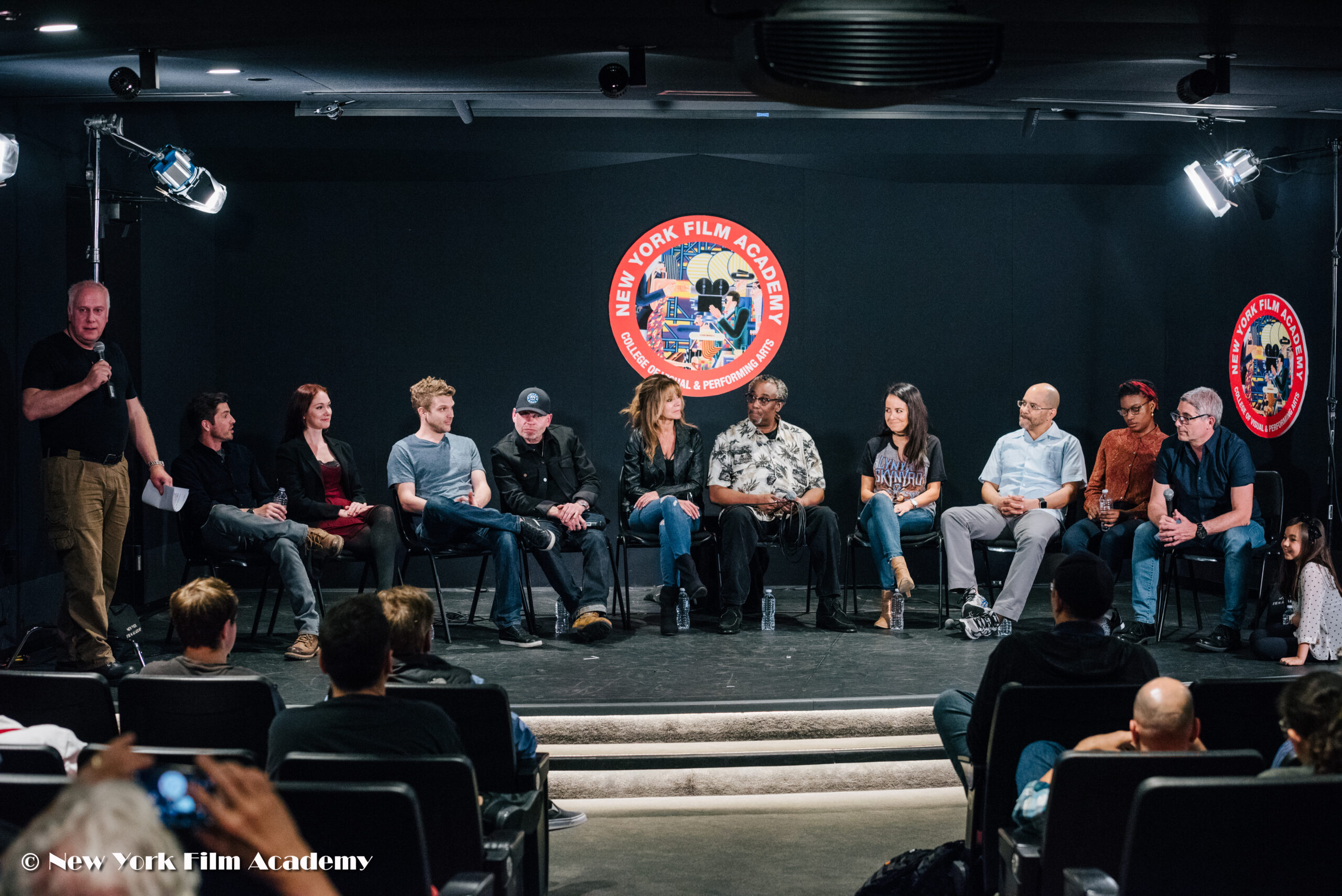
Every crewmember in attendance took to the stage to answer some questions from the students. One student wanted to know about the rehearsal process. Freidman explained that a tight budget did not allow for a rehearsal schedule. In fact, the film, which originally had a twelve-day shooting schedule, was filmed over ten days. Friedman credited the actors with the fast turn around stating, “I’m telling you the key is to get actors you can rely on. These guys all brought it. We never did more than two takes.”
The New York Film Academy would like to thank Richard Freidman and the amazing cast of “Christmas Eve.” To learn more about the film, click here.
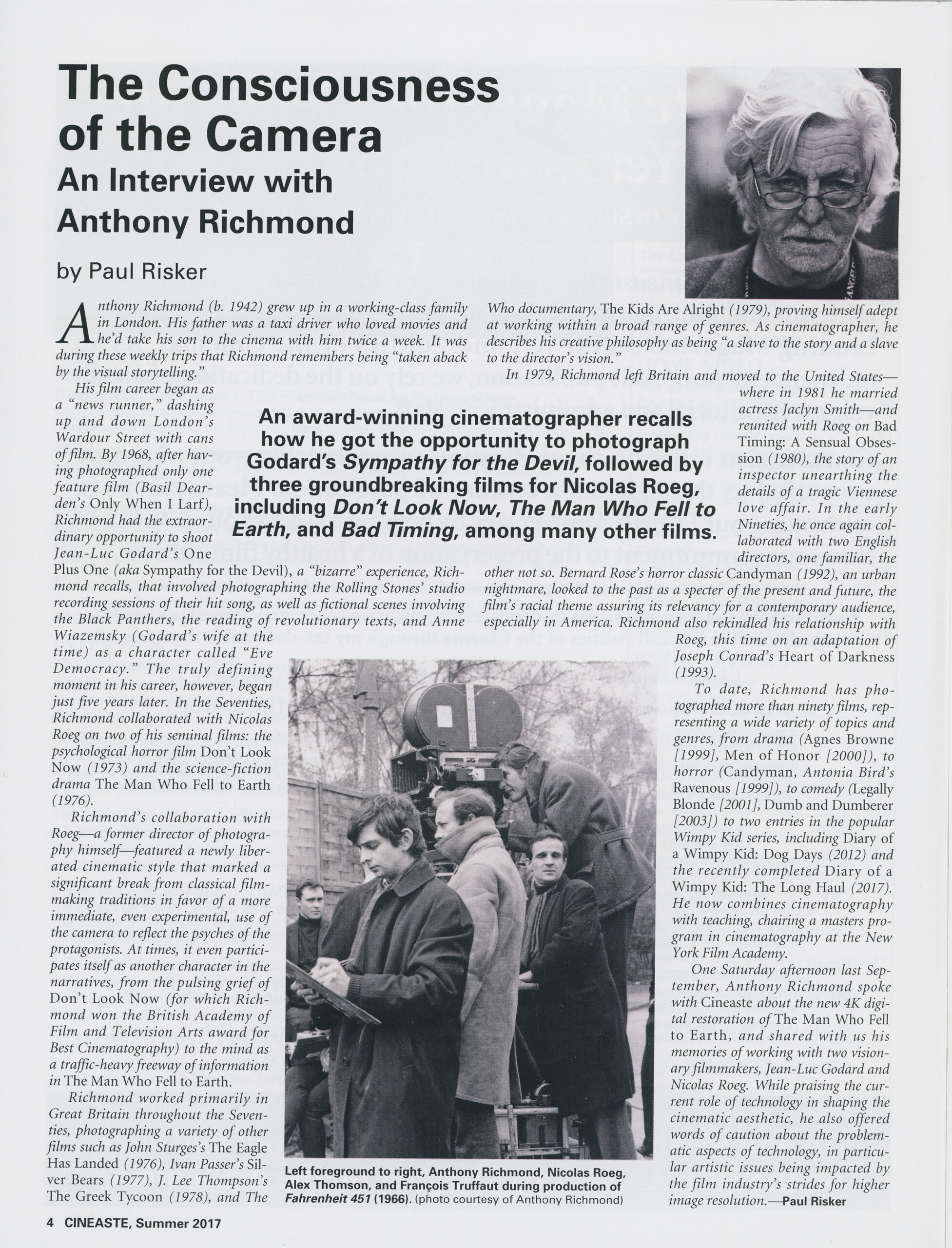
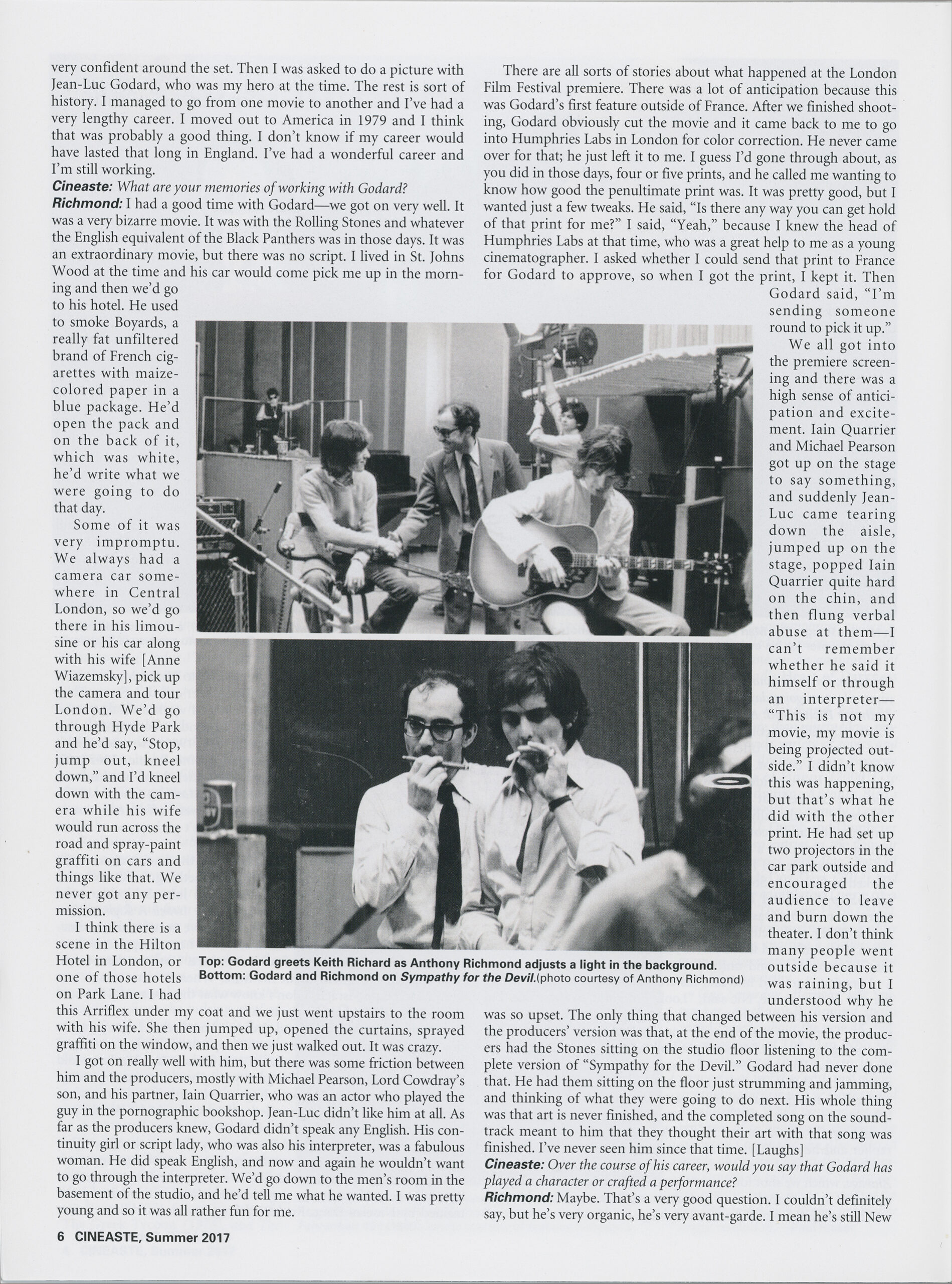
New York Film Academy Los Angeles Cinematography Chair Tony Richmond recently discussed his long-standing career as well as the new 4k digital restoration of “The Man Who Fell to Earth” with Cineaste, a leading magazine on the art and politics of cinema.
Beginning with his first gig as a news runner on London’s Wardour Street, Richmond chronicles his rise in the business. Early in his career, Richmond had the extraordinary opportunity to work with Jean-Luc Godard on “One Plus One” (“Sympathy for the Devil”), followed by three groundbreaking films for Nicholas Roeg, including “Don’t Look Now,” “The Man Who Fell to Earth,” and “Bad Timing,” among many other films.
“The greatest thing about Godard, for me, and this has resonated throughout my career, is that, as he once said, movies have a beginning, a middle, and an end, but not necessarily in that order,” said Richmond about his work with Godard. “I think that’s fantastic…bloody fantastic!”
As to his work with director Nicholas Roeg, Richmond said, “The cinematographer’s job is to put the director’s vision on the screen and maybe enhance it. But Nic has a very strong vision for the movie. What I’ve always found is that as a cameraman, or as a cinematographer as we’re called, we want to learn from the director exactly how he wants his movie to look, feel, and smell. Some of them know what they want, but they can’t put those feelings into works, whereas Nic can.”
To date, Richmond has worked as a cinematographer on more than ninety films from all genres, including “Men of Honor,” “Candyman,” Legally Blonde,” “Dumb and Dumberer,” and recently completed “Diary of a Wimpy Kid: The Long Haul,” with NYFA alumnus Jeremy Harris working as his personal assistant on the film.
Having worked on a variety of genres, Richmond says he has now reached a point in his career where he will only work with friends. He’s currently working on a movie a year while serving as the Chair of NYFA LA Cinematography.
“It’s wonderful watching these new kids coming up,” said Richmond in his interview with Cineaste.“
Richmond will be heading east to NYFA’s New York location for an exclusive Cinematography Master Class on June 16, 2017.
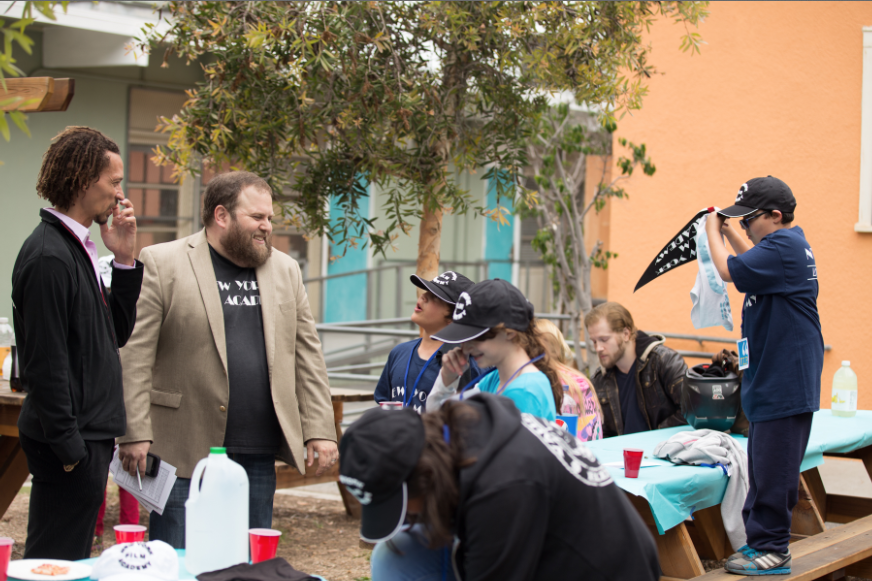
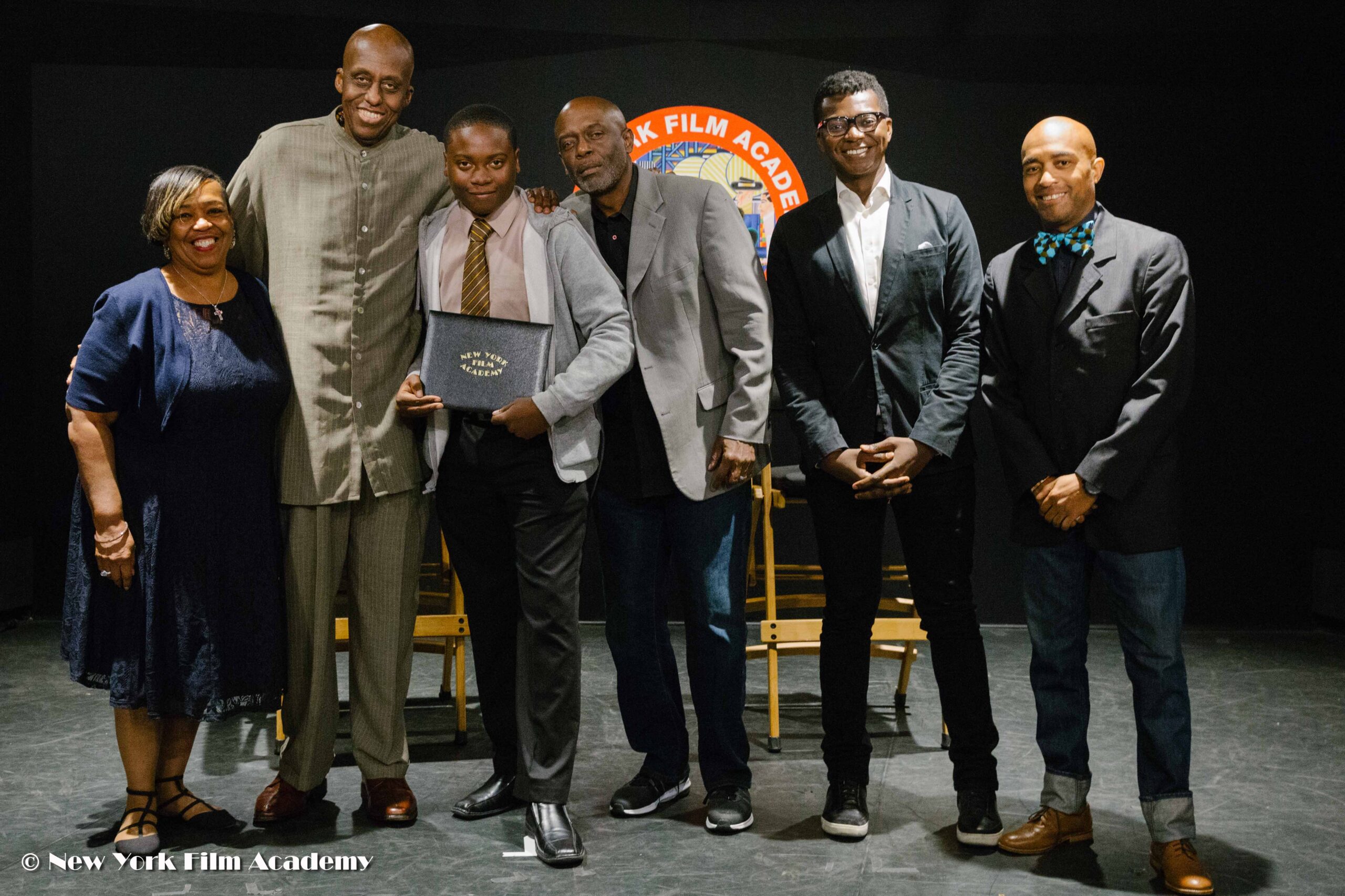
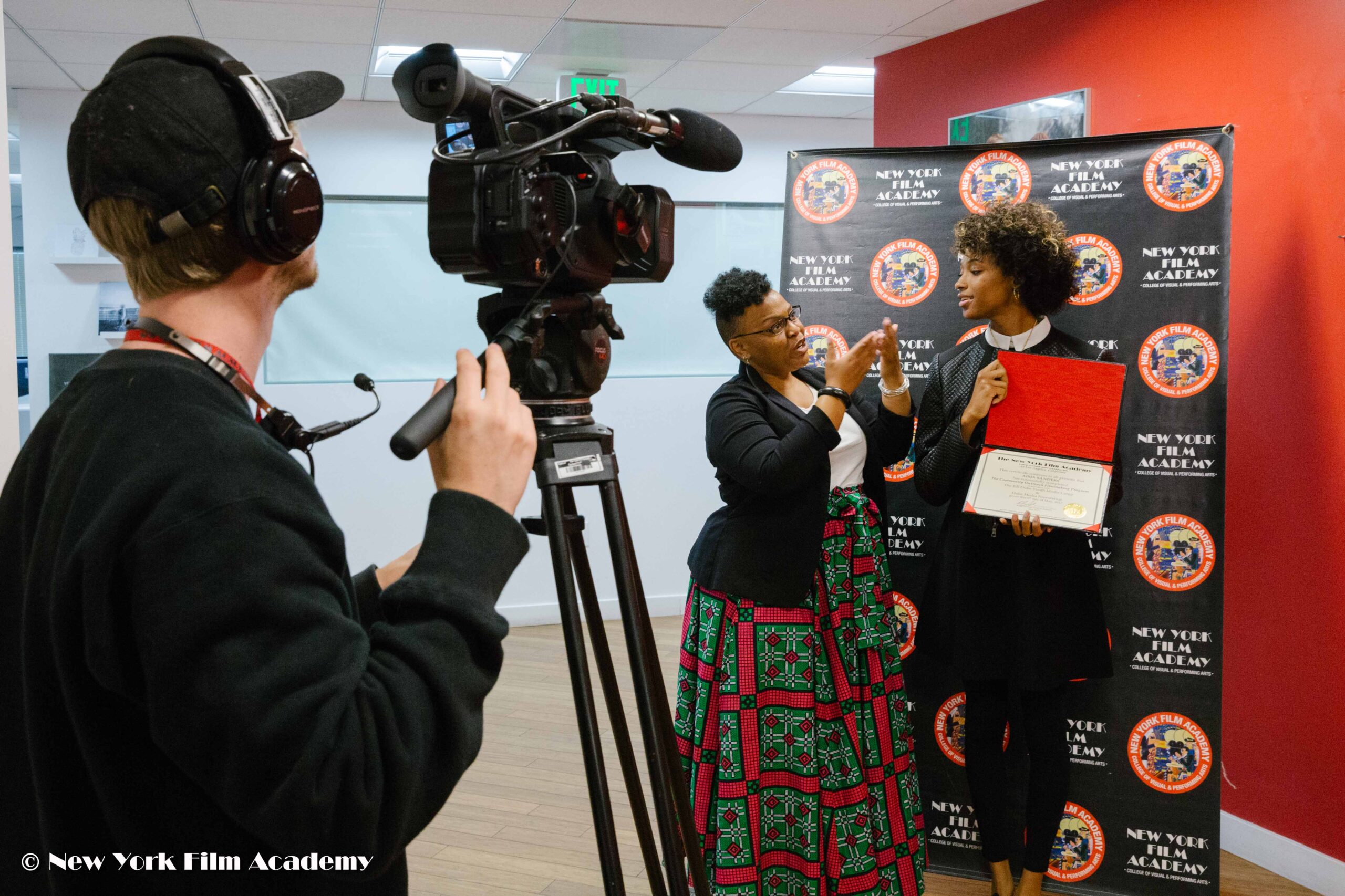
As the New York Film Academy enters its second year of Community Outreach partnership with the Bill Duke Media Foundation, we would like to congratulate all of the graduates of this program. In attendance were Mr. Duke, himself, and Chair of Community Outreach Mason Richards. Karen A. Clark, Senior Vice-President of City National Bank and the Finance Literacy Instructor of Duke Youth Media gave special remarks.
Students within the program wrote, directed and held various positions of three to four-minute silent films which they developed for NYFA and shot on the Universal backlot. Students tackled issues facing teens and young adults including first love, tested friendships, bullies, and confidence issues.
During the ceremony the students “Who Am I?” projects were screened. The projects were done in conjecture with the Community Outreach film camp. The goal of the exercise was to get the students to be more comfortable with telling their own stories. Each participant was given a mini camera and instruction to record their life at home, school, and their communities.
Mr. Duke, Founder, President, and CEO of the Duke Media Foundation was the keynote speaker for the evening. He interviewed Eric Dean Seaton on stage. Seaton is a two-time NAACP Image Award nominated episodic director. He’s worked on numerous hit shows such as CBS “Life in Pieces,” ABC’s “Dr. Ken,” Netflix’s “Fuller House,” NBC’s “Marlon” and “Undateable,” Nickelodeon’s “School of Rock” and “The Thundermans.” Seaton is also the creator of the critically-acclaimed “Legend of the Mantamaji” graphic novel series, the upcoming “Legend of the Mantamaji: Bloodlines” series and director of the award-winning “Legend of the Mantamaji”: Live Action Short.
“We’re so proud of all the graduates of this Bill Duke Outreach cohort,” Richards said of his students. “The program just doesn’t focus on filmmaking, but on all the essential skills that are important to successful filmmaking; skills like collaboration, communication and of course a strong sense of storytelling. We are pleased with this community outreach partnership with the Bill Duke Media camp, and look forward to our next cohort of students.”
The New York Film Academy would like to thank the instructors who made this a standout experience for all those involved. Thank you, Matt Kohnen, Jason Ornelas, Leander Sales, and Mr. Richards.
If you’re interested in more information on the Bill Duke Media Foundation click here.
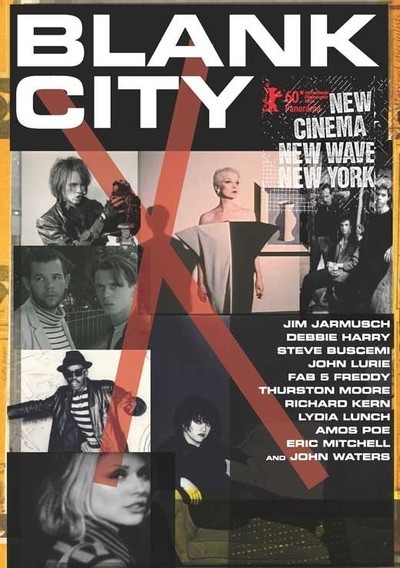
“There’s no relationship between New York now and in the 70s,” said New York Film Academy’s recent guest speaker, filmmaker Amos Poe. This became apparent for incoming New York Film Academy students who were fascinated by Celine Danhier’s documentary “Blank City,” which captured New York’s indie filmmakers of the 70s, who were inspired by the burgeoning underground art and music scene.
The era included this cross-pollination of art, music and film. Filmmakers with hardly enough money to pay their Con-Ed bills would hit the streets to shoot guerrilla-style movies while unknowingly influencing the highly regarded No Wave movement. Danhier’s film examines the events that led to No Wave’s creation, in which the city itself, which was in decay at the time, plays a significant role. Danhier, who came to New York from Paris, interviews such filmmakers and artists as Jim Jarmusch, John Waters, Amos Poe, Thurston Moore, Debbie Harry and Lydia Lunch.
“I didn’t know how to make movies but I had a camera,” said Poe. “I thought: I’m never going to make a movie that anyone is going to see, so why not make a film movement.”
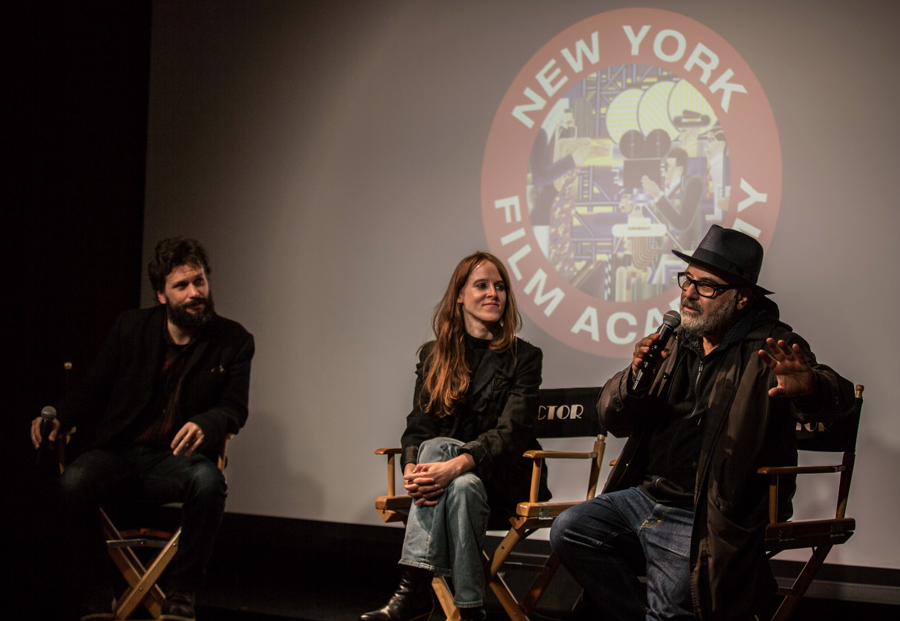
Danhier, who spoke to NYFA instructor BenMaraniss and students after the screening, became interested in the lawless and desolate city streets of New York’s No Wave movement after seeing Poe’s “The Blank Generation” and Edo Bergoglio’s “Downtown 81.” In the spring of 2007, after meeting with producers, she began shooting her first movie, a documentary on the films associated with the No Wave movement and the city that set the backdrop.
“I was charmed by her and her interest in our work,” said Poe. “Celine was dealing with a lot of difficult people and she stuck with it — even though it took four years.”
Celine’s documentary screened at both the Tribeca Film Festival and the Berlin International Film Festival, where she eventually found a distributor.
Poe and Danhier are now working on their own project, which deals with their admiration for French New Wave cinema.
Manage Cookie Consent
This website uses cookies to improve user experience. By using our website, you consent to all cookies in accordance with our Cookie Policy.
Functional
Always active
The technical storage or access is strictly necessary for the legitimate purpose of enabling the use of a specific service explicitly requested by the subscriber or user, or for the sole purpose of carrying out the transmission of a communication over an electronic communications network.
Preferences
The technical storage or access is necessary for the legitimate purpose of storing preferences that are not requested by the subscriber or user.
Statistics
The technical storage or access that is used exclusively for statistical purposes.The technical storage or access that is used exclusively for anonymous statistical purposes. Without a subpoena, voluntary compliance on the part of your Internet Service Provider, or additional records from a third party, information stored or retrieved for this purpose alone cannot usually be used to identify you.
Marketing
The technical storage or access is required to create user profiles to send advertising, or to track the user on a website or across several websites for similar marketing purposes.
To provide the best experiences, we use technologies like cookies to store and/or access device information. Consenting to these technologies will allow us to process data such as browsing behavior or unique IDs on this site. Not consenting or withdrawing consent, may adversely affect certain features and functions.
Functional
Always active
The technical storage or access is strictly necessary for the legitimate purpose of enabling the use of a specific service explicitly requested by the subscriber or user, or for the sole purpose of carrying out the transmission of a communication over an electronic communications network.
Preferences
The technical storage or access is necessary for the legitimate purpose of storing preferences that are not requested by the subscriber or user.
Statistics
The technical storage or access that is used exclusively for statistical purposes.The technical storage or access that is used exclusively for anonymous statistical purposes. Without a subpoena, voluntary compliance on the part of your Internet Service Provider, or additional records from a third party, information stored or retrieved for this purpose alone cannot usually be used to identify you.
Marketing
The technical storage or access is required to create user profiles to send advertising, or to track the user on a website or across several websites for similar marketing purposes.