The Best Documentaries: The Films Of Patrick Creadon

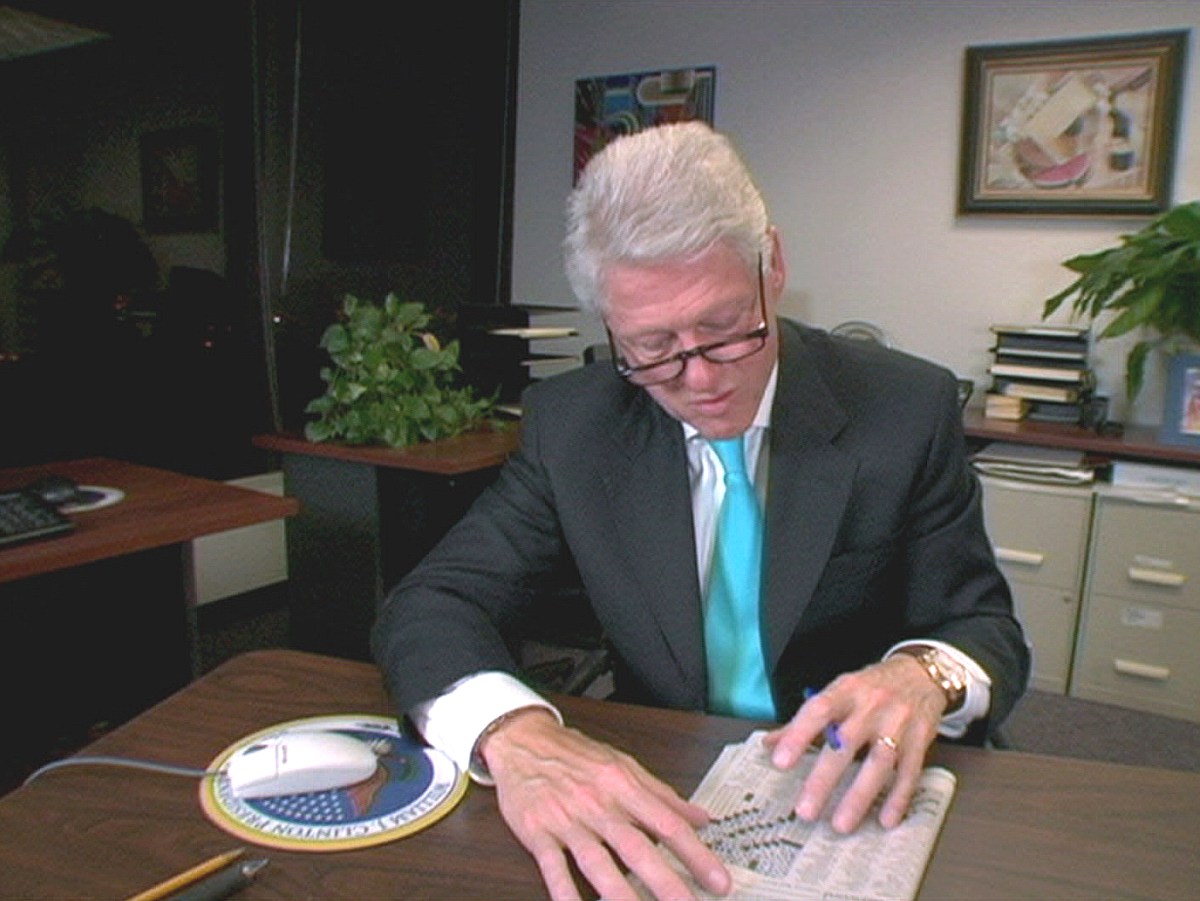
Bill Clinton doing a crossword puzzle in Wordplay

Patrick Creadon is an American documentary filmmaker, well-known for his movies on puzzles, education, and the economy. Born in 1967, Creadon started out as a child actor in Chicago, a career that included a leading role as Tom Sawyer in a made-for-TV film co-starring Anthony Michael Hall and Cynthia Nixon. By his early 20s, Creadon was shooting and editing for the acclaimed PBS series The 90s and eventually moved to L.A. where he earned a masters in cinematography from the AFI Conservatory. In 1997, his student film, Tendrils, was nominated for a student Academy Award. He worked as a cameraman and producer for several broadcast and cable networks before moving on to documentary features.

Wordplay
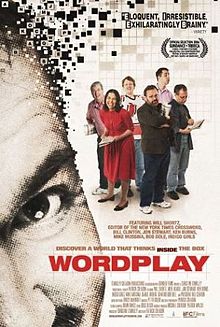
Wordplay movie poster

Creadon made a name for himself as a documentarian with his very first feature, Wordplay, in 2006. Wordplay is about crossword puzzles, and specifically, the New York Times crossword. The film is divided into roughly two parts. The first half of Wordplay focuses on master puzzlemaker Will Shortz, the editor of the Times crossword and long-time co-host of NPR Sunday Puzzle, as well as veteran crossword constructor Merl Reagle and several other puzzlemakers.

The film also interviews noted celebrities who have proclaimed their passion for puzzle solving, including Jon Stewart, Ken Burns, the Indigo Girls, Bob Dole, and President Bill Clinton. Other puzzlers who play in nationwide tournaments and have become renowned for their skills are featured as well; the film focuses on four in particular.

The second half of Wordplay concerns the annual American Crossword Puzzle Tournament, where the best of the best compete for a $4000 prize and the bragging rights of the country’s greatest crossword solver. The film was shot during the entirety of the 2005 ACPT and shows the mental as well as physical trials and tribulations of the competitors.

Wordplay was a critical and commercial success, grossing over three million dollars in domestic box-office, making it one of the most profitable documentaries of all time. It also managed nominations for Best Documentary from the National Board of Review, the Critics’ Choice Awards, and the Sundance Film Festival. A lighthearted romp and especially well received by audiences, the film even had enough cultural cache to inspire an episode of The Simpsons, guest starring Shortz and Reagle.

I.O.U.S.A.
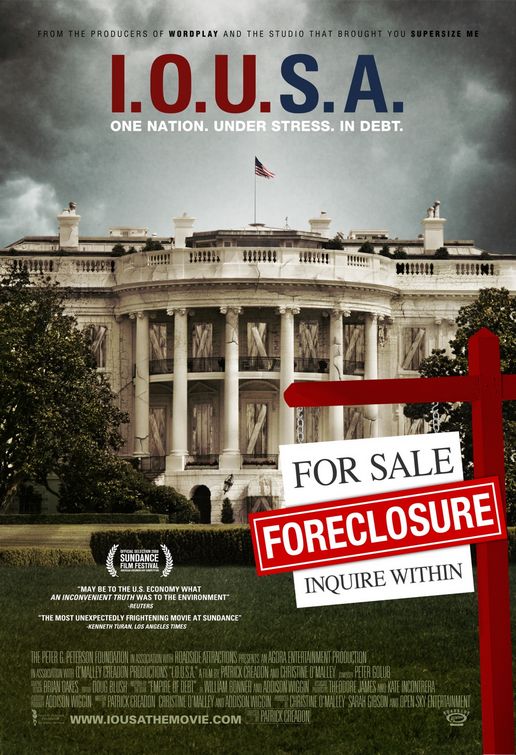
I.O.U.S.A. movie poster

Creadon followed Wordplay with a documentary about a decidedly more serious subject matter, I.O.U.S.A., although he managed to keep a tone that wasn’t too maudlin, despite its release on the heels of the recession. The film partially profiles former Comptroller General David M. Walker and follows Walker and Robert Bixby, director of the Concord Coalition, travelling cross-country to discuss the national debt and its potential for disaster. The trek, which journeyed from community to community, was dubbed the “Fiscal Wake-Up Tour.”

Bixby and Walker describe four aspects of the American economy: savings, budget, leadership, and the balance of payments. The documentary premiered at Sundance in 2008 before a unique event where it was simulcast across the country in 350 theaters and then followed by a live town hall meeting that included luminaries like Warren Buffett. Creadon hoped to get the very important yet relatively unknown issues about the national debt across to everyday citizens, and screened the film in college campuses and community centers throughout and after the 2008 presidential election. The film was even screened for members of Congress at the Library of Congress.

I.O.U.S.A. was well received, making Roger Ebert’s Top 5 Docs of 2008 as well as earning a Critics’ Choice Award nomination and Sundance nomination for the Grand Jury Prize. Creadon followed the film with a book, which expanded on the documentary and elaborated on the statistics and details featured on screen.

If You Build It
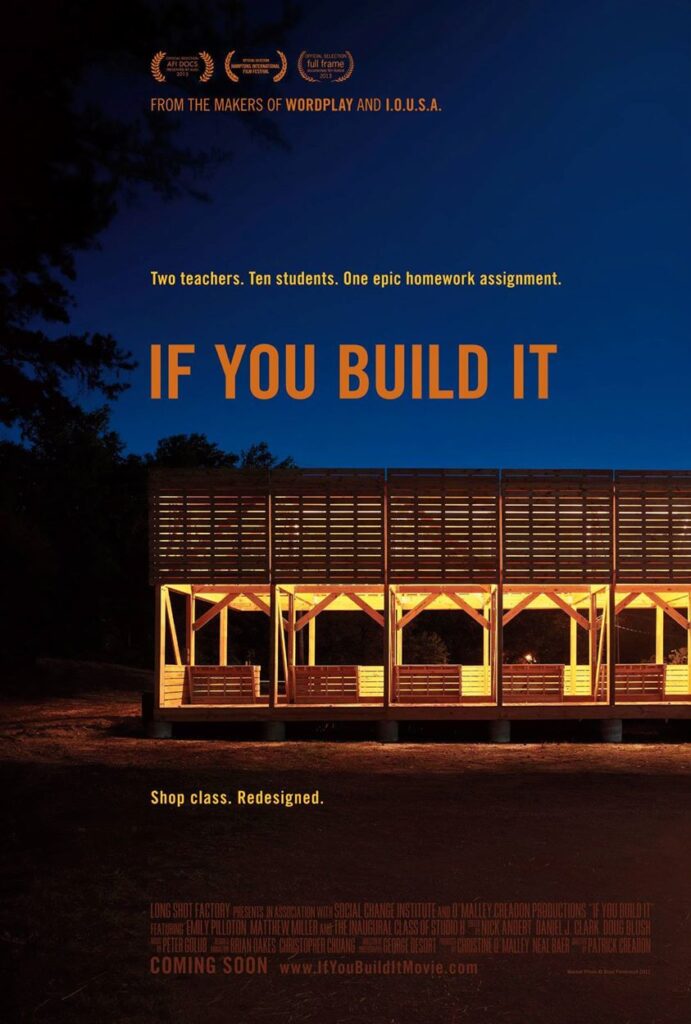
If You Build It movie poster

Creadon’s most recent documentary was 2013’s If You Build It, which followed a radical high school program in Windsor, North Carolina, part of the poorest county in the state. Chip Zullinger, the Superintendent of Bertie County, brought in two architects to design a curriculum for the high school. They created what became to be known as Studio H, and aimed to teach students how to design and build with their hands.

The students collaborated and built a farmers market pavilion for their community over the course of sixteen weeks. Better yet, it was designed by the students as well, a first for the nation. Zullinger aimed to give the students an education that enriched and empowered them as well.

Creadon’s film, whose title is derived from the famous Field of Dreams quote, screened at the Newport Beach Film Festival’s Art, Architecture and Design Series and was critically well received, continuing the filmmaker’s three-for-three hot streak of acclaimed documentaries.


The Best Documentaries: The Films Of Errol Morris

Errol Morris is an Oscar winning filmmaker who has been making documentaries for over thirty-five years, and is one of the few documentarian directors that casual moviegoers can name. Born and raised in Long Island, New York, Morris studied history and philosophy in college before moving to filmmaking. The subjects of his documentary films have ranged from specific oddities to broad geopolitical topics like the Vietnam War.

Morris’s films typically rely very little on narration, instead using interviews to propel his narratives. Morris is famous for his specific way of interviewing and the later invention of his Interrotron to aid his style. The Interrotron uses teleprompters as a sort of teleconferencing two-way mirror, allowing both interviewer and interviewee to look into the camera lens while also looking at one another. The result is that the interview itself is more personal and conversational, allowing the subjects to remove some of the distance that comes from televised interviews, while also giving the illusion that the subjects are talking directly to the audience. Many of Morris’s later films use the Interrotron in their interviews.

Errol Morris with the Interrotron

Gates of Heaven

Morris’s first documentary, 1978’s Gates of Heaven, concerns two pet cemeteries. It started a trend of Morris’s to follow everyday people with intriguingly odd professions and passions. Floyd “Mac” McClure, one of the film’s subjects, made it his lifelong mission to give pets a peaceful resting place. This combination of quirk and heart is central to several of many of Morris’s works.

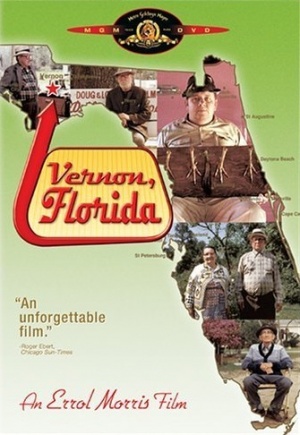
Vernon, Florida

Morris followed up Gates of Heaven with Vernon, Florida, a documentary about the town of the same name and its idiosyncratic residents. Morris was originally drawn to the town because of its reputation as “Nub City”—many of its residents would actually cut off their own limbs as part of a large insurance scheme. Morris planned to document this shockingly morbid story of fraud, but the people involved threatened his life, causing him to expand his topic to the town’s other citizens.

Vernon, Florida DVD cover

The Thin Blue Line

The Thin Blue Line is one of Morris’s best-known works, and documents the murder of a police officer in 1976, the investigation of the crime, and the man who was wrongfully imprisoned for it, Randall Dale Adams. The 1988 film uses various reenactments and interviews to propose other scenarios and famously helped lead to Adams’s exoneration. While The Thin Blue Line is held in the highest regard and often on short lists of the best all-time documentaries, it wasn’t even nominated for an Academy Award because Morris famously referred to the film as nonfiction, reflecting its narrative tropes.

A Brief History of Time

1991’s A Brief History of Time follows another person with a quirky passion, but in this case the person is famous and the passion is astrophysics—Stephen Hawking. While the title and marketing of the film may make it seem like it is an adaptation of Hawking’s famous groundbreaking science book, Morris’s documentary is more of a look at Hawking himself. In addition to many interviews with people from Hawking’s family, career and childhood, Time includes a soundtrack by Phillip Glass, who has collaborated frequently with Morris.

Fast, Cheap & Out of Control

Morris’s 1997 documentary Fast, Cheap & Out of Control centers on four people with offbeat careers: a lion tamer, a hairless mole-rat expert, an M.I.T. scientist who designed tiny robots and a topiary designer. The film is upbeat and frenetic, its cinematography and musical score both illustrating and accentuating the quirk of its subjects. The four people narrate their own stories, with Morris intertwining each other’s narration and footage to highlight their thematic similarities.

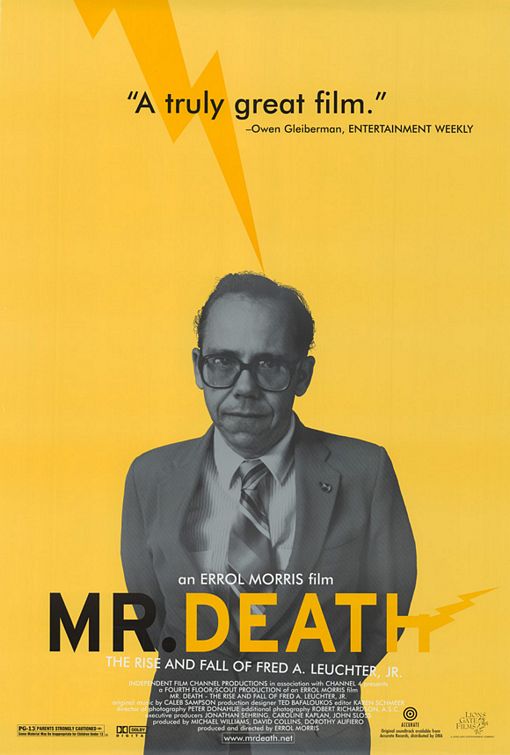
Mr. Death: The Rise and Fall of Fred A. Leuchter, Jr.

Execution technician Fred A. Leuchter, Jr. is the subject of Morris’s 1999 documentary. Morris was fascinated by what he perceived as Leuchter’s self-delusion and obliviousness to his own debauchery. Leuchter designed devices for capital punishment despite having no experience in engineering, and allegedly extorted the state into giving him work by threatening to testify on behalf of death row cases. He also supported Holocaust denier Ernst Zündel. Morris worked to discredit Leuchter’s work in the film.

Mr. Death movie poster

The Fog of War: Eleven Lessons from the Life of Robert S. McNamara

The Fog of War brought Morris an Academy Award for Best Documentary after its 2003 release. Scored again by Phillip Glass, Fog of War focuses on Morris’s interview with former Secretery of Defense Robert McNamara, McNamara telling in his own words the story of his early life, career at Ford, and how he ended up running the Vietnam War. The film gained great acclaim with its unique and potent perspective of Vietnam as well as its place in history within the context of the nascent War on Terror.

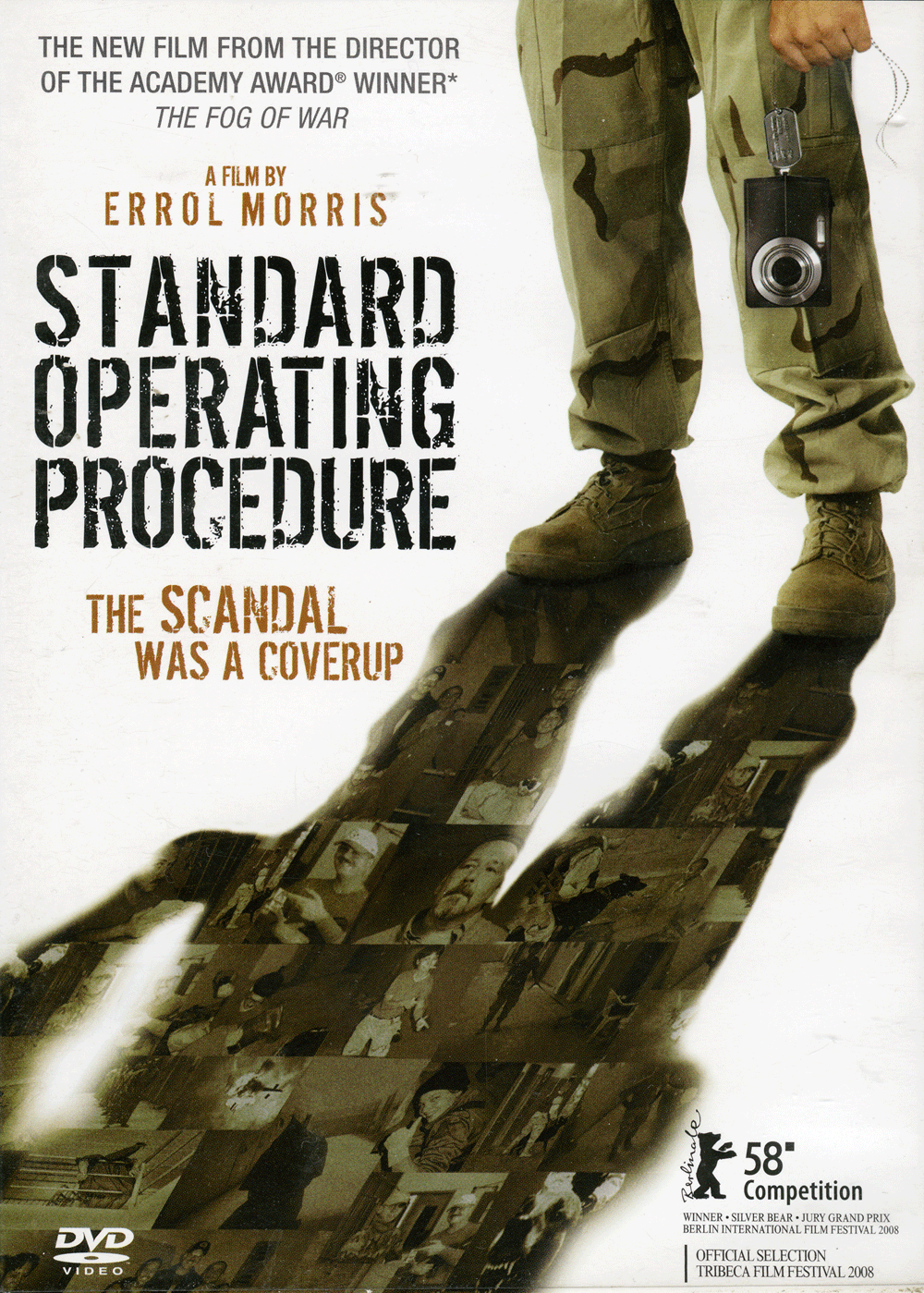
Standard Operating Procedure

The Fog of War started a loose trilogy of Errol Morris documentaries inspired by the War on Terror in Afghanistan and Iraq. Standard Operating Procedure is Morris’ 2008 effort, focusing on the photographs of abused prisoners at the Abu Ghraib prison and the scandal that followed after they were leaked to the public. The documentary seeks to tell a larger story, about the nature of the War itself and its relationship to the geopolitical atmosphere at large.

Standard Operating Procedure movie poster

Tabloid

Tabloid is another film by Morris that extrapolates a specific event to comment on a larger facet of culture. The event covered by the 2008 film was the tragic kidnapping and raping of an American Mormon missionary. Morris interviewed Joyce McKinney, the alleged rapist, as well as journalists involved in a battle between two British tabloids that had turned the case into a media circus.

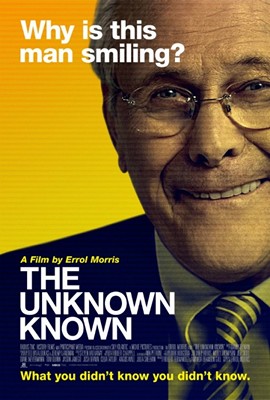
The Unknown Known: The Life and Times of Donald Rumsfeld

The third entry in Morris’s unofficial War trilogy, 2013’s The Unknown Known focuses on former Secretary of Defense Donald Rumsfeld. On its surface, the film seems to parrot Morris’s Oscar-winning Fog of War. Both films center on one-on-one interviews between Morris and a SecDef who presided over controversial wars. Yet while Fog of War is seen as many by Robert McNamara’s attempt to justify and apologize for mistakes he made during his tenure, The Unknown Known is more of a verbal chess match between interviewer and interviewee. Rumsfeld, famous for his carefully worded memos and vague answers to the White House Press Corps’ questions, plays that role again, dodging any inquiries Morris makes that he doesn’t want to answer. While the result is an interview where nothing much of note is actually said, the film still manages to paint a portrait of the documentary’s elusive subject.

The Unknown Known movie poster


Robert De Niro’s Top Five Acting Roles

Robert De Niro

Robert De Niro, considered one of Hollywood’s greatest performers—living or dead—is something of an acting paradox. While some of the best actors completely disappear into their roles to the point where they are unrecognizable, and others take over their characters with their real-life movie-star charisma, De Niro somehow inhabits both those traits, simultaneously and contradictorily. His roles range from Italian mobsters to disapproving Dads to Frankenstein’s monster to militaristic authority figures, each character both totally unique and completely and utterly De Niro.

With a legendary career spanning decades, it’s hard to say what his best and what his worst roles are, though it’s not hard to miss his fruitful collaboration with director Martin Scorsese. The two, with similar backgrounds and upbringings, worked closely together in the 70s and 80s and brought about some of De Niro’s finest work.

De Niro is currently working on Dirty Grandpa, a road trip comedy starring Zac Efron as the frustrated grandson forced to drive De Niro’s perverted old man to Spring Break. As filming gets underway, the movie’s cast has been growing with a generation of Hollywood’s most popular actors, all of whom learned their craft in De Niro’s legendary shadow

With that in mind, we thought we’d take a look at some of DeNiro’s greatest moments as an actor. It’s no coincidence that four of them were directed by Scorsese.

1. Mean Streets

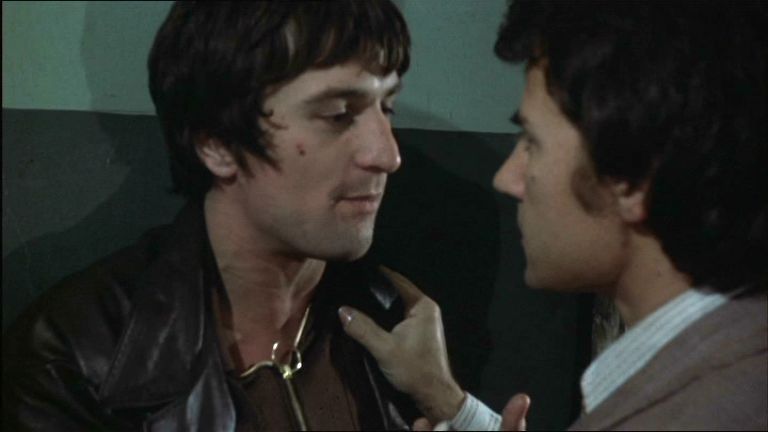
Robert De Niro was thin, hungry and an undiscovered force when Scorsese had the foresight to cast him as Johnny Boy in Mean Streets, a film heavily influenced by Scorsese’s New York, Catholic upbringing. Johnny Boy was a livewire—dangerous, charming, unpredictable, funny and frightening. De Niro made the larger-than-life character gritty and grounded, delivering a performance that didn’t just ignite his career but an entire movement of method, raw, urban style of acting.

Harvey Keaitel With Robert De-Niro From Mean Streets

2. Taxi Driver

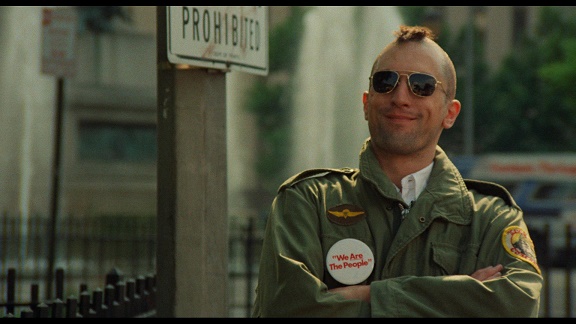
Taxi Driver was the complex story of a man whose sanity and motivations were constantly called into question, an apt metaphor for post-Vietnam America. De Niro, who drove cabs for weeks in preparation for the role, gave an honest pathos to a character most people would cross the street to avoid in real life. His performance has reverberated past the scope of the movie and into cultural legacy, be it with his famous mohawk, his “You talkin’ to me?” soliloquy, or, even darker, his influence on attempted Ronald Reagan assassin John Hinckley, Jr.

Robert DeNiro in Taxi Driver

3. Raging Bull

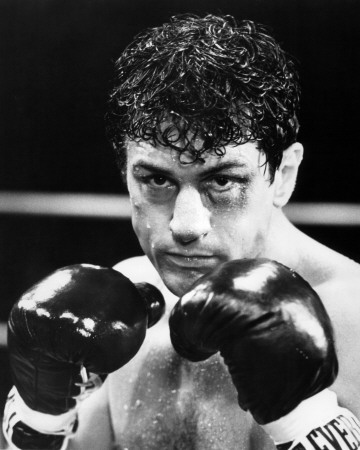
De Niro dramatically gained weight to put on the muscle (and post-career flab) of real-life boxer Jake LaMotta in biopic Raging Bull. A physical product of his devotion to acting and inhabiting his roles, in some ways it changed his look permanently—De Niro never quite had the lean look that defined his more deranged 70s characters again. However, it only added to his performance of Jake LaMotta as a brute of raw power with heart and unyielding passion, a charismatic beast who was most dangerous when he was vulnerable.

Robert De-Niro Raging Bull

4. The Godfather Part II

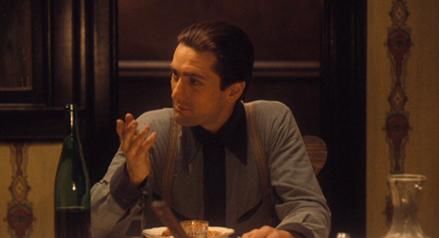
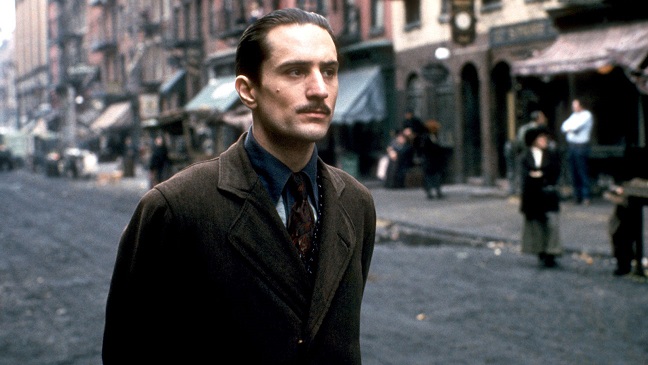
In some ways, playing the part of a younger Vito Corleone was a passing of the torch to De Niro from the similarly styled acting legend Marlon Brando, who won an Oscar portraying Vito in the original Godfather. De Niro learned a Sicilian dialect of Italian and spoke it fluently throughout the film, a testament to his method approach. While just as menacing as Johnny Boy and LaMotta, De Niro played it quiet, showing a restraint that contrasted Mean Streets but belayed his power as a cinematic performer. He not only accepted the torch from Brando but carried it forward, earning an Oscar (Vito Corleone is still the only character to give two separate performers an Academy Award) and coming into his own as the definitive actor of his generation.

The Godfather III DeNiro

5. Goodfellas

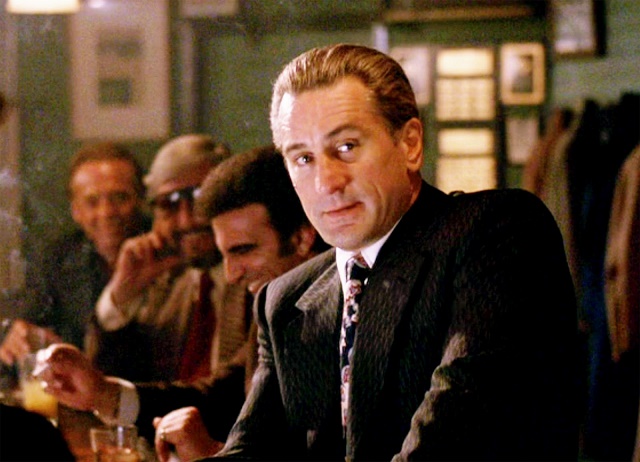
By 1990’s Goodfellas, DeNiro had become firmly settled into his role as one of Hollywood’s elder statesman. Moving from the young hothead leads of the 70s and early 80s, De Niro portrayed mobster mentor Jimmy Conway with a weary mellowness. However, a master of subtlety and layers, De Niro showed the dangerous, violent criminal lurking just beneath the skin, erupting brutally yet fluidly to the surface amidst a laid-back, humorous performance. De Niro mastered the tempered-yet-flustered attitude of Conway so well that it’s since defined his public persona and many of the roles he still knocks out of the park to this day.

DeNiro in Goodfellas

So, those are our picks of De Niro’s best acting performances here at the New York Film Academy. Which movies do you think he excelled in? Please let us know in the comments section below.

How to Watch ‘The Interview’ Online

By now you’ll have already heard the massive furore that was caused by Seth Rogan’s The Interview, the North Korean-lampooning movie which sparked an international diplomatic headache. As a unique and surprising turn of events, the release controversy may end up going down in history and studied at film schools as a case study for years to come, and at the very least it raises some pretty huge questions about the nature of parody and how best to respond to terrorist threats.

But for now at least, the dust has settled and the movie has finally been released… albeit in online streaming format only.

So, how to watch The Interview? Putting aside the fact it’s getting lukewarm reviews, you probably want to watch it to see what all the fuss was about. Here, we talk you through your online streaming options.

How to Watch The Interview: Online Streaming

how to watch the interview online

Firstly, you’ll be wondering how much The Interview costs to stream. Here you’ve got two options – if you want to rent it (for up to 48 hours), it’ll cost you $5.99 or you can buy an unlimited pass to ‘own’ the stream for $14.99.

Here’s where to see it:

Sony’s House (Ideal Desktop Option)

Sony has set up a website specifically for streaming the movie – head over to SeeTheInterview.com with your credit card at the ready, and you’ll be watching it in no time.

We’ve tested it in most desktop browsers and it performs fine, although it should be noted that payments are being handled by Stripe and that they don’t offer support for PayPal (or anything else that isn’t one of the major card names).

Google Play

If you’re looking to stream on a portable device or tablet, Google Play is probably your best bet aside from YouTube (see below). The Google Play app will work on some iDevices as well as nearly all Android devices, and is an excellent choice for playing it on your TV: hook it up with either Roku, Nexus TV or the new Chromecast dongle and you’re good to go.

YouTube

It’s not everyone’s first choice for renting/buying feature length movies, but Sony seems like they’re trying to change that by offering The Interview on YouTube.

To get it there, head over to YouTube’s official portal for buying or renting movies. This will work in a desktop browser (again, we’ve tested most of them and it streams fine) or through the YouTube apps for Apple TV, Playstation and Xbox.

And speaking of Xbox…

Microsoft’s Stream

Microsoft have put The Interview up for those who have a Windows 8-powered phone or tablet, and it’s also accessible through the Xbox. You can also watch it via Xbox Video on any standard desktop web browser – Windows or Mac OS – but you’ll need a Microsoft account to sign in to first.

How to Watch The Interview in the UK

Don’t live in the US or Canada? Bad news for those wanting to stream The Interview: you can’t.

Probably to the real-life Kim Jong Un’s delight.

Any of the options listed above only work if you’re connecting with a US/Canadian IP address, and can pay with a credit card from one of those two countries. Of course, there are ways and means around those restrictions, but they’re quite laborious from a technical standpoint and can get a little fuzzy when it comes to the legalities. Speaking of which:

A Word of Warning…

Given both the confusion of where to watch The Interview as well as the fact that it’s available for online streaming only, there have been reports of plenty of spammers and scammers trying to take advantage of this. It should be noted that if you find The Interview available anywhere other than the above listed locations, chances are very high that it’s not an authorized source and you’re putting yourself at risk of both malware and illegal copyright infringement by clicking such links. These sites are used for speed dating. If you’re still considering breaking the law in an attempt to watch it for free, ask yourself if wading through a thousand spammy websites and dead links before you find a working stream is worth it just to save a few bucks.

So that’s how to stream The Interview online (legally!) Have you seen the movie yet? If so, what did you think of it? If not, why not? Let your voice be heard in the comments below!

The Interview And The Demand For On Demand

When Seth Rogen first pitched The Interview to his buddy and future executive producer , he likely didn’t expect the film to eventually become a powder keg that would shake both the film industry and the American government. With its now infamous plot—Rogen and Franco assassinate a fictional depiction of North Korean dictator Kim Jong-un—The Interview managed to rile one of the world’s most unstable, unpredictable powers and led to the protest of Sony Pictures’ release of the movie. Sony was then hacked by a group widely believed to be backed by North Korea, releasing confidential data and emails that revealed a diverse array of Hollywood’s dirty laundry and offering lay people a fascinating glimpse into the inner workings of the studio system.

When physical threats were made to the cineplexes and theatergoers planning to see The Interview, however, the danger of the situation became impossible to ignore. Most theaters pulled the film entirely before its December release, robbing viewers of a chance to see Rogen and Franco make dick jokes—but controversially—and robbing Sony of millions of potential box-office dollars.

And, suddenly, Video on Demand became relevant again.

Not that VOD hasn’t been relevant, but the so-called challenger to theater-released blockbuster movies has been a virtual nonfactor for so long that it had become more of an afterthought to most average consumers. While VOD and streaming has largely replaced post-release home rentals and the straight-to-video tactic B-movies and indie films have used for decades, the technology has rarely been used for brand spanking new releases of A-list Hollywood movies—movies that most believe would make much more money on the big screen.

Occasionally, smaller films by bigger names, like Steven Soderbergh, or buzzy cult flicks like 2014’s Snowpiercer, are released on video the same date it’s put out in theaters—giving audiences a choice to go out and see it or stay home and sit back on the sofa. If anything, they proved that some audiences would still choose to pay extra for the experience of seeing a movie in the theater. The general theory, though, is that studios will make more money restricting that choice, forcing viewers who want to see the movie first, as soon as its released, in the theaters. Since the Golden Era of VHS, contracts have been fought over by teams of lawyers to determine when a film can finally be released on video after its initial theatrical release. The time period in between used to be several months, though as clunky VCRs were replaced by DVDs and DVDs by Blu-Ray and Blu-Ray by Netflix and other streaming sites, the gap between theatrical and home release can be as little as a few weeks.

Studios, making more money from the more expensive tickets of theaters, have been reluctant to shrink the gap any smaller. If audiences realize they have the purchasing power to dictate how they receive their entertainment, they will in theory start demanding their On Demand. Between a recession that refuses to go away and a culture increasingly glued to smaller screens they have more control of, this fear of the studios is very much rooted in reality. They’ve seen what happened to the broadcast networks and what is happening to cable companies. Choice is winning the consumer war. Rather than fight it, major industry players are trying to figure out how to profit from it.

Unfortunately, the massively influential theater owners of America complicate this. As rapid and overwhelming as the streaming revolution has been, people still go to the movies and buy tubs of popcorn bigger than their heads, and theatrical releases still take in billions of dollars every year. Theater owners have the infrastructure the studios don’t, and control what goes out and to whom. They also arguably have the most to lose as consumers become more homebound, and have been fighting On Demand tooth-and-nail. When studios have brandied the notion of releasing major motion pictures On Demand before or concurrently with their theatrical releases, theater owners threatened to pull the film in question—as well as other movies in the future—threatening, basically, to take millions in profit from the studios. The theater owners, scared and desperate, have taken an Us or Them stance, leaving studios, their films, and audiences, in the middle.

Which is where The Interview comes in. Because of vague threats of physical violence to the theaters and theatergoers who would see The Interview, the major chains decided to pull the film. In other words, in the middle of their battle of Us or Them, theaters took out the Us.

Sony, despite reeling from its hack attack, had two problems with The Interview being pulled. For one, it was very bad publicity. Many people found the withdrawal of the film a political misstep, a “letting the terrorists win” scenario. Even President Obama publicly decried the decision. And it was Sony’s name everyone remembered, not the vague bureaucratic union of theater owners. Secondly, Sony now had a big-budget comedy starring two of Hollywood’s biggest stars, a movie that was garnering unprecedented free publicity from the media, a movie that out of sheer curiosity the entire nation wanted to see—and no way to make any money off it. With the theater owners taking themselves out of the equation, Sony was free to release The Interview On Demand.

The Interview was now the most high-profile Hollywood film to get the small-screen treatment before a major theatrical release. It was also surrounded by an unheard of level of buzz. And with HDTVs and high-speed Internet finally the norm for most of the country, this was, in essence, Video on Demand’s moment to shine.

So did VOD shine? Short answer: Yes. Long answer: Probably.

In its first weekend On Demand, through YouTube, Google Play, Xbox Video and a website dedicated solely to streaming the film, The Interview made $15 million, an incredibly high amount for an online release. It was undoubtedly a win for the digital medium. Now that it’s proven itself and broken a cultural and mental barrier that “real” movies come out in theaters first, the industry is wondering whether this will become the new normal. As of now, most signs point to…. not yet.

Studios actually make a lot more money through VOD per viewing, as the infrastructure is considerably cheaper and they share a lot less of the profits with theater owners, which can take up to half. However, theatrical releases traditionally make more for studios in that audiences have to pay once to see it on the big screen, then again when renting it for home, then again through TV or cable or in-flight screenings on airplanes, etc. But the culture is changing—millennials in particular are driving subscription-based entertainment. Flat fees are becoming the norm even for computer programs like Photoshop, and perhaps presciently, eBooks. Audiences are becoming repulsed by the idea of paying for something more than once, and studios are realizing it.

But going to the movies is a tradition that’s been entrenched in our culture for decades, and it will most likely be a while before it’s routed out. And while The Interview is a high-profile comedy with big movie stars and a ton of buzz, it isn’t Avengers 2. It’s hard to imagine a megahit spectacle like that getting a same-day release on VOD anytime soon, unless audiences do radically shift their behavior and theaters consequently lose their bargaining power.

Maybe that would be for the best. There will always be a place for movie theaters—they replicate an experience that isn’t quite possible in the average living room, even with bigger and cheaper and better technology. But maybe theaters will need to find a new identity. Become an experience worth leaving the house for. IMAX and table service and vibrating chairs have been steps toward a direction like that, but something as simple as enforcing no-texting rules and cleaning the sticky off their floors could go a long way for fickle consumers. Movies as a Good Time seems like a marketable niche—Alamo Drafthouse has made a name for itself in this vein.

For now, though, movie theaters are content with handing out some recyclable 3D glasses and audiences are content on waiting in line for overpriced tickets in a crowded, sticky theater. VOD is still considered its own medium as opposed to an alternate to the multiplex. But after The Interview, the seeds of change have been planted in everyone’s minds from Us to Them and everyone in between. Right now it’s hard to see audiences turning their backs on the big screen once and for all, but then who would’ve thought ten years ago that those silly red Netflix envelopes were going to totally transform the industry? Who would’ve thought that North Korea would draw the line at Seth Rogen? Just like the movies—anything can happen.

Learn more about producing for film, television, and media at the New York Film Academy.

The Zero-Budget Filmmaker’s Checklist

The first challenge of independent filmmaking is always finding the budget to do what you want to do. Unless you happen to have a few angel investors in your pocket, you’re going to be faced with some difficult decisions when it comes time to start filming.

What separates successful low-budget filmmakers from failed hobbyists is creativity, willingness to learn a variety of skills, and recognizing which things can be cut without hurting the final product. If you’ve got an MFA in Film you probably have a keen eye for this already, but the time will come when you’ll need to put theory into practice with very little money.

To help focus your efforts on what really matters, we’re proud to present something that should be on every filmmakers’ bookmark list:

The Zero-Budget Filmmaker’s Checklist

In general, aside from technology and location, the biggest expenses in making your film will be hiring professional services. The more of these things you’re willing to learn to do on your own, the more money you can save. On the other hand, becoming a “jack of all trades” filmmaker can stretch you too thin, and certain things really deserve to be done by a professional.

filmmaking no budget

By all means, spend some time researching every aspect of film, from writing to lighting, makeup, sound, and even acting. The more you know about these things, the more easily you’ll be able to identify a professional who really knows his business from a cheap amateur who’ll leave you with an inferior product. Along the way, if you find anything that you’re really good at doing, you can work on polishing those skills.

“Must Haves” for Any Film Project

In any project, there are the things that would be nice to accomplish, and the things that are absolutely vital to the success of the film. Recognizing those categories early on is the most important thing you can do to keep your film within budget.

Here are a few things you can often afford to trim:

  • Multiple cameras. While covering a scene from multiple angles sounds like a great idea, it’s often more trouble than it’s worth. In fact, shooting with just one camera cuts back on a lot of headaches: You don’t have to worry about synching sound, adjusting white balance, worrying about consistency or training multiple cameramen. Whether you’re behind the single camera or you hire someone to handle it, it’s so much simpler to shoot with just one, and using a single camera enables you to spend a bit more money on buying a really nice one.

Multiple cameras filmmaking

  • Special effects. The easiest way to keep your movie affordable is to start with a quiet script that doesn’t call for many effects. Even if you’re shooting an action movie or horror film, though, you can work around many expensive effects. Don’t discount the value of off-camera violence and easy camera tricks instead of pricey CGI.

visual effects on a budget

  • Film. Format doesn’t matter. Shooting film won’t make you more artistic – it will just bleed out your wallet and limit you to the amount of footage you can afford to shoot. Unless you happen to have a high-end camera and a stockpile of film already, buy a decent digital camera and get on with your life.

film reel shooting celluloid

In general, these are a few things that you cannot afford to cut corners on:

  • Sound quality. Poor sound will stop a movie dead in its tracks, and it can be impossible to repair sound in post. Check your sound frequently and re-shoot or record anything that needs fixing immediately so you don’t risk having to scrap everything due to unusable sound.

sound editing

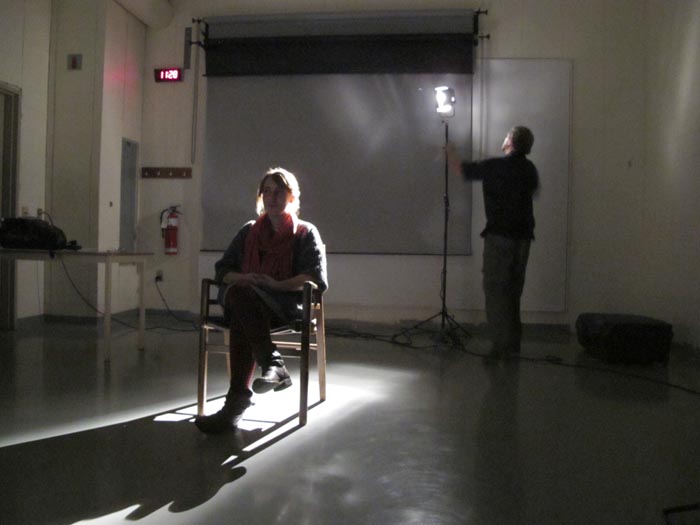
  • Lighting. This is one of those things that you never notice until it’s done wrong. Bad lighting can ruin a shot and screams “amateur” to anyone who watches it. Keep your budget low by sticking with simple lighting choices if you must, but don’t scrimp on the necessary equipment.

Lighting filmmaking

  • Quality talent. Your actors are the thing that the audience will be paying the most attention to, and it’s worth the investment to find good ones. An excellent performance will often redeem an otherwise mediocre film, which gives you some leeway in case other things don’t go as planned.

MFA filmmaking

Bear in mind that you don’t necessarily need high-cost professional actors to get a good performance – newly-graduated students fresh out of acting school are a great source for exceptional yet affordable talent, as long as you don’t mind the extra time it takes to separate the wheat from the chaff.

In addition, one of your greatest skills as a director needs to be coaxing a performance out of your actors. In fact, this may be the single most important thing you can do for your film. Take some time to study live theatre and see how stage directors and actors interact; take cues from this to help you get the most out of your own cast’s performance. In the long run, becoming an “actor’s director” will help you make better movies – and earn you a positive reputation among actors who will be eager to help you on your next project.

Five Common Game Design Mistakes to Avoid

It isn’t difficult to find articles providing tips for creating a fun game. You will see  advice like be creative, prototype new ideas, and have someone playtest your game. These are all valuable tips, of course.

A common piece of wisdom that is usually given, however,  is “get ready to make plenty of mistakes.”  As a game developer you’ll certainly find yourself making poor design choices you swore you never would. But some you can avoid. To help make this inevitable step easier, here’s a list of five mistakes many developers agree only hurt the quality of the experience.

1. NPCs That Don’t Repeat Important Information

We’ve all been there: an NPC (non-player character) told you where to find an item or your next objective. However, after exploring the area for a while or doing a different quest, you forgot that vital piece of info. So you go back to that NPC and instead of repeating the location of the item or objective, they talk about their cat or offer some other useless dialogue. No matter how many times you talk to that NPC, they fail to give you the information you need.

If you’re designing a game where NPCs are used to convey important information to the player, you should definitely have them repeat it since most gamers don’t take notes or screen cap while they play. The only time that you can get away with this is if your game also has a screen that serves as a diary or record of events so the player can see where to go next anytime they want.

The less frustrating you make it for players to receive vital quest or objective information, the more likely they are to enjoy your game.

[Tweet “Getting vital information to meet objectives in a #videogame shouldn’t be frustrating. #gamedesign”]

2. Quick Time Events That Feel Unnecessary

Anyone who has played either Resident Evil 5 or 6 may have an easier time understanding what we mean here. These two games, along with many others we could name, suffer from overusing Quick Time Events to the point where player can expect to mash buttons almost every time a cinematic occurs.

Although these gameplay methods can keep the player engaged and serve to maintain a level of immersion, they can also be annoying when overdone.

The fact is, many players actually do enjoy watching a cutscene once in a while as they often feel like a reward for completing a section of the game, especially if it helps progress the narrative or is simply entertaining to watch. But when done improperly, instead of enjoying the moment players are anxiously waiting for the moment where they must tap a button or else die and be forced to watch the cutscene again.

If you ever find yourself designing a game with cutscenes and Quick Time Events, do your best to make sure they feel necessary and actually add the the experience rather than feeling tacked on.

[Tweet “If you use cutscenes and Quick Time Events, make sure they are necessary and add to the experience.”]

3. Unfair or Unfun Character Classes

This design error has occurred less and less often as the RPG genre has evolved over the years, but sometimes it still rears its ugly head.

We’re talking about a class or character type that when compared to the others you can choose, makes the game so difficult that it becomes unfun. The worst part is that this doesn’t become apparent until halfway or late in the game, which means the player spent all that time progressing only to hit what feels like a brick wall.

This often happens with the standard support classes like a healer or character that is mainly used to buff other classes. When playing with others, the class is spectacular as it significantly improves the abilities of others and increases the chances of victory. But when played alone, they get killed easily or have no way of defeating a boss unless you grind – which is something you wouldn’t have to do with any other class.

A good designer will make sure that every single one of their game’s classes can get through the single-player storyline.

[Tweet “A good designer ensures all of the game’s classes can get through a single-player storyline.”]

4. Text That Gets Cut Off Too Fast

It’s safe to assume that very few gamers enjoy having text disappear from the screen before they’re done reading it, especially if it’s something important and/or related to the main story. Whether it’s an unnecessary but interesting piece of lore or your next quest objective, avoid having text with a short time limit – preferably, no time limit.

For example, certain games like Dark Souls have a loading screen that displays interesting text for players to read while they wait. The mistake is when the screen immediately cuts out when the game is done loading, whether the player is finished or not.

If you’re going to have long pieces of text, give the player a button to press that lets the game know they’re done with that loading screen, especially if the text is several sentences long and impossible to read in a few seconds.

[Tweet “When using long text in a #videogame, let the user signal when they are finished reading.”]

5. Input-Disrupting Elements

This one is tricky because it’s seen in popular games like The Legend of Zelda series. However, most gamers would agree that having your controller inputs messed with results in a frustrating experience that only serves as a cheap way to increase difficulty.

For example, in The Legend of Zelda: The Wind Waker there are enemies that temporarily reverse your controls – whichever way you direct Link to move, he moves in the opposite direction. Although these gameplay elements can add an interesting challenge, usually it just feels disruptive and annoying. What’s worse, designers enjoy putting these kinds of enemies near other hazards that you’ll probably find yourself running into when your controls are suddenly changed.

Does messing with a player’s input make a game terrible? Probably not, but you’d be better off avoiding such a cheap way of adding challenge that may ruin immersion and only cause annoyance.

[su_note]Learn how to create video games that players will love and enjoy. Get more information about the game design school at the New York Film Academy. [/su_note]

Why Microtransactions And DLC Are Here To Stay

Chances are you’ve come across someone that absolutely despises the idea of microtransactions in a game. To them it’s merely a greedy and absurd way for developers to squeeze cash out of their players by taunting them with elements that should be available to everyone.

No matter how good or bad the game is when it comes to implementing a cash shop or DLC, microtransactions are a step in the wrong direction and a disease – for them, at least.

The truth is, game monetization has become one of the most polarized discussions in games. For every person you find that say microtransactions negatively impact the quality of a game, you can just as easily find another that desn’t mind a good title that happens to have pay-only content.

Thus, it’s interesting to see how this business model has not only become dominant on several platforms but also shows no signs of disappearing.

The Initial Success

When it comes to social network and mobile phone games, there’s no denying that monetized games run the show. We’re confident that every Facebook user in the world has received an invite to Candy Crush Saga, a game that offers in-app purchases where players can buy more lives.

Despite forcing players to either wait for more lives or pay to get them instantly, King’s match-3 puzzle game is one of the most popular games online with over ten million downloads so far.

Supercell’s Clash of Clans, which is available on iOS platforms and Google Play, uses a freemium model where people can download and play the game for free without ever having to pay anything. This strategy game has a cash shop that lets you buy Gems to spend on various perks that you otherwise only get by waiting for a time limit to expire.

Because it was well-designed and doesn’t offer a significant advantage or disadvantage between those that buy and those that don’t, Clash of Clans generates one of the highest revenues on Google Play and the App Store.

Influence On Other Platforms

It was only a matter of time before this business model would jump to consoles and PC games. To the surprise of many, it has proven to be quite successful when implemented correctly, as games like League of Legends have proven.

One of the most popular games in the world right now, League of Legends can be enjoyed without ever paying a cent – and yet, it continues making Riot Games incredible amounts of cash by offering content you can also obtain by paying.

In fact, many games climbed out of a downhill situation by ditching subscription fees and going free-to-play but with microtransactions. For example, The Lord of the Rings Online saw a decline in their subscribers and thus went free-to-play with cash shop options, resulting in a tripling of profits.

This microtransaction model has served to keep many games alive in a time when a good number of titles would have met their demise had they not switched.

The DLC Issue

If you really want to fan the flames when discussing the idea of ‘pay-to-play’ content, you can’t go wrong with bringing up DLC.

The idea of paying for new maps or a new story campaign when you’ve already paid $60 for the title is enough to make players lose it, especially when they find out that some of that content is locked away on the disc they already own.

But despite all the angry comments flooding most gaming sites, DLC has become the norm simply because enough people are actually buying it. No matter how much hate publishers get for making us pay for new content, even if it’s there on the game’s release date, they’ll still keep making it available if enough gamers buy DLC.

Developers and publishers are convinced by our wallets much more than our words, it seems.

Here To Stay

So whether you’re a fan of season passes and microtransactions or you think they’re a plague on the industry, count on more games using this business model in the following years.

Even though older gamers long for the days when paying the $50 or $60 price tag meant you got everything the game had to offer, it’s ignorant to disregard pay-to-play and freemium games entirely when there are plenty of great ones.

Fortunately developers are getting better at finding that sweet spot of offering a monetized game that can be enjoyed whether you buy extra content or not.

For the gamer that’s busy and prefers the option of purchasing content they would otherwise never see due to lack of playing time, games like Clash of Clans are perfect. No one is forcing anyone to buy DLC or map packs, so if you really feel strongly against this business model, the best you can do is not buy it.

[su_note]Want to influence the next big trend in gaming? Learn more about the game design school at the New York Film Academy (campuses in New York and Los Angeles). [/su_note]

The Best Cinematography: A Look At Slumdog Millionaire

Slumdog Millionaire was an expected David that became an unstoppable Goliath during the 2009 Academy Awards, picking up several Oscars, including Best Picture and Best Cinematography. Accepting the Best Cinematography award was the film’s director of photography, Anthony Dod Mantle. Mantle has worked with Slumdog director Danny Boyle before and since his win, has shot 28 Days Later, Millions, 127 Hours, and Trance. He’s also a frequent collaborator with Lars Von Trier, having DPed on Dogville, Manderlay, and Antichrist. Some of his recent work has been the nuts-and-bolts sci-fi flick Dredd and Ron Howard’s adrenaline-fueled biopic Rush.

Composite image from Slumdog Millionaire

Slumdog’s win in the Cinematography category was seen as a big win for digital filmmaking, as large portions of the film were shot digitally. However, a lot of the movie was shot traditionally in 35mm. Part of the reason the film mixed formats was Danny Boyle’s eccentric style—he is a visually inventive director who likes to push against the boundaries of traditional filmmaking. He and Mantle were also not new to digital—28 Days Later was shot in the lower-quality MiniDV.

However, there was a more tangible logic to the decision, especially concerning the scenes set in the Mumbai slums. Shooting on location in the cramped, crowded real-life slums was important to Boyle, who wanted to faithfully capture the mood and place of the community. Feeling that large, Hollywood-sized 35mm camera rigs would draw unwanted attention and disrupt the natural routines of the neighborhood, Boyle tasked Mantle with finding a suitably low-key digital camera setup.

Quickly realizing MiniDV was an inadequate format for naturally lit on-location shoots, Mantle eventually settled on using the Silicon Imaging SI-2K Digital Camera. The camera had 11 stops of range, allowing for a broad latitude of highlights and shadows while still remaining small and compact enough for Mantle to bring into the slums. The camera was an advanced novelty at the time, recording uncompressed raw footage to a nearby laptop in 2K quality as opposed to capturing specifically formatted images.

Children running through the alley in Sumdog Millionaire

Once they selected the SI-2K, the crew got to work customizing it for Slumdog’s shoot. The camera’s body—its processing hardware—was replaced by laptops that could be worn in discreet backpacks, greatly increasing the mobility of the lens itself. The crew also attached a gyro to the lens, allowing Mantle to move the camera in all sorts of directions at quick speeds without jarring the image, creating a look somewhere between handheld and Steadicam. Mantle operated the camera this way himself, which many cinematographers opt not to do, and has been praised for his ingenuity and skill with the unique rig.

Before shooting, the new camera system was tested in hot saunas to replicate the Indian climate. They quickly realized the heat and humidity were very dangerous to the expensive equipment and forced the crew to pack the camera’s laptops with forty-five pounds of dry ice being continuously replenished each day. All of this extra effort was well worth it, and Mantle achieved the emotionally intimate look at the Mumbai shantytowns that Boyle had hoped for.

The SI-2K was primarily intended for these difficult scenes—Boyle planned to use 3-perf Super 35mm for the majority of the shoot. However, the director was so impressed with Mantle’s skill and the look of the digital camera that it was used for more and more of the shoot. The cheaper, easier medium also allowed Boyle to experiment and get more footage than the budget could have afforded had they kept to 35mm.

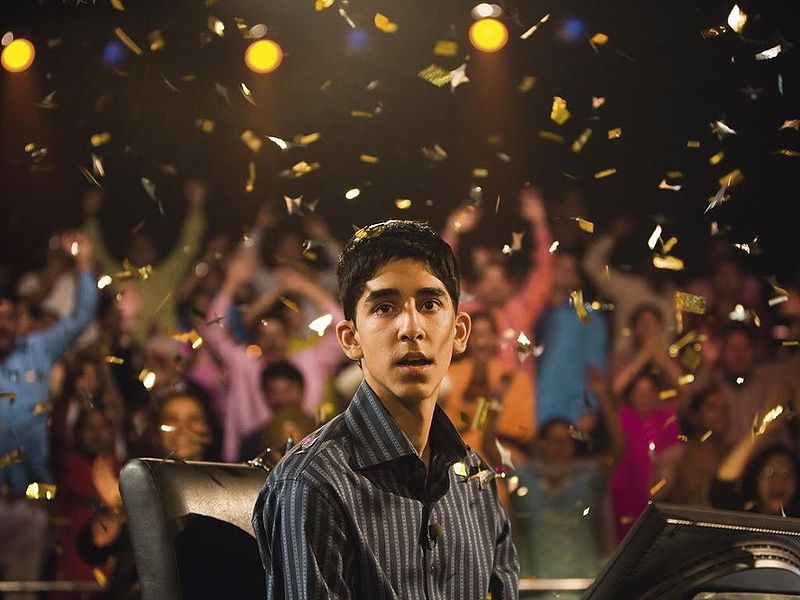
Dev Patel in Slumdog Millionaire

Other cinematographic techniques used in the film include the replication of India’s game show, Who Wants to Be a Millionaire? The TV phenomenon has a look all of its own, with lighting and camerawork unfamiliar to most film styles. The game show was the narrative centerpiece of the film, so combining the looks was essential for the crew.

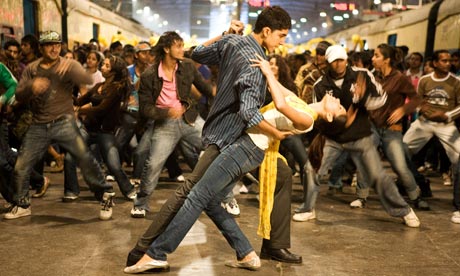
Slumdog Millionaire also concludes with a Bollywood-style dance number at the very end of the film. While the rest of the movie is much more resembling a typical Danny Boyle, Western-style production, the filmmakers felt a Bollywood number would fit and was somewhat expected in such a thoroughly Indian story. Its energetic direction and upbeat style matched the tone of the film’s happy ending, and the sequence feels surprisingly part of a whole and not a jarring post-credits gimmick.

The movie used five different film stocks in total, combining them in a way that was both seamless and diverse. The brightly enhanced colors and dynamic use of shadows and range created a distinctive look for the film that also enhanced the emotions of the young characters, tying Slumdog’s cinematography in with its storytelling. Its cohesive mastery of these filmmaking techniques makes it no surprise the film won both Best Cinematography and Best Picture.

Dev Patel and Freida Pinto dance in Slumdog Millionaire