The Drawing Renaissance: Digital Illustration vs. Hand-Drawn

The resurgence in drawing in recent years is a refreshing step away from the deluge of conceptual art pieces of the 1990’s. Not that there hasn’t ever been a time when drawing was not essential to the production of art, but it seems that there are more exhibitions devoted entirely to hand-drawn art now than at any other point in the last 50 years.

To boot, there has also been an increased interest in the study of illustration, with professional illustration schools coming into prominence in recent years… and it’s easy to see why.

Drawing is instantly accessible. There is not one person who has not drawn something at least once in their lives. Drawing can be used in all manner of settings, from detailed anatomical drawings from the field of biology and architectural drafts to illustration, tattoos and comics with a subversive undercurrent. From the simple process of mark-making to more complex abstract techniques there is a wealth of artists producing fantastically emotive pieces which are bringing the art of draftsmanship right into the forefront of 21st century art.

The Versatility of the Medium

artbike1Illustration is notably versatile, with an amazing variety of different mark making processes which are bringing a new breath of life into this traditional art form. The mediums used can be as diverse as the artists. Thinking beyond pens and paper, anything can be used in the creation of great illustration, from using rocks and bones as a canvas to Joseph L. Griffiths amazing bicycle drawing machine.

Part of the reason so many artists are returning to illustration as a medium for creative expression is the fact that it is relatively inexpensive to produce and does not typically require investment into a huge studio. This makes drawing the perfect medium for today’s troubled economic times, especially for young artists who are struggling in a climate that would never have supported the likes of a young Damian Hirst or Rachel Whiteread in the early years of their careers.

The Roots of the Movement

While the resurgence in the art of drawing may seem like the antithesis of the great conceptual pieces of the end of the last century, the roots of the movement started at the same time.

For example, in LA in the 1990s the drawings of Ray Pettibon were being distributed through the growing e-zine movement, as well as being exhibited in various locations around Los Angeles and New York.
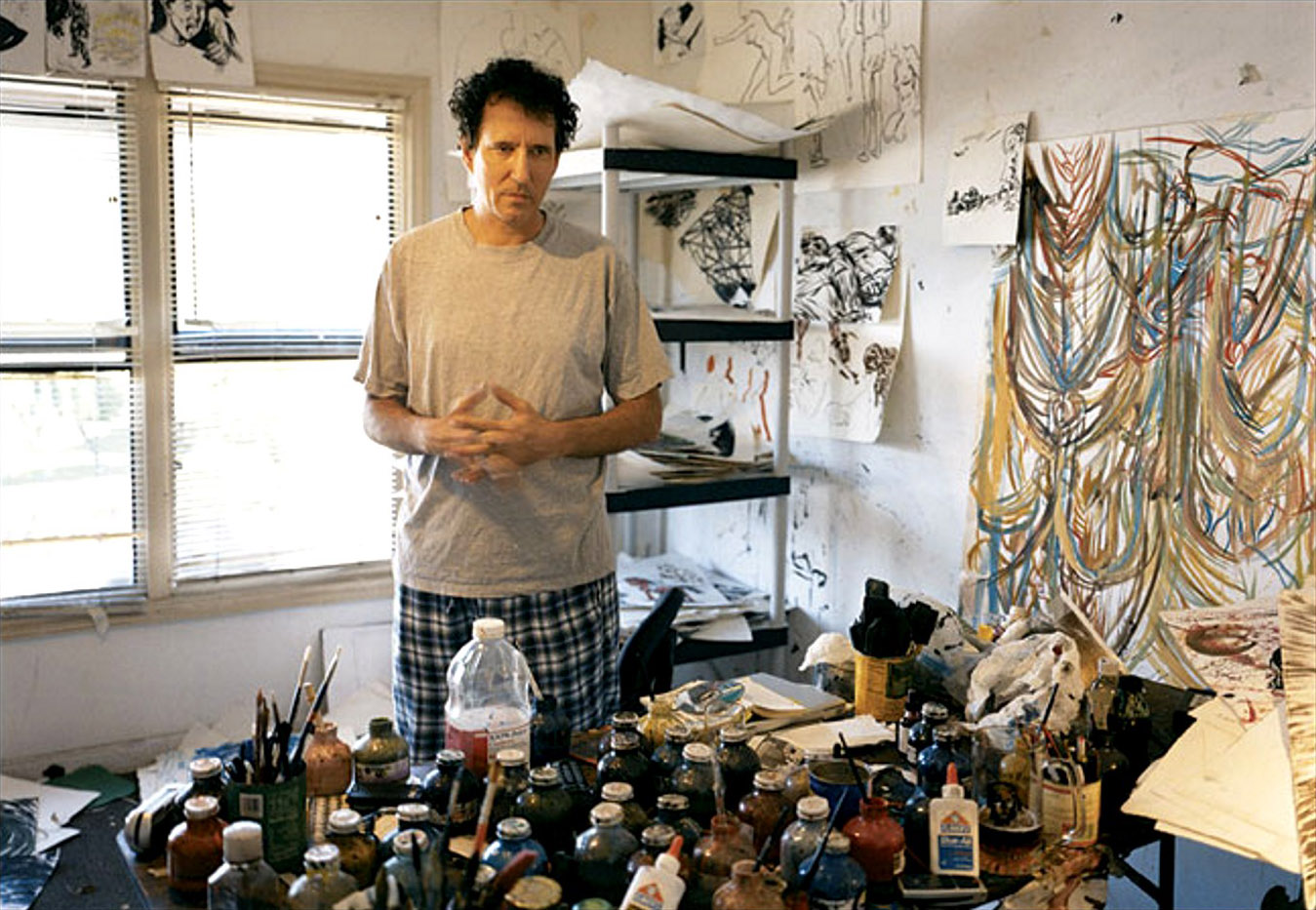
Raymond Pettibon

While he was one of the most well known artists of this period, there were plenty of others who were already moving towards this simpler and more accessible aesthetic.

Known as ‘Low-Brow’ or ‘Pop-Surrealism’, there were clusters of artists across the scene who were re-visiting the techniques of the 60s with hand drawn lettering and detailed pattern making. These techniques have unquestionably become a driving part of the revival of the folk art movement and the increased appeal of the hand drawn image. At the same time there were many more fine artists working with embroidery or beading to create work which is beautifully individual and unique.

It seems that the greater hold the digital age has on our collective consciousness, the more people crave the craftsmanship that goes into making a truly unique, one off piece.

Illustration to Make Sense of a Turbulent World

Although the art of drawing has always been an integral part of creating pieces in all different mediums, the idea that a hand-drawn illustration can indeed be a finished piece of work is something to be embraced. There are some truly innovative approaches happening in contemporary drawing which see the conventional being turned on its head as the art world reawakens its sense to the immediacy and purity of the mark-making process.

contemporary illustration
3D Animal mural by Fiona Tang

In an age where digitally-produced art seems all-consumng, today’s renewed interest in this most fundamental of artistic techniques is a sign of the times as society enters one of the most challenging periods it has seen for centuries. The immediacy and creativity of the process allows the concepts of social and political turmoil to be addressed in the most simplistic of lines and forms.

Adobe Illustrator and Photoshop have changed the industry landscape forever – generally for the best – but hand-drawn illustrations can be created anywhere, with anything the artist has to hand which makes it one of the purest forms of expression in an increasingly turbulent world.
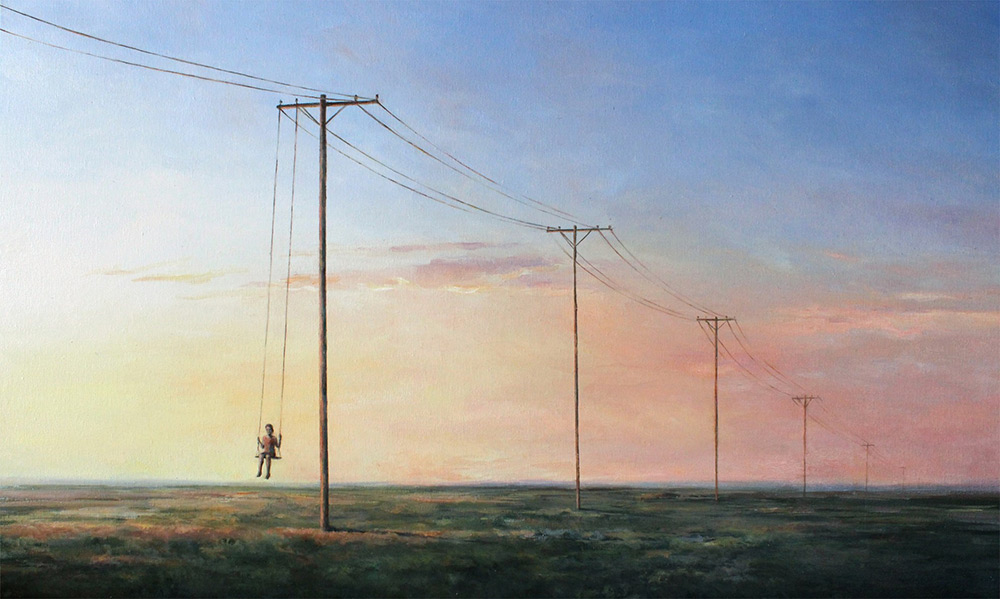
Illustration by Pejac

Whatever the medium for the process of mark-making (and whatever the digital die-hards might proclaim), the art of contemporary illustration is still integral to the creative interpretation of the 21st century.

Six of the Best Fantasy Photographers

Photoshop opens the doors to so many different creative opportunities. If you can imagine it, you can create it (with the right skill set). Combine your skills in Photoshop with a fantastic makeup artist and costume designer and voila! You have yourself a stunning fantasy image that wouldn’t have been able to exist before the digital age.

While some photographers who dabble in fantasy work create bright, happy images, others go for a darker, more nightmarish look. In fantasy, as in reality, there is both light and dark. Regardless of how the images make viewers feel, it can be hard to deny the fact that all featured fantasy photographers here have an incredible skill set under their belt.

Annie Leibovitz

Annie Leibovitz

Perhaps the most well-known name in contemporary photography, Annie Leibovitz is not known only as a fantasy photographer. However, her uncanny ability to take a model, idea, and location and turn it into something completely different makes her an incredibly talented photographer. She has a series of images titled Disney Dream Portraits, in which she turns well-known celebrities into well-known Disney characters. Russell Brand becomes Captain Hook, Taylor Swift becomes Rapunzel, and Queen Latifah becomes Ursula – among many others. Her use of light and color along with her post-processing techniques work together to create beautiful fantasy images, each with its own mood and story.

Susan Schroder

Susan Schroder

Susan Shroder – while less well-known – is unique in the sense that she often combines illustration and photography into one final work of art. She has a passion for both, and soon realized that if she was creating fantasy work, it was helpful to combine the two. She often uses real models in addition to costumes and makeup that help create the “fantasy” feeling. In post-processing, she’ll often paint on other elements, such as the wings of the young lady in the photograph above.

Stanislav Istratov

Stanislav Istratov

Stanislav Istratov approaches fantasy photography with a more high-fashion approach. While other photographers create the illusion of fantasy through magical landscapes and costumes, Istratov almost completely relies on his use of makeup and accessories. In one photograph, Cleopatra comes to life. In another, a girl looks as though she is turning into a strawberry. And in yet another, it looks as though flowers are growing right out of a girl’s body.

Margarita Kareva

Margarita Kareva

Margarita Kareva, a Russian photographer, is most well-known for her fantasy photographs which portray women as magical creatures. She achieves this fantasy style through the use of both real-life costumes, makeup, and props, combined with post-processing in Adobe Photoshop. By altering the contrast, white balance and lighting, Kareva can instantly turn a normal photograph into a magical one. In one photograph, a lady stands among a bunch of flamingos; in another, a woman stands among a pack of wolves; and in yet another, many butterflies begin to fly off of a woman’s head.

Kirsty Mitchell

Kirsty Mitchell

Kirsty Mitchell wasn’t a photographer throughout her entire life, but she picked up photography as a means of escape from real life when her mother passed away from brain cancer. Since real life was too distressing to deal with, she created alternate worlds and realities with her photography. Because of this, her photographs all have a mystical, fantasy feel to them. Her series of photographs is titled Wonderland, and each photograph is stunningly beautiful. Each photograph tends to stick to one certain color scheme – a White Queen in a monochromatic image, a lady in a violet dress laying in a field of violet colored flowers, and a woman standing amongst yellow-green lilies in a yellow dress. Each photograph has its own mood and story to it, yet they all tie together perfectly.

Sarah Ann Loreth

Sarah Ann Loreth

On Sarah Ann Loreth’s website, she states that she “does not take photographs; she creates them from scenes she pulls from deep within herself”. Each of her images is carefully constructed so that each element fits together perfectly to tell a story.

How do you feel about fantasy photography? Would you prefer to create an alternate reality throughout your photographs, or do you prefer to shoot scenes as they truly are? And how do you feel about excessive photo manipulation? While Adobe Photoshop opens up many doors that were not previously available, it also opens the door to heavily manipulated photographs – which some photographers believe isn’t “true” photography. Regardless of your stance on the matter, it does take some true talent to create these magical photographs.

How To Guide: Photographing Silhouettes

Photo by Bryce Bradford

Silhouettes can either be especially captivating or especially dull. When done right, they can tell a beautiful story with an air of mystery. And when done wrong, what could have been a beautiful silhouette turns into a questionable big black mass. While many photographers have created many beautiful images of silhouettes, others are unsure of where to start. The best kinds of silhouettes are simple and tell a story. By keeping these two pointers in mind when choosing your subjects, you’ll soon be creating beautiful silhouettes of your own!

Location

Your location is just as important as your subject. In order to create a silhouette, there needs to be separation between foreground (your subject), and background (your location). The background needs to provide a source of light, and you’re going to need to be shooting into that light. The source of light could be as simple as the sun. Remember: the sun doesn’t necessarily have to be in the composition. The most important thing to remember is that the background needs to be brighter than your subject.

Position

Photo by Flickr member spodzone

Simply placing your subject in front of a bright background won’t give you a good silhouette. You need to think about the way in which your subject is standing, sitting, or moving. The key point of a silhouette is that it lacks any defining features, other than a simple outline of the subject. Because of this, it’s important that viewers can tell what the subject is without needing to see detail or color.

Think about it this way: if you were to photograph a couple hugging, heads and bodies pressed up against each other, the resulting image would be one big black mass without any defining shapes. When positioning couples, it’s important that there are some spaces between the heads, arms, torsos, and legs, so that you can see the shape of each individual person.

Lighting

Sunset and sunrise are the two most popular times to shoot silhouettes. The beautiful colors in the sky add excitement to a dark silhouette, and having the sun so close to the horizon makes it simpler to create silhouettes. If you try to shoot this type of image in the middle of a bright, sunny day, you’ll likely pick up on too many defining features of your subject.

Exposing Your Image

Photo by Giampiero Ridella

In order to expose a silhouetted image, you’ll need to expose for the background, not your subject. Because your background will be lighter than your subject, it will underexpose your subject – turning them into a silhouette. The actual exposure settings will vary widely depending on your lighting and location, so you’ll need to use a light meter to determine the correct aperture and shutter speed. As always, you should use a low ISO (around 100 or 200) to reduce the amount of noise in your final photograph.

If you can adjust the type of metering your camera uses to determine the correct exposure, spot metering will be the easiest. This way, you can make sure that your camera is determining the best exposure for the background and not any other part of your image.

Even though you’ll be exposing for the background, you’ll want to make sure that you focus on your subject. Once you have your subject in focus, turn your focus ring to manual!

Photographing Silhouettes Outdoors

Photo by Bill Gracey

Most silhouette photographs are taken outdoors, since the world provides beautiful colors which are a great contrast to the deep blacks of silhouettes.

When photographing outside, be aware of your white balance. While ‘auto’ will usually work in most situations, you can adjust your white balance to get different tones in your photographs. If you shoot on ‘tungsten’ white balance, your photographs will have cooler tones. If you shoot on ‘shadow’ white balance, your photographs will have warmer tones.

What if parts of your subjects are blending into the background? No worries! By setting up an off-camera flash behind your subject, you can bring back parts of your subject that would be lost otherwise. Just make sure that the flash is pointing directly at the camera, otherwise it won’t be effective.

Photographing Silhouettes Indoors

Photo by Flickr member GabPRR

If the weather isn’t working out for an outdoor silhouette, have no fear. By placing a subject right in front of a window, the window provides the perfect back-lighting for a still life or portrait. Doorways with a bright light in the background can also work. Even though you’re indoors, you’ll continue to exposure for the background rather than the subject.

Studio Silhouettes

Photo by Aurelian Glabas

All you need are a couple of different studio lights and a subject to create silhouettes in a studio setting! Think about what you want your background to look like. By using two different light sources pointed directly at a large white backdrop (one from either side), you can create a clean white background. If you only use one light source pointed at the wall, the background will end up being more of a gradient.

Alternately, a large soft box itself can be a wonderful background for a smaller subject.

Photo by Bill Gracey

If you’re photographing people, keep these tips in mind:

  • Profiles tend to be more dynamic than photographing your subject from the front.
  • Your subject should be wearing dark, fitted clothing.
  • Provide context or create a story by adding props.
  • If your silhouettes have too much detail, no worries! Bump up the blacks in post-processing to get rid of any telltale signs.

When walking around outdoors, start to consider the shape of everything you see. Think about what shapes work well together, what shapes don’t, and what subjects tend to create the most dynamic compositions. Before too long, you’ll be taking professional, captivating silhouette images yourself!

[su_note]Learn more about photographing silhouettes and other advanced photographic techniques by signing up to one of the New York Film Academy’s photography workshops today.[/su_note]

Three Game Developers That Impressed in 2014

It’s impossible to be a gamer and not get excited about 2015, a year that’s setting itself up to be one of the biggest software-wise in a long time.

Developers are hard at work finishing up games like Batman: Arkham Knight, Uncharted 4, the next Legend of Zelda, and other highly anticipated 2015 titles that are sure to make next year’s Game of the Year decision a tough one to make.

But before 2014 draws to a close, let’s take a look at three game developers that deserve praise for more than meeting expectations, overcoming the negative effects of hype, and earning the trust of their community. Sometimes there’s more to being a good developer than creating the best-selling game of the year.

[su_note]Learn what it takes to be a great game designer. Learn more about New York Film Academy’s Game Design School. [/su_note]

Sora Ltd.

When you’re tasked with making yet another entry in perhaps the most acclaimed fighting games of the last two decades, the last thing you’d think about doing is making two versions. Unless you’re Masahiro Sakurai, of course, who led a large team of proven game developers to create both a 3DS and Wii U version that both have sold in the millions.

In short, it takes a very good developer to create two versions of a game that both serve as near-perfect examples of what it takes to make a fun game. Super Smash Bros. for 3Ds and Wii U have improved upon their predecessors in almost every way, resulting in a game that’s polished, detailed, and insanely fun.

Whether it was their decision or Nintendo’s, it’s also worth mentioning that Sora’s Wii U title is the first game to make use of the Amiibo figures. Had the Amiibo implementation felt too gimmicky or unsatisfying, perhaps Nintendo would be sweating at the thought of their latest idea being poorly received.

Amiibo figures have instead become a massive hit. And thanks to Sora, Nintendo is seeing profits for the first time in several years.

Bungie

For 13 years Bungie has been at the helm of the Halo franchise, arguably one of the most successful and influential series of games ever released. With each Halo game, Bungie showed they knew what it takes to create a first-person shooter that delivers both captivating storytelling and a competitive multiplayer that keeps players hooked long after release.

However, 2014 would be the year where we all found out if Bungie is capable of producing a good game outside of the Halo universe. Destiny proved to be so anticipated and backed by such incredible hype that, despite being a good game, many reviewers felt disappointed by what they played and released less-than-stellar reviews.

Instead of buckling from all the hype and plummeting Metacritic score, Activision continued their massive ad campaign while also giving players an early trial of the game to develop their own opinions. And despite the mediocre reviews, Destiny ended up being one of the most successful new gaming franchise launches of all time and now has nearly 10 million registered players.

Instead of buckling under the pressures of review scores and journalist opinions, Bungie went full steam at launch and saw that “expert reviewer” opinions still fail to represent gamers.

Facepunch Studios

Known mostly for their highly successful 2004 sandbox game Garry’s Mod, which has sold more than 6 million copies, the British developer released another hit at the end of 2013 by the name of Rust. However, Facepunch isn’t on this list for Rust’s 2 million sold copies, but rather for their open approach to game development when it comes to their community.

A few months after Rust became one of the most popular games on Steam, Facebunch admitted to their players that the code base for the launch version was unsatisfactory. Thus, they had to extend the development time of the alpha version many had already paid for. Because of this, they would need to stop updating that version of the game and start working on a completely new version.

But instead of being met with an angry community of players that had spent money to play the Early Access game, most understood the situation and anxiously awaited the new version. By being open and honest about a development issue they couldn’t get around, Facepunch was able to keep the trust of their players and find success when the new Rust hit.

When you look at developers like Ubisoft and EA receiving such tremendous backlash from fans that purchased their unpolished games, one can’t help but wonder how much more reasonable gamers would be if they were more open with their community.

If more developers were like Facepunch and actually made an attempt to be honest with their gamers, perhaps the industry would see more excellent games being released.

These Three Quotes May Change The Way You Look At Game Design

Whether you’re new to game development or a veteran with plenty of years already under your belt, it never hurts to hear what other designers have to say.

Of course, if you’re going to take advice from other game developers, you can’t go wrong with listening to the ones that have actually created games that appeal to a large audience.

The following are three golden nuggets we’ve dug up that every aspiring game developer should check out at least once in their career.

Quotes may not help you suddenly come up with the next Minecraft, but they could certainly be the small bit of inspiration or wisdom you’ve been looking for while struggling with your latest design.

Be A Designer That Stands Up For Creativity

This is the entertainment industry, so game designers have to have a creative mind and also have to be able to stand up against the marketing people at their company – otherwise they cannot be creative. There are not that many people who fit that description.” – Shigeru Miyamoto

If there’s one developer that can offer a treasure trove of game design wisdom, it’s the creator of some of the most successful and iconic game series in the industry. Suffice to say, video games would not be the same today if a certain Japanese man had not been hired by Nintendo nearly four decades ago.

At first it seems he’s stating the obvious in the above quote– “game designers have to have a creative mind.” But he then goes on to urge designers to confront marketing people, essentially anyone not involved in the game development process, by not giving up on their ideas so easily.

It’s nice to know that even Miyamoto-san is growing tired of big-budget titles releasing on a yearly basis, often delivering near-identical gameplay as last year’s edition and with plenty of bugs to boot. Only until game designers have more control over their own projects will we see a surge of creativity in the triple-A market like we’ve come to know from the indie scene.

Be A Designer That Finds Innovative Solutions

“90% of what is considered “impossible” is, in fact, possible. The other 10% will become possible with the passage of time & technology.” – Hideo Kojima

Hideo Kojima ended one of his Game Developer’s Conference keynote presentations with this quote, stressing how important it is for game developers to think outside the box when confronted with a problem. Any time you play a game that feels derivative or shows promise but doesn’t live up to its true potential, it was probably the result of someone taking the easy route when facing a tough design decision.

He went on to emphasize this idea but using the metaphor of a wall that people get stuck behind because it’s too tall to climb over. A good game designer learns how to look at a problem from different perspectives so they can navigate around the wall in a new, uncommon way.

Due to the hardware limitations brought by the NES/Famicom, Kojima’s own MSX 2 (known in the US as Metal Gear) ended up serving as the start of the stealth game genre simply because he tried various methods to solve certain challenges.

If other game designers can make innovative experiences despite running into problems and limitations, why shouldn’t you?

Be A Designer That Makes Players Think

A game is a series of interesting choices.” – Sid Meier

One of Sid Meier’s favorite expressions is only eight words long and yet serves as one of the most important pieces of knowledge when it comes to making good games. And as the creator of many popular strategy and simulation games, including Civilization, Meier knows a thing or two about designing a good game.

As a designer, your ultimate goal is to create an experience that both entertains the player and fills them with joy for most, if not all, the time spent played.

By constantly giving the player meaningful choices to consider, you keep them engaged and feeling like they’re actually affecting the virtual world they’re currently venturing in.

The same holds true for any game genre and not just strategy or simulation. Whether you’re talking about a big-budget FPS title like Destiny or an indie puzzle game like Monument Valley, designers should strive to give players a set of choices from which they can choose the best one.

If you end of making a game that people call boring, perhaps there isn’t a consistent set of interesting choices being presented to keep them hooked.

Q&A With Solmaz Sharif, UN Correspondent at Voice Of America Persian

Solmaz Sharif

NYFA: Can you tell us a bit about yourself, your background, and what first got you interested in broadcast journalism?

Solmaz SharifWell, this is my bio on LinkedIn: “I am a veteran journalist, digital storyteller and multimedia web producer for both desktop and mobile platforms with 15 years of international reporting experience in Iran and New York. I speak and tweet in six languages. As a journalist, I bring a deep and comprehensive understanding of the political, economic and cultural issues across the Middle East, which has been the focus of my work in the last seven years for digital media organizations in New York. I have worked and I have been published in Persian, American, and Turkish media. I am passionate about women’s issues and I am the founder of the first Iranian women sports magazine, Shirzanan, now being developed as Shirzanan Global to represent all Muslim females in sport.”

Besides that, I started in journalism because I saw an under-reported area and contacted the editor of the news organization to ask him why. He said he is interested in the story but doesn’t have anyone who would work on it. I offered to help and he accepted. Simultaneously, I started studying and learning professionally about journalism.

NYFA: You were already a reporter in the Iranian media prior to attending the New York Film Academy’s digital journalism program. What made you pursue further education and why did you choose the New York Film Academy?

SF: I had a shift from paper to broadcasting at BBC Persian and I was looking for ways to learn more about it.

NYFA: How would you describe your experience at NYFA and what role did it play in your career?

SF: I enjoyed the class very much. It was intensive and well-packed. I learned so many things from the best teachers during the semester.

NYFA: Is there anything in particular during your course that stuck with you/stood out?

SF: Tips that I learned and people who I met during the class. We had professional guests from the industry.

NYFA: What should students do to get the most out of their journalism programs?

SF: Listen well to professors and guests and also get the most out of having access to the equipment.

NYFA: What major differences (if any) have you found working in the industry in Iran compared to here in the U.S.?

SF: Well, I faced more censorship in Iran that I don’t in the U.S. But American media is less interested in international news.

NYFA: You have worked for some major news sources – including BBC and CNN – did you find any difference in the way that various news sources operate when it comes to journalistic pursuits?

SF: Well, there is a main difference between CNN and BBC that makes all the difference in news operating.

CNN needs people for its basic and fundamental financial necessities. Thus, I believe it’s running after the audience and feeding them what they want, which is opposite of what media should do.

On the other hand, BBC is a government sponsored media that has the freedom of practicing professional journalism. Because they don’t need advertisement as badly as CNN, they add some value and information to the public. They educate and inform them.

NYFA: You have recently started a role as a correspondent at the United Nations. What is the most exciting thing about the job? 

SF: The most exciting thing about this job, for me, is how I can be in the same room as journalists from all around the world and how many languages I hear in the hallways.

NYFA: Was this position a career goal for you? What is your ultimate career goal?

SF: Yes, I always wanted to be the United Nations correspondent. My ultimate career goal is being able to report on under-reported stories for the American audience.

NYFA: Any parting words of advice for aspiring journalists? 

SF: Journalism is changing rapidly and, for peers in the industry, frustratingly. It’s better for aspiring journalists to know why exactly they are pursuing this career and what they are hoping to get out of it. That would give them a clear view of the path ahead, which will help them to reach their goal.

7 Things We Learned in 2014: The Year In Gaming

Another year, another awesome twelve months of gaming! From surprise hits like Broforce to Kickstarter titles like Broken Age, this past year saw yet another growth in indie games.

Heck, we even got the Goat Simulator game we never knew we wanted.

Plenty of anticipated big-budget games finally saw release, including Watch Dogs, Dragon Age: Inquisition, and Dark Souls II. And of course, we finally got to see if either the Xbox One or PlayStation 4 could convince players that being early adopters was completely worth it.

What better way to ring in the new year as a gamer than by looking back on 2014 and seeing what we learned from our ever-evolving industry.

A Console’s First Year Is Typically Its Worst

2013 was the Wii U’s first year on the market and, aside from a few titles like Pikmin 3 and Super Mario 3D World, it was pretty forgettable. However, its second year has proven entirely different with games like DKC: Tropical Freeze, Mario Kart 8, Bayonetta 2, Captain Toad: Treasure Tracker, and Super Smash Bros. finally giving Wii U owners excellent games to play.

It’s now the end of 2014 and for many, Xbox One and PS4 ended up suffering the same fate. The first year has left much to ask for as some of the best games are either remakes or titles you can play on last-gen consoles as well. The Last of Us Remastered, Halo: Master Chief Collection, and GTA V are the top examples.

However, we can expect 2015 to be a tremendous year for gaming with titles like Batman: Arkham Knight, Star Wars: Battlefront, and Evolve arriving- and that’s just 3rd party! We’ll also be getting the 1st party heavy-hitters like Uncharted 4: A Thief’s End and Halo 5: Guardians. Those of you that waited a year before getting the new consoles have little to regret.

Virtual Reality May Be Here To Stay

Although the Oculus wowed everyone in 2013 with the best VR experience we’ve seen since the virtual boy (that was a joke), most thought it would be a fad. Instead, other companies like Sony are taking a stab at virtual reality gaming with their own devices.

Imagine playing Alien: Isolation and listening to haunting noises all around you, or flying through the skies in EVE: Valkyrie as ships and obstacles zoom past you in every direction. The fact is, those that have tried the Oculus Rift and other VR devices can’t stop praising how incredible it feels to feel like you’re actually in the game.

It seems virtual reality is finally being done right and could prove to be the next evolution in gaming.

Who Knew Toy + Game Hybrids Would Be A Hit?

Activision did, apparently.

The Skylanders series has proven an immense hit by selling millions of copies and figures since hitting store shelves. Few could predict how popular the idea of having a toy that interacts with a video game would be, and Activision’s risk was definitely worth it. Disney Infinity is also finding success with their own figurines such as the Marvel superhero toys.

Even Nintendo is jumping into the toy/game craze with their own line of figurines named Amiibo. These have potential to be an even bigger hit as they’re not only based on iconic characters like Mario, Link, Donkey Kong, and Pikachu, but they can also be used for more than one game.

Perhaps it’s only a matter of time before Sony and Microsoft also unleash their own game toys, no doubt to the dismay of parents everywhere.

Games Are Still Being Rushed Out To Market

It’s no secret that today’s big-budget games take years to make and cost a small fortune to develop. Maybe this is why publishers and developers are so anxious to pump out titles every year to make the most out of the legion of fans they’ve acquired over the years.

However, when games are released buggy and clearly lacking polish, players start to lose trust. This has been happening often with AAA games lately, the most notable example of 2014 being Assassin’s Creed: Unity. Instead of being the true next-gen action-adventure experience we’ve been waiting for, it was mostly a glitch-infested mess.

We know developers work hard to deliver great games just in time for the holidays, but gamers are getting tired of paying $60 for seemingly unfinished titles.

We Should Still Expect Multiplayer Issues

Remember when Battlefield 4 released last year only to deliver one of the most broken multiplayer experiences we’ve seen in a newly-launched game? Fans weren’t too happy when instead of receiving a fun multiplayer experience, they got client crashes, extreme server lag, and game breaking bugs.

Here we are a year later reliving the same thing with Halo: The Master Chief Collection on Xbox One. Matchmaking issues on launch prevented most players from enjoying the online modes, which is a huge bummer considering Halo multiplayer is awesome.

We can only hope that less high-profile games suffer online and multiplayer issues on launch, even if it means taking more development time.

Dedicated Gaming Handhelds Are Not Dead Yet…

Many predicted a dire fate for both the 3DS and PS Vita thanks to an incredible rise in smartphone gaming popularity in the last few years. Instead, the 3DS is shaping up to be Nintendo’s most successful handheld in a long time while the often-criticized PS Vita isn’t doing too bad either.

Although most of us enjoy some of the minute-killing games littering the App Store and Android gaming market, there’s still something about playing big-budget games while on the go that we love. And for that you need a handheld designed specifically for gaming, complete with plenty of buttons, thumbsticks, and more than a touch screen.

Those of us who still prefer rich, lengthy experiences while on the go have nothing to fear as gaming handhelds aren’t disappearing anytime soon.

…And Neither Is Nintendo

Remember all the doom and gloom comments and articles littering gaming sites all of 2013? You may be surprised to know that this happens every few years, actually. For whatever reason, Nintendo is a favorite target for would-be fortune tellers that happen to know the Japanese giant is nearing its end as a prominent game hardware developer.

And who could blame them? Despite the 3DS having plenty of success, 2013 was certainly a forgettable year for Nintendo due to poor Wii U sales across the globe. A lack of titles is to blame, as well as failure to gain interest when the next Playstation and Xbox consoles were just around the corner.

In 2014, however, the Wii U became a must-have gaming system. The library of high-quality games is now very impressive, even more due to the fact that several exclusive Wii-U games released this past year received near-perfect scores.

[su_note]Want to be a part of the exciting and ever-evolving video game industry? Learn how at New York Film Academy’s Game Design School (campuses in New York City and Los Angeles). [/su_note]

What’s To Come?

Even with all the ups and downs and controversies, 2014 was a great year for the gaming industry. We’ve seen plenty of new trends and continuing old ones.

So what’s to come in 2015? What do you think? Share your thoughts in the comments below.

Abandoned Places to Photograph in New York City

New York City is known for its skyscrapers, its population, and the general hustle and bustle of everyday life there. When you think of New York City, what do you see? Perhaps you see a couple sitting pleasantly on a bench in Central Park, or a businessman rushing down the street while taking a call. Or perhaps it’s the countless number of young millennials trying to find their place in the world. Whatever comes to mind, it probably isn’t the abandoned subways, homes, and hospitals that are hidden in the depths of the city.

While thousands of people go about their everyday life in New York City not giving one thought to the abandoned buildings that lie not too far away, others live for the thrill of jumping through the broken window of an abandoned hospital to find old x-rays lying on the ground, or crawling through old sewers in search of a long forgotten past. These people – known widely as ‘urban explorers’ – are brave, adventurous, and very often photographers.

There’s a quote known widely around the community of urban explorers: “take only photographs, and leave only footprints”. Many of these explorers long to explore these places purely for the beauty and history that surrounds them. While most of these places are off-limits to the general public, these explorers don’t mind risking arrest if it means they’ll come out of it with a great story and even greater photographs.

While the locations of these places may be widely known throughout the urban explorer community, it can be difficult to find exact locations or directions on how to enter online. Since these people aim to preserve these buildings and locations (rather than have them littered with trash and graffiti), they hold these secrets dear to their hearts. If you do manage to find out how to get to one of these locations, be aware that arrest and physical harm (due to unstable buildings and asbestos) may come to you if you enter. That said, let’s start exploring. 🙂

North Brother Island

Photo by Christopher Payne

An island, you say? Yep, an entire island. And you can see Manhattan from the top of some of its buildings. According to one site, one person found this island while kayaking from New York City to Connecticut. While this may not be the easiest way to find the island, it certainly would add to the adventure. The exact location of this island is in-between Queens and the Bronx, and with a quick search on Google Earth it shouldn’t be too hard to find.

The island initially housed Riverside Hospital, which was used to quarantine smallpox patients. The abandoned island is now filled with old houses and buildings that have been overtaken by nature. Photographer Christopher Payne published a book called North Brother Island: The Last Unknown Place in New York City in which he displays many photographs of the abandoned island.

Ellis Island Hospital Complex

Photo by Christian Carollo

If you’re looking for something a little less risky, a nonprofit called Save Ellis Island has worked to open up the south-side hospital complex (built in 1909) to visitors in a guided tour. The hospital complex has been closed since 1954, and the tours will allow explorers and photographers to wander the halls and view the mortuary, autopsy room, laundry building and more. This 90 minute tour will allow you to explore parts of the abandoned buildings and give you a history lesson on the hospital complex itself.

Renwick Smallpox Hospital

Photo by Tom Kirsch (Opacity.us)

Located on Roosevelt Island near Manhattan, NY, Renwick Smallpox Hospital originally opened in 1856. The hospital began by having 100 beds, and treated approximately 7,000 smallpox patients each year. About 30 years after the hospital opened its doors, an addition was added and it became a training facility for nurses. When what was once called Blackwell Island became Roosevelt Island in 1973, the hospital was closed and abandoned forever.

Now known as one of NYC’s most haunted landmarks, visitors are able to view Renwick Hospital from a distance, but aren’t allowed to wander around inside. Even so, many visitors to the island report supernatural experiences.

Hart Island

Photo by Tom Kirsch (Opacity.us)

On Hart Island, located near the Bronx, NY, a work house for delinquent young men was erected in 1869. Within the following years, buildings used to treat victims of yellow fever, an insane asylum for women, and a large reformatory complex for boys appeared on the island. Life on Hart Island was not easy, and living situations often consisted of a combination of the homeless, people with mental illnesses, boys in the reformatory complex, people with infections illnesses, and druggies.

Now, Hart Island is prison property and New York City’s largest burial ground. It has been estimated that over 900,000 bodies have been buried on the property, many of them anonymous.

Kings Park Psychiatric Center

Photo by Will Ellis
Photo by Will Ellis

Located near Brooklyn, NY, Kings Park Psychiatric Center was built in 1885 and abandoned in 1996. While the majority of the complex was closed in the late 1900s, there are two buildings on the property that are still in use and continue to treat patients.

The psychiatric center was initially created in the farm colony style, where patients would grow crops and raise livestock – a process that was thought to be therapeutic. At the peak of its life, Kings Park Psychiatric Center was home to over 9,000 residents. Now, the buildings lie in disrepair; old hospital beds, books and other remnants still litter the floors.

Dundas Castle

Photo by Will Ellis
Photo by Will Ellis

If you’re itching to get out of the city, Dundas Castle may be the perfect place for you to travel. Located in Roscoe, New York, this beautiful castle looks like it came straight out of a fairytale. What’s odd about this castle is that no one ever really lived in it. It began to be constructed in 1907 by a wealthy New Yorker, and rumor has it that he built it for his wife who suffered from a mental illness. However, he died before construction of the castle was completed, and instead of moving into the castle once it was complete, his wife was admitted to a sanatorium.

The castle is located in a very small town, and the tops of the towers can be seen from some of the roads. The inside is a beautiful mix of arched doorways and pastel colors.

What do you think? Would you explore any of these places? ALL photography degree programs at the New York Film Academy include an exciting one-week photography exploration of an exciting locale.

How to Make a (Good) Kinetic Typography Animation Video

Kinetic typography is a fantastically engaging way of delivering text information in a visual way. It’s a great marketing vehicle for those looking to spread a heavy message without losing their audience, and is equally as good simply for entertaining the viewer – particularly with the advent of YouTube, there have been so many great examples of kinetic typography that it’s become something of an artform.

Rendering text in an appealing manner is a fundamental skill taught at graphic design school, and there are a lot of resources out there to get you started with the animation aspect. But putting technical factors aside, what makes for an aesthetically pleasing kinetic typography animation that stands a chance of going viral?

The Key Ingredients for a Great Kinetic Typography Animation

  • Don’t Go Over Three Minutes. This is a real biggie – no matter how excellent you think your material is shaping up, your audience’s mind will wander around this point (and all those hours you spend putting into the superfluous two minutes will be wasted). Keep it tight and concise, and your viewers will love you for it.
  • Don’t Use A Weak Soundtrack. Another huge mistake that can kill an otherwise good animation is using an audio file with a terrible bitrate, distortion or other issues. Although kinetic typography can be seen as primarily a visual media, it’s very much an aural one, too.
  • Render The Exported Video on the Highest Settings. Again, it’s all about not selling yourself short – why bother spending hours on a crisp-looking typography that would get you accepted into animation school, only to stick it on YouTube in a pixelated 320p resolution?
  • Triple-Check for Typos. This one sounds obvious, but it’s surprising how often we see excellent kinetic typography laden with spelling (and grammatical) errors. It can ruin the experience for an eagle-eyed viewer, and it’s very difficult to go back and correct these, so be sure to triple check for typos.

These four major guidelines should stand you in good stead and get you most of the way there, but next we’ll take a look at some nuanced aspects of kinectic typography when executed brilliantly…

… and dissect some poorer examples, too.

Picking Workable Audio

Having good sound quality is key, but that isn’t the be-all and end-all of an audio track that will look good when animated.

Let’s assume you’re looking to take some movie dialogue and give it the kinetic typography treatment purely for entertainment purposes (a great place to start out).

What you should be looking for is a scene that isn’t too “messy”, with numerous actors talking at once or overlapping, a big soundtrack detracting from the spoken words or abrasive sound effects that will be tricky to represent in animated form.

While there’re no strict laws here, you’ll probably want to start out with just a one or two actors speaking at a fairly even rate (more on pacing in a bit). If the script itself is instantly recognizable and/or iconic, even better – a superb example from Breaking Bad:

Do set aside some time to fiddle with the audio track in the editing suite before you begin animating to get the best out of the finished product; a little time spent tweaking the EQ and lowering any ambient noise that may be in the clip so that the words shine out can pay dividends.

Working in the Third Dimension

Check out this kinetic typography video from Zombieland (a movie which actually employs kinetic typography during the scene itself):

You’ll notice how – particularly towards the end – the animator employed back and forth motion with the type and graphics rather than just scrolling text along the X and Y axes.

One of the great benefits of the medium is that you’ve got an infinite canvas to work with, so do make good use of it in all three dimensions – it’s a lot more engaging to see the ‘camera’ move through the frame, especially since this technique makes it hard to predict which direction the font will start moving in.

The Art of Pacing

In the above two examples, it’s clear that the animators paid a great deal of attention to the pacing of the script; sticking with some words or lines longer than others, and dramatically speeding up or slowing down at points.

How you approach this depends hugely on the audio you’re working with, of course, and more often than not you just have to go with your gut as to what feels ‘right’.

That said, the best way to demonstrate the importace of pacing is perhaps to look at a poor example. This one comes from the movie Inception:

Hit Them With a Surprise

Much like any visual medium, throwing in the odd curveball or twist can be a very effective way of leaving an impression on your audience. This is especially true of kinetic typography, which is, at its heart, simply text moving around a screen.

Check out this delightful animated clip from The Social Network, which not only incorporates a lot of the above advice, but features a delightful twist at the end: 

The Best Way to Make a Killer Kinectic Typography Video? Practice!

Your first few videos are likely to be very rigid and not particularly mindblowing, but that’s very much to be expected. The only way to better yourself is to have fun playing around and discovering what works and what doesn’t – by the same token, feel free to contravene every piece of advice offered above!

There are already a lot of tired clichés when it comes to typography, so there’s nothing wrong with trying to stand out from the crowd by experimenting. To demonstrate this in action, we’ll finish off with this marvelous Pulp Fiction clip in which the animator has even managed to incorporate video into the mix: