How Can You Get Your Short Into The Tribeca Film Festival?

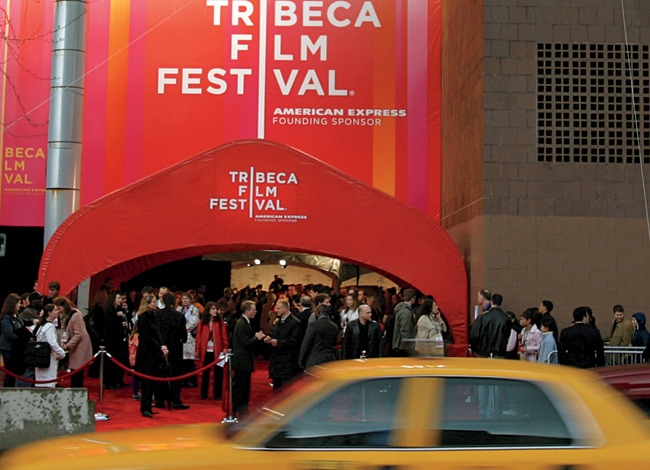
Tribeca Film Festival

Over the past decade, The Tribeca Film Festival has become one of the most prestigious international film festivals for aspiring filmmakers. It’s an honor when we hear about our students’ thesis films being accepted into the festival. Given the importance of the festival, we had filmmaker and New York Film Academy Instructor Abraham Heisler speak with Sharon Badal, shorts programmer for the Tribeca Film Festival. Sharon provides insightful advice for students submitting their shorts to TFF. This Q&A is a must read if you’re considering submitting to Tribeca or any film festival for that matter.

Abraham Heisler: Thanks for joining us. Would you like to introduce yourself and tell us about your background?

Sharon Badal: Sure. My name is Sharon Badal. I am the head of shorts programming for the Tribeca Film Festival. I have been with the festival since its inception and my job is to program all the shorts for the festival. I am also the director of short film programming and initiatives for Tribeca Enterprises. I am a film school graduate myself, from NYU, and worked in the studio system for 10 years. I did freelance production and actually started with Tribeca in 1999, several years before the festival began. I’ve also produced different projects for various Tribeca entities, but once the festival started, that became my main area of focus.

AH: Obviously, Tribeca is one of the premiere film festivals, but can you tell us what makes it a unique festival?

SB: I like to think that Tribeca epitomizes the phrase, “There’s something for everyone!” because in addition to, obviously our very strong slate of features and shorts, we have our public events like the Family Festival and the drive-in. We have a very diverse Tribeca Panel Series series, which covers many different topics about the film industry and entertainment industry in general. And so I think that what makes Tribeca unique is that it is just like New York. There are a lot of different things for a lot of different people. And we are part of the fabric of the city by reflecting that in what is admittedly a very large festival with a lot of different activities.

AH: Tell us about the submission process. How many submissions do you receive and how many slots do you have to fill?

SB: We receive approximately 2,900 shorts each year and it’s not so much about the slots, but it’s about the programs. We have eight programs. We have five narrative programs, two documentary programs, and one experimental program. So, the amount of films we accept can range anywhere from 55 to 70 depending on the length of the films we select.

AH: What determines the theme of each program?

SB: Depending on the year, we decide what those programs are. Last year, we had very strong genre submissions, so we created a specific genre program. The year before that, we had very strong animation submissions, so we created an animation program. The themes of the programs are dictated by the submissions and what we select, and that is the magic.

Once you get to that point where you have that group of films that you love the most then you put them together and curate how they are going to play and what the ride is for the audience from the beginning of a program to the end of the program. And the very last thing that happens is that you look at each group of films that you now have put into a program and create a thematic element. “What do they all have in common? How do we tie a loosely creative ribbon around them?”

So, there’s no specific thematic that we go into from the get-go. The exception to that, of course, is because we are a New York Festival, we love to have a New York shorts program every year, and whether we have that program is dependent on if the shorts we love the most fit into that category.

AH: Who views the submissions?

SB: I have a co-programmer whose name is Ben Thompson. He’s been with me for years. And I have a dedicated group of screeners who are all industry professionals and do this on the side because they love the short film format as well. One of us watches every single submission and then Ben and I sit together watching all of our top choices. And then we make the final selections.!

AH: And what do you look for in a short film?!

SB: Good story! That’s really what it is. I mean, I can go on and on, but in the end the film lives or dies by the story and if it’s strong enough.!

AH: That’s the first thing we tell students at the New York Film Academy.

SB: Absolutely! Keep telling them.!

AH: Students are always concerned with production value. How much does that weigh in on your film selections?

SB: Well, I have to emphasize that sound is very important. You know, with the newer technology, the visual image has gotten much, much better. But, I do think that the sound, the quality of the sound from the beginning and the final sound mix are very important. If we can’t hear it we can’t show it.

AH: Out of your 2,900 submissions, how many appear to be homemade or amateurish?

SB: You know it’s an interesting question, Abe, because I can’t tell anymore. If you asked me this question five years ago, I could’ve told you I can see immediately when a film was shot on a home video camera. But the technology makes that no longer visible. I would say the place where that is most noticeable is in the quality of the acting. That is where you know if it’s an “amateur production.” That’s usually where the weakness is, in the acting and not the physical production itself. We wouldn’t prejudice a film if the production quality is less than 100% but the story and the acting holds up. If you showed me blind three films, I would not be able to tell you which ones are trained filmmakers and which ones are untrained.

AH: Would you say the winning combination is story + acting + good sound?

SB: I would say the winning combination is … first of all: SHORT! We are an academy qualifying festival and we go by the running time of the academy, which is under 40 minutes. But, the longer your short is, the better that script has to be. And I would say it is rare that I see a 28-minute student film that shouldn’t have been 15 minutes. That’s where technology has hurt us because in the “old days,” time was money. Every frame of film meant a cost. It meant a cost in film stock, a cost in development; it meant a cost in the editing room. Now I think that because the technology is so inexpensive and those costs don’t apply, that filmmakers are not containing themselves enough.

If I see a shot of someone walking, I don’t need to see them go down the entire street slowly. And that’s where I find the weakness. So, by short I do mean the most expedient storytelling possible. I’m not saying that every short has to be under 12 minutes, don’t misunderstand me. But, I’m saying that the story has to be told in a very concise [way] and [with] sustained action. It’s not a feature. You can’t use the time the way you would to develop a feature.
So, the winning combination is short + story + acting.

AH: What “do’s” would you recommend to filmmakers?

SB: Do get your audience into the film quickly. No feature main credit sequence. Do make sure that your ending is satisfying. I would say that’s one of the biggest problems — that you could be with the short all the way and it’s pretty obvious that the filmmaker didn’t quite know how to end it. And that’s very disappointing. The ending has to be satisfying. Do spend as much time in the script stage as possible getting that story into its best shape.

AH: How can a filmmaker benefit from having their film programmed at Tribeca?

SB: Our mission, basically in terms of the film side, is to discover and nurture filmmakers and bring their work in front of an audience. So, one of the things that we do, especially with the shorts programs, is screen at least three times each. And we also have a very strong filmmaker component to the festival, which are private events — networking, socializing, educational — that are available only to those filmmakers whose films have been invited. And that is part of our nurturing part of the formula where we want them to meet each other and have opportunities where they are exposed to the press, exposed to the industry. We feel that, and especially for the short films this is quite often the case, that when we invite you we are helping you to launch your career.

And our press team works very hard and does an extraordinary job of making sure that the press outlets are aware of the shorts, are aware of the filmmakers. They build stories that come out of the festival and that are interesting to the public. So, I think that’s where we’re different. We really have this very strong desire to make that festival experience a career changer. !

We’ve had shorts filmmakers return to Tribeca with features. We’ve had shorts filmmakers win Academy Awards. We’ve watched our shorts filmmakers go on to do many other things and when a filmmaker is at Tribeca they are forever part of our family. We do want to see what they do next and we are their cheerleaders from that point on.

AH: What would you say to filmmakers whose films do not get accepted?

SB: You know it’s simply a matter of the math. Really, when you think about it, let’s say we program 60 shorts out of 2,900 submissions. That’s about 2%. And I would have to say, don’t take it personally. My hope is that for every filmmaker whose film we decline, to use a music analogy that they are not thinking of themselves as a one-hit wonder, but they want to be Bruce Springsteen and be around for a long time and therefore their reputation is important. So when we decline, it’s nothing personal and it’s even nothing personal about the film. It might not have anything to do with the film. I might be able to slot 60 films and you were 61 and I loved your film and I just don’t have room for it.

So part of it is not taking it personally. I mean, rejection is part of this entire entertainment industry and it’s something that you need to accept with grace and dignity because hopefully you’re going to come back with something else.

AH: Anything else you’d like to add?!

SB: I am now in my 20th year teaching at NYU undergrad film and TV. So I have to say that from a purely personal perspective, I hope that filmmakers still and always will consider themselves artists. That you don’t make a film because you think Tribeca might like it. But, you make the film that you want to make always and that it is creative first. That I think is really important.
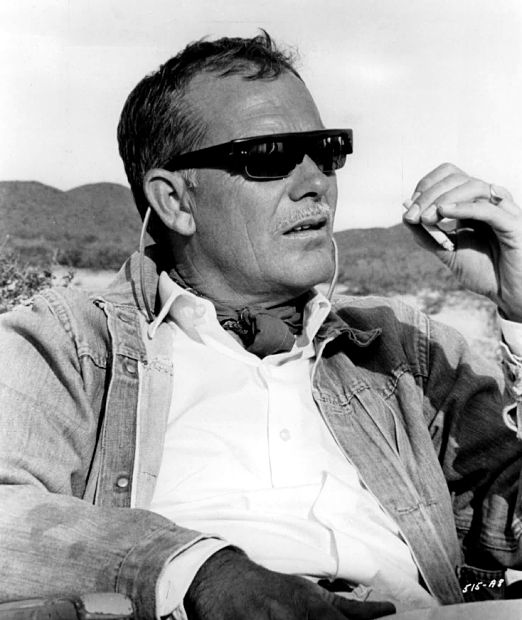
Sam Peckinpah

Sam PeckinpahName: David Samuel Peckinpah aka Sam Peckinpah aka Mad Sam

Essential DVDs: Ride The High Country (1962), Major Dundee (1965), The Wild Bunch (1969), The Straw Dogs (1971), The Getaway (1972), Pat Garrett And Billy the Kid (1973), Bring Me The Head of Alfredo Garcia (1974), The Cross of Iron (1977)

Oscars: None

In His Own Words: “The point of [The Wild Bunch] is to take this facade of movie violence and open it up, get people involved in it… and then twist it so that it’s not fun anymore, just a wave of sickness in the gut.”

The unprecedented cataclysm of blood-soaked violence that wrapped up Sam Peckinpah’s The Wild Bunch was a cinematic watershed. Critics walked out disgusted. A ban was called for. “Bloody Sam”, the “Picasso of violence” in one stroke created a reputation that persists to this day.

But to dismiss Peckinpah as just a purveyor of pornographic violence is foolhardy. In fact, Peckinpah’s cinematic legacy is not his graphic action, but rather his stylistic and thematic approach: neither film editing nor the way traditional genres were represented remained untouched by his coruscating impact.

Using several cameras running at multiple speeds together with extravagant cross-editing to create dazzling, kaleidoscopic montages of action and exposition, Peckinpah’s technical and stylistic innovations reverberate through De Palma and Scorsese, to Stone and Tarantino. His total distrust of institutionalized power particularly the studios for which he worked resulted in films so inimitably Peckinpah in both message and execution, that he blazed a trail for the auteur generation which succeeded him. He re-wrote scripts during shoots, embraced spontaneity and improvisation, and rarely delivered on-budget. After Peckinpah’s increasingly ill-tempered, drug and alcohol-fueled excesses and confrontational material, even the most troublesome of subsequent bad-boy directors would appear a pussycat to studio bosses.

Although The Wild Bunch’s Western revisionism remains the touch-stone for his work, Peckinpah tackled multiple genres. Straw Dogs is a shockingly provocative psychological horror, Bring Me The Head Of Alfredo Garcia is a beguilingly nihilistic road movie, and The Cross Of Iron was to Orson Welles the best anti-war film ever made, predating Saving Private Ryan’s hand-held, in-the-trenches approach by 20 years. Just don’t mention his treatment of women.

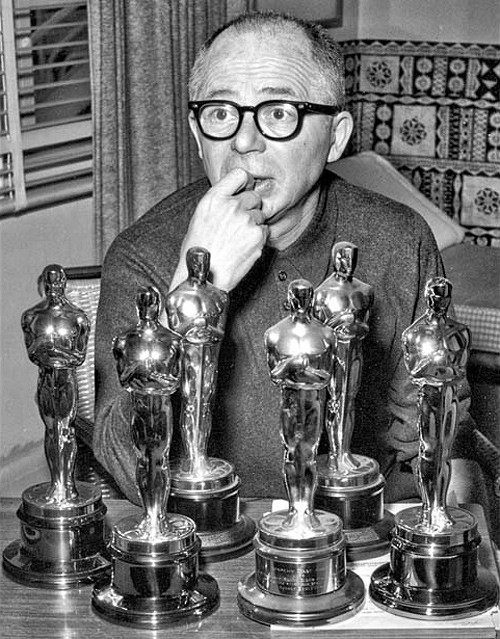
Billy Wilder

Bill WilderName: Samuel Wilder aka Billy Wilder

Essential DVDs: Double Indemnity (1944); The Lost Weekend (1945); Sunset Boulevard (1950); Ace In The Hole (1951); Some Like It Hot (1959); The Apartment (1960)

Oscars: Best Screenplay, Best Director (The Lost Weekend, 1946); Best Screenplay (Sunset Boulevard, 1951); Best Screenplay, Best Director, Best Picture (The Apartment, 1961) ; Irving Thalberg Memorial Award (1988)

In His Own Words: “Some pictures play wonderfully to a room of eight people. I don’t go for that. I go for the masses. I go for the end effect.”

Wilder, a young screenwriter struggling to make a name amid the bohemian decadence of pre-War Berlin, heard a tap on his window. On the ledge outside he found a well-known film producer who had fled his mistress’s bed in the apartment next door when her husband arrived home unexpectedly. In exchange for his silence, Wilder extracted a contract from the hapless cuckold on the spot. Anyone with that kind of initiative is going to go far in Hollywood.

Billy Wilder was once described (reputedly by William Holden) as having, “A head full of razorblades.” It’s a wonderful phrase, one that Wilder had the good sense to steal, alluding not just to a legendarily keen mind but also to its versatility. If Wilder had made only comedies –if he’d written and directed nothing more than Some Like It Hot or The Apartment, in fact –he would still be among the immortals. As it is, his biting wit and gleeful misanthropy found a variety of triumphant outlets: ingenious WWII thriller Five Graves To Cairo (1943), peerless noir Double Indemnity (1944), dipso melodrama The Lost Weekend (1945), savagely expose Ace In The Hole (1951) and, of course, macabre masterpiece Sunset Boulevard (1950) to name a few.

Wilder’s career was summed up by another wag as: “Hating people for fun and profit.” A world-class cynic with a streak of self-deprecation a mile wide, he would not have disagreed. Asked his thoughts on his own films, he replied, “I loathe some of them less than others.”

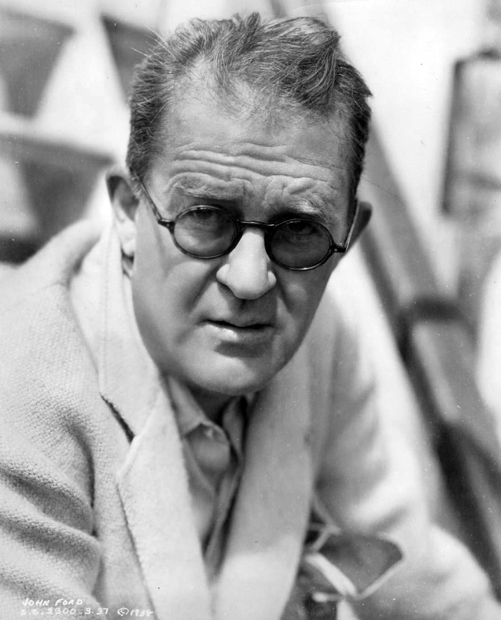
John Ford

John FordName: John Martin Feeney aka John Ford aka “Pappy”

Essential DVDs: Stagecoach (1939); My Darling Clementine (1946); She Wore A Yellow Ribbon (1949); The Searchers (1956); The Man Who Shot Liberty Vallance (1962)

Oscars: Best Director (The Informer, 1935); Best Director (The Grapes Of Wrath, 1940); Best Director (How Green Was My Valley, 1940); Best Director (The Quiet American, 1951)

In His Own Words: “Anybody can direct a picture once they know the fundamentals. Directing is not a mystery, it’s not an art. The main thing about directing is: photograph the people’s eye.”

When John Ford self-deprecatingly introduced himself with, ‘My name’s John Ford, I make Westerns’, he had a canny sense of the way he would be remembered. Though he started cranking out silent quickies (his first director’s credit was Red Saunders Plays Cupid in 1917), his great Hollywood years found him hailed as an important, Oscar-worthy maker of significant films like The Informer, How Green Was My Valley and The Grapes Of Wrath. After the silent superproduction The Iron Horse, he stayed off the range until 1939, when Stagecoach revived a genre that allegedly was just for kids by mixing shoot ’em up thrills with literary merit (the inspiration is a story by Guy de Maupassant) and breathtaking pictorial skills.

He rescued John Wayne from the Bs, and showed him to be a better actor than we’d imagined in She Wore A Yellow Ribbon and The Searchers. He managed the lyrical legendary of My Darling Clementine and the harsh revisionism of The Man Who Shot Liberty Valance. The embarrassing Oirish belief that drunken brawling is the highest form of social interaction is blotted out by moments of beauty, sensitivity, heroism and sadness that are unmatched.

Few other directors can make male audiences cry in the way Ford manages in sober moments, as he mythologises the men and women who made the West and the loveliness of the savage landscape, but acknowledges those times are gone and there’s probably no room in the meagre modern world for the man who really shot Liberty Valance.

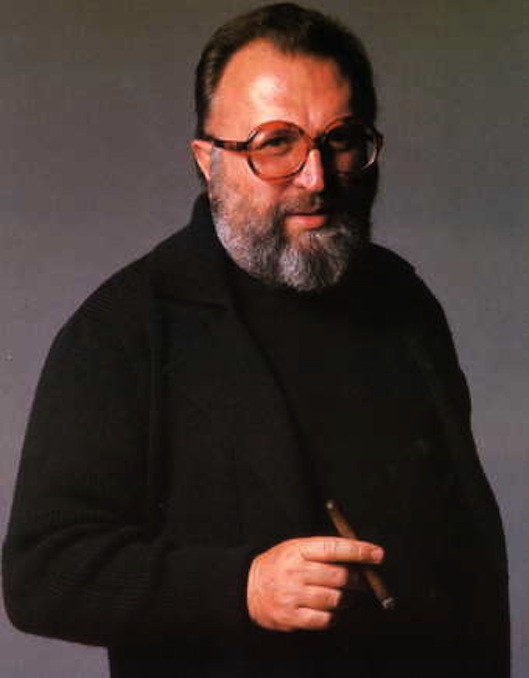
Sergio Leone

Sergio LeoneName: Sergio Leone

Essential DVDs: A Fistful of Dollars (1964); For a Few Dollars More (1965); The Good, The Bad And The Ugly (1966); Once Upon A Time In The West (1968); Once Upon A Time In America (1984)

Oscars: None

In His Own Words: “I can’t see America any other way than with a European’s eyes, obviously; it fascinates me and terrifies me at the same time.”

After the muscle-man quickie The Colossus Of Rhodes, Sergio Leone directed a mere six films, making up two trilogies, the ‘dollars’ films about Clint Eastwood’s Man With No Name (A Fistful Of Dollars, For A Few Dollars More, The Good, The Bad And The Ugly) and a panoramic trio (Once Upon A Time In The West, Duck, You Sucker, Once Upon A Time In America) about corruption and power in the New World.

It was said that Leone’s Westerns were ‘realistic’ depictions of grim 19th century Tex-Mex frontier life, but actually they are stark, simple fables. Though the body counts are higher, his Westerns tend to be as morally cut-and-dried as any kiddie matinee oater. Appropriately, His world is divided into good, bad and ugly. Heroes gun down a great many people, but each and every one of them deserved what was coming to him. In his last film (Once Upon A Time In America), however, he took the good out of the equation, and showed only bad or ugly men while dividing women into angels or whores.

Leone was a lover of grotesque faces, wide screens, corrida-style gunfights, craggy landscapes, long shots, absurd comedy, earthy physicality and bursts of swift, ghastly violence. He signed up Ennio Morricone to provide a soundtrack for the Italian West and cut Eastwood out of the corral and made him the last great cowboy star, deciding how the Western would look and sound for the next four decades. Leone realised Westerns were also historical movies and obsessed over the precise types of gun, boot, pocket-watch or hat his characters should sport. Not to forget the various political readings of his movies.

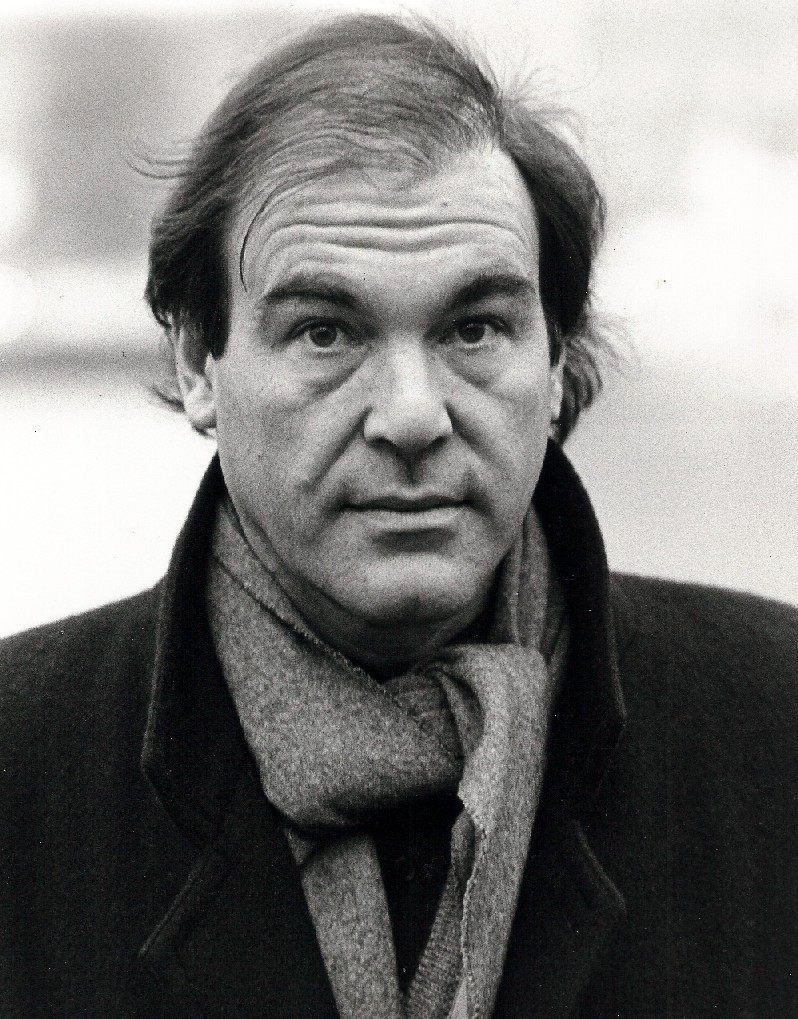
Oliver Stone

Oliver StoneName: William Oliver Stone

Essential DVDs: Salvador (1986); Platoon (1986); Wall Street (1987); Born On The Fourth Of July (1989); JFK (1991); Natural Born Killers (1994); Nixon (1995)

Oscars: Best Director (Born On The Fourth Of July, 1990); Best Director, Best Picture (Platoon, 1987); Best Adapted Screenplay (Midnight Express, 1978)

In His Own Words: “I consider my films first and foremost to be dramas about individuals in personal struggles and I consider myself to be a dramatist before I am a political filmmaker. I’m interested in alternative points of view. I also like anarchy in films.”

Where do you start with a problem like Oliver? He is Hollywood’s coruscating conscience, part madman, part genius, entirely troublemaker. He just can’t help himself. JFK had critics fired and death threats landing across his desk, Natural Born Killers appalled and aggravated the liberals and hard-liners alike, and with Alexander he sprawled in every direction picking up hoots of derision for his trouble. Inconsistent he maybe, but Stone continues to scratch away at boundaries while the likes of Scorsese or Coppola, are either clutching for the mainstream or dozing on their veranda somewhere in the Napa Valley. If he’s going to falter, he’s going to do it in the full glare of the limelight. Stone is so public a persona, his stars tend to feel like second billing.

His vision, sharpened by the frenetic lash of his edits and the full arsenal of camera tricks he uses to powerhouse his intrepid ideas, was born from his three tours of duty in Vietnam. It fed directly into his art, the modern, curdled history of America becoming the backbone of his muse. He is driven by a furious passion to deliver the truth, a fury that can be felt in every frame of every film. “People are suckers for the truth,” harries Donald Sutherland’s deep-throated X in JFK. “And the truth is on your side, Bubba.”

Ultimately, and beautifully, he refuses to be confined by ideology. He is both politico and bohemian (hell, why else make a film about The Doors?). As a filmmaker it is a unique voice, hectoring and heartfelt, and when they come to write his epitaph it should be quite simple: “Never bland.”

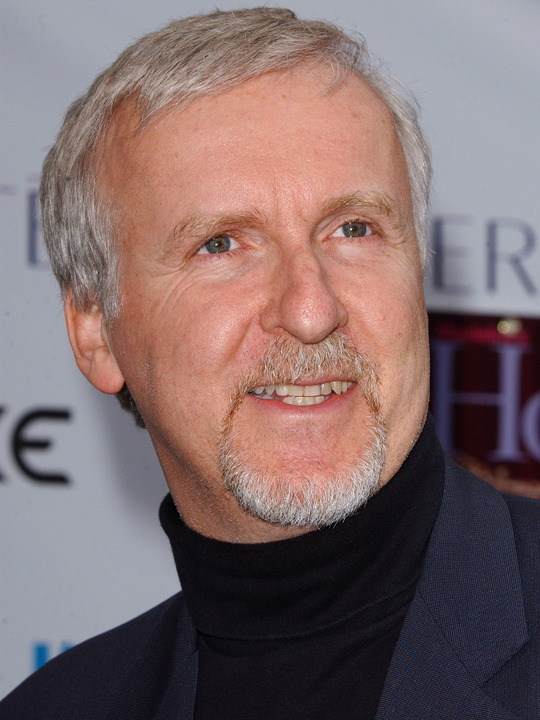
James Cameron

James CameronName: James Cameron

Essential DVDs: The Terminator (1984); Aliens (1986); Terminator 2: Judgement Day (1991); True Lies (1994); Titianic (1997); Avatar (2009)

Oscars: Best Director, Best Picture, Best Editing (Titanic, 1998)

In His Own Words: “Less isn’t more. More is more.”

The future is what we make for ourselves,’ is a refrain repeated throughout James Cameron’s first film, The Terminator, and it’s a phrase he’s clearly taken to heart. But Cameron doesn’t just see the future coming; he makes it happen. He deserves to be known as more than just the master of the big budget, the huge grosser, and the high concept, or even the self-styled King Of The World, but instead as one of the most progressive and important technological innovators in cinema history.

Perhaps, second only to George Lucas, Cameron has been directly responsible for the staggering development in visual effects capabilities over the last fifteen years. The Abyss, TitanicAvatar, and everything in between featured effects that hadn’t been possible until Cameron pushed the envelope, while he’s recently developed a brand-new 3D camera system. Because he can.

And yet for a man who’s so clearly in love with the possibilities of technology, his movies constantly warn against the dangers of becoming enslaved to machinery (what is Titanic if not a lecture on man’s folly writ large?), while his preoccupation with nuclear weapons (there’s an atomic explosion in every Cameron film, bar Titanic… and yes, Piranha Part Two: The Spawning) burns throughout his movies. As does a great humanist streak, which sometimes gets lost amid the brouhaha about his occasionally clunky dialogue, financial excesses (Terminator 2, True Lies and Titanic were all, at the time of their release, the most expensive movies ever made), and his innate skills with an action sequence (he’s as influential in the action genre as Peckinpah or Woo). After all he took the measure of Ripley and turned her into the font of strong, modern female leads, from which he mined his own Sarah Connor, Rose in Titanic, and Jamie Lee Curtis’ ballsy housewife in True Lies.

Part of Cameron’s appeal is his go-for-broke nature—an enormous personality with a legendary temper (crews on his movies often sport T-shirts having wry pops at his demanding ways), no challenge is too great. You want a great sci-fi movie? He’ll knock out Terminator 1 and 2. A great sequel? How about Aliens, one of the greatest of them all. A great love story? Hell, he only went and made the most successful frickin’ film of all time.

Ah, Titanic. Since its immense success (11 Oscars, $2.2 billion worldwide), some snarly critics have perceived his failure to direct a full-length, live-action movie as a failure of nerve. In fact, it’s given him enormous freedom to do what he wants to do: make hundreds of deep-sea dives, produce films for other directors, and develop technology for his forthcoming fully 3D manga adaptation, Battle Angel. And to cap it all off, he’s planning to shoot a film at some point soon—in space. His career up to now has been brilliant, but Cameron prefers to focus on the future—and right now his is bright as it’s ever been.

The Coen Brothers

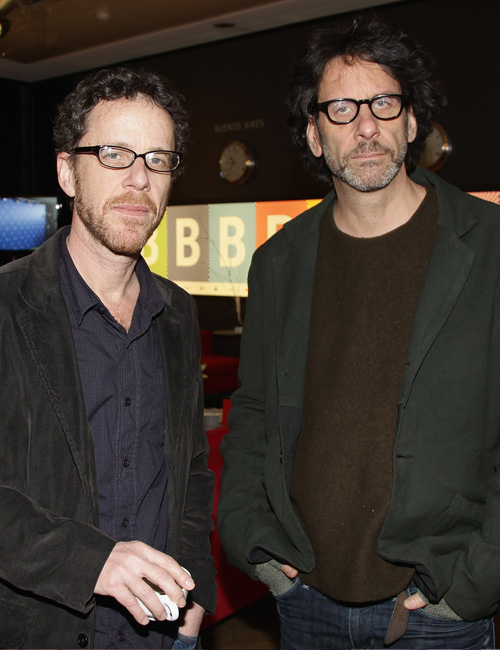
The Coen BrothersName: Joel Coen, Ethan Coen

Essential DVDs: Blood Simple (1984), Miller’s Crossing (1990), Barton Fink (1991), The Hudsucker Proxy (1994), Fargo (1996), The Big Lebowski (1998), The Man Who Wasn’t There (2001), No Country for Old Men (2008)

Oscars: Best Screenplay (Fargo, 1997); Best Adapted Screenplay, Best Director (No Country for Old Men, 2008)

In His Own Words: “We do pander to the audience. But the audience we think about is us.”

It was as dreamy teenagers one soporific 1960s Minnesota summer that Joel and Ethan Coen decided they should make a film. They cut lawns to afford a Super-8 camera, and then sat down to decide what to shoot. Finally, they filmed a movie playing on TV. Two brothers from small-town Minnesota playing with cameras, making a film of a film: a cute family snapshot, but also the crystallisation of what would become practically a modus operandi.

Raised far from the studio soundstages of Hollywood or New York’s artistic set, the Coens are all Minnesotan. How else to account for their peculiar, restless imagination than a childhood spent in a cultural backwater? Unschooled in filmmaking dogma, the brothers were nonetheless immersed in filmic tradition, lapping up noir whodunits, Ealing comedies and Sturges’ 40s satires as kids. Their films, which reverentially toy with these conventions, admits Ethan, are, “about other movies.” Blood Simple, their debut, betrayed a love affair with noir, a relationship taken to obsessional extremes with The Man Who Wasn’t There. Hudsucker Proxy’s feelgood Capra absurdities concealed a film about the Hollywood studio system. Barton Fink actually took place in Tinseltown, and The Ladykillers was a straight-out remake of the earlier classic.

Since their formative, for-fun Super-8 experience, the Coens have never stopped playing with cameras. All their films are comedies of a sort, usually the deliciously dark — and frequently surreal — kind. “We’re not trying to educate the masses,” they once agreed, and each film simply bulges with a sense of joy at the possibilities of life through a lens. The mercurial eye of their “self-conscious camera”, especially in earlier works, doesn’t merely observe a scene, but participates — the tracking shot along the bar in Blood Simple that hops over a laid-out drunk; the plentiful point-of-view perspective in Raising Arizona. The uninhibited camerawork and inventive editing becomes as integral to the comedy as any dialogue or sight gag.

Despite the fact Joel is credited as the director, the brothers share all duties, including editing (albeit under the alias Roderick Jaynes), producing and writing. And what writing it is, breathing life into a carnival of eclectic characters cast somewhere between the pitifully mundane and the hilariously grotesque. What stands out among their procession of hyper-real humanity is the love the brothers invest in even the most marginal character. Typically inhabited by a stock company of some of the most creative character actors around, vivid, larger-than-life cameos are another Coens’ hallmark (John Turturro’s Jesus Quintana in The Big Lebowski, John Goodman’s Big Dan Teague in Oh Brother…, Steve Buscemi’s Mink in Miller’s Crossing, et al). And filling these creations’ mouths is the arch, cartwheeling dialogue that betrays the brothers’ literary loves – pulp authors Raymond Chandler, Dashiel Hammet and Elmore Leonard among them.

Sir David Lean

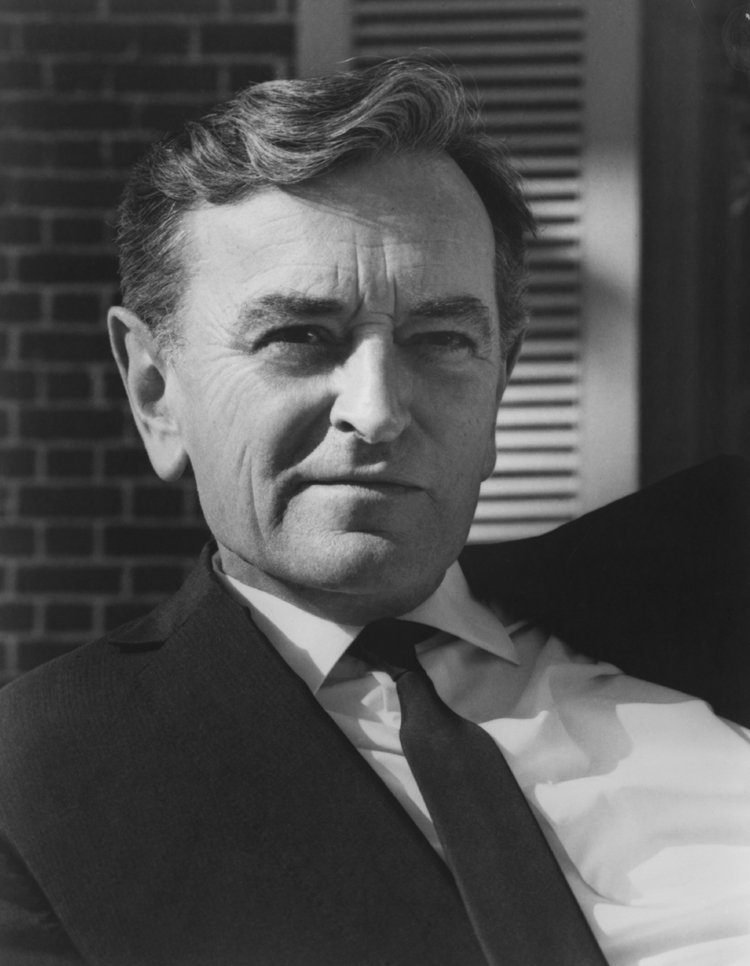
Sir David LeanName: David Lean

Essential DVDs: Brief Encounter (1945); Oliver Twist (1948); Great Expectations (1946); The Bridge On The River Kwai (1957); Lawrence Of Arabia (1962); Doctor Zhivago (1965)

Oscars: Best Director, Best Picture (The Bridge On The River Kwai); Best Director, Best Picture (Lawrence Of Arabia, 1963); Best Picture (Doctor Zhivago, 1966)

In His Own Words: “Actors can be a terrible bore on the set, though I enjoy having dinner with them.”

What is often forgotten amid the beautiful reaches of his vision, his rapturous storytelling and tireless quest for perfection, is what a practical soul David Lean was. He grounded himself in the industry editing such films as Michael Powell’s One Of Our Aircraft Is Missing and 49th Parallel, and when he came to direct, it was in the dusty edit suites of old Soho and not among the far-flung locations or shadowy backlots that his true alchemy was born.

Lean was a dreamer, a supreme visualist, who ripened into, arguably, the finest director this country has ever produced. His was in every sense a true romantic; he pursued women as fanatically as he pursued the light. It was a career that can be roughly divided into the two schools of design: the shimmering black and white of his early work, especially the standard-setting Dickens’ adaptations (Great Expectations is the purist’s choice when picking out his best work) and the Technicolor splendour of the glory glory years. Bridge Over The Kwai, the still astounding Lawrence Of Arabia and the voluminous romance of Doctor Zhivago, are the trio that have come to define him. Although, interestingly, he always saw the slight, tender Venice romance of Summertime, with Katharine Hepburn, as his favourite.

For it was not just the oceans of sand or lush jungles that fuelled his muse, he intricately understood the workings of a script. English playwright Robert Bolt became his resident scripter, who shuffled through the politics and range of those big, big books to find an essential filmable core. Then the actors were carried along by Lean’s maniacal control, his sheer exertion and this journey toward some kind of divine yonder where cinema could transcend (Lawrence took two years to conclude its shoot, Lean more or less dragged kicking and screaming from the set). For much of his career it did.

That he took his art, and himself, so seriously got its most damaging note when having been berated by a clutch of New York critics, led by the redoubtable Pauline Kael, for the bloated Ryan’s Daughter, he swore off moviemaking for a staggering 13 years. His return was the elegant, if muted A Passage To India. Age and a certain dulling of the passions left the film elegant but overly poised. Such intriguing possibilities as Nostromo and The Bounty were never to happen.

Yet Lean’s work remains undimmed. Spielberg, a champion of his late revival, routinely watches Lawrence to glean inspiration before starting on a film. He was an architect of scope, romanticism and grandeur, certainly, but it was the confines of the human heart that fascinated him.