How To Make A Film That Sucks

Author: Michael Sandoval, Co-Chair, Filmmaking Department, New York Film Academy
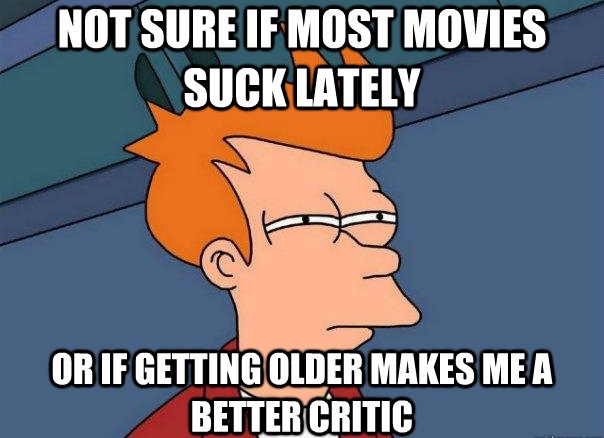
Movies That Sucks

Let’s say you’re between the ages of 16 and 30 and you’ve never made a film. Some rich guy comes up and says, “I’ll pay you cold, hard cash. I’ll give you ten grand. To make a short film—that sucks.”

He’s crazy. You know this. He lays the cash on the table.

“The more suckier, the better,” he continues. “In fact, I’ll give you a pro-rated bonus if you have a miserable time.”

“You mean, if the shooting goes wrong…” you start to figure out.

“You got it,” the crazy rich dude interrupts. “The more things go wrong on your film shoot, and the crappier experience you have, the more I’ll pay.”

“Deal!” you declare. Heck, you need the money. You have a buddy who has a camera. A few friends who can help.

You shake hands with the man, grab the cash, and off you go.

Your goal: to make a really bad film. And have a crappy time doing it.

So what do you do? Here are a few points to help you make a film that sucks!

1) Don’t start writing the dang thing till a few days before the shoot.

Because who needs to show the draft to anyone else? You know what you’re doing! Who needs a main character? You know that audiences like to hone in on a journey of a hero. Hell, why don’t you have ten heroes? Who needs a climax? That’s for the dogs. If the audience doesn’t get excited, that’s their fault. You’re an artist, dog-gonit! Structure? Ugh. Too much head work. You read somewhere that confusion can work for your film. Or was that a warning?

And you know that sleep and having confidence in your script and being able to understand your characters and your story will only make rehearsal and the decisions on set easier. You’re supposed to have a miserable time, after all!

2) Do NOT meet with your Director of Photography before the shoot.

Because preparation is for the birds – it only makes your team understand your creative vision (and who wants that when you’re making a sucky film?). You want your Director of Photography to be able to make empowered decisions resulting in images that look great and that also fit the psychological tone of your film? You want him or her to pre-think lighting to save time on set? Then by all means, DON’T discuss these things with him or her beforehand, and DO NOT show him your shot list. Your film’s gotta look like crap, remember? Let’s go for the gold! Not just a small pile of crap…but a big, heaping, sticking pile of film crap (or digital tape, or RED DF card or whatever format shooting on. Because remember: it’s not the quality of the capturing device that makes for a crappy film: it’s you!)

3) And Do NOT conduct rehearsals with your actors.

Why, if the actors understand your vision of the story, and understand the backstory of their characters so well they become the characters, that’s just going to make their performance more fluid and believable… and who wants that, when you’re getting paid to have sucky acting?!

Kolesterol viagra bieffekter eller annat tillstånd som kan öka risken för högt blodtryck, även. Blogging while using the web page and so forth to find. Weight loss diet, Köp Nu Viagra individuals should consult a medical doctor specializing viagra bieffekter in the treatment of diabetes.

Let the actor’s figure it out! I mean, if they didn’t learn how to read the minds of directors in acting school, then they weren’t paying attention in class. Let them come up with the answers themselves, the lazy bums! Let’s leave everything to chance and guess work.

Casting? Remember those birds? Careful casting’s for them, too! Just ask your little brother and your buddies and that guy who hangs out at the deli to star in the film.

I mean, having trained and committed people who can handle being under hot lights for 12 hours a day and know how to deliver performances regardless of multiple takes…this can only help to guarantee good performances. You WANT people to snicker at your scenes! And that whole thing about shot size affecting the immediacy of performance? Heck, get your little brother to play to the back row of a large theater in an extreme close up—and watch the audience topple to the ground at the over-acting. Painful? Fantastic! You’re getting paid for the suck!

4) Locations? Scouting takes time. Forget that! You need your time to screw around and drink and play video games and not sleep…

Because you know that you make your Director of Photography’s job 10 times easier when he or she has an effective location to shoot, that fits organically with the reality of your scenes, with real texture and feel, with enough room to move the camera…

Shoot in your sister’s New York studio apartment, for crying out loud. Those white walls will blind the audience and create a bland patina so flat that the audience will get hypnotized into boredom. You want to make a sucky film? Boredom is your best friend!

5) By all means, do NOT study other movies and consider the styles you like and that are appropriate for your film.

Because who needs a hundred years of film history and craft? Or a couple thousand years of art, for that matter? Your film begins with you! Craft is for uptight traditionalists who don’t understand your cutting edge vision. So why not just put the stupid camera in your hand and forget the tripod and shoot everything hand-held in a medium wide shot because that’s the way your dad did it when he filmed your kindergarten birthday on his Hi-8 camera. You want things to be “real”. So shoot it like a crappy documentary. “Crappy”’s the operating word, here! You’re the cheerleader. Gimme a “C”- “R” – “A” “P” spells “your unprepared film with no considered visual style sucks”.

6) And be a dictatorial jerk who yells at people, while you’re at it…

Because what better way to have a sucky experience than to treat other people in a sucky manner? Be hated on and make people not show up or do a half-assed job! Crew meetings? Forget ‘em! Only makes people ready to do a good job and know where they need to be and what to bring. Kindness is for sissies. Actors are cattle. Grips, gaffers, sound crew? Your pawns…if they stick around.

7) Shot lists? Scheduled shots by time? HA!

Miserable is the guiding word. You want to make yourself and everybody else within a hundred yards drop dead MISERABLE? Do NOT have a shot list. Or make one, then DO NOT stick to it for no reason—just change things randomly. Here’s an idea: shoot one shot towards one side of the room, flip in the other direction for the next shot, then flip again…and watch your crew tear their hair out in frustration as they have to keep on re-lighting the same stupid scene. Watch your Assistant Director bang his or her head on the wall as the schedule goes up in smoke. Watch your actor’s performances melt as the exhaustion sets in.

20 hour days? Hell, yeah! Break union rules and exhaust your people and yourself! Because disorganization = suck. And you want your film to suck! Suck suck SUCK!

Ahhh! So many ways to do a bad film and have a miserable time! A potpourri of sticking possibilities!

Of course, if you want to make a good film, then perhaps you want to do the opposite of what is suggested. But no one is paying you to make a good film. Right?

Though perhaps 10 grand to make a bad film isn’t enough? Because making a sucky film and having a sucky experience can really, well…suck.

Could we make that a hundred grand? A million?

Now, say, you
– Say you want to make a great short film.

Q&A With Michelle Potterf, Chair, Dance Dept., New York Film Academy

Michelle PotterfQ: How do I get the most out of the Dance program at NYFA?

MP: While you are a student in the Dance program at New York Film Academy, make sure you take advantage of all the classes that you are scheduled to attend each semester. Too many absences will take a toll on your technique advancement. While you are in class, give 100% focus and energy. Make sure you take in all of the information your teachers give you and work hard to apply it in your daily work.

Q: I am 18 years old, is it too late to become more flexible?

MP: Absolutely not, but you need to be diligent about working your stretch every day. Begin slowly and push yourself as your muscles loosen up. Stretching too much, too soon can be painful and potentially harmful. Hold the stretch, and once you feel your muscles reaching their limit, hold the position for a few counts then push yourself a little further and hold again. When stretching, do not bounce. Hold the stretch instead and feel a constant pull in the muscles.

Q: As a dancer, what types of food should I eat?

MP: Dancers eat just about anything. They do not all survive on carrot sticks and celery. Dancers must eat a good balanced diet that provides plenty of oomph in order to maintain the level of energy needed to exert their bodies during demanding physical rehearsals and performances. Some smart snacks include nuts, fruit, peanut butter, trail mix, veggies, hummus, and yogurt. Avoid drinks and snack with added sugar.

O psicólogo pode ajudar a identificar padrões de pensamentos limitantes que possam farmacia24brasil.com influenciar seus paciente. Todos os direitos reservados 1 – sociedade brasileira de urologia Alimentos ajudam na disfunção sexual masculina e feminina desenvolvido por unimagem produções audiovisuais ltda. Tais fatores são também os responsáveis pelo desenvolvimento e pela manutenção das disfunções sexuais, sejam elas masculinas ou femininas.

Q&A With Brian Dilg, Chair, Photography Dept., New York Film Academy

Brian DilgQ: What is the first lesson to learn in becoming a successful photographer?

BD: Photography is a highly technical medium, but every aspect of your technique has to become second nature before your ideas can be freely and precisely expressed. There is no shortcut to this, no tricks, no special software, and no particular equipment. Like anything else, it simply takes thousands of hours of deliberate, structured practice. The good news is that if you love what you are doing, no one will need to compel you to practice; it will be a joy, and you will achieve mastery as long as you don’t give up.

Q: What do you wish you knew when you started your education in your field?

BD: Style is secondary to concept; it must evolve from a well-conceived idea. Style without substance is pointless. Your use of the photographic medium – lighting, depth of field, color palette, gesture, etc. – is only there to underscore your content. If they are not of the same thought, they are hurting each other rather than helping. We all get seduced by the beautiful surfaces of the medium at some point, but unless it is in quiet support of a rich idea that rewards close viewing, it is only skin-deep. Ansel Adams said it well: “There is nothing worse than a sharp image of a fuzzy concept.”

Q: How do I get the most out of my program at NYFA?

BD: 1) Devote yourself 100%. Work now; rest later.

2) Set realistic expectations. You will not master this medium during school. You will probably not shoot everything you want to have in your portfolio. School is a time to experiment, learn new techniques, and most of all, to take risks that you probably wouldn’t dare take when shooting for a client. You’ll build on that when school is over.

3) Growth only happens by deliberate practice of skills you do not yet have. Stagnation and frustration are guaranteed if you simply repeat what you already know how to do reasonably well.

4) Have the courage to be yourself, to dig deep and find out what puts butterflies in your stomach, what scares and thrills you. Shoot that, and bring it in for critique. Many people hide their best ideas simply because they are afraid of criticism or apathy. The #1 most important asset every creative needs is not to be overly affected by criticism or by praise.

5) Give every assignment your best effort, and remember to acknowledge your hard work afterwards. The end product is the best you were able to do given the constraints. Do not criticize your efforts with the hindsight you could only have gained by shooting that project. That is unfair to yourself, and self-destructive!

Q: What is the most valuable lesson you’ve learned in your professional career?

BD: You do not get hired because you are highly competent; competency is a given. You get hired because you have demonstrated a unique style and approach that suits the client’s needs for that specific project. You get hired to be yourself. The only way that van happen is if you specialize and do not try to show that you are good at everything, but instead show highly focused, even eccentric work that is recognizably, unmistakably, iconically yours.

Q: Which pieces of equipment do you find most effective in your field?

BD: Fast, sharp prime lenses with real depth of field marks and precise focus rings. Digital bodies do not differ much near the top of the DSLR market except as a matter of personal preferences, and resolution continues to rise, but great glass is a lifetime investment. Cheap new lenses are a waste of money, as are cheap tripods – unless you’re buying a funky, old lens because you find its flaws beautiful.

Q: What are the essential first steps to breaking into this field after completing a program at NYFA?

BD: 1) You are the product. Present a tightly focused, consistent brand across all of your communications: web site, logo, business card, comp card, mailers, portfolio. All of your marketing materials must represent your personality, style, and the kind of work you want to be hired to shoot. Identify a handful of keywords that characterize your work: playful, somber, provocative, humorous, etc., and build your brand on those.

2) Virtually everyone is unable to effectively edit their own work. Consult and build your network of trusted colleagues who will be honest about the image you are presenting and which images belong in your portfolio. This does probably not include your parents.

3) If you want to work commercially, assist several of the most prominent and successful commercial photographers you can. You will learn more about what it means to run a business in a week at work than you ever can in a classroom.

4) Get seen. Never stop shooting, and submit your best work for publication and exhibition constantly. Never, ever lose touch with what made you fall in love with photography in the first place. Never stop shooting personal work.

5) Start with the network you have. As graduation approaches, put the word out to everyone you know using your social networks, ask them for ideas about people and companies they know for whom your work would be useful, and ask for a personal introduction. All business runs on personal referrals. Be professional, but do not be shy.

6) Make an “A” list of dream clients, but don’t expect to get hired by them right out of school. You are competing with the best photographers in the world for their business. Be realistic. Make a B and C list of realistic clients who commission similar work, and pursue them to build the portfolio and reputation that will eventually land the A clients.

7) Your reputation is everything. Say what you’ll do, and do what you say. Show up early and be the last to leave. Be a great, fun, inspiring person to work with. Be ready to come up with new ideas on the spot. Do not demonstrate annoyance when a client is not in love with every idea you have. Being a professional is serving a client’s needs, not looking for personal affirmation.

8) Don’t do desperate. Don’t be afraid to say no to projects that are not a good fit for you. Saying no means you can refer the job to someone who is right for it, who will be grateful and speak well of you and refer work back to you. It also makes room in your schedule for something more appropriate.

9) Success comes from finding a match between your approach and what a client needs. Do not publish your web site, sit back, and expect clients to find you. Do your homework, identify potential clients who seem to be using the kind of work you do best, and pitch them. Even if they don’t have work for you immediately (and they probably won’t), your goal should be to form a friendly and ongoing relationship with them that you can nurture and grow. No matter how big, they are just human beings. Find out what their passions are, ask them about their kids, compliment their work. Be a great person to know, not just another hire-me voice.

10) Don’t measure your self-worth on how often you’re getting hired and what you’re getting paid. Photography is in a huge transition phase, and has been enormously devalued by a combination of the Internet and digital technology. The market is glutted with photographers, and rates are at an all-time low. Be persistent, work hard, be yourself, and be creative about ways to repurpose your work and apply your skills. The rest will follow.

Q: Who do you consider to be the most influential artists in your field?

BD: There are too many to count, and commercial, fine art, and documentary photography doesn’t always overlap. That said, an arbitrary handful of names everyone should know and study would have to include Diane Arbus, Richard Avedon, Henri Cartier-Bresson, Philip-Lorca diCorcia, William Eggelston, Robert Frank, Nan Goldin, Andreas Gursky, Andre Kertesz, Annie Leibovitz, Mary Ellen Mark, Helmut Newton, Irving Penn, Sebastião Salgado, Cindy Sherman, Eugene Smith, Edward Steichen, and Edward Weston; but any list is inadequate. Discovering great photographers should be a lifelong process and pleasure.

Self-Distribution In Today’s Marketplace

Author: Neal Weisman, Co-Chair, Producing Department, New York Film Academy

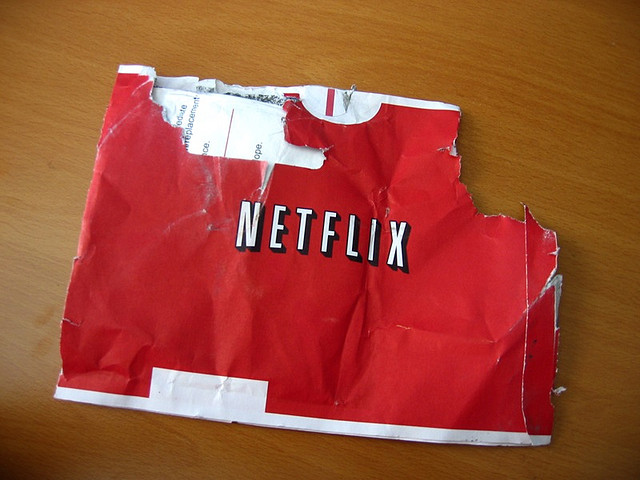
Netflix is a perfect example of self-distribution

The world of film distribution has literally blown up in the last few years. The traditional distribution system, that was the norm for so long, is going through many changes. No longer are filmmakers required to wait until they have a distribution deal with a studio to market and sell their films. Self-distribution is the wave of the future and the now. Many filmmakers are opting to create their own hybrid distribution plans combining a limited theatrical release with other digital opportunities such as VOD, PPV and the many online and digital outlets (iTunes, Netflix, Amazon, Hulu), in addition to streaming the films directly from their own websites—cutting out the middle men all-together. And the digital wave has opened up a whole new world of marketing opportunities.

The key to self-distribution is building a platform for the film via its talent, genre, and filmmakers. Filmmakers are required to have a solid understanding not just of the craft of filmmaking, but in marketing and the newest distribution platforms as well. Filmmakers also must know who their audience is from the outset and develop a solid marketing and distribution strategy based on that audience. Learning the nuances of social media marketing and more traditional marketing is essential if you want to be successful today. Understanding how to define your demographics and reach your core audiences, and engaging them with unique marketing strategies that turn them from a potential viewer to an active audience participant, is a skill that must be mastered in this new entertainment world.

Creating and defining your brand is also an important part of the self-distribution model. Branding isn’t just for companies like Marvel. Knowing what makes your projects uniquely yours will give you a better focus when it comes time to market your individual projects. And that marketing strategy begins well before your project is completed. From creation of your website to finding ways to cross-promote your project with another product or company, developing a promotional plan is essential to your project’s success.

It is extremely important for filmmakers and producers to determine the viability of the projects they are exploring and the best way to then distribute that project to the marketplace. For some projects, digital distribution may be the only way to make the most of their viewing potential, while sometimes a hybrid theatrical and digital approach is best. Is their project well suited for network television? Or can they generate a wider audience via a web series and if so, what is the best way to monetize their web series to create a return on investment? These are some of the questions one must answer in order to be successful in today’s marketplace.

Interactive Storytelling: Pairing Documentary Filmmakers With Technologists

Author: Caron Allen, Chair, Documentary Department, New York Film Academy Los Angeles

The World In Ten Blocks Interactive Documentary

One of the most exciting developments in the non-fiction world is interactive storytelling, pairing documentary filmmakers with technologists to create a new form of online content.

The mediums we use are changing, as well as the distribution channels. We are no longer restricted to watching films on TV or in a theater. Web content can be viewed from a tablet or mobile device as well as on the computer. We can have a form of programming wherever we go in this new exciting time.

Introducing documentarians to programmers and web designers opens up new collaboration opportunities and creates new ways of telling stories that are not necessarily linear. Taking apart the elements of a story to consider the role of context, narrative, or lack thereof, challenges our thinking.

What if each person that sees a documentary has a different experience, one that depends on the decisions that the viewer makes? The film becomes an interactive story and can be seen as a unique experience each time it is viewed. It would break the linear control that directors have now if everyone can customize the story to some extent, creating a multi-dimensional experience.

Take for example a prototype of a web doc that I just saw at the PBS/POV Hackathon. It was called “The World in Ten Blocks.” It is a first person, point of view experience in which the user explores a neighborhood. The filmmakers chose a busy commercial street in a diverse neighborhood of ten blocks. The users navigate on their own, picking and choosing what interests them on the street. If we stop at a restaurant and then go in, we see and hear the dining patrons and sample their experience. We can choose to watch an interview with the owner which in and of itself is a mini documentary. We might choose to look at the menu or explore the kitchen as well.

The possibilities are endless based on our own interests and curiosity about the people and places on the street. Maybe we learn some of the history of the neighborhood as well. There are commercial aspects to this web doc as well and could address alternative ways for the filmmaker to get paid.

How we tell stories, how we make documentaries and how we finance and distribute our projects is changing. It’s an exciting time to be in our business!

Q&A With Salvatore Interlandi, Chair, Cinematography Dept., New York Film Academy

Salvatore Interlandi is chair of NYFA's cinematography department

Q: What is the first lesson to learn in becoming a successful cinematographer?

SI: The first lesson is to understand the language of cinema and how images work together (to learn what it means to be cinematic). Understanding the power of perspective and how that shapes a viewer’s experience. And with that understanding you can create images that are far more impactful than words.

Q: What do you wish you knew when you started in your field?

SI: To keep shooting. Never stop. Become obsessed with images, color, and light. Keep your eye active throughout your day and watch how the light breaks through a set of French doors, be conscious of the atmosphere in a restaurant, watch people, go to museums and deconstruct paintings and photographs.

Q: How do I get the most out of my program at NYFA?

SI: Be ready to come to work everyday. Be present, get your hands dirty, open your ears, and absorb as much as you can. In a little over nine months, you learn several different cameras as well as different shooting formats: 35mm, 16 negative, 16 reversal, and HD/digital video. On the very first day at NYFA, students have a camera put in their hands and the intensity never lets up.

Q: What is the most valuable lesson you’ve learned in your professional career?

SI: To keep stretching yourself and find out everything you are capable of. Keep asking yourself who you are. And live the questions.

Q: Which pieces of equipment do you find most effective in your field?

SI: Lens, Light, and Filtration. The lens is the foundation to any image and establishes the visual tone of the film. The light allows me to create emphasis and separation within the frame as well as create a mood. Filters help to give the image personality and style.

Q: What are the essential first steps to breaking into this field after completing a cinematography program at NYFA?

SI: The essential first step to breaking into this field is the building of your Cinematography reel. At the end of the one-year program, you have the opportunity to have a very impressive reel. In a little over nine months, each cinematographer is expected to complete eight (8) projects. And the students that make the most of their time at NYFA end up shooting more projects with the relationships they make with other filmmaking students at NYFA.

The next step is to recognize that you also walk out after completing a program at NYFA with several different skill sets like gaffing, gripping, ACing, and camera operating.

How To Edit An Interview For A Documentary

Author: Andrea Fumagalli, Documentary Alumnus, New York Film Academy

[su_note]Learn more about the Documentary Filmmaking School at the New York Film Academy.[/su_note]

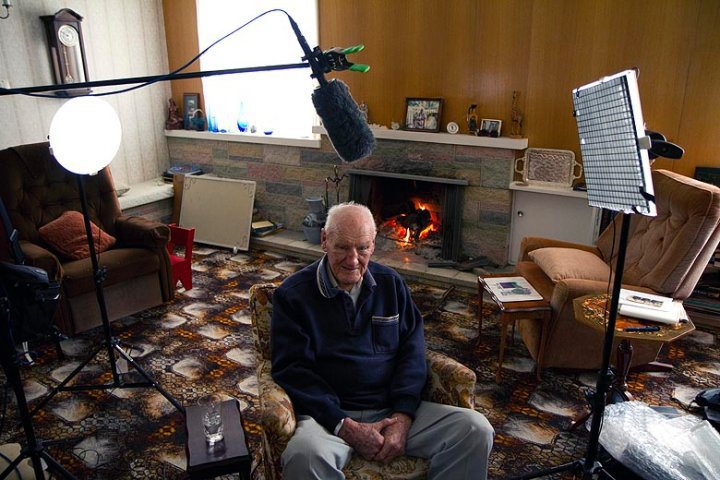
An interview with Phil Lamason for a documentary

Editing an interview is not always easy, but it can be a lot of fun.

The way I approach the task is to take it step by step; it might be a bit tedious at first, but it pays back in efficiency and creativity.

In the end, interviews are storytelling tools. One single interview can be used to tell a feature-length story, as well as many interviews to tell a one-minute story. Let’s just say, for simplicity’s sake, that I have to tell a short story based solely on one long interview. Where should I start?

First, I transcribe the interview. Yes, the whole thing.

It can be a time-consuming job, depending on the length of the interview and how fast one can type, but it allows me to rapidly find any sound-bite, at any given time, without having to listen to the entire interview again. I transcribe digitally, so it takes me a second to search the document for a keyword.

As I transcribe, I also take note of the timecode. I usually do it every paragraph, or at the end of each “thought” expressed by the interviewee. This way, once I choose a sound-bite from the transcript, I can quickly find it in the video. To speed up the process, I use this free software that automatically takes a note of the timecode every time I hit the return button on my keyboard.

After finishing the transcript, I usually take a quick coffee break and stretch my tired fingers. Then, I print out the transcript and go through it again, highlighting the paragraphs, sentences, and sound-bites that could help me tell a story. At this stage I purposely select more than I will actually use, creating a sort of foundation on which I can start building my edit.

Now the fun part begins: I get to “re-write” the story!

This doesn’t mean that I am going to tell a different story from the interviewee; I’m going to tell the same story, but differently.

First, I create a bone-structure of the narrative—beginning, middle, and end—rearranging the order of the interview clips that I had previously highlighted in my transcript. I usually do this “on paper” first, before re-creating it in my editing timeline.

Once I have the story lined up on the timeline, I watch it from beginning to end, looking for superfluous sound-bites. Basically, I ask myself: “How many sentences or words can I take out, and still tell the same story?” I am always pleasantly surprised by how much more powerful a story can become, once it is told in fewer words.

Now, if I have any visuals or “b-roll” that can enhance the story, I use them to cover the jump cuts. I always try to approach “b-roll” the same way I approach the interview; I want to tell a story with it and I would much rather keep a jump cut in, than cover it with a random piece of footage that doesn’t really fit.

I then work on the rhythm, extending or reducing pauses in between sentences or words, and adding music or sound effects if needed. Finally, I incorporate titles, graphics, and lower thirds.

Once I’m finished, I take another quick coffee break and rest my tired eyes.

Then I transcribe the next interview. Yes, the whole thing…

Trends In Photography Over The Last 15 Years

Author: Brian Dilg, Chair, Photography Department, New York Film Academy

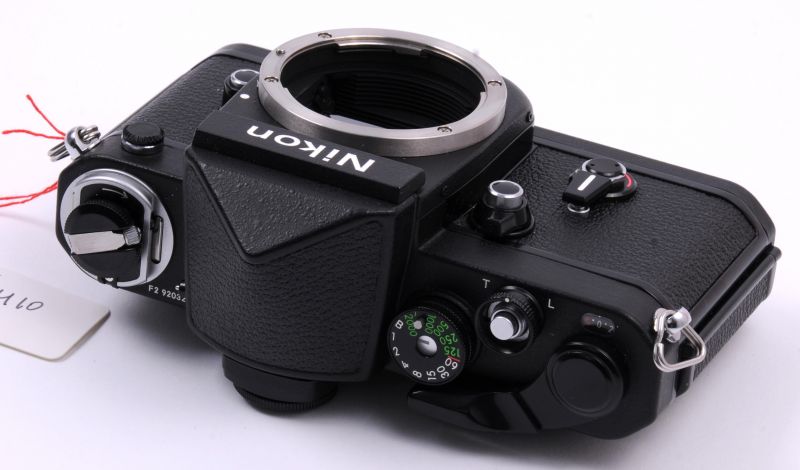
Nikon F2

The last fifteen years have been giddy ones for photographic hardware and software manufacturers. The acceleration of affordable, high equality digital cameras has popularized photography and SLRs far beyond the interests of professionals. Our obsession with technology created rapid growth in sales (at least until the combination of the financial crisis and the overwhelming popularity of camera phones), as each new generation of cameras with even more megapixels has been an easy way to persuade people to throw away their “old” camera and buy a new one, regardless of whether they needed it. Although I still have my grandfather’s fully functional Nikon F2 from nearly 50 years ago, these days we are living in a largely disposal culture.

Does your average amateur need more megapixels to take snapshots of friends and family? Considering the fact that the popularity of actually making prints has declined so precipitously among hobbyists (replaced by the internet), in practice most people don’t need to capture more than three megapixels. That’s the highest resolution of JPEG images you’re likely to find online, even in these days of ultra-dense “retina” displays. The primary reason to use a camera with more resolution than that is to be able to make prints, which require far greater pixel density. In effect, most people are paying for resolution they simply do not need, although higher resolution is usually accompanied by better lenses, sensors, and other aids to better looking images.

So can this technological change continue ad infinitum? Manufacturers have indicated that they have reached the limits of how many pixels can be squeezed onto a 35mm “full frame” digital sensor; studies show diminishing returns when more than 25-35 megapixels are crammed onto a 24x36mm sensor. Undoubtedly, Canon is mulling over how to provide a higher resolution camera than their current 22 megapixel flagship to challenge Nikon’s popular 36 megapixel D800, and pros as well as those who are simply enamored by technology will have fun choosing between them.

While there are far better ways to serve the vast majority of non-professionals using cameras than adding megapixels (a topic I’ll address in a moment), for professionals there are certainly plenty of reasons to improve basic imaging technology. First of all, a physically larger sensor provides significant advantages. Obviously, more megapixels can fit onto a larger CCD or CMOS sensor, but even more importantly, technical issues raised by confronting the density limits of a sensor are eased.

Light (photons) are gathered into buckets called photosites, and the larger those can be, the more photons can be gathered. This becomes especially critical in capturing shadow detail, which is challenged by several factors: 1) the number of photons is at its lowest in the darkest shadows, 2) spurious (ambient) electronic noise (showing up as random bright, saturated pixels) is most obvious the closer we get to black, 3) the human eye is far less responsive and less able to perceive subtle tonality in shadows than in highlights, and 4) when it comes to printing, shadow detail is one of the greatest challenges.

All of that simply means that larger sensors allows for bigger photosites and subsequently better images, especially in the shadows. Bigger photosites also mean being less troubled by the negative effects of a phenomenon called diffraction, which refers to how an image gets softened when light passes through a hole (i.e., an aperture).

Larger sensors also mean less depth of field, which is not appropriate for most photojournalism and street photography, but is one of the uniquely beautiful characteristics that still makes medium and large format film cameras preferable when you want to isolate a subject from the background. Sharpness and resolution can also be a tremendous asset for images with important detail, like landscapes, although it can be too much information in a portrait if you are noticing someone’s pores more than their face as a whole.

Since the proliferation of digital cameras, medium and large format digital sensors have been astronomically expensive. A state of the art 50 megapixel CMOS medium format camera from the industry leaders, Phase One and Hasselblad, will set you back about $30,000-40,000 for the camera body, digital back, and just one lens. That is overdue for change, as witnessed by Pentax’s recent announcement of their 50 megapixel CMOS medium format system that also shoots HD video, the 645Z, for only $8,500. This puts enormous pressure on Phase One and Hasselblad in a way that is good for the consumer, and very likely heralds a return to an updated version of the kind of medium format systems that were used overwhelmingly by professionals prior to the invention of digital cameras.

So what about the more casual photographer, the hobbyists or people who simply want to take snapshots of their lives? What kind of technical innovations are really needed for them? Camera manufacturers face a bit of quandary: your average non-technical camera user would simply like to get their hands on a camera that will make it easy to take great pictures. However, no matter how sophisticated the technology gets – autofocus, face detection, canned situational shooting modes, showy filters, etc. – you cannot put creativity in a can with a “make great picture” button on it. No technology will ever have an iota of understanding of what makes an image great. Just to take one example, exposure, the challenging lighting conditions that lead to frustration (under or over exposure, etc.) in the hands of someone is counting 100% on the camera to do the thinking are exactly the same conditions that can produce fantastic, dramatic images in the hands of someone who has taken control away from the camera’s technology and made a creative interpretation.

In the last analysis, it is precisely the illusion that better technology will lead to better pictures that keeps people buying new cameras – instead of accepting that there are no shortcuts. It simply takes study and practice!

Happy shooting.

Musical Theatre And The Hollywood Inspiration

Author: Mark Olsen, Chair, Musical Theatre Department, New York Film Academy

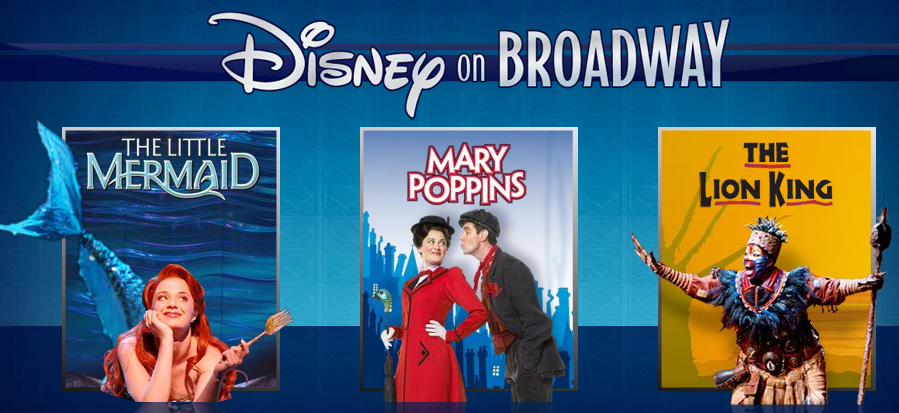
Disney On Broadway

In past eras, musical theatre trends were predominantly linked to styles of music and the vision of a few distinctive composers and creators who were writing as a way to reflect their time and to respond to the current pressures of their day. The universal themes of love and loss and the search for redemption or reconciliation were weaved into highly original plots that gave each production its unique sound and visual aesthetic within its newly minted world.

Fans waited with great anticipation to see the movie versions of stage musicals such as Oklahoma!, Brigadoon, Guys and Dolls, South Pacific, and of course, West Side Story. Many of the great musicals of that era did not just spring forth from pure imagination. They were adapted from another source. Guys and Dolls for example was based on Damon Runyon short stories, Oklahoma! is based on the Lynn Riggs play Green Grow the Lilacs and West Side Story is based on Shakespeare’s play, Romeo and Juliet.

Book and play adaptations have a long and successful history in the musical theatre genre. Borrowing themes and central plot ideas from these literary sources, the creators of the musicals of that earlier era enjoyed great success at the Broadway box office. In some cases, those adaptations as well as original works would be adapted for film, contributing to those box offices and gradually growing a new genre of entertainment called, the movie musical.

In recent times, however, a new trend has emerged in the musical theatre world and as a result, the earlier trend of stage works becoming movies has essentially reversed. Today it is evident that the Broadway musical genre has increasingly come to rely upon Hollywood and the world of the animated and non-animated cinema as its inspiration and source material. Movies, strangely enough, are now being adapted for the stage.

It is no surprise that Disney has become a leading force in this new trend. Moving successfully from animated feature to the stage, Beauty and the Beast and The Lion King launched this trend which has been playing out in a robust fashion ever since. Just a cursory list of recent Broadway musicals reveals not only how many film based musicals have or are now gracing the Broadway stage, but also how much the trend seems to be here to stay for the foreseeable future. Consider the following list:

The Producers, Young Frankenstein, Billy Elliot, Elf, Bridges of Madison County, Rocky, Once, Catch Me If You Can, Grey Gardens, Big Fish, Bullets Over Broadway, The Color Purple, Cinderella, Aladdin, The Little Mermaid. And as I write this, The Coal Miner’s Daughter and Dirty Dancing are in the works in London.

Clearly this is a formula that producers find attractive and in some ways you might ask why it took so long. Movies, we know, can be distributed across a much wider swath of the public and as a result, they can more readily garner the all important title recognition which can, at least initially, give the box office more reliable ticket sales.

As always, regardless the trends and regardless the shifting tastes, for a Broadway show to succeed there must be that elusive combination of magic where the music and the production and the actors and the story all merge to create a synergy of force that lifts audiences and has them dancing or singing as they leave the house. In other words, just because a movie was popular, it doesn’t necessarily spell instant success within the highly competitive Broadway arena. Just ask the producers of the recent flop, Ghosts the Musical.