
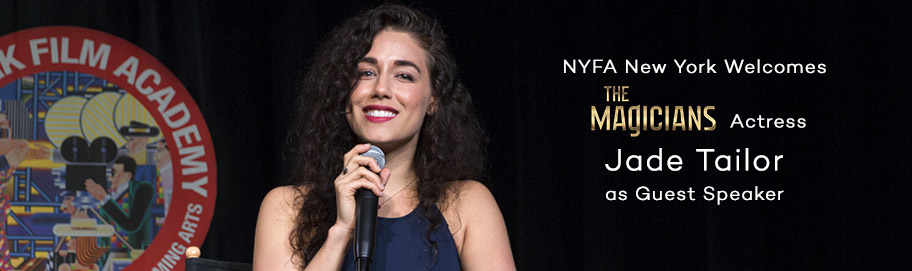
NYFA NEW YORK WELCOMES “THE MAGICIANS” ACTRESS JADE TAILOR AS GUEST SPEAKER

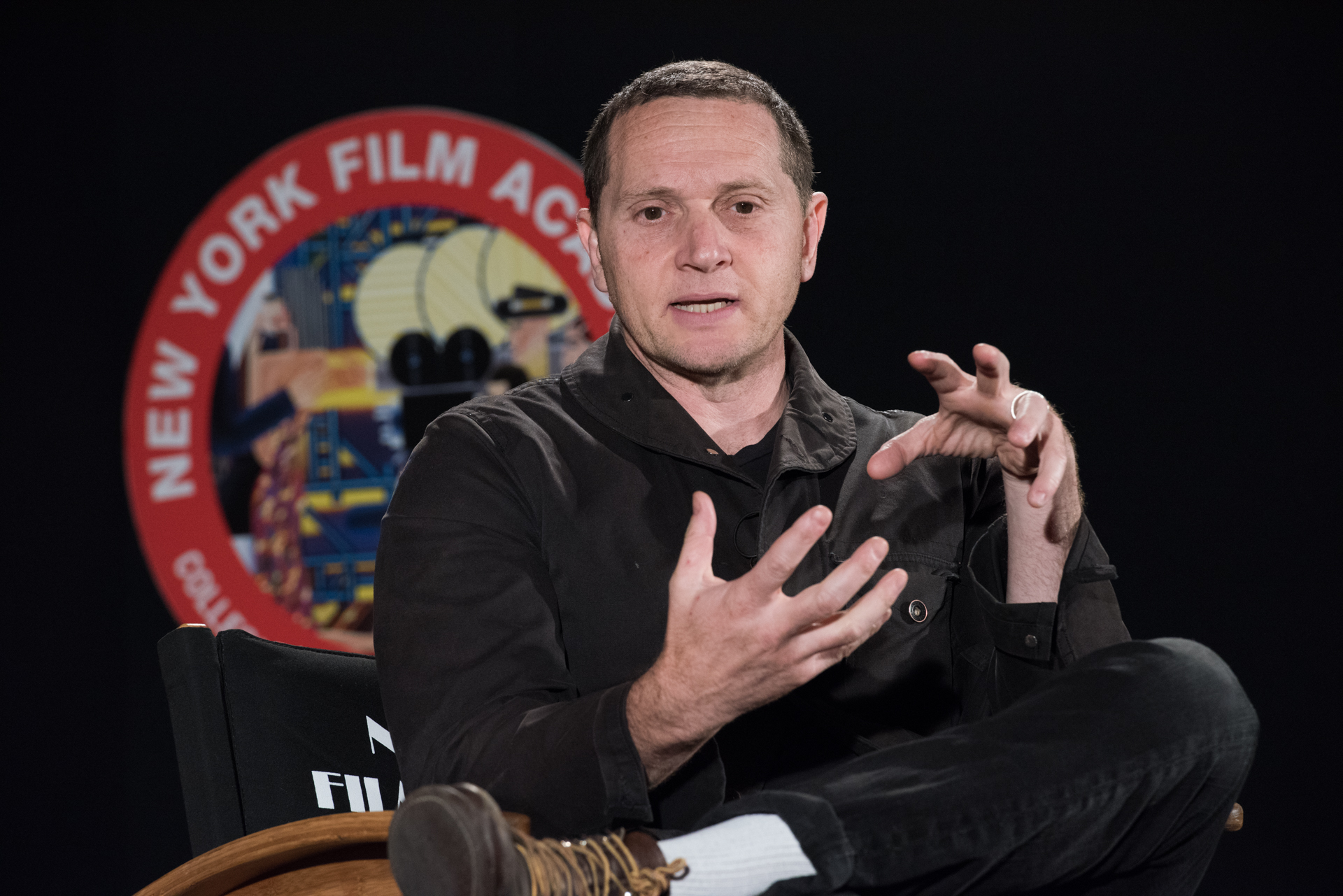
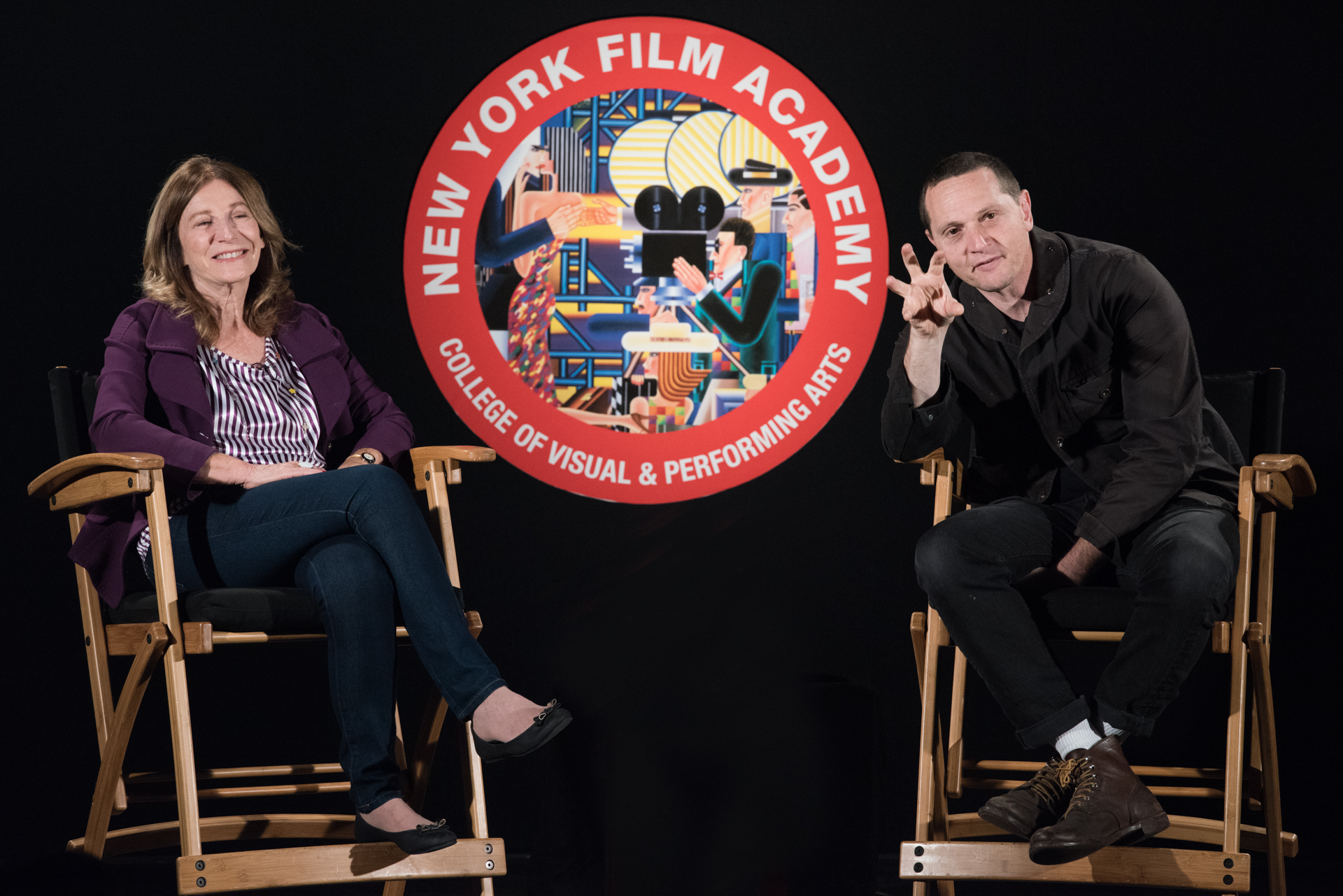
With Season 2 of Syfy’s fantasy series “The Magicians” now available on Netflix, New York Film Academy’s New York City campus welcomed actress Jade Tailor to a recent Guest Speaker event, moderated by NYFA Acting for Film Chair Glynis Rigsby.
In a warm and frank conversation that ranged from Tailor’s unique family to breaking stereotypes in casting, students were treated to her insights on navigating years of survival jobs before hitting a rhythm in the industry. “The big key is knowing your work so well that it doesn’t feel like work anymore,” Tailor told her audience of NYFA acting for film and musical theatre students. “Then you just get to play and enjoy it in the moment.”

Tailor is perhaps best known for her starring turn as Kady Orloff-Diaz in “The Magicians,” but NYFA students were inspired to hear the multifaceted artist’s story. The actress pursued her childhood dream despite various obstacles, and continues to nurture a passion for using her work as a platform to benefit others.

“I was blessed in so many ways, but it wasn’t easy,” Tailor shared. “So I’ve always wanted to fight for people who were not privileged, who had a difficult time, and I am blessed to have this platform, and I feel it’s my duty to utilize it in any way I can. I think that’s what the drive is, now that I have some semblance of being in the spotlight: I want to utilize that for good. And I want to do work that inspires me and inspires others.”

Growing up in Los Angeles with a mother who had worked as an actress in the 1970s and a father who had served in the Mossad, the Israeli Army’s elite intelligence community, Tailor credits her parents for teaching her a strong work ethic and a deep appreciation for training and craft as an actor.

“In a lot of ways those two aspects were a foundation of me working that hard,” Tailor explained, “But also because I loved it so much and it didn’t come easily for me. The craft did, but I was actually really really nervous as a child. I would get up and I would actually shake when I would sing, but I loved what I did so much more than the nerves, and it was important to me to overcome that.”

Tailor reminisced about years of “literally counting pennies to pay the rent” as an aspiring actor, working multiple jobs, and finding money-saving options in a “not inexpensive industry,” like working with fellow up-and-coming professionals for essentials like demo reels and headshots. “It was definitely a long arduous road, but I knew I would get there if I put everything into it.”

The actress repeatedly emphasized the need for aspiring actors to develop confidence and believe in their work. “I had this moment where I was like, something’s not working here: I’m not getting work, so what’s going on? And I was looking at myself and I went, okay, you know what, why do I do this? I do this because I love it. I do it because I love the craft, so I need to just go in there and do it because I love the work, and do it as if I’ve already gotten the job as if this audition is the job itself.”

She recalls that this mindset helped her during a pivotal audition for the producers of “True Blood,” where she went on to portray lead actor Stephen Moyer’s first victim: “I really let go in that room and went, who is this character, what is her intention here? And I connected to the work and who she was, and I got a call a couple of hours later that I got the job.”

After booking “True Blood,” Tailor shared, “I was like ‘Yes I made it!’ and then I got no work. There are gonna be moments where you get this great gig and then there’s a lull for a long time.” She stressed the importance of “having a great team behind you” as an actor, as well as “being conscious of the fact that you are going to have to sustain” through slow seasons as well as busy seasons. Tailor advised aspiring actors to get through lulls in their careers by looking for joy in their day jobs rather than thinking of them as a detour: “Not allowing yourself to get sucked into that world and drained by it, but how do you find the joy in it and know it’s just a stepping stone?”

Tailor’s hard work and patience was rewarded in 2015 when she booked “Aquarius” with David Duchovny. “I’ve been lucky to work with amazing people,” she said with a smile. “I was set up to do one guest star spot and then they actually wrote an entire episode for me later in the series and I think — I hope — that’s because I did great work.”

It was while working on “Aquarius” that Executive Producer John McNamara approached Tailor about reading for “The Magicians.” She originally auditioned for the role of Margot, but producers decided Tailor was a better fit for the tomboyish Kady, a character not in the original books and not at all like the roles Tailor had previously portrayed on television. Tailor revealed that Kady originally died in the first version of the pilot script, but that never dampened her excitement about the project.

After filming the pilot for “The Magicians,” Tailor kept busy. She filmed “Aquarius” and “Murder in the First” with Taye Diggs. Then, she got the great news that “The Magicians” had been picked up.

“I am so lucky to be on this amazing show that I love and that’s really fun with a great cast and crew,” Tailor said of “The Magicians.” Yet even in this busy season, the actress has her vision cast for the long term and is working to develop projects through her own production company, Eyeris Entertainment.

Tailor executive-produced her original project “But I Love Him,” which was born through the actresses’ volunteer work as a domestic violence counselor. She said that while viewing various training videos as a volunteer, she realized there was a need for a strong and accurate portrayal of what truly happens to victims throughout the cycle of abuse. She describes “But I Love Him” as “a pseudo documentary, because it was basically a woman filming herself while she was being abused, through that process.” The piece premiered at festivals and is now used by various organizations as an education tool for raising awareness about domestic violence.

Among the many nuggets of wisdom Tailor shared, she advised students to trust their own uniqueness, bring their own authenticity to each role, and build confidence through hard work. This is advice Tailor puts into practice herself, having created her own production company. “The work is so important to me,” shared Tailor, “And I always want to do work that is meaningful and inspires me and inspires others. I think when you’re inspired yourself it’s going to read to other people and then other people are going to be inspired too.”


NYFA Broadcast Journalism School 4th of July Weekly Update

Here in New York, we’re in the middle of an extended Independence Day holiday. However, given that many of you reading this aren’t in New York (or even the United States), here is the latest edition of the Weekly Update. (And for those of you just getting to work after a long weekend, “Happy Wednesday.”)

Google, which wants to challenge Facebook as the “go to” source for digital news has taken another step to insure what it promotes as “news” actually is “news.” They undertook a major redesign of the Google News site, which not only streamlined the look (so it works better on mobile devices) but also gives more prominence to fact-checking. In part, they are looking to crowd-source accuracy as well as clearly identify the publishers behind the information you are seeing.

(I’m old-fashioned, in that I think actual people have better editorial judgement than algorithms. Then again, I subscribe to not one but two newspapers.)

BTW, did you ever notice how this Weekly Update has lots of “where space?” Better for mobile…

Google News redesign

These days, the term Broadcast Journalism encompasses a wide range of platforms including legacy (“linear”) media along with an ever-growing array of digital outlets. It’s easy to forget that the first examples of Broadcast Journalism were found on radio, and that radio (now reborn thanks to podcasts) continues to be a great source of engaging content.

One of my favorites is Studio 360, which for years was based at public radio station WNYC here in New York. WNYC is shifting its emphasis to in-house productions, so the producers of Studio 360 went looking for a new partner. They found it in the on-line journal Slate. Part of what makes this relationship so interesting is that it brings together two of the older outlets of “new journalism.” Both have been around for more than a decade, which is a considerable achievement in an era when some platforms struggle to survive a few months, then succumb to a sea of “red ink.” (In bookkeeping, losses are written in red, profits in black.) You need more than compelling content succeed. You have to figure out a way to monetize your concept.

Studio 360 Slate

Those of you who have already attended NYFA know that one of the things we discuss is the transition from “broadcasting” to “narrowcasting,” as media platforms seek to reach niche audiences. Digiday had a nice posting on how Atlantic Media’s CityLab is looking to turn a profit reaching those involved in urban policymaking and development. One of the great secrets in our craft is how there is always a need for talented multimedia journalists in organizations that reach audiences most of us never realized existed.

CityLab

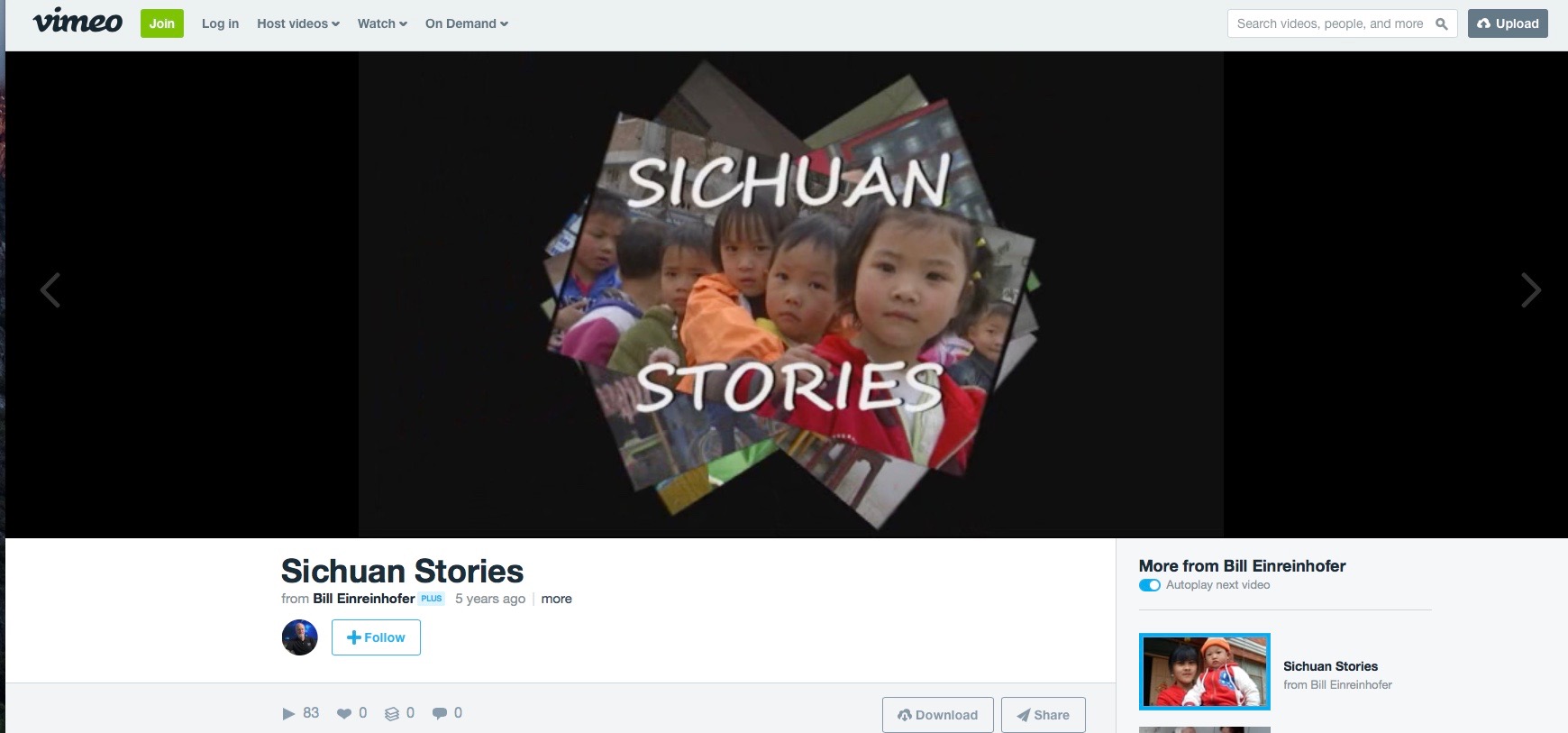
For many years, my production company created news packages and mini-documentaries for an in-house news program produced by Johnson & Johnson, the global pharmaceutical and consumer products company. In fact, it was thanks to J&J that I traveled across China, setting the stage for my many documentary projects there. One of my favorite projects, Sichuan Stories, took me to rural Sichuan province to report on recovery efforts following a devastating earthquake.

Sichuan Stories

Last week Spring 1-Year students Yvonne Camara and Odera Okapu made their debut as co-anchors of the latest edition of NYFA News. And while we don’t do the program with smoke and mirrors, we do use a green screen effect. Yvonne is from France, while Odera is from New York by way of Nigeria. The show’s producer is from Croatia. Talk about a global production staff!

Control Room 6-29-17

Our graduates are working around the world too. Recently short-term workshop graduate Alexandra Vidal was covering a Joaquin Sabina concert at the WiZink Center in Madrid. It looks like she was having fun. (Plus, if you are with “the media,” you get to go to concerts for free. Yes, you have to produce a story, but I can think of worse places to work…

Alexandra Vidal @ Wizink Center

Meanwhile, in Italy, NYFA grad Giordano Locchi told me he is now working at Adnkronos, a national news agency based in Rome. (He promised to send me some of his stories.) And while is certainly doing well, he adds “…I really miss New York.”


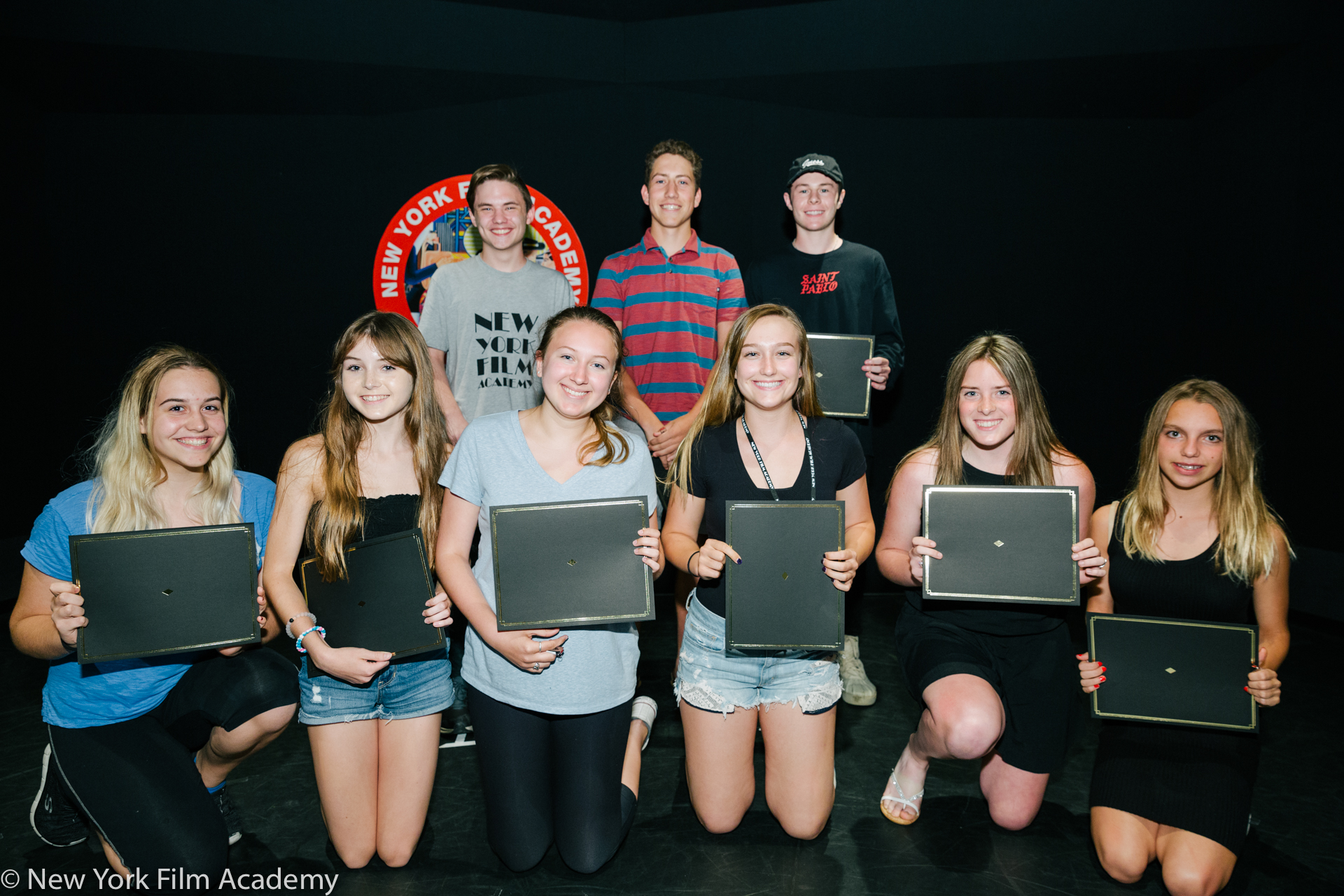
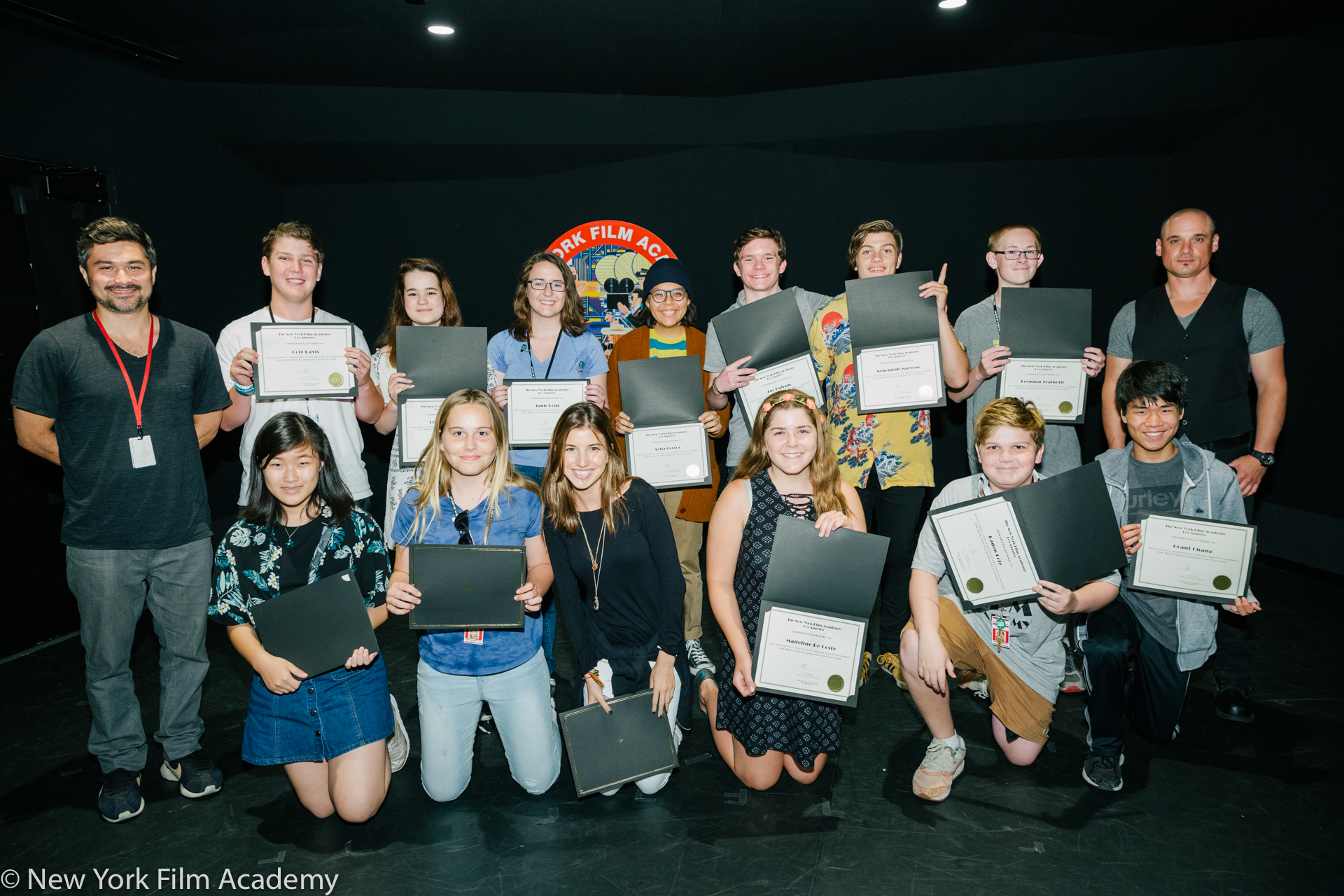
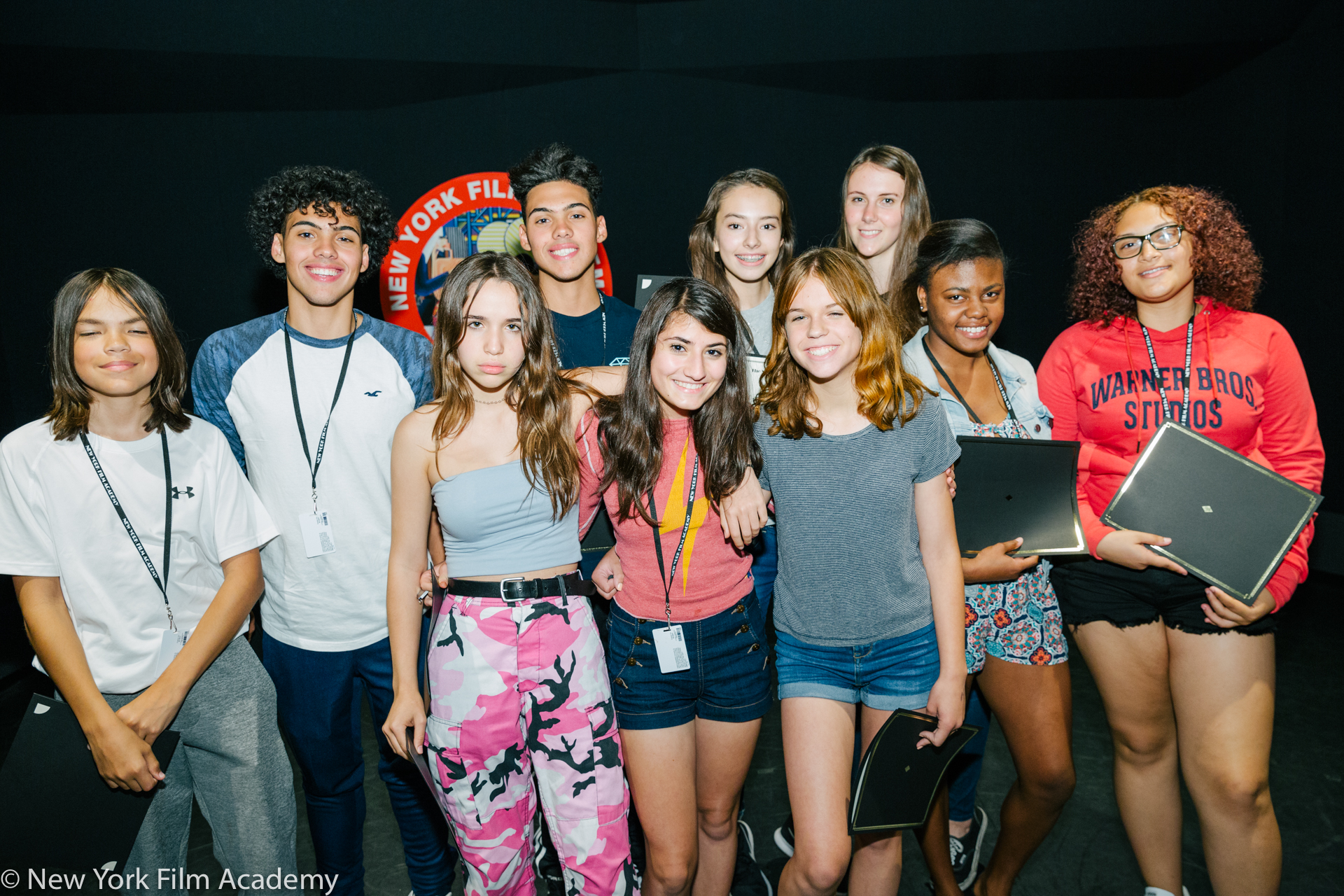
June Graduation for NYFA Teens and Kids Summer Camps

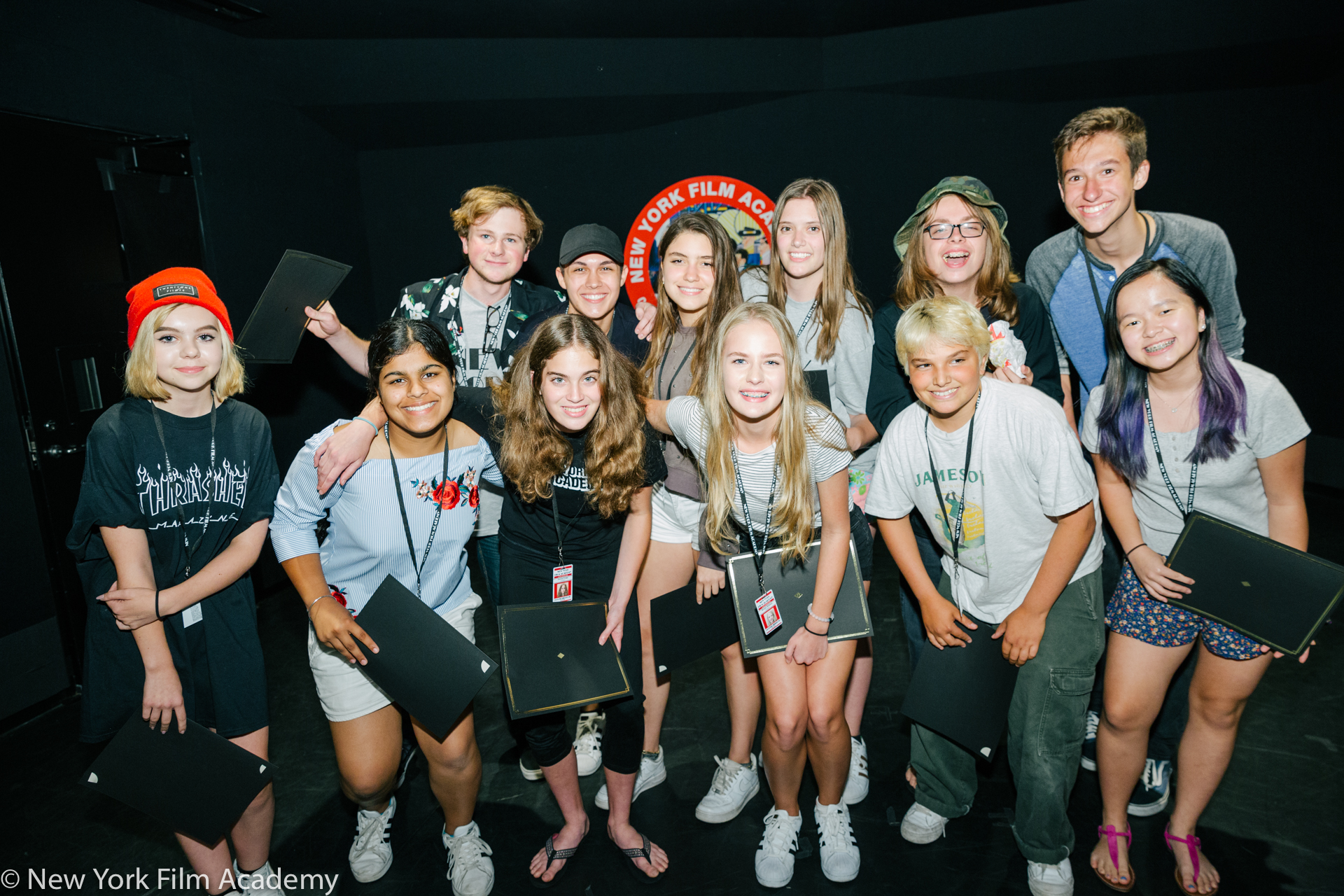
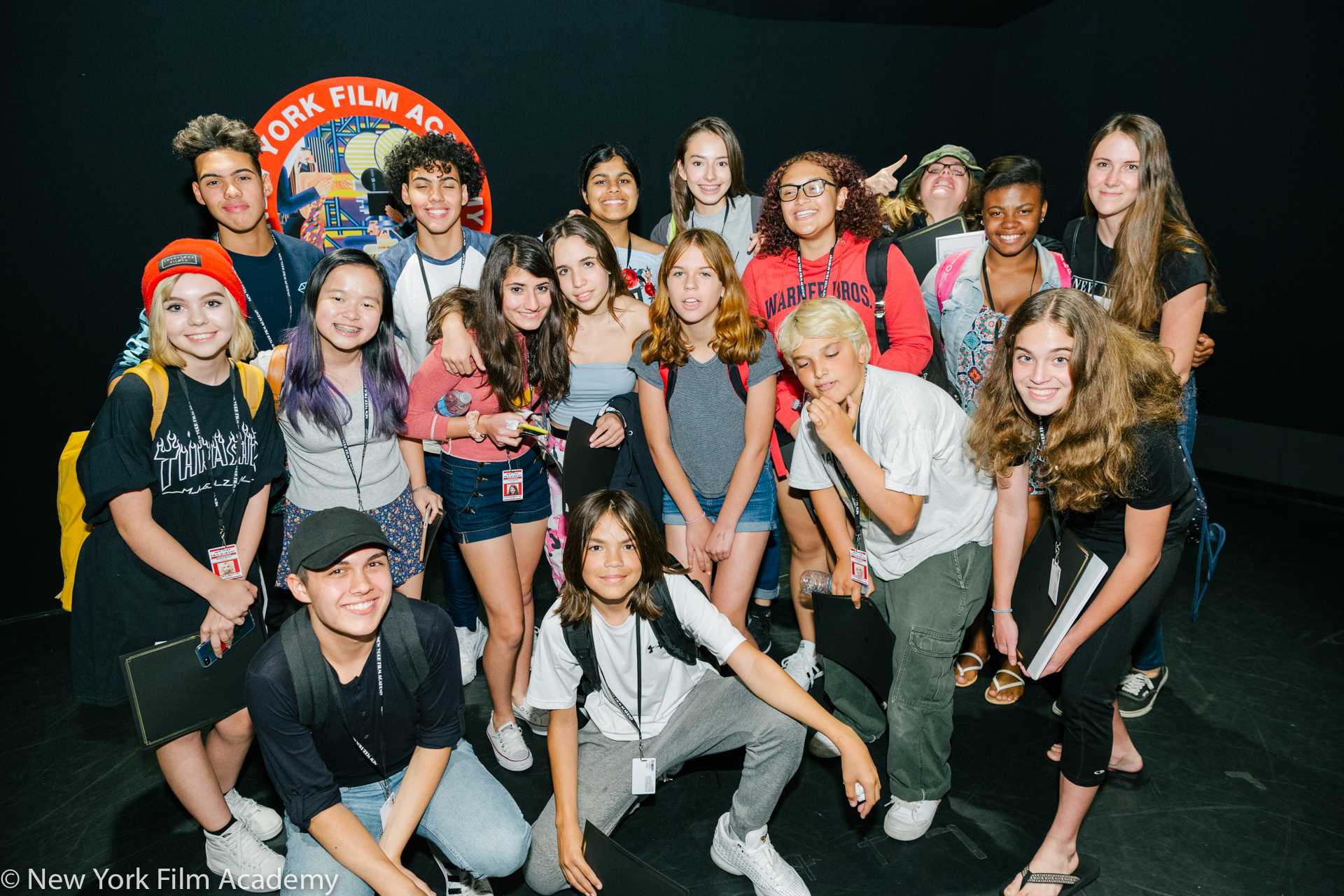
On Friday, June 27, the first New York Film Academy teen and kids summer camp programs came to an end. As students waited for their graduation ceremony to start, they took selfies while their parents banded together.

6B2A0075

As the lights dimmed, the acting students presented their one to two minute monologues. Their head shots were projected before the video began. Filmed against a white background “audition style,” each actor chose a unique piece to perform.

Then, the student’s short films were screened. Their backdrop was the Universal backlot, the same place “Hairspray” was filmed. Students were given a challenge to make a movie without dialogue. They wrote, directed, filmed, and edited their own productions from start to finish.

6B2A0036

Their instructors and councilors were in attendance and issued certificates of completion. In their farewells they offered words of encouragement. Camera Instructor Bart Mastronardi offered the wise words of Helen Keller: “Life is either an incredible journey or it’s nothing at all.”

“In five days you’ve done an amazing job. This is one of the best one-week programs. You’re all so ambitious. Parents and grandparents keep pushing these kids. They really appreciate it. Even if they don’t always show it,” said NYFA Instructor Martin Thompson.

6B2A0057

After they collected their certificates each student was given a copy of their work to use for reels or to share with friends and family. The graduates and their families finished the night with cupcakes and dancing by the pool.

Head of programs Ale Salinas described the programs objectively in her farewell, stating, “Some of you may have learned that this isn’t what you want to do at all, that’s valid, too. But I’m being honest when I say we’re going to miss you.”  6B2A0062

The New York Film Academy would like to congratulate all of the students in finishing their first film. We look forward to the seeing second film real soon.

NYFA Hosts Actor Matt Ross in Guest Speaker Series

The New York Film Academy was proud to welcome director and actor, Matt Ross, to the Los Angeles campus for a screening of his latest film, “Captain Fantastic.”  Director of the Q and A Series Tova Laiter, a producer known for her work on “Glory,” hosted the evening. Student packed the theater to standing room only.

Matt Ross is a standout character actor in Hollywood. In the film world, he’s known for such hits as “American Psycho,” “The Aviator,” “Good Night, and Good Luck,” and “Twelve Monkeys.” He’s no stranger to television either, having appeared in “Six Feet Under,” “Big Love,” “Magic City,” “Revolution,” “American Horror Story,” and, most recently, on HBO’s “Silicon Valley” as Gavin Belson.  

Matt Ross 006Ross is also a writer and director. His latest work, “Captain Fantastic” stars Viggo Mortensen as Ben Cash, a man who raises his six children in the wilderness with his wife. The family has shunned all technology, but when Ben’s wife dies, he has to take his children out into the world.

Laiter asked Ross about navigating the tension between the time one needs to immerse oneself in his/her profession, and the time one needs for parenting.

“We live in a culture where you have to navigate work and parenting,” Ross said. He felt that it was easier for him to do this than many of the women he’s met that try to do the same thing. Society is ok with him being a father and a working creator. There’s a lot of societal pressure to be the perfect mom first.

Laiter then turned the conversation to Ross’ beginnings. Ross grew up in rural California to similar circumstances as depicted in the movie, not knowing anyone in the entertainment business, but he applied and was accepted to Juilliard’s acting program. “I made films before I acted. I didn’t think I wanted to act. I just wanted to tell stories and that’s all acting is.”  

But Ross was not satisfied with acting alone, revealing, “I taught myself to write.”

His film “28 Hotel Rooms,” which portrays discovering marriage after romance, was inspired by director Mike Leigh, who workshops intensively with his actors. The short film received notice at Sundance and led to him writing and directing “Captain Fantastic,” which won him directing kudos in Cannes and a SAG nomination for Viggo Mortensen.

Matt Ross 003Students were eager to speak with Ross about his acting career. One student asked, “How does the on-set dynamic and environment change as an actor as you’re working on sets like ‘American Psycho’ with actors like Christian Bale, as opposed to working on ‘Silicone Valley’ with comedians like T.J. Miller and Kumail Nanjiani?”

“I don’t think there’s any difference,” Ross responded. “I don’t come from comedy,  improvisation or stand-up. But, I think it’s all problem-solving. For comedy, you have the added difficulty of identifying and illuminating what’s humorous, whereas with drama you’re more focused on illuminating the perceived truth. It’s the same goal.”

One student asked Ross if having so many children on set of “Captain Fantastic” was an exceptional challenge for him as a director.

Ross replied, “They’re not difficult in the ways that people think they’ll be difficult. The difficulty was that they were having too good a time and so they’re playing around too much. I was worried about losing the light.”

Ross advised the students, “Everyone has a process. My job is to create an environment in which their process can flourish. Kids need more time to get in character. Charlie was really young. Sometimes I’d have to break things down. Sometimes Viggo would push Charlie. Sometimes I would give him things to try. We’d play until we got it right.”

The New York Film Academy would like to thank Matt Ross for taking the time to speak with our students. “Captain Fantastic” is now available for download on Amazon.

NYFA 3D ANIMATION CONSERVATORY GRADUATE FRANCESCO PANZIERI IS DIGITAL COMPOSITOR ON “SPIDER-MAN: HOMECOMING”

With the release of “Spider-Man: Homecoming” on July 7, New York Film Academy goes behind-the-scenes with Marvel Studios In-House Digital Compositor and NYFA Alumnus Francesco Panzieri.

“Spider-Man: Homecoming” is the first installment of a new Spidey trilogy created through the first-time partnership between Marvel Studios and Sony Pictures. With superhero films experiencing a cultural resurgence, the re-launch of Spidey has fans and filmmakers buzzing worldwide. But with six Spider-Man films in recent memory, what will surprise them in 2017?

According to Panzieri, “Spider-Man: Homecoming” will stand apart due to its combination of great storytelling, and a focus on the superhero’s dual struggles to become an Avenger and survive high school: “I think that the high-school part makes the character extremely compelling because it gives the audience a shared point of view with Peter, since all of us have been through similar life moments.”

Since the film is the result of a collaboration between Marvel Studios and Sony Pictures, it will also be the first time fans see Spider-Man as a standalone hero in the Marvel Cinematic Universe. Panzieri believes mega blockbusters like films in the Marvel Cinematic Universe attract audiences primarily through their great storytelling.

“Write something good,” he says, “Something really good, that people can relate to, and then maybe use visual effects to enhance your cinematic vision of that story.”

The animation and effects artist says that it is Marvel’s passion for storytelling that motivates the hard work and innovation required to create the gravity-defying effects. “The great thing about Marvel is that they have more productions happening but nothing is at the second level,” says Panzieri. “Everything is at the same priority.”

Panzieri describes an atmosphere of camaraderie and excitement at the studio: “In the studio we had every day all the top-notch leadership team of Marvel Studios surrounding us. While we were working on the visual effects for the feature film, they were focused on refining and improving editing and storytelling with the director. What surprised me in a truly unique and positive way, was seeing first-class executives such as the Marvel ones hard at work from dawn’s early lights until late at night. In those moments I realized the true strength and secret of Marvel Studios that deservedly brought them to be number-one in the entertainment industry: the love and energy that they put into each and every production they make. Everyone who works at Marvel is an extremely genuine, passionate and dedicated fellow; it’s a huge, big family where there is a unique synergy between all the roles.”

Along with a great story, Panzieri points to a new colorspace technology created by the Academy of Motion Picture Arts and Sciences called ACES (Academy Color Encoding System) as a vital ingredient to the look of “Spider-Man: Homecoming.” Panzieri says, “It was a cool experience for me to test it for the first time and I look forward to ACES being the soon-standard-to-be on features, episodic and commercials.”

Transitioning from film school to major blockbuster productions is entirely a matter of building relationships, according to Panzieri — and being prepared with the skills for hard work. Panzieri points to his training in New York at the New York Film Academy’s 1-Year Conservatory program, as playing a valuable role in preparing him for his work: “I must say that the long hours of classes and lab at NYFA were definitely an advantage to me on every project I worked on thus far … I can definitely say that the instantaneous hands-on environment I found myself in during my time at NYFA was a true testament to how you’ve got to be when working in Hollywood. Visual effects is art, technology and science at the same time, and as such you need to be really focused, dedicated and good at craftsmanship to keep up with its high quality demands you face in entertainment.”

“Spider-Man: Homecoming” is the first installment of a new Spider-Man trilogy created through a first-time collaboration between Sony Pictures and Marvel Studios. Box Office Pro has projected a box office opening of $135 million, which ScreenRant notes would make this the sixth largest opening out of 16 Marvel films.

The Academy of Motion Picture Arts and Sciences Diversifies With 774 New Members

On June 28, the Academy of Motion Picture Arts and Sciences (the Academy) admitted the biggest, most diverse class of new members in the institution’s 90-year history. According to the Academy’s official site, this year’s class includes 774 entertainment professionals from 57 countries, signaling a continuation of the Academy’s commitment to pursue greater diversity and inclusion for women and minorities within its ranks.

The New York Film Academy has always celebrated the diversity of the international entertainment industry, which is reflected in our student body: 50 percent of NYFA students are from countries outside the U.S., with an equal representation of male and female students. As New York Film Academy President Michael J. Young notes, “This very diversity is a pillar of the industries our students hope to enter upon graduation,” and supports the raising of a new generation of film and media artists that can help build toward greater inclusion both onscreen and behind the scenes.

The New York Film Academy has reported in its Gender Inequality in Film Infographic that approximately 5 men are employed for every 1 woman in the film industry, and women account for only 30.8 percent of speaking characters on screen — though women make up 50 percent of the U.S. population. Figures for the inclusion of minorities in the industry are no better, with NPR reporting in 2016 that a USC study found only “28.3 percent of characters with dialogue were from non-white racial/ethnic groups, though such groups are nearly 40 percent of the U.S. population.”

As the LA Times notes, the 774 new members of the Academy of Motion Picture Arts and Sciences are announced after a period of time in which the Academy, along with the wider entertainment industry, has attracted scrutiny and debate over issues of inequality. The underrepresentation of women and minorities created controversy during the 2016 and 2017 Oscars ceremonies, with many protesting the predominantly white and male nominations — nominated by a predominantly white and male Academy — under the rallying cry #OscarsSoWhite.
According to an interview with the Academy of Motion Picture Arts and Sciences CEO, Dawn Hudson, in the LA Times, addressing inequality is a long-term project for the Academy: “That commitment [to diversity] has not waned and will not wane for many years to come. Because I don’t see this industry getting a lot more diverse or having more gender parity anytime real soon. So this work will be ongoing for the Academy. And I know that it has inspired others to follow suit.”

According to the Academy’s website, while the addition of its 774 new members reflects a359 percent increase in women” and a “331 percent increase in people of color” inducted since 2015, the total percentage of membership for women and minorities in the Academy remains low, at 28 percent for women and 13 percent for minorities

The New York Film Academy is committed to nurturing a diverse and international community for students, faculty, and staff. For the full list of the 774 new members of the Academy of Motion Picture Arts and Sciences, click here.

New York Film Academy takes a look at gender inequality in film

NYFA Filmmaking Alumnus Samuel Nieves Interns With NFL Films

Jer OTR1NYFA filmmaking alumnus Sam Jeremy Nieves has not only navigated the transition from military to civilian life, but also the transition from life as a film school student to securing a coveted spot as a Cinematography Intern with NFL Films.

Sam took some time out of his busy schedule to share with the New York Film Academy community about his incredible journey, and the determination to do “whatever it takes” that has inspired his hard work along the way.

NYFA: Hi Sam, congratulations on your upcoming internship with NFL Films! To start off, can you tell us a little bit about where you’re from and why you decided to study at the New York Film Academy?

IMG_1465 (1)
Sam Jeremy Nieves

SJN: I was born and raised in Philadelphia. It’s a very hard-working, hands-on type of city, which is how I learn best. I knew at about age 14 that I wanted to go to film school, while shooting mini-chase scenes with my hot wheels cars, taking classes for film photography and mass media, and doing video work for my church.

When the time came, however, I could not afford film school and was devastated, but still determined to take whatever detour necessary to get where I wanted to go. The “detour” in this case was the Marine Corps. I knew I could use the G.I. Bill to help pay for college, so I chose to become a Combat Photographer (turning down a $25,000 bonus offer for another military job, in the process) with the Marines, earning my G.I. Bill, and making my own way to college.

I was stationed at Miramar (where they filmed “Top Gun”!) in San Diego, and Camp Pendleton, which put me in California towards the end of my enlistment. Originally, I had my sights set on attending film school in Florida, but already living in California, I began searching for a school within the state that had a very hands-on type of bachelor’s degree program in filmmaking, and that also accepted the G.I. Bill. That’s when I found out about the New York Film Academy.

NYFA: What led you to choose a path in cinematography? What inspires you most as a cinematographer?

Cinematography Reel from Sam Jeremy Nieves on Vimeo.

SJN: Cinematography, for me, is a deep-seated passion and craft that I’m always learning and pursuing.

I started taking film photographs around age 10, with my mother’s camera. I was bored with the traditional photos, taken at family BBQ’s and pool parties, and I thought I could do something a little different. My mother let me use her camera more and more, encouraging me to keep going. That was the beginning of my life-long passion for creative imagery.

Another moment I experienced, that further sealed my career choice, happened around age 17. I had been doing camera work and intro videos for my church for a few years, and one video in particular culminated with the illusion of a man being hit by a speeding car. I couldn’t wait to see what the reaction from the audience would be. When the moment came, it drew an audible gasp from the crowd of over 200 people, and it was the most incredible feeling, sitting among them in that moment, having created something that truly captured them for an instant, making them feel something. I knew, right then, that I wanted to keep on doing this for a long time, creating images, and experiences like that for people to lose themselves in.

Initially, I wanted to enroll in the cinematography program at NYFA, but it’s a master’s degree program rather than a bachelor’s. So, I chose the filmmaking program instead, seeing it as an opportunity to shoot more projects as the lone cinematographer in a class full of directors.

Inspiration, for me, comes primarily from music, or other people’s work. I love hearing a great piece of music, and translating the emotions of it into visual ideas. I’m also a big fan of Roger Deakins and Emmanuel Lubezki. I think their work is incredible, and innovative, and their attitudes toward their craft are very humble.

NYFA: As a veteran student, you’ve transitioned both from military to civilian life, and from film school to securing a competitive internship. What advice would you offer to fellow students facing similar transitions?

Photo by Sam Jeremy Nieves: http://www.samjeremynieves.com/
Photo by Sam Jeremy Nieves: www.samjeremynieves.com

SJN: The transition from military to civilian life can be very different, from person to person, but I think the success of my own transition came from having a specific goal, a plan for that goal, and following through with it. Never go into a transition without some sort of plan, or at least an idea of what you want to do, especially when you have the advantage of knowing when that transition will happen.

My goal, even before enlisting with the Marine Corps, was to go to film school. My plan was to apply to my school of choice, set up my G.I. Bill, and find a new apartment, all within the last 12 months of my enlistment. I followed through with that plan, and ended up with a bachelor’s degree in filmmaking, that I am very proud of, and thankful for.

The next transition was much more difficult to navigate, but again, having a specific goal in mind was essential. I was about to graduate film school with a family to take care of (my wife and newborn son), no more G.I. Bill benefits (which paid for our apartment), and no income. It was the most challenging time of my life, and it deeply tested my passion, and career choice. I knew that if I was going to make it work, I’d have to get out of my comfort zone, and be willing to do whatever it takes. This seems to be where a lot of people get stuck and give up, but if you really want it, you have to be passionately stubborn, and push through the inevitable challenges. You really have to take advantage of every avenue you can, especially in an industry like this, where everyone’s path seems vastly different.

d12f44_fc9722d39a814e149001a36e4c45cd84-mv2_d_3717_2298_s_2
Photo by Sam Jeremy Nieves: www.samjeremynieves.com

My wife and I decided to move back home, with my parents, who graciously prepared the whole first floor of their house for us to stay in until we could find a job and an apartment. This really seemed like an embarrassing step backward, but again, I knew I had to be willing to make difficult decisions, and do whatever it takes to make this work. You often hear “it’s all about who you know,” and this quote was always very frustrating to me because I felt as though I didn’t have a dad that was a famous Hollywood director, or a great aunt that was some famous executive producer. But sometimes, “the people you know,” aren’t that obvious.

One person that was extremely helpful was Chair of Industry Outreach and Professional Development at NYFA, Barbara Weintraub. Barbara incredibly makes herself available as a resource to the entire school, and can be that “person you know,” to help along the way. She helped me restructure my resume and fine-tune my cover letter when I was applying to NFL Films, and answered any questions I had about the process.

I also found out, through conversation, that my uncle had a co-worker who had worked for NFL Films in the past, so I asked my uncle if he could talk to him for me. He said “of course,” and also showed him my resume and cover letter, which gave him enough confidence to contact NFL Films on my behalf, referring me for the interview I was after.

It’s great if you have someone who can help you land the interview, but at the end of the day, they can only get you in the room, it’s up to you to get the job.

NYFA: Would you say your time at NYFA prepared you for pursuing this internship opportunity?

d12f44_d65d1e46d7904bb2a152b7d255bb609f-mv2_d_5104_3744_s_4_2
Photo by Sam Jeremy Nieves: www.samjeremynieves.com

SJN: I know that my time at NYFA was very important in my pursuit of this internship opportunity. I also recognized early on that it was up to me to get the most out of my college experience, and not anyone else’s responsibility — including the instructors. I learned as much as I possibly could, asked questions, got my hands on every piece of camera equipment NYFA had to offer, got on as many sets as possible, and shot as many projects as time would allow.

During my interview at NFL films, I was then able to talk about my experience with a wide variety of cameras, and formats, and my versatility in learning new equipment. I graduated NYFA, having taken full advantage of everything their program, instructors, and staff had to offer. I had gained a new confidence in my craft, and in my experience, that became evident during my interview, and had an effect on the way I spoke and carried myself.

There were several especially great teachers that I had the pleasure of learning from at the New York Film Academy, and I made sure I learned everything I could from them, regardless of any previous experience or knowledge I might have already had, coming into the program. NYFA has a great program, for anyone who is willing to do the work, and really pursue their craft.

d12f44_20c24ea29bc547b8a8078988f116dcef-mv2_d_4884_2328_s_2
Photo by Sam Jeremy Nieves: www.samjeremynieves.com

NYFA: Can you tell us a little bit about what will you be doing as an intern with NFL Films?

SJN: As a Cinematography Intern with NFL Films, I will be working and learning directly from the best cinematographers in the sports industry, seeing how they operate, firsthand, on and off the football field. I will also be assisting in many ways, including prepping camera equipment, running cable, driving camera trucks, filling out camera reports, and so on.

Interestingly, I’ve done all of those things many times on various sets during my time at NYFA, and was even asked about this during my initial interview at NFL Films. NFL news used on this page source of nflbetting.us via NFL Betting. I’m looking forward to the experience because it puts me in close proximity to people who know much more than I do about the craft that I love.

NYFA: Are you currently working on any other projects you’d like to tell us about?

SJN: While looking for a job, or internship, I was also making myself available for freelance work. I recently worked with the Office of the Attorney General of Pennsylvania, shooting video and photos of their Special Operations Group during an overnight, woodland training exercise. It was very exciting, and similar to the kind of work I did as a Combat Photographer for the Marine Corps. I also got involved with a local hockey charity event, featuring several players from the Philadelphia Flyers, during which I will also be shooting video and photos.

The New York Film Academy would like to thank Sam Jeremy Nieves for sharing a bit of his story with the NYFA community and fellow Veteran students.

Chair of Cinematography Tony Richmond Screens His Classic “The Man Who Fell to Earth” At NYFA Los Angeles

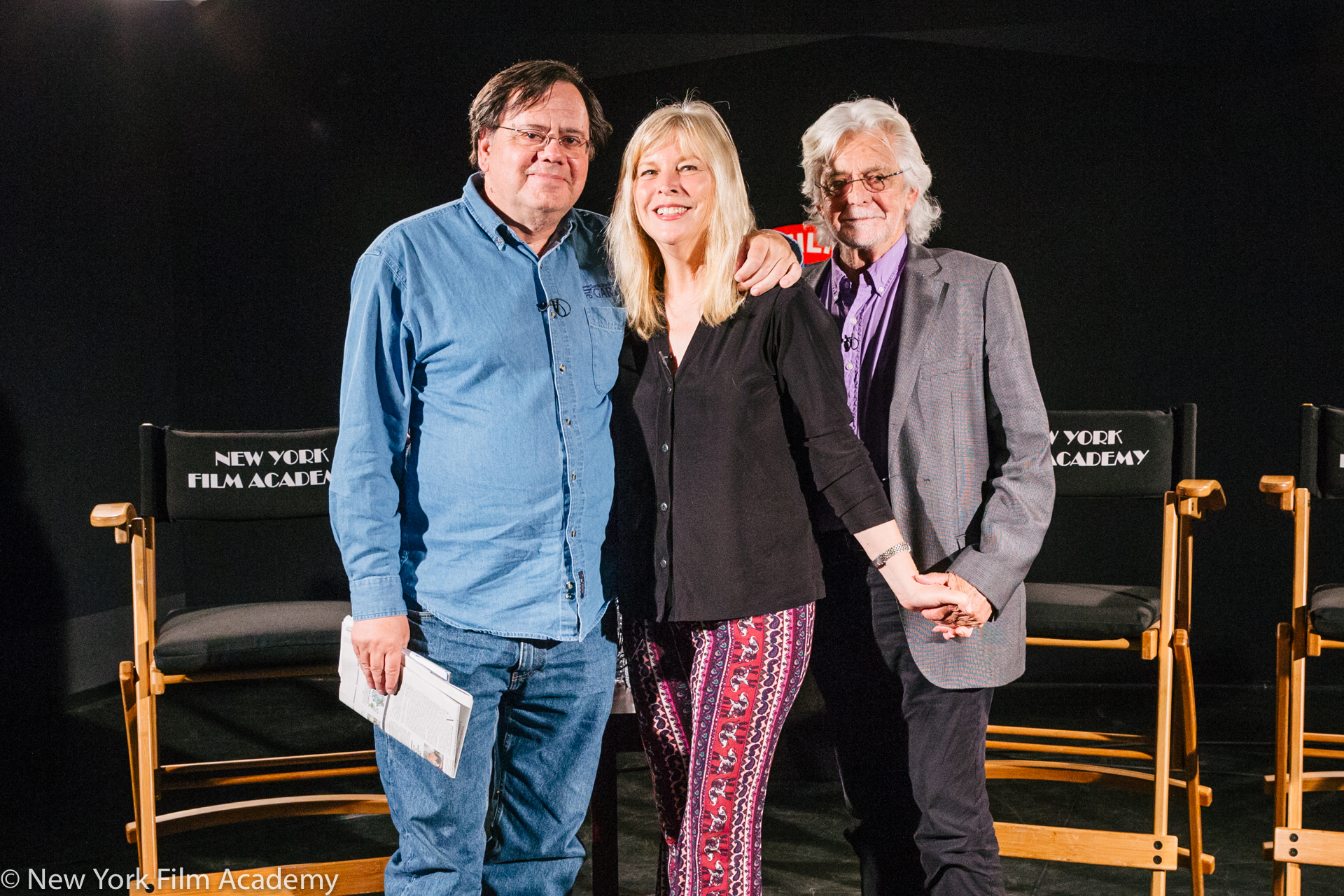
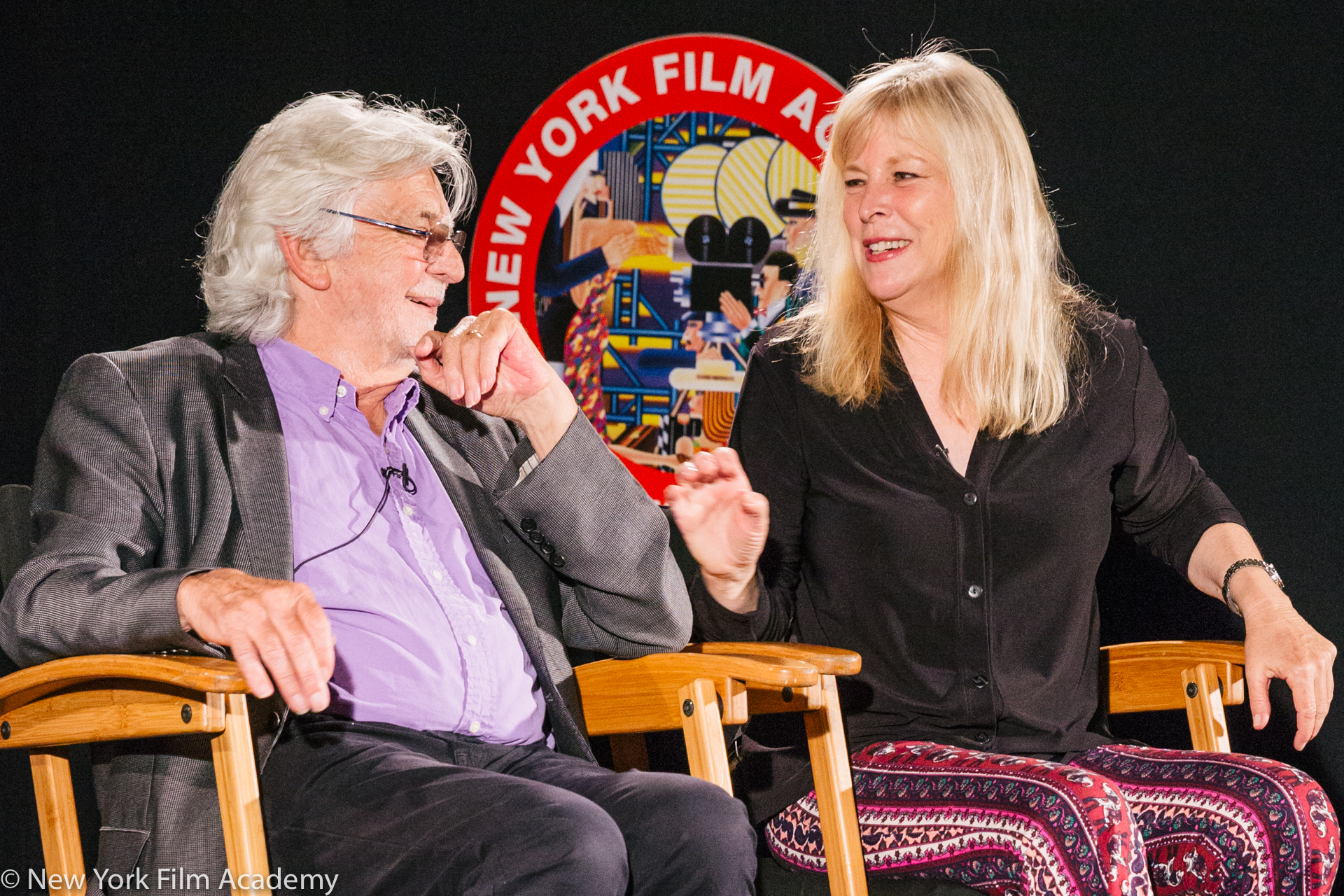
On Monday, June 26 New York Film Academy students were treated to a star-studded screening. NYFA’s Chair of Cinematography Tony Richmond screened his classic film “The Man Who Fell to Earth.” The film’s leading lady Candy Clark joined him for the discussion of one of David Bowie’s most popular films.

Directed by Nicolas Roeg,The Man Who Fell to Earth is about an alien (Bowie) trying to save his planet by siphoning water off of Earth. To do so, he assumes the identity of Thomas Jerome Newton, starts a billion dollar company, and moves in with Mary-Lou (Clark). But the creature could not predict the cruelty of business done here on Earth and soon must face the consequences.

_20A2594

Film critic and frequent NYFA collaborator Peter Rainer hosted the Q and A. Rainer kicked off the evening by enquiring about working with the renowned director and frequent collaborator of Richmond, Nicholas Roeg.

Landing the lead male role for any film can be difficult. Roeg originally had someone else in mind for the role. As Richmond shared, “Nick’s first choice was Michael Crichton. He was very tall. He was going to do it and then pulled out. The whole thing kind of fell apart. Then Nick saw ‘Cracked Actor,’ a documentary on David Bowie on the television. They scheduled a meet-up. Bowie kept him waiting for about six hours, eventually said he would do it, and then we were off and running.”

Many perceive “The Man Who Fell to Earth to be a science fiction film. According to Rainer, this is not the case: The themes are much more closely related to a family drama. This weird blend of genres along with the magnetism of superstar David Bowie at the helm the film led to the creation of a hit. But, as actress Candy Clark told students, not everyone thought that success would translate.

“It’s a two hour and twenty-three-minute movie,” Clark began. “Donald Rugoff, head of Cinema 5 at the time, had a reputation for putting out art house films that exemplified the director’s vision. But with this film, he started seeing dollars. Nick Rogue and Graeme Clifford had spent a year and a half meticulously cutting this film, piece by piece. Rugoff got a hold of it. Despite his reputation, he decided to cut twenty-three minute. He hired a guy who cuts commercials. This film took a year to cut. The new guy did it in a week. He just willy-nilly took out stuff.”

While touring to promote the film, Clark saw the fist American cut of the film.  She called Nick immediately after, but the damage was done. “Years later I called up Cinema 5. I pitched this big lie that I was getting asked about the film all of the time.” Clark then convinced them to release the original cut of the film, saying she told them, “You don’t have to spend any money. Just take the original poster and add a banner with the word: uncut. I’ll promote it any way you want … As a result, the American cut has dwindled to the wayside. All that is seen now is the director’s cut. It’s now out on Criterion. I never gave up on this film.”

_20A2546

During the Q and A, one student asked how Richmond planned so many of the daytime shots to get the light just right.

Richmond revealed, “I would like to say that I did it. But I was so, so lucky with the sky. Every time we did some vast exterior there would be this incredible sky. The scene with the cottage, for instance, that cloud hung over the cottage all day. It never moved. I went back to Mexico and I was going through this little town and I felt like I’d been there. Now, it’s a huge artist commune.” The location holds artistic magic.

The New York Film Academy would like to thank Tony Richmond and Candy Clark for sharing their experiences with our students. We would also like to thank Peter Rainer for hosting the night’s festivities. The 4k restoration of “The Man Who Fell to Earth is now available everywhere Blu-Rays are sold. Rainer’s book “Rainer on Film” is also available for sale on Amazon.

NYFA Los Angeles Hosts Exclusive Talent Meet & Greet for Acting for Film Students

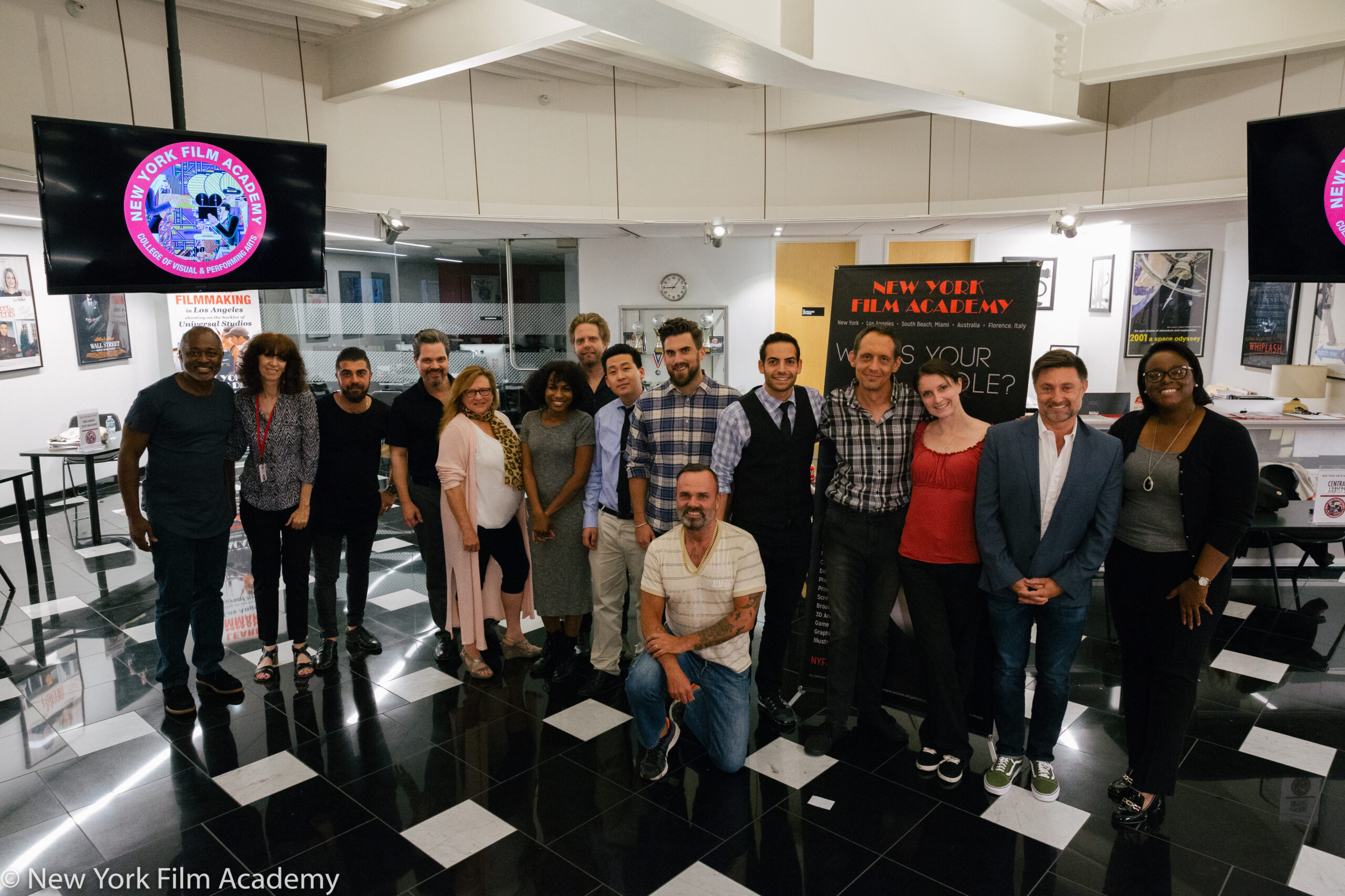
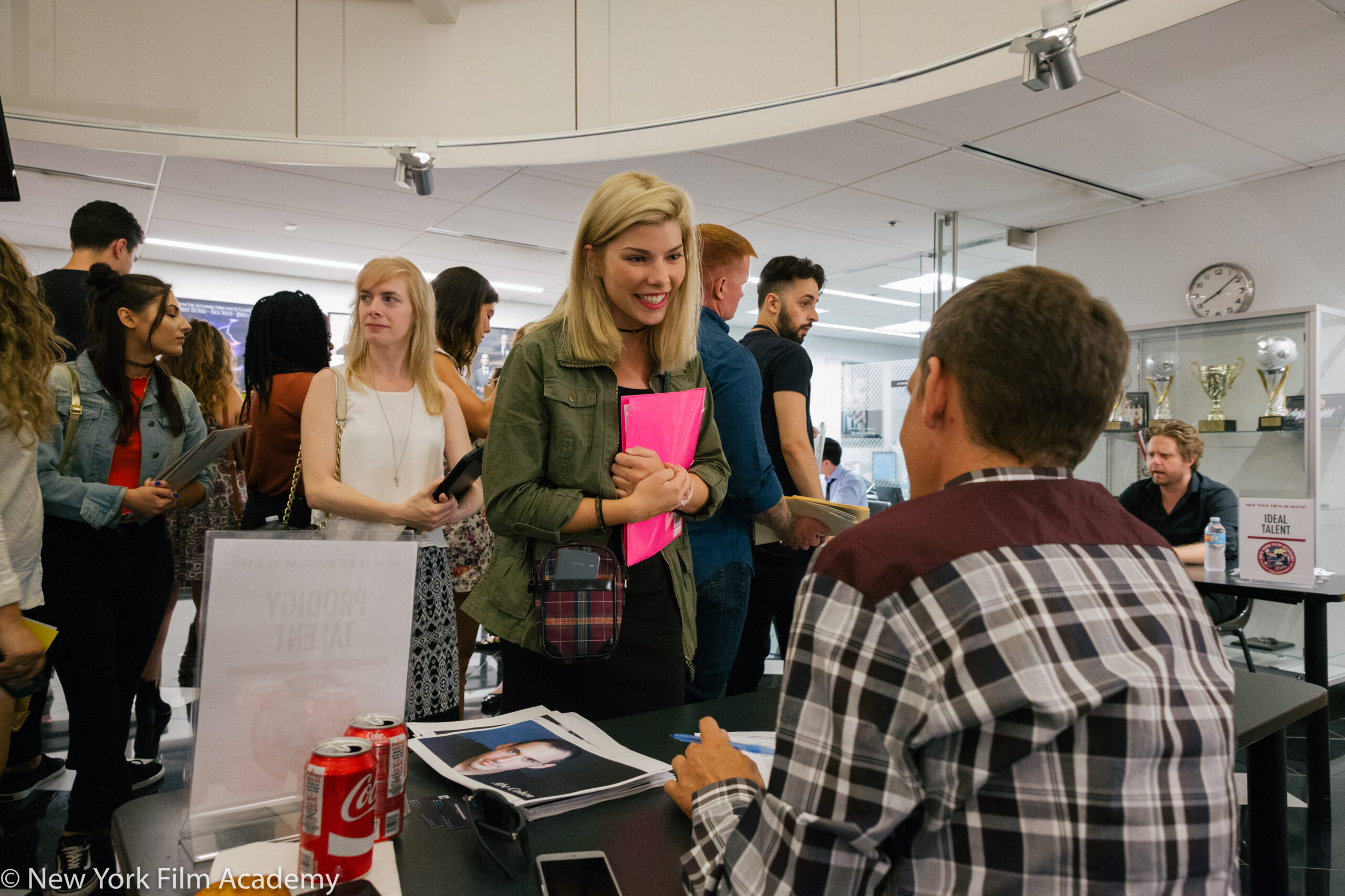
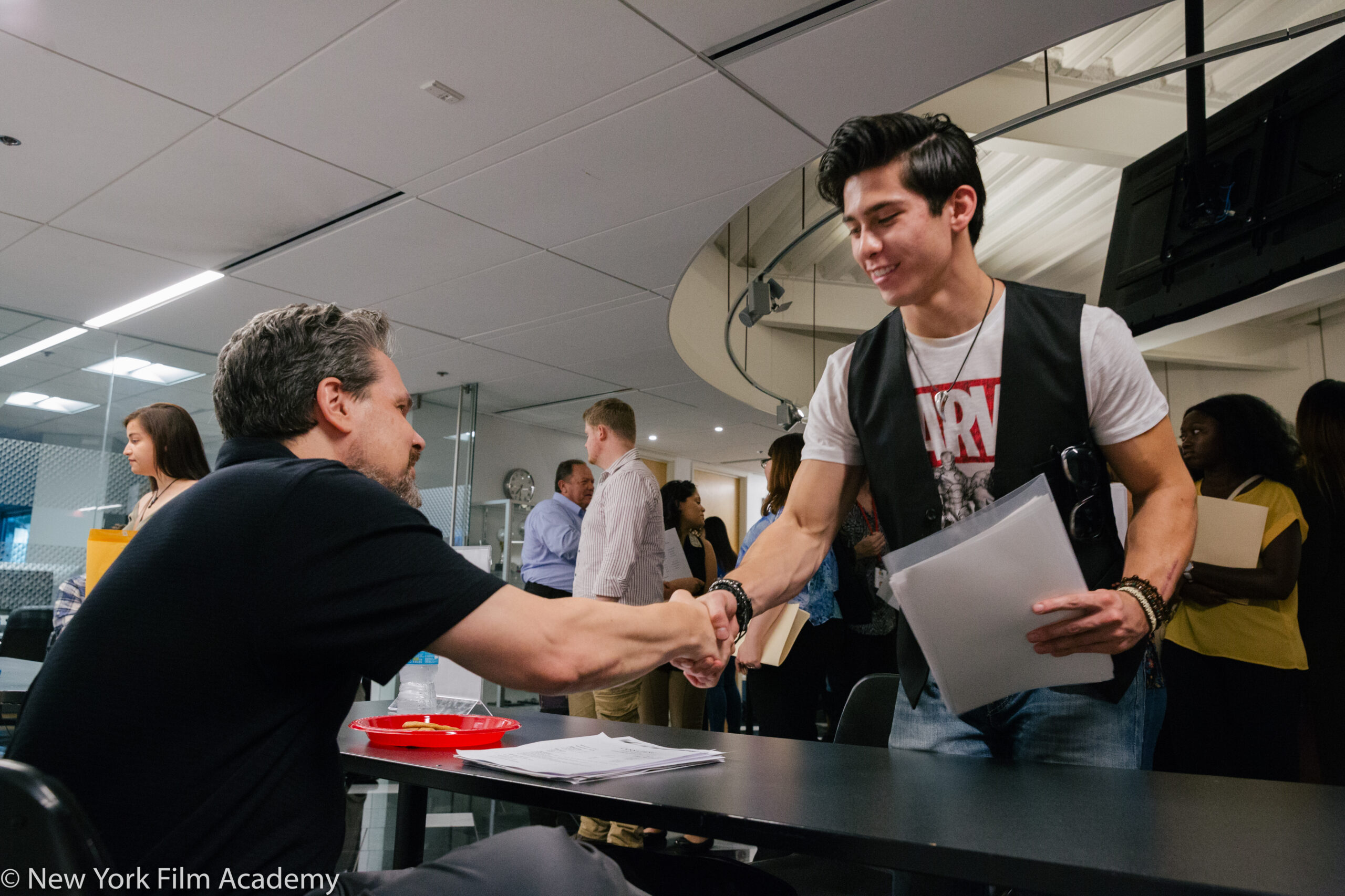
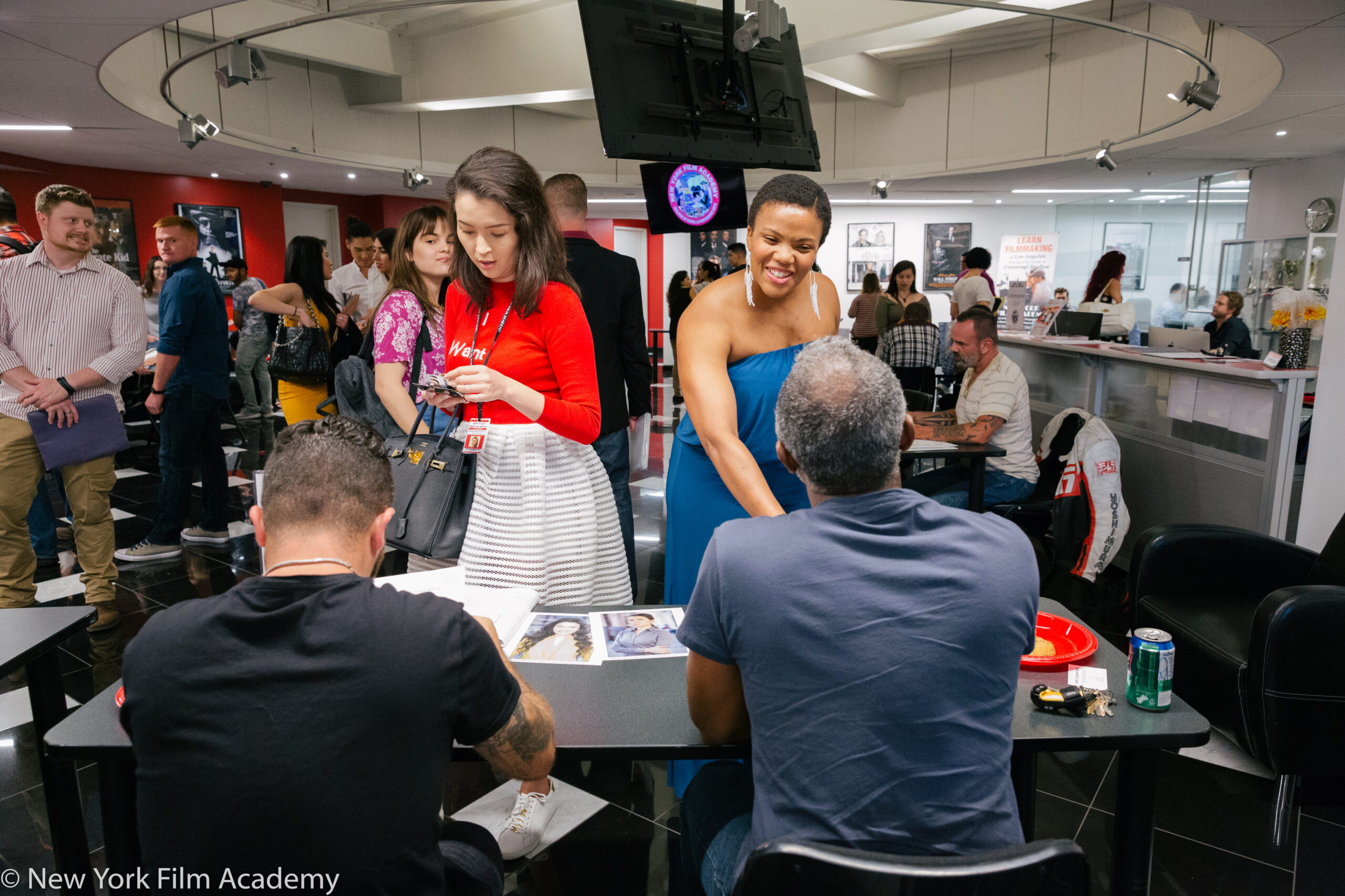
On Thursday, June 23, Chair of Industry Outreach and Professional Development Barbara Weintraub held her annual Talent Meet and Greet. The event serves as a giant casting call exclusive to New York Film Academy acting for film students.

_20A2087
NYFA Meet & Greet Industry Guests

Actors were encouraged to prepare their pitches and research each agency before they arrived. At 7 p.m. students began lining up in the lobby of the Riverside building, head shots and resumes in hand.

Agents from Moving Pictures Artists, Brady, Brannon and Rich, Coast to Coast Talent, Debra Manners Talent Management, Ideal Talent, and Prodigy Talent were ready to receive the students. Agents from the Daniel Hoff Agency said they wouldn’t be surprised to find new talent at NYFA: “We had someone come last year. We knew we would be coming back.”

_20A1897

Weintraub said of the evening, “This is a wonderful opportunity for our acting alumni to find representation and help further their careers after graduating.”

After making her way around the tables, Gina Powerless joked that she had been a little nervous at first but at the end of the night, she was singing a different tune. Powerless felt she was well received and hoped to get a phone call shortly.

_20A1752

The next day, students were getting appointments. Laura “Fernada” Ruiz Niebla said, “I have a meeting Wednesday next week with Jean Marc from Central artists. Thank you for the opportunity and looking forward to seeing you soon.” Lucia O’Brien heard from Moving Pictures Artists the following morning, and Nuria “Nunu” Vega was contacted by Renee at the Daniel Hoff Agency. She has since been signed.

_20A1643

The New York Film Academy would like to thank the agencies and organizations that helped make this event so special and wish a heartfelt good luck to each of our students in their search for representation.