Five Best Options For Free Graphic Design And Animation Software

Creating 3D, manipulatable models without the need to get arms-deep in clay is an attractive idea. Forking over $1,500 every year for a subscription to Autodesk Maya, however, is not.

Given that the price range for professional-grade modeling suites can be eye watering, many amateurs, and even professionals, find themselves looking for free 3D modeling software alternatives. Luckily, there are more than a few free and open source options available. Even with the lack of a price tag, many of these are up there with the best.

If you’re a graphic design school student or attend animation school, check out the below options and we can guarantee you’ll find something that fits your needs.

Free 3D Modeling Software: 10 of the Best

1. K-3D

A mercifully stripped-back, no-nonse piece of software that doesn’t skimp on features. K-3D is centered around a plug-in driven procedural engine for handling polygonal modeling and animation, with one of the most brilliant and unique benefits being the ability to mirror the object you’re working on; add curves and NURBS to one half, and the other half with follow suit with a seamless join in the middle, creating a fully manipulable subdivision surface.

Also comes with support for RenderMan.

2. Blender

One of the most recognizable names on this list, Blender is incredibly popular due to its versatility. Everything from animation and video games modeling to 3D applications can be created, and graphic designers will love the simulated visual effects that can be implemented to a project effortlessly. It’s free and very much open source, with much of the development being driven by the lively Blender community.

Features within Blender include 3D modeling, texturing, particle simulation, UV unwrapping, skinning and rigging, animation, liquid and smoke simulation.

3. POV-Ray

Vision Raytracer, more popularly referred to as POV-Ray, is an entirely free and open source ray tracing software available for pretty much any platform you can name. It has been in development, in one form or another, for over thirty years and has even been used on the International Space Station. To boot, it’s longevity as a program means that there is a huge amount of 3rd party support for the software.

Features Turing-complete scene description language (SDL), a library of ready-made objects, textures and scenes, several kinds of light sources and atmospheric effects, surface patterns and radiosity. This one is highly recommended for graphic designers in particular given the impressive results that can be achieved with it.

4. Google SketchUp

Quickly becoming common place within the modeling and graphic design community, Google’s SketchUp is geared towards open-ended sharing. Either working from scratch or by using a ton of free, pre-built objects, it’s a great tool for projects that will be worked on and shared between multiple team members. While it has something of a learning curve for beginners, the amount of support and tutorials available is unparalleled, and it also boasts an incredibly large and active community base around the globe.

5. Art of Illusion

Highly recommended for beginners or traditional graphic designers who only want to model occasionally, Art of Illusion offers an intuitive user interface and is stripped back of any distractions. At the same time, it does offer a few bells and whistles that aren’t prevalent in the other software listed on this page; the free access to online repositories, a live chat function which lets you tap straight into the fantastic AoI support community and an array of view modes.

Other features which come as standard include: Boolean operating; wireframe animation (complete with weight systems, constraints and reversed kinetics), texture mapping by face or vertex, fully customizable light refraction and scattering.

Know of any other free 3D Modeling Software we should be checking out? Don’t hesitate to share with the group via the comments below!

5 Of The Most Influential And Famous Illustrators of ALL Time

Today, we’re taking a tour of some of the most influential and/or famous illustrators of all time, with works spanning from the 18th century up to modern day. If you’re a student attending illustration school and want to take a page out of the books of giants that came before you, check out the following trailblazers of the illustration industry.

1. Charles M. Schultz

No list of the most influential illustrators of all time is complete – or should even begin – without a hat-tip to Charles M. Schultz, the godfather of daily comic strips.

Charles Schultz most influential illustrators

Not only did the Peanuts creator directly influence the likes of Bill Watterson (of Calvin & Hobbes fame), but he also set the bar infinitely high for success in the field of comic illustration. Peanuts is most likely the most syndicated, most translated, most merchandized, most awarded and most influential comic ever created and possibly the longest running (at least by a single author and illustrator, with Schultz having created close to 18,000 strips over 50 years.)

Schultz worked tirelessly on Peanuts, drawing a new one daily and refusing any assistance. He also took only one break – to celebrate his 75th birthday – during the five decade run of Peanuts. The hard work certainly paid off, however, with Schultz having earned around $1.1 billion over his lifetime.

2. Richard Corben

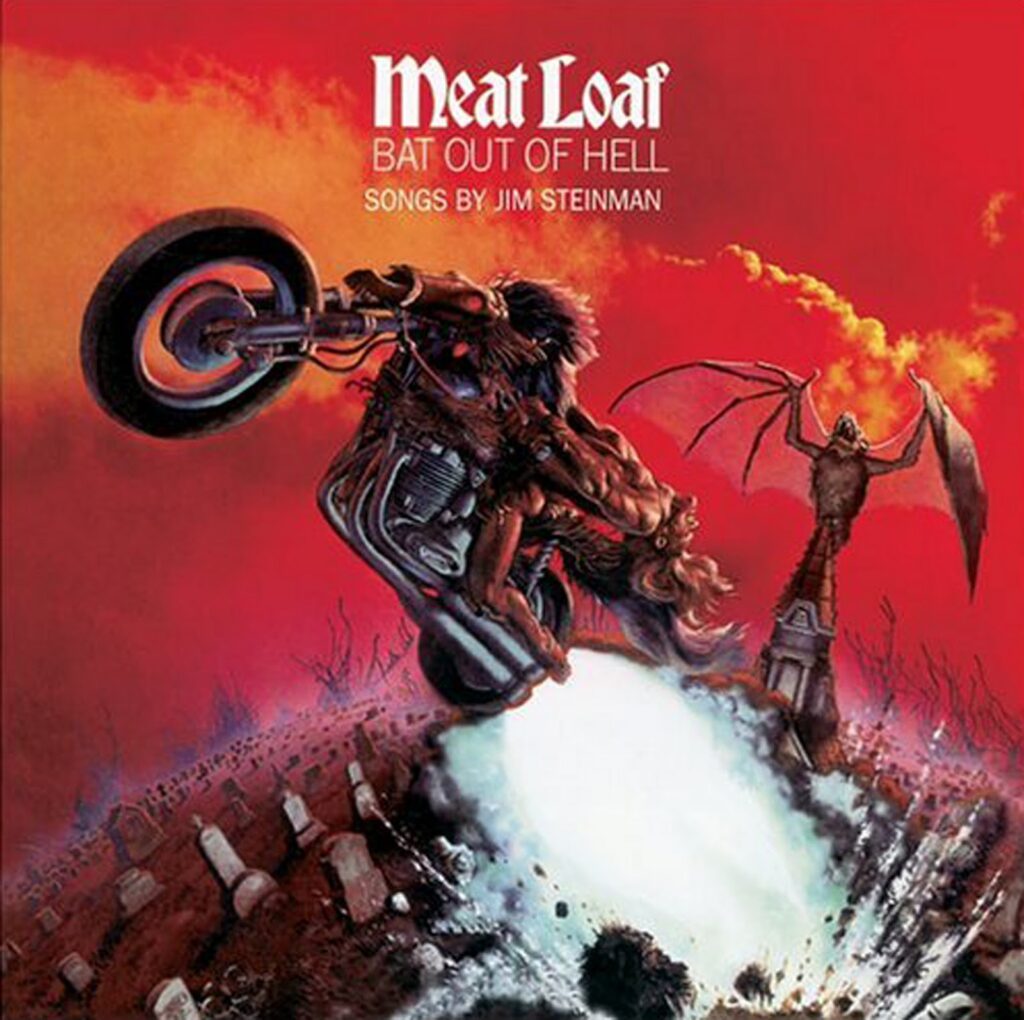
As one of the lesser-known illustrators listed here, Corben is the kind of guy whose work abounds in popular culture and is instantly recognizable, even if you don’t know the name. Amongst his immense body of work, there’s at least one individual piece that you’ll probably recognize:

famous illustration: Bat out of hell Album

For the most part, Corben has kept his mastery to the graphic novel sphere, but his work there has received no end of praise from other top illustrators. One such example being H.R. Geiger, who wrote: “People like Richard Corben are, in my view, maestros.”

And speaking of which…

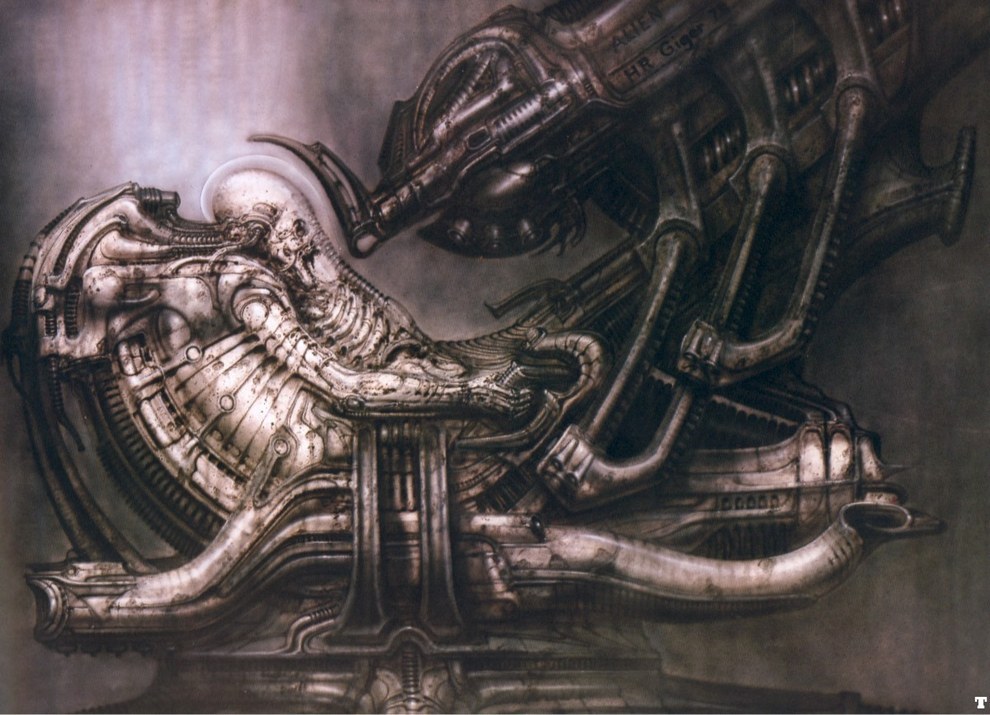
3. H.R. Geiger

Few illustrators have a penchant for the nightmarish quite like the late Hans Rudolf Geiger, a man whose surrealist work – be it illustration, sculpture, or paintwork – was as unique as it was unsettling.

Alien concept art

His bizarre melding of the biological and the mechanical went on to attract the attention of Ridley Scott, who put Geiger’s talents to good use on a little sci-fi film called Star Beast. Of course, this was later entitled Alien and the rest is history, with Geiger’s horrifying eponymous creation having endured in pop culture to this day.

As an amusing aside, the artist was once held up and searched at an airport. Of the experience, Geiger recalled: “Dutch customs once thought my drawings were photos. Where on earth did they think I could have photographed my subjects? In Hell, perhaps?”

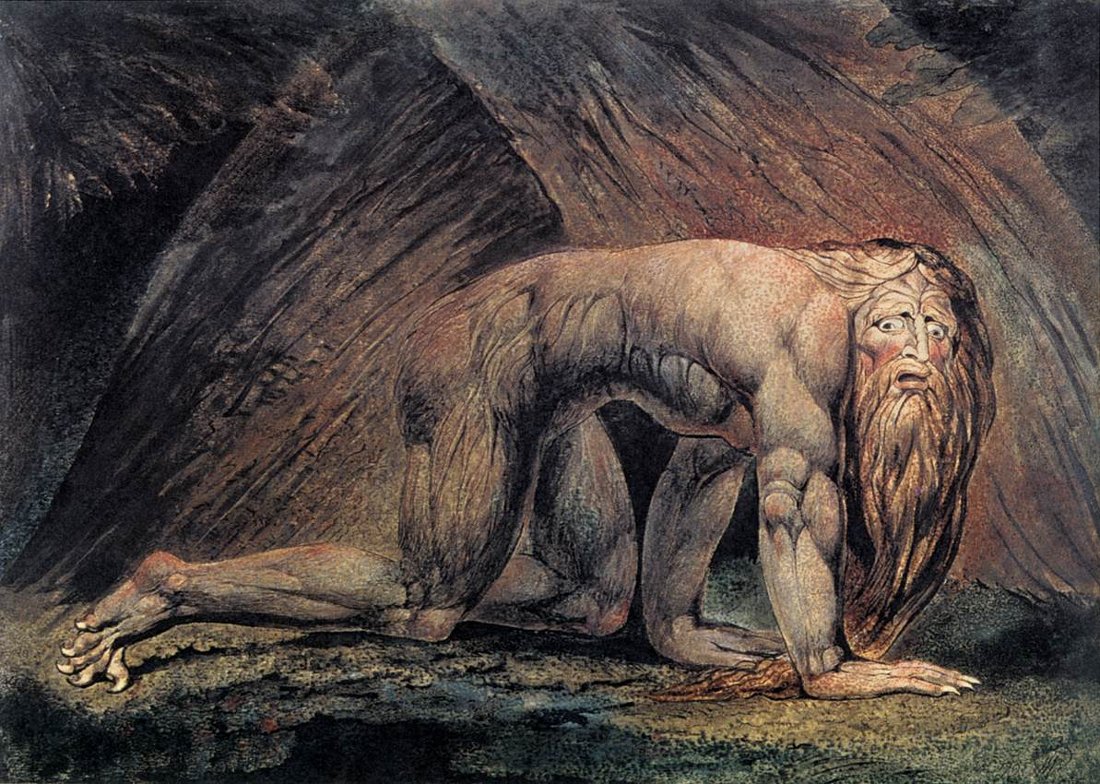
4. William Blake

While the English poet’s art and illustrations didn’t garner much acclaim during his own lifespan, his artistry – both written and illustrated – had a huge influence on the world from the pre-Raphaelites onwards, and his depictions of biblical and other subject matter have endured in popular culture ever since.

Blake influential artist

Incidentally, when speaking of the most influential illustrators of all time, Gustave Doré’s name frequently crops up. A curious link is that William Blake wrote and illustrated Milton: A Poem in Two Parts, which was centered around John Milton (real-life author of the epic poem Paradise Lost) returning from his tour of the heavens to recount his tales in poem format. Gustave Doré had earlier illustrated Paradise Lost, and also provided the illustrations for Dante Alighieri’s The Divine Comedy

… an epic poem which featured the author taking a tour of the heavens to recount his tales in poem format.

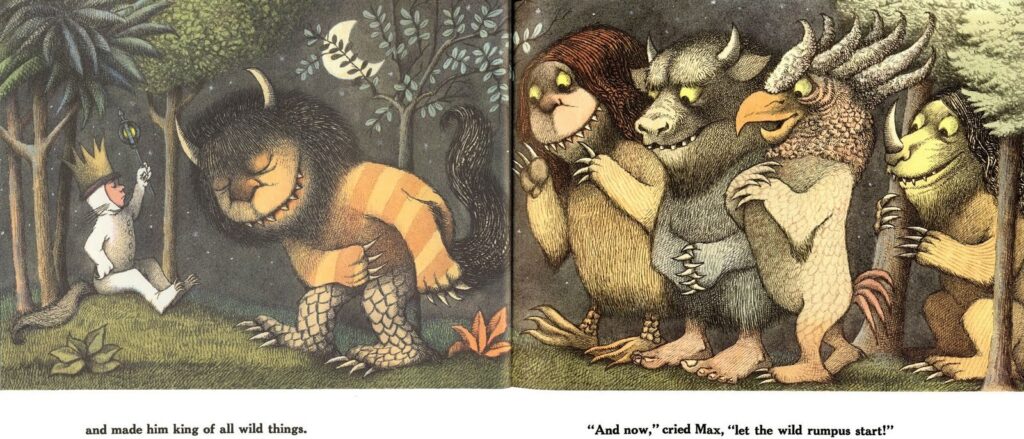
5. Maurice Sendak

Sendak illustrated and wrote a huge array of highly popular children’s titles, but it was his 1963 creation Where the Wild Things Are that arguably influenced American children’s illustration moreso than any other title (by Sendak or otherwise).

Maurice Sendak famous illustrators

Where the Wild Things Are eventually became an unprecedented success, having sold around 20 million copies since its publication and tangibly changing the way countless illustrators thereafter approached artwork for children’s books – while dark themes have always been common to children’s literature, it was very rare for illustrators to mirror this darkness in the graphical elements. This could be the reason why early reviews of the book were negative, and many libraries refused to carry it.

Despite the huge popularity of the book, Sendak refused to create a sequel, calling it “the most boring idea ever.” Following his death in 2012, New York Times heralded his lifelong achievements and noted in their obituary that Sendak was “the most important children’s book artist of the 20th century.”

Few would argue that distinction.

Websites for Graphic Design Inspiration

Graphic design has the distinction of being a professional discipline that requires both technical prowess and a large amount of creative juice. While the intricacies and skills required to be a good designer can be learned at graphic design school, nobody is immune from periods in which their creative well runs dry.

The question is, how do you best get those creative juices flowing once again?

Luckily, there are more than a few useful resources online which can help inspire new ideas and push you to greater heights. Whether you design websites, logos, work with typography, or design packaging, scroll on to discover…

The Best Websites for Graphic Design Inspiration

While all of the following are well worth checking out, we’ve categorized them by a few different fields to further aid your inspiration. First up:

Websites for Graphic Web Designers

The Inspiration Grid – Adored by both designers and even non-designers alike, The Inspiration Grid is a delight to flick through due to the many varied and creative images that are hosted there. Nice, clean, and easily searchable by category, this is a well of inspiration no designer should be without.

Ideabook – The best practices of web design, and the software used to execute it, is perpetually changing; so much so that even the most experienced designer needs to continually keep his or her learning up to date. For that, there’s Ideabook; a great source of free design tutorials.

Swissmiss – Run by talented New York designer Tina Roth, this design blog provides regular highlights of great design of all flavors from around the world. Blog posts are short and sweet, giving you more inspiration and less noise.

Wabbaly – A long-running blog which acts as an amalgamation of all of the above; fantastic examples of graphic design, great articles discussing the craft, and plenty of tutorials to help you emulate it all.

Information is Beautiful – The famous brainchild of David McCandless. If you haven’t already seen this frequently updated collection of stunning data visualizations, you’re missing out on a big dose of design inspiration.

Canva – Canva is a graphic design tool aiming to teach the graphic design to the world, and regularly publishes fresh and useful content for both beginnings and seasoned graphic designers.

Websites for Logo Designers

Brand New – When a corporate logo gets a face-lift, the Brand New blog will be there waiting to dissect the results – both good and bad – with an expert eye. This is essential reading for logo designers looking to learn from design done well (and not so well).

Logolitic – A very comprehensive (and neatly categorized) blog covering logo design practices and the wider industry. The advice and tutorial posts are aimed towards the beginner to semi-pro logo designer, so if you’re just starting out, this is the one for you.

Logo Design Love – A superb collection of spotlight posts which shines a light on notable logo designers, their works, and the fascinating histories behind some iconic logos.

Brands of the World – According to the site itself, it’s the world’s biggest collection of free vector logos, giving your work an added professional flair with less hassle and no cost.

Websites for Typographers

TypeInspire – As the name suggests, TypeInspire is a treasure trove of gorgeous typography and a good port of call for generating new ideas when you’re stuck in a rut.

Type Everything – A Tumblr blog that features some of the best typography we’ve every come across, all in one place. There are many categories to flick through; from animated type gifs, graffiti, monograms, hand drawn, and beyond (scroll to the bottom to check these out.)

Typedia – “A mix between IMDb and Wikipedia, just for type.” So goes the site description of Typedia, and it’s pretty apt. It is a community resource which anyone can get behind, and a very useful portal for those who don’t know where to start with typography.

Playtype – A digital type agency in Denmark. Even just browsing through the store is enough to get the ideas flowing.

Alfred Hitchcock’s 39 Steps on the Stage!

The New York Film Academy Union Square is excited to welcome its new neighbor, 39 STEPS! The show is a comedic spoof of the classic 1935 film, with only 4 ‘insanely talented’ actors portraying more than 150 characters, sometimes changing roles in the blink of an eye.

The brilliantly madcap story follows our dashing hero Richard Hannay as he races to solve the mystery of 39 Steps, all the while trying to clear his name! The show’s uproarious fast-paced 100 minutes promises to leave you gasping for breath… in a good way! It’s great fun for everyone from ages 9 to 99.

The Tony® Winning Hit Comedy
39 STEPS
4 INSANELY TALENTED ACTORS, 150 ROLES,
100 BREAKNECK MINUTES OF SHEER THEATRICAL FUN
FOR EVERYONE AGES 9 TO 99

**SPECIAL $20 STUDENT TICKETS

*$49 Tickets Mon/Wed/Thu performances (reg. $79)
*$59 Tickets Fri/Sat/Sun performances (reg. $89)

“ABSURDLY ENJOYABLE! Theater at its finest!” -Ben Brantley, NY Times.
“INGENIOUS! A DIZZY DELIGHT!” -Joe Dziemianowicz, Daily News
“COMEDY OF THE HIGHEST ORDER” -Roma Torre, NY1
“THE MOST ENTERTAINING SHOW ON BROADWAY” -Liz Smith, NY Post

Can’t wait to see it? Here’s how to purchase tickets. Note: NYFA students can purchase tickets for $20.

3 WAYS TO BUY YOUR TICKETS:

1. ONLINE: Ticketmaster.com/THE-39-STEPS-NY-tickets/artist/2089037 then select a performance date & enter code: LSP88
2. PHONE: Call Ticketmaster.com at 877-250-2929 & mention code: LSP88
3. BOX OFFICE: Print & bring to the Union Square Theatre Box Office – 100 East 17th St

Performance Schedule: Mon 7pm, Wed 2 & 8pm, Thurs 8pm, Fri 8pm, Sat 2 & 8pm, Sun 3pm
For more information visit: 39stepsny.com
Union Square Theatre 100 East 17th St

* $20 student tickets. 2 tickets per valid ID at the box office only, day of performance!
* $49-$59 offer valid for select seats at all performances through 9/30/2015. Limit 8 tickets per order. All prices include a $1.00 facility fee. All sales are final — no refunds or exchanges. Blackout dates may apply. Offer is subject to availability and prior sale. Not valid in combination with any other offers. Offer may be revoked or modified at any time without notice.

Why We Like Hard Games Again

Easily one of the best things about the gaming industry is that it’s constantly changing. Who knew music video games like Rock Band and Guitar Hero would have such a huge impact in the first decade of this millennium? Even less predictable was its meteoric fall to the point where you could find accessories for these games in the discount bin for mere cents.

And just like mobile gaming and the MOBA genre, few could ever expect gamers to suddenly have a taste for games that make you rage and scream like never before. Just look at the reception the newly-released PS4 title Bloodborne has received since releasing. Despite being a game that most will struggle to complete, and many will drop due to its difficulty, it is already a critically acclaimed title and one of the highest rated Action RPG games in recent years.

How can that be, you ask? Here are four reasons why…

Hard games are more satisfying.

Even if you’re not a soccer (or football) fan, you probably heard all about Brazil’s final defeat in the 2014 World Cup. Despite playing on their own soil, and being of the most feared names in international football, they were completely dismantled by a German side in a way that had both Brazilian players and fans literally weeping.

Even though Germany themselves are an excellent team, it was quite gratifying for them to know they not only beat a powerful team, but also did it in front of a sea of yellow jerseys with an incredible 7-1 result.

That is what it’s all about when playing tough games. If you consider yourself a skilled gamer, there’s something captivating about playing a seemingly-unbeatable game where the odds are against you. It’s why after defeating a boss in Dark Souls, or completing a stage in Mega Man, you feel like your diligence and tenacity paid off. It’s an experience that doesn’t compare to games that are still fun but don’t require nearly as much skill to beat.

Hard games have little to no hand-holding.

While many gamers appreciate lengthy tutorials that explain the gameplay step by step, some of of us don’t care much for it. So when we’re forced through these hand-holding sections, we can’t help but throw our hands up in frustration. Although Assassin’s Creed gamers are notorious for this, it was quite disappointing to see The Legend of Zelda: Skyward Sword do so much hand-holding.

Do we really need a game intro that takes hours before letting you finally do things on your own? Or how about reminding us what an item is for the first time we pick it up after playing our file again, even if it’s an item we’ve collected dozens of times already? It’s then no surprise that gamers today are flocking to titles that, instead of holding your hand and showing you everything, force you to learn on your own.

Which leads to the next reason…

Hard games force us to learn and adapt.

This is possibly one of the most important reasons why games like Dark Souls and Bloodborne are so popular. Instead of feeding you information in tutorials, they toss you into the world and expect you to learn how to play yourself. Even if you look online for tips and “how to” videos, there is still plenty of challenge involved actually taking down a tough foe yourself.

The two games mentioned both have two gameplay elements that make a hard game fun: good combat and a punishing world. Suffice to say, the first time you fight a boss you will rarely defeat it in either of these two games. Instead, you’ll have to learn its moves and figure out what you’re doing wrong before finally coming out victorious.

At the same, time you’re never told if you’re going in the right direction or straight into a den of high-level enemies ready to tear you apart.

Hard games give us something to brag about.

Let’s face it: anyone can get through the average Call of Duty campaign, reach high levels on the popular match-3 games, or have an amazing village on Clash of Clans. It’s not that most games these days are bad or don’t have their own challenges, they’re quite simply not that difficult and can be mastered by just about any gamer. On the other hand, when you tell someone that you actually beat Dark Souls or solved every puzzle on Braid without looking online, gamers who know how tough the said task is can’t help but show respect.

What’s interesting is this is how it was in 8-bit and 16-bit era when difficulty was used to make sure games lasted longer. From Mega Man and Teenage Mutant Ninja Turtles, to Ghosts n Goblins and Battletoads, those of us who grew up in the NES days know how great it felt to complete these tough games. Even more satisfying, however, was going back to your friends and bragging to them that you finally did it, which would often be met with either disbelief or praise.

[su_note]Learn to develop all types of games at the School of Game Design at the New York Film Academy. Campuses in New York and Los Angeles.[/su_note]

The Dangers of Illustration Competitions

If you surfed on in at random hoping for a slew of 2015 illustration competitions to enter, you’ll find a link below which will take you to a whole host of them.

… but don’t scroll to the bottom just yet. First, a few words of caution.

the dangers of illustration competitions

An increasing amount of debate is being held as to whether illustration competitions are worth entering in the first place, with many professionals going so far as to saying they actively damage the industry. On the face of it, they seem like a great way to promote new and established talent; on the other side of the coin, they can be seen to take advantage of – and exploit – the eagerness of new illustrators.

Today, we’ll take an impartial look at both sides of the debate, starting with:

The Case For Illustration Competitions

You’re a student at illustration school, working hard to master all facets of the craft and get ahead of the competition. You may even be at the level that you’re consistently producing excellent work with the skills that you’ve learned and feel that you’re ready to take on paying illustration work.

Question is, how best to get your name out there?

Obviously a website to act as a one-stop shop for your services is important (check out our guide to creating a photography website, since most of the advice is transferable). But drawing attention to it, as well as having some accolades to put on the site in the first place, can be an uphill struggle.

That’s where illustration competitions come in. With only a few hours of your time, you can submit your work to numerous applicable competitions and – fingers crossed – win some, or at least get yourself some recognition on the short list.

2015 illustration competitions

In a nutshell, you stand to gain some useful recognition and whatever prize is up for grabs in exchange for just a little of your time. What could be wrong with that? Isn’t it nice of whoever is curating the illustration competition to give up their own resources to create this opportunity?

The Case Against Illustration Competitions

Detractors of such contests are quick to point out one solid point: your time and work as an illustrator should not be considered valueless, and you’re potentially giving both up – for free – with nothing to gain.

Of course, a freelancer of any profession needs to put in a little bit of unpaid time to get their career rolling, but that’s for their own benefit. It’s ill-advised to devalue yourself in order to further someone else’s agenda. And therein lies the crux: what is the competition actually for?

Before entering any illustration competitions, ask what the ultimate aim is. One of the biggest sticking points is what is known as ‘on-spec work‘ – i.e. carrying out artwork for a company with the hope that you get selected for payment, all under the guise of an ‘illustration competition’.

The Problem With On-Spec Work

Particularly prevalent in logo illustration, a contest holder – usually a business – will run a competition asking illustrators to submit branding designs. Fifty illustrators will make a bespoke logo, and the best one will be chosen (and hopefully paid for). The upshot? Forty-nine people worked for nothing – the company took advantage of fifty people’s expertise, and only paid for one.

on spec work
http://www.nospec.com

Even worse, some illustration competitions go on to use all of the work submitted despite only giving ‘prizes’ to a select few.  But there’s a practice that is even worse still, and something you should avoid like a plague:

Big Red Flag: NEVER Pay to Enter Illustration Competitions

Just don’t do it. Plain and simple.

Whereas it’s argued that some companies are unaware of the devaluing nature of on-spec competitions (like the example above) and should be educated by those of us in the field wherever possible, those who charge entry fees are simply out to profit off your unpaid work. Look out for any unspecified ‘admin fees’ associated with entering the competition, and go the other way.

competition fee to enter

$20 might not sound much to you, but five hundred illustrators all paying the same amount represents a lot of cash to the competition runner who nearly always offers nebulous promises of recognition and prizes in return. Even if the entry fees are used to fund a monetary prize pot, this is tantamount to a pyramid scheme.

Further Reading

The organization No!Spec explores all of the ideas touched upon here in greater detail, and offers resources to help keep yourself from being exploited (and as mentioned, a lot of parties offering on-spec work are genuinely unaware of the harm such illustration competitions cause, so feel free to point them in the right direction too.)

The Logo Factory also has further information on contest and crowdsourcing related work, and the pitfalls associated with it.

And finally…

2015 Illustration Competitions

A concise and comprehensive aggregator of 2015 illustration competitions can be found over at Contest Watchers, but you’ll have to comb through them with a skeptical eye now that you’re armed with the above information.

on spec work

Game Trends: Zombies Out, But Survival Horror More Popular than FPS

Zombies.

Zombies, zombies, zombies.

For the past decade, the undead blighters have been rising from their graves and spreading their viral appeal through pretty much every medium and genre they can get their rotten hands on.

Cinema, TV, art, graphic novels, video gaming, books; you name it, and someone has tried to insert some zombie action into it albeit with varying levels of success (even classic romance literature got infected with the 2009 parody novel Pride and Prejudice and Zombies).

But even in the wake of the World War Z movie adaptation and the highly acclaimed Walking Dead show, it seems that the momentum is finally slowing to a shamble…

… at least if Google search trends are anything to go by.

Google Trends: Popularity of Zombies on the Decline

video game trends zombie games

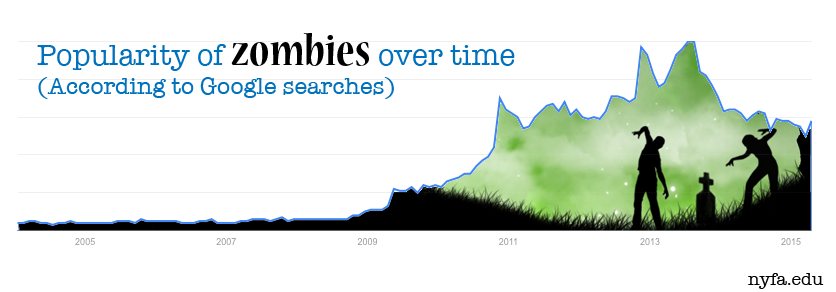
Looking back over the last decade, we can see that the number of people Googling the simple search term ‘zombies’ started off at a fairly even pace before starting to climb around late 2008. Incidentally, this is the point at which Max Brook’s great book World War Z started to go global, and the release of the aforementioned Pride and Prejudice and Zombies may account for the sharp spike you can see in early 2009.

This fascination with all things undead quickly grew, hitting a couple of peaks between 2013 and 2014. Again, neatly tying in with the global release of the movie version of World War Z.

Save for one or two minor attempts to rise from the grave, it’s been declining ever since. The zombie trend isn’t quite un-undead just yet, but it’s certainly heading that way.

So what’s the take home message here? Well, if you’re at game design school working on what you’re sure is going to be the next big zombie apocalypse game, you might want to reconsider your options because tastes in video games strongly mirror the wider consensus.

Are We Bored of Zombie Games?

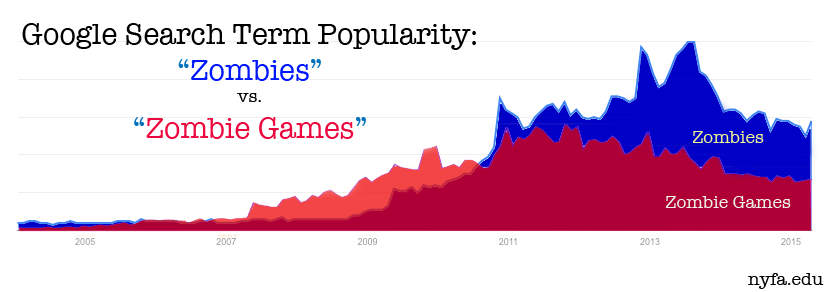
Zombie video games popularityAs we can see from the above chart, interest in zombie games follows the same pattern as interest in zombies in general, but is actually shifted to the left – it got started a lot earlier, and also hit its peak a couple years sooner. Either way, the outcome is the same.

But let’s not throw the baby out with the bathwater here. Zombies may be going out of vogue, but the elements that made us fall in love with them the first place are on the rise.

Survival Horror Games More Popular Than First Person Shooters

Survival games

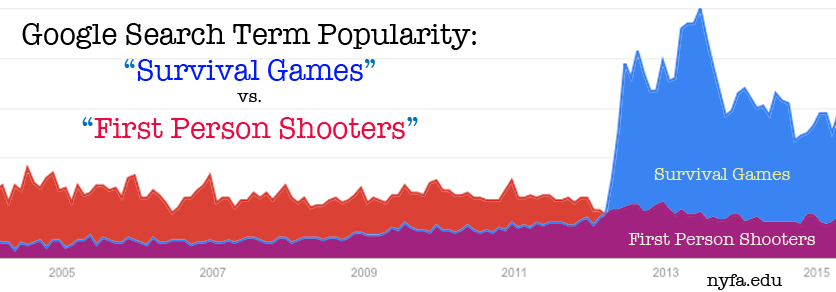
In a strange twist of fate, first person shooters, which have been a mainstay genre of the video game industry for decades, have been dethroned by a newly rising star.

Survival horror is really coming into its own of late, particularly in the multiplayer sphere. Games like Rust7 Days to Die and DayZ have each sold millions of copies despite none of them having gone to full release as of yet.

Single-player survival horror titles are also doing well in the current market. Arguably, the award-winning and utterly terrifying Amnesia: The Dark Descent kicked things off in 2011 (right before the major peak), and more recent titles like Alien: Isolation are carrying on the trend.

Of course, there’s no reason why zombies can’t be the antagonist in the survival horror environment (DayZ being an example) but for the most part, the genre is around crafting and picking your battles wisely.

Also worth noting, as a relatively new genre, there’s also plenty of room for innovation in survival horror games. So, game design school students have plenty of new ground on which to create…

… but at this stage, the same can’t be said for zombies.


* N.B: Above graphs do not represent absolute search volume, but search interest relative to the highest point on the chart. It sounds like an odd way of doing it, but it’s a better way of focusing on patterns and makes comparative graphs like the ones above a lot clearer. More details here if statistical normalization floats your boat.

Three More Quotes That May Change The Way You Look At Game Design

A few months back we showed you three quotes spoken by some of the most influential game designers of all time. From standing up for creativity and finding innovative solutions, to making games that forces players to think, there is plenty to take from their words of wisdom.

The following are a few more quotes that every game developer should ponder at least once in their lifetime (the earlier the better, of course). Even if reading these doesn’t turn you into the next Miyamoto, it can’t hurt listening to what designers who helped shape the industry have to say.

The game designer’s purpose

“I had no special training at all; I am completely self taught. I don’t fit the mold of a visual arts designer or a graphic designer. I just had a strong concept about what a game designer is. Someone who designs projects to make people happy. That’s a game designer’s purpose.”
-Toru Iwatani

Despite not being a household name like other more notable designers, Toru Iwatani is responsible for a little game called Pac-Man. Yes, that yellow character from Super Smash Bros. for Wii U and 3DS, as well as the Google’s April Fools’ jokes. Although Pac-Man isn’t as recognized as Mario or Master Chief, 30 years ago it was a whole different story.

The fact is, Pac-Man served as one of the first games to bridge a gap between the arcade geeks and general audience. Aside from thousands of arcade cabinets across the United States, you could also see the circular mascot on T-shirts, in pop songs, and more. This was all at a time when it seemed impossible for a video game to transcend into mainstream, especially when they were still deemed as a waste of time by many.

So why was Pac-Man such a huge hit? The short answer is: it made people happy.

[Tweet “As a game designer, your only purpose is to create experiences that will bring joy to people.”]

Iwatani’s quote shows us that instead of letting titles or skills get to your head, focus on what’s important: making games that people will enjoy. As a game designer, your only purpose is to create experiences that will bring joy to people.

Remember this the next time you find yourself struggling with a new mechanic or gameplay idea you want to implement. Ask yourself: will this make my game more fun?

The feeling of accomplishment

“Easy to me does not equal fun. I want puzzles where people have to think about it, and when they solve the puzzle, there’s that feeling of accomplishment. That’s something that’s really valuable, that concrete feeling that when you accomplish something [in the game], it feels like you’ve done something worth doing. If the game is too easy, the accomplishments aren’t valuable.”
Eiji Aonuma on Skyward Sword

Although Shigeru Miyamoto is known as the creator of The Legend of Zelda series, it’s Eiji Aonuma who has been at the helm of every title as either Director or Producer since 1998. This includes entries considered the best in the series, like Ocarina of Time, Majora’s Mask, and The Wind Waker.

The quote above was said during a Game Informer interview while discussing Skyward Sword, a game that despite being criticized for several game design decisions, was widely praised for its creative puzzles. Just as Aonuma says, these puzzles were made to make even the veteran Zelda players think outside the box and put in extra effort to complete. Most notable was the Sky Keep dungeon that required players to connect rooms in different ways, making the entire dungeon almost like a jigsaw puzzle itself.

[Tweet “The best way to captivate your players is by forcing them to think, which in turn will give them a sense of accomplishment.”]

There is a reason why most gamers are currently loving the revival of hard games in our industry: they want to be challenged. From big-budget titles like Dark Souls and Bloodborne, to indie games like 1001 Spikes and Super Meat Boy, there’s no denying that gamers today want an experience that is anything but easy.

Even if you don’t plan on designing a tough-as-nails game, remember that the best way to captivate your players is by forcing them to think, which in turn will give them a sense of accomplishment.

Getting out of your comfort zone

“We had done two games, System Shock 2 and BioShock, with a world that was dead, effectively, already and you were just sort of coming in after the fact…you were a silent protagonist and two games where there was nobody around you…And if we were to walk away from those very comfortable little binkies of ours, what would we do?”
Ken Levine on BioShock Infinite

With three different games under his belt that have each won countless awards and amassed cult followings, Ken Levine is arguably one of the best game developers of our time. His game titles are praised for their excellent stories and fun gameplay, but even more so for providing experiences unlike any other.

Even with System Shock 2, gamers received an interesting hybrid gameplay and moody sound design unlike anything they have played before. Its spiritual successor BioShock did the same, while also providing one of the most memorable and impactful video game quotes of all time: “Would You Kindly?” His last title, BioShock Infinite, also received critical acclaim for its brilliant storytelling and gorgeous settings.

[Tweet “The best game designers try to get out of their comfort zone and create new things.”]

Like the quote reveals, the Irrational Games team decided to take on the challenge of introducing elements into BioShock Infinite they had never worked with before. Among these are bright outdoor environments, a talking protagonist, a supporting character with helpful AI abilities, and more. It’s no surprise that the game took so long to develop.

Perhaps knowing that even the best game designers try to get out of their comfort zone and create new things will help you do the same, especially if you want to give the world the next big hit.

Image Source

Six Invaluable Tips For Designing Fun Side Quests

For game developers to attract players to their game and keep their attention, more than a fun and captivating main quest is needed. Gamers do want to see an interesting story unfold as they overcome all sorts of challenges to get one step closer to their main goal, but they also want other stuff to do along the way.

Even if your game has plenty of side quests to check out, it won’t matter if most of them feel more like a chore than anything else. This is because side quests are more than optional missions to collect rewards; they are a way for players to get more out of a game they’re enjoying. To avoid having dull and unattractive side quests, consider the following hints while designing your own.

Make the plot and characters involved interesting.

The best side quests you’ll find usually contain their own small story with some sort of conflict that the player will be responsible for solving. More importantly, these side quests are enticing when the story and characters relate in some way to the main plot. Whether they do or not, having boring characters and a forgettable problem to solve is what you want to stay away from.

A prime example of a side quest with an engaging narrative is one from The Legend of Zelda: Majora’s Mask involving two characters named Anju and Kafei. Set to marry on the day of the Carnival of Time, their plans are ruined when the notorious Skull Kid turns Kafei into a child. Things worsen when the wedding mask he plans to present Anju is stolen, forcing him to go into hiding while a depressed Anju wonders where her husband-to-be went.

This particular quest is memorable mainly due to its impactful ending. Although you manage to reunite Anju and Kafei, it is mere minutes before the moon is about to destroy them all. This is because Link can never save Termina and help the two lovers due to the three day time limit, which means that helping them indirectly dooms them as well.

Avoid the exhausting collection quests.

When it comes to collection quests, one of the most notorious game series is Assassin’s Creed. In Assassin’s Creed III, for example, there are eagle feathers hidden throughout the entire game; 50 to be exact. These feathers are found in some of the most obscure locations that are anything but convenient to reach, often requiring plenty of time and effort to collect.

We’ll talk about rewards later but it’s worth noting that all you receive for this time-consuming task is a new outfit. Quests like these are enjoyed by some gamers, but many would argue that they’re simply added to inflate the game time via tedious, unfun tasks. Unfortunately, we can hardly blame developers for doing this. These days, gamers demand their purchase be justified by the promise of lengthy gameplay time.

If you do find yourself adding a collection quest in your game, figure out a way to make the rewards feel worth the effort. In Arkham Asylum, all you get for completing the Riddler side quest is a brief audio of him getting arrested. Fortunately, Rocksteady went a step further in Arkham City, and rewarded you with a confrontation with the Riddler himself, which is much cooler.

Use side quests to immerse players into your world.

One effective way of using side quests to captivate players, is by using text or audio logs. In BioShock Infinite you can collect portable voice recording devices called voxophones left behind by the inhabitants of Columbia. When obtained, they offer some of the most interesting story tidbits, as you listen to people that actually live in the game’s world.

Another way is to give players an attractive reason to explore the game’s environments. Even if your game ends up boasting an expansive world with amazing places to check out, chances are many gamers are never going to bother unless you give them a good reason to do so. One of the best examples you can look to is The Legend of Zelda: The Wind Waker.

In this critically acclaimed game, you have the option of traveling to every single island in the game in order to chart them on your map. What makes this side quest so great is that each island has its own mysteries to discover, from unique puzzles and enemies to small dungeons with a worthy prize at the end. Many even contain small quests of their own, filled with novel challenges you won’t find anywhere else.

Offer a variety of side quest types.

If you want players to hate your game’s side quests, make them feel repetitive. This is usually done by having too many of the same types of side quests throughout your game. For instance, no matter how fun the combat is in your game, no one wants to do a dozen “kill x number of enemies” quests in a row.

Try to sprinkle different quest types throughout the game to keep them feeling fresh and interesting. It also helps to know perhaps the most common types of quests: kill quests (kill a certain boss or number of enemies), fetch quests (deliver an item somewhere), escort missions (protect a person or objective), and gather quests (collect a certain amount of an item).

A game known for having a good variety of quests is World of Warcraft, perhaps the most popular MMO of all time. No matter what zone you go to, or level you find yourself at, the designers made sure to offer different objectives for you to choose from. Delivering an impressive selection of side quests to complete is one of the reasons World of Warcraft is still at the top more than a decade after its launch.

Make sure the rewards are satisfying.

Let’s briefly go back to the Assassin’s Creed III example from earlier. Even if you use an online guide, you’re looking at several hours of your time in order to collect all 50 eagle feathers. After all that hard work, does it truly feel like it was all worth it when all you receive is a new outfit for your character to wear? Unless you’re a completionist, probably not.

We’re not saying that a quest always has to end with an amazing new item or upgrade for the player, although this is usually welcome if the quest was very challenging or time-consuming. The point is, some players are happy to complete a quest if all they receive is an interesting resolution or extra piece of story to enjoy.

Chrono Trigger, arguably one of the best RPGs of all time, offers some of the most satisfying rewards of any side quests you’re likely to play. Cyrus’ Ghost is a prime example that gives players both an upgrade to the Masamune, as well as a heart-warming scene where Frog finally gets to say goodbye to his deceased friend. So even though the rewards you get are great, it’s the story scenes tied to the side quest that feel even more special.

Have worthwhile quest chains.

As the name suggests, a quest chain is a sequence of quests that must be completed in a certain order. These quests are usually tied to the same plot, increase in difficulty as players progress through the chain, and offer a gratifying reward at the end. Quest chains can, of course, consist of any number of quests and be made available at different times in the story.

Quest chains are particularly compelling because they often take you across different locations throughout the game, encouraging players to journey into new areas they might otherwise not experience. At the same time, they also allow you to follow a single plot-line in stages, which players can find themselves attached to if they’ve been involved with it most of the game.

A good example of an interesting quest chain is the one from Ocarina of Time, where you receive the Biggoron Sword at the end. Although it only involves trading items to different characters and doesn’t have much of a story, it’s a fun series of quests because you get to learn a lot about less important characters in the game. Without doing this quest you’d never know that Anju and Grog are actually siblings, both the children of the carpenter Mutoh and grandchildren of the potion lady Granny.

[su_note]Learn to make your dream video game into reality at the School of Game Design at the New York Film Academy. Campuses in New York and Los Angeles.[/su_note]

Image Source