How To Keep Players From Abandoning Your Freemium Game

Whether you’re developing a free-to-play game, or one that will launch with a price tag, the end-goal as professional game designers should always be to create a fun and enjoyable experience.

That being said, the key performance metrics, and how developers gauge success for a freemium game vs a pay-to-play game, are a bit different. Developers of paid-for games will typically focus on the number of copies that are being sold, while the free-to-play game creators look at the number of downloads and how long players stick around.

In terms of freemium games, the more time a player spends playing, the more likely they are to toss a few bucks toward an in-app purchase. These games typically profit from ads and the cash shop. So, the biggest concern should be designing a game that most players don’t abandon completely before they can be enticed to make a purchase.

If you ever find yourself creating a game where the size and faithfulness of your audience determines if it is profitable or a failure, consider the following tips:

Give Them A Taste Of The Gameplay ASAP

A surefire way of convincing a player to delete your game only after a few minutes is by making a dull intro. Gamers these days don’t want to sit through boring tutorials and long explanations about the game’s rules. They want to fire up an app and jump right into the meat and potatoes as fast as possible.

Most would argue that it all starts with the title and loading screens themselves. Put extra effort into making an attractive and intuitive title screen while also doing what you can to keep loading times as short as possible. Even the game’s icon should stand out so players who download several free games at a time are more likely to notice yours each time they flip through for something to play.

Even more important is the first level of the game, and, to a slightly small extent, perhaps the next few as well. As mentioned already, avoid giving players a ton of text bubbles to click through before they can finally perform an action in the game. The sooner they can get a taste of the gameplay, the more likely they are to stick around if they enjoy what they’re playing.

Consider The Average Length of Each Session

If you’re designing a freemium game, then chances are it is going to be for mobile devices. As developers have discovered since the rise in App Store and Android game popularity, people want something they can play in short bursts. This includes people looking to kill a few minutes when waiting for the bus, those that enjoy being entertained while on the porcelain throne, and so on.

This may sound surprising until you realize that a lot of mobile gamers are adults with busy lives and little time to game, not the kids that get out of school at 3PM and have the next six or seven hours free of obligations. From day jobs and family to other responsibilities, the average mobile gamer simply doesn’t have time to play a game whose session requires an hour or more.

Depending on what kind of game you’re making, go for something between a few minutes up to a half hour long. Clash of Clans is a good example because it allows you to just hop in, collect the resources waiting to be harvested, and make an attack or two in under ten or fifteen minutes. Even huge MMOs and MOBAs like World of Warcraft and League of Legends try to reduce the time it takes to accomplish certain tasks.

Pay Attention To The Market

Sometimes, even designing a superb game isn’t enough. Considering just how fiery the battle for “top free games” is on any market, not to mention the countless titles that release on a weekly basis, you wouldn’t be the first developer to craft a game that fails to retain an audience even though it is well-designed.

When this happens, it is often attributable to releasing a game that already has some serious competition. Your new mobile strategy game, for example, has to try and steal players from a game like Clash of Clans and Game of War – Fire Age, whose audiences are quite faithful. Even if you hired a gorgeous swimsuit model like Machine Zone did, you’re still looking at an uphill battle.

Since gamers aren’t likely to ditch a game they’re invested in to play something similar, even if it’s better, avoid this mistake and try to release something unique. This is easier said than done, of course, but if you’re not willing to take a risk as a game designer, you’re in the wrong industry. So, instead of putting out yet another match-3 or Subway Surfers clone, study the market and come up with a game that feels fresh enough to attract players.

Don’t Make It Too Hard At First

As discussed in our trends article “Why We Like Hard Games Again”, there are plenty of gamers these days looking for a difficult gaming experience. From AAA titles like Dark Souls and Bloodborne, to indie hits like Braid and Super Meat Boy, people are loving games that require a lot more effort and skill to complete, but also feel very rewarding.

The average mobile gamer is quite the opposite. They don’t want to boot up a game on their smartphone to suffer five minutes of dying and frustration. If anything, most people play freemium games to kill time in a way that still stimulates the mind, but is also relaxing and entertaining. This is why match-3 and simulation games have become one of the more popular cash-shop genres.

Even if you plan for your game to become harder as players progress, do your best to avoid turning players off early. Players give up fast when the first few levels are hard enough that they aren’t having any fun. This causes gamers to immediately become disinterested. A player that becomes frustrated during the first minutes of your game is very likely to exit out and never check it out again, all because the first impression was unsatisfying.

[su_note]Interested in learning how to develop video games of your own? Find out more about the School of Game Design at the New York Film Academy.[/su_note]

Make Sure It Never Crashes!

Who hasn’t downloaded a new game only to have it immediately crash and toss them back to their smartphone’s home screen? It’s almost as if the app doesn’t even want you to try it out. And although firing it up a second time may result in a smooth experience, the user might have already found that small occurrence annoying enough to never try opening your app again.

It’s unfortunate to say that finding a bug in a game is no longer surprising. Instead, we’ve come to expect even AAA with large beta testing teams to release with plenty of problems. Assassin’s Creed: Unity or Halo: The Master Chief Collection are good examples. It goes without saying that glitches and bugs can not only lead to players abandoning your game, but also convince them to tell their friends not to check it out at all.

So whether you’re working on a freemium title or any other type of game, do your best to make sure the experience (especially the beginning) is as flawless as possible. Most developers fail to do this because they underestimate the amount of time they’ll need to polish their project. Avoid this grave mistake by bringing in testers to detect problems early on. Also give yourself ample time to focus only on finding and fixing bugs.

Avoid Huge Difficulty Spikes

One of the trends that many free-to-play games have adopted is making the game very easy at first. This guarantees that players will get sucked in and become invested after spending a decent amount of time. That’s when the rise in difficulty comes, forcing players to either wait a lot of time, do a lot of repetitive grinding, or spend money in the cash-shop.

This may sound like a good way to get some revenue via paid items and features, but there is also a risk. There’s a chance that players will become frustrated by their inability to continue at a fun and smooth pace without spending money. And when a player becomes frustrated, more often than not they give up on a game.

They key is to work toward delivering an escalation of difficulty that seems fair to the player. In other words, don’t take your audience for chumps. When they run into a boss that’s impossible to defeat without grinding or cash-shop investments, they know it’s the developer saying “buy something!”

Be Active When It Comes To Updates

If you’re developing a freemium game that depends on social and multiplayer elements, you want your audience to grow bigger and bigger. That means you need to not only draw in new players, but also make sure you retain the old ones as well. As many of the top free-to-play games have shown us, nothing does this better than frequent updates.

Having updates on a regular basis makes the game feel more alive and fresh. On the other hand, infrequent updates will lead to the game feeling stale and boring, resulting in people ditching your game for something else. The top games never go more than three months without an update, and some offer something on a monthly basis.

At the same time, you’ll want to make sure the updates are actually substantial and interesting. Instead of bonus coin events or discounts on cash shop items, offer new features, gameplay modes, and so on. Adding a new way to play might be more work than creating a new costume, but it will keep players around by keeping them entertained and anticipating whatever may come next.

Image Source

4 Proven Ways to Develop Your Own Illustration Style

Due to the nature of the Internet, we’re becoming increasingly exposed to a myriad different illustration styles from all corners of the globe. This is undeniably a good thing, as it means the well of inspiration is virtually limitless and instantly accessible, but it can also serve to muddy the waters. When you’re bombarded with so many great illustration styles on a constant basis, how do you best find and develop your own?

how to develop your illustration style

Today, we’re going to dig into how to do just that. Read on as we discuss:

How to Develop Your Own Illustration Style

1. Go Formal

We’d never deny that it’s entirely possible to learn the art of illustration through self-taught methods. However, they almost always involve emulating other people’s illustration styles in order to improve. This isn’t an ideal path to originality.

On the other hand, attending illustration school will give you the ability to stand on your own two feet as an illustrator. Rather than learning simply how to illustrate, you’ll learn the whys of illustration and the underlying concepts behind it all. Herein lies the key: as well as learning from the greats that came before you, formal tuition teaches all the methods and tools you’ll need to develop and execute your own ideas.

2. Realize It’s Okay to Admit Defeat

Sometimes, we as illustrators simply get stuck in a rut. We grind away with one of a few illustration styles for months and possibly years, never feeling that you’re advancing as an artist but at the same time feeling reluctant to give up on the investment you’ve already put into it.

In poker, they call this being “pot committed”: the act of having put so much in already, that you might as well keep going despite a high risk of it not paying off.

Of course, this is a bad move. You’ll never master every one of the many illustration styles you’ll attempt during your lifetime, and there’s no shame in recognizing that and moving on when you find that something’s not clicking for you.

3. Switch Medium

When it’s time to change things up a little, don’t just switch illustration style… switch the medium you’re using entirely.

Illustration styles

Are you a big inker? Try going pencil-only. Do you typically work in pencil? Commit to only using acrylics for a month. Done all of those already? Try something totally unconventional like working with textiles or stencils, or even try playing with different things such as comic-book format or large scale canvas.

Nothing will help you get out of a rut quicker, and even though the results might be mediocre, the new ways of thinking will bring you back to your own comfort zone. At the end, the experiment will be worth it.

And lastly…

4. Don’t Chase the Dollar

At some point or another, you’ll attract your first commission. Every illustrator remembers his or her first one, and there’s no greater feeling in the world.

Making money off of the back of your art is a great goal to pursue and hopefully achieve, and don’t let anyone tell you otherwise. But at the same time, it’s often ill-advised to center your entire illustrative style around the kind of things that are currently attracting commission. Reasons being:

  • The market changes constantly, and you’ll always be one step behind.
  • Chances are you’ll end up being a second-rate version of the people you’re trying to emulate.
  • You run the risk of losing your love of illustration.

illustration how-to

But to those that are worried that their own illustrative style or direction is so quirky and out there that nobody is ever likely to commission work from you, we’d say don’t fret… and definitely don’t underestimate the selling power of originality. We previously covered five illustrators that not only stuck true to their own inimitable style, but it also lead them to a lucrative career.

Valve’s Short-Lived Paid Mods Experiment

Just like excellent reviews and high sales numbers, a good modding community is something every game creator dreams of having. In fact, many developers openly promote modding for their game, rather than seeing it as a violation of their work. They know that modding can serve to attract a larger audience to their game, which in turn will boost their image, and even bring in more sales.

One of the best examples where modding helped increase sales of the original work is Counter-Strike. Since it was a mod of Half-Life, gamers had to purchase Valve’s title to play the incredibly popular first-person shooter. This led to Valve, themselves, making sequels for this series, which as of 2011, has resulted in over 25 million copies sold (you can only imagine the total a few years since).

Knowing full well the benefits of a healthy community, Valve has been one of the most supportive developers when it comes to modding. Due to this, they have amassed a large fan base of gamers with incredible faith in the acclaimed company. However, a decision by Valve in April 2015 was met so negatively that even the beloved Gabe Newell began receiving what no one thought possible: downvotes on Reddit.

The Short-Lived Mod Experiment…

We are, of course, talking about paid mods.

On April 23rd Valve released a new feature for Steam Workshop that allowed modders to charge for their creations. This new feature was introduced with Bethesda’s popular Elder Scrolls V: Skyrim, and would eventually make its way to other titles in the following weeks. Thus, Skyrim would be the first third-party title to allow creators to pay for their mods.

What’s interesting is that Valve has allowed this for years, but only for their own titles. With first-party games like DOTA 2 and Team Fortress 2, modders have made plenty of cash since 2011; more than $60 million to be exact. So why has there been such an uproar toward the new Steam Workshop feature that allows modders on non-Valve games to sell content?

Most fans argue that it serves as an attack on the long-standing tradition of never having to pay for mods since they already had to purchase the original software. Others see it as Valve going down the same road as other gaming companies always looking for new ways to squeeze cash out of their audience. With Valve and Bethesda taking 75% of the cut of all paid mods, it’s not hard to see why they feel this way.

Amidst heavy backlash, Valve did their best to convince their angered fan base that it was all for the good of the community:

“By paying for mods and supporting the people that made them, you enable those artists and creators to continue working on their mods and inspire new modders to try their hand in creating new, higher quality items and experiences.”

Their efforts failed, leading to Valve and Bethesda pulling the plug on the paid mods feature less than a week after it released. The two developers also provided lengthy statements detailing what their intentions were with the new system and why they decided to remove it. Despite a positive reaction about the cancellation from most gamers, it isn’t unlikely that we see a similar program come up again at some point in the future.

When that time comes, perhaps reactions will be different. But developers will have to do a better job of convincing gamers why it will help bring game modding to a whole new level.

[su_note]Want to design and develop video games? Learn more about the School of Game Design at the New York Film Academy. Campuses in New York and Los Angeles.[/su_note]

Image Source

The Best Cinematography: The Life And Work Of Andrew Lesnie

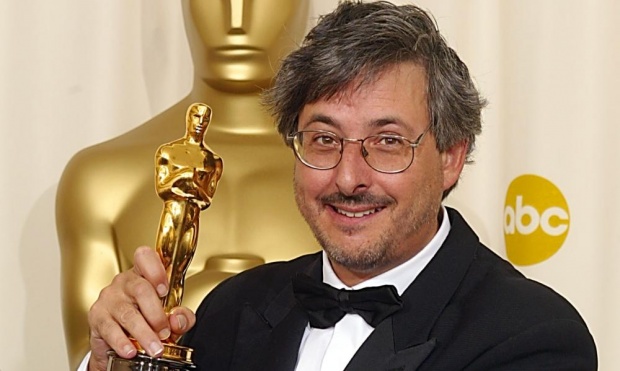
Cinematographer Andrew Lesnie with his Oscar

Oscar-winning cinematographer Andrew Lesnie died of a heart attack on April 27, 2015. While relatively young at 59, his work in the film industry was monumental and will leave a lasting impact that will continue on for generations.

Lesnie was born in Sydney, Australia in 1956. While attending film school in Australia, he worked his first professional gig on the Richard Franklin film, Patrick, as an assistant camera operator. After graduating, Lesnie worked as a cameraman on a TV magazine show, allowing him to shoot constantly in a wide variety of locations and situations, helping him hone his skills as well as learn cinematography techniques and tricks.

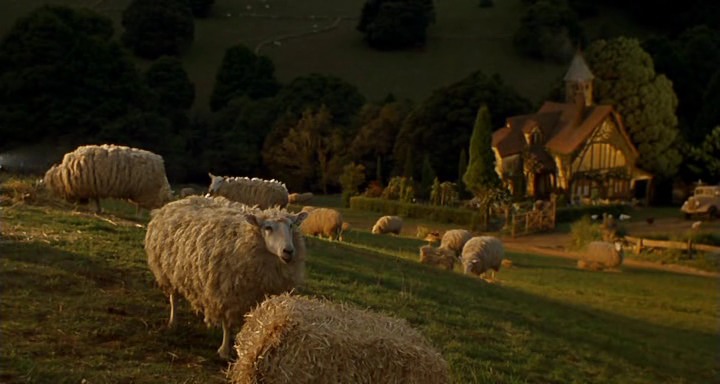
Sheep from Babe: Pig in the City

From there, Lesnie found ample work in Australian films and television, building up a steady and solid resume. His big break came in 1995, with the release of Babe, the family-friendly film starring a talking pig. Scripted by Australian filmmaker George Miller, Babe was a smash hit and in turn brought Lesnie a heap of fame. He later went on to shoot its sequel, Babe: Pig in the City, as well as the Sandra Bullock romantic comedy Two If By Sea.

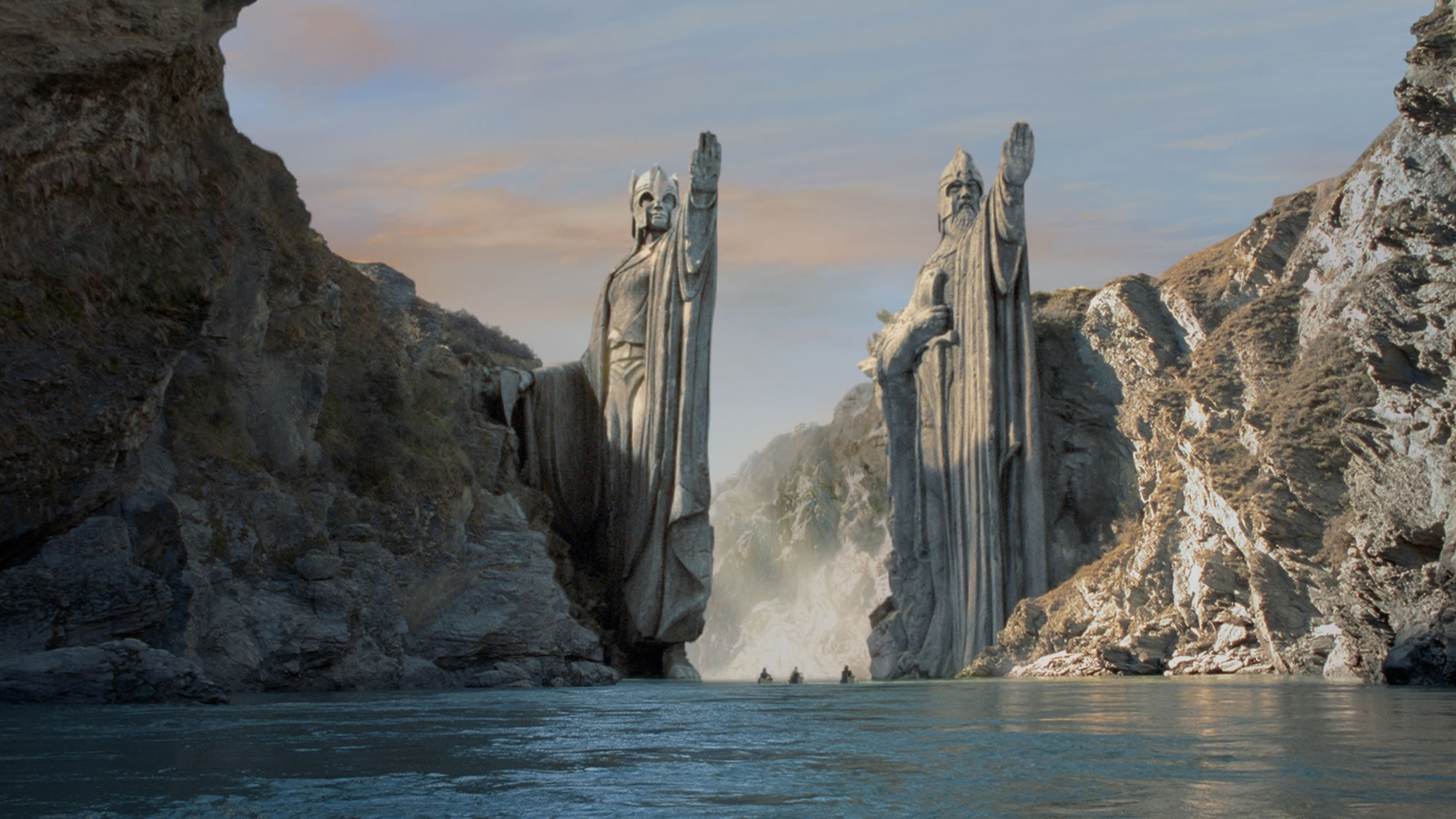
However it was his collaboration with New Zealand filmmaker Peter Jackson that immortalized Lesnie’s contribution to film and showed the world his own unique “cinematographer’s eye.” He was selected to shoot the game-changing Lord of the Rings trilogy. Pre-production for the films lasted several months, as Lesnie worked closely with Jackson to plan and construct the trilogy’s elaborate sets, as well as plan work out the films’ trickier shots. These included playing with perspective and other cinematography tricks to faithfully and realistically capture the significant size differences of the trilogy’s fantastical characters. To aid this process, Lesnie and Jackson used computer previsualization programs to accurately plan the necessary frames and angles.

Return of the King

Lesnie was also instrumental in crafting the trilogy’s trademark color scheme, a palette of earthy browns and greens that helped turn Middle Earth into one of the most grounded, lived-in cinematic worlds this side of the Star Wars galaxy. To achieve the look of the films, Lesnie shot on film, using tungsten-balanced stock and a variety of Arri cameras, including the Arriflex 435, Arriflex 535, and ArriCam Studio 35mm, all paired with Zeiss Ultra Prine Lenses.

Not only gigantic financial successes and a pop culture phenomenon on the level of Star Trek and Star Wars, the Lord of the Rings films were critically adored as well. The third entry, The Return of the King, won all eleven Academy Awards it was nominated for, tying the all-time record for wins. Lesnie picked up a Best Cinematography Oscar for his efforts on the trilogy.

His career did not end with the Oscar, though. The monumental success of the original Lord of the Rings trilogy brought Lesnie a wealth of fame and accolades. His projects that followed expanded in scope, including Peter Jackson’s afterlife drama The Lovely Bones and epic remake King Kong. Lesnie also served as director of photography for the blockbusters I Am Legend, The Last Airbender, and Rise of the Planet of the Apes, in addition to reuniting with George Miller as part of the live action unit for Happy Feet.

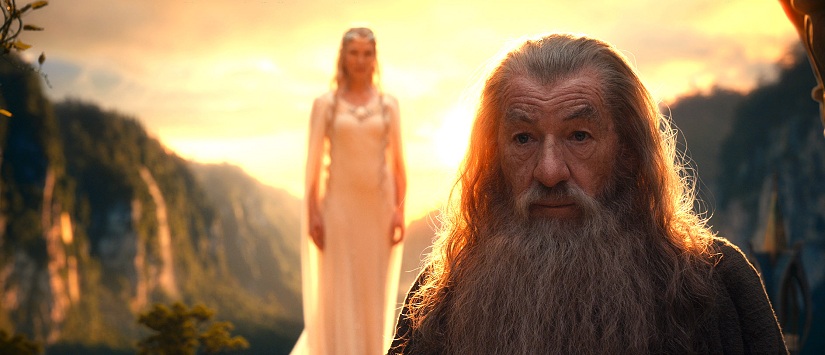
Ian McKellan and

When Peter Jackson signed on to direct The Hobbit, Lesnie came aboard as cinematographer. Like its Lord of the Rings predecessors, the film was expanded into another trilogy, yet—filmed a decade later—proved to be a totally different beast. The Hobbit trilogy was not only shot digitally, on the RED Epic camera, but also in 3D. On top of that, it was shot at a rate of 48 frames per second, as opposed to the usual 24, practically unheard of for major motion pictures. By shooting and screening at the faster frame rate, motion blur was greatly reduced—giving the film almost a video-like feel—which theoretically helps the brain process 3D easier and make it more enjoyable to watch. Shooting in a radically different format meant lighting and even framing differently, as stereoscopic cameras were used with dual lenses.

While The Hobbit trilogy wasn’t as unanimously revered as the original Lord of the Rings films, it was hard for anyone to deny the incredible visuals Lesnie produced. His final film was The Water Diviner, starring Russell Crowe, and the industry and movie buffs alike must mourn the loss of work he will no longer provide. However, the footage he did manage to shoot during his time will not be forgotten and his work will inspire generations of cinematographers and filmmakers for decades to come.

7 Essential TED Talks on Storytelling

Since the dawn of time, humanity and storytelling have gone hand in hand. The only thing that has changed over the millenia is the way in which we tell our stories.

Arguably, nearly all forms of media—from photography to music, cinematography to traditional art and everything in between—is all about conveying a story to an audience. But despite countless centuries of collective experience in storytelling, we’re still figuring out the best ways of going about it.

As is taught in screenwriting school 101, story is key. Here are 10 essential TED Talks on storytelling that will help you figure out how best to tell yours.

J.J. Abrams – The Mystery Box

Abrams is heralded as the master of not just sci-fi, but also knows how to keep viewers intrigued in a story right the way up to the pay-off. The art of injecting the right amount of mystery into a screenplay is a tricky one to master, but Abrams’ TED talk—intriguing in and of itself—will put you on the right track.

Tyler Cohen – Be Suspicious of Stories

Rather than cover the best practices of storytelling, Cohen takes a critical eye to the craft and reveals some of the pitfalls—many of them related to subjectivity—that screenwriters come up against.

Nancy Duarte – Uncovering the Structure of the Greatest Communicators

Nancy Duarte, a graphic designer and writer, came across an intriguing observation: some of the world’s greatest orators all used very similar patterns in their speeches. In unpacking the structure of some of the most well-known speeches and presentations, there’s a lot screenwriters can learn from Duarte’s TED talk in terms of making an emotional connection with their audience.

Elif Shafak – The Politics of Fiction

Fiction is a powerful thing. It has the ability to transcend the limits of its own created world and have a tangible effect on the real one we live in; here, novelist Elif Shafak explores this concept and shares examples of how fiction can help bring us together from across cultural and/or political divides.

Scott McCloud – The Visual Magic of Comics

Comics and screenplays—or, more specifically, the creation thereof—share a lot of parallels. Scott McCloud is widely considered to be the grandfather of comic theory, and the deeply insightful advice on storytelling that he delivers throughout his inspirational TED Talk is of use to both screenwriters and comic book creators alike.

Isabel Allende – Tales of Passion

Isabel Allende is famed for her compelling work as a novelist, but is also becoming equally well-known as an activist. In this essential TED Talk on storytelling, Allende discusses creativity and the art of exploring feminist issues through stories, and is equally as funny as it is moving.

Andrew Stanton – Clues to a Great Story

By all measures, Andrew Stanton is an incredible storyteller, having created some of the most enduring Pixar tales to date (including Toy Story, Finding Nemo, and Wall-E). His talk is a candid invitation into his creative process, with much of the theory being readily usable in your own screenwriting.

Got a favorite from the above list, or know of any other must-watch TED Talks on storytelling that every screenwriter should check out? Head on down to the comments below and let’s get the discussion flowing.

6 of the Best Environmental Documentaries

Documentaries have the power to change perceptions about the world around us on both a personal and societal level, and as we’ve seen time and time again, the source of this can come from anywhere; a student at documentary filmmaking school is just as likely to inspire big change as a well-known celebrity A-Lister.

4580622461_4926469ff6_o

One area in which documentary filmmaking is making great strides is ecology and the environment. With single titles having a notable impact on how we as a species affect our planet, let’s take a look at six of the best environmental documentaries you should check out right now (from both the obscure to the award-winning).

Food, Inc. (2008)

Usually high up the list of many people’s “best environmental documentaries,” Food, Inc. went after one of the biggest subjects in ecology with a brazenness the likes of which isn’t often seen in modern documentary filmmaking. It found its mark.

Divided into three acts, the documentary covers the production of meat and vegetables in the first two before turning its attention to the conglomerate nature of food sales. Eye opening and horrifying in equal measure, it wholly deserved the Emmy which it went on to win.

Dirt! The Movie (2009)

Based on the book Dirt: The Ecstatic Skin of the Earth and narrated by none other than Jamie Lee Curtis, this is a documentary that doesn’t look appealing at first glance but is actually essential viewing given the ubiquity of the subject matter. It’s also free to watch on YouTube, so dive into this unexpected (and award-winning) treat by clicking here.

General Orders No. 9 (2012)

One of the lesser known yet no less stunning environmental documentaries on this list, General Orders No. 9 is an absolute beauty to behold.

Eschewing all of the standard documentary conventions and running like a visual meditation, this unique film sequence chronicles the American South’s demise as the wilderness is slowly paved over. Having taken 11 years to make, cinematography doesn’t get much more elegant than this.

An Inconvenient Truth (2006)

https://www.youtube.com/watch?v=OAK8Cd4t0WA

No list of the best environmental documentaries would be complete without a hat tip to Al Gore’s 2006 documentary An Inconvenient Truth. No real introduction is needed for the title which arguably did more for raising global consciousness than any prior film to the effects of global warming, so if you haven’t already, go watch it immediately.

Gasland (2010)

As we mentioned in our “How to Shoot a Documentary” post, Gasland has the distinction of being one of the few feature-length, widely distributed documentaries to have been produced by just one man. That man is Josh Fox, and Gasland doesn’t suffer any for the lack of crew members.

Fox’s story comes out of the gate swinging, beginning in medias res with a natural gas company offering him $100,000 to lease the land he lives on for drilling purposes. Intrigued, the director goes on to speak to families who have accepted the offer and uncovers numerous serious health issues in the process—essentially, it’s a modern-day Erin Brockovich in documentary form.

Blackfish (2013)

https://www.youtube.com/watch?v=8OEjYquyjcg

One of the most recognizable entries on the list of best environmental documentaries, in part due to the immense furor it caused upon its release in 2013 and the subsequent fallout.

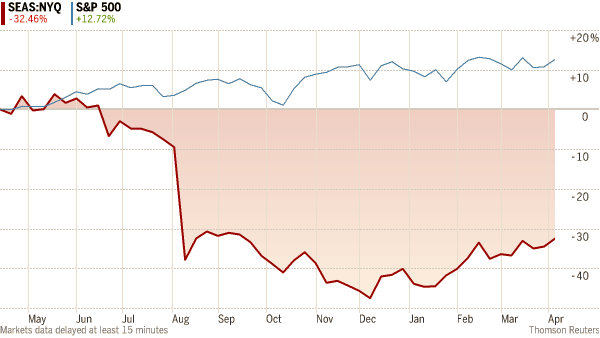
If you want an example of a documentary that tangentially changed the world, this is it. The tale of one orca’s life in captivity and the narrative surrounding it totally savaged SeaWorld’s reputation, so much so that the company’s shares and attendance figures plummeted in the documentary’s wake:

Seaworld Share Prices
For its part, however, SeaWorld has claimed that the documentary hasn’t had a negative effect and that the drop in share prices is down to other factors (and the drop in attendance is the result of unseasonably bad weather at its main parks). We’ll leave you to draw your own conclusions.

Got your own recommendations of the best environmental documentaries we should be watching? Don’t hesitate to hit the comments below and share with the group.

5 Truly Inspirational Female Cinematographers

The subject of gender inequality within the movie industry is something we’ve covered extensively in the past, most notably via our infographic which exposed the (rather shocking) statistics of how underrepresented women are in film.

As a cinematography school, we’re actively trying to redress that balance on a day-to-day basis by promoting the works of all film students, regardless of gender or any other factor. But it’s still an uphill struggle, and although continued efforts to raise public consciousness to the issue – both by ourselves and others – is creating positive change, it’s still change at a trickle rate.

In the mean time, let’s celebrate some of the truly inspirational female cinematographers which consistently produce great work out in the field. And really, they’re worthy of mention simply because they’re great cinematographers…

… that they’re also female is entirely incidental.

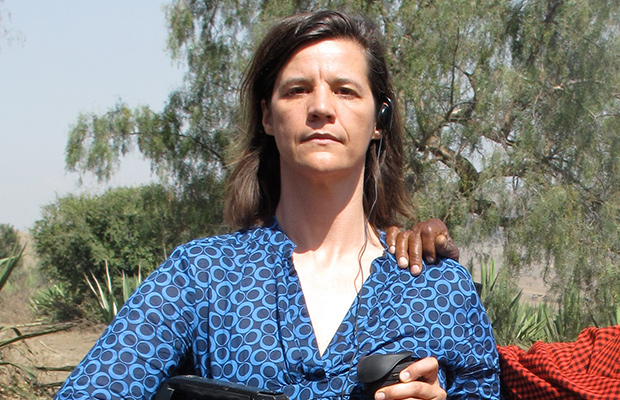
Kirsten Johnson

Kristen Johnson Cinematographer

Johnson is a cinematographer that, from a very young age, has lived and breathed the craft.

Born and bred in New York, the Brown University graduate cut her teeth with documentary work in Africa before heading to Paris for further tuition. Shortly following this, she directed a slew of short documentaries between Ghana and France and gained some serious recognition and awards for her skills as a cinematographer (including a Tribeca Film Festival Best Documentary award for Pray The Devil Back to Hell, a Sundance award for The Oath, and two Oscar nominations for Asylum and The Invisible War respectively.)

Her most recent work was on the brilliant (and alarming) documentary Citizenfour, which was heralded as one of the best documentaries of 2014 and went on to win an Academy Award for the category.

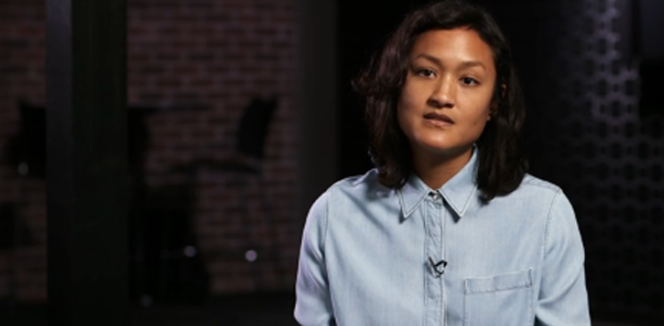
Nicola Daley

Kirsten Johnson cinematographer

Nicola Daley is another prolific traveler, and someone who has used her extensive cultural explorations in her frequently stunning cinematography work. Originally hailing from Melbourne, Daley considers her travels at a young age between France, America, Africa and ultimately back to Australia as “her film school before she went to film school.” She has also shot in places as hostile as Iraq, Afghanistan, and North Korea.

Over the past decade, Daley has racked up more Australian awards for her cinematography than we could practically list here and her output is as prolific as it is masterful.

Tami Reiker

Tami Reiker cinematogapher

Of all the truly inspirational female cinematographers listed here, Reiker has the sole distinction of being the first female to have ever won (and even been nominated for) an ASC award, which she did for her work on the series pilot of Carnivale.

Probably best known for her acclaimed work on last year’s Beyond the Lights, her IndieWire interview on the challenges of being a female cinematographer is well worth a read. Reiker is definitely a cinematographer to keep tabs on in the coming years.

Autumn Durald

Autumn Durald cinematographer

Having gotten her foot through the door as a camera assistant, former art history student Durald’s prowess for cinematography has been used not just in feature films (her work on Gia Coppola’s debut movie Palo Alto attracted a lot of praise), but also in music videos—most notably on London Grammar’s “Strong,” and two Haim tracks (“Falling” and “Desert Days”).

Last year, Durald was named as one of the essential “cinematographers to watch” by Variety, and we’d have to echo that sentiment.

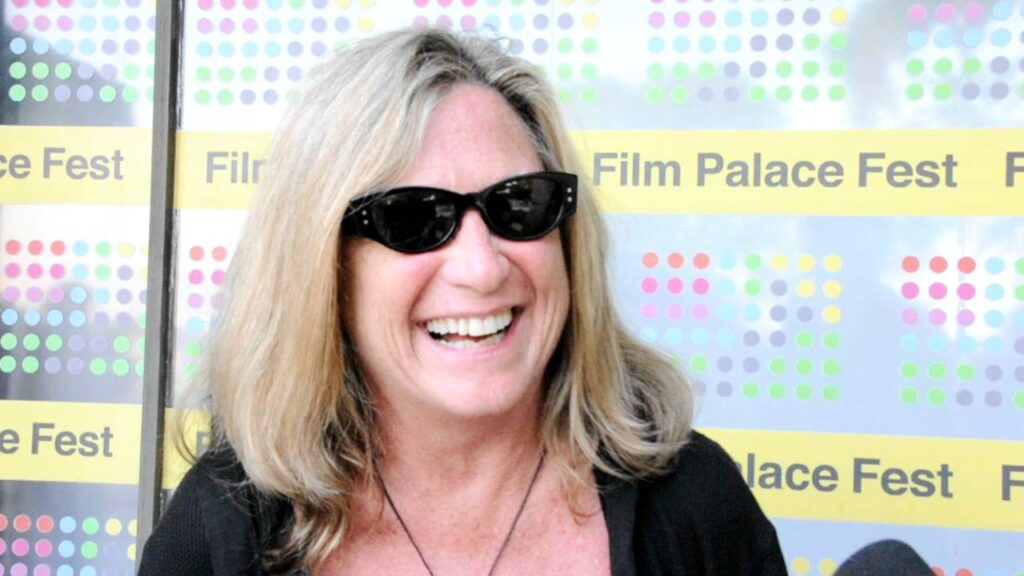
Sandi Sissel

Sandi Sissell cinematographer

Few cinematographers have as much experience—and as many accolades—as Sandi Sissel.

Coming right out of the gate with Emmy-award winning work covering the Vietnam war, her cinematography career went on to see her work on numerous ABC shows (such as Saturday Night Live and 60 Minutes) over the next couple of decades. Her extensive documentary work in the years since have attracted further Oscar and Emmy winning awards.

Which other talented female cinematographers deserve inclusion on the list? Drop a comment below!

6 of the Best Screenwriting Competitions You’ve Never Heard Of

Screenwriting competitions can be a fantastic opportunity for both fledgling and professional screenwriters alike to raise their profile, and with a little bit of luck, earn some substantial cash prizes. 

To boot, many great careers have been launched through a combination of time spent at screenwriting school and some notable contest wins, with many agents and other film representatives keeping a very close eye on the names that rise to the top of the following screenwriting competitions.

So, without further ado, here are a few that are well worth considering…

6 Best Screenwriting Competitions You’ve (Probably) Never Heard Of

BlueCat ScreenPlay Competition

Closing Date: October 15 (for next year’s competition). Entries open June 15.
Entry Fee: $35 to $70. Student discounts may apply.
What They’re After: Shorts and full screenplays of any genre. International entries accepted.
What You Stand to Win: Between $1,500 and $15,000 for finalists, plus every screenplay entered receives a written analysis.

PAGE International Awards

Closing Date: Final deadline for entries is May 15.
Entry Fee: $79 for last minute entry (plus $110 if feedback is requested).
What They’re After: Original screenplays, short film scripts and teleplays.
What You Stand to Win: Tiered cash prizes between $250 and $25,000.

Scriptalooza

Closing Date: Final deadline is April 29, so get in quick.
Entry Fee: $65 for last minute entry.
What They’re After: Original screenplays of various genres.
What You Stand to Win: Grand prize of $10,000, plus $500 for best of each genre.

Script Pipeline Screenwriting Contest

Closing Date: May 20
Entry Fee: $55 if entered before May 1, otherwise $65
What They’re After: Original screenplays of various genres.
What You Stand to Win: Grand prize of $20,000 plus a huge exposure/development package. Runner up cash prizes and exposure packages also offered.

Slamdance Screenplay Competition

Closing Date: Regular deadline closes June 9, extended deadline July 21
Entry Fee: Between $35 to $80
What They’re After: Original screenplays in the category of short, original teleplay, feature and horror.
What You Stand to Win: Grand prize of $5,000 and $2,000 to winners of each category, plus free services.

TrackingB TV Script Competition

Closing Date: May 31
Entry Fee: $75 before April 30, otherwise $85
What They’re After: 30-70 page pilot script for comedy or drama TV show.
What You Stand to Win: A range highly lucrative and reputable exposure and development packages offered to 3 grand prize winners, 10 finalists and 25 semi-finalists.

3 Screenwriting Competitions You Should Have Heard Of

Below are three of the most noteworthy and renowned screenwriting competitions in the entire industry. Winning one of these is the proverbial golden ticket to career success, and although the odds of beating the mass of other entrants is low, those that win invariably never regret having entered.

Nicholl Fellowship Screenwriting Competition

Closing Date: May 1
Entry Fee: $75, plus an optional $40 to receive reader comments on your submission.
What They’re After: Original screenplays (no adaptations.) An additional caveat is that entrants must not have earned more than $25,000 writing screenplays for either film or television to date.
What You Stand to Win: Up to five $35,000 fellowships are awarded each year, plus Oscar level, career-launching exposure.

Austin Screenwriting Competition

Closing Date: April 20, with late entries closing May 20
Entry Fee: Between $30 to $50 depending on long form or short form submission and deadline window
What They’re After: Shorts, feature-length screenplays and teleplays.
What You Stand to Win: Cash prizes ranging between $500 and $2,500 plus coveted awards and exposure.

Sundance Screenwriters’ Lab

Closing Date: May 1
Entry Fee: $40
What They’re After: Original screenplays, though screenwriters who have already had more than one prior screenplay produced are ineligible for entry.
What You Stand to Win: Not technically a competition of sorts, selected applicants will be invited to attend the Screenwriter’s Lab; possibly the most prestigious and exclusive workshop in the entire country.
So there we have it—a total of nine screenwriting competitions that you should consider entering for the next awards season.
Designed for aspiring writers with busy schedules, our 12-Week Evening Screenwriting Program teaches students the fundamentals of screenwriting. Develop your understanding of plot, character arcs, and dialogue with the support of industry-leading instructors. Visit our 12-Week Evening Screenwriting Program page to learn more.

5 Ways Film School Makes You a Better Screenwriter

While some people are naturally great storytellers, or can strike up a conversation with just about anyone, writing can seem as foreign to them as flying a helicopter. Others seem to be born ready to write, naturally gifted with a pen or a keyboard. For either group, film school is a great tool to perfect—or just introduce—the skills needed to be a strong screenwriter.

Whether you’re a student who wants to focus on directing, editing, or other behind-the-camera skills, or someone who wants to draft the next great screenplay, film school can provide you with numerous advantages.  And if you’re one of those natural-born writers who’s been gifted with screenwriting skills, you might be surprised to find what classes can even offer you. Here are just five examples of how film school can help you become a great screenwriter.

Deadlines

Some writers thrive on deadlines, unable to get their gears turning until the clock is ticking and a draft is due at midnight. Others see deadlines as giant chains shackled to their creativity, hindering them from any productivity. However, film school, like Hollywood itself, lives and dies by deadlines. Being forced to write, even when you don’t feel like it, is a gift unto itself. Most writers agree that quantity leads to quality, and deadlines, if anything, produce quantity. You may not want to get started, but once you do you’ll find yourself surprised at how hard it is to stop.

Re-writes

If you’re the picky type of writer who abhors deadlines, there’s a good chance you’re equally repulsed by re-writes. A lot of writers start off writing because it’s fun—once it becomes a duty, it loses its flavor. Re-writing can taste just as stale, considering you’ve already brought to life the world and characters you intended. If writing is the creative, fun part then re-writing is the laborious, begrudging part. By forcing you to constantly re-visit and re-write your screenplay, film school makes you put in the work you may not want to, but ultimately rejoice in. Suddenly that world you had so much fun sketching in broad strokes has become a fine-tuned masterpiece ready to be put on screen.

Collaboration

If you went to film school to learn to direct, produce, edit or other filmcrafts other than writing, you may get frustrated when you’re forced to script something for yourself. After all, most of Spielberg or Scorsese’s great films were someone else’s drafts—why should you be any different? However, getting a feel for the craft of writing will help you in whatever aspect you choose to work in down the line. Knowing where a scene started on the page will only help you bring it to life on camera. Conversely, if you intend to primarily be a screenwriter, learning the other crafts will inform you how to put your words to page in a way that will best facilitate their filming down the line. Filmmaking is a collaboration through and through, and screenwriting is no exception.

Expanding Your Worldview

Working with other film students isn’t just essential to learning the art of collaboration—it will also expand your worldview. Chances are the high school and lower grades you’ve attended consisted mostly of students with the same background as yourself. Going to a film school with a diverse body of students, especially schools like the New York Film Academy with undergraduates and graduates from all over the world, offers you a window into numerous worlds and lifestyles. Even passively working and socializing with an eclectic group of artists and students will broaden your characters, themes, settings, and writing in general. That’s something no book or YouTube video can ever hope to gift you.

Learning the Rules to Break the Rules

Many writers and filmmakers fancy themselves rebels and trendsetters—not bound by the rules of everyone else. Maybe they’re right. But rules can never be effectively broken until they’ve been mastered. When conventions are shunned in writing and filmmaking in a thought-provoking and progressive way, it is because they are being used as a tool by the artist. Rules shouldn’t be broken for their own sake—they should be molded and made into something new. A statement is being made merely by changing the form—how effective that statement is depends entirely on how the form is changed. Film school teaches you the way other writers and the industry craft a screenplay. Once you’ve mastered that, playing with the conventions will be easier and more meaningful.  Simply put, it’s up to you what to build and how to build it. Film school gives you the best tools and materials to start building.

Check out our screenwriting programs at the New York Film Academy today!