VR and AR Crash Course with pioneering developer and NYFA instructor, Aaron Pulkka

NYFA instructor, Aaron Pulkka is a pioneer in the virtual reality and augmented reality having created groundbreaking projects going back to his days creating Aladdin’s Magic Carpet Ride as a Disney Imagineer in the 1990s. He has been leading cutting edge projects in the space ever since. He is now leading creative development for the much anticipated series of VR/AR amusement parks for Two Bit Circus funded by Intel Capital among other investors.

Like all of the NYFA Games’ instructors, Aaron is a working game developer in industry and chooses to teach at the school on top of his professional practice.

Aaron appeared on the NYFA Games’ Twitch Channel to create three awesome videos in which he explains

  • the history of VR and AR
  • the current state of VR and AR including a hands on explanation of the hardware platforms
  • a crash course on VR Game Design

Check out Aaron on NYFA Games Twitch here:

(Virtual) Reality Check – Part 1 | Schooled with Aaron Pulkka
Watch live video from NYFA_Games on www.twitch.tv
(Virtual) Reality Check – Part 2 | Schooled with Aaron Pulkka
Watch live video from NYFA_Games on www.twitch.tv
VR Game Design Crash Course! with Aaron Pulkka
Watch live video from NYFA_Games on www.twitch.tv

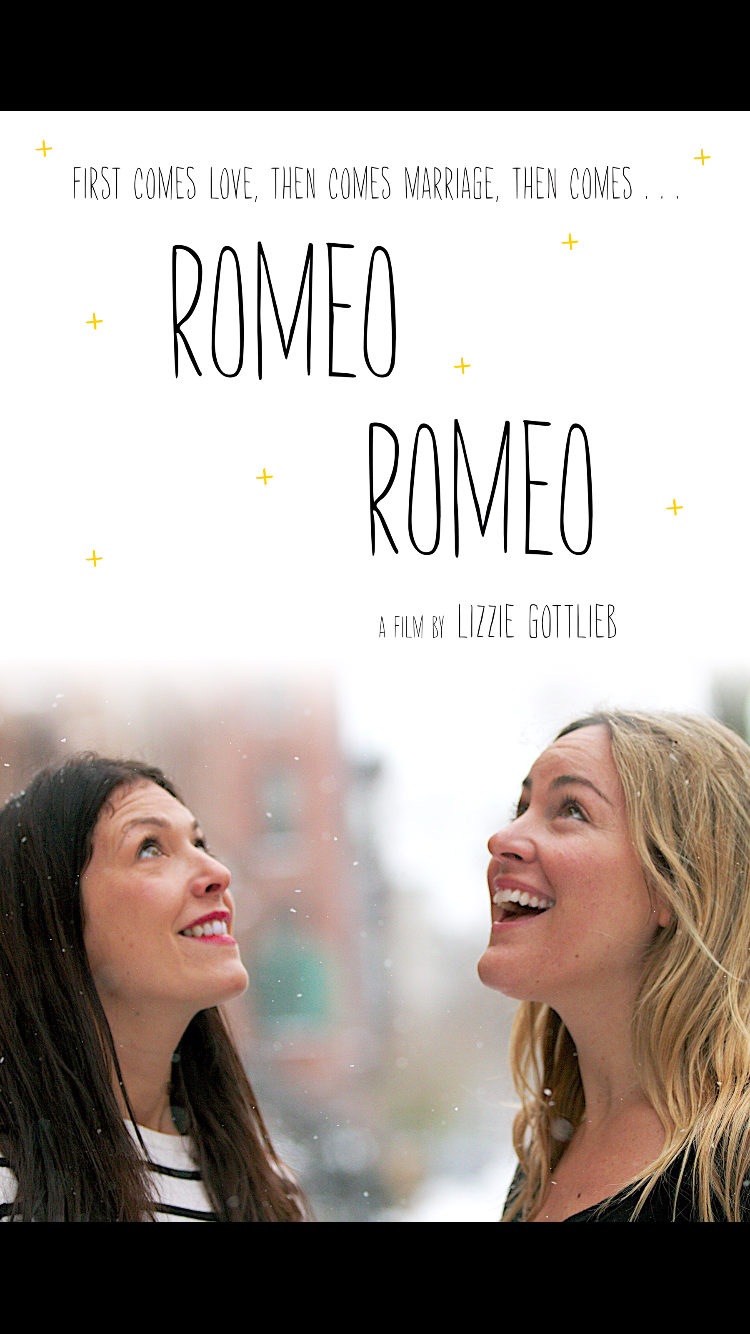
NLGJA’s Excellence in Documentary Award Winner is “Romeo Romeo” by NYFA’s Lizzie Gottlieb

The prestigious Excellence in Documentary Award by the National Gay and Lesbian Journalists Association (NLGJA) has been awarded to “Romeo, Romeo,” a documentary feature directed by New York Film Academy documentary faculty member Lizzie Gottlieb, who produced the film together with Eden Wurmfeld and NYFA President Michael J. Young. NYFA documentary alumna Eliana Álvarez Martínez was a camera operator.

“Romeo Romeo” follows a married lesbian couple, Lexy and Jessica, throughout their poignant  struggles with infertility as they navigate the heavy costs, medical procedures, and reproductive technology to pursue their dream of growing their family. The film aired on PBS’s “America Reframed.” World Channel, which hosts the show, notes that more than 6.5 million American women struggle with fertility issues.

The NLGJA’s Excellence in Journalism Awards have recognized and promoted fantastic excellent coverage of issues related to the LGBTQ+ community since 1993.

NLGJA President Jen Christensen has said, “We are thrilled each year by the work that is nominated for NLGJA’s Excellence in Journalism Awards, and this year was no different. All of the award recipients are doing their fair share to advance NLGJA’s mission of promoting fair and accurate LGBTQ coverage, and it is our privilege to recognize their outstanding work.”

The Excellence in Documentary Award will be presented at the NLGJA convention this September in Philadelphia. “Romeo Romeo” will air again Oct. 24, 2017.

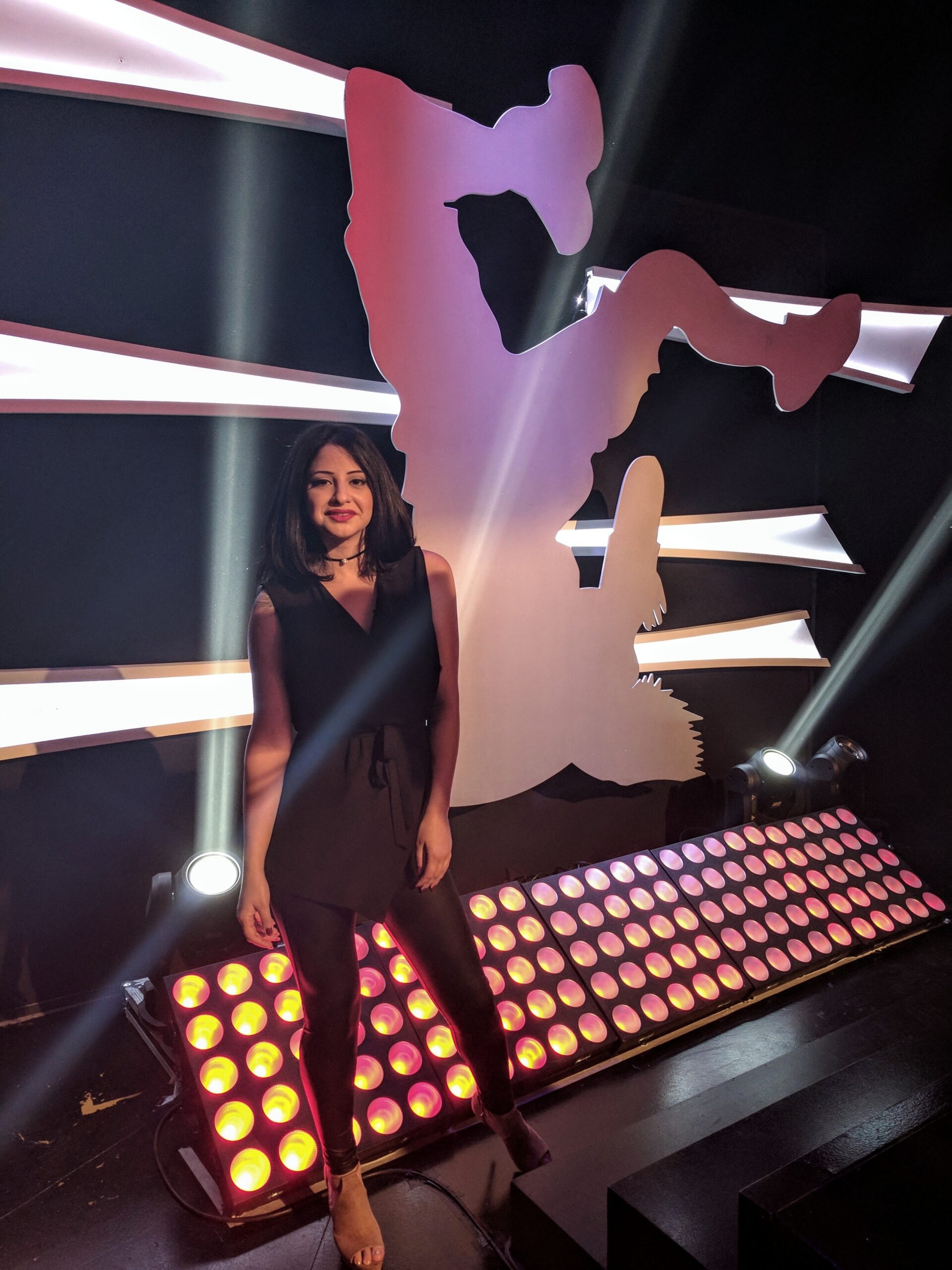
NYFA Acting for Film Alumna Samantha Hamadeh Hosts Comedy Central Arabia’s “Ridiculousness Arabia”

In 2010 Samantha Hamadeh graduated from the One Year Acting Program at New York Film Academy. Her 3.9 GPA should have tipped everyone off that she was headed toward great things. In just a few years Hamadeh was on Comedy Central co-hosting one of their most popular shows. Hamadeh sat down with NYFA Correspondent Joelle Smith, to talk about where it all began and how NYFA helped her to get where she is now.

NYFA: When did you fall in love with acting?

Hamadeh: I was in 1st or 2nd grade. My friend and I used to hand out little notes to people in the class to come watch our plays on the playground. There was a tree ring made of cement. That was our stage.

NYFA: What were some challenges you faced in your craft before coming to NYFA?

Hamadeh: Although I’m a firm believer that people are born with a talent, I still thought that there was so much that I needed to learn about myself in order to be able to understand and portray different characters. Also, I took 3 years off from the theater because I was getting a degree at university. I was nervous about getting back into the world of acting.

NYFA: How did NYFA help you move through these challenges?

Hamadeh: I had some of the best teachers and mentors. From Kelly Hughes to Caitlin Muelder, Scott Ferrara, Valorie Hubbard, and Anthony Montes – they were all so supportive and truly believed in me. In class, I was able to work on my technique while also developing new skills.

NYFA: What is your best memory from NYFA?

Hamadeh: My dream of going to film school came true! The entire experience was life changing. I also got to meet some of the most amazing and talented students who I look up to, especially Eliza Delacourt and Maria Carvalho, who are now family to me. Some of the best years of my life were in Los Angeles, both on and off campus.

NYFA: Tell us about your show, “Ridiculousness Arabia.”

Hamadeh: Ridiculousness is an American comedy clip show, which presents viral videos. Comedy Central Arabia got the rights and I got to co-host the Arabic version – “Ridiculousness Arabia.”

Samantha Hamadeh | NYFA Alumni Spotlight

NYFA: How did you become involved with the project?

Hamadeh: I work in marketing and was at a meeting with Comedy Central because they were looking to film their stand up comedy show at my brother’s venue, Stereo Arcade in Dubai. The CC team mentioned they were also working on Ridiculousness and I got excited because I love the US version. The producer asked if I was interested in co-hosting. Obviously, I said yes.

NYFA: What was your goal with the project?

Hamadeh: It was pure improv so we didn’t have much time to rehearse and we filmed two to three episodes a day over five to six days. My goal was to stay focused and enjoy filming every episode. There’s no character work. What you see on tv is who I am in person.

NYFA: What’s been the most rewarding part of being involved with “Ridiculousness Arabia?”

Hamadeh: Being part of a production like this was a dream come true! And I enjoyed every single minute of it because I got to work with really talented guys; Mohanad, the host and Khaled, the co-host.

NYFA: What advice do you have for an aspiring host?

Hamadeh: You’re going to hear a lot of no’s before you get a yes. It’s hard to be patient, I know, but when the right opportunity comes along you’re going to be happy that you were.

NYFA: Where and when can people watch your show? 

Hamadeh: Every Sunday night on Comedy Central Arabia.

The New York Film Academy would like to thank Samantha Hamadeh for taking the time to speak with us.


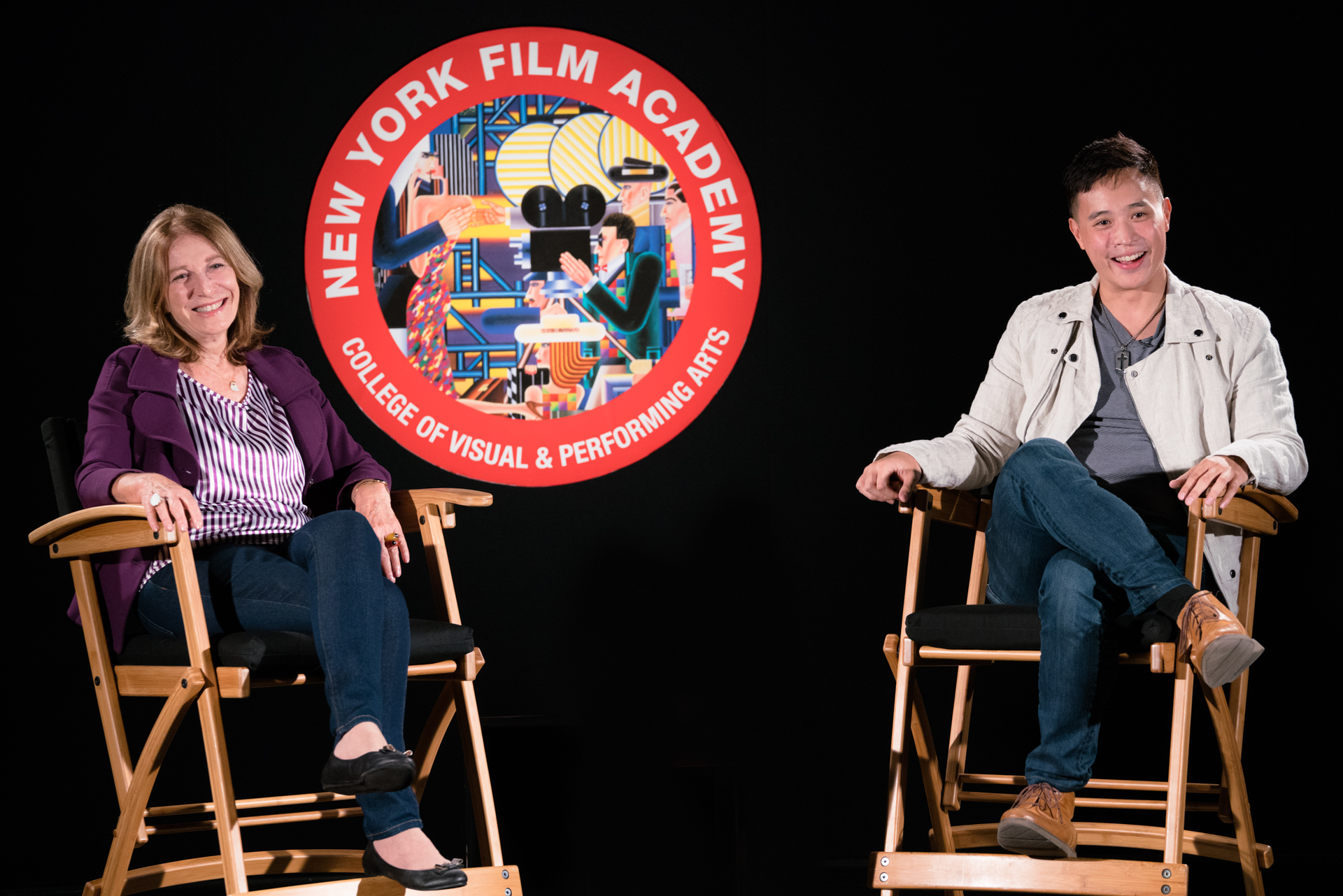
NYFA Acting for Film Alumnus Hayden Szeto Visits Los Angeles Campus as Guest Speaker

On Tuesday, August 15 New York Film Academy alumnus Hayden Szeto returned to the Los Angeles campus to share his latest hit “The Edge of Seventeen.” Q and A Series Director Tova Laiter hosted the evening.

Szeto was the first actor cast in the film in what writer/director Kelly Fremon Craig thought would be the most challenging role to cast. But, after auditioning him, she knew Szeto was perfect for the part.

It could not have come at a better time for Szeto. A Canadian citizen out of school, Szeto was running out of time to find work in the United States. He had just one week left on his visa. This, Szeto said, was a blessing and not a curse: He encouraged the other international students to view the time crunch as a gift. “You don’t want to go home. The weather in LA is great, but you’ve got to earn your stay,” Szeto said. Let the ticking clock be a fire that drives toward success.

Szeto found NYFA on Google and knew immediately that this is where he wanted to go to school. He had studied theater at another school, but a lack of on-camera work drove him to come to NYFA. Being in Los Angeles with the opportunity to work on professional backlots just sweetened the deal. “This is one school that has everything you need,” Szeto said.

Szeto encouraged students to take advantage of their time at the New York Film Academy. He stressed that skating by in school would not translate to a flourishing career in the real world. “You’ve got to find out what you’re good at here. Once you leave it’s your responsibility to build on that,” he told students. “Treat this space like a gym.”

When it was time for the Q & A portion, one student asked, “What catches your eye when reading a script?”

Szeto responded: “I have to be able to relate to the character. How can I give him dignity?” He said a lot of the decision comes down to talking with the director and writer. “You’re not just auditioning for them, they’re kind of auditioning for you too.”  As an example, Szeto comically described working with a director who gave vague descriptions on how to improve a scene in what would have been a big movie for him, but Szeto ultimately turned down the role.

An Asian student asked, “Do you have plans to take on roles that deal with Asian American issues?”

“Being an actor of color, people in your community will say you owe them something because of your skin color. No. If it’s about the Asian American experience and it’s well written than yes, I’ll do it. But  first, it has to be good.”

The New York Film Academy would like to thank Hayden Szeto for taking the time to revisit his old stomping grounds, and for passing along advice to the next generation of students. Szeto’s next film is “Truth or Dare,” alongside Tyler Posey and Lucy Hale.

podcast


A Q&A at NYFA Los Angeles With Disney Head of Animation Amy Lawson Smeed

This August, Head of Animation for Walt Disney Studios Amy Lawson Smeed gave a rousing Q and A at the Los Angeles campus of the New York Film Academy, after a screening of her latest work “Moana.” Smeed’s work includes “Treasure Planet,” “Paperman,” “Frozen,” “Tangled,” and “Moana.” The event was moderated by NYFA Chair of Animation Craig Caton.

Students were excited to hear from one of the few leading women in animation. A recurring theme of the night was how much animation is accomplished by private performances no one ever sees. Smeed described working in an isolated room trying to capture the feelings and actions of a character. “I don’t ever want the character to look like me.”

The performance is less about being the character and more about finding the truth and nuance in the scene. As an example, Smeed spoke about the scene inTangled” when Rapunzel sings over a dying Flynn Rider. Smeed drew on a personal family loss and her favorite tearjerkers to study how the throat gets tight when a person cries and how their eyes widen and tear.

Smeed explained to the screenwriters in attendance that as an animator she does not often see a script. The collaborative nature and time intensive work requires a lot of planning up front. The workflow generally begins with a polished script, that is then storyboarded and screened (an animatic) for the entire studio. Everyone then has an opportunity to give notes on what they saw.

Those notes are considered, a new draft is written, and the new and improved animatic is screened. Scenes that work are then given to the voice actors to record the dialogue. The recording sessions are filmed as a reference for animators. Finally, the recorded dialogue is given to the animators and they go to work making their character walk and talk.

The reference tapes can be used to help define the character. Dwayne Johnson’s character in “Moana,” Maui, maintained “the people’s eyebrow” made famous during Johnson’s wrestling days. Smeed says the performance aspect is her favorite part of the job. Animating her first Disney kiss in “Tangled Ever After” was a particular highlight.

Smeed was asked to give the best advice to students getting started in the industry. She said the reel is the animator’s key to getting into the exclusive club of working creators.  She highlighted three key elements to improve a reel. The first is to flip images of characters. If a something seems off about a pose, reverse the image. If it still seems off or if the pose becomes worse, it means something is wrong — perhaps the weight is distributed oddly or an angle of the limbs slightly askew.

Smeed also shared that incorporating entertainment value is vital to impressing a veteran reviewing your work. “This can be something funny, a line or a gag, or it can be a moment that moves you,” Smeed said. What matters most is that an emotional reaction is elicited out of the viewer.

Finally, students were encouraged to make sure the animated scenes in their portfolio include texture. Smeed defined texture as the way characters react to objects, tasks, and people when they are not speaking. Giving their hands and face definition is vital to making the character feel like a living being.

The New York Film Academy would like to thank Amy Smeed for taking the time to speak to our students. Smeed’s next project is “Wreck-It Ralph 2,” and she noted that she’s excited to be animating the reunion of all the living Disney Princesses.

Watch the full Q&A here:

podcast


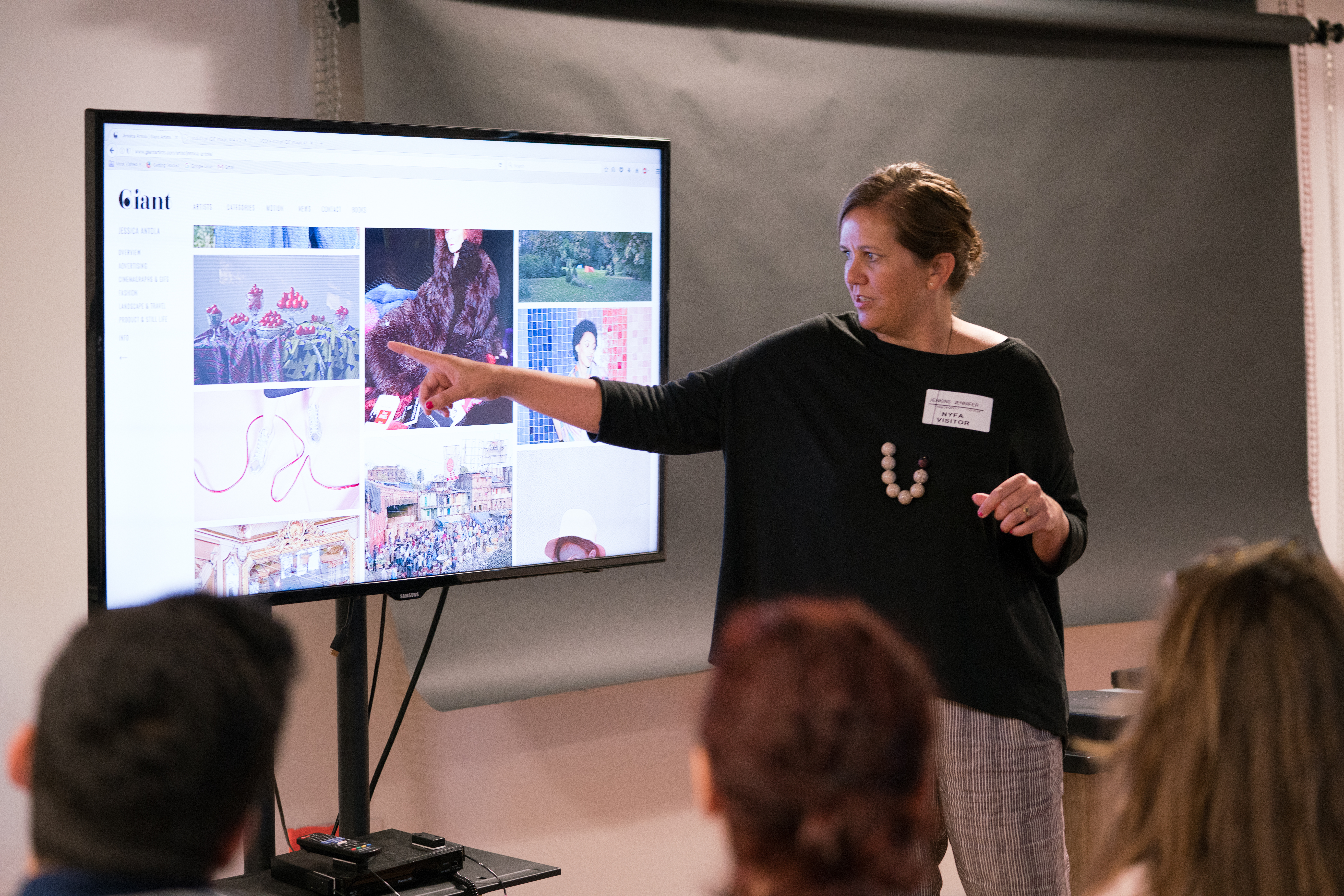
NYFA Photography Department Hosts Giant Artists Guest Lecture Series

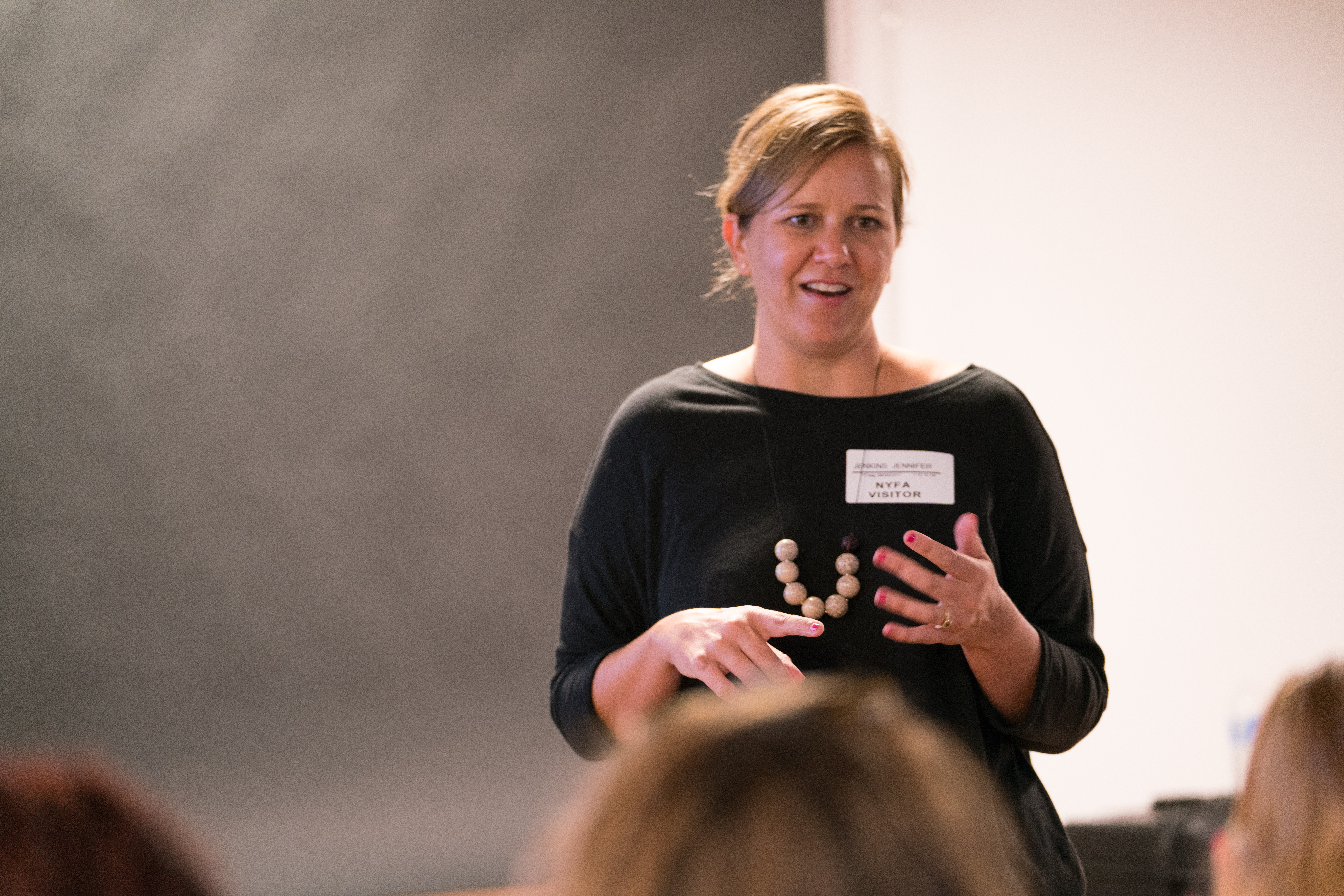
Early this August, Jennifer Jenkins from Giant Artists gave the first of three lectures for the New York Film Academy Photography Department’s summer series. In attendance were students interested in learning more about professionalism within the industry.

Jenkins began her career in music working with bands like Wilco and Elliot Smith. She spent 11 years managing artists, but around 2005 the future of the music industry was called into question with the advent of streaming services and illegal downloads.

Jenkins began to look at other ways she could engage with and serve the music community. Her first love was the album cover, and soon she had created Giant and began working with photographers with a unique way of seeing the world.

Though album photography was her passion, Jenkins revealed that advertising is Giant’s bread and butter. She explained that current trends are against the grain, and clients are looking for something they haven’t seen before. This bodes well for Giant’s artists like Emily Shur, Christaan Felber, Jessica Antola, Tom Van Schelven, and RJ Shaughnessy.

Jenkins’ had plenty advice for students as they make their way into the working world. First, she suggested that every artist find his or her own voice. She calls this “Diversity with a single point of view.”

Many young photographers begin as a studio assistant. Jenkins commented that many of those assistants leave with work that looks just like their former bosses, but no one will buy a copy while the original is still available. Jenkins suggests working as an assistant for just a few years.

“Find your own team,” was another piece of advice that Jenkins emphasized to students. Photography is not a profession that can be done solo: Many clients are asking for motion graphics and GIFs. Having a trustworthy editor and graphics team will put beginners far ahead of the competition.

Another important to-do for aspiring photographers is to have a beautiful and completed portfolio. “Make sure all of your pages are printed from the same place.” Jenkins detailed the unpleasant experience of flipping through a talented artist book when every page looks different. Clean uniformity helps the keep the viewer’s eye where it should be —  on the work. Jenkins suggested clean white paper in an 11×14 black book with a two-inch margin and no more than 70 prints. Jenkins cautioned against going the iPod route: The backlighting can be distracting and many clients like the look and feel of a book.

Once a portfolio book is complete, photographers will be ready to start submitting their work. Jenkins attends a number of photography competitions throughout the year. Artists were encouraged to apply to and attend these competitions. She also suggested using an industry database like Agency Access to book jobs.

The New York Film Academy would like to thank Jenkins for taking the time to speak with our students. You can learn more about Giant Artists by clicking here.


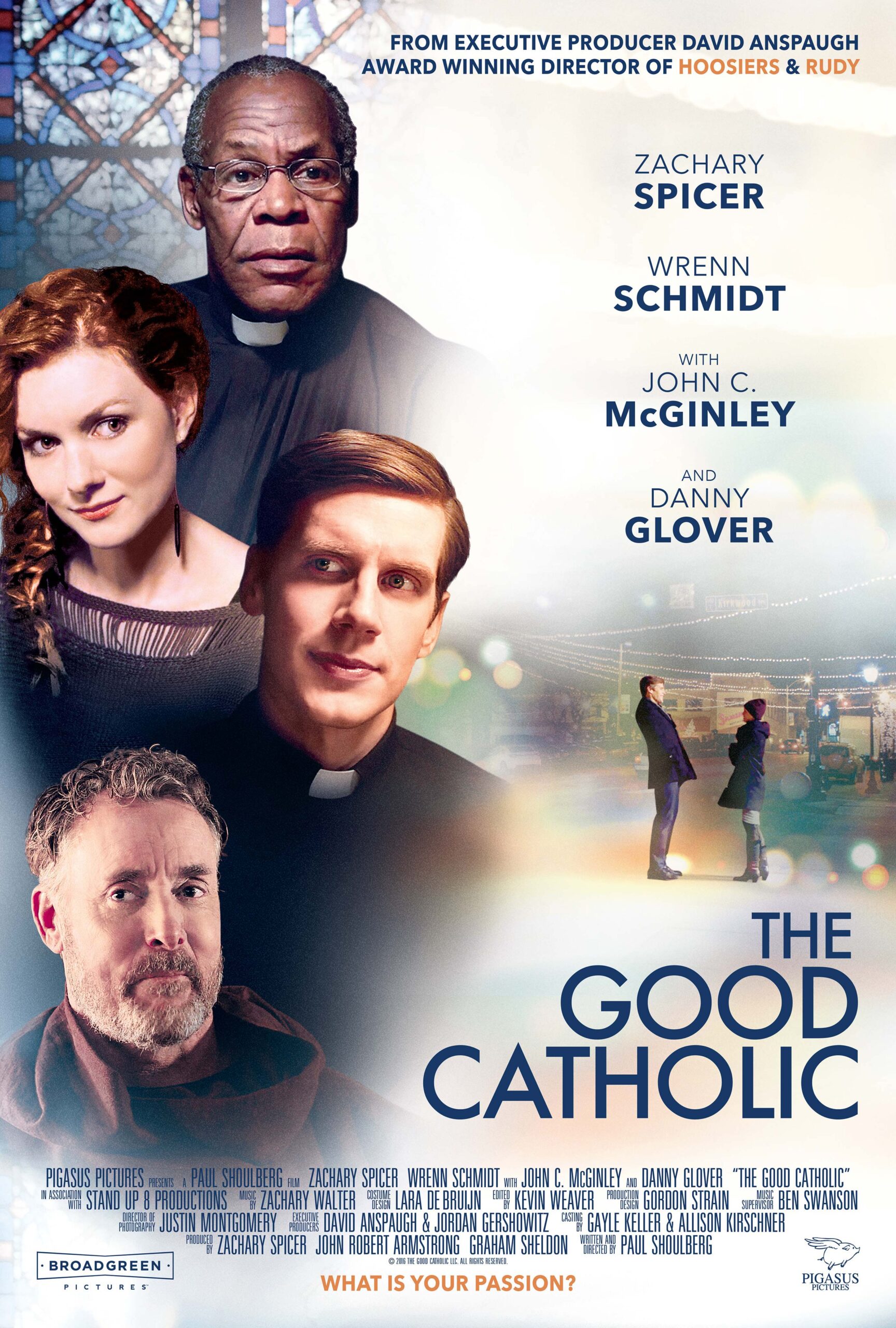
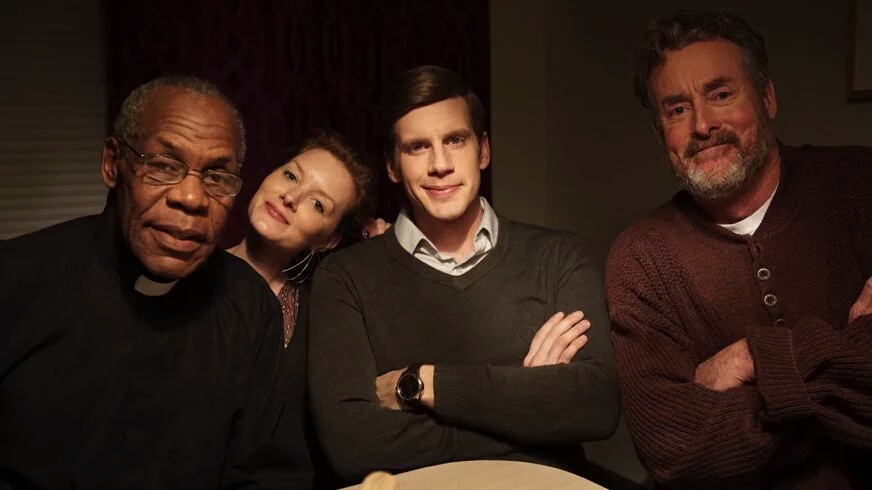
NYFA Acting Instructor’s “The Good Catholic” Distributed by Broadgreen Pictures and Gravitas Ventures

This September, New York Film Academy Instructors Zachary Spicer and John Robert Armstrong’s independent feature “The Good Catholic” will release in more than 20 cities across the U.S. and 15 countries worldwide, thanks to distribution deals with Broadgreen Pictures and Gravitas Ventures.

Spicer and Armstrong created “The Good Catholic” with their production company Pigasus Pictures, and have just finished an incredible won on the festival circuit that saw them snag the Panavision Spirit Award for Best Feature Film at the Santa Barbara International Film Festival, the DaVinci’s Horse Award for Best Screenplay at the Milan International Film Festival, Best Picture at the Grove Film Festival, and more.

We had a chance to catch up with Zachary Spicer via email to talk about “The Good Catholic” and his production company, Pigasus Pictures.

NYFA:  First, can you tell us a little bit about your background and what brought you to NYFA?

ZS: I grew up in small town Indiana, went to Indiana University where I studied archaeology — until I realized that Indiana Jones was much more fiction than fact. I was cast in a show my senior year by a visiting director who told me I should go to NYC to study to become and actor. I studied at Circle in the Square theater school, where I fell in love with theater.

After graduation I began working a number of jobs while I beat the pavement trying to land auditions. I’ve been very fortunate in my career ever since. My first Broadway gig was with Cynthia Nixon in the Tony Award-nominated revival of “Wit,” followed by Kenneth Branagh’s “Macbeth” at the Park Avenue Armory. I began working on TV shows like “Law & Order: SVU,” “Blue Bloods,” “Gotham,” “Louie,” and “Master of None,” before I was approached by my old IU colleague John Robert Armstrong, who was an instructor at NYFA. They needed someone to come in and teach a substitute acting for film class, so I volunteered and fell in love with the place. I started teaching as many classes as I could get my hands on: Meisner, audition technique, acting technique, and so on.

It was in the halls of NYFA that John and I developed our idea to start our film company Pigasus Pictures. Inspired by the students we taught each day and the talent and dedication of the instructors, we formed a game-plan to fully fund and produce our very first feature film, “The Good Catholic.”

NYFA: Do you have any favorite moments as a NYFA instructor?

ZA: My favorite moments at NYFA were in my acting for film class late on in the semester, seeing students who had been writing down these “theories” and “practices” of working on film, seeing them tool it over and over again, and then finally see the light bulb come on, seeing that moment of practical recognition of their craft and the power it gave them. How they could use it and seeing them begin to really gain confidence and believe in themselves.

NYFA: Can you tell us more about what role NYFA played in the making of “The Good Catholic,” and about your collaboration with John?

ZS: John and I met everyday in between classes and before and after classes, and started to try to figure out how we were going to pull this miracle off. We weren’t rich kids with money to spare and we didn’t have deep ties to the industry, so we really had to work from the ground up.

I had this vision of a film company and what we could do, and John was the nuts and bolts guy of figuring out exactly how we could get it done. We would workshop scenes that were in the movie in our classes with students, seeing what would work and what wouldn’t, starting to map out shots and seeing character arcs explored with our students, and discussing the storytelling elements of one scene leading into another and what was significant about each moment in the script. Seeing how the film was playing in class really motivated us to continue our efforts to produce.

NYFA: What inspired the idea for “The Good Catholic”?

ZS: The story itself was inspired from writer/director Paul Shoulberg’s actual parents. Paul’s dad was a small town priest and his mother was a nun who had met in church, eventually fell in love, and left, married, and made Paul and his sister. Paul’s dad passed away a few years ago and Paul really wanted to write a story that was testament to his father. He wasn’t only writing what he knew, he was writing what he had to write.

NYFA: You’ve mentioned that some of your former NYFA students were involved in “The Good Catholic” and other productions at Pigasus Pictures — can you tell us a bit about those collaborations?

ZS: I was very lucky to be teaching some incredibly inspiring students while I was there at NYFA. The students there just blew me away with their passion, curiosity, and commitment. One class in particular formed a production company immediately upon graduating NYFA, and I work with several of those members today.

Two former students from NYFA made the trip with us to Indiana to work on the film itself: Max Turner and Alice Deussant. They came on board in the beginning as assistants to the producer. However, by the end of the film they had ingrained themselves in almost every department of production. They learned the very first lesson in this business which is: make yourself invaluable. They would run off at a moment’s notice to do anything, volunteer for any work, and were just generally a pleasure to be around all day and night on set. On top of that they got to know and work with Paul, who sat down and watched their reels and their former work and said, “They’ve really got talent. I’d love to put them in something in the future.”

With our next film “Ms. White Light” shooting this fall, we are looking to hire them and three or four more former students to come on board the adventure with us.

NYFA: Speaking of “Ms. White Light,” can you tell us more about upcoming projects at Pigasus Pictures?

ZS: At the same time of distributing “The Good Catholic,” Pigasus Pictures is currently financing a slate of six projects to be produced in the next three years: four feature films and two television pilots, all to be filmed in our home state in Indiana. The next production will be the dark comedy feature film written and directed again by Paul Shoulberg called “Ms. White Light,” the story of a young woman who works in the world of hospice that has a unique ability to connect with the dying … it’s just everyone else she has a problem with.

The New York Film Academy would like to congratulate Pigasus Pictures on their recent success with “The Good Catholic.”

Mid-August Updates From the NYFA Broadcast Journalism School

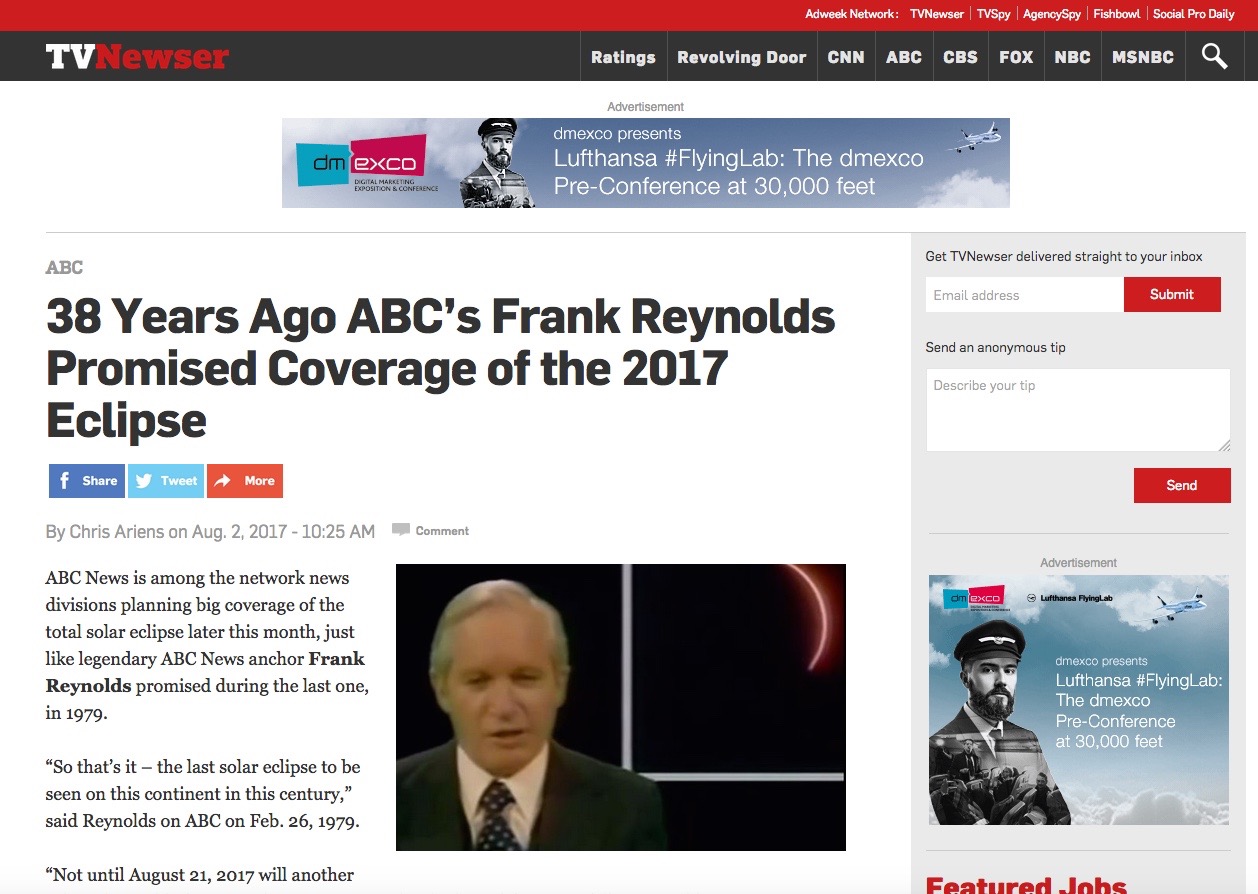
In journalism, we always try to “get ahead of the story.” That is, not just report what has already happened but also cover what may well happen next. TVNewser had a great feature recently on how ABC News was out in front of one story by an astounding 38 years. In February 1979, Frank Reynolds — the anchor (presenter) of ABC’s evening newscast — wrapped up a story about a just-occurred solar eclipse with a unique tag:

“So that’s it – the last solar eclipse to be seen on this continent in this century … Not until August 21, 2017 will another eclipse be visible from North America. May the shadow of the moon fall on a world in peace. ABC News, of course, will bring you a complete report on that next eclipse 38 years from now.”

And he was right. In fact, a friend and former coworker of mine anticipates cutting at least one eclipse story for “Good Morning America,” ABC’s morning news/chat show.

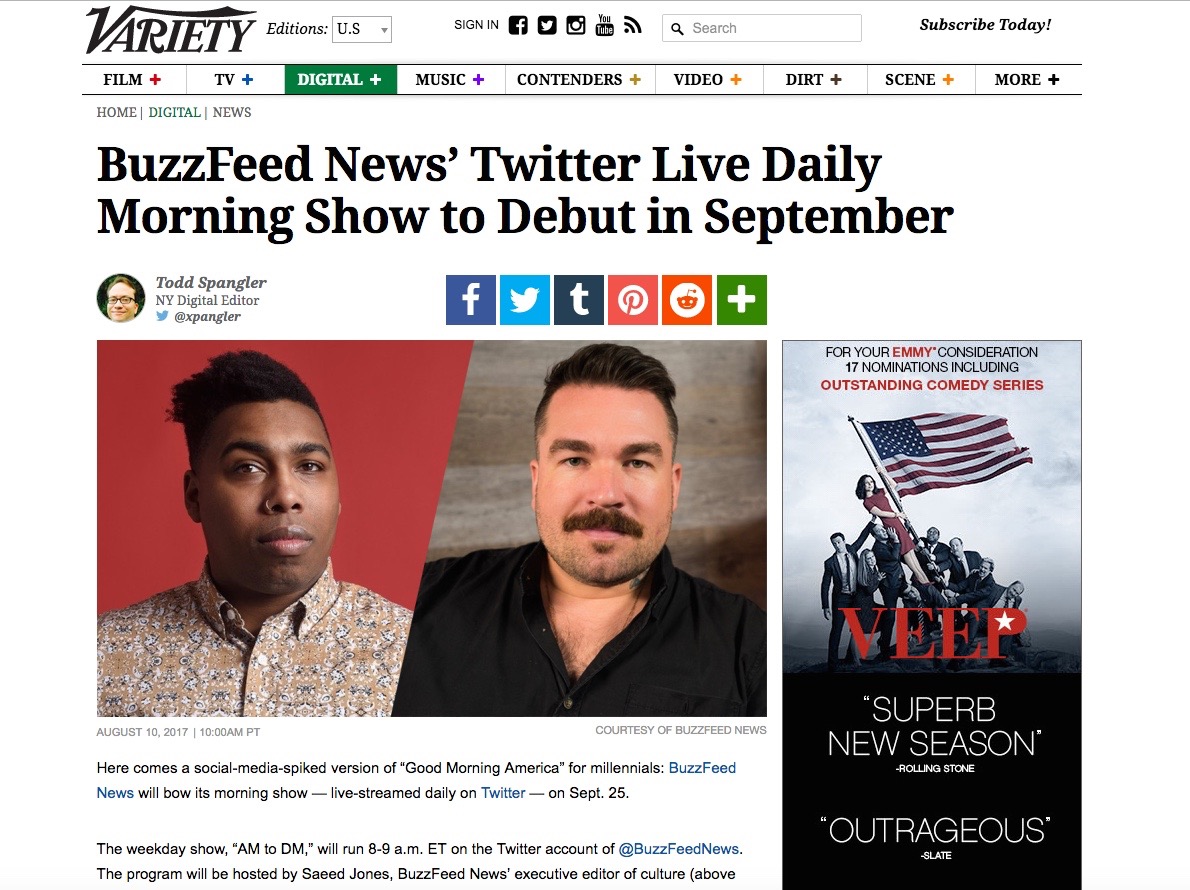
Back in the 21st Century, BuzzFeed and Twitter have announced a new morning news show of their own. It follows successful Election Night coverage last November, and not surprisingly will reflect the attitude and style of these two digital information giants. What is surprising is how in some ways the program will be similar to current network programs, only with more attitude and edge. It was also be “linear,” similar to conventional television, as opposed to a “non-linear” approach that lets viewers pick and choose what they want.

On the other hand, CBS News — often seen as the most “behind-the-curve” operation when it comes to cross-platform distribution — has incorporated video-on-demand (VOD) functionality into their CBSN digital news platform. It can be watched either in linear or non-linear fashion. In addition, some CBSN content can now be seen on the main CBS broadcast channel as well.

Speaking of cross-platform distribution, here is a story that NYFA Broadcast Journalism graduate Grace Shao did last week for China Global Television News (CGTN). It was fed out as part of regularly scheduled linear programs, integrated into an online posting, and distributed across a number of digital social media platforms. It’s a pretty good story too!

We end this edition of the Weekly Update with good news about Evgenia “Genia” Vlasova, who many of you know as a classmate, a TA or an active freelance multimedia journalist. She can now add the title “NYFA Instructor” to her resume. Genia is taking the lead with the Personal Journalism course, and will also be teaching the 12-week Evening Broadcast Journalism workshop this fall. She came to NYFA with seven years of on-air experience in Russia, and combined that with all she learned here in the 1-year Broadcast Journalism Conservatory program. Tireless, upbeat, knowledgeable, talented, Genia is a great addition to the Broadcast Journalism faculty.

Congratulations, Genia!
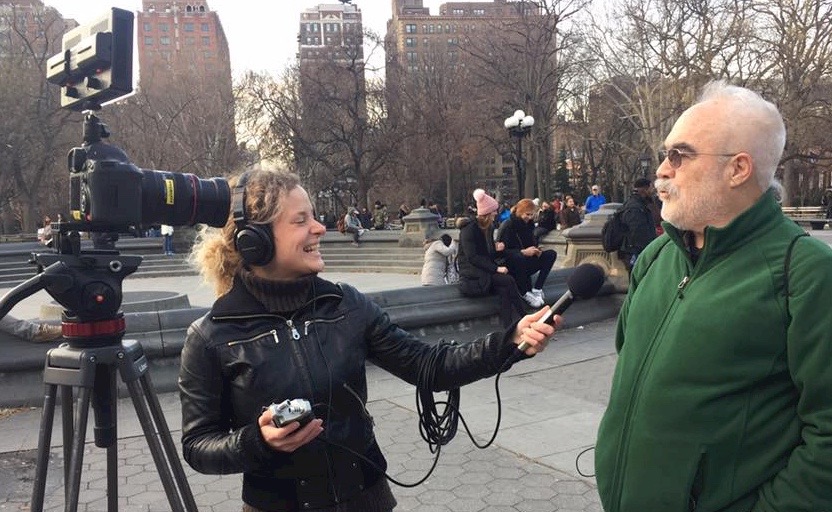
(Picture courtesy of our regular camera instructor Daniel Hernandez.)

NYFA Collaborates With Prestigious Saudi Festival Hakaya Misk in Riyadh

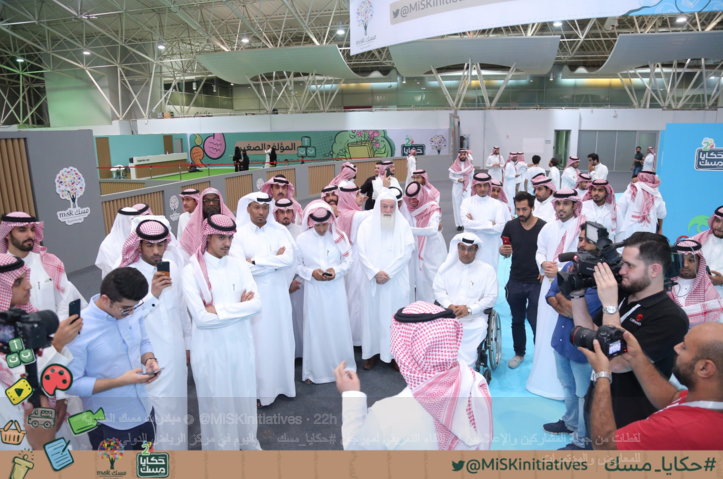
The New York Film Academy has played an active role by offering workshops and training through a collaboration with the prestigious youth arts festival of Hakaya Misk, in Riyadh, Saudi Arabia. NYFA is presenting workshops and trainings on the topics of film production and screenwriting in collaboration with the Pre-Hakaya workshops.

According to Hakaya Misk’s official website, the festival is a cutting-edge Saudi Festival which focuses on incubating creative skills in the next generation through culturally and educationally conscious content creation: “The festival aims to motivate, teach, and inspire youth to express their ideas through writing stories, storytelling, painting, animation, production, and other forms of art.” Through local and international professional partnerships, the festival invites young people to participate in workshops, inspiring platforms, and exhibits, while building skills in storytelling through the visual arts. Events at Hakaya Misk are also offered for adults who are locally active in the creative fields.

As the Washington Post has reported, Saudi Arabia is developing a new generation of artists and opportunities within a burgeoning film industry, which includes aspiring filmmakers have studied at the New York Film Academy. NYFA MFA alumna Lamia al-Shwwier told the Washington Post, “We have so many incredible stories to tell, whether they are stories of success or challenge. Our society is rich in stories and ideas.”

At Hakaya Misk, NYFA alumni will be holding one-hour workshops daily, while NYFA representatives are present among the local production companies who also partner with Hakaya Misk. The festival has drawn hundreds of thousands of visitors through four sessions held in Riyadh, King Abdullah Economic City in Makkah, Dhahran in Eastern Province, and Abha in Aseer Province.

“New York Film Academy is honored to have partnered with Misk in the Pre-Hakaya workshops in Riyadh,” NYFA’s Dean of Enrollment Services Tami Alexander reported from the event. “We had the opportunity to teach over 40 men and women interested in developing their craft in either film production or screenwriting. Our NYFA instructors were thrilled with the students’ confidence, ability and pride in their craft, and the opportunity to experience local Saudi culture.”