CALLING ALL VOICE ACTORS! 3 Additional Skills That Will Help You Get Hired

While voice acting is a legitimate profession, it is still a creative art form, and like any form of creativity, it does not exist in a vacuum. Voice over artists often work with other creative professionals during the course of a job, be it sales copywriters, other actors, animators or sound editors (and usually all of the above).

Somebody, at some point, has to put such a team together. Time for a little thought experiment.

Imagine you’re in charge of hiring talent for a project and you need to pull together a team from scratch. After sifting through a stack of resumes, you come across a voice actor which fits the profile of the job. Chances are, you’ll short list him or her for the role.

Now imagine you come across another resume of an equally competent voice actor. The difference here is that they also have some proven skill in writing their own copy or mastering their own sound files…

… You’d be tripping over yourself on the way to call them immediately. Here’s the lowdown on:

Three Supplementary Skills That Will Land You That Voice Acting Job

Voice Acting tips

1. Copywriting

They say that writing is a talent that can’t be taught – you’re either born with it, or you’re not.

Right off the bat, we can comfortably state that this is nonsense. While it’s true that a small minority of people are hopeless at writing copy, and always will be, given your job as a voice actor requires a deep understanding of words, the chances are slim that you’re one of those few people.

It’s arguably a tougher industry to make any real money in than voice acting, but for the purposes of supplementing your resume, you should have no problem getting some entry-level writing gigs just to demonstrate you’ve got the aptitude for it. The good thing is that a lot of writers would kill to work on some of the projects you’ll encounter as a voice actor (since the fee for those is a cut above general writing work), so the ability to cross-sell your services can prove to be lucrative.

Copywriting jobs

Here are a few tips…

Craigslist is an excellent place for beginners to hunt for work, as long as you watch out for the scams (which are very easy to spot). By checking out the “writing/editing” section of your local CL portal daily, you’ll eventually come across some easy (albeit low-paid) writing jobs from folk needing sales copy for their online store, or perhaps a bit of online blogging work.

Avoid the numerous “auction” sites (in which people bid on the lowest fee they’re willing to do a writing gig for) in your quest to beef up your portfolio. They work for some people, but without going into a diatribe on their many flaws, take it on trust that you’ll spend most of your time being undercut at ridiculous prices rather than actually conducting copywriting work.

Another entirely viable course of action is to start your own blog if you haven’t got one already. Try to avoid general “rambling” blogs talking about your day or how the dog threw up on the new carpet. It may be therapeutic, but not of interest to anyone except you (and maybe the dog). Instead, focus on a particular niche or hobby. Of course, writing about your exploits in voice acting can be a great way of demonstrating your knowledge and aptitude.

All you’ll need to get started is a few places online which you can point to and say “hey, look: I can help improve your material as well as provide the voice over for it.” Not only will it make you more marketable, but it usually makes voice over work a lot easier if you’re able to write material with your own voice in mind.

2. Conventional Acting

Although the competition is fierce, you’ve got one up on everyone else here because you’re already an actor.

voice acting

Picking up conventional acting work for film or TV looks fantastic on any VO resume, and increasing your knowledge of screen acting can be a boon to your development as a voice artist. There are numerous resources online to help you find work in this area,even if they’re only bit parts to get you started. If it’s something you’d really like to delve into, however, a formal education in an acting school will help immensely in launching your career.

One of the biggest benefits of mixing in acting circles is for networking. The type of people you’ll mingle with on set are exactly the type of people who will know someone who knows someone who needs voice acting. So, be sure to get you face out there.

3. Sound Engineering

To the outsider, it’d seem natural that voice actors are intimately familiar with sound editing, but it’s surprising how few know their uncompressed WAVs from their Ogg Vorbis.

how to become a voice actor

If you haven’t the faintest idea of how to go about sound editing and you’re working in an external studio, be sure to stick around after the work is done and hang out in the editing suite to watch the pros at work. Ask as many questions as you can. It’s unlikely that you’ll get annoying, as the sound guys are often used to being ignored.

It’s also a rare opportunity to hear how your voice works in context of the bigger picture, as well as to quiz the people who have to work with your voice to see what works particularly well, and what doesn’t.

If you work from home, chances are you’re used to the fundamentals of audio mastering before sending in your voice work. If you’re getting credit for the VO, make sure you ask for credit on the sound editing too, since you can list that on your resume or portfolio website.

Once you have enough experience under your belt, be sure to point out your competency in this area when conducting preliminary discussions on a gig (and charge accordingly, since you’re saving the creative director from having to hire an extra individual).

Making the Time to Grow

Voice Acting Jobs

Given that voice acting is a craft which can take quite some time to master on its own, it may seem counter-intuitive to spend additional time and energy learning other skills at the same time. However, every string to your bow is an investment, and they’re all skills you can practice (and use to earn some extra cash) during your down time.

Keep yourself busy, keep learning, and above all, keep cross-selling your talents as much as possible!


Five Tips For Planning Stretch Goals

Stretch goal tips

While there are plenty of opinions floating around when it comes to crowdfunding, one thing’s for certain: plenty of great games have seen the light of day thanks to it.

From retro inspired Shovel Knight and console RPG Divinity: Original Sin, to upcoming spiritual successors like Mighty No. 9 and Bloodstained: Ritual of the Night, funding platforms like Kickstarter and Indiegogo have certainly impacted the industry.

To no one’s surprise, we now have countless teams looking to convince gamers all over the world that their project is worth funding and creating. If you’re planning on running your own campaign soon, definitely check out our 5 Brief Tips To Successfully Leverage Kickstarter To Fund Your Video Game piece.

If you’ve already done your crowdfunding homework, however, and want more information on stretch goals, then you’ve come to the right place.

A term that probably didn’t exist before Kickstarter, a “stretch goal” is an extra goal creators offer as long as a certain amount of money is raised. Though uncommon at first, they skyrocketed into popularity to the point where almost every project now has one or more of these stretch goals.

While stretch goals can certainly be an effective tool for maintaining momentum during a crowdfunding campaign, and for getting more cash, it can also add some unexpected pressure to you as a developer. Here are a few stretch goal tips to help you reach your main goal and beyond…

1. Avoid Day 1 Stretch Goals

By announcing stretch goals as soon as you launch a campaign, you are setting yourself up for disaster, and there are several reasons why.

The first is that you can potentially discourage backers from tossing cash your way because they think your game won’t be any good unless a certain stretch goal is met. Since they made up in their mind that this specific stretch goal will not be reached, they don’t even bother trying to help you get to your main goal.

For example, you can offer an awesome RPG game idea for $150,000. The mistake comes when you add a $200,000 stretch goal from the get-go that adds a second playable character, new class, or other cool element. Now some people might consider the $150,000 version incomplete, and thus will only pledge when they see that the $200,000 goal is a possibility.

2. In Fact, Avoid Early Stretch Goals Altogether!

If there’s one thing every project creator realizes during their first campaign, it’s that it is very difficult to maintain interest and momentum. The first few days you’ll see a bunch of cash come in, mostly from friends and relatives usually, but then it will slow down after a week or so. By the midway point, you’re starting to scratch your head and wonder why no one is inviting their friends to also back your project.

If you announced a bunch of stretch goals the first few days of your campaign, you already wasted the perfect tool for reigniting interest. People have already seen the stretch goals, and thus won’t get excited hearing about them again. Instead, you could have waited a week or two before announcing an awesome stretch goal that would draw in a new crowd and get people talking again.

3. Never Offer Too Many Details

Another big no-no creators live to regret, either during their campaign and/or development, is making their stretch goals too specific. Once you say that you’ll add exactly 10 more weapons, or 2 new dungeons, backers will hold you to it. Anything less than 10 weapons or 2 dungeons will be seen as a failure on your part to deliver what you promised. It’s a good idea to be a bit more vague with stretch goals.

Also, don’t be surprised if you run into an adamant backer who insists on reminding you about your stretch goals. Feel free to say you’re not ready to discuss the details until your project is funded. Be sincere and courteous while urging them to follow up on your announcements instead of consistently leaving messages and comments.

4. Choose Your Stretch Goals Wisely

It can be quite devastating to discover late in development that a stretch goal you promised (and reached) is going to take more time and money to implement than you expected. Now you’re forced to either apologize to backers for delaying your game in order to add the extras, or apologize for the fact that they will not be included to meet your deadline and budget. Neither scenario is very fun for a developer.

Instead, add common stretch goals that are exciting, but won’t take too much effort: new bosses, weapons, costumes, etc. This, of course, depends on the type of game you’re making.

Things like porting to a new platform, adding co-op mode, or online multiplayer are often tougher and more expensive than they sound to add. Physical rewards are great too, but they can take more money than you’d expect out of your development budget.

5. Study Other Crowdfunded Games

This tip will be short and sweet but basically we recommend that you look at other campaigns that have succeeded. While doing so, study the types of stretch goals they offered and how many backers pledged at that level. Seeing as the indie game scene is full of people willing to share their experience and advice, don’t hesitate to shoot emails at fellow crowdfunding campaigners as well.

[su_note]Learn more about the School of Game Design at the New York Film Academy by clicking here.[/su_note]

Image Source

In Favor Of The 48-Hour Film Festival For Actors

Benefit of 48 Hour Film Festival for Actors

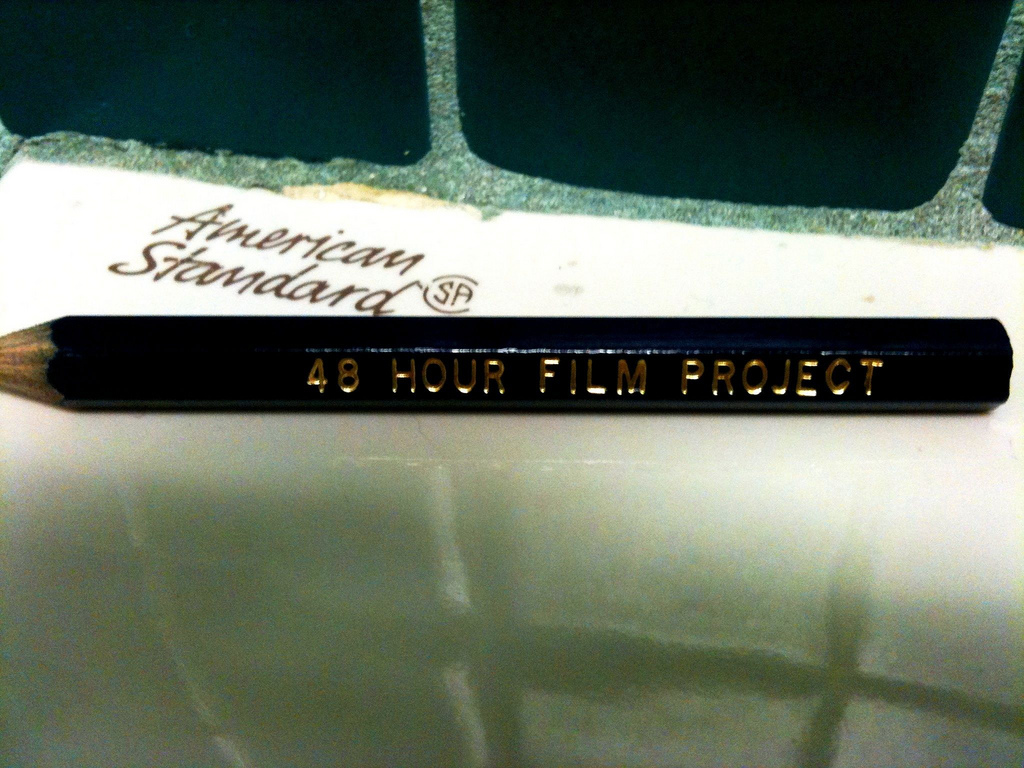
All across the land, one competition is taking filmmaking by storm. The 48-Hour Film Festival challenges production teams to make a short film in only two days’ time, which will then screen publicly in front of a panel of judges. Winning films from each city move on to be screened in Los Angeles, and the top 10 worldwide screen at Cannes the following year.

To start, each team receives a random genre, and a prop, character, and line of dialogue that must be included in their film. Then, over one weekend, writers craft a script, a director breaks it down, actors perform, an editor cuts it, and the producer turns in the final copy. For actors, the challenge is a great way to practice on camera, gain material for a reel, and meet industry folk. Never before has one weekend done so much for your acting career…and it’s fun!

Advantages for Actors

Scheduling film shoots is always a difficult proposition, and when working in indie film, is a common reason that shoots get pushed back. With the 48-Hour Festival, scheduling problems are reduced because everyone knows about the weekend in advance. This means that Festival teams are often more organized and dependable than the average independent production team.

Additionally, competing in short film festivals gives actors the chance to play a variety of different roles. Producers must recruit their cast before they know what the story and genre will be, so actors often have the chance to play against type, or in an atypical genre. For instance, horror, western, and sci-fi are genres that are included in every drawing, but rarely will actors come across them on public call boards.

Finally, the popularity of 48-Hour Film Festivals draws many professional production teams in every city. This gives actors the chance to work with established, local, film industry pros, which is crucial for networking. Beyond the networking, these teams bring a high-standard of production value with cameras, lights, microphones, and other equipment that would otherwise only be found on the best short film shoots.

Reel World Experience

All of the above traits make short film competitions a viable option for actors in need of resume and reel building credits. On-camera experience is important for all aspiring actors, and a credit from a 48-Hour Festival is definitely worth the time.

If the final product is polished, there is also a good chance that footage can be obtained for use on a reel. This is further encouraged by the quick turnaround time. In only two days, an actor can gain a credit and a scene for their reel, talk about efficiency.

Besides all of this, 48-Hour films are fun yet challenging to work on. Actors must build a character quickly and perform under constant time pressure, similar to the stress experienced on studio TV and film productions. And, with The 48, there is always a guarantee that if completed on time, actors will get to see themselves on the big screen and gain exposure to local audiences.

Advice for Finding a Team

Don’t despair if you are an actor without a team for an upcoming competition. If you are interested, chances are that you can find a team. The 48-Hour Fest has a mailing list on its website that anyone can sign up for, and they also host mixers for teams and prospective members. Signing up and/or attending those events is one way to find a team. Another proven way is to hit the local casting services and social media groups for teams in need.

Importantly, the festivals are all open to anyone, and volunteer-based, so payment is never provided. Therefore, it is the responsibility of the actor to screen teams for quality and find the right one for themselves.

Things to Look for in a Team:

  • Experience – Always helps if they have done this before.
  • Organization – They should seem knowledgeable and prepared.
  • A Full Crew – It’s a lot of work. If others have signed up, that’s a good sign.
  • Similar Vision – Ask them why they are doing the project. Ask what their goals are. Ask to see their past work and be prepared to answer their questions about yourself.
  • Familiar Names – If they have an artist on their team that you recognize, that’s a good sign of legitimacy.
  • Matching Personalities – To work closely and successfully in a high-stress environment, it helps to be comfortable with the people around you.

[su_note]Learn more about the School of Acting at the New York Film Academy by clicking here.[/su_note]

Image Source

A Look At The Only 12 Steam Games That Sold More Than 500k

Bestselling games on Steam

As a game developer, it never hurts to look at what titles are selling like hotcakes, especially on a platform you’re considering releasing your own project on. Over the years Steam has grown exponentially for, among other reasons, being one of the most developer friendly platforms out there. Between the “Steam Greenlight” and “Early Access” programs, it’s no surprise why many devs – both indie and big-budget – strive to release their games on Valve’s digital marketplace.

It may come as a surprise, then, that despite Steam boasting 125 active users and 10 million concurrent users, only a dozen games have broken the 500,000 sales mark. In fact, only 6 of those 12 have reached a million units sold. These stats are according to Sergey Galyonkin, founder of Steam stat tracker on Steam Spy. Here’s the list of games:

More Than 1 Million Sold

  • Grand Theft Auto V
  • ARK Survival Evolved
  • H1Z1
  • Cities: Skylines
  • Rocket League
  • Besiege

More Than 500,000 Sold

  • Dying Light
  • The Witcher 3: Wild Hunt
  • Stranded Deep
  • Killing Floor 2
  • Total War: Attila
  • Pillars of Eternity

Below are a few things we noticed about this list that may just be interesting, or may actually prove useful when deciding which kind of project you’d like to release on Steam someday…

Some Of Those Games Are Still In Early Access

Despite still being considered “incomplete,” Besiege, H1Z1, ARK Survival Evolved, Stranded Deep, and Killing Floor 2 have managed to sell a lot of copies. For those unfamiliar, Early Access allows developers to get vital information by releasing a beta version of their game. Thus, players know they are not playing the final version of the title, and should expect changes (mostly for the better).

The benefits of going with an Early Access release are not without their risks. However, we’re still seeing many players interested in paying money to play games that are still in development. Clearly, gamers are intrigued by the idea of playing a game and, with their help, watching as developers work out kinks, fix bugs, and add content the players themselves suggested.

Pretty Much Any Genre Can Make It Big On Steam

While we doubt an educational or erotic game will ever join the list above, it’s cool to see some variety in terms of genre when looking at the best selling Steam games. Instead of being only first person shooters and action adventure games, we have survival sandbox, city building, computer RPG, strategy, and even a physics based vehicle soccer game.

It’s also worth noting that a good mix of single player and multiplayer games found success on Steam. While the list is dominated by MMOs and games with multiplayer options, fans of one player games have clearly been enjoying The Witcher 3: Wild Hunt, Cities: Skylines, Stranded Deep, and Pillars of Eternity.

Most Of The Top Selling Games Were Not Indie

It would have been pretty exciting to see the list above dominated by small teams. Who wouldn’t want to see several indie teams find success after risking it all, while sacrificing time and money to finally create a game of their own?

While there are plenty of success stories out there just like this, the truth is that most of the games above had big budgets and publisher support.

The biggest ones are, of course, Rockstar’s Grand Theft Auto and CD Projekt RED’s The Witcher 3: Wild Hunt, both of which cost hundreds of millions of dollars to make. The majority of the other titles didn’t have budgets of that size, but still had decent amount of cash to spend.

The good news is that a few of the titles on the list were developed by smaller teams with smaller budgets.

The Mean Average Cost Of These Titles Was Around $30

It only takes a couple of minutes browsing through Steam’s marketplace to see how many games are available for a few dollars. If your budget is only between $10 and $20, you’ll have no trouble finding plenty of good titles – and not just during sales.

However, keep in mind that, just like Google Play and the App Store, many of these cheaper titles aren’t even worth the $5 you paid for them.

Judging from the top selling list, players are clearly willing to pay top dollar for the best experiences possible. GTAV, The Witcher 3, and Dying Light are a $60 download, but still have found success. The same goes for like Total War: Attila and Pillars of Eternity, with their $45.99 price. The rest of the games are between the $15 and $30, with only Besiege being less at $6.99.

[su_note]Learn more about the School of Game Design at the New York Film Academy by clicking here.[/su_note]

Image Source

The Use Of User-Generated Content In Broadcasts

Broadcast Journalists Now Use User-Generated Content

In today’s world of viral videos and retweets, many broadcast journalists turn to user-generated content to stay relevant with their audiences. User-generated content (UGC) generally means content contributed by someone who doesn’t work for the broadcaster and isn’t paid for his or her content (usually video).

User-generated content is not a new development of the digital age. In the past, TV stations sometimes used video or pictures viewers sent in from the scene of a developing story. Broadcasters still use this type of content, especially in instances of breaking news where the TV crew can’t reach the scene in time, but today, broadcasters are also collecting user-generated content from social networks like YouTube and Facebook.

Filling in Coverage Gaps

UGC is increasingly used in situations where no other video is available. In the past, if you wanted to cover a car accident, you raced to the scene to get video of the aftermath – the cracked-up cars, the backed-up traffic, bystanders who were willing to be interviewed on camera.

Today, everyone has a cell phone camera, and people often get video of accidents and other news events as they happen, or immediately afterward – even before authorities and reporters can arrive at the scene. Sometimes you get lucky and find there are multiple pieces of content for the same event, allowing you to view the news from different angles and decide which is best for your audience.

This type of content is especially useful in situations where sending in a news team might be dangerous or prohibited by law. A recent Tow Center study showed the most common type of story using some form of UGC is “conflict/war/military,” with 44% of user-generated content usage. The next most common was “vehicular crashes” at 21%, followed by “protests” at 17%.

The Syrian conflict of 2013 was cited as an example of a situation where journalists were mostly prohibited from entering the country, or roaming freely if they were already there. During that conflict, much of broadcasters’ news coverage of the events came from UGC.

Using Both Still Pictures and Video

The report goes on to note that broadcasters use video about 70% of the time they run user-generated content, and still pictures about 30% of the time. Broadcasters’ websites are more even, with 49% video and 51% photos in UGC.

Identifying User-Generated Content Still a Challenge

User-generated content is described in a variety of ways. When a viewer sends video directly to the station, anchors usually note that the footage was “sent in by a viewer.” UGC from social media is a lot murkier. Depending on the situation, it may be called “activist video” if it pertains to a protest.

Sometimes it’s attributed to the social network where it was found—“from YouTube”, “courtesy of Vine”—and sometimes it’s even called “amateur video” (generally only if the video quality is poor and the station wants viewers to know they’re not responsible for it). “Eyewitness video/photo” is another way of describing it.

UGC is not always identified for what it is at all. The Tow Center study found that 74% of the time, UGC was not called user-generated content in any way. On television, the individual contributing the content was only credited about 49% of the time, although news websites did better, crediting the originator about 72% of the time.

Potential Legal Challenges

While items on social media are generally meant to be shared, some social networks’ terms state that content is only to be shared by individuals, not businesses. A Broadcast Law Blog article from 2014 points out that even attributing the content to its original creator doesn’t always protect a broadcaster from lawsuits.

A common cause of lawsuits against broadcasters is improperly using photos found on the internet. Content posted on a TV station’s website is especially problematic. When in doubt, it’s best to check with your station’s policy on sourcing video/photos or, in some situations, check with the station’s legal counsel.

[su_note]Learn more about the School of Broadcast Journalism at the New York Film Academy by clicking here.[/su_note]

For more on navigating the legal challenges and How to Utilize User-Generated Content, please click here.


Micro-Budget Filmmaking: Are You Making These 5 Mistakes?

A little while back, we covered some of the finest indie movies ever to be produced on a tiny budget—superb features like The Castle and Primer which managed to push boundaries despite not having cash on their side (and you wouldn’t know it to look at them.)

But even still, some of those movies had budgets that, while miniscule by industry standards, had a couple of million to play with. We’re guessing you don’t have that luxury, so today we’ll be looking at:

Super Micro-Budget Filmmaking: 5 Mistakes to Avoid

1. Not Scheduling Properly

It goes without saying that on every production, no matter how small, scheduling is absolutely paramount… but probably not for the reason you think.

If you’re on a micro-budget, chances are that you and the team are making the film purely for the artistic endeavor. But artistic endeavor doesn’t pay the rent, and everyone involved is probably working jobs on the side in order to get by.

You don’t necessarily have to demand their time, but if you ever want to get the film in the can, it’ll behoove everyone to have a shared spreadsheet where they can list the hours they’ll be free to work on the project… and you can spot those golden windows where all the stars align.

2. Picking a Great – but Impractical – Script

Found an amazing screenplay that will blow everyone’s minds?

Awesome!

Does it feature an outer space sequence that’ll change the face of sci-fi cinema forever, or a prison break scene that’ll have the viewer right on the edge of their seats?

Skip it. Your budget does not allow for such special effects or exotic shot locations; sounds obvious, but a surprising amount of low-budget filmmakers adopt a “we’ll cross that bridge later” attitude and invariably come unstuck halfway through the production.

3. Not Using All Resources Available

Budget filmmaking is two parts talent and one part ingenuity (and maybe even the other way around.) Spotting problems to solve in the first place is a good skill to hone, and the same goes for the financial aspect—if you’re not looking for ways to increase your budget and use it well, you’re selling yourself short.

Seek out every avenue for grants, tax breaks, and subsidies (even if filling out endless applications is a dull task.) Call in every favor you’ve garnered over the course of your entire life. And always see if there’s a way to use equipment for free (or at least cheap) rather than having to purchase it with your limited cash—if you’re in filmmaking school, use the equipment that’s freely available; if you’re in a big city, put a call out on Craigslist asking if anyone can loan you equipment for a small daily fee.

The opportunities are endless once you start looking for them.

4. Putting All Focus on Video Quality

All of the aforementioned examples of micro-budget filmmaking have one thing in common: they’re not stellar by any stretch of the imagination when it comes to video quality, but none of them cut corners when it comes to audio.

As covered in our earlier guide to production essentials, audio quality is the most common thing that amateurs seem to scrimp on… and the one thing that, in turn, is the mark of an amateur.

5. Forgetting to Budget for Marketing


We know. Marketing is the not-so-fun part of filmmaking and can be just as expensive as the production itself, so it can be difficult to reserve cash for the job… but if you don’t, all your hard work will be for naught. After all, there’s no point busting a gut to make a micro-budget movie only to have nobody see it.

And don’t just make the common mistake of plucking a figure out of the air; carefully detail all entry fees for contests and festivals you’ll want to apply for ahead of time, as well as the costs of getting it listed on streaming services.

Got any of your own stories from the field or budgeting warnings to other filmmakers? Share with the group down in the comments below!

Answer: What is Method Acting?

Method Acting Explained

Question: What is the acting technique, based on the principles of Stanislavsky that was popularized in 1930’s America by director Lee Strasberg at The Actors’ Studio, New York?

If this were an episode of Jeopardy, the correct answer would be the title. However, defining something does not imply understanding, and the term “method acting” is often thrown around acting circles, but seldom understood.

In some ways, the Method has become a parody of itself through interpretation and criticism from film audiences over the decades. The wild behavior of method actors off-screen has taken the limelight from the performances that the actors unleash onscreen.

Heath Ledger’s death, tragic as it was, became the most popular and shocking story associated with the release of The Dark Knight Rises. Even to this day, it overshadows an Oscar-winning performance. Method acting has been accused of leading to his death, mostly by those who don’t understand what method acting actually is.

History of the Method

The father of method acting was actor and director Lee Strasberg. He, along with several colleagues (Adler, Meisner, Kazan, etc.), adapted the teaching of Stanislavsky for their American acting students. They focused on an “inside-out” performance, stirring past emotions from the actor’s life that they could draw upon during performance.

This became known as sense memory, and Strasberg developed a series of exercises for his students, based on cultivating sense memory. Together, this collection of exercises comprises the Method.

Method acting took off in the 1940’s and 50’s behind the powerhouse performances of Marlon Brando under the direction of Elia Kazan. Note that Kazan also directed James Dean in East of Eden, also famous for its use of the Method.

The roles and performances of early method actors came to define American acting. Audiences were amazed by the sense of reality. They felt as if they weren’t watching actors at all, but peeking into the lives of real people.

After this period of success in the mid-20th century, method acting continued to be employed by many famous actors; Newman, Pacino, Monroe, and Hathaway to name a few. They have always attracted attention for their performances, but also for their technique of getting into character.

The Basics of Method Acting

The Method requires intense devotion and emotional bravery. Part of the reason its practitioners are so respected is because of those challenges. Understanding of the history and development of method acting helps to understand the goal; creating an emotionally truthful performance.

The process of method acting is simply one way to reach that goal, but remember, all actors take ideas and techniques and change them to fit their needs. No actor practices the Method the same. Here is a basic guide to method acting:

  1. Know Stanislavsky’s System – The Method starts here. Script analysis is crucial to understanding your character and beginning to ask questions. List out the actions and objectives of characters and then ask about the psychology of their decisions.
  2. Build a Back Story – To know a character, you must know about their past. Look for clues in the text that could provide support to their emotional journey in the play. Developing a character history will also help you, the actor, connect to the character.
  3. Connect Personally and Truthfully – Strasberg asks, “What would motivate me, the actor, to behave in the way the character does?” Think of your past as it relates to the emotions that you have identified in your character. Was there a time when you felt a similar emotion? What did it feel like?
  4. Practice and Apply – There is no substitute for doing. After you do the prep work, find an outlet for performance so that you can practice your skills. Continue to hone in on a character and on your technique. Behind the simple naturalism of a method actor’s performance is hours and hours of deep thought.

Since its inception in the 1930’s, method acting has evolved and changed through experimentation on stage and screen, but the core principles remain the same. The goal is to create a lifelike character, to escape impersonation and simply be.

What is method acting? Answer: Not acting at all.

[su_note]Designed for both new actors and experienced actors, our 6-Week Acting for Film Workshop in Florence, Italy teaches students the foundations of acting and the nuances of acting for the screen. Visit our 6-Week Acting for Film Workshop in Florence page to learn more.[/su_note]

5 Things Experienced Game Designers Wish They Knew From The Start

Advice from experienced game designers

Any game designer who has been in the industry long enough can relate to the old saying: “if I knew then what I know now…”

Like any occupation that demands passion, creativity, and hard work, the road of a game developer is one where mistakes are to be expected. Although learning the hard way is sometimes the best way, it would do every aspiring designer some good to consider all of the following pieces of advice….

1. Don’t Let Mistakes Get You Down

If there’s one thing to expect when designing a game, it’s that everything is bound to change. You may have an initial design that you think is perfect but will eventually realize how many elements and mechanics conflict, requiring you to make adjustments. The mistake most designers make is letting this essential step discourage them since having to make changes means that the first design failed.

“Our greatest weakness lies in giving up. The most certain way to succeed is always to try just one more time.” -Thomas A. Edison

Instead of giving up, learn from your setbacks so that the next time you come up with an idea for a new game mechanic or entirely new concept you can avoid the same oversight.

All it takes is a bit of research to realize that some of the best games out there were initially planned to be something entirely different, forcing the developers to adapt while conquering their fear of making another mistake.

2. Planning Is Everything

Gone are the days when you could leave a school project or essay to the last minute, stay up all night to do it, and still get a decent grade. Much worse than a bad grade on your paper is the negative feedback you’ll receive from players and fellow developers after they check out your project – a game that didn’t receive the necessary preparations and thus was hastily put together.

“Give me six hours to chop down a tree and I will spend the first four sharpening the axe.” -Abraham Lincoln

The sooner you realize the importance of a game design document, the better. It is a living document that helps you plan every aspect of your game, make note of any changes, and keep the team organized. So before you get to work on your first project, sit down and write a game design document detailing everything about it. It will save you time discovering problems with your concept while writing the GDD, as opposed to while playing a build you’ve already spent hours programming.

3. Follow Industry News and Keep Playing Games

It sounds silly to tell a game designer to never stop playing games, but you’d be surprised by how many veterans admit to only checking out one or two titles a month. While the role of game designer is a challenging and time-consuming one, you should always find time to play games being made by other passionate developers.

The exercise of playing a game to analyze what worked and what was a poor design decision will never stop being useful to you. You’ll become a better designer by sharpening your ability to take a design that doesn’t work and come up with ideas to improve it.

“Study while others are sleeping; work while others are loafing; prepare while others are playing; and dream while others are wishing.” -William Arthur Ward

While you’re at it, make sure you don’t fall behind in this fast-paced industry of ours, or else you’ll find yourself designing games that no longer appeals to most gamers. Even though we all want to design something irrelevant to what is popular, we have to accept that paying attention to current trends will increase the chance of our game being a success.

It will help you think twice about implementing a game mechanic into your project when you realize that another title with a similar idea received a negative response upon release.

4. Seek Inspiration Outside of Games

Like we said in the last piece of advice, don’t get so lost in your project that you lose interest in seeing how other games have turned out. At the same time, there’s nothing wrong with receiving ideas from sources not directly related to video games. All it takes is a look into your hobbies to find the creative spark that will help you craft the next big hit, or at least something you’re happy with.

“It is good to love many things, for therein lies the true strength, and whosoever loves much performs much, and can accomplish much, and what is done in love is well done.” –Vincent van Gogh

Take Shigeru Miyamoto, an industry legend who needs no introduction. He has often admitted to getting game ideas from his childhood and hobbies. He came up with Pikmin while watching ants carry leaves, while The Legend of Zelda was inspired by his time exploring the wilderness surrounding his hometown. Whether it be sports, movies, or comics, find your source of inspiration.

5. Feedback From Playtesting Is Priceless

Even if you make a game that is absolutely perfect for you, it won’t matter if others don’t enjoy it. Unless you’re designing games specifically for your own entertainment, your job as a game designer is to create experiences that others will love. For this reason, you should always playtest your games, even the earliest playable build, to see how players react. There’s no better way to find elements about your game that need to be tweaked, expanded on, or removed entirely.

“Testing leads to failure, and failure leads to understanding.” -Burt Rutan

Playtesting is also a valuable tool for seeing how solid your level design and game’s difficulty are. If new players keep getting lost to the point of frustration, something needs to change. It could also be that the game is too easy or too hard, which can be hard to determine based on your own playtime since you only represent one skill level.

Click here to see how you can get the most out of your playtesting sessions.

Conclusion

While making games for a living can be fun and satisfying, it can also sometimes be very taxing on both mind and body. For this reason, among many others, a lot of designers are abandoning their childhood dreams in favor for another career.

Whether you’re new to the industry, or already have years under your belt, don’t forget the tips you’ve just read to avoid discouragement and continue growing as a designer.

[su_note]Learn more about the School of Game Design at the New York Film Academy by clicking here.[/su_note]

Image Source

What Actors Can Learn From Athletes

The connection between actors and athletes

History is riddled with the names of professional athletes who turned to professional acting after their playing careers. Arnold Schwarzenegger, Michael Jordan, Dwayne “The Rock” Johnson, and dozens of others have all had their time on the big screen. The transition is natural in many ways. After all, at the root, a sport is an improvisation show with specific rules.

Every time LeBron James takes the court he is performing in front of a live audience of tens of thousands, and millions more who watch on television. He is a player and his stage is the hardwood court, every possession a scene, halftime is an intermission, and the analogous principles never end.

Although athleticism does not imply acting skill, the connection between athletes and actors is undeniable, and there are tips that can be gleaned to maximize performance, no matter the arena.

The Body as a Tool

Athletes and actors alike rely on their physical capabilities as a primary tool, so it follows that they both must take good care of their bodies. Nutrition, hydration, sleep, and exercise are as important for an actor as they are for an athlete. Together, these habits give actors the energy they need to rise early for auditions and day jobs, and then stay up late into the night performing on set or on stage.

The food actors put into their bodies is the fuel they burn in performance. Fresh fruits and vegetables, lean proteins, and complex carbohydrates should make up the bulk of an actor’s diet. Be wary of sugary foods that spike blood sugar and lead to an inevitable “crash.” Also, caffeinated drinks should be consumed sparingly, especially while on set. Caffeine is a stimulant drug that changes the chemistry of the brain, interfering with emotional truth, and it is a diuretic.

Hydration is vital to keep all internal processes functioning correctly. According to Amanda Carlson, a dietitian at Athlete’s Performance,

“Studies have shown that being just half a liter dehydrated can increase your cortisol level. Cortisol is one of those stress hormones. Staying in a good hydrated status can keep your stress levels down.”

To feel fresh and confident before auditions and performances, be sure to drink plenty of water.

Did you know that sleep is when most improvements take place? This is because during sleep, neuronal connections are made and information is stored as long-term memory. For an actor, the benefits are apparent because, without adequate sleep, an actor cannot learn their role, their lines, or their blocking.

Exercise is critical for athletic performance and helps actors keep mind and body in tip-top shape. During exercise, the body releases endorphins which lift mood and directly combat stress. In addition, regular exercise increases energy levels throughout the day and helps people sleep better at night.

Practice Makes Perfect

Jerry Rice, the Hall of Fame wide receiver of the San Francisco 49ers, was renowned for his deliberate and consistent training regime. Frank Sinatra, the Academy Award-winning actor, once said, “before starting to shoot a picture, I read the script half a hundred times.”

Now, Jerry Rice isn’t much of an actor, and at 5’7” Sinatra didn’t strike an imposing figure on the football field, but they both illustrate the importance of preparation to success.

Athletes spend years of their lives learning the nuances of their games and building their minds and bodies into specialized machines. Actors should do the same.

Studying acting, learning techniques, and reading scripts are the proven ways to improve to learn acting skills. Look for opportunities to learn in your area. Schools like the New York Film Academy have the resources and experience to allow actor’s to grow as artists.

However, simply practicing is not enough, at some point actors must play.

Baseball has the minor leagues, basketball has the NBA D-League, and college football is the presumed first step for an NFL player. If Hollywood is the biggest stage for actors, then Community Theater and independent films are the grounds for development. Aspiring actors must seek out opportunities to perform and put their hard work to the test in front of an audience.

Only through committed training and dedication can an actor attain a successful career. Following the tips and tricks of pro athletes is a unique and inspiring way to gain insight into the physical and mental requirements of professional performers.

Unfortunately for actors, following the example of athletes like Arnold Schwarzenegger won’t make you into Mr. Olympia, but it might just allow you to play a Terminator in the future.

Image Source