
5 Tips For Choosing An Audition Monologue

Tips for choosing an audition monlogue

By the time an actor walks into the audition room, the audition has largely been won or lost based on their preparation. Thorough prep work leads to confidence, commitment, and, ultimately, a quality audition. Being unprepared, however, leads to the opposite result. Although most auditions these days happen with scripts or sides in hand, occasionally actors are asked to prepare and perform a monologue.

Monologue auditions are still common when meeting agents, performing at general auditions, and meeting theatre directors for the first time. Before actors can get to work on a monologue, they must choose one, and that can be a daunting task in itself.

How can an actor choose the monologue that is right for them? What are the different things to consider?

Follow the steps below to select a monologue that is right for you…

#1: Know Your Type

First, a monologue is an opportunity to show who you are as an actor, so knowing your type is important. Usually, actors are called in for parts that are within their type, and a monologue that matches offers directors a peak into your approach to the role.

Moreover, watching someone perform a monologue against type can be incredibly distracting. There is a time and a place to challenge the status quo, but the audition room is not it. Things to be considered: age, personality, physical description, accent, and so on.

#2: Are You Not Entertained?

Above all else, acting is about entertaining. Do everything you can to select a monologue that you believe in, while also entertaining to watch. That means finding a piece that has a story arc with a beginning, middle, and end.

That means there is change occurring in the character throughout the speech. That means that writing is “good,” and that the character has a motivation for speaking, apart from relaying information.

Tricks to entertain: choose a speech that has comedy and drama, look for a passage with a surprising twist, or select an uncommon monologue.

#3: Brevity is the Soul of Wit

Brevity is also the soul of a good monologue. An effective monologue should be around one minute, or 90 seconds max. Length goes hand in hand with entertainment, because you don’t want your audience to become bored.

It is far better to fill a 30 second monologue with great acting choices than to dredge on for 3 minutes of mediocre acting.

#4: Choose Something Familiar

Worked on a play with a great monologue? Have a favorite writer that you would love to perform? Familiarity with a piece can lead to faster preparation and a greater understanding of character.

However, actors should avoid monologues that are too famous and/or over-performed. Hints: Read the full script before choosing a monologue and don’t perform the battle speech from Braveheart.

#5: Who Is It For?

Lastly, think about who is going to watch you and what part you are auditioning for. Always try to match the role with the monologue (as stated in #1) so the casting folk can see a glimpse of you in the part.

Also, depending on the director’s style, monologue choices will vary. One director might be edgy, another more traditional, so try to choose a monologue that aligns.

Following these five steps will put an actor on the track to choosing a good monologue for themselves. But remember, once that’s done, the real work starts!

[su_note]Click here to learn more about: The School of Acting at the New York Film Academy.[/su_note]

Image Source

Handling Retransmission Fees; A Curse And A Blessing For Broadcasters

Dealing with retransmission fees

According to a 2015 Pew State of the Media report, retransmission fee revenue for local stations has been steadily growing since 2006, leaping up from $2.4 billion in 2012 to $4.9 billion in 2014. That amount is projected to double by 2020.

Retransmission Fees: A Curse and Blessing of the Digital Age

Retransmission fees have been around since legislation passed in 1992, requiring cable providers to obtain permission from broadcasters before carrying their programming. The recent hike in fees, however, is related to changes in technology.

While streaming is popular, you can’t really avoid all the commercials the way you can by fast-forwarding through a show on your DVR. Most importantly, many local TV stations still don’t offer complete broadcasts for streaming on their websites; those that do usually don’t upload them for several hours, although individual packages are typically available sooner.

VCRs are no longer widely used, and DVD recording never really caught on for TV viewers, so a cable or satellite provider is the best solution for viewers who want to record programs. For all of these reasons, cable/satellite providers still have some advantages.

Disputes Affect Viewers

While retransmission fees are an excellent source of revenue for stations, steadier than advertising, many stations have fallen into prolonged negotiations of contract renewals with providers.

More than one station has called the provider’s bluff and allowed it to stop transmitting. National news networks have also used this tactic, for example a 2013 dispute between CBS and Time Warner Cable, where Time Warner went a month without CBS’ programming. While the two companies eventually reached an agreement, Time Warner had already lost customers to competitors.

Know How to Pick Your Battles in the Local Market

The same thing can happen to a local station locked in a dispute with a cable or satellite company. While the station might eventually prevail, the situation can have consequences with a local audience. In May, Granite Broadcasting, owner of WEEK-TV in Illinois, got into a deadlock with cable company Mediacom. By June 11, a deal had been reached, but the station was off-air on Mediacom for almost two weeks.

Meanwhile, in late August, about 5 million Dish Network subscribers lost access to 129 Sinclair Broadcasting stations after a similar dispute over fees. In both cases, the local stations were owned by larger conglomerates that negotiated the retransmission fees and pulled programming when a deal couldn’t be reached.

Repercussions of Fee Standoffs

While the provider might eventually cave to a station’s demands, any time the affiliate is blacked out of a significant provider, it risks losing viewers. Once people get used to watching local news on a different channel each night, they’ll be less inclined to return to yours.

A change of habit isn’t the only reason you have to worry. Watching another station for a few weeks might give the audience a chance to notice your competitor has a fun new segment you don’t have, or a talented new on-air personality. Viewers might worry you’ll be off the provider again if you have another disagreement. They also might end up resenting you for interrupting their programming.

What to Do if It Happens to You

If you’re fortunate enough to be running an independent station that negotiates its own deals with cable and satellite providers, there are serious risks to consider before putting your foot down and insisting on higher fees from a provider. Is negotiating a better deal worth losing viewers? What’s the cost of gaining new viewers or re-attracting strayed audience members?

But most stations are owned by conglomerates, and your station may find itself dealing with a blackout, whether you want to or not. How do you handle angry viewers? How do you deal with potential bad press when the provider tells its customers that your station is “holding subscribers hostage”, as Mediacom did in the Granite/WEEK-TV dispute?

Communicate Your Position to Viewers and Offer Alternatives

While the parent company’s legal department may restrict what your station can say during a blackout, it’s important that you communicate something to viewers. Ask the parent company for a prepared statement from its lawyers that you can post to the station’s website. Viewers shouldn’t have to track down a big conglomerate to find out what’s happening.

Should you mention the blackout on-air? After all, your viewers are mostly people who still get your signal, right? Why make the station look bad?

Unfortunately, viewers will probably already know what’s happened through friends or colleagues who don’t get your station anymore. Refusing to discuss the issue at all can lend credence to the provider’s claims that you or your parent company are to blame for the situation.

If the conglomerate doesn’t forbid any discussion of the blackout, it can be a tough call. If you do choose to address the situation on air, you should briefly explain that your station is working to resolve the situation as soon as possible. More detailed explanation is not necessary. Quickly move on to alternatives for viewers who aren’t currently receiving a signal, like indoor antennas.

Prepare for Phone Calls and Emails

If you can’t discuss the situation on air, or choose not to, the receptionist or phone operator at your station should be given a list of suggestions for viewers who call; links to watch prime-time programming online, where they can buy an inexpensive antenna, a YouTube video explaining how to set up an antenna, etc.

The same list will be helpful when the station receives emails from viewers who have similar questions.

[su_note]Learn more about the School of Broadcast Journalism at the New York Film Academy by

Four Tips For Captivating Level Design

Tips for designing captivating levels

When you think about video game design, you can think of it in terms of a jigsaw puzzle. Not only does each piece need to be placed in the correct location, but they all eventually have to fit together. The end result is, of course, some kind of image that is now only visible because all the pieces of the puzzle are there.

While some people think the gameplay puzzle piece, or the story puzzle piece, is the most important, most would argue that the last puzzle piece you can’t do without is the level design piece. Good level design is in many ways the heart of a game; without it, everything else doesn’t work.

This holds true whether you’re talking about a high-profile action adventure game like Uncharted or a simple 2D platformer like the original Super Mario Bros. While good visuals are great, and breathtakingly detailed environments are cool too, all that will matter to players is how fun the levels are.

The following are a few tips you’ll find useful if you want to captivate players with not just your visuals, gameplay, and story, but level design as well…

Give Players Something New To Look At Once In Awhile

One way to guarantee that players get bored of your game’s levels is to make them look at the same things over and over. We know creating new objects, enemies, and other content takes time, so we’re not asking you to make every single thing in your game unique. However, players catch on when they kill the exact same enemy a thousand times, or see identical trees spread out throughout your game.

The fact is, gamers these days expect to see more variety simply because technology has advanced. However, offering players different scenery has always been important. Nintendo only had bits and pixels to work with, but that didn’t mean they made every world in Super Mario Bros. 3 the same; you have desert, water, clouds, ice, etc.

When it comes to story-driven games, changing the scenery is necessary to make players feel like they’re actually progressing or getting closer to a goal. Uncharted 2: Among Thieves did this well by having you go from the rain forests of Borneo to the war-torn streets of a Nepal city, eventually ending up in the snow-covered Himalayas.

Give Players Direction Without Holding Their Hand

One of the difficulties of designing levels is finding a balance between making sure players can figure out what to do (or where to go) next without forcing them. In other words, just as many players are likely to get frustrated over getting lost, as there are players who will get bored if the next step is always laid out for them.

Good level design means the player went down a certain path, or toward a direction, not because it was the correct way to go, but because something caught their interest. A good example of this is Banjo-Kazooie, a game that nearly twenty years later still boasts some of the funnest worlds of any 3D platformer.

No matter where you go in any of the nine words in Banjo-Kazooie, there is always something intriguing that urges you to explore. From a giant crocodile head in Bubblegloop Swamp and a haunted hedge maze in Mad Monster Mansion, to a dog-shaped Sphynx in Gobi’s Valley, you always want to investigate what each area has in store for you.

Reward Players Whenever They Deserve It

When your average player discovers a hidden path that’s easy to miss, or a tall object that took time and skill to get onto, they expect some kind of reward. It can be more health, ammo, an extra life…anything as long as the spot isn’t empty.

That is why a lot of games feature some kind of collectible that isn’t necessary to complete the game but still makes players feel accomplished for collecting them. Some examples are the Green Stars in Super Mario 3D World, feathers in Assassin’s Creed 2, and all the extra spaceship parts in Pikmin.

You can even go the extra mile and offer special rewards like a secret room, optional boss, or something that adds to the story. The Bioshock games, for example, have audio diaries hidden throughout each area that aren’t needed to complete the game, but offer narrative details that you otherwise would never learn about

Don’t Throw Your Levels Together

One of the easiest things to do when it comes to level design is just start placing random content in hopes that it turns out. You start grabbing whatever looks neat from the built-in library of the game engine you’re using, and start dropping rooms, corridors, enemies, and more.

Like anything else that just gets tossed together without any planning, your levels are going to be less than stellar if you do it this way. Since the purpose of levels are to move the game forward and keep players interested, you should always create them with the utmost care and thought.

You can tell a level was carefully designed when it offers different paths for players to reach the same goal and gives players various options to choose from. Even the very first world of Super Mario Bros. has moments where you can either continue forward or go down a pipe; hop across a gap or take the high ground by jumping on blocks.

[su_note]Click here to learn more about: The School of Game Design at the New York Film Academy.[/su_note]

 

Submit To Cinequest 2016

Cinequest Voted Best Film Festival By USA Today

Cinequest, the world-renowned film festival that was voted “Best Film Festival” by USA Today Readers, is back for another year and is currently accepting entries for its 2016 edition, which takes place in San Jose, CA from February 23 to March 6.

Filmmakers and screenwriters of all experience levels are encouraged to enter their Feature Films, Shorts, and Teleplays (accepting both 30 minute and 60 minute versions) into competition with up to $8,000 in cash prizes being awarded during the event. NYFA students from our Film School and Screenwriting School are encouraged to enter their work, especially since last year a student won the festival’s Shorts category.

Those interested in entering can choose submit their script and/or teleplay by either by the Regular Deadline of September 25, the Late Deadline of October 16, or the Extended Late Deadline of November 6 (Withoutabox submissions only). Students interested in entering in the Cinequest Screenwriting Competition are encouraged to use the student promo code of STUDENT15 for a 15% discount on the entry fee. In addition, NYFA students have their own set of promo codes to use for a 50% discount on their film entry fee and are encouraged to use either “NYFAShort” or “NYFAFeature” for the Shorts and Feature Film categories, respectively.

This year, the Feature Final Jury includes distinguished executives from Echo Lake Entertainment, Luber Roklin Entertainment, and Zero Gravity. Meanwhile, the Teleplay 60 minute final jury boasts executives and writers from PBS, FX, and more.

Set in San Jose/Silicon Valley, Cinequest uses the tech backdrop that is home to such companies as Apple, Twitter, and Facebook to premier films, renowned and emerging artists, and breakthrough technology, encouraging global connectivity between creators, innovators, and audiences. Each year the festival presents over 90 World and U.S. premieres with groundbreaking innovations submitted by filmmakers from over 50 unique countries. With over 100,000 people slated to attend the festival, this is a great opportunity for students both to compete at a professional-level festival while being exposed to a wide variety of new work.

How To Adjust For The Increasing Popularity Of Early Morning News

Early morning news is increasing in viewership

Morning news viewership for local TV news has been steadily increasing since 2012, according to the Pew Research Center’s 2015 State of the News Media report. Early morning news viewership rose from approximately 11.3 million viewers in 2012 to about 12.2 million in 2014—an increase of roughly 900,000 viewers.

Meanwhile, late night news viewership has been declining, falling from approximately 24.2 million viewers in 2012 to 23.9 million viewers in 2014. On the surface, the numbers look close together, but they equate to a loss of roughly 300,000 for the time slot.

The Earlier, the Better in Morning News

Very early morning news saw the sharpest increase, with a 6% viewership increase in 4:30 AM broadcasts. It’s important to keep in mind, however, that many stations moved back the start times of their early-morning newscasts. Some stations that previously began their morning programs at 5 or 5:30 AM rolled back to an earlier start time of 4:30.

Other stations are continuing to experiment with even earlier start times. Some test out 4 or 4:30 AM broadcasts during sweeps months to determine which time slot grabs the most viewers. If your station wants to try an earlier start during sweeps, it’s better to test over more than one period. Other factors can affect viewership during a ratings sweep, so one month of increased viewership can’t automatically be attributed to an earlier start time. If ratings for the “wake up” newscast remain higher after the second or third sweeps period, a permanent move may be a good idea.

Filling Time in the Early Morning Slot

Regardless of when your morning show starts, your producers will probably have a lot more time to fill than those working on an evening broadcast, as morning shows usually run for more than 30 minutes. Even the latest-starting early newscasts typically run for at least an hour before ceding to national morning programming like Good Morning America or The Today Show. If you choose to start at 4:30 AM, you’ll find yourself with even more time to fill.

This can be problematic, as the news front is often quiet overnight, especially in smaller markets with lower crime rates. Yes, some mornings you’ll be able to report on an overnight fire, robbery or accident, but many mornings you’ll discover that nothing newsworthy happened overnight. In this case, you have several options.

Weather, Weather, Weather

One of the main reasons viewers watch morning newscasts is to find out what the day’s weather will be. In the absence of harder news, morning shows often spend a great deal of time on the weather forecast.

Unfortunately, it’s hard to drag out a forecast if you’re predicting seven days of sunny, clear skies, when there isn’t much of interest to point out on a radar map. Sometimes the meteorologist can fill less active forecasts with statistics about how this year’s weather compares to last year, how it might affect allergy sufferers or gardeners, and so on.

You can also break the weather forecast into segments, like “The Bus Stop Forecast,” “Best Day for Outdoor Activities,” or “Workweek Weather.”

Rehash Last Night’s News

Producers hate having nothing new to report on a news story, but sometimes this is the case, and it’s not always a bad thing. Viewers who watch a 4:30 AM newscast in the morning are most likely in bed asleep before the late-night news airs, so last night’s stories may be new to them.

Resist the urge to just re-run all the packages from the previous night’s newscast. While this can be done in a pinch—if, for example, the morning crew is busy setting up for a live shot or covering breaking news—it should not become a habit.

While early morning viewers may not have seen the 10 PM newscast the previous night, they might have seen the 5 or 6 PM broadcast—and producers frequently reuse packages from those broadcasts for late-night news, as they have less time to turn around a new package.

So what should you do if there are no new developments in last night’s biggest stories, and nothing new to cover?

Try to find a new angle on yesterday’s events, or provide a more in-depth look at the situation. Often plenty of B-roll is left out of evening news packages due to time constraints. Shorter soundbites or fewer soundbites from interview subjects are favored when packing a 30- or 60-second story.

On the other hand, morning shows have more time to fill, so a 30-second package can often be expanded into a 60- or even 90-second story. You can now include soundbites that might have been interesting, but couldn’t be squeezed into a shorter package.

You can also take a look at how the issue affects different viewer segments. For example:

“How will the new tax that passed yesterday affect local businesses?” or
“Last night’s accident on the corner of Fifth and Main has many viewers wondering what they can do to prevent further collisions at that intersection. We spoke with…”

Interviews

Morning shows are a great place for interviews with local authorities on a variety of subjects: the economy, tourism, cooking, etc.

Again, you should try to keep the interview focused on how viewers at home might respond to an issue.; tips on improving gas mileage during a price hike at the pump, for example, or advice on how to maintain a garden during a drought.

Interviews are also a great way to present seasonal stories or information…

“Up next, a local chef tells us how to cook the perfect Thanksgiving turkey!”
“Want your Fourth of July cookout to go smoothly? Local barbecue expert Jane Doe tells you what to avoid.”
“Unsure what to buy that hard-to-shop-for person on your holiday list? A local personal shopper has some suggestions, next.”

[su_note]Learn more about the School of Broadcast Journalism at the New York Film Academy by clicking here.[/su_note]

How To Find Your Next Acting Audition

Find acting adution

You have a resume. You have a headshot, or something close. You have ruthlessly prepared a monologue, or maybe two, just to be safe. You know what type of character you play best, but you need a chance to perform in a real production.

One of the sobering facts of the acting biz, especially for beginners, is that roles don’t come to actors; actors must go to roles. The only way to land a role is to audition, and to audition, actors have to find the opportunities. Some actors have agents who do the bulk of the search for them, but even represented actors can pursue auditions for themselves.

How does an aspiring actor find the role that makes them a star? Where are new auditions posted? We all have to start somewhere. Conveniently, hundreds of auditions are posted online every day. Some require a fee to gain access, but many are free to submit, you just have to know where to look.

Pay to Play

At the top of the audition listing food chain is Backstage.com. Since 1960, Backstage has been the “most trusted name in casting” for a reason: they are the best in the business.

They post daily, nationwide auditions for film, theatre, singers, and dancers; from studio productions to independent web series. The only catch is that a subscription to the service costs $19.95 per month, or the equivalent of $11.66 monthly if you buy a year’s worth of access up front. On their site, Backstage also offers articles and tips for actors, and is a valuable resource for established actors.

Similarly, Casting Networks is a national, subscription-based casting service that is commonly used by professional casting directors. Represented actors can create a basic account for free with a valid agency code. Unrepresented actors are subject to various fees upon registering. Currently, a $25 yearly membership fee gives you access, with various add-ons available for additional fees. Perhaps best suited to the represented actor, Casting Networks is a premium auditions website that can even help unrepresented actors find an agent. But of course, you’re going to have to pay.

Free Casting Resources

On free, public casting call boards actors cannot expect to see big budget jobs, but for beginners and intermediates, these are excellent resources to find work.

Facebook is the king of social media and has something for everyone these days, including casting boards for actors. Every major city across the country has a Facebook group used by industry workers to fill roles, hire crew members, and post notices. These are publicly moderated forums that are usually trustworthy because they are policed by respected industry professionals. Do a Facebook search of audition and casting calls in your city, or ask around to see what Facebook groups your actor friends have joined.

Craigslist is Facebook’s less responsible younger brother when it comes to auditions, but sometimes there are hidden gems. There are two places where auditions are primarily posted on Craigslist: under the “Jobs” tab, in “tv/film/video” and under the “Gigs” tab, in “talent.” It might be worth scouring the posts as a last resort, but be cautious of scams and “Adult” content. Never give out personal information beyond what is required to audition, and trust your judgment. The organization and professionalism of a casting call is a good indicator of the production as a whole.

Spin Work into More Work

No matter where you find an audition, or what project you are cast in, maintaining a professional reputation is vital. Believe it or not, the best way to get work in the future is through your work in the present. Be polite, professional, and well prepared, and casting directors, producers, and filmmakers will return again and again for your services.

Three Optional Ways To Make Sure Skilled Players Have Fun Too

Optional ways to provide a bigger challenge in your video game

One of the hardest things for a developer to balance out in their own game is difficulty. This is because developers are almost generally pretty good at actually playing games. This comes as no surprise, considering that if you actually want to make games for a living, then you probably spend a good amount of time playing them already. This also means that you’re going to eventually be very efficient at playing your own game, since you’ve been working on it and testing it for months, if not years.

Thus, it is very important to have beta testers check out your game. Since they are new to the game, and didn’t spend hours upon hours developing it, they’ll be the key to discovering if it has a balanced difficulty curve or if it needs some adjustment.

More importantly, you as a designer, should strive to find fun ways of making sure players are being tested at the level that they want to be.

However, a lot of times developers tend to forget that there are, in fact, a lot of gamers out there looking for a challenge. Instead of applying simple changes like making a boss stronger, or giving the player less health, here are various ways of making sure talented gamers find your game fun, while avoiding frustrating your casual audience…

Add Optional Collectibles

Collectibles that players don’t have to pick up to complete the stage or game are very common in games, and for good reason: they work. Whether you’re talking about finding treasures in the Uncharted series, going for the green stars in Super Mario 3D World, or grabbing all the golden KONG letters in Donkey Kong Country, a lot of big games have optional collectibles because they not only offer a new challenge, but add replay value as well.

More importantly, no one is forced to collect them. This is vital because these collectibles tend to require more skill on the part of the player to find.  Of course, you should also consider providing a cool prize to players who do take the time to collect whatever you scatter across your game’s levels and world.

Present A Harder Way To Play

If you’ve ever played the original Bioshock, you know all about “Little Sisters”. They are always accompanied by large “Big Daddies” that serve as some of the toughest enemies in the game. Once you defeat these brutes, the Little Sisters’ fate rests in your hands: be harvested or be set free. The former gives the player more ADAM than the other choice, and having more ADAM makes the game easier since, you’ll be able to utilize more Plasmids in combat.

Bioshock puts this choice completely in the hands of the player every time they come across one of the 21 Little Sisters. While harvesting them makes your life easier, saving them makes you feel like a better person, and earns you a much more satisfying ending. At the same time, having less ADAM means the game will be slightly more difficult. In other words, players can choose to do things the hard way and get rewarded for it.

Include Optional Bosses

Another way of allowing players to really see if they have mastered your game is with the optional bosses. These powerful enemies are usually much stronger than the ones players will face in the main story, but do not have to be defeated to complete the game. A few memorable optional bosses that come to mind are Sephiroth in Kingdom Hearts, Culex in Super Mario RPG, Pokemon Trainer Red in Pokemon Gold/Silver, and Ruby/Emerald Weapon in Final Fantasy VII.

Super-hard optional bosses are great because they’re not meant to be for everyone, and players know it. Those with lower skill levels will have no problem avoiding these strong enemies, while those who want a greater challenge will certainly see if they’ve got what it takes to bring them down.

As always, it doesn’t hurt to reward players with something cool for their efforts.

[su_note]Learn more about the School of Game Design at the New York Film Academy by clicking here.[/su_note]

Image Source

A Look At The Only 12 Steam Games That Sold More Than 500k

Bestselling games on Steam

As a game developer, it never hurts to look at what titles are selling like hotcakes, especially on a platform you’re considering releasing your own project on. Over the years Steam has grown exponentially for, among other reasons, being one of the most developer friendly platforms out there. Between the “Steam Greenlight” and “Early Access” programs, it’s no surprise why many devs – both indie and big-budget – strive to release their games on Valve’s digital marketplace.

It may come as a surprise, then, that despite Steam boasting 125 active users and 10 million concurrent users, only a dozen games have broken the 500,000 sales mark. In fact, only 6 of those 12 have reached a million units sold. These stats are according to Sergey Galyonkin, founder of Steam stat tracker on Steam Spy. Here’s the list of games:

More Than 1 Million Sold

  • Grand Theft Auto V
  • ARK Survival Evolved
  • H1Z1
  • Cities: Skylines
  • Rocket League
  • Besiege

More Than 500,000 Sold

  • Dying Light
  • The Witcher 3: Wild Hunt
  • Stranded Deep
  • Killing Floor 2
  • Total War: Attila
  • Pillars of Eternity

Below are a few things we noticed about this list that may just be interesting, or may actually prove useful when deciding which kind of project you’d like to release on Steam someday…

Some Of Those Games Are Still In Early Access

Despite still being considered “incomplete,” Besiege, H1Z1, ARK Survival Evolved, Stranded Deep, and Killing Floor 2 have managed to sell a lot of copies. For those unfamiliar, Early Access allows developers to get vital information by releasing a beta version of their game. Thus, players know they are not playing the final version of the title, and should expect changes (mostly for the better).

The benefits of going with an Early Access release are not without their risks. However, we’re still seeing many players interested in paying money to play games that are still in development. Clearly, gamers are intrigued by the idea of playing a game and, with their help, watching as developers work out kinks, fix bugs, and add content the players themselves suggested.

Pretty Much Any Genre Can Make It Big On Steam

While we doubt an educational or erotic game will ever join the list above, it’s cool to see some variety in terms of genre when looking at the best selling Steam games. Instead of being only first person shooters and action adventure games, we have survival sandbox, city building, computer RPG, strategy, and even a physics based vehicle soccer game.

It’s also worth noting that a good mix of single player and multiplayer games found success on Steam. While the list is dominated by MMOs and games with multiplayer options, fans of one player games have clearly been enjoying The Witcher 3: Wild Hunt, Cities: Skylines, Stranded Deep, and Pillars of Eternity.

Most Of The Top Selling Games Were Not Indie

It would have been pretty exciting to see the list above dominated by small teams. Who wouldn’t want to see several indie teams find success after risking it all, while sacrificing time and money to finally create a game of their own?

While there are plenty of success stories out there just like this, the truth is that most of the games above had big budgets and publisher support.

The biggest ones are, of course, Rockstar’s Grand Theft Auto and CD Projekt RED’s The Witcher 3: Wild Hunt, both of which cost hundreds of millions of dollars to make. The majority of the other titles didn’t have budgets of that size, but still had decent amount of cash to spend.

The good news is that a few of the titles on the list were developed by smaller teams with smaller budgets.

The Mean Average Cost Of These Titles Was Around $30

It only takes a couple of minutes browsing through Steam’s marketplace to see how many games are available for a few dollars. If your budget is only between $10 and $20, you’ll have no trouble finding plenty of good titles – and not just during sales.

However, keep in mind that, just like Google Play and the App Store, many of these cheaper titles aren’t even worth the $5 you paid for them.

Judging from the top selling list, players are clearly willing to pay top dollar for the best experiences possible. GTAV, The Witcher 3, and Dying Light are a $60 download, but still have found success. The same goes for like Total War: Attila and Pillars of Eternity, with their $45.99 price. The rest of the games are between the $15 and $30, with only Besiege being less at $6.99.

[su_note]Learn more about the School of Game Design at the New York Film Academy by clicking here.[/su_note]

Image Source

In Favor Of The 48-Hour Film Festival For Actors

Benefit of 48 Hour Film Festival for Actors

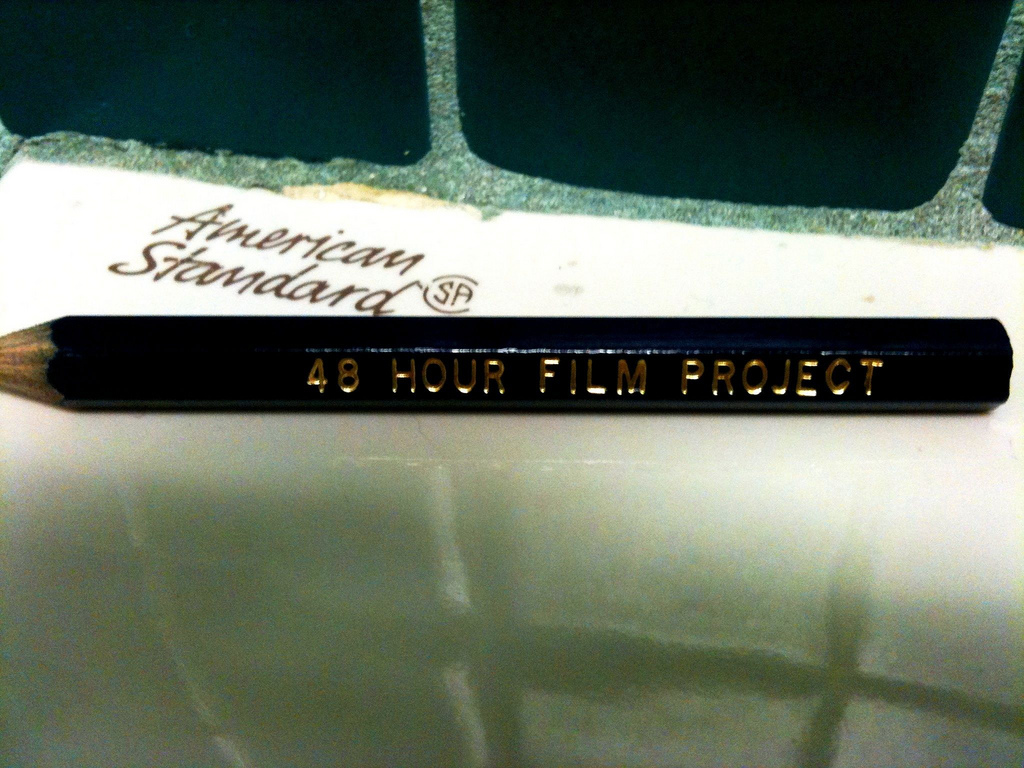
All across the land, one competition is taking filmmaking by storm. The 48-Hour Film Festival challenges production teams to make a short film in only two days’ time, which will then screen publicly in front of a panel of judges. Winning films from each city move on to be screened in Los Angeles, and the top 10 worldwide screen at Cannes the following year.

To start, each team receives a random genre, and a prop, character, and line of dialogue that must be included in their film. Then, over one weekend, writers craft a script, a director breaks it down, actors perform, an editor cuts it, and the producer turns in the final copy. For actors, the challenge is a great way to practice on camera, gain material for a reel, and meet industry folk. Never before has one weekend done so much for your acting career…and it’s fun!

Advantages for Actors

Scheduling film shoots is always a difficult proposition, and when working in indie film, is a common reason that shoots get pushed back. With the 48-Hour Festival, scheduling problems are reduced because everyone knows about the weekend in advance. This means that Festival teams are often more organized and dependable than the average independent production team.

Additionally, competing in short film festivals gives actors the chance to play a variety of different roles. Producers must recruit their cast before they know what the story and genre will be, so actors often have the chance to play against type, or in an atypical genre. For instance, horror, western, and sci-fi are genres that are included in every drawing, but rarely will actors come across them on public call boards.

Finally, the popularity of 48-Hour Film Festivals draws many professional production teams in every city. This gives actors the chance to work with established, local, film industry pros, which is crucial for networking. Beyond the networking, these teams bring a high-standard of production value with cameras, lights, microphones, and other equipment that would otherwise only be found on the best short film shoots.

Reel World Experience

All of the above traits make short film competitions a viable option for actors in need of resume and reel building credits. On-camera experience is important for all aspiring actors, and a credit from a 48-Hour Festival is definitely worth the time.

If the final product is polished, there is also a good chance that footage can be obtained for use on a reel. This is further encouraged by the quick turnaround time. In only two days, an actor can gain a credit and a scene for their reel, talk about efficiency.

Besides all of this, 48-Hour films are fun yet challenging to work on. Actors must build a character quickly and perform under constant time pressure, similar to the stress experienced on studio TV and film productions. And, with The 48, there is always a guarantee that if completed on time, actors will get to see themselves on the big screen and gain exposure to local audiences.

Advice for Finding a Team

Don’t despair if you are an actor without a team for an upcoming competition. If you are interested, chances are that you can find a team. The 48-Hour Fest has a mailing list on its website that anyone can sign up for, and they also host mixers for teams and prospective members. Signing up and/or attending those events is one way to find a team. Another proven way is to hit the local casting services and social media groups for teams in need.

Importantly, the festivals are all open to anyone, and volunteer-based, so payment is never provided. Therefore, it is the responsibility of the actor to screen teams for quality and find the right one for themselves.

Things to Look for in a Team:

  • Experience – Always helps if they have done this before.
  • Organization – They should seem knowledgeable and prepared.
  • A Full Crew – It’s a lot of work. If others have signed up, that’s a good sign.
  • Similar Vision – Ask them why they are doing the project. Ask what their goals are. Ask to see their past work and be prepared to answer their questions about yourself.
  • Familiar Names – If they have an artist on their team that you recognize, that’s a good sign of legitimacy.
  • Matching Personalities – To work closely and successfully in a high-stress environment, it helps to be comfortable with the people around you.

[su_note]Learn more about the School of Acting at the New York Film Academy by clicking here.[/su_note]

Image Source