
The Increase in Native Advertising in Broadcast Journalism

Native Advertising in Journalism

According to a 2014 Pew Research report, the lines between public relations/marketing and news are becoming increasingly blurred, with news giants like The New York Times and The Washington Post jumping on the sponsored content bandwagon.

What is Native Advertising?

Native Advertising, also called sponsored content, describes paid content to promote a product, but produced to look somewhat like a news report. Before the digital age, these were called advertorials—magazine or newspaper ads with headlines that were meant to look deceptively like actual news. But with consumers’ increasing reliance on the internet, so-called “sponsored content” became popular. Now when you browse through your local TV station’s website, next to the latest weather report you might see a mortgage company ad with a newsy-sounding headline like, “Why Are High Earners Living Paycheck to Paycheck?”

The Problem with Native Advertising

The main complaint about sponsored content is that it often looks so much like a real news story that some readers might be confused.  This is especially true with the latest trend—the advertiser pays the broadcaster to write a headline and content, so it sounds more like a legitimate news story.

How Obvious is Paid Content?

Many native advertising pieces are easily identified as such. As a general rule, any headline that includes the words “shocking”, “can’t believe” or “jaw-dropping” is probably paid content. Many of these ads are also eye-catching, with blinking lights, dancing pumpkins or elves, or badly edited before-and-after photos. One could argue that most consumers could easily discern between a legitimate piece of journalism and a dancing pumpkin ad, regardless of the headline.

However, the move toward more sophisticated content means the distinction is sometimes more difficult, even for skeptical consumers. Take the earlier headline about high-earners living paycheck to paycheck, for example. In the current economy, many broadcasters have produced legitimate packages about the increasing numbers of high earners who find themselves in financial distress due to an underwater mortgage, job loss, etc. This could be one of those stories, but if you click on the link you’ll find yourself routed to a website that attempts to sell you financial planning services.

With a decrease in over-the-top headlines and low-quality pictures and a move toward more professional-looking paid content, the confusion is increasing for consumers. A recent Digiday article cites a study in which 62% of respondents didn’t realize they were looking at an ad when shown “sponsored content” for a cheese company.

How Labeling Affects Consumers’ Interpretation of Native Advertising

The Triplelift study in the Digiday article goes on to show that the way sites label their paid content affects consumer confusion. “Advertisement” was the most clear in alerting readers that they were viewing an ad, with almost half of respondents (48.5%) correctly identifying paid content. “Presented by” and “promoted by” were most confusing, with only 15.5% and 11.2%, respectively, identifying the paid content as ads.

This piece of data is of particular concern to broadcasters, whose TV news segments are often “presented by” an advertiser. For example, the sports segment of your local five o’clock news broadcast might be sponsored by a local sporting goods store. That doesn’t mean the store is paying for any particular content; they’re simply paying to sponsor that part of the broadcast. Consumers who both watch TV news and read about it online might think the same holds true for “sponsored” content on a TV station’s website.

Not Just an Issue for Broadcasters’ Websites

That brings us to another trend in sponsored content: paid advertising on news shows made to look like legitimate interviews. A recent Boston Globe article describes a 10 o’clock news broadcast, which included an interview with the founder of a razor company. The interviewer asked the founder questions, as he would have in a legitimate news gathering situation, but the razor company paid for the time, and the segment ran in the commercial break slot.

The problem highlighted in the Globe article stems from a lack of identification of the “reporter” in the segment. He was not identified as working for the razor company, and as a result, viewers, especially those new to the telecast, might not have realized he was biased in his approach to the story. The article also points out that even a reporter working for a broadcaster might soften his or her approach to interviewing a subject about paid content, lobbing softball questions and avoiding issues that could make the company look bad.

[su_note]Learn more about the School of Broadcast Journalism at the New York Film Academy by clicking here.[/su_note]


Why Xbox’s Gamescom 2015 Conference Felt Like E3 Part 2

Xbox's Gamescom 2015 Conference

If there’s one annual trade show that has every gamer counting down the days until it starts, it’s the Electronic Entertainment Expo. Here is where we are bombarded by an amazing amount of all things games: new reveals, gameplay demos, first looks at the next-gen consoles, and more. Of course, there’s another trade fair that, since it’s inauguration in 2009, has been attracting even more attendants than E3.

We’re talking about Gamescom held annually in Cologne, Germany. This year, plenty of exhibitors were present to show off their latest titles, including the three industry giants: Sony, Microsoft, and Nintendo. From Electronic Arts and Ubisoft, to Square Enix and Activision Blizzard, there was also no shortage of publishers and developers giving people hands-on experience with their games.

Of all who came out of this notable event, however, none made more of an impact than Microsoft. After already delivering a great press conference at E3, few could have expected the Xbox conference at Gamescom to be so packed with awesome news and reveals. It won’t be enough to send the Xbox One skyrocketing in terms of sells, but we’re confident that Sony is kicking themselves for not doing the same at Gamescom this year.

The following are the biggest announcements from Microsoft’s strong showing:

Our First Look At Quantum Break

Arriving on April 5th, 2016 as an Xbox One exclusive, this title has been promised to offer all the time-bending action we could hope for. Judging by the gameplay trailer shown, it looks like it is shaping up to live up to that promise. While the visuals look as stunning as you’d expect from a trade show trailer, it’s the use of time manipulation that has gamers excited. Freezing enemies and zooming between cover at incredible speeds, although not the most innovative concepts, look great in this game. Here’s hoping the end product lives up to the trailer.

Crackdown 3 News

Now officially called Crackdown 3, this anticipated title will feature “100% destructible environments,” as well as cool transforming vehicles. The demo shown gave us a glimpse of the destruction by having one of the cyborg police officers decimating enough buildings to cause several other skyscrapers to crumble. Crackdown 3 is set to release in 2016.

Killer Instinct Season 3 Announcement

Another season for the Xbox One exclusive fighter has been announced, bringing with it new stages, characters, and other content in March of next year. One of the more exciting reveals was the introduction of one of the Battletoads as a playable character; an announcement that perfectly coincided with the release of Rare Replay on the same day. A trailer of the buff amphibian in action was shown.

Scalebound Will Have 4-player Co-Op

We finally got our first glimpse of this Xbox One-only title being developed by Platinum Games. As one would expect from Hideki Kamiya and his team, the gameplay involving colossal creatures and allied dragons looks sharp and impressive. Of course, it was the announcement of 4-player co-op that makes this anticipated title all the more intriguing.

Halo Wars 2 revealed

We’re pretty sure no one saw this coming. Despite the original Halo Wars receiving high review scores and praise, developer Ensemble Studios was disbanded almost immediately after its release. The developers behind the Total War series and Alien: Isolation are making this surprise title, set to launch in fall of 2016 for both Xbox One and Windows 10 PCs.

Xbox One Backwards Compatibility Launch Date

Perhaps one of the most thrilling announcements at Microsoft’s E3 2015 conference was backwards compatibility. Those who have been anticipating this awesome feature will be happy to know that it is only a few months from being made available. More than one hundred games are promised to be available at launch, and countless more arriving later. The announcement that all future Xbox 360 games with gold titles will also be backwards compatible on Xbox One, not to mention free DVR functionality also arriving this November, was extra icing on the cake.

[su_note]Learn more about the School of Game Design at the New York Film Academy by clicking here.[/su_note]

Image Source

Five Tips For Exhibiting Your Game At Events

Exhibiting your video game

The thought of showing off your game in a crowded setting, and actually interacting with people looking to catch a glimpse of your project, can be both exciting and intimidating. This isn’t about social anxiety issues or just chatting with fellow gamers, it’s about presenting something you’ve poured all your blood, sweat, and tears into over the past few months or even years. Since each event can be your one and only chance to impress people who otherwise may not hear about your game, it’s easy to see why exhibiting can be a nerve-wracking ordeal.

But like job interviews, high school oral reports, or any event requiring public speaking, preparation and practice can make all the difference. Even though every game event and trade fair is different, which means one or more surprises can come your way, the following are a few tips that could help you put on a good showing and grow your loyal fan base in a fun and unique way.

1. Do Your Booth Cost Research

If you want to chat with gamers and promote your game to possible buyers, you’re going to need a booth. You’ll definitely want to do plenty of research and planning before investing in one simply because every event varies. While a booth at a local gaming event may cost you next to nothing, even a small 10×10 at Game Developer’s Conference (GDC) might be several hundred, or even a couple thousand, dollars.

Also worth mentioning is that you should prepare for other expenses as well, especially since every venue is different. For example, some places offer free electricity while others require that you pay to use it. You can imagine how trying to demo your game without any power will go.

2. Plan For Comfort, Food, and Water

These events tend to last all day, which means you better toss on some comfortable external foot coverings, aka, shoes. Wear something comfortable for clothes as well, but still try to look presentable (no pajamas or anything like that). And, of course, bathe.

You’ll also want to bring along plenty of water so you stay spirited. While most venues have concession stands and such to buy food, try bringing something you can whip out and eat quickly so you never have to leave your booth. It’s hard to promote your game while dehydrated and hungry, especially when either of the two make you cranky, tired, etc.

3. Bring Swag and Promotional Material

Flyers are a cheap and effective way of increasing the chance that someone who walked by your booth actually remembers that your game exists. At most events there are tons of games to check out, which is why giving passersby something physical that they can look at later, or share with others, is a very good idea. Just make sure to plan appropriately, since you don’t want to carry a heavy amount of flyers only to not even use half of them.

People also love little things like buttons, pens, fridge magnets, etc. When it comes to buttons, they aren’t too expensive and can be made to be very attractive and interesting. You can add your company logo, a main character in you game, and so on. The same goes for t-shirts, although these are much more expensive than the aforementioned freebies.

4. Avoid The Last Minute Changes

There’s nothing more devastating than fixing one small problem the night before (and test it) only to have your game crash every time someone tries to play it. If you happen to have a few small bugs in your game, don’t sweat it. It’s better that players run into these small bugs and know they’re playing an early version of your game than if they can’t play it at all due to constant crashing.

While you’re at it, make sure to note any glitches and bugs you notice while people are checking out your game. Since Wi-Fi and internet isn’t always reliable, and cell phones can run out of battery, we recommend you bring along a good old-fashioned notebook and pen. Again, it’s your call if you want to try and actually fix any bugs during the trade show and risk destabilizing your game entirely.

5. Prepare Phrases and Answers To Questions

People are much more likely to not only play your game, but also purchase it in the future, if you talk to them. This doesn’t mean reciting the same monologue to every person that walks by. Instead, come up with a few phrases you plan on saying throughout a conversation that will make them interested in playing your game. Since you’ll be meeting a ton of different types of people, pay attention to the things you say that catches their attention or turns them off.

You should also expect several common questions that include when your game will release, on which platforms it will release, how much it will cost, etc. No matter what they ask, use it as an opportunity to upsell something else about your game. If someone asks if you’re porting your iOS game to Android when you have no plans of doing so, be honest, but also mention what platform you do plan on taking your game onto next.

[su_note]Learn more about the School of Game Design at the New York Film Academy by clicking here.[/su_note]

Image Source

How To Use Social Media To Do More As A Broadcast Journalist

Social media and broadcast journalism

Social media provides multiple platforms for promoting a TV or radio station, its programming, and its on-air talent. Social networks are also great places to engage with viewers and get new story ideas. However, recent trends show journalists are finding new ways to do even more with social media.

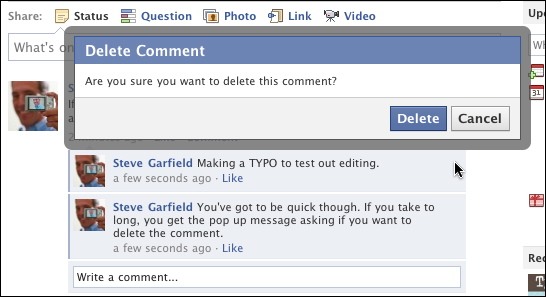
Using Facebook Comments to Reduce Trolling

As journalists, we’re all committed to free speech, and we want to know what our audience thinks. But we’ve all probably seen some version of this social media disaster: A TV or radio station posts a story on its website, and before you know it, readers are hurling all-caps obscenities at each other. Or maybe there’s one anonymous poster who keeps spewing abusive hate speech in the comments section.

How do you encourage healthy debate while avoiding these problems?

According to a recent Washington Post article, some news organizations resort to shutting down comments on some or all topics, but many broadcasters find the majority of comments are too helpful to dismiss.

An alternative is to require posters to use their Facebook account to share their opinions. When the Huffington Post chose this route in December of 2013, its director of community later told the Washington Post that they had a large reduction in trolling and spam, and an uptick in more intellectual debates.

Keep in mind that while requiring Facebook comments can help reduce trolling and abusive comments, it won’t get rid of them entirely. A determined troll can always make a fake Facebook account, and some people aren’t shy about arguing with strangers as themselves.

That’s why you should never put up a post and forget about it. Someone from your news organization should be monitoring the comments section of all your posts.

Also be sure to engage with your audience. Ask commentators questions about their responses, and, if necessary, post reminders that abusive language or spam will not be tolerated. Most trolls, spammers and flame-war inciters will move on if they see that your organization’s site or social media platform is actively monitored by staff members. If they don’t, you can quickly remove posts that violate your company’s comment policy.

Maintain interest in a story by adding questions to the comments section several times a day. Examples include: “Many of you have commented that {subject of story} responded inappropriately in this situation. What would you do differently? Do you think he/she should apologize?” Or, “We’ve noticed a lot of comments that the city council is focusing on the wrong issues. What problems do you wish they’d address instead of this one?”

[su_note]Learn more about the School of Broadcast Journalism at the New York Film Academy by clicking here.[/su_note]

How to Use Social Media for a 21st Century “Voice of the People” Story

“Voice of the People” packages are a great way to keep viewers engaged, by sharing their friends’ and neighbors’ opinions on a topic. This format is a great way to localize a national news story, especially if you work at a TV station in Podunk and its unlikely the president will return your calls for an interview about the latest bill he signed.

However, if you’ve spent any time working on “Person on the Street” segments, you’ve probably run into some problems—especially if you work in a smaller market.

You walk up and down the street or shopping mall with your camera and try to get people to talk to you, but many of them are in a rush to be somewhere else. Others are happy to be interviewed, but when you ask them about the economy, they babble for five or six minutes about Kim Kardashian’s latest hairstyle. The next person wants to know why your station doesn’t do a story about how their bowling league just won five games in a row.

Often, the only people you can get a usable soundbite from are the retirees who drink their coffee at the same table in the food court every day, which is great for your first “Voice of the People” segment. But your news director wants comments from different people for each story, so next week you’re back to square one.

How are broadcasters dealing with these challenges?

In today’s world of social media, the latest trend is to take Facebook or Twitter comments about a topic or previous package and use them for “Voice of the People” segments. This allows you to share comments from people who were too busy to be interviewed on the street, as well as those who are simply camera shy or worried how they’ll look on TV. Most reporters find they get a wider variety of viewer comments online than in person.

There are many different ways to use social media comments for “Person on the Street” stories. Some broadcasters use the VO/SOT style, where an anchor reads the comments while video rolls. You can also add comments to a package that includes in-person interviews with the subject or an interested party. A national story can be localized with network video and comments from local viewers.

When using social media comments, the usual journalistic principles apply—you want to show all sides of the story, not just one. Try to pick comments from different sides of the issue. If possible, show a variety of reasoning for each opinion—“I’m opposed to this tax because it hurts low-income workers”; “I’m opposed to the tax because I think the city is going to waste it on the wrong things”; “I’m opposed to the tax because I’m still waiting for the last one to benefit my small business”.

Mining Social Media for New Story Ideas or Angles

Monitoring your station’s posts on social media and its website not only helps to discourage trolling, it also gives you the opportunity to see what your viewers care about. This can provide ideas for new stories, or new angles on an old story.

Obviously, you have to take social media comments with a grain of salt, and you don’t want to waste time chasing down every lead. That guy who claims he was abducted by space aliens and met Elvis on the spaceship shouldn’t be taken seriously, but the next poster might have an interesting point about a current topic.

If someone appears to have a legitimate point about a news topic, it might be worth spending a few minutes researching it. Also pay attention to what concerns viewers the most. Is it a particular clause in a new law that most people find problematic? What’s the biggest complaint about each candidate running for office?

Keep these tips in mind when monitoring your station’s social media presence and website. You never know when an award-winning story idea is going to pop up in the comments section.


Image source

Trend: Leveraging Social Media For Broadcast Journalism

Utilizing Social Media to Improve Broadcast Journalism

For years broadcast journalists have used social media to announce new stories or new information on a previously covered topic, generate interest in live TV broadcasts, engage with viewers, and even get tips on breaking news. But today’s ever-changing social media landscape increasingly offers even more opportunities for news reporters.

Taking Charge of Comments

Many broadcast news sites have adopted a policy of only allowing Facebook Comments, which requires audience members comment via their Facebook profiles. The main reason for this switch is to discourage trolling and inappropriate comments. While broadcasters want viewers to share their opinions, comments that are offensive, clearly intended to invoke a flame war, or are excessively profane can drive viewers away from a social media post in a hurry.

The idea behind limiting comments to Facebook profiles works on the assumption that people are less likely to start screaming insults at each other when everyone knows who they are.

This works for some news sites, but there are drawbacks. A seriously invested troll can always make a Facebook account under a fake name. Another downside is that some viewers might want to post anonymously about deeply personal topics, like health problems or sexual assault.

Monitoring Website and Social Media Chatter is Key

A recent Gigaom article noted that trolling is often influenced more by the tone of early comments to a story than the method for allowing comments.

It went on to suggest that while using Facebook comments is not harmful to a news site, assuming that doing so relieves the broadcaster of the duty to monitor its comments page is.

The most important thing to remember is that someone from the news organization should monitor social media comments on all platforms—Facebook, Twitter, the station’s website—on a regular basis. Not only does this help discourage trolling and out-of-control arguments, it can also provide new story ideas or angles.

A New Take on “Person on the Street”

Monitoring social platforms is also integral to another way broadcasters are doing more with social media: Updating the “Person on the Street” or “Voice of the People” story.

“Person on the street” interviews have been around since they were called “man on the street” interviews, and the basic premise hasn’t changed. In the past, reporters would visit a busy public place, like a street or shopping mall, and wander around, asking strangers if they’d like to comment on a current news topic.

In a perfect world, the reporter would get a wide variety of soundbites from a diverse cross-section of the local population.

Obstacles in Traditional “Person on the Street” Stories

This isn’t a perfect world, however, and this method of finding subjects for “Person on the Street” stories doesn’t always result in the hoped-for wide variety of subjects.

Often, people on the street are in a hurry to get somewhere and don’t have time to talk to the press. Others are camera-shy or having a bad hair day. People who are eager to be interviewed sometimes have an agenda to push, or go off on an unrelated tangent. Journalists sometimes find that the same three or four people always want to be interviewed, but no one else does, and “Voice of the People” packages need different subjects for each new topic.

Using Social Media to Find New Inspiration

Thanks to these challenges, it’s no surprise that many broadcasters are using social media as their “street.” It’s increasingly common for package tags to include one or two Twitter comments on the issue. Reporters may even include social media comments from previous coverage of the story in a package or interview.

This can help reporters develop new questions. For example: “Many of our viewers expressed concern about how this new legislation will affect our city’s small businesses, Mr. Mayor. How do you respond?”

The Ideal Solution for Small-Market “Voice of the People” Packages

“Voice of the People” is an ideal option for small-market reporters trying to offer a local view on large, national stories.

Instead of wandering a shopping mall and interviewing the same three or four people about a different topic every week, the small-market reporter can pull opinions from the station’s Facebook post on a subject. Many people who don’t have the time or desire to be interviewed on the street will take twenty seconds to type a comment about a topic they find interesting.

Social media is also a treasure trove of new story ideas or angles. You don’t want to chase every lead, and the internet is littered with inaccuracies. However, some comments on a station’s website or Facebook posts can reveal a related story or a new perspective on an issue.

Click here for more on how broadcasts journalist can do more with social media >>

How RED Cameras Changed The Game

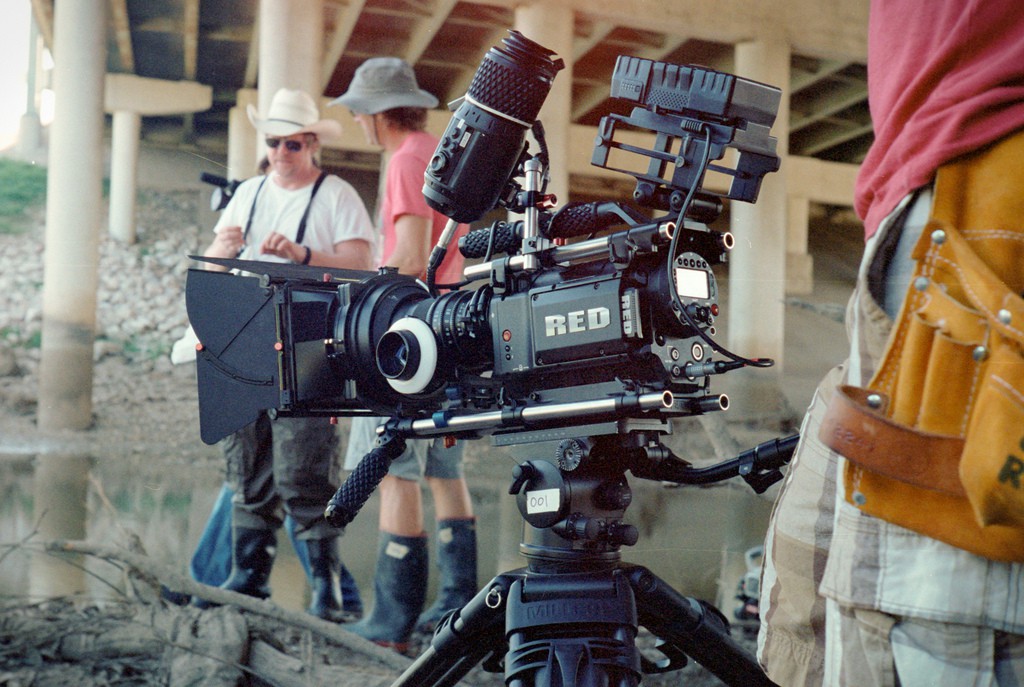
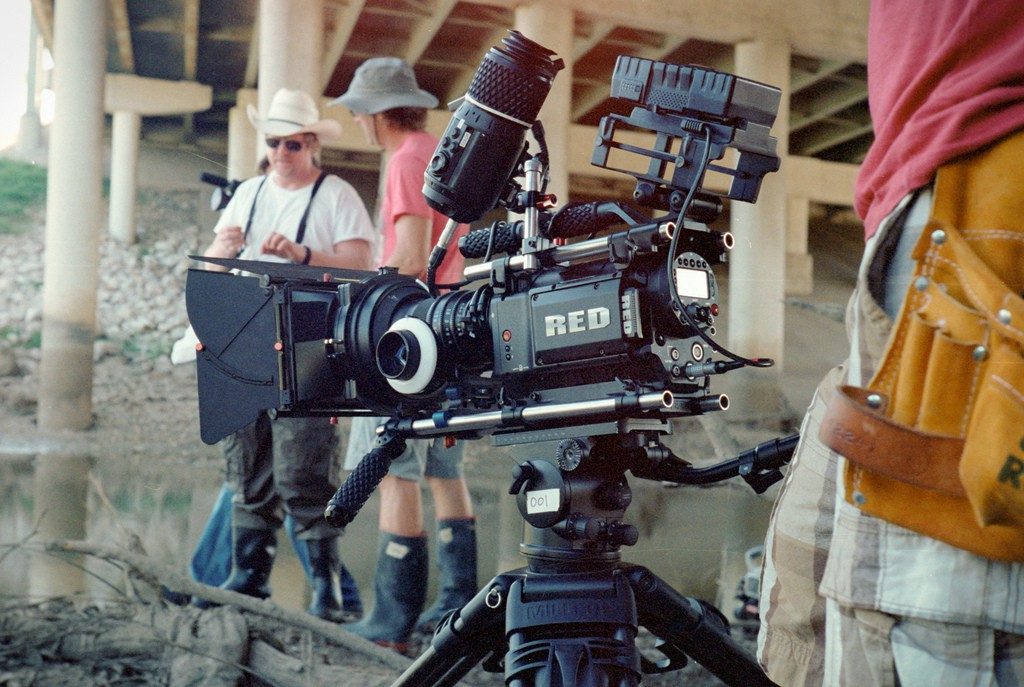
As digital cameras have become the norm in 21st century movies and production work and more and more films and clients want their projects shot in 4K resolution, RED cameras have become a staple on film sets around the world.

As a company, it could be argued that RED was essentially ahead of its time in the company’s belief that the future of film was in 4K resolution and thus sought to create a digital camera that could truly look as good, if not better than film, while being significantly smaller, more portable, and ultimately more affordable. Simply put, students who attend film school today are able to use cameras and shoot at a resolution that was just a glimmer of a possibility ten years.

The Rise of a Giant

RED’s story is one that is rooted in the American tradition of game-changing companies that started in a simple garage. In Jim Jannard’s case, he founded the company in 2005 with a small group of fellow innovators who sought to build a truly modern digital camera. Jannard was the founder and owner of sunglass and sportswear giant Oakley, providing him with the capital and means to literally engineer the future of digital cinema, which first set sight on the goal of creating a new generation of digital cameras able to handle 4K resolution.

RED One MX Camera

RED first sought to make a name for itself by building a 4K digital cinema camera, which would eventually be the RED ONE cameras that went on sale in August of 2007.

The Mysterium 4K: Changing the Game Forever

Taking their cue from the RAW file capture presented by digital SLRs, the RED team would ultimately build a camera that could record RAW, 4K images that could capture up to 30 frames per second.

But a massive challenge lay ahead of the team. Working with video-software engineer Ted Schilowitz, they encountered an early hurdle in developing the sensor, a light-sensitive chip that would effectively replace film in capturing images, a daunting prospect in an era in which digital was viewed warily by many feature filmmakers for its decidedly inferior quality to film cameras.

This was effectively solved by the invention of the Mysterium, a 12 megapixel sensor that was designed for the RED ONE and capable of capturing flawless footage at 4k resolution. In fact, the Mysterium sensor provided RED ONE with perhaps it’s biggest pulling point—not only could it pull off this boundary-pulling resolution, but it could do so at up to 60 frames per second (and even up to 120fps if shooting in 2k resolution.)

In addition, the Mysterium rocked some pretty impressive specs, including a native color balance of 5,000 degrees and a dynamic range of up to 66Db.

Of course, this was superseded by later chips including the Mysterium-X and Red Dragon (which we’ll come on to), but in 2007 the genesis Mysterium sensor was well and truly ahead of its time.

Early Adopters

The promise of RED ONE’s capabilities was so strong that it even lured in early punters a year before the Mysterium chip was developed, with over a thousand filmmakers laying down a deposit at a trade show in 2006.

Some high-profile names also helped foster the buzz surrounding the new camera, too. Before its commercial release, Peter Jackson got his hand on two prototypes of the RED ONE and used them shoot his WWI short Crossing the Line. A domino effect ensued—acclaimed director Steven Soderbergh watched Jackson’s short and immediately declared “I have to shoot with this.”

Soderbergh followed suit with two more RED ONE prototypes and headed into the jungle to shoot his biopic Che.

Another early adopter was the television show ER who, when debating whether a digital camera could rival the clarity and color of film, conducted a test with the breadbox-size camera and instantly decided upon seeing the footage to shoot the remainder of the series with RED.

And so began RED’s first halcyon period in which it was the main player in town in terms of high-quality digital cameras and set the bar to which other companies aspired. While certainly not an inexpensive camera, the quality of the RED ONE camera and the fact that it was ready to use straight out of the box soon made it in demand in the service of both blockbusters and indies, with such early adapters including Ron Howard who used the camera for Angels & Demons and Lars von Trier who shot Antichrist with the camera.

Setting a Precedent

One of the most significant early effects of the RED cameras was how the company made shooting in RAW image format an industry standard. RAW files consist of minimally processed data that comes from the image sensor and that has not been processed yet; an analogy can be drawn to film negatives, which are not directly usable as an image, but contain all of the requisite data to create an image. Thus, the process of converting a raw image file is akin to a digital form of the traditional photochemical process, but with far more control given to the filmmaker and digital editor who are then able to process the image through such processes as color correction, contrast enhancement, and dynamic range compression.

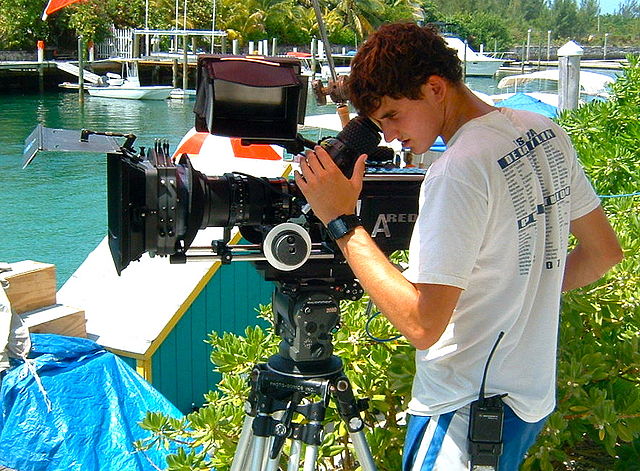
640px-Roman_&_RED_camera

The other major impact of RED cameras was the fact that it made the other major camera companies—including Arriflex, Panavision, Aaton, and Sony—soon announced they would only produce digital cameras going forward.

While this sea of change was well over a decade in the making, the existence of the RED camera and its ability to give the closest digital approximation to film placed the burden on these long-running companies to develop competitive models of their own. Arriflex, long an industry standard and chosen camera of many film veterans, made an entry into the fold with the Arri Alexa series of digital cameras first introduced in 2010.

A Double-Edged Sword

Amongst the numerous revolutions that RED cameras have brought to the industry, it’s arguably responsible for creating a brand new field of jobs—the Digital Imaging Technician.

Given that transitioning over to digital from traditional film is something many professionals are still getting accustomed to—particularly cinematographers—the D.I.T position has been specifically created to work within the production flow and make sure the DP’s vision is realized with the best quality possible.

Data wranglers have also risen to prominence since the advent of the RED ONE as specialists who are entrusted to process and secure the extreme amounts of data—often on the order of terabytes and in some rare cases petabytes—generated by digital production.

Wmf_sdtpa_servers_2009-01-20_36

Wardrobe and make-up has also had to significantly step up its game as different techniques are required for the 4K age—really, shooting in super high resolutions can be a double-edged sword given that it can be unflattering to acting talent, and increased subtlety is needed on behalf of the makeup artist to make their work look natural.

MYSTERIUM vs. MYSTERIUM-X vs. RED DRAGON

Not only has the RED ONE pioneered the digital trail since its inception, but it continues to do so with constantly evolving chip sets (in addition to free firmware upgrades.)

For most filmmakers, the choice lies between the original MYSTERIUM 12 megapixel sensor and the MYSTERIUM-X 14 megapixel, the latter of which can capture video of up to 5k (at an impressive 95 frames per second) and up to 400FPS when shooting in 1k. To boot, it has an improved ISO sensitivity rating of between 320-800 and features a native color balance of 10,000 degrees (compared to the Mysterium’s 5,000.)

A demonstration of how this translates in the real world, courtesy ShootWithRed.com:

Even more advanced still is the RED DRAGON sensor, a 19 megapixel sensor that operates at over 100 FPS even in 6k resolution, though only available in the RED EPIC and SCARLET systems:

Ultimately, the body of a RED camera is not much bigger than the size of a professional still camera, but once adds lenses, dollies, and the rest, it can come close to the size of a traditional film camera. It’s little wonder that between its cutting edge specs and out-of-the-box functionality—as well as the fact that it has long been embraced by A-list directors—that the RED camera system continues to be at the forefront on filmmaking industry standards.

[su_note]Learn about the cutting-edge developments in RED technology by attending a REDucation Workshop.[/su_note]

5 Essential Documentaries To Watch This Summer

It’s been something of a banner year for documentaries so far, with many feature-length releases already being touted as candidates for the best non-fiction releases of the year despite still having five months left to go.

best documentaries 2015

In fact, the pick of the crop has been so strong in 2015 that it was tough to narrow it down to just 5 Essential Documentaries to Watch This Summer… but if you’re studying the craft at documentary filmmaking school or even just love a great story, here are five titles we’d highly recommend you add to your ‘To Watch’ list.

Let’s start with some essential viewing for anyone except those who suffer from vertigo…

Meru

Nothing quite captures the spirit of human endeavor than a mountain climbing movie, and as a general rule, it’s the non-fiction that’s more compelling than anything a screenwriter can dream up.

Most climbing documentaries inherently contain all the ingredients for a good watch—conflict, despair, life, death, endurance, and triumph—but this year’s Meru really pushes it all to the next level.

Set on the utterly terrifying Shark’s Fin feature on the mountain of the same name, Meru is a disarmingly moving story of three climbers attempting the near-impossible.

Kurt Cobain: Montage of Heck

There have been a number of documentaries over the years covering the life and untimely death of the enigmatic Nirvana frontman, and for a long time, 2006’s About a Son was considered the most definitive… and then came this Summer’s Montage of Heck.

Montage is not only the best piece of material ever made about Kurt (and it is solely about Cobain, not the rest of the band), but it’s probably going to end up being the best documentary of 2015.

Even the most hardcore Kurt Cobain fans will be surprised by the level of intimacy of the footage, as well as the approach taken to the documentary.

For the record, Dave Grohl reportedly lasted ten minutes before he became “too terrified” to continue watching.

Amy

Another member of the fabled ’27 Club’ and as equally tormented as the late Kurt Cobain, Amy Winehouse and her tragically young death has been deserving of a careful documentary treatment since her passing in 2011.

As both a celebration of her art and career success and a study of what ultimately became her undoing, the team behind the 2010 documentary Senna has produced another powerful and tender biopic that borders on masterpiece. Another essential—if heartbreaking—documentary to watch this Summer.

The Wolfpack

In 2010, documentary filmmaker Crystal Moselle chanced across a peculiar bunch of teenagers walking around First Avenue in Manhattan. Dressed in all black, wearing dark Ray-Bans and with their hair down to their waists, Crystal ended up befriending the group of siblings and chanced upon a bizarre story—the six brothers and one sister had all been forcibly confined to their Lower East Side apartment by their father since birth and homeschooled.

Nearly everything on the outside world was new to them, and in turn, the very candid look into their bizarre world is very new to us as viewers. Well worth watching.

Going Clear

An incendiary documentary that unpacks the claims made by the Church of Scientology (and based on the 2013 book of the same name), Going Clear is probably the most deeply disturbing piece of nonfiction you’ll see this year.

Despite a furious and sustained effort to block the documentary by the Church of Scientology itself, Going Clear went on to become the second-most-watched HBO documentary of the last ten years ( behind a feature on Beyoncé.) In fact, director Alex Gibney voiced appreciation for the Church taking out full-page ads discouraging potential viewers from watching it, thereby increasing its exposure.

Don’t Dread It, Write It: A Guide To Acting Resumes

How to Write an Acting Resume

Headshots get the bulk of the attention because they are the visual cue that immediately informs casting directors and agents of an actor’s type and range. However, for every headshot there is an acting resume that should be uniformly stapled to the back.

An acting resume should simply list an actor’s credits and contact information in a highly organized structure that provides readers with background information about the face in the corresponding headshot. A good resume makes an actor appear more professional and prevents agents and casting from quickly labeling you a novice.

Staples…You Should Use Them

Since it has already been mentioned, let this be the first rule of resume writing: use staples.

This will guarantee that your headshot and resume do not become separated in the chaotic piles of resumes that industry folk weed through every day. Paper clips are out. Tape is no good. Glue is messy and warps the pages. If you are really cool you can print your resume directly on the back of your headshots. If you are not really cool, just use staples.

Screenplays are Structure…And so Are Resumes

Oscar-winning screenwriter William Goldman said, “Screenplays are structure, and that’s all they are.” His words apply equally to acting resumes which all follow the same basic format.

Basic Resume Guide

  1. Name: At the top, centered, write your full name.
  2. Agent: On the line below, list your agency and their contact information (phone number and e-mail address).
    • If you are unrepresented, list your personal contact information.
  3. Union: The line below that should list your union status. If you are not in a union, leave this line blank and skip to the next step.
  4. Statistics: Immediately underneath union or contact info, list your basic stats: hair, eyes, height, and weight. Then move onto the meat of the resume.
  5. Credits: These are grouped into Film/Television and Theatre. Start with whichever is your primary emphasis as an actor. Under each subheading, create three columns:
    • Left Column – Title
    • Middle Column – Role
    • Right Column – Production Company
  6. Special Credits (Optional): If you have any credits you would like to list that do not fall under Film/TV or Theatre list them here in the same three-column format. Special credits might include Web Content, Dance, Opera, or Improv.
  7. Training: Underneath credits, list any formal training that you have. Only two columns are needed, one for the specific focus (dance, voice, Shakespeare, etc.) and one for the teacher or school.
  8. Special Skills: Finally, at the bottom of the resume, list your special skills. Think of things that are unique and specific that might be of interest to casting. Common skills are singing, instruments, sports, and accents but anything can be listed here.

Once the basic tenants of an acting resume have been applied, there are a few simple steps actors can follow to ramp up the professionalism.

Quick Resume Tips

  • Choose a clean, standard font and font size that is easy to read.
  • Name, agent, and all subheadings should be bold and larger font than the body-text.
  • Trim the resume to fit precisely on the back of an 8”x10” headshot
  • When listing your role for a Film/TV credit, note whether the role was leading, supporting or guest star. Casting directors probably won’t know the role unless…
  • If someone or something famous is associated with a credit, make sure you list it at the top. A noted director, producer, production company, or actor is a marketing point to that immediately signals “professional experience.”

Thou Shall Not Lie

If staples are the first “yes” rule, lying is the first “no-no.” Not only is lying on a resume unprofessional, but actors who lie are bound to be caught. When an actor is caught with a false credit, there is little to be done to save his or career. Simply put, if you haven’t worked with Steven Spielberg, do not list him on your resume because someone will find out.

Be proud of your past work and list it accurately on a well-formatted acting resume that is nicely stapled to your headshot.

Following these simple steps will immediately signal to a casting director or agent that you are ready to work. Be honest, be stapled, and be cast.

[su_note]Gain hands-on acting experience through our variety of Acting for Film programs taught by industry-leading actors, writers, directors, and producers. Visit our Acting for Film School page to learn more about our degree programs, workshops, and courses.[/su_note]

Image Source

The CEO With The Heart Of A Gamer: Remembering Satoru Iwata

Perhaps by the time you’re reading this it has finally started to sink in that Satoru Iwata, one of the most beloved figures in the gaming industry, has passed. It is also possible that you’ve already seen the following quote a thousand times recently:

“On my business card, I am a corporate president. In my mind, I am a game developer. In my heart I am a gamer.”

This was said by Mr. Iwata in front of thousands in 2005 at the Game Developers Conference held annually in San Francisco, California.

A loud applause echoed throughout the room upon hearing these powerful words that might have sounded empty if said by any other CEO in the industry. To everyone who knew of Mr. Iwata, whether you worked with him closely or simply enjoyed his presence in Nintendo Direct streams, it was obvious that although he led a multi-billion dollar company, he still genuinely cared about only one thing: making great games.

This passion already showed at a young age when Mr. Iwata was still a student at the Tokyo Institute of Technology. Here, he worked on several Commodore Japan titles as an unpaid intern before being hired by HAL as a programmer. There he played a large role in the creation of titles still considered classics today, including Kirby’s Adventure and Earthbound, before becoming president of HAL Laboratories. In this role he saw many more great titles released, including the first entry in the very successful Super Smash Bros. series.

When Nintendo’s long-time president, Yamauchi, retired in 2002, Mr. Iwata was handpicked by him to lead the company his family had worked hard to build up since 1889. Although a great honor to be the first CEO that wasn’t directly related to the Yamauchi family, the new president knew the difficulties that were ahead. The most recent console release, the GameCube, was being pummeled in terms of sales by its competition.

However, if there was one man that had enough vision to see Nintendo pull itself out of its poor situation and rise back to the top, it was Mr. Iwata. In the next few years he succeeded by guiding the release of two of the most successful video game devices ever created: the Nintendo DS and Nintendo Wii. And like most innovative ideas, Iwata and Nintendo would receive plenty of criticism upon the unveiling of both these products.

For the Nintendo DS, having two screens working in tandem while playing a game sounded confusing and tedious. Who wants to look up and down between two screens to enjoy their game?

The Wii was also predicted to be a failure simply because it lacked the specs of its competitors and did away with classic controls in favor of motion. But as both devices continued leaving others in the dust, the industry began to respect the visionary mind of Nintendo’s young new president.

Even when Nintendo began falling behind in 2011 and onward, Iwata continued showing us that he wasn’t in it for the money or position. He voluntarily cut his salary on more than one occasion to avoid having to fire other employees. His frequent presence in the Nintendo Direct series and Iwata Asks interviews gave people the ability to see a very busy president take the time to show his personality, sense of humor, and genuine adoration for the things he and his company develop for us to enjoy.

It was also in these hard times that Iwata gave an inspiring speech at the 2011 Game Developers Conference:

“Trust your passion, believe in your dream… For 25 years, game developers have made the impossible possible. So I ask you, why would we stop now?”

Although Iwata would live to see Nintendo finally turn a profit in 2015, no one can deny that Iwata still had much more to give. Satoru Iwata will always be remembered as the perfect example of just how far patience, dedication, and the courage to innovate can take you in our industry.