10 Musical Theatre Jobs Essential For A Production

Let’s not sugarcoat it: it isn’t easy to break into the musical theatre industry, and nobody is going to hand you a leading role in a Broadway show on a silver platter…

… but there’s more than one way to skin a cat.

Below you’ll find a breakdown of numerous professional jobs in musical theatre (along with their ballpark salary expectations, career paths and difficulty of attaining paid work). The good news is that many of them lead into one another, creating a multitude of routes into the musical theatre job you’re aiming for.

Some require prior training at musical theatre school while others rely more on on-the-job experience (and a little bit of hustle). Learn more as we explore:

Jobs in Musical Theatre: Work, Salaries & Career Paths

Front of House

We figured it would be sensible to start with front of house roles given that it’s often the starting block for many a good career in musical theatre. It’s often menial work – selling tickets or refreshments and/or showing people to their seats, for instance – but hey, it’s a start.

Front of House Career Path: See a job listing calling for front of house staff, prove you’re capable of serving patrons, and away you go.

Pros: In some cases, you get to see the show for free (or at least get discounted tickets.)

Cons: Doing the same thing, ad infinitum, often without pay.

Difficulty: 1/10

Front of House Salary: It depends on the theatre (and its location), but the hourly rate can vary from being totally voluntary to $15 or $20 at the top end. A front of house manager earns around $35,000 on salary.

Musical Director

A musical director generally works under the lead director and producer, and acts as a conduit between the upper management and everyone else. However, after the rehearsals are wrapped up and the show’s run begins, the director/producer tend to take a backseat. At this point, the musical director will work with the stage manager (see below) to keep the entire production on track thereafter.

Not to be confused with a theatre director, who runs the venue itself.

Musical Director Career Path: Many musical directors start of as musicians first and foremost such as violinists or pianists, working on small productions before being tasked with leadership roles. Attending musical theatre school can accelerate this, and needless to say music lessons in a chosen instrument (or many) is almost essential.

Pros: If you love mixing creativity with logistics, this is the job for you.

Cons: A lot of responsibility, not a lot of credit.

Difficulty: 8/10

Musical Director Salary: Between $40,000 and $60,000 dependent on experience and production level.

Stage Manager

A broad term to refer to the head honcho who ensures everything that under the remit of the musical director (above) runs smoothly. The checklist of duties can be huge depending on the production: blocking, cues, lighting, scenery, props, and scheduling and reporting to the director and producers are all part and parcel of the job.

Stage Manager Career Path: As with the musical director, a stage manager typically starts small and works up. A deep understanding of everyone’s role on the team is essential, which typically requires formal tuition at musical theatre school.

Pros: The job satisfaction is huge, given that you’re pretty much solely responsible for putting on a good show.

Cons: You don’t know the meaning of the word pressure until you try being a stage manager on a big production.

Difficulty: 9/10

Stage Manager Salary: Generally paid on a per-weekly basis of anywhere between $0 and $3000, depending on production size.

Producer

One of the most nebulous terms in both musical theatre and film, a producer can be expected to wear many hats during the course of a show’s run, but is primarily in charge of raising funds, managing said funds, and sometimes hiring personnel. The producer is usually the one to have discovered the script and initiated the production.

Producer Career Path: Business savvy is arguably more important than performance skills, but having an eye for this is also vital. Being rich helps a lot, too.

Pros: In a nutshell, the payoff can be huge (financially speaking)

Cons: You can also bankrupt yourself and/or your production company really, really easily.

Difficulty: 10/10

Producer Salary: No reliable averages exist given that earnings are almost always royalty based, so we’re talking about a range of millions to negative millions.

Theatrical Makeup Artist

As you can imagine, being a makeup artist for musical theatre is a slightly different discipline to makeup artistry for models, photoshoots, and other types of beautician work, since it often calls for quite dramatic results under the harshest of lighting conditions.

Theatrical Makeup Artist Career Path: Given the technical knowledge necessary, it’s rare for makeup artists to have no specialist training in this area (though not entirely unheard of). A strong portfolio is also mandatory.

Pros: A lot of opportunity to unleash your creative prowess and work with a varied group of performers.

Cons: The overheads can be quite pricey when you’re starting out and having to purchase a lot of materials on your own dime.

Difficulty: 7/10

Theatrical Makeup Artist Salary: The average hourly wage reported by the Bureau of Labor Statistics is pegged at $30, with a mean average annual of $58,000. Obviously, this is just a ballpark figure for those working freelance.

Choreographer

An essential role in bringing a musical theatre production to life, choreographers are responsible for a very important part of the show: working out exactly how the talent should move when on the stage (and that is usually more than just the dance routines). Like makeup artists, choreographers have been a part of the industry since the inception of theatre in Greek antiquity.

Choreographer Career Path: Formal tuition isn’t strictly necessary, but nearly all choreographers are trained dancers and go on to work either on a self-employed basis or via a dance company. Occasionally, the director doubles up as the lead choreographer on a production.

Pros: If dance is in your veins, there’s nothing better than being the person who creates the routines.

Cons: Expect outrageously long, 16 hours work days with a lot of traveling for work. Dance-related injuries are also common.

Difficulty: 6/10

Choreographer Salary: Averages around $50,000 per year, but with the caveat that earnings can go up or down depending on freelance work available (if not signed with a dance company.)

Dancers, Actors and Singers

Working directly under the choreographer, directors, and stage managers are the main event: the people who the public have paid good money to see. This more generic entry covers a wide swathe of skill sets and different disciplines, with some members being proficient in just one or many.

Career Path: Entirely depends on your chosen field. Naturally, a dancer should seek expert dance tuition and a singer should undergo vocal lessons in order to maximize the chances of being hired. For a well-rounded education in all of the major skills, attend musical theatre school.

Pros: The thrill of performing, of course!

Cons: It’s one of the most competitive fields in entertainment. You could be flying high one moment, then struggling to find work the next. Also, the work itself is a lot more grueling than a lot of people are prepared for.

Difficulty: 9/10

Talent Salary: Thanks to the Actor’s Equity Association, the minimum you should be paid is $1,754 per week if you’re on Broadway. If you’re off Broadway, this drops to $500 per week. The good news is it’s a growing industry with average wages rising with theatre profits.

Scenic Carpenter

As the title suggests, a scenic carpenter’s role is to create sets and structural elements of the production as requested by the production manager. Scenic carpenters typically don’t paint the set pieces themselves (which falls under the scenic artist’s remit), but may be required to also work on rigging in smaller productions which don’t have a budget for two separate professionals.

Scenic Carpenter Career Path: Simply put, proficiency in carpentry is required. Formal qualifications are usually requested given that poor structural work can endanger lives.

Pros: There’s a lot of job satisfaction to be had when you finally get to see the finished set, in action, that you helped create from the ground up.

Cons: Explaining for the hundredth time why that design might look good on paper, but it breaks numerous laws of physics in reality.

Difficulty: 6/10

Scenic Carpenter Salary: Nearly always paid on a freelance, hourly basis and not much better than other low-grade stagehands at $8-$10 per hour. This can go up to $20-$25 per hour if managing a team.

Costume Attendant

Very few musicals can operate without a team of wardrobe staff, and costume attendants make up the bulk of this workforce. Tasked with making sure costumes fit the stage talent, keeping them in good condition between shows, and helping actors in and out of them during the show, a costume attendant may also be responsible for choosing the costumes themselves. However, this is usually the duty of the wardrobe supervisor (whom costume attendants report to.)

Costume Attendant Career Path: There isn’t a strict route into gaining work in the costume department of a production, and many who do so came from different stagehand disciplines. Skill with couture is obviously a prerequisite, and formal fashion training can help you climb the career ladder quicker, but otherwise it’s all down to your portfolio.

Pros: Getting to work with pretty much the entire team, from fellow stagehands to the actors, right up to the director. It’s a great job for learning many facets of musical theatre.

Cons: Work can be sporadic at best, but on the days you are requested, expect long hours.

Difficulty: 5/10

Costume Attendant Salary: The hourly average as reported by the Bureau of Labor Statistics (specifically for theatre) is reported as $26.80, which is only a shade below the same role in motion pictures at $27.02.

Lighting Designer

Along with scenic carpenters and costume staff, lighting designers fall under the umbrella category of “theatrical technician.” Lighting designers work hand-in-hand with light board operators, the former planning everything out in advance to match the artistic vision of the show, while the latter makes sure that plan is followed on the night.

Lighting Designer Career Path: A highly technical profession, lighting designers either learn from a very basic level in an amateur theatre setting, or undertake full training in electronics or another related field. Working as an associate LD under a lead designer is a good way of cutting your teeth in the industry.

Pros: The skills you’ll learn are highly sellable, even when you’re not working the theatre circuit (think music concerts, photo shoots, etc.).

Cons: It’s an under-appreciated art form.

Difficulty: 7/10

Lighting Designer Salary: A healthy $50,000 per year on average, but that’s across the whole industry (not just theatre). Light board operators, on the other hand, earn substantially less; only around $10 per hour on a freelance rate, for a national average of $30,000 per year.

Develop your performance skills across singing, dancing, and acting disciplines with our 4-Week Musical Theatre Workshop with the support of a Broadway-level faculty. Visit our 4-Week Musical Theatre Workshop page to learn more.

No, Not Lenny!: 5 Ways The Simpsons Can Keep Harry Shearer

Simpsons fans around the world woke up this morning to news that veteran comic actor Harry Shearer may be leaving The Simpsons at the end of this season. While a vague tweet is hardly confirmation, fans have known for years now that it was only a matter of time before someone from the core cast left before the show had run its insanely long course. Shearer has been the most vocal of cast members about the show’s record-length run and a decline in quality that has riled fans since the late 90s and even spawned entire podcasts.

The Simpsons was just recently renewed for at least two more seasons, and it’s hard to imagine the show continuing on without trademark characters like Mr. Burns, Ned Flanders, Dr. Hibbert and Lenny (no, not Lenny!) While it can theoretically continue, it just wouldn’t seem right for a Shearerless Simpsons.

As students are challenged to do at our producing school, we’ve decided to conduct a thought exercise using real world cases and hypothesize 5 ways The Simpsons and Harry Shearer can find a happy middle ground and keep him and his beloved rogue’s gallery of Springfieldians (and Rigellians) on the show. One option not included on this list is raising his salary even higher than the millions he already takes in a year, as the salaries of the rest of the cast would also then need to be raised, and the only thing keeping The Simpsons still on the air is that it is profitable. Another option is just ending the show with Shearer. While this makes sense, the show has already been renewed and frankly nothing short of nuclear war is ending the sitcom’s run anytime soon. A third option we simply won’t consider is letting Shearer sail off into that good night, because a Springfield without Principal Skinner is a Springfield we cannot stand.

1. Reduce His Role(s)

Harry Shearer has been around a while (it’s been over thirty years since Spinal Tap!) so you can’t blame the guy for wanting to relax and enjoy his mill-diddily-illions. But maybe he can still come in here and there so that Springfield still seems full of his characters and the world continues to feel whole. A Smithers line here and a Reverend Lovejoy joke there can go a long way. We may not get any more Mr. Burns-centric episodes, but there’s already been about fifty—we can probably get by without more.

2. Make It Easy For Him

The cast still get together for table reads so writers can hear the script out loud and alter the drafts accordingly, a tradition that the show has held on to since the late 1980s. Maybe the producers can compromise and let Shearer sit them out, having another cast member or someone else fill in for the table reads. Also, with the millions the show generate, they can probably afford otherwise absurd accommodations, like setting up audio equipment in Shearer’s house. He can record his lines from anywhere in the world and never even have to put on his pants. That beats any pension plan we’ve got!

3. Pay Him More Than Money

So clearly throwing money at Harry Shearer wouldn’t work, if he is truly willing to walk away from Fox’s cash cow. But Fox still has something Shearer doesn’t necessarily have—broadcast power. Maybe as part of his contact they can agree to greenlight and commit to a passion project of Harry’s—a movie, television show, live act, anything. He has the money to make these on his own but he can’t necessarily distribute them to the masses as easily. Maybe he wants A Mighty Wind sequel? We sure do!

4. Use the Power of Editing

If Shearer is indeed gone for good, perhaps we can still salvage his characters. After 26 seasons and 600+ episodes, there are probably hours of deleted scenes and outtakes including his roster. Maybe scenes in new episodes can be written about this additional footage, incorporating a Flanders line from 1996 that never saw the light of day. Also, catchphrases like Burns’ “Excellent!” or Dr. Hibbert’s chuckle could be replayed and used. It’s cheap but we’re desperate here!

5. Cast “Harry Shearer”

Supposedly if Shearer does leave, an option Fox is considering more so than eliminating his characters all together (or, God forbid, killing them off in-universe with some kind of boogie woogie superflu) is replacing Shearer with other voice actors. This seems sacrilege (Lunchlady Doris has never been the same since beloved voice actor Doris Grau passed twenty years ago) but it does seem to be a better option than Springfield with a reduced-population. There are certainly very talented voice actors and impersonators who can come very close to imitating cartoon voices, even if it takes a small team of actors to replace one very talented man. It’s not ideal, but if Harry Shearer ultimately does call it quits, we might be very grateful for Sheareresque replacements.

Four Of The Hottest Graphic Design Trends For 2015

Graphic design – particularly for the web – changes at a notoriously fast pace. What may have been considered vogue one month, can be deemed as practically prehistoric just a few months down the line.

If you’re a student at graphic design school, you’ll be kept abreast of all the latest in graphic design trends. Still, it always pays to keep your finger on the pulse. In order to help you stay ahead of the game, here are the graphic design trends that are hot right now and likely to become industry-wide practices over the rest of 2015…

Hottest Graphic Design Trends For 2015

Grid Layouts

Almost directly attributable to the rise of Pinterest (and to a lesser extent Instagram), the clean-cut ode to order has become prevalent with many graphic designers opting for grid layouts in 2015. Web designers around the world have exhaled a sigh of relief at this latest graphic design trend given that it’s fairly easy to implement into a working site through basic CSS.

Obviously it doesn’t isn’t suitable for the presentation of all kinds of content, but it does work great for graphic designers working on product-based presentation or content that is highly categorized. This is the ultimate graphic design trend for the OCD sufferers among you.

Flat Designs

Flat, simple, and minimalist is the most recent graphic design trend to have just started emerging this year. As such, there’s never been a better time to adopt it into your own work.

The good news is that it’s a delightfully simple style to execute, given that it purposefully steers away from any kind of graphical frills or embellishments. Keep it nice and simple, put a self-imposed ban on using the gradient tool, and leave those edges gloriously unbeveled. Blocking primary colors help seal the deal (just make sure you export any digital work on the highest DPI settings / lowest compression in order to keep those edges crisp and avoid unwanted noise.)

Optical Illusions

This one seems to be becoming prevalent in logo design this year, with numerous companies adding visual trickery to their branding in order to get people’s attention and keep them engaged.

And it does work… when done well.

The above Sonos logo is a great example of this and has since gone viral, even though the pulsating effect you get when scrolling was a lucky accident on behalf of the graphic design team.

When it’s forced, it can serve to distract the onlooker and can end up being a hot mess, minus the hot.

Ethereal Pastels

If you’re in game design school, or work as a graphic designer specifically for video game media, this is the one graphic design trend of 2015 you really need to know about. In previous years, we’ve seen very loud, busy, and often cartoon-esque visuals in video games (particularly in the mobile sector).

In recent times, however, a handful of superb titles have pushed gaming trends towards the more experimental ‘relax-em-up’ type of game. To suit these, an almost unique brand of ethereal, vivid landscape imagery was created to mirror the gameplay.

Indie success stories like Proteus (pictured above) kicked things off in 2013, and the rise of the casual gaming market (again, particularly on mobile platforms) helped the style gain momentum. More recently, the award-winning Monument Valley and hugely enjoyable Alto’s Adventure both employ this flavor of graphic design.

And although it’s been a mainstay of cult artists and fans for some time, pixel art is increasingly becoming a mainstream style. Of course, there’s a single game that is responsible for bringing retro-style video game art back to the fore; it begins with ‘M’, and ends in ‘Craft’.

Got any other graphic design trends you’re embracing (or loathing) in 2015? Hit us up in the comments below, and let’s get some discussion flowing!

Yooka-Laylee: The Long Awaited Rare-vival

Screenshot of Yooka-Laylee game
Image via Yooka-Laylee Kickstarter

Any gamer who held a controller in their hands during the last half of the 90s knows how big 3D platformers were. From Super Mario 64 and Spyro the Dragon to Crash Bandicoot and Donkey Kong 64, this genre dominated the era when 3D games were still new.

Along with the aforementioned games, there were two unique and amazing titles made by acclaimed developer Rare: Banjo-Kazooie and its sequel, Banjo-Tooie.

These games, featuring a bear and bird duo, are still regarded as two of the best 3D platformers of all time. Despite the popularity and success of this short series, we wouldn’t see another console Banjo-Kazooie game until 2008, with the release of Banjo-Kazooie: Nuts & Bolts.

Although receiving good reviews and selling well, it was enough of a departure from the original series that most fans were left craving what the first two games offered.

Prayers Answered?

Fast forward to early 2015, and you’ll find a revival of excitement toward what could be the “Banjo-esque” adventure we’ve been waiting for.

Made up of several veteran Rare employees who worked not only on the N64 games, but also classics like Donkey Kong Country, PlayTonic Games revealed their plans to create a spiritual successor for the Banjo-Kazooie games: “Project Ukelele”.

It wasn’t until the end of April that Yooka-Laylee was finally unveiled, including its two titular characters. Just like with Banjo-Kazooie, this new project will have two characters that work together but can also separate: Yooka the chameleon and Laylee the bat.

A few revealed screenshots also depict a rich and colorful world similar to the lands our favorite bear and bird duo explored nearly twenty years ago.

Making History

When Playtonic games launched their Kickstarter in May to fund this inspiring new title, few were surprised to see it hit its goal in less than an hour. Not only that, it raised more than $1 million in just under six hours, making it the fastest funded game to reach that point in Kickstarter history.

With more than a month still to go as of this writing, the campaign can expect to rake in more than $2 million before the end.

What’s To Come?

While fans place their cash in the trusted hands of veteran developers, Rare prepares for a surprise reveal this coming E3. It will be interesting to see how the industry reacts if the reveal is a new Banjo-Kazooie game; especially since Rare has yet to make any memorable titles since being purchased by Microsoft in 2002.

Despite the strong relationship between many Playtonic and Rare developers, it will no doubt be a battle to see who can cater to the nostalgic 3D platformer fans in the coming year.

Whether you think Yooka-Laylee will deliver the superior experience, or are hoping Rare return to their roots, it’s a good time to be a fan of this genre.

With first-person shooters, MMOs, and other types of games dominating the market for the last decade or more, it will be nice to get a fresh and exciting taste of the genre that helped usher the entire industry into the 3D era.

[su_note]Want to design and develop video games? Learn more about the School of Game Design at the New York Film Academy. Campuses in New York and Los Angeles.[/su_note]

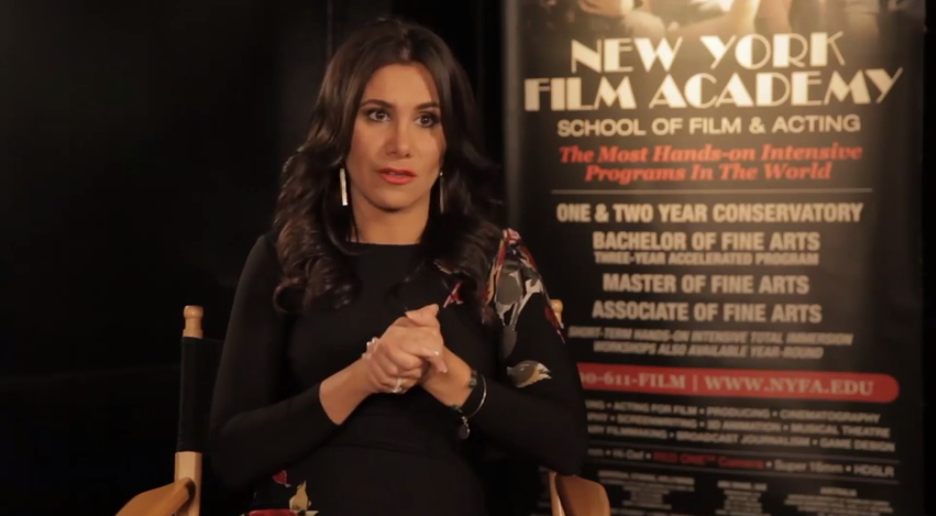
Interview With Joelle Garguilo

New York Film Academy Broadcast Journalism School graduate Joelle Garguilo comes back to speak with us about her experiences: 

“I’m Joelle Garguilo, currently a digital journalist at NBC News, and my broadcast career started here at the New York Film Academy.”

NYFA: What in your background drew you to broadcast journalism?

Joelle Gaguilo: Before coming to the New York Film Academy, which at the time was in association with NBC, I came from a business background. So I worked in accounting and finance for many years, first at KPMG as an auditor, then I went to New Line cinema as a finance member.

New Line went under and at that moment I said, If I’m ever going to chase my dream—because that’s what broadcasting is and was, my dream—now’s the time.

So I met with a career counselor, found a course at NYU, and then I did a little research and found this school called the New York Film Academy.

“Let me just go, take a meeting,” and I fell in love at that meeting. I said, “You know what, four-weeks, let me sign up for a four-week program. Let’s see where it takes me.”

From four weeks I went to eight weeks. I was able to do a semester and then I stayed for a full year and it was the best decision I’ve ever made. And the best risk I’ve ever taken.

NYFA: What was it like learning to work on both sides of the camera?

JG: So on the first day, I go into the journalism portion of the program. I make a phone call to my mom during the break: “Mom, I am in love with this. This is what I am meant to do. I’m going to extend it to eight weeks.”

Then I go to the camera portion and the technical portion. I came out with my head so low. They brought out a tripod and just said, “Set up the tripod.” I had no idea what to do with the tripod. So, I was so drawn to the storytelling aspect, and the technical scared the ever-living you-know-what out of me because I’d never picked up a camera.

I knew nothing about editing software. I knew nothing about a tripod; a simple tripod. But that was a challenge.

Slowly as the course progressed, I realized how important all of those skills would be, but I truly didn’t realize just how essential they would be to what I do now until my first job interview.

NYFA: How did the New York Film Academy prepare you for the professional reality of working in journalism?

JG: I think NYFA, along with having the time with NBC, and everything I’ve done before this point had prepared me for that.

I mean, I was a business girl. Accounting and finance…you don’t get any longer hours than you do in that profession. So I already had the work ethic coming into NYFA.

But how NYFA prepared me for the real world was that I realized what it took to put together two minutes, whether it be for online, for TV, or for just class, takes a lot of work. And that’s what NYFA did for me. NYFA prepared me for the amount of work and love and care you will put into every single story.

NYFA: Can you tell us about your first job?

JG: The program ended and I needed to make the decision to take the last part of my CPA exam or go on a job interview that I got at NBC, specifically for the digital unit of NBC, which then was called NBC Mobile. It then switched the name to NBC News Mobile.

So I said, “What am I going to do? You know what? Let’s get this reel together. Leave the accounting behind. Go on the interview.”

I thought I bombed the interview. Luckily, I didn’t and I got the job. So that was my first job. My first job was working for the digital production unit at NBC News.

NYFA: How did your career progress?

JG: My hours, when I first started at NBC, were 1:30 to 9:30.

I found out where the equipment room was. Before 1:30 I would go to the equipment room, check out equipment, work on that equipment because it was a little bit different from what I had at NYFA. NYFA had some better stuff at the time, I will say.  Before 1:30 I’d be out shooting stories. After 9:30, I’d be editing them.

I did that every single day, and eventually I was able to get my stuff to the point where it was good enough, I felt, I could pitch out.

I was doing stuff for cell phones, which, keep in mind, five years and two months ago, that was revolutionary. I know everybody now, you only think about watching video on your cell phones, but at the time there wasn’t anything else like that. So we went from cell phones…I went to a cable channel at NBC, and we had this other show called Daily Connection.

I started just pitching my stories to them. For them, it was kind of a no-brainer because you had someone who was doing everything. So they took my spots and they loved them. And then I developed a relationship with them. Continued to work on the writing, continued to work on the shooting, on the editing, on the producing, behind the camera, in front of the camera, all of the above.

And from that, I was able to get myself—while working for NBC News Mobile—on New York Live, where I’m currently a correspondent.

That was my first time ever doing live TV, I had to open up a show in New York and do two stories. At the time it was on at 5 o’clock. Oh my god, I was so nervous. But I did it.

And after New York Live came the Today Show…the Weekend Today Show. And that’s where I work now, still doing New York Live.

NYFA: What skills emphasized in the NYFA program did you find useful professionally?

JG: Hands-down, the skills that have helped me the most professionally would be shooting and editing, no question.

NYFA: What are some of your favorite stores that you’ve covered?

JG: I’d say doing the live pre-show at the Golden Globes was such a highlight of mine. I still can’t believe I was there.

And then, oh my goodness, there was a seven-year-old cancer survivor. This little boy is still with me. And then there was an 82-year-old homecoming queen.

I mean, the people you get to interact with because of what you do…it’s amazing.

NYFA: Is there any one particular area of journalism in which you have a special interest in doing stories?

JG: I have a passion for Human Interest stories. I’m a talker and I’m a great listener. And any time I have the opportunity to listen, you find so many characters out there. And to be able to tell their stories? It’s the best feeling ever.

And then, I also love my entertainment. I love the Red Carpet. Love, love, love the Red Carpet.

NYFA: How did studying here at NYFA help you develop your interviewing skills?

JG: Within the first week of the program, they sat us down with the teacher of the class and we had to interview her. Now, this was a seasoned journalist. And I knew I had to do my work to impress her. I realized at that moment how important it was.

And whenever I go into an interview, whether it be on the Red Carpet, a Human Interest story, a feature, it could be even a food piece, I go in with great questions and that is something I know I learned from here. And it really sets you apart.

I got a compliment from Oprah on my interviewing skills. I mean, Oprah! Oprah! So…I have the endorsement from Oprah, I feel like I’m doing OK.

NYFA: Is there a particular lesson that you took away from NYFA that was important in the development of your career?

JG: The power of knowing how to do it all. And I’m telling you, if you want to make it in this business, you have to know all of it.

NYFA: How is journalism changing?

JG: Digital, right now, is sort of the hot word. Everybody is talking about digital. I love broadcast, I love digital too.

Again, I think it’s just being versatile enough to know how to produce for every single platform. If you know how to do that, you’re fine in this business. But digital is the place to be right now.

NYFA: What has given you an advantage in your profession?

JG: I think what gave me an advantage when I left New York Film Academy, and what still gives me an advantage now, is the fact that I can do it all.

You can send me out to the middle of nowhere with camera equipment, with lighting equipment, and my little suitcase, and I will bring you back a story. You don’t need to send five people, you can send me.

NYFA: What are some of your favorite interviews that you’ve conducted?

JG: I gotta say it again, Oprah! Oprah Winfrey, and it’s more so because I knew I needed to bring it to that interview. I brought it, and I got the best compliment of my life, from Oprah Winfrey. That would be one of them.

Steve Harvey was another great interview.

Another one that just touched me, this 82-year-old woman who went back to school, they crowned her Homecoming Granny. People loved her so much they dubbed her Granny Franny. That’ll stay with me forever.

NYFA: What advice do you have for someone pursuing a career in broadcast journalism?

JG: Be prepared to work. Work your buns off and you will never have a hard time getting a job.

In order to make it today, you need to constantly be evolving, and that means learning new skills, learning the new cameras, learning how to edit. You have to keep up with the technology. Otherwise, you’re going to be lost.

NYFA: Advice for current NYFA students?

JG: Just take every moment of class seriously. You don’t realize this, but you are in an extended job interview. The people who you are going to be talking with, those are contacts. That is your network. You’re going to need to reach out to them after. Every single second that you’re in class counts.

Just be prepared to have fun. I am having dinner after this, and it is with everybody who I met at NYFA. They were invited to my wedding. You are going to make some of the best friends. You are going to meet characters.

But again, come prepared to work.

NYFA: What was your most memorable day at NYFA?

JG: Pretty much every day was a memorable day when I was at NYFA. I had a class of characters. They are such dear friends of mine to this day. But one moment does stand out.

It was our 8-week project when we had to put together a complete package. We had people from a news organization come in. And I got their stamp of approval. They pulled me aside and said, “You should be doing this.” These were the talent people at this news organization and at that moment, I said, “I’m going to keep riding this as long as I can.” And then I extended it for a year.

NYFA: What is your advice for someone taking a course in digital journalism?

JG: Just take it seriously. You don’t realize when you’re going through camera class, when you’re going through editing class, how important those skills are.

I hated it at first. I swear, I would not be where I am today if I did not have those skills. Just embrace every single moment of it.

You’re going to have a great time. I look back at that year of my life with such fondness. Just the people you meet too. There’s something about the school, because it does draw an international crowd as well. I mean, you can’t pick people like that to all sit in one class. You can’t.

NYFA: What was the most important thing you learned at NYFA?

JG: The most important skills I learned at New York Film Academy that help me when I’m in the field would be the shooting and editing. Being able to do those two things on your own without any assistance, help you so, so, so much in this profession.

8 Graphic Design Conferences You Should Check Out in 2015

Graphic design can be something of a lonely profession. If you work for an agency, chances are you’ll be glued to a monitor with very few people coming over to distract the weird person in the corner who’s seemingly engrossed with their Wacom tablet.

This goes doubly so for when you’re a freelancer working in a home office, which applies to a good number of people working in graphic design.This is where design conferences come in. Whether you’ve already hit a professional level, or are still working up to it at graphic design school, it can be a refreshing change to get out to an event and interact with like-minded individuals. Here are 8 great conferences for the remained of this year that you should strongly consider attending.

Upcoming Graphic Design Conferences 2015

SCA 2015

When: 7-9 August 2015
Where: Los Angeles, California

Run by the ACM SIGGRAPH group (a loose acronym for the rather unwieldy name Computing Machinery’s Special Interest Group on Computer Graphics and Interactive Techniques.) The organization is an international one and conducts events around the world, but the SCA event this August is the one graphic designers and animators should hit up to learn more about visual computer effects.

Layers

When: 8-10 June 2015
Where: San Francisco, California

Running parallel to – and complementing – the big WWDC Apple developer event, which takes place just a couple of blocks away, the new Layers event focuses more on design rather than development, which makes it ideally suited to graphic designers in the SF area. The number of great speakers they’ve assembled is looking to be a highlight of the event.

Midwest UX

When: 1-3 October 2015
Where: Pittsburgh, Pennsylvania

This 3-day meeting of minds sees design professionals from around the country come together to explore current trends and future solutions in the industry. It’s specifically catered towards the UX crowd (for more info on that discipline, check out our guide to specific graphic design jobs.)

AIGA

When: 8-10 October 2015
Where: New Orleans, Louisiana

Since as far back as 1914, the American Institute of Graphic Arts have been the authority association for all things graphic design related (and boasting over 25,000 members across the country.) You’ll have to become a member to attend the annual conference, but it’s well worth doing. This year, it’s being held in New Orleans, and is likely to be the biggest design event on anyone’s calendar.

International Graphic Design Expos

What Design Can Do

When: 21-22 May 2015
Where: Amsterdam, Holland

Along with numerous speaker sessions from some leading European design experts, including Stefan Sagmeister at the top of the billing, the What Design Can Do exposition has an international flavor and is welcoming to designers of any and every field.

TYPO

When: 21-23 May 2015
Where: Berlin, Germany

This is the big one. Few design events in Europe have as much of a provenance as TYPO, which attracts around 2,000 attendees every year, as well as a whole host of engaging speakers. If you have to choose between attending the Amsterdam event above and TYPO, note that the former is more geared towards the wider design community whereas the latter is aimed at typographers (as the name implies.)

TYPO has been so successful it spawned a sister conference in San Francisco this year, but the date for that has unfortunately passed at the time of writing.

OFFF

When: 28-30 May 2015
Where: Barcelona, Spain

Now in its fifteenth year, the OFFF conference is a superb collection of varied interactive workshops and activities, along with the usual assortment of engaging talks (and even a few performance events.) Well suited to both graphic and web designers, the event is also held at the Design Museum of Barcelona which is worth traveling to see in its own right.

London Design Festival

When: 19-27 September 2015
Where: London, England

The main event for those in the UK or designers willing to travel for it, as many have done since its debut in 2003. The London Design Festival really is a festival more so than an exposition, with over 300 separate events, exhibitions, and galleries dotted around the city under the same collective banner.

Do Gamers Care Less About Exclusives?

Do gamers care about exclusives?

If you grew up playing video games in the 90s, chances are you wanted a specific game console for one reason: it had one or two games that the other console didn’t.

Those of us who wanted to play Sonic the Hedgehog went with a Sega Genesis, while those looking to explore Super Mario World’s many stages wrote “Super Nintendo” on their Christmas list.

The rivalry between Sonic and Mario was, perhaps, the greatest example of how much power an exclusive game can have on helping us decide which console to buy.

We have certainly had plenty of influential exclusives on various consoles since then. It is difficult to say where Xbox would be without Halo and Fable, or if PlayStation would be a household name today without Final Fantasy and Metal Gear Solid. However, it certainly feels as though exclusives no longer play as big a role as they once did.

One reason is due to how big third-party development has grown. Here’s a look at the ten bestselling games of 2014 provided by Forbes:

  • Call of Duty: Advanced Warfare
  • Madden NFL 15
  • Destiny
  • Grand Theft Auto 5
  • Minecraft
  • Super Smash Bros (for 3DS and Wii U)
  • NBA 2K15
  • Watch Dogs
  • FIFA 15
  • Call of Duty Ghosts

Although this list doesn’t take into account digital-only titles like Hearthstone, it’s still an interesting portrayal of where the industry stands. Notice how every single one of these titles is available on more than one console? With the exception of Super Smash Bros, which is only available on Nintendo devices, none of these are exclusive to PC or a Microsoft, Sony, or Nintendo video game console.

One could say that the list makes sense, since the more platforms on which a game is made available, the more units it is likely to sell. This is why Call of Duty, which released on every major console, is able to sell many more units than Mario Kart 8.

Still, you would think that the system with the most 1st party titles, in this case the Wii U, would sell the most.

The Wii U blows away the PlayStation 4 and the Xbox One in terms of big-budget exclusives. Not only that, almost all of these exclusive games have been very well received and hold impressive review scores across the board. This includes Super Smash Bros, Super Mario 3D World, Pikmin 3, Bayonetta 2, and Donkey Kong Country: Tropical Freeze (just to name a few).

On the other hand, PS4 and Xbox One exclusives have been few and far between, and sometimes disappointing. Halo: The Master Chief Collection released with problems that made multiplayer unplayable for a large number of people. All while The Order: 1886 failed to meet expectations and suffered plenty of negative reactions across the internet.

Despite all this, it’s the PlayStation 4 that is currently dominating in hardware sales. The question is: will this continue even though Uncharted 4 has been delayed until 2016, leaving very few non-indie exclusives for 2015? Meanwhile, even though Xbox One’s only notable exclusives are Halo 5 and Rise of the Tomb Raider, chances are it will continue outselling the Wii U, the system with the most exclusives.

So, do exclusives still matter? Certainly.

Even though most of the big third-party titles release on both Microsoft and Sony’s consoles, games that only appear on one device still play a significant role in driving us toward a certain platform.

That being said, it is not nearly as significant as the old days, when exclusive games were the major selling point. It would be hard to argue that it is 1st party games that are solely responsible for driving sales when the system with the most (and highest-rated) exclusives is third place in the race.

[su_note]Learn to make your dream video game into reality at the School of Game Design at the New York Film Academy. Campuses in New York and Los Angeles.[/su_note]

Image Source

Seven Common Illustration Jobs

This article is intended as a reference and does not represent a guarantee or implication that NYFA graduates or others reading this article will obtain a job in their chosen career nor can salary be predicted since each job and the salary associated with it depends on the individual attributes of each applicant and on circumstances not within the control of any applicant.

Want to explore the numerous and varied roles that exist within the wider illustration industry? Look no further than our breakdown of illustration jobs below, in which we unpack what the work entails and why you might love (or hate) it.

Jobs in Illustration: Career Paths

Comic Book Illustrator

comic illustration jobs

One of the most highly coveted jobs on this list, and as a result, one of the most competitive fields to break into. This is particularly true when it comes to finding salaried positions for print work, though many have found success attracting commission work and raising other revenue through their own webcomics (as well as self-publishing.)

Comic Book Illustrator Career Path: As above. Attracting an audience via a web comic is a good place to start, though even that is a highly saturated market to break into these days. There is no prior experience needed for that, but if you’re looking to get hired full-time by the big boys, illustration school very helpful.

Pros: Believe everything you’ve heard: there’s an extreme amount of enjoyment to be had with comic book illustration.

Cons: Did we mention it’s a competitive market?

Courtroom Illustrator

Courtroom illustrator jobs

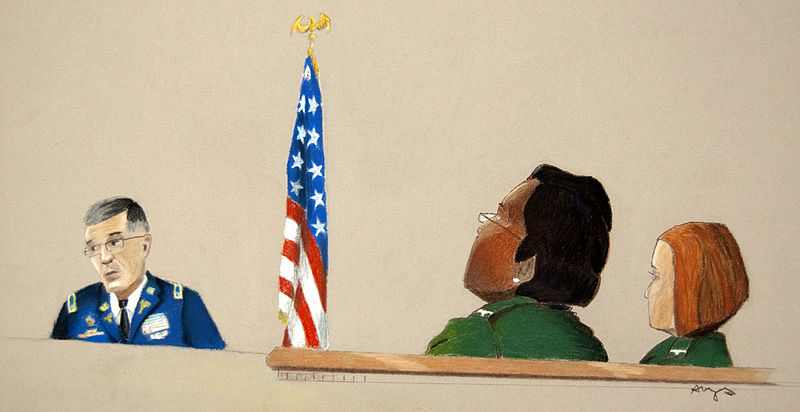
From one of the most sought-after jobs on the list to one of the quirkiest, being a courtroom sketch artist requires an extreme amount of skill. Not only do media outlets demand as much accuracy and realism as possible, but a lot of that has to come from memory alone.

Courtroom Illustrator Career Path: Due to the nature of bureaucracy in the field of law, qualifications from an illustration school are usually required (and will teach you the necessary skills of speed drawing and figure composition/shading.)

Pros: It’ll push your skills to the limit, and if you catch a bit of luck, you’ll get ringside seats to some very high-profile cases.

Cons: Chances are you’ll be too intensely focused on your work to derive any excitement of the case itself, and more often than not the proceedings will be as dull as dishwater.

Forensic Artists

From the courtroom to the scene of the crime itself, criminal sketch artists also require an extreme amount of skill and discipline but of a different kind; working one-on-one with an (often emotionally frayed) victim to produce an accurate facial sketch with nothing more than a hazy description from which to go off.

Forensic Artist Career Path: The majority of criminal sketch artists already hold positions in law enforcement, and you’ll at least need an endorsement by a law enforcement agency. There are specific workshops that provide training in this area, and you’ll probably want to join and/or seek tuition from the International Association for Identification. Psychological qualifications are also a bonus.

Pros: There’s a sense of job satisfaction in actively playing a part in solving crimes.

Cons: It can be harrowing at times.

Film Storyboarding

Storyboard artist jobs

Very few movies and commercials these days – even those of a tiny budget – are created without the use of a storyboard to plan out all the shots before production begins. For that, the team needs a storyboard illustrator.

Storyboard Illustrator Career Path: Paying work is generally garnered through a strong portfolio, so it can take some time to work up from volunteered work. Certain jobs also require not just good illustration skills, but also proficiency in 3D modeling software.

Pros: No two projects are ever the same.

Cons: Can be a highly pressurized environment to work in, with demands from numerous team members coming in from all angles.

Medical Illustrator

Medical illustrator salary

A career that dates back to the 16th century (and earlier), medical illustrators have a huge responsibility: to accurately depict body parts and aspects of their operation in order to aid medical professionals as well as marketing agencies, researchers, the pharmaceutical industry, and personal injury lawyers.

Medical Illustrator Career Path: There are numerous paths to becoming a medical illustrator, most of which requiring an extensive amount of scientific and/or medical training and a B.Sc degree in a related field (as well as illustration proficiency, of course.) The field is governed by the Board of Certification of Medical Illustrators.

Pros: In a word: money.

Cons: Not a good illustration job if you’re looking to exercise creativity, or are squeamish.

Fashion Illustrator

fashion illustration jobs

Working in one of the most cut-throat industries in the world, fashion illustrators typically work in either a design or advertising setting to bring sartorial ideas to life.

Fashion Illustrator Career Path: As with film storyboarding, a fashion illustrator’s portfolio is everything when it comes to gaining work in the field. It is often necessary to relocate to a large city in order to find a regular stream of paying work.

Pros: If you have a passion for haute couture, there’s no finer job. There’s also a lot of opportunity for travel and attending high profile events.

Cons: Again, it’s a very cut-throat industry.

Fine Art Illustrators

fine art illustrator jobs

This is the top of the creative pile within the field of illustration. Fine artists create work with the intent to sell them for their aesthetic value, making it a job that is highly depending on accolade, talent, and the current state of the market.

Fine Art Illustrator Career Path: Some fine artists go through rigorous training at illustration school to hone their skills to the level necessarily to enter the marketplace. Others, albeit a smaller proportion, get there with natural talent and a little luck.

Pros: Unlimited room to unleash your creativity as you see fit.

Cons: It’s a long way to the top.

Want to continue exploring jobs in visual arts? Head on over to our graphic design jobs & salaries breakdown page to discover more!

Why Every Team Should Have A Game Design Document (GDD)

why you need a GDD

There are indie game teams out there who think creating a design document would be a waste of their precious and limited time. This idea comes from the assumption that only AAA games being developed by big-budget studios with hundreds of staff need a GDD.

However, we’d like to share with you a few reasons why every team should consider documenting everything in detail. Even if it’s only two people making a simple smartphone game, taking the time to whip up a GDD will not only prove beneficial in the long run, but will also help avoid a few mistakes along the way to launch.

A Game Design Document…

…Keeps The Team Organized

Considering how complex making a game tends to be, most experienced developers find the idea of not having a GDD absurd. From game mechanics and descriptions, to various lists and other details, there is an incredible amount of information to work through.

With a GDD you’ll have all of this in a place in which any team member can look at it, revise, and build upon the information without going crazy from confusion. No one will run around asking questions like “What features are still in the game?”, “Which gameplay elements were cut?”, and “What new ideas are being added?”

…Keeps Everyone On The Same Page

Throughout development it’s easy for different team members to start coming up with various ideas they’d like to implement. One doesn’t have to look far to see a few examples of AAA games that started as one thing and ended up something else, which more often than not results in a bad game.

Avoid this by creating a GDD to serve as the core of your game, and remind everyone of the planned scope of the gameplay and world. Having all this information in one place will also make it easier for various people in the team to offer better ideas, make known when a certain element can be improved or should be removed, and so on.

…Compare Ideas And Catch Problems Early

Going off the last point, having a GDD makes it easier for everyone in the team to study everything that is planned for the game. This means that when someone comes up with a new mechanic that clashes with the overall gameplay, teammates will be able to easily identify it and avoid problems later on.

Having the team’s head wrapped around the GDD will also help smooth out any unexpected bumps in game development. It might be because of how the game is coded, or possibly the decision to change directions was made. Whatever the reason may be, the team has to make some big choices and will have an easier time if everyone is familiar with the current design thanks to a well-written GDD.

…Is A Goldmine For PR and Marketing

Rarely does a game become successful without a strong marketing push to get gamers’ attentions. When the time comes for your game, you’ll have tons of descriptions to use that perfectly convey what your title is all about. You may have to spice them up a bit, but it’s better than starting from scratch.

This will of course be even handier if you plan to go the crowdsourcing route to fund your game’s development. Having good PR material, an excellent Kickstarter page, and catchy lines that describe your game in a nutshell will be vital for convincing others to provide their cash so you can develop the game

…Keeps Everyone Motivated And On Track

A GDD is a good way to set goals for the team and allow everyone to stay excited by catching a glimpse of what the game will be at the end. Since it’s easy for a team to lose that initial enthusiasm a good ways into development, the GDD will keep motivation levels high.

At the same time, documenting everything with a deadline in mind can also help a team work more efficiently. This may sound annoying to the indie devs who left their studio jobs to avoid that 9-to-5 lifestyle, but not having goals to meet throughout development can cause fatigue, especially if the game will take a long time to make.

Image Source