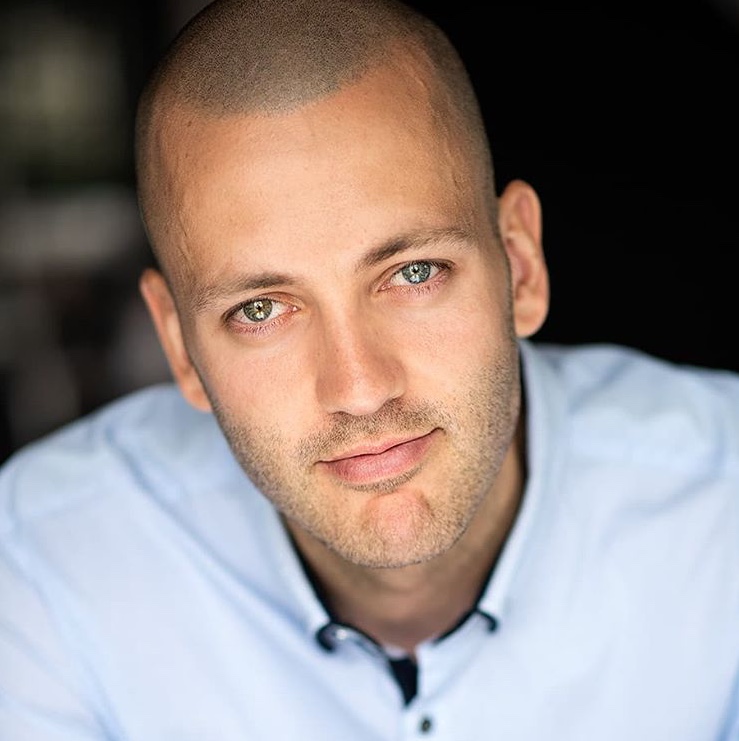
Cameron Dean completed the Acting for Film program offered at New York Film Academy’s Gold Coast campus and has since relocated to Vancouver, Canada. He has worked on a number of projects including Kong: SkullIsland and Thor: Ragnarok in Australia, as well as the latest campaign for Lamborghini, shot in Vancouver.
Speaking of his experience at New York Film Academy (NYFA) Australia, Dean stated he most enjoyed “how interactive and hands on it was” and how It offered him the opportunity “to create and express myself in a safe environment with other like-minded individuals.”
Dean continued, “The lecturers at NYFA were always helpful and professional; their guidance throughout my entire journey was a step above, and I am where I am today because they brought out the best in me.”
“When you love what you do, you will never work a day in your life,” he added. “When I was at NYFA it never felt like work, whether I had a 1200-word essay to hand in or doing research for a character, it was all just fun because it’s a part of being an actor. Finding answers and bringing a character to life and giving him or her the voice is what makes this job beautiful.”
Dean spent time on the sets for both Kong: SkullIsland and Thor: Ragnarokwhile still a student of the Acting for Film program, allowing him “to get firsthand training on big production sets with A-List actors.” He credits NYFA for preparing him for the film industry by “stripping away my inhibitions which held me back from expressing myself creatively. NYFA set me up with the necessary tools to confidently break down a script, add depth and layers to a character, and take an organic performance into the audition room or on screen.”
With plans to stay on in Canada, Dean hopes to sustain his career as a working actor and explore stunt performance for action films. “Things I want to achieve as an actor are to play a lead in an action film and do a lot of my own stunt work, for example a John Wick or a Jason Bourne style film.” Dean keeps himself motivated with boxing to increase his fitness and gather skills for the action film genre, and has also started writing him own material.
The New York Film Academy congratulates Cameron Dean and wishes him continued success!
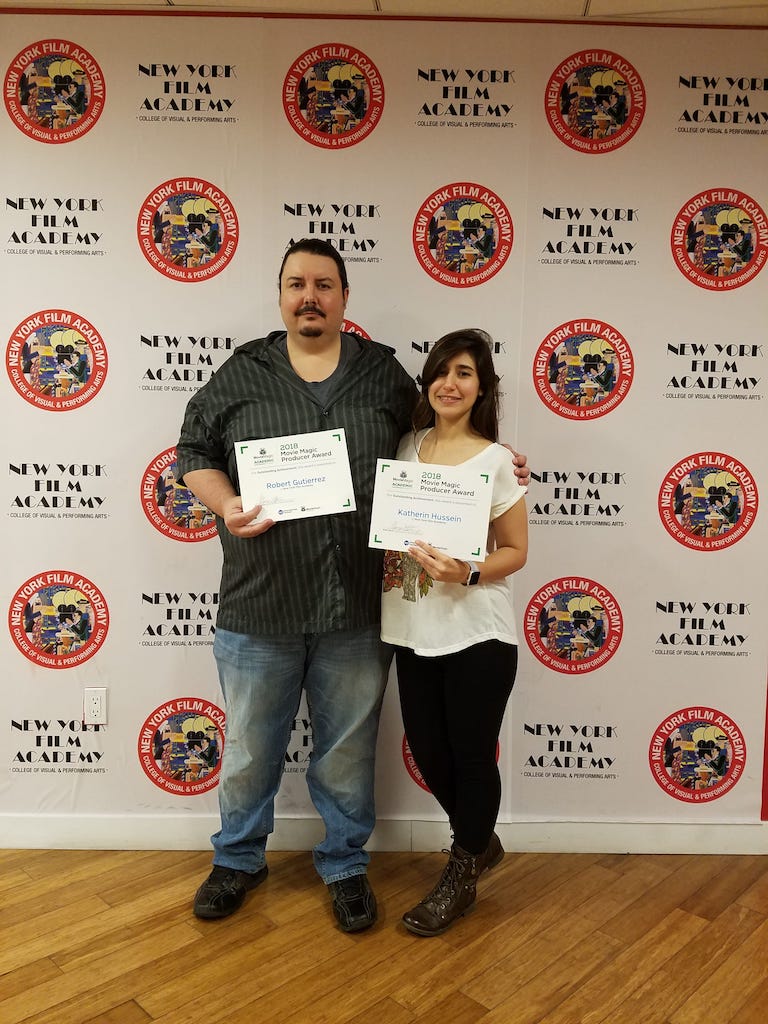
New York Film Academy’s Katherin Hussein and Robert (Bobby) Gutierrez are the most recent recipients of Entertainment Partners’ Movie Magic Scholarship Producer Award. The scholarship is sponsored by Movie Magic, a software program for production professionals. Both students come from the Spring ’16 MFA Filmmaking Feature Track.
Katherin Hussein is a Spring ’16 MFA Filmmaking graduate at New York Film Academy’s Los Angeles campus. Originally hailing from Venezuela, Katherin is currently in development on her first feature film, The Unfinished. The film is about a recently orphaned twelve-year-old who girl who must stop a monster before it destroys her mother’s legacy. The monster is from an unfinished painting.
With this award, Katherin is recognized for her outstanding development effort on The Unfinished, including the creation of a beautifully crafted and visually powerful proof of concept to support her fundraising efforts.
Robert (Bobby) Gutierrez is a Spring ’16 MFA Filmmaking graduate at New York Film Academy’s Los Angeles campus. A native of Wyoming, Bobby has an extensive background as both an actor and director on stage and in films. He is in development on his film directorial debut, Safe, about a death row inmate who relives his time spent with a wild young couple on a deadly crime spree across the badlands of Montana.
Bobby is recognized for his outstanding development of the film’s script, adapted from a play by Ron Fitzgerald. A consistently excellent and ambitious student, he is a very worthy recipient of this recognition.
The New York Film Academy congratulates Katherin and Bobby on their well-deserved awards and looks forward to the completion of their feature films and to all their future successes!
Interested in studying filmmaking? Check out more information on New York Film Academy’s programs here.
Carolina Sosa graduated in 2017 from the New York Film Academy (NYFA) Los Angeles campus with a Master of Fine Arts in Documentary. Since then she’s been hard at work on Trumphobia, a feature-length film that originally started as her thesis documentary.
Carolina is one of many notable alumni and faculty to hail from the NYFA Documentary School, including instructor Kristen Nutile, who edited the Oscar-, Peabody-, and Emmy-nominated Heroin(e) on Netflix, and RBG’s director of photography and NYFA Documentary professor Claudia Raschke. Ranked as a top documentary filmmaking school for the past eight years, holding a coveted spot on The Independent Magazine’s list of the Top 10 Academic Programs for Documentary Filmmakers, the New York Film Academy’s documentary program aims to prepare students for the practical challenges, opportunities, and realities that arise when creating documentary films.
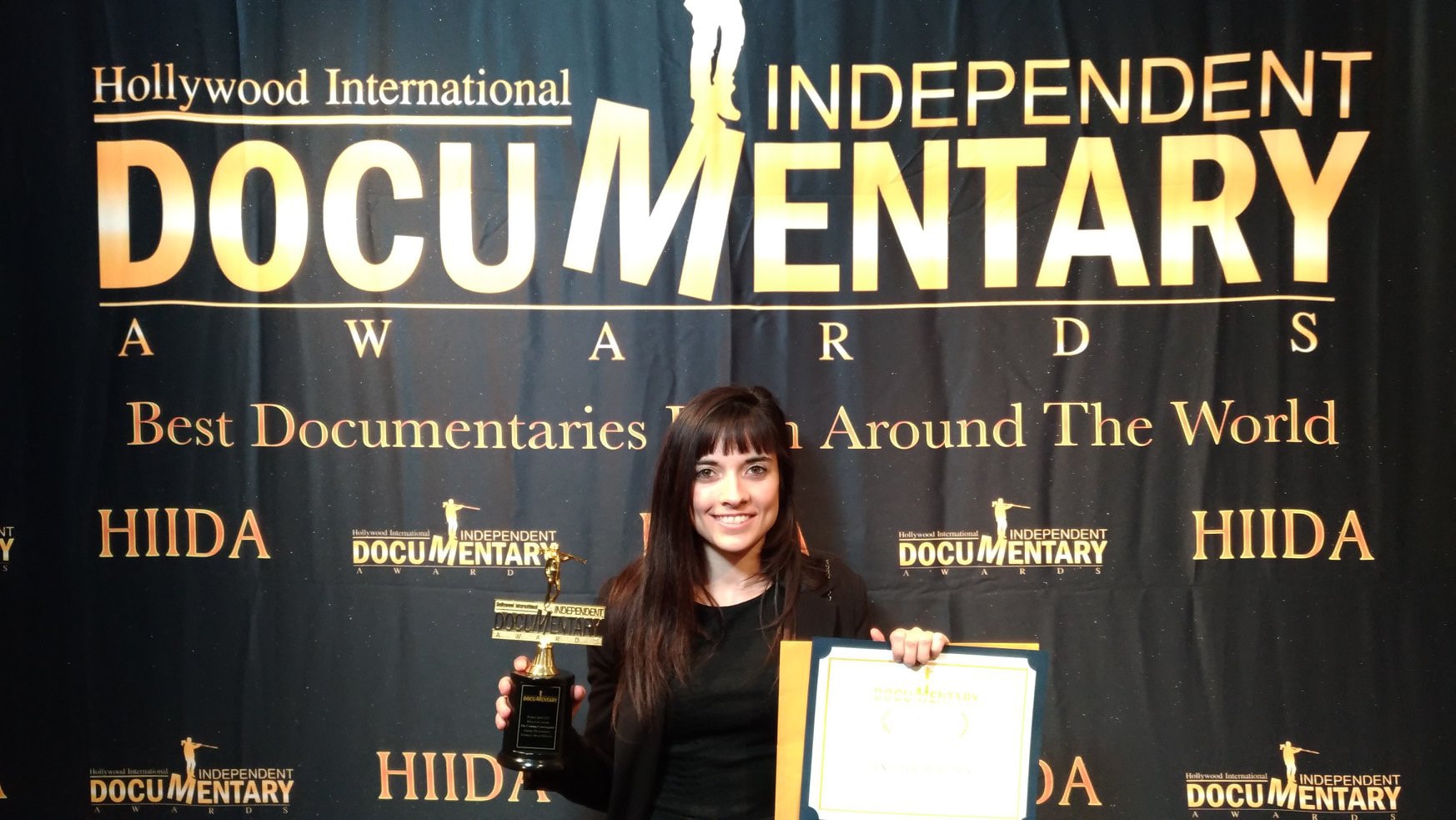
Only 27, Carolina has already amassed several awards and honors for her work in documentary filmmaking. She received the award for Best Film at the Los Angeles Television, Script, and Film Festival and the Award of Excellence from the Hollywood International Independent Documentary Awards for her documentary short Exit the shelter. She was also invited by CinemaFest 2014 to adapt movies for the blind and deaf after directing Okurelo Cine in 2013.
It was no surprise, then, when NYFA alum Carolina Sosa recently received a $10,000 grant from the Rogovy Foundation, an organization that works “to build a more enlightened and harmonious planet,” and supplies grants to documentaries and other “highly targeted projects which will have a measurable impact.”
Recently, Carolina spoke with the New York Film Academy about her film Trumphobia, her time at NYFA, and other projects she is currently working on:
New York Film Academy (NYFA): First, can you tell us a bit about yourself and what brought you to New York Film Academy?
Carolina Sosa (CS): I’m from Uruguay, I’m 27 years old, and I got a Fulbright scholarship to study a master’s degree in documentary filmmaking, and NYFA was the school that gave me the highest tuition award from all the schools that I have applied; also the program was located in Los Angeles.
NYFA: Why have you decided to focus on documentary filmmaking?
CS: I like to use art as a tool for change. I believe that reality is often more fascinating than fiction, and I want to dedicate my life to tell true stories that inspire, promote justice, and can make a difference in this world. And also, because I love to travel and share my view with others.
CS: Trumphobia: what both sides fear (tentative title) is a feature documentary about the political division in the United States and how Donald J. Trump’s rhetoric increased that division with the help of the mainstream media. On one side, he gave strength and safety to his supporters and, on the other side, he imposed fear and anger on his opponents, which led to major confrontations, protests, and counter-protests across the country. Trumphobia analyzes the reasons for the political division, provides a moving description of Trump’s supporters along with the people who are most affected by Trump’s policies, and proposes empathy and compassion for all as a possible solution to the turmoil. The documentary has the participation of the Green Party presidential candidate Jill Stein, New York Senator Michael Gianaris, Berkeley professor of cognitive science and linguistics George Lakoff, Ph.D., professor of psychology and social behavior Peter H. Ditto, six hate crime victims and witnesses from both sides, representatives of major organizations, many of Trump’s supporters and opponents, and includes footage from more than thirteen debates, marches, and protests across six states.
NYFA: What inspired you to make Trumphobia?
CS: The documentary started as part of my master’s thesis. I was looking for a subject matter right when Trump got elected, and I thought that making a documentary about a current topic that affected millions of people was worth my long work. Especially because I wanted to portray both sides of the story — his supporters and opponents — and I wasn’t seeing much about the right side on the media, so I wanted to be one of the first ones to make a documentary that actually tried to be objective when it comes to politics. The good thing is that most of the crew was international, so we all had an outsider perspective that allowed us to listen without immediately judging. And the one thing that got my attention the most was the articles about hate crimes related to the election and the violent confrontations between people, so it’s not about Trump’s policies — it’s about critical thinking and how moral values determine our worldview. I believe we are all biased, and we need to be more empathetic with others to overcome our differences.
CS: Thanks to NYFA, I became a member of the International Documentary Association and, through their website, I searched for all the grants that I could apply and that’s how we heard about the Rogovy Foundation. We have applied for more than ten different grants, it’s a long and tedious job to prepare all the documents and materials for each grant, but it was worth it because we got their Miller / Packan Film Fund for the postproduction of our film, and they have been very supportive. Moreover, the IDA accepted our project and they became our fiscal sponsor, so that’s also good news.
NYFA: That’s great news! What are your plans for Trumphobia?
CS: For the thesis, I made the first 20 minutes of the film and, since September 2017 when I graduated, I have been working on the 90-minute version. It took me a lot of time because I started working as an editor right after school, and so I have been very busy. But I have never given up, even without money or with a full-time team, I truly believe in the message of the movie and I’m very proud of the result so far, thus we are still working on it. We shot the movie during a year almost and there is always a new thing with Trump, so it takes a lot of work to edit many hours of footage and do constant research, but we are almost there. We are planning to have a final cut that we can send to the Sundance Film Festival in September, and then really finish the movie in October. After that, we will send it to more festivals and try to find online distribution immediately.
NYFA: What other projects are you working on or do you plan to work on?
CS: For the 1-year project of the school, GuangLi Zhu and I made a short documentary about the killing of pets in animal shelters, called Exit the shelter, and I have been promoting that short as well. We received the award of Best Film at the Los Angeles Television, Script and Film Festival and an Award of Excellence at the Hollywood International Independent Documentary Awards, and we are still waiting to see other festivals’ results. GuangLi was one of my classmates and he is back in China now, but I have partnered with the LA Animal Services and other shelters, so we recently did a screening of the short and a fundraising event to help the pets in two different shelters. Meanwhile, I work as an editor, producer, and cinematographer at Dame Dash Studios; right now I’m editing a documentary about a trip to China for them, but I’m also working as a camerawoman for Harrison Engle (former president of IDA) for one of his documentaries. And every once in a while, I work freelance on other small projects. I’m a workaholic, I work eight hours (or more) at my job every day, then I get home and I work four hours on Trumphobia, and on the weekends it’s all about Trumphobia.
NYFA: What did you learn at NYFA that you applied directly to your work on Trumphobia, or your work in general?
CS: The documentary department at NYFA was very helpful with my project Trumphobia. Since the topic was so urgent, they allowed me to borrow the equipment in November 2016, while all my other classmates shot their thesis in June 2017. I pitched the project when Trump got elected and I asked them if I could travel across the U.S. in the winter holidays so I can shoot what I needed, and with almost no bureaucracy involved they said yes, so I’m always thankful for that. They gave me the freedom to do what I wanted and the resources that I needed when I asked for it, because I shot through the whole year several times and they never said no. I can imagine that this could have been very different in other schools. NYFA gave me the tools that I needed to feel prepared to shoot across the country with little resources.
NYFA: What advice would you give to students just starting out at NYFA?
CS: My advice to new students is to think big, work hard, go to all the events, conferences, and workshops that you can (even the ones that are not related to your degree); go out, meet people, build your network, and apply to as many grants, scholarships, and festivals that you can — you never know who you are going to meet, what you are going to receive, and what you are going to learn.
The New York Film Academy congratulates Carolina Sosa on her recent grant and looks forward to the completion and distribution of Trumphobia and Carolina’s continued career!
Interested in learning documentary filmmaking? Check out more information on New York Film Academy’s programs here!
On July 27, the six graduates of the 1-Week Game Design Camp celebrated a week of hard work and education with their very own Demo Night, showing off the different video games they had worked on putting together. The event was held at the New York Film Academy’s Los Angeles campus.
The five-day course the campers completed is intensive, especially for students as young as these, and covers every step of the process to design and build an original video game. “During this week,” stated Game Design Instructor Jeb Havens, “we worked on prototyping, coding, creating a story behind the game… and they came up with the games you see here.”
Along the way, the students learned how the video games they grew up playing really work, and gained an appreciation for both the craft and the art of game design. The course taught them how to use the software Unity so they could each construct their own game.
The students’ parents and relatives were invited to attend the Demo Night, along with counselors and campers from other courses, including Filmmaking, Photography, and Acting. Six computer stations were set up, each with one of the students’ games. Everyone invited had a chance to play the games.
Some of the games were quite hard to beat, a testament to the hard work and design that went into their assembling. Parents were thrilled to be challenged by their kids’ skillfully crafted games. Many players kept trying over and over to beat the trickier games. The environment was energetic and fun all throughout the night.
“I’m very impressed with what these students created in such a short amount of time,” Havens continued. “Building a game takes months and months of work, and what [the students] did here in only five days is impressive!”
At the end of the night, and week-long course, each student left camp with a copy of their game, so they can have other friends and family members play it back home. The brief but intensive and hands-on Game Design camp can be a stepping stone to longer, more advanced programs in game coding and design.
The New York Film Academy congratulates the 1-Week Game Design Camp students on their hard work and well-designed, challenging, fun, new games.
Interested in learning game design? Check out more information on New York Film Academy’s programs here!
With the 70th Primetime Emmy Awards around the corner, the entertainment industry is continuing the conversation around inclusion and equality of opportunities, with diversity in the spotlight throughout nomination categories. One major milestone came when Sandra Oh made history this year as the first Asian actress to be nominated for an Emmy in the category of Outstanding Lead Actress in a Drama Series for her riveting performance in Killing Eve.
How can you work towards inclusion in the entertainment industry? The New York Film Academy has put together this simple toolkit to help you navigate the road ahead:
RAISE AWARENESS
The first step toward equality is starting the conversation. Raising awareness of inequality and advocating for inclusion makes a difference, and there are numbers to prove it!
The Geena Davis Institute on Gender in Media has found that the entertainment industry is listening. In a recent pulse-check, they found that 68% of content executives who had received their data had gone on to use what they learned from the institute by changing two or more projects in development — which translates directly to jobs for underrepresented groups.
If Geena Davis and I Iook unhappy it’s because we’re talking about why women are so underrepresented in movies, TV, even commercials. Her work at @GDIGM is creating a factual record, and making change. Many thanks to Geena for joining us @NatGeo to push us to do better! pic.twitter.com/VEK4HTXrAZ
On your project, in your company, in your classroom, you can commit to a specific goal to increase inclusion, whether it’s making sure someone who is usually silent has a chance to speak or committing to an all-female film crew, as NYFA alum Assem Yedgey recently did. If you see that inclusion is not happening in your workplace, school, or project, speak up! Make sure women and minorities are represented, whether on screen or behind-the-scenes.
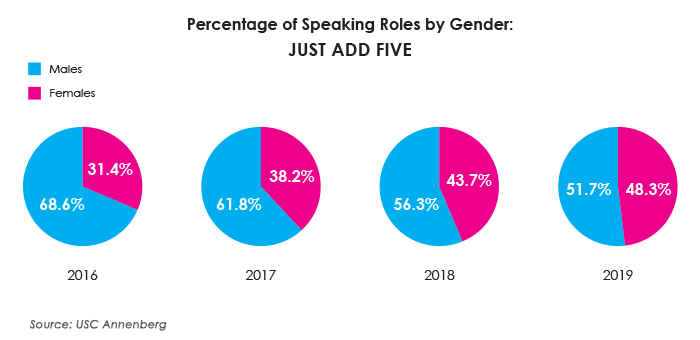
The facts show that women continue to be underrepresented in the film industry. Yet USC Annenberg says there’s a very easy way for content creators to achieve equality for representation of women on screen: “just add five female speaking characters to every film.”
By their research, just adding five speaking female roles to a project will bring us to near-equality of gender representation in just three years!
Why does this matter? The Geena Davis Institute on Gender in Media found that increasing representation of girls and women on-screen, even in supporting and background roles, can have a huge social effect: “90% of women globally feel that female role models in film or TV are important, 61% said female role models in film and TV have been influential in their lives and 58% said that women have been inspired to be more ambitious or assertive.”
But this doesn’t apply only to women.
A few weeks ago I was so emotional after watching #PoseFX. I said to myself "Now there are no excuses for not hiring trans actors for trans roles & as leads in films and TV. All this talent is proof that we can deliver & carry shows. We are talented, trained professional & ready
This “just add 5” rule of thumb can apply to creating speaking roles and representation for other marginalized groups, from underrepresented ethnic minorities to the LGBTQI+ community, from actors with diverse bodies to actors with disabilities.
SUPPORT & BUY TICKETS FOR MEDIA THAT FEATURES FEMALES, UNDERREPRESENTED MINORITIES, LGBTQI+ & PEOPLE WITH DISABILITIES
— WomenFilmmakersofColor (@WomenFilmOfColr) July 21, 2018
Another wonderful milestone in this year’s Primetime Emmys race is the cultural diversity represented by various nominees, from shows (Atlanta, black-ish, Westworld, Insecure, This is Us, Killing Eve), to actors (Issa Rae, Sandra Oh, Donald Glover, Zazie Beetz, Viola Davis, Brian Tyree Henry, Tony Shalhoub, Thandie Newton, Leslie Jones, John Legend, Regina King, and Antonio Banderas, to name a few).
We’re seeing breakthroughs for diversity in other corners of the industry, too. The Venice Film Festival’s Venice Days announced a lineup of films that are 50% directed by women. Nicole Maines will become TV’s first-ever transgender superhero in the fourth season of the CW’s Supergirl. And Shonda Rhimes’ Shondaland is developing a slew of original content with Netflix, tackling such topics as 20th century African-Americans fleeing Jim Crow and sexual harassment in Silicon valley.
Nicole Maines: "I haven't really wrapped my head around being a superhero, first of all, and then also being the first trans superhero on television. It feels fitting to say that with great power comes great responsibility" https://t.co/xsvh5qAJZ3pic.twitter.com/MyolDI5ABk
Even those of us not in the running for an Emmy can work to make sure we’re continuing to see stories of diversity and underrepresented minorities on screen, by putting our money behind projects that support representation and inclusion. Stream, buy tickets for, and share inclusive series and films.
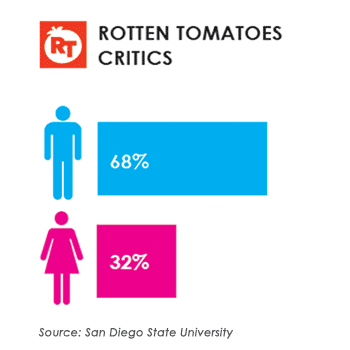
Not everybody is a critic, it turns out: a study titled Thumbs Down: Film Critics and Gender, and Why It Matterspublished recently by San Diego State University shows that male film critics in general outnumber female critics 2-to-1.
Variety quotes study author Martha Lauze as stating, “These gender imbalances matter because they impact the visibility of films with female protagonists and/or women directors, as well as the nature of reviews.”
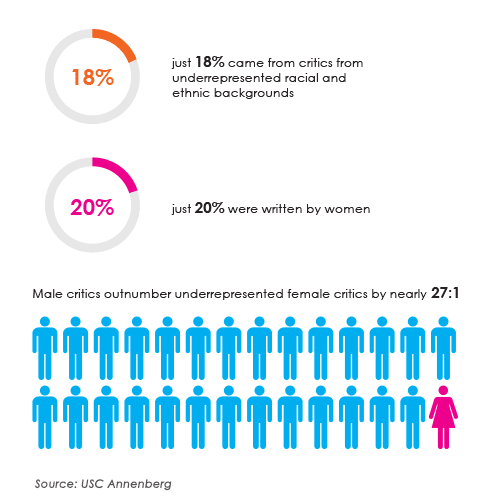
A similar study from USC Annenberg showed that film criticism, like other aspects of the entertainment industry, is still largely dominated by white males. Of the top 19,559 critical reviews of the top 100-grossing films of last year:
How can you work towards inclusion in criticism? Pay attention to the voices of the critics you’re reading and relying upon, and seek out criticism penned by women and minorities. (And why not lend your own voice to the conversation by reviewing your favorite inclusive films and series yourself?)
TELL YOUR STORY
Last but not least, you can support inclusion by creating your own original content, and telling your own stories. By raising your own voice and making your own art, you can contribute to the diversity and representation of the wider arts community.
Learn the skills you need to create your own original content at the New York Film Academy (NYFA).
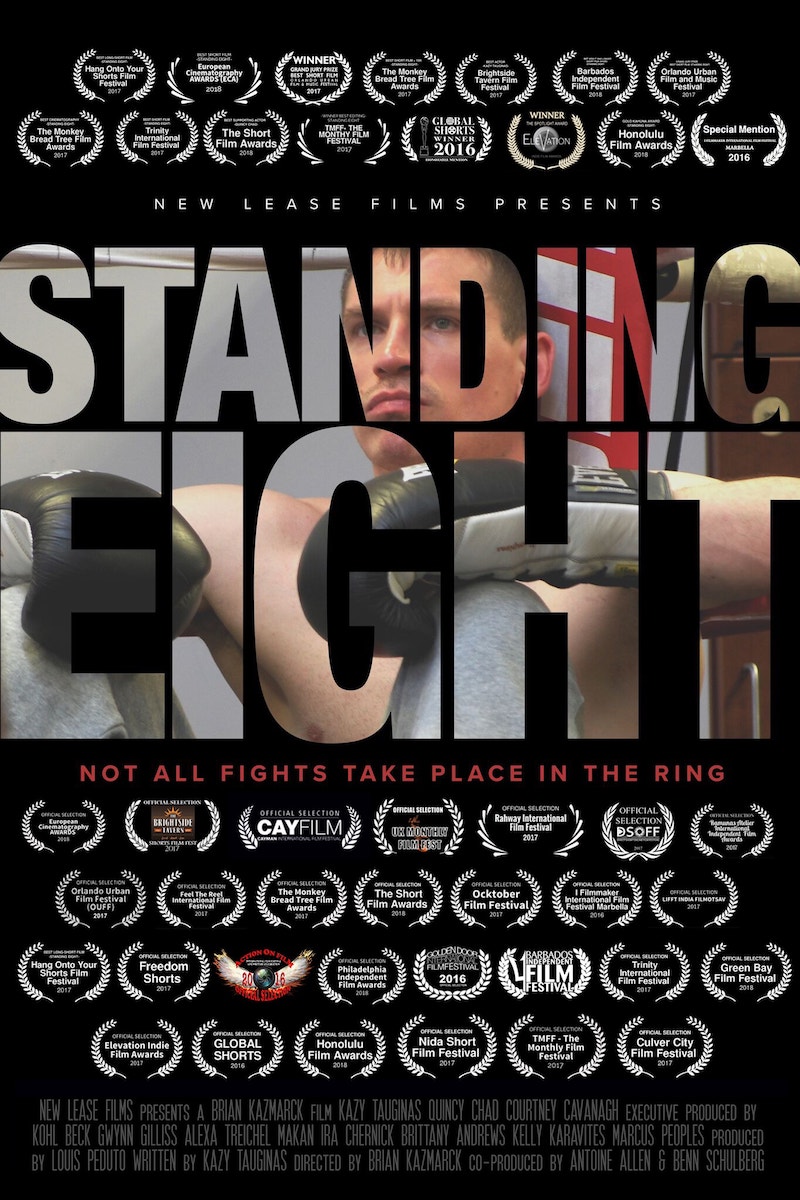
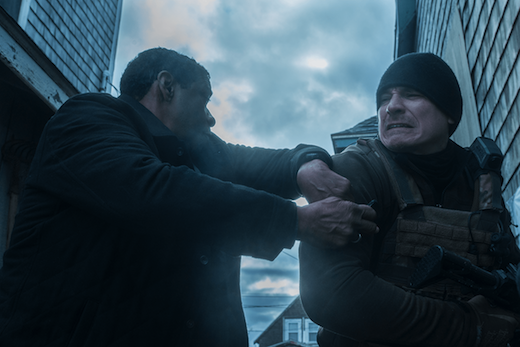
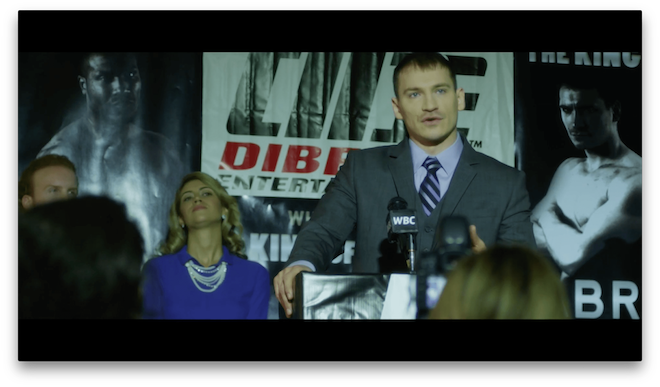
Kazy Tauginas is an artist who wears many hats. He’s an actor, having appeared in television shows such as Sneaky Pete, Blindspot, Person of Interest, Turn, Blue Bloods, and Law & Order: SVU, and blockbuster films including John Wick and The Equalizer 2. He’s also a producer and writer, having worked on an award-winning and very personal short film, Standing Eight.
Tauginas grew up outside of Chicago, and was a restauranteur and Golden Gloves boxer. In 2009, he decided to follow his lifelong passion in writing and acting, and attended the 1-Year Acting for Film Conservatory at the New York Film Academy’s New York City campus. He has been performing steadily since graduating, which isn’t just a testament to his talents. Taguinas is also extremely committed to his art, putting everything he has into every role. “No matter what the project,” he says, “I want to always be the best me I can be.”
Tauginas can currently be seen in theaters with Denzel Washington in the follow-up to The Equalizer, directed by Antoine Fuqua. He recently spoke with the New York Film Academy about his time on set, his award-winning film Standing Eight, and the continuing experiences that make him the storyteller he is today:
Photo Credit: Kazy Tauginas
New York Film Academy (NYFA): First off, can you tell us a bit about yourself and what brought you to New York Film Academy?
Kazy Tauginas (KT): I grew up just outside of Chicago. Attended the University of Delaware for undergrad. After college, I ended up running a 24-hour diner for 4+ years. When my lease was up, and of no fault of my own, I was forced to walk away from the restaurant business. This event brought me to a fork in the road career-wise. I decided to follow my heart and go after my true dream, which was acting and writing. That life-changing decision led me to NYFA, where I graduated from the Acting for Film Conservatory program in August 2009.
NYFA: Why acting? What inspires you most about this craft, and what stories are you most passionate about telling?
KT: I’ve always had an affinity for film since I was a child. I can probably trace back most of my notable childhood events to the films that coincided with them that particular year. I was also an only child, so I had to keep myself entertained. I would create epic adventures for my G.I. Joes. I would run around the backyard pretending I was Indiana Jones. It wasn’t until later in life that I realized I actually enjoyed performing.
Photo Credit: Kazy Tauginas
What appeals most to me about acting is the ability to step into the shoes of others. Being able to experience different human emotions and walk away (mostly unscathed). I love creating characters. I love being able to surprise people. When I was younger, I always enjoyed a good action movie. But I feel now, as I’ve matured, I prefer films with strong performances — the genre doesn’t matter. If the performances in the films are rooted in truth, I’m entertained. At the end of the day, I just want to be truthful on screen and take people on an emotional ride.
NYFA: You’verecently produced a short film called Standing Eight. Can you talk about this project, and what it took for you to make this film?
KT:Standing Eight is an award-winning dramatic short film about a professional boxer who is forced to retire and contend with his life outside of the ring after being diagnosed with systemic lupus. It’s a story about a man who is trying to face the fact that he’s been beaten by a disease. The conflict only escalates when his former would-be opponent begins trolling him.
This project was a labor of love. Through and through. My inspiration came from my mother, who has been fighting Systemic Lupus Nephritis since before I was born. Lupus affects millions of people around the globe, yet so few people even know what the disease actually does to the body. (It’s an autoimmune disease wherein the body’s own immune system attacks healthy organs and tissues.) Louis Peduto, Brian Kazmarck, and I made a hard commitment to work with each other in a Producer, Director, Writer/Actor capacity. I wrote the first draft of the film at the end of 2014. From that point, we went through multiple drafts of the screenplay, two successful Kickstarter campaigns (one for actual production, one for post-production). Principal, post, festival submissions, and finally an incredibly successful indie festival run. The film was an Official Selection at 28 festivals worldwide. We were nominated for 22 various awards. In the end, we took home 11 different festival awards and 4 Honorable Mentions. I think the film is accomplishing what I originally set out to do, which was raise lupus awareness. Just recently I was contacted by the Lupus Foundation of America, and we’re going to be working together to promote the release of Standing Eight on Amazon.
NYFA: That’s incredible, congratulations. You’re currently co-starring in the Denzel Washington film The Equalizer 2. What was the casting process like for that?
KT: My manager put together a push. Betty Mae Casting agreed to give me an opportunity, which I was and am eternally grateful for. We sent over a self-tape that same night. A week later I was on a plane to Boston. No callback. Straight off tape. I was told they did visit my website. (So, actors: have a website with all your materials readily available. You never know who’s looking.)
NYFA: Any fun stories or lessons learned while on set for The Equalizer 2?
KT: To be honest, the entire shoot was a blast. I was in Boston for almost three months. Shooting the climax was physically challenging, but WORTH EVERY SECOND. I worked incredibly hard with the stunt team to make sure I looked the part. I put in hours of training with the rifle. Huge shoutout to Jeff Dashnaw and Mick Gould. Jeff was the stunt coordinator and put together an incredible team. I’m sure Mick got sick of all my questions at some point, but I’m a perfectionist. I was hellbent on not being the weakest link.
My favorite moment was definitely when I ad-libbed a bunch of lines and Antoine Fuqua absolutely loved it. He jumped out of the van, grabbed my shirt, and said “That’s what I’m talking about!!!” Having a director of that caliber — especially one who I’ve been a fan of for so many years — to give such positive feedback was overwhelming. It was one of those moments in life that just reaffirms that I’m on the right path.
Photo Credit: Kazy Tauginas
NYFA: How were your experiences different between Standing Eight and The Equalizer 2?
KT: On Equalizer, my only function was to act. So it was relatively simple. Everything was laid out for me and all I had to do was bring my A-game. When you’re an actor, I tend to think of myself as one color on the canvas. When you’re a filmmaker, you’re a painter. On Equalizer I was paint. On Standing Eight, I was more of a painter. Standing Eight was a challenge because I had to wear so many different hats. Luckily, by the time we went to principal photography we had ironed out most of the producing and writing kinks, and I was able to concentrate on my performance. So my experience on Standing Eight was more complex. But to be honest, they were both incredibly rewarding, just on different levels.
NYFA: Was there anything your experiences on Standing Eight and The Equalizer 2 had in common?
KT: Absolutely. My commitment. Whenever I put my name on anything, I put my heart and soul into it. As an actor, Equalizer was the opportunity of a lifetime and I treated it as such. I felt exactly the same on Standing Eight. I wanted my painting to be perfect. No matter what the project, I want to always be the best me I can be.
Photo Credit: Sony
NYFA: What did you learn at NYFA that you applied directly to your work on either Standing Eight or The Equalizer 2?
KT: What didn’t I use? Everything you learn in acting school becomes applicable at different points in your career.
NYFA: You’re currently working on the film Invisible Love, produced by NYFA Chair of Broadcast Journalism and Emmy Award-winning Bill Einreinhofer. What was the casting process for Invisible Love?
KT: [Former NYFA Chair of Acting for Film] Peter Allen Stone and I are connected on social media and he’s been following my journey since I left school. My understanding is that Bill mentioned something to him about the project he was producing and needing talent. Peter threw my name out there. It just worked out splendidly. I auditioned for them. Apparently, I did well, so the offer came in. I love the character they want me to play. I’m really looking forward to working on it.
NYFA: What’s next for you? Any upcoming projects you can tell us about?
KT:I’m currently working on a huge film for a streaming service with an incredibly talented cast. Unfortunately, that’s all I’m allowed to say. Invisible Love is supposed to go into production in the winter. As far as producing, I’m working on putting together a feature film with very similar elements as Standing Eight. It’s my dream to put lupus into mainstream dialogue so we can actually make finding a cure a reality.
Photo Credit: Kazy Tauginas
NYFA: Do you have any favorite NYFA moments from your time studying with us?
KT: I have very fond memories of my experiences at NYFA. So I took full advantage of the program while I was there. I think I ended up doing about 50 student films by the time I graduated. I went to every Q&A — got to meet Melissa Leo and Christopher Plummer. I made lifelong friends with some of my classmates and teachers. I really did have wonderful teachers. Lea Brandenburg engrained in my brain that when you’re on camera, you keep it simple. I remember by breakthrough in learning how to cry in Peter Allen Stone’s voice and movement class. Dressing in drag as my activity in Meisner class. I did that because James Price said that “manly men” like me would never do something like drag. Challenge accepted, sir. Bela Grushka was always so encouraging of my work.
Our thesis film, which was directed by Victor Verhaeghe, was something my entire class was so proud of. We worked incredibly hard and made phone calls during our lunch break and sent out postcards to every single agent and manager in NYC to invite them to our screening. I really learned so much from that program. I feel like by the time I graduated, I was a different person.
NYFA: What advice would you give to students just starting out at NYFA?
KT: Take advantage of everything NYFA has to offer. Go to workshops. Screenings. Talks with industry people. Meet filmmaking students. Meet writing students. Go to class prepared. Study. Shoot. Act. Apply everything you learn while you’re still in school. Find the other people who are as hungry as you are. Let your inhibitions go. LEARN. Be humble. You have to be a sponge to learn. Focus on the task at hand. Become the best you that you can be.
In 2009, I fully committed to being a creative. If I can do it, you can do it.
The New York Film Academy thanks Kazy Tauginas for his generous time and thoughtful responses, and congratulates him on his current success. We look forward to seeing what the future brings for Kazy!
If you are interested in learning Acting for Film at the New York Film Academy, you can find more information on our programs here.
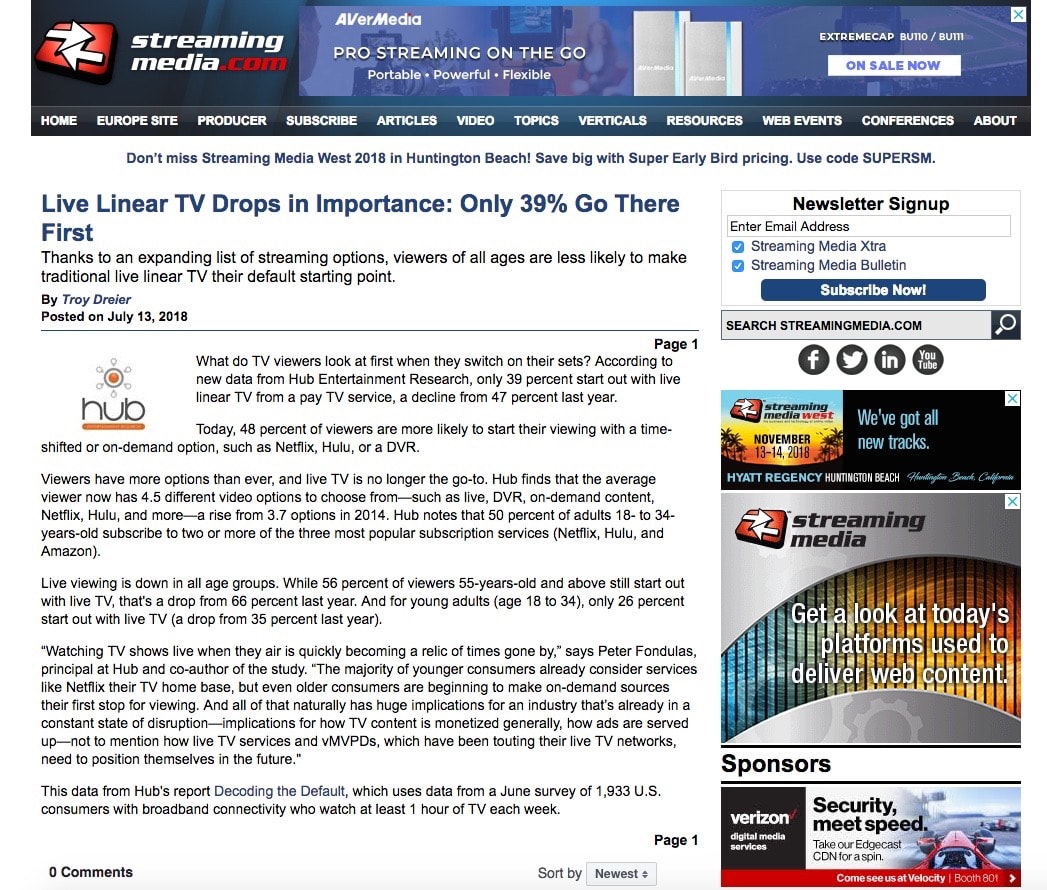
Inevitably, when I am introduced as the Chair of the New York Film Academy (NYFA) Broadcast Journalism department, I’ll be asked whether broadcast journalism is in fact “relevant” anymore. There are so many digital alternatives these days that traditional “linear” television is obviously in decline. Recently, Streaming Media — a trade industry conference — posted a story attesting to current trends.
Yet this is precisely why the NYFA Broadcast Journalism program is skills-based. We teach our students to become electronic content creators, multimedia journalists (MMJs). In fact, it was a traditional broadcast network (NBC) that approached NYFA about starting the journalism program. (The trend was obvious a decade ago.) And while many of our graduates work at local TV stations and national networks, an equal or larger number of them are at non-traditional outlets.
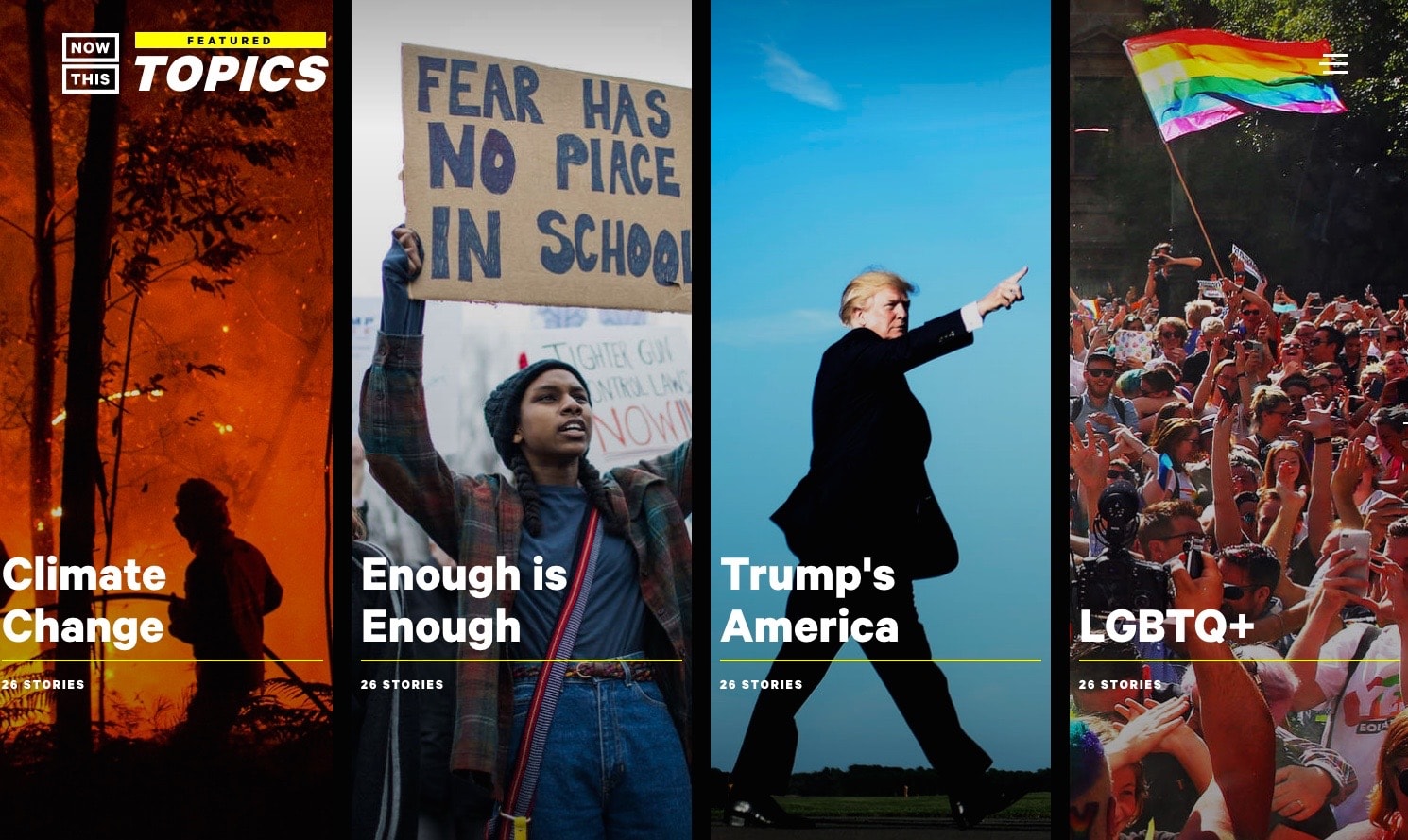
There are also entirely new players, such as Now This. They started with a straightforward premise: people increasingly get their news on their smart phones, so they created a service tailored to that group. Now Thistraces its beginnings to The Huffington Post, a first-generation online news provider.
When the HuffPost moved into video, they followed the example of cable news network MSNBC. It was a mistake. While MSNBC thrives on cable, HuffPost TV languished and died in the digital marketplace. (BTW, the Fall 2018 1-year Broadcast Journalism students will be visiting MSNBC in October…)
This is, in fact, a “golden era” for broadcast journalism. The digital marketplace loves short-form, non-fiction video. NYFA Broadcast Journalism grads create short-form, non-fiction video.
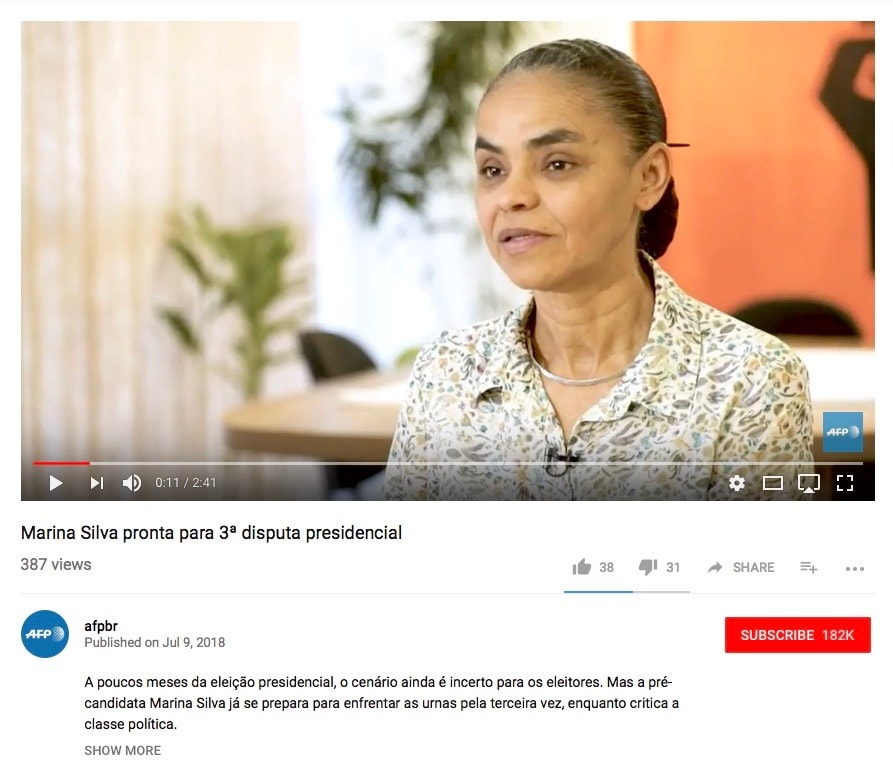
NYFA alum Suzane de Oliveira works for Agence France-Presse in Brazil, where she writes, narrates, and edits online news stories. Recently she put together a story about Marina Silva and her third attempt to be elected president of Brazil. It is a great story to watch because the field producer apparently gave Suzane little if any cover footage (b-roll) to work with. Talk about being resourceful!
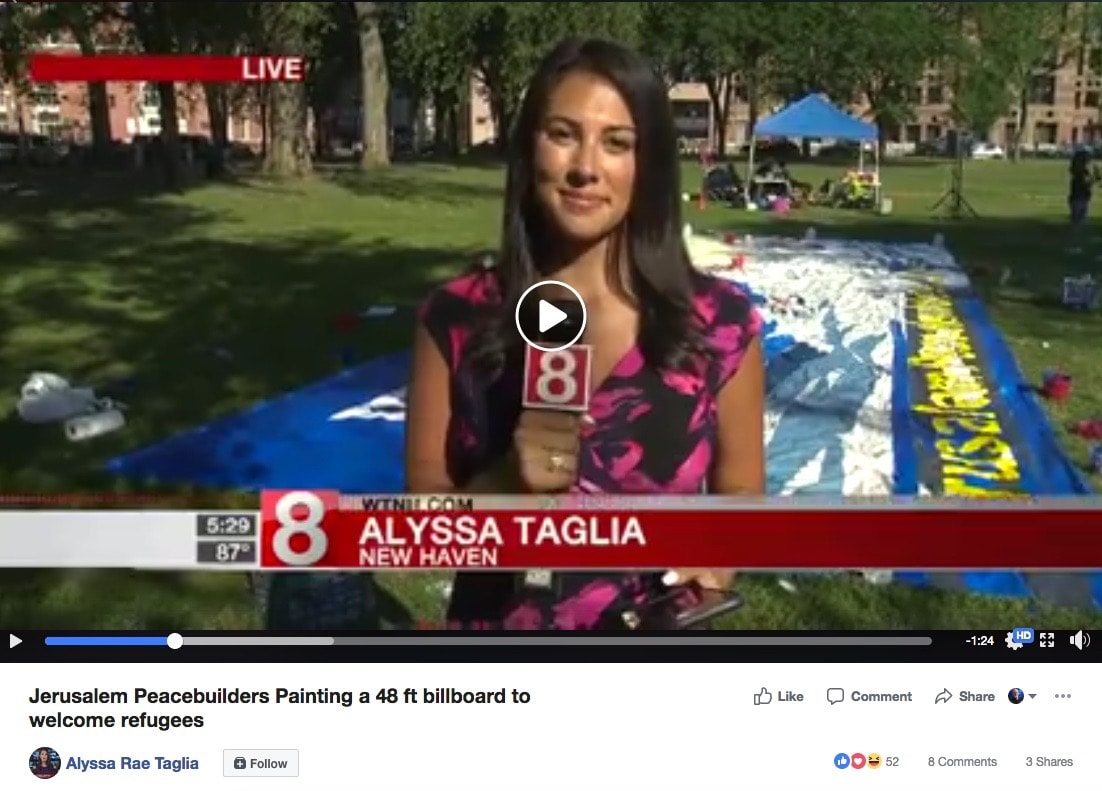
NYFA Broadcast Journalism graduate Alyssa Taglia is being seen on-air (and on-line) more and more at WNHT in Connecticut. That includes doing “live shots,” which is the ultimate test for a field reporter. You’re going “straight to air,” so there is no margin for error. I love her recent story about a group of visiting Israeli teens who, along with local teens, painted a “welcome refugees” banner big enough for drivers on an Interstate highway to see…
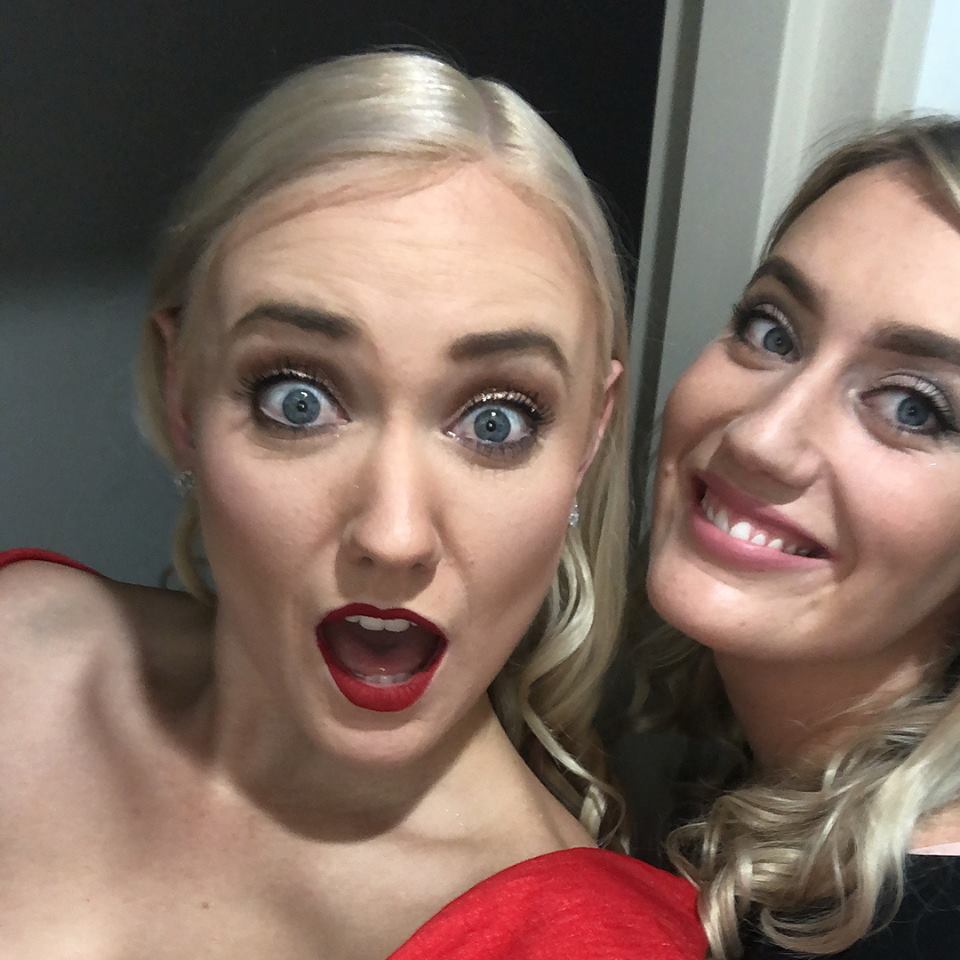
Meanwhile, in the Southern Hemisphere, NYFA grad and always photogenic Bryanna Reynolds continues to shake up the Australian media scene, and seems to be having a great time doing it. (That’s her on the left, with her sister, in the picture below.)
ACT I of the @helpmann_awards … A lovely evening celebrating so many wonderfully talented people Coming up tonight is ACT II which includes the red carpet where I will be reporting Plus performances from some of Australia’s hit musicals! : @larajanephotography Special thank you to ABPublicity and Bohemian Rhapsody Club and Magazine for the invite to cover this event
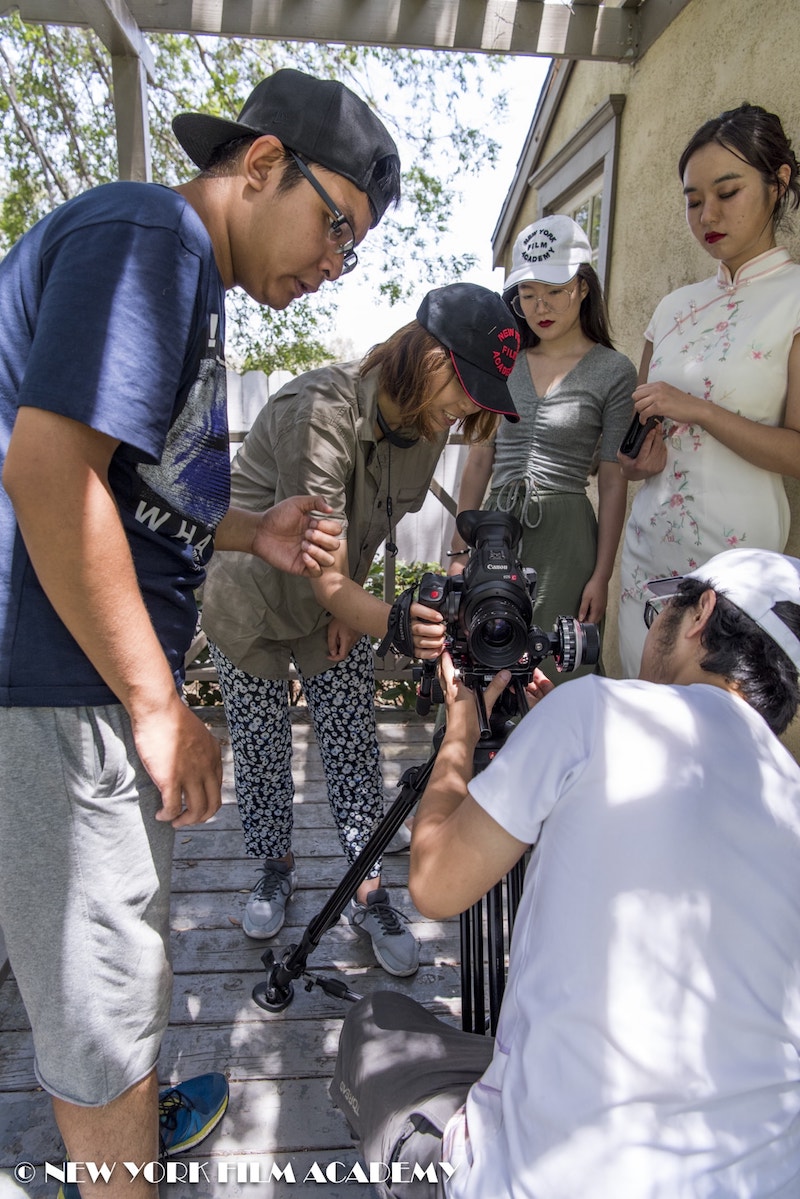
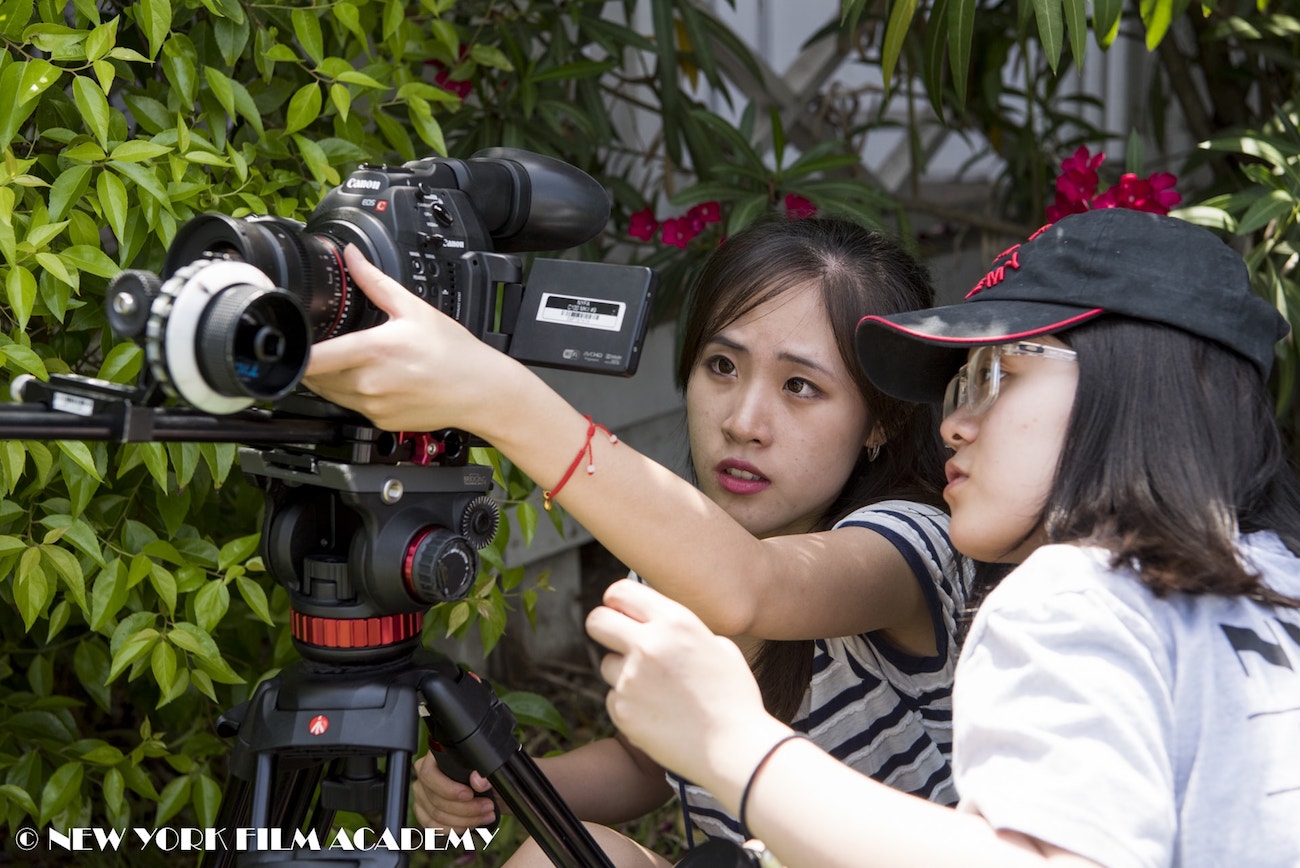
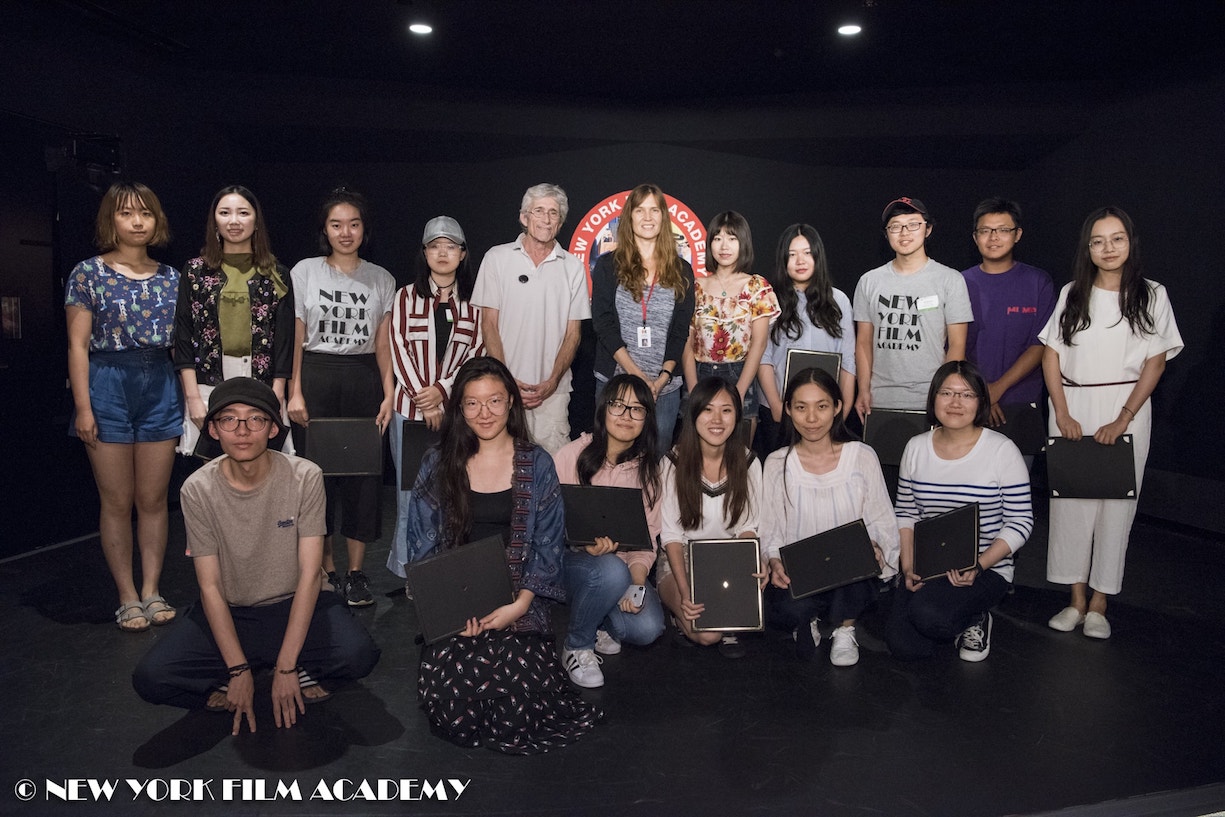
This summer, fifteen students from Beijing Normal University (BNU) completed a 2-Week Filmmaking Workshop at the New York Film Academy (NYFA) at its Los Angeles campus. Learning many of the aspects of making a movie — including directing, producing, acting, screenwriting, cinematography, and lighting — the students were prepared to edit and complete their films.
The students found the process to be exhausting, but fulfilling, and were wowed by NYFA’s access to the Universal Studios Backlot, the world-famous lot where movies such as Back to the Future, American Beauty, and Steven Spielberg’s War of the Worlds have been filmed. Universal Studios has a special relationship with NYFA. Students have the unique opportunity to spectate the importance of “studio life” to the Los Angeles area up close and first-hand, while also getting the one-of-a-kind experience of shooting on the lot themselves.
Some of the students from BNU were surprised at how much different the Hollywood film industry is from the Chinese film industry, despite many similarities. Chinese cinema has been around nearly as long as the medium of film itself, so as it evolves into the 21st century it is introducing decades of its own styles and techniques to both the global market and cultural landscape.
China’s influence and importance to the cinematic arts is exactly why the New York Film Academy (NYFA) has established a presence there, having offered local workshops in Shanghai and Beijing. This summer, NYFA is hosting two workshops in the capital city. A 4-Week Filmmaking Workshop is currently in session this July, and another 1-Week Workshop will commence later in the summer.
By coming from China to Los Angeles, the BNU students have been afforded a unique experience and process for learning the craft of filmmaking. The Beijing Normal University is a public research educational institute in China’s capital city, and, with over 20,000 current students, is one of the nation’s oldest and most prestigious universities.
The BNU students were quite complimentary of NYFA’s instructional techniques, as well as its rich and colorful aesthetic. After the two-week program, which lasted from July 9 – July 20 and included producing, marketing, and publicity classes, they had learned how to successfully make their own film from start to finish, from pre-production all the way to distribution.
The BNU students screened their films at the end of the workshop. NYFA instructors were impressed with their creativity and storytelling chops. After the screening, the students remarked how touched they were by the instructors’ attention and care, as well as the comprehensive education they’d received along with hands-on experience and the lifetime memories of shooting on the Universal Studios backlot.
If you are interested in attending New York Film Academy’s filmmaking workshops, you can find more information here!
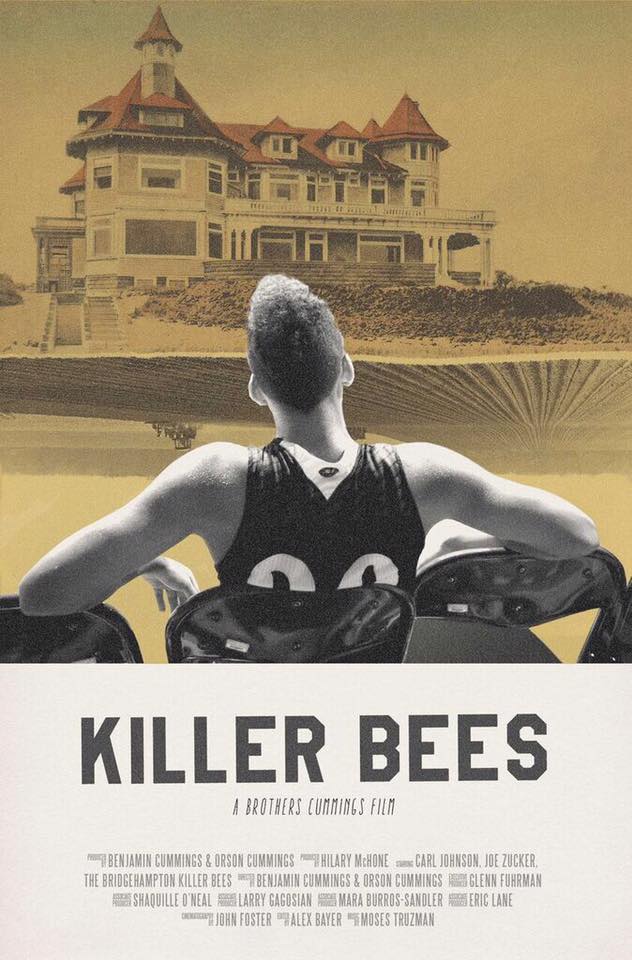
New York Film Academy (NYFA) Cinematography Instructor John Foster lensed feature-length sports documentary Killer Bees, which The New York Times raves is “…engaging and humane storytelling that uses the drama of basketball to tell a deeper story about race, class, and the excitement and heartache of young lives careening toward adulthood.”
The film traces the legacy of Bridgehampton High School’s all-star basketball team, the Killer Bees; championship winners that have united their community for decades. Yet it’s all under increasing threat, as the socio economic divide between wealthy vacationers and diverse working-class community continues to grow.
Produced by a team that includes legendary NBA star and NYFA alum Shaquille O’Neal, the film is directed by Bridgehampton natives Ben and Orson Cummings. The directors are quoted in The Hollywood Reporter as saying, “Having grown up in Bridgehampton, we’re honored to release a film that reveals another side of our hometown, known to most as the Hamptons. Releasing this film with Shaquille O’Neal as a producer has given an amazing boost to our mission to garner recognition for this legendary basketball program that provides meaning and hope for a community under siege from the threats of racism, gentrification and income inequality.”
A faculty member at NYFA’s New York City campus, John Foster is credited as the cinematographer on 37 films — including 1997 Sundance Film Festival favorite Sunday. With Killer Bees, he continues to forge a career packed with hard-hitting documentaries that tackle timely social and economic issues, from the legacy of Brown v. The Board of Education to the genocide in Darfur.
The New York Film Academy congratulates John Foster on his impeccable work!
Manage Cookie Consent
This website uses cookies to improve user experience. By using our website, you consent to all cookies in accordance with our Cookie Policy.
Functional
Always active
The technical storage or access is strictly necessary for the legitimate purpose of enabling the use of a specific service explicitly requested by the subscriber or user, or for the sole purpose of carrying out the transmission of a communication over an electronic communications network.
Preferences
The technical storage or access is necessary for the legitimate purpose of storing preferences that are not requested by the subscriber or user.
Statistics
The technical storage or access that is used exclusively for statistical purposes.The technical storage or access that is used exclusively for anonymous statistical purposes. Without a subpoena, voluntary compliance on the part of your Internet Service Provider, or additional records from a third party, information stored or retrieved for this purpose alone cannot usually be used to identify you.
Marketing
The technical storage or access is required to create user profiles to send advertising, or to track the user on a website or across several websites for similar marketing purposes.
To provide the best experiences, we use technologies like cookies to store and/or access device information. Consenting to these technologies will allow us to process data such as browsing behavior or unique IDs on this site. Not consenting or withdrawing consent, may adversely affect certain features and functions.
Functional
Always active
The technical storage or access is strictly necessary for the legitimate purpose of enabling the use of a specific service explicitly requested by the subscriber or user, or for the sole purpose of carrying out the transmission of a communication over an electronic communications network.
Preferences
The technical storage or access is necessary for the legitimate purpose of storing preferences that are not requested by the subscriber or user.
Statistics
The technical storage or access that is used exclusively for statistical purposes.The technical storage or access that is used exclusively for anonymous statistical purposes. Without a subpoena, voluntary compliance on the part of your Internet Service Provider, or additional records from a third party, information stored or retrieved for this purpose alone cannot usually be used to identify you.
Marketing
The technical storage or access is required to create user profiles to send advertising, or to track the user on a website or across several websites for similar marketing purposes.