
GW Pabst Case Study: Creating Drama Without Dialogue Through Cinematography

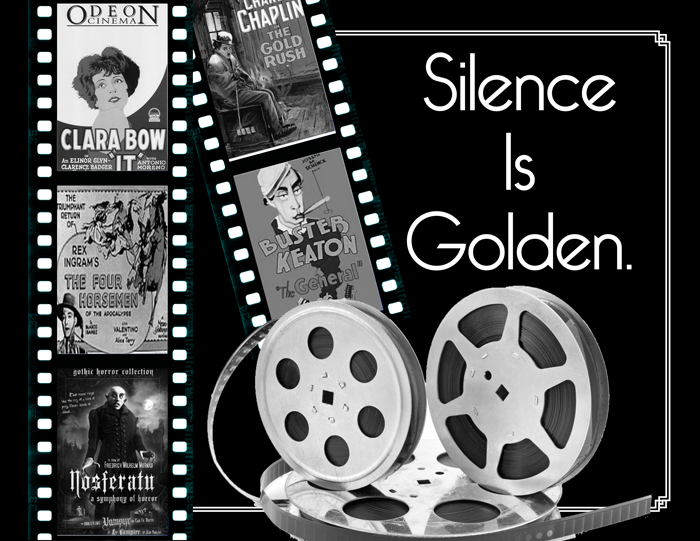
The world of silent cinema is undergoing something of a revival thanks to major motion pictures such as The Artist, and justly so. Forgotten film and stars are now being unearthed and played to a new and ready-to-engage audience.
Silence is golden silent movies

Opening Pandora’s Box

One work that is a prime example of silent film creating drama without dialogue is the European masterpiece Pandora’s Box (1929), directed by Georg Wilhelm Pabst and starring Louise Brooks in her most iconic role as the doomed seductress Lulu.

Louise Brooks in Gerog Wilhelm Pabst's Pandora Box
The film is based loosely on two plays by Franz Wedekind: Erdegiest and Die Buchse Der Pandora. For the role of Lulu, Pabst had been searching high and low. He’d settled himself on signing the great German star of the time Marlene Dietrich; however he ultimately felt that her overtly sexual nature and sultry glances would transform the film from a darkly possessed story of doomed love and destructive relationships to one of maybe a more bawdy sensibility. He had Dietrich in his office about to sign when he got the call to say Louise Brooks would star for him. At a time when dialogue as such in films did not exist apart from on slide titles, he needed a subtle, nuanced performance. Brooks gave him just that.

How The Plot Carries Itself Without Words

The first thing you will notice from watching the clip is the intensity of it. For a film that is purely relying on an eclectic score as its ‘sound,’ it draws you in enormously.

https://www.youtube.com/watch?v=tAYPygtuKZc

Brooks only has to give a little tilt of her head or the flicker of an eyelid for the audience to know what she’s thinking. Watch, as she reclines on the chaise lounge in front of her lover Dr. Ludwig Schoen (played by Fritz Kortner). There is an innate sexuality to her performance; she uses her body as her language.

https://www.youtube.com/watch?v=Qix588ihVKE

As the cinematography intercuts between the character of Lulu on the chaise longue with her lover and outside where the character of Schigolch, Lulu’s patron and father figure (Carl Goetz) is hiding while she has her tryst with Schoen. The disheveled and decrepit figure sits in a crumpled position in a complete contrast to the serenity of Lulu. His movements are short, sharp, physical and jerky; his facial expressions craggy and darkly comedic in their execution, his creepy characteristics coming through with a scrunch of his lips and in the screwing up of his eyes.

Pabst’s Techniques

Pabst was known as a psychological realist in terms of his direction techniques and cinematography. He used the camera in such a way it appeared it was an x-ray machine to get to the heart of what his characters were thinking and feeling.

https://www.youtube.com/watch?v=hJjd7V6zXVA

One of the most pertinent scenes of the film that demonstrate this is the scene in which Schoen violently shakes Lulu backstage after a dance performance. Lulu throws herself down onto a makeshift bed and starts a vicious tantrum involving limb thrashing and leg beating. Pabst got the camera to literally caress Brook’s body while she was undergoing this athletic feat of anger right from her neck down to her legs. He captures the exact moment in which she stops for a second and sneaks a backward glance at Schoen to see if he is taking notice of what she’s doing. They end up entwined with Schoen trying to stop her and she bites his hand. The scene finishes with one final flourish, a look of wicked triumph on the face of Lulu—it’s literally no more than three seconds of silence, and one facial expression but it says so much—without one single word.

Drawing Genuine Emotion From The Acting Talent

Pabst had requested that Brooks hand over a favorite suit to him for the filming and she demanded to know why, but he wouldn’t say. With a little cajoling she did so and returned to play the final scenes to find it cut to shreds, torn, burned and ripped. She was distraught. It was her own best suit and one she loved and adored. Pabst made her put it on, and she was incandescent with rage—but he’d done it for a reason, as you can see in the final scenes of the film.

https://www.youtube.com/watch?v=HM-LVf9_dso

Lulu is by now living in Victorian London in a slum. He wanted to convey as much through Brook’s body language how dreadful her situation was, ergo to do that he ripped her favorite clothes, as he knew this would make her feel dreadful, inhibited, dirty, disheveled and that this would come across in her body language as she performed. It works a treat.

Contrast And Atmosphere

The fog bound, dark, dirty atmosphere is heightened and provides a stark contrast from the earlier scenes in the film; Lulu wears diaphanous dresses, floating lighter than air, her movements the same. By the end point in the film everything feels heavy, leaden and defeatist—the clothes, the characters and even the air.

https://www.youtube.com/watch?v=Usu0ijBYG-8

Pandora’s Box not only cemented Pabst’s reputation as a director of melodrama par excellence but it also demonstrated the effect of using little or no dialogue to create tension, effect and raw emotion amongst his actors and also amongst his cinema going audience. For that we can never discount the medium of silent film in general and all it has to teach us about dramatic and cinematography techniques.

Our MFA in Cinematography program is designed for students interested in developing their creativity and honing their technical proficiency in composition, lighting, and cinematography. Learn more about our program on the MFA degree page.


7 Tips To Improve Your Vocal Performance & Health

Author: Aaron Ramey, Instructor, Musical Theatre Department, New York Film Academy

Performers often forget that our bodies are our instruments. On top of that, the voice is not just a sound that comes out of your face. It is a tiny, highly complex muscular system requiring conditioning, exercise and proper care to ensure the ability to perform at the highest possible level even under emotional and physical stress. Here are 7 tips to help get you started on the road to great vocal health — or perhaps to get you back ON the road if you’ve had recent difficulties.

7 – Don’t Be a Hero

Often we find ourselves in a position where we feel the need to save the day. We can’t possibly be sick or the whole show will just go to hell in a handbasket. We need to divorce ourselves from this concept because it can only lead to injury or, just as bad, dependence on emergency steroid treatments that should only ever be used as a last resort. If you’re getting into the run of a show and you’re finding that a particular song or scene is causing you any vocal trauma, i.e. it still hurts the next morning or your tone sounds less clear and connected than usual, see an ENT as soon as possible. More specifically, seek out an otolaryngologist (or vocologist) as they are a subset of ENTs that focus on the singing mechanism and elite levels of function. If you’re in rehearsal for a show and you’re finding that a part of your voice isn’t working as it should (maybe your head voice has disappeared or perhaps just a few notes of your mix refuse to come out) seek the help of a qualified vocal technician/therapist as soon as you can. Addressing these issues as they happen will help you identify bad habits early and hopefully avoid them in the future.

6 – Sleep

The importance of sleep cannot be overstated in regard to its effect on vocal health. Without proper sleep, our vocal mechanism doesn’t have time to recover from the previous day’s exertion – just like after a workout. If you wake up under-rested and have to dive back in to a show, rehearsal or shoot day without proper recovery time, you run the risk of vocal injury. Your voice is just like the rest of your body in that sleep is our recovery time.

5 – Nutrition

Many people underestimate the impact that our diet can have on vocal performance. Personally, I find that if I have even a small amount of dairy, I immediately begin over-producing mucus and my tone becomes phlegmy. Not cute. Also, I’ve noticed that if I eat something spicy and the performance I’m giving is highly physical, I can end up with acid reflux that makes it painful to do my job. Pay attention to how your diet affects your ability to rehearse, warm up, and perform. Is coffee too acidic during a full day’s rehearsal? Does dairy or citrus create excess mucus? If you eat something spicy before bed, is it still with you in the morning, making it difficult to prepare for the vocal demands of the day? Pay attention to these things when you’re about to perform. If you notice some vocal difficulty, take a look at your recent diet (solid AND liquid) and see if any changes might be in order – at least when you have vocal work to do.

4 – Mind the Smokin’ and Drinkin’

Ah, vices. These two, in particular, are worth mentioning here because they can directly affect your vocal capacity. Alcohol dehydrates the body, which means less moisture in and around the vocal mechanism. Obviously everyone will have differing levels of sensitivity here so the key is to be self-aware. As with your diet, do you notice that you simply cannot produce a quality sound at a 10am rehearsal if you had more than 2 drinks the night before? Which is more important to you? As for smoking, there really are no two ways about it. Smoking directly diminishes your lung capacity and thus, your ability to create a vibrant and beautiful sound. In addition, the toxins in smoke GO DIRECTLY OVER YOUR VOCAL FOLDS and literally poison the tissue over time. While stopping smoking can require some recovery time, the dangerous effects of the toxins will diminish as the body heals. So unless you want to sound like Tom Waits, don’t sing and smoke – period.

3 – Warm. Up.

This seems like a no-brainer, right? The fact is that many people don’t warm up at all, warm up too little, or warm up incorrectly. Understand, too, that warming up vocally applies just as much to speech as it does to singing. Think of your warm ups as your vocal conditioning. It’s the training runs you do in preparation for your marathon or your gold medal final heat. Every warm up should take you through your entire range. Start gently at the bottom of your range at an easy volume with tall, open vowels. Then move up through your mid-range maintaining an easy volume level. When starting into your upper register, begin in light falsetto moving upward. Then bring your falsetto as low as you possibly can, maintaining the falsetto placement until you just can’t bring it any lower. Now you can start with the louder, chest-ier sounds into your belt. Always with tall, open, rounded vowels. Find your favorite consonant exercises as well to get the mouth working. This system works equally well for singing and speaking projects.

2 – Know Thy Allergies

Allergies can be hellish on vocal production. If you’re in an area of the world that isn’t familiar to your immune system during allergy season, local flora, grasses, and mold can be especially hateful. Talk to your doctor to find the best medicines for you. Personally, I’m a fan of Xyzal and similar prescription meds because they actually stop the body’s allergic reactions from happening at all rather than damping down the reactions after the fact like many over-the-counter remedies. Local, organic, minimally processed honey can also be very beneficial for helping the body create antibodies to the local flora. Lastly, I’m a HUGE proponent of the neti pot. It literally rinses collected allergens out of your sinuses. If you’re uncertain about the local water supply, definitely use distilled water or boil tap water before using the neti. But I swear to you, it’s God’s gift to allergy sufferers. Some friends of mine prefer the nasal rinse that you squirt up your nose, so look into that if the neti mechanics just don’t work for you. Either way, sinus rinse is the BEST.

1 – Vocal Budget Awareness

Sometimes we forget that your voice is very much like your bank account on payday. You have a limit to the amount of money you can spend until you get paid again. Think of your vocal budget as the amount of vocal energy you have at your disposal for a given project. Depending on the vocal demands before you, you may have to conserve your budget to get through the work. If you’re doing a vocally demanding performance or rehearsal process, you cannot vocally afford to be talking loudly at a live music venue, screaming for your team at a sports event or what have you. If the performance requires it, you may actually have to shut up for a day or two after exertion to allow your vocal mechanism to recover. Your vocal budget may change over time. Investing in solid technique will bolster your vocal savings (see what I did there?) and give you a bit of a cushion in this department. Building stamina leading into demanding jobs will also reap rewards. The more prepared you are for the demands of a role, the easier it will be when they add all the glitz, glamor and audiences.

BONUS TIP – Not All Lozenges Are Created Equal

A lot of people who use their voices professionally have their own favorite treats for maintaining throat lubrication. Some swear by potato chips (something about the fat content), others like a little dark chocolate or candied ginger. But we’re talking about lozenges. In many theaters across the country you’ll find Ricola. However, in my opinion, they really do nothing at all for the voice. They aren’t mentholated enough to clear the sinuses and the sugar actually creates more mucus. The lemon-honey ones are better, but not much. I prefer Thayer’s Lozenges. They contain slippery elm which is a natural demulcent (an ingredient that thins excess mucus in the throat) and are preservative and gluten free. I also like Grether’s Pastilles as they are not too sweet and contain a high quality glycerin to help keep the throat moist and pliable. The Grether’s are a little hard to come by unless you order them online. Thayer’s can be found in most health food stores. Happy Lozenging!

For any other questions you may have, feel free to Like my Facebook page and post your query – www.facebook.com/arvocstudio

Improving A Broadcast Journalism Project With Chroma Keying

Far from being a special effect reserved for high-budget broadcasting, carefully-implemented chroma keys can help add a professional layer of polish to any production, both studio and amateur. Chroma key compositing is both inexpensive and easy to do, but there is art to getting the best out of it.

Chroma key broadcast journalism ma

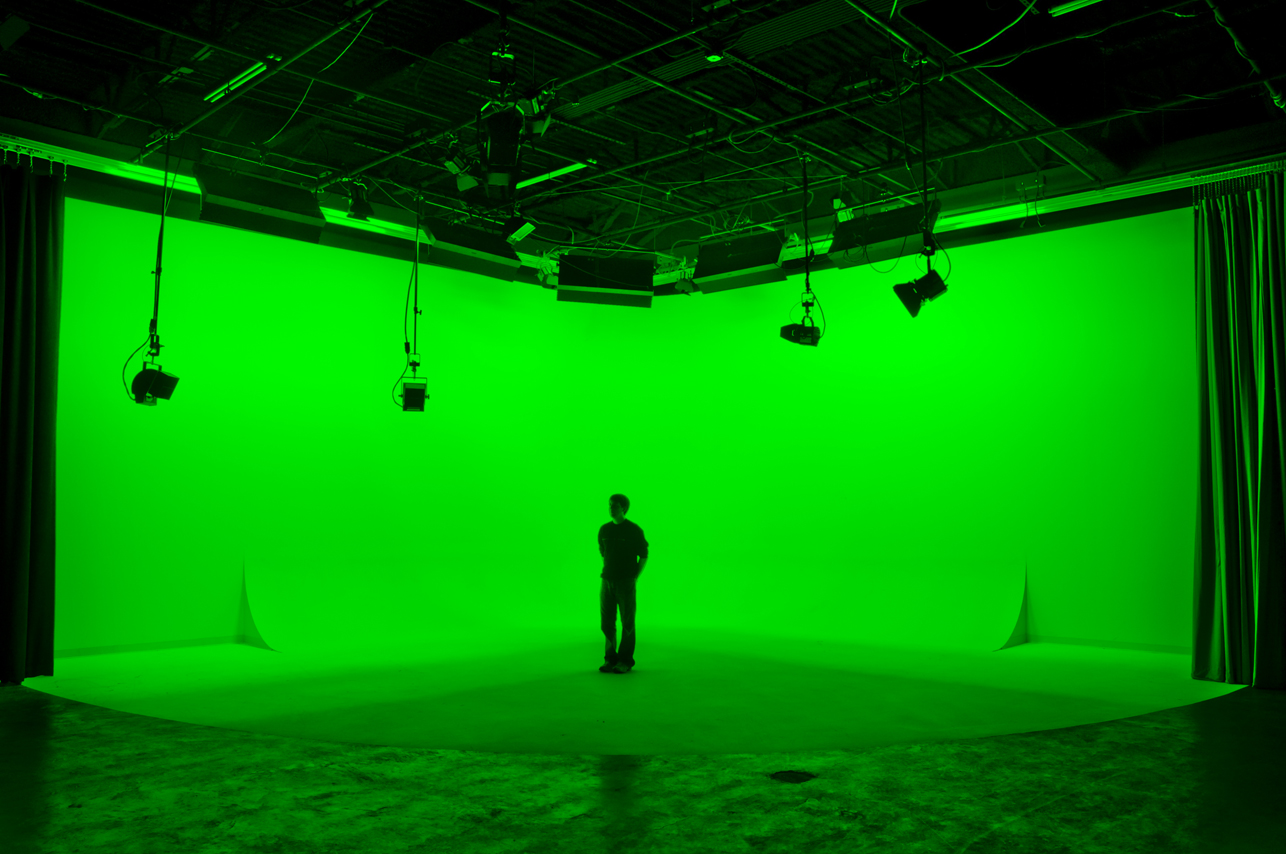
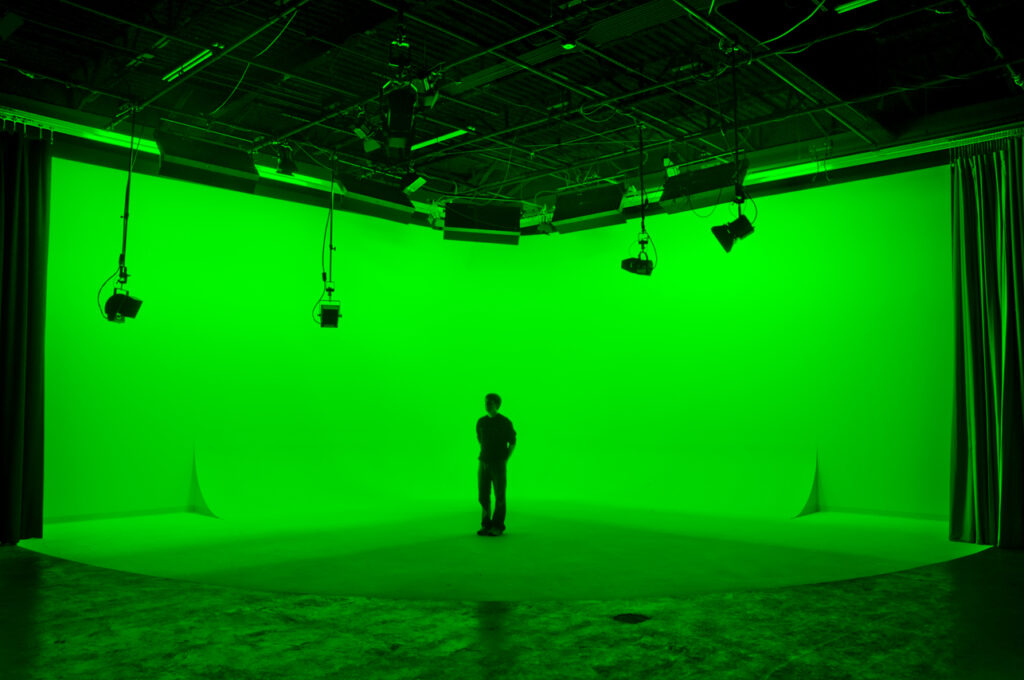
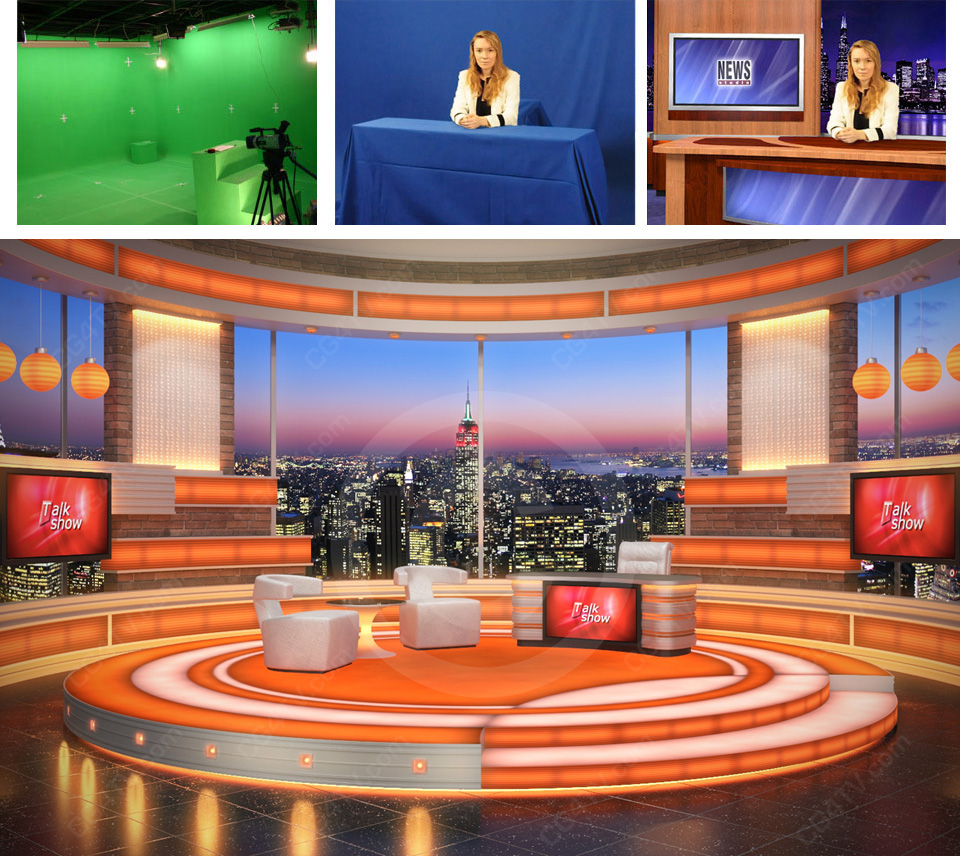
Chroma keying is more popularly known as ‘green screening’, since by nature it incorporates a block color green sheet or card screen in the background of the shot. Broadcasters will typically stand in front of the green screen, and either static or animated graphics will be added in place of the green screen in post production.

As a result, one of the most crucial pieces of advice to apply when working with a chroma key is to hire a superb video editor, ideally one with experience in this area or one with a broadcast journalism MA. The quality of the final product hinges solely on their work and expertise, so having someone on board who is comfortable with the graphic design elements of the process is tantamount.

That all said, it always pays dividends to make sure everyone on the team is up to speed with the fundamentals of how green screens work. With this in mind, let’s take a look at the basics before moving on to some best practices for pre-production.

What’s In a Name?

The term ‘green screening’ is something of a misnomer given that the screen in question doesn’t necessarily have to be green.

blue green screen

While it’s rare to come across anything other than either green or blue, in theory it can be any color as long as it contrasts against every element that will be in shot (screens that are skin-toned don’t work for obvious reasons).

Prepping the Team

But whether you’re using green or blue, it’s very important to let any journalists which will appear on film know which it’ll be ahead of time. It’s not uncommon for people to absent-mindedly turn up on the day wearing a green shirt. They may also fall afoul of the assumption that the green screen really will be green and turn up wearing a blue shirt, only to find out that your screen is blue.

Choosing Between Cloth or Card

In an odd way, the word ‘screen’ is also a bit of a misnomer – your ‘green screen’ neither has to be green or a screen.

Chroma keying can either be accomplished using stiff sheets of card, heavy cloth, or by simply painting or sticking paper to a wall. Which is the best option for your project?

green screen cloth

Anything that results in a consistent, smooth color will be perfect for chroma key compositing, and most of that comes down to even lighting. As for what material will be most suitable depends entirely on the space you’re working with. A large, flat wall that you can permanently color is ideal, but colored boards which can be moved around the broadcasting set as required give you an element of versatility.

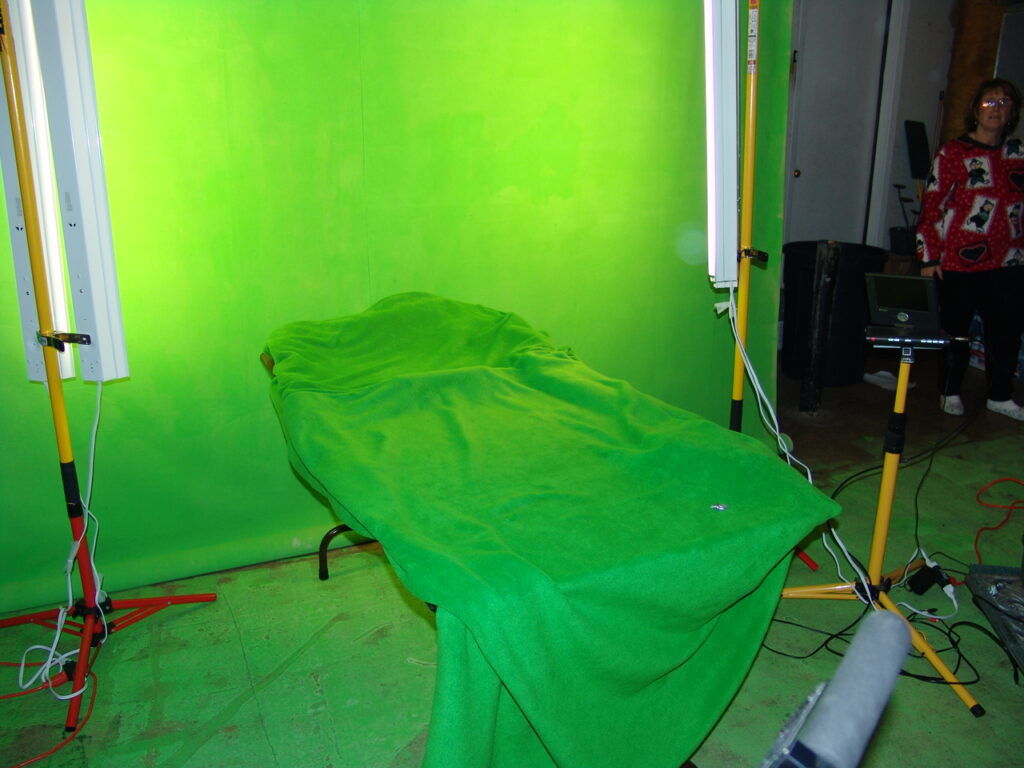
Using a green or blue cloth is more versatile still. The material is inexpensive, can be folded away in between sessions, and can even be wrapped around stage elements such as broadcasting desks or uneven walls. The only downsides to using cloth is that any creases or wrinkles can cause shadows, and the resulting uneven color tones can be harder to work around in the editing suite.

Chroma Key Software Settings

As mentioned, a good video editor will know their way around his or her software of choice like the back of their hand, and most editing suites come with compositing features (many of them these days are exceptionally intuitive.)

While it is outside the scope of this article to cover them all, some settings are fairly universal:

Color: Naturally, the software needs to know which color you’d like to remove from the shot. For most editing suites, this is achieved using an eye dropper tool to select the green screen in the background of the shot, followed by a little ‘fine tuning’ to get it spot on.

Tolerance: This governs how ‘aggressive’ the cropping is. Too much will result in spotty, transparent patches intermittently appearing on your journalists, and you won’t remove all of the color if you apply too little tolerance.

Choking/Softening: You may notice a slight green outline around the journalist, which is often more noticeable around their hair if they wear it long. This can be tuned up using the choke and soften settings until the edge of the journalist and the background is seamless.

Drop Shadow: As it sounds, the drop shadow feature adds an artificial shadow into the background from the journalist (with additional settings allowing you to specify the direction). This can look odd in some chroma key features, but it can also make the scene more natural – as with all chroma key settings, there’s no harm in playing around until you gain optimal results.

greenscreen

Finally, double and triple check your footage before rendering it as a finished product just to make sure the universal chroma key settings work consistently throughout the entire footage.

From crafting interview profiles to news packages to resume reels, NYFA’s Broadcast Journalism programs take a hands-on approach to teaching its students. Learn more about our variety of broadcast journalism programs on our Broadcast Journalism School page.

Most Expensive Animated Movies Of All Time

Forget hiring a cast of A-list actors or shooting at a number of exotic locales around the world; if you want to totally blow a movie budget, incorporating dazzling animation sequences are the way to go.

Given how costly animation sequences can be, it’s of no surprise that many of the most expensive movies ever committed to film are animated features. The returns, however, can be equally gargantuan; coupled with the wave of new talent emerging from animation colleges, these profits have ensured the market for animated features is only going to continue growing.

Here we present the Top Five, including only movies which are fully animated (rather than live-action movies with animated elements such as Avatar).

Interestingly, all of the most expensive animations on this list were released in the last four years. We’ve listed their budgets, box office takings and metacritic scores from Rotten Tomatoes along with each title, but it’s ultimately up to you to decide whether it was money well spent…

Brave (2012)

most expensive animated movies

Budget: $185m
Box Office Revenue: $539m
Rotten Tomatoes Rating: 78%

Pixar’s Brave took things to the next level. The world’s fifth most expensive animated movie not just looked incredible, but it delivered on every level; Princess Merida’s adventure is deep, smartly written, and puts out the message that female characters don’t need a male counterpart (something sadly lacking in the genre).

A lot of the budget was spent on rewriting Pixar’s entire animation system in order to deliver the visual goods, and we’d imagine the remaining time and budget was spent on Merida’s hair.

Cars 2 (2011)

Cars 2 budget

Budget: $200m
Box Office Revenue: $560m
Rotten Tomatoes Rating: 39%

While the original Cars was a fairly solid addition to the Pixar canon, it was no Toy Story 3  or Monsters University despite all three films matching in production budget (see below).

Although the story of Cars 2 was wafer-thin, it’s clear that a lot of the budget went into the visual effects given that the finished product is nothing short of eye candy. For all its failings, it’s did push the envelope of what’s achievable in special effect-laden, high octane animation.

Toy Story 3 (2010)

Toy Story 3 budget

Budget: $200m
Box Office Revenue: $1.06 billion
Rotten Tomatoes Rating: 99%

The third and final entry in the Toy Story franchise was well worth the wait from a critical perspective, and it didn’t do too terribly at the box office either. Toy Story 3 was the first animated movie to ever make over $1 billion in revenue, though this has since been surpassed by Frozen’s $1.26 billion in takings.

Tom Hanks stated in an interview that he heard that Pixar were planning a sequel, but all other sources deny that anything is confirmed. Given how satisfying the conclusion was at the end of Toy Story 3, we hope that Hanks heard incorrectly.

Monsters University (2013)

Monsters University budget

Budget: $200m
Box Office Revenue: $743m
Rotten Tomatoes Rating: 78%

Also a member of the $200 million club, Monsters University – the first prequel film ever made by Pixar – came a good twelve years after the original Monsters Inc.

Apparently Disney wanted to do a sequel almost immediately after the Monsters Inc. brought in the big bucks, but Pixar wanted to bide their time and an entire script got discarded during the disagreement. We’re glad things transpired as they did, however, because once the wait was over we were treated to a great story on the origins of Mike and Sully’s friendship.

Tangled (2013)

Tangled most expensive animated movie

Budget: $260m
Box Office Revenue: $592m
Rotten Tomatoes Rating: 89%

Tangled snags the top spot and is the second most expensive movie of any kind, surpassed only by Pirates of the Caribbean: At World’s End (which overtook its budget by a wide margin at $300m).

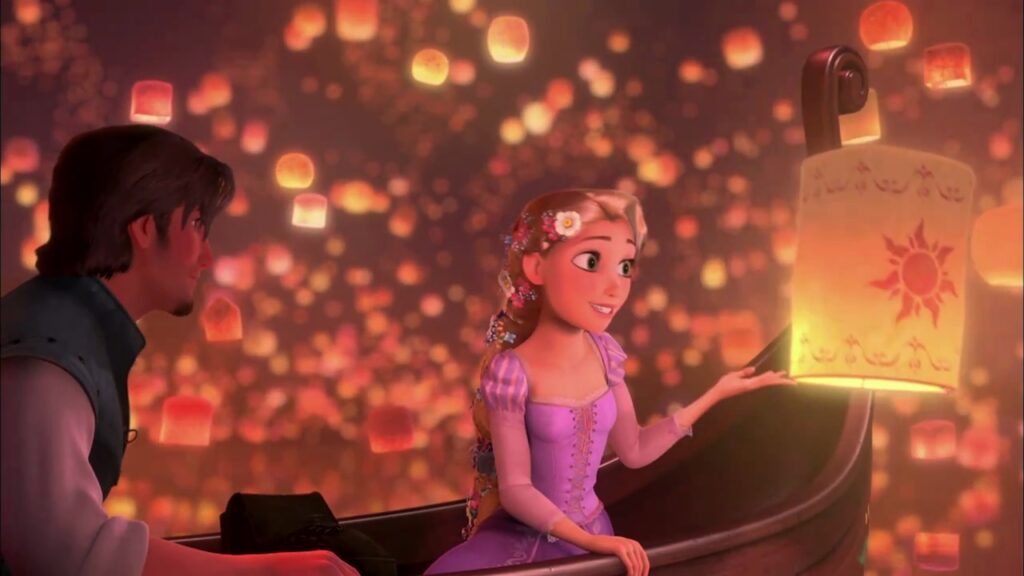
While Tangled undeniably looks like a super expensive production, it was the languished six year production period that caused the incredible costs. It was worth it in the end, however, since it over doubled its money back at the box office and scored nearly unanimously positive reviews from critics. Curiously, the name was reportedly changed to Tangled from Rapunzel due to fears that a Disney princess movie wouldn’t appeal to younger males.

Survival Jobs For Actors

Author: Lance Carter, Actor & Owner of DailyActor.com

Uber

Let’s face it, at some point in our career most of us are going to need some type of survival job. Acting isn’t the most stable of careers, everyone knows that, and having a job during those down times is crucial.

But, it’s also about having something flexible where we can take off at a moments notice. That’s key.

Here in LA, one of the new survival job trends is driving for ride-sharing services like Uber or Lyft. It makes sense because you can make your own schedule. Often, our agent lets us know the night before an audition and getting any kind of shift covered is a true hassle. With Uber, you don’t need to do any of that… you just don’t clock in. I’ve got a handful of friends doing this and they love it. And they’re making some good money as well.

I’ve been acting professionally for years and I’ve had a side job for most of them. I was lucky enough to work in my Dad’s company early on, which I absolutely recommend if you’re an actor! I could take off any time I wanted for auditions and when I booked a role. It was fantastic. Unfortunately, when I moved out to LA to try my hand at a bigger market, that option was no longer available. I’d been a waiter before and hated it, so with my knowledge of computers, I started to do freelance IT work. After a couple of months, I was doing really well and could set my own hours for auditions and classes. Eventually, I created Daily Actor, a website for actors and that’s helped even more.

One cool thing I’m able to do with the website is interview working actors. I love asking them how they got to where they are today and one of my favorite questions to ask is about the jobs they’ve had while on their road to stardom.

Here are a few of my favorites:

John Krasinski (The Office): John was a waiter when he was starting out. “I think I was a lot like any other actor in New York, I had credits because, you know I’d work, you know lunches during the week, and then on a Wednesday would go be lucky enough to be in a movie like Kinsey and go shoot for a day and come back. So, it was one of those things where I definitely was lucky enough to have a few jobs and few commercials.” He went on to say that even though he was booking jobs, it wasn’t “anything that would allow me to claim that I was a working actor and didn’t need another job.”

Allison Tolman (FX’s Fargo): Right before Allison got her breakthrough part on Fargo, she “got a job at a photography studio, a pinups photography studio in Chicago, as their post-production manager,” she told me. “I was in charge of all of the photos going out and being approved and being mailed to the right places, etc.”

Brian Geraghty (Boardwalk Empire, Flight): “I catered in New York as a caterer at all the museums and that was tough. I mean, it was fun, once I switched over to bartending and have a little more control. I’ve obviously waited tables. I taught surfing in Santa Monica. I was a personal trainer at New York Sports Club. I worked at a video store, kind of a specialty video store, when we still had VHS cassettes. Kinda switching over right when I got out of theatre school in 1998. I washed windows, I did a lot of different stuff.”

Jenn Lyon (Saint George, Justified): “I have worked in ice cream shops, grocery stores, I’ve been a baker. I made pizza in Central Park for a company called Pizza Moto on a giant wood fired oven,” she said. Even after booking a handful of guest star roles and lots of theatre work, she finally started making her living as a full time actor last year. “I’ve just always had a day job always.”

Survival jobs… a necessary evil but we – the collective acting “we” – we’ve all had them.

Avoiding Being Typecast (And How To Recover If You Are)

Type·cast
ˈtīpˌkast/
verb

  1. assign (an actor or actress) repeatedly to the same type of role, as a result of the appropriateness of their appearance or previous success in such roles. “he tends to be typecast as the caring, intelligent male”

While technically correct, the above definition doesn’t quite encapsulate the terror many actors feel at the prospect of being typecast into a certain role. It talks of ‘previous success’ and ‘appropriateness’, before giving a very positive example of a role that most actors would be happy to be recognized for…

… in reality, we usually use the word in a negative light; being endlessly cast as a clueless blonde or an emotionless hitman, for instance, and the difficulties of finding work outside of such roles.

But worry not. Whether you’re still in acting training or already getting paid work out in the field, there are some good ways to ensure you avoid this pitfall further down the line (or, alternatively, climb out of it).

The first thing to bear in mind is…

Typecasting is a Symptom of Good Work

Consider such luminaries as Anthony Hopkins. He’s one of the most accomplished and talented actors ever to have graced the screen, and has had an almost countless number of vastly varying roles throughout his five-decade career.

That all said, the chances are high that this was the first one that came to your mind:

acting training

It’s something of a shame that Hopkins’ filmography is typified by this one role, but there’s a reason for this: his performance was so enduring and so clinically perfect that audiences have a lot of difficulty disassociating Hopkins with Lecter.

If you find your own work precedes you as an actor – in a positive way – it’s the result of a terrific acting job well executed (even if the subsequent typecasting becomes a nasty side effect).

Solving the Typecast Problem

Diversify Your Resume: To demonstrate the power of this tip, let’s start with a thought experiment: firstly, describe Mark Hamill in one sentence to someone who hasn’t heard of him. Then do the same with Ricky Gervais.

For Hamill, it’s fairly easy: he’s best known for playing Luke Skywalker and has done a lot of voice acting work since then. For Gervais – who very nearly got typecast as his David Brent character from The Office – it gets more tricky to sum up his entire resume in a single sentence. You could just as easily start off with his subsequent podcasting, stand up, feature films, Golden Globe hosting or any of his shows post The Office before you got to mentioning his breakout role as David Brent.

hamill

Note we’re not comparing the two and their respective talents here, just demonstrating how useful branching into other media can be assuming you want to move on from previous work. Having a number of strings to your bow allows you (or your agent) to begin conversations your way when someone asks “What type of acting do you do?”

Don’t Totally Rebel Against the Typecast: Bearing the above tip in mind, it might sound logical to assume a good idea is to try and land gigs that are totally the opposite of the acting jobs which put you in the typecast camp to start with.

Be cautious here.

If you have been typecast for always being the bookish, nerdy girl who generally serves as the sidekick to the female lead, it might seem like a good move to try your hand at being a femme fatale with your next role. But your excitement may cloud your judgement, and if you sign up for a terrible script that doesn’t allow you to deliver your best, you can expect people lining up around the block to tell you that you should have kept up the bookworm schtick.

o-NERD-GIRL-facebook

In a nutshell, without discretion and extreme acting training, you could end up making the problem even worse.

Get Out of Your Shell: If you’re lucky enough to have your face precede your resume but unlucky enough to have it limit what roles people are willing to give, consider shaking things up with some ‘faceless’ work.

Voice acting for animations is a great way to chisel away at the typecast prison walls, as are roles which require heavy costuming or even prosthetics – the horror market is well worth looking at for this. Nobody cares what you look like with these types of work, merely how well you can put your acting training to good use.

Screen Shot 2014-07-04 at 15.04.56

Reach Out to Others: Acting is a discipline which doesn’t happen in a vacuum. During your career, you’ll have to work with many other people in the industry and they can help you grow in the direction you’d like. Mention to some of the other talent on set that you’d love to do more drama rather than comedy, for instance, and someone might be able to pull some strings when they go off to do other projects (just make sure you return the favor). Same goes for directors and producers.

agent-search-630x300

And above all, make sure you let your agent know what you’re looking for and have a sit-down discussion with her about what’s realistic and achievable. A good acting agent worth her salt will be able to guide your career in the right direction.

Paid And Free Scriptwriting Software Reviews: What Are The Choices?

Offering scripts on the back of crumpled napkins only happens on TV, but if you want to sell your script, properly formatted writing will show your professionalism to a prospective producer is paramount.

Whether you’re chained to a desktop or working from the road, you’ll need a program that allows you to update your script and write the next scene if you have a spare few minutes.

Industry Standard

Final Draft is the industry standard and it’s a great piece of scriptwriting software, but it’ll set you back $199 if you buy it in the US. This is the program that screenwriting colleges as well as the Hollywood kings and queens use, so it’s the one you should use if you can afford it.

Movie Magic Screenwriter ($169) and Movie Outline ($199) have become more popular in the past couple of years. They include more options than Final Draft for the preparation stage when you are making decisions about scene content before you begin writing the actual scenes.

If you’re an Apple fan, then your desktop will probably want to be running Montage($50), although a version of Final Draft is available as well. There are also apps for both Montage and Final Draft available for your iPad or iPhone if you want to write on the move.

Free Software

If you choose to write online, then there are lots of options but Celtx  is a good starting point. It’s free to use and will suit those who love to store their work in the cloud instead of on a hard drive. A big plus point for Celtx is that it offers a very intuitive storyboarding feature.

You should try this for a couple of days to see if it suits your needs. Every user has an opinion on the software. The advantage of this program is you can test it without breaking the bank. If you buy one of the paid options listed above, you are likely to stay with that software rather than dip into your wallet again.

It always takes times to learn the ins and outs of software that will save you hours and effort later. Putting in the work early by actually writing something that you might be able to sell is a great way to find your way around these programs.

What About Word?

Half the planet is committed to using Microsoft Word to write their masterpiece and Word fans have one advantage: templates. These are available on Microsoft’s own template site or via a simple Google search.

The templates allow you to write your screenplay with industry standard formatting, but make sure you choose the right format. The UK and the US markets use different size pages, and if you change from TV to writing for the big screen, you’ll need a different design. Turning it into a stage play? Yet another layout will be required.

Extra Features

There are a couple of extra features that might help you make the final decision. A PDF export function lets you send a small file to the reader and gives you some protection against those who just want to plagiarize your script or post it online. Tech experts will be able to get around the PDF format easily enough, but it will stop most people from bothering to steal your work.

You should also look for an ‘export to others’ feature. This will allow you to collaborate with a colleague at a different location. With Celtx and Final Draft you can mix and match so you don’t all have to use the same piece of software.

A handy feature is the ability to revise your drafts by using different colors. This is an industry standard feature which can save hours of deliberation or arguments.

Some programs have a one-click option to allow you to register your script online, direct from your software. This isn’t wholly necessary, but it can serve as extra proof that the work is yours if a copyright issue rears its head further down the line.

Downtown Film Festival L.A. 2014

Downtown Film Festival Los Angeles

For students and alumni based in Los Angeles looking to see new and exciting films, look no further than the Downtown Film Festival L.A which takes over the city from July 9-19. With films being shown in over fifteen venues across downtown L.A., attendees can see movies in such locations as historic movie theaters, nightclubs, bars, museums, and much more with the festival actually shutting down streets for certain programs.

Established in 2008, Downtown Film Festival L.A. has established itself as a major festival for showcasing independent film having screened over 1,000 films from around the world. For the festival’s 2014 edition, over 200 international films will receive their premieres and encompass everything from features to shorts, experimental to environmental films, and silent films to music videos.

The festival also features a diversity program that includes Latino, Asian, and African film series. Furthermore, music fans will find much to enjoy with the festival’s music documentary series that takes place at the Grammy Museum in LA Live! As it has grown, Downtown Film Festival L.A. has gained the support of former Los Angeles Mayor Antonio Villaraigosa, Senator Ron Calderon, Assemblymen Mike Davis, County Supervisor Gloria Molina, LA city council members Jan Perry, Jose Huizar, and Ed Reyes, Downtown Los Angeles Neighborhood Council, Community Redevelopment Agency, Historic BID, and many more.

So if you’re looking to immerse yourself in film, music, and culture, the Downtown Film Festival L.A. is definitely an event worth checking out.

Stage Fright: Examples & Lessons From Famous Sufferers

Finally the day has arrived. The opportunity you have been waiting for is here. Years of musical theatre college and training have led up to this moment. You love what you have read about the play, you’ve learned the songs by rote, and you have heard great things about the director.

You have been preparing your lines for the audition and you feel you know and identify with the character and are desperate for the opportunity to step into the role. But as you step onto the stage and face the audition panel, you clam up, blush and start to sweat. Your mouth dries up and none of the words come out. What is going on?

Stage fright – or performance anxiety – is something you should be prepared for so that you can deal with it when it happens, or possibly even prevent it happening altogether. But it is not something that just happens to beginners. The most famous of actors have had to cope with it, on stage, in front of their audiences, ad libbing their way until their lines come back to them. If we take a look at some of the world’s best-known actors and stage performers we see that it is a problem which many have had to face in some form at some point in their career.

Crucified in Polyester

The reason for stage fright is pretty obvious: fear of failure in front of an audience.

Earliest Known Footage of Carrey Performing Stand Up

Jim Carrey was put off performing – almost for life – after a dreadful experience as a stand up comic when he was 15. “It was horrific,” he said, looking back. “My mother dressed me in a polyester suit, which was a big mistake. At the club they loved nothing better than for somebody to come in who definitely wasn’t hip. Then they’d proceed to destroy them… to basically skin them alive on stage.”

As the audience chanted “Crucify him!”, the club host repeated into his microphone, “Totally boring.” It took Carrey two years to get back onto a stage. But it’s a good job he did, otherwise he may have missed out on mainstream Hollywood success decades later.

Kim Cattrall on Stage Acting

Confidence appears to ooze from Kim Cattrall, who grew up in both Canada and Britain. But she has also had acting moments that were plain tough. Playing Samantha in Sex and the City she had to film a naked photo shoot scene. She says it took her weeks to prepare and even then: “I got on the set for the scene and I had a really hard time doing it. I had to go back and take a few minutes and sort of get into the skin of Samantha in order to be that open.”

Another Kind of Anxiety – What Will the House Think?

Eighty-one year old actor William Shatner may be best known as Star Trek’s Captain James T. Kirk, but he started out in theatre college and went on to perform Shakespeare. Of his own stage fright, Shatner says “my fears are not the primitive, ‘I’m afraid I can’t talk’ kind of fear that young actors have.” Instead, he said ahead of the show that he feared tickets would not sell.

Shatner Being Self-Critical of His Craft

Though his recent biographical play Shatner’s World: We Just Live In It went down well abroad, he said he felt standards in New York were higher and was anxious about how the New York audience would accept him.

Fright Busting

So if you are concerned about your performance for one reason or another, you are in pretty good company. In fact, public speaking – in all its forms – is reported as the most common fears amongst adults. Luckily, there is plenty you can do about it:

Relaxation Techniques

Breathing deeply and visualization are one of the most common tips. And this is not just something to try when anxiety strikes, but should be part of the preparation for any role. If you’re undertaking musical theatre college you’ll be familiar with some methods already, but there are many books and websites which can help.

Lucky Charms

If you don’t already have one, consider keeping a small item about your person which you always take on stage. Far from superstition, it can give you a genuine psychological edge just knowing its there. Richard Burton is said to have always worn something red, for instance.

Focus on Your Material

Always keep in mind that the audience are there to see the material being performed, not the people performing it (unless they’re celebrities). Rather than focusing on your stage fright or the audience in front of you, devote yourself 100% to the material and songs you’re delivering; not only will it ‘take you out of yourself’, but it’ll make for a better performance and you’ll end up enjoying the experience more.

Acknowledgement

Although imagining the audience isn’t there works well for most people, that can manifest itself with bouts of ‘shoe-gazing’ as you nervously block out anything beyond the edge of the stage. If this sounds like you, try the opposite: whenever the audience applauds (or laughs on cue, or some other positive signal), acknowledge them with a wry smile or small salute. It’ll help break that nervous barrier between both parties, and remind everyone involved that you’re all part of a communal event designed to entertain.

Brew Some Tea

Do you suffer from butterflies before heading on stage? Ginger and peppermint tea are proven to help settle your stomach, and simply the act of taking five minutes to quietly sip some tea can help you get your head in the game.

And remember, a little bit of performance anxiety is quite natural and is good for you. It is the fire that lights up your performance and makes you shine.