Acting Resumes With Aaron Marcus: Part Three

The following video is the third and final in our three part series about Acting Resumes from America’s Premier Acting & Modeling Career Coach – Aaron Marcus. In this video Aaron reveals the importance of listing your special skills and talents on your resume.

Transcript

Hi, my name is Aaron Marcus and I’ve been a full-time actor for nearly three decades and so far I’ve been booked nearly 1200 times. This is the last segment that I’m going to be sharing with you about the resumes and if you have any other additional questions please feel free, you can contact me at Facebook.com/HowToModel or my website HowToModel.com. Just so you know I also offer private online coaching sessions as well as monthly webinars.

Here’s one part of a resume that a lot of actors don’t really spend a lot of time thinking about, but it’s really crucial and in some way it’s just as important if not more important that some of the jobs that you’ve done. That is, the section for your special skills. And what you want to be thinking about is what is the casting director needing in order to bring somebody in to read for a role. And there are a couple of factors. Certainly, your look, what age, whether you look right for this part, whether you seem to fit the part physically.

But also sometimes they need somebody with special skills. And so if you are a bartender, if you do martial arts, if you drive a car, if you have a driver’s license. And I know outside of New York that typically isn’t much of a factor, but for New Yorkers, a lot of people don’t drive. If you drive a stick shift, put that in there. Are you a musician? Do you speak foreign languages, fluently? And you know, sometimes people will say, “Well, I took French for two years in high school.” The fact is, if you’re brought in, if you say you can speak French, you have it as a special skill, you need to sound like a native. You have to be able to speak fluently.

Can you do any unusual things? Do you ride a bike? Are you good with horses? Do you ride English or western? Do you do dressage? Make it specific. If you are a swimmer, what kind of strokes do you do? Make it easy for the casting director.

I was doing a private mentoring session with someone and this woman told me that she this uncanny ability to contort her body and she can fit into a suitcase. That’s a pretty amazing special skill, which could be really helpful, especially for commercials where they might need somebody who can do unusual things like that with their body. Spend some time, really think about your special skills, you don’t have to be a professional, you do have to be proficient in whatever you list and don’t make things up that you’re not really good at and you’ll find that that can be really, really helpful and that can be the factor as to whether you’re brought in or not.

So I’m Aaron Marcus, I hope this was helpful to you. Please feel free to send me a note if you would like, just go to HowToModel.com. I also offer three incredible videos free. It’s my way of giving back to the acting community just by visiting HowToModel.com. You can check them out there yourself. I’m Aaron Marcus, talk to you later.

Aaron Marcus
SAG-AFTRA
America’s Premier Acting/Modeling Career Coach
Author – How to Become a Successful Commercial Model
My Website: www.HowToModel.com
Friend me: www.facebook.com/howtomodel
Follow me on Twitter: www.twitter.com/aaronrmarcus
Office Phone: 410-764-8270

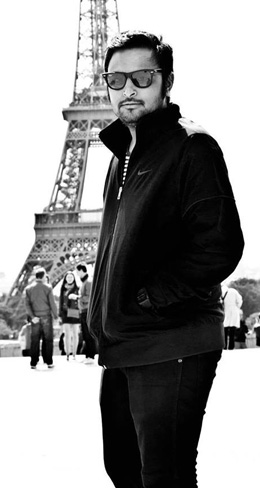
Interview With Maul Gohel: NYFA Alumni & Best Photographer Winner Cannes

Maul Gohel

NYFA: What is your personal background and how did you become interested in photography?

Maul Gohel: I come from a very simple family of engineers and businessmen. My dream was to be a cricketer but that didn’t work out. Like the saying goes, “Decisions make your life”—I dropped out of my MBA after the first lecture and today I’m a happy soul.

I started capturing photos a long time ago but could not realize the feel of it. I used to play guitar in a rock band too. One fine day I captured a whole rock show and people loved the pictures. Even that day I enjoyed capturing like never before. The pictures were so much appreciated. I was happy with the feeling that I can shoot some good rock ‘n’ roll images.

Later I started clicking everyday with everything. I got another rock show to cover and I didn’t have a professional SLR camera. My friend loaned me his and I shot the rock show for a local band. My interest and confidence was growing higher and higher. The thoughts, the feeling and the vision which my eyes were looking for for so many years, finally I discovered something which gives my mind and heart immense peace and a beautiful feeling which is photography.

NYFA was my teenage dream, but it happened late but in style. I feel fortunate as after years everything falls in place beautifully with God’s grace.

NYFA: What was the most important lesson—if you can choose just one—that you learned while at NYFA?

MG: ‘Breaking The Ice’ was the best session I had at NYFA during my time there. It is the THING to interview stranger, discover their life and shoot portrait. Well, one of the persons tried to smash my camera and luckily I saved it. LOL. But ya it has surely played an important role in my career.

NYFA: You have worked in a number of different genres that include fashion, advertising, film direction, editorial, and fine art photography. How did your education at NYFA prepare you to work in so many different styles?

MG: Each and every day we were assigned projects with different subjects like you mentioned; art, fashion, and so on. So, I remember we were shooting each and every day, then post production and print. It was a pure rock ‘n’ roll feeling to me at NYFA. That is the NYFA I dreamt of. Coz I have dreamt it and NYFA did not allow me to sleep; instead NYFA made me live my dream.

NYFA: Do you have a particular genre of photography that you are most passionate about? And if so, what about that genre appeals to you?

MG: Fashion and advertising thrills me most. It is super challenging and the world is going ‘Glamorous’ so why not with my vision? It is the most creative and lively style to portray.

NYFA: How does your love of imperfection come across in your pictures? Why do you find yourself attracted to imperfection?

MG: The day my pictures will be perfect, I will feel bored about it. No one is perfect in this form of art. If I try to shoot perfect photographs then it will look more like plastic. The only reason I am attracted to imperfection is the liveliness of the photograph. I connect you more to the image and the atmosphere of it.

NYFA: You won the award for Best Photographer for Fashion, Advertising & Contemporary in the world at Fashion TV Photographer’s award at the 2013 Cannes Film Festival. How has that effected your career?

MG: Oh! The award is like a dream come true which I feel fortunate and honored to achieve it for family, friends, my country, and NYFA. Being the first Asian to win and the first NYFA student is a very proud feeling. The Cannes Film Festival as we know is one of the world’s greatest film festivals so I feel like my photography career has finally progressed to a higher level now. It has opened many doors and I thank God for each and every day. Trust me it is rock ‘n’ roll (roll = film roll). LOL.

NYFA: How did your photography education at NYFA also prepare you to shoot videos?

MG: Actually, video was my hidden passion which I only just discovered recently but the aesthetics are same. So I started directing fashion film and shooting video.

NYFA: What advice would you give aspiring photographers in terms of obtaining work? How have you managed to find success as a professional photographer?

MG: Don’t just ‘own’ a camera, keep shooting like you’re shooting for your dreams.

NYFA: How can NYFA photography students get the most out of their education?

MG: Through the faculties, through the projects, and through the atmosphere at NYFA. To me it is the world’s best film school ever.

NYFA: Any additional words of advice that you would give to aspiring photographers looking to establish a full-time career in photography?

MG: All the best for whatever you do, but do what you love. Happy Clicking 🙂

To read more about Maul Gohel please visit his websitewww.maulgohel.com

Acting Resumes With Aaron Marcus: Part One

The following video is part one in our three part series about Acting Resumes from America’s Premier Acting & Modeling Career Coach – Aaron Marcus. In this first part of the series Aaron reveals the hard truth about the importance of resumes for actors.

Transcript

Hi, my name is Aaron Marcus and I’ve been a full-time actor for nearly three decades and as of today I’ve been booked 1,209 times. I’m going to be creating a series of blog videos about resumes. I’ll be talking about other things as well, but the first thing I’ll be starting off with is your resume. And the way to begin is by telling you that your resume is really not that important. And I’m not being facetious, it’s true.

Now look, I’m not saying that if you don’t have great information, really important things to say on your resume it might not open doors, of course it will. Great training, great jobs, people will take you very seriously, absolutely. However, it’s important for you to know that your resume doesn’t get you a job. As a matter of fact, the most important part of your audition has nothing to do with your acting skills or your resume. It has to do with your look. And if you physically do not look right for the part, unless you’re somebody who’s pretty famous, you’re probably not even going to get called in to read for it.

So after you’ve gotten called in to read, certainly people are going to be taking a look at your resume, but it’s not the deciding factor in any way. I mean what people want to see is what kind of experience you’ve had. Sometimes there’s some aspects to the resume—and I’m going to be talking about this in greater detail and in other blog video—that in some ways it’s even more important than your job experience. You know, the plays that you’ve done, and the films and TV shows that you’ve done.

So the very first thing I just wanted to say in this blog video is if you haven’t done a lot of work, don’t sweat it. Don’t think, “How am I ever going to find an agent?” “How am I ever going to be able to get a job?” “I hardly have anything to put on a resume.” And the next blog video I create, you’re going to be surprised. There is a lot you can say on your resume that will be incredibly helpful to you.

I’m Aaron Marcus, if you have any questions at all always feel free. You can post questions at facebook.com/howtomodel and you can also go to my howtomodel.com page. And you can also receive three incredible videos there that will help you put together a great head shot, that will help you land an agent, and will also help you market yourself. And they’re all free. It’s just my gift to you for visiting howtomodel.com. I’m Aaron Marcus, looking forward to talking with you again soon.

Aaron Marcus
SAG-AFTRA
America’s Premier Acting/Modeling Career Coach
Author – How to Become a Successful Commercial Model
My Website: www.HowtoActandModel.com
Friend me: www.facebook.com/howtomodel
Follow me on Twitter: www.twitter.com/aaronrmarcus
Office Phone: 410-764-8270

How To Master The Structure Of Script Writing

Although writing a short story, play, or novel is not easy, turning a story into a script ready to be filmed is exacting and demands attention to detail. For example, a script has to take into account the visual nature of film and cannot rely on the imagination of the audience. It also has to take into account stage directions and timing, something that a novelist can overlook. Thus, it is helpful for budding screenwriters to have an overview of the script writing process.

Decide If You Want To Adapt A Story Or Write An Original Story

Although screenwriters are responsible for turning a story into a script, they are not necessarily responsible for writing the story. A screenwriter might adapt a story written by someone else or use history and literature to adapt a story. Many of Shakespeare’s plays were based on Plutarch’s Parallel Lives. On the other hand, screenwriters may want to create a script from scratch and not a pre-existing story.

Decide On The Structure Of A Screenplay

There are several ways to structure a screenplay. The classic structure is to divide a screenplay into three acts: the set-up, conflict, and resolution. Countless stories adhere to this format, and there’s a reason why it has been the go-to structure for films pretty much since cinematography began.

Another format is to divide the screenplay into connected sequences, treating each sequence as a self-contained story that leads into another story.

Be Aware Of Different Script Styles

For example, a film script will not have the same format as a television script. Each script has to be tailored to its medium. A television screenplay needs to be aware of commercial breaks and thus prepare the audience to return after the break. A film screenplay has the luxury of longer, uninterrupted scenes.

Use Proper Format

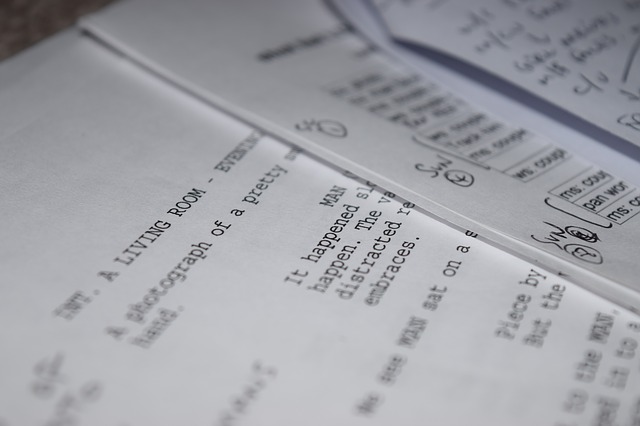
A script is not only a story; it is a technical document and has to meet certain formatting requirements. For instance, scripts must be printed in 12 pt. Courier. Other basic formatting requirements include the following:

  • A scene is prefaced with a heading that indicates whether the scene is internal or external, where the scene takes place, and the time of day – in that order. For example: EXT. HOT DESERT – DAY.
  • A character’s name is first introduced in all-capitals: WILLY WONKA welcomed the guests to his factory.
  • Dialogue is centered and begins with the character’s name in capitals. Descriptions of the character are put between parentheses on a line just under the character’s name. Dialogue, without quote marks, comes next:

WILLY WONKA
(sarcastically)
So nice to see your smiling faces.

  • Fortunately, scriptwriting software makes this process less tedious. One good open source program that conforms to industry standards is Celtx, which includes a sample of the script for The Wizard of Oz. It also includes templates for theater plays, comic books, novels, and story boards. A popular commercial screenwriting program is Final Draft, which also conforms to industry standards and is widely used by professionals. It is noted for having numerous script templates.
  • In general, a screenplay will be on plain white paper, single-sided, and contain no colored fonts or images. Remember that someone has to at least look at your screenplay, and it may be dismissed if it does not conform to basic formatting requirements.

Prepare Your Script For Submission

There are several tasks to complete when the script is finished and ready for submission.

  • Register your script. The Writer’s Guild of America and the U.S. Copyright office both offer registration for scripts.
  • Write a cover letter. This includes your contact information, but it also contains a logline, a one- or two-sentence description of the story. Also include a 1-7 page synopsis of the story.
  • Submit the script. It’s not easy to get someone to read a script, but try the following. First, find an agent. Producers rarely read unsolicited scripts, so you may need an agent to get a script in front of a producer. Second, enter screenwriting contests and competitions. Doing so is a good way to get someone to read your script, and it can lead to a break. Finally, cultivate a network of contacts. Social media makes this a little easier, but there is no substitute for legwork and making phone calls.

There is no guarantee of success, but making sure that you know the basics will prevent your script from being dismissed out of hand. With a little bit of practice, you’ll find it comes as second nature so there’s never been a better time to get started than now.

From formal BFA and AFA degree paths to intensive non-degree programs to one-off workshops, our variety of Screenwriting Programs are designed for aspiring writers at any stage in their career. Visit our Screenwriting School page to find a program that suits your interests and schedule.

Tips For Taking Landscape Photographs

Some of the most beautiful photographs are of natural landscapes, be it majestic geological formations, spectacular weather, or the age-old favorite of a remarkable sunset.

Landscape Sunset

Almost anyone with a camera will be tempted to take a picture of nature at some point. However, merely snapping a picture of a natural landscape on a phone will not yield a beautiful photograph, even if the photographer perceives the landscape as beautiful. Taking a successful landscape photograph requires technical know-how and awareness of one’s surroundings. Here are some tips for taking landscape photographs.

Know Your Landscape Subject

Award-winning photographer Robert Caputo offers excellent advice on how to photograph different landscape subjects:

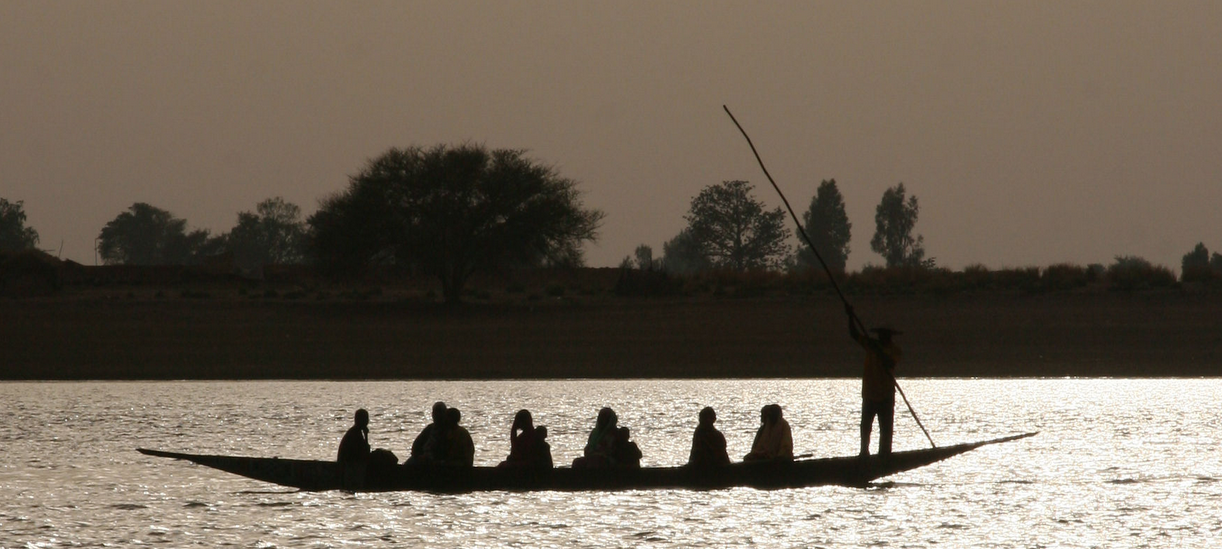
  • Rivers or streams. Caputo offers two pieces of advice when flowing water will appear in the photograph. First, determine whether the river or stream will be the focal point of the photograph or complement other elements. Keep in mind that the eye will follow the line of the river or stream. Second, determine whether or not you want to include any reflections in the water. Take into account the role that reflections will play in a photograph’s composition.

River Landscape

  • Forests. Some forests are dark and scary, whereas others are pleasant and inviting. Thus, the tone of a forest photograph will change accordingly. Caputo recommends finding any unusual feature in the forest and making that the subject.

Forests Landscape

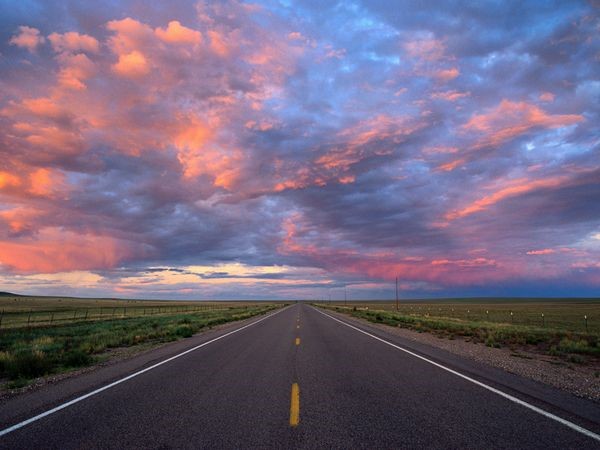
  • Wide open spaces. Caputo recommends conveying the scope of wide open spaces such as plains and prairies, because it can be difficult to find a point of interest. One strategy is to use a road to guide a viewer’s eye. For example, in the photograph below, the road provides compositional balance, dividing the picture into two symmetrical halves.

Landscape Highway

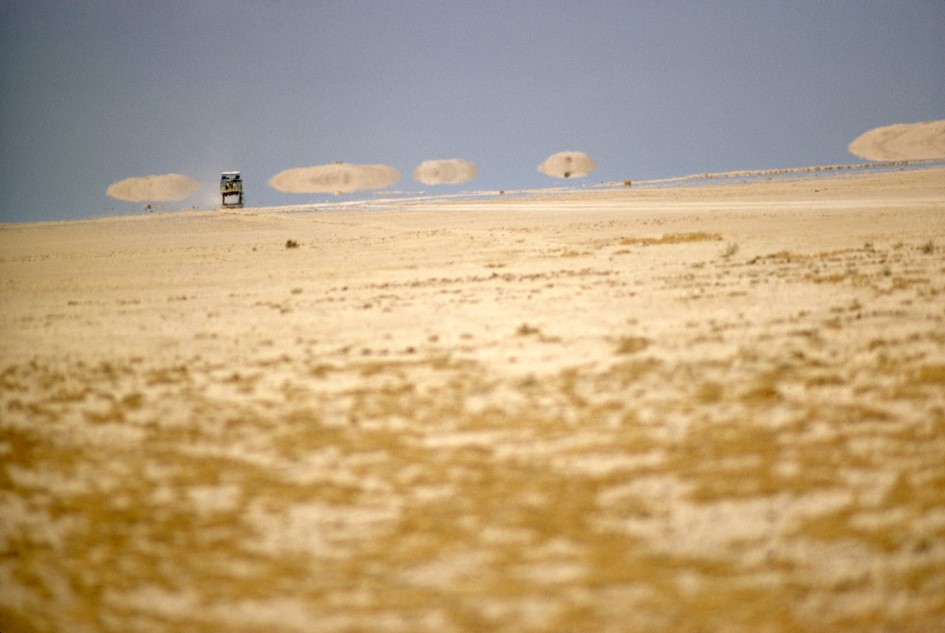
  • Deserts. The key to taking a beautiful photograph of a desert landscape is to pay attention to the sun. Caputo points out that the color of the sand changes with the angle of the sun. Thus, if a desert is known for its red sand, you want to take a photograph when the sun’s angle brings out the sand’s redness. Another strategy is to photograph the waves of heat emanating from the surface or to wait until night and include a starry sky as part of the desert landscape. One advantage of a digital camera here is that you can check each photograph to ensure that sunlight has not overwhelmed the composition.

Landscape Desert

  • Seacoasts. Coastal regions are as diverse as forest regions, so taking into account whether a seacoast is rocky and tempestuous or sandy and tranquil is key to a successful seacoast photograph. Caputo recommends including features that emphasize the nature of the seacoast, e.g., palm trees on a tropical seacoast.

Seacoasts Landscape

  • Mountains. Here, too, the nature of the geography is key. Are the mountains large and angular, or smaller and rounder? The strategy is to convey the essential nature of the mountains to the viewer.

Mountains Landscape

While your choice of subject matter will be a huge factor in how you approach capturing it, there are some good rules of thumb that can be applied in almost any scenario and locale:

  • Find a focal point. One goal of good photographic composition is to guide the viewer’s eye. A good way to do that is to find a point of interest that anchors the picture. For example, a single cactus in a desert landscape can be a focal point, as can a tree trunk or building.
  • Keep in mind the foreground of a photograph. An empty foreground robs a picture of depth, but a full foreground adds depth to a picture. In the photograph below, the flowers in the foreground as well in the background give the picture depth and convey the immense size of the field.

Landscape Field

  • Try to find natural lines in the landscape. A basic element of composition is line, which guides a viewer’s eye. The above photograph uses the oblique lines of flowers to guide the eye over the field.
  • Take into account the sky. Do you want the sky to be a major part of the photograph or do you want to emphasize the landscape at ground level? If the sky is particularly beautiful or contains unique cloud formations, you may want it to dominate the photograph. Or if you want to emphasize a field of flowers, you may want the sky to play a lesser role in the photograph.

Sky Landscape

Taking natural landscape photographs is challenging, but with a little forethought and eye for composition, it’s entirely possible to represent on film the beauty you see while out in the field.

How To Become A Film Producer

Although a film is a collective creation of actors, writers, editors, and artists, the producer is the one who initiates the creation of a film and sees it through to distribution. Because producing requires a variety of skills, it is not obvious how a movie is produced. Let’s take a look at some of the key steps in producing a movie.

Finding An Idea Or Story

Just as entrepreneurs need to determine what kind of business they want to start, film producers have to determine what kind of film they want to produce. A common source for a film is a novel, short story, or screenplay. The producer’s job at this stage is to secure the rights of the story from the author and to negotiate any demands the author may present.

Preparing A Script And Finding A Director

A story is rarely ready to be made into a film, so the producer has to find a screenwriter to turn the story into something filmable. The producer also has to find a director to realize the screenplay and guide actors through the filming process. The director has a significant impact on the tone of the film.

Given the same script, Tim Burton and Steven Spielberg will create two different movies.

Consider Financing

Producing a film from start to finish requires enormous resources, so one of the key duties of a producer is to secure funding from a film. Usually, funding is secured from a large studio, but some high-powered producers finance their own films. In the past few years, crowdfunding on sites such as Kickstarter and Indiegogo has become another way to fund a movie. For example, the movie Veronica Mars received over $5 million from its Kickstarter project.

Begin Casting

Generally the last step before a movie begins filming, actors are auditioned and cast. A producer is not necessarily involved in this step.

Start Filming

Because a producer may be working on several projects at once, the task of overseeing the filming process is often delegated to sub-producers, or executive producers. Indeed, most films have several producers who oversee different stages of a film’s production. A good case in point is 2012’s The Avengers, which was produced by Kevin Feige and seven sub-producers.

Post Production

Although producers usually are not involved in editing a film, they wield editorial control over the finished film and can make decisions about how a film ends or what scenes it should include or exclude. Some films are tested to gauge audience reaction, and a film may be adjusted accordingly.

Distribution

If the producer is satisfied with a film, then he or she distributes the film. A common way to distribute a film is through an established studio, which in turn distributes the movies to cinemas across the country. However, direct-to-video distribution is becoming more common, especially for smaller companies and independent studios.

Although direct-to-video movies traditionally have carried a stigma as being inferior in some way, many direct-to-video movies are profitable and well-received. For example, Warner Bros. Animation has released several successful direct-to-video animated movies set in the DC Universe, such as Justice League: New Frontier.

Producing a film is no easy task. It requires both creative and entrepreneurial skill, as well as persistence and attention to detail. However, producers have the satisfaction of knowing that a successful film would not have been possible without their efforts.

Our one-year accelerated MA in Producing program focuses on creating a learning environment dedicated to teaching students the step-by-step process of creating, financing, and distributing works of film and other media from beginning to end.

How to Make A Short Film and Gain Film Experience

Although filmmaking is a highly technical discipline involving a variety of skills, making a short film is a good hands-on way to learn about filmmaking. The entry barrier to making a short film is lower than it has ever been due to advances in technology. Digital cameras require no film and allow for post-processing on standard personal computers. Here are some steps to follow when making a short film.

How to Make a Short Film

how to make a short film

Choose A Short Script

Although a filmmaker might be tempted to grab a camera and begin shooting impromptu scenes, the best short films tell a story with a beginning, a middle, and an end. A script ensures that a film tells such a story. Looking to write your own script? Learn about screenwriting format to meet the industry standard.

One can always write a script, but an alternative that will get you to the filmmaking practice faster is to download a script from the Internet. For example, several sites offer duet acting scripts.

A duet acting script depicts a single ten-minute scene between two actors and often involves nothing but dialogue. Ideal for those just starting out, such scripts offer a great opportunity to dive straight into the process of familiarizing yourself with shooting.

Create A Storyboard

Once a script is secured, one can make a storyboard, that is, a panel-by-panel outline of each shot. A storyboard resembles a comic book and determines the flow of the film and the sequence of its scenes. Much of the work in making a film is in setting up a storyboard, especially given that it saves a lot of time and organization work in the long run.

The advantage of this work is that it is less expensive and time-consuming than figuring out the flow of a film while filming. A good storyboard needn’t be an artistic masterpiece; as long as it allows a filmmaker to focus on camera work when it comes time to shoot the film, it’s a good storyboard. Try finding a storyboard template or examples to help you build it.

Scout for Filming Locations

Although a film’s locale will be determined by the script, it is important to find a suitable location to begin filming.

For example, if a film takes place in a coffee shop, one has to decide whether to film in an actual coffee shop, which would require permission from the owners or to mimic a coffee shop environment. If the film takes place outdoors, one needs to find a safe, legal location to film. If it takes place indoors, one needs to find an indoor spot where filming will not be interrupted. If the film relies on props, those, too, must be considered when scouting a location.

Be mindful that it’s not easy to find locations on the cheap, so unless you’ve got a sizeable budget for this, try to craft your script around filming locations that you’ll actually have access to rather than places such as banks or supermarkets.

Select A Camera

Traditional motion picture cameras are expensive, but digital cameras provide a far less expensive option for budding filmmakers. In fact, it is possible to use an iOS or Android device to make your film and even a few successful feature films have been shot using only a smartphone.

The main disadvantage of these devices is storage space, so a prospective filmmaker may want to purchase a dedicated digital movie camera. Although high-end digital movie cameras are expensive, there is a market for less expensive consumer cameras. Such cameras can record high-definition film and are highly portable. Moreover, they allow footage to be transferred to a computer easily for editing and post-processing. Learn more about film techniques and the 12 Camera Shots Every Actor Should Know.

Edit Your Film

Raw footage does not tell a story and often contains extraneous material not relevant to the script. A movie is made when raw footage is crafted into a narrative with a distinct beginning, middle, and end.

Don’t know how to edit videos? Fortunately, editing has been made easier with the current generation of video editing software. Although some can cost multiple thousands of dollars, for short films many of the free software packages usually suffice. Windows, for example, comes with Windows Live Movie Maker, which has stood the test of time for years.

Most Apple Macs come with iMovie, a movie maker designed for newcomers which is actually fairly powerful. If you’re a Mac user looking for a superbly intuitive mid-range option that won’t cost the bank, look no further than ScreenFlow (which is priced at around $100):

Following these steps provides a hands-on experience with filmmaking and will give prospective film students a rough idea of how to make a movie.

Learn Filmmaking at NYFA

Interested in becoming a filmmaker? At NYFA Filmmaking School, our students learn more than just what it takes to make a short film. Visit our Filmmaking School page to learn more!

Buying A New Camera System: Demystifying Hard Decisions To Be Made

Author: David Curelea, Photographic Artist at davidcurelea.com

Photo by David Curelea

Should you buy a new digital camera system or a film based system? A professional, semi-professional or a consumer system? At some stage you’ll need to make this decision –whether new to photography or a decades-seasoned photographer. This article aims to demystify some of the key factors and realities involved so you can make a clearer decision, saving time, money and potential heart-ache.

First, realize you are actually making a series of decisions, with varying consequences. It can be an agonizingly tough decision to buy into or move to a whole new system. It’s not simply about ‘buying a new camera’, you’re buying into a whole system with numerous components. Buying a whole new system might include a DSLR or any camera system really, buying numerous lenses (providing coverage for a range of lenses such as ultra-wide, wide, normal, telephoto or macro lenses), purchasing additional recommended memory cards, flash, etc. Besides the cost of a new system – there are other huge considerations to bear in mind.

First, there is the age-old needs versus wants issue – for example, do I really need to go digital full-frame or is it just a want? Do I really need this camera system over another one or my existing one? Why? Do you need more speed, more quality or more flexibility?

Versatility

A key factor in deciding should be versatility of the system and its lens offerings. Is the camera system designed for use in the field, studio, for travel, or everything? Are big pro zoom lenses that would shoot across the range of your needs available that might mean carrying fewer lenses, or allow you to work faster or in available-light? Do the technical specifications and optical performance of the camera and lenses meet your needs? (Is this verified by independent test results)? Your needs could be for a lens that could be used for shooting high-quality fine-art prints, as well as spontaneous travel and people photography moments. Zooms have often been banished for their more inferior optical quality and sharpness. But, do pro-grade zooms I’m looking at match or excel in performance and quality compared with the various versions of the fixed focal length (prime) lenses available?

The System’s Market

A key area to consider also is whether this system is produced for a professional and semi-professional market, or made for the amateur or consumer markets? There are significant differences in things such as quality, usability, customization, versatility, robustness or workmanship and engineering. See what features differentiate the consumer product from the professional equipment and evaluate your options.

Embracing The Past And Future

Another big consideration is forward and backward compatibility – Is the camera-body-to-lens relationship like a romantic life-long relationship or more like a short-lived stint that will disappear rapidly? In other words, are the lenses and camera body compatible with current and older lenses that may better meet you needs? Is the technology changing in a way that will affect forward-compatibility or scalability which will enable the system to ‘grow’? An example would be where manufacturers have moved from digital to full-frame digital. What best meets your needs in this area so you don’t buy into a page that is being turned?

The Actual Output – Image Quality, Size, Style

It’s not all about mega-pixels! The system you choose should provide enough resolution or mega pixels to meet or exceed your image quality needs. There will be different needs based on whether images will be used for editorial, fine art, or commercial purposes. Research the specifications in detail to ensure the mega pixel figure, sensor size and type, digital image resulting size and lens integration – all meet one’s needs. It has much to do with the actual output medium and size – Will you be printing standard photo size prints, wall-mounted artwork, wall size prints or electronically presented work only?

One of the biggest factors to consider is how this affects your core operations in business, or the way you photograph. The core of your needs as a photographer are determined by what type of subjects you shoot, what other subjects or forms of photography you wish to venture into to grow, and your individual style of shooting. This has everything to do with your unique photographic journey. This can be the ultimate decide. Will the new system help you to do a considerably better job of your core photography than an existing system or other system you’re evaluating? Or will the system you use already be sufficient; can it be extended to better meet your needs at a fraction of the price of a whole system change?

Proven, Stable Systems vs. Leading-Edge Technology

Technology that’s been around for decades is more proven, refined and corrected, understood and integrated into our photographic world. Leading-edge technology can be very expensive in various ways: Initial cost at first release especially, the cost of learning a new system – time or monetary expense. It’s also not-proven in terms of whether it really does what the marketing blurb on the box says. Leading-edge technology is also not-proven in terms of whether the market will accept it as a laudable product, and whether in 5-10 years it will still be a highly sought-after or even collectable system as opposed to the system everyone is donating to the pawn shop. Leading-edge can be great, and other times it can be a fairly profitless investment.

Great Systems Are Backed By Great Reviews

A camera system that’s been around for many years has professional reviews by leading review websites, technology specialists and journals. Their highly-detailed analysis along with dozens if not hundreds of consumer reviews from professionals and consumers alike can be a wealth of knowledge and insight. You can almost do a SWOT analysis yourself and consider the various Strengths and Weaknesses (pros and cons). Also analyze Opportunities that it can open up, and potential Threats – or issues that may make the system not appropriate to your needs. It will often be clear whether there is some general acceptance of the system in the various markets.

The Cost And Your Budget

Justifying the investment is another important area, as it will mean using up funds that could be allocated to something more worthwhile in advancing your photographic journey. It takes time and money to learn a new system and to integrate it into your workflow. The timing of such a migration can be important too in the scope of your other projects. Evaluate the funds you intend to allocate on a camera system in light of your other projects, travel or educational expenses. Remember, a new camera system won’t automatically make you a better photographer – that takes lots of research, work, craftsmanship and practice. Ask yourself how much it solves your core needs? Could it be that for a fifth of the price of the new system you could significantly enhance your existing system to match your real needs?

What other factors can help in making the big decisions around opting for a new system?

Comparison With Competing Manufacturers’ Offerings

If you already have a camera system, will you be disloyal to your preferred manufacturer to see if the glass is sharper on the other side? In doing so, will you have two systems to care for and work with, and pay more for of course?

Availability Of Accessories

Availability of accessories is also important. Do you need the additional battery-grip accessory? Or perhaps it’s a specific bit of gear – like a macro ring-flash. Are these needed accessories available? Evaluate beforehand whether any crucial accessories you require are definitely available and within your budget.

So, hopefully the factors in this article will help shed some light on some of the key issues involved in deciding on a new camera system and help demystify the decisions you may need to make now or in future. Dissect and analyze the issue in needs versus wants fashion, even creating a columned pros and cons list if necessary. Do thorough research. Hire the camera system for a week or weekend and shoot as much as possible to see if it suits the way you think and see the world. Ask yourself truthfully whether it all justifies the move to the new system? If you find everything is pointing towards a new system, by all means, evaluate carefully and enjoy your new system!

Interview With Paquita Hughes: Applying a ‘Military Mind’ To The Film Industry

Paquita Hughes

NYFA: Could you tell us a bit about your background and what drew you to filmmaking?

Paquita Hughes: I grew up in a small town in Mississippi and always had dreams of escaping to California to make movies. I was a Spielberg kid so nonetheless Star Wars and E.T. captured my imagination and fueled my interest in movie making magic! I didn’t know what I would do in the industry or how I would fit in, I just knew I wanted to be a part of the process. I began plotting my journey to Hollywood at an early age but was sidelined after my high school graduation when my family disagreed with my decision to attend USC School of Cinematic Arts. I was told to pursue a “realistic goal” and to get a more practical profession, like a Lawyer, Doctor or Teacher. Crushed by this revelation, I pushed my dreams aside.

NYFA: You served in the Navy for eight years as an Air Traffic Controller. What lessons did you learn during your service that have helped you in your development as a filmmaker? What led you to leave and pursue your filmmaking dreams?

PH: As an Air Traffic Controller in the World’s Greatest Navy, I faced many challenges and obstacles; mentally, physically and emotionally. It’s in the top 5 most stressful jobs in the world and going through a “crash-course” school through the military (6 months) was a validating process for me. It showed me I could definitely rise to any challenge placed in front of me. I controlled the best pilots in the world as an enlisted sailor overseas and on an amphibious assault ship during a time of war. I’ve had to deal with many personality and culture differences that have definitely prepared me to collaborate with a variety of filmmakers and performers. Working under pressure during a time of war in foreign countries and territories has toughened me to make difficult decisions on the drop of a dime. I’m a troubleshooting Diva!

The deciding factor to separate and attend school to pursue my dream came when I was being forced to take college courses to stay competitive for advancement of my rank. I had promised myself when I dropped out of college the first time, that I would never attempt college again for a profession that I absolutely had no interest in. What fun would that be? I wanted to enjoy higher education like I enjoyed my primary and secondary education years. I enrolled in the Associate of Arts in Motion Picture/Television: Producing course for Academy of Art University and never turned back. I studied online for the next 2.5 years while serving overseas and got hooked! I wanted to be hands on and actually start making movies! I aced every assignment and test, and as my military career hit a “glass ceiling”, I realized my motivation, drive and creativity would be utilized better in the civilian sector so I decided to get out and pursue it full time.

NYFA: What was it about the New York Film Academy in Los Angeles that attracted you to its filmmaking program?

PH: What attracted me to the NYFA filmmaking program was the key word “immersion”. When I describe the course to others, I say it’s the “Rosetta Stone of filmmaking” because you are immersed in the process while learning. I think it’s the best way. I spent two years learning the history and theory of filmmaking so I was ready to get my hands on equipment and scripts. I was also very decisive about my choice because of my military benefits. AAU was going to cost me more to continue there than it would have been for NYFA. NYFA’s Yellow Ribbon program allowed unlimited amount of veteran students to apply and AAU only allowed the first 50 who applied. Not to mention NYFA matched the VA at a much higher amount then what AAU matched. It was a better decision financially also.

NYFA: What lessons did you learn at NYFA that you still find yourself applying to your current work?

PH: Planning is everything! I’ve also learned how important it is to create positive relationships with my classmates and to not burn bridges with the talented students. You can ruin your reputation quickly by missing classes and showing up late. Collaboration is key in filmmaking and you want to have a plethora of collaborators in your Rolodex when it’s time to get a production off the ground.

NYFA: You’ve enrolled twice in NYFA, firstly studying filmmaking and then returning for the one-year digital photography course. What skills as a filmmaker did you hope to hone through the digital photography course? Have you always been drawn to still images alongside moving images?

PH: Photography has always been a passion of mine. It seemed fitting to enroll in the Photography course once it became available. A still camera was the first camera I owned so my filmmaking career started with photography. I wanted to take a skill I taught myself and honed for 20+ years and learn the proper technical and business processes.

Through this course I honed my skills as a visual storyteller and strengthened my cinematography skills. I learned how to see the world with a different view and the many styles of photography opened my mind to the many styles of filmmaking that I can explore.

NYFA: As a veteran in the film industry, what avenues have you found that have allowed you to network with other veterans? Do you feel that veterans possess a certain skill set that makes them particularly adaptable to working in film and other industries?

PH: As a veteran in the industry, I had hoped I would find an organization or group that would shepherd me into the industry respectively. I found that in Veterans in Film and Television. It’s a non-profit organization founded in 2012 by two vets who wanted a central meeting avenue for vets in the industry to network with other vets who have made their mark already. Luckily, I became a member during its second month in existence and ever since I’ve pretty much found ALL of my work and collaborators through this group. I am also proud to have been selected to be one of the 15 vets used for the VFT Promotional Ad that was featured in Variety magazine and for their website www.vftla.org.

There are veterans who posses the skill set it takes to really handle working in the industry and I’ve met some veterans who probably weren’t too motivated when they were active, so they become lazy and too opinionated to get with the program. Not all veterans are made for the industry. If you were a hard charging, A.J. Squared Away sailor like myself, you could really make a name for yourself amongst your peers and colleagues. If you are a veteran who didn’t like the most basic things about the military, then the industry isn’t for you either. The infrastructure is very similar and if you had a problem with authority in the service, then you’ll have a problem with my authority on set and that’s not good.

NYFA: Your thesis film, California Dreaming, deals with a young woman who runs away from home to pursue her dreams. As someone who made a leap towards realizing your dreams in film, is this a theme you continue to explore in your current work? What other themes do you find yourself returning to in your original work?

PH: California Dreaming was my first film ever and I had to add a personal touch to the story because an instructor made a comment once to, “write about what you know, then go from there,” so that theme came easily for me. Currently and moving forward, I produce mostly and the work I’m attracted to is very eclectic. I’m producing a pilot for a web series that explores the taboo lifestyle of “Sugar Babies” and my theme for that series is simply, “all that glitters ain’t gold.” When some people are so desperate to escape their current situation, they have the tendencies to make drastic and irresponsible decisions hoping to temporarily fix a permanent problem. I’m attracted to creative stories and concepts with out of the box substance.

NYFA: What advice would you give current members of the military who have ambitions to enter the film industry?

PH: My advice to current members of the military with ambitions for the film industry would be to take heed to all of your military training and revisit the basics. Learn to be resourceful as hell and don’t expect to make friends (just like in the service) but focus on making strong bonds with others just as motivated and driven as you. Reach out to other veterans and organizations and please be prepared to give as much as you would like to receive. It’s give and take. The days will be long, the people will be difficult and disasters will occur but remember, it’s better than being on deployment. The most important advice would be to have a lot of money in savings to survive while making your mark in the industry. I know you hear stories of people making it big after being homeless or living in their cars, but that’s not a healthy way to start. You want to have your ducks in a row and have a PLAN!

NYFA: How have you navigated such a competitive industry as film and what words of wisdom would you impart to recent graduates who are trying to realize their career goals in film?

PH: I’ve navigated this industry by staying focused, keeping my eyes on the prize, planning and using my resources and time wisely. Also, I’ve made some great relationships with people I met along the way. I leave a great impression when working on any production no matter how big or small. You’ll never know who on the crew is watching and could have the next big gig with your name on it. I’m always pleasant and no matter the mood I’m in, I’m professional at all times.

NYFA: What upcoming projects do you have that you are particularly excited about?

PH: I’m excited about a few upcoming projects and one to note is a pilot for a dramedy series called, “Sugar” (sugartheseries.tumblr.com). It’s been a year of developing and production and it’s now in post-production. I have high hopes for this project because an instructor informed me to pitch it to Networks such as Showtime and HBO. I plan to pitch to Netflix and Hulu as well, but it’s a long and hard process getting everything in line the way I want. Nonetheless, I’m excited.

I recently attended the GI Film Festival in D.C. for a film that I directed for the 48 Film Contest. It was my first festival selection and it was a great feeling seeing my name in the line up of filmmakers. It was an accomplishment of mine that felt satisfying. It will also screen at the GI Film Festival in LA this year so, I’m excited to walk the red carpet in my own stomping grounds.

I’m also currently a freelance Associate Producer for an awesome production company called Imaginary Forces and I’ve had the pleasure of working with some talented producers, directors, designers, animators and more on projects I used to dream of being a part of. The first project I was attached to was the 2014 MTV Movie Awards. Since working at IF, I’ve helped produce for Discovery ID (Swamp Murders), MPAA, Sapporo and Electronic Arts.

NYFA: Any parting words of advice you have for aspiring filmmakers?

PH: Rome wasn’t built in a day; so don’t expect your career to happen fast. The important thing is to keep moving forward and stay focused.