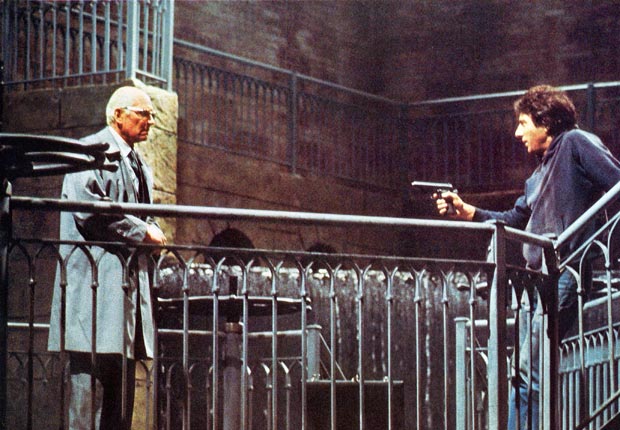
When Dustin Hoffman was on set for Marathon Man, one scene in particular called for his character to appear as if he suffered from extreme exhaustion. To simulate this, Hoffman stayed up for three days straight… to which costar Laurence Olivier responded, “My dear boy, have you tried acting?”
It may or may not be rooted in fact, but it’s an excellent anecdote nonetheless.
Of course, it was okay for Olivier to dispense such pithy advice – he was one of the greatest actors of our time – but it’s not always as easy for the rest of us (or, perhaps, Dustin Hoffman).
With the spirit of the late, great Laurence Olivier in mind, here’s the best acting advice you very rarely hear.
Know What the Hell is Going On
An actor’s job is to follow cues and give a strong performance as required by both the script and the director. That’s your base duty; you’re not going to gain any extra points or commendation for fulfilling this.
Want to become the apple in the eye of every director, cinematographer and camera guy you work with?
Know your technical stuff. All of it.
It’s one thing to hit all your marks every time and never fluff a line, but it’s another to be conscious (and conscientious) of everyone on set, the technical limitations they’re working with, and what they’re trying to achieve.
Know what lenses that guy is working with, and what that means for you in the frame. Know the lingo the director is yelling to the sound technician so he or she doesn’t have to take time out to relay it to you in simpler language. Be ready and able to converse with the writers, editors and producers at their level; be on the same page as everyone, rather than the lemon standing in the corner waiting for someone to shout ‘action’.
Getting this comfortable on set is a big undertaking and will almost certainly require a spell at film and acting school, but it’ll pay dividends. They’ll love you for it.
Take Music Lessons
What’s that? You don’t want to do musicals on Broadway?
It doesn’t matter.
Even if you have no intentions whatsoever of singing a single note, you should check in with a tutor. We’re not saying that you have to spend weeks studying the craft – even just a few rudimentary lessons will do – but being able to apply a knowledge of cadence and tonality can add an extra level to your ability to read lines.
Picking up a brand new creative skill in performance arts can also do wonders for your confidence, so consider finding a singing tutor or even taking some piano lessons and getting some musical theory under your belt.
Controversy Sells
Sad but true: the most talked about and ‘sellable’ people in the entertainment industry (both in music and film) are the ones who know how to cause speculation and/or outrage.
If you want to raise your profile and aren’t precious about your reputation, go full tilt on every performance you give.
Even if you don’t want to play it dangerous with your role (possibly if you sense the director won’t have any of it), that doesn’t mean you can’t be controversial elsewhere. Eccentric interviewees make for viral-worthy material, and outlandish sound bites make it easier for journalists and bloggers to write headlines about you.
Remember, however, that it’s a volatile game to play. There’s a big difference between fame and infamy.
Pretend to Be Confident
The majority, if not all, actors are human beings too. As such, performance anxiety or feelings of not being good enough are common.
The secret to overcoming such moments and gaining a confidence boost? Simply pretend to be confident – psychologically speaking there’s absolutely no difference between assumed confidence and genuine confidence, and an actor has all the skills they need to pretend.
Lastly, Enjoy the Ride
Most acting advice revolves around how to better your craft and, by extension, your career. Quite often, we forget to count our blessings.
Your acting career may not be quite where you want it, but nobody’s ever is. Conversely, there are an extraordinary amount of people who’d kill to be at your level and doing the things you do.
All the world’s a stage. Never forget this, and enjoy the ride.
Taking part in any creative hobby with your kids is a great thing for all parties involved, and making films together is no exception. Not only is it good for self-confidence, but it’s also an extremely fun way of getting children to look at the world differently and apply their own creativity.
Summer camps dedicated to teaching kids and teens the craft of filmmaking exist, but that doesn’t mean you can’t begin their filmmaking journey in your own home. Contrary to popular belief, you don’t need masses of equipment or technical expertise in order to get started. Here’s how to get best results without spending a fortune.
1. What to Shoot?
In a word: Anything!
You probably won’t want to get the kids together to write out a full script for the short film, but it can help bring a level of structure to the project if you map out some key scenes.
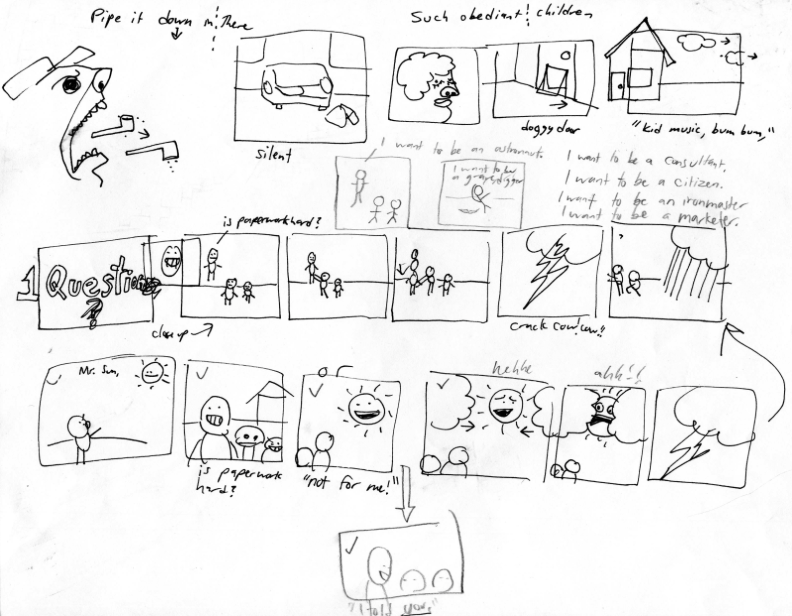
This is best done in picture form – a literal story board – which the children should be heavily involved it. Guide them through the process by asking them about the beginning, middle and end of the tale they want to tell. Then, get them to draw pictures of the key moments as they imagine they’ll look on film – this will keep things from getting too chaotic, and will also help you plan any props you’ll need.
Don’t know where to start? Check out these resources to help structure and guide your child’s creativity:
TOP TIP: Cardboard is invaluable! Save any boxes you have leading up to the project and invest in some poster paints, and you’ll have just about everything you need for scene creation.
2. Camera
There’s very little need to go rushing out to buy a $40,000 Hollywood-grade camera rig. In fact, you probably don’t need to buy a camera at all – for the purposes of what you’re trying to achieve, most phone cameras nowadays will suffice.
TOP TIP: Make sure you’ve got a sturdy case which is strong enough to protect the phone in case it gets dropped while filming. A screen protector to prevent scratching may also be a good idea.
A useful piece of kit to have when shooting with a mobile phone is a small, flexible tripod. These are good for achieving still shots from all kinds of angles, since the legs can be wrapped around things like tree branches, the corners of tables and chairs, etc.
As you can imagine, it’s not easy to get a steady shot when in the hands of a hyperactive 10 year-old!
3. Editing
Editing can be the most technically challenging part of the project, but if you’ve aimed for no more than about 5 minutes of film (spread across a few different clips), you’ll have your finished short in no time.
For this, you’ll need some editing software. Here are the most child-friendly currently on the block:
iMovie– Most Mac users already have this app downloaded on their smart device already- your kid can even edit on-the-go from a smart phone and then finish up later on a computer.
Windows Movie Maker – Exceptionally easy to get to grips with, simply drag your clips onto the timeline and export it as a stitched-together movie.
WeVideo – Works with both PCs and Macs, but the difference here is that it’s cloud driven (so everything is hosted online rather than on your computer).
Filmora 9 – Works with PCs and Macs and allows you to experience a free trial before committing long term, plus its easier to learn than most editing software.
All of the above are very easy to pick up, and best of all, they’re all totally free.
TOP TIP: Get the family together and have a special premiere of your kids’ movie! Uploading it to YouTube is also easy for those not able to make it; just make sure the video is set to ‘unlisted’ (which means that only those you share the link with can see it).
Remember: It’s Their Project!
To get the very best out of the filmmaking experience, let your child and their friends make all the decisions in terms of the story they want to tell and how they go about telling it. Be on hand to help them grapple with the technological aspects of the shoot and editing, and naturally to make sure they keep themselves safe.
Otherwise, let them exercise their imagination to the fullest.
So you finally think you’ve got what it takes to land that fabled ‘Game Designer’ job you’ve dreamed of.
Perhaps you’re fresh out of college with the ‘game design’ degree you worked hard to obtain, or you’ve already put your skills to the test by developing a few indie game projects—maybe one entirely on your own.
Or maybe you’re already designing games somewhere, but want to move onto a bigger and better studio.
If you’re reading this then chances are you’ve already applied to that amazing game company you’d absolutely love to work at, confident you’d at least get a response, only to never hear from them.
It’s no secret that in today’s not-so-peachy economy everyone is competing for the good jobs worth having, and the gaming industry is no different. In fact, it’s worse than most.
Before you try sending out another application, check out the following tips to see if you’re making the one mistake we’re positive could be the reason your application got looked over: you didn’t do a good job of communicating both your skills and passion.
Before you apply, make sure you’re the guy (or gal) for the job!
Most game developers do a fantastic job of letting you know in the job description exactly who or what they’re looking for.
Before you get all worked up on updating your cover letter, resume, etc. upon noticing a great job position, make sure you actually fit the bill or at least can reasonably convince them that you do.
If you’re going to apply to Telltale Games then you better know something about episodic choice-driven games since those are the kinds of game they’ve always made and will probably continue making in the near future.
Even if you’re just a big fan of their titles and have never worked on a similar game, you can still frame your primary game development experiences so that you at least demonstrate some skills that could be useful.
However, you’re much better off applying to studios that make FPS games if most of your experience consists of making levels in Unreal or some kind of mod for a shooter.
Simply put, make sure you’re what they’re looking for before applying! It will save you both time and heartbreak when you’re left wondering why Blizzard isn’t interested in you as their new game designer for Hearthstone when it’s clearly because you’ve never designed a card game (or something similar) in your life.
Your cover letter is more important than you think!
Sometimes a game designer will get hired simply for their incredible experience and list of acclaimed games, even if their cover letter is garbage.
Since this is rarely the case, make sure you craft a cover letter that will both engage the reader and convince them that you’re worth considering, even if your resume is lacking.
Avoid the mistake of simply repeating your resume in prose form. The goal of the cover letter is to express your genuine interest in the company, show a bit of your personality, and communicate why you want to be a game designer in the first place.
No life stories and no entire paragraphs about how you’ve dreamed of being a game designer since you were a kid (most developers fall into that category anyways). Instead, focus on showing why you want this job and why you would be good at it.
Show some passion without overdoing it!
Every hiring manager will want to know they’re hiring someone that’s genuinely passionate about the job.
This doesn’t mean you should suck up to The Best Game Developer Ever as this will only get you so far or even label you as one of the many fan boys that apply (without any game design experience whatsoever) simply because they like playing the games.
Instead, express why you’re passionate not just about games but about MAKING games. What is it about designing games that makes you want to do it as a living? Feel free to get specific by talking about how much you love balancing game mechanics or coming up with fun ways to increase challenge and difficulty as a game progresses.
Convince the reader that being a game designer is the best job ever, even if it isn’t always the easiest job ever.
Convince them you know both game design and their games.
It’s one thing to talk about how rewarding and challenging designing a game is, but it’s another to talk about actual experiences.
Hiring managers at game companies love seeing applications where their potential new recruit actually talks about the process of game design, the roles they served, their successes and failures, etc.
Demonstrate that you’ve learned from previous projects, even if they were a total failure. This will show them that you actually know what you’re talking about.
If you have experience making a fighting game, don’t be boring and say something obvious. This would sound something like “making fighting games are hard because you have to balance the characters so that none are too powerful and none are underpowered.”
Instead, talk about how you decided to tone down the powerful characters and beef up the lackluster characters, all while making sure they were still fun to play.
To the lament of many in the Minecraft community, the sale of Minecraft is a done deal. For a cool $2.5 billion, the game now belongs to Microsoft, and journalists who have never heard of the game before are struggling to make sense of and cover the staggering news.
In a statement from the big cheese himself, creator Markus Alexej “Notch” Persson has stated that he’s not looking to make the next big thing: “If I ever accidentally make something that seems to gain traction, I’ll probably abandon it immediately.”
Very few question his integrity or sincerity, but it’s easier to say that with financial security no longer an issue. The reality for 99% of those involved in game design is a fine balance of commercial viability and art—luckily, Minecraft effortlessly taught us many lessons on how to create a game that’s both at the same time.
1. There’s No Minecraft Instruction Manual
Most people remember that feeling of awe and wonder when they first booted up Minecraft, and without the presence of whichever friend cruelly suggested you try out this gaming equivalent to crack, you were left with no idea of what you were supposed to do.
However, you were aware you had to do something, and the trial and error experience is way more rewarding than it is punishing. Of course, you don’t want to leave players completely in the dark to the point of frustration, but there’s nothing more irritating in gaming than overly-long tutorials and constantly being told what to do.
This lack of hand-holding has been proven successful in a lot of survival-esque games which followed: Rust, DayZ, and 7 Days to Die to name a few.
And if there’s something you can’t work out, you can always turn to…
2. The Community
No game before or since Minecraft has seen such a massive community form around a single game. Given that this kind of fan support is a much coveted boon to the modern game developer, you’ve got to wonder how Minecraft‘s community got so huge.
Refer to point 1.
If someone is trying to figure something out, what do they do? They turn to the Internet.
Get rid of the instruction manual, add in some genuine intrigue (either story- or mechanics-based), and as long as it’s a good game in the first place you’ll have fans tripping over themselves to talk about it online. A similar parallel can be found in the similarly brilliant indie game Kerbal Space Program, in which fans are literally trying to figure out rocket science together….
And that leads us neatly to the third entry in Minecraft‘s theoretical successes: it let the fans do the marketing.
3. Notch Wasn’t a Copyright Jerk
We wait with anxiously-held breath to see how Microsoft treats Minecraft as a copyrighted intellectual property, but you can almost guarantee it won’t mirror Notch’s approach. In short, Notch wasn’t a copyright jerk.
In a world where gray-suited legal executives fiercely issue strikes against anyone and their dog, Notch was all “Hey, go right ahead.” By letting people not only upload footage of Minecraft to Youtube, but even make six figure sums from the ad revenue, Notch got marketing and PR arguably worth hundreds of millions…all without spending a cent or lifting a finger.
Sure, he didn’t directly earn from all those Youtube videos, but arguably it would have been impossible to have taken a cut of it. Nintendo tried, failed, and took a serious blow to their reputations in the process.
In short, recognize when someone is doing your game a favor. Just because you can hit someone with a legal hammer doesn’t mean you should.
4. The Market Needed Minecraft
Notch released Minecraft at a time when the market couldn’t have been more ready for it. Both the indie and casual games markets were more popular than ever before, and a renewed interest in sandbox gaming was flaring. Nobody had quite dominated these markets with one single game…yet Minecraft was a clinically perfect mix of all three.
The timing was probably inadvertent on Notch’s part, but that doesn’t mean we can’t learn from it retrospectively. A very good question a game designer should ask his or herself—before writing a single line of code—is “does anyone actually want this game?”
Find the gamer’s unscratched itch, then scratch it.
5. Minecraft Was Just a Damn Good Game
Quality gameplay trumps marketing techniques every time. Conversely, even the best marketing in the world won’t save a terrible game. All of the above points would be null and void if it wasn’t for the fact that, in and of itself, Minecraft was simply an excellent and unique gaming experience.
Put gameplay first. It doesn’t matter if you’re a bedroom hobbyist, just graduated from game design school, or someone who’s been in the industry for decades: you’ll have more fun if you put gameplay above everything else…
…and it won’t harm your chances of creating the next Minecraft, either.
Scott Ferguson almost missed his calling as an award-winning producer. He began his adolescent career as an engineering student at Cornell. Self admittedly, he said “that lasted about a week.” He ventured into the theatre department and although it wasn’t a career path that he ever intended to embark on, somehow he fell in love with a 16-millimeter filmmaking class and soon after, pursued a graduate degree at Columbia University.
Today, Ferguson is an award-winning producer, receiving an Emmy recently for the exceptional HBO television movie The Normal Heart and other credits including co-producing Brokeback Mountain, producing HBO’s Temple Grandin and You Don’t Know Jack.
Producing in Hollywood can amount to many definitions, but as Ferguson says, “My role is to take the money that my producing partners raise or convince the studio to invest and help them and the director make the best movie we can for the money we get.” And he certainly accomplishes his goals as a multi-Emmy Award winner.
Ferguson is currently involved in an HBO miniseries with John Turturro who replaced Robert De Niro, who replaced the deceased James Gandolfini. Luckily for Ferguson, he has had an incredibly strong relationship with HBO for the past few years and it has proved to be a phenomenal home for this outstanding and almost magical producer. After all, it was HBO who connected Ferguson with the remarkably talented Ryan Murphy who directed The Normal Heart, which starred Ferguson’s friend Mark Ruffalo and Julia Roberts.
Although, Ferguson’s entry into film production may have been accidental, it is incredibly wonderful that he did, producing powerful pieces that reach deeply into the lives of viewers and extracts the activism needed to promote education, equality, justice and healing.
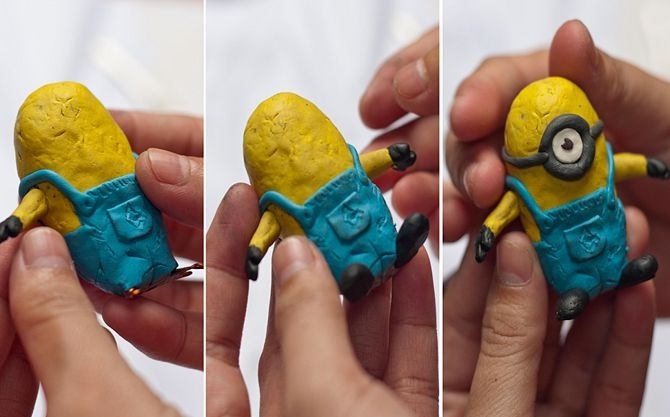
Clay animation is a unique way to express your characters and to truly connect with your subjects as you build them. Not only will you learn how to animate your clay figures, but you will learn how to build these clay friends.
Once you have armed yourself with your main attractions, you will learn how to animate your clay creations in your own short video. Let’s make your clay creations come alive.
Some of the materials you will need are bendy wire, polymer clay or plasticine, a camera, a video editing program, and a computer. Once you have all of your materials ready, you can start your clay animation.
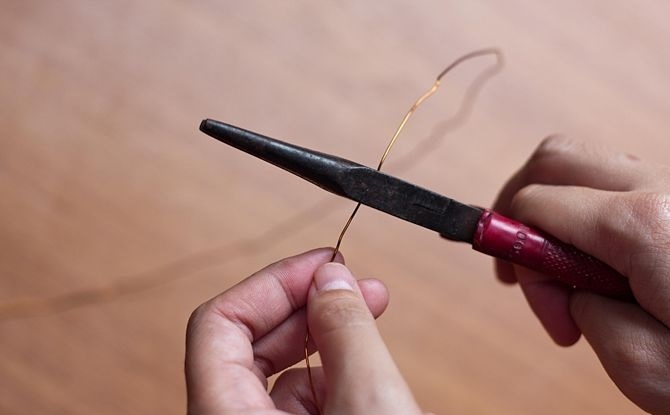
Begin with your polymer clay and bendy wire. You want to make sure that you can work with your clay without it being subjected to hardening while exposed to the open air. Cut a piece of wire three feet long and fold it in half.
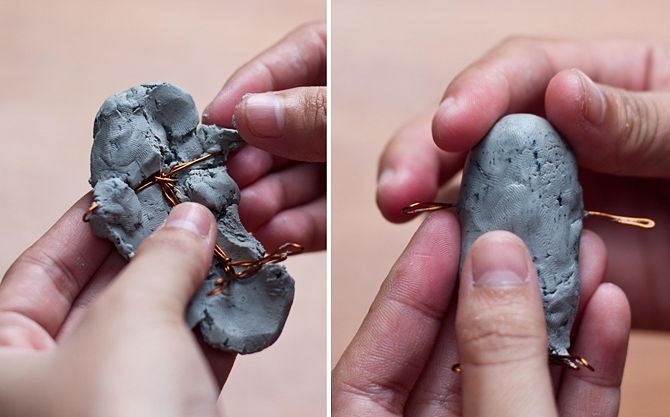
Twist both strands of the wire together beginning at the folding point. Mold your wire into the general shape of your character. Think overall shape rather than definitive shape. This is the mannequin for your clay character. You will mold the clay around this wire called an armature.
The base of your clay character is gray clay, which envelops the wire frame and is your base.
After the base is set, you will add colored clay on top creating detail and definition to your character such as clothing, facial features, etc.
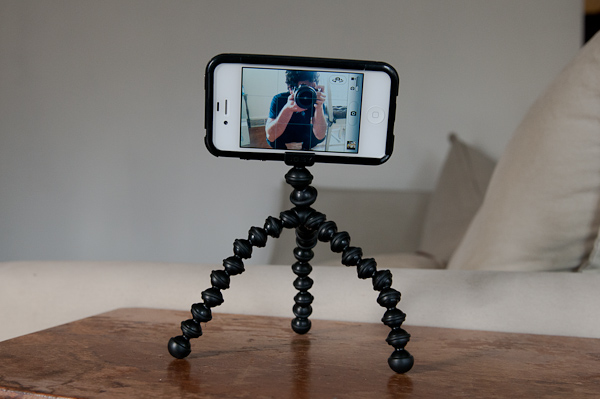
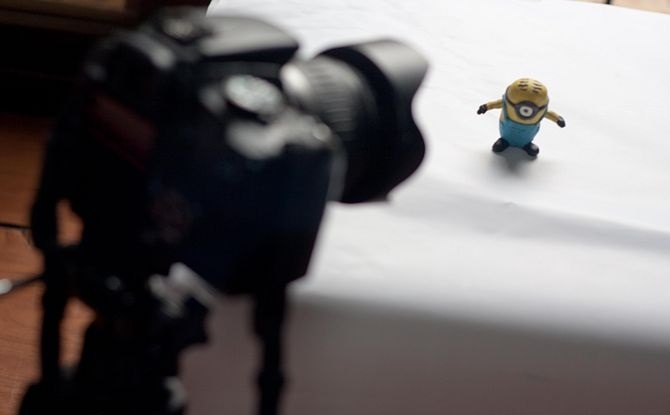
Once your character/s are complete, set up your still digital camera at the appropriate angle at which you would like to capture your animation. This is key. Use a tripod in order for the animation to flow congruently. Every shot must be captured at the same angle.
Use a flat surface to rest your clay figure. Then find a starting position. This position should be marked for many reasons. The first is that clay animation must be moved slowly, frame by frame to look right. Second, if you need to adjust the clay figure, you can pick it up and then place it back down in the right location without having to start all over again. Use a pencil or a piece of chalk for markings.
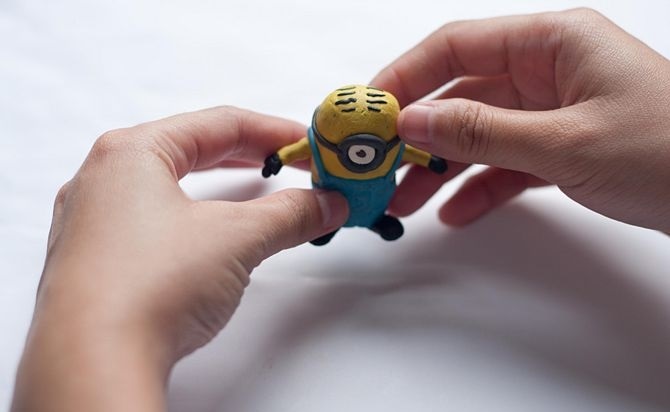
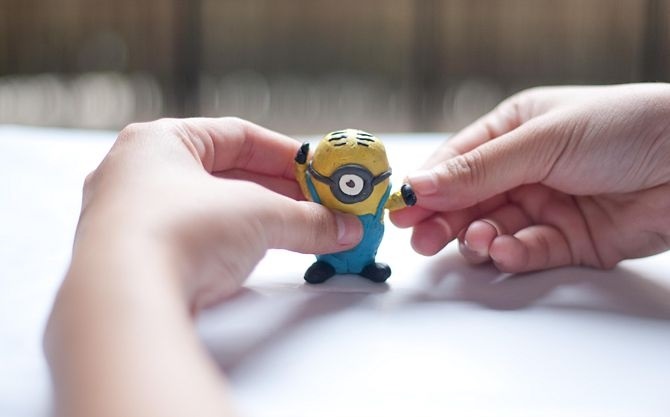
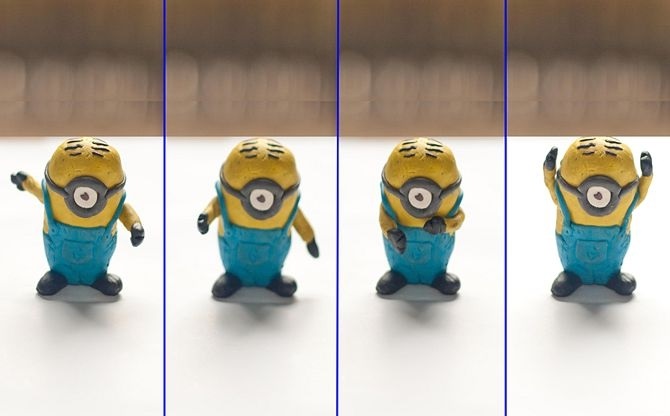
After the first shot, move the character a little bit into the next position and take another photo.
These shot-by-shot photos are called frames. For a film, there are 24 frames per second. You must be precise when shooting clay animation, otherwise it looks like your figure is jumping in the final picture. Continue the process of moving the figure a little bit and taking a photo until you have finished your frames for animation.
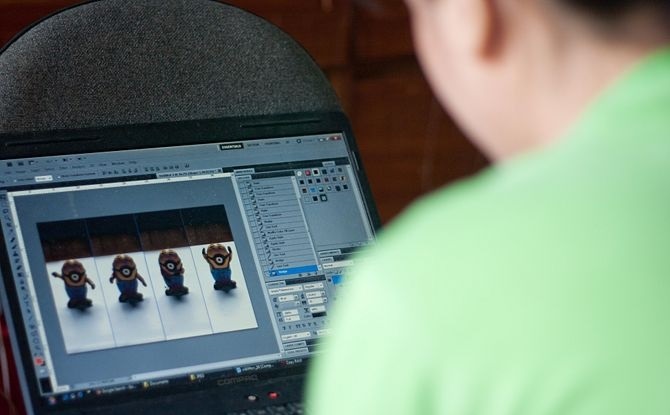
Load all of the pictures you have taken onto your computer and use your favorite photo editing program to link the photos together and speed up the photos into a movie format.
Then watch your animation come alive. This is a lengthy process so take your time. After all practice makes perfect.
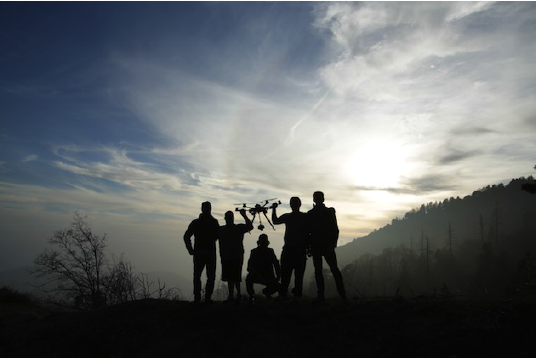
There is exciting news from the Unmanned Autonomous Vehicle Systems Association, UAVSA. This group of leading experts in their fields of engineering, photography, technology, distribution, and production revealed that they are planning to organize an Aerial Drone Cinematography World Tour that explores 48 universities in a period spanning 18 months. The tour will be held in 2015 throughout 2016.
The SUAV/Drone industry is exploding on the scene and the definite future of this industry is indisputably the UAVSA Aerial Cinematography North America Tour. UAVSA has revolutionized the techniques used in film, television, broadcast news, and even in industrial settings through sensor science, airframe, and navigation presentations. These techniques at one time were never imagined even possible and now are leading the forefront in how we capture and share images.
The theme of the tour is Prepare, Connect and Learn; Prepare – Safety, Security, and Privacy, Connect – Communication, Awareness of Others, Learn – Know the Rules of Flight. The tour is then broken down into four specific sessions. The first session is a thorough overview of the UAV where new products will be highlighted as well as all of the fascinating, new trends in flight systems and technology. The second session is comprised of safety regulations that UAV adheres to while the third session covers the new applications being used in light industrial use and in TV and films. The final session will captivate all photographers as UAV demonstrates how the new smart Gimbals are capable of first camera action and simultaneous multi-dynamic shot angles within a single shot. Incredible.
This is an open invitation to academics, engineers, photographers, students, and the public to join this amazing event.
UAV Aerial Cinematography North America Tour is an important event to attend to understand the trends of the industry and the advancements being made. For example, attendees will learn about the state of the art UAV software and hardware used to capture aerial motion and light industrial use. That’s not all. Attendees will then learn how to navigate the software and fly, which can impact film production and more. Other topics that will be explored include safety flying procedures, obtaining insurance for UAV pilot operators and understanding the current FAA rulings for drones in the TV, Film, and Entertainment industries.
As a sponsor in this monumental North American Tour, one is granted with full access to all sessions in addition to direct, one-on-one access to the UAV buyer markets. Sponsors are also promoted through all types of media communication including social media, internet, radio, and television. A Title Sponsor is awarded co-ownership of a National UAV Educational program which entitles the sponsor to be introduced and promoted at each event as well as all media sources throughout the duration of the 18 month long tour.
The Aerial Drone Cinematography World Tour is revolutionary and will undoubtedly change the way we interact and conduct human transportation and commerce. Participants will be fully educated and equipped with the latest skills and trends to be used in multiple industries and settings.
Curious to learn more about the advancements being made in aerial drone cinematography? Click here to read about New York Film Academy’s One-Year Conservatory Cinematography Program.
Author: Brendan Davis, Instructor, Producing Department, New York Film Academy; Co-Founder, Kilin International
“Evolution of Filmmaking in China” panel at the UCFTI Expo, September 16, 2014. Photo provided by Brendan Davis. L-R: panel moderator Maria Lo Orzel, Producer, Studio Strada; Jiang Wusheng, CEO, Beijing Juhe Yinglian Media Co., Ltd; Shan Dongbing, Vice President, Le Vision Picture International; Vincent Zhou, Producer/Director, Writer; David Linde, Founder and Producer, Lava Bear Films; Kim R. Holland, President, Entertainment Finance LLC; Brendan Davis, Co-Founder, Kilin International
There is an old joke that goes something like this: “How do you make a million dollars in the film business? Okay: first, start with 10 million dollars….”
While the humor is hopefully obvious, the fundamental truth of the joke is that especially in the entertainment business, it takes money to make money. In recent years, one of the most promising directions for cash-squeezed Western producers to try and find that money has been from the exponentially-expanding market of China. Likewise, many top Chinese entertainment companies, producers, and executives have been working to extend their international influence by increasing their investments in Hollywood.
However, anyone in the West who looks at China as simply a source of equity without considering the bigger picture is doomed to failure, just as a Chinese producer—no matter how successful he or she is back home—who doesn’t understand the realities of working in Hollywood will find the process very frustrating if not impossible. Fortunately, though, there are various ways that international producers can productively work with China, including joint ventures, assisted productions, and international co-productions, which is what I will talk about here.
In film, a co-production is any project that has two or more partners agreeing to cooperate with each other to share the burdens of producing a movie. An international co-production is simply one in which the partners are based in different countries. And there is one other definition that is important to understand, which is the difference between an “official” versus an “unofficial” co-production; more about that in a minute.
First, a little background. Despite the eagerness of both sides to work together, due to the enormous cultural and market differences between China and the US the difficulty of the primary challenge of all business—to find common ground in order to make a deal that works for all parties—is increased exponentially. Overcoming this is much easier said than done, but it CAN be done. Since forming a China-focused production and consulting company with my Beijing-based partner in 2013, we have developed an active slate of projects that all have some relationship to the Chinese market.
Within the last year, we produced thirteen special episodes of a popular Chinese TV show here in Los Angeles. In the last ten months I’ve made three trips to China, and spent a total of two and a half months living and working there. This week I attended the US-China Film and TV International Expo at the L.A. Convention Center, where the key themes were “patience” and “perseverance”—and correctly so. I was also honored to speak on a panel called “The Evolution of Filmmaking in China,” so this is a topic near and dear to my heart. Despite this small track record, though, I know that my own knowledge of China just barely scratches the surface. I can verify, however, that acquiring familiarity with and knowledge of the country, the people, and the market—or working closely with someone who already has it—as well as having trusted partners on the ground, who speak the language and understand the social and business cultures, is an essential starting point for anyone hoping to successfully do business there as a Westerner.
Red Carpet at the UCFTI Expo, September 16, 2014. Photo provided by Brendan Davis. L-R: Brendan Davis, Co-Founder, Kilin International; Coca Xie, popular TenCent host; Chris Sanders, VP of Genre Development, Kilin International
Since this article can only serve as an introduction to the very complex US-China co-production topic, I will focus on what I think are some of the most fundamental things to consider as you begin or continue your own research.
To start, let’s get back to that distinction of “official” versus “unofficial” co-production, and talk about why that is so important. An “official” co-production is one that is being co-produced by production companies located in countries that have negotiated and signed an official co-production treaty between them. “Unofficial” co-productions are projects created between companies in countries that do NOT already have a relevant treaty in place.
International co-production treaties define mutually agreed-upon conditions and procedures for creating productions that share resources between the countries involved, providing an outline of the rights and responsibilities of each party in the process. This helps to standardize how productions can be jointly developed, financed, produced, and then distributed in each territory, while complying with the laws of both countries. On a practical level, co-production treaties help the cooperating companies/countries to work together more efficiently, with less risk of misunderstanding, which saves time and money. This encourages more co-productions to be created, which is ultimately the reason treaties of any kind exist: to facilitate agreement, which increases trade.
Unlike an official co-production produced under the terms of a recognized treaty, an unofficial co-production agreement has to be created from scratch. This can complicate the process and increase costs and risk. Issues like identifying import/export restrictions related to moving money, production equipment, and/or key personnel (writers, directors, stars, producers) across borders of two non-treaty countries have to be figured out on a case by case basis by the production teams and their lawyers. Finding that common ground I mentioned between the laws and trade regulations of two countries who have not officially agreed to cooperate on such matters can cost significant amounts of time and money, which can break a deal.
It may surprise you to learn that the US has no official co-production treaties in place, with China or any other country. The reasons why would require another article, but by definition, any US co-production is technically “unofficial.” This is not meant to imply that unofficial co-productions are bad; it just means that co-productions that are created without an internationally recognized treaty in place to guide and protect the parties involved makes them riskier than official co-productions if disputes arise.
China, on the other hand, has negotiated and signed filmmaking co-production treaties with many countries. This reflects an increasing interest in extending Chinese cultural awareness internationally, via so-called “soft power” initiatives, which is a stated top priority for China’s leadership. China’s President Xi has spoken extensively about the importance of people in China developing a “Chinese Dream,” which has been summarized as promoting respect for Chinese cultural history and traditions while looking towards their own place in an evolving future. Accordingly, Chinese co-productions are encouraged by the government not only to increase trade, but also to facilitate a greater understanding of and appreciation for Chinese culture around the world.
Of course, in spite of the increasingly connected world we live in, there are still very real cultural differences that affect what we watch and how we want to watch it. For a growing number of people in the US, the abundance of affordable big-screen TVs and high-speed Internet connections have made watching content at home a more attractive alternative than going out to a theater to watch a movie. In China, though, although there is also a huge market for watching content at home, and the technical means to do, the opposite is true….
Thanks to a rapidly expanding middle class, the theatrical movie-going experience in China is increasing at a phenomenal rate. New theater screens are being built in China at a rate of around ten per day, Chinese box office revenues are currently #2 only to the US, and are projected to become #1 by the year 2020. In terms of money, the revenue from theatrical distribution now accounts for about 90% of the total profit of movies in China; the remainder comes mostly from television sales. Unfortunately, due to piracy and other factors, home video and online markets contribute very little to the financial success of a film project, so in the Chinese market, theatrical success is the make-or-break goal.
An additional challenge is that before a film can screen in theaters, a film must obtain two clearances. The first is a permit from the censorship authorities. This is an approval from China’s ratings board which certifies that a film’s content isn’t offensive according to local standards. The second is an actual distribution license. The rationale behind the distribution license is to help protect the business prospects of local Chinese films by maintaining a certain level of Chinese cultural focus in their market, and this is where the true value of creating an official Chinese co-production becomes clear….
Unlike local Chinese productions, whose release potential is technically unrestricted, theatrical distribution licenses for foreign films in China are currently limited to a total of just 34 per year. This means that a small indie film vying for a foreign distribution license in China is competing against Hollywood studio films with huge marketing budgets and influence.
On the other hand, projects that can obtain official co-production status by being shot under a treaty, such as the one between China and India which was just announced, are particularly attractive to Chinese companies and investors, for this reason: once a project has been certificated as an official co-production, then it is considered to be a “local” film in BOTH markets. And since “local” films are NOT subject to the licensing restrictions placed on “imported” films, they can therefore be assured that as long as they can clear any censorship hurdles, they are allowed to be theatrically distributed in China, which is understandably a key requirement for film investors in that market.
I want to end with one last note of caution, and encouragement. Finding commonalty between US and Chinese business practices and cultural differences is more of an art than a science; if you attempt this you will find that translating the languages is the easy part. And for producers whose business model requires a clear-cut, straightforward roadmap for success, developing Chinese co-productions is not going to be a very comfortable process for you. But if you have a strong interest in learning about and building connections as well as business between cultures, and you want to be part of this particular version of the future, then it can be incredibly rewarding, and—like filmmaking in general—well worth the effort. Good luck.
Want to learn more about new opportunities available to enterprising producers? Click here to learn more about New York Film Academy’s Producing Conservatory Program.
Twenty years ago today Friends debuted with a pilot that might as well have been called “The One Where that Show Became the Biggest Thing on the Planet.” It’s crazy to think that it’s been two decades since Rachel first moved in with Monica, and a lot has happened since. The TV landscape that Friends was born into was a very different place from the one we live in now.
Sitcoms were still almost exclusive to the broadcast networks—the Big Three and FOX, which was just graduating from experimental outlier to mainstream juggernaut. Sitcoms themselves were barely recognizable from the form they take today. For half-hour comedies (and really, all media), 1994 was the calm before the storm, a gray area where old met new and when everything was about to change. And it was Friends that sat right in that gray space, on a leather couch with an oversized cup of Central Perk coffee.
Sitting on that precipice of twenty-first century entertainment, Friends represented both the old and the new. It was old in that on its surface it seemed like every other sitcom that graced the airwaves for thirty years previous—multi-camera and backed by a small-screen Greek chorus: the studio audience. Though it wasn’t just another brick in the wall—it was the top of the heap, occupying the same throne once ruled by Cheers and I Love Lucy. It was one of the last Nielsen megahits, before Internet and smartphones and digital cable divided ratings into smaller and smaller pieces of the pie, a water cooler show when everybody at the water cooler still actually watched the same show.
But Friends was also something new, something different a generation that had grown up on sitcoms hadn’t seen before. Friends introduced the modern hangout comedy. Now, hangout comedy is a loose term, a subgenre of sitcoms. Since the dawn of television, almost any sitcom to date can be classified in one of three categories: family comedy, workplace comedy, or friends comedy. Go ahead, try to think of a show that doesn’t fall into at least one of those three genres. Can’t do it, right? Obviously Friends belongs in the latter category, but it also introduced something more specific, something generational.
Unlike Cheers (which was more friends than workplace) or The Golden Girls, Friends allowed viewers to watch a bunch of goodlooking twentysomethings literally hang out (and one got the feeling that the screenwriters were doing the same). Just chill. Shoot the shit while sitting in a café, bouncing snappy sarcastic one-liners off and occasionally having sex with one another. Even more revolutionary, while previous sitcoms had you sit and watch these characters, Friends made it feel like you were there in the coffee shop hanging out with them, something a show could only get away with once enough of the key demographic had actually grown up with TV. It was the next logical step for the entire medium, and it was Ross, Rachel, Chandler, Monica, Phoebe and Joey that took that step.
Obviously it worked, because the show became such a phenomenon. Like any hit show, every network tried to replicate its success by directly copying the idea with new pilots. Friends suddenly occupied the same TV listings as shows like The Single Guy and Caroline in the City, both of which might as well have been titled Other Friends. Most of these shows fizzled as these attempts to recapture lightning in a bottle tend to, but the hangout comedy did become its own tried and true subgenre, finding another hit a few years later in Will & Grace and existing today in the recently departed but critically adored Happy Endings and the very much alive New Girl, among others. But while shockwaves of Friends’ explosive debut still ripple throughout the TV-sphere, twenty years is a long time. Sitcoms today are different in many ways, catering to people who grew up watching TV and made for people who grew up watching TV. Today, half-hour comedies are edgier, more meta, sometimes not even a half-hour. And most of them, unlike Friends or its contemporaries, are single-camera.
Come back tomorrow to read the second part in this series charting the evolution of the sitcom.
Manage Cookie Consent
This website uses cookies to improve user experience. By using our website, you consent to all cookies in accordance with our Cookie Policy.
Functional
Always active
The technical storage or access is strictly necessary for the legitimate purpose of enabling the use of a specific service explicitly requested by the subscriber or user, or for the sole purpose of carrying out the transmission of a communication over an electronic communications network.
Preferences
The technical storage or access is necessary for the legitimate purpose of storing preferences that are not requested by the subscriber or user.
Statistics
The technical storage or access that is used exclusively for statistical purposes.The technical storage or access that is used exclusively for anonymous statistical purposes. Without a subpoena, voluntary compliance on the part of your Internet Service Provider, or additional records from a third party, information stored or retrieved for this purpose alone cannot usually be used to identify you.
Marketing
The technical storage or access is required to create user profiles to send advertising, or to track the user on a website or across several websites for similar marketing purposes.
To provide the best experiences, we use technologies like cookies to store and/or access device information. Consenting to these technologies will allow us to process data such as browsing behavior or unique IDs on this site. Not consenting or withdrawing consent, may adversely affect certain features and functions.
Functional
Always active
The technical storage or access is strictly necessary for the legitimate purpose of enabling the use of a specific service explicitly requested by the subscriber or user, or for the sole purpose of carrying out the transmission of a communication over an electronic communications network.
Preferences
The technical storage or access is necessary for the legitimate purpose of storing preferences that are not requested by the subscriber or user.
Statistics
The technical storage or access that is used exclusively for statistical purposes.The technical storage or access that is used exclusively for anonymous statistical purposes. Without a subpoena, voluntary compliance on the part of your Internet Service Provider, or additional records from a third party, information stored or retrieved for this purpose alone cannot usually be used to identify you.
Marketing
The technical storage or access is required to create user profiles to send advertising, or to track the user on a website or across several websites for similar marketing purposes.