Trends In Photography Over The Last 15 Years

Author: Brian Dilg, Chair, Photography Department, New York Film Academy
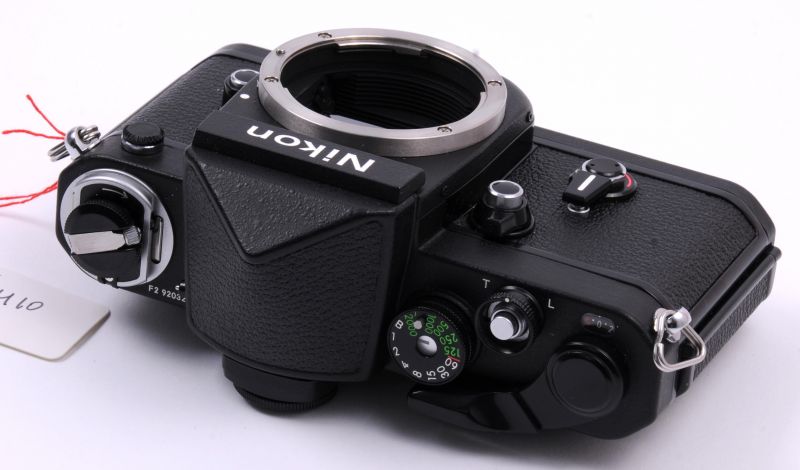
Nikon F2

The last fifteen years have been giddy ones for photographic hardware and software manufacturers. The acceleration of affordable, high equality digital cameras has popularized photography and SLRs far beyond the interests of professionals. Our obsession with technology created rapid growth in sales (at least until the combination of the financial crisis and the overwhelming popularity of camera phones), as each new generation of cameras with even more megapixels has been an easy way to persuade people to throw away their “old” camera and buy a new one, regardless of whether they needed it. Although I still have my grandfather’s fully functional Nikon F2 from nearly 50 years ago, these days we are living in a largely disposal culture.

Does your average amateur need more megapixels to take snapshots of friends and family? Considering the fact that the popularity of actually making prints has declined so precipitously among hobbyists (replaced by the internet), in practice most people don’t need to capture more than three megapixels. That’s the highest resolution of JPEG images you’re likely to find online, even in these days of ultra-dense “retina” displays. The primary reason to use a camera with more resolution than that is to be able to make prints, which require far greater pixel density. In effect, most people are paying for resolution they simply do not need, although higher resolution is usually accompanied by better lenses, sensors, and other aids to better looking images.

So can this technological change continue ad infinitum? Manufacturers have indicated that they have reached the limits of how many pixels can be squeezed onto a 35mm “full frame” digital sensor; studies show diminishing returns when more than 25-35 megapixels are crammed onto a 24x36mm sensor. Undoubtedly, Canon is mulling over how to provide a higher resolution camera than their current 22 megapixel flagship to challenge Nikon’s popular 36 megapixel D800, and pros as well as those who are simply enamored by technology will have fun choosing between them.

While there are far better ways to serve the vast majority of non-professionals using cameras than adding megapixels (a topic I’ll address in a moment), for professionals there are certainly plenty of reasons to improve basic imaging technology. First of all, a physically larger sensor provides significant advantages. Obviously, more megapixels can fit onto a larger CCD or CMOS sensor, but even more importantly, technical issues raised by confronting the density limits of a sensor are eased.

Light (photons) are gathered into buckets called photosites, and the larger those can be, the more photons can be gathered. This becomes especially critical in capturing shadow detail, which is challenged by several factors: 1) the number of photons is at its lowest in the darkest shadows, 2) spurious (ambient) electronic noise (showing up as random bright, saturated pixels) is most obvious the closer we get to black, 3) the human eye is far less responsive and less able to perceive subtle tonality in shadows than in highlights, and 4) when it comes to printing, shadow detail is one of the greatest challenges.

All of that simply means that larger sensors allows for bigger photosites and subsequently better images, especially in the shadows. Bigger photosites also mean being less troubled by the negative effects of a phenomenon called diffraction, which refers to how an image gets softened when light passes through a hole (i.e., an aperture).

Larger sensors also mean less depth of field, which is not appropriate for most photojournalism and street photography, but is one of the uniquely beautiful characteristics that still makes medium and large format film cameras preferable when you want to isolate a subject from the background. Sharpness and resolution can also be a tremendous asset for images with important detail, like landscapes, although it can be too much information in a portrait if you are noticing someone’s pores more than their face as a whole.

Since the proliferation of digital cameras, medium and large format digital sensors have been astronomically expensive. A state of the art 50 megapixel CMOS medium format camera from the industry leaders, Phase One and Hasselblad, will set you back about $30,000-40,000 for the camera body, digital back, and just one lens. That is overdue for change, as witnessed by Pentax’s recent announcement of their 50 megapixel CMOS medium format system that also shoots HD video, the 645Z, for only $8,500. This puts enormous pressure on Phase One and Hasselblad in a way that is good for the consumer, and very likely heralds a return to an updated version of the kind of medium format systems that were used overwhelmingly by professionals prior to the invention of digital cameras.

So what about the more casual photographer, the hobbyists or people who simply want to take snapshots of their lives? What kind of technical innovations are really needed for them? Camera manufacturers face a bit of quandary: your average non-technical camera user would simply like to get their hands on a camera that will make it easy to take great pictures. However, no matter how sophisticated the technology gets – autofocus, face detection, canned situational shooting modes, showy filters, etc. – you cannot put creativity in a can with a “make great picture” button on it. No technology will ever have an iota of understanding of what makes an image great. Just to take one example, exposure, the challenging lighting conditions that lead to frustration (under or over exposure, etc.) in the hands of someone is counting 100% on the camera to do the thinking are exactly the same conditions that can produce fantastic, dramatic images in the hands of someone who has taken control away from the camera’s technology and made a creative interpretation.

In the last analysis, it is precisely the illusion that better technology will lead to better pictures that keeps people buying new cameras – instead of accepting that there are no shortcuts. It simply takes study and practice!

Happy shooting.
Musical Theatre And The Hollywood Inspiration

Author: Mark Olsen, Chair, Musical Theatre Department, New York Film Academy

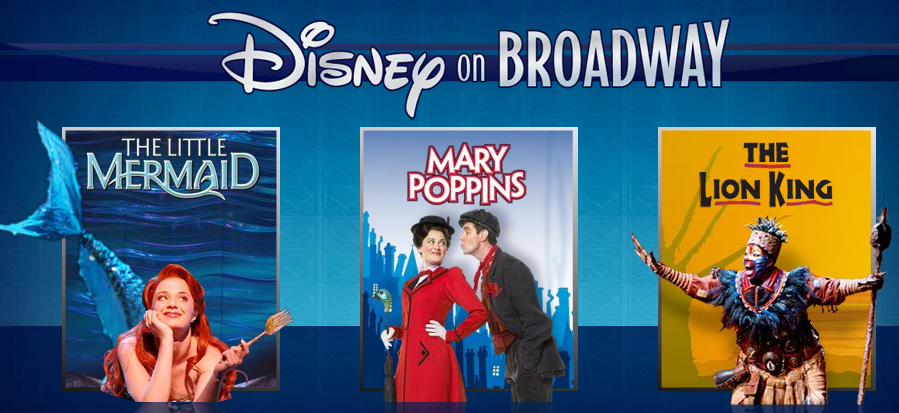
Disney On Broadway

In past eras, musical theatre trends were predominantly linked to styles of music and the vision of a few distinctive composers and creators who were writing as a way to reflect their time and to respond to the current pressures of their day. The universal themes of love and loss and the search for redemption or reconciliation were weaved into highly original plots that gave each production its unique sound and visual aesthetic within its newly minted world.

Fans waited with great anticipation to see the movie versions of stage musicals such as Oklahoma!, Brigadoon, Guys and Dolls, South Pacific, and of course, West Side Story. Many of the great musicals of that era did not just spring forth from pure imagination. They were adapted from another source. Guys and Dolls for example was based on Damon Runyon short stories, Oklahoma! is based on the Lynn Riggs play Green Grow the Lilacs and West Side Story is based on Shakespeare’s play, Romeo and Juliet.

Book and play adaptations have a long and successful history in the musical theatre genre. Borrowing themes and central plot ideas from these literary sources, the creators of the musicals of that earlier era enjoyed great success at the Broadway box office. In some cases, those adaptations as well as original works would be adapted for film, contributing to those box offices and gradually growing a new genre of entertainment called, the movie musical.

In recent times, however, a new trend has emerged in the musical theatre world and as a result, the earlier trend of stage works becoming movies has essentially reversed. Today it is evident that the Broadway musical genre has increasingly come to rely upon Hollywood and the world of the animated and non-animated cinema as its inspiration and source material. Movies, strangely enough, are now being adapted for the stage.

It is no surprise that Disney has become a leading force in this new trend. Moving successfully from animated feature to the stage, Beauty and the Beast and The Lion King launched this trend which has been playing out in a robust fashion ever since. Just a cursory list of recent Broadway musicals reveals not only how many film based musicals have or are now gracing the Broadway stage, but also how much the trend seems to be here to stay for the foreseeable future. Consider the following list:

The Producers, Young Frankenstein, Billy Elliot, Elf, Bridges of Madison County, Rocky, Once, Catch Me If You Can, Grey Gardens, Big Fish, Bullets Over Broadway, The Color Purple, Cinderella, Aladdin, The Little Mermaid. And as I write this, The Coal Miner’s Daughter and Dirty Dancing are in the works in London.

Clearly this is a formula that producers find attractive and in some ways you might ask why it took so long. Movies, we know, can be distributed across a much wider swath of the public and as a result, they can more readily garner the all important title recognition which can, at least initially, give the box office more reliable ticket sales.

As always, regardless the trends and regardless the shifting tastes, for a Broadway show to succeed there must be that elusive combination of magic where the music and the production and the actors and the story all merge to create a synergy of force that lifts audiences and has them dancing or singing as they leave the house. In other words, just because a movie was popular, it doesn’t necessarily spell instant success within the highly competitive Broadway arena. Just ask the producers of the recent flop, Ghosts the Musical.

How To Calibrate The Physical Expression Of A Song

Author: Mark Olsen, Chair, Musical Theatre Department, New York Film Academy

Musical Theatre

To sing a song in the musical theatre is to move beyond the simple presentation of the tonal elements and to allow the song to live fully within an active story-based context. That is not to say that there are never moments of simple song presentation in the musical theatre. Some songs in certain musicals, like many numbers in the musical Dreamgirls, for example, are placed and sung as pure presentations of song. However those moments are rare and even in their straight forward presentational style, are often laced with background context. In other words, a song in the musical theatre is not only sung it is acted. Acting is the truthful blend of visual and aural expression within an imaginary context. Therefore, a singer in a musical must also connect to the physical life, the body language, of the song.

There are numerous classes and coaches who specialize in helping singers improve and maintain their vocal performances. Physical expression, however, tends to get much less attention. That is why many musical theatre performers resort to cliche gestures and wooden physical choices in their work. They become so absorbed into their vocal performance that the physical expression becomes flat, uninteresting, or even unsupportive of the imaginary circumstances.

To begin calibrating the physical expression of a song, the performer needs to have a clear understanding of the “world of the play”. The time period and the overall style of the musical will already carry with it a number of physical demands. The physical life of a farcical screwball comedy is much different than the physical life of a nineteenth century operetta. Once the style is determined, other research begins. In most cases, our modern access to the archival footage of past decades and previous productions makes this a fun and relatively easy process.

Viewing excerpts of old footage as well as paintings from certain periods and researching the clothing of a certain era will go a long way toward feeding the imagination. However, the song needs to come to life within the context of the production. Therefore the performer needs to know how the director and artistic team view the world of the play. Each production of Kiss Me Kate, for example, will have its own point of view and could, as one production I witnessed at the Stratford Shakespeare Festival, be placed in Little Italy, New York. Under those conditions the character choices and onstage gestural life will be uniquely influenced by that location.

Once the initial research is complete, the performer needs to embark upon some special homework: physical exploration. A good beginning is to simply sing the song while moving freely around the room. Put all expectations and conventional notions of how to move and simply commit to a liberated and unedited exploration of movement. The singing need not be particularly accurate or at full volume and should take a back seat to the more important journey of the body. Keep this exploration going beyond the comfort zone, beyond the known and conventional notions of the song itself. Literally take the song on a ride well beyond the confines of its normal boundaries.

This exploration, if done well, will allow for some unique and highly expressive choices to emerge. An hour of physical exploration that results in even a single gestural discovery is time well spent!

Another technique is to play a recording of the song and to move and dance and physically explore without any attempt to sing the song. Let the lyrics and the sounds of the music move the body in abstract or literal ways, free to move in a spectrum of physicality from high magnitude and high energy to miniature and very low energy. As in the other exploration, much like panning for gold, the process is to make a personal physical connection to the song and emerge from the exploration with a few useful choices, nuggets of gold, that can then be refined and adjusted to meet the needs of the song’s circumstance.

Artistic discovery is often linked to limitation of one kind or another. Try giving yourself a series of “rules” or “limits” as a way of forcing you out of your usual physical choices. Tell yourself that you are not allowed to stand with arms extended and palms upward. When you remove this common choice from your vocabulary you are forced to engage the body in new ways and find more interesting and more expressive physical choices.

In conclusion, to calibrate the physical expression of a song a musical theatre performer can choose the following:

1. Research the time period of the musical
2. Research the particulars of the specific production
3. While singing the song, engage the body in a fully released explorative journey
4. While listening to a recording of the song, engage the body in a fully released explorative journey
5. Sing the song while enacting some particular physical limitation that forces new and personally unusual choices to emerge.

Review Of New York Film Academy's Animation BFA

Author: Mark Sawicki, Co-Chair, Animation Department, New York Film Academy Los Angeles

Animation BFA

Q. What will I learn in the Animation BFA program?

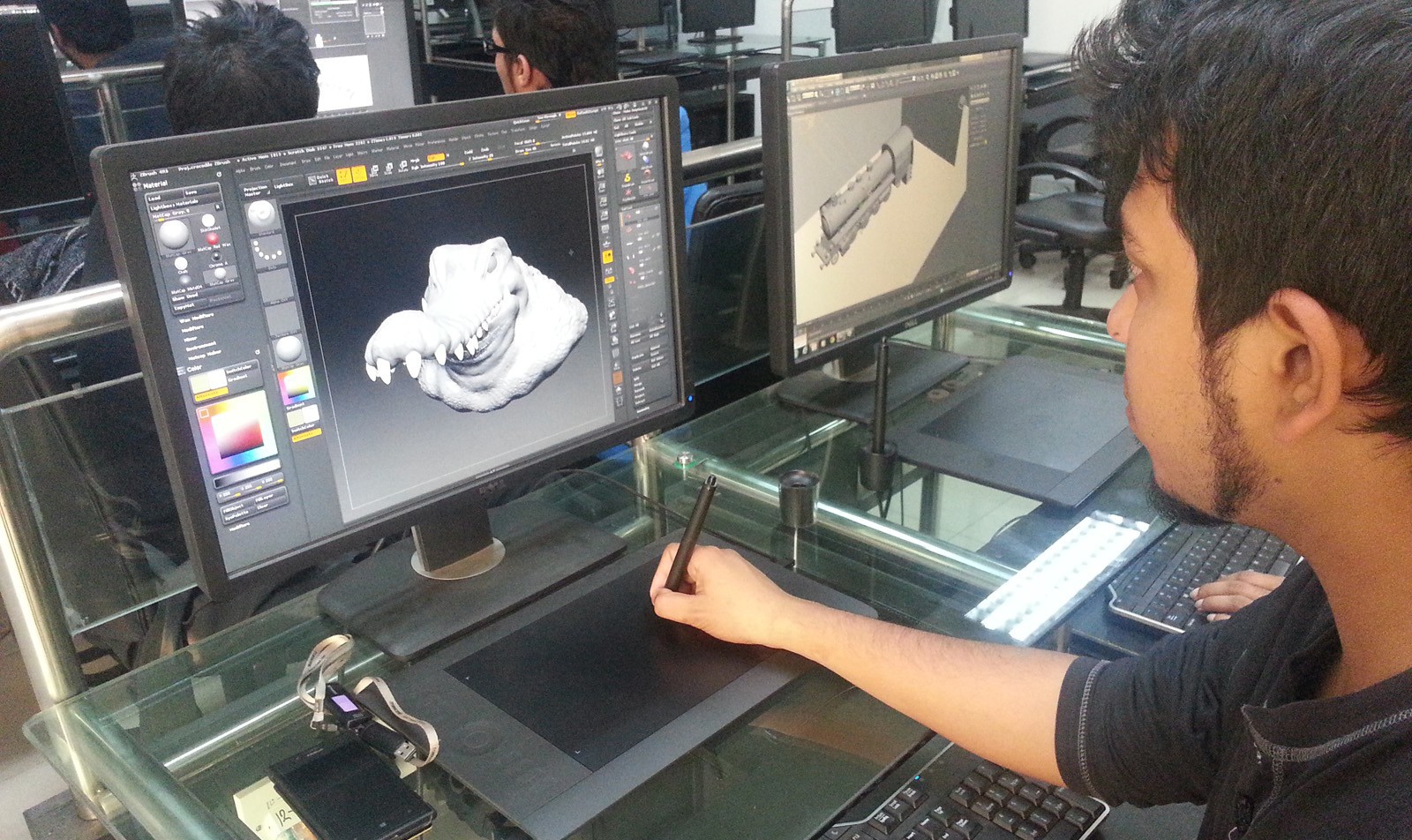
A. The full program will take you through drawing classes, sculpting classes, an introduction to 2D software like Photoshop, After Effects and Nuke and 3D software like Maya and ZBrush. You will also use editing software like Premier. After the software introductions, you will learn to build animation 3D environments and design characters. You will texture and light environments and compare real world lighting to computer-generated (CG) lighting. You will learn to rig and animate your characters and create short movies. Meanwhile, all of your work will contribute to your portfolio and demo reel so that you will have material to show prospective employers.

Q. Do I have to draw well to get work in animation?

A. It depends on what area of animation you are interested in. If you like character design or environmental design, it would help be able to draw well. Knowledge of anatomy is very desirable for character design. An understanding of perspective and how to use it is important in figure drawing and environmental sketches. But if you have an aptitude for software and are technically minded, you could focus on model building (objects or characters) or rigging the skeletons of the characters. You could also create visuals like particle effects used for sand (The Mummy) or fireworks. There are also effects needed for hair and cloth dynamics. There is more to animation than feature movies, like Toy Story. Animation software is also used for pre-production planning and visual effects in movies, like Gravity and World War Z.

Q. What if I’m not sure I want to commit to the full BFA program? Is there a way to take short courses to see what I like the most?

A. In Los Angeles, we offer a 4-week crash course that teaches you how to create a short animated movie. There is also a 1-year program that is very intensive. You should come away with portfolio additions and demo reel material.

Q. How many different job roles are there in 3D animation?

A. In feature animation, take a look at the end credits for an idea of all the job roles. Just to get you started, here is an initial list:

  • Designer – character
  • Designer – visual effects
  • Designer – layout/storyboards/animatics/pre-visualization
  • Matte painting
  • Character animation – full figure
  • Character animation – facial
  • Crowd/herd/flock animation
  • Effects animation – natural (fire, water, ice, snow, wind, etc.)
  • Effects animation – supernatural (magical powers, destructive effects, space/cosmic effects, etc.)
  • Environmental modeler
  • Vehicle modeler
  • Character modeler
  • Texture painting (2D)
  • CG lighting/rendering
  • Digital compositing
  • Technical director – look (surface treatment)
  • Technical director – character rigging
  • Technical director – character effects (hair, feathers, cloth, fat, muscles, scales, etc.)
  • Technical director – visual effects
  • Technical director – general
  • Technical director – virtual camera setup
  • Technical director – pipeline
  • Stereoscopic layout/artist

Q. How many different job roles are there in movie effects?

A. It depends on the movie. A movie like Gravity is almost 100% CG except for the actors. Different movies will have varying amounts of effects to live action ratios but even the live action scenes will probably be digitally manipulated. Also, unlike feature animation studios that produce just about everything in-house, though, movie productions tend to sub-contract the work out to specialty studios, so you would need to become familiar with the contract studios, like ILM, Weta Digital, Framestore, and Sony Image Works. Very big budget effects movies can sub-contract to so many specialty studios that coordinating and wrangling shots, elements, and data is a major job unto itself. Also, there may be one pre-visualization company that creates the entire movie using 3D animation tools and this becomes the template for all the other effects houses to follow. Because there is more of a mix between CG elements and live action, compositing tends to play a bigger part in the effects, too. This list is compiled using a movie like Iron Man, which has a variety of visual effects (not to be confused with special effects that include pyro techniques and physical devices):

  • Pre-visualization – modeling, rigging, animating, virtual camera, lighting, effects, editing, sound
  • Technical director – motion capture
  • Animation – motion capture clean up
  • Compositing preparation – rotoscoping, painting, motion tracking, match moving, stabilization
  • Compositing – green screen
  • Texture painting/texture scanning
  • Compositing – crowd duplication
  • Live action plate coordinator
  • Technical director – pipeline
  • CG modeling (final) – vehicles, environment
  • CG modeling (final) – character
  • CG lighting, rendering (final)
  • Stereoscopic layout
  • Technical director – character rigging
  • Technical director – visual effects

Q. How do I get the most out of the Animation BFA program?

A. Give your all to each class, even if you think you are not interested in that software or discipline. You never know which skill set might be your entry into your industry of choice. For example, some students might get their start by creating motion graphics for rock videos, commercials or educational videos. Some people get their start in movies doing green screen composites for effects studios that are sub-contractors to movie studios producing high profile, big budget films. Some people get started creating cinematic effects for mobile devices. Keep an open mind and do your best work because, at the very least, you will be adding great looking images to your portfolio.

Q&A With Nick Yellen, Producing Dept., New York Film Academy

Nick Yellen Co-Chair of NYFA's Producing DepartmentQ: What are some lessons to learn in order to become a successful producer?

NY: Realizing that this isn’t a 9 to 5 job: it is not a hobby, but an actual lifestyle. You are a producer 24/7. Learning to produce is learning how to effectively manage your time and your talents, networking with others, and seeking out and finding great material, along with having an unyielding passion to see it through to a final production. Oh, and not taking no for an answer. You cannot personalize rejection. No just means that you have to find another route towards accomplishing your goals as a producer. The yesses are out there too.

Q: How do I get the most out of my program at NYFA?

NY: NYFA’s producing program offers one of the finest educations for future producers, agents, managers, and execs, providing skills for any career requiring strong project management and leadership ability. We offer a very intense program where one can develop an abundance of career building abilities in order to start working immediately in the field. An uncommonly high percentage of our graduates are employed at production companies, agencies, or producing their own features shortly after graduation. Students who show up, put in the hard work, make the effort and apply the necessary discipline come out with a proficiency that enables them to work in this industry soon after graduation.

Q: Can I really make a living in this field?

NY: Without a doubt you can. Recent graduates are working in production capacities all over the globe. With the right work ethic and attitude our education introduces and hones the skill sets needed for a lengthy career in production.

Q: Will my faculty be comprised of people who only teach or will I be able to study with working professional producers?

NY: The entire producing faculty is comprised of teachers made up of working entertainment professionals, active in the business and practicing what they preach.

Q: What is the most valuable lesson you’ve learned in your professional career?

NY: Respect. Be good to everyone you encounter on the job. This is an industry where hard work is rewarded often—and very quickly. The P.A being bossed around on the set to get coffee is tomorrow’s producer. That assistant taking notes in a meeting is tomorrow’s studio executive. In fact, one friend went from an assistant at a production company to Chairwoman of a major studio in less than five years. This is an industry filled with so many immeasurably talented, hard working, and bright people that the talented and disciplined ones often advance at unheard of speeds.

Obviously talent is imperative and knowledge is essential, but there will always be that human/social component of whom you’ve met and whom you know that factors greatly into success. It always boils down to basic fundamental human dynamics: people want to work with people they like and trust. It would be a crime to squander a great film or TV business opportunity due to dismissive or poor treatment of another person. The “industry” is like an elephant—a memory that never forgets.

You just don’t have the luxury to treat people poorly in this business if you want to succeed in it. It really does come back to that axiom your mother instilled in you about treating others the way you yourself would like to be treated. Work hard, learn everything you can, meet everyone you can, treat them with respect, and opportunities for success are yours to make.

Q: How do I get the most out of my program at NYFA?

NY: They say that half of success is just showing up. Now I’m not sure that’s entirely true. Showing up and paying close attention go hand in hand. Here at NYFA, you are rewarded by what you put into the program. If you attend classes and pay attention, apply what you learn and treat your career with the respect it deserves, you are one step ahead of your competition on the road to your success in this business.

Q: What are some of the lessons one needs to learn in becoming a successful producer?

NY: There are so many lessons—life lessons and industry lessons. But keep in mind that people don’t often realize how much punctuality along with their professionalism are make-it-or-break-it qualities for young producers. Being on time in this business is crucial. In fact, the definition of on time in this field is showing up 15 minutes early. Being on time shows respect for your employers, your coworkers, and demonstrates your own work ethic. It shows that you respect yourself. This is a field compromised of very talented people vying for opportunities. If you show that you are not taking your opportunity seriously you will find yourself coming into work to meet your replacement. Listen carefully to those who are engaged in doing what you plan to do. Ask questions. Get it right. Be responsible, dependable, and give 110% and your responsibilities will grow as others learn to delegate more and more important work to you.

Q: Which pieces of equipment do you find most effective in your field?

NY: Lol. Your cell phone. Truthfully. A producer seems to live on the phone. A smart phone is the most valuable tool a producer has—it’s the office in his pocket and his trusted assistant who provides information and takes messages. It will allow the producer to be in constant contact with talent, crew, staff, negotiators, execs, agents, managers, buyers, etc. We’re always out and about, we need to be in contact and easily reachable to those with whom we work.

Q: What are the essential first steps to breaking into this field after completing a program at NYFA?

NY: Putting yourself into an environment where everyone you deal with all day is part of this business while rapidly expanding your network of contacts. No matter if it’s a P.A job on a film set, or an assistant position at a new or an established company, your first job is your launching pad to future success. Keep your eyes and ears open, do your job well and meet people—treating high and low with courtesy—and the next step up in your career is right around the corner.

How To Use Different Methods To Storyboard Your Film

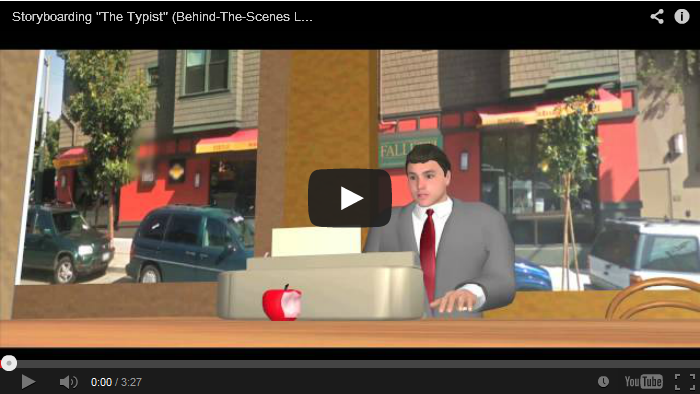
New York Film Academy instructor and filmmaker Abraham Heisler provides an in-depth look into creating the visual feel of his short film “The Typist.” In the following video, he emphasizes the significance of storyboarding, pre-visualization software like FrameForge 3D, innovative methods, and other means by which to convey one’s vision to his or her director of photography and crew. This is a helpful how-to that will give you a glimpse into the making of “The Typist” in addition to better understanding the filmmaking process.

https://youtube.com/watch?v=7Cg3qyD3WOE

Transcript

Hi guys, my name is Abraham Heisler. I recently completed a short film called “The Typist” and it’s highly stylized and has a look and feel to it that is pretty unique. So I wanted to share with you some preparations that went into creating that look in hopes that it helps prepare you for your own film productions.

So first off, I’m a pretty big fan of storyboarding. Storyboards help me conceptualize the way scenes will cut together and allow me to develop an overall visual pattern for the film. So for instance, my film is about a guy that is struggling to relate to people in the world around him. And I wanted to portray the protagonist in his own world with shots that are very symmetrical, neat, and organized, but contrast those shots with low and Dutch angle shots whenever he is trying to fit in. This is a visual theme I was able to experiment with while in the storyboarding process.

I use a pre-visualization software called FrameForge 3D. And what’s beautiful about this program is that you can create a 3D world for your characters to exist in and then you can select which camera you want to move around in order to find the best angles to tell your story. Not only does it allow you to experiment and play with ideas ahead of time, but it also creates wonderful, beautiful storyboard images that you can show to your director of photography, art department, and rest of your crew.

For shots that were difficult to achieve in FrameForge 3D, I went to the actual location and snapped photos or downloaded images off the internet and Google Maps in order to get a sense of the setting. There’s a complex scene in the film where the main character enters a hipster café and gets rejected by technophile enthusiasts for typing on his own typewriter. I wanted to play with the sounds of technology—iPads, iPhones, and other Apple products—and juxtapose that with the editing of sounds of the typewriter. In order to get the music and pacing right for the scene, I designed a quick schematic from the photos from the internet in order to give my crew a sense of what I was going for, so check it out.

I hope this has been helpful and you’re able to apply some of these techniques to your own filmmaking. Thanks for watching and if you’re interested in checking out the film or learning more about the pre-production process that went into creating it, please visit our crowdfunding campaign at pozible.com/thetypist. All the best!

Q&A With Chris Swain, Chair, Game Design Dept., New York Film Academy

Chris Swain

Q: What is the first lesson to learn in becoming a successful game designer?

CS: Games are playable systems. Successful game designers understand how to prototype, playtest, iterate, and collaborate to create compelling systems independent of software development.

The only real way to learn the craft is to do it. A lot. NYFA Games students build multiple game prototypes each semester on paper (often as part of solving hard design problems for software projects). By building on paper to start, students gain a deep understanding of the craft and have the foundation of knowledge that will allow them to build for any current or future technology platform – e.g. console, mobile, handheld, location-based, etc.

Q: What do you wish you knew when you started your education in game design?

CS: I wish I understood how important collaboration skills were to my success. Game development inherently requires multiple skill sets to do well. Students who get formal training in collaboration and understand how to get what they want with other people go the farthest.

Q: How do I get the most out of the game program at NYFA?

CS: Each semester you will create a functioning digital game with classmates and an instructor who is an A-list professional game programmer. That means you get to run your own game studio each semester.

When you graduate you will have worked with multiple combinations of students and multiple different instructors and you will have a portfolio of titles under your belt.

To get the most out of the program, we encourage students to post all of their work to personal portfolio websites where potential collaborators and employers can see and play your work.

Q: What is the most valuable lesson you’ve learned in your professional career?

CS: The game business moves fast. Platforms, programming languages, and business models change each year. To be able to surf on something that changes this fast you need a foundation of knowledge that transcends any one technology.

That’s why we stress playable system design independent of software. That’s also why we formally teach collaboration, Agile Development, and business of games in parallel with our design courses.

Q: Which pieces of equipment do you find most effective in your field?

CS: Having a laptop with a large screen enables you to bring your game studio and presentation station anywhere. It can be a Mac or Windows or dual-boot.

Also putting all your work in a cloud-synced folder (such as Dropbox, Google Drive, or OneDrive) means your work is always backed up and always at your fingertips via any device – e.g. phone, tablet, NYFA lab computer, etc.

A software package that we recommend for student laptops is Adobe Creative Suite. Where programming languages come and go quickly Adobe tools are timeless assets.

Q: What are the essential first steps to breaking into this field after completing a program at NYFA?

CS: We encourage all incoming students to start LinkedIn accounts and to add their entire faculty, classmates, guest speakers, and anyone else they meet while students to their network. We also post links to all the good game events happening in NY and LA every week so students can have the opportunity to meet the community as early as possible.

We encourage students to put a link to their personal portfolio sites on their LinkedIn profile and add all of their projects to their portfolio – e.g. pictures of their paper prototypes, class assignments, working software, etc.

Finally, we provide students access to an ever-evolving list of game company internship / job pages. And we provide tips for getting interviews. Breaking into the industry is a mix of doing good work and knowing people.

Q: Who do you consider to be the most influential artists in your field?

CS: Great artists in game design include Shigeru Miyamoto, Will Wright, Sid Meier, Hideo Kojima, Peter Molyneux, Rob Pardo, Cliff Bleszinski, and many others. Those stars all got where they are with the help of teams of great collaborators – including visual artists, business people, engineers, composers, and writers.

Great game studios – past and present – include: Valve, Riot Games, Blizzard, id Software, Maxis, thatgamecompany, Naughty Dog, and others.

Instagram Collaborations: Artist Breathes New Life Into Digital Photography

Since its release in 2010, Instagram has become a hugely popular social network for photo-sharing and socializing. It’s also been something of a black hole for photography; for every well-composed, artistic photo on the site, there are a thousand selfies and snapshots of people’s dinner.

Instagram

While Instagram is by no means meant to be a site for professional photographers, it’s still disheartening to see such a potentially valuable resource go to waste. It could be a place for enterprising new artists to find their voice, gain a following and hone their craft. Instead, it’s quite often a dumping ground for mediocrity, and its reputation can chase away many photographers who could actually benefit from the exposure it could provide.

As photography becomes more accessible, the overall quality often suffers, and the value of really interesting or innovative photography is cheapened by the deluge of images in every corner of the internet. When every cell phone doubles as a camera, formal photography courses and training seem unnecessary – and the overall perceived value of the industry certainly suffers as a result.

Is Social Media the Death of Photography, or the Start of Something New?

The Internet is becoming increasingly visual. The newest social media sites, including Pinterest and Instagram, focus purely on sharing images, as do some of the newer contenders such as SnapChat. Even the old bastions of Facebook and Twitter have been overtaken by images over the last couple of years, and news sites like BuzzFeed rely heavily on visuals to carry their written articles (or what constitutes for them on the site). This reliance on images could be great news for photographers, especially those willing to think outside the box.

Even a decade after Facebook’s inception, social media is finding its feet (to a certain extent) and it takes time to adapt and find the strengths of any new medium. When someone finds a unique niche to explore, the results can become both powerful and viral and some enterprising photographers and artists are making the most of the format to create innovative new art that perfectly suits the medium to create something utterly fresh.

One such artist is Eliska Podzimkova, a graduate of the New York Film Academy. Though she lives in Prague, Eliska spent the summer of 2012 in New York studying animation and falling in love with the sights and sounds of the city. Once she returned to Prague, she began searching for photographs that would remind her of everything she loved about the city – and along the way, she created something magical.

A Marriage of Photography and Art

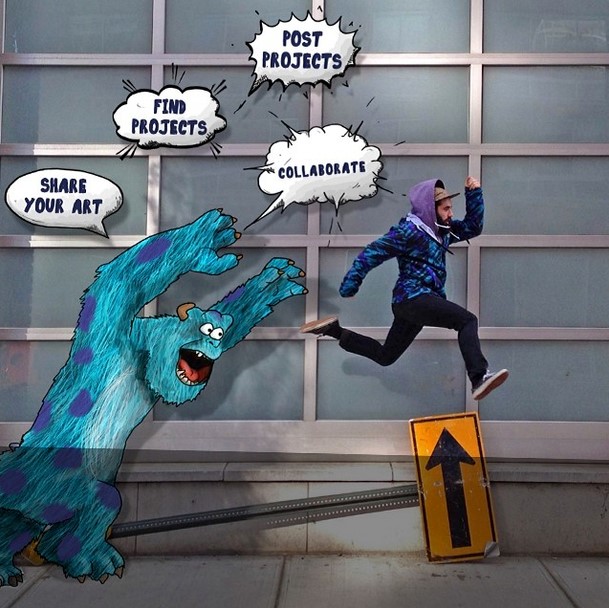
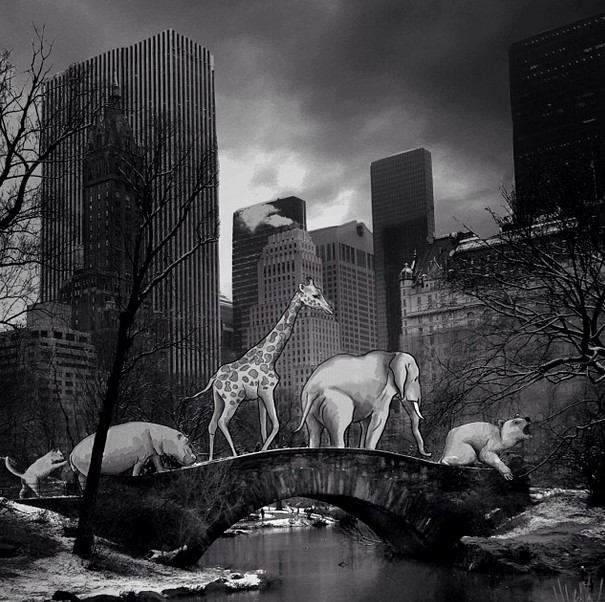
Eliska’s Instagram page, AnimateNY ) combines photographs of the city with her own whimsical drawings and animations. Unlike other kinds of photo manipulation, the results don’t aim to imitate photo-realism or dramatically alter the photographs with heavy filters and effects. Instead, Eliska’s drawings add a totally new dimension to the photographs. Some are funny, some are cute, and most are utterly surreal. Many are fully animated with sound or music. All of them capture the essence of New York, the talent of the original photographer and Eliska’s own unique style.

animateny

The way the Instagram page works is pretty simple: People post photographs with the #animateNY hashtag, and Eliska chooses some to customize with her art. The end result is a fun, interactive, multimedia art form that can only exist on social media.

Thinking Beyond AnimateNY

Right now, AnimateNY has over 13,000 followers, which shows just how successful this sort of innovative approach to collaborative photography can really be. Eliska’s Instagram page has around 100 images so far, with more added as she has the time and inspiration to complete them.

animate_ny

But the beauty of the AnimateNY project is that it doesn’t have to just be Eliska’s work, it doesn’t have to be limited to New York, and it doesn’t have to be constrained to any one style of art or photography.

The idea of Instagram collaborations between photographers and artists can be adapted by professionals, hobbyists, students taking photography courses or anyone else with an interest in cultivating something unique and beautiful from the often ephemeral fabric of Instagram photos.

Collaborating takes all the best parts of social media – including a vibrant marketplace of ideas and styles – and uses it to create something new and interesting. Collaborations like those on Eliska’s page could not exist without modern technology, and embracing this movement can open new doors to worlds for creative people to explore.

How To Submit To An Audition Notice Via Email

Author: Glynis Rigsby, Chair, Acting Department, New York Film Academy

Casting Notices

From personal experience, professional casting notices are well thought out and built specifically to streamline the process for those filtering submissions. An easy way to make sure that your submission is immediately dismissed is to ignore instructions in the casting notice, so READ CAREFULLY.

1. FOLLOW DIRECTIONS. In a profession in which taking direction is a necessary skill, it is imperative that you demonstrate this immediately. If there are no instructions for the subject line of your email, it should include the name of the character and your name: Submission for Caroline by Samantha Potter.

2. If the reply address comes with a contact name, make sure you address that person in your email and make absolutely sure that you use both the right gender (Ms. Brandon Marie Miller) and the correct spelling. Again, these small details give potential employers a sense of who you will be in a casting session and on set. Also give a brief(!) description of why you would be a good fit for the project or what makes you eager to join this production team. Make sure you send this from an address that you check often. If you will be away from email, provide another means of contact like a cell phone number. Be sure to include your name and a warm but professional closing such as “Thank you” or “Best regards”.

3. The body of your email should reiterate your name and the role you are submitting for, preferable in the form of a short, polite note:

Please find attached materials submitted for the role of Caroline in THE BEAST STALKS ITS PREY. I have admired the work of Director Tony Souza for many years, particularly in the series WHEN ROME BURNS and believe that my experience as a zoologist would be an asset to the role.

Best regards,
Samantha Potter

4. Attach a headshot and resume to your email. You may ALSO provide a link to additional materials and content, but do not expect casting office staff to go the extra mile to retrieve your materials. The headshot should look like you but if you have a new look that reflects a significant change, you can send a second photograph to show this. You should be fully clothed in both photographs. Headshots should be in .jpg format and viewable in the body of the email. Do not attach pictures larger than 400 X 500 pixels. 300 X 400 is even better. The file name should be simply your full name: first_last.jpg. If you send more than one picture, simply add the number 1 and 2 to the file name. If you have a long and complex first or last name, simplify by replacing your first name with an initial. Long, complex file names can complicate the process and crash browsers. Your name should appear at the bottom of the image and be readable. This will help the casting staff if materials are separated.

5. It is recommended that you submit your resume as a .pdf to preserve formatting. The .pdf can have the same file name as the headshot since the file type is different (jameson_jones. pdf and jameson_jones.jpg). This will also help if the files become separated. Resumes should fit to one page. If you have additional credits, list them as “available upon request”.

6. Your email address should reflect your professional self and not include graphic or unprofessional language or ideas.

7. Refrain from asking questions that are addressed in the original post.

8. DO NOT submit if you are:
– Unavailable for the dates of the project
– SAG/Aftra and the project is non-Union
– So significantly different from the description that your casting would change the nature of the story. For example: a 24-yr old actress submitting for a 68-yr old grandmother. Casting notices are written specifically to filter submissions and ignoring those filters will not endear you to anyone in the casting office.