NYFA Veteran Students March in Veterans Day Parade

veterans day parade
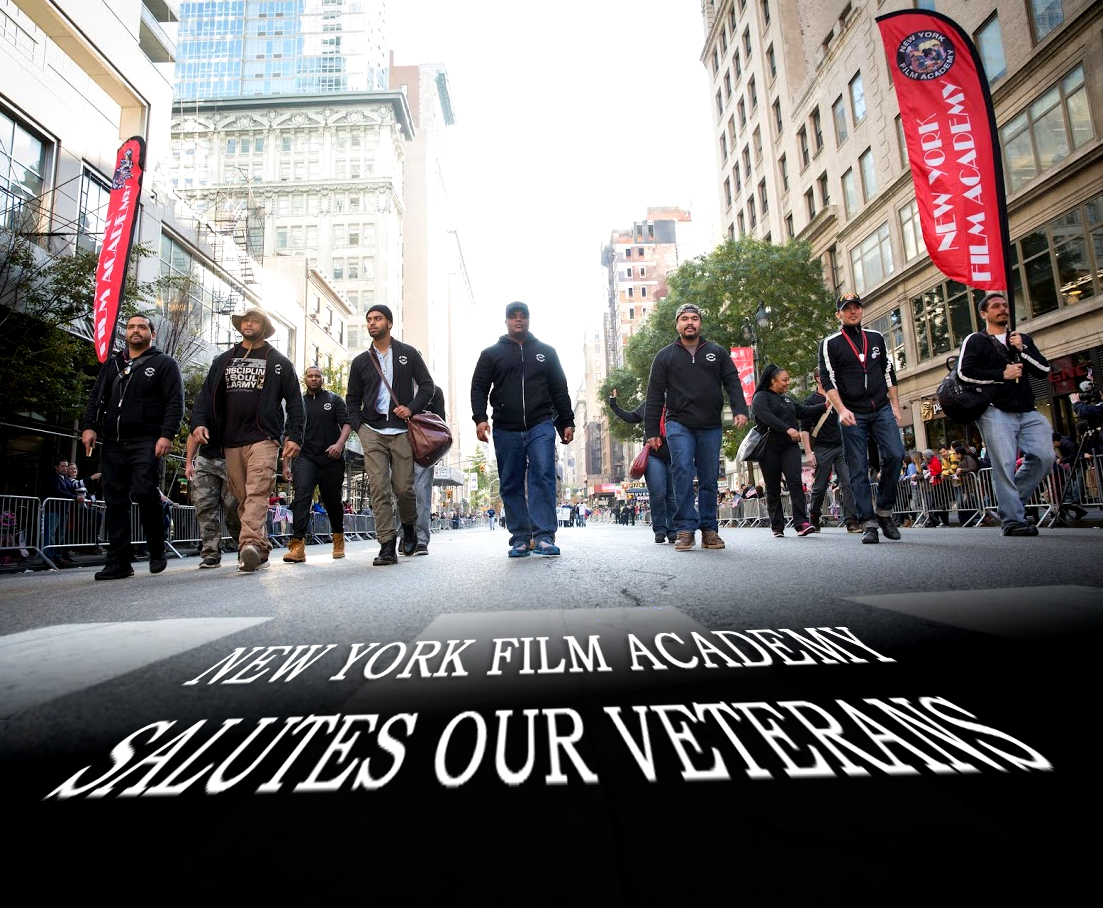
Once again, the New York Film Academy and its veteran students marched in New York City’s Veterans Day Parade down 5th Avenue, which included over 600,000 spectators showing their full support. The annual event honored those who have fought for our freedom and included over 21,000 participants.
Ermey
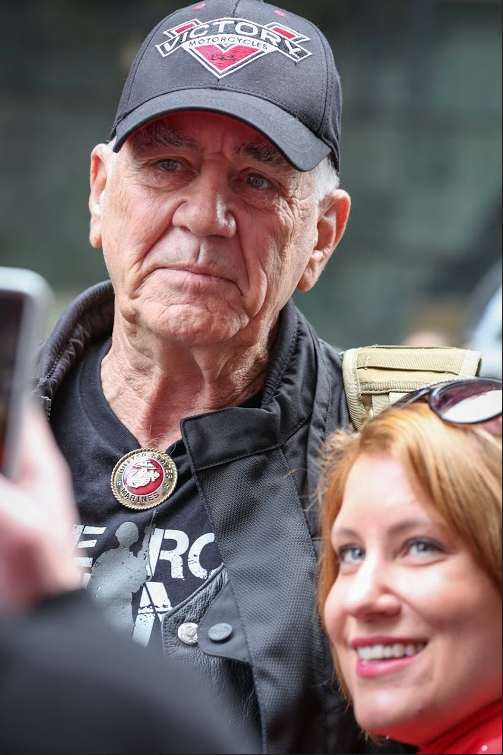
NYFA Acting student Jessica Gordon with Actor, Ronald Ermey

NYFA veteran students that participated in this year’s parade were:

  • Justin Ford: One Year Producing
  • Dean Torres: One Year Acting for Film
  • Tyric Jackson: Two Year Acting for Film
  • Maria Ortiz: One Year Screenwriting
  • Robert Johnson: One Year Filmmaking
  • Michael Thomas: One Year Filmmaking
  • Carlos Lobaina: One Year Filmmaking
  • Jessica Gordon: One Year Acting for Film
  • Shane Velez: Evening Acting for Film
  • Peter DeJesus: One Year Acting for Film
  • Alexis Maldonado: One Year Filmmaking
  • Justin Flemming: One Year Filmmaking
  • Brett Yuille: Two Year Acting for Film

As film and acting connoisseurs, it was easy for our students to spot Ronald Lee Ermey, who brilliantly captured the character of Gunnery Sergeant Hartman in Stanley Kubrick’s Full Metal Jacket. Ermey’s masterful improv was due in large part to the fact that he was actually a former Gunnery Sergeant in the Marine Corps. A strength that Kubrick was able to take full advantage of.

Aside from the celebrity sightings, the students had a wonderful time marching with their fellow students and military peers on one of Manhattan’s most famous avenues.

“The parade was a great opportunity for our veteran students to honor those whom they served with and those who served generations before,” said NYFA NYC Director of Veterans Affairs, Joshua Birchfield. “It also gave them the opportunity to thank the community of New York City for their support. Our veteran students truly came out to show their appreciation and how NYFA is contributing to their life after military service in a positive and meaningful way.”

The students finished the event feeling energized, supported and revitalized — which was the intent of the parade — mission accomplished.

NYFA has been listed as a Top Military Friendly School by militaryfriendly.com. We work with the Department of Veterans Affairs and many of our programs are approved for post – 9/11 GI Bill benefits at both New York City and Los Angeles campuses. Our Los Angeles campus also participates in the Yellow Ribbon program. If you’re a veteran interested in studying one of our hands-on creative programs, please visit our Veterans Benefits page for more information.

Award-Winning Commercial Filmmaker Transitions to Feature Film

BrunoWith years of success in the commercial directing world, including a “best advertising” award at the Garden State Film Festival for the commercial Flanm by Coca-Cola and several awards for the advertising campaign Big Shake that has been a viral success on the Internet, New York Film Academy 8-Week graduate, Bruno Mourral, has decided to venture into the world of feature filmmaking.

Bruno had been working as a professional prior to enrolling at NYFA, but wanted to truly hone his skills over an 8-week summer program. “It helped me strengthen my knowledge of filmmaking,” said Bruno Mourral. “I mostly made good contacts in the filmmaking industry. They gave me the opportunity to partner up and create Maninhat, a production company based in New York City. We worked internationally with several big brands such as Sony, Sports Illustrated, Nissan and others.”

Since 2005, Bruno has had the idea for his feature, Kidnapping Inc., which he initially intended to have a rather serious tone. During his time at NYFA, he went ahead and worked on an idea for a short-film revolving around the theme of Kidnapping. Though, his tone shifted to that of a dark comedy.

Last year, Bruno decided to team up with two screenwriters to help him develop a feature based on that short story. “The experience of working with two people who shared the same ideas and passion was great. This helped me bring the movie to a whole other level. Today, we are very pleased with the Kidnapping Inc. script.”

Based on actual events, Kidnapping Inc. is a dark comedy, satirizing the Haitian society’s epidemic of kidnapping. The movie is about two deliverymen working for the largest kidnapping corporation in Haiti. While delivering the wealthy senator’s son, the duo foolishly misunderstand each other and one of them ends up killing the boy. Trying to fix this mess, they stumble upon the senator’s son look-alike, which sets them on the craziest kidnapping of their lives.

Bruno is currently in the midst of a Kickstarter campaign, in which he hopes to raise $150,000. To learn more about his fundraiser, CLICK HERE.

If he raises the funds to film the feature, his goal is to introduce the film to several festivals and find distribution deals to make this movie accessible to the world. He also wants this movie to be a premiere for the rebirth of the Haitian film industry.

Watch below for a sneak peek of Kidnapping Inc.

NYFA Alumnus Jesse Kove Screens ‘As Night Comes’

As Night Comes
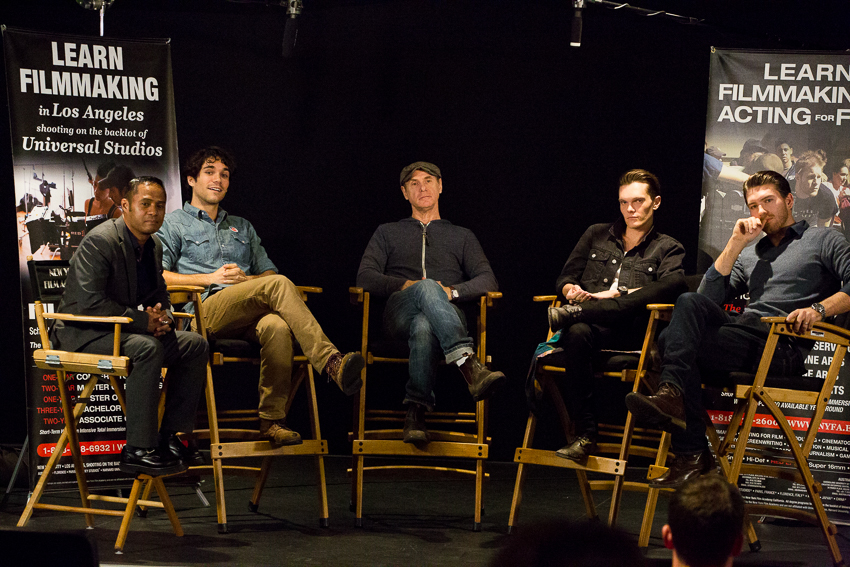
NYFA Alumnus (Actor/Producer) Jesse Kove, along with (Director/Writer/Producer) Richard Zelniker, and other cast members Luke Baines, & Myko Olivier, all from the Upcoming Feature Film “AS NIGHT COMES”.

On Tuesday, November 4th, New York Film Academy Alumnus (Actor/Producer) Jesse Kove, along with (Director/Writer/Producer) Richard Zelniker, and other cast members Luke Baines and Myko Olivier, all from the Upcoming Feature Film, As Night Comes, visited the New York Film Academy’s Los Angeles branch to screen their film and participate in a Q&A with BFA Acting, MFA Acting, BFA Filmmaking, and other degree and short term program students. The film follows a troubled 17-year-old Sean Holloway as he falls in with a group of teenage outcasts called ‘The Misfits,’ whose charismatic leader, Ricky, takes him under his wing. As Sean becomes more and more entangled in the gang’s anarchist ways, things begin to spiral out of control, and Sean realizes Ricky is a ticking time bomb on a rampage of revenge.

During the Q&A, NYFA alumnus and co-star/producer Jesse Kove talked about the types of obstacles the crew and cast encountered during production and how they overcame them to produce such a solid product. As anyone who has ever attempted to make a film knows, it’s not an easy task–add a large ensemble cast, plenty of action, multiple locations, and top notch costume and production design and the odds are stacked almost completely against you. However, it was clear that all parties involved in the making of AS NIGHT COMES embody the “no matter what” mentality required to do this type of impossible. Not only that, but what they did was darn good too.

As Night Comes opens Friday, November 14 to a limited theatrical release in Los Angeles at the Laemmle’s Music Hall in Beverly Hills. For tickets, please visit: http://www.laemmle.com/films/38604. The film will also be available on several VOD platforms December 5th via Gravitas Ventures Distribution. 

We wish Jesse Kove, Richard Zelniker and the whole cast and crew of AS NIGHT COMES the very best in their future filmmaking endeavors.


NYFA Abu Dhabi Graduate Shortlisted for $100,000 Prize

SaeedSwiss luxury watch manufacturer IWC Schaffhausen and the Dubai International Film Festival (DIFF) have announced the three shortlisted projects in the line-up for the $100,000 prize for the third annual IWC Filmmaker Award.

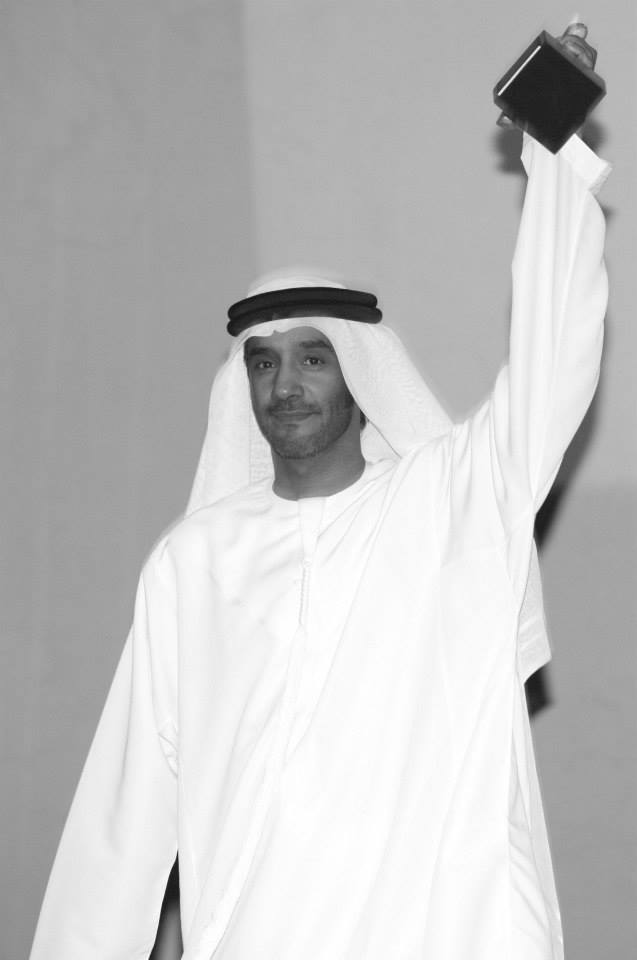
We’re proud to announce that one of our New York Film Academy Abu Dhabi filmmakers, Saeed Salmeen Al Murry, is one of three in the running for the $100,000 with his film, Going to Heaven. His film surrounds the life of Sultan, an 11-year-old boy, who is longing for the tenderness of his late yet ever-present grandmother. Sultan likes keeping colored fish, as they help him to escape the loneliness and suffering inflicted on him by his stepmother.

The three projects in development will be assessed by a jury of film industry experts, who will consider the scripts and the overall potential of the projects.

“We are delighted to partner with the Dubai International Film Festival to bring the IWC Filmmaker Award to the Gulf filmmaking community for a third year,” said Karoline Huber, Brand Director of IWC Schaffhausen Middle East & India. “Over the course of the past two editions, we have had the privilege of meeting some of the Gulf’s most prominent and up-and-coming filmmakers who introduced us to unique and captivating stories from the region. Witnessing their visions come to life has been an extremely rewarding and fascinating experience, and we are looking forward to further contributing to storytelling in the region.”

Saeed has already directed a number of acclaimed films, including Bint Mariam (2008), which won both local and international awards, including Best Emirati Filmmaker at DIFF in 2008.

A Discussion with Award-Winning Author & Instructor Michael Fuller

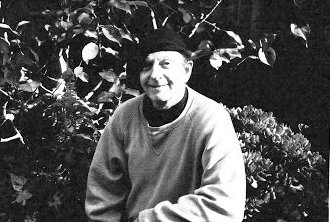
michael fullerNew York Film Academy Los Angeles Instructor Dr. Michael Fuller (English 101) was recently honored the Book Publicists of Southern California IRWIN Award for Best Fiction for his new novel, Legacy.

The book has received praise from critics, including a Midwest review which said of Michael‘s book that it was a “superbly crafted and thoroughly original novel. Legacy is a fascinating read from beginning to end and documents Michael Woodworth Fuller as an author of considerable and impressive talent. Very highly recommended for personal reading lists.”

We had a talk with Dr. Fuller about his writing career, his book, and any advice he would give to our writing students.

NYFA: Would you mind telling us a bit about your background and how you got into writing?
I started writing when I was thirteen. I was given a diary that had one page for each day of the year. I made myself write every day. I didn’t now why. Because of my obsessive-compulsive nature, I thought then it was because I had to fill the page. I still have the diary. Also, when I was at sea, I wrote a journal –influenced, of course, by Joseph Conrad – I remember in high school sitting after school while my English teacher, Mr. Englander, talked with a colleague, grabbing any scarp of paper I could find and scribbling something about something that had something to with something I knew nothing what about. Didn’t matter. Scribbling was the thing. At San Francisco State, after the service, I was admitted into an English class that I have since perceived as consisting of high-school brain children (what would be AP students today) and found that I could keep up with them and write, write, write and receive double A’s on my papers – went into the creative writing program for 6 units ‘till I found there was nothing more I was capable of learning from them. Desperate to find something, I went into the theater department was consumed by it, but all the time knew in my soul of souls that I was doing this activity until I learned how to write.

NYFA: You’ve written across a variety of mediums, including poetry, drama, non-fiction, film, television, and with Legacy, fiction. Do you feel your style changes on what medium you’re writing for, or are you able to explore certain themes or styles in one medium that you are not able to in another?
The medium mandates style changes because each medium has its own format. Certain themes drive the work – perhaps it is one single theme in different formats or media – it is the theme that mandates the medium for its expression.

NYFA: As a professor at NYFA, what advice do you give your students in approaching different styles of writing or distinct mediums? What lesson or piece of advice do you think applies across the spectrum of writing?
The first and foremost advice is that “writing is rewriting what you have rewritten.” It is Trigorin’s impulse that applies across the spectrum of writing. As he says in Chekhov’s play, The Sea Gull, “I must be constantly writing, writing, writing.” And so it is. As Gene Kelly says in Singin’ in the Rain, “Gotta sing, gotta dance.” Gotta have a gotta to write, sing, dance, act, direct, paint, draw, design, sculpt, compose, and/or any of the other arts I haven’t mentioned.

NYFA: What was your process in writing Legacy? Are you the type of writer who writes daily or at a fixed time, or do you compose when the inspiration comes? How do you lay out a narrative of this size?
My friend, Richard Russell Ramos, actor and director in New York and regional repertory summed up all the formulas for acting (“acting is believing” and all the rest of them) by saying, “Acting is acting.” And so it is with writing. Writing is writing. One has one’s most creative hours of the day – for some it is early morning, others, late at night – and you sit and do what you gotta do. Some people plan everything before they write a single word – others do detailed character analyses, others plot, others write the ending before they begin, others write and discover as they are driven by the work – for me, an idea or a feeling comes that there is a story somewhere there – sometimes words just come, a sentence that must be written and once it is, another sentence follows, and then another, and finally, the thing evolves and eventually, it comes together or it doesn’t. If it doesn’t good-bye to it – let it go and go on to something lese. Sometimes it won’t let you go, so you keep on keepin’ on. Then, come the disciplines of craft that you must obey.

NYFA: What was the inspiration behind the story of Legacy? Did your own personal history in the US Navy have any bearing on penning a story about the after-effects of war, as felt by those who both saw combat and those who did not?
The inspiration of what Legacy actually was came with the title very late in the work. There were some personal experiences that I drew upon- who doesn’t – but the dictum is true: “My life may be a story, but my story is not my life.” All work in whatever art form is autobiographical because it comes form you – who else is it going to come from? No one can write like Hemingway or Faulkner or Baldwin or Welty or Hurston because no one is they; one is one’s own self and that is the resource. In relation to the after-effects of war – I am not a combat veteran – but the military does provide a sense of being and camaraderie, of going forth that no other venue provides. Combat is unique to those who have experienced it.

NYFA: Were there any particular writers, artists, or works of art that helped to shape the themes and stories within Legacy?
Follow-Up: What were the over-arching themes or ideas you knew you wanted to explore before even sitting down to write Legacy?
Writers: Conrad, Hemingway, Shakespeare, Cheever, Faulkner, Baldwin, Agee (Let Us Now Praise Famous Men), and Steinbeck.

The socio-political dynamics of the times – 1950s through the 60s particularly (the Vietnam era being prominent), and the consummate stupidity of those in power. Eventually, the absolute miracle of the human being to transcend ruination dominated everything. This, of course, took a very, very, long time.

NYFA: In addition to fiction, you also write historical non-fiction, such as your book looking at the legendary Idyllwild Arts. What eras of history or historical topics are you drawn to?
All times are of interest if the story is contained therein, but mostly, I would say from late 19th century to the present 21st.

NYFA: You have extensive experience in the theatre, both as a director and writer. What skills or opportunities does the theatre allow you to explore as a creative that your other disciplines do not?
I have never written for the theater as much as I have loved the theater and still do love it. Perhaps one day I shall DARE to write a play – what the theater has taught me more than anything else is dramatic structure and conflict that drive the action forward to catharsis.

Regarding the theater, writing, and catharsis, my close friend Garry Michael White (Scarecrow, Golden Palm, 1975) some of whose plays I have directed, says this of catharsis: “I have seen many plays this season, and most of them fail to interest me. Not because of production values, not because of the acting, not even because of inept directing: it is the writing. I’ve asked myself repeatedly why this is, and I think the answer is a simple one. The person making the final decision to mount the play has not answered this one question: Where is the catharsis? That might seem like an antiquated question, but I would argue with anybody that it is not. It is as true as when Aristotle posited it 2700 years ago. Where is the catharsis? Theme does not make catharsis. Trend does not make catharsis. Clever plot twist does not make catharsis. You must feel it in the life and destiny of a character and if you cannot do that do not mount the play. A comedy can have catharsis (“Noises Off”). So can a satire (“The Miser” “M Butterfly”), as can drama which is arguably not a tragedy (“Streetcar”) and so can the simplest little situational encounter (“The Zoo Story”). I have seen one play in the last year which brought me to the level of those pieces, “The Mountaintop” which chronicles Martin Luther King’s last night alive, in a motel room. Two actors, one cheap set. Catharsis. Successful theatre.

NYFA: In addition to your upcoming collection of short stories, Five!, what other projects do you have in the pipeline?
Five! is now Six! and it may be even or eight. How Do You Learn ‘Em To DO Some of that Stuff? is a handbook of grammar – a practical hands-on guide to using grammar as a tool – grammar is nothing more than a bunch of tools people use – not a bunch of rules that people memorize. I utilized this approach when I taught English in high school (which I truly adored doing! Yes, high school is true epiphany!) and am still utilizing in classes I teach at NYFA. Seems to work.

NYFA: Do you have any parting words of advice for aspiring writers and how one can develop a singular voice and style?
Of course, everyone, at some time, wishes to sell what he or she writes and to be known for that writing. In the end, however, if that is why one writes, if one does not achieve those dreams, one will suffer greatly because in the long run and at the end of the line, that disgusting bumper sticker that said, “He who dies with the most toys, wins” is an egregious lie. He who dies with the most toys dies just like everyone else. Moss Hart was right: you can’t take it with you. What you do take is who you are. In the end some writers make money and acquire fame, others don’t.. Sometimes it’s because you have talent or don’t; often, it’s the roll of the dice, as the say. Those symbols of success don’t really matter. It’s the WORK that matters. My wife and I know someone who is an absolutely horrible singer. That does stop him from going to class, practicing, and singing? No. And it shouldn’t. This no-talent person has what it Takes- the courage to keep on keepin’ on because he has to, and so he does. He deserves great respect. As Arthur Miller said of Willy Loman in Death of a Salesman: “Attention. Attention must be paid to such a man.”

Write. Don’t worry about being a writer. Just write. In addition, READ, READ, READ the great writers. Learn form them. Learn dramatic structure, learn what makes character, conflict, rising and falling action, all those things that people tell you but cannot truly teach you – suffer with your bad work – most of it will be bad – have the guts to throw out what does not work – learn the what the different forms of writing – or media – mandate. You DO have to have skills and discipline – and write. The one four-letter word ending in K that means anything is WORK. Gotta live for THE WORK. Worrying about what to say next, worrying about whether it’s any good or not, worrying about whether someone’s going to buy it, or if you’re going to become rich and famous, railing against the world are all waste of time. Writing isn’t.
How Do You Land a Literary Agent?

Lucy Stille
APA Literary Agent, Lucy Stille

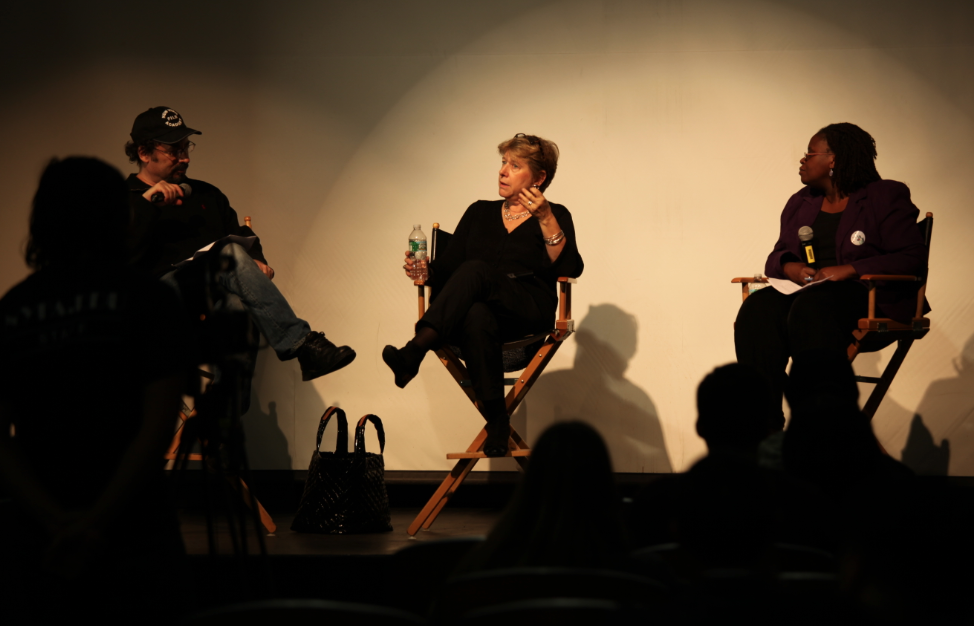
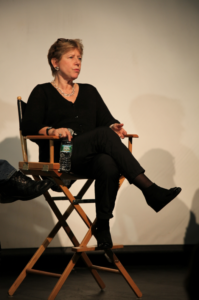
One of the most difficult challenges for screenwriters coming out of film school is landing the right agent — or any agent for that matter. To clue our students in on how this process works and how truly competitive the screenwriting market is, producer Tova Laiter invited Lucy Stille, a prolific literary agent. Lucy has represented storytellers in the film and television business since 1985. Her clients include writer/directors John Sayles and Raymond DeFelitta, Pulitzer Prize winning playwright Nilo Cruz and bestselling authors Dean Koontz, David Baldacci, Tami Hoag and Erik Larson.

She began her career at Playwrights Horizons in New York, and went on to work as a publishing agent at Sanford J. Greenburger Associates. She moved to Los Angeles in 1985 and ran the boutique agency Schorr, Stille before helping to create the Paradigm agency in 1993. During her twenty years at Paradigm, she helped it grow from a boutique agency into the fifth largest agency in Hollywood.

In 2008, Paradigm asked Lucy to return to New York to develop new voices for film and television as well as seek out underlying literary material that could be the basis for film and tv series. She’s currently working with APA, a talent agency that represent a number of well known actors, writers, comedians, and filmmakers.

lucy stille at nyfa
Producing Co-Chair, Nick Yellen and Screenwriting Chair, Melanie Oram with Lucy Stille

Lucy provided insight into Hollywood like no other guest speaker before. She didn’t hold anything back, letting students know the harsh realities of the business of Hollywood. The system will be churning out the same stories for years and years to come. As writers, it’s your job to provide a unique voice and tell that story in a completely fresh and interesting way. “I’m looking for distinctive new voices,” said Lucy Stille. “We also want people who are good in a room, and people we enjoy talking to.”

After all, writers and agents may have to be on the phone daily — who wants to talk to a complete bore with no personality? She did add that pitching is a skill that can be taught if the writer’s material is strong enough.

For all of our student writers, Lucy recommended building a strong portfolio of material that showcases your best genre and, as a director, have a short film that ‘blows people away’. While all of these aspects are easier said than done, she also admits it is crucial to network. So while you’re working on your next masterpiece, be sure to befriend the students around you, because one day they may be the agent or producer you need to pitch to.

NYFA Finding Talent in Moscow

moscow open house

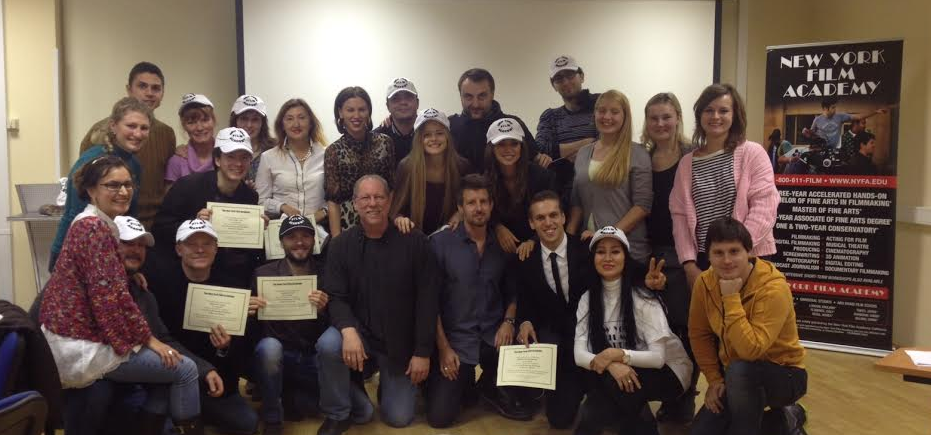
The New York Film Academy recently wrapped another successful Producing Workshop in Moscow! During the last two weeks of October, NYFA marked the 5th Anniversary of its Moscow Workshops and Guest Lectures with a Two Week Producing Workshop attended by more than 20 industry professionals from Russia and surrounding countries. The Workshop included hands on instruction in U.S. standards of producing, production management, screenwriting and directing. The students, all working professionals in the Russian and surrounding countries’ film and television industries, came together for a two week intensive course that ended with an exciting Producers Pitch Fest, where each student pitched an original project conceived and developed during the course.

Representing NYFA at the workshops were Head of MFA Feature Productions and former Producing Chair, Lydia Cedrone; veteran NYFA screenwriting and directing instructor, James Rowe; and NYFA Chair of Producing, Tony Schwartz.

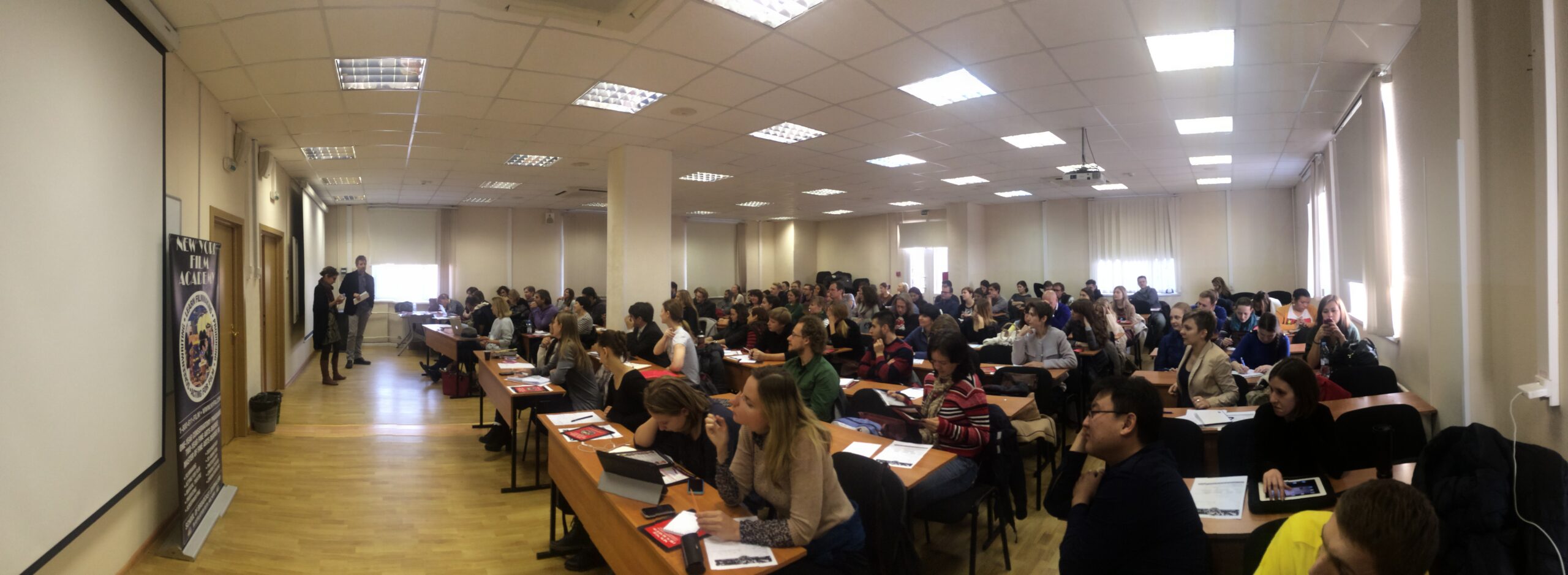
Also while in Moscow, Lydia Cedrone and James Rowe met over 100 guests and attendees at the NYFA Open House held on October 25 –more than 100 guests attended! Guests interested in degree programs abroad at NYFA campuses, along with those interested in short term workshops both abroad and in Moscow, attended a guest lecture of James Rowe, a highlight of the Open House.

And we’re not done in Moscow. NYFA faculty will also be at the Radisson Royal Hotel, Moscow on November 8th and 9th to hold auditions, portfolio reviews and information sessions. If you’re interested in signing up for any of these events at the Radisson Royal Hotel, please CLICK HERE.

moscow nyfa


NYFA Among Top 5 University Fundraisers for AIDS Walk LA

aids walk

Last year, Team NYFA sent dozens of “walkers” to the AIDS WALK and together we raised thousands for a terrific cause. Since Hollywood loves sequels, we decided to do it again! Braving the not-so-harsh October weather, Team NYFA helped show that (once a year) people really do walk in Los Angeles.

Since its inception in 1985, AIDS Walk Los Angeles has benefited AIDS Project Los Angeles (APLA), a service organization dedicated to improving the lives of people affected by HIV disease, reducing the incidence of HIV infection and advocating for fair and effective HIV–related public policy.

After receiving early morning encouragement from Lea Thompson (Back to the Future II and III) and Nick Wechsler (Revenge), all the walkers took over miles of West Hollywood streets without fear of receiving a jaywalking ticket.

With the help of star fundraising students like Diana Perez and Katie Clem and the of course our wonderful NYFA staff, New York Film Academy is ONCE AGAIN in the AIDS Walk’s top five fundraising Universities… and rising.

To donate to our team please visit: http://awla2014.kintera.org/nyfa.
Last day to donate to our 2014 total is Friday Novmber 7 at 5pm.
So click on over!

Documentary to Raise Awareness About Sex Trade in Banchara Community

atin mehra

Former New York Film Academy Filmmaking student, Atin Mehra, is currently in the final stages of an ambitious and worthwhile documentary, Bulbul: Song of the Nightingale. Now in its editing phase, the Orange Kite Productions film is seeking funds to complete post-production. The goal of the documentary is to raise awareness about the Banchara community and their struggle with a long-standing tradition of caste-based prostitution.

“Due to the caste-trade of prostitution, girls as young as 10-years-old are forced into the sex trade and boys grow up their entire lives without the opportunity to work and earn living wages,” said Atin Mehra. “Entire families depend upon the work of the young girls in the trade.”

Atin is raising funds through a crowd source funding campaign on Indiegogo, which can be found here.

Bulbul: Song of the Nightingale documents the life of a young Banchara girl living off National Highway 79 in Madhya Pradesh, India. At twelve-years-old, Bulbul already stands at a crossroads. Bulbul’s tribe, the Banchara, has existed at the bottom of Indian society for centuries, relying on prostitution as their economic lifeblood. A continued lack of options allows this practice to persist. Generation upon generation of the tribe has experienced social, political and economic exclusion from Indian society. The documentary explores caste and untouchability through the life experience of Bulbul.

“As we spent three months following Bulbul within her community, we came to realize that the documentary itself served as a means of empowerment for the community. This film aims to raise global awareness of the struggles of the Banchara tribe, thereby encouraging dialogue and engagement of human and financial capital toward an alternative means of economic livelihood for this community.” – Atin Mehra

Director Atin Mehra was born and raised in Varanasi, India and currently resides in Los Angeles, CA. Early in his career as a filmmaker and photographer, Atin worked with female victims of dowry burnings in hospitals in his native Varanasi. Beginning in 2002 he collaborated with French filmmakers to produce and shoot his first work in documentary film, Mitti ke Jivan (The Cycle of Clay). Since that time, Atin has grown as a storyteller and filmmaker, partnering with international broadcasters and independent artists to tell stories that span both a wide array of genres and viewing audiences.

Atin’s personal understanding of caste discrimination in India, the close relationship he developed overtime with the Banchara community and his passion for documentary filmmaking, all make it possible for him to share this story with the world.

Sponsored through the International Documentary Association, all donations made to the project are tax deductible. In the coming months, as the team works to complete the film, they will also work to collaborate across sectors to bring the Banchara story to the global stage. All inquiries on the project can be directed to [email protected].