Everyone has tips and advice for aspiring screenwriters. Some tips, like bad rumors, spread so far and wide as to become hard certain truths, even if they’re just the opposite. Here are just five myths of screenwriting that are patently false, as fake as the name of most movie detectives.
Myth #1: One Page = One Minute of Screen Time
The famous page-a-minute rule isn’t really a rule—it’s a guideline. Guidelines are good. Guidelines are our friend. Guidelines are like a solid GPS—keeping us on track and in the right direction. But it is not an infallible rule that must be obeyed at all costs. After all, even your GPS sometimes tells you to make a left into a river.
While the page-a-minute guideline is true for your average screenplay, your page count can actually vary wildly. The script for Academy Award-winning Gravity, a film with sparse dialogue, lengthy complicated action setpieces, and lots of quiet tension, is only sixty-eight pages long. A Tarantino screenplay, loaded with back-and-forth dialogue that could be spit out in seconds but take up several pages of print, will typically be well over 120 pages.
Of course, aspiring screenwriters don’t get the same benefit of the doubt as people like Tarantino and Alfonso Cuarón. But if your story is complete, with no extra fat and nothing missing, then it should be as long as it needs to be. The people reading your screenplay will be far more concerned with your narrative than with your page count.
Myth #2: Exposition Is Bad
Somewhere along the way, exposition got a real bad rap. But unless you’re like Terrence Malick and making some visually poetic mood piece, your story’s going to need some context. Bad exposition is bad—that’s no myth—and bad exposition is when characters explain something to each other that, in the reality of the film, they should already know and shouldn’t need to be said.
Good exposition, which is not only totally okay, but preferred, gives the audience a background to ground your story. If you can’t show-not-tell your exposition, then tell it in a way that makes sense. A character new to the situation can be an audience surrogate, asking questions and getting answers for us. A general can update the President in his or her daily briefing. A protagonist can check her or his voicemail. Etc.
If done well, exposition can be fun and seamless, a natural part of a scene. The exposition laying out the bank robbery in Reservoir Dogs just comes off as another classic Tarantino dialogue between Mr. Orange and Mr. White and ends with them getting a taco and the audience informed on the gangster’s plan.
Myth #3: Mailing Yourself Your Script = Copyrighting Your Script
Nope. The best way to copyright your script is to register it with the Writer’s Guild. There’s even a handy-dandy option built right into Final Draft that lets you do this. It’s official, it’s legal, it will protect you if anyone ever does in fact steal your idea.
Mailing yourself your script and keeping it sealed is very weak evidence proving you wrote a given screenplay first. For one, it only works with the very first judge who opens it, and copyright cases often drag on and go through several levels of the judiciary system. Secondly, it doesn’t legally count as evidence of copyright—it’s more circumstantial proof than anything.
Thirdly, have you ever used the post office? Chances are your package will arrive as beat up as your protagonist. And if you’re moving around a lot (which you probably are because paying rent is a lot harder than paying a one-time WGA fee), your package will take that much more wear-and-tear. By the time you get it to court it’s going to look like a crazy person’s manifesto and will be scanned for bombs and white powder.
And if you’re a prolific writer, those packages are going to eventually take up more space on your bookshelves than the Song of Ice and Fire series.
Myth #4: Keep the Camera Directions Out of Your Script
Keep the directing to the Director, people will tell you. This is generally true, and you don’t want your unproduced screenplay to look like a shooting script. But some camera directions should be included, especially when a given scene only works with a specific angle or move.
You’re not writing a play after all, a sparse set with lots of options. Movies can be extremely specific, lines and moments can be tied directly into the way we view it. Try to avoid the phrases “We see” or “The camera pans” but if you’re smart you can hide directions into the way you word your action lines. Phrasing your action the right way will make your intended shot, like a POV or a landscape wide shot, inevitable for the filmmakers who shoot your screenplay.
“The whites of Mark’s eyes turn red with anger” is telling us it’s an extreme close-up without ever using the words extreme close-up. The director will see this when she reads it and choose the right shot. She might think it was her idea but we savvy screenwriters will know better and give yourself a pat on the back for the great shot.
Myth #5: You Have to Use a Screenwriting Program for Formatting
Okay, sure, this one is true, you do have to have standard formatting for your script if you want people to take it seriously. But only the final draft!
Writers are a diverse bunch (besides the insecurity and constant loneliness—that’s all of us). Writers write in all sorts of ways, and all of them are write. Er, right. If you’re like me, you do your best work with a pencil and marble notebook while sitting on the beach. Or maybe you don’t find your true groove until you’re thumbing it in your Notes app while on the train to work.
Whatever gets your creative juices flowing—that’s how you should be writing your script. Just because your story will end in Courier New does not at all mean it needs to start that way.
Writers forge their own paths. It’s part of our DNA. And while rules were indeed made to be broken, it’s more important to remember that some rules were never actually rules to begin with. Just bad rumors.
If you’re an aspiring game developer or professional looking to work in the industry, you have probably heard of the annual Game Developer’s Conference that takes place in San Francisco, California around the first days of March each year. Every GDC attracts thousands of attendees from around the world that are involved in the creation of games—programmers, writers, directors, artists, you name it.
Perhaps you already knew about GDC and are well aware that it’s the one time of the year that game developers get together to share ideas, provide their insight on the industry, and simply talk about games. The only problem is you’re having a hard time deciding if it would truly be worth it, especially since pass prices aren’t exactly cheap and you may have to deal with traveling and hotel costs.
So how do you decide if attending GDC is worth it? Since we believe any and all game developers should attend this important meeting, allow us to list only three reasons why the money and time you spend will feel completely worth it.
You Get to Learn From the Best
GDC is essentially five full days where you get to absorb vast amounts of knowledge being shared by the industry’s best and brightest. If that isn’t useful to a game developer, whether you’ve been around for a while or just getting started, I don’t know what is. You’ll have access to software tutorials, roundtable discussions, lectures, and panels, all taught by people that clearly know what they’re doing in the industry.
The GDC site provides an excellent list of the kinds of professionals that have benefited every year from attending the events mentioned above. If you’re one of them and want to learn from the best, then attending GDC is a no-brainer.
Game Developers
Business Development Professionals and Venture Capitalists
Studio Managers & Heads of Studios
Executive Producers
Vendor Companies and Sponsors
Career Seekers & Recruiters
A Prime Networking Opportunity
Considering you’ll be in the same building as some of the biggest names in the industry, including that development company you’ve always dreamed of working at, it would be pretty foolish not to try and mingle with them.
GDC is your chance to be more than just a name on a CV, as you’ll be shaking hands with top talent and making a presence in the industry.
You’ll also have the opportunity to meet recruiters from various developers and provide resumes, business cards, and other info.
It’s a huge step above simply sending an e-mail application and hoping to get lucky enough to get a response back.
Of course, you’ll want to make sure to maintain a level of professionalism while chatting with people during the conference. Instead of getting nervous or giddy while speaking to a recruiter from your favorite game dev, relax and act yourself.
Recruiters are looking for more than just people with talent; they often want to hire friendly, passionate people that will fit into their team’s culture. Also avoid bothering developers and recruiters with endless questions, or blatantly asking for a job.
The Price is Worth It
Considering how much time, effort, and money goes into running such a massive conference, it’s no surprise that the pass prices aren’t exactly cheap. Unless you’re a student ($75 for Student Expo Pass) or don’t plan on attending any lectures ($195 for early Expo Pass), you’re looking to pay a few hundred bucks just to gain access through the door.
You might even think about getting the Main Conference Pass if you’re going to make the effort to attend GDC, which will set you back about $1,000 (or more depending on when you register). This doesn’t include paying for a hotel, food, traveling expenses, etc.
And yet, it can be very much worth it.
Perhaps it would help if you thought of GDC as a college course crammed into a few days. Not just any college though; your teachers are the best in the industry and your fellow peers are arguably the most talented and passionate people in the industry. If you still think it’s too pricey, you should ask yourself just what price you’re willing to put on your future in this industry.
Are we saying it’s impossible to be successful without ever attending GDC? Most definitely not.
But there’s a reason why game developers that have been making games for decades still attend this event. It makes them a better developer, and they’ll pay whatever it takes to continue growing and learning in this fast-paced industry of ours.
Certainly that’s worth more than a few hundred bucks.
An ‘end of an era’ feeling swept across the gaming industry the day Nintendo announced that they would not be holding a live press conference at E3 2013 like they’ve done every year. Instead, they would use their new digital presentation to showcase what Nintendo fans had to look forward to in the next year and beyond.
To many, it was a sign that Nintendo was giving up on the idea of going head to head on arguably gaming’s biggest stage. While others still see it that way, there’s no denying that several years later we’re noticing the power of Nintendo Direct and why Sony, Microsoft, and other big names in the industry should follow suit.
What is Nintendo Direct And Why Is It Special?
For those unaware, Nintendo Direct is a video presentation where the Japanese developer shares news and information on their games, hardware, etc. They usually last between thirty minutes to an hour and focus on a specific game or franchise, such as the Super Smash Bros. Wii U Direct on October 23rd, 2014. Each region also has their own presenters, usually the president of each respective region, but sometimes Satoru Iwata appears for international Nintendo Directs.
So what makes these so special? It’s not like dating online presentations are anything new. The novelty comes with Nintendo’s tendency to surprise us each time they’re having a Nintendo Direct by announcing them only days before they’re going to air. This creates a sudden wave of pure excitement among Nintendo fans as they prepare to receive juicy new info in an entertaining way, as opposed to the conventional method of reading it on a gaming site.
Of course, there’s no time more exciting for gamers than the countdown to E3. Gamers get giddy with anticipation even if there’s no chance of actually attending E3 and instead they’ll watch the entire presentation from home. To see what their favorite game companies have in store for them is certainly a cause for excitement, but the following truth has remained the same since E3’s inception – there’s room for awkwardness and deception.
Pitfalls At E3
It’s hard to forget Nintendo’s ridiculous Wii Music presentation or Vitality Sensor reveal. And there are still memes all over the internet born from Sony’s 2006 E3 conference.
Giant Enemy Crab and Riiiidge Racer, anyone?
This may even sound harsh but there were more than plenty of Xbox Kinect presentations that were quite easy to laugh at, especially when it involved dancing games.
The point is, Nintendo can now show off their new stuff while also avoiding silly moments that can reduce the impact of a presentation. No more weird celebrity appearances, surprise equipment malfunctions, or people booing at your announcements (see: Sony announces their PSVita AT&T Partnership at E3 2011). Nintendo has control of what they show and can guarantee that it is top quality, each and every time.
As far as deception goes, we’re no longer surprised when a jaw-dropping trailer claiming to be ‘actual gameplay footage’ is eventually discovered to have been touched up so viewers think the game looks better than it actually does.
Since E3 has become a competition to see who can get the most wows, developers will go into crunch time and hire people in the months prior just to produce visual content that’s unfaithful to what the actual game will look like. As a gamer, this should definitely bother you.
Now out of the boxing ring that is E3, Nintendo is less pressured to show questionable game footage on their Nintendo Directs since they’re doing it from the comfort of an online presentation.
They won’t get to impress people that aren’t already sold on their games since it’s mostly Nintendo fans that are watching Nintendo Directs. But at least they don’t have to worry about fanboys of other game companies looking for something to pounce on.
Do people miss the chance of moments like the E3 reveal of Twilight Princess that had the entire room cheering ecstatically? Definitely.
Even so, there’s no denying the effectiveness of Nintendo Direct and it wouldn’t be surprising to see other companies come through with their own online presentations.
Sony and Microsoft probably won’t abandon their live press conferences at E3 anytime soon, but it’d certainly be cool to get something from them similar to Nintendo Direct every few months to excite their fans in a unique way.
One of the most common questions asked in terms of prerequisites for attending animation school – like the New York Film Academy’s animation school in New York or Los Angeles – is whether or not one must have artistic skills prior to attending.
Robert Appleton, chair of animation at the New York campus, dives into this question and answers below…
Robert Appleton: Art school and/or drawing experience is a great asset as it provides training in visualizing characters and scenes.
For modelers drawing skills are definitely an advantage. It is not uncommon to see modeling job postings which state “Traditional art skills and ability to draft occasional concept drawings/paintings is a major plus.” The ability to design a character and draw a decent turnaround, then draw him/her in an action pose, and model the character accurately with correct topology can be a nice addition to an artist’s showreel.
However, not all good modelers are great draftsmen, and in a lot of companies artists specialize. One person does the drawings and another does the models.
Students with skill in drawing (or, again, other areas such as programming) will definitely be able to exploit those skills. Students who have not done much drawing will get the chance to develop and subsequently flex those muscles thanks to the instruction offered. For instance, character design, storyboarding, and life drawing classes are all part of the NYFA animation curriculum.
Technical abilities are valued in the animation industry as much as artistic abilities. so you can be lacking artistically and still do well in such areas as shading and lighting, rigging, rendering, and simulation. These areas require good skills in scripting languages such as Python, Maxscript and MEL, and programming languages such as C++.
Computer animation attracts a wide variety of personalities and incorporates a variety of interests. A glance at the credits of any CG or visual effects-heavy film will show just how many different roles and people are incorporated.
Not only are there the artists, character designers, and modelers, there are also people in charge of dynamic simulations (i.e. cloth, crumbling buildings, explosions) and developing and maintaining the pipeline (i.e. streamlining the interaction of various departments through programming and scripting).
Not everyone has to be da Vinci — or, on the flip side, a tech genius! — to find a niche in CG.
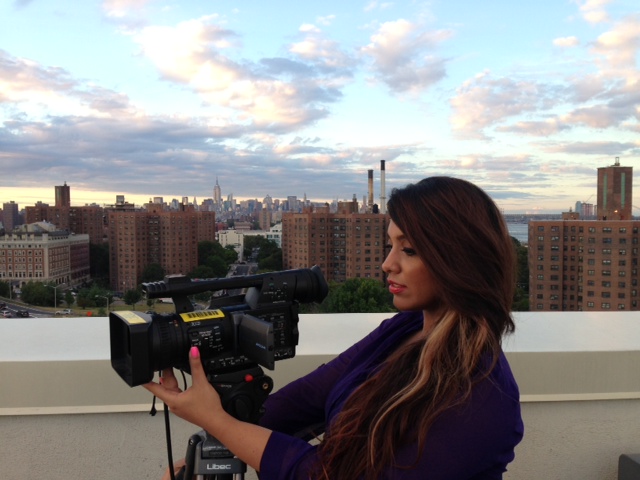
NYFA: Can you tell us a bit about yourself, your background, and what first got you interested in broadcast journalism?
Sheri Jamkhou: I was born in Dubai and lived most my life growing up there. The city is well known for its architecture, malls, souqs, and desert safari’s.
Now when I go back and walk around I hardly recognize it compared to 10 years ago – the city gets better every time I go back! I believe Dubai is the best place for living a modern life while keeping traditions in place and that’s why I love it. It’s a very multi-cultural city.
When I first started working as a journalist, that’s when the media industry just began booming in the region, so I was blessed to be able to start during that time. Before I started working as a reporter at Dubai One TV, I lived in Canada as well.
NYFA: So you’ve lived in Canada, lived and worked in the United Arab Emirates, and went to school in New York. How much of this was life circumstance, how much of it was desire to move around, and how does all that travel play into your career as a journalist?
SJ: I love traveling. It’s my hobby, my passion, my pass time…whatever you want to call it.
Most of it was the desire to move around. And of course once I got to New York City I fell in love – with the City of course.
Traveling helps when it comes to writing and journalism. Being around people from different walks of life really helped carve out my career as a journalist. For example journalism styles vary in the Middle East as opposed to the United States but there are also many similarities.
NYFA: So there is a difference between the process of journalism in the UAE and America?
SJ: The process of journalism definitely does differ in the two regions.
For instance, in the UAE there are different guidelines that journalists need to abide by due to the culture in the Middle East. For example, when filming one should be mindful of what they are filming and the content shouldn’t be disrespectful to the population. Dress code is important as well.
However, in the United States there are less restrictions in terms of content. But with that being said, I respect the traditional boundaries in the UAE – I find that respectful.
NYFA: You studied business, and even received a Master’s degree in International Business. Do you ever lean on what you learned as a business major for your journalistic endeavors.
SJ: Business is what I thought I liked most and actually I was interning at the marketing department of Dubai One TV when they launched Emirates News, which back then was a new TV program to be launched.
The producers saw me and recommended I try out – and I did. After that, business hasn’t been as much of a priority as journalism.
I’d say travel played more of an important role when it comes to being a journalist but business helped too, in terms of dealing with people and conducting interviews, because its very similar to conducting market research for example.
In business studies you learn about how to deal with people from different cultures which also helped.
NYFA: You were already working as a journalist for Dubai TV when you decided to go back to school and study broadcast journalism. Why did you make that decision?
SJ: I always felt like its important to have a degree or a diploma to support what you do as work. It makes you more credible in the industry.
NYFA: What made you choose the New York Film Academy to pursue those studies?
SJ: I like that the New York Film Academy had a course that was less than a year with professors being industry experts. I learned many new things from each of my professors.
The New York Film Academy also helped a great deal with sending out emails and employment opportunities which to this day are helpful. The Academy helps when it comes to building your contact list – which is a very important tool when it comes to success.
NYFA: Was there anything particularly memorable – that stood out to you – about your time at NYFA?
SJ: NYFA changed my life. It helped me learn about journalism through a different light.
Like I said earlier, the professors were from the industry. We had teachers who were filming documentaries and producers from ABC news, for example. These were people who do this everyday as a job and that opportunity to work with them increased my confidence as a journalist.
NYFA: What should students do to get the most out of the journalism program?
SJ: Students need to make sure to attend all the classes at NYFA. Every class taught me something, if not a few valuable lessons.
For instance, before my studies I was a full-fledged reporter but I didn’t know how to edit or use a camera. Now I have those qualifications too.
Also, working with other students from across the world gives you a different angle and teaches you new techniques. So I’d advise students to integrate and be 100% involved.
NYFA: What is you ultimate career goal?
SJ: My ultimate career goal is to work as a reporter in New York City for a well known news corporation – that would be my dream.
NYFA: Any parting words of advice for aspiring journalists?
SJ: Journalism is a passion, its not a job. If you don’t like it, don’t do it just for the sake of being on television or having your name published.
Work hard, read the news everyday, and improve yourself in every way that you can because its a competitive but highly rewarding experience.
It wasn’t too long ago when the point-and-click adventure genre stole hours upon hours of time from computer gamers everywhere. The mouse and keyboard were perfect for allowing players to select areas and objects on the screen with precision, giving developers the freedom to craft fun puzzles and challenges
They were also far more attractive than the text-based games most people played prior. You could explore all sorts of unique locations made of gorgeous pixel art, including lush island jungles and wacky stylized cities. Better graphics and gameplay also allowed for some enchanting stories to be told that featured memorable casts of characters.
But in our fast-growing gaming industry, adventure games were another illustration of the fact that rarely does one genre stay at the top for very long.
When Adventure Ruled…
In the 80s and early 90s, arguably the golden era of adventure gaming, it was the now-defunct LucasArts that gave us some of the best of the genre. Games like The Secret of Monkey Island, the first title in the acclaimed Monkey Island series, blew gamers away with its humor, impressive audiovisuals, and addicting gameplay.
Also using humor in the form of a story parodying B movie cliches, Maniac Mansion received a positive response and featured an intuitive interface that was adopted by other adventure games. The sequel, Day of the Tentacle, was an even bigger commercial success and continues to appear in “top games” lists to this day.
Full Throttle introduced us to a dystopian future where anti-gravitational hovercrafts have replaced motor vehicles, while Sam & Max took us on a comical adventure in a cartoon version of America.
It was a good time to be an adventure game fan as tons of developers took advantage of their popularity to take a stab at the market. Of course, like any popular genre, it eventually got replaced by something new.
Point-and-Click Makes Way For 3D Shooters
In the mid ’90s a shift from 2D visuals to 3D took the gaming industry by storm. Breathtaking games like Super Mario 64 and Final Fantasy VII stole the hearts of gamers everywhere with their incredible 3D worlds and characters.
As beautiful as the graphic adventure games were at the time, they didn’t stand a chance against the titles boasting 360-degree movement, dynamic camera systems, and more.
When talking specifically about the PC gaming market, the dominance of first-person shooters also began. Doom and Wolfenstein 3D were a breath of fresh air by offering amazing graphics and fast-paced gameplay that felt like a massive step up from the slow adventure games.
Instead of solving puzzles and clicking around a screen, PC gamers embraced the chance to run around in a 3D world while shooting both AI enemies and player opponents.
Unsurprisingly, developers saw the shift in interest and one by one began abandoning adventure game projects.
By the turn of the century there were less than a handful of adventure games in development, signaling the near-demise of a genre.
The Resurgence of Adventure
Here we are more than a decade later and now a new wave of adventure games is returning the beloved genre back to relevance.
In almost every platform, including PC, console, and tablets, there’s a growing audience of adventure gamers thanks to companies like Telltale Games and Phoenix Online Studios using today’s technology to make quality titles.
The reason for the sudden rise in popularity is, of course, arguable. Perhaps it’s fatigue from the current trend of high-budget titles always boasting fast-paced gameplay and brilliant visuals.
Instead, gamers are interested in thought-provoking challenges and puzzles that only adventure games provide.
It could also be that gamers are now more than ever embracing video games as a powerful storytelling medium. Although any genre is capable of providing a rich narrative, such as Bioshock with the FPS genre or action-adventure series Assassin’s Creed, adventure games have always been able to weave captivating stories, characters, and settings like no other genre.
Whatever the reason, it’s once again a pretty good time to be an adventure game enthusiast with titles like The Walking Dead, Broken Age, and Gone Home now available.
Most of today’s adventure games may not be identical to the point-and-click titles of the past, but they’ve done an excellent job of evolving the genre so that it didn’t remain where it found itself a few years ago: lost and forgotten like buried treasure.
[su_note]Want to take part in creating the next big hit in adventure games? Learn more about studying game design at the New York Film Academy in New York City or Los Angeles.[/su_note]
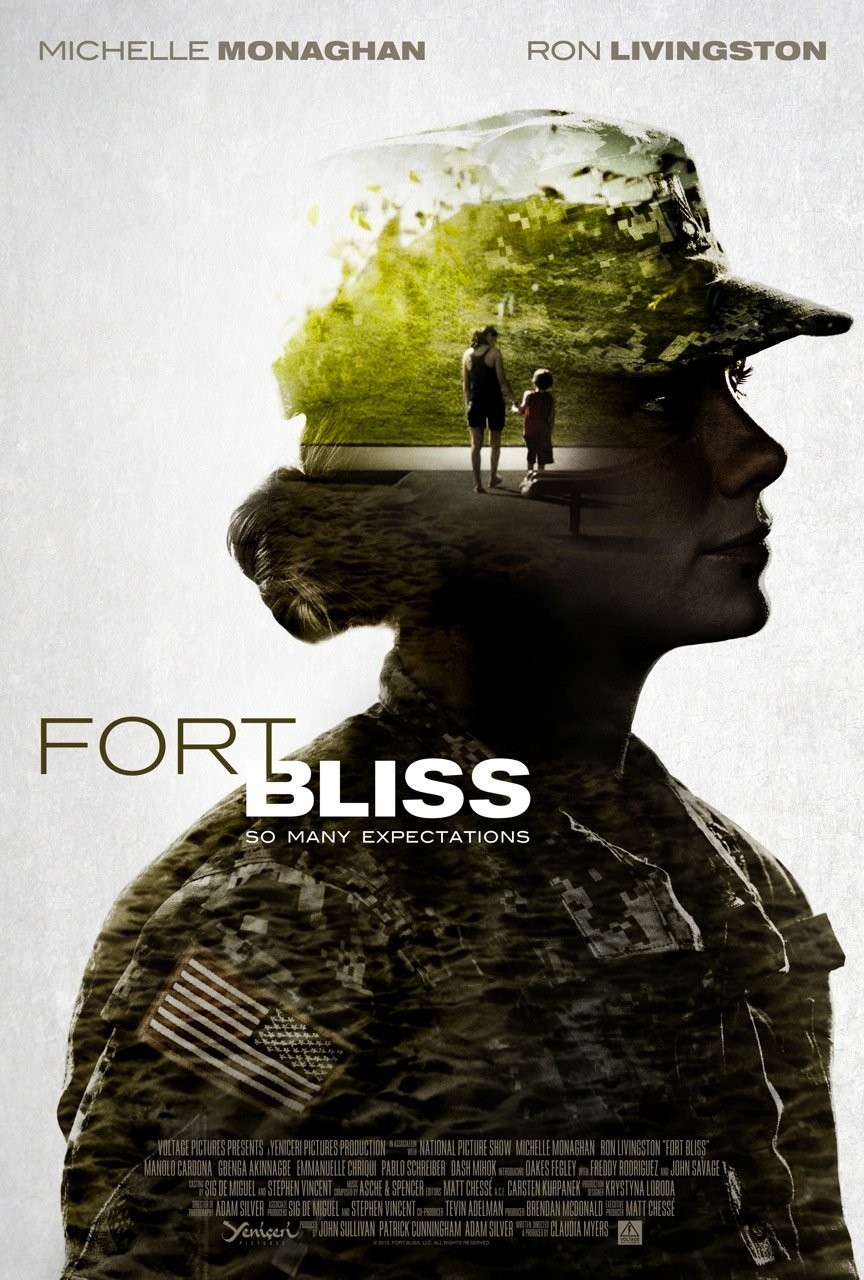
Below is the transcript from the Q&A with actors Michelle Monaghan and Gbenga Akinnagbe following a private screening of their new film Fort Bliss which was screened at NYFA’s Union Square campus and moderated by Acting for Film chair Glynis Rigsby.
Glynis Rigsby: So for those of you who don’t know, these are two extraordinarily accomplished actors whose body of work actually has a tremendous range. Both have done television and they’re in the Law and Order: SVU club. They’ve done television series and movies. They’ve both produced; Michelle is an executive producer of Trucker and Gbenga produced Dunes. Gbenga has actually done writing for The New York Times. And what do these ventures say about your careers in acting. I say that because many of the students here are actors. For an acting program, it’s a little embarrassing having you here because your careers actually began not from training programs. Michelle you majored in…
Michelle Monaghan: Journalism.
GR: Michelle majored in journalism at Columbia College and Gbenga actually majored in English and Poli Sci and Bucknell. It seems you both went out and auditioned. And one of the things that I think is very interesting about the way your careers evolved, and also your relationship to this film, is you went and did it. So a lot of your work, it seems to me, has a connection that has to do with those degrees in that it’s thoughtful work. It has a connection with something larger than what we think of the traditional lights and shininess of acting. Gbenga, you were very renowned for your work on The Wire, but also your work in 24. [To Michelle] You’ve done Mission: ImpossibleIII, but you also did tremendous work on True Detective. So it’s a career where with a film like this seems very new, from what I can tell from your bios, that you’d be involved with a film like this. So I would like to hear you just talk about that aspect of your work where, the connection with this film and the connections with the characters, which are again not very shiny. You’re telling stories that might have personal and social connections and where does that come in with your work as an actor and what interests you?
MM: That’s actually something I’ve reflected on a lot in my life because I didn’t grow up wanting to act. I did, however, grow up in a really small town, a town of 700 people, very rural. And current events was something very common, something that we really witnessed, something we took very seriously in our home, we debated—I have older brothers, my mom and dad—we read the paper, we paid attention to the world. I think looking back on it now, journalism for me, investigative journalism, seeing other aspects of the world, was something that interested me, and I don’t know if it was because I kind of wanted to get out, and I was interested in that, and that was the only way I could think that’s the way I could get out and experience the world. I don’t think anybody really, I mean for me, thought—growing up in such a small town—that I would ever do something like this.
So I think in terms of what I relate to, it’s very real characters, very similar to this, that are grounded, that really feel like they could be the person next door, often times working class, which is my roots. And in terms of my prep for—you know, I haven’t studied acting as you said—but over the course of the years as I started acting I discovered I was actually using the five “W’s” and “H”—which is the who, what where, why, when, and how—you guys are all acting students, but it’s the approach to writing a news story essentially, and that’s what my approach is to characters. So thank God it wasn’t all for naught, I didn’t waste all that money, you know, because I didn’t get my degree. I left my senior year. So I used that.
But it’s interesting how your path presents itself and you just sort of go down one road and an opportunity presents itself and I feel very fortunate that I took the road less traveled to get to the ultimate place, but I think what I was aware of as a young child was probably, ultimately, this. I just didn’t know how to articulate it. I didn’t know how to articulate what my dream was at that particular time. That sort of answers your question.
GR: Gbenga, in interviews, at least from what I saw, you said you actually tried acting out not really knowing if it was something you wanted to do. It was just, “Maybe I’ll do this” and then you got cast in the Shakespeare Theatre and discovered it. But you got your degree in Poli Sci and English, clearly there was a possibility that something else would work out. I got to say as someone who actually got a degree in drama, I’m somewhat envious, I actually wish I had got a degree in history. That’s what’s so interesting to me about the fact that you’re both here on this film, in many ways a historical document of what’s happening right now. But that idea that there are other things out there, as it can get very isolated, very incestuous….
Gbenga Akinnagbe: I think it’s very important for someone who’s going to be an actor, an artist, to study and practice things outside of that art. I think actresses’ work I appreciate the most didn’t grow up acting. They did other things, they were engineers, and then they went into acting and studied elsewhere and they practiced it elsewhere. They had a core in something else. Yeah, like you said, I fell into it. I used to work with the federal government, the corporation for national service, registered assistant. It was an agency that Clinton started, it was the headquarters of Americorps and Vista and Teach For America and those programs. And so one of the superiors in my office came by my cubicle and mentioned that a friend of theirs was in town doing a show, a play, and that was the first time I conceived the thought that acting was a career you did. So I asked her about it, I was like, “Wow, that’s wild. Someone does that for a living?” She thought I was asking because I wanted to get into it. And she really just offhandedly dismissed me and said, “Oh you couldn’t do it because my friend is this…. (indecipherable).” And I was like, “Oh really?”
And so I didn’t even really want to do it, I just got this spark of interest. I bought some books, I went online, I went into chat rooms when they weren’t so creepy. Google had just started so I was Googling things so I just found out. Google had just started. So I got as much information as I could and I found out there were auditions near where I was working so I went out. I remember my first audition, I had the paper in my hand and it was like shaking like this as I was reading it. And I left completely embarrassed, but like thrilled and exhilarated. I used to regret not having studied acting, but then I realized it was one of the best things that could have happened to my career.
GR: I’m just thinking, when you come to a film like this, everyone gets involved in projects for a number of reasons, and that goes for any artist. Walking into a room with a certain project so this script is sent to you and people have interests. People have varied interests. You can have a rabid interest in fantasy football, as I think one of my colleagues does. But then they get the fantasy football movie and a connection is made. So, my next question would be about the connection that you had when you read the script and what drew you to it. I think sometimes it take someone to actually get to a place, Gbenga, you were talking about that, whether it’s in the audition process or whether it’s the writing and producing process. But there’s gotta be something about it that you love, something that speaks to you, that’s interesting to you. So just to hear both of you, or one of you, talk about what it was about the script that made you connect, that was interesting to you.
MM: Well, I think that when I first read it I just couldn’t believe what an amazing role it was. You know, they really are few and far between, female roles and male roles. You know someone as complicated as this. And when Claudia gave me the script, it was a tight script, it was near perfect. It wasn’t like it needed work. Someone just handed me this diamond in the rough, the woman was just so complex. She had substance and depth and conflict, what some people might call a woman who is flawed. So as an actor, that’s something you just want to sink your teeth into and at the same time, it was completely original. I had never kind of considered this aspect more seriously. This wasn’t something I was confronted with. I remember growing up in the lunch room, they would always have every branch of government sitting there, getting ready to recruit people. But I just sort of knew that’s what people did without an education. We weren’t at war at that very particular time so I never really considered the cost of war.
So I saw this dilemma, this conflict on page I thought “Wow, this would be really interesting to explore.” And so when I sat down with Claudia a few days later, I realized, it became apparent that she had been doing research, essentially she had been making documentaries for the military for five years. She had been writing this, and doing her homework for five years, which is why it was so good. But which is why it felt so real and poignant and important and timely and relevant. Because it was and it was really told from such an authentic place. And she was so confident in that and she had the Army support and all this stuff that it just became a no-brainer to go down this road, big or small, to do something of this quality.
GA: Same, you said it better. The characters were just well-rounded and they were real. The script was tight. And that’s so important to an actor, to a production. I remember meeting with Claudia after having read it and being really impressed, not just with the script and also to find out her background—all of the stuff she had been doing with the Army and so on and being a woman who has a different point of views than the people she’s working with. You can tell she can work with anyone and I thought the Butcher character added something very interesting to the story. And I was like “This is really cool, but can I play the Mexican?” She was like, “Well, we’ll think about that.” But all the characters really added to the story. They’re people themselves who are going through their own struggles, you see glimpses of their lives that you get. It’s not like you see glimpses of their lives that you don’t get and then you see how it all adds to her story. We can only take a small credit for it. The story was really well done.
MM: Yeah. I think to touch on that as well, all of the characters I still sort of marvel at it because it is such a little testament to her storytelling and her direction. But why it was so confidently acted by everyone is because all of the characters are making sacrifices. No one’s right, no one’s wrong. They all live in this grey world, which is where everybody fucking lives. That’s where conflict arises. So everybody’s just doing the best they can in a really imperfect world. And I think that’s why everyone does such a profound job because you really sympathize with all of these characters because one minute you’re aligning yourself with Maggie and her perspective, because she’s a strong woman and why shouldn’t she be able to go to war and leave her son behind. And then the next moment you’re aligning yourself with Richard, you know, who’s like, “Listen, you leave for fifteen months and I’m waiting for my door to be knocked on by somebody to tell me that you’re dying. That’s selfish, you know?” You understand these perspectives and I think it’s just so rare to be given material that’s kind of electric like that. So fair and honest.
Student: How’d you guys prepare for your roles, for your characters?
MM: Again, because Claudia had done all of that homework, there was so much on the page honestly. I felt like I was connected to the character when I read it. But we were able to go down to Fort Bliss. We actually ultimately shot down there, but prior to it we went down there for about a five-day research trip. I went through an intensive medic course just to really understand basic field surgery and to really just… Well, first of all to understand technically what I was going to be doing because I had to. But really understand the intensity that comes from that, just to get a glimpse from that, just a percentage of that. But really what was invaluable was spending, of course, the time with all of the female vets down there and earning their trust and then asking them questions. And I think initially they were skeptical of everyone. I think Claudia and our producer, Adam Silver, had warmed them up quite a bit months earlier and I came down and I just really expressed how sincere I was about telling their story and their struggles in a very authentic way, in a really honest and truthful way. And they were very candid and they really were open and honest and it was completely humbling.
And something I took from it as women is just really how grounded, truly how strong these women are and we’ve all been through serious things as you can see—it’s quite prevalent—and how matter-of-fact they are. And they’re not women who are asking for compassion or empathy or anything like that. They’re women that just want to be recognized and appreciated for what they’re doing and the sacrifices they’re making. And the way they shared their stories with me was with such grace, I really wanted to convey that. And they have such restraint, and whether that comes from a good place or not—you have to question that—but they have such restraint. And without having spent time with them I would not have been able to emotionally appreciate and engage that performance in the way that it does. So therefore, when she does open up and the ice starts to melt it becomes incredibly impactful, as it does for their loved ones as well.
Student: The little boy in the movie is amazing. Here we practice with all adults. What’s it like to interact with a child on set and how much preparation did you…obviously he has to trust you a lot. I was just curious what that was like.
MM: You know there’s a big stigma around that, and I think we’ve all experienced that, and I’ve worked with a lot of kids and that’s not been my experience at all. Maybe I’ve been really fortunate. But Claudia really went through a huge trouble, for lack of a better word, to find the right person. If she didn’t get the right boy there was going to be no movie. And she found Oakes and he’s sort of wise beyond his years.
GA: And that kid is special. I was having conversations with him in Hair and Makeup and I was like “Whooaaa.”
(Audience laughs)
MM: He looks tinier than what he is. He’s seven, but he’s a tiny seven. But he read the script, he understood the script, he knew what was happening with all of the characters. His folks were super cool, not stage parents at all. Fortunately I have children and have been around a lot of children and you just sort of connect with them on their level. It’s a no-brainer. And in between takes we would just try to keep it light, and just sort of play and stuff. But if anything, they’re not a burden. If anything they’re an inspiration working with children because they don’t think about it. They just act with very little thought and one minute they’re playing with a truck and the next minute they’re in a very emotional connected scene. I didn’t…with the exception of him, a couple of maybe afternoons of having a lot of sugar, you know, which there was. I mean, the little shit deserved it!
It was hard because we shot in twenty-one days. People would be like, “Ok we gotta get this, come on!” But that’s just him being a kid and you have to honor and respect that too. But I loved working with him. He’s so tremendous in the film, those little eyes, the physicality. He doesn’t even move his head, just the way he looks at you, with his eyes. It’s just such a lesson with acting because there’s so much subtlety of acting that’s so powerful to what we do as human beings. We’re really subtle, we really connect with people and communicate with people in really subtle ways. So it was just a reminder to watch a child do that and to embrace that yourself.
Student: Going off the preparation question, I noticed that both the characters are suffering from PTSD. So I was just wondering how much you guys looked into that or if it was just already there for you from the director.
GA: I got drunk and got into bar fights. No, I didn’t get drunk but I did do bar fights though. No, what was great about this film was the subtleties. Like what [Michelle] said, it was shot in a real way, it was written in a real way, and the themes were laid out in a real way, which was really smart storytelling because it’s very easy, particularly in a film like this where these are all elements we see in the news all the time and you know an audience will be like give it to them heavy. It’s very easy to do that: “Intensity, intensity” with shoulders shaking and sweating in a corner and shooting up things. Most cases like that aren’t like that, aren’t expressed like that. They’re expressed with difficulty with relations with loved ones. And Claudia, having the history she does with the military, working with soldiers and so on, she could tell the story in a real way. And she chose to. It’s a credit to her as a smart filmmaker. Often times we sensationalize for the sake of getting an audience or the possibility of getting a studio, but she wrote the script she wanted and shot it the way she wanted. She had full cooperation from the Army and they didn’t actually try to get her to do anything with the script, editing it or tone it down or nothing like that. They gave her full, full leeway to do what she wanted and to their credit they got out in front of it. So I think because of that, because this is a real depiction of soldiers—not just one, but soldiers in general that have PTSD—it’s more difficult to watch.
Has anyone ever seen 127 Hours? He’s cutting off his arm and it’s taking him all this time and so on. I went to go see it and when I left, someone had fainted, a couple people had fainted, and I was talking to some of the people that worked in the theatre and they were saying that this has been happening all across the country, people throwing up and so on, and fainting. And I think it was because it was a very real depiction of someone doing this. We’re all used to sensationalized violence, but this was a very real thing—the ligaments, the bone—what you really would have to do to accomplish this horrible task. And we’re not used to that and we reacted to it. So I think that’s another reason this film was strong, it was a very real depiction of what people, it was like very raw.
Student: In the movie, there was some sex. It was very real. My question is how do you manage to make it seem so real. I know it’s not real, but….
MM: It was not real, you know. They were intense scenes to shoot, you know. Manola Cardona is a wonderful actor and I know he’s got a huge following in Latin America and he’s done a lot of strong work there. And Claudia really wanted to work him. He’s a tremendous actor. And those are very vulnerable scenes to shoot. Fortunately I’ve had to shoot a lot of those in my career and that’s just sort of the way it goes. And everybody knows what you’re doing. It’s like a professional thing and everybody’s been in the room when that’s gone on. I think what made this tricky, it wasn’t necessarily supposed to be sexy, of course we’re meant to see that they have that initial attraction. The sex is an acting out for her because she doesn’t know how to communicate because she’s so emotionally suppressed as a result of all these things. And I love the aspect of this filmmaking because it’s actually really hard for me to watch it too. And I typically don’t have a difficult time watching myself on screen, but those scenes are confronting because they happen, they’re jarring, and they are so sort of explicit. And then as the story progresses you understand the context in which—I hope you do—in which why they are what they are. So they’re not supposed to be necessarily sexy or beautiful or passionate. They’re just supposed to be a reflection of who she is and what she’s going through and her state of mind and it’s her state of mind. So Claudia and I had a lot of talk about how we were going to shoot that because, you know, it makes me a little uneasy, but it’s truthful to how women sort of respond and how men respond to coming home from war.
Student: I was wondering if you could talk more about working with Claudia. I didn’t really know who the director was but as I was watching I got a sense of a sensitivity and I was wondering to myself if it was a woman director. Could you talk more, if you’ve worked with men and worked with women and how you felt working with Claudia and how she approached her whole storytelling and production.
GA: I don’t know if this is PC or not, but I think when I watch most films I could tell if a woman directed it or a man’s directed it. I think that Claudia’s film is very—and that’s not necessarily good or bad, sometimes it is. This film is very well done. She has a lot of experience working in a man’s world and she has the sensitivities of the person, of the woman she is and she was able to tell this film in a way that you watch it and you’re not quite sure if a woman or a man directed it. Just because I’m hypercritical of the business, I’ll say because how well she told this woman’s story, a woman directed this. But because of how well she told this person’s story, we can see that what she’s going through is relative. Both men and women go through this thing. We were at Virginia last night at another screening and Q&A and I thought about how much of what we see is male-dominated roles, written by men, produced by men, and so on. And we just kind of buy into it and this is the story and these are the stories. But with a strong female lead—to be honest, it’s not about her being a female—this is like a human being going through something. But because it is a female we are able to see it as a human being, and not necessarily the typical male-dominated stories we see. So it kind of opens our minds even more so. And to her credit [Michelle] didn’t play it—she’s a smart, beautiful actress—she didn’t play it easy. This was a woman’s struggle. This was a woman’s struggle. I could see a guy go through the same thing. We heard stories of fathers. Actually, one of the reasons Claudia had started this was a single father from the military who she met and who was going for his second deployment. And she asked him, “Well, what are you going to do with your son?” because the mother is not in the picture. And he’s like, “Well, I’m leaving my son with neighbors for fifteen months at a time or so on.” And Claudia had never thought about what happens to these families, what happens to these single parents and so on. And here’s a great depiction of that and because it’s a woman we’re able to see it as a personhood. Do you understand what I’m saying?
MM: I would completely agree with him.
Student: Would you say playing these roles changed in any type of way? You came from something that coming into it you didn’t really have now.
MM: For me, 100%. This role, this experience completely enlightened me to an aspect of the world I never considered and, you know, these women completely touched my life. And the whole experience, I’m just so grateful for it and it’s definitely something I want to continue to bring awareness to. And it’s not just the sacrifices our soldiers make, but truly the sacrifices that they’re families make. There’s one woman that shared with me; she’s an amazing medic, highly decorated, she’d been deployed a couple of times. She was really a huge asset to me in terms of my prep. And she was getting ready to redeploy on her third deployment. This was after a week, she was like “I found out my five year-old son has just been diagnosed with autism and I don’t know what I’m going to do.” And it hit me like a ton of bricks. This is a woman who’s been with the same platoon for three, four, five years. So she feels really, really torn between her country and her family. She’s completely dedicated to her platoon, they depend on her, she feels a real responsibility to them. And that’s a very honorable thing. She’s a medic. And at the same time she’s devoted to her son. And she made ultimately the decision to leave her son with his grandparents. Fortunately she had them to lean on. But for fifteen months, that’s a really, really long time. And I just honor her for doing that, and making the decision. And I respect her for that. I don’t judge her for that. I don’t know if a lot of people would have the same perspective if a father said, “Well, my son has been diagnosed, but I’m going off to war.” We would say that’s an honorable thing and you’re providing for your family. But if a woman does that, we judge them. We say “She’s a bad mother.” And I think, that’s just something I want to shed more light on. There’s over 200,000 women in active duty and over 40% of them are moms. And they are doing a really honorable thing and I just want them to be recognized for that.
Student: I just want to ask you two, having all the knowledge that you have acting and the journey that it takes. You do wonderful work like the one you guys are doing. If you could go ten years into the past or five years and you could see yourself, what advice would you give yourself that has to do with the journey you’re gonna go on.
GA: This feels so Actor’s Studio right now. But I feel ya, I hear you, I hear you. I have to think about that so go ahead.
MM: You know, I would give just real simple advice. And it’s just in terms of the audition process. I just think that’s a very daunting thing to do. I don’t know what stage you’re at, you know. We still go in and audition and part of me kind of likes it because I like the idea of knowing that I earned the job. There are times, with this job, I auditioned for it and it was offered to me and you know, there are fears to it. And all of a sudden I’m going to get there on the day and I’m going to make some choices and they’re gonna go, “Well, this isn’t exactly what we wanted to do.” I actually try to embrace it and acknowledge it and know that not every audition is going to be awesome, but you can just make an impression. There have been tons of auditions I’ve gone on that I’m like, “There’s no way on God’s green earth that I’m going to get this role.” But if I can at least make an impression with the material in some small way. Or even just with the casting director. Maybe a casting director will invite me back the next time around and maybe I’ll be able to connect with that material better. I just think, not to be so hard on yourself. Also in terms of the audition, they want you to get the job, remember that. They’ve invited you into the room so they want you to get the job so just try not to be as intimidated. I know I try to tell myself that too. And just always be off-book. It took me years to remember that. I think it took me at least probably three years. And I forget how much great work you do between lines. Again, it goes to what I was saying earlier you know. Your opportunity to connect with that camera, that casting director, that reader that’s right after you finish that line and if you look down, you’ve wasted half of the opportunity right there. Half of the audition is in the actual words and the other is between lines. And I would just say that’s really practical advice and once I really accepted that and embraced it. And you can really put a lot of work into the memorization aspect and then I could actually allow myself to have fun with it.
GA: It’s interesting because I don’t go into an audition off book….
MM: Wow. Everybody has their own process!
GA: Yeah, and it’s something that I always wanted to dabble with because there are so many little things you can do to practice and try on your journey. And that’s something I’ve wanted to practice and try. It’s a ballsy thing. But I’ll have [the script], even if I don’t need it, I’ll have it in my hand.
MM: I’ll still hold it. It’s a little crutch.
GA: But in terms of giving myself advice ten years ago, honestly I would tell myself to make sure you do evaluate things outside of this business. I’ve seen so many people who’ve been torn up by the business or torn themselves up. And you really have to be honest about why you get into this. And honestly, no one can judge you as far as why you get into this. I remember talking with one dude—I was just about to say his name but I won’t—but I was talking to this one dude, I was out in LA and just him and his journey just scared the hell out of me. I was like, I don’t want to be that. So one day I asked him, “why are you doing this?” And he said, “I want to be on billboards, I want teenage girls to scream my name, I want to be on t-shirts.” And it’s like, alright!
MM: Wow….
GA: And the thing is, I actually respected him more because I didn’t respect him all that much before because he knew exactly why has was in this thing. And I couldn’t judge him. And on top of that he knew why he was doing it, so it was like, good for you. So whatever your reason is, no one can judge you. Just make sure you know what it is, be true to yourself—I’m telling myself from ten years ago—and have value and practice things outside of this business.
Student: OK, so in the scene where Maggie and Butcher have their confrontation, I’m curious to know from both of you, what processes did you go through to capture the intensity of the scene. Because there’s kind of a moment there, it’s kind of like their climax. So I’m curious to know how you go about capturing that.
MM: You know, Gbenga and I had, I felt like a very strong chemistry from the very beginning. I feel like there’s that scene where they acknowledge each other, where the lockers are. I forget what that area is called. They shake hands. Did we shoot that first?
GB: We did.
MM: We shot that first. I feel like we might have been in a fortunate situation where we got to shoot some things chronologically. But that scene is a really intense scene. Gbenga’s performance is quite, there is a lot of depth there, there is a heaviness. There’s a lot riding on it for Maggie and I think that when I honestly opened up the door—I don’t know if we rehearsed it in a room or on set—but I remember him in the state of that place, but truly as a person, when I opened up that door, that informed me about a lot of things. Like I went, “Oh, wow, this shit’s for real.” I kept having that experience again and again, it was heavy. But I kept feeling like that’s really real. You know, it’s a beautiful scene to play with you. It’s beautifully written. And again, all of the writing is a real testament to Claudia because the direction and the tone are really specific and I think that’s a testament to Claudia casting the right people. She knew what kind of actors she wanted and what they would bring to that and she put us all together and allowed us to do what we wanted to do. But she directed us delicately as well to make sure there was nuanced beats there, if that answers your question.
GB: [Michelle’s] absolutely right. [Claudia] directed delicately and I was fortunate enough to work with people throughout the film who were just really open to trying something different, including the director. It was a really collaborative process and you don’t always get that. But it was that, I think the film shows that. The best things came from that. Was it late the night we shot that?
MM: Yeah, yeah.
GB: So that also helped. We were exhausted. Particularly Michelle, she’s in every scene, she’s carrying it. So bringing that in and being in a room with someone who’s also bringing that in. The stakes were at the highest points at that point. She’s coming into that room and I’m not sure if she’s going to get out of that room. I’m not sure if I’m going to get out of that room. It’s that weird. Like she said, the shit is real. And then you go from there.
Student: Michelle what kind of challenges did you face preparing for a lead role as an actress in such a female-oriented movie as opposed to the supporting actress work you’ve done?
MM: You know, it’s interesting. It’s really honestly the same approach, it’s just the size of the role. This one in particular, you know, it was just a lot more intense. There was just a lot more prep. And talking about the stakes, the stakes seemed higher for me because again I felt like I was portraying real women. And so, because we were shooting in twenty-one days, the prep really had to be done before production. There was no time for Claudia and I to really sit down and talk about anything. We were really clear that the real important aspect was this emotional journey that Maggie went on, the level of restraint that we needed to hold back on. That’s hard for me. I’m a pretty dramatic, I’m an emotional person. I wear my heart on my sleeve. So it was a real constant reminder to me and to constantly ask Claudia to make sure that I kept my emotions in check. Especially as I was getting more and more exhausted. So that was really the constant barometer I wanted to make so it was more passionate at the end.
Student: My question is for both of you individually. It’s a very serious movie. What would you say in each individual role is the most fun?
MM: For me, the action. I actually just like that in life. I’m an adrenaline junkie. I got to go through a medic training. I got to insert a lot of IV’s into arms, and do tourniquets and do all these things that I never would have the opportunity to get to do. I’m sure that sounds lame, but that’s one of the things I love about acting, and that’s probably why we’re all here. We like to put ourselves in other peoples’ shoes. And you’ve heard this before, you get to learn a little about a lot. And so I love that, I love to learn something new and that was really fun. And then I just loved that real tight group of people, where we all collaborated with. Every single person we worked with, from the cast to the crew, everyone was the most optimistic person. They all came in with the best foot forward and we wanted to do the best we could. So there was an incredible synergy and that was really fun. We’d shoot all night and right before we left set, we’d just like have a beer at 6 AM. And that was fun. It was like we were making a film, a student film. It was nice to have that kind of camaraderie. That means a lot.
GA: I have to say, I too am an adrenaline junkie. I love action, I love to do big, cool things. Running and chasing people and being chased.
MM: Mostly being chased.
GA: I didn’t do any of the paramedic training, but a lot of the training, because we were doing the training scenes out in the field. That was really cool. Just running, running my troops over and all that stuff, I love doing things like that. And I had a good time with some of the actors. One of the actors, he lives between New Mexico and…Luis…and El Paso. And he took us out, showing us El Paso. And he’s a really smart, cool, funny, sensitive dude and he showed us…we just went and we’re looking around and went onto some cliffs and looked down at the city and hung out in front of some rich peoples’ houses. And looked away towards the city. And we just kind of explored, and we could see Mexico from over there and I lived in Mexico for a while so Mexico is a part of me. And it’s just right there, it was cool. That was one of my favorite parts of doing this thing—camaraderie-wise. One of my least favorites was that I wanted to be the Mexican!
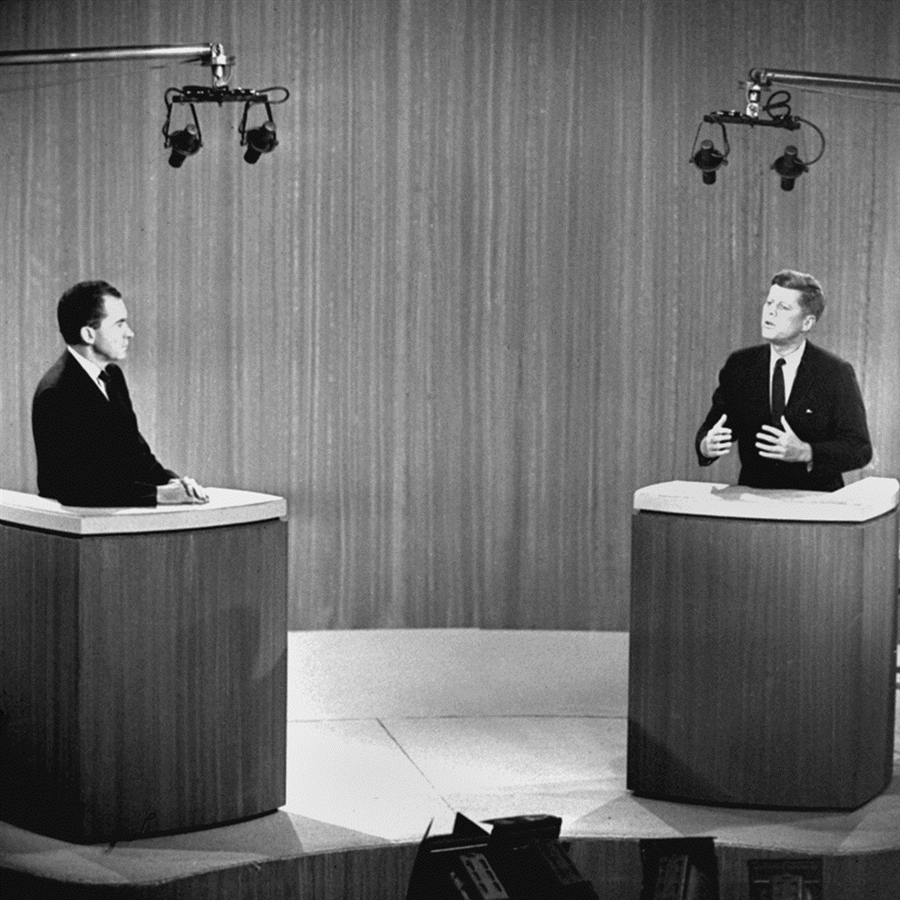
It’s a wonder there aren’t more campaign and Election Day-themed films out there. Sure, there’s more than a few, but considering just how intense and exciting a run for office can be, how punch-drunk and emotionally exhausted the polls can leave both the winning and losing candidates, you’d think there’d be a new Election Day movie every other week.
After all, elections are in many ways as competitive and thrilling as sports, and you can’t throw a rock without hitting a new underdog athletic-themed movie. Of course, watching an actual game live on TV is more exciting than any fictionalized counterpart—playoffs and championship series consistently dominate television ratings for a reason. Likewise, the drama and personal turmoil of a real life election can be far more compelling than the best scripted election spectacle. The stakes are high and unlike almost any other story out there, they personally affect each and every one of us. The characters are flesh and blood, and yet by their nature larger than life.
When a documentary is done well, it shows us the world in a meaningful, striking way that reaches the deepest parts of us. Election Day documentaries are no exception, and with the black-and-white conflict that its entire narrative is spun around, it could be argued that it’s storytelling in its purest form. The following are just a few Election Day documentaries that will glue you to your seats, utterly fascinating looks into a world that only makes the news every November or so, but impacts our lives on a daily basis. There should be a lot more, but for some strange reason, there aren’t. These films are part of a niche that should be its own genre, up there with sports and war docs, and are all stories that needed to be told. It makes you wonder what stories didn’t get a chance to be caught on camera.
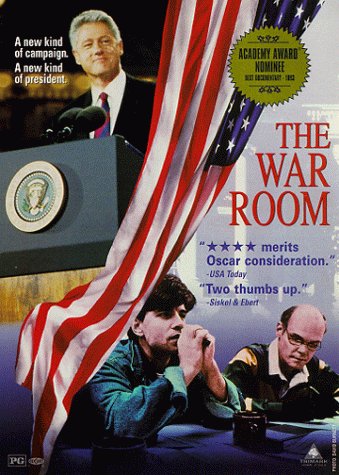
1. The War Room
1993 documentary TheWar Room follows Bill Clinton’s campaign as he evolves from a potential dark horse to clear presidential frontrunner. While Clinton and his first major sex scandal are big portions of the story, the film focuses mainly on the team trying to get Clinton elected, led by the beguiling James Carville and understated wunderkind George Stephanopoulos.
The intimate look at a run for the nation’s highest post reveals the friendly ambiance of an office when things are looking good, and the hostile, fractious mood that same team can take when things are going south. In addition, we see the day-to-day workings of spin and crisis management, the rapid-fire responses Clinton and his team must make to every new turn of events that unfold throughout the election.
An Academy Award nominee, War Room is considered one of the gold standards of any campaign documentary, and is an absolute must-see for Democrats and Republicans alike.
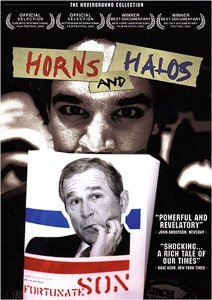
2. Horns and Halos
Horns and Halos takes place in the same context of a presidential election, but rather than focus on the main players themselves, the film uses George W. Bush’s 2000 run for office as a backdrop to the more personal story of a troubled biography author and the idiosyncratic independent publisher releasing his book.
James Hatfield wrote Fortunate Son, a scathing biography that alleged George W. Bush built his successful career using the wealth and power of his father and family and, more tendentiously, claimed Bush used cocaine in the 1970s. The documentary crew followed Hatfield and Sander Hicks, the young New York publisher who kept the book on the shelves while the Bush family placed immense pressure on the author to recant the claims. Hatfield’s criminal past soon came to light, believed by the author to be a tactic of the Bush campaign to discredit him. During filming, Hatfield was found dead of an apparent suicide, though Hicks and others believe it was a murder and cover-up.
Like many election stories, the facts are murky and end results downright depressing, and the film reveals dark machinations in politics that are hard to watch and even harder to accept. Horns and Halos lives in the shades of grey that make for absolutely fascinating documentaries.
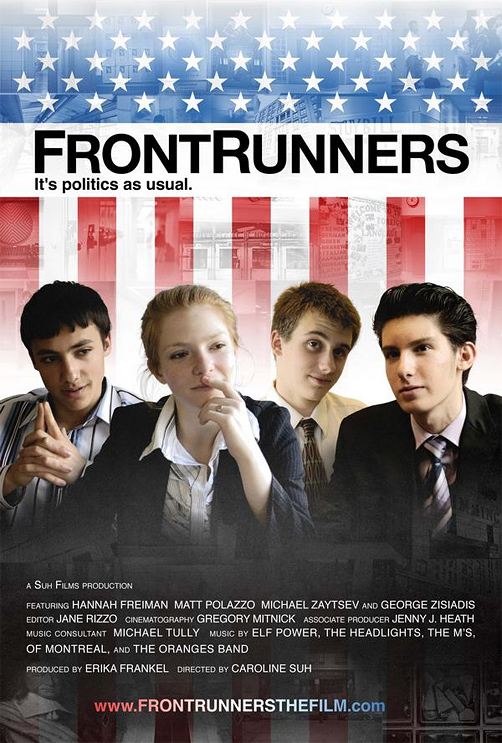
3. Frontrunners
Not all great election documentaries have to be about high office. Frontrunners is about an extremely localized race—the campaign to be Class President at Stuyvesant High School. The New York school is famous for its elite, brilliant students that are consistently held to the highest standards. Their elections are no different, following the rules and structure of the most professional government races, including primaries, debates, and the subtleties of vetting running mates.
What sets Frontrunners apart from its peers is that these teenagers can’t put their lives on hold like adult politicians. They still have to do their homework, be in bed by curfew, and study like hell to get into a good college. This added stress, along with all the over-the-top emotion and angst of being a teenager, creates a sharp, dramatic, and hilarious version of the typical election story and holds a fun house mirror to the grown-up races that dominate the news.
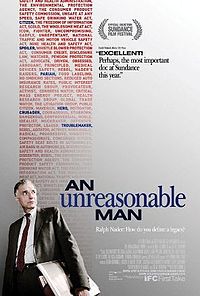
4. An Unreasonable Man
An Unreasonable Man isn’t strictly a campaign documentary but rather a biographical look at Ralph Nader, social and consumer advocate and infamous third-party also-ran. While the first half of the film is more concerned with Nader’s career mandating seat belts and such, a good deal of the documentary shows how Nader revolutionized modern grassroots politics and put together a campaign that placed morals above everything else.
While the documentary is clearly biased and pro-Nader, it’s a fascinating angle from which to watch the 2000 and 2004 presidential elections. By nature of its subject, it asks questions many election docs don’t, including where the line is drawn between doing the right thing and making compromises for the greater good. One of the film’s most fascinating scenes involves left-wing luminaries Michael Moore and Bill Maher—former Nader supporters—on their knees publicly begging Nader to pull himself out of the 2004 election, lest he siphon votes from the Democrats and help Bush win another tight race.
Nader tells the camera that he does not regret running, even if it may have cost Al Gore the 2000 election and permanently changed the political landscape of the nation. An Unreasonable Man is about just that, and is the rare Election Day documentary that asks Why? rather than How?
5. Street Fight
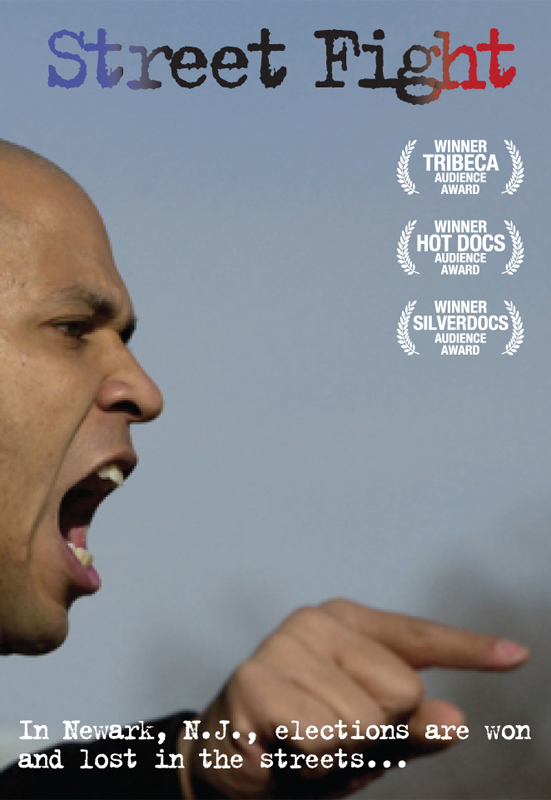
Street Fight, the 2002 documentary chronicling the race for Newark’s mayor, is a lot of things. For one, it’s a classic underdog story, following young greenhorn Councilman Cory Booker’s campaign to unseat political stalwart Sharpe James, a true David vs. Goliath tale.
It’s also the story of a city—Newark, New Jersey—a community that is a stone’s throw from the cultural and commercial capital of the world yet is practically invisible in its shadow. Unlike national campaign stories, Street Fight is a documentary that can make its more specific location its own character, and showcases Newark and its people from the ground up.
Cory Booker ended up losing the documented race, but later became mayor in 2006 and Senator in 2013. As his political career continues to soar, it’s clear that Street Fight may have been the first time the world outside of Newark got to see Cory Booker, but it certainly wasn’t the last.
Honorable Mention: Tanner ’88
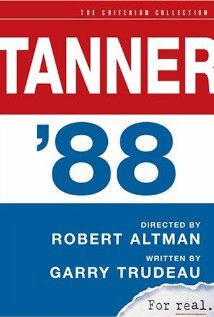
Tanner ’88 isn’t an Election Day documentary, it’s a mockumentary, and while that’s pretty much cheating, it still holds many of the same merits of it’s more truthful peers. It helps that it’s helmed by some of the strongest storytellers the late 80s had to offer—Robert Altman and Doonesbury creator Garry Trudeau. Between Trudeau’s cutting, insightful take on politics and Altman’s way with camerawork and dialogue, Tanner ’88 isn’t just a great mockumentary—it’s a great film.
Of course, fictionalizing the campaign helps in many ways, utilizing great actors to say exactly what needs to be said and capturing candid moments that would be hard for real life cameras to pull off. If anything, it’s a great supplement to Election Day documentaries, filling in the blanks actual flesh-and-blood politicians have gotten so good at keeping obscure. At the same time, it highlights just exactly why we need to keep our cameras trained on the people running or trying to run our country, and exactly why we need smart, talented filmmakers telling the stories these cameras can find.
High-speed photography may not be for everyone – since it requires a certain amount of specialized equipment – yet for photographers who are looking for a way to spruce up their portfolio, this may be the answer.
High-speed photography continues to amaze the public, largely due to the fact that it can capture moments that even the human eye cannot see. The exact moment a balloon is popped, the moment a glass is shattered, the moment a paint ball explodes; these are only a few of the infinite amount of possibilities high-speed photography offers.
This type of photography used to only be available for scientists and those who were using it to conduct research, yet in the recent years this type of photography has become more widely available to the average photographer. While specialized equipment is still required, it is not as expensive as it once was.
Equipment Needed
A DSLR camera
A tripod
A wireless external flash (at least one)
A sound trigger (more on this later)
A black backdrop – this could be a sheet, a piece of cardboard, or anything else you can find that won’t reflect any light
A subject (this could be a balloon full of paint or a glass full of liquid)
Something to cause a reaction (such as a needle to pop the balloon, a toy gun to shoot the glass full of liquid, etc)
Optional: colored gels
Setting Up Your Composition
Photo by Scott Dickson
Let’s say you want to photograph a glass full of wine breaking. You’ll want to set up your backdrop so that there is nothing else around it. It’s important to make sure your backdrop is large enough that it will fill the entire frame.
*Important*: You must shoot in a completely dark area (such as a room without any windows) or at night. It’s extremely important to make sure that you have no extra light leaking into your photograph.
Set up your wine glass on a table in front of your backdrop that is covered with a black cloth – you don’t want to be able to see the table in your final photograph. Set your camera up on a tripod in front of the table, and position the tripod and camera so that the wine glass fills up the middle of the frame (or wherever you’d like it to be in the final photograph).
Set up your external flash so that it is out of your viewfinder, and point it directly towards the side of your subject. If you choose to use multiple external flashes, set them up directly across from each other at either side of your subject. Set up your sound trigger close to the subject but out of your viewfinder. Specific ways of setting up the sound trigger vary depending on which model and brand you have, so you should refer to your manual for exact instructions.
What’s a sound trigger, you ask? This piece of photographic equipment is what makes it possible to capture high-speed photographs. A loud sound (such as a balloon popping or a gun firing) sets off the trigger, which tells your external flash to fire at that exact second.
*If you’re using damaging subjects (such as paint or wine), make sure you cover all floors and furniture before taking the photographs!
Camera Settings
Photo by Scott Dickson
Most cameras aren’t capable of syncing with an external flash at a shutter speed faster than 1/200. Luckily, high-speed photography doesn’t depend on how fast your shutter speed is, but rather how fast your flash is.
Your shutter speed should be set to around 2-3 seconds; long enough for you to open the shutter, cause the disturbance, and capture the result.
Your ISO should be set to 100 or 200 to ensure that the resulting photograph isn’t grainy, especially since a large part of it will be completely dark.
Your aperture should be set to around f/8. This will ensure that the entire scene remains in focus while still allowing enough light to hit the sensor. You can take a couple of test shots and adjust the aperture as necessary before beginning.
The power of your external flash should be set at the lowest setting to begin with. Again, take a couple of test shots before shooting the real thing and adjust the power of your flash as necessary.
In order to focus on your subject, turn on a flashlight and point it at the subject. Once the subject is lit, you can either manually or automatically focus on it. Once the focus has been set, make sure to turn your focus ring to manual so that it doesn’t try to re-focus mid-shot
Taking The Photographs
Once you have figured out the exact camera settings (remember to take test shots before photographing the actual breaking of the wine glass, balloon, or other subject!!), you’re ready to begin shooting.
Press the shutter button down, shoot the wine glass with a toy gun, and watch your flash go off as soon as the shot is fired! Check your viewfinder to see the results. You may need to try this several times before you get a shot that you are happy with, but that is half the fun.
Creative Alternatives
Photo by Abdullah Al-Roshan
Once you have the basics down, you can branch off to more exciting alternatives. Let’s say you want to have a white background instead of black. No problem! Simply change all of your black materials to white. Since white tends to reflect more light than black, the power of your flash and your aperture setting may need to be adjusted accordingly. Additionally, depending on where your flashes are set up and how many you are using, you may get a background with a gradient instead of flat white.
Photo by Leigh Feaviour
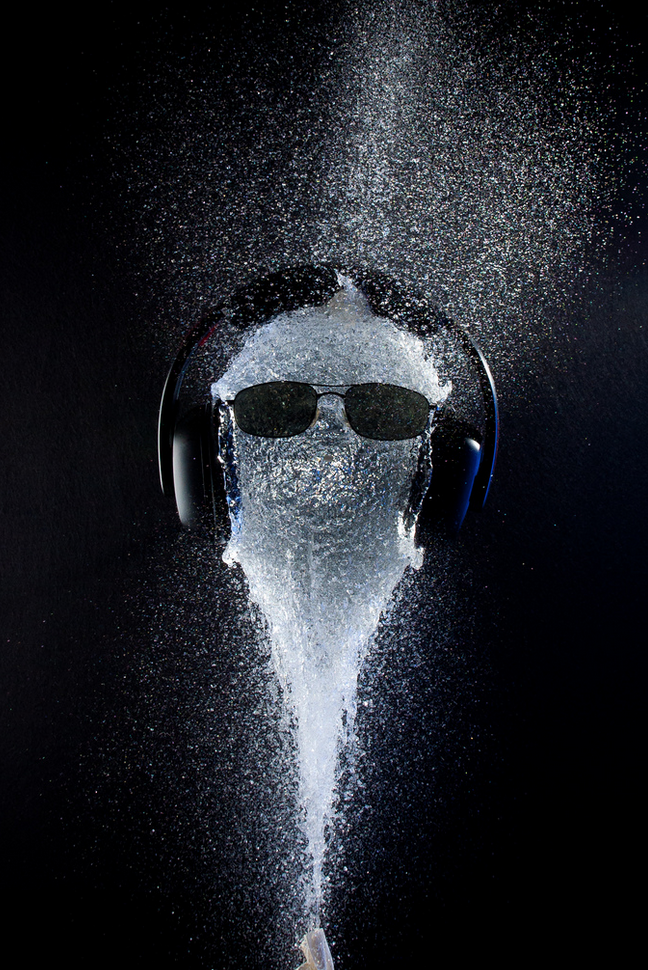
You can use the optional color gels over your external flashes to get some interesting colors in your final photographs. One flash with a colored gel will turn the entire photograph that color, while two flashes with different colored gels will create a beautiful gradient. Alternately, you could use a post-processing program to add a gradient to your photographs.
Fill your subjects with paint, use food coloring, or even use human subjects in your photographs! The possibilities are endless.
[su_note]Exploring the settings on your camera to capture high-speed photos can set your portfolio apart. To see all the ways our students build extensive photography portfolios, visit our Photography school today![/su_note]
Manage Cookie Consent
This website uses cookies to improve user experience. By using our website, you consent to all cookies in accordance with our Cookie Policy.
Functional
Always active
The technical storage or access is strictly necessary for the legitimate purpose of enabling the use of a specific service explicitly requested by the subscriber or user, or for the sole purpose of carrying out the transmission of a communication over an electronic communications network.
Preferences
The technical storage or access is necessary for the legitimate purpose of storing preferences that are not requested by the subscriber or user.
Statistics
The technical storage or access that is used exclusively for statistical purposes.The technical storage or access that is used exclusively for anonymous statistical purposes. Without a subpoena, voluntary compliance on the part of your Internet Service Provider, or additional records from a third party, information stored or retrieved for this purpose alone cannot usually be used to identify you.
Marketing
The technical storage or access is required to create user profiles to send advertising, or to track the user on a website or across several websites for similar marketing purposes.
To provide the best experiences, we use technologies like cookies to store and/or access device information. Consenting to these technologies will allow us to process data such as browsing behavior or unique IDs on this site. Not consenting or withdrawing consent, may adversely affect certain features and functions.
Functional
Always active
The technical storage or access is strictly necessary for the legitimate purpose of enabling the use of a specific service explicitly requested by the subscriber or user, or for the sole purpose of carrying out the transmission of a communication over an electronic communications network.
Preferences
The technical storage or access is necessary for the legitimate purpose of storing preferences that are not requested by the subscriber or user.
Statistics
The technical storage or access that is used exclusively for statistical purposes.The technical storage or access that is used exclusively for anonymous statistical purposes. Without a subpoena, voluntary compliance on the part of your Internet Service Provider, or additional records from a third party, information stored or retrieved for this purpose alone cannot usually be used to identify you.
Marketing
The technical storage or access is required to create user profiles to send advertising, or to track the user on a website or across several websites for similar marketing purposes.
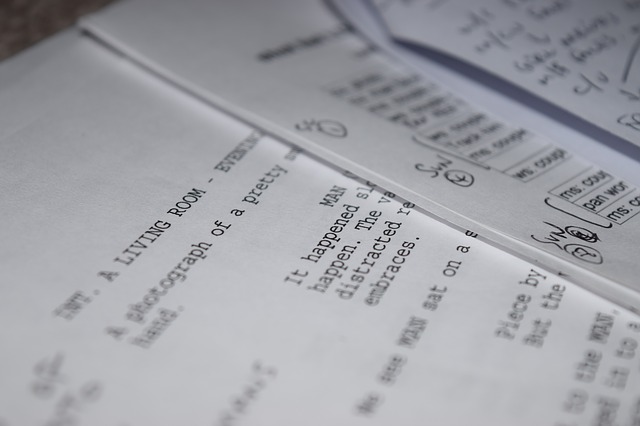




 Robert Appleton: Art school and/or drawing experience is a great asset as it provides training in visualizing characters and scenes.