
Hey Marvel – Here’s Five Ways to Make a Solo Hulk Movie

Hulk

Everybody’s talking about what’s on Marvel’s docket after they released their slate of upcoming movies for the next five years. The core of their cinematic universe of course is the Avengers Trilogy (or Tetralogy since they’re splitting Infinity War into two movies). Sequels to Captain America, Thor, and Guardians of the Galaxy are no-brainers, and the addition of new heroes Ant-Man, Doctor Strange, Black Panther, and Captain Marvel aren’t just icing on the cake—they’re a whole extra cake, with icing.

But what about the Hulk? He was the second superhero introduced to the Marvel Cinematic Universe, right after Iron Man way back in 2008, and unlike every other character since, he hasn’t gotten a sequel. It’s agreed by most that The Incredible Hulk was weaker than its compatriots, and like 2003’s Hulk, underwhelmed audiences despite making its money back and then some.

But Incredible Hulk starred Edward Norton and pre-dated the Hulk’s scene-stealing role in The Avengers. Mark Ruffalo is universally adored as Bruce Banner, and with Marvel seemingly making new movies out of thin air, it’s more than conspicuous that he hasn’t earned another solo blockbuster adventure. Gone is the argument that a CGI Hulk in every scene of a movie would simply cost too much money—after all, two of Guardians of the Galaxy’s lead characters are a CGI raccoon and tree. And if the new Avengers: Age of Ultron is any indication, the next Marvel movie will have a supporting cast of about ten thousand computer generated robots.

If it’s not the CGI, and it’s not Ruffalo’s undeniable charm, then just why isn’t Marvel producing another Hulk movie? Maybe they can’t think of a decent plot—The Incredible Hulk’s storyline was basically Hulk Smash. But that’s not a good excuse either. Here’s five ways to make a solo Hulk movie drawn from fifty-plus years of comics backstory, and five directors who could potentially bring these films to life. Get on this, Marvel, before you make us Hulk fans angry.

You wouldn’t like us when we’re angry.

1. Grey Hulk

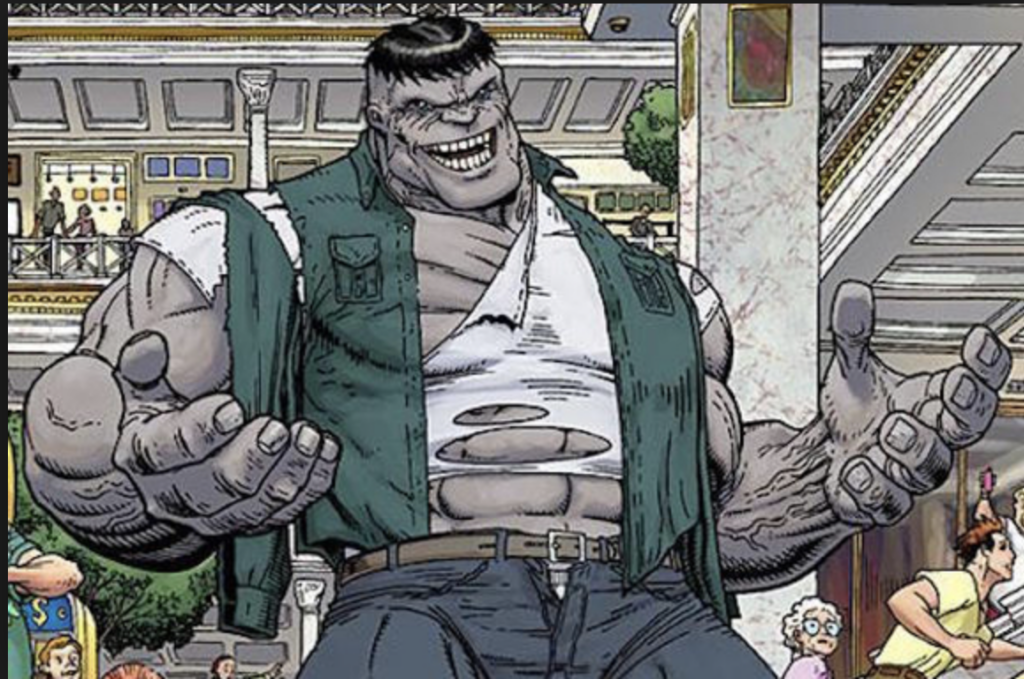
If you haven’t noticed, Bruce Banner has a bit of a split-personality. What many casual fans don’t realize though is that he doesn’t just have one extra personality, he has several. Besides the big green, savage manifestation of his anger that likes to smash and talk in the third person, Bruce can also turn into the Grey Hulk.

The Grey Hulk is a little smaller and weaker than the Incredible Hulk, and his skin is, well, grey. But he still towers over the average-sized man and has muscles that would make Thor drop a Mjölnir in his pants. He’s also a little smarter than the savage Hulk, able to have conversations and drive a car. In fact, he holds down a job as a mob enforcer in Las Vegas as alter-ego Joe Fixit. He makes a great living actually. If you’re a bookie who’s owed some money, who better to scare your debtors into paying than a big grey monster packing heat.

A Vegas-set mob movie would be a great way to do a Hulk movie different from the previous two. And who better to direct a mob movie than Martin Scorsese? His talent behind the camera has been begging for a superhero to shoot, and he’s worked with Ruffalo before. It’s a match made in heaven.
2. Planet Hulk

Why isn’t Hulk helping out Cap and Thor in their respective sequels? How about because he’s in space? Like, deep outer space. The Planet Hulk storyline from the comics finds Earth’s superheroes fed up with Hulk smashing their stuff all the time and banishing him to a far away planet, Sakaar.

The planet is filled with aliens from a multitude of races, forced to battle one another in a gladiator arena for the amusement of the evil Red King. Hulk fits right in, and leads a revolution from the ground up after smashing some space heads. The Guardians of the Galaxy could even make a cameo, helping Hulk overthrow the Red King and bring freedom to Ancient Rome, er, the planet Sakaar.

Ridley Scott has proven adept at directing space movies and gladiator movies, but he hasn’t tackled a superhero pic yet and this would be the easiest way for him to make that transition. With Scott at the helm, how can we not be entertained?

[editor’s note: Three years after this article was published, Marvel did a version of the Planet Hulk story in Thor: Ragnarok, directed by Taika Waititi]

3. World War Hulk

World War Hulk is technically a sequel to Planet Hulk, but since when has continuity ever been an issue in the MCU (cough, Don Cheadle, cough.) The Hulk has made his way back from the planet Sakaar and is more than a little pissed that he was banished in the first place (and that his gladiator girlfriend was killed in the space revolution.)

Hulk takes his revenge on New York City, fighting Iron Man and Doctor Strange as the super-angry, super-strong, super-huge World Breaker Hulk. It looks like he’ll be duking it out with Iron Man already in Age of Ultron but honestly, shouldn’t that be its own movie? Plus, with Doctor Strange in the mix, it could be Benedict Cumberbatch vs. the Hulk, which honestly is an even better title for the movie than World War Hulk.

This sequel would be loud, filled with mindless action and the borderline-offensive leveling of an American city. Michael Bay would be perfect.

4. She-Hulk

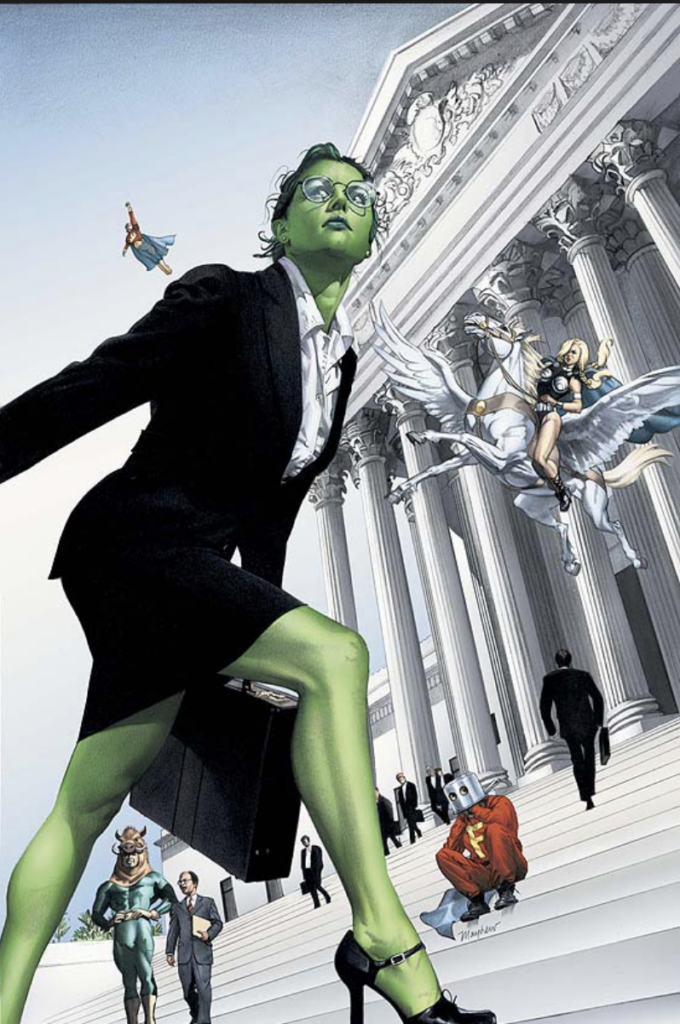
She-Hulk is one of Marvel’s most underrated characters. Her alter-ego is Jennifer Walters, and unlike her cousin Bruce Banner, she is always big and green, but not nearly as mindless and angry. In fact, she’s extremely smart, and works by day as a lawyer.

If Marvel wants to introduce a new hero, they could give her origin in a Hulk movie, having the two team up before She-Hulk sets out on her own. Currently, She-Hulk is one of the most entertaining series in the Marvel line, with a fun, youthful energy that also knows how to have badass battles with fellow heroes like Daredevil and Captain America.

The Kids Are Alright director Lisa Cholodenko, who’s worked with Ruffalo before, could balance the witty courtroom repartee with the sweet kickass brawls She-Hulk isn’t afraid to back down from.
5. Guilt Hulk

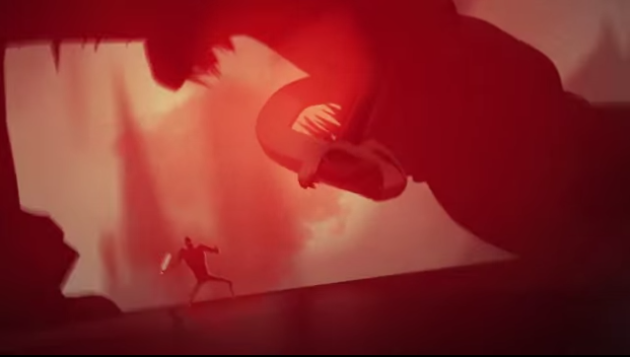
When Bruce Banner is angry, the green, savage Hulk lets out his rage by smashing. When Bruce is full of guilt and regret, in many ways, a much more dangerous emotion, he becomes The Beast, a.k.a. the Guilt Hulk. The Guilt Hulk is a terrible monster, larger and stronger than usual and makes the standard Hulk look downright cuddly. He’s got long, sharp claws, is covered in spikes, and on occasion, breathes fire. This ain’t your Daddy’s Hulk.

The Guilt Hulk is so scary the sequel would be more horror than action film, and Mexican filmmaker Guillermo del Toro would be perfect to direct and design the cinematic look of the Beast. At his most contrite, the Guilt Hulk can tower over sixty feet tall and level buildings with a single swipe of his arm. After Pacific Rim, is there any doubt del Toro isn’t the right person for the job?
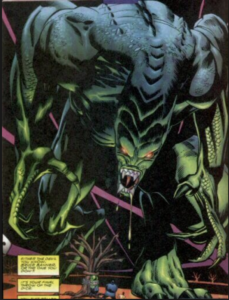

Guilt Hulk
Guilt Hulk

7 TED Talks About Video Games You Have To Watch

With the explosion of video gaming into the mainstream in recent years, it naturally follows that a greater number of people are looking to learn the intricacies of game design and craft their own creations. Unfortunately it’s not a medium with the easiest learning curve.

Attending game design school is the quickest and most efficient way of getting up to speed, but there is also a lot of supplementary material which can serve to both inspire and educate. Arguably, the best source TED talks, which feature some of the greatest thinkers in the video game industry.

With this in mind, we’re proud to present…

The Top 7 Ted Talks About Video Games

Stuart Brown: Play is More Than Fun

Who: A leading researcher on the effects on how play affects the psyche and childhood development.

What: Brown’s clinical expertise on the topic, combined with both hard-figures as well as human annecdotes, makes for a very compelling talk on why playing is so important in psychology.

Why: Although not strictly related to video gaming, the concept of ‘play’ is inherently linked, and Brown’s take on the topic provides a lot of relevance to those who both create and play games.

Jane McGonigal: Gaming Can Make a Better World

Who: Game designer, writer, and expert on gamification.

What: Can online MMOs be used to save the real world? That’s the question McGonigal sets out to answer in one of the most high-reaching TED talks about video games ever released.

Why: Jane McGonigal’s claims are big, bold, and full of intriguing possibilities. Her other TED talk is well worth a watch too.

David Perry: Will Video Games Become Better Than Real Life?

Who: Northern Irish video game designer behind Earthworm Jim and MDK among others.

What: A natural flow-on talk from Jane McGonigal’s, David Perry takes a look at where trends in video games are likely to lead us as we move into the next generation of gaming experiences.

Why: A very good reason to watch Perry’s TED talk about video games is that he delivered it in 2008 . The retrospective aspect makes it even more interesting given that a lot of his predictions have since come to pass.

Brenda Laurel on Making Games for Girls

Who: Founder of Purple Moon, the first US publisher to make games aimed towards females aged 8-14.

What: Laurel’s talk on addressing the wants of younger female gamers came at a time in which the entire industry was ignoring this entire demographic. And her discussion of the challenges therein make for fascinating viewing.

Why: One of the earliest TED talks on video gaming. Like Perry’s talk, this has only gained in relevance since it was put out in 1998 (especially given the recent developments in the feminism and video gaming spheres).

Mitch Resnick: Let’s Teach Kids to Code

Who: Director at the MIT Media Lab and creator of Scratch, a programming language aimed at children.

What: Very much what it says on the tin: Resnick is a leading educator in IT and speaks from experience on the topic of both how and why kids should be taught to code in the school setting.

Why: Although the intake of students into game design schools is on the rise, programming tuition below college level is still lackluster at best. Resnick makes an exceptionally strong case for change.

Gabe Zickermann: How Gaming Makes Kids Smarter

Who: CEO of Gamification Co and author on the topic of gamification.

What: Zickermann manages to dispel a lot of myths regarding children playing video games in just 17 minutes, and also lays out a series of positives which gaming has been proven to deliver.

Why: The next time someone claims that video games make kids lazy or disinterested in real life, you’ll be able to counter them with the info provided in Zickermann’s TED talk.

Ryan & Cassandra Creighton

Who: A five-year-old artist and her coding father, who created Sissy’s Magical Ponycorn Adventure together.

What: Using the aforementioned Scratch programming language (mentioned in Mitch Resnick’s TED talks on video gaming), this father and daughter duo bonded together over a video game collaboration which ended up inspiring a lot of people.

Why: There are a lot of TED talks about video games which educate, innovate, and ask big questions. There are very few which will make your heart melt like this one.

The 7 Must-Watch TED Talks For Anyone Interested In Animation

Animation is one of the most unique artforms in modern media – a unique blend of creative imagination and technical prowess, animating is something that isn’t particularly difficult to pick up but can take a lifetime to master. The rewards and sense of achievement, however, make the hard work more than worth it.

Given the multi-faceted nature and technical intricacies of animation as a whole, it’s something that is often best learned at an intensive 3D animation school but those getting into the craft can benefit hugely from the wisdom of those already working in the profession. Presenting:

The 7 Best TED Talks on Animation

TED-Ed – Animation Basics: The Art of Timing and Spacing

Who: The TED-Ed collection of practical lessons.

What: A beautiful, well-presented, and highly useful gem which explains (by example) what transforms graphics from a simple slideshow to a finely crafted animation.

Why: You’ll learn more in this six minutes than you probably would a month of trying to figure this stuff out on your own. And even seasoned animators are likely to find some fresh perspective which they can apply to their existing work habits.

Tony DeRose – Pixar: The Math Behind the Movies

Who: Senior Scientist and Lead Researcher for Pixar.

What: A surprisingly accessible presentation on animation mathematics delivered by a man that knows a thing or two about it.

Why: There’s a lot of material out there on creativity and storytelling, but not a lot on the hard math that lies behind it all. Outside of animation school, this is one of the best opportunities to have a professional at the height of his field explain the intrinsic link between math and art.

Matthew Winkler – What Makes a Hero?

Who: Winkler is a journalist and editor-in-chief with Bloomberg News.

What: Not just a video on the hero’s story concept – an important trope in animation – but the talk is also presented in a gloriously animated format (with the animation conducted by Kirill Yeretsky).

Why: Even non-animators can get a kick out of the lush visuals and narrative theory which runs central to most of the great works in literature, from Homer’s Odyssey to Lord of the Rings and beyond.

Torsten Reil – Using Biology to Make Better Animation

Who: Video game entrepreneur, CEO of NaturalMotion, and animator on Grand Theft Auto 4.

What: One of the enduring classic TED talks on animation, Torsten’s humorous presentation puts forward the advantages that a little bit of biology knowledge can bring to your animation work.

Why: Although Reil’s TED talk is over ten years old, the key principles are just as relevant today and the lessons herein can lead to a much more fluid style of animation.

Drew Berry – Animations of Unseeable Biology

Who: Biomedical animator at the Walter and Eliza Hall Institute of Medical Research in Melbourne, Australia.

What: Whereas Torsten Reil’s talk concerned the use of biology to make animation better, Berry flips this around and looks at how animation can be a hugely beneficial tool in medicine.

Why: Whenever you feel that animation is just an entertainment medium, it’s good to remind ourselves that it is, in fact, an overwhelmingly useful way to educate and help people. It’s one of the best TED talks on animation that also presents animation in a different light. Plus, Berry’s work is fascinating to watch in and of itself.

Andrew Park & Denis Dutton: A Darwinian Theory of Beauty

Who: Park is a British animator; Dutton is an art philosopher, web entrepreneur, and media activist.

What: A talk by Dutton on what lies at the heart of aesthetic beauty across cultures, cleverly animated in Andrew Park’s inimitable style.

Why: While not strictly discussing the craft of animation, the idea of what is visually appealing is naturally a major consideration for animators and it’s fascinating to see Park at work while Dutton delivers his illuminating talk.

Miwa Matreyek: Glorious Visions in Animation and Performance

Who: Short film maker, performance artist, and animator.

What: An entrancing display of mixed-media performance art which is almost meditative in tone.

Why: Want to relax for ten minutes? Watch this. Want to see animation used in an altogether different way? Watch this. In fact, just watch this.

4 Insanely Useful Game Design Books Every Designer Should Read

When asking a game designer what you should be doing to make good games, they will more often than not tell you to “play a lot of games” at some point.

It makes sense since you’d expect those seeking a career making Hollywood films or television programs to spend a good amount of time watching them. In fact, you’d be surprised to hear an aspiring writer say that he or she doesn’t read that much.

How, then, will they grow and learn if they don’t study the material of successful writers that have been sharpening their talent for years?

As a game designer you should definitely be playing a lot of games to get a solid understanding of what makes a game good or bad. However, only by reading books that go into detail on the concepts and principles of game design will you learn how to make good decisions when creating your own games.

After all, you’re only seeing the end-product when you’re playing a game, not the hours of prototyping, conceptualizing, and essentials that go into creating a finalized, good design.

The following are some of the best books currently available for any ambitious game designers that want to absorb as much knowledge as possible on the craft that is designing games.

Game Design Workshop: A Playcentric Approach to Creating Innovative Games

One of the best ways to learn something knew is to actively put into practice what you’re learning, and no game design book does this better than Tracy Fullerton’s Game Design Workshop.

This book will challenge you every step of the way by having you prototype, playtest, and revise your own games with exercises that help you learn must-have design skills.

Don’t worry, all of the activities involved are non-technical and thus require no artistic or programming abilities. This means anyone can go through the often-enlightening exercises and uncover game design skills you didn’t know you had, or improve the ones you already did.

Aside from taking you through the creative process of game design, this book also offers handy analysis of popular games, the formal and dramatic systems of game design, clear illustrations of design techniques, and more.

If you’re looking for a book that takes you deep into game design and puts you to work via hands-on exercises, Game Design Workshop is a must-have.

The Art of Game Design: A book of Lenses

The author of this book, Jesse Schell, claims that “anyone can master the fundamentals of game design – no technological expertise is necessary.”

It certainly sounds like a bold claim until you learn that Will Wright, the famed designer behind The Sims, has been quoted saying that this book is “easily the most comprehensive, practical book I’ve ever seen on game design.”

That’s because The Art of Game Design offers an interesting approach to game design by giving the reader a view of games from the perspective of a diverse number of professional fields – music, film, mathematics, theme park design, psychology, writing, and more.

This allows you to learn plenty about game design principles no matter which genre or type of game you want to make or audience you wish to target.

Schell’s book not only addresses what a designer should know, but also gives practical advice about how to gain that knowledge through life experience, making this book essential for any aspiring game designer that wants their games to appeal to as many people as possible.

A Theory of Fun for Game Design

Although the process of designing a game has its moments of frustration and failure, there’s also plenty of fun to be had. Why, then, shouldn’t a book about game design also be fun to read?

Raph Koster succeeds in this by offering incredible insight on the fundamentals of game design while also injecting some humor along the way.

Perfect for not just game developers but anyone working in any creative project, A Theory of Fun for Game Design teaches readers how to create designs that offers the most fun possible.

A novel approach is used via visual storyboards to discuss the art and practice of designing engaging games that both addict and entertain players. Koster also presents designs that lack in ‘fun’ and explains how experienced designers would take existing elements and use them in new ways to make the design enjoyable.

Informative and even inspirational, A Theory of Fun for Game Design is the perfect book if you want to learn about what makes a game compelling while also getting a creative kick in the pants in the process.

Rules of Play: Game Design Fundamentals

At nearly 700 pages divided into four major sections, each one capped by an exclusive game design or essay from a proven game designer, this is easily one of the most comprehensive books you’ll find on game design theory.

More importantly, Rules of Play does not require readers to be experts in computer science, mathematics or any of the fields it draws from. Instead, it delves into those subjects just enough so that those unfamiliar with these areas will come out learning plenty.

Unlike some of the other books in this list, this one is also less practical and offers few exercises. But is unrivaled when it comes to diving deep into the elements, concepts, and vocabulary that belong to good gameplay and game design.

It also boasts plenty of pictures, dissections of non-digital games such as table-top and sports, works by game developers written exclusively for this book, and other useful features that compliment the text every step of the way.

Whether you’re interested in the way games tell a story, the emergence of social play, or the proven elements that make a game fun, Rules of Play is extensive enough to offer insight on all this and more.

Interested in a career in video game design? Our variety of game design workshops give students an introduction to the design, artwork, programming, and storytelling that goes into video game production. Visit our Game Design Discipline page to learn more.

Method Acting: Method or Madness?

Some actors swear by it, while others denounce it as a self-indulgent and superfluous part of the craft. But whichever way you slice it, it’s an enduring part of the profession which has spawned more than a few intriguing tales from the field – today we’ll take a look at a few of them, and attempt to address whether it’s something you should consider for your own acting career.

Lee Strasberg method acting

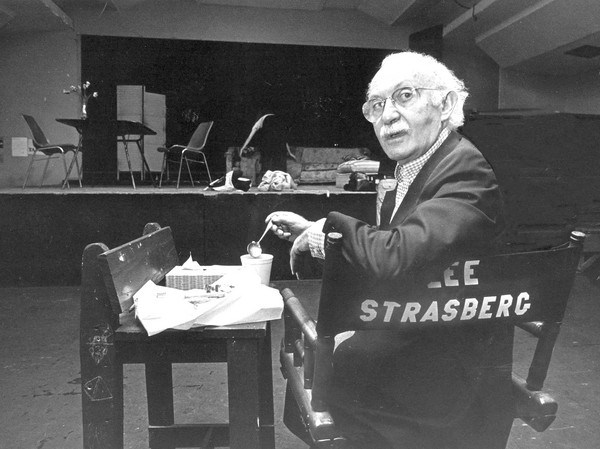
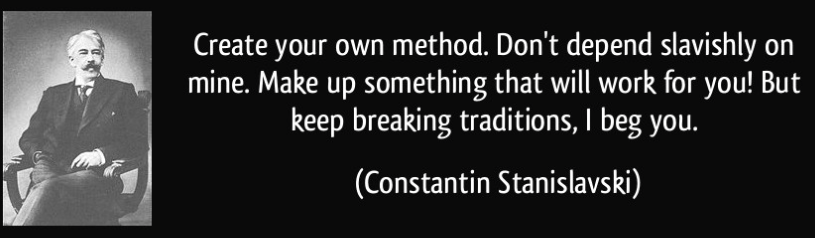
The type of method acting which most are familiar with is the one pioneered by Lee Strasberg, although this in turn was derived from similar ideas invented at the turn of last century by Constantin Stanislavski (whose system has long been part of fundamental theory taught at acting school.)

Method Acting in Both Preparation and On-Set

The late Heath Ledger’s flawless performance as the Joker in The Dark Knight was followed by a whole month of self-imposed isolation. While locked in his hotel room, Ledger allowed himself to go s bit nuts and slide into the character, scribbling in a mad diary of Joker-esque ramblings and trying to perfect the voice and laugh. While on set, he ignored anyone who didn’t address him as if he were the Joker and reportedly unnerved everyone when he hung out on set even on days off.

One can only imagine what it must have been like for the bellboys walking past Ledger’s suite and hearing that now-iconic laugh late into the night. Regardless, if his subsequent Oscar winning performance is anything to go by, it alone makes a very strong case for method preparation.

Daniel Day-Lewis (who listed Ledger as a massive influence) is also notorious for the extremity of his method acting and preparation. Notable examples include:

– Wearing a top hat and cape at all times around New York City for the two months leading up to The Age of Innocence shoot

– Refusing to wear a warmer coat on the set of Gangs of New York because it was not of the period. This lead to Day-Lewis contracting pneumonia. He still refused the coat, and also refused any kind of modern treatment.

– Committed to really getting into the mindset of the severely paralysed Christy Brown for My Left Foot, Day-Lewis never left his wheelchair during filming, necessitating the crew carrying him and the heavy chair everywhere on set.

– Learned to live solely off the land before and during the filming of Last of the Mohicans, going as far as refusing to eat anything he hadn’t hunted and killed himself.

– Became fluent in Czechoslovakian to play a Czech surgeon in The Unbearable Lightness of Being. It was during this shoot that he first acquired his lifelong habit of never breaking character during a shoot.

As far as method acting goes, you’d be hard pressed to name someone more committed than Daniel Day-Lewis but other actors which have famously refused to break character and taken the method acting to extremed include Joaquin Phoenix, Kate Winslet, Christian Bale, Jack Nicholson, Adrian Brody and Robert de Niro (who actually became a working, licensed taxi driver in preparation for Taxi Driver.)

How Far Should You Take Method Acting?

It’s a good question, but one that is usually rendered moot due to financial or time constraints. If Robert de Niro wants to take six months off to work as a Slovakian potato farmer in preparation for a role, he’s not going to notice the lack of income and there isn’t a director or producer in the world that’s going to tell him he can’t.

You may not have that luxury.

Whether you’re able to go to that kind of extreme or not, do take the time to factor in those who can be adversely affected by method acting: yourself and those around you.

Christian Bale method acting

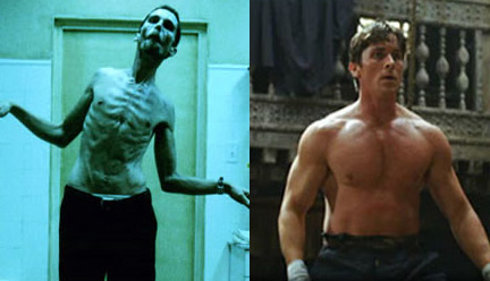
Method acting can lead you to some very strange and sometimes dark behaviors and thought patterns. It can also be physically destructive (especially when extreme weight loss is concerned, a la Christian Bale in The Machinist.)

We could patronize you at this point and say that sacrificing your health and/or wellbeing is not worth it, but you’re a grown adult and it’s entirely up to you how much of yourself you give up to do a good job…

… although perhaps what separates the good from the aforementioned greats is that they don’t see it as just a job.

That said, do beware of one consideration:

You Might Suck at Method Acting.

Tales of actors going borderline insane in the pursuit of understanding their roles make for compelling reading, but caution should be exercised before following in their footsteps.

bad method acting

Method acting is not for everyone, and it’s certainly not a magic bullet that will instantly make you a better actor. In many cases, it can even hamper your performance with complacency – many an actor has been observed mistakenly thinking they’re ready for a
role solely on the basis that they took boxing lessons or lived in a woodland cabin for two weeks.

That all said, you’re doing yourself a disservice if you don’t try it out in some capacity at least once in your career. Your job is to connect on an empathic level with your character, and method acting can be a useful tool in the actor’s arsenal to achieve this.

As with anything derived from Stanislavski’s box of tricks, this is one of those things that can be used as and when it’s needed.

It’s up to you to decide when that is.

Strengthen your ability to act in front of a camera or live audience with our 2-Year Acting for Film Program. Students hone their performing skills for film, television, and stage over the course of four semesters. Visit the 2-Year Acting for Film Program page to learn more.

stanislavski system method acting

The Top 6 TED Talks On The Topic Of Journalism

It’s an exciting time for not just broadcast journalism but for the very concept of journalism itself as technological advancements, arguably like never before, push the industry into new frontiers.

In particular, the field has really opened up to amateur broadcasters who are, in a significant number of cases, amassing a considerable audience despite budgetary and production constraints.

Broadcast journalism school remains the best method of taking a career in the field to the next level, but there are plenty of useful resources to boost learning in the mean time. One such resource is TED, the famously excellent host of keynote speeches in a variety of genres…

… here are the ones which will be of most interest to broadcast journalists.

Best TED Talks on Journalism

Markham Nolan: How to Tell the Difference Between Fact and Fiction

Who: Former freelance journalist, later managing editor of Storyful and Vocativ.

What: Nolan’s posing of what seems like a simple question serves as a springboard to address what has become a rather tricky prospect in broadcast journalism.

Why: Accuracy and information verification is central to most journalism duties. For those baffled as to how best to sift through the modern deluge, Nolan’s talk is for you.

Paul Lewis: Crowdsourcing the News

Who: British award-winning investigative journalist.

What: A TEDx talk on the implications of modern citizen journalism, in which everyday people have the ability to produce and generate their own news and what this means for the conventional journalist.

Why: Paul Lewis’ much lauded work includes exposing the unlawful death of a protester, Ian Tomlinson, at the hands of security guards in London. It was an incredible piece of investigative journalism and a victory for civil liberty. For this alone it’s always worth hearing Lewis’ insight on the topic.

Simon Rogers: Data Journalists are the New Punks

Who: San Francisco-based data journalist for the Guardian.

What: Exactly what is data journalism? Simon Rogers explains how numbers can fill in the blanks around stories, and more often than not, can give rise to very different angles entirely to familiar stories.

Why: Beautifully illustrated, Rogers’ ranks among the most practical TED talks on journalism given that he successfully sums up how everyone can strengthen the bond between words and numbers to become better journalists…even those who are terrified of math.

Ted Rosenteil: The Future of Journalism

Who: Author, journalist, media critic, and executive director of the American Press Institute.

What: “New technology has fundamentally dissolved the old system for financing news,” declares Rosenteil, who goes on to paint a picture of the current journalism landscape and where new frontiers are likely to take us.

Why: So far we’ve looked at TED talks on journalism which address how modern media has changed the industry; Rosenteil takes in one step further and asks if it’s better or worse (and why).

Andres Jaspan: A New Way to do Journalism

Who: Former mainstream newspaper editor and founder of The Conversation, a not-for-profit news service.

What: In a world in which modern journalism is frequently charged with having lost its moral compass, Jaspan discusses how the industry and those working in it can change their fundamental approaches to make changes for the better.

Why: Any TED talk on journalism starting off with “Hello, my name is Andrew and I’m a recovering journalist” has got to be worth 20 minutes of your time.

Michael Anti: Behind the Great Firewall of China

Who: Jing Zhao (pen name Michael Anti), Chinese political blogger and journalist.

What: The Chinese government is notoriously well known for its direct control and censorship of the country’s internet access, which has given rise to both bizarre quirks and serious questions about civil liberty.

Why: While we think of the Internet as a unified, cohesive platform, by its very nature we rarely get to see behind the curtain of the censored version which operates in China. This is a rare opportunity to see it from the other side, with highlights including how much content you can pack into 140 characters when using Chinese.

Breaking Down The Directors Of The Alien Franchise

Alien xemomorph

Nobody involved in the early stages of making a B-movie “Jaws in space” plotted Star Beast ever expected it would evolve into the billion-dollar plus Alien franchise. From the original 1979 film about a creature that lived to kill aboard a spaceship in the middle of nowhere spawned dozens of sequels, crossovers, prequels, comics, action figures, and video games.

Alien: Isolation is just the latest in the ever-expanding universe of murderous Xenomorphs and chestbursters. The next-gen video game is an ersatz sequel to the original film, boasting state of the art realistic graphics to tell the story of Ellen Ripley’s daughter, Amanda, and her search to find her mother and the doomed crew of the Nostromo, or at the very least, the truth of what happened to them.

While reviews of the gameplay have been mixed, its story and tone have been heralded as a worthy addition to the Alien Franchise. That tone has varied with every incarnation of the series and is best explored through the feature films spread across five decades of Hollywood history. And what better way to explore a film than through its director.

The Alien franchise has managed to find a wide range of talented directors at various points in their careers, though usually early—filmmakers who have added their own mark and together have woven a complex tapestry nobody reckoned could be built around something as simple as The Beast With Two Mouths.

Ridley Scott

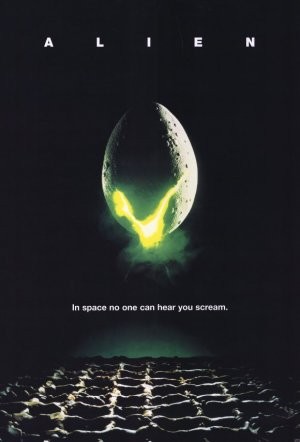
Alien movie poster 1979

A lot of credit for the Alien franchise must go to original Alien director Ridley Scott. His patient, quiet yet epic style set up the world the franchise inhabits, and created the momentum that has since driven the series forward. By casting a seven-foot actor to inhabit the Xenomorph costume and using shadows and other filmmaking techniques to hide the Alien for most of the movie, Scott managed to create an otherworldly beast that looked too real for the special effects of the time—crucial to suspending the audience’s disbelief and scaring them out of their seats.

Scott was keen on having complex characters with backstories and motivations—something rarely seen in run-of-the-mill horror films where actors were merely fodder for their given monster. Combining this with the lived-in feel of the mining spaceship, Scott created an atmosphere not really seen in space movies before. Rather than the clean-cut scientist astronauts of 2001 and other films, the crew of the Nostromo more resembled offshore oil riggers getting paid by the hour in the Alaskan wilderness. Simply put, he made them relatable.

He also cast an unknown Sigourney Weaver in the lead role of Ellen Ripley, originally scripted as male. He not only helped Weaver launch her A-list career but created one of science-fiction’s most enduring heroines, who even thirty-five years later remains one of the few famous female leads in Hollywood genre cinema.

Alien was only Scott’s second film, but belayed the auteur’s skill with blockbuster special effects and set the tone for the rest of his career. Of all the Alien franchise’s directors, Ridley Scott is the only one to have directed more than one film. Thirty-three years after helming the original, Scott came back with the pseudo-prequel Prometheus, another slow-paced effects epic that is more concerned with our cosmic origins than with bloody deaths. While reviews of the movie were mixed, Scott proved that despite setting the tone for the franchise he could also bring it in new directions with the best of them.

James Cameron

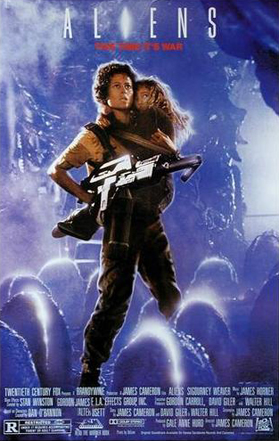
Aliens movie poster

James Cameron may very well have been selected to be the director of the sequel to Alien because of his previous masterpiece, The Terminator. After all, both films centered on unstoppable killing machines following a vulnerable but strong-minded woman. Cameron, however, had other ideas, and his script for Aliens switched radically in tone from its predecessor.

Aliens is a war movie first, monster movie second, written and directed with an energy that celebrated cool guns, space tanks, and badass one-liners. Beneath its surface though was a smarter movie, the macho cheerleading a commentary on the Vietnam War, and Ripley’s character was given a depth and maternal narrative the original movie didn’t have time to establish. Aliens expanded on the first while at the same time it used its universe in entirely different ways for entirely different purposes, and cemented Cameron as an artist of the blockbuster, a future King of the World.

David Fincher

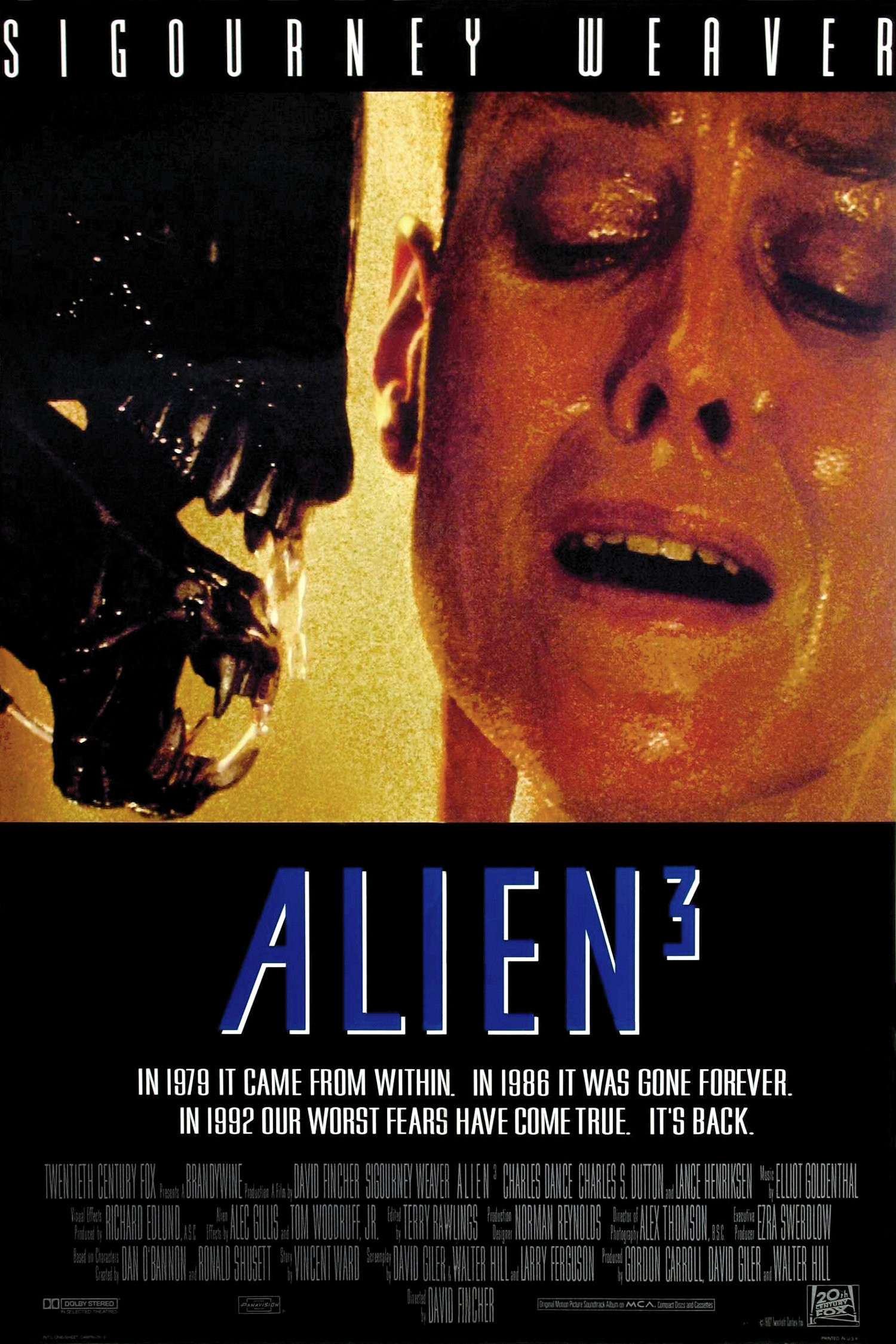
Alien 3 movie poster

Alien 3 was David Fincher’s first film after a career of directing commercials and music videos. Fincher was reportedly plagued by constant rewrites and changes by the studio, and was so disillusioned with the experience that he almost had his name removed from the credits.

However, his stamp remains and facets of the future Oscar nominee’s style are already prevalent in the dark, gloomy sequel. Besides Fincher’s favored brown and copper tones, Alien 3 has the bleak despair and bloody gore found across his oeuvre, including his immediate follow-up, Seven. Fincher is the director who presided over the death of hero Ellen Ripley, a controversial move lambasted from fanboys and previous director James Cameron alike.

The movie has its merits though and showed the Alien franchise could do horror in various shades of gray (or bronze). It also tied Ripley’s character into a larger-than-life battle with the Xenomorphs. In the original she was a bystander, in the second she was a survivor. In the end, she would become a nemesis of an entire species, her existence and fate entwined with the Aliens. She was no longer just a genre protagonist but a bona fide science-fiction legend, her hairless visage as synonymous with the franchise as the eponymous creatures themselves.

Jean-Pierre Jeunet

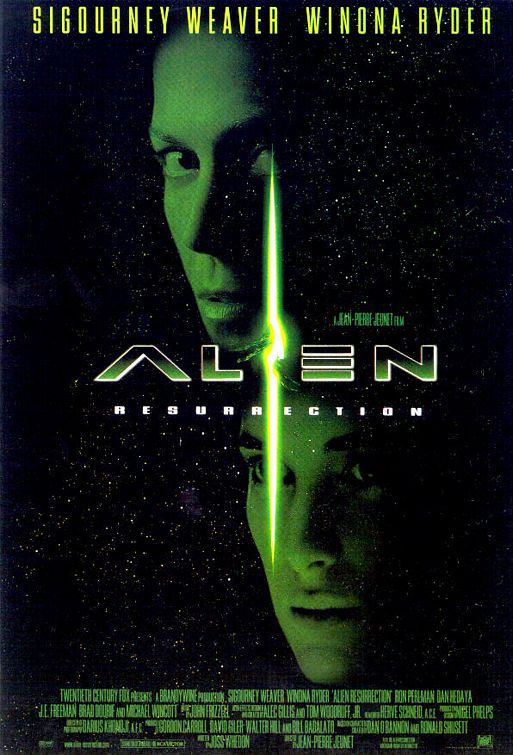
Alien Resurrection movie poster

French filmmaker Jean-Pierre Jeunet had already directed the post-apocalyptic black comedy Delicatessen and dark fantasy The City of Lost Children before taking on the fourth movie in the franchise, Alien: Resurrection. His following film, Amélie, made him more of a household name, and further proved his talent with cinematography built around CGI, then coming of age.

All of these personal touches came together for an offbeat sequel that never quite felt comfortable in its own skin. Like Alien, it was set aboard a doomed spaceship, like Aliens, it had futuristic marines facing off against a multitude of Xenomorphs and their queen. Ripley’s larger-than-life status was the core of the movie, with her clone being resurrected two hundred years after Alien 3 to battle the creatures. She was surrounded by oddball characters, including Jeunet regulars Ron Perlman and Dominique Pinon. Jeunet’s fun sense of quirk best came out in the interplay between Ripley and these characters, and are arguably the strongest element of the film.

Alien: Resurrection was released in 1997, right before The Matrix and Hollywood’s CGI revolution. Jeunet’s skills behind the camera and a script by Joss Whedon struggled to do something new with the franchise, but compared to similar fare of the pre-Matrix 90s, A:R looks beautiful and is dynamically shot. At it’s worst, it’s a generic space action movie with the skin of the Alien franchise, a trait that continued as Hollywood started taking less risks and digging their franchise heels in at the turn of the century. The following two films in the series would continue that trend, and without someone as skilled as Jeunet, they would sink where Resurrection managed to at least keep its head above water.

Paul W.S. Anderson

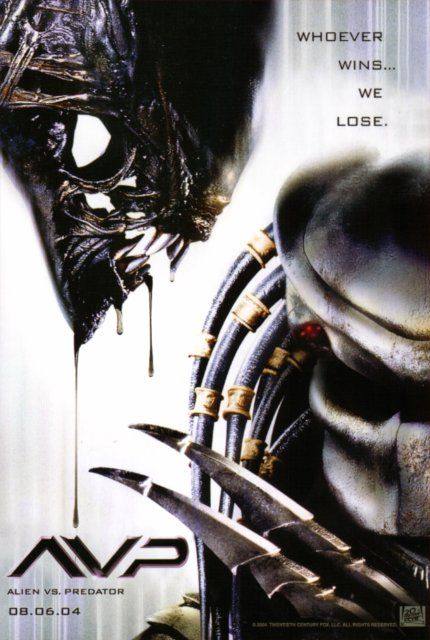
Alien vs Predator poster

Alien vs. Predator was a departure for the series in more ways than its additional extraterrestrial species. It’s also the first film in the franchise with a PG-13 rating, limiting the film’s violence, which in capable hands is not just a tool but part of the series’ foundation.

The PG-13 is one result of Hollywood’s twenty-first century movement to bring in as many viewers as possible. With ever-expanding budgets, it’s become paramount for films to make more money, which has led to duller, more mainstream-oriented fare and a dependency on recognizable names. Aliens had been fighting Predators for over a decade in other media—it was only in the 2000s that Hollywood felt the need to combine the two trademark properties.

While both the original Alien and Predator movies were slow-burns with its monsters picking off the cast one by one, AvP is a loud action film that is more interested in hitting its plot points fast enough to keep teenagers interested than it is in developing character or creating any sort of commentary or subtext. Far enough from the original, AvP also loses itself in nostalgia by beating the audience over the head with callbacks to the previous films rather than using them to season an original take on the mythology.

Of all the directors, Paul W.S. Anderson was the most experienced when he got behind the camera, having already made blockbusters like Mortal Kombat, Event Horizon and Resident Evil. While the previous Alien films all took chances with relatively unknown auteurs, it was a sign of the times that the franchise was placed in the hands of someone more workhorse than artist.

What could have been an exciting crossover with new things to say and new ways to say it, Alien vs. Predator continued the downward slope of the franchise by being just another dumb action flick.

The Brothers Strause

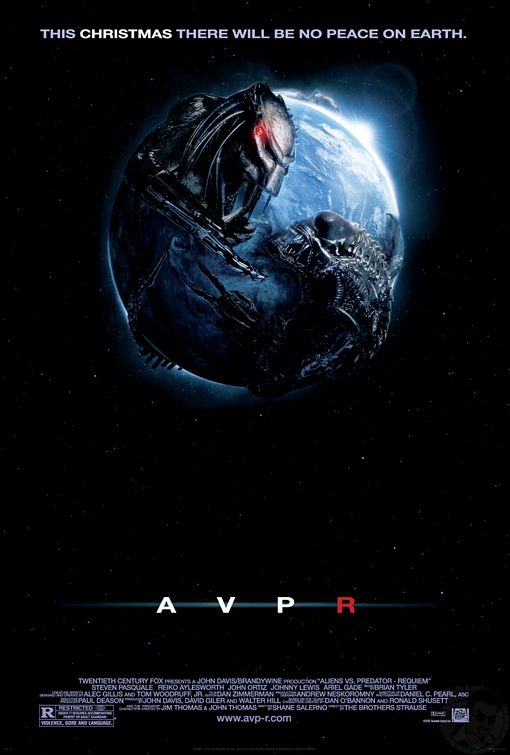
Aliens vs. Predator Requiem

Colin and Greg Strause were untested filmmakers with a respected expertise in special effects when they took on the follow-up crossover, Aliens vs. Predator: Requiem. The ho-hum response to the original AvP was strong enough for the studio to take a little more risk with the film, also allowing again for an R rating.

Unfortunately the Brothers Strause used the R rating for more gore, whether it be a maternity ward full of eviscerated wombs or a chestburster tearing itself out of a child’s body. This was shock value for shock value’s sake, as opposed to a genuine twist meant to disrupt the audience and change the game completely like the original chestbursting scene from Alien. The visceral violence wasn’t a product of an omnipresent despair like in Fincher’s Alien 3 but just another bullet point to check off on the Brothers’ how-to-make-a-horror-film checklist.

The result is a B-movie with slightly more character than the previous AvP but another forgettable entry for the franchise. Not as offensively bland, it isn’t impossible to sit through while watching, but as soon as it’s over you won’t remember much. That in itself may be the cardinal sin for the Alien franchise—the Xenomorphs have proven that they’re anything but forgettable.

Even their token appearance at the end of Ridley Scott’s Prometheus was treated like an event. The franchise is currently dormant, but it will only be a matter of time before studio heads find a new way to approach the series, and like a mysterious otherworldly egg, it will slowly stir and come to life and bring us a new monster. Hopefully it will be a monster worth screaming at.

How Screenplay Sequences Underpin Three Act Structure

When it comes to screenplay structure, aspiring screenwriters are usually told by tutors and books, like Syd Field’s Screenplay, to focus on three acts.

What they’re not told about so often is how these three acts are underpinned by seven or eight sequences.

So, in this post we are going to show you how sequences work within three act structure, and serve to break it down into a series of more manageable “mini-movies.”

How Sequences Work Within Most Films

Sequence A

A screenplay starts (often, but not always) with an Inciting Incident to get it rolling — either a major change in the protagonist’s life, such as just getting out of prison, or arriving in a new town, or an event unknown to them, such as a murder the detective is yet to hear about.

Then, characters and world are introduced followed by a crisis around pages ten to fifteen. This is the hero’s Call to Action which sets into motion the main conflict for the overall screenplay and ends the sequence.

(In Romancing the Stone, Joan hears that her sister has been kidnapped. In Manhattan, Isaac meets Mary).

Sequence B

The protagonist struggles to get to grips with the Call to Action crisis established at the end of Sequence A.

But soon after there’s another shock in store—a Big Event which signifies what they’re up against. This is what the film’s really about: the main conflict they’ll have to tackle.

From this they must make a Big Decision to embark on a new and potentially life-changing adventure.

When they make this Decision we know they’re committed to solving the crisis established at the Call to Action and then the Big Event, and this signals the end of Act One.

(Neo takes the blue pill in The Matrix and enters “the real world.” In American Pie, the guys make a pact to lose their virginity).

Sequence C

The start of the strange and often scary new world in which the protagonist is often a “fish out of water.”

This sequence contains, what Blake Snyder calls, The Promise of the Premise—the trailer moments in which the hero struggles to adapt to the new world.

Note that the end of this sequence doesn’t determine the end of an act, but is still a definite step forward or backwards in the protagonist’s main goal established at the end of Act One.

(Truman gets stuck on the bus and fails to leave the island in The Truman Show. Tor is humiliated by rival cheerleaders, The Clovers, in Bring It On).

Sequence D

Having failed or succeeded at the end of the last sequence, the protagonist pushes on, invariably trying a different tack in order to achieve their overall goal.

The end of this sequence ends on either an “up” or a “down” and signals the script’s Midpoint—usually a surprising twist of some kind.

Here, the protagonist feels the full power of the antagonist but, conversely, is now fully committed to the goal, or a new variation of the goal.

The stakes are raised as the protagonist turns a corner and a “new self” is born.

(In Jaws, Chief Brody realizes they’ve caught the wrong shark. Charles returns home to find the killer, LaRoche, in his house chatting to his wife and kids in Derailed).

Sequence E

This sequence marks the beginning of the “changed hero.”

They begin to understand what they really want, but also to further realize the power of their adversary.

The stakes are raised as they react to whatever new crisis occurred at the Midpoint.

This is sometimes known as the “Gain” section of the script in which everything seems to be going well for the protagonist, but in reality it’s not.

For example, in Romantic Comedies this is often where the protagonist falls in love; but there is a sting in the tail at the end of the sequence in which love is hindered and the protagonist faces an unexpected setback.

(In Boogie Nights, Dirk rises to the top, but becomes too cocky and gets fired. In Sideways, Miles finally gets his act together and goes to see Maya at the restaurant, but she’s not working that night).

Sequence F

The end of this sequence also corresponds to the end of Act Two; again either an “up” or “down” ending depending on the climax to the overall film.

The end of Sequence F can be viewed as either a “false victory” or “false defeat.” Either the hero seemingly wins the day—All is Joy—but it’s a temporary victory, or they wind up in a worst place than at the start of the film—All is Lost—but it’s a fleeting defeat.

However, often in Horror, things reach a low point at the end of this sequence and then get even worse at the Climax.

(A high point is reached in the film In Search of a Midnight Kiss, when Wilson and Vivian kiss at midnight. A low point occurs in The Blair Witch Project, when Heather makes a direct-to-camera apology to her parents, realizing she’s going to die).

Sequence G

This is often the shortest sequence of the screenplay as it’s all about urgency and motion—the Race for the Prize, as The Flaming Lips once sang.

The protagonist has finally realized what needs to be done to crack the mystery / get the girl / catch the killer etc.

The climax to Sequence G corresponds directly to the Climax to the whole film, wrapping up the A story on either an “up” or “down” beat, and tying up any loose ends.

In Drama and Comedy the protagonist has usually learned a great lesson. They are not the same person they were at the beginning of the film.

In fact, they have performed a complete u-turn and now want the exact opposite thing from what they wanted at the start.

In Action / Adventure the transformation is sometimes great, (Wanted) and sometimes insignificant (James Bond).

In Thrillers, the arc is usually minimal, as it is in Horror, where the protagonist’s primary concern is escape and survival.

Alternatively, this sequence can be an All is Lost (or All is Joy) success or failure, in exactly the same way as the new goal established at the Midpoint ended in a success or failure at the end of Sequence E.

(In The Godfather, Michael becomes head of the family. Benjamin dies at the end of The Curious Case of Benjamin Button).

Sequence H

The composition of this sequence depends on how the previous one ended.

Obviously, if Sequence G ended with the Screenplay Climax, the movie’s over, but if it ended with an All is Lost / All is Joy success / failure, then this sequence becomes in effect Sequence G—the protagonist’s sprint to solve the screenplay’s main goal before it’s too late.

(In The Heartbreak Kid remake (2007), there are eight sequences ending on Sequence H. Sequence G ends with an All is Lost failure when Eddie fails to win back Miranda. An eighth Sequence H then begins with him packing up and leaving town, before we jump a year and a half in time when Miranda turns up to provide the film’s neat ending).

###

We hope this has helped! For a fully comprehensive look at just how sequences work within three act structure making screenplays that much easier to write, check out our website ScriptReaderPro.com: http://www.scriptreaderpro.com/

Thanks for reading!

Alex, Scott, Rebecca, and David

Pixar’s Rules For Great Storytelling

Emma Coats, a former story artist at Pixar Animation Studios, tweeted a series of “story basics” a while back which not only illustrates the kind of talent that Pixar employs, but serves as a fantastic guide for aspiring screenwriters to learn some very basic and essential tenants of storytelling.

Pixar’s overwhelming success is easily demonstrated by the numbers: seven of the 14 Pixar films have been nominated for Best Screenplay at the Oscars, and the company won the Animated Feature Academy Award seven times. They have 14 consecutive box-office toppers and two Best Picture nominations.

If that’s not proof of their genius, then we don’t know what is.

Steve Jobs purchased the studio in 1986 for $10 million. It was originally a hardware company with only one animator on its staff. Now it’s widely reputed to be one of the best film studios on the planet. Here’s a quote on Deadline from the producer of the Pixar hit Brave, which debuted at number 1 at the Box Office upon release, going on to gross over $500 million internationally. They attribute their phenomenal success to the basic wisdom that story trumps all.

It was not easy. The biggest challenges at Pixar are always the stories. We want really original stories that come from the hearts and minds of our filmmakers. We take years in crafting the story and improving it and changing it; throwing things out that aren’t working and adding things that do work. All of that is just the jumping off point for the technology and how we are going to make this happen.

Without further ado, here are 22 pointers from a former Pixar story artist for creating a compelling story and building a mega-successful franchise. And while you’re at it, don’t forget to learn more about our animation and screenwriting curriculum.

  1. You admire a character for trying more than for their successes.
  2. You gotta keep in mind what’s interesting to you as an audience, not what’s fun to do as a writer. They can be very different.
  3. Trying for theme is important, but you won’t see what the story is actually about til you’re at the end of it. Now rewrite.
  4. Once upon a time there was ___. Every day, ___. One day ___. Because of that, ___. Because of that, ___. Until finally ___.
  5. Simplify. Focus. Combine characters. Hop over detours. You’ll feel like you’re losing valuable stuff but it sets you free.
  6. What is your character good at, comfortable with? Throw the polar opposite at them. Challenge them. How do they deal?
  7. Come up with your ending before you figure out your middle. Seriously. Endings are hard, get yours working up front.
  8. Finish your story, let go even if it’s not perfect. In an ideal world you have both, but move on. Do better next time.
  9. When you’re stuck, make a list of what WOULDN’T happen next. Lots of times the material to get you unstuck will show up.
  10. Pull apart the stories you like. What you like in them is a part of you; you’ve got to recognize it before you can use it.
  11. Putting it on paper lets you start fixing it. If it stays in your head, a perfect idea, you’ll never share it with anyone.
  12. Discount the 1st thing that comes to mind. And the 2nd, 3rd, 4th, 5th – get the obvious out of the way. Surprise yourself.
  13. Give your characters opinions. Passive/malleable might seem likable to you as you write, but it’s poison to the audience.
  14. Why must you tell THIS story? What’s the belief burning within you that your story feeds off of? That’s the heart of it.
  15. If you were your character, in this situation, how would you feel? Honesty lends credibility to unbelievable situations.
  16. What are the stakes? Give us reason to root for the character. What happens if they don’t succeed? Stack the odds against.
  17. No work is ever wasted. If it’s not working, let go and move on – it’ll come back around to be useful later.
  18. You have to know yourself: the difference between doing your best & fussing. Story is testing, not refining.
  19. Coincidences to get characters into trouble are great; coincidences to get them out of it are cheating.
  20. Exercise: take the building blocks of a movie you dislike. How d’you rearrange them into what you DO like?
  21. You gotta identify with your situation/characters, can’t just write ‘cool’. What would make YOU act that way?
  22. What’s the essence of your story? Most economical telling of it? If you know that, you can build out from there.