In late 2014 we’ll be getting a remake of a remake of the survival horror title that, for many of us, was the first time we were genuinely afraid to discover what was waiting for us around every corner. This game puts you in the boots of two special task force agents sent to investigate a long-forgotten mansion at the edge of Raccoon City, a place that has recently seen several cannibalistic murders take place.
Not long into the mission do you find yourself separated from the rest of the team, left alone to carefully explore dark corridors, strange rooms, and secret labs. Along the way you will face all kinds of challenges in the form of clever puzzles and horrific enemies as you scan every inch for items and make every bullet count.
The Beginning of Fear
We’re of course talking about the original Resident Evil, a game that didn’t serve as the first of its kind but was so critically acclaimed that it ushered in the golden age of Survival Horror, including countless sequels.
Soon after Capcom’s surprise hit, the industry started seeing a flood of games that sought to capitalize on the rise of spine-chilling games. Although many were shameless Resident Evil knockoffs, some managed to draw inspiration from Capcom’s iconic game while also offering their own unique twists.
An excellent example is Silent Hill, a game that’s also set to receive a new entry on the Playstation 4. The original title kept players tense by using real-time 3D environments as opposed to pre-rendered graphics, a psychological theme inspired by Japanese horror films, and a stronger emphasis on atmosphere rather than physical horror.
Square Enix (only Square at the time) also tried their luck with Parasite Eve, a Survival Horror game that mixed things up with RPG elements such as random encounters, real-time combat system, and terrifying enemies that can materialize without warning.
Fatal Frame, perhaps the most unique entry into the genre at the time, had players explore a mansion and defeating ghosts by taking photographs of them.
The Fall of Scary Games
Like many genres throughout the history of our industry, Survival Horror went away almost as quickly as it had sprung up. The once-healthy pulse of scare-your-pants-off games slowly died down to near-cardiac arrest, leaving us with few games of its kind to enjoy between the mid-2000s and today.
This change became most apparent when Resident Evil abandoned their Survival Horror roots with Resident Evil 4, a title that serves as one of the best action games of all time but hardly struck the same eerie note of its predecessors. Even Silent Hill switched to a more combat-focused gameplay with Silent Hill Homecoming.
Of course, fifteen years was still plenty of time for us to receive a few memorable experiences that still tried to instill in us a sense of dread while we traversed its virtual world.
One of these games was Dead Space, a sci-fi horror game that had players biting their nails while making their way through a dark space station that had recently been infected with fast-moving corpses. Visceral’s game was praised for its superb sound and lighting, no traditional HUD, and addicting combat that had you blasting off the limbs of enemies before they could amputate yours.
Other worthwhile additions to the barely-living Survival Horror genre at this time are indie title Amnesia: The Dark Descent, horror-themed FPS game F.E.A.R., and the Stephen King-inspired Alan Wake.
Although not really a Survival Horror game, the universally acclaimed Bioshock also gave us a taste of fear via Rapture and its chilling cast of enemies.
The Reanimated of a Genre
Not until the year 2012 did we start seeing a resurgence of Survival Horror games with titles like Capcom’s own Resident Evil Revelations, which brought the series back to its roots by focusing on limited supplies and exploration as opposed to combat.
Ubisoft’s ZombiU is another often-overlooked title that helped revive the genre by putting players in a zombie-infested London. The Wii U GamePad served as a radar that notified you of nearby zombies, which makes for some intense moments when you’re told a zombie you can’t see is making its way toward you.
Since then we’ve seen the release of many good Survival Horror games provided by both high-profile and indie developers, including the highly-praised The Last of Us, the story-driven Outlast that places you in a psychiatric hospital overrun by homicidal patients, and the game that introduces us to one of gaming’s latest nightmare-fueling characters, Slender: The Eight Pages. The recent Alien: Isolation has also finally given us the terrifying Alien game we’ve always wanted.
[su_note]Want to take part in creating the next big hit in the Survival Horror genre? Learn more about the game design school at the New York Film Academy. [/su_note]
Future Frights
Although not as prevalent as during the golden era, we’re still happy to see Survival Horror’s steady rise to popularity again. Even Resident Evil‘s creator Shinji Mikami has said that his goal with The Evil Within was to reinvent the genre by giving a fresh twist to tropes that have become predictable over time.
With titles like Resident Evil: Revelations 2, Soma, Dying Light, and Asylum coming our way, it’s a good time to be a fan of games that make our hair stand on end.
And if you’re one of those gamers that never had the chance to play the original Resident Evil, either on Playstation or the first Gamecube remake, we can’t end this article without recommending you check out the 2014 “ReRemake” and see for yourself how Survival Horror first made us too scared to play alone – or at least in the dark.
Texture – while it may seem like a very simple compositional technique – can actually be quite complicated to get the hang of in the beginning. The way that light and shadow and colors work in landscapes or portraits are not the same when it comes to photographs that include a lot of texture or pattern. Once you begin to recognize texture in everyday life, however, you’ll soon get more comfortable with the way in which it can enhance your photographs (or even become the main subject). Every single aspect of the texture becomes a crucial part of the composition, so everything from color to pattern to depth must be taken into consideration.
Finding Texture in Everyday Compositions
Before going out in the world and searching for texture, take a look at a recent collection of your own photographs. Do you notice any particular textures in any of your photos? Perhaps you took a photograph of sand on a beach, or a peeling wall in an abandoned house. Everything has a texture, whether it be a leaf or someone’s hair – although some textures are more visually interesting than others.
Because of this, finding interesting textures is the most difficult part. Think about the natural textures of rust or peeling paint or an oil slick. The more you begin to think about texture as you explore the world around you, the more you will find. Take this photograph of the wall of an abandoned house, for instance. Would the wall of your house be this interesting to photograph? Because of the mold and peeling paint of this wall, it creates a more dynamic composition.
Photo by Kiri Rowan
Creating Texture
If you’ve been exploring the world around you and you can’t seem to find a texture that interests you, why not create your own? With a little bit of creativity, you can mix together food coloring, oil, paint, mud, sand, dirt – anything you can think of! This way, you have complete creative control over the final outcome. Experiment with a couple of different mediums until you find a combination that works for you.
A combination of oil, water, and food coloring may be the place to start. By mixing together different amounts of all three of these substances, you can create beautiful, abstract images of a subject that is constantly changing, such as the photograph below.
Photo by Soumen Saha
Shadows
When focusing on texture in composition, it’s important to concentrate on both the light and the shadow within the texture. Without shadows, the texture can look flat and uninteresting. The contrast created by the difference in light and shadow is what will make the overall photograph appear to be 3D and lifelike.
Take for example this next image. You can tell that light is coming in from the side of the photograph – and is likely natural light – creating a contrast of light and shadow that really bring the image to life; it almost seems as if you could reach out and touch it.
Photo by Flickr Member Narco Polo
While shadows and contrast are extremely important in images of texture, it’s also important to make sure that the light isn’t too harsh. A contrast that is too intense can make parts of the image overexposed and leave other parts underexposed; while some photographers aim to do this, it’s important to understand when it makes an image more aesthetically appealing, and when it takes away from the image.
Angle and Depth of Field
Textures don’t always have to be shot head-on. Get up on a ladder or lay down on the ground; you never know what the texture may look like from a completely different angle!
Photo by Flickr member Я £
In the abstract photograph of the geyser above, it can be difficult to tell exactly what you’re looking at. Once you realize what the subject is, you can begin to figure out that the photograph was taken from a slightly birds-eye view, yet the combination of colors and textures leads to an incredibly visually appealing image. The photographer chose to incorporate many different textures, leading to a more interesting composition.
Choosing to photograph a texture at a smaller depth of field can also lead a more visually appealing and abstract image. In the photograph below, the focus is solely on the texture of a serrated leaf. By choosing to use a shallow depth of field, the photographer made the image much more abstract and interesting than it would have been if the subject matter was easily recognizable.
Photo by Jesse Ray
Equipment Needed
Alright, alright, now that you know how to look for textures and create interesting compositions, what do you actually need to photograph them?
DSLR camera
Tripod
Yep, that’s it! While rummaging around in abandoned places will likely require an external flash (and likely a face mask to avoid asbestos exposure), you can create beautiful abstract images of texture with just a digital camera and a tripod.
Camera Settings
Unless you’re aiming to create an abstract image by focusing on one particular point of the texture, you’ll likely want the entire composition in focus. Because of this, you should aim to start out with an aperture of f/8 or f/16 and then work from there. This way, you won’t have any unwanted blurry parts of your image. This is where your tripod comes in handy: in order to reduce camera shake at this small of an aperture, you’ll need to stabilize your camera.
Shutter speed doesn’t matter too much if you’re using a tripod, but if you’re photographing a subject such as a leaf or grass that may be moving in the wind, you’ll want to shoot at a higher shutter speed (faster than 1/60) in order to capture the motion without blur.
Your ISO should be set low – 100 or 200 – to ensure that no unnecessary grain is present in your final image.
And, as always, I recommend shooting in RAW format if you plan on doing any sort of post-processing on your images!
*Optional equipment includes an external flash (to create shadow when there is none), colored gels (to add a pop of color), or a macro lens (to take photographs up-close that are even more abstract).
*Not optional: your imagination and creativity!! Get out there and have fun!
[su_note]To learn more about photographing texture and other advanced photography techniques sign-up for a photography workshop at the New York Film Academy today![/su_note]
Sometimes in the world of photography, less is more. Minimalist photographers know that sometimes it’s important to focus solely on one particular subject, rather than overwhelm the viewer with tons of color and pattern and information. While there are plenty of successful photographers who take “busy” photographs, photographers on the other end of the spectrum – including Hiroshi Sugimoto and Hans Hiltermann – are successful for completely different reasons. When dealing with minimalism, it’s important to understand the relationship between subject and viewer, texture and pattern, and light and shadow.
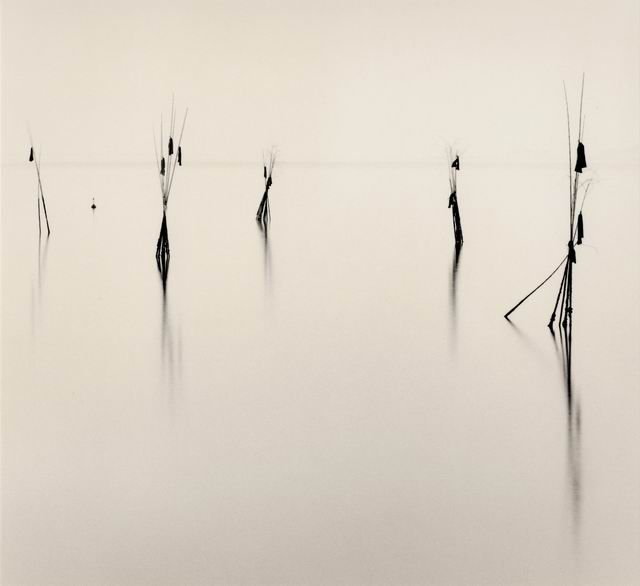
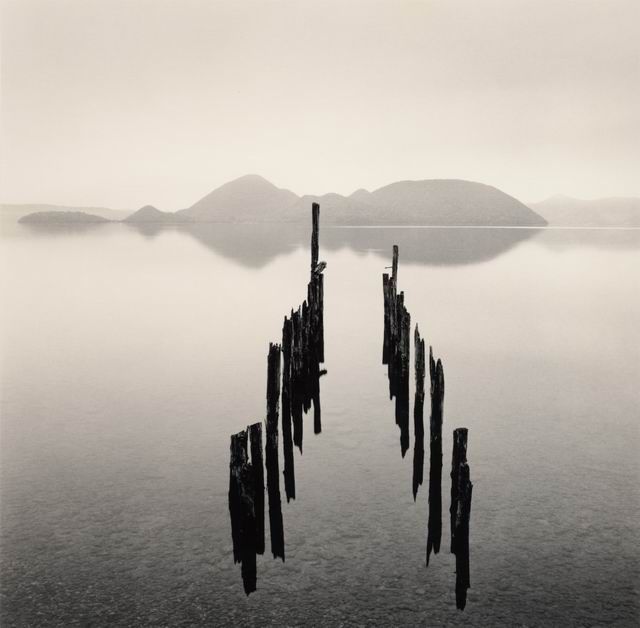
Michael Kenna
Michael Kenna is a highly influential minimalistic landscape photographer. Born in 1953 in England, he works only in black and white, preferring to shoot at odd times of the day – including dawn and dusk, and when the weather is misty, foggy, rainy or snowy. Blue skies and sunny days don’t inspire him as much as they do other artists, and this shows through his work. In regards to why he works solely in black and white, Kenna said “Black and white is immediately more mysterious because we see in color all the time. It is quieter than color.” He is highly influenced by his travels to Japan, and most of his photographs are seen as serene, calm, and having a meditative quality.
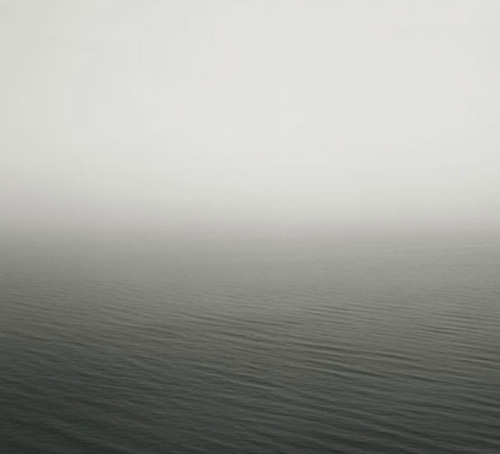
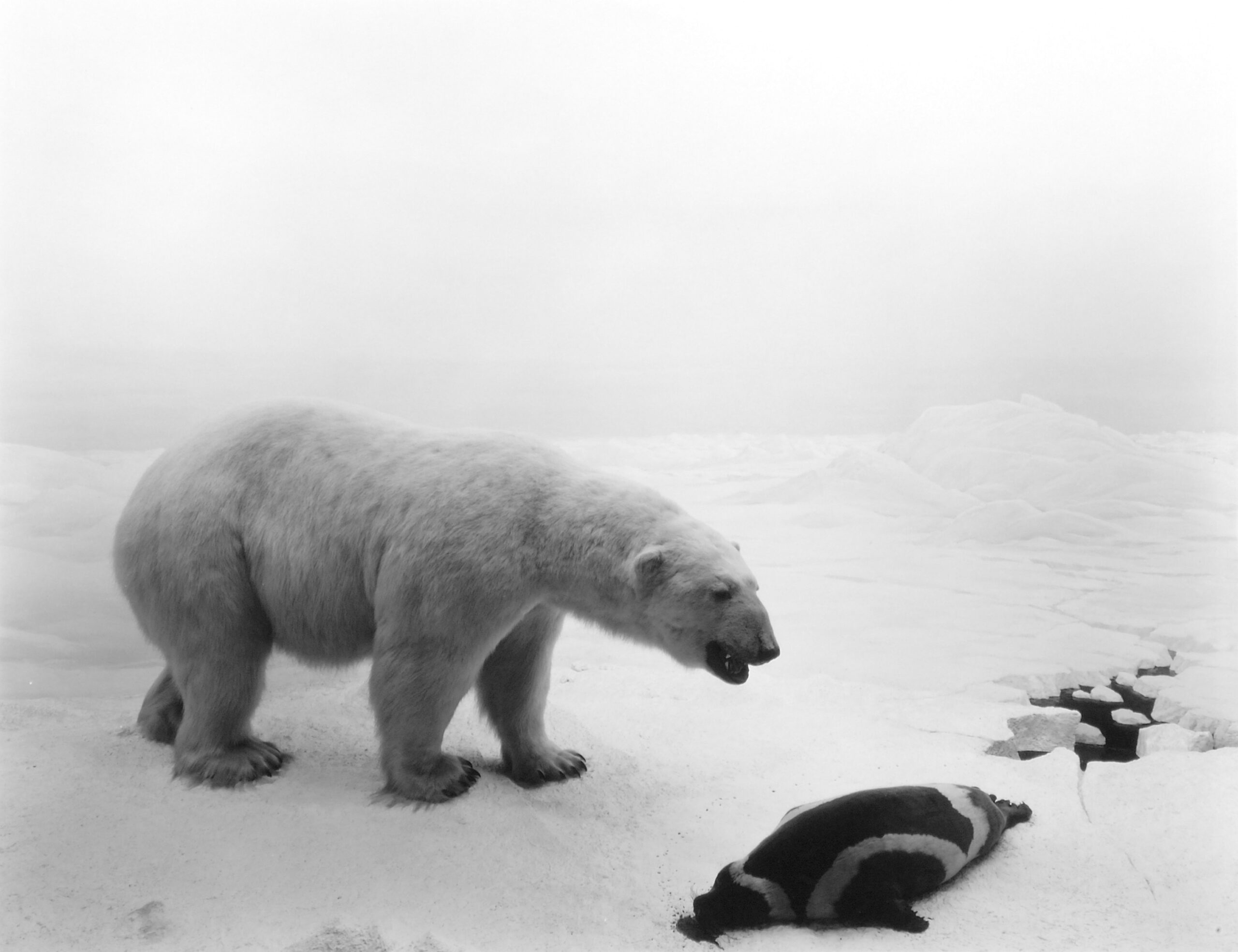
Hiroshi Sugimoto
Born in Japan in 1948, Hiroshi Sugimoto is most than just a photographer. Through different bodies of work he has shown many different interests, including minimalistic dioramas, wax portraits and photographing early photographic negatives. His photography tends to blur the lines between painting, illustration, photography, and architecture. From seascapes to natural history dioramas, there’s something about Sugimoto’s photographs that resonates with viewers. Like Kenna, Sugimoto only photographs in black and white. He prints all of his images himself with a great understanding of silver print, creating images with unbelievably beautiful tones of black, white and gray.
Grant Hamilton
Grant Hamilton differs from the previously mentioned photographers, in that he shoots in a way that almost completely focuses on color, and he only shoots Polaroid film (more specifically a Polaroid SX-70). He has a keen eye for hidden color, shape, and form in everyday life, and this itself is the subject he chooses to photograph most often. Because of the way in which he shoots, there is no room for error. There are no negatives, no memory cards, and no post-processing. Each image is exactly as he saw it in real life, and there’s a sense of honesty and beauty to that. Since there are only ten images in each film pack (and since the price of Polaroid film continues to increase), he has to examine each subject with meticulous detail before taking the shot. More time is taken to consider shape, form, light, color, and subject. His photographs range from the corner of a motel sign to balloons on a ceiling to the words on a neon sign – no subject is left untouched.
Hans Hiltermann
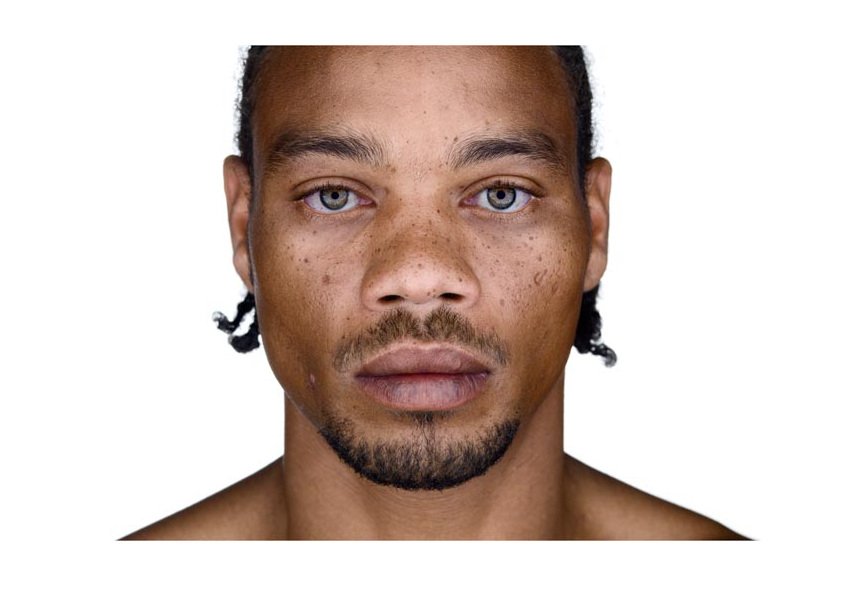
Hans Hiltermann is a Dutch photographer who was born in 1960. He began his career in photography as an advertising photographer, where he spent his time creating elaborate and artificial scenes used to sell a product. After years of creating these scenes, he finally decided to take his photography in a different direction; instead of spending his time creating elaborate photographs, he decided to figure out what he could say with the minimum amount of visual information. Thus, his well-known portrait series was born. In this series, Hiltermann takes hyper-realistic portraits of people (ranging from young to old and everyone in-between), all looking straight into the camera. None of the subjects are wearing any make-up or have their hair done, none are smiling or frowning, and there are no visible articles of clothing in any of the portraits. Because of this, each person is stripped down to their own unique essence, and the hyper-realistic detail in each photograph means that no flaw is hidden. This is a true example of “less is more”, as viewers really feel as though they are staring directly into the soul of the person in the photograph.
Mark Meyer
Meyer, an Alaskan native, began a series of minimalistic images that are all of the view from the same window in his bedroom. He began this series after realizing that he continued to wake up to the same window every single morning, although the changing of weather and seasons gave him an entirely different view day by day. His series, entitled An Alaska Window, is just that. Although the subject matter may not seem very interesting at first, the entire series as a whole shows us just how much we can experience from the seemingly mundane events in our everyday lives. From frost to rain to fog to snow, the landscape is constantly changing, and Meyer has captured that.
Take a look at some of the more recent photographs you have taken. Are they bursting with information, or do you tend to lean towards the more minimalistic approach? Although one is certainly not better than the other, try to challenge yourself to shoot with the idea “less is more”; you may find that you begin to appreciate your surroundings more than ever before.
[su_note]Less can be more in photography. In our Photography workshops, we teach aspiring photographers the skills needed to create compelling photos through several techniques and disciplines.[/su_note]
It used to be that when a developer annouced an updated version of a game complete with better visuals and maybe even a few bonuses, most applauded the idea. Yet now, these kinds of announcements are followed up with a split of approval and criticism. Let’s look at where it all started and how such a change in opinions took place in our fast-growing industry.
When Did This All Start?
Games have been seeing re-releasing and ports for almost as long as the industry has existed. An example of this is the original 1981 Donkey Kong game that started in arcades and has appeared on many systems since.
However, here we’re talking specifically about games that are being re-released to simply have “better visuals and sound” rather than updated game play.
One of the first HD remakes to be seen was Rockstar Games’ Bully, which was originally released on PS2 in 2006. It was then released two years later as Bully: Scholarship Edition on Xbox 360, PC, and Nintendo Wii. Despite its fair share of bugs and glitches, most welcomed the chance to replay a good game on their newest systems.
Not long after that, we started seeing a ton of HD remakes make their way to stores. A few of the many praised re-releases we have seen in recent years have been God of War Collection, ICO/Shadow of the Colossus Collection, Beyond Good & Evil HD, Devil May Cry Collection, GoldenEye 007: Reloaded, Halo: Combat Evolved Anniversary, and The Legend of Zelda: Ocarina of Time.
Everyone was enjoying their chance to play their favorite games from past consoles in HD.
When Did It All Change?
Eager to profit from their past endeavors in a high development cost industry, it was no surprise that eventually we started seeing developers and publishers giving us too many remakes.
By simply taking a peek at Wikipedia’s “List of video game remakes,” you will see the incredible number of titles that have been re-released with visual improvements.
Interestingly enough, no one (we hope) is actually angry that a title is receiving an HD remake. What has started bothering most gamers is the inevitable feeling that developers are focusing on remaking old games instead of working on new ones.
Many publishers have even used HD remakes as a promotional tool by releasing collections of a series that is about to have a reboot; the Devil May Cry Collection was released only nine months before the new Devil May Cry game, for instance.
Do most people downright hate HD remakes? Of course not. What many dislike is the fact that we’re seeing too many remakes when instead we could be receiving completely new titles.
[su_note]Want to contribute new game titles to the industry? Get started by getting more information about the game design program at the New York Film Academy. [/su_note]
Remakes and Collections Today
It’s no secret that the graphical advancement between the PS4 and Xbox One and their respective predecessors isn’t as significant as we’ve seen before.
Going from Playstation and N64 to PS2 and Gamecube was breathtaking, and even more so with the leap to HD consoles. There’s still a noticeable improvement, but most would argue we’ve reached somewhat of a plateau in visual progress with today’s newest consoles (whether it be due to costs, technological limitations, etc.).
Perhaps for this reason the PS4 and Xbox One have only caused further division as we see remakes of games that were already in HD when originally released two-three years prior (sometimes even less). Take The Last of Us for example; a game that was released in June of 2013 and saw a PS4 re-release just a year and one month later.
Most were ecstatic at the idea of playing their favorite game of last year on their shiny new console, especially during the inevitable drought of releases a new console experiences in their first year. However, many were also left scratching their head and wondering “Why should I buy the same game I just played a year ago? It’s not like the graphics are THAT much better!”
The Future of Remakes
There’s no question that remakes and collections will continue to be released as long as publishers see an opportunity to make more cash with games they’ve already spent a small fortune to make.
Whether you’re in love with the idea of remakes or not, we can all agree that developers should still focus most of their time and effort on new experiences that will blow us away and keep this industry fresh, growing, and fun.
An over-saturation of HD remakes and collections won’t kill the industry, but it may hurt if they’re all we have to look forward to.
Reboots have been a key cornerstone in Hollywood’s Reduce-Reuse-Recycle policy of the past decade and a half. With bigger budgets to recoup and more competition from other forms of media, it’s no wonder studio heads and producers have become risk averse and bank more and more on properties that already have name recognition and can be franchised into other money-making fields.
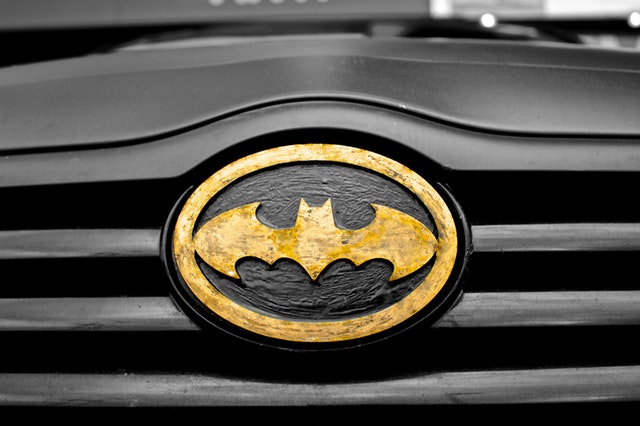
What has been a bit of a surprise lately is how quickly Hollywood has been willing to start a franchise over from scratch. Earlier reboots tended to be at least a generation or more apart, ensuring an eternal debate between children, parents and grandparents over who the true Batman is (it’s Michael Keaton, btw.)
That’s no longer the case these days, with reboots coming right on the heels of other reboots, whether the previous film made money or not. Kids these days will have multiple Supermen and Spider-men to be nostalgic about. Reboots of films like I Am Legend and Friday the 13th are currently in the works, despite their last iterations coming out only a few years ago.
Like a universe bursting with dark matter, modern reboot cycles are only accelerating, perhaps to a point where several different versions of the same property will be premiering the same weekend, a Reboot Singularity heralding the heat death of the cinematic cosmos.
The following are just some of the reboots Hollywood have released only a decade or sooner since their previous versions, most of them reboots themselves. This list doesn’t include foreign language remakes, including American-language adaptations of British films that were apparently indecipherable to audiences in the States. Most of the films are superhero, sci-fi or fantasy films, which makes sense since many reboots are based on the idea that special effects have improved and the same story can be told in an even better-looking fashion, and because dramas like 12 Years a Slave don’t necessarily sell as many toys as the Ninja Turtles. Again, this list is based on how little time has passed between incarnations, not on how unnecessary they may have been (cough, Total Recall, cough).
1. The Amazing Spider-Man
The Amazing Spider-Man might sound like an insult to the regular plain ol’ Spider-Man that exploded the box office in 2002, but the name, which comes from the comic book, was originally going to be the title of the Tobey Maguire-led sequel. Adding that adjective may have raised expectations for the 2012 reboot, which was desperate to differentiate itself from the Sam Raimi trilogy that had last been in theaters only five years previous.
Going with an almost carbon-copy origin story and light-hearted tone (the producers claim the reboot is dark and gritty, which is about as adorable as a five-year old dressed up as the Joker for Halloween), The Amazing Spider-Man did practically nothing to make itself distinct. Choosing a thirty-year old actor to play a younger, hipper Peter Parker was also an odd choice, as was reusing the Green Goblin storyline for its sequel. While the new Spider-Man has its merits and looks like it will stray farther from the original trilogy with each progressive sequel and spin-off, not taking more risks proved the 2012 Spider-Man to be the epitome of pointless, boring reboots.
2. Rise of the Planet of the Apes
A reboot that did take risks in completely diverging from the original was 2001’s Planet of the Apes. And everybody hated it. But while the 1968 film has iconic lines and scenes, its storyline isn’t necessary cherished by mainstream movie audiences, and changing the plot wasn’t exactly a risk—rather, Tim Burton’s “re-imagining” failed for several other reasons.
Nonetheless, 2011’s reboot stayed clear of the Mark Wahlberg and Charlton Heston incarnations, using the guise of a prequel to show Apes in a whole other light. By starting from the beginning with a relatively low-key character-based prison break movie, Rise of the Planet of the Apes found critical and commercial success and paved the way for Dawn of the Planet of the Apes, a sequel that resembles more what Tim Burton was trying to pull off in 2001 than anything else.
3. Left Behind
Left Behind is a series of novels dealing with the aftermath of the Rapture. It’s the exact same premise as the novel and HBO adaptation The Leftovers, though the two are written from completely different points-of-view. Left Behind is distinctly and proudly evangelical, hoping to show readers the light and bring them to God before everybody vanishes on them.
It’s no surprise then that the movie franchise adapted from Left Behind stars born-again star Kirk Cameron. Its religious leanings and shoddy filmmaking have kept the movie and its sequels from blockbuster status, though they sell better and have larger budgets than most direct-to-video fare. The last Left Behind film, World at War, was released in 2005, and while Kirk Cameron continues to find success starring in Christian-themed films, the same production team decided to reboot the franchise with Nicolas Cage, because of course. Rather than a globe-spanning epic, the 2014 reboot focused on a single location and handful of related characters, and Nicolas Cage. It was released on October 3 and was quickly derided by critics for its poor writing, acting, directing, and Nicolas Cage.
4. The Incredible Hulk
Many remember Ang Lee’s 2003 Hulk as a bomb, but it actually recouped its $140 million budget and then some. And while a sequel was planned, the powers-that-be cancelled it because of the overall negative feedback it received, primarily from a mainstream audience surprised by Ang Lee’s distinct direction and a calmer and more introspective tone than Sam Raimi’s Spider-Man, whose shadow stilled loomed large in the pre-Nolan, pre-MCU superhero moviesphere.
When the MCU—Marvel’s interconnected Avengers-based cinematic universe—was born with 2008’s Iron Man, it was a natural choice to start Hulk’s story from scratch. Rather than follow Iron Man’s successful character-based tone however, The IncredibleHulk‘s script and direction was defined by being as different as Ang Lee’s film as possible. The action-fueled “grounded” take is now considered one of the weakest links in Marvel’s chain and while Edward Norton was invited to co-star in The Avengers, his character was once again rebooted with Mark Ruffalo’s complex and crowd-pleasing performance. Perhaps believing the third time isn’t always the charm, The Incredible Hulk is the only MCU film with no sequel in its future.
5. Teenage Mutant Ninja Turtles
For a while, it seemed like the Ninja Turtles were a product strictly of their time, idolized by boys and girls of a brief period near the end of the twentieth century. The property hid in the sewers and the shadows, popping up here and there, until finally in 2007 it reasserted itself theatrically with a CGI feature, TMNT. The animated movie was considered a spiritual successor to the original film trilogy, one of those not-quite-a-sequel films that had the same blend of grit and humor, but utilized its medium to provide a more mystical fantasy plot.
While the film received mixed reviews and did relatively well at the box office, it was a success in that it showed a familiar property in a new light, though one close enough to its original source to avoid a wave of fanboy hatred. Only seven years later did Michael Bay reboot the franchise again, with decidedly more controversy. After several massive rewrites, the final result was another iteration of the Turtles that was not the same but not that different. If anything, the 2014 reboot proved that Leonardo, Donatello, Michelangelo and Raphael can adapt to Hollywood’s perpetually evolving trends and could very well be cowabunga-ing in reboots for decades to come.
6. Batman and Superman
After the blockbuster success of the twenty-first century modern adaptations of X-Men and Spider-Man, DC was finally ready to reboot their two biggest properties: Batman and Superman. Christopher Nolan was heralded as his own hero after giving us the Dark Knight trilogy; Bryan Singer’s Superman Returns on the other hand received more head-scratches than thumbs up. While both movies tried something new, Nolan’s films tapped into the zeitgeist both thematically and aesthetically. Superman Returns, another spiritual sequel, was too attached to its Christopher Reeve-led past and struggled to establish its own identity.
While both franchises went in two different directions, they were both inevitably drawn back into the black hole of reboots by a gravity stronger than either of them combined. Superman only had seven years between reboots, emerging darker and grittier and Britisher in Man of Steel. While the Dark Knight trilogy only wrapped up two years ago, Ben Affleck will be starring as yet another iteration of Batman and joining the new Clark Kent in a battle royale set for 2016.
7. The Silence of the Lambs
Long before reboots not only became a Hollywood producing crutch, but also became largely the province of sci-fi, fantasy, and superhero films, The Silence of the Lambs took everyone by surprise when it premiered in 1991. It was a sleeper hit starring and directed by familiar faces that weren’t yet the megastars the movie would turn them into. It was also adapted from a dark, violent novel series that had already spawned a box office bomb five years earlier, an unprecedented turnaround for a reboot at the time.
Michael Mann’s Manhunter was based on Red Dragon, a prequel to Lambs, but with a different cast and Mann’s strong auteur direction the movies take place in entirely different worlds. This is even more apparent when Manhunter was remade again as a direct sequel to the Anthony Hopkins-as-Hannibal universe. Almost thirty years later, Manhunter is now more a memento of Mann’s hyperstylized 80s filmmaking than it is a Hannibal Lecter movie. With a hit TV show utilizing yet another iteration of the erudite cannibal, it’s becoming clear that Manhunter wasn’t a fluke—it was the start of a franchise with many faces. If you know what’s good for you, you won’t ask where they’re getting those faces.
8. Punisher: War Zone
It was no surprise that The Punisher was remade fifteen years after Dolph Lundgren held the role in the 1989 cult hit. Any comic book was game for a more “realistic” mature adaptation after the success of X-Men and Spider-Man. It was no surprise that like the rest of this new wave of millennial comic book movies, The Punisher was rated a violence-limiting PG-13. And it was no surprise that a violence-limited take on brutal vigilante Frank Castle proved unsuccessful. A Punisher story without gory, unflinching violence is like a Transformers movie without robots that turn into things.
Punisher: War Zone originally started out as a sequel to 2004’s Punisher but evolved into a gory, homicidal reboot with a new, bulkier star. While the movie bombed even harder and became Marvel’s lowest-grossing feature to date, it found a cult audience who appreciated it for being true to its blood-soaked material. With the rights back at Marvel, any new Punisher movie is likely to be yet another reboot, perhaps in the same shared universe as Iron Man and Guardians of the Galaxy. Either it will be sanitized and neutered again, or the Avengers will have to start wearing Kevlar vests and learning how to yell F-bombs in Asgardian.
9. Terminator: Genisys
After the original Terminator trilogy, the killer cyborg franchise has seen two reboots—one for TV and one for the big screen. The movie reboot, starring Christian Bale as John Connor, was intended to be the first of a new trilogy, depicting the post-Judgment Day world of the future. While it can be argued to be a direct sequel to the Arnold Schwarzenegger films, the series has had so much time travel and retconning that nearly every scene is a new reboot.
The 2009 film, Terminator Salvation, proved to be a dud best remembered for Christian Bale’s off-camera expletive-laden rant. Rather than try to fix it with a sequel, producers are starting from scratch, with next year’s Terminator: Genisys intended to start yet another trilogy. Hoping to have a longer shelf life than the TV and Bale reboots, the new movie will bring back Arnold Schwarzenegger. If that doesn’t work, we might only have to wait another five years before yet another reboot, and we’ll finally have a complete modern Terminator trilogy, albeit three completely different movies. There is after all, no fate but what we make. And remake.
Stephanie Barish is founder and CEO of IndieCade, what the Los Angeles Times has dubbed “The Sundance of Video Games.” IndieCade is dedicated to the discovery, development and recognition of independent artists and developers from around the world. Its mission is to encourage, promote, and cultivate innovation and artistry in interactive media and to champion those efforts. IndieCade 2014 took place in October in Culver City in Los Angeles. IndieCade East happens every February in New York City.
NYFA:Stephanie, just what are indie games?
Stephanie Barish: Indie games are video games that are usually created by individuals or small teams. They come in a variety of flavors and styles, but one key element is that independent games come from a vision or a passion by the creators. They aren’t developed by marketing departments, but by people.
From my angle, independent games are probably the most exciting and vibrant thing happening in video games today and they are certainly pushing the rest of the industry in a positive direction.
NYFA: Why is there an indie gaming boom going on today?
SB: The indie boom is due to a number of factors.
Since 2008 the big publishers like Electronic Arts and Activision have been focusing their efforts more and more on their big gaming franchises, leaving room for more and more original games from the indie sector.
We have seen a number of components merge to create a ripe atmosphere for the heyday of independent games. This started with the move towards digital distribution—it is hard to remember back—but back when we launched IndieCade the prime distribution method was physical and digital was secondary.
Independent developers were able to take advantage of that space and it also meant that they were incredibly prepared with the emergence of the mobile and tablet space. These platforms provided the boost indie gamers needed to be able to develop and distribute their own original work and reach hundreds of millions of people around the world.
Simultaneously the tools have become more accessible, easier to use, and less expensive, enabling so many more to actually create games.
NYFA:Are indie games only on smartphones and tablets?
SB: Not at all. The indie games boom can be felt across all platforms; for mobile and tablet devices for sure, but also online, for PC/Mac download on Steam, and for all the consoles like Sony, Nintendo, and Microsoft. Indie game creators have a huge following and loyal fan base attracting a wide demographic eager to be in on what’s hot and what’s next.
NYFA:How important are indie games in the context of the overall video game industry?
SB: Indie gaming is one of the fastest growing and most influential segments of the $80 billion dollar a year video game industry. As games platforms fragment, independent content creators are becoming THE source for trend-setting innovation and breakthrough creativity
NYFA:How many indie game developers are out there?
SB: According to a survey at the annual Game Developers Conference (GDC), 53% of all game developers now identify themselves as “indie developers.” Indie developers dominate the mobile gaming market accounting for 68% of all mobile gaming sessions in 2012 (Flurry Analytics).
NYFA:How do indie gamers get their games out there?
SB: Primarily through digital marketplaces like the AppStore, Google, Microsoft Xbox, etc. Every digital distribution platform has jumped on the bandwagon. For example, in June 2013, Amazon launched Indie Games store and from day one they were featuring 400 games from 100 developers.
NYFA:What’s an example of an indie game that became a huge hit?
SB: Independent game Minecraft just sold to Microsoft for over $2 billion. The Angry Birds titles have seen billions of downloads across multiple game platforms. All that should tell you something. But keep in mind, indie games have been doing well for many years. Braid, one of the earliest indie game successes, was the second-largest selling Xbox Live Arcade title in 2008.
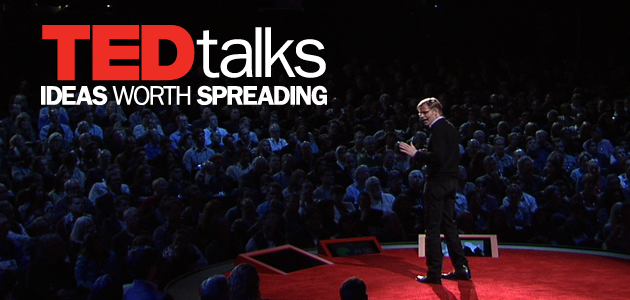
The TED conferences have long been a superb source of inspiration in many areas of human advancement, and filmmaking is no exception. Over the years, there have been some exceptional TED talks on filmmaking from some of the most innovative individuals working within the industry; the following constitutes seven which everyone, whether yet to graduate from film school or actively working out in the field, should add to their list of essential viewing.
From insight into creativity to the combination of technology and storytelling, here we present:
The Top 7 TED Talks on Filmmaking
Andrew Stanton: Clues to a Great Story
Who: The writer behind some of the finest Pixar works to date, including Toy Story, Finding Nemo and Wall-E.
What: A TED talk on the very heart of what makes a good story in filmmaking, and how to successfully convey it.
Why: If you’ve ever seen one of Stanton’s films, you’ll know that his knack for crafting a compelling storyline with clinically perfect pacing is second to none. The theory he teaches here is exceptionally useful for those who want to emulate his skills.
JJ Abrams: The Mystery Box
Who: Multiple PGA and Emmy award winner, and master of both feature and TV sci-fi.
What: Framed around his childhood experience with a magic store ‘mystery box’, Abrams uses many enduring movies as case studies to discuss the importance of mystery in storytelling.
Why: The concept of mystery in a film is a hard one to master – you don’t want to confuse your audience, but you don’t want to lay it all out on a plate for them either. Abrams’ talk will give you some fresh insight into how to walk this fine line.
Martin Villeneuve: How I Made an Impossible Film
Who: Creator of Mars et Avril, the eponymous ‘impossible film’.
What: Based on a sci-fi graphic novel of the same name, Villeneuve’s adaption of Mars et Avril isn’t just a great film – it’s the story of how one man brought an exceptionally technical project to life with virtually no budget and little in the way of resources.
Why: It’s one of the most essential TED talks on filmmaking given that every filmmaker at some point or another has to use ingenuity in the face of financial limitations.
Amy Tan: Where Does Creativity Hide?
Who: Prolific and critically acclaimed author of The Joy Luck Club (adapted into a feature film) and others.
What: Amy Tan’s sophisticated talk delves deep into the underlying concepts behind human creativity, specifically where it comes from.
Why: Although Tan is mainly addressing the art of writing, it still deserves filing under TED talks on filmmaking given it applies to any creative medium which employs storytelling.
Rob Legato: The Art of Creating Awe
Who: A visual effects specialist whose filmography includes Avatar, Shutter Island, Hugo, Apollo 13 Titanic and many others.
What: Using Apollo 13 as a case study, Legato delivers a warm and often humorous talk on not only the art of bringing incredible effects to the screen but also how they tie in to basic human psychology (as well as how Legato manipulates this for great results).
Why: As a two-time Oscar winner and exceptionally impressive body of work behind him, Legato is one of the best visual effects guys in the business and the underlying theory here can be applied to projects of any budget.
Tiffany Shlain: From Failure to Innovation – Filmmaking in the Cloud
Who: Filmmaker, internet pioneer and founder of the Webby Awards.
What: One of the more unique TED talks on filmmaking, Shlain begins by talking about her deep failure making her first feature film and what can be learned from it, before discussing how the advent of the internet changed the game forever.
Why: Not only is Shlain’s experience with combining tech and filmmaking an inspiration in and of itself, but she also teaches us how to keep one step ahead of the ever-changing internet landscape and think outside the box.
James Cameron: Before Avatar… a Curious Boy
Who: Does Cameron need an introduction?
What: A very open and personal talk from one of the most pioneering directors currently active today, Cameron naturally has a lot to offer on the topic of filmmaking as a vehicle for exploration and how curiosity can lead to great storytelling.
Why: Even if you’re not a fan of James Cameron, you will be by the end of his 17 minute TED talk on filmmaking.
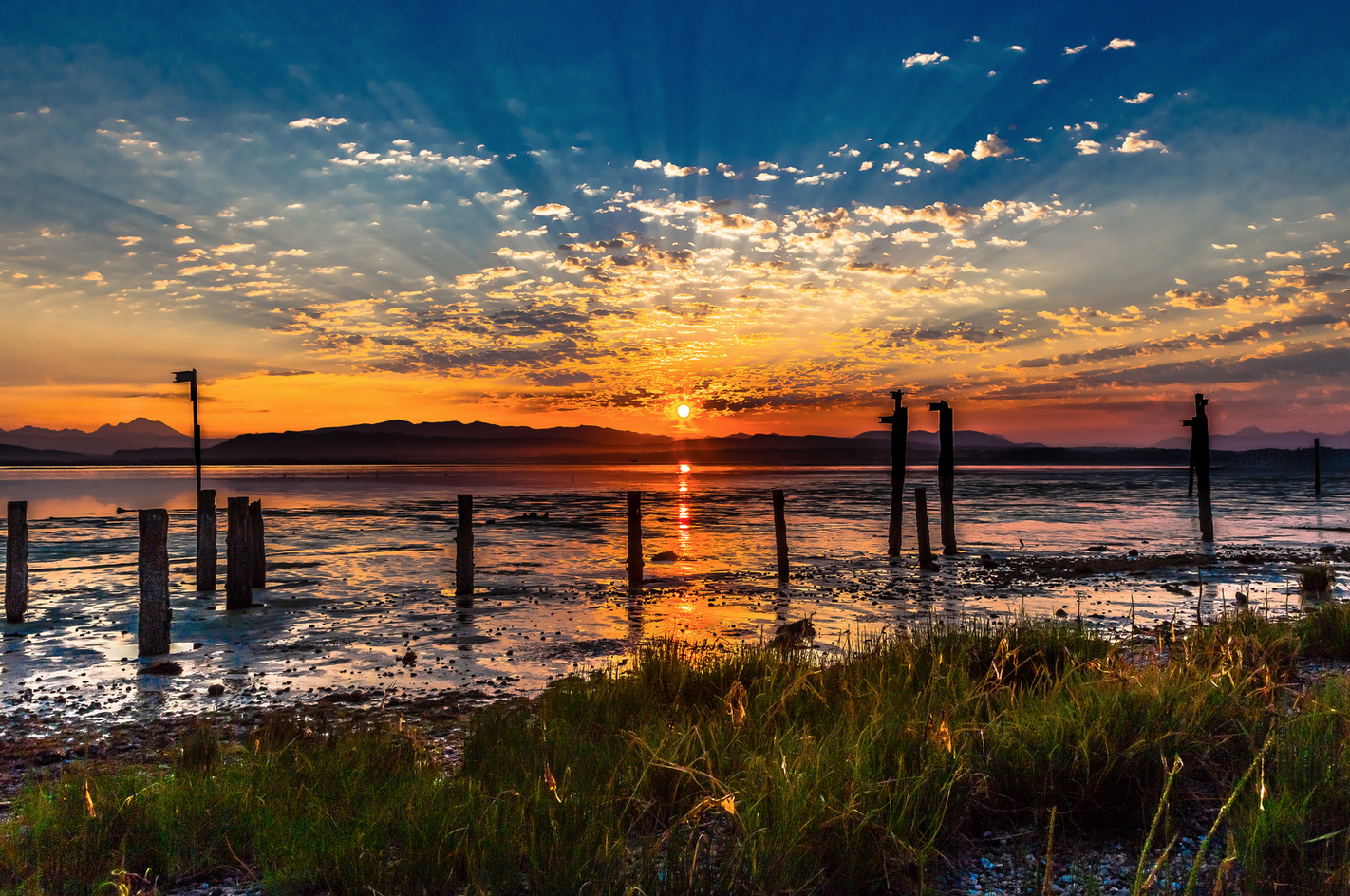
Many professional photographers stray away from taking photographs of sunsets and sunrises due to the common belief that they are “cliché”. Because of this, many photographers miss out on some of the most beautiful times to take photographs! Photographs of sunset or sunrise don’t have to be boring and in this article we teach you how to photograph sunsets and sunrises and make these images your own.
Equipment Needed
A DSLR camera (any digital camera will do, but a DSLR is preferred)
A tripod
That’s it!
Choosing a location
Photo by Chris Parmeter
The location in which you photograph is one of the most important decisions you can make when photographing sunset or sunrise. While the sun provides beautiful shades of pink, purple, orange and red, and can easily shift the mood of any scene you are photographing, the actual subject of the image can make or break the photograph. Would you photograph a beautiful sunrise with a trash truck in the foreground?
The most successful photographs of sunset and sunrise are traditionally landscapes or seascapes. Since you’ll be photographing either early in the morning or later in the evening, you likely won’t have to worry about any people walking through your photographs (unless you want them to – then choose a location where this will happen)! Try to scout out locations a day or two in advance, and check the weather to ensure that you’ll be prepared for the conditions. While you may think that a beautiful sunny day is the perfect time to photograph, cloudy and stormy days can provide an even more interesting subject! Just make sure you bring protection for both yourself and your camera.
[su_note]All MFA, BFA, One & Two Year Photography program tuition includes an exotic one-week photography exploration to one of the following locations – The Caribbean; Rio De Janeiro, Brazil; Paris, France; Beijing, China; or another exciting locale. Click here for more information.[/su_note]
Look up sunrise and sunset times!
Although the sun always rises in the East and sets in the West, the time at which this occurs changes daily, and changes drastically throughout the year. Because of this, it’s important to look up sunrise and sunset times before you start shooting. It would be a disappointment to get to your location after sunrise has already occurred! There are plenty of websites and applications that allow you to easily check these times for your location. Once you have figured out what time you need to get to your location, try showing up at least a half hour before sunrise or sunset is supposed to occur. This will give you time to set up your shot before the peak moment.
Silhouettes
Photo by Sayid Budhi
Sunrise and sunset are two of the best times of the day to photograph silhouettes. If you want to stray away from the cliché silhouette photograph, choose an interesting subject. The most interesting silhouettes tell a story while keeping the exact story a bit of a mystery. When choosing your subjects, it’s important to keep it relatively simple. Since silhouettes get rid of many defining features, the key to a good silhouette is ensuring that the viewer still has at least an idea of what they are looking at. The line between ‘mysterious’ and ‘unidentifiable’ is very thin.
Choosing the perfect white balance
While we’ll get into other camera settings momentarily, white balance is one of the most important settings when shooting sunrises or sunsets. If you shoot in RAW, you can easily change the white balance in post-production. I highly recommend shooting in RAW, if no other reason than to see how drastically the mood of a photograph changes when you switch it from warm to cool.
While you may be perfectly happy with what Automatic white balance gives you, it’s interesting to play around with both Tungsten and Shade as well. Tungsten takes out orange tones in a photograph, leaving you with cooler images, while Shade takes out the blue tones, leaving you with warmer images.
Other camera settings
While camera settings will vary based on your location, the time of day, your subject, etc, you can start with these settings and then shift them to reflect your own personal needs. Since you’ll likely want to keep your entire scene in focus, you should shoot at an aperture of f/8 or smaller; keep in mind, the smaller the aperture opening, the longer your shutter speed will have to be – with human or animal subjects, you may want to keep the aperture wider. With a small aperture and a tripod, you can use a slower shutter speed to create dreamy overall effects, capturing the movements of the clouds and the sun’s rays. You should shoot at an ISO of 100 or 200 (whichever your camera goes down to) to ensure that your photograph has the least amount of noise possible.
Getting creative
Photo by Grant Lampard
Have you ever tried to take a portrait during sunset or sunrise, only to find that your subject turned into a silhouette? If a silhouette is not what you’re going for (but you still want to capture all the beautiful colors in the sky), you’ll be happy to hear that there is any easy fix for this problem.
The secret? An external flash! Use your meter to expose for the background, and then use an external flash to compensate for the area of the photograph that will be underexposed with these settings (your subject). A quick flash will light up your subject while keeping the beautiful colors of the sky perfectly exposed.
Different focal lengths
Photo by Bahman Farzad
Many photographs of sunrises or sunsets are taken with a wider focal length to effectively capture the entire scene. What would happen if you used a telephoto lens? Using the sun as your subject instead of the landscape can create some stunningly beautiful images. Using the colors of the sky as the subject an also create beautiful, albeit abstract images as well.
Keep experimenting! You can capture the colors of the sky in the reflection of water, an oil spill, a mirror, or a bubble. Try using different focal lengths, different subjects, and different exposures. You’ll soon realize that sunrises and sunsets aren’t as cliché as you may have originally thought!
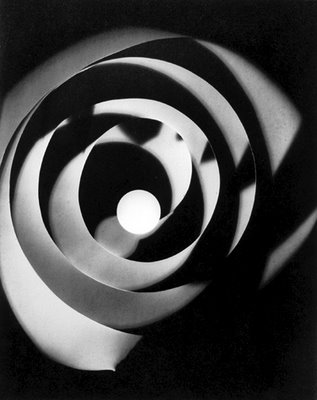
Surrealist photography has come a long way. While Photoshop and other post-processing programs make it fairly easy to create surrealist photographs, back in the days of darkroom photography there were no computers to help you. All surrealist effects had to be either done in camera or in the darkroom – a feat that is not very easy to accomplish. From the famous Man Ray to the more recent Erik Johansson, it’s interesting to see where surrealist photography started and what it has morphed into throughout the years.
Man Ray
While Man Ray worked with a wide variety of mediums, he is most well-known for his surrealist photography and photograms (which he called rayographs). For those not familiar with photograms, they are photographic images made without a camera. You can create a photogram yourself by setting yourself up in a darkroom, placing objects on top of photo paper, and then exposing both the paper and the objects to light. Once you develop the photo paper, you’ll see that there are white shapes where the objects sat. Photograms are an easy way to get acquainted with surreal and abstract “photography” in the darkroom.
While Photoshop was not an option in Man Ray’s day (1890-1976), this didn’t stop him from creating some of the most influential surrealist photographs of all time. He used solarization, double exposures, montages, and combination printing to create works of art that left viewers scratching their heads.
Maurice Tabard
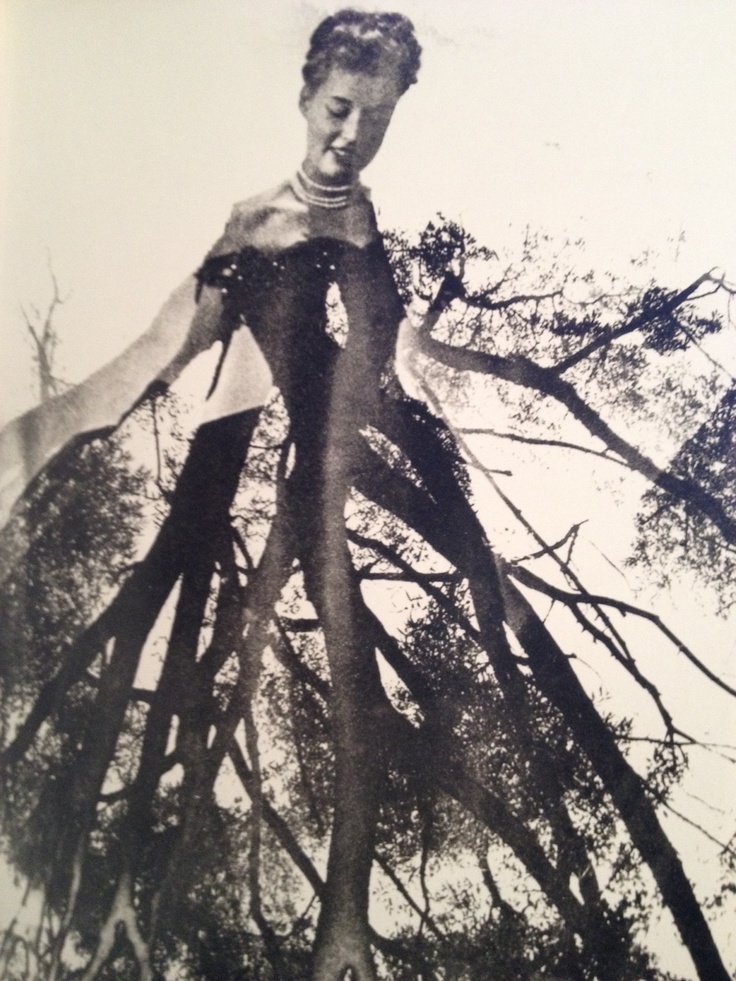
Maurice Tabard (1897-1984) is another notable surrealist photographer. Like Man Ray, he used the techniques of solarization, double exposures and montages to create eerie and unnerving photographic images. He began his work as a portrait, fashion and advertising photographer, while experimenting with surrealist images in his personal work. A room with an eye, a lady who seems to be turning into a tree, and ghostly solarized portraits are only a small portion of the surrealist work he created.
Hans Bellmer
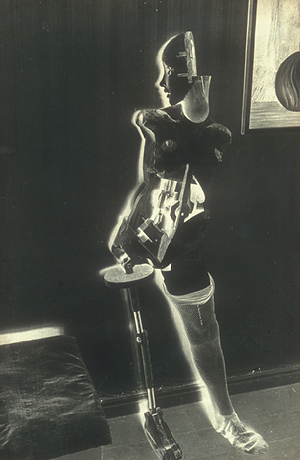
Hans Bellmer (1902-1975), born in Germany, is most well known for his unsettling portraits of mechanical dolls that he created himself. He originally studied engineering and was incredibly interested in politics, yet gave that up to pursue a career as an artist. He had read about Surrealism and sent photographs of his dolls to other artists, who immediately praised his work. This spurred the collaboration with other artists and led to his work on a few more books, ranging from his own photography to experimental poetry to illustrations of erotic stories.
Dora Maar
Dora Maar (1907-1997) is best known for being one of Picasso’s lovers. Together, she and Picasso studied with Man Ray, which could be why Dora Maar became so interested in Surrealism. Her famous Portrait of Ubu became well-known within the Surrealist movement, being a photograph that many have speculated to be a armadillo fetus; Maar declined to let the public know exactly what the subject of the photograph was. This photograph is a good example of what Surrealist photography is when it doesn’t include the use of double exposures or solarization; the image itself is strange and unusual, and while it may be grotesque, continues to fascinate a wide audience.
Erik Johansson
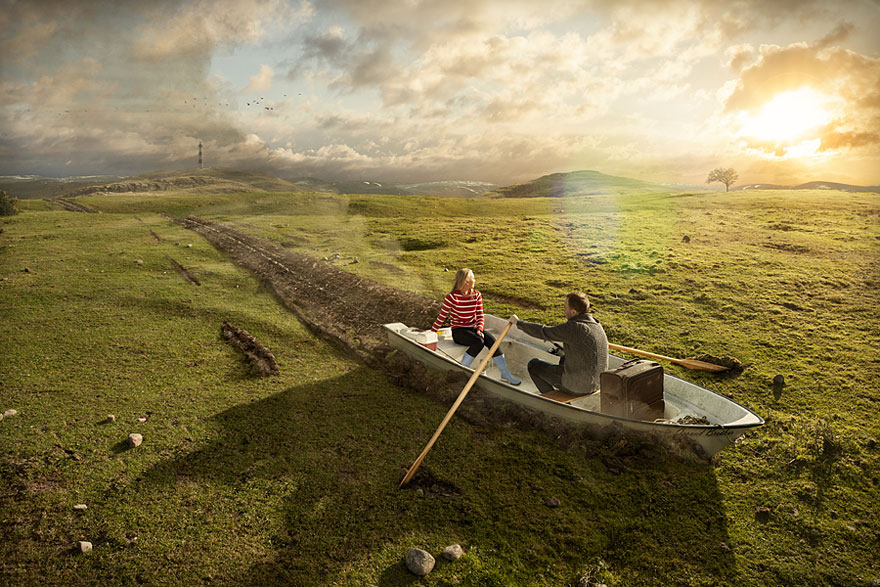
Let’s fast forward to the modern day. Erik Johansson is a Swedish photographer and retoucher, born in 1985. He is lucky enough to be born in a day and age in which post-processing techniques are used widely throughout the photographic industry, and lucky enough to have an imagination that allows him to create beautiful surreal images. He began his career as an artist primarily through drawing; when he became interested in photography, his love of drawing as well as computers led to him experimenting with different post-processing techniques. Instead of simply being finished with a photograph once the moment was captured, this became a canvas on which to create surreal scenes that are crafted so beautifully that it’s almost hard to believe they aren’t real.
Christopher McKenney
While Erik Johansson creates beautiful, dreamy surrealist images, Christopher McKenney takes dreamy surrealism and puts a darker twist on it. His photographs often feature a human whose body is missing and face is covered; the face is either obscured by a sheet, covered with a paper bag on fire, or hidden behind a mirror (among many others). In these photographs, the entire body is often not seen. All of his images are post-processed to have eerie, de-saturated color tones, and are typically shot in the middle of the woods or on a back country road.
Stephen Criscolo
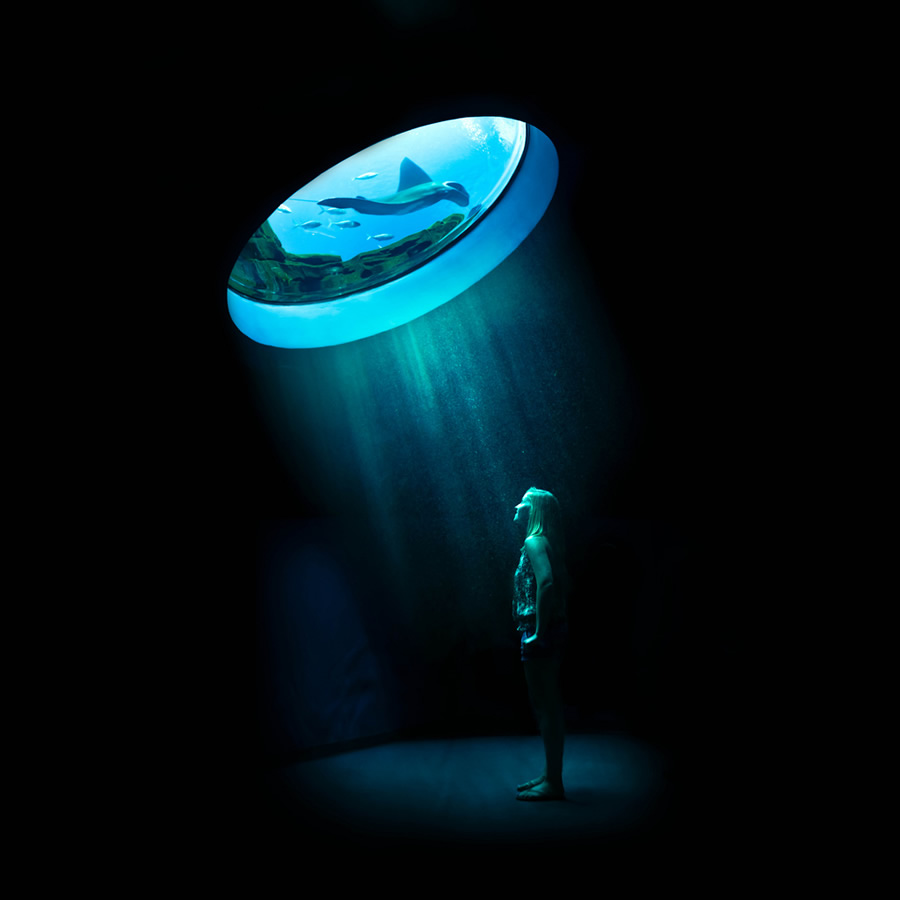
Stephen Criscolo is a 20-year-old self-taught photographer. While all of his images are heavily edited via Photoshop, he has had no formal photographic training. Instead of creating surrealist images within our own world, each of his images seems to be from an entirely fictional planet created within his own mind. Jellyfish and planets are both reoccurring themes in Criscolo’s work, along with images that tend to be monochromatic in color (primarily blue hues, primarily purple hues, etc).
What type of surrealist photography do you prefer? Are you drawn more towards the original, darkroom manipulations, or the wide variety of new options on Photoshop and other post-processing programs these days? While surrealist photography has certainly come a long way, it can be argued that Photoshop makes it almost too easy to create images that once were only able to be made by professionals in a darkroom setting. Even so, it can be hard to argue against the fact that both original and modern surrealist photography requires a lot of originality and creativity. Let us know your thoughts in the comments below.
Are you interested in seeing some of the projects you could work on at NYFA? Depending on your course path, projects can vary. Visit our classes and projects page to see what interests you!
Manage Cookie Consent
This website uses cookies to improve user experience. By using our website, you consent to all cookies in accordance with our Cookie Policy.
Functional
Always active
The technical storage or access is strictly necessary for the legitimate purpose of enabling the use of a specific service explicitly requested by the subscriber or user, or for the sole purpose of carrying out the transmission of a communication over an electronic communications network.
Preferences
The technical storage or access is necessary for the legitimate purpose of storing preferences that are not requested by the subscriber or user.
Statistics
The technical storage or access that is used exclusively for statistical purposes.The technical storage or access that is used exclusively for anonymous statistical purposes. Without a subpoena, voluntary compliance on the part of your Internet Service Provider, or additional records from a third party, information stored or retrieved for this purpose alone cannot usually be used to identify you.
Marketing
The technical storage or access is required to create user profiles to send advertising, or to track the user on a website or across several websites for similar marketing purposes.
To provide the best experiences, we use technologies like cookies to store and/or access device information. Consenting to these technologies will allow us to process data such as browsing behavior or unique IDs on this site. Not consenting or withdrawing consent, may adversely affect certain features and functions.
Functional
Always active
The technical storage or access is strictly necessary for the legitimate purpose of enabling the use of a specific service explicitly requested by the subscriber or user, or for the sole purpose of carrying out the transmission of a communication over an electronic communications network.
Preferences
The technical storage or access is necessary for the legitimate purpose of storing preferences that are not requested by the subscriber or user.
Statistics
The technical storage or access that is used exclusively for statistical purposes.The technical storage or access that is used exclusively for anonymous statistical purposes. Without a subpoena, voluntary compliance on the part of your Internet Service Provider, or additional records from a third party, information stored or retrieved for this purpose alone cannot usually be used to identify you.
Marketing
The technical storage or access is required to create user profiles to send advertising, or to track the user on a website or across several websites for similar marketing purposes.