Is Film School Worth It?

New York Film Academy

Filmmaking is a strange beast, and there’s no other artform quite like it. It involves the culmination of not just creative prowess but also technical expertise; throw in the need for extreme organization and planning skills, good communication and even the ability to draw up financial plans, and it’s easy to see how overwhelming it can be for someone just starting out.

As such, one of the first (and most difficult) questions you’ll have when pursuing a career in filmmaking is if film school is worth it…

Here, we look into why the answer could be ‘yes’ depending on what you’re looking to achieve. But first, a bit of good news…

You Don’t Need Film School to be a Filmmaker

First of all, if you have a camera and desire to make films, congratulations:

YOU ARE A FILMMAKER.

Filmmaking is an art, a creative process. A painter needs no certificate or training to create, just a brush, paint and canvas. A filmmaker only ever really needs a camera, film, and editing suite to make films; and because of the development of modern technology almost anyone can afford the some rudimentary equipment and learn how to use it fairly quickly. Plus, with the advent of YouTube you can distribute your film to the world in a day.

On the other hand, to master the use of the camera, film and editing suite, as well as the distribution and sale of your film you will need a lot of practice and instruction.

Most painters did not just pick up a brush and start painting masterpieces. They apprenticed professional artists, received some form of formal training and painted for years before they produced their best works. Most filmmakers need the same, which can be gained through time spent at a film school.

So while you don’t necessarily need film school to be a filmmaker, it can certainly make you a better filmmaker.

Check out the following benefits while trying to decide, and tick off those which might apply to you:

The Five Key Advantages You’ll Get From Film School

1. Filmmaking is a Communal Craft

Is Film School Worth It

And by that, we mean that filmmaking as an artform it can’t quite be executed by a single person in the way that writing or drawing can. Or, at least, it’s a little easier when you’re not on your own and there’s no better place to get acquainted with others practicing the craft than at film school. Collaboration is key in any good film project, and it’s through film school that you’ll improve your chances of finding people to collaborate with.

2. Connections, connections, connections
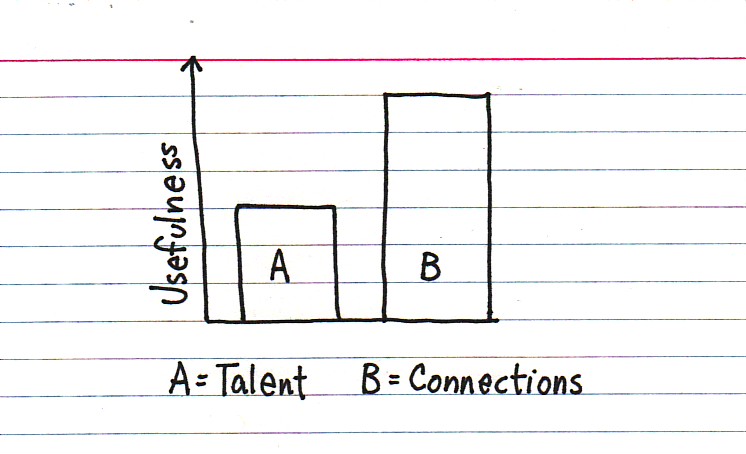
talent vs connections

Leading neatly on from above, those who attend film school will inevitably make strong bonds with others trying to get ahead in the industry. The ties you make while studying often play a greater part in your career after graduation, and while building a list of solid contacts won’t necessarily make up for poor skills as a filmmaker, having both talent and connections can pay dividends.

3. On-Hand Access to Equipment
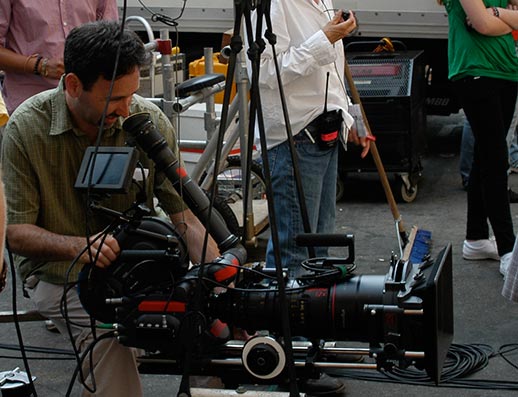
film school camera

Even a non-professional, non-student filmmaker with the best will in the world might be limited from making the best movie possible for one reason: technology.

Filming equipment can be a real barrier to entry given that not everyone has $20k Red cameras and professional editing suites in their homes as standard. This isn’t the case at film school, where you’ll have access to just about everything you need to breathe life into your ideas.

4. Competitive Edge

Film competition

In an industry as cutthroat as entertainment, anything that helps put you one step ahead of the competition is worth its weight in gold. Given that your portfolio is usually the one and only shot you’ll get at making a lasting impression, having a degree from a renowned film school can be worth its weight in gold.

5. Clearing the Fog

Is film school worth it

The art of making films is so nuanced and so multi-faceted that feeling overwhelmed is a perfectly normal response to getting started (or even if you’re years into your career). Being surrounded by like-minded individuals in an environment overseen by those who have been there, done that can help you figure out how best to proceed. Make no doubt about it: filmmaking is a labyrinth, and one in which its easy to get lost without a sign post or two.

The Next Step

If you have not yet mastered filmmaking and feel that attending a film school would help you grow as a filmmaker while speeding up the process to fulfill your goals as a filmmaker, then the answer is yes. Film school is worth it if it brings you closer to making your masterpiece.

Now the next step is finding the best school for you and enrolling in film school and we believe that film school is the New York Film Academy!


How To Compose With Curves

While many of the rules of composition are meant to be broken, they are still worth learning and considering whenever you are framing a photograph. Curves add movement to what would otherwise be a stagnant image. While sharp, straight lines can seem a little harsh and dramatic, curved lines move the viewer’s eye throughout the image naturally. There are many different types of curves that you use to create an interesting composition, and many different ways to use them depending on what you want the particular mood or meaning of your photograph to be.

Leading Lines

You may be familiar with the term ‘leading line’. A leading line takes your eye from one point of the photograph to another, following along a single line. Many are familiar with leading lines down a long trail or railroad, but many are not as familiar with the curve as a leading line. By using a curved line instead of straight, the viewer’s eye moves more naturally along the composition. In the photograph below, you can see how the curved line running through the center of the photograph gradually leads the viewer’s eye through the photograph, running through the fields of green and yellow in the foreground straight back to the red barn in the background. Using a curved line allows you to take in the entire photograph before reaching the final destination.

Photo by Tim Massaro
Photograph by Tim Massaro

Spiral Curves

When used in a composition, spiral curves tend to take the viewer’s eye to one center point, yet not as drastically as if it were one straight line. While the center point is not always in the center of the composition, it is always in the center of the spiral. If you choose to use a spiral curve in your composition, it’s important to not include any other distracting subjects. Any subjects outside of the spiral curve and main focus point will distract the viewer and they will have a hard time figuring out what to focus on. As you see in the photograph below, the spiral staircase converges into one central point, which is marked by a soft green color. In this photograph, it is hard to focus on anything but the central spiral that leads to that green.

Photo by Maerten Prins
Photograph by Maerten Prins

Curves of the Human Body

When thinking about composing with curves, many photographers don’t take into consideration the many curves of a human body. While the exact contours of a human body are not as noticeable when covered in clothes, once the body is undressed it becomes a beautiful landscape of many different curves and contours. While women are traditionally thought of as being “curvier” than men, the same beautiful curves can be found in a man’s body as well. Many photographers have used the human form to create beautiful, abstract photographs that must be viewed intently before determining exactly what the subject matter is. In the photograph below, can you tell what part of the human body you are looking at?

Photo by Alejandro Monge
Photograph by Alejandro Monge

Curves in Repetition

Using curves that repeat throughout a photograph can create a beautiful abstract photograph. When using curves in repetition, it’s important to use curves that are all very aesthetically similar to each other. This may mean that they are all moving in the same direction or they all work within the same color scheme; repetitive compositions that work within variations of the same hue are more effective than those with too many different colors. When using this compositional technique, the simpler the better. In the photograph of Antelope Canyon below, it can be hard to discern exactly what the photograph is of unless you know that this place exists. The natural, repeating curves and the varying hues of pink and orange all work together to create a beautiful, abstract photograph.

Photo by Jensen Lau
Photograph by Jensen Lau

Curves in the Foreground

Composing with curves in the foreground can help break up an otherwise monotonous image. These curves can separate the foreground from the background, or even a foreground and a middle ground from a background, as you can see in the image below. The image of the sand dunes essentially has three different parts; the foreground and middle ground of the photograph are both accentuated through the use of curved lines. The curves in the foreground are vertical, the curves in the middle ground are diagonal, and then the sky is a completely separate entity in the background.

Photo by Rob Overcash
Photograph by Rob Overcash

Curves to Create Contrast

Using curves to create contrast is most effective when shooting monochromatically. As you can see in the photograph below, the image is made up of many different curves going many different directions. In this particular photograph, the photographer chose to combine curved lines with straight lines, creating a very interesting and complex composition. Because the image is so complex, choosing to shoot the image in black and white reduces the sense of being overwhelmed. When looking at a monochromatic image, you can focus solely on the curves and lines and overall contrast of the image; the way in which all of these things play into each other. If the photograph was taken in color, the viewer’s eye would be too overwhelmed to take in any of this information.

Photo by Edwin Jones
Photograph by Edwin Jones

There is no one right way to play with curves. As with all rules of composition, the rules are meant to be broken. It is, however, important to be aware of the way in which curves are helping or hurting your own compositions. The more you are aware of the curves that appear in everyday life, the more complex and beautiful your compositions will become.

To learn more about composition and other advanced photography techniques, enroll in a photography degree at the New York Film Academy in Los Angeles today!

Street Photography

While street photography (which tends to branch into documentary photography as well as photojournalism) certainly isn’t something new, it is something that started long ago and continues to hold power in today’s society. Street photography, whether taken in 1960 or 2014, comments on the society of the decade. While photographs taken in the 1960s may show war protests, photographs taken within the last decade may show the exact same thing; the similarities between decades are often most obvious in this particular form of photography.

While there are some notable street photographers of today, we’re going to focus primarily on the most well known photographers of the genre; these are the people who paved the way for most street photography we see today.

Henri Cartier-Bresson

Henri Cartier-Bresson is known to many students of photography as one of the most influential photojournalists of all time. Born in France in 1908, he traveled around the world with his camera, documenting many major events. He enjoyed traveling and shooting far more than he enjoyed actually printing and exhibiting his work, which is one of the ways that he ended up with so many wonderful shots. If you take away one piece of advice from Henri Cartier-Bresson, it’s that you should never stop shooting. He didn’t believe in post-processing an image (although in those days all post-processing was done in a darkroom), and preferred to do all of his “editing” in-camera at the time of the shot. Henri Cartier-Bresson was very interested in people’s daily lives, and his passion for the subject shows throughout his photographs.

Photo by Cartier Bresson

Cartier Bresson Photograph

Cartier Bresson Photography

Robert Frank

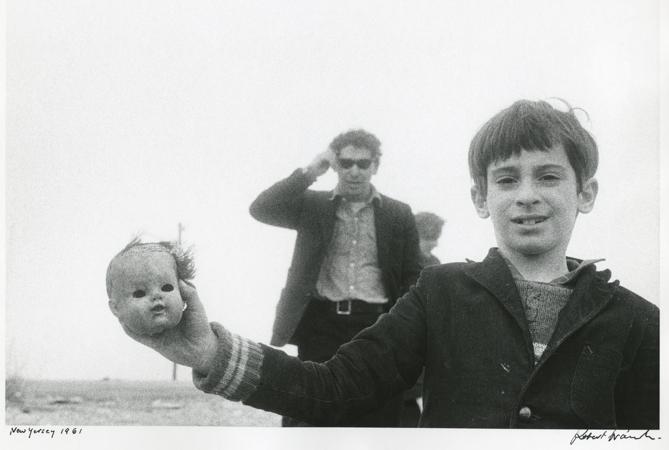
Robert Frank is most well known for his famous photo book The Americans. Born in Zurich in 1924, he began his photographic career by producing many different images between Paris, Wales, and England. When he hit his 30s, he was granted the Guggenheim Fellowship, which allowed him to spend two years in America. During his time in the states, he shot over 28,000 photographs! The message stays the same: if you want to be a good street photographer, you should never stop shooting. You never know what you may miss if you don’t.

Robert Frank’s book, The Americans, became one of the most influential books of all time – though not without some criticism. At the time, his way of shooting documentary / street photography strayed from the traditional way of shooting an image without any emotion behind it. Many photographers before him simply took a simple, transparent image, while Frank chose to let his own perspective rule his work. Since he was an “outsider” from the American perspective, Frank often documented the uglier side of America, something many American photographers had chosen to overlook in their work.

Photo by Robert Frank

Photograph by Robert Frank

Robert Frank Photo

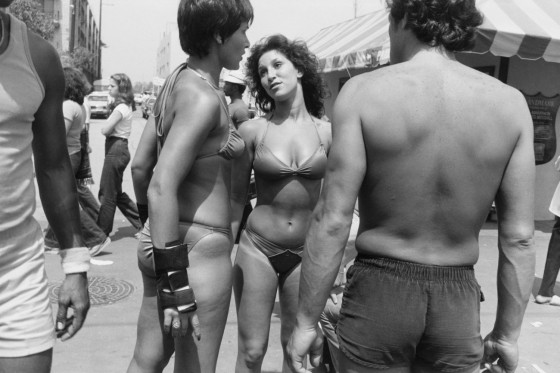
Lee Friedlander

Lee Friedlander is an American born photographer, born in 1934. He is well known to many students of photography for photographing the American social landscape. Friedlander is able to mentally sift through a ton of visual information at once, which is an important skill for street photographers to have. Many of his images have a lot going on, yet they never seem cluttered. His unique way of composing images allows for this delicate balance between enough information and too much information. Since he primarily shot with a wide-angle lens, many of his shots contain a lot of interesting subjects. Later on in his career, Friedlander created an entire book full of self-portraits, many of which included shadows or reflections of himself in his street photography.

Photo by Lee Friedlander

Photograph by Lee Friedlander

Lee Friedlander Photograph

Martin Parr

Martin Parr is a British photographer, born in 1952. Martin Parr once responded to an interview question by saying (and I paraphrase) that he doesn’t think of images in terms of separate images, but rather groups of images in terms of projects. A very important thing to remember when shooting street photography is that street photography often comments on the social or political landscape of the time. While one image can certainly say a lot by itself, oftentimes viewers can get more of the story by looking at a collection of images from the same location and time period. Instead of focusing on how to create that one mind-blowing image, it’s important to understand what the underlying meaning of the body of work is; once you have that covered, then you can work on creating those beautiful images.

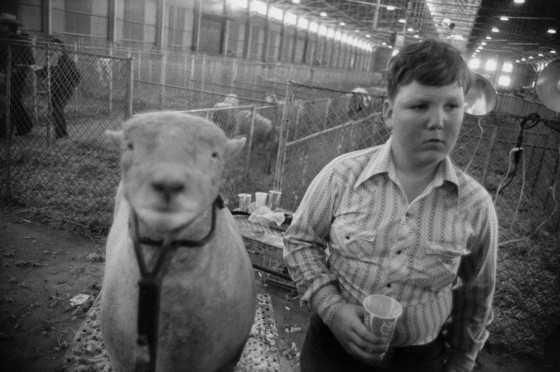
Martin Parr’s images range from hilarious to depressing, but he is a notable photographer in the sense that he is always making some sort of comment about society – whether good or bad. This certainly stems from the shift in photographic perspective that Frank began, in which photographers began to insert their own beliefs and emotions into their documentary photography. And, as opposed to Friedlander, Parr often gets much closer to his subjects.

Photograph by Martin Parr

Photo by Martin Parr

Martin Parr Photograph

Garry Winogrand

Garry Winogrand was born in New York City in 1928. He wandered the United States and took many photographs during the post-war years (1950-1980), creating an influential body of work that ended up being a wonderful portrait of the American life. Most of his most influential work was taken during the 1960s, and he photographed anyone from famous actors, to hippies, to women on the street. Choosing to shoot in post-war America left Winogrand with plenty to be photographed; those who had lived through the war were both anxious and full of excitement with new possibility, and these emotions are tangible in his photographs.

Garry Winogrand Photograph

 Photograph by Garry Winogrand

 Photo by Garry Winogrand

If all of these photographers together could tell you one thing, it would be (and I’ve said this before): Never. Stop. Shooting.

Before Barbra: The Other Actresses To Tackle Mama Rose


Barbra Streisand’s film adaptation of Gypsy has been rumored for years now, and after recent updates it may actually be happening. She has told several news outlets that she will be both starring in and directing the film, with screenwriter Richard LaGravenese adapting the musical. Beyond the well-known portrayals of the ultimate stage mom by Ethel Merman and Rosalind Russell, many other great actresses have tackled the role on stage and screen. They each bring their own flavor to the role, and Barbra is sure to give us a version like none we have ever previously seen or heard. Before Barbra brings back Rose, here are a few other portrayals that are worth looking at.

1973 London Production – Angela Lansbury

Every millennial knows Angela Lansbury as Mrs. Potts from Beauty and the Beast, but this actress has been holding her own on stage for years. Angela starred in the first West End production of the show after Elaine Stritch was removed from the role. She later took the production to the US where she toured with the role. Her performance has become a sort of legend with fans who saw it, describing the level of energy and intensity she brought to the character. Some B-Role footage does exist, and gives a small taste of her electric Tony award-winning performance. Hearing Mrs. Potts sing “Rose’s Turn” is an experience worth having.

1993 Television Movie – Bette Midler

Slightly controversial with the casting of Bette Midler just three years after Tyne Daly won the Tony for best actress in the role on Broadway. Bette Midler was rumored as an option for the revival, but never got to perform the role. The movie was broadcast by CBS, and featured a screenplay that remained fairly faithful to the original production. The cast featured many Broadway performers including Christine Ebersole and Andrea Martin. The role isn’t a perfect fit for Midler’s voice, but is definitely worth a listen. Also, watch for Lacey Chabert of Mean Girls fame as Baby June, and Mad Men’s Elisabeth Moss as Baby Louise.

2003 Broadway Revival – Bernadette Peters

Arguably the most different actress type to play Mama Rose, Ben Brantley’s New York Times review praised her for breaking the mold set by Ethel Merman. Director Sam Mendes described Peters as being an actress who was more like Rose in reality, a tiny woman who was able to charm her way to getting what she wanted. Arthur Laurents also praised her performance for its originality while criticizing the physical production as misconceived. The production featured an extremely minimalist set, which was an upgrade from the previews that featured a stage that was virtually bare. The role was vocally demanding and difficult for Bernadette, and even with all of her praise, she wasn’t able to take home the Tony for Leading Actress in a Musical.

2008 Broadway Revival – Patti LuPone

Patti LuPone’s trip to Broadway with Gypsy was not a short one. Her first portrayal of Rose began as a concert production with the Chicago Symphony Orchestra at Chicago’s Ravinia Festival in 2006. The artistic director of New York City Center Encores contacted book writer Arthur Laurents asking him to direct the production with LuPone for their series. The Encores production was successful, and the show transferred to Broadway in 2008 featuring Laura Benanti as Louise. The production was given a rave review by the New York Times, and went on to win Tony awards for Patti LuPone, Boyd Gaines, and Laura Benanti as leading actress, featured actor, and featured actress in a musical respectively. The production was well-received, but ultimately closed three months early due to low ticket sales, and at a financial loss for its producers.

Auditioning: The Dos & Don’ts Of Audition Attire

Clothing can be a ridiculously stressful thing to deal with before you go in for an audition. You have enough to worry about with trying to give your best performance possible in the room, so your clothes should really be the least of your worries. It’s important that you look good, but musical theatre auditions focus much less on what you’re currently wearing than commercial auditions do. You have some room to be comfortable and feel like you’re able to give a great performance in what you’re wearing. Here are a few tips to take the stress out of finding your audition attire.

Keep It Casual

You don’t need to dress like you’re going in for a corporate interview here. Your clothes shouldn’t be a wrinkled mess, but you also shouldn’t be wearing business attire to an audition. A good pair of jeans can go a long way, and it’s worth investing in a pair for auditions alone. Women can get away with pretty much any clothing option, as long as it isn’t too revealing. This isn’t the place to wear a short skirt or low cut top. Nobody wants to feel nervous that something may be revealed that shouldn’t be, and it distracts from focusing on your talent. Guys, leave the ties at home, they aren’t for auditioning. It is an interview of sorts, but the room is mostly interested in seeing you in clothes that fit to see what your body type is like.

Dress For Yourself

Speaking of body type, dress for it. You are you, so come in as the best version of yourself that you can be. There is no point trying to mask or bring out a feature if it is something that you simply don’t have. If you’re the right type for the role, you’re the right type, and if not there’s not much you can change. This is one of those things that every actor has to deal with, and that will take time. Just remember that while you may not be the right look for one role, there are others who don’t fit the ones you are great for. Make the body you have look as great, and feel confident with the person you are. There’s nothing more obvious in an audition room than someone who is uncomfortable in what they are wearing.

Shoes

These are important. You don’t want to be too casual, but don’t wear something that looks totally out of place with the rest of what you’re wearing. It’s great if you’re athletic, but the running shoes really shouldn’t be your top choice for the audition room. The same can be said about flip-flops, leave them for the beach. For both men and women, boots can be a solid option that looks nice while giving you the added benefits of physically keeping you grounded in your performance. Be careful that you don’t wear anything too bulky, or anything meant for hiking, just keep it simple with a nice pair of leather boots. Men can also dress down a pair of dress shoes with jeans, which can really bring together an outfit. Heels are sometimes necessary for an audition for women, but not if you aren’t able to remain stable walking and performing in them. An audition will become extremely awkward for people in casting if they are afraid of you falling over. If you don’t feel completely confident, stick to flats and chances are nobody will even notice.

Hair

Your hair can either be something nobody notices, or one of the most distracting parts of your audition. You need to make a choice with your hair, whether it’s up or down for women, it needs to be kept out of your face. The same goes for men with long hair when it can become distracting during a performance. You shouldn’t look like you just rolled out of bed, so take the time you need to get yourself ready. It should be something that was handled at home, and not something you are dealing with in the audition. Hairspray is a great tool, and expected to keep you from spending time messing around with keeping things under control.

Really the most important part of all of this is to just feel good in what you’re wearing and be confident. You will give a better performance when you don’t feel uncomfortable or worried about what is on your body. Look good, feel good, and you’ll have a better chance of breaking through your nerves and giving a great performance.

6 Reasons Nintendo Remains A Gaming Juggernaut Despite All The Rumors Of Doom

When one tries thinking of a company that has been considered “doomed” by the masses every other year only to end up afloat, it’s hard not to have Nintendo come up as the first thought. Despite suffering  more ups and downs than any other, this famed Japanese developer has survived an ever-changing gaming landscape during its 40 years in the electronics business—all while outlasting many of its competitors.

Whether you grew up with Mario or not, as a game developer it’s certainly worth studying how Nintendo has managed to stay relevant despite going through their fair share of commercial failures and missed opportunities. The following is a brief glimpse of how and why Nintendo is still a formidable competitor in the gaming industry despite constantly being labeled as “doomed.”

Strong 1st-party IPs

Let me put it this way: Nintendo has such a good line-up of first party IPs that every few years they make a game where many of the characters from these franchises duke it out. This game is of course Super Smash Brothers and each one not only sells like crazy, but are anxiously anticipated years before their release.

Mario, Zelda, and Pokemon; just a few of the many IPs that Nintendo has at their disposal. The most interesting thing about them is that each of the ones I mentioned (for the most part) belongs to a certain genre of games. Mario is platforming, Zelda is action-adventure, and Pokemon is RPG—each franchise offers quite a different type of gameplay and yet each one is incredibly successful.

So why is this important for an aspiring game developer? As Shigeru Miyamoto asked in a 2013 interview: “Does a new character really make it a new game?” He then of course answered “no” before explaining that gameplay comes first, then the “characters.” When a game designer comes up with a cool character, story, and world before coming up with a fun, solid gameplay idea, it more often than not results in a bad game.

They Know Their Handheld Gaming

The only type of article or comment that you’re likely to see more than “Nintendo is doomed!” is “Why doesn’t Nintendo just make games for iPhones and Android?” Considering that the mobile gaming market has exploded alongside the advent of smart phones and tablet devices, it doesn’t sound entirely like a bad idea, actually.

Imagine being able to play classic Nintendo games like Super Mario World and The Legend of Zelda: A Link To The Past on your smart phone whenever you want. Better yet, wouldn’t it be awesome to see new games based off Nintendo’s iconic franchises available for download on the App Store? As cool as this may sound, there’s a reason why the Big N hasn’t jumped in on this idea yet—they aren’t doing too bad with their own handheld consoles.

“Aren’t doing too bad” is of course an understatement—Nintendo’s handheld devices tend to consistently be successful. The original DS actually managed to sell 50 million units between 2004 and 2011, while the Nintendo 3DS and 2DS models combined have sold 44.14 million units—all despite the smart phone gaming boom.

The sooner game developers realize what Nintendo figured out, the better: there will always be plenty of gamers looking for deep, rewarding experiences like The Legend of Zelda: A Link Between Worlds, and Super Mario 3D—games that need more than touch-screen controls to be enjoyed.

They Make Fun Games

Never mind the fact that Nintendo games have always been the most polished games you could ever play, unlike many big-budget games released these days that are plagued with bugs and glitches from day one. Instead, simply focus on the fact that Nintendo has always made sure that their games provide one little ingredient that makes all the difference: fun.

I know what you’re thinking; what developer DOESN’T try to provide fun with their games? After all, this is the entertainment business, right? While that may be true, there’s no company that seems to focus purely on the fun factor more than Nintendo. Just think of your favorite Nintendo game and you’ll probably come up with why it is fun in no time. I’ll try it:

Mario Kart is fun because we love going fast and hitting others with items. Super Smash Bros is fun because its a fighting game you can get good at without learning endless button combinations. The Legend of Zelda is fun because we like exploring, solving puzzles, and using our wits and skill to defeat enemies.

As a game developer it’s CRUCIAL that you always have the following question in mind, which I guarantee you every lead developer at Nintendo always does: why is this game fun, or why is it not fun?

Innovation

It’s hard to argue against Nintendo’s impact on the evolution of gaming over the years. Simply by looking at the controller scheme for each of their home consoles is enough to see that Nintendo is always trying to find new ways to provide digital entertainment—the two best examples being their latest consoles.

The Nintendo Wii, although quite inferior to the PS3 and Xbox 360 in terms of specs, ended up leaving both in the dust by selling more than 100 million units worldwide simply because Nintendo thought that motion control would be—you guessed it—fun. We know that the Wii U is doing far from good when compared to its predecessor, but the Gamepad serves as another example of Nintendo commitment to find new ways to play.

I’ll use the Nintendo 64 controller as another example only because it’s the weirdest looking one of the bunch, but also pretty great. Knowing that the rise of 3D gaming would require more buttons, Nintendo went all out by adding 10 buttons, including both a D-pad and analog stick. Why so many buttons? I don’t know about you, but it’s hard to imagine playing The Legend of Zelda: Ocarina of Time without a Z button to Z-target, four C buttons to easily manage items, and shoulder buttons to easily block with your shield.

When looking at Nintendo’s innovative ideas throughout the years it’s impossible to ignore the direct relationship between the device and game. In other words, Nintendo doesn’t come out with motion-control or 3D-supporting consoles for the sake of being different – they use them to try and provide a fresh, new gaming experience, which I recommend every game developer to have in mind when coming up with their next game.

Learn From Mistakes

Even the biggest Mario fan can’t honestly say that Nintendo has never made a stinker before, especially when it comes to consoles. The Virtual Boy certainly stands out: a 32-bit 3D console that proved to be Nintendo’s biggest commercial failure after it sold less than 800K units (many were returned) and was discontinued months after its release.

Instead of collapsing after such a commercial failure, the Japanese developer took it as a learning experience by realizing that people were still uninterested in 3D gaming and wanted something simple they could play on the go, and so they released the Gameboy Color the next near. Interestingly enough, Nintendo decided to try 3D gaming again fifteen years later and have found success with the Nintendo 3DS.

A game developer that lets themselves get crushed by failures will not make it in this industry. Considering that most developers these days don’t find commercial success until their 3rd or 4th title, you’re better off simply learning from each experience—whether it’s a good or bad one.

100% Focus On Games

Simply put: Nintendo is all about the games and nothing else. While Microsoft and Sony do have their own dedicated gaming divisions, only Nintendo has been mostly dependent on the selling of games to stay afloat—and they have. One could factor in the cash they make from Pokemon cards, Mario shirts, and other merchandise, but games are definitely their money maker.

It’s not to say that other companies don’t share the same dedication to games as Nintendo simply because they also produce TVs and computers, but it’s nice to know that one of the gaming juggernauts of today is strictly a gaming company—nothing more, nothing less.

So the next time you’re fumbling around with a game idea that could potentially become a global franchise, instead try focusing on just the gaming experience. Even developers like Mojang and Rovio will tell you that although there’s nothing wrong with having that “I hope this becomes popular!” idea throughout development, it’s important to put most of your effort on making a game people will want to play.

Image source: JD Hancock

How To Create A Game Design Portfolio That Stands Out

It wasn’t long ago that having an online game design portfolio was unheard of. In fact, when most people think about an online portfolio that showcases skills and experience, what usually comes to mind is a colorful web page with galleries of concept work and other forms of art– either that or pages with short stories, articles, and other written work.

But in this ever-growing industry, developers are realizing just how important it is to have more ‘designers’ in their team to figure out how to make their games fun. At the same time, more people are competing for that famed ‘game designer’ role more than ever.

If you’re planning to make a portfolio and want to know what it takes to stand out and best convey your skills and abilities as a ‘designer of games’, check out the following tips that could help you catch the hiring team’s attention and possibly earn you a job.

Show You’re Already Making Games

You can’t convince someone that you’re a ‘game designer’ simply by putting it on your resume. If you really think you’re destined for a career as a game designer then, simply put, you should already be making games!

And no, we don’t just mean a big-budget AAA game or even a high-selling iOS title. We’re talking about anything: a few simple Flash games, a card game, or even a table-top game made with materials you purchased at your local arts and crafts store. Anything that shows the person looking at your portfolio that you actually have a passion for designing games.

Just because the developer you’re applying to makes digital games, it doesn’t mean they don’t want to see your experience with non-digital games. Of course, with so many resources these days that allow even someone without programming knowledge to whip up a project, it certainly doesn’t hurt to have a few digital games to boast about as well. If you have access to a computer and internet then you have no excuse. So check out some of the free products like GameMaker, RPG Maker, or Adventure Game Studio and make something!

Let Us Play Those Games!

The only thing better than showing pictures of the neat games you made and talking about the challenges along the way is to actually let us play them. Of course, with physical games like table-tops and card games it’s unlikely that the hirer reading your instructions is going to actually build the game themselves just to check out, so this is geared more towards digital games.

Remember those products I mentioned in the last section? All of those allow you to create a game that you can actually share with others with hardly any work. Provide a link or downloadable version of those games so people checking out your portfolio can actually play the game you claim to have made.

Talk About Your Experiences

Developers are interested in finding someone with a genuine passion for making games, but more importantly, they want designers that can actually articulate their experience. This means talking about challenges you ran into along the way, as well as breakthroughs and failures. Any designer will tell you that although playing games is fun, making them can be a difficult but enlightening learning experience.

Are you able to explain why you think that 2D platforming game you made with Flash is fun? What were the challenges of making a card game that players of all ages, from 10 years old to 50 years old, can enjoy? Can you explain why your game is intuitive enough for anyone to pick up but engaging enough to keep them playing for hours?

If you can prove you have an eye for determining what makes a game fun and what makes it boring, you’ll certainly impress the people looking for designers that know what it takes to design a good game.

Don’t Rely On The Design Docs

Lacking programming or artistic skills but still wanting to prove that you can design a good game? You can’t just add a detailed game design document or two to your portfolio and expect visitors to read all 200 pages of it before realizing you’re the next Miyamoto. Yes, knowing how to write a good design doc is important, but it will probably not land you the job by itself.

Why you ask? Think about what a game is for a second. It’s an interactive medium that can’t truly be enjoyed unless it is in motion, and for this reason an awesome-sounding design doc could very well turn out to be a terrible game. But if you can prove that you prototyped your game idea and actually learned from the experience as it was being played, you’re more likely to impress.

This doesn’t mean you should toss your game design doc in the recycle bin. After all, the ability to write a design doc is certainly a tool all designers should possess. However, as mentioned before, the doc alone won’t be enough when the other 99 guys applying for the same job have a link to a playable game they designed. Would you rather read about how a game plays or actually play it?

Conclusion

With your portfolio, you are trying to convey your ability to look at games from a design perspective, whether it be a simple indie title or a trading card game you made out of pieces of cardboard. The best (and perhaps only) way to do this is to actually make games. So focus on demonstrating your passion and desire as a game designer and your portfolio will no doubt stand out because of it.

Our Game Design students work on a variety of projects across digital game design, 3-D art, video game storytelling, and graphic design. Visit our Game Design Discipline page to learn about our game design programs, curriculums, and hands-on projects.

Image Credit

A Tale Of Two Ellisons: The New Generation Of Movie Producers

When your father’s a billionaire, you can pretty much spend tons of money on anything you please and do anything you want, whether it’s racing megayachts, collecting classic sports cars, or partying every day on beachfront mansions. The son and daughter of wealthy tech mogul Larry Ellison, David and Megan, are a little different. Like a lot of us, the Ellison siblings are huge movie buffs. Unlike a lot of us, they’re doing what those of us with lighter wallets always dreamed we could do — they’re making the movies they want to see in the theater.

Rather than constantly scrolling through the New Releases on Netflix, they finance and produce what they’d like to watch from the ground up. And the Ellisons don’t just live out every cinephile’s fantasy — it turns out they’re also really good at it. Their hobby has become their career and both are generating millions in box office revenue. What’s most fascinating about David and Megan Ellison, however, is that they work completely independent of each other, through their own separate production companies, and each has their own distinct taste, and consequently their own distinct footprints on Hollywood.

David Ellison, 31, attended the University of South California for some time while also acting in a small handful of roles, including parts in Flyboys and The Chumscrubber, and the TNT drama Leverage. After forming his own production company, Skydance Productions, and partnering with Paramount Pictures, he started off his career with a bang, financing the Joel and Ethan Coen western remake, True Grit, a Best Picture nominee lavished with nine other Oscar nods.

With the exception of the Seth Rogen and Barbra Streisand comedy The Guilt Trip, David and Skydance’s following films double downed on the macho action True Grit deconstructed. David Ellison, a pilot and thrillseeker, wanted movies brimming with thrills, and found a like-minded collaborator in Tom Cruise. Another trait of David’s became to finance sequels to movies he loved or grew up watching as a kid. His second feature combined all of these elements to monumental success with Mission: Impossible – Ghost Protocol. With that massive hit under his belt, David was free to get as epic as he felt fit, and released Jack Reacher, World War Z, and the sequels G.I. Joe: Retaliation, Star Trek Into Darkness, and Jack Ryan: Shadow Recruit all within the span of two years.

David Ellison and Skydance have also found success on the small screen, producing the atom-bomb origin drama Manhattan for television and currently developing a series for Netflix, Grace & Frankie, starring legendary actresses Jane Fonda and Lily Tomlin.

Sci-fi blockbusters have become one of Ellison’s specialties, and it’s no surprise two movies slated for development by Skydance are titled Geostorm and Star Blazers. David also continues to fund sequels to his favorites, producing a new Schwarzenegger Terminator trilogy, Mission: Impossible 5, as well as a passion project Ellison’s been developing with Tom Cruise for years: Top Gun 2. Though original Top Gun director Tony Scott was involved early on before his untimely death, Ellison and Cruise hope to have the movie hit theaters sometime in the next few years, focusing on the automated drones dominating twenty-first century battlefields.

Megan Ellison, 28, only spent a year at USC’s film school, but has shown a knack for producing high-quality critic-friendly cinema. Just a year after her brother formed Skydance, Megan created her own production company, Annapurna Pictures. In the Hindu faith, Annapurna is a goddess known for her boundless maternal nurturing. The name turned out to be extremely apt for Megan’s company, as she became known for using her money to bankroll projects that couldn’t find support anywhere else.

After producing a few indie films she felt passionately for, Ellison found success with her brother by co-producing True Grit, but it was with Annapurna that Megan found her calling as the savior of high-risk artistic projects unable to find financing anywhere else in Hollywood. One such infamous project was Paul Thomas Anderson’s long-gestating take on scientology, The Master. Despite Anderson’s pedigree, the subject was too taboo to find a studio. Despite her brother’s close relationship to scientology poster boy Tom Cruise, Megan signed on to release The Master, which earned three Academy Award nominations for its actors, including Phillip Seymour Hoffman, who gave one of his last great performances.

Showing no fear of controversy, Ellison followed The Master with Bin Laden drama Zero Dark Thirty, another Best Picture contender. She also directed her money toward the distinct voices of auteurs like Andrew Dominik, Harmony Korine, and Wong Kar-wai, financing their films Killing Them Softly, Spring Breakers, and The Grandmaster, respectively.

In 2014, Ellison made history by becoming the first woman and fourth person ever to earn two Best Picture nods in the same year by producing both Spike Jonze’s Her and David O. Russell’s American Hustle.

Since then, Megan Ellison has produced Bennett Miller’s Palme d’Or contender The Foxcatcher and continues to fund the projects of visionary filmmakers, with Alejandro González Iñárritu’s all-star western The Revenant slated for release in 2015. She’s also just signed on to produce Richard Linklater’s followup to Boyhood, the baseball comedy That’s What I’m Talking About.

Neither Megan nor David can be pigeonholed as certain types of movie producers, however. David and Skydance recently announced their funding of Angelina Jolie’s Oscar-bait directorial effort Africa, while Megan has adult animated comedy Sausage Party in production, with Seth Rogen and Jonah Hill as its talking-meat leads.

Megan also raised eyebrows in 2011 when she snapped up the rights to the Terminator franchise. While many considered this a shrewd business move, it seemed that Megan wanted to bring her trademark integrity to the blockbuster property, approaching James Cameron to return to work on his cyborg creation. For reasons unknown though, in 2014 Megan Ellison opted out of releasing the films, handing the reins to, of all people, her brother David. While it’s hard to say how the change from sister to brother will affect the development of the new Terminator trilogy, it might be a sign that soon after the transition, the first film’s title changed from Genesis to the more ridiculed Genisys. David may seem to be shooting for his sister’s standard though, as he has had several more meetings with Cameron to help bring the franchise back to its innovative roots.

David and Megan are still incredibly young for Hollywood executives, and have decades ahead of them in the movie business. With so much time, it’s no doubt their horizons will expand, their trajectories veering toward unforeseen directions. Who knows what genres or media they may tackle next? It will be harder to succinctly describe a David-type of movie or a Megan-type of movie, and that experimentation can only push filmmaking forward. It’s rare for so much money and so much passion to come together in such a tangibly meaningful way and the industry is lucky for either Ellison, let alone both. As more years and projects come to pass, the interesting story of the Ellisons may just become a defining chapter in the history of cinema.

Five Reasons Why Every Game Designer Should Have A Portfolio

Considering how many applications developers and studios receive these days whenever they post a ‘Game Designer’ position, it’s easy for a hiring team to completely forget about the guy that only provided a resume and cover letter. Instead, they’ll probably take more interest in the person with a portfolio that offers a better idea of their skills, personality, and more.

Here are a few reasons a portfolio is a must-have for anyone seeking that game designer role at a dev studio.

A portfolio…

1. Shows Your Skills

Although your resume should have a brief list of skills, a portfolio offers a better and more attractive way to show off the abilities you claim to have. If you think about a concept artist, their CV will no doubt talk about their talents and experiences, but it’s not until you see their gallery of brilliant (or terrible) work yourself that you can assess if they’re actually good or not.

It’s the same with a game designer. If you have a portfolio with links and images of games you’ve made, it will be much more impressive to hiring teams considering you as their next game designer.

2. Shows Your Experience and Previous Work

Going along with the above point, a portfolio is the perfect avenue for showing off the games you’ve already made in an attractive way.

It’s one thing to say “Designed a sci-fi 2D platformer” in your resume, but it’s another to actually have pics and links that viewers can check out – better yet, a playable version.

Game devs are looking for potential recruits that are actually making games already, be it simple Flash games or even a card game you made from supplies around your home. So you definitely want to show them off in a visual way on your portfolio.

3. Shows Your Personality

Game devs, more than probably any other industry, have very social environments where the teams working on a game end up becoming good friends.

This is why the guy or gal being paid by Blizzard to hire the next member of the family wants to make sure they find someone that will fit into their culture, even if they’re not the best or most experienced designer that applied.

Although no one will get to know you completely through your portfolio (that’s what interviews are for), a portfolio does offer a little taste of your personality.

4. Appeals to Visual Learners

Considering that 6 out of 10 people are visual learners, a portfolio is the perfect way to share information and make yourself stand out to hiring teams.

Just ask yourself what’s more interesting to look at: lines of text or a gallery of images and videos?

We’re not saying that your online portfolio should bombard viewers with colors and pictures everywhere. But definitely try to provide a visual impact that will simply make your portfolio a positive experience to check out.

5. Makes you more accessible

There’s just something about having our own place on the world wide web that makes us appear more approachable and professional. It’s a big deal to have a page where you demonstrate your work, offer contact info, and talk about yourself a bit. It will definitely pay off.

This is because developers want to know they’re considering hiring someone that is genuinely interested in the gaming industry and not just sending an application because they like the games they make.

You may not realize it but the recruiter at a game studio will usually share the portfolio of potential recruits to the head honchos there, including lead designers, producers, and directors. You WANT this to happen. But it probably won’t if all you send in is a resume and cover letter.

With a portfolio, there’s something visual to share that’s more interesting than your CV’s list of skills and experience.

Image Source