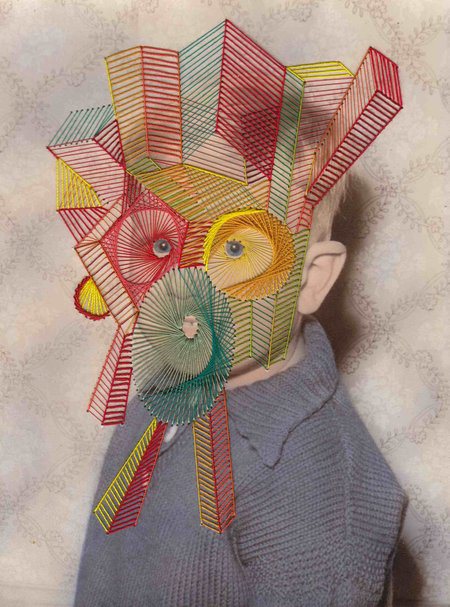
Screenwriting: Screenplay Format to Meet the Industry Standard

Writing a screenplay is no easy feat but transferring your story and characters into a professional screenplay format can be very rewarding. If done correctly, this is where you can truly make every aspect of your story come alive.

Unlike your story, the screenplay is visual, and detailing your characters’ actions help to advance your story scene by scene. These actions are key for the audience because they provide the audience with the information that they need to know to follow along. The dialogue that you write for the characters takes on the supporting role, supporting the characters’ actions. Speaking the details and actually seeing the character do the actions can be transformative in the viewers’ mind.

Each scene that you write for a screenplay needs to be detailed. The scene is divided into multiple categories to cover these details. Elements to be considered include who (who’s there, which characters are involved in the scene), what (what is the situation that is taking place), when (time & day the situation is taking place), where (where this is all happening) and why (what’s the point of the scene?).

How to Write a Scene Heading
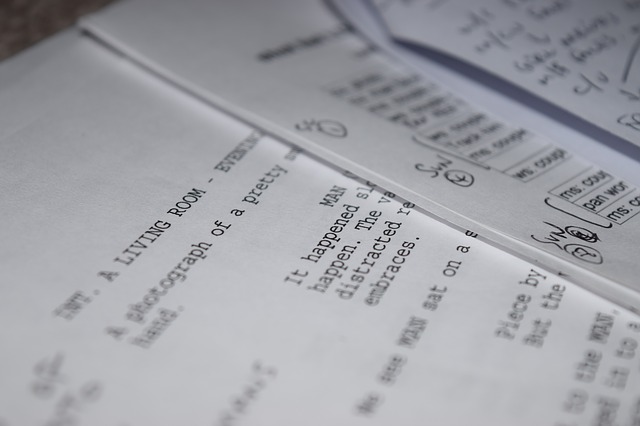
Another main element to a screenplay format is the scene headings. When your character moves to a different setting, you will need to create a new scene heading and answer all the same questions above. Scene heading elements are placed in a specific order. Generally, the scene location is first followed by the time of day.

An example of this would be a scene set inside a critical care unit at night. The heading would be written:

INT. CRITICAL CARE UNIT – NIGHT

Notice the use of abbreviations and all words capitalized.

The Screenwriting Industry Standard

Interior is abbreviated as INT., exterior is shortened to EXT., and a small hyphen separates the location of the scene from when the scene takes place. Generally, there will be a two-line space that separates the heading from the scene’s description — the what.

In the scene description, write the names of the characters involved in the scene using all capital letters. When the names are repeated in the dialogue heading, the names are once again always capitalized. However, if there is someone in the scene without dialogue, his or her name is not capitalized.

For example:

JUDY sits in a wheelchair with her leg raised. Her head is back and she stares aimlessly at the exit sign above her.

Someone who is in the scene, but does not have dialogue would be written as follows:

The man coughs as he falls down in the middle of the room.

Sounds that are auditory to the audience are capitalized such as WHISTLE. If the character is making the noise, the sound does not necessarily need to be capitalized.

An important formatting rule is that dialogue is always centered under the character’s name. The character’s name is capitalized when it is used as the dialogue’s heading. For example:

NURSE

I’m sorry…

Any sort of character description is written under the name in parentheses as such:

NURSE

(frantically)

What do I do?

Here is an example of a complete scene in the screenplay format:

INT. CRITICAL CARE UNIT – NIGHT

A desolate critical care unit. Dingy and hopeless.

Unoccupied seats except for two are lined up in rows. A broken TV mounted in the corner near the ceiling BUZZES with fuzzy, flickering images.

A man coughs as he falls down in the middle of the room.

JUDY sits in a wheelchair with her leg raised. Her head is tipped back and she stares aimlessly at the exit sign above her.

She sharply lowers her head and whips it around to see the man collapse. With fear in her eyes, she looks around for a nurse unaware of this man’s dire situation.

The critical care unit doors open and a newly trained nurse rushes out to help the man.

NURSE

(frantically)

What do I do?

JUDY

(frightened)

What do you mean? You’re the nurse, help him!

NURSE

I’m sorry

JUDY

(yelling)

Help him!

As a screenwriter, there are many valuable tools available to you from books, articles and screenwriting software which help you with screenplay format. Researching the industry standard of how to write a screenplay will give you a working knowledge of what is to be expected in professional circles.

Interested in a career writing for television and film? Our intensive, hands-on 8-Week Screenwriting Program is designed for aspiring writers with little to no screenwriting experience. Visit our 8-Week Screenwriting Program page to learn more and apply today.

Most Shockingly Memorable Moments in News Journalism History

Working in broadcast journalism is a funny old beast—sometimes dangerous, certainly unpredictable, and almost always challenging. While years of experience in the field and training at a broadcast journalism school will get you most of the way there, there will always be an element of surprise and being able to think on your feet is an essential skill.

In fact, some of the most memorable broadcasts in broadcast journalism history have come about by complete chance…

… for better or worse.

6. Don’t Ask This Guy If Wrestling Is Fake (1984)

20/20 reporter John Stossel asked all the wrong questions in this interview with then WWE wrestler David Schultz, who proceeded to air his concerns with Stossel’s interviewing technique by administering a couple of open-hand slaps.

AFTERMATH: Schultz apologized but was fired anyway, and Stossel had ringing in his ears for weeks. He then filed a lawsuit with the WWE (for which he was given $425,00 out of court), but has since stated that he regrets having sued.

5. Melissa Sander – Ultimate Grape Fail Late 90s)

Still painful to watch over a decade later, Melissa Sander—forever known hereafter as the ‘grape lady’—missteps during a grape stomping fluff piece for an Atlanta station and steps into Internet classic history.

AFTERMATH: Nobody knows what became of Sander, though the winery confirmed that no serious injuries were sustained. She left the WAGA-TV station soon after and went on to do the weather at News 10, but has since disappeared into obscurity.

4. Kanye West Bombs Taylor Swift (2009)

No red carpet event is without its controversies, but it was Kanye West’s interruption of Taylor Swift’s acceptance speech at the 2009 VMAs that got the nation talking like nobody before.

AFTERMATH: Everyone got on with their career. Stranger still is that history would go on to show us that this was probably the most tame display of Kanye West’s arrogance.

3. Charlie Sheen – Bi-Winning (2011)

Around 2011 following his forced departure from Two And A Half Men, Charlie Sheen began to start acting very, very oddly. Dubbed a ‘total meltdown’ by many journalists and even friends, possibly the strangest interview (among many) that he gave was the infamous ‘bi-winning’ example.

AFTERMATH: Sheen embarked on a terrible national tour after attracting so much attention. He appears to be taking it easy these days.

2. Hide Yo Kids, Hide Yo Wife (2010)

When the eccentric Antoine Dodson gave his retelling of a serious crime, nobody knew he’d become an overnight viral superstar…well, except maybe the guys who leapt on the footage with lightning speed and turned it into a song.

AFTERMATH: Both Dodson and the musical Gregory Brothers saw their online profiles rise considerably. However, the ‘bed intruder’ has never been brought to justice.

 1. Apollo 11 Landing (1969)

There are quite a few historical moments broadcasted live that could have made this list, but sadly many of them represent some of the worst moments in humanity. The Apollo 11 landing, however, was not only one of our species’ finest achievements but it was also the biggest moment in broadcast history—a live feed from another world.

AFTERMATH: Putting all the silly conspiracy theories to one side, the Apollo program unfortunately went out with a whimper. The human exploration of celestial bodies is still a tale in the telling.

How To Work Your Way Up To Director of Photography

Cinematographer at work on set

A lot of film students learn the hard way that more often or not you don’t just become a professional director—like most careers, you have to work your way up the ladder. What many might not realize is that it’s almost just as hard to reach the ladder’s second highest rung—the Director of Photography. There are a few different routes one can take (unless it’s a really cheap shoot and you can win the position just by owning your camera) but most of these paths have several difficult steps before they take you to the top cinematographic spot.

Like most paths to any position in filmmaking, the lowest spot on the totem pole is the production assistant. On-set PAs will work for any and all departments, including those overseen by the Director of Photography—the camera, lighting & electric, and the grip departments. Much of a PA’s time will be spent getting everyone else their coffee. It might not feel anything like what you had in mind when you decided you wanted to make movies, but a PA is as much a part of the team as anyone else, and while their work may go unnoticed, it does not go unappreciated. By working hard, being friendly and likeable, and networking with those around them, PAs can find work on subsequent shoots, and eventually a promotion.

The Camera Department

It goes without saying that many DPs come from the camera department. As with all the departments on set, the specific responsibilities of each position depend entirely on the size and nature of the shoot. Generally speaking, though, there are three primary positions in the camera department: the camera operator, the first assistant camera, and the second assistant camera.

The camera operator is the individual physically working behind the camera, their eye in the viewfinder. While some DPs prefer to work the camera themselves, it is usually to their advantage that someone trusted does it for them while they watch the shot from a monitor or with her or his own naked eye, getting a better sense of the shot. Since the camera operator is one of the few positions a DP may want for his or herself, it goes without saying that many have made a direct jump from here to cinematographer.

The first assistant camera, sometimes called the focus puller, is responsible for several tasks besides its namesake. 1st ACs keep the camera department’s equipment clean, which involves “checking the gate,” the tedious but all-important process of removing a lens and cleaning the inner workings of the camera of any hair or dust or broken pieces of film. Even on digital shoots, 1st ACs must make sure the CCD is operating at full capacity in order to produce the best possible shot. Focus pulling is a skill that can require years if not decades of practice. An out-of-focus shot is a blemish on the record of any camera department and therefore one of the most important jobs on set. An expert 1st AC is a gift for any film set, and carries a reputation that could easily earn them the DP spot on their next project.

The second assistant camera, occasionally called the clapper loader, is typically in charge of loading the film and keeping track of all camera reports and paperwork. Keeping with this, the 2nd AC also slates each take. They also make marks for actors and measure distance for the focus puller.

There is not as much hierarchy within a given department as one might think. For the most part, most positions are at an equal standing, all reporting either to the head of the department or the Director of Photography directly. (On a strictly professional set, nobody should ever communicate with the director, everyone must interact up the food chain through the appropriate channels.) Even a position such as first assistant technically has no authority over the second assistant—they just have different, equally important duties.

It take years to become skilled at any one position. Many people have made very successful careers out of exclusively being a 1st AC, camera operator, etc. For those with an ambition and calling for the DP spot, though, the camera department is a great place to climb the ladder.

The Lighting & Electric Department

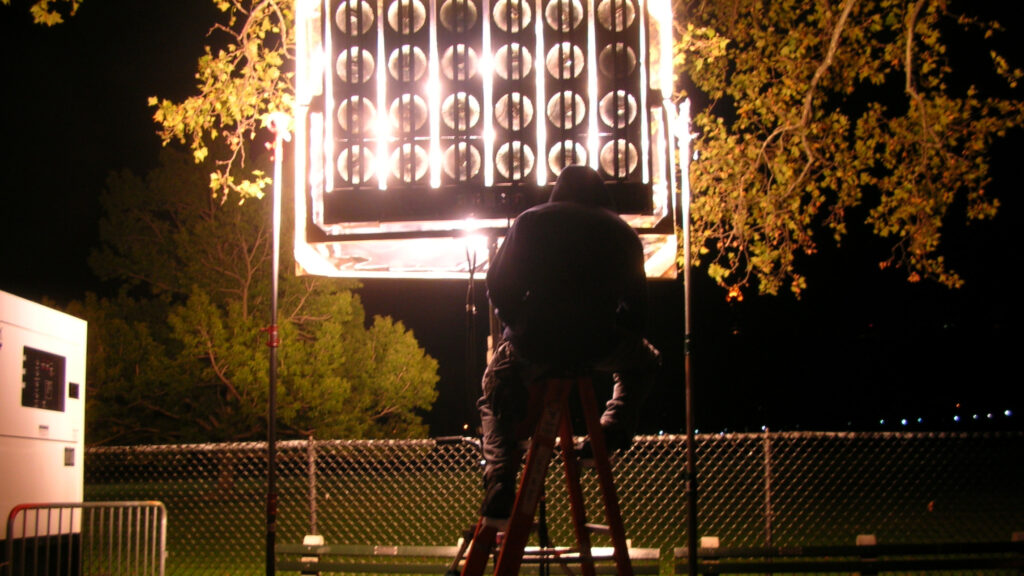
A member of the electric and lighting crew

A strong DP will usually choose the look he wants after discussing it with the director in private. He will relay this to his crew, who, if they are dedicated and competent can then find that look without any further input from the DP. This may seem counterintuitive, but the DP is after all the Director of Photography, and his job is to direct the crew, not micromanage them. An efficient camera operator will know what lenses to use to achieve the DPs frame. And a good lighting department will know what type of lights and where to place them without having to ask the DP, who should be more focused on the bigger, creative picture.

That makes the head of the lighting department, the gaffer, a very important position for shooting a film. A gaffer and his crew may also be called electricians, but this is mostly nominal because of the voltage and amperage the team must work with in order to maintain the power-hungry film lights. While the job is very technical, the gaffer must have an artistic bent as well, a way with lighting that may take years to develop in order to achieve a certain look with the tools at hand. This makes the gaffer a close ally of the DP, and a logical preceding step to the position.

The lighting department is more hierarchical than the camera department, with assistant gaffers reporting directly to the department head. However, another important position is the best boy electric, the gaffer’s direct assistant, a foreman for the entire department. The best boy manages the crew itself and their workplace, paperwork, loading and unloading and maintaining equipment, and coordinates with the other departments. On location scouts and other second unit work, the best boy can even fill in for the gaffer. While it’s rare for best boys to make the immediate jump to DP, they are a hair’s breadth from the gaffer position and therefore one more step closer to being Director of Photography.

The Grip Department

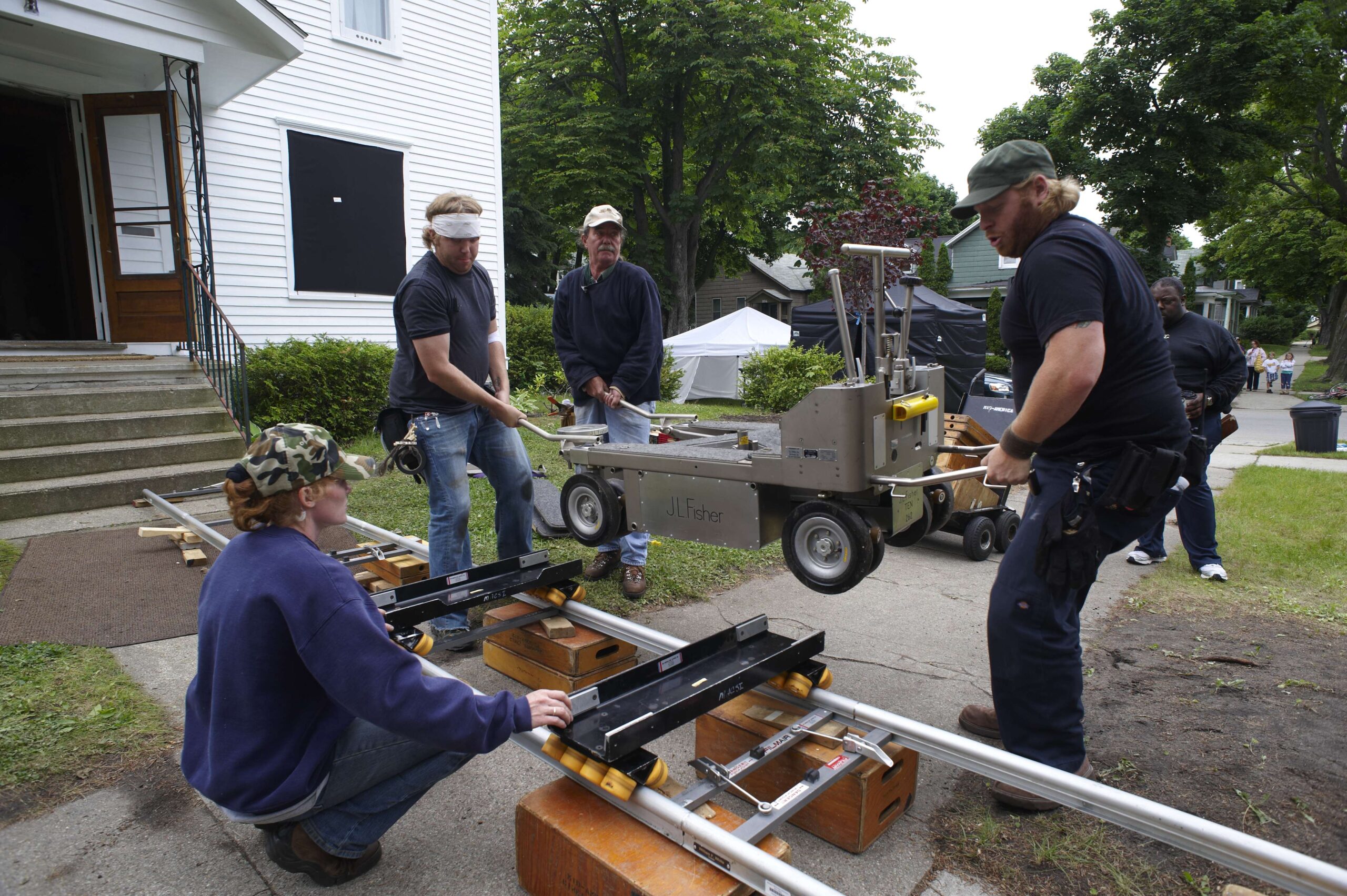
Grips set up a dolly

The grip department is similarly structured to lighting & electric. It is headed by the Key Grip, who helps achieve the director and DP’s vision by utilizing the appropriate equipment needed. The grip department is in charge of all non-lighting and non-camera equipment, like flags and C-stands and bounce boards. This equipment not only shapes the light for a scene but also helps the camera achieve its intended frames. As a department head that directly works with the cinematographer, the Key Grip is another direction from which someone could make the jump to DP.

The larger a shoot, the more grips it will employ, grips who could work their way up to the best boy grip, a position very similar to its lighting & electric equivalent. The grip department also includes positions that work closely with the camera department, such as the dolly grip and crane operator. These positions, while lower on the totem pole than others, work closely with the camera and therefore come into contact with the DP more than other lower-level grips. It may be difficult to jump right to the top from these positions, but they are a step or two closer than other grips and another option to consider when plotting a course to the top.

Networking

No matter where you’re coming from or where you’re looking to advance, networking is very important. Once you head a department or work closely with the DP in another capacity, you must build and maintain that relationship. Someone who has made the journey before you has the best perspective for you to learn from. This presents a tricky balance as the DP is your ally but also your future competition in an industry with far less high-quality shoots than high-quality craftsmen and artists. You will compete directly with your former boss for jobs, and every DP who makes a recommendation knows this. It is only through a good working relationship and hard-earned respect that a DP will recommend you to producers and directors for one of their projects.

Or you could go to those directors and producers yourself, networking and building relationships with those you come into contact with through your current and previous positions. The 1st Assistant Director especially is a crew position that directly represents the interests of the producers funding the project and that also works closely with department heads and best boys. A strong relationship with your AD can help you make the case with those signing the paychecks that you should be their next DP.

No matter what path you choose and what relationships you cultivate, a good attitude, a strong work ethic, and an artistic ambition are all needed for you to work your way up to Director of Photography. At NYFA, our 2-Year Photography program helps students build that foundation.

Pop Star Musicals: Who Should & Shouldn’t Be Writing A Show?

With “Kinky Boots” taking the Tony Award for Best Score over “Matilda”, and Sting’s new “The Last Ship” heading to Broadway this season, more pop music stars seem to be trying their luck on Broadway. Elton John has comfortably written for musical theatre, while the Tupac inspired “Holler If Ya Hear Me” didn’t seem to work as well with the typical theater-going audience. Who do you think should be showing their musical theatre writing skills, and which pop stars should stay away? Here are a few possibilities:

Taylor Swift

It’s easy to imagine exactly what a Taylor Swift musical would sound like, and her music tends to have quite a bit of storytelling in it. She would definitely have a hit with the teen fans between her writing skills and her chart-topping hits.

Sara Bareilles

This is already rumored to be happening, and there couldn’t be a better fit! Sara’s music is extremely theatrical (tip for anyone looking for pop songs to add to their book). She’s writing the score for a musical adaptation of the movie “Waitress.” With the right show and role, Sara is one pop star that can carry a show — and we can’t wait to see her acting abilities.

Ed Sheeran

Ed writes a lot of his own music, and would have a totally different sound than most of the other musical theatre we would expect to hear out of a pop star, and the result could be really interesting.

Eminem

Could a rap musical work? Eminem is one rapper whose musical would definitely create a lot of buzz. An urban musical would give the opportunity for different artists to show off their special skills they bring to the table.

Katy Perry

Everything about Katy is theatrical, and spectacle is a huge part of her performance aesthetic.

With the right funding and production team signing onto a show, you never know who might end up popping up on the next Broadway marquee. Some of these pop musicals come and go quickly, like Jimmy Buffett’s “Don’t Stop the Carnival”, while “Kinky Boots” may end up being a musical that people are studying for years to come.

NYFA Instructor Bryan Ma Describes the Intricacies of the Video Game Industry

Interview with Bryan Ma
Photo provided by Bryan Ma.

As a game designer, Bryan Ma (@whoisbma) has worked for large production companies and independent studios. He has been a student of game design, and is now an instructor.

With such a breadth of experiences, Bryan is the perfect person to ask about the demands of the industry and what future game designers have to look forward to.

Here is our interview with Bryan:

NYFA: Can you tell us a bit about your personal background and what first got you interested in game design?

Bryan Ma: I sort of grew up surrounded by the video game industry. My father worked for Activision in the early 80s when they were developing games for the Atari 2600/VCS. That was our first game console, and a few years later I discovered the NES – I played Super Mario Bros. at a friend’s house and I had never experienced anything like it. It’s probably not an exaggeration to say that it was a life-changing experience.

As the years went on my father continued to work in the video game business and I was immersed more and more deeply in the culture. My first high school job was at Acclaim Entertainment in the late 90s.

Around this point, though, my interests began to diverge and I studied the humanities in college, not intending to go into games for work – but the industry has had a strong gravitational pull on me and I’ve ended up working in games for almost a decade.

I didn’t start out as a designer. I was a junior producer and then associate producer for several years before falling into design work. I was mostly just in the right place at the right time – we needed someone to pick up a design project and I was available. Suddenly, I was doing design work, and just kept going.

NYFA: What has been your favorite game to work on in your professional career?

BM: When I was working at 2K, I had the opportunity to work on a lot of games, only a small percentage of which ever saw the light of day. Some of them were large projects that we were assisting our major studios with. I had a great time working on the Civilization Revolution iOS versions for Firaxis, especially because developing on a new platform with a major interaction paradigm shift was an interesting challenge.

NYFA: You have experience as a game designer for a major production company and independently. What are the major differences between the two and challenges of each?

BM: This is a big question! The main difference in my experience is that often large studios look for specialists whereas successful independent designers need to be able to do a broader range of things well, particularly some things that they might not want to have to do in the first place, like business development and marketing.

Of course this depends largely on the scale of your independent status; there’s a huge range of possibilities. Also, I should note I was largely a generalist designer when I worked for a large studio, but this is somewhat unusual.

NYFA: Where do you see the future of the video game industry heading?

BM: I’m going to answer this as if you’d asked me where I would like to see the industry heading! I would like to see the industry and culture per se increasingly fragmented – that is, being made by more and more different people from all walks of life but gaining depth on all levels. I’d especially like us to have many waves of designers thinking about the avant-garde and experimenting critically as technology enables it and games media becomes more and more ubiquitous.

NYFA: Great game designers: born or made?

BM: Made.

NYFA: Is there anything you wish you would have known before getting into the game design industry?

BM: My first year or two was tough; I largely had to learn on the job. I wouldn’t trade anything for that experience per se, but I suppose it would have been nice to have not needed to wing it so much!

NYFA: What made you choose the New York Film Academy as your outlet for teaching game design?

BM: NYFA has some interesting things to contribute to game design education in NYC, especially. Game design education has had some time to mature now and there are some very interesting directions to chose between on how to move forward. Being a new program, I think we can make some progressive strides.

NYFA: You have a unique perspective as someone who has worked in the industry and now as an instructor at the New York Film Academy. What do you think makes the NYFA game design program unique?

BM: I’d answer this really the same way as the prior question!

NYFA: What is your ultimate career goal? Do you have a dream project?

BM: Dream project du jour is more like it.

I just want to make things that are interesting and rewarding to me, and hopefully others.

NYFA: Do you have any parting advice for aspiring game designers?

BM: Being a game designer is very different from knowing a lot about games. Making anything is hard, and making games is often unexpectedly so.

I often see new game designers hindered by preferences, associations, and mental structures built by a lifetime of consuming games.

The experience with games is invaluable, but it can also limit you as a designer. Try to free yourself from any baggage as you begin your design career and focus on what it takes to simply make things.

The Singer’s Song Hunt: Musical Resources For Actors

Finding the perfect songs for auditioning can be an insanely difficult thing to do. The number of places to find sheet music can be overwhelming enough before even beginning to look at the content of a song. Here are a few tips about the good, bad, and ugly when it comes to finding good musical resources for actors.

MUSICNOTES.COM

This seems to have become the go-to site for sheet music online, and is definitely one of the most popular search results. While there are definitely pluses to having a ridiculous amount of music at your fingertips, there are some downsides to this mega music library.

GOOD

-Selection is massive. If you’re looking for pop, rock, or relatively well-known musical theatre pieces, they will probably be here.

-Transposition is available on a lot of pieces here. Be sure to check before you buy if you need it in a different key!

BAD

-Limited chances to print your music. This is fairly standard, but definitely a downside from owning the piece in another format. Make sure you get the key right, or you’ll be wasting one of your chances to get the music you bought.

UGLY

-Lots of accompanists really don’t like music from this site. The accompaniment can be extremely sparse, and there usually aren’t chord markings written in. You can also be totally thrown off your music when transposing, to the point that it may be impossible to play. If you’re unfamiliar with music, have someone who knows his or her stuff look over your piece to make sure it’s fit for an audition.

ONLINESHEETMUSIC.COM

A lesser-known option that is fairly similar to MusicNotes. Their selection isn’t as big, but you’re sometimes able to find pieces of more obscure musical theatre and jazz here. It’s definitely worth looking at if you’re unable to find the piece somewhere else.

GOOD

-Lots of musical theatre. They have a good collection here with some more rare pieces that happen to be great material

-Online Sheet Music Viewer software. This could be considered a good or a bad thing depending on what you like. You download the software to your computer where you can track the changes you make to the music. You literally have an infinite number of transposition options, which will allow you to make sure it’s a perfect fit for your voice.

BAD

-You won’t find everything here. The selection isn’t as great for pop music, and you’ll probably have to head back over to MusicNotes for certain pieces. A real problem if you were depending on the great transposition options available here.

-You have to download software. It takes up room on your computer, and requires a bit of jumping between the Internet and the program.

-Limited printing. Same case as MusicNotes, but the customer service is great about giving more chances if you mess something up.

UGLY

-The transposition can get MESSY. The endless options are a blessing or a curse when people with less musical options can place music in ridiculously difficult keys, not realizing the number of changes that occurred for the pianist in making the song a vocal fit. Again, this definitely requires a musical friend to look things over. It’s easy to miss a key change in a piece that looks fine, and to end up sabotaging your own audition.

NEWMUSICALTHEATRE.COM

This site has anything brand new in the musical theatre world. You won’t find any of the classics here, but if you want the most modern material being written, this is definitely your place to find it. New composers, new music, and a totally new sound of musical theatre are all here for you.

GOOD

-Brand new material! Most of the things you find here had a life in a cabaret somewhere or in an off-Broadway show. This means your friends, casting directors, and professors probably haven’t ever heard the piece before. It’s up to you to keep interest on you though when performing music nobody has ever heard.

BAD

-Young writers aren’t always good writers. Some music you find here will be GREAT, and possibly new go-to songs in your book, but other music will be sloppily written and often have poor lyrics. Try to look up videos of the song on YouTube to see if you can get a feel for the music before purchasing.

UGLY

-Some of this music is inappropriately written, to the point that it can be dangerous to sing. The range on some of these pieces is incredibly high, written for specific professional voices that originated a role. You are responsible for your own vocal health, and need to make sure you’re singing pieces that keep your voice in a safe place.

Bonus! NEW YORK PUBLIC LIBRARY DIGITAL GALLERY

This is a sight that definitely fits a specific need, but if you’re looking for old sheet music this may be the only place to find it. Located here, the New York Public Library has uploaded nearly 400 pieces of music from musicals, plays, and movies created between 1892 and 1923. They will be scans of original sheet music, so you may need to have someone with digital music software clean them up a bit if needed, but you can find some real gems here. These are the pieces nobody has ever heard by some of the great musical theatre composers in their earliest days. It’s worth the hunt if you take the time to look!

IT Survival Guide For Photographers

Author: David Curelea, Photographic Artist at davidcurelea.com

Photographers IT Survival Guide

In this article David Curelea brings his background in IT systems to the photographic arena to help protect for survival your crucial business data and operations.

How can a Photographer survive in a world increasingly technology-run, connected, exchanging and dependent? It brings opportunities, challenges and threats. If your production computer is stolen tomorrow, would you loose everything? Loosing the only copy of all last month’s client shoots or a major project? Your countless image libraries, documents and accounting?

It’s easy to place over-emphasis on caring for or insuring camera gear while forgetting that it is merely a door to a whole area that needs even greater protection. Ironically, some only realize how crucial and irreplaceable certain files are when they’re gone. And how long would it take to restore business operations? The cost in time and money? This article highlights guidelines that can make your survival as a photographer and business more certain by limiting potential down-time, and identifying some key areas requiring protection.

Assets can be replaced by insurance if damaged or destroyed, yet data has great value and frequently lies unprotected and is often irreplaceable.

Trying to restore deleted data or data from a computer that has suffered from an electrical fault or disk failure – can be a very costly exercise, costing thousands of dollars. A better form of prevention would be a Backup System. Even a low-cost or manual backup such as to an external portable disc –is far better than no backup. It can be put in a locked safe or encrypted. A super complex or super expensive solution is not often required. Simple but effective options exist. Network Attached Storage and Backup drives and Cloud solutions are also options worth considering. Consider the services of an IT Professional to see what options are possible and to ensure everything is safe and secure.

When geographically-localized disasters strike, offsite backups stored away from your geographical region might be the only recovery solution remaining. Partner with a trusted source in a different region to regularly store a copy of your data as offsite backups.

Disaster Recovery Documentation including having set Backup and Restore Procedures and a Log of backups can also mean a smoother restoration. Periodically doing a test restore to a dummy location helps verify the system is actually producing usable backups – use caution so existing data is not replaced!

Basic Documentation can also aid survival. Record settings for areas such as your color management systems, camera and equipment configurations and production PC configurations. These can be documented with the assistance of simple screen-shots (screen-dumps). Also document model and serial numbers for insurance or repair purposes.

Ensure your Workflow too is logical, orderly and fault-tolerant. For example, create master copies of folders/files on one drive and duplicate these on a separate disk – the working files. Never edit or modify in any way the master files. Ensure that when you copy files off cameras or devices you have some fault-tolerance by preventing accidental deleting or by not auto-deleting memory cards on transfer. When saving your working-files, have useful and not vague file-naming conventions. For example, start each of your image filenames with either: FINAL, MID-EDIT, DRAFT, SAMPLE or VERSION-X.

Protect your equipment with a decent electrical surge / spike protection power-board for production equipment and computers achieving very good protection for a minute expense. Uninterruptible Power Supplies (UPS) are a good option for server computers as they can provide enough time to safely auto or manual shut-down equipment when the power goes out.

For survival on the road, traveling photographers use devices that duplicate memory cards or backup images to mobile storage drives on-the-run, making for a good safety-buoy. What about a layer of protection that is older than Old Western movies? Simply labeling your memory cards with the words ‘Reward Offered for returning this property to … (and your details)’, could be the difference between seeing or never seeing your lost memory cards again.

The key is having a multi-layered approach, the same approach IT security utilizes. For example, control access to the physical layer by identifying entry points to your physical systems: entry by unauthorized persons to equipment or files, access to physical systems by rodents, or vulnerabilities to weather or natural elements. The virtual layer can be secured in a similar way, by identifying protection required in terms of firewalls, antivirus software, encryption, file system security, security updates, etc.

Identifying methods to prevent physical and virtual access to production computers and equipment could involve things like: preventing accidental file deletion or using guest login accounts for visitors. Even a screen-lockout password so little Jan wanting to play Dora the explorer won’t accidentally delete your project files – unlikely but not impossible!

So, as the dynamics of the IT world continues to change along with photography, seek to change with it. Take steps to continually strengthen your IT systems, operations and equipment and they will protect your valued business data, client data and your business itself. Ultimately it’s a matter of SOS, a matter of survival.

(c) Copyright 2014 David Curelea, Photographic Artist at davidcurelea.com

How To Photograph Smoke

Photograph by Pascal Bovet

Have you ever seen a photograph of smoke, perfectly lit up on a black or white background? How do photographers capture the essence of smoke so flawlessly? Luckily, this technique is not as hard to duplicate as you may imagine. Below we offer some tips and advice on how to photograph smoke.

Equipment Needed

  • A DSLR camera
  • A tripod
  • A black cloth
  • A reflector
  • Incense sticks and a match or lighter
  • A lamp
  • An external flash with a radio trigger or extendable cord

Setting Up

  1. Hang the black cloth from a large, blank wall. Try to make sure the cloth hangs as flat against the wall as possible.
  2. Place the incense in an incense burner on a table in front of the black cloth (approximately one foot in front of it). Don’t light it just yet.
  3. Position the lamp so that the light is pointed directly at the tip of the incense. As you’ll see later, the light from the lamp will not affect the final photograph.
  4. Position your external flash opposite the lamp so that it is also pointed directly at the tip of the incense stick. Adjust the power of the external flash to 1/16 to start out with. Make sure the flash is not pointed at the background. If you’re using a radio trigger, make sure your flash is synced with your camera. If you’re using an extendable cord, make sure one end is attached to your camera.
  5. Place the reflector (if you don’t have a reflector, you can also use a large sheet of white cardboard) directly opposite the flash, so that the light from the flash reflects off of the cardboard.
  6. Look around the room and make sure that all fans are off, windows are closed and there is no draft. Excessive airflow will disturb the smoke.
  7. Turn off any extra lights and close your blinds.

Camera Settings

As always, you’ll want to shoot in RAW format so that you have an easier time post-processing the images. If you don’t plan on editing the images in post, feel free to shoot in JPEG. RAW will make it much easier to tweak exposure and white balance, although it does take up more memory.

Your aperture should be set around f/8 to ensure that all your smoke remains in focus.

Your shutter speed should be set to the sync speed of your flash – typically, this is around 1/200 or 1/250.

Your ISO should be set to 100, ensuring that you have the least amount of noise in your final image. The higher the ISO, the more visible noise.

Your white balance doesn’t matter if you’re shooting in RAW format, but for all intents and purposes you can keep it on auto. If you’d like a warmer image, set your white balance to “shade”. If you’d like a cooler image, set your white balance to “tungsten”.

In order to focus the image, set your camera up on the tripod, turn on the lamp, and focus on the tip of the incense stick. Since the smoke will be coming from this point, this will ensure that your photograph will be in focus. Once you have done this, make sure your focus ring is switched to manual, and then tilt your camera slightly up and to the left, where the incense smoke will be rising. You want to make sure that you cannot see the stick of incense anywhere within the frame.

Taking the Image

Photograph by Steven Duong

Light the incense. To do so, use a match or lighter to light the end of the incense stick until it burns red and catches fire. Lightly blow out the flame, and you should notice smoke begin to rise and a nice scent waft throughout the room.

Make sure your camera is in the correct position and set your exposure to the settings listed above. Take a look through your viewfinder and make sure that you can see the smoke throughout the frame.

Start photographing! Your flash should sync with your shutter, and the light from the lamp shouldn’t affect your image. Take a couple of test shots, and adjust your flash intensity accordingly. You can lightly blow the smoke, or even add another incense stick to create more intricate smoke designs. Since the shape and direction of the smoke is constantly changing, feel free to take as many photographs as you see fit. You never know what you’ll capture!

Post-Processing

Here’s where the fun really starts. Open up your image in a post-processing program such as Adobe Photoshop, and tweak your contrast, levels, and curves until all of your highlights and shadows are where you like them.

Is there any smoke in your image that you don’t like? This is an easy fix! Simply create a duplicate layer, select the paintbrush tool, and set the foreground color to black. Using a soft brush will create the best results. Now you can paint over the parts of the smoke that you don’t like.

Photograph by Jason Bolonski

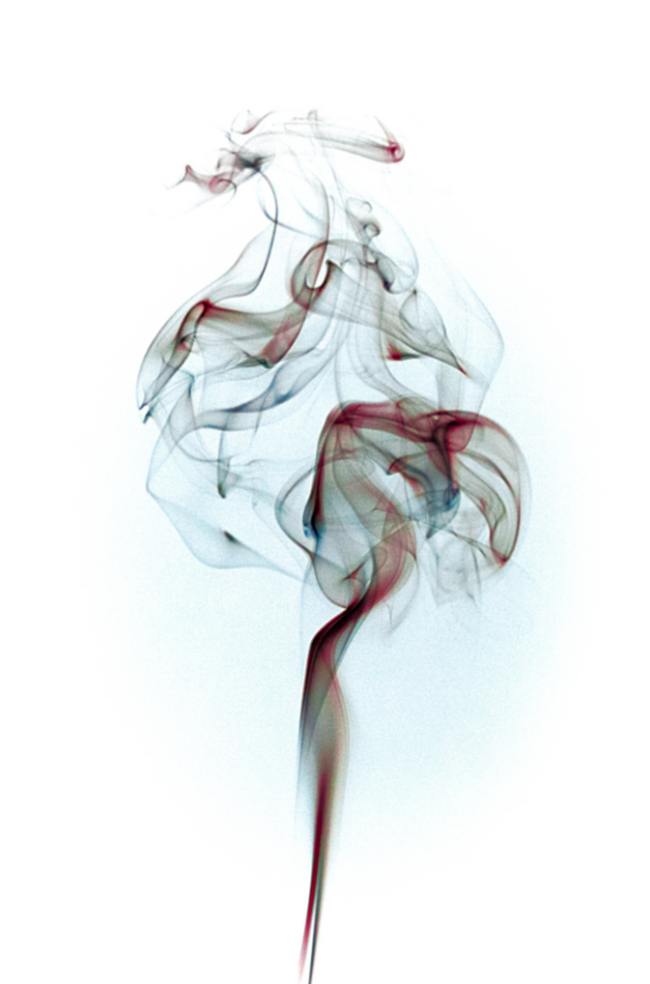
What about smoke on a white background? This is also an easy task to accomplish. All you need to do is inverse the image. You can do this by going to Image > Adjustments > Inverse. This will inverse all of the colors of the image, leaving you with a pure white background. If the background seems a little muddy, tweak the levels / curves again.

Photograph by Pascal Bovet

If you’re interested in colored smoke, create a new layer. Click on the gradient tool, and then create your own gradient with the colors you desire. You can then fill the layer with that gradient, and then set the layer mode to ‘multiply’. This should allow the gradient to come through only where the smoke is. You can further adjust the colors of the smoke by clicking on the gradient layer and tweaking the hue / saturation.

Getting Creative

Photograph by Martin Cauchon

When playing with smoke, the possibilities are endless! You are limited only by your own imagination, so play around with different colors, layers and even other subjects within the image! If you get tired of playing around with incense, colored smoke bombs are a cheap and fun way to add more smoke and color to your images. Keep shooting!

If you’d like to learn more about photographing smoke and other great photography techniques, enroll in a New York Film Academy photography workshop today!

Mixed Media Photographers To Follow

Since everyone and their dog have a digital camera these days, many art and commercial photographers are toying with different ways to express their creativity. While still staying true to their photographic background, many have chosen to expand their art to other mediums as well. This may include digital manipulation using a tablet, collaging on top of images, or painting directly on printed photographs. Whatever the medium, these photographers are bridging the gap between photography and other forms of artistic expression. While many photographers have been using this form of expression for decades, many new and upcoming photographers are jumping on the bandwagon and using new forms of technology to manipulate their photographs in a way that sets them apart from the rest.

Ben Hecht

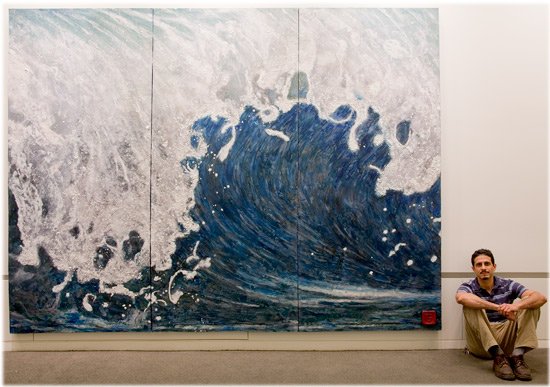
Ben Hecht is a truly unique mixed media artist, using original photographs and painting over them with handmade encaustic paints (made from beeswax). Instead of purchasing paints, Hecht creates all of his paints from scratch. He sources his beeswax locally, mixes it with dry pigments in his colors of choice, and adds crystallized resin to finish the process. He prints his photographs large scale (often over 40 inches on any side), and then manipulates them through the use of paint. He tends to play with photographs of the ocean, manipulating them by adding greens, blues and whites, creating a beautiful 3D piece of work that is part photograph and part painting.

Ben Hecht Photography

Photographer Ben Hecht

Jeff League

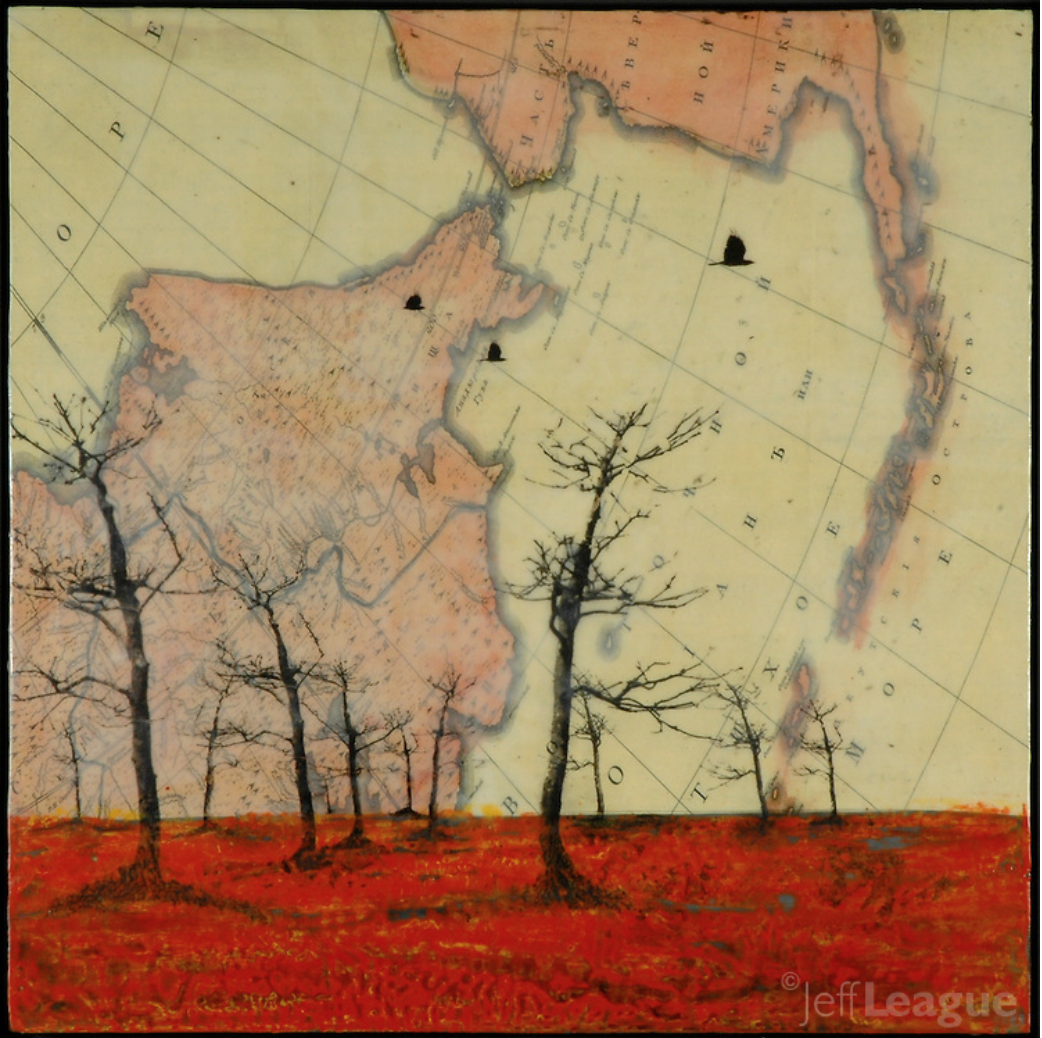
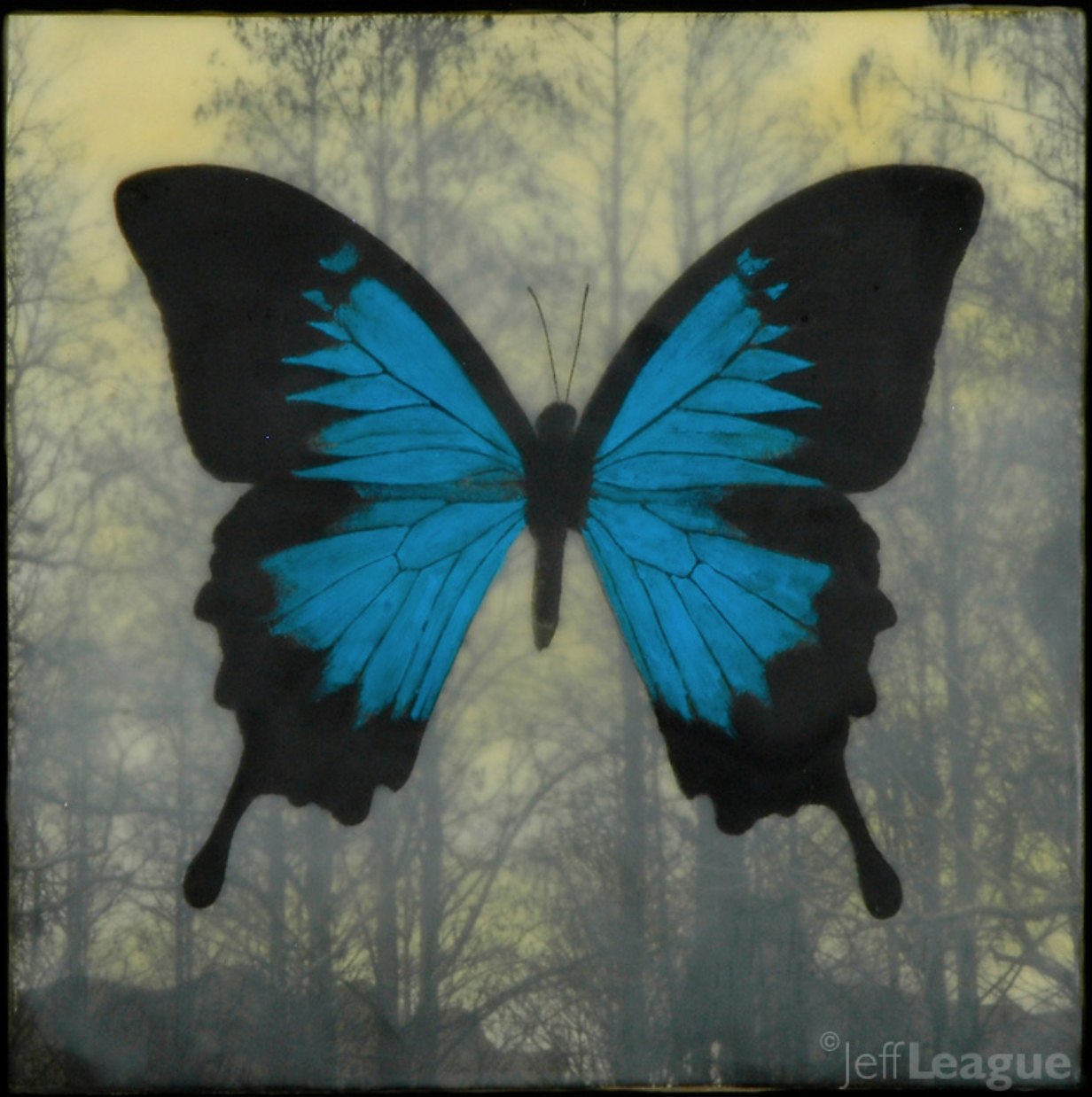
Jeff League works with the same medium as Ben Hecht (using encaustic paints, which are made from a mix of beeswax, resin, and sometimes pigment), although his final products are completely different. He began by primarily shooting Polaroids and black and white images, and has since begun to branch out and explore the possibilities of the combination of photographic prints and paints on canvas. His work focuses on the exploration of myth and nature, his choice of medium reflecting that (encaustic paint was originally used by ancient Greeks and Egyptians). He typically works from photo transfers, which he paints over in a sort of collage-like fashion.

Jeff League Photographer

Photographer Jeff League

­­Judith Golden

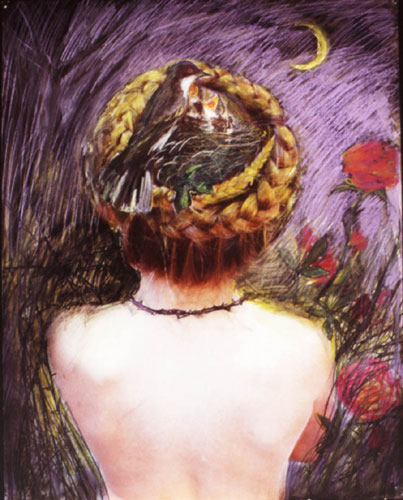
On Judith Golden’s website, it states that Golden “innovatively explores the intersections between reality and illusion by combining traditional techniques and contemporary cultural references, handwork and technology, rational discovery and uncharted flights of fancy”. Golden begins with a photograph, and then expands upon the mundane acts of everyday life by adding a bit of magic and mystery to the photograph by work of her own hand. Most of her series revolve around a particular subject or photograph, which she then manipulates in different ways in order to create many different works of art that form a cohesive whole.

Judith Golden Photography

Photography by Judith Golden

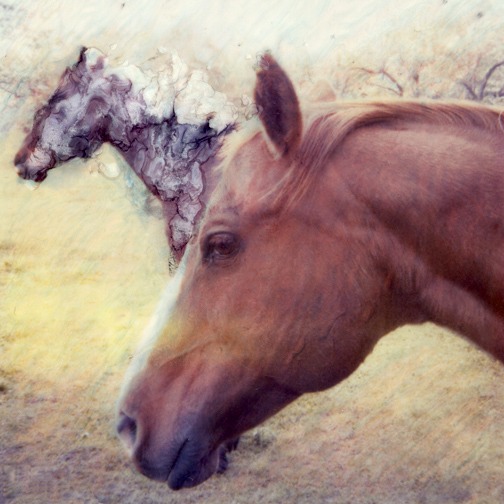
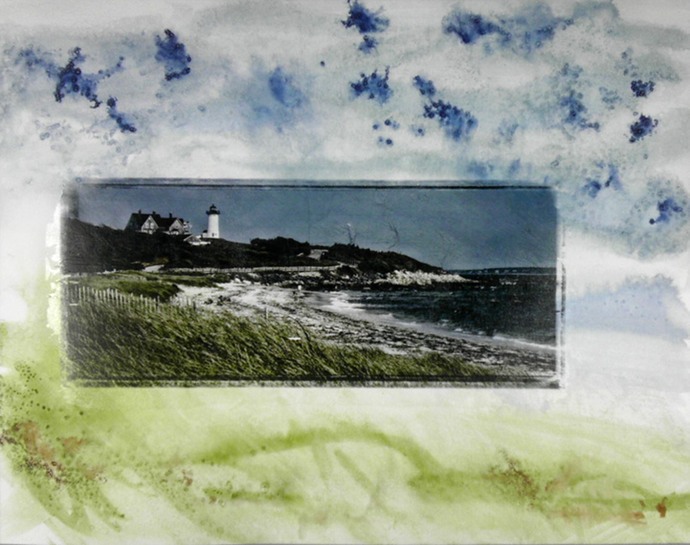
Jeane Vogel

Jeane Vogel is a mixed-media photographic artist who works with plenty of different mediums, ranging from Polaroids to watercolors to infrared images. In one series, Vogel takes Polaroids and paints or draws over them in order to accentuate particular parts of the image or create a more dreamlike scene. In another series, Vogel takes photographs and incorporates them into watercolor paintings. Sometimes the painting is an extension of the photograph itself, and sometimes it simply compliments the photograph. Although she works with many different mediums, she is known primarily for her photographic work.

Jeane Vogel Photograph

Photography by Jeane Vogel

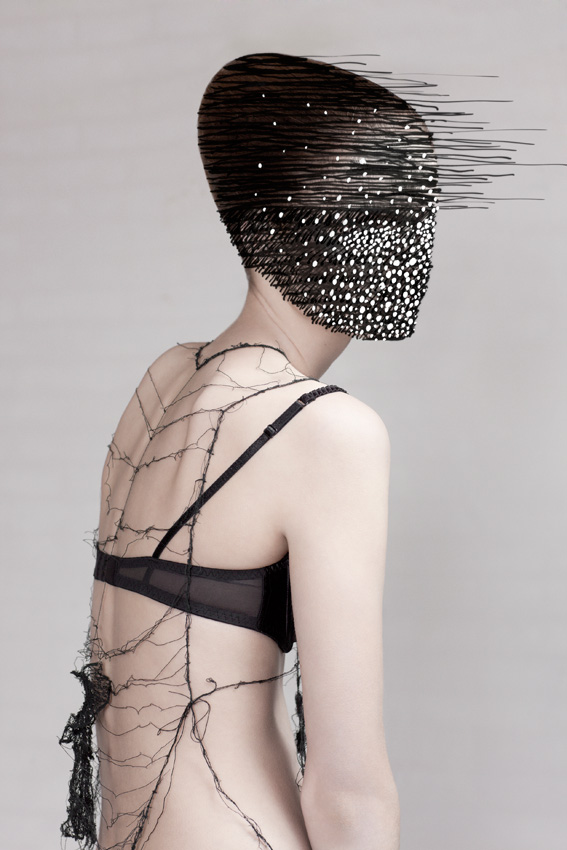
Amber Isabel

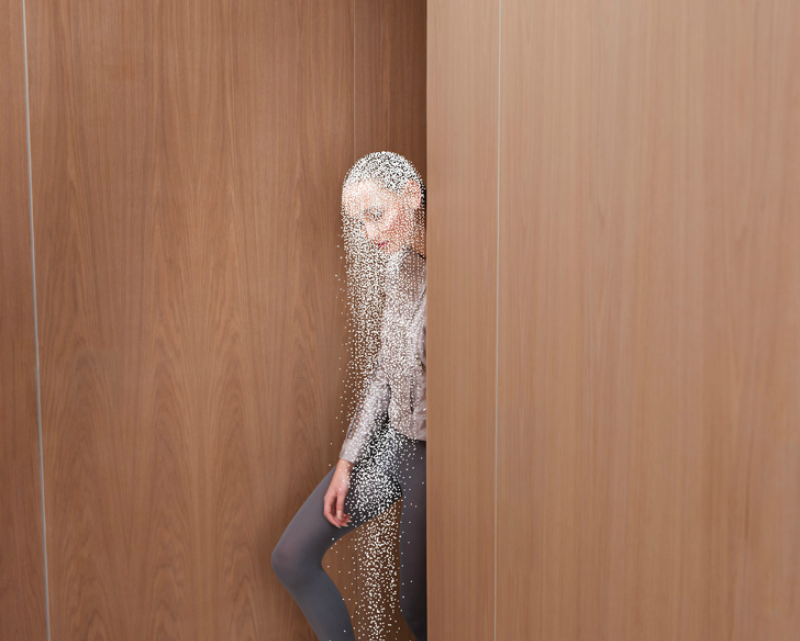
Amber Isabel is a Dutch photographer who is taking the mixed media photography world by storm. Her series entitled “The Things You Put into Your Head Are There Forever” depict beautiful ladies who seem both calm and trapped within themselves at the same time. Her use of mixed media makes viewers wonder exactly how she managed to create the photographs in this series, since it is not immediately apparent whether she altered them by hand or used digital means. Her work is very minimalist, which is in tune with how many photographers are working these days. In some ways, her photographs feel as though they could be taken straight out of a fashion magazine, although the way in which she alters them makes them have an air of darkness that cannot be shaken.

Amber Isabel Photograph

Photo by Amber Isabel

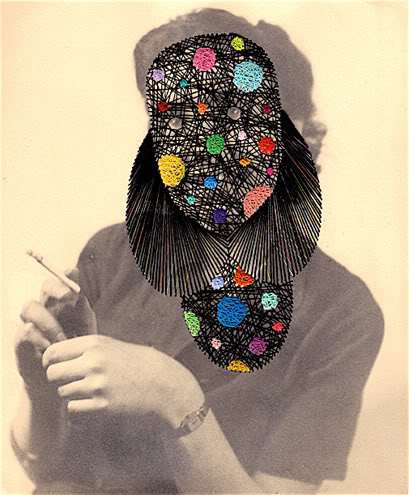
Maurizio Anzeri

Maurizio Anzeri works in a slightly different fashion than those above, opting to embroider over found vintage photographs instead of using his own. The end result is not so much about the photograph itself as it is about what the embroidery says about the subject. In the majority of his images, Anzeri all but completely covers and distorts the faces of the subjects in the photographs. What does this say about these people? Some may find that his embroidery brings the aura of these people to light, or that the embroidery has a sort of underlying psychological meaning. These embroideries can be seen as masks, or even extensions of the people themselves.

Maurizio Anzeri Photography

Photo by Maurizio Anzeri

While all of these photographers are very different from one another, they have all realized that sometimes meanings cannot be expressed through one medium alone. What a photograph says is not the same as what a painting of the same subject would say, and vice versa. Many artists tend to get stuck in a rut of working with the same medium over and over again, but these photographers have learned that they can say much more by expanding on their artistic practice and allowing different mediums to enter into their studio.