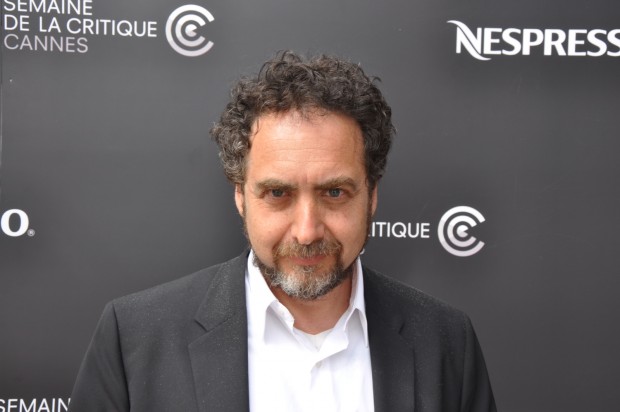
Director Marko Nabersnik attended an 8-week Film Workshop at New York Film Academy in 1996. His first film, Rooster’s Breakfast, won numerous national awards and became the biggest box office hit of the year in his native Slovenia. The film won the CBS Critics Award at the Southeast European Film Festival in Los Angeles and was also the official entry from Slovenia for the Academy Awards. He recently completed his second feature film, Shanghai Gypsy, which premiered at this year’s Cannes Film Market.
“My childhood dream was to be a filmmaker,” says Marko. “I read an article about NYFA in Cinema, the German film magazine. Two months later I flew to New York. This was [before] the internet, so the best way to get real information on the NYFA was to board a plane, cross the Atlantic, and go there to learn first-hand. After my first day, I knew already that NYFA was something special.”
“Surrounded by the inspiration and atmosphere of New York City,” he continues, “You pick up direct knowledge of filmmaking from prominent professors and guests within the film industry. The study process was intense. There were students all over the world. In my class alone, I interacted with future filmmakers from Italy, Spain, Japan, Germany, Slovenia, the United Kingdom, and the United States. We helped each other, explored the beauty of storytelling, and shared experiences about the unpredictability of shooting on original locations.”
“When I came back to Slovenia from New York, I was determined that filmmaking would be my destiny. Whenever I found myself in the dilemma of choosing the next step for my filmmaking, I would remember a quote from Adam Stoner, our directing class professor: ‘Filmmaking is constant exploring and learning. Don’t forget the fun and passion which is hidden in that process and don’t get lost only because you have more questions than answers!’ Today I am a professional filmmaker and a professor. I teach at our national film academy, the Academy for Theater, Radio, Film and Television (AGRFT) in Ljubljana, the capital city of Slovenia. I still recall the time I spent at NYFA and the endless inspiration the Academy gave me. NYFA gives you knowledge and builds your self-confidence.”
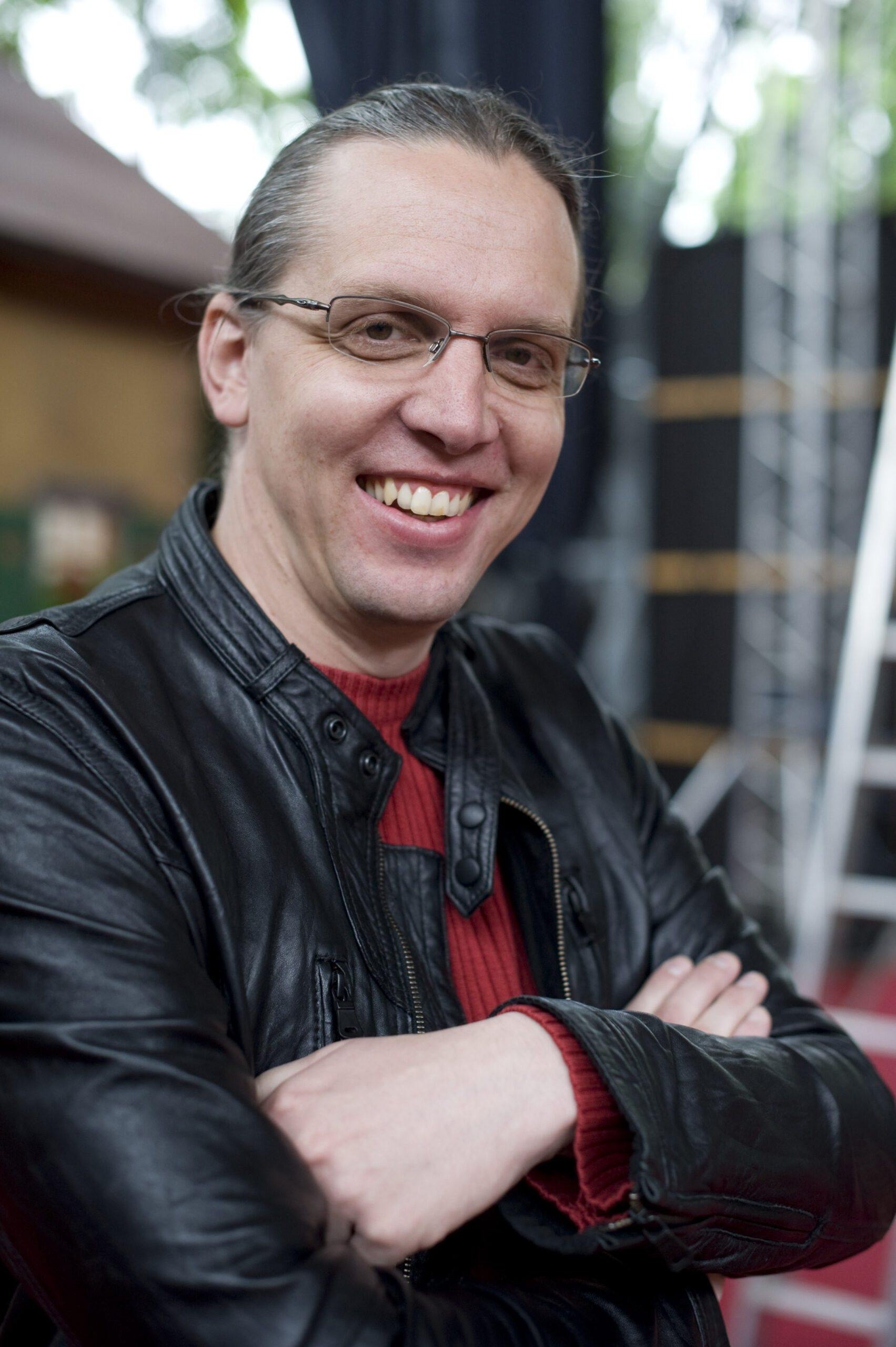
Marko at New York Film Academy in 1996Marko in 2012
James Lecesne is an Academy award winning filmmaker, teacher, and philanthropist. It’s been an exciting time for James with a Tony nomination for The Best Man and soon after that receiving the role of Dick Jensen opposite James Earl Jones and Angela Lansbury. However, we especially commend James on the release of his book The Letter Q, a passion project conceived to inspire the youth of America and to raise proceeds for The Trevor Project which he had founded in 1998. We had a chance to speak with James about his inspiration for the book and his teaching at the New York Film Academy. He also shared key insights into the craft of storytelling and how the industry landscape has changed for LGBTQ artists. Don’t forget to get connected with Mr. Lecesne on Twitter and learn about his impact in the arts.
What was the inspiration for The Letter Q? You’ve already contributed so much to LGBTQ youth, and this book seems to be a continuation of your work with the Trevor Project.
Two years ago Dan Savage launched the phenomenally successful It Gets Better Project as a way of spreading the word to young LGBT and Questioning young people that the Trevor Project is there for them 24/7. As the only nationwide suicide prevention and crisis intervention helpline for LGBTQ youth, our organization receives over 30,000 calls a year. Not all of them are rescue calls, but each call establishes a life-to-life connection with a young person who is asking important questions. We provide an ear to listen and the encouragement to be who you are. The idea for the The Letter Q came from Sarah Moon, my co-editor. When she was a teenager, she was lucky enough to be surrounded by adults who shared their stories and their wisdom with her – sometimes in the form of letters, and as she says, “It didn’t seem quite fair to me that I should have been the only teenager to get wonderful letters to carry around.” Soon after coming up with the idea, Sarah approached me about not only writing a letter to my younger self, but also donating a portion of the royalties from the sale of the book to the Trevor Project. Together we compiled a wish-list of authors and began to write to them, ask them, stalk them. The book seemed to fit so perfectly with my own desire around that time to provide young people with tools to help them get through their difficult years. We had been exploring ways to help young people “make it better” right now. And the minute Sarah proposed the idea for the book, I knew we were on our way.
Has your teaching at NYFA helped inspire your work in some way? Reading the bio on your website, teaching plays a strong role in your career. What are the most important lessons you impart to your students who aspire to make it in film and theatre industries? Have students ever surprised you with their insights in the art and craft of telling stories?
Teaching is a way to not only give back some of what I’ve learned, but also a way for me to continue learning about story. Storytelling, in any form, is hard work; it requires honesty, courage, craft and above all determination. But it can also be a mysterious and mystical experience, a means to enlarge and enlighten not only the storyteller, but the audience as well. For each of us, it happens differently, the idea comes in the form of a hunch, a worry, an inkling a fear, or sometimes as a fully formed brainstorm; but however it happens it always arises out of something that we happen to believe. We might not be able to articulate what it is exactly, but something in us knows, something in us feels for a truth that we need to prove beyond a shadow of a doubt.
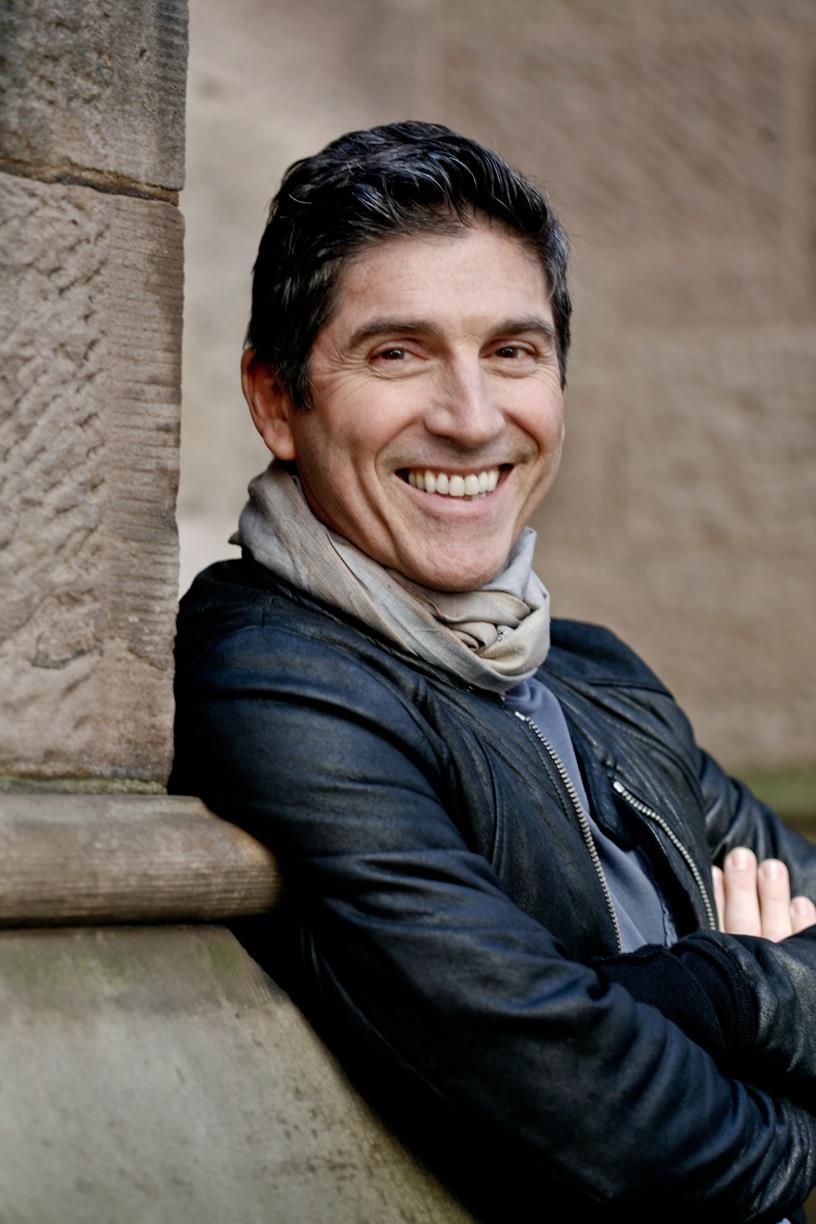
James as featured in the New Yorker.
Stories are the blueprints of our passions told in code, the urge of something within our selves that is itching for resolve, the reliable and readable map of our beliefs. Leif Finkel, a professor of bioengineering at UPenn, once wrote: “Our cortex makes up stories about the world and softly hums them to us to keep us from getting scared at night.” I’m no professor of bioengineering, but I heartily agree. Of course, a good story does more than that. Stories hum not only for ourselves, but for our audience as well; their song transforms the muddled and often conflicted experiences of living in this troubled world into something valuable and enduring for us all; they are the means by which we can pass our wisdom along to future generations. The results are always surprising, or at least they should be.
What are your thoughts on representation in the media regarding the struggles that independent filmmakers face as sexual minorities? How do you see the industry landscape for LGBTQ artists? Has it changed at all since you started as a young artist compared to the present day?
When I was a teenager, the world was a very different place. I grew up without ever hearing the word homosexual spoken, I didn’t know a single gay person, there were no role models to whom I could look for encouragement or guidance. One of the great accomplishments of the LGBTQ community is this idea that we are not just here for ourselves. We have a responsibility to pass along our history and our pride to the next generation. Young people who are struggling and coming up in the world should not have to figure this out by themselves. Of course, there is still a ways to go in terms of achieving equality. Look to places like Uganda, South Africa, Russia, and Iran. Or right here at home to see what happens to certain people when they express themselves fully. But as Kate Millet, the revolutionary feminist recently pointed out —- gays and lesbians have achieved so much in a matter of mere decades, while women have been struggling for centuries to change things. To hear the President of the United States declare that the love of gays and lesbians is equal to that of their fellow (heterosexual) citizens, is certainly proof to me that the world is changing. More change is possible — and needed. And I believe that by encouraging people to tell their stories, teaching them how to do it in the most exciting and engaging way, it will make for a better world.
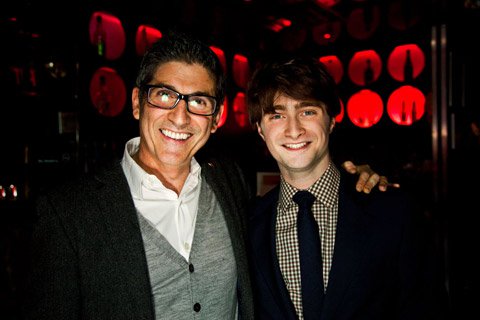
James with Daniel Radcliffe for The Trevor Project.
To learn more about the Documentary Filmmaking program at the New York Film Academy, click here.
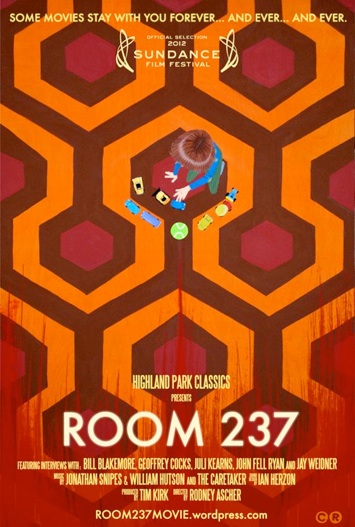
Director and NYFA Editing Instructor Rodney Ascher recently returned from the Cannes Film Festival where his first feature film, Room 237, was one of only two American films in the Directors’ Fortnight. His documentary explores numerous theories about Stanley Kubrick’s 1980 film, The Shining, and its hidden meanings. The film premiered at this year’s Sundance Film Festival, and received glowing reviews from the major press. Here’s a roundup.
New York Times examined the documentary and called it an “intriguing” look at a growing subculture of Kubrick fans which has developed over the years.
“One of the great movies about movies…” – Variety.
On his blog, New York Magazine film critic Bilge Ebiri chose Room 237 as his Sundance pick. “The film expresses, better than any movie I can think of right now, the feeling of being lost inside the world of a film, and by extension being lost inside the world of film.”
“A brilliant work of alternative film criticism – and critique of criticism.” – LA Weekly.
“Kubrick was my first favorite filmmaker,” says Ascher, “and one whose work has stuck with me throughout my life – The Shining in particular. The first time I saw it, I managed to sit through about 10 minutes. The music in particular filled me with an overwhelming sense of dread and doom that was more than I could take. It soon became one of my favorites.”
Ascher says the idea for the film came after a chance Facebook posting. “My friend, Tim Kirk, who went on to become a producer of the film, posted an analysis of [The Shining] on my Facebook page. I became interested in the phenomenon — lots of people bringing up radical ideas. I thought we could make a pretty comprehensive field guide to what was in the film. It soon became clear that we could only get the tip of the iceberg.” Room 237 shares theories about The Shining from five people, told through voice over, film clips, animations, and dramatic reenactments. Ascher describes it as “not just a demonstration about how it has captured people’s imaginations, but also how people react to movies, and literature, and the arts in general.”
The film was chosen to screen as part of the Director’s Fortnight at Cannes alongside Michel Gondry’s The We and the I. Room 237 is being distributed by IFC in North America and Wild Bunch in France. Watch for a theatrical release later this year. “It’s very exciting,” says Ascher, “I’d been used to being sort of an outcast with short films, screening to more … select groups. It was great. The screenings were packed, we were in a gigantic theater, got great press … I’m sure anyone would be excited.”
See yourself premiering your movie at Sundance, screening it at Cannes, and getting fawned over by critics? Then look into our school and decide if it’s the right path for you.
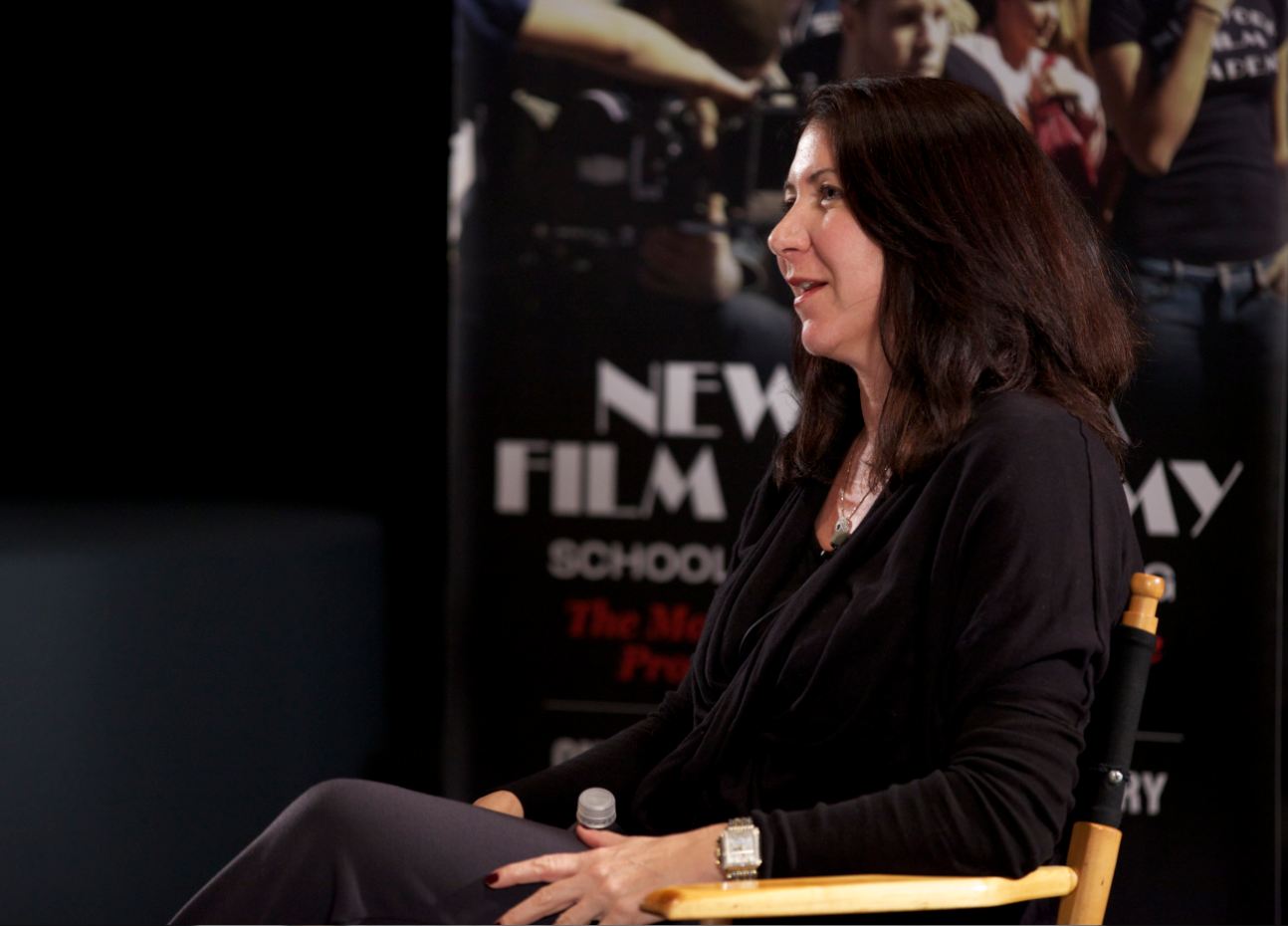
Casting director Nancy Nayor recently visited students at New York Film Academy following a screening of The Grudge. She began her casting career off-Broadway at Manhattan Theatre Club before moving to Los Angeles to become President of Feature Film Casting for Universal Studios, and working on films for Steven Spielberg, Oliver Stone, Spike Lee, Ron Howard, and John Hughes. “The first year was kind of a shock, to have that position at 24,” she laughed. She spent 14 years there before opening her own freelance casting company. Since then, she has cast movies including Road Trip, The Whole Nine Yards, Exorcism of Emily Rose, When a Stranger Calls, and Scream 4.
Nayor spoke about the love of her job, saying, “It’s great because you’re around actors all the time, and you get to think like an actor, and you get to read with the actors, and you’re in the arena of filmmaking or theater, and it’s just fantastic.”
Following a brief interview, Nayor answered questions from students, offering lots of helpful advice. “You need to have footage of yourself and you have to be able to email links,” she said. “It’s great to make your own reel. Tape your own scenes or monologues. You don’t need to spend a lot of money. I just want to see talent. If you’re constantly taping yourself, and the camera becomes your friend, then when you’re in the audition room you’re not automatically nervous. It helps you go into an audition room and be relaxed.”
Do you have other helpful tips or advice for auditions? Share them with us on Facebookand Twitter!
Sabine Sighicelli is the Chair of Documentary Filmmaking at the New York Film Academy, Universal Studios campus. A documentary writer, producer, director, and associate producer, she has worked in the documentary field for 12 years for National Geographic Television, AMC, Foundation for World Arts, UCLA Intercultural Center, Women Make Movies, Museum of Jewish Heritage, and Home Planet Productions. Her award-winning documentary The Passionate Life of a Father Painter aired on PBS/KCET in 2001. Her film about composer Robert Een, Be Warned! is featured in the DVD collection of the Foundation for World Arts. She recently completed principal photography on her feature documentary “Breaking in Two, sponsored by Women Make Movies.
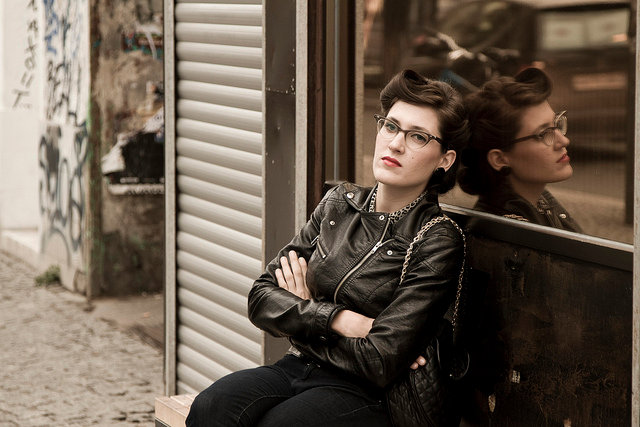
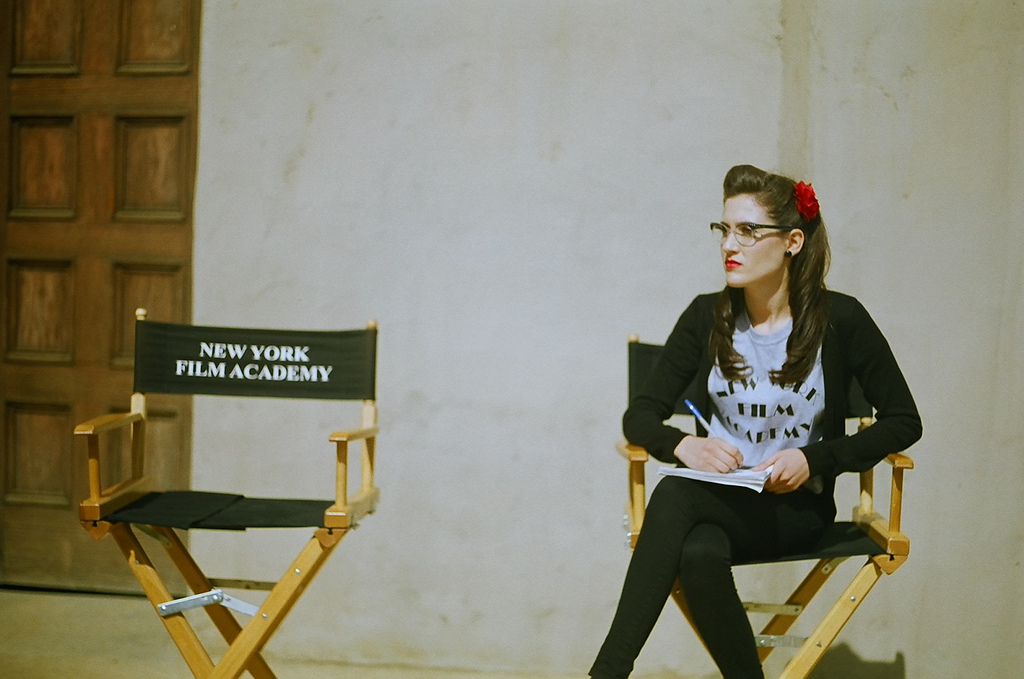
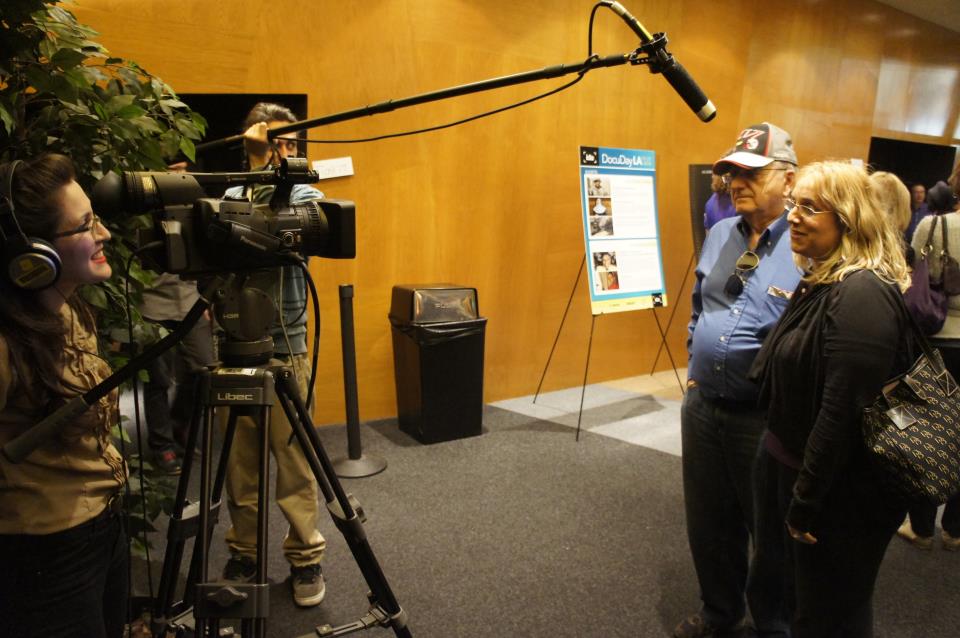
Rocio Mesa determinedly pushes her cart packed with equipment down the New York Film Academy hallway. Dressed in her usual 50’s attire and cat eye glasses, she is heading to West Hollywood, where she will film Ondi Timoner (Sundance-winning director of Dig! and We Live in Public) and Marina Zenovich (Director of Roman Polanski: Wanted and Desired, among many others) at the International Documentary Association Doc U event. Rocio graduated from the One Year Documentary Filmmaking program in December 2011. “My parents were afraid about my future in the US because I was doing really well in Spain. They didn’t want me to be working as a waitress just to reach the American dream,” she confesses. But waitressing doesn’t seem to be in store for Rocio in this lifetime.
I introduced her to Amy at the International Documentary Association (IDA) – one of the most prestigious documentary organizations – and soon after, Amy called me to tell me she and everyone at the IDA were so impressed with Rocio that they had decided to hire her as the producer, director, and editor of the Doc U series for the IDA’s Youtube Channel and archives. These events bring together some of the most highly sought-out people in the non-fiction industry. She also manages the department in charge of taping all IDA-related events. This is no surprise to me or to Rocio’s instructors, since she’s always taken the bull by the horns, and accomplished more in a year than most students are able to do in two!
Rocio grew up in the Spanish town of Granada in Andalusia. She received a BA in Communication from the University of Seville in 2005, then went on to test her skills on several documentaries, commercials, and TV shows before landing a job on one of the most acclaimed TV shows in Andalusia, about traditional Spanish folk music. Her career was off to a good start, yet her real dream was documentary storytelling.
She came to the New York Film Academy thanks to the Talentia Grant – a grant given exclusively to promising professionals by the Government of Andalusia. It was immediately clear in the One Year program, that Rocio was a high-performing student. From her character film, Almon Loos, the Rocking Barber, to her social issue documentary, Traffic in LA Sucks! (selected for the Burbank International Film Festival) to her One Year Final Documentary, Orensanz, the portrait of an illustrious Spanish artist who lives in a synagogue, Rocio has stamped every film with her unique vision.,Right after graduation, she was off and running: an internship at Interloper Films, Ondi Timoner’s production company; a job at the IDA; freelance editing gigs with various clients; directing gigs for Meltdown Comics and the web series Authentic Los Angeles… If the project stirs her interest, she will take it on.
Last but not least, she’s currently our new favorite editor in the post production department, where, among other things, she has completed the editing of the documentary student reel, and a behind-the-scenes of the Young Storytellers Foundation’s collaboration with the New York Film Academy teen programs. Rocio will be with us until she returns to her native Spain. We cherish every moment we still have with her!
To learn more about the Documentary Filmmaking program, click here.
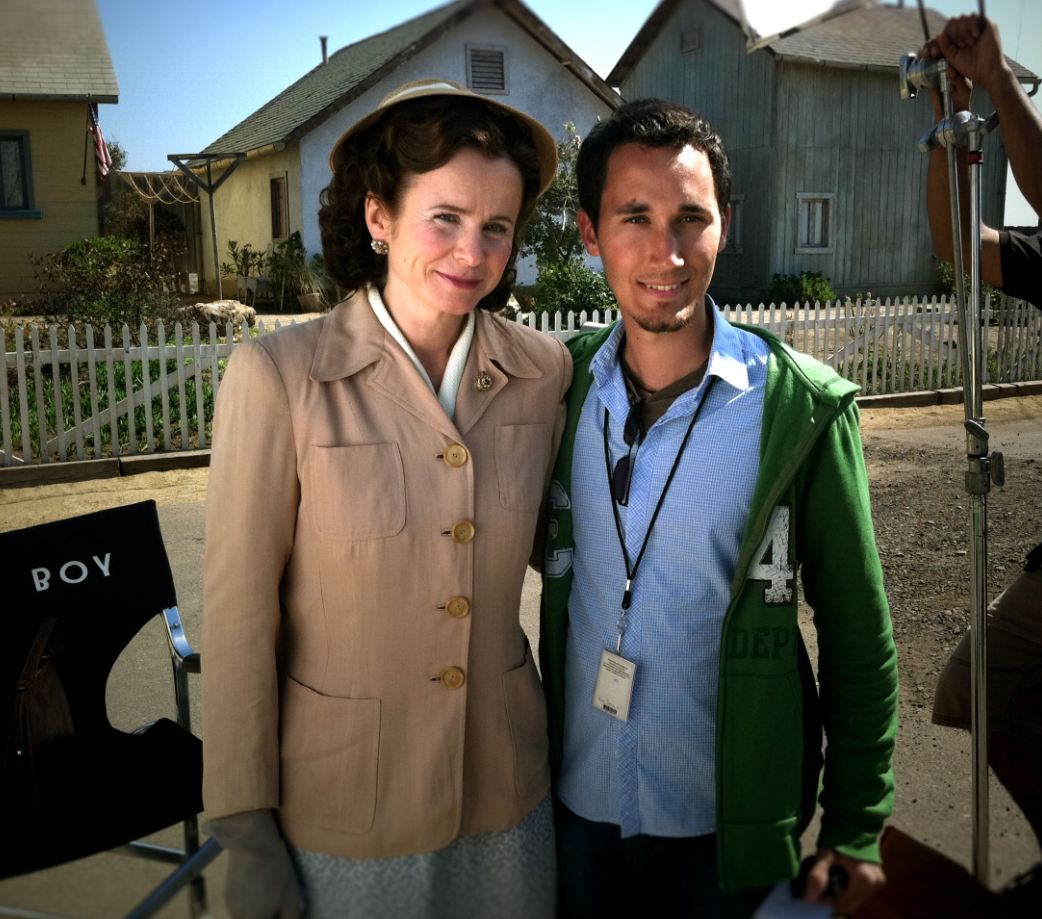
Oscar-nominated actress Emily Watson with Pietro Schito on the set of Little Boy
“Ever since I learned what screenwriting was, I have always wanted to do that,” explains screenwriter Pietro Schito. “That’s the most important thing for any movie. That is where the message is.” While studying in his native Milan, Pietro’s first short film, Horror Kitchen, won a national contest at the Future Film Festival in Bologna. Shortly after, he left for Mexico to work for CSPC Filming the Ineffable, an international project working with young filmmakers. He was about ready to return to Italy when he received a scholarship from CSPC.
Pietro decided to attend a 1-Year Screenwriting course at the Universal Studios campus in 2010. “The program was great and all the instructors were too,” he says. “I loved it. They push you to the limit. It was tough but worth it. The workshops and teachers are hands-on and thought provoking. [The instructors] have a real connection with the students. If we had problems or questions they were always available for consultation.”
After graduating from New York Film Academy, Pietro found steady work as a script consultant. He also landed an internship with Metanoia Films. “One day, having lunch with the producer, I got to pitch my movie,” he explained. He shared his project 98.Vocho, a story he had developed while attending New York Film Academy. “As soon as he heard the story, he was really interested and asked if I was ready to pitch to directors. I got to pitch it several times in the Business of Screenwriting class, so I had some practice. They took me to [director] Alejandro Monteverde. He said I had an original plot, solid characters and structure. He also told me that my style of writing reminded him about Life is Beautiful, and I was really happy to hear that because Life is Beautiful is the movie that inspired me to become a filmmaker.” Pietro worked on a 20-page treatment and pitched it to another producer at Metanoia. The producer said, “If everything is like this, we’re going to produce your movie.” They asked him to stay on with the company to develop the project. But Pietro decided to follow his heart, and went back to Mexico to get married. “I thought I would lose the opportunity of my life,” he says.
After returning to Mexico, Pietro wrote the pilot for an animated TV series called Maria Bambina. He also worked for a Spanish television series called Mi familia y yo, and has an animated feature called Lucha Rooster in development. He found out that Metanoia Films was working on a big-budget period film called Little Boy, andthat they would be shooting in Baja California. Pietro was brought on as a writers’ assistant. He soon found himself assisting the director as well. Then he was asked to film and direct a making-of documentary to be featured on the Blu-ray release.
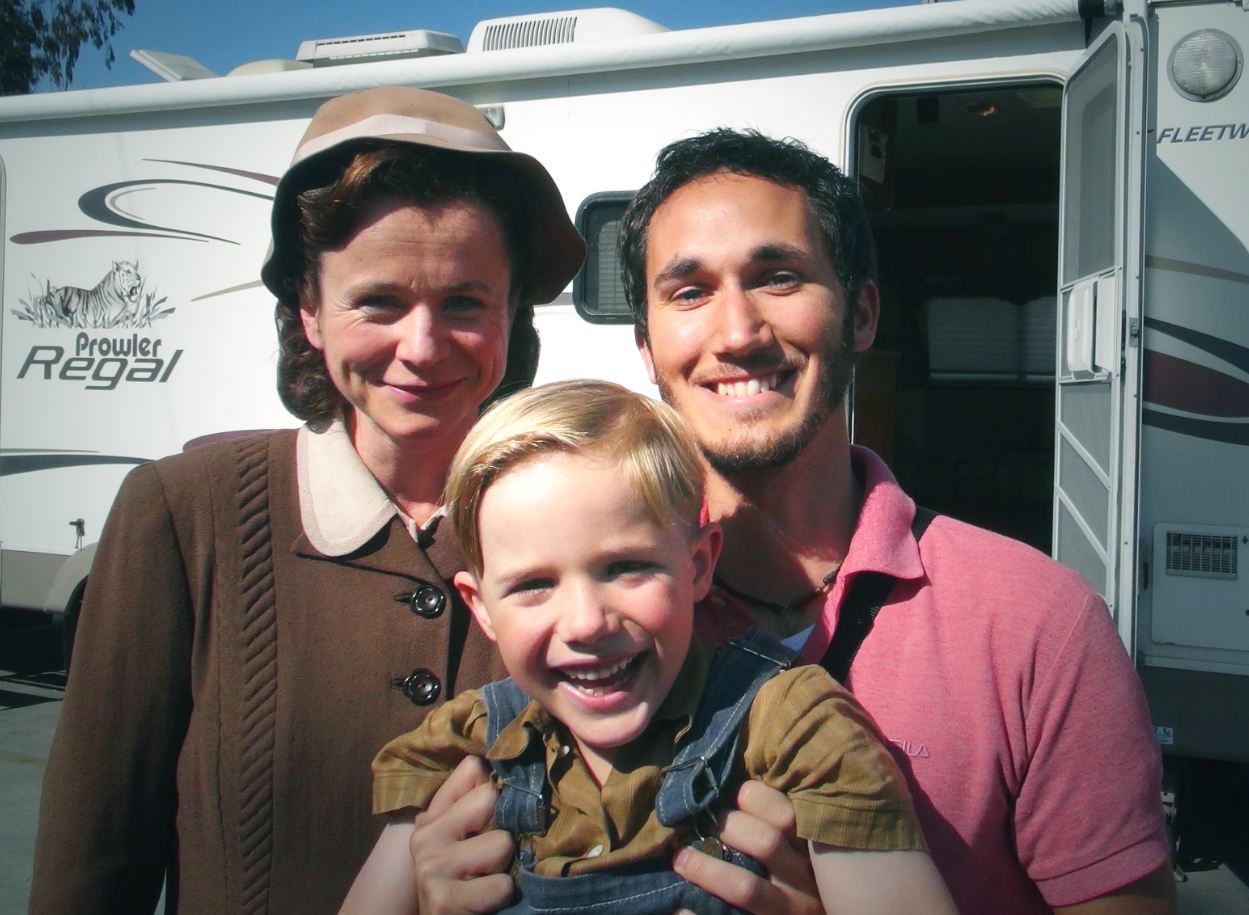
Inspired by the paintings of Norman Rockwell, Little Boy is a period piece about a boy who believes he can bring his father back from World War II. It stars Sean Astin, Tom Wilkinson, Kevin James, Emily Watson, and Michael Rapaport. “It was an amazing experience, being there and seeing the process,” says Pietro.”They were really happy about the work I did, helping with outlines and reviewing scripts and storyboards.”
Since wrapping the film, Pietro has been offered a job with Metanoia Films. “They invited me here for a staff position in writing and development,” he says. “I’m really happy being back in LA with that company. I like the way they think and organize their team. It’s a huge accomplishment, and it’s just the beginning. They have a lot of projects in development.”
Pietro offers the following advice for students thinking about New York Film Academy: “Have an idea. Come here with an idea. Work as much as you can. The story you have in your heart: cultivate it. And don’t be discouraged by Hollywood.”
Emily Watson and Pietro Schito with Jakob Salvati, star of Little Boy
Pietro Schito working with director Alejandro Monteverde and producer Eduardo Verastegui on the set of Little Boy
David Egozi was a college student visiting New York from his hometown of Miami, Florida. One weekend, he saw a magazine advertisement about a certain film school. As the son of a news broadcaster, David grew up surrounded by cameras and lighting. A chip off the block, as they say, since he visited the school and quickly transferred to the New York Film Academy. David’s transition from liberal arts to the technical training provided at NYFA seems to be a seamless one. The most important lesson he has learned here, however, is something beyond skill. “[Department Chair] Claude really pushes us. It’s persistence that matters. It’s commitment. Always giving 110% percent.”
A remarkably thoughtful young man, David admitted to having difficulty structuring his thoughts. “My head’s always been cluttered. Filmmaking allows me to organize my ideas and my feelings and turn them into something tangible.” He pursued filmmaking after working on creating videos for bars and clubs who were trying to promote their parties. After beginning his studies, however, he understood that the making of art had more to do than marketing it to an audience. Studying narrative helped him to appreciate the internal process of thought and emotion.
“We shot in Super 35mm. Not digital.” – Nicola Raggi
Speaking to Nicola Raggi also reveals a filmmaking student who recounts a growing experience. Originally from Sienna University in Italy, Nicola felt his education wasn’t teaching him anything. After winning a Bernardo Bertolucci scholarship for the Cinematography program, he decided to take the plunge into New York City. “I learned more in one year [at NYFA] than I did in five years at Sienna,” he said. Learning both digital and film, Nicola feels his skillset is finally complete. Because of the hands-on nature of our curriculum, Nicola quickly realized “the harsh reality of filmmaking”. The hours of long and brutal. Tensions can run high. As he said, “You learn how to behave on set. Working with the cast and crew can be difficult without sleep or much food.”
Nicola and David both learned to solve specific types of problems. They learned to adapt and improvise in response to unexpected situations. The ability to think creatively is highly desirable in today’s rapidly changing world. However, can we safely say that many of America’s classrooms focus on helping students develop as creative thinkers? Arts education teaches young people today to create and control. There is a fundamental difference between being consumers of the mainstream media and being producers able to share their creations in order to influence minds and shape how a society behaves. If the Arab Spring and the Occupy movement is any indication, today’s students are growing up in a socially connected world which is very different from previous generations. Modern times have increasingly deemed the exchange of information as pivotal to everyday life, however, educators now are recognizing that information is only useful when it is transformed into knowledge.
What David learned from the technical knowledge and creative execution was the ability to develop his own ideas, test them, discover boundaries, experiment, receive input, and generate newer ideas based on the feedback he received. Students like Nicola learned to work under stress, collaboratively and creatively, for long periods of time. This is socio-emotional learning. There is evidence that social and emotional capacities are just as brain-based as mathematical and linguistic competencies. Education should have both pedagogic and systemic dimensions. It is statistically proven that the skill-set which socio-emotional education such as the arts can lead to higher standardized test scores. Schools should promote socio-emotional competencies because it is a holistic approach to comprehensively educating our young people. It provides the skill-set necessary to creatively address today’s problems. If anything, a creative curriculum empowers students to believe they’re equipped to do anything they truly believe in.
After graduation, Nicola continued work as a cinematographer with his production company The Loading Lab. He is the Director of Photography for the commercial being produced by CenterLight Health System, which currently ranks among the nation’s leading resources for long term residential and community-based healthcare. This commercial, which is also directed by NYFA alumnus Dmytro Maliuga, will air in four different languages on local television stations. David is currently finishing up his studies and expressed confidence in his newfound ability. “My dad hired a film crew for his business recently. For casting, directing, editing… I was like, ‘Why?’ I can do it. All of it. I learned everything.”
To learn more about our filmmaking programs, click here.
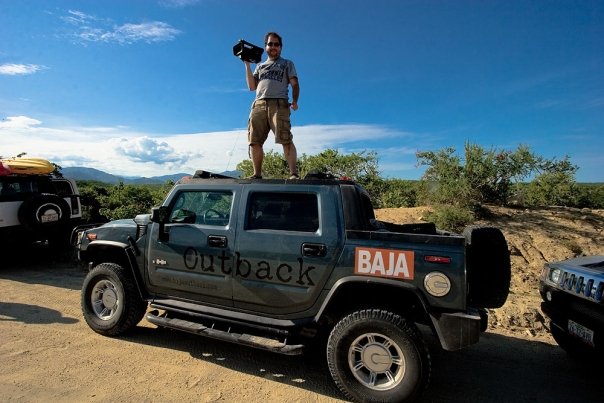
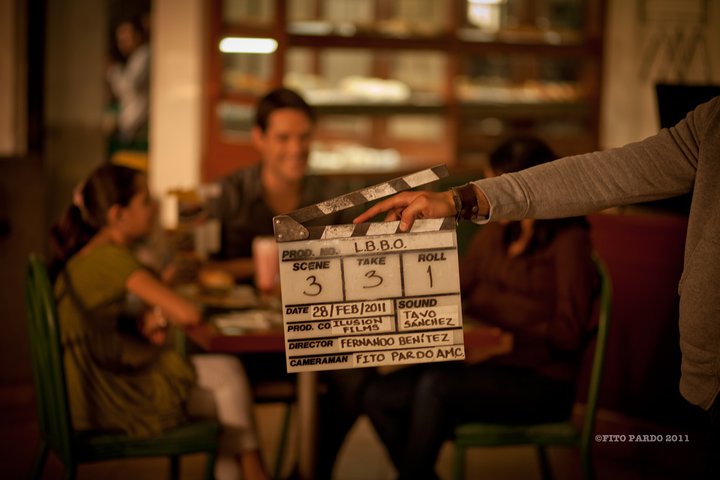
Fito Pardo graduated from New York Film Academy in the late 90’s. Since then, he has gone on to direct short films and music videos, has worked as cinematographer on over 30 projects, and has found success as a photographer for publications worldwide, including Marie Claire, Vogue Japan, and National Geographic.
Though he had loved films since his youth, Fito got little support when he expressed an interest in learning filmmaking. At his father’s insistence, he postponed his dreams of studying filmmaking. “I studied Administration for probably 6 months in one of the best universities in Mexico, and after the first 2 months I just knew it wasn’t for me,” he says. Eventually Fito started writing to film schools for information. After winning a partial scholarship to New York Film Academy, Fito was on his way to Manhattan. “I studied in NYFA between 1995 and 1997,” he says.
“My experience was amazing. I had no idea how to use a film camera, so the workshops helped me understand what I was getting myself into…. At NYFA I learned how to write a script, how to be a cinematographer, how to be a producer, and how to understand all aspects of film. After NYFA, I worked with some Mexican production companies, opened my own production company called La Alcachofa Films, and started directing some interesting videos in Mexico. I directed some music videos… and did a couple of commercials for BBDO, Lowe & Partners, and some other agencies.”
Fito shot his first feature film, El Fuego Inolvidable, last year. The controversial project explores the complicated state of politics in Mexico. The film has played at festivals and college campuses, with great responses from audiences. They are currently working on a distribution deal.
“I am still in pursuit of more goals,” says Fito. “When I was working for National Geographic, I knew I accomplished one of my goals, but knew that it wasn’t it. My first feature film got the award of Best Mexican Film at the 2011 Oaxaca Film Festival, but I want more. Since I was kid, I always wanted to move people…. I have a condition. I am a stutterer, and I have been watching the world with different eyes…. All my life I have been limited in expressing my mind. Sometimes people don’t get it and just can’t wait for me to talk, so they go away. I think I show the way I see the world through my eyes, without my mouth. I believe this is what moves me: To show the world what my mind sees.”
To learn more about our filmmaking program, click here.
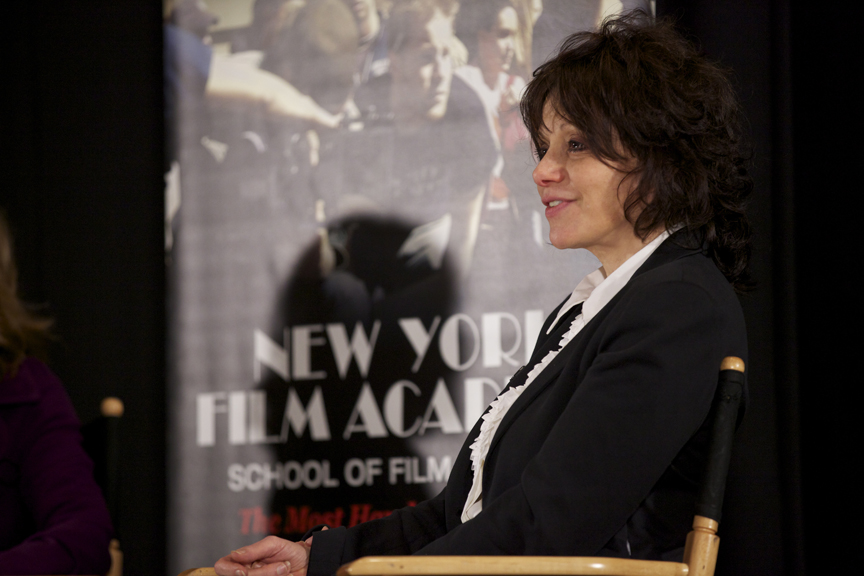
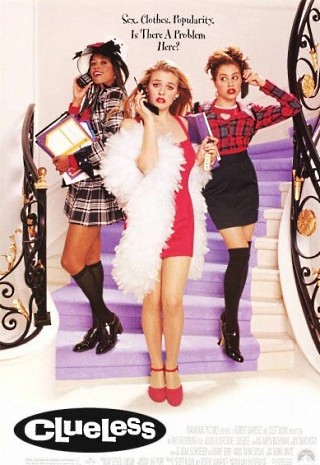
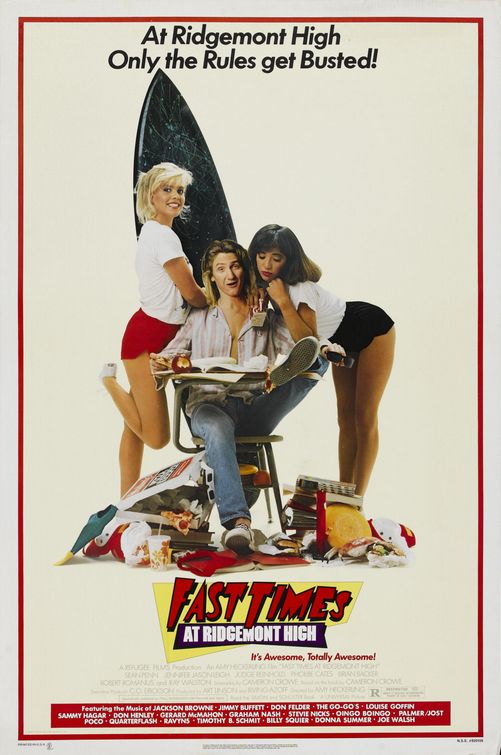
Amy Heckerling visited students at the New York Film Academy for a screening of her hit film Clueless. The writer/director garnered both critical praise and impressive box office success with movies including Fast Times at Ridgemont High, Look Who’s Talking, andNational Lampoon’s European Vacation.
Heckerling became a successful director at a time when female directors were a novelty. Asked about what it was like being a woman in Hollywood in the 80’s, she responded, “I’m psychotic. I don’t care how the world works. I do what I want to do…. If you want to do it, you can’t listen to what the world is telling you. You do what you want. If I tell you what I feel truthfully, there will be a [ton] of people who respond to that.”
When asked about Clueless, Heckerling recalled, “They told me, ‘We want to do something about the cool kids,’ and I thought, ‘Well that sounds stupid… But what if the cool kids were nice.’ I remembered Emma, which I read in college. I always wanted to do something where the character was just happy. It seemed so strange to me. Then I got into her head and it wasn’t so strange.” The script came soon after, but it was initially met with rejection by a number of studios. “Everyone will try to say you can’t do something,” she said, “but there’s only one person who has to believe in you, and that’s you…. You may have to find another door to take you there. Take your shot. Be aggressive. As long as you believe in you, you’ll find others to believe in you.”
Do you have the same passion for directing as Amy? Learn directing at the New York Film Academy!
Manage Cookie Consent
This website uses cookies to improve user experience. By using our website, you consent to all cookies in accordance with our Cookie Policy.
Functional
Always active
The technical storage or access is strictly necessary for the legitimate purpose of enabling the use of a specific service explicitly requested by the subscriber or user, or for the sole purpose of carrying out the transmission of a communication over an electronic communications network.
Preferences
The technical storage or access is necessary for the legitimate purpose of storing preferences that are not requested by the subscriber or user.
Statistics
The technical storage or access that is used exclusively for statistical purposes.The technical storage or access that is used exclusively for anonymous statistical purposes. Without a subpoena, voluntary compliance on the part of your Internet Service Provider, or additional records from a third party, information stored or retrieved for this purpose alone cannot usually be used to identify you.
Marketing
The technical storage or access is required to create user profiles to send advertising, or to track the user on a website or across several websites for similar marketing purposes.
To provide the best experiences, we use technologies like cookies to store and/or access device information. Consenting to these technologies will allow us to process data such as browsing behavior or unique IDs on this site. Not consenting or withdrawing consent, may adversely affect certain features and functions.
Functional
Always active
The technical storage or access is strictly necessary for the legitimate purpose of enabling the use of a specific service explicitly requested by the subscriber or user, or for the sole purpose of carrying out the transmission of a communication over an electronic communications network.
Preferences
The technical storage or access is necessary for the legitimate purpose of storing preferences that are not requested by the subscriber or user.
Statistics
The technical storage or access that is used exclusively for statistical purposes.The technical storage or access that is used exclusively for anonymous statistical purposes. Without a subpoena, voluntary compliance on the part of your Internet Service Provider, or additional records from a third party, information stored or retrieved for this purpose alone cannot usually be used to identify you.
Marketing
The technical storage or access is required to create user profiles to send advertising, or to track the user on a website or across several websites for similar marketing purposes.
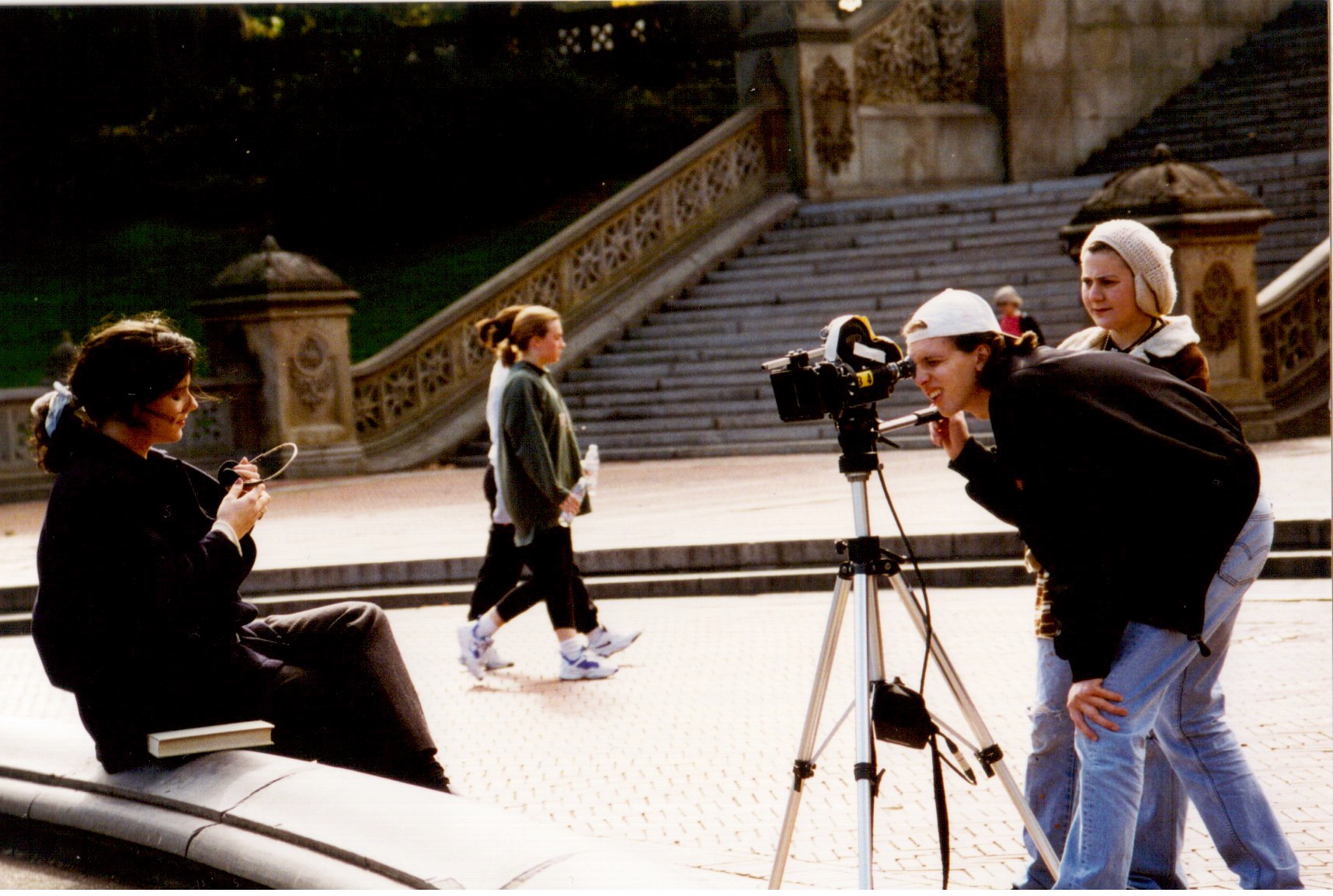 Director Marko Nabersnik attended an 8-week Film Workshop at New York Film Academy in 1996. His first film, Rooster’s Breakfast, won numerous national awards and became the biggest box office hit of the year in his native Slovenia. The film won the CBS Critics Award at the Southeast European Film Festival in Los Angeles and was also the official entry from Slovenia for the Academy Awards. He recently completed his second feature film, Shanghai Gypsy, which premiered at this year’s Cannes Film Market.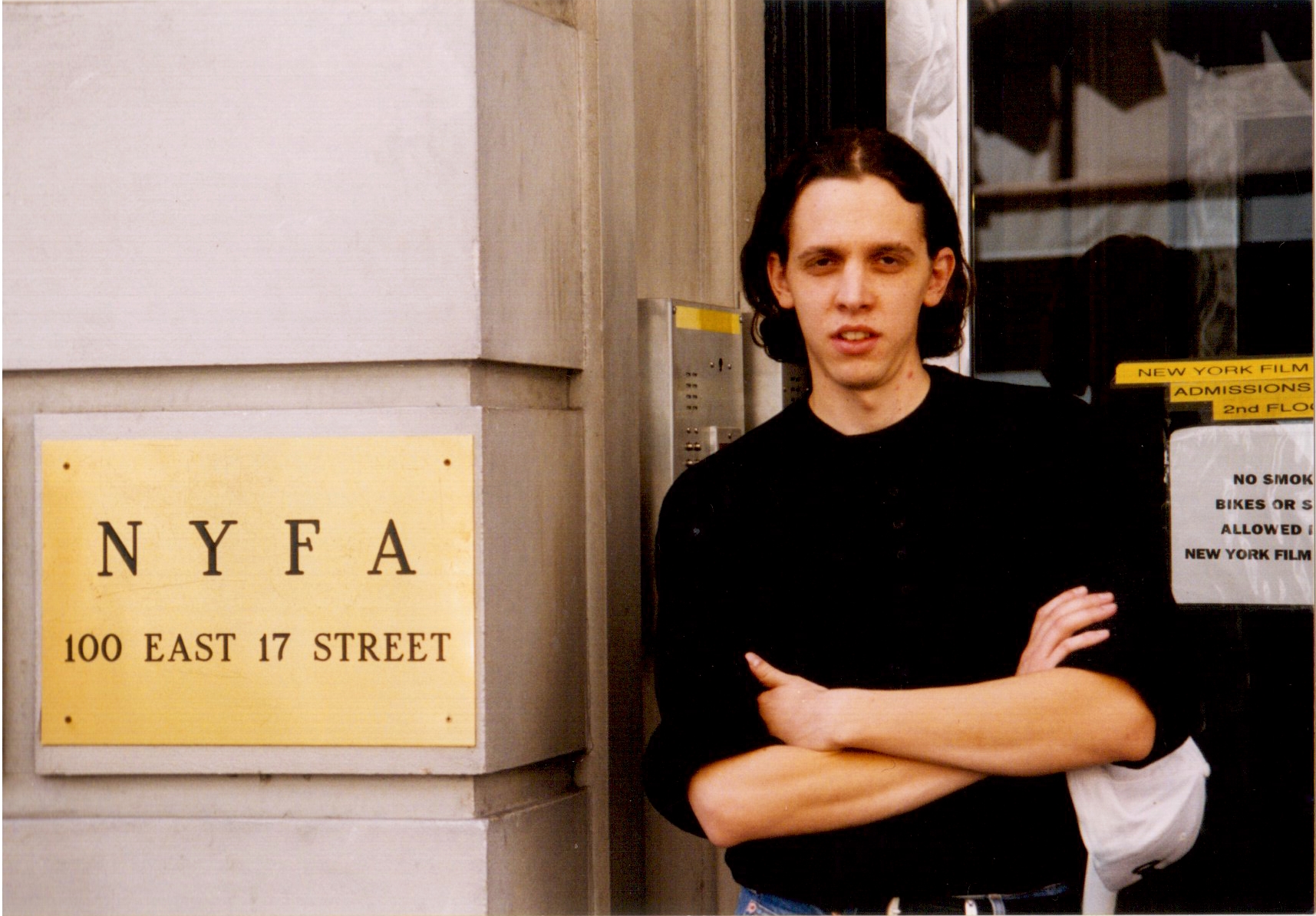
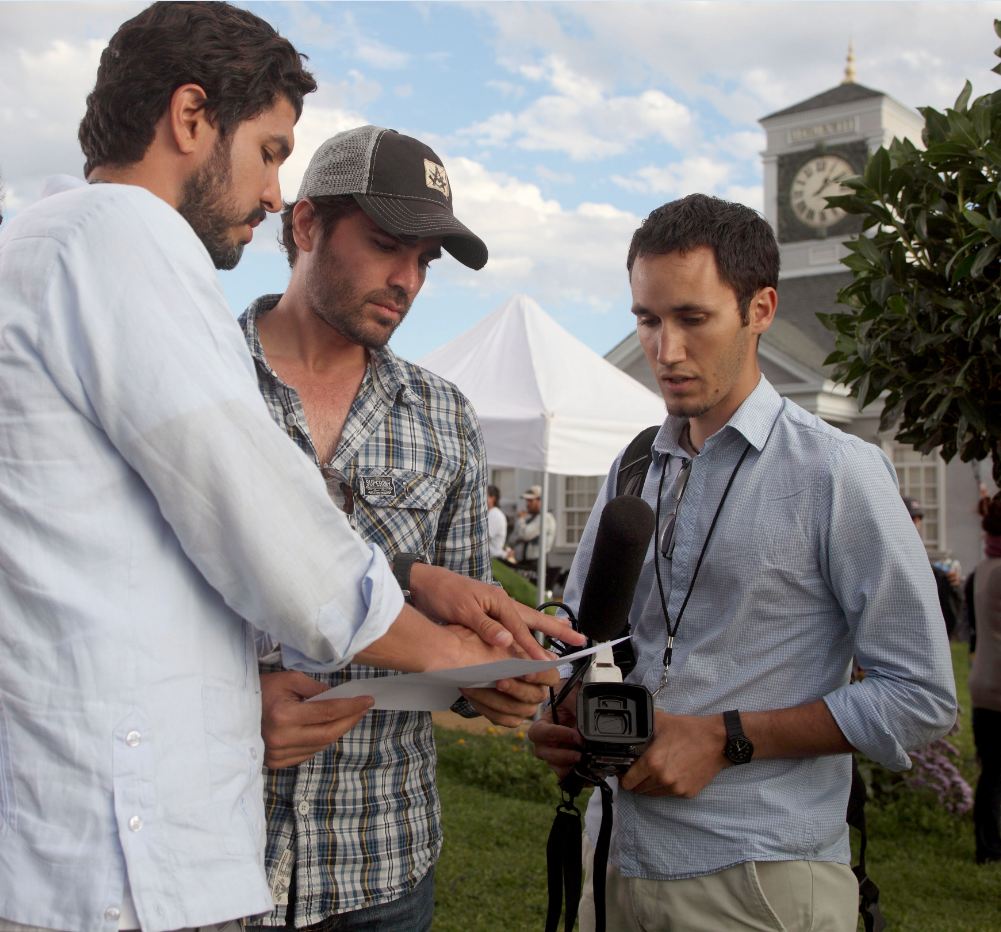
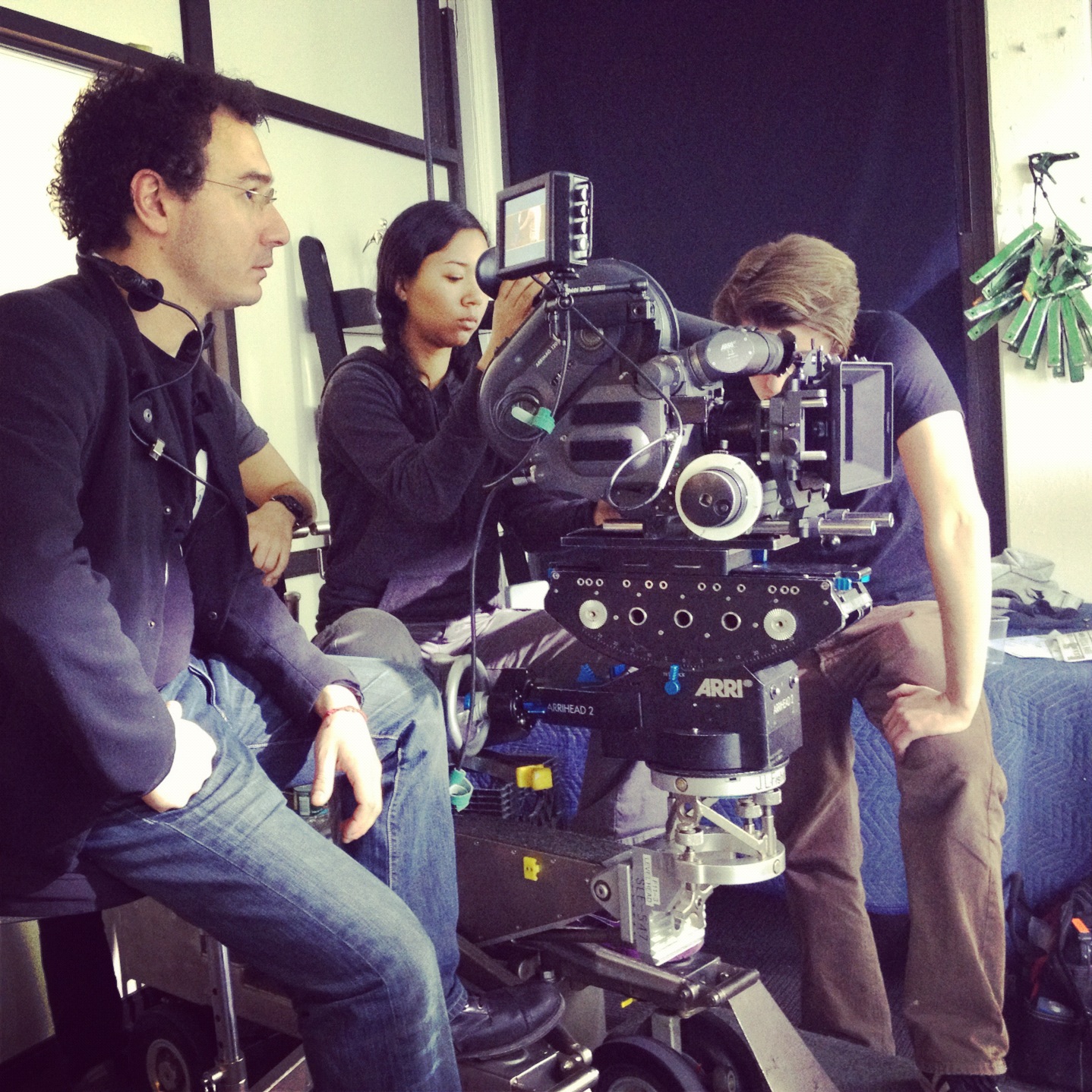
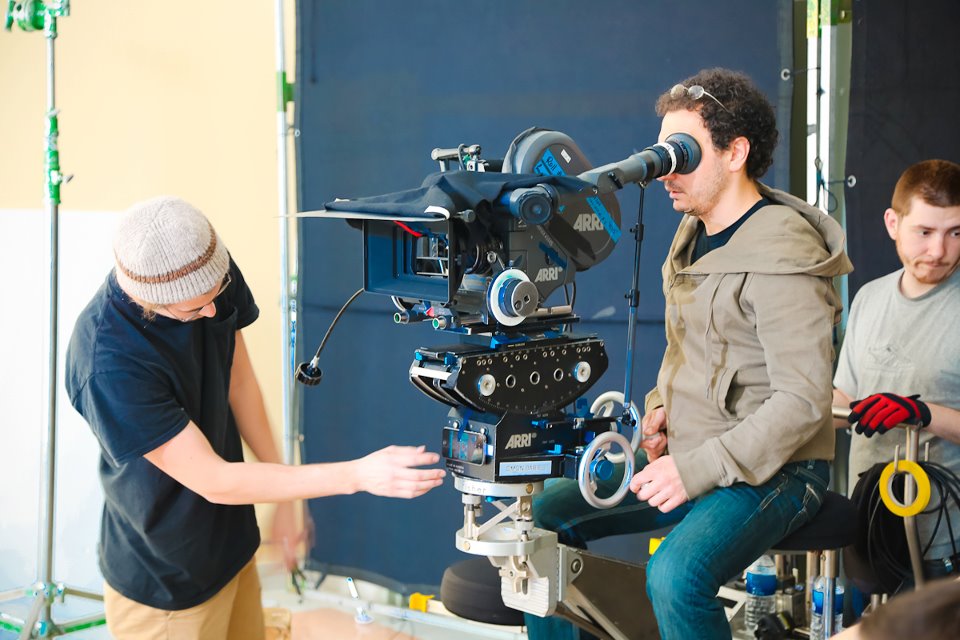
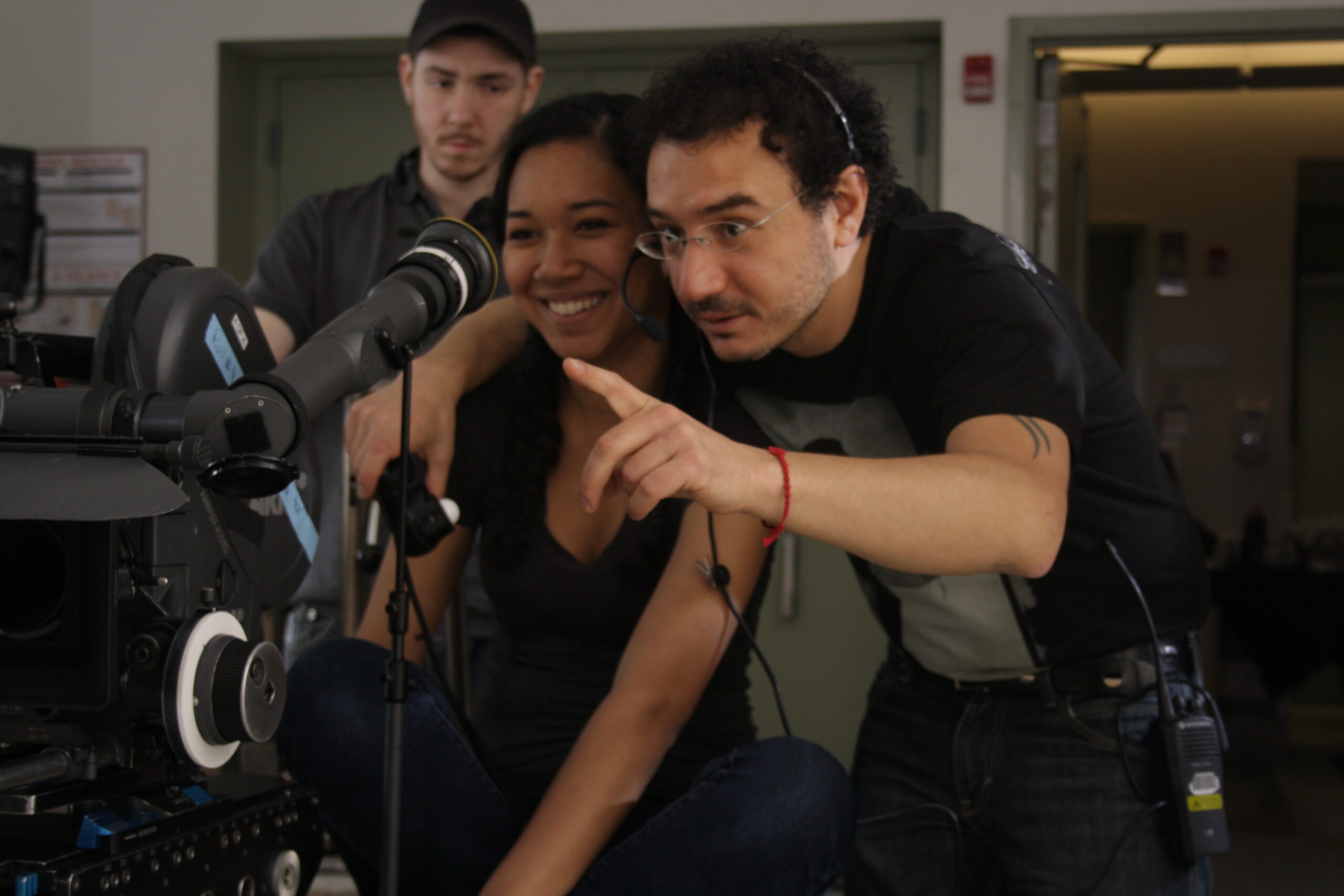
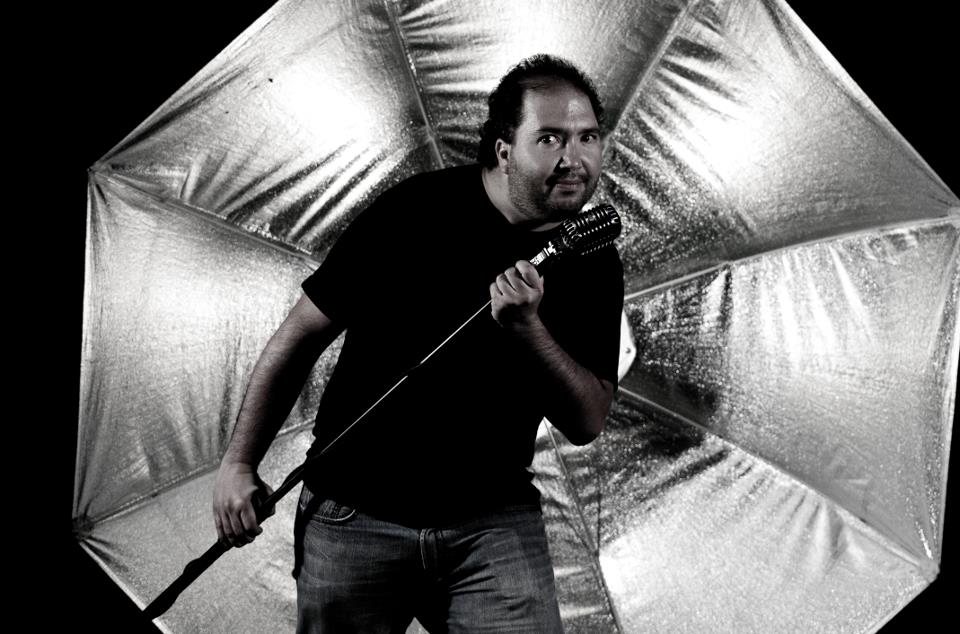
 Fito Pardo graduated from New York Film Academy in the late 90’s. Since then, he has gone on to direct short films and music videos, has worked as cinematographer on over 30 projects, and has found success as a photographer for publications worldwide, including Marie Claire, Vogue Japan, and National Geographic.