How to Succeed at the Game of Acting

Cassie Freeman and Chris Rock

So many of New York Film Academy‘s instructors have secret lives outside of teaching, and we’re always proud to hear about their accomplishments. Such is the case with NYFA Acting Instructor, Cassie Freeman. In 2011, Cassie starred in the film Kinyarwanda, which won the Audience Award in the World Cinema Drama category at the Sundance Film Festival. The film also won the Audience Award in the World Cinema section at AFI Fest 2011, and the Grand Prize at the Skip City Film Festival in Japan. Cassie has compiled a list of credits in her early career, including roles in Spike Lee’s Inside Man and Chris Rock’s I Think I Love my Wife. She will soon debut her new character on the hit VH1 show, Single Ladies. In addition to her acting work, Cassie founded her own company, Motion Pictures LLC, where she has several projects in development, including a one-hour drama, a talk news show, and a documentary. Despite her incredibly hectic schedule, we somehow managed to catch up with Cassie to ask her a few questions about her life and career thus far.

What do you think led you on the acting path?

I fell into acting by accident. I initially wanted to be in politics, or become a leader in the church. I love the idea of helping others reach their full potential. It’s one of the reasons why I love to teach. As a kid I always felt left out and awkward. Acting helped me celebrate what makes me different from others, while still realizing we have a lot in common. When I meet a new person, they are a potential new best friend. I auditioned for acting and band at Douglas Anderson, which is the Arts High School in Jacksonville. My dad did not like the idea, but decided one year was fine. The first play I acted in was, For Colored Girls Who Considered Suicide. However, the first show where I really felt like an actress was A Piece of My Heart. The play was about the women who served during Vietnam. Working on that play and getting into that character changed my life. I had a spiritual moment where I felt like I left my own life and enveloped my self in another. I believe actors have an unbelievable opportunity to be a mirror to our collective consciousness. If you display life fully as it is, people can experience their own frailty and uniqueness.

Can you tell us a little about NYFA and your experience teaching here?

My last film Kinyarwanda won at Sundance last year and it gave me the opportunity to travel the world. New York Film Academy was one of the places on our tour. I really enjoyed how curious the students were about their craft, and a couple of the students said they would love for me to do a workshop. After I inquired, I was invited to teach at the school. Being a New York girl, I thought it would be fabulous to share what I’ve learned and to have a class for longer than a few days. Teaching here has also made me a better actress in so many ways. The most important thing I’ve learned is how necessary it is to relax and have patience with yourself. It is impossible to learn or act if those two things are not in tact. It is virtually impossible for a director, or in my case a teacher, to help an individual truly grow as an actor. Ultimately, it must come from within.

What kind of feedback would you give to a prospective student who wants to come here?

This school can teach you everything you want to learn. The tools and faculty are all sincerely here because they enjoy what they do. The classes are small enough that you can get the personal attention that many other programs can’t offer. The number of times you get to be on camera in front of faculty and your peers is priceless. The learning curve you get out of this school to go in the real world is awesome. However, you can only learn all of these things if you’re open to new ideas and concepts. My favorite students have been the ones who come in as a curious artist, striving to learn and unlock the code to their own possibilities. Those students grow the most, and help me grow to become a better artist as well. That is essentially, Hollywood. We are all constantly learning, collaborating, and sharing new concepts with each other. NYFA is a great way to develop one’s craft.

What advice would you give to the aspiring actor?

Go to every audition you can. Do every reading you can. Practice more than anyone. Make a game out of how many hours you can concentrate on a script and a character. I auditioned over a year for this show. I was never right for the character they were casting, but they thought I was talented and kept bringing me back. The character that ended up working out is a regular on the show. This is how I have booked many roles in life. I come in the door, knowing I may not be right for that character, but perform so well  that hopefully someone in the room is up at night thinking, “We need to figure out a way to put her in this show.” This opportunity would have never happened if I stopped doing the “work” of the actor: dreaming, creating, and crafting. As actors, we have to be our own biggest fans, even if there is no proof that we are even good at it. Confidence and perseverance is what wins in the game of acting.

Any specific advice on booking roles in television?

Learn how to take direction! Learn how to ask the right questions in the right manner. Both will give you so many opportunities to shine as a professional. Don’t put too much emphasis on if you book a role or not, worry that you gave it your all. We are actors not “auditioners.” I use each audition as a case to experiment in developing deeply interesting characters. If I book it, it’s icing on the cake. Whatever you have control over as an actor, do all you can, and leave the rest to the universe to sort out. Most importantly, surround yourself with lots of love. People should want to work with you as soon as you enter the room.

So, tell us about your role in VH1’s Single Ladies.

I auditioned three times over the course of a month. I felt a connection to the role from day one. I loved how silly, loving, and real she felt to me. I hadn’t seen a young black female character written so beautifully the way that Stacy Littlejohn, creator of the show, had made her. All I had to do was breathe life into her words. Every time I came back for the call back, I’d meet new producers who felt like family. On set, work doesn’t start until we hug and greet each other.

To do a TV show is a marathon. It has been some of the hardest work in my life. It has also been some of the most fun I’ve ever had as actor. I love that everyday I get to act as my character evolves. The hours on set are long. To act for TV, you need stamina and a high level of discipline at all times.

See Cassie’s new character debut Monday Jul 16th at 9pm on VH1’s Single Ladies.

Screenwriting Instructor’s TV Series Premieres Tonight!

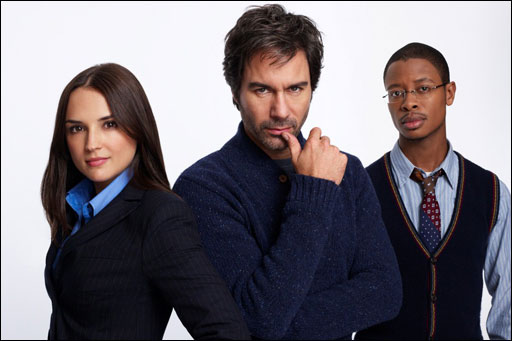
New York Film Academy screenwriting instructor Jerry Shandy is looking forward to tonight’s premiere of the television show Perception. In addition to his staff writer credits for the series, the NYFA instructor penned an episode called Cipher that will air in August. The crime drama stars Will & Grace’s Eric McCormack as Dr. Daniel Pierce, an eccentric neuroscience professor who helps the FBI to solve complex cases. The show, which also stars Rachael Leigh Cook and Kelly Rowan, premieres after The Closer tonight on TNT.

Originally from Jackson Hole, Wyoming, Jerry got interested in filmmaking because of the wildlife filmmakers that would visit his hometown. He initially attended USC with hopes of becoming a filmmaker, but soon realized screenwriting was the place to be. “I like screenwriting because it’s the creation of the characters,” says Jerry. “I wanted to get into directing, and in the long-term I still want to do that, but I always wanted to be the one generating the story. The filmmakers I admire are the ones who come from that background.”
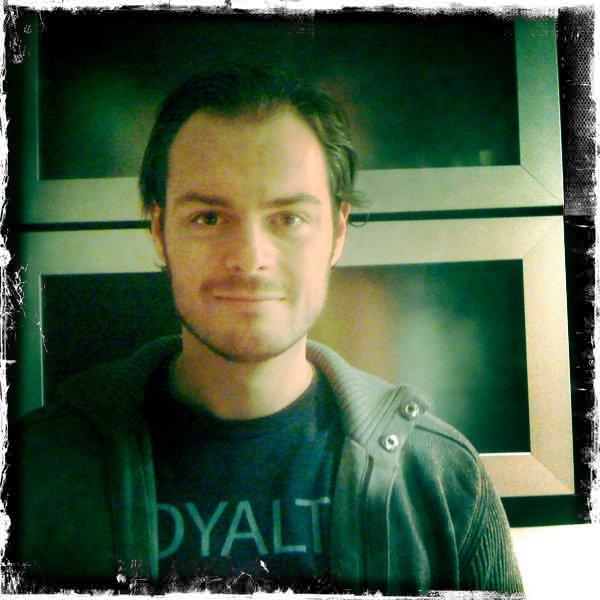
New York Film Academy screenwriting instructor, Jerry Shandy

After working as a writer’s assistant on CBS’ Close to Home, and a series of PA jobs, including assisting producer Lawrence Bender, Jerry got an agent and sold a pilot to USA and Universal Cable. That pilot became his calling card, and the buzz around it got him meetings, and his most recent gig on Perception. He is also developing a feature script with a European production company, and is developing a television pilot with international television heavyweight Endemol.

Jerry says he loves teaching courses at New York Film Academy’s Universal Studios campus, including One Hour Drama, Pitching for Producers, and Feature Workshops. “I feel like it’s complementary because I’m able to bring in the industry experience, and talk about what’s going on out there. I also get to go over the basics of writing every day. My ideal day is being able to write half day and interact with students the rest of the  day.”
Ready to make your mark in screenwriting? Check out New York Film Academy’s screenwriting programs today!

Joel Silver on the State of Hollywood

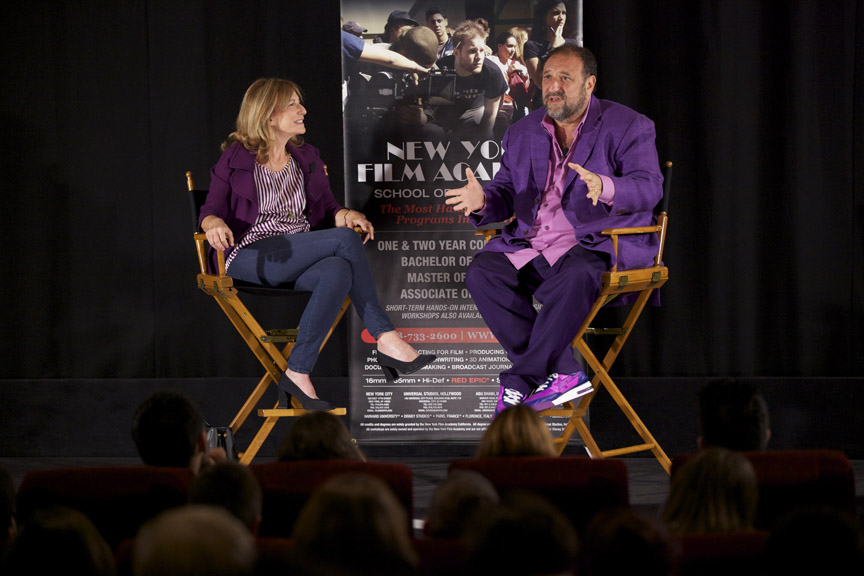
“Joel has never been afraid of color,” said producer/moderator Tova Laiter.

Mega-producer Joel Silver recently visited New York Film Academy for a Q&A and special screening of his 1988 classic, Die Hard. “We were kind of crafting a new genre,” said Silver. “Summers weren’t full of action films then.” He said he had originally wanted Richard Gere to play the lead, who turned down the role. They took a risk with Bruce Willis, an actor best known at the time for his starring role on TV’s Moonlighting. It paid off, becoming an international hit that would go on to spawn 3 hit sequels. The fourth sequel, A Good Day to Die Hard, is slated for release in February 2013.

Silver has produced more than 60 films, earning more than $13 billion worldwide. His credits include the Academy Award-winning The Matrix trilogy, the blockbuster Lethal Weapon franchise, and the sci-fi thriller, Predator. More recently, he launched the Sherlock Holmes franchise for Warner Bros. He is co-founder of Dark Castle Entertainment and owner of Silver Pictures. His newly-launched division, Silver Pictures Entertainment, announced a five-year distribution deal with Universal Pictures. Silver said the new division plans to make movies in various genres with mid-sized budgets of $40-60 million. He joked, “There’s always going to be artistic films out there, but I want to make the movies people actually see.”

Answering questions from New York Film Academy students, Silver commented on the state of the industry, saying, “The Hollywood system is better than it has ever been. People are going to the movies more than ever, and all over the world. It’s a great time.” He continued, “People are making movies for 20 bucks … We’re living in a golden age of Hollywood.”

Speaking to the young filmmakers and actors, he said, “You have to be passionate about movies. I’m excited every day. I love the process. I know the process. I live crisis. Crisis is a part of my life … If you bang your head against enough walls, eventually you’re going to break through.”

He also put to rest rumors about revisiting the Lethal Weapon franchise, saying, “I’d rather be dead,” eliciting a roar of laughter from the crowd.

Financing Your Indie Film and Developing an Audience

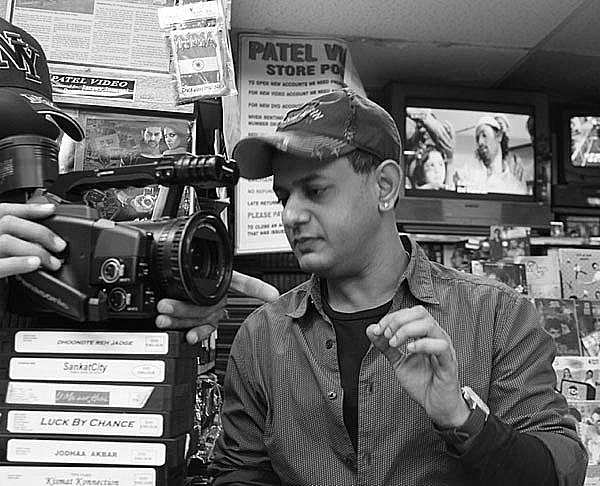
Rohit Gupta is a Mumbai native who came to the United States over 12 years ago. Coming from a family of entrepreneurs, Rohit didn’t have “the slightest idea about filmmaking” until he joined the New York Film Academy  for a 4 week film workshop. Realizing his passion for the craft, he extended his stay and enrolled into the one year conservatory program. Rohit was an MBA graduate who came from a family of entrepreneurs. He decided to take his shot in an “unstable” industry and fell in love. The film assignments he was working on for classes became inspiration for later works. Another Day, Another Life was shot in seven hours, edited on his laptop, and completed on a $100 budget. His first feature film Life! Camera Action was shot in ten days with a two member crew on a Panasonic DVX 100. Rohit has claimed that his rounds on the festival circuit, including the Short Films Corner at Cannes, has resulted in over 100 awards and accolades internationally. Talk about independent success on a micro-budget!

As an independent filmmaker, Rohit has compelling views on cultivating an audience and working with financiers to distribute your film. Rohit credits his success to his drive and ambition. He has an optimistic outlook in a field with many pitfalls and setbacks. “There is nothing more or less to it than just doing it now. With pure excitement, love and compassion in your heart, all will fall in place magically.” For any aspiring filmmaker, the most important thing is to keep an open mind. He advises current students to think of the possibilities, explore them, and figure out what they ultimately want to do. “The fun is to create something with what resources we have on-hand than worrying about what we don’t.”

THE AUDIENCE. Speaking with other filmmakers from all over the world, the anxiety is the same. “What is the audience going to like?” Rohit is critical of those who worry too much about the audience’s reception of the product–to the point that it affects the process of creating the product. The audience, he says, won’t know what they like “until they see it.” Some worry too much about audience expectations that there is a choke hold on creativity and productivity. Many aspiring filmmakers say their biggest hurdle is the lack of resources. Rohit believes with technology at our fingerprints, everyone is able to do what they want. Find opportunities everywhere. How you take advantage of the resources at NYFA is solely your initiative in the end. As he says, “No one is to be credited or blamed but yourself.”

FINANCIERS AND THE REAL INVESTMENT. “It’s not the creativity that needs to chase the finance, it’s the other way round!” Don’t waste your time with financiers if they don’t step up after your first meeting. Never give up your creative control just because someone is investing in your project. Be committed to execution without financial pressure. Unless you do this, you won’t know what you like about what you do and why. Only when you feel strongly about the work will your audience connect. This is the definition of success. Asking for advice from those who never made a feature film is a great way of finding reasons for not doing it. Learn from and collaborate with those who’ve objectively achieved a level of success that you can relate to. There is nothing like being original. If you try to make everybody happy, you will lose yourself. In the end, if you are happy, then everybody around feels the energy and, in turn, feels happy, too. It’s just like doing everything else. There is no mantra to it. Learning is a constant phenomenon and the beauty is no amount of learning will ever be enough.

What do you think about Rohit’s views? Tell us if you agree or disagree with him on Twitter! And if you want to find out more about the filmmaking program, please request info here!

Sarah Louise Wilson’s Feature to Air on PBS This Weekend!

Actor Steve Talley in ‘The Accidental Death of Joey by Sue’

New York Film Academy MFA Film student Sarah Louise Wilson is riding a wave of success. Her films have played at 30 festivals worldwide. Her first short film, which premiered 3 years ago at Frameline, continues to make the rounds on the festival circuit, and is used as an educational tool in classrooms. She wrote, produced, and starred in her first feature film, Jelly, alongside Natasha Lyonne (Slums of Beverly Hills, But I’m a Cheerleader), and Ed McMahon in his last film role. Shot on 35mm, the film was sold to Sundance Independent and IFC. Her second feature length film, The Accidental Death of Joey by Sue, was bought by PBS, and will make its television premiere this weekend. Variety called it “Stylish and strange enough to mark Sarah Louise Wilson and [co-writer/producer] Neal Thibedeau as helmers to watch.”

Continue reading “Sarah Louise Wilson’s Feature to Air on PBS This Weekend!”

Pixar’s Rules for Great Storytelling

Pixar Animation

Thanks to department chair Eric Conner of the screenwriting program for this great tip! A story artist at Pixar Animation Studios had been tweeting a series of “story basics” which illustrates the kind of talent that exists at Pixar. Their overwhelming success is easily demonstrated by the numbers. 7 out of 12 Pixar films were nominated for Best Screenplay at the Oscars and the company won the Animated Feature Academy Award 6 times. They have 13 consecutive box-office toppers and 2 Best Picture nominations. If that’s not proof of their genius, then we don’t know what is. Steve Jobs purchased the studio in 1986 for $10 million. It was originally a hardware company with only one animator on its staff. Now it’s widely reputed to be one of the best film studios on the planet. Here’s a quote on Deadline from the producer of the latest Pixar hit Brave, which debuted at number 1 at the Box Office this weekend. They attribute their phenomenal success to the basic wisdom that story trumps all.

It was not easy. The biggest challenges at Pixar are always the stories. We want really original stories that come from the hearts and minds of our filmmakers. We take years in crafting the story and improving it and changing it; throwing things out that aren’t working and adding things that do work. All of that  is just the jumping off point for the technology and how we are going to make this happen.

Without further ado, here are 22 pointers from Pixar’s story artists for creating a compelling story and building a mega-successful franchise. Don’t forget to learn more about our animation curriculum and become a top-notch animator for Pixar. Click here to request more information on the program!

  1. You admire a character for trying more than for their successes.

  2. You gotta keep in mind what’s interesting to you as an audience, not what’s fun to do as a writer. They can be very different.

  3. Trying for theme is important, but you won’t see what the story is actually about til you’re at the end of it. Now rewrite.

Brazilian Women Rock Behind the Cameras

Gabriela Egito is a New York Film Academy alumna living in Los Angeles, with a Masters in Film from Brazil. She has three short films running the festival circuit worldwide, with two winning prizes, all produced during NYFA’s filmmaking program in 2011. In addition to doing Brazilian outreach at NYFA, she writes a blog called Brazilian Girl in L.A. about her cinematic adventures in the U.S.

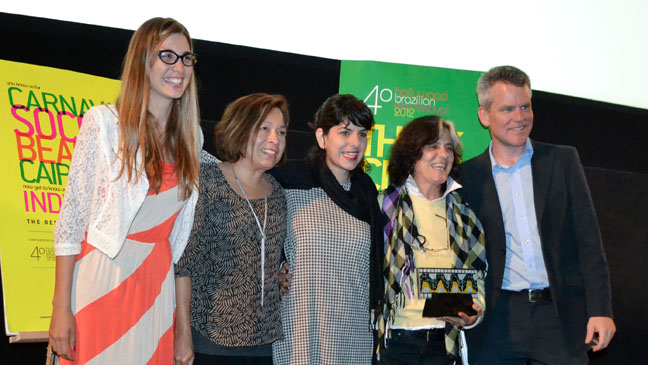
2012 Hollywood Brazilian Film Festival winners Clarissa Campolina and Sara Silveira with the festival jury

According to a study by the Center for the Study of Women in Television and Film, women make up 24% of all directors, producers, writers, cinematographers, and editors working on domestically-produced feature-length films appearing at top U.S. film festivals. Does that sound low? In fact, it is substantially higher than the 16% of women who worked on the 250 highest-grossing films last year. But to the south in Brazil, the reality is quite different. Despite lacking official statistics on gender issues, judging by the films selected for the Hollywood Brazilian Film Festival, held early this month at the Egyptian Theater, women are rockin’ behind-the-scenes in Brazil.

Of the 22 films screened at HBRfest, 17 have women in one or more key-positions. The feature-length winner, Swirl (Girimunho), was directed by film making partners Clarissa Campolina and Helvécio Marins Jr. Interestingly enough, three other films in competition were also directed by couples – men and women sharing the command on set. Director Clarissa Campolina doesn’t see these partnerships as unusual, saying, “We are all friends. Some of us attended film school together. We don’t think much of gender –we are all filmmakers.”

Continue reading “Brazilian Women Rock Behind the Cameras”

The Collaborative Process of Storytelling

Meet Peter Allen Stone, an actor and teacher at the New York Film Academy who helped create the successful play Unnatural Acts. Receiving 3 Drama Desk Nominations including “Best Play”, it played to sold out houses at Classic Stage Company in New York City and its run was extended three times due to popular demand. Based on a true story about Harvard University in the 1920’s, five academic deans set out to eradicate the homosexual population at the school. The play exposes the inquisition of students and the struggles young men faced as sexual minorities. A native of San Joaquin Valley in California, Peter Stone decided to become an actor at age four after seeing a production of Annie. At age 18, he obtained management and had a small role in a television show called Saved by the Bell: The New Class. After taking coursework at California State University in Long Beach, his professors who were also veterans on Broadway encouraged him to pursue it fully. As he says, “[They] really taught me that acting was about ‘doing’ and not just saying lines.”

What has been your experience working with the Plastic Theatre Company? 

Working on Unnatural Acts has been the most fulfilling time in my life. We worked on the play for a period of time with no money or guarantees. This story is one that came from the heart. We knew this story needed to be told. There were three suicides. I feel honored to be a part of it, and blessed that the ghosts of these students are finally having their stories told. Working as a collective was interesting and challenging at times. However, the group that was assembled knew that the play was bigger than any one of us. We debated, argued, and challenged each other–but always for the sake of the play. We started with the source material from Harvard. We had over 450 pages of handwritten material written by the Deans from their interrogations of the students. As a group, we went through it all and tried to connect the dots while honoring the truth. Some of the writing was barely legible and difficult to read. I felt like an archaeologist discovering a secret world.

Continue reading “The Collaborative Process of Storytelling”

Michael Staininger on Directing His First Feature

Imagine being in charge of a 2 million dollar feature film, written and produced by the same guy who wrote The Crow. Your only experience is from directing a student film at the New York Film Academy. That is exactly what director, Michael Staininger was going through when he was thrown in front of 150 crew members on set of The Tomb. Luckily, he had the hands-on training from NYFA to prepare him for the real world. “Diving into filmmaking from day one, being thrown into the cold water with very little previous experience, that is what prepares you for the real world; and the madness which will await when you step onto your first feature film set. The ability to make one hundred plus mini and big decisions per day, mostly based on instinct and preparation, is what will set you apart from the competition.”

Michael was born in Vienna, Austria to an upper middle class family who expected him to pursue a career in business. But, like most creative filmmakers, he gradually began seeking adventure, searching for the unexpected, rather than pushing for the obvious. Michael used his imagination to open horizons and create new worlds through the moving image. From there, and a few viewings of Braveheart, Michael’s fascination with the magic of film was born. Directing became his path in life.

So, how does a boy from Vienna end up directing a $2 million film in Los Angeles with producers George Furla and Randall Emmett? 

George Furla was one of my first producer acquaintances in the first year I moved to LA. We understood each other right away and tried to put something into the pipeline. It took several efforts (4 projects didn’t happen) and a little more than a year until the first draft of the “Ligeia” script, which distributors later renamed The Tomb, went through the Emmett/Furla Films office. They started my career. The main reason I signed on to do the film was because I’m such a big fan of The Crow, which “Ligeia” screenwriter John Shirley also wrote. John Shirley really understands darkness and mysticism.

Continue reading “Michael Staininger on Directing His First Feature”