CGI Animation History: Defining (and Awesome) Moments in Cinema

When done well, computer generated imagery can allow the filmmaker to achieve results that would be impractical (if not impossible) to recreate by other means.

Done badly, and it can totally undermine an otherwise fine movie.

We could fill an entire post with examples of the latter, but today we’re looking at notable movies that executed computer effects to a superb level, despite the fact that CGI barely existed at the time. And be sure to check out our previous post looking at CGI’s effect on the evolution of special effects.
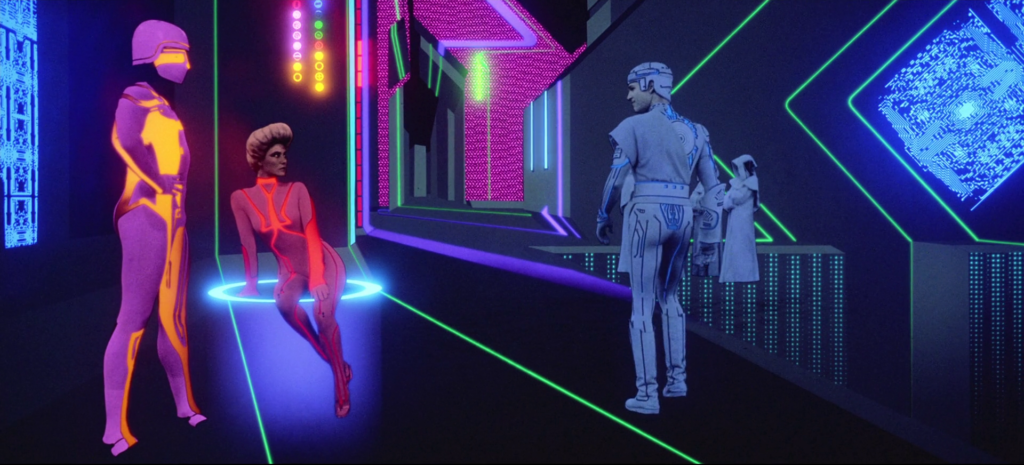
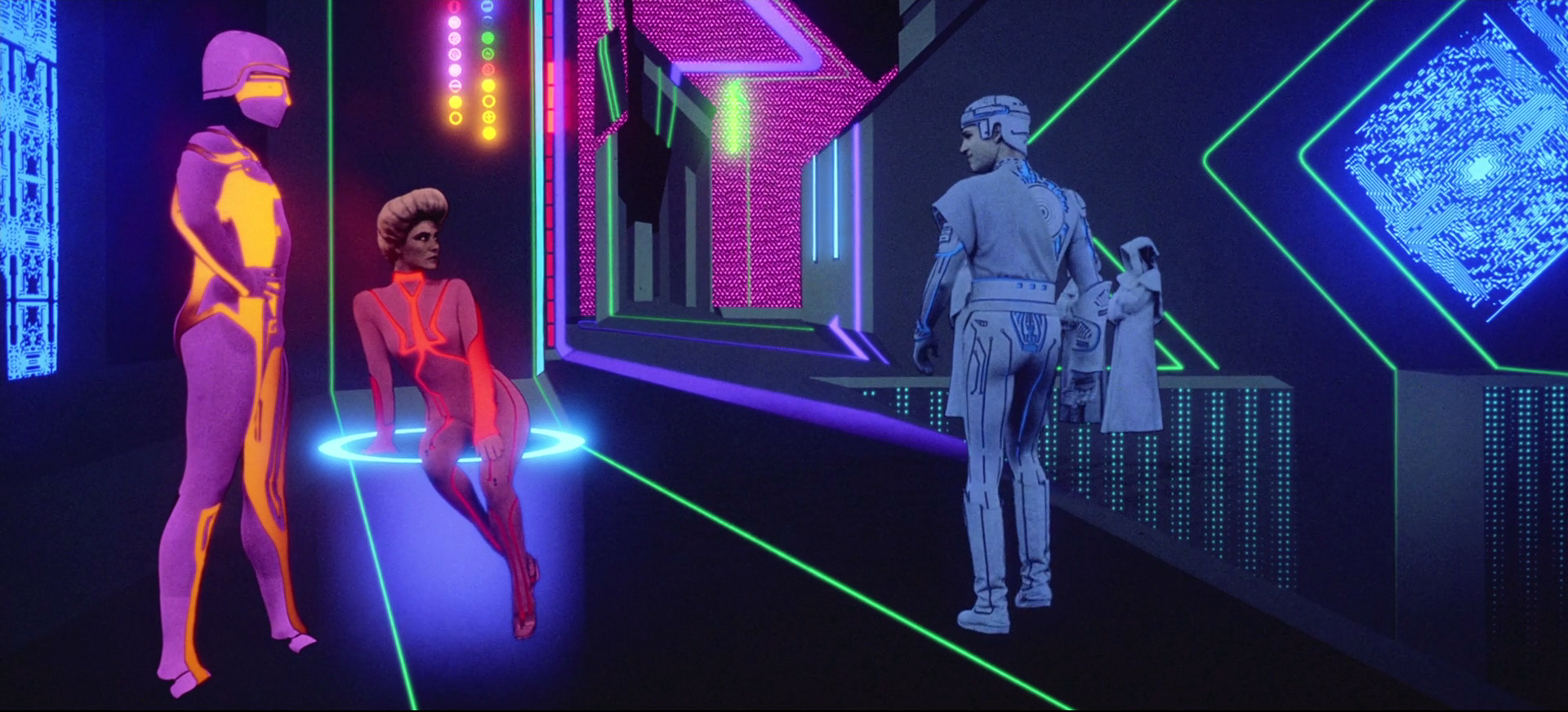
characters in original tron movie

And we’ll start off with where it all began:

The Vision of an Android (Westworld)

https://www.youtube.com/watch?v=5jCDQvNh85Y

When talking about movies that revolutionized special effects, Westworld is typically the first on the list. The raster graphics used to simulate the titular android’s vision would only take an animation school student fifteen minutes with modern software but it was an entirely different story back in 1973.

Deciding it’d be cheaper than animating the effect from scratch, two computer masterminds instead took the unprocessed footage, separated each frame into tri-color, converted them into blocks, then used a computer to combine it all back together adding basic tone values for each block.

Laborious for sure, but the result is the 2:31 origin of computer-aided effects that you see above. The sequel, Futureworld, also broke new ground by being the first movie to feature a CGI-rendered 3D object (which was actually created four years before its 1976 release):

More interesting still? The gentleman who created that CGI head and hand, Ed Catmull, went on to become the co-founder and president of Pixar.

And speaking of wireframes…

The Trench Run Briefing (Star Wars: A New Hope)

Just after the first appearance of 3D CGI in a movie (and long before Jar Jar Binks arrived on the scene) came an iconic piece of cinema that really got the ball rolling: the briefing scene in which the rebel alliance is coached on how to take out the Death Star, courtesy of some wireframe wizardry.

Here it is in isolation:

Given the extensiveness and detail of the sequence (in 1977, no less) it’s of no surprise that the imagery took weeks of non-stop work to produce at the University of Illinois. Ridley Scott went on to use the same technology in 1979’s Alien, where the Nostromo’s monitors display landing simulations onto the surface LV-426.

But forget CGI being displayed on the odd monitor. Next up, we’ve got a milestone in computer-aided imagery used across an entire movie…

Tron (1982)

CGI animation mixed seamlessly with wireframe graphics, rotoscoping, cel-shading, backlit animation and live action was the order of the day for what was to become a cult favorite.


And it’s a wonder it ever got produced in the first place. So original was the vision for how Tron should look—not to mention how expensive and painstaking it would be to produce—that Disney very nearly passed on the project (especially given that the producer and directors were both first-timers.)

Despite a muddled reception from critics, it did go on to win the Academy Award for Technical Achievement…

…fourteen years after its release.

Not bad given they only had a 2Mb computer with just 330Mb of storage to work with.

CGI progressed onward from this point as computing power increased, with a few attempts to further integrate it into live-action over the 80s. Some were good, some not so good, but it was the nineties that really saw the genesis of CGI as we know it today.

The T-1000 (Terminator 2: Judgment Day)

The go-to example whenever the debate concerning “sequels that are better than the original” crops up at the bar, Terminator 2 got a lot of things right and its use of CGI was one of them.

Of course, we are talking about the visual effects that went into bringing the T-1000 to life; a terrifying nemesis with a liquid metal body that could morph into other shapes (or stab a foster parent through the throat while he’s drinking milk.)

Mimicking liquid is difficult in a computer-generated imagery, as is rendering real-world reflections in metal. Doing both at the same time nearly 30 years ago? That’s cinematic history in the making.

Toy Story (1995)

Very few would have guessed that the first-ever fully-CG feature film would age so well, let alone kickstart an entire industry.

That said, given it was created on a relatively tiny $30 million budget by a very small team (half of whom reportedly didn’t know how to use a computer), it’s a wonder Toy Story ever got off the ground in the first place. This goes doubly so when factoring in the brutal development negotiations between Pixar and Disney, which nearly hamstrung the entire project

And that brings us to the final entry in our round-up of notable early CGI sequences in cinema…

Bullet Time (The Matrix)

Because it’s easy to argue that CGI history can be neatly divided into two eras…

… everything before the Wachowskis’ bullet time, and everything that followed afterward. Join us next time as we look at some of the most remarkable CGI achievements in the post-Wachowski era and please let us know of any movies or moments we forgot to include in the comments below!

What Different Game Development Positions Make And Why

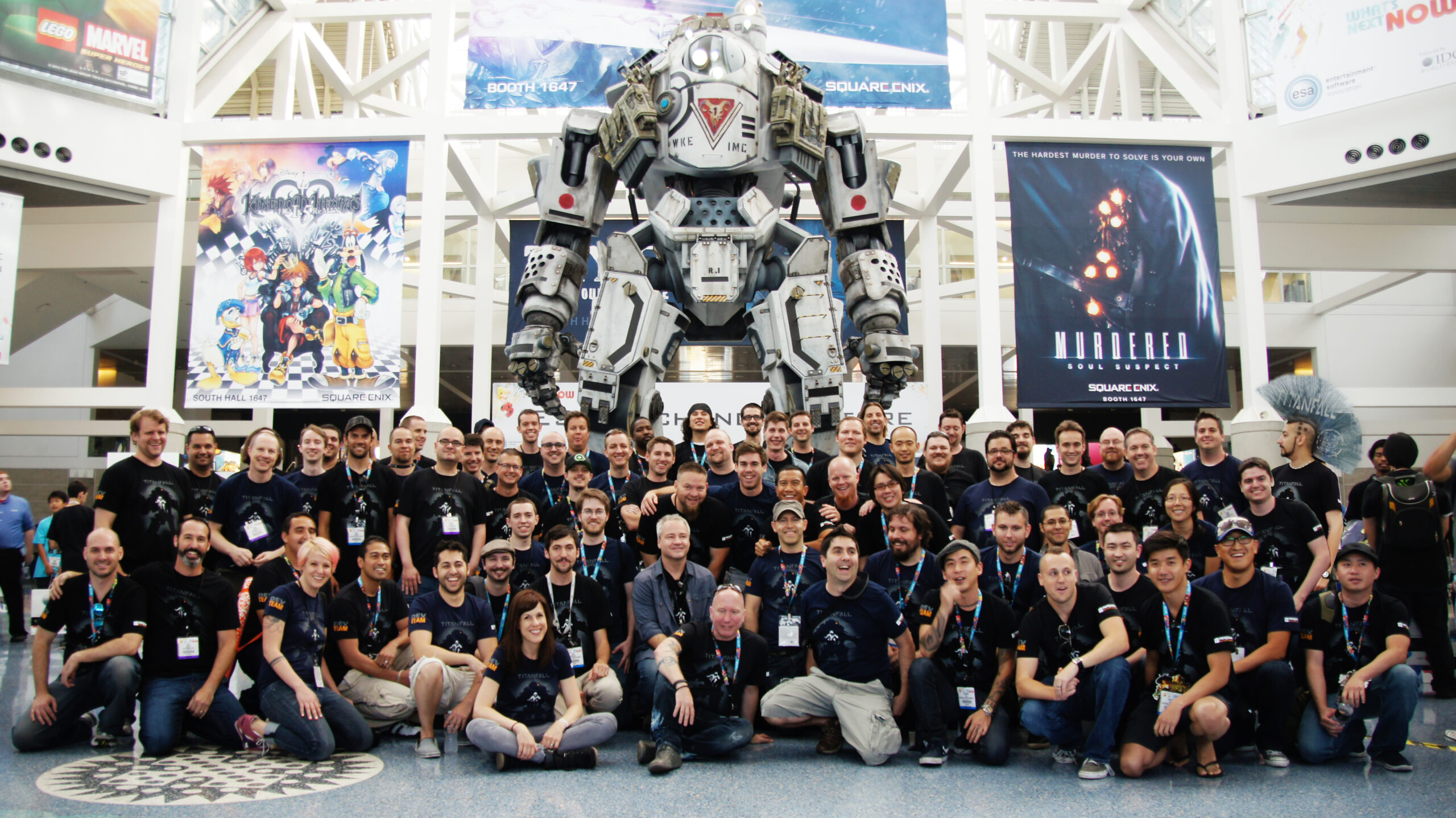
Titanfall design team

One of the biggest misconceptions surrounding video games, especially among people unfamiliar with the industry, is that everyone involved in making them eventually gets rich. After all, franchises like Call of Duty and Assassin’s Creed sell millions of copies annually. With said games selling for around $60 a copy in the U.S., there’s obviously plenty of money to go around for full-time game developers.

Although that’s not exactly the case, people who work in the gaming industry do have some pretty good salaries. Making games is a very challenging and time-consuming endeavor, which is why those who do land a job at a good studio get paid well. Below you’ll find the average income for game developers in various categories, including a bit about why they make what they do. These numbers are based off Gamasutra’s annual Salary Survey that involves asking more than 4,000 developers how much they made in 2013.

Quality Assurance: $54,833

It’s no surprise that game testers usually make the least amount of money. This is because testers aren’t heavily involved in the development process and, unlike other positions, they don’t even need a college degree to get hired. In fact, most developers often hire kids fresh out of high school that are fine with working very long hours, including weekends, just to say they have a job in the industry. Note that QA positions are usually temporary since there’s only a certain time period in development where extensive testing is required.

Artists and Animators: $74,349

On average, the people who bring the game designer’s ideas to life tend to earn a good annual salary. Artists are always in demand in the gaming industry, especially those with relevant college degrees and/or years of experience under their belt. Keep in mind that what artists in different categories actually make can vary. In other words, the number above reflects all artists and animators rather than what the salary is for only environmental artists, concept artists, 3D animators, etc.

Game Designers: $73,864

We don’t blame you if you were expecting game designers to make more money than at least producers or even programmers. While the role of game designer is considered one of the best and most rewarding, it’s not very high on the list when it comes to which positions pay the most on average. This may be because everyone wants to be a game designer and not a schedule-pushing producer or engine-coding programmer. $70K+ is still is a pretty good annual paycheck though, especially since you’re doing what you love for a living and have arguably the coolest title.

Producers: $82,286

The job of a video game producer isn’t easy, which is why they get paid pretty well. A producer is usually the one who oversees the development and funding of the project, which including negotiating contracts, maintaining schedules and budgets, pushing the team to meet milestones, arranging groups for testing, and keeping the team motivated. Game producers with half a decade of experience and at well-known companies have been known to make more than $125,000 a year.

Programmers: $93,251

Not only do programmers have one of the most challenging jobs in the industry but they are also a must-have for every game project. After all, without anyone to code the game, it will never be more than just ideas in the mind of a designer. Another contributing factor to their high salaries is that programmers are often the ones there from start to finish, including crunch time hours as development starts wrapping up.

Audio Professionals: $95,682

The guys and gals behind your favorite video game soundtracks make a pretty good sum of cash for themselves. They also do all the sound effects and may even work with the writers and designers to get voice acting in the game. Truth be told, being an audio professional in the gaming industry is a very competitive career where one person may get hired for several games, which means less opportunities for others. That is why this salary average is so high—most of the people who were surveyed probably worked on many high-profile games.

Business and Management: $101,572

Just like in most technology and entertainment industries, the people in suits and up at the top are the ones raking in the most dough. To be fair, there’s nothing easy about being the one dealing with investors and publishers, especially when games these days can cost several millions of dollars to make. If you want to make the most cash in the gaming industry without actually helping to create games, business and management is for you.

[su_note]Learn the skills you need to succeed as a game designer at the Game Design School at the New York Film Academy by clicking here.[/su_note]

How To Transition From Modeling To Acting

Dijmon Hounsou
Former model and acclaimed actor, Dijmon Hounsou.

Modeling and acting are different arts, no doubt. But for being different they are awful similar in many ways and the transition from modeling to acting is a well-established route of many performance artists. Mark Wahlberg famously modeled Calvin Klein underwear and Channing Tatum was a heartthrob in Abercrombie advertisement before they became Hollywood stars. Charlize Theron and Monica Belluci became huge in the fashion industry before they embarked on long and successful film careers. So, if it is possible to transition from modeling to acting, how do you do it?

Educate Yourself

 Reading blogs, acting books, and plays is a great way to begin the transition to acting. The New York Film Academy blog and website has resources to help aspiring actors learn about the craft of acting and the steps required to pursue an acting career. After you have educated yourself of the basics, and are truly committed to becoming an actor, consider taking acting classes.

Go To Acting School 

There’s no substitute for the training one receives during Acting School. All actors should invest in acting classes, and models are no different because with education comes experience and confidence. Models have an advantage when it comes to becoming an actor due to their comfort in front of the camera. However, acting classes will teach the important aspects of acting that models may not be familiar with.

The ability to analyze a script, breakdown a character, and make appropriate performance choices is the primary focus of acting classes but there are so many other advantages. Acting courses offer the invaluable opportunity to study with other aspiring actors, directors, and writers. Essentially, classes are the best way to learn about acting while building a network of friends in the entertainment industry.

Use Your Industry Connections

Through modeling work models meet agents and other artists, many of whom can help with the transition from modeling to acting. Actually, a lot of modeling agents also represent actors or can help find agents that do. Other models and photographers may also work in film or commercials and have advice on for how to get started as an actor. Point being, models should use their existing connections to help start their acting career. After all, you aren’t the first to make the transition to becoming an actor. Just ask Ashton Kutcher.

Understand the Challenge

It is never easy to become a professional actor and the transition from modeling to acting will be rife with challenges. A support network of fellow models and actors, as well as a firm self-belief will be needed to make the jump from photographs to moving pictures and stage plays. However, models have the unique advantage of having worked in a similar industry with high expectations. Use your past experiences and seek out acting classes to learn the ropes and help ensure that your transition from modeling to acting is the smoothest it can be.

Build a foundation in acting for the screen and in front of live audiences with our 1-Semester Acting for Film Program. Students hone their acting skills through a variety of core acting classes designed to teach them the nuances of acting in front of a camera. Visit our 1-Semester Acting for Film Program page to learn more.

FCC Updates To The Contest Rules Better For Broadcasters, Viewers

FCC logo

On September 17 of this year, the Federal Communications Commission (FCC) updated its Contest Rule, allowing broadcasters to post contest “rules and regulations” solely online if they want. Adopted in 1976, the Contest Rule previously required broadcasters to show the rules on air (although extremely small print was quite acceptable) for television. Radio broadcasters were forced to have announcers read the rules on air.

An Important Rule, but Historically Problematic

The idea, of course, was to ensure audience members understood the rules of the contest and odds of winning before spending time or money trying to win.

The FCC’s goal to protect consumers was valid, but in practice, the Contest Rule had issues. Radio announcers would state the rules on air but it was never guaranteed that the audience would be able to write all of the rules down or fully comprehend them.

Then there were the TV ads, flashing the rules and regulations in print so small only a mosquito could read it for roughly two seconds. Not only were audience members still uninformed, but broadcasters had to deal with an influx of inquiries from people who didn’t understand the rules.

Most Rule-Reading Has Been Happening Online for Years Anyway

It’s little wonder that once the internet became mainstream in the late nineties, broadcasters started posting rules online, in addition to hurriedly rushing through them on air. For the last decade, anyone interested in reading the legalese—or suffering from insomnia—would probably go straight to the broadcaster’s website for rules about a particular contest.

So What Does This Mean for Broadcasters?

The upshot of the FCC’s decision is an improvement in entertainment quality for audience members, and less time wasted on illegible graphics for TV stations. Broadcasters only have to tell the audience where rules can be found online.

In television ads, rules and regulations often filled much of the lower third of the screen, prime real estate for station logos or related advertising (“Shop at Joe’s Mini-Mart for additional chances to win!”). A website address for contest rules can be delivered in one line, leaving much of the lower third of the screen free for other uses. Radio advertisers can now use almost the entire time slot for the spot (30 seconds, 60 seconds, etc.) to talk about the contest or related products. “Contest rules can be found at www…” can be read in less than five seconds, while auctioneer-style rule announcements used to suck up ten seconds or more, depending on the contest.

How to Make the Most of the New Legislation

It’s still important to make it clear where rules can be found; confusing viewers or rushing through an overly long address will only lead to phone calls and emails that take up the staff’s time, plus viewers might get annoyed or complain on your social media pages. A link on the station’s website is the easiest idea—the URL is probably not excessively long, and consumers can easily Google “WXYZ TV” if they can’t remember it. Make sure the link is very visible on your home page so viewers don’t have to hunt for it.

Posting links on your social media once a day or more is also helpful. Or you can make a page for the contest itself, either posting a link to the rules or adding the rules to the page’s description itself. Contest pages are also good places to answer questions and keep viewers engaged with the contest, so make sure your station’s social media handler keeps up with it. If questions come up frequently that aren’t clearly addressed by the rules (and sometimes legalese is hard for the average person to understand), you can make a FAQ section to address them.

[su_note]Learn more about the School of Broadcast Journalism at the New York Film Academy by clicking here.[/su_note]

Getting The Most Out Of Your Video Game Prototype

video game prototype

One of the most important yet often ignored parts of game development is prototyping. A prototype is your way of testing out concepts without putting in too much time or effort. You can imagine how beneficial it is to find out an idea won’t work before putting in the time to code it, make art for it, etc.

Whether it’s done digitally or with a pen and paper, prototyping is also useful for finding ways to tweak certain game mechanics and figure out how to make it as fun as possible. Even if several ideas end in failure at the prototype stage, you are nonetheless many steps closer to nailing down your design while making good use of your time.

The following are some important things to consider while you prototype new ideas to make sure they actually provide an enjoyable experience outside of your mind.

Prototypes Should Never Take Too Much Time

If there’s one thing all game developers can agree on, it’s that games take time to make. Even if you’re an indie developer that doesn’t have a producer constantly reminding you of tight schedules and upcoming milestones, you still want to make the most of your time. Spending too much of your valuable time on a prototype, whether it ends up answering a question or not, might not be the best idea.

Generally speaking, you shouldn’t spend more than one or two days prototyping the core mechanic of a game. Some ideas may be complex enough that they require some extra days to prototype. However, if you’re planning on spending an entire week prototyping one mechanic, it might be wise to break it down into smaller ideas.

Digital Prototypes Aren’t Supposed To Look Pretty

Prototypes are meant to solve problems and see if your idea works, not to show off to friends and family. While there’s nothing wrong with sharing your prototypes, the mistake is made when you start spending time cleaning up code and making art for it. If the idea ends up not working and the prototype is thus useless, it will mean you wasted time.

If the prototype ends up being good enough that you do want to recode it properly and provide high-quality art, great! But again, you’ll be losing a lot of time if you want every digital prototype to look good and run without any technical problems.

Prototypes Should Solve Problems And Answer Questions

A prototype is rarely worth the time it took to build it if it didn’t answer a question. If you’re in the process of making a prototype and have no idea what knowledge you want to take away from it at the end, it’s time to rethink the idea and start over. Walking away from a prototype with nothing new means it was pointless.

For example, perhaps you’re wondering if your core mechanic will still be fun if your character can now fly instead of just jumping. You’d then whip up a quick prototype that includes a level or two in order to see if flying would be a good addition. Whether flying makes your game better or not, at least you answered a question and can move onto the next design challenge.

Some Ideas Only Work Well In Your Head

You wouldn’t be the first designer to be convinced that the idea in your head is so great that it’s sure to be the next big hit. But a few prototypes later and you realize that your idea isn’t as solid and well-planned as you thought it ws. Prototyping is a good way of finding out if a mechanic does in fact fit in with the rest of your game.

If you’re still not sure if your idea will be fun for other players and not just you, let people check it out! Like we said before, the prototype doesn’t have to be super polished and bug-free. What it should be is playable enough that you can actually get some feedback from people after they check it out. Getting suggestions from others, especially people of different game tastes, will usually help you find out if the prototype is a good start on your path to making a complete game.

[su_note]Learn more about the Game Design School at the New York Film Academy by clicking here.[/su_note]

Top 5 Action Movies Every Actor Should Watch

Action films are the bread and butter of Hollywood, grossing billions of dollars and spurning franchises that last decades. For actors, action movies present an interesting challenge. Plots that are unrealistic, stunts that push the limits of safety, and high public expectations are only the beginning of the pressure. To truly nail a role as an action hero, an actor must be cool, confident, and committed. Take it from these guys and gals who crushed their performances in some of the best action movies ever made.

1. James Bond, 1962-Present

Even the most interesting man in the world has a keen interest in James Bond. He is quite possibly the greatest and most successful action hero ever created by a mortal man and he doesn’t even wear a cape. From Sean Connery to Pierce Brosnan to Daniel Craig, the role of James Bond has made careers since the first film, Dr. No, was released in the early 60’s. Pay particular attention to the blonde Bond’s gritty performances in Casino Royale and Skyfall for a real lesson on how to shake (not stir) an action performance. And amongst the many actresses that filled the requisite “Bond girl” role, there are countless performances that perfectly marry strength and sensuality, although Grace Jones as the villain May Day in A View to a Kill is a favorite.

2. The Matrix, 1999-2003 

The Matrix single handedly changed the way people watch movies and how Hollywood produces them. With a plot so complex and ridiculous, it was up to the actors to ground their characters in reality to give the audience something to connect with. And the above clip is a perfect example of this grounding in reality as Keanu Reeves is tasked with delivering a breathtaking performance as his mundane “reality” is invaded by agents of The Matrix. Of course, everyone is great, but Laurence Fishburne is otherworldly as Morpheus. If you can only see one of the films, go with the first, simply titled The Matrix.

3. Indiana Jones, 1981-1989

Forget the 2008 franchise entry for a minute. The truly golden Indy films were released in the 80’s, back when Harrison Ford’s stubble ruled the film world. Ford had a lot on his shoulders and completely delivers across the first three films: Raiders of the Lost Ark, Indiana Jones and the Temple of Doom, and Indiana Jones and the Last Crusade. At once comical, exciting, campy, and thrilling, the Indiana Jones franchise of action films is a testament to the power of film. Again, the first is the best but all three are worth a look for any aspiring action film actor.

4. The Dark Knight, 2008

Every once in a while a movie comes along that changes the landscape of the art of filmmaking. The Dark Knight was one such film. Before Christopher Nolan’s masterpiece, the Oscar’s only nominated five films for Best Picture. Since the snub of Nolan’s second Batman installment, the Academy nominates 10 movies for Best Picture each year. Dark Knight is special both cinematically and performance-wise. Heath Ledger’s Joker is a villain that redefined the art of acting evil, and was recognized with a Best Supporting Actor statue.

5. Ironman, 2008

The eighth year of this millennium was a good year for action film performances and for Robert Downey Jr. He took a bit of a hiatus from acting to get himself right but returned with a vengeance as the quick-witted genius Tony Stark. Downey’s unapologetic arrogance and soft heart as the titular character are constantly at odds, making everything that Stark does on screen moving. Many superhero films have followed, but no one quite hits the mark like Downey does with Tony.

And once you’ve devoured the action films above, delve into our guides on the top comedic performances, TV shows, films, and plays every actor should see.

[su_note]Learn more about the School of Acting at the New York Film Academy, with campuses in New York, Los Angeles, and Miami.[/su_note]

5 Ways Journalism Has Changed Since 2000

Contessa Brewer on camera

In a time where one is connected to the world through an object small enough to fit into the palm of his or her hand; where audience experiences are just as (if not more) important as the information they acquire; and citizens armed with smartphones over firearms are overthrowing governments; it comes as no surprise that broadcast journalism has transformed since the year we once referred to as “Y2K” or the “Millennium Bug” year (a bug more representative of a global computer malfunction that threatened to shut down everything from cash registers to power stations than a roach in the kitchen). Not only did we survive, but our media has completely transformed into a ever-evolving, amalgamated, and fluid entity that is no longer necessarily seen as one primary medium between governments, corporations and “the people” or “audience.” Here’s a list of five of the most noteworthy ways this has happened.

Citizen Journalism/Crowdsourcing

Social networking platforms have completely changed the media landscape for not only the journalists, but also the audience. Having access to the world from your personal account has made way for audience members to become a part of the information being put out into the World Wide Web. This, of course, means that news sources are now not just those who are experts in the topic at hand but regular citizens who may have been at the scene of the news and uploaded footage from their smartphone to Facebook or Twitter. Provided the original footage is identified and vetted, it can be a great source for broadcast journalists and the use of these amateur videos, images and personal accounts are now very commonly used in their news stories.

Social Networking

The use of social networking platforms aren’t just a means for citizen journalists or simply for journalists to use second-hand footage from them, but are now a significant part of journalists’ roles. In an era where news is now instantaneous and ubiquitous, news that is only broadcast during the show’s timeslot is almost obsolete. Journalists are now communicating news around the clock via Tweets or status updates to generate interest in their on-air broadcasts as well as using the responses and feedback to shape their stories. Networks are also making sure to broadcast their shows via numerous social networking platforms during and after on-air segments and simultaneously incorporating social media feeds into their on-air shows. And social media also provides a great means to measure viewer impact.

Multimedia/Multi-talented Journalists

With the Internet, came immediate access to information. And with smart technology, came ubiquitous information that blurred the lines between producer and consumer. Consequently, print media suffered financially and broadcast information became prevalent and multifaceted. This meant that journalists needed to adapt to many new technologies and avenues without an equal amount of staff to help them. More often than not, they are required to pitch stories, go out and shoot them, edit them and present them whilst simultaneously using their social media to generate interest and discussion for them online. So getting in touch with all facets of delivering news stories like camerawork and editing programs will be a huge plus if you’re looking to get hired in broadcast news today.

Podcasts

What was once a broadcast news show tailored for a target audience at a specific time slot in a specific location is now tailored to reach a much wider audience without limitations on time. As previously mentioned, the consumer or audience member has now also become the producer and actor—having the ability to access and produce information in their own time without having to wait for it—as seen with podcasts. Radio news can now be downloaded at the user’s convenience and companies like NPR that have taken advantage of such a portal are now at the forefront of their industry. On that note, what used to be the acronym for National Public Radio is now just known as NPR, due to the idea of “radio” being quite archaic for many people—a clear example of how companies are changing and adapting to the new milieu.

YouTube

In 2011 and early 2012, five out of fifteen months from YouTube’s most searched term of the month was a news related item. In the seven days following footage of the Japanese earthquake and tsunami in March 2011, the twenty most viewed news-related videos on the site all focused on the tragedy and were viewed more than 96 million times. This new kind of television news has made companies like Vice News a force to be reckoned with. What originally began as a niche print magazine (Vice Magazine) then expanded to Vice Media, consisting of divisions including a website, film production company, record label and publishing imprint. Vice News became the company’s current affairs brand and their daily content consists of articles on their website and videos on YouTube. Vice News provides documentaries and original news series but the Vice Media brand has diversified through the platform with multiple channels categorised into subgroups like food (Munchies), music (Noisey), or technology & science (Motherboard). The main Vice YouTube channel alone (not inclusive of their sub-group channels) gets an average of 26 million views per month with an estimated yearly earning of $1.2 million. A true exemplar of heterogeneity, Vice Media are now looking to release a new cable channel in 2016 that’s being programmed in conjunction with A&E Networks called Viceland, as well as a nightly news program called Nightly Vice, expected to debut on HBO later that year.

In summary, it all comes down to these three words—Convergence, Diversification, and Connectivity. News is no longer linear and broadcast technology no longer falls under two categories. For broadcast journalists and the news industry as a whole to flourish in this transformed news landscape, embracing and adopting these three things are imperative.

[su_note]Learn more about the School of Broadcast Journalism at the New York Film Academy by clicking here.[/su_note]

The Two Greatest Challenges Facing VR Gaming

Girl tries on Oculus Rift

Virtual reality has been a hot topic in the video game industry for a while now. This contrasts greatly to the 90s when VR headsets, particularly the notorious Virtual Boy, didn’t catch fire due to high price tags and unimpressive games. Soon we will see if PlayStation VR, Oculus Rift, and the many other companies now interested in virtual reality can give us what most gamers have always wanted: a complete sense of immersion.

While maybe not as exaggerated as the people in the PlayStation VR showcase video, gamers are still showing interest in having a new way to play. Whether it’s a scary horror game or open world action-adventure title, being able to explore gorgeous digital environments and be face-to-face with creatures and characters of all kinds would provide an experience unlike any other.

But not everyone is convinced that virtual reality will take the industry by storm like many expect. The following are the two biggest concerns many people have about these new gadgets that promise to be the next and possibly biggest leap forward for video games. We’ve also included quotes from game developers and other industry professionals to see what they have to say about it.

1. VR Will Be Too Expensive

Arguably the biggest hurdle that every company entering the VR market is preparing to face is figuring out the right price point. The greatest innovation of our time or not, the average person will only pay so much for their own VR headset, especially when there are plenty of great games to play on regular consoles, smartphones, and PC.

Greenlight VR and Touchstone Research did a survey to find out how much people are willing to fork over to adopt VR in 2016 and the results aren’t pretty. According to their results, only 40% are willing to get into VR if they don’t have to pay more than around $400-599. The study offered other interesting results as well, including a higher interest in VR devices connected to a game console as opposed to PC or mobile devices.

For Oculus Rift, the fact that only 10% of the people surveyed would be willing to put more than $1,000 toward an HD virtual reality experience should be alarming. This is because the Oculus must be paired with a PC that has some pretty expensive technical requirements. Oculus founder Palmer Luckey recently admitted that the Oculus Rift VR headset will not be available for anything less than $350.

Here’s what the VR people have to say about price points and sales:

  • “It doesn’t matter what it will cost. If it costs too much this week it will cost the right amount a year from now.” – Jason Rubin, Naughty Dog co-founder/ex-president of THQ now working for Oculus VR.
  • “If you look at many of the most successful consumer hardware products of all time, most of them sold in the very low millions of units in their first year…they sold in the hundreds of thousands in their first generation.” – Nate Mitchell, Oculus VP of product.
  • “Overall we expect a slow ramp up of adoption and consumption of VR content. While the market is more advanced than ever, there are still a number of hurdles that need to be overcome before we see broader consumer adoption.” – Piers Harding-Rolls, analyst for global market research firm IHS.

2. VR Will Be Just Another Fad

Plenty of fads have come and gone in the video game industry. Who can forget the motion gaming craze of the last generation brought on by Nintendo’s extremely popular Wii console? It was such a hit that we saw both Sony and Microsoft scrambling to make their own motion device—Move and Kinect. Both of them have received little attention in the new console generation, while Nintendo itself has also released less and less motion-focused titles.

The fact is, video games make up one of the fastest moving industries on the planet, which means what was all the rage yesterday (zombies, voxel games, building games) may not be as hot today. Even game genres have had their ups and downs. Despite the craze brought on by Street Fighter and Mortal Kombat in the mid 90s, fighting games fell off the planet for a while and didn’t make a strong return until recently.

Virtual reality only being a fad is what has people worried. They don’t want to invest in an expensive device that will only be relevant for two, maybe three years. Here’s where a lot of industry professionals are divided. While some think that VR will be a new and long-standing platform, others think people will just return to traditional games eventually:

Here’s what some have to say about VR’s ability to stay in the limelight:

  • “If you’re a gamer and you have high end graphics cards—I don’t want to stereotype—but you’re probably not the kind of person who cares about fashion.” – Oculus founder Palmer Luckey, trying to explaining why VR will not be a fad.
  • “Games are far too obsessed with technical innovation, and we end up recycling the same ideas and the same uses in the same contexts every handful of years or so.” – Game designer Ian Bogost, saying VR will come and go like motion control gaming did.
  • “It takes away interaction, it reduces the interaction that we’re used to having in video games for the past 20 years.” – Solfar co-founder Thor Gunnarsson, explaining why gamers may eventually ditch VR.

Image Source

[su_note]Learn more about the School of Game Design at the New York Film Academy by clicking here.[/su_note]

5 Movies That Will Never Happen (No Matter How Badly You Want To See Them)

Welcome to development hell. Today, we’re looking at movie concepts that have not just languished for years but decades, but don’t look as if they’re any closer to escaping the singularity. Each of the following projects is a good example of how, even with the perfect vehicle and players, sometimes things don’t line up in Hollywood like we wish they would.

But hey, let’s hedge our bets here—they did end up making The Life of Pi after all, so maybe “never” is too hasty a word.

However, the following five projects are all ones that have been marinating in different Hollywood studios or stuck in pre-production cycles for so long that we’ve just about given up on the hope of seeing these movies come to life (but we’ll be more than happy to be proven wrong!)

A Live-Action Akira Adaptation

Akira motorcycle

It’s been nearly 30 years since the original animated spectacle, but those waiting for a live-action adaptation of the Manga cult classic are still being kept on tenterhooks.

The rights to make it have been with Warner Bros. since 2002, but none have yet to come anywhere close to even getting the project off the ground despite multiple attempts. The latest rumors, however, do look interesting—if the current plans don’t get abandoned once again, we may get not just one but three Akira movies…

… directed by Christopher Nolan no less, and written by one of the Daredevil showrunners. None of this is substantiated in any way at present, and work doesn’t appear to have started.

The Hyperion Cantos

hyperion cantos

Dan Simmons’ hugely celebrated sci-fi masterpiece has long been considered unfilmable owing to its huge scale… and huge is something of an understatement.

The four books making up this Canterbury Tales-esque space opera take place over millennia, with multiple protagonists sharing flashback stories set in a massive range of exotic locales. And given that each book ends in a cliffhanger, there’s no real way to divide the Hyperion Cantos and still provide a satisfying cinematic experience.

Far too large to cover in one movie or arguably even a trilogy, and no studio has committed to taking on the expense of doing it justice. Not even the fans who have been teased with half-rumors of film rights being repeatedly sold over the decades can decide how they’d like to see it done (or what portion of the quadrilogy should be covered.)

After a few years of no news, however, a very recent development has landed. Hyperion has just been picked up by the SyFy channel—not for a movie, but for a miniseries.

Fans remain apprehensive.

Bill & Ted 3

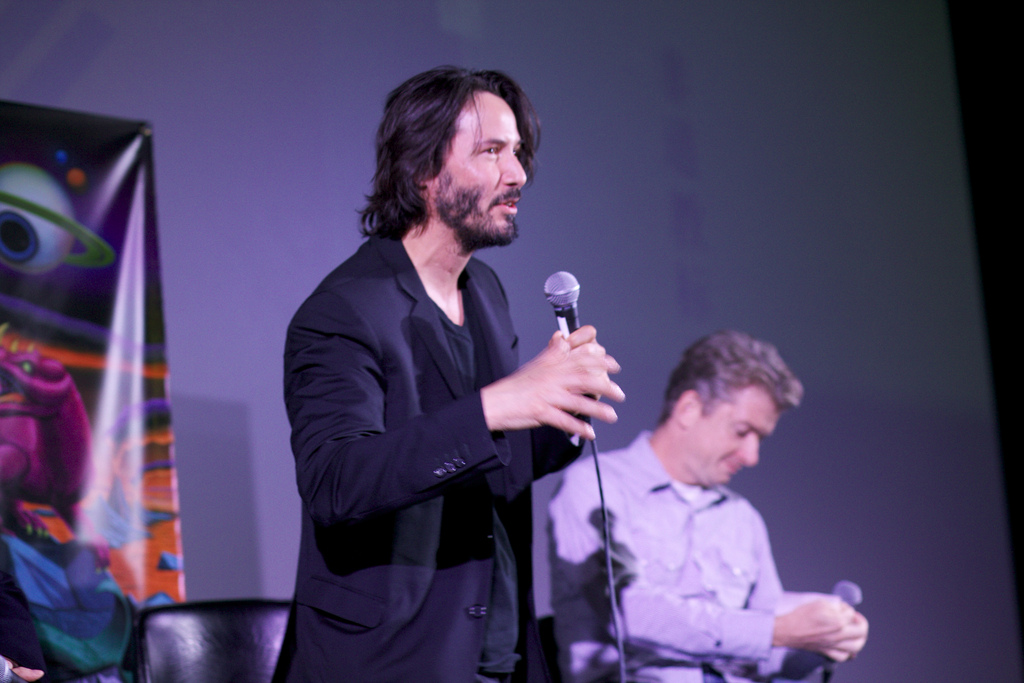
Keanu Reeves and Alex Winter from Bill and Ted

This is one that we perhaps should be a little more optimistic for, but if the loveable duo ever do grace our screens once again, we’ll probably be waiting for a few more years to come (on top of the twenty-four we’ve already been waiting.)

Reeves and Winter have always been chipper at the prospect of bringing Bill and Ted back, and appear to have been working hard all these years trying to pull a script together. And it’s not as if the market for 80s and 90s nostalgia and reboots isn’t fertile (hello Ghostbusters), so it looks like all the pieces are in place to make this happen…

… though despite starting concerted efforts back in 2010, there’s still no evidence of even the script having been finalized.

Possibly time to stop holding your breath, dudes.

A Live-Action Adaptation of The Jetsons

Jetsons space car


A feature-length adaptation of everyone’s favorite space-age TV family, which ran from 1962 to 1987, has been in the works for over 30 years now.

We did get a lackluster animated feature in 1990, but given that it neatly finished off the family’s story arc and no new TV shows have followed since, nobody seems able to come up with a fresh script. Plenty have tried, and apparently continue to do so.

Unlike the other movies on this list, the bigger question here—and possibly the reason for its tepid status—is whether there’ll even be an audience for it if it does make it to theatres.

Stranger still is the possibility that Kanye West may be the creative director of the project, though he’s since stated it was just an informal conference call that lead to this rumor.

Who Framed Roger Rabbit 2

Robert Rabbit in handcuff

For the longest time, many key Hollywood players were trying to figure out how to make a Roger Rabbit sequel while still preserving the magic of the original—a movie with a very unique style that may have owed a lot of its success to the time it was released.

But just when it looked almost certain that things were moving forward, all hopes of the loosely titled Who Discovered Roger Rabbit movie entering development faded with the untimely passing of Bob Hoskins (who was interested in reprising the human lead.)

Even if this one sees the light of day, it probably won’t be anything like what fans of the original are hoping to see.

And of course, it has to be said that there’s still a glimmer of hope for all of these titles. The Warcraft video game adaptation has finally escaped development hell after ten years and is due next year, and Mad Max: Fury Road proved that sometimes it’s worth the wait. 

Got any other movies that you’d give your right arm to see even though the chances are slim? Know anything about the above titles that we don’t? Don’t be shy—share all in the comments below!

[su_note]Learn more about the School of Filmmaking at the New York Film Academy by clicking here.[/su_note]