
Frozen Is Actually Extremely Overrated. Here Are Five Reasons Why…

Frozen overrated overhyped

You’ve heard that song a thousand times. You’ve seen all the merch. If you’ve got kids, you probably know the entire movie word for word.

Frozen has become the highest-grossing animated film of all time, and by a mile (Toy Story 3 took $1.06bn, Frozen smashed it with $1.27bn).

It has also been heralded as the finest Disney movie made since the studio’s golden era, and won its fair share of awards to back it up.

Even ten months later—with a full summer almost behind us—everyone is still pouring praise over a winter-themed movie released to appease (and capitalize on) the Thanksgiving family crowd.

But can we be honest here for a second?

It’s not all that good a movie.

Best ask the kids to leave the room as we reveal why Frozen is overrated.

1. The Soundtrack Sucks

Frozen is overrated

Shock! Horror! Blasphemy!

No, we’re not saying “Let It Go” sucked, although even by Disney’s standards it was overly saccharine and chintzy. But when you compare the entirety of the Frozen soundtrack with some of the better earlier Disney movies, you’ll quickly realize one thing: that there are very few good songs here.

In fact, it’s a pretty unmemorable soundtrack. You’ll probably remember “Let It Go” and the little refrain from “Do You Want to Build a Snowman?,” and perhaps “Love Is An Open Door” (but for all the wrong reasons).

Other than that, the rest of the movie is bereft of anything catchy or long lasting; the soundtrack of Frozen is overrated, and if someone claims otherwise, you know that they’re only really talking about “Let it Go.”

2. No Bad Guys

Jafar. Cruella de Vil. Maleficent. Scar.

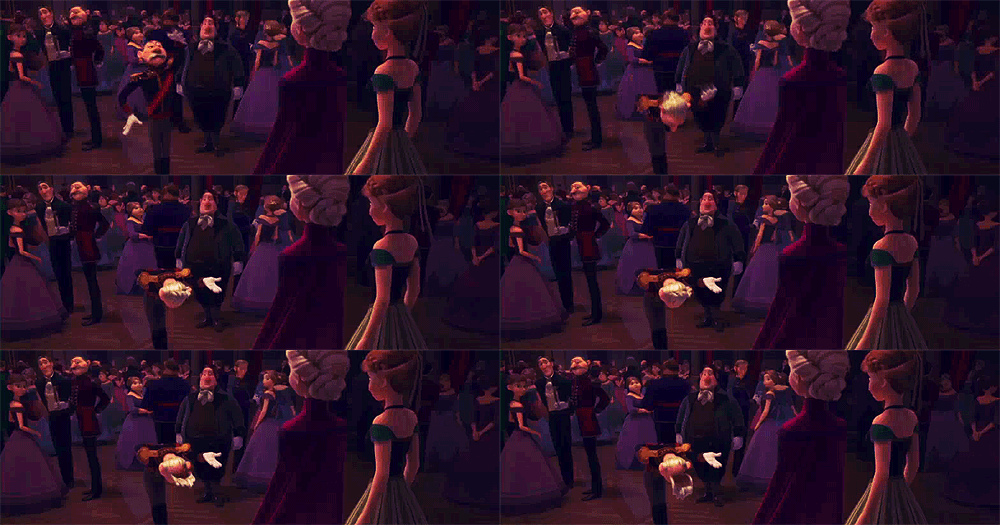
These are all great examples of Disney baddies. This, however, is not:
Frozen no antagonists

The Duke of Weselton (yes, the character had a name) was about as intimidating as a wet blanket, and his evil plan relates to enforcing bureaucracy to leverage greater trade deals.

Skyrocketing to a nail biting 0.5/10 on the threat level, this is about all that happens with the Duke and he’s largely forgotten about for the rest of the movie.

“Ah, but the real villain is Hans!” people cry. Sure, but he only reveals his true intentions in the third act.

Not only are the Frozen baddies a bit lame, but for 70% of the movie, there isn’t even a baddie.

3. These Things
Trolls in Frozen pointless

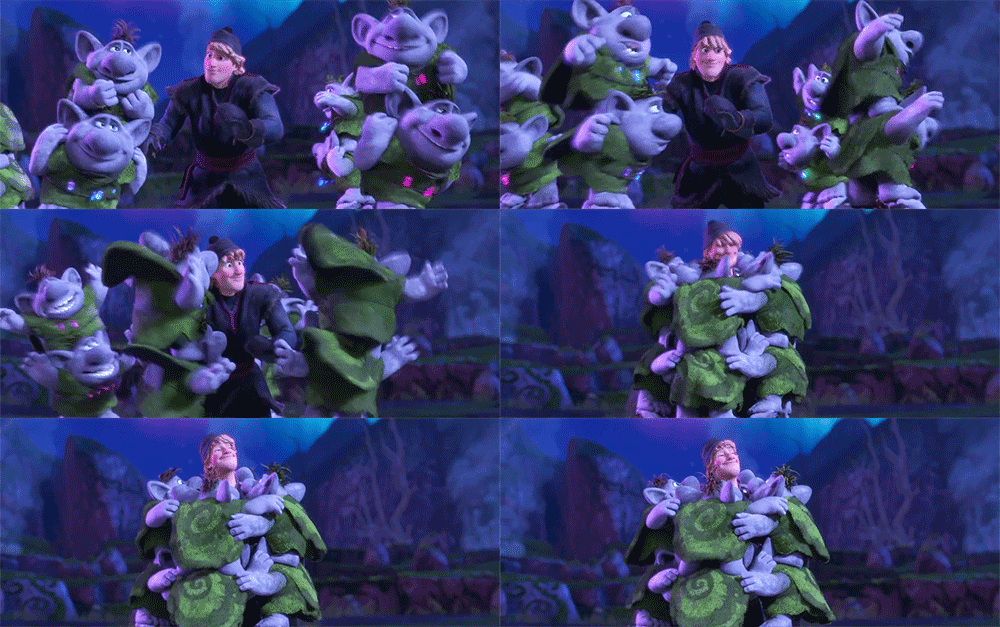
There’s absolutely no reason why these troll things should be in the script, and the only reason they are is that the merchandising department stuck their oar into the writing process at some point during development.

They’re a deus ex machina device that, if anything, are an overwhelmingly negative force in the story: they dish out terrible advice, practically destroy Elsa’s childhood and her relationship with Anna, can only heal injuries caused by ice magic when it suits them, and fail to identify that it’s Elsa’s love Anna needs to save her, not a man’s (totally undermining the ‘yay female independence!’ message people take from Frozen).

Oh, and they also urge Anna to cheat on her fiancee and forcibly tries to wed her and Kristoff, despite the fact that they show no romantic affection for each other at this stage and that he isn’t suitable for him until she ‘fixes him up.’

Nice going, Love Experts.

4. This Thing

Frozen Olaf not funny

From the character designers: “He isn’t just funny, he’s also got a big role to play representing the innocent love in the scale of fear versus love.  Olaf couldn’t just be thrown in, he had to have a purpose and that one of his purposes was to be the embodiment of the sisterly relationship that had gone cold.”

Except he doesn’t do any of that; the only time we get a glimpse into the characters’ relationships with each other is when they’re sharing dramatic scenes together, not through Olaf’s idiotic observations. And given that these dramatic scenes are easily the best bits in Frozen, it’s more than a little annoying to have tensions rise in a masterfully crafted way only for Olaf to dive into the scene and souffle the whole thing.

Not nearly as funny as past Disney sidekicks, he really is just the token “wacky” character the studio has to throw in to appease younger kids and sell toys (and “wacky” is Disney’s word, not ours. Ugh.)

5. It Doesn’t Make a Lick of Sense

Frozen contradictions

Frozen is overrated, but not only that, it’s full of poor logic and outright contradictions. Including… (deep breath):

  • How did the sisters not go clinically insane having grown up in isolation?
  • Why is their reunion so weirdly nonchalant?
  • How on earth does Elsa not know she’s plunged the kingdom into eternal winter until Anna tells her?
  • Why does Elsa blast Anna with ice powers immediately after stating she wants to protect Anna from her ice powers?
  • Why doesn’t Elsa just tell her sister about the childhood accident? In fact, why doesn’t Kristoff fill her in given that he knows the entire story?
  • Speaking of which, how did Kristoff pitch ‘selling ice in Scandinavia’ to his bank manager?
  • Why didn’t the family take up the trolls on their offer of teaching Elsa how to use her powers properly?
  • What the heck is the deal with the trolls, anyway?
  • And why do people herald Anna as the embodiment of female independence when she swoons into love with not one, but two unsuitable guys at the drop of a hat?

The list goes on and on, and perhaps you can explain the answer to some of these puzzling paradoxes. If so, feel free to hit the comments below… and feel free to tell us how wrong we are, too (like Frozen fans need any prompting.)

Want to pick a fight with the author in person, or tell him how undeniably right he is? Twitter is your friend.

So You Want To Be Among The Screenwriting Masters?

If your dream is to become a successful screenwriter, you’re going to have to be made of stern stuff. Becoming a working and respected screenwriter certainly doesn’t happen overnight. As with most creative disciplines, it takes years of hard work, of learning your craft, and believing in yourself to follow this dream You’ve got to have staying power, determination and faith in your own abilities.

So you want to be among the screenwriting masters? Good. Put that fire and passion to use — read on to discover what you can do to help your chances, and what resources there are out there to help you on the journey.

In the spirit of standing on the shoulders of giants, learning from the screenwriting masters is heartily encouraged. If it’s screenwriting for film that drives you, there are a few notable books that you really should read. They are:

–       Save The Cat, Blake Snyder

–       Story, Robert McKee

–       How to Write a Screenplay in 21 Days, Viki King

Of course, there are countless others, but these titles are consistently rated highly by screenwriting students. And if you need a structure of working to get your idea out of your head and on to the page, then Viki King’s book is superb. Doubtless you won’t have an amazing script by the end of it, but you’ll have a first draft and that’s a whole lot more to show than a blank piece of paper.

As well as books there are blogs and websites which are stuffed with information and advice. Try these for starters:

Mandy: The very first port of call for most screenwriters in the industry. For jobs, ads and a noticeboard of things going on in the industry, Mandy is the place to go. You can search for people wanting scripts and screenwriters and post casting adverts once you’re in the process of making your film. Easy to use and a good way to see what’s going on.

Go Into The Story: There are hundreds (if not thousands) of screenwriting blogs out there, but Scott Myers’ regular musings on the intricacies of screenwriting and the business itself is among the best. Within the virtual pages of Go Into The Story, you’ll find some insider’s tips and deep insight, all of which can help you take your screenwriting game to the next level.

Simply Scripts: Another great database of free scripts, but its real usefulness lies in its collation of screenwriting contests and fairly comprehensive glossary of industry terms.

Screenwriting Software: If you’re puzzled at the array of software on the market to help you craft your script, here’s our rundown of the best. We separated the wheat from the chaff in both the paid and free categories, so check it out.

At university level, modules in screenwriting are becoming more and more popular, however if you want to truly specialize you’re probably best off opting for an screenwriting masters degree once you’ve finished your bachelor’s. Time spent completing an MFA degree at screenwriting school will pay dividends further down the line, and one of the big plus points to studying screenwriting in a formal setting is the contacts you will make with your peers and with people already working in the industry.

Writing is more often than not a solitary way of working so it’s best to forge partnerships and contacts when you can.

Finally, there’s no better way to get to grips with how scripts work than to watch as many films as possible. However, don’t watch so many that you end up doing nothing but watch movies. It’s important to maintain a balance of watching TV and films and actually writing your own scripts.

If you’ve already read Blake Snyder’s Save The Cat you’ll be aware of his beat sheet, vital points that you need to hit at certain moments in your film. If you don’t think these rules apply to you, sit down with the beat sheet and watch movies in the genre you want to write in. You’ll soon see how Blake’s very nearly always right. And once you’ve gotten to grips with this, your writing should start to flow. In addition, don’t just watch movies. We can’t understate the importance of reading scripts, which is essential for getting the hang of formatting, flow, and structural best practices.

Good luck, and godspeed in your journey to becoming one of this generation’s screenwriting masters!

China’s Musical Theatre Industry is Set to Explode

Although musical theatre has gone from strength to strength over the past few decades, most of this activity has been confined to the English-speaking world (and predominantly in the US and Britain).

However, a two billion yuan (around $324 million) injection into the Chinese musical theatre industry could see the country become a powerhouse in global production.

Japan, Australia and South Korea have already seen modest growth in this area, but China is looking to leapfrog the competition with the construction of a massive production center in Langfang (thirty miles south of capital Beijing).

The scale of the production center is staggering; at one million square feet, the goal of the facility is to develop productions that can be run in major cities across the expanse of the country.

China’s Musical Theatre Industry, Localized

Although work is not due to be completed until 2017, the center has already begun producing its first show. Into the Woods will begin touring within a few months with an initial run of 100 shows in Beijing, opening at the PLA Theatre (Nov. 8th until Feb. 1st), before moving on to other cities around the country in 2015.

What’s notable in the case of Into the Woods is that the adaptation will be exclusively in Mandarin; historically, famous Broadway and West End shows that have made the jump to China have been performed in English.

Investors first saw potential in musicals produced in Mandarin in 2011, when a native-language adaptation of Mamma Mia! drew 300,000 people during its run.

The Langfang facility is being funded by both the local government of the Hebei province as well as a private development company.

Into the Woods is deemed as an exercise in strengthening ties between Chinese and American production (the Mandarin adaptation is being timed with a U.S film release starring Meryl Streep). This increased interest and investment into the Eastern market is hardly surprising given that South Korea are doing exceptionally well in porting Broadway shows to Seoul, in part thanks to a cultural obsession with America; even shows that performed terribly (both commercially and critically) on Broadway – musicals such as Ghost and Bonnie & Clyde – are being met with roaring success in Seoul.

Driving Production Costs Down

However, a large stumbling block for growth in China’s musical theatre industry is cost to entry. Although a few large production centers exist currently, there isn’t a strong infrastructure in place to help drive costs down – musical theatre programs and training is sparse, and costumes and sets for newly commissioned work often have to be created from scratch. Once touring costs are factored in, ticket prices to the end user can easily reach $150 or more for even the most basic of seats.

Naturally, investors are seeing profitability in the long run and the construction of the Langfang production center seems set to solve the issue of overheads. If savings are passed on to consumers, they hope to meet and capitalize on the demand that already exists.

Coupled with stronger ties to the U.S. scene and a greater focus on Mandarin adaptations, it’s highly likely that we’ll see a blossoming of China’s musical theatre industry.

Humans of New York: A Side Of The World That Often Goes Unseen

We’re constantly bombarded with images of war-torn countries, people suffering, those without food and water and shelter. Since so much of the news and media is saturated with these images, it can be hard for us to get a real grasp of what life in these countries is truly like on a day to day basis, war and suffering aside.

Humans of New York founder Brandon Stanton is doing just that. While he is known primarily by his portraits of interesting people (and their stories) that he finds on the streets of New York City, he has expanded his project to include photographs and stories of people across the world, from South Sudan to Uganda to Kenya. His photographs show that everyone – regardless of upbringing or current location – is connected and similar in some ways. Stories of people across the globe, and often in war-torn countries, show that we are not as separate as the news makes us believe.

All following photographs by Brandon Stanton

Photo by Brandon Stanton

“I want to be an engineer.”

“What advice would you give other engineers?”

“If you build a house that collapses, you’re going to get arrested. So you need to keep using the pendulum to make sure that everything is straight. Also, your cement mix has to be strong. You also need to be careful with the builders that you hire, or they will steal the cement from you.”

“What sort of building would you build?”

“A factory that makes new books, so that everyone can have new books for school. All of my books are old and have writing in them.”

(Entebbe, Uganda)

Photo by Brandon Stanton

“Do you remember the happiest moment of your life?”

“One day, I was sent home from my final exams because my mother had not been able to pay the registration fees. On the way home, a man came up to me and asked what was wrong. ‘Nothing,’ I told him. He asked me again. So I told him that I’d been sent home from school. He then gave me the money I needed to take my exams. I’d never seen him before, and I’ve never seen him again.”

(Entebbe, Uganda)

Photo by Brandon Stanton

“A few years ago, I got a call on my cell phone from a twelve year old child from my village. He was calling me from a bus stop. He’d taken a bus into the city alone, and he was calling me to ask if I could help him find a way to go to school. Both of his parents had died of AIDS, and he had no money for tuition. I told him to stay where he was, and left work immediately to pick him up. At first I was very mad at him. He should not have traveled alone. But then I looked at him and I saw myself. I’d also been desperate to go to school after my father was killed, but we had no money. So even though I was suffering myself, I told him I would try to help him. My salary was not enough, so I tried many things to get the money. After work, I went to the landfill to hunt for recyclables. But after I paid to have them cleaned, there was no money left. Now I’m trying to make bricks. I have a small operation in the village to make bricks, and I sell them in the city. It doesn’t make much money, but it’s enough to pay tuition for the boy and three of his siblings.”

(Kampala, Uganda)

Photo by Brandon Stanton

“Our team is called the Young Boys. We grew up in this neighborhood, so we wanted to give the local kids something to do after school. We bought them balls and shoes with our own money, and for game days, we go around and beg local churches for a place to play. We want to keep them very busy so they don’t have time for bad things. We don’t want to see anyone on our team wandering the streets. We practice every other day. The girls have their practice on our days off.”

(Juba, South Sudan)

Photo by Brandon Stanton

“Even if you punish her, she’s singing two minutes later.”

(Nairobi, Kenya)

Each photograph features anything from an upbeat, funny fact about the person in the photograph to heart wrenching stories of loss and destruction. There’s something so wonderful about reading something about someone in a completely different country and culture than your own, and realize that what they have to say resonates with you so well. We truly are all humans, and Brandon Stanton is doing his part to remove the walls and boundaries that we have put up between ourselves. While he is not the only photographer to have ever taken photographs of people in third world countries, he is unique in the fact that he has been able to spread these photographs and stories to over 9 million Facebook followers. If more writers and photographers aimed to show this side of the world instead of the side we see on the news, maybe we’d all love each other a little more.

All photography degree programs at the New York Film Academy include a one-week exotic photography trip to one of the following locations – The Caribbean, Rio De Janeiro, Paris, Beijing or another exciting locale.

A Guide To Photographing Star Trails

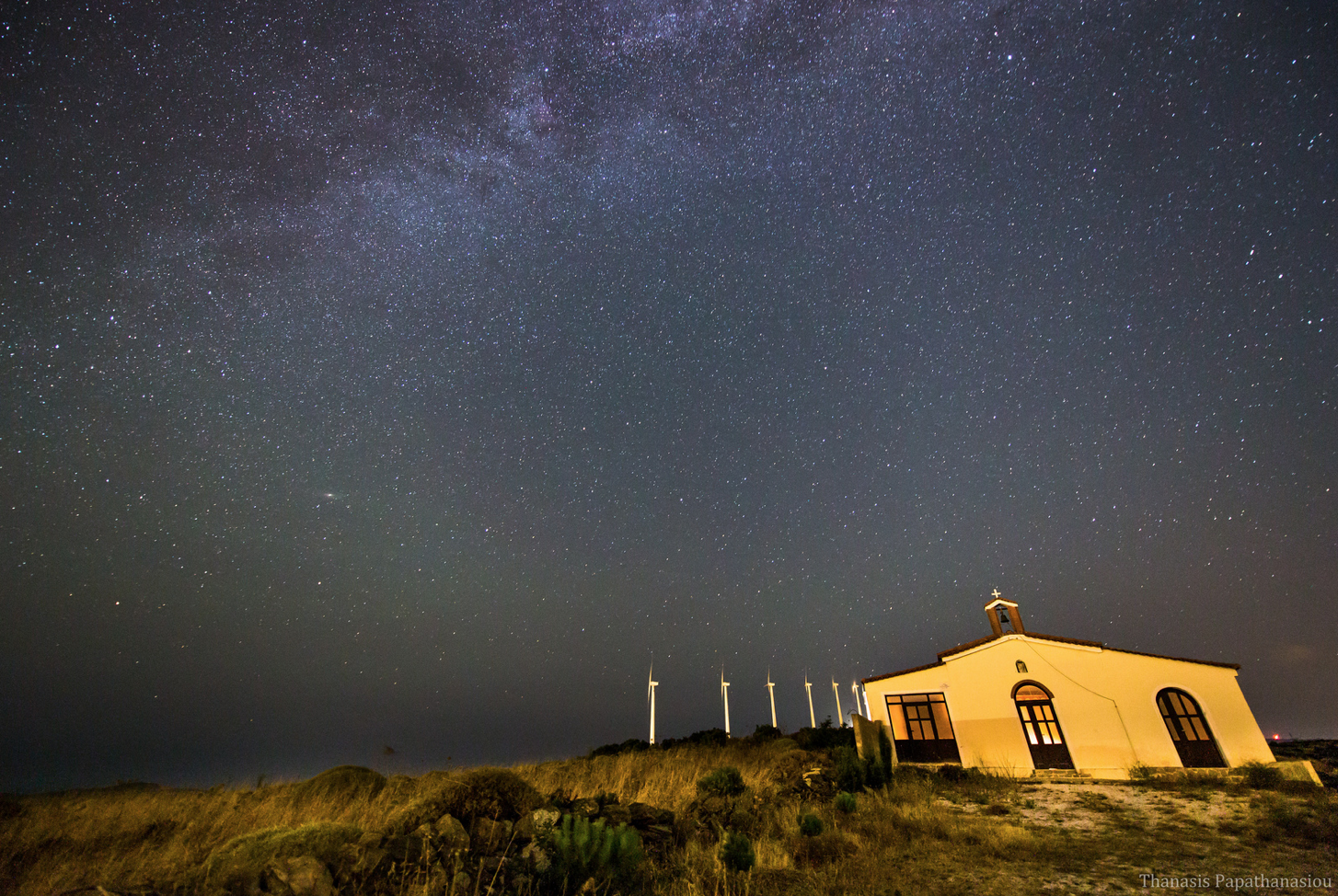
Photograph by Thanasis Papathanasiou

Have you ever seen a photograph that makes it seem as though all of the stars in the sky are spinning? Believe it or not, this effect is not difficult to reproduce, as long as you have the necessary equipment (and lots of patience).

The main thing to remember is that your camera is able to pick up on light that you can’t see with the naked eye. You could sit and stare at the sky all night and not see the stars budge a millimeter, yet leave your shutter open for a few hours and you’ll see that those stars are moving faster than you may have imagined. Scientifically speaking, you’re really capturing the movement of the Earth rather than the movement of the stars, but I won’t get too scientific.

Below are some tips on photographing star trails:

Equipment Needed

  • A camera that can shoot in ‘bulb’ mode
  • A wide angle lens (although any lens will work)
  • A tripod (very important!)
  • A cable release or remote shutter
  • Plenty of time
  • A clear night and a new moon

Choosing a Location

Photograph by Eivind Sorgenfryd

One of the most important decisions you will make when taking photographs of star trails is where you go to take the photographs. Because you’ll be using such long exposure, it’s important to be as far away from city life as you possibly can. Weather is another factor, since a cloudy night will not allow you to capture photographs of any stars, and if you shoot on the night of a new moon you’ll be able to see (and capture) many more stars. You can shoot during a crescent moon as well, but make sure that it doesn’t appear in your image.

If you can drive up to a mountain outside of the city, or are lucky enough to live in the desert or countryside, these will be your best locations. Too much light pollution and you’ll end up very frustrated and have no photographs to show for your efforts.

Consider also what is in the foreground and background of your image. You can choose to only photograph the sky, or you can add additional interest by photographing a subject in the foreground. Lighting the subject during the exposure is quite simple, and we’ll touch on that a little later.

Camera Settings

ISO: One of the most difficult aspects of shooting in low light is the amount of noise in the final image. In order to reduce the noise, shoot on the lowest ISO possible. Since you’ll be shooting on a tripod and using a long shutter speed anyway, this shouldn’t be a problem.

Aperture: Since your goal is to capture as much of the star’s light as possible, shooting wide open (at f/4 or wider) will allow you to capture more light per second than shooting at a higher aperture. Since the stars are moving much faster than you’re aware of, it’s important to capture as much light as possible. Since you’re capturing the stars, setting your focus ring to infinity will likely keep everything in focus. If you’re shooting a foreground subject as well, use a flashlight to focus before shooting. Don’t forget to set your focus ring to ‘manual’ so it doesn’t try to re-focus mid-shot!

Calculating Exposure: Since your exposures are likely going to be hours long, you’ll need to do a bit of conversion before beginning. To calculate the proper exposure for your shot, pump up your ISO to the highest setting. Play around with 30 second exposures at this ISO until you find one that suits your needs. Let’s say ISO 6400, f/5.6 and 30 seconds gives you the perfect exposure. In order to convert that to ISO 100, your new exposure would be f/5.6 and 30 minutes. With a bit of practice, you can start converting all of your exposures.

White Balance: I will always recommend shooting in RAW, so white balance is not a problem. For all intents and purposes, keep it on auto. If you want the scene a little warmer, shoot in ‘shade’ white balance. If you prefer it a little cooler, shoot in ‘tungsten’.

Lighting Foreground Subjects

Photograph by Justin MacLochlain
Photograph by Thanasis Papathanasiou

There are a handful of ways to go about lighting foreground subjects, and all are fun to try. If you’re interested in seeing the results before shooting a longer exposure, try these tricks out with a 30 second exposure to begin with.

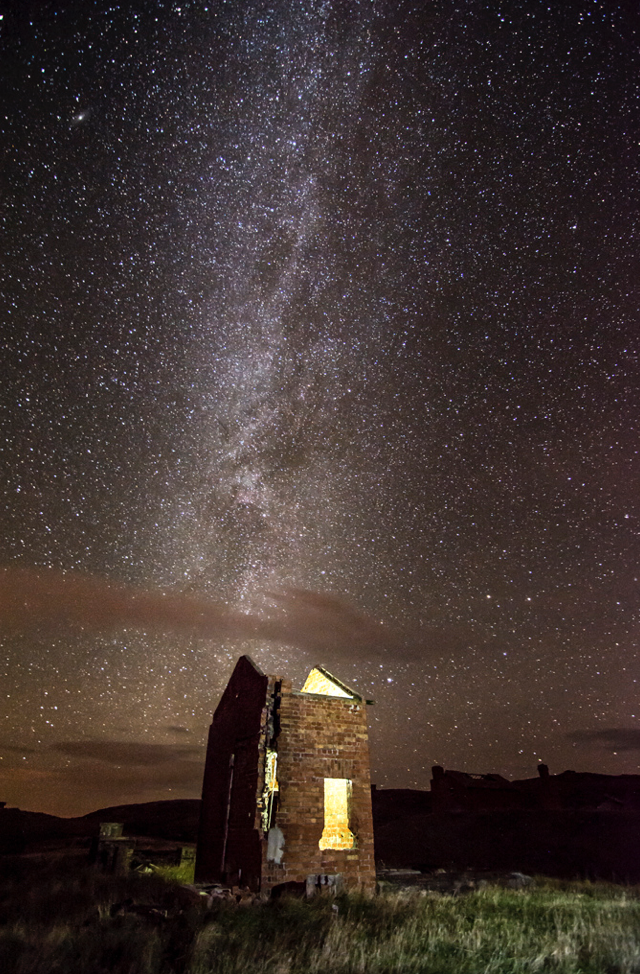
If you simply want something in the foreground to be lit up in the photograph, after opening the shutter, shine a flashlight on the subject (being sure to “paint” the entire subject with the light) for a couple of seconds, then turn the flashlight off and let the camera finish exposing. You’ll see in the resulting image that you have captured both the light from the stars and your foreground subject.

Another fun way to play around with light is using colored gels over your flashlight. This allows you to create a lot of very unique effects, such as lighting a window in an abandoned building or casting a rainbow of color through the trees.

Extra Tips

Photograph by Joe Parks
  • Shooting with a telephoto lens will create longer star trails in a shorter amount of time, while shooting with a wide angle lens will create shorter star trails.
  • Always shoot in RAW!! If need be, bring an extra memory card with you. This will save you lots of time and stress in post-processing.
  • If you’re interested in creating an image where all of the stars travel around one central point, locate the North Star. The North Star is the last star on the handle of the Little Dipper. Find the Big Dipper (easy to spot on any clear night), and then locate the two stars that are on the opposite side of the handle. If you follow these straight upward, you’ll run right into the Little Dipper. All of the stars will rotate around the North Star, so make sure that it appears in your frame.
  • Shorter exposures will result in beautiful star photographs but no rotation, so experiment!
  • Stay warm, stay safe, and have fun!

The New York Film Academy offers photography workshops in Los Angeles year round. Sign-up today to reserve your spot.

Dance Movie Cliches: Characters That Are Sure To Appear

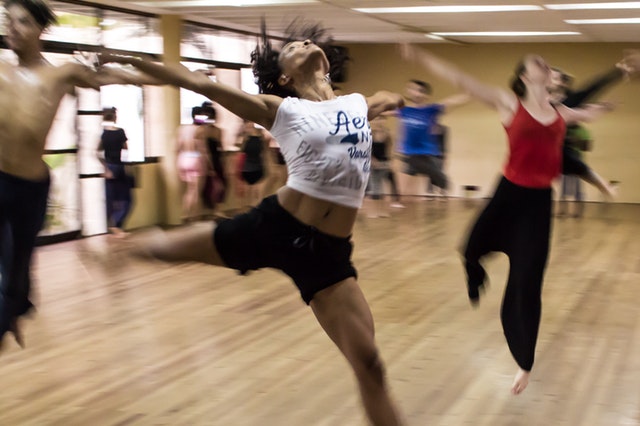
Over the last ten years, dance movies have really taken off—this is hardly surprising given that Hollywood quickly realized they constituted a ‘safe’ genre which are cheap to produce and almost always turn a profit. A sad side-effect of this is that the genre is ridden with overused tropes—the same tired plot points, the exact same pacing, and the same one-dimensional cliched characters.

Oh, the characters; if you’re studying in a dance program, a fan of the genre or even writing a dance movie yourself, here’s five of the most cliched characters you’ll no doubt recognize from every dance movie ever made….

Privileged White Girl Dancer

Classically trained and deeply passionate about dance, the beautiful, athletic female lead has everything going for her… except that her middle-to-upper class background and overly protective parents (see below) have given her a rose-tinted view of the world.

Of course, her perfect world will be upturned and her values challenged as a series of (predictable) plot points have her questioning her beliefs. Enter the Tough But Sensitive Urban Kid…

Bonus points for:

– Dancing alone in a room, unaware of being watched

– Learning to appreciate hip-hop dancing

– Self-doubt

– Overcoming of self-doubt

Tough But Sensitive Urban Kid

He’s a disadvantaged street urchin from a broken home, constantly trying to do the right thing but always becoming entangled with the wrong crowd. He’s got a rap sheet of minor crimes but has a big heart and a love of dance (whether or not he realizes this at the start of the movie is optional). A chance encounter will see him meet Privileged White Girl Dancer, who’ll help him better himself and his circumstances with the gift of dance while he in turn shows Privileged White Girl Dancer how the real world works.

After culture differences are resolved through some minor conflict, Tough But Sensitive Urban Kid will hook up with Privileged White Girl Dancer in the third act.

Bonus points for:

– Having an alcoholic father

– Having a younger sibling for whom he wants to create a better life for

– Tough But Sensitive Urban Kid’s group of friends doesn’t understand what he sees in Privileged White Girl Dancer

Overbearing Parent

The guardian of Privileged White Girl Dancer, who doesn’t necessarily have to be blood related.

Overbearing Parent means well and wants Privileged White Girl Dancer to succeed academically, but would rather she gave up her dreams of being a dancer and focus on less creative pursuits. Tensions will be further heightened when Tough But Sensitive Urban Kid is introduced and appears to be having a bad influence on Privileged White Girl Dancer, and the stakes will be raised in the third act when Overbearing Parent presents her with some kind of ultimatum. Against their wishes, however, Privileged White Girl Dancer continues with her dancing but by doing so convinces Overbearing Parent that her decision to strike out on her own is a good one.

Bonus Points For:

– Threatening to move Privileged White Girl Dancer out of the area or to a different college

– Weeping apology after realizing they were being too overbearing, usually after changing their entire worldview during the course of a 3 minute dance routine

Mercutio

The Mercutio character is one of Tough But Sensitive Urban Kid’s placeholder friends. The only purpose he serves is to die at the end of the second act, forcing the other characters to reevaluate their lives and the recent choices they’ve made.

Bonus Points For:

– Having the only funny lines in the film

– Accidentally making an enemy in a rival gang, which ultimately leads to his demise

The Man

Be it a development company looking to close down the community recreational hall, a college professor who deems dance as an inferior topic of study or the dance management company who hold all the keys, every dance movie needs an evil corporation entity to rail against. Thankfully, the underdog always wins in the end through the power of dance. Naturally.

Bonus Points For:

– Literally having guys in black suits

– “We’ve got to save the dance hall!” 

The Marriage Of Los Angeles And Video Games: Interview With Robert Nashak

Los Angeles Video Games
Photo provided by Robert Nashak.

Robert Nashak teaches in the game design program at NYFA’s Los Angeles campus. He is currently chief operating officer of a virtual reality gaming startup and has previously held executive positions in games at Electronic Arts, Yahoo, Glu Mobile and BBC Worldwide.

So who better to comment on the video game industry and environment in the City of Angels? Robert explains why Los Angeles is the Mecca of video games and what is to come…

NYFA: The Guardian recently called Los Angeles the city with the most powerful brand in the world, beating out New York, London, and Paris. Did video games have something to do with that?

Robert Nashak: Totally. The Guardian based their criteria on things like job prospects, physical assets like our beaches and great weather, but they also looked at how much buzz the top cities get on the internet. That’s what tipped the balance towards LA.

Sure we have celebrities and media that generate tons of buzz. But let it be said, games have a huge part to play in how much LA gets talked about on the web.

Think about it. LA is home to the world’s biggest video games company (Activision Blizzard), the nation’s largest games tradeshow (E3), the makers of one of the world’s most popular online games (Riot Games), not to mention IndieCade, which has been dubbed the “Sundance of videogames” by the LA Times.

Indie game designers are fueling the growth of the video game industry right now and LA hosts its most important yearly event. What other city in America has so much video games activity happening?

NYFA: LA’s the capital of movies and TV and you’re saying LA is the capital for video games too?

RN: Absolutely. Southern California is as important for gaming as it is for movies and TV. And I don’t see that changing.

I truly believe that the famous game designer Eric Zimmerman is right. Games are to the 21st century what the moving image was to the 20th century.

What’s so awesome about LA is that it’s the center for all of these forms of media and is fast becoming a huge driving factor in that transition.

NYFA: We’re used to seeing film and television depictions of Los Angeles.  What about video games?  Has LA played a role in video games?

RN: LA is one of the most photographed and filmed cities on the planet. But depictions of LA in video games have made it one of the most mapped and modeled cities as well. Los Angeles has been featured in over 50 video games to date, including L.A. Noire, Midnight Club: L.A., and True Crime: Streets of LA, just to name three.

NYFA: So last year’s release of Grand Theft Auto 5 set in Los Santos, a fictionalized version of LA was nothing new?

RN: What was new and exciting about GTA5 was its sheer scope in size and its attention to detail. GTA5 is the largest open-world game ever set in Los Angeles and one of the largest open-world game ever released.

Rockstar Games will sell something like 25 million copies of GTA5 in its first year. That’s just about twice the population of greater Los Angeles and six times bigger than the city of LA.

In the next twelve months more people will spend time in a virtual version of Los Angeles than in the real Los Angeles. How cool is that?

NYFA: What makes LA so appealing as a setting to game developers like Rockstar?

RN: Los Angeles is the perfect city setting for GTA5’s most popular gameplay mechanics like shooting and driving. But its appeal goes beyond just cars and crime.

LA is the center of the film and television industry. And the video game industry is extremely interested in becoming the biggest form of entertainment, outpacing movies and TV. The $1 billion in sales that GTA5 generated in its first three days (faster by far than any movie in history) suggests they may just be succeeding.

NYFA: There’s a long history of movies based on games and games based on movies. Why do games based on movies and television shows have such a bad rap?

Because they usually suck. I should know. I’ve made a lot of those games.

Stand-alone video games based on movie and television licenses almost always fail to deliver—critically and commercially. And this is not a new phenomenon. The 1983 burial in the New Mexico desert of millions of unsold copies of the Atari 2600 video game ET: The Extra-Terrestrial was a harbinger of things to come.

Video games are not like toys, bed sheets, and other merchandise that you can just license to a partner and walk away. Games demand more than just licensing deals to succeed.

That’s because fixed timelines that require games to hit day and date with the movie limit the game developer’s ability to deliver quality. Game teams also face limited access to film assets and creative approval nightmares.

All of that impacts quality.

NYFA: Sometimes games based on movies and television shows work, don’t they?

RN: You bet. It happens when film and TV producers are involved in game development from the beginning (Chronicles of Riddick). It also happens when game creators are not constrained by the creative elements of movie franchises (Batman: Arkham Asylum).

I’ve found that when multi-year long-term franchise relationships are forged between movie studios and game publishers you can get good results.

Electronic Arts got this right with Harry Potter. A development team was built up over many movie sequels and given access to the production team and film studio. It resulted in over a $1 billion in games sales.

NYFA: What about movies based on games?

RN: Did you see Prince of Persia? The record is even more dismal. There’s a long list of hilariously bad movies based on games, but I think the tide could soon be shifting.

Companies like Electronic Arts and Ubisoft are taking more control over the movie development process and exerting more control over their franchises. And that’s a good thing.

NYFA: How has mobile gaming changed the landscape?

RN: Game publishers have reduced their console and PC retail offerings to focus more on original franchises. Only blockbuster global movie franchises with proven legacies stand a chance at seeing retail games. Mobile is where they action is.

The Hobbit game for mobile/tablet was a huge money maker and critically well-received. Mobile has a lower barrier to entry in terms of costs so making games for mobile devices based on TV shows and films is a more efficient way to extend those franchises to platforms people are playing on.

NYFA: What’s the thing you’re most looking forward to when it comes to games and movie development?

RN: It will interesting to see what happens with EA’s acquisition of Lucas Arts. It’s an effort to create better production synergies between the new Star Wars movie and games and could well be a harbinger of things to come.

REEL Recovery Film Festival

REEL Recovery Film Festival

Located in nine cities around the Unites States, the REEL Recovery Film Festival, presented by Writers In Treatment, is now entering its 6th year. The multi-day event showcases filmmakers who make honest films about addiction, alcoholism, behavioral disorders, treatment and recovery. The festival is a celebration of film, the arts, writing and creativity.

On the whole, W.I.T.’s primary goal is to save lives through promoting and providing treatment as the best first step solution for Addiction, Alcoholism and other Self-Destructive behaviors. They also offer Educational, Prevention and Awareness Programs through their W.I.T. Author/Outreach Series. Similar to Betty Ford’s mission to bring addiction out of the closet twenty-eight years ago, the Writers In Treatment collective will work to bring recovery out of the closet now and forever.

Screenings typically encompass an eclectic array of contemporary and classic films, documentaries and shorts from American and international, first-time filmmakers and industry veterans.

For New York Film Academy students in New York City, the 3rd annual NYC REEL Recovery Film Festival will take place at Quad Cinema (34 W. 13th Street, NYC, NY 10011) from September 26th to October 2nd.

How To Master Ocean Photography

Ernie Kwong
Photograph by Ernie Kwong

As the summer is winding down, so are family vacations to the beach. While mid-summer may seem like the ideal time to take a trip to the shore, photographers may think otherwise. Those who are looking for the perfect picturesque moment may find that every beautiful landscape is covered in tiny children running around. When you visit the beach during the early morning, late evening or off-season, you’ll find a much more peaceful environment to work in.

The sea itself provides a sense of relaxation unlike anything else. While visiting the ocean at any part of the day can provide a sense of peace, there are particular times during the day where the ocean becomes even more magical and inviting. Once you recognize these particular times (which are favorite times of most photographers), you’ll be able to capture magical moments that cannot be captured any other time.

Equipment Needed

–    A digital camera (preferably a DSLR)

–     A lens with a wide angle of view (both zoom and prime are welcome)

–     A tripod

–     A neutral density filter (optional)

What Exactly is a Neutral Density Filter?

You may be wondering what exactly a neutral density filter is and how to use it. A neutral density filter works to block out some of the light that goes through your camera lens, allowing you to shoot at longer shutter speeds even in the middle of a bright, sunny day. It looks like a dark piece of glass that you screw on the top of your lens, and is offered in both regular and graduated versions. If you’re aiming to shoot at longer exposures during the day, don’t opt for the graduated version. These are specifically designed to darken the sky in images where it would be overexposed otherwise, and won’t darken enough of the photograph to make a longer shutter speed possible.

Camera Settings

Camera settings for photographing seascapes will differ depending on the weather, time of day, and desired outcome. However, there are a handful of specific tips and tricks that you may find helpful throughout this process.

ISO

Since you will be using a tripod, you don’t need to worry about bumping up your ISO to get a proper exposure. Because of this, it’s important to shoot at the lowest ISO you possibly can while still maintaining a proper exposure. The higher the ISO, the more noise in a photograph, so staying below ISO 400 is your best bet.

Shutter Speed

Have you ever seen a photograph of water so smooth and dreamy that you couldn’t even believe it was real? When photographing moving water, using a slower shutter speed creates the look of smooth, velvety water. While this is an easier technique to use when light is dim (such as dusk or dawn), you can use a neutral density filter to block out some afternoon light in order to use a slower shutter speed during the day. Some photographers place their camera on a tripod, use a neutral density filter, and keep their shutter open for up to 30 seconds at a time. Again, this is up to your own personal desires, and you may play around with your shutter speed to see different outcomes.

Aperture

Since you are focusing on landscapes, you’ll want to shoot at an aperture of f/11 or smaller to ensure that the entire seascape remains completely in focus. If you’re photographing a particular person or object in front of the seascape, you may be interested in using a wider aperture (such as f/4 or wider) to focus solely on that particular subject.

Best Times to Shoot

If you’ve been perusing photography forums, you may have heard of what photographers call “the blue hour” or “the golden hour”. The blue hour is the hour right before sunrise or right after sunset, while the golden hour is the hour right after sunrise or right after sunset. The blue hour is known by its eerie blue hue, while the golden hour is known by its magical golden hue.

The Blue Hour

Arno Dumont
Photograph by Arno Dumont

Shooting during the blue hour means that not much natural light will be available, so plan on using a tripod and shooting at a longer shutter speed (no neutral density filter needed). This extended shutter allows your camera to pick up on the magical blue tones that may not be noticeable to the naked eye, and creates a beautiful blurred effect on the water while keeping everything else crystal clear.

If you want to further enhance the blue tones in your photographs during this hour, shoot on ‘tungsten’ white balance. The tungsten setting cancels out orange tones in your photograph, leaving only the beautiful blues behind.

The Golden Hour

William McIntosh
Photograph by William McIntosh

Shooting during the golden hour allows you to have a bit more natural light to work with, but still plan on bringing your tripod with you. The golden hour enhances silhouettes and casts a magical, hazy glow over the seascape.

If you want to enhance the golden tones in your photographs during this hour, shoot on ‘shadow’ white balance. This setting aims to cancel out the cool tones of shadows, leaving only the beautiful orange glow behind.

Get Creative!

Dru Dodd
Photograph by Dru Dodd

While shooting during these times and using these particular techniques will allow you to produce beautiful, professional quality seascapes, don’t let yourself get stuck in a creative rut! Photograph in the middle of the day, at sunrise, at sunset, and play around with different foreground subjects (such as a starfish on the beach) and background subjects (such as a boat or lighthouse in the distance). If you’re feeling up to the challenge and are especially careful, shooting during a storm can create stunningly beautiful images. Try your hand at taking engagement photographs with the sea as a backdrop, photograph a product line in front of the waves, or shoot from different angles to get more interesting results. The possibilities are endless!

To learn more about ocean photography enroll in a MFA in Photography at the New York Film Academy.