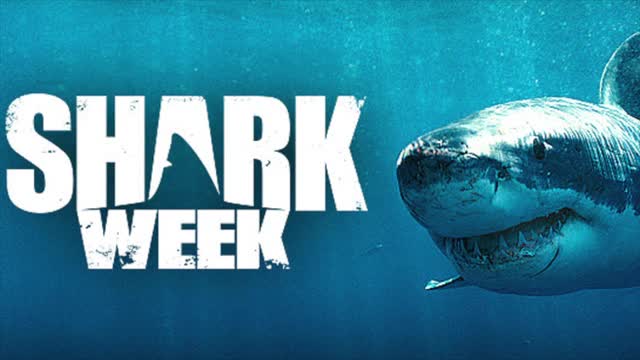
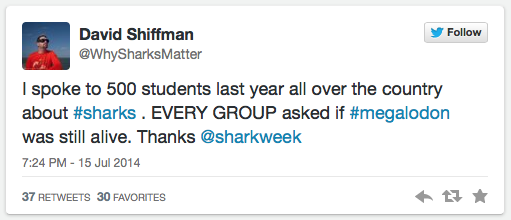
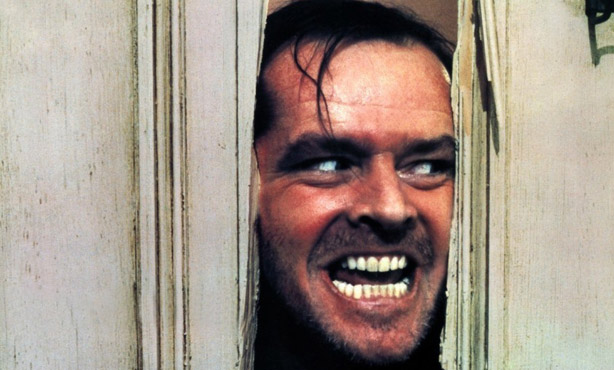
The Discovery Channel are at it again, putting out documentaries for this year’s Shark Week which are more full of pseudoscience and sensationalism than any actual substance.
But surely it’s all just a bit of entertainment, right?
No, not necessarily. Those in documentary filmmaking have lambasted the productions and techniques, while those involved in related sciences and shark conservation dismay at the repercussions it all has. Here are the five worst aspects of the fake Shark Week documentaries, and why Shark Week (in its current guise) can actually cause very tangible harm.
It’s Dangerous
All it took was one single movie to give the entire world a major phobia of sharks; had Peter Benchley known what effect his novel Jaws would have on the world when turned into a movie, he’d never have written it.
The movie adaptation went on to cause a massive dip in beach tourism and a huge rise in shark hunting—given everyone was convinced sharks were little more than soulless murderers, it hampered conservation efforts and turned the oceans into a free killing zone. “Some guys went around saying, let’s go prove ourselves and shoot great white sharks. There were people who did monster fishing. They always existed and they suddenly found that white sharks were popular and they could raise their prices,” noted the Jaws author in an interview, who maintains that he knew little about sharks at the time of writing (few did).
Obviously, Jaws was a cultural juggernaut and the fake Shark Week documentaries are… well, just a bunch of throwaway documentaries, but sensationalist (and unrealistic) material about sharks only serves to rekindle the fire that Jaws started in the first place.
It’s Damaging
Alongside the risk this kind of misinformation and scaremongering can have on the sharks themselves, it can potentially damage scientists who take part in these fake Shark Week documentaries (given they’re widely viewed as pseudoscientific nonsense).
So why do highly-educated specialists in these topics agree to ‘play along’ with the Discovery Channel?
In a nutshell, they don’t.
Shark researcher Jonathan Davis was asked by a Discovery Channel crew to show them around the Louisiana bayous last year and talk to them about his work with sharks. It was revealed this week, however, that it was the producers’ goal to misrepresent Davis all along—all questions about what the show was about were ignored, and they ended up butchering his interview footage to make it appear like he was believed the ‘Megalodon’ shark was out there (when in fact he said the exact opposite).
Naturally, when conducting documentary filmmaking there will always be interview subjects who are unhappy with the finished product. But whichever way you slice it, this practise of outright lying and misrepresenting what they said in an interview is downright unethical and shows contempt for the person who kindly lent their time and expertise.
It Opens the Door
Given its long history and popularity, the Discovery Channel is inadvertently a big influence on popular culture. Shark Week has given rise to a slew of other shark-related media; the runaway Syfy hit Sharknado was an innocuous example which was almost satirical of the fake Shark Week documentaries, but not all of it has been so tongue-in-cheek.
Lowest-common-denominator ‘documentaries’ have followed, and they usually come with titles such as “Most Lethal Beaches!,” “World’s Deadliest Sharks!,” or “Top Five Eaten Alive” (an actual Discovery Channel title). They do nothing for promoting the idea that sharks are more endangered than dangerous.
Of course, you could argue that nobody buys into the fake Shark Week documentaries or any of the sideshows, but….
It’s Misleading
People are genuinely mislead by the pseudoscience the Discovery Channel has been putting out of late.
Never forget that we live in a world where there are still moon landing conspiricists out there, 45 years after Apollo 11 touched down. The Discovery Channel has a huge audience—between 2 to 5 million people tuned into Shark Week last year—and coupled with its perceived level of authority, it’s in a prime position to dupe and confuse many thousands of people who tuned in to learn something about the world.
It’s Disappointing
Shark week has been on our screens since ’88, so over the decades it has become something to look forward to in many households as a bit of family viewing. Unfortunately, those days are now gone for anyone looking to sit down with their kids and enjoy a fine mix of education and entertainment.
It’s extremely disappointing to see a well-established franchise suddenly descend into absurdity in just a couple of years, and it’s simply too much hassle to try and explain to younger viewers what’s fact and what’s fiction (and also explaining that there’s aren’t gigantic Cthulu-esque creatures prowling the depths and targeting humans).
But as long as ratings are high, Discovery’s integrity be damned.
It’s up to the viewers at home to decide how much they value educational programming. It’s up to scientists to refuse to work with the channel.
And as long as the Discovery Channel puts out fake documentaries without making it very clear that the material is fiction, it’s up to those that care about facts to do that job for them.
Take your photography skills to the next level with underwater photography. You can capture beautiful landscapes and everyday living but how often can you capture the essence of a world so overlooked? There is also the opportunity for an experience of a lifetime diving into these waters to discover an entirely different way of life. John and Dan Cesere are brothers who offer all-inclusive underwater photography classes at the Four Seasons Resort Maui at Wailea.
This dynamic duo teach photographers how to take stunning photos of underwater sea life while dealing with erratic currents and light balance. They also offer some tips to the novice to master before diving in deeply into this deep sea adventure.
1) Go Zoom-less
Although zooming may lead you to believe that you will get the best photo, it will not on this dive. For a high quality and detailed image, use your body to get closer to the subject. Remember shooting through the water means you have a whole other array of challenges including color, clarity and light distortion.
2) Engage the Subject
As a photographer, you evoke emotion and personality from your subjects. The same is true of sea life you encounter. You want to be safe in your approach so even having a basic understanding of how the sea life you will be capturing interacts is a great start. Let your image connect with its audience by drawing out these sea creature’s innermost character.
3) Be Familiar with the Sea Life
Each sea life reacts differently to foreign visitors. For the best shots its imperative that you learn about the subjects you will encounter. Smaller fish like a clown fish frequent the same places, so it’s your job to keep coming back so they know that you will not do them any harm and you are only a friendly admirer. With the larger creatures of the sea, it can be our own fear that inhibits us from getting the shot of a lifetime. It may take a few encounters for you to become comfortable with sharks or humpback whales. Once you conquer your fear, one breath at a time, you will sea how drastically your photos improve by trusting and understanding your subjects.
4) Preparation is Key
Plan the areas you will travel, the sea life you may encounter and have your camera around at all times.
5) Enjoy the Experience
Even if you don’t land the shots you were hoping to, diving into the ocean to discover another kingdom can be the experience of a lifetime. You will also see that once you set your mental frame to relax and enjoy the experience, this outlook will certainly translate into your images. Being happy and relaxed will go a long way when it comes to engaging the sea life around you and capturing the best underwater shots.
In this tech savvy world, we snap and send. Most photos are decent on mobile technology but what about the photographer that makes his livelihood out of capturing these amazing events on the go? EyeEm is the photo-sharing, must-have app which has already gained the endorsement of 10 million users. This app allows its user to focus on photography while finding the perfect expression between eye-popping photography and a clear conversational message.
This app creates the visual focus for stunning photos with a jet black background which enables the artist to eliminate all distractions and concentrate on the detail within the photo itself. With the one-touch, easy-to-use zoom feature, users receive a full-resolution photo that doesn’t sacrifice the appearance nor fidelity of the photograph. Photographers capture intricate details that no other app can quite get a handle on which truly distinguishes the snap and good luck shot to premium artistry. Users and observers can engage and discuss these photos on the go rather than posting a comment.
In this 10 million and growing EyeEm community, users not only engage with like-minded photographers but they also have the chance to enter contests labeled “Missions” and win prizes from monetary incentives to an Xbox One. If that isn’t enough to convince the average user to join this community maybe the opportunity for a lucrative publication of your photo will. Huffington Post and FourSquare are all hosts of missions that ask this community specific tasks to capture in photographs like “Where do you Swarm?” from FourSquare. The winner not only receives a nice chunk of change ($300) but their photo receives massive attention by being hung right on the popular wall of FourSquare’s New York City office. Talk about primo exposure.
EyeEm engages users with these Missions and users jump at the opportunity to show their skills. Creative challenges are regularly created for this eager and skillful community of photographers. After all, you could generate a new business or career all from the exposure of this one, eye-capturing and thought provoking app. EyeEm is available to download on iPhones, iPads and there are also versions for Android.
Seeing the world through a camera lens can be an adrenaline filled career but it can also be away to bring great awareness to causes that we hold dear. For countries that are devastated, year after year through war and poverty, photographers have the chance to shock the masses with photos of clear abuse, impoverishment and violence. Others use their talent to uncover the travesties that are occurring and bring international attention to the cause.
Photography doesn’t just hold a place on the international political scene. Placing oneself right in the midst of dangerous creatures such as sharks like the underwater photography and expedition leader Andy Murch does, he can portray the long, harboring struggle that these sea animals have long faced.
Murch is able to capture the brilliance of these sea creatures in their natural habitat while seemingly condemning fisheries for their mistreatment of various shark species through shark finning and overfishing. Murch began his wild fascination of underwater life as a youth, traveling abroad to more than 70 countries and discovering the great mysteries of the land and sea life down-under. He currently shares his love of sea life with other explorers, leading them on under water tours catching magnificent views of sharks, dolphins, whales and squids among others.
Opening the public up to his message took some trial and error through his journey of photography. Commencing his journey by distancing himself from these loved and feared creatures, he realized that he would never be able to truly portray his message of the importance of maintaining wildlife habitat and preservation of sea animal life without getting up close and personal. The deep sea adventurer could then snap ferocious shots that were thought provoking and made it apparent to observers “are we ready to say goodbye to this amazing creature, because it is in grave danger of becoming extinct”.
As always, Murch plans and executes his trips with caution and awareness from the amount of food in the water to the gear he wears. Understanding these creatures, is part of the amazing images that he captures because he can be entirely focused on what’s at hand rather than whether he will be the target of one of his muses. For the majority of his photo shoots, there is no need for cages because he understands that sharks know the difference between divers and fish food through their distinct scents and he knows when to call it a day when he can observe the sharks becoming too agitated by the amount of food or their presence.
Capturing wildlife in their natural habitat can create an overwhelming amount of support for a cause like overfishing and sea life extinction. These images promote much more than a ferocious, mouth wide open, teeth blaring shot of a shark coming right at you. Through the eye of the lens, photographers like Murch are not shocking their audience, they are creating an awareness that transcends words and motivates the public to make a change.
Before you hire a photographer for your big day, contemplate the idea of having your photos taken from a drone overhead. Yes, that’s right. The wedding photo industry has taken an entirely new perspective on photography by the use of drones for their shots. However, there is controversy regarding the legality of using drones for this purpose.
Especially in small towns, where everyone is limited by where to hold the ceremony and are stuck in the same old wedding routine, for those couples looking to venture outside the norm, you can turn an average, boring old wedding into an atypical one. Most people haven’t even heard of drone wedding photos which may make you one of the first to have your special day captured through this technology.
Dale Stierman is a leader and one of the first wedding photographers to capture these special moments by the use of a drone. The drone is equipped with a camera to take these spectacular shots. The photos that these couples receive in return are unique and cannot be replicated without the use of a drone.
The first thing that may come to mind when you hear the word drone, isn’t necessarily wedding and more like war. But isn’t that refreshing to finally be getting something amazing and wonderful in return from a drone and really change the negative connotation of the use of a drone. Why not put it to some good?
Dale stated that at first advertising drone was a bit alarming to potential customers so he changed the way he introduced the new photography technique as ‘quad-copter’. This less known explanation of drone caught on, creating a personal and warming touch to wedding photographs and less dangerous and high tech as introducing the technique with the terminology ‘drone’.
The debate over the legality of using drone technology for wedding photos comes primarily from the Federal Aviation Administration whose guidelines dictate that drones must fly below 400feet, avoiding flying over areas that are greatly populated and they cannot be used for commercial purposes. The FAA does grant permission for photographers to fly a wedding drone but without this permission, these drones are actually illegal to fly and capture photos.
From a photographers perspective, using drones enables photographers to capture the best images. With drones, photographers are able to take shots at different angles and get different lighting which can take an ordinary photo and make it remarkable. Dale explains that he uses the drones for this particular purpose of capturing wedding photos and uses the utmost respect for the FAA by not shooting photos that are anywhere in the close proximity to hospitals and airports.
Although an unlikely first thought, drones certainly maybe the center of attention for this year’s trends in wedding photography.
While most game developers have a passion for gaming, at the end of the day it is still a business. That means that attracting players and making sales is a top priority. In turn, that makes marketing a priority. Here are three ways that game marketers can use gaming communities as a gold mine for growth.
Tap Into Existing Communities
Blogs, social networks, forums, and other online communities have a lot of influence over purchasing decisions and what games become popular. You can make a lot of headway before you even start by studying what is hot and trending on these communities.
Is there a certain type of game that people talk about? Are there specific elements that the popular games have in common? Map it out and see if you can reverse engineer the specifics of what can add to your game’s popularity before you start production (or even before you come up with an idea).
Create Your Own Community
Community matters a lot in gaming; especially now that the internet is so ingrained in our everyday lives. Most popular games have a thriving online community that interacts and plays together. That goes for everything from RPGs to first-person shooters to sports games. And community is the backbone for most of the popular mobile app and social app games.
A significant part of the fun of games is interacting with others and sharing the experience with other gamers. If you can support a community then you have already gone a long way into at least giving your game the chance to become popular.
Marketing To (And Within) Gaming Communities
You can’t create a game and hope it becomes popular simply because it’s great. Great is the price of entry. You have to invest in marketing. Great marketing is the reason that some not-so-good games become profitable. At the same time, lack of marketing is the reason why some great games never see the light of day.
The good news is that it’s easier than ever to leverage communities to get exposure for your game. The first, and most obvious choice, is to go directly to the popular gaming sites and target people interested in the genre of game you are offering. There are websites that focus on specific genres, or you can potentially advertise on more general gaming sites but limit the ads to the categories of interest.
Additionally, you can run advertising on social networks. Social networks are a gold mine because users willingly share their interests. Use this information to target those people that would be the most open to exploring your game first.
Finally, build marketing into the game. Provide players with an incentive to on-board new users for you.
One example of this is providing existing players an incentive for sharing the game and inviting new players on social networks. Mobile app games are great at doing this. But you can also add this type of functionality into console and computer games.
The incentive does not have to be in exchange for social network interaction. You can just as easily provide referral codes.
No matter the direction you choose, just remember that existing players – your community – can be a gold mine for growing your game.
For fans of film and music, there isn’t a more ideal genre than the music documentary. While the genre used to be primarily the provenance of record label produced promotional movies and concert films—though early exceptions like Wattstax, Gimme Shelter, and The Last Waltz are essential viewing—the past two decades has seen a decided uptick in the scope and quality of music documentaries, with the fantastic 2013 doc Twenty Feet from Stardom snagging the Best Documentary Oscar at this year’s Academy Awards. And as many of these films are difficult to see in the theater outside of the festival circuit and major cities, Netflix has become something of a mecca for the music documentary obsessive. Below we highlight several of the music documentaries—choosing to focus primarily on more recent films with the exception of one undeniable classic that still resonates today—currently available to stream on Netflix that have impacted us the most along with a bonus list of additional music docs on Netflix that are essential viewing for music fans of all stripes.
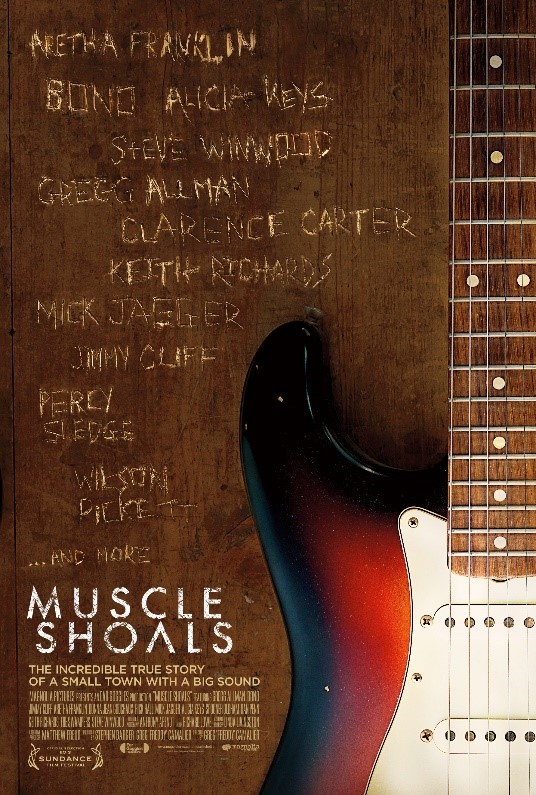
Muscle Shoals
An eye-opening and classy doc that will have you wondering “How did I not know this?” within the first five minutes, director Greg ‘Freddy’ Camalier’s 2013 documentary takes the viewer on a journey down to the tiny town of Muscle Shoals, Alabama where starting in the 1950s record producer Rick Hall established his FAME studios. Over the course of the decade he and his in-house rhythm section The Swampers—who went on to establish their own legendary studio—established an unlikely haven for such luminaries of soul and R&B as Percy Sledge, Aretha Franklin, Wilson Pickett, Etta James, and countless others who recorded an unbelievable number of hit songs. But besides shining a light on a legendary pocket of musical history, what really makes this doc stand out is the heartfelt sincerity and reverence that both the filmmakers and the film’s participants have for this extraordinary legacy.
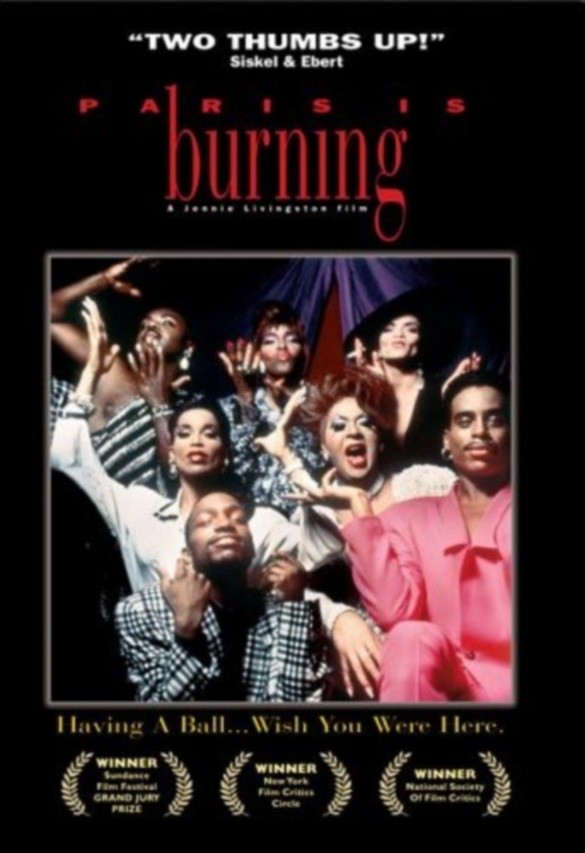
Paris is Burning
At the risk of penning a treatise on how important and relevant this documentary remains today, let’s just cover the essentials. Filmed over the course of seven years spanning from the mid- to late-1980s, director Jennie Livingston delves into the ball culture that thrived in New York City and served as an essential meeting point for African-American, Latino, gay, and transgender communities. It also details the origins of the dance style of “voguing” while exploring how this intersection of underground and mainstream cultures both benefited and hurt the scene. In short, if you are unfamiliar with any of the aforementioned, rectify that now and watch this beautiful and emotional film.
The Punk Singer
It’s hard to overstate just how important Bikini Kill and Le Tigre frontwoman Kathleen Hanna’s contribution to music, feminism, and the Riot Grrrl movement as a whole has been, and Sini Anderson’s 2013 documentary is a visceral and loving testament to a figure whose influence is still being felt. But what truly puts this documentary over the top is the footage of early Bikini Kill shows, where the political and musical energy literally leaps off the screen—even if you think you know everything there is about Hannah, this documentary is sure to surprise you in one way or another.
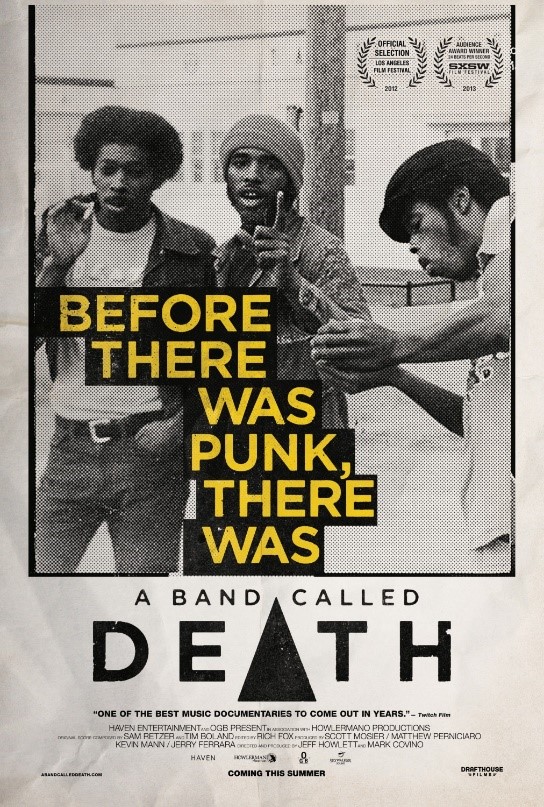
A Band Called Death
One of the greatest joys of watching a truly outstanding music documentary is when its subject matter will ultimately completely rewire how you perceive music history, which is just what A Band Called Death does. Years before The Sex Pistols and The Ramones introduced punk to the mainstream, three brothers in Detroit were holed up in their bedroom pioneering a sound that essentially was punk before such a genre existed. However, due to the intensity of their sound and their less-than-market-friendly band name, the band failed to secure multiple record deals that would have introduced them to the greater world. This documentary does a significant deal to rectify this truly monumental oversight.
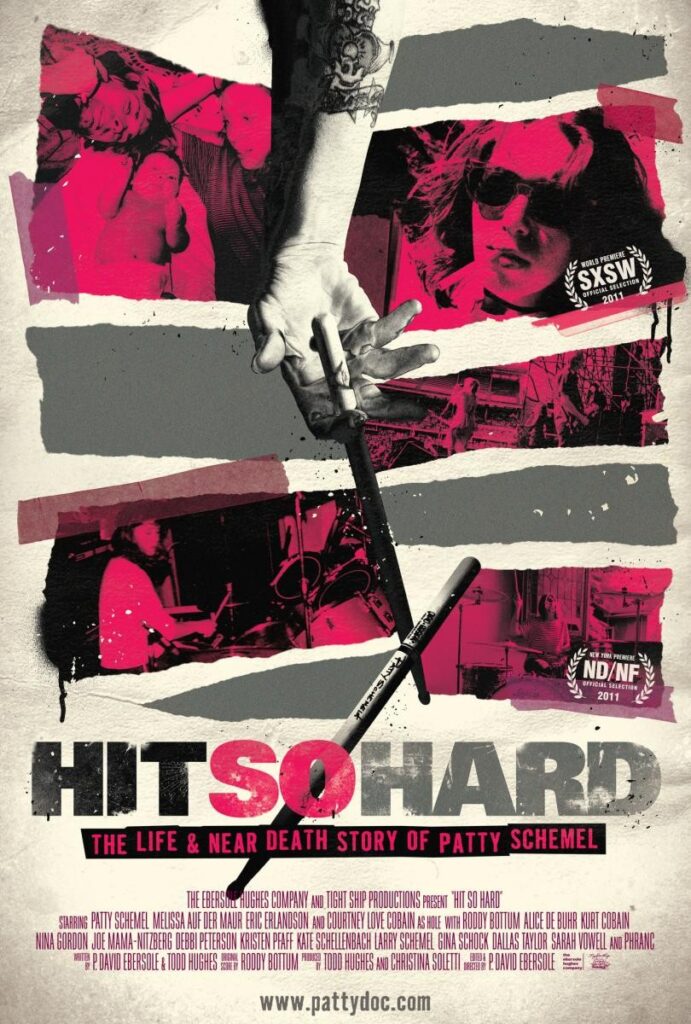
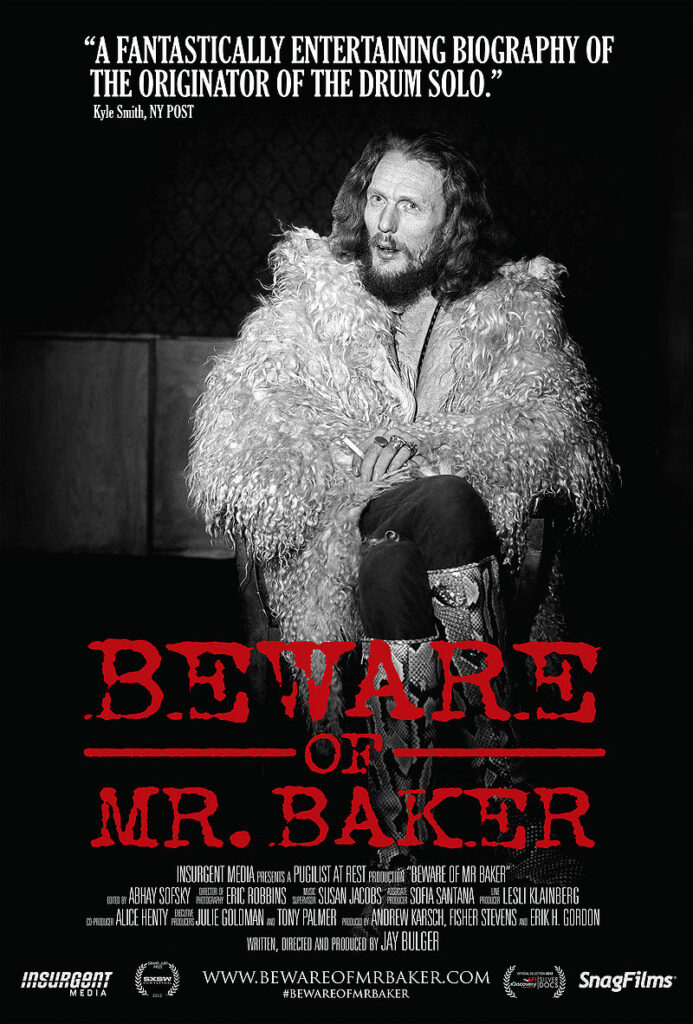
Hit So Hard and Beware of Mr. Baker
An essential double feature for any drummer (or fan of the skins), both Hit So Hard and Beware of Mr. Baker chronicle the tumultuous journies of two different generation-defining drummers whose extraordinary talents belied serious problems of addiction and mental health. In the case of Hit So Hard, the viewer meets Patty Schemel whose tough-as-nails style helped to shape the grunge style of drumming, which she refined while playing in the band Hole, but whose sonic innovation was undercut by her drug addiction and eventual homelessness (though she is now back on track and playing drums in the pop punk group Upset). Beware of Mr. Baker focuses on the legendary Ginger Baker whose pummeling and ferocious style added some serious backbone to the psychedelic sounds of groups like Cream, but whose inability to, well, function in society—as quickly evidenced in the opening scene where he strikes the movie’s narrator—has placed him on a seemingly endless feedback loop of prosperity and poverty.
Bonus Cuts
Though the above six films are a great place to start, there are a number of other remarkable music docs available on Netflix that are equally recommended. Be sure to give the following films a scope the next time you’re in a music doc kind of mood.
“No matter what people tell you, words and ideas can change the world.” – Robin Williams
The world is reeling from the news that Robin Williams, at the tragically young age of 63, has committed suicide. As a man who gave so much to so many people, we truly lost a one-of-a-kind entertainer whose creativity and talent was unprecedented.
Williams’ struggles with severe depression and substance abuse were no secret, and many questions will inevitably be raised surrounding the circumstances of his passing over the coming days. Alongside the tragedy surrounding this, a small, tiny slither of positivity is that it gives us all the opportunity to talk about the issues Williams faced and hopefully inspire others facing similar struggles to get the help they need.
While we collectively do this, it’s important to also remember and celebrate the good times he gave to us all.
Even a list of Robin William’s best movies doesn’t do justice to his career given his many decades of success in stand-up comedy and other areas, but it’s a pretty good place to start.
5. Good Will Hunting
Very few films feature as much heart as Good Will Hunting, and it was the exceptional levels of performance delivered by both Robin Williams and Matt Damon which brought it home. The movie could easily have descended into sentimental cliche if crafted by lesser-skilled hands, but instead we were treated to a masterclass in both acting and directing. When cinematographers in decades to come look back on Williams’ career, his role in Good Will Hunting will undoubtedly be picked out as one of his finest.
4. Aladdin
https://www.youtube.com/watch?v=2FGfUdzj2Sc
One of Disney’s best modern releases was also one of Williams’ finest performances, and it’s hard to think of a voice over artist that ever brought more to a movie than his portrayal of the Genie. It was bombastic, it was over the top, it was borderline insane; by rights, it should have been irritating at best and downright baffling at worst, but that was the brilliance of Robin Williams: he put so much natural charisma into every performance that it was never short of endearing.
3. Good Morning Vietnam
Much in the way that his performance in Aladdin was ludicrously emphatic yet entirely loveable, Good Morning Vietnam gave us more of the ‘undiluted’ Robin Williams that we craved for. As a movie that is remarkable in its ability to mix such dark subject matter with outstanding comedy, it’s probably the go-to Williams movie that we’re all going to re-watch in the coming weeks.
2. Dead Poets Society
https://www.youtube.com/watch?v=SnAyr0kWRGE
It’s a fantastic movie in and of itself and Williams doesn’t get a great deal of screen time (it just feels like he did given his scene-stealing acting), but Dead Poets Society will stand as one of the best examples of his more ‘serious’ roles alongside Good Will Hunting. One of his greatest talents was knowing exactly what was needed for a role, then deliver that 100%.
1. What Dreams May Come
It wasn’t the finest movie in Robin Williams’ filmography, but is worthy of mention given that its little-known status has taken on a whole new relevance given that What Dreams May Come is a hauntingly bold exploration of death, suicide and depression. Unlike Good Morning Vietnam, this is probably one you’ll want to avoid watching in the aftermath of the great man’s passing unless you want to be reduced to floods of tears.
Goodnight, Robin.
We’d like to think you found Ork in the end.
————–
The National Suicide Prevention Lifeline can be contacted – for free – on 1-800-273-TALK (8255).
Back in 2007 I posted on YouTube my first 20 minute video analysis of Stanley Kubrick’s The Shining, putting forward interpretations of a hidden theme of Native American genocide and identifying various foreshadowing subtleties through which the audience could “shine” regarding the horrors that awaited further into the film. At the time The Shining was largely considered by mainstream critics to be a purely commercial Kubrick piece—a work well below par for the great director, but I quickly found that I wasn’t the only one beginning to notice that the film was not what it first appeared to be. A handful of people had started posting online articles offering their own theories, many of which would later end up in the documentary movie Room 237.
As expected, the viral spread of debate about The Shining was met with accusations, from some parties, of pareidolia (seeing something because you expect to see it) and “conspiracy theory”—the default term now used to attack, without any real argument, anything that challenges mainstream media consensus on a given topic. The word “conspiracy,” by definition, refers to an attempt to commit an illegal act and requires an agreement between two or more people. So if Kubrick did encode hidden messages in his movies without the knowledge of his cast and crew then it doesn’t qualify as a “conspiracy” being that Kubrick was an individual and what he was doing was not a crime.
Further down the line I researched The Shining and other Kubrick films in greater detail, making several visits to the Stanley Kubrick Archives in London, and discovered a lot of information that further supports the increasingly accepted argument that Kubrick did in fact encode many hidden meanings in his films. My theory that The Shining carries a hidden theme regarding the historical role of gold reserves in US monetary policy was vindicated when I looked at the “Jack’s scrapbook” prop, which is barely shown in the film, but is full of articles relating to the First and Second World Wars, the creation of the Federal Reserve bank and the US abandonment of the Gold standard. The various black-and-white photos adorning the walls of the Overlook Hotel in the film are also still housed in the Kubrick Archives and virtually all of them show bankers, business tycoons, movie stars, and US presidents ranging from Woodrow Wilson to Lyndon Johnson.
A rare verbal acknowledgement of hidden messaging also came from Jan Harlan, executive producer of The Shining and brother-in-law of Stanley Kubrick. In two interviews for The Guardian[1][2] he acknowledged that the set designs of the Overlook Hotel had intentionally been made spatially impossible to disorientate the viewer, a theory which I’d posted a year earlier and which had been met by some short-sighted respondents with the knee-jerk accusation of pareidolia.
I also tracked down Joan Honour Smith, the airbrush artist who placed Nicholson’s photo in the framed picture at the end of The Shining. She didn’t know exactly where Kubrick acquired the original, unaltered ballroom photo, but did reveal that Kubrick had allowed her to spend a lot of time on set. One of her many interesting set visit stories was that Stanley had initially made his crew decorate the huge bar room set in silver and then, to their dismay, ordered that they redo the entire thing in gold. Gold and silver were identified in the US Declaration of Independence as the only legal money, which ties in nicely with the Gold Room dialogue about money and the fact that there wasn’t a Gold Room location in Stephen King’s novel of The Shining. Co-incidence theories lose plausibility in the light of such information.
So for me, the argument has been settled, Stanley Kubrick did encode hidden themes in The Shining and the only debate to be had is how he kept it quiet (a matter which is fairly easy to understand considering his well-documented cast- and crew-baffling mind games on set) and which interpretations of those messages are the most credible.
Room 237 Sparks a Row
During the pre-production of the film Room 237, a documentary about various interpretations of The Shining, director Rodney Ascher invited me to be interviewed for the film, but I had serious reservations. I’m accustomed to editing my own work and, from past experiences, have learned the hard lesson of never letting someone else edit your statements for you. I also felt that the mixture of competing, and often incompatible, interpretations of The Shining in one documentary film might serve only to discredit them all by association. So I politely declined to take part, but was pleased to see Ascher breaking the mainstream media doors wide open with his film by getting a strong reception at Cannes, securing a distribution deal, and generating hundreds of news media articles on the subject.
I closely followed the media response to Room 237 and, frankly, much of it was predictable. The boring old “conspiracy theory” term was used by certain journalists who appeared personally affronted and threatened by the idea that The Shining might be deeper than mainstream critics had acknowledged. It’s possible that there was a certain competitive bias in their coverage. After all, mainstream media film critique is nowadays up against fierce competition from independent online film critique and analysis. But the “conspiracy theorist” claim was, to an extent, justified by the inclusion in Room 237 of the theory that Kubrick helped fake the 1969 moon landings for NASA. On surface appearance it seems that to accept that interpretation of The Shining requires a wholesale acceptance of the belief that the moon landings were faked. For most people that’s asking too much, especially if they write film critiques for major newspapers and magazines in which their pay checks are determined more by editors than public opinion. But, as with most controversial conspiracy debates, there are middle ground possibilities. It’s possible that Stanley Kubrick simply believed the moon landings were faked and perhaps even made hints to that effect in some of his films, though personally I don’t see it in The Shining. The Apollo rocket on Danny’s sweater was certainly an intentional choice, but it’s not enough, in my opinion, to interpret the entire film. I see no other evidence of a moon landing message in The Shining, but it doesn’t mean I have to hate Room 237 for giving the idea a platform for public consideration. In fact, I disagree with probably at least 60% of the interpretations in Room 237, but I still enjoyed the film. John Fell Ryan’s forward-backwards theory, for me, is debunked by the fact that different versions of The Shining have different run times (the original cinema release, which included a hospital scene ending, isn’t available at all), but I still found that part of Room 237 interesting and entertaining.
Right or wrong, Jay Weidner’s moon landing interpretation of The Shining was widely used as a sort of straw man to attack all the other interpretations Room 237 had to offer, and to that effect I think I made the right decision not to be in it. Even Rodney Ascher himself came under fire simply for creating a film that allowed viewers to make up their own minds. But there are some revealing contradictions in the negative coverage of Room 237. Two scathing attacks were posted by Jim Emerson at the late Roger Ebert’s website [1][2], one stating “In the end, once the film is released, the filmmakers’ intentions don’t really matter anymore because it belongs to the audience.” That’s a roundabout way of saying that films have no meaning, which in itself would render all film critique, including Jim Emerson’s, as redundant.
Back when The Shining was first released Roger Ebert abstained from reviewing the film. Eventually he did review it in 2006 and put forward an interpretation that the film wasn’t actually a ghost story at all, but rather a series of hallucinations within an abusive family situation. He even identified a crucial piece of visual encoding, the presence of mirrors in Jack’s interactions with ghosts—Jack is talking to himself. These observations by Ebert correlate strongly with my own writings about the film. So on the one hand we have Ebert offering interpretations of The Shining that would fit right in with those in Room 237, yet we have Emerson attacking Rodney Ascher and Room 237 on Ebert’s own site and referring to the interviewees as “obsessives” and “conspirators.” But the contradictions don’t stop there. In his second article, Emerson attempts to tear apart every theory in the film, one by one, but neglects to mention that the impossible set design interpretation (outlined in Room 237 by Julie Kearns) has been verified by Jan Harlan. Emerson also states that a plausible case might be made for the Native American genocide theme…so let me get that straight. If an interpretation is offered that Emerson personally considers plausible then it’s acceptable, but if it’s one he entirely disagrees with then it is to be attacked and ridiculed as “conspiracy theory” and viewer “obsession.” I don’t think so. And Emerson wasn’t the only attacker of Room 237 who made the contradiction of slating the film, yet tentatively admitting the genocide theme was plausible.
One of the funniest and most revealing features of Room 237 is that, although Ascher really does present the various theories on an equal platform to invite equal consideration, Room 237 has a visually encoded message of its own. The interviewee narrations are accompanied by interesting bits of visual editing that imply what I call a “fractal movie”…a movie within a movie. The film makers even made a trailer in which The Shining scene involving a river of blood pouring out of an elevator is re-enacted by a river of blood and a cassette tape coming out of a VHS machine (a reference to my YouTube video Something In The River of Blood?). And the Room 237 marketing posters feature similar motifs such as a hedge maze in the shape of a human brain—a psychological maze. None of this stuff is talked about by the interviewees in the film and so, as far as I can tell, Ascher is making a visual statement that one can get lost in a psychological maze of film interpretation. And I haven’t read a single critical review that brought attention to that feature. Ascher’s media detractors entirely missed those clues, even though it tentatively supports their own attacks on the interpretations contained within the film.
Beyond The Shining
It appears that Room 237 has opened the doors of deeper film interpretation for some people, while closing it for others, but it has not to my knowledge sparked wide re-interpretation and curiosity of Kubrick’s full filmography. It makes little sense to assume that Kubrick would spend such a great deal of time encoding hidden themes and messages in The Shining, but not in the likes of 2001: A Space Odyssey, Full Metal Jacket, A Clockwork Orange, or Eyes Wide Shut. Room 237 also included clips from many other classic and cryptic feature films such as An American Werewolf In London, a film worthy of deeper analysis itself.
The Shining isn’t the only film full of hidden themes and meanings. And this is verifiable in that Stanley Kubrick openly admitted to a fan by letter that his film Dr. Strangelove contained subtly encoded sexual themes throughout. The letter, a copy of which had sat in Kubrick’s archives for decades, has now been published in the Stanley Kubrick Archives book.
Starship Troopers was attacked as being pro-fascist upon release, yet in the DVD commentary director Paul Verhoeven and writer Ed Neumier openly admit to encoding all sorts of subtle hidden messages and even point out many of the revealing details. Neumier even confessed in an interview for the website Something Wicked, “One of the things that Paul and I decided to do with Starship was to not tell anybody what we were doing, to really play it down the middle. To play it on the one side as ‘this is just a big fun, stupid movie’ and on the other hand have all these other themes in it, which if you look at it are there in every scene, they’re just not underlined or pushed.” In fact the film is deep enough that I was able to produce an extensive analysis documentary that rivals my writings on The Shining.
In the book Giger’s Alien, the legendary artist H.R. Giger, himself renowned for symbolism, made various admissions to the encoding of sexual and reproduction cycle imagery in Alien’s visual designs. He explains that the orifice of the Alien egg was initially deemed too vaginal by the crew, who were worried it might offend Catholics in the audience, so Giger put a cross section in the vaginal orifice to symbolize his disdain for religion and censorship.
Spielberg’s E.T., like The Shining, was broadly considered purely commercial upon release, but a decade later the director began explaining in interviews that the film is actually about family break-up trauma.
And I discovered a fascinating hidden detail encoded in a sequence of flash frames in Star Trek: The Motion Picture and posted a video about it. A fan then pointed out that in the DVD extras for the film the viewer is told outright to look at the individual flash frame images and to find that hidden detail.
These are open admissions and cannot be snobbishly dismissed, but such admissions of encoded hidden meanings in movies are rare. Some directors meet us half way by admitting that their films do have hidden meanings, but instead of explaining it they challenge us to discover the messages for ourselves.
Author Stephen Rebello cites in his book The Making of Psycho that when Hitchcock released his follow-up film The Birds one of the marketing billboards told the viewer outright that the film has a hidden meaning which upon discovery would double the audience’s appreciation.
In interviews David Lynch has many times, refused to answer questions about the meanings in his films, instead offering cryptic descriptions of “dream logic.”
And of course advertisements are full of subtle details designed to get a subconscious reaction from the viewer against their will.
I also encoded a ton of hidden meanings in my own, ultra-low budget feature, Turn In Your Grave. In fact I even announced on set that I was doing it, thus challenging my cast and crew to try and figure the film out as we were filming it. I think between them they managed to notice maybe 25% of the hidden themes based on their comments to me on set.
However, hidden messages in movies are very often not admitted to at all. The film makers know that most people won’t even be looking for hidden stuff, but they trust that sooner or later some viewer will pick up on something significant and then the awareness of that revelation will spread by word of mouth, which is made easier these days by the internet.
I’d like to see other under-appreciated movies get the same transformational rebirth The Shining has had and for new and upcoming film makers to familiarize themselves with these unconventional forms of communication that go beyond the severe restrictions of the diabolical screenplay format.
So for those wanting to step beyond The Shining in terms of appreciating other movies at a deeper level, I suggest the following twenty films, some of which I’ve already posted videos or articles about and some of which, to my knowledge, contain depths that haven’t yet been scrutinized and talked about in published film critique.
1. The Big Lebowski (1988)
High on visual metaphor and verbal innuendo, this Coen Bros classic can initially be seen as just an eccentric comedy about guys who like to go bowling, but it presents a complex, tangled web of characters and events worthy of repeated viewing. Hidden themes include a political statement about the comparisons between the Vietnam War and the Gulf War, a social commentary on the decline of male identity and masculinity, and life’s ups and downs presented as the strikes and gutters of bowling. Pay close attention to The Dude’s symbolic dream sequences.
2. The Thing (1982 remake)
Already a cult film and appearing on many sci-fi and horror top ten lists, John Carpenter’s remake of The Thing is an incredibly sophisticated film, partially because a one-year shooting delay allowed Carpenter and his team to plan everything down to the last detail in advance. The result is a sort of puzzle movie in which the viewer can play detective in their attempts to figure out who is human vs. imitation and what exactly happens in the parts of the story that are not directly shown to us. Even the mere use of clothing continuity is quite revealing regarding when characters have been assimilated by the enemy.
And several fans of my videos about The Thing wrote me with an observation that resolves one of the major plot mysteries of the story—how The Thing got access to the locked blood storage unit. In one interview Room 237 director Rodney Ascher mentioned he was considering making a movie about fan theories of John Carpenter’s The Thing. I would certainly be interested in watching that.
3. Citizen Kane (1941)
Although in film studies Citizen Kane has been talked about endlessly, it’s still a great one for non-film students to get into. The film was technically and artistically ground breaking in its day—in fact I think if its release had been delayed until 2014 it would still be considered ground breaking on many levels. The film contained hints that its lead character represented a particular media tycoon of the day, William Randolph Hearst, which resulted in media attacks on Orson Welles personally. The success of the film, and the enemies it earned him, nearly finished Welles. It certainly crippled his future output, but not his long term influence.
4. Wall-E (2008)
In recent years there have been many children’s films that carry intelligent and subtle themes placed in them for the adults in the audience. Wall-E especially stands out because there is so little dialogue in the film. Visual communication is the order of the day. There are many intentional parallels with hidden themes of Kubrick’s 2001: A Space Odyssey and other hidden themes include…well, I won’t mention them yet being that the film is on my analysis to-do list for future publication.
5. Bladerunner (1982)
Ridley Scott adored Stanley Kubrick’s work according to actor Joe Turkel, who played roles in both The Shining and Bladerunner. The film’s vision of a corporate takeover of society is well-recognized, as are some of its allusions to Orwell’s 1984 and Huxley’s Brave New World, but there are still a ton of themes and details that are rarely, if ever, talked about. In the scene of Deckard looking at a family photograph dropped by the Replicant character Rachel, I noticed an incredibly subtle detail—the photograph, when seen in close up, briefly turns into live video footage. In other scenes involving photographs and dialogue about memory, logos of recording media corporations are visible in the backdrops.
6. Monty Python and the Holy Grail (1975)
An incredibly sophisticated parody of elitist snobbery in Medieval England, elements of which still remain a part of modern Britain. Even in their TV series the Pythons were genius when it came to challenging class system pathology. Their first feature film works on many levels of humor and metaphor, from surrealist slapstick to background visual gags to brain-twisting sections of dialogue, as it pokes fun at the art of historical epic filmmaking itself.
7. Blue Velvet (1986)
Probably David Lynch’s most successful blend of commercial film making and his own brand of dream-logic surrealism. Like with Mulholland Drive and Lost Highway, there are sections of the film that are basically dream sequences disguised as straight narrative events. Once you figure out which scenes are and aren’t dreams a different story emerges.
8. A.I. Artificial Intelligence (2001)
Some reviewers claimed A.I. contained the worst of Spielberg and Kubrick. Personally I think it combined the best. The film is deep enough that I was able to write a 23 chapter analysis of it. Here are two of my short videos on the subject, David’s Oedipus Complex and The Significance of Teddy.
9. Blow Up (1966)
Incredibly original arthouse film by Michelangelo Antonioni. Very little is explained outright and the story takes many unexpected turns in both style and narrative. It certainly carries strong social commentary.
10. A Nightmare On Elm Street (1984)
Reduced in reputation by its inferior sequels, Wes Craven’s finest work taps into the subconscious bogeyman and psycho stalker archetypes and, through a genius stroke of mixing dream events with real events, provides a narrative through which those archetypes are able to surface and haunt the audience. But the film also, more subtly, plays on our sexual fears and general fear and hatred of pedophiles.
11. 2001: A Space Odyssey (1969)
In my opinion the most original and conceptually ground-breaking feature film ever made. The next time you watch it, tilt your head 90 degrees while looking at the monolith—remind you of anything? There’s also the controversial presence of multiple hints that the HAL 9000 computer represents IBM. For a detailed study, check out my 14 chapter analysis.
12. Cape Fear (1991 remake)
One of those films so commercially effectively the critics forgot to look a little deeper. Scorsese takes the black and white, good and evil characters of the original and spices them up by making sure everyone has skeletons in the closet. The perfect wholesomeness of the family unit is dropped in favor of a more realistic and modern family that is driven apart by individual ambitions, infidelity, and denial. And to top it all off Scorsese frames the whole piece around a biblical concept in which the psychotic Max Cady can be considered an angel or a demon, depending on how you view his effect on the family.
13. Full Metal Jacket (1987)
Kubrick’s most artistically underrated film. Everybody gets the basic parody of military brainwashing in the first half of the story, but in the second half Kubrick offers a greater intellectual challenge. Issues of media propaganda and parallels between the Vietnam War and the colonization of America, among other themes, are intertwined in a cryptic puzzle. In particular, sexual objectification of women, a consistent theme in Kubrick’s work, is central to the film’s cryptic second half.
14. Barton Fink (1991)
The Coen Bros go all David Lynch on us. Real events are cryptically mixed with the story-writing thoughts of the lead character as he attempts to write his first Hollywood script, having already achieved success with his last Broadway stage play. The film parodies, in equal measure, the phoney executives of big picture studios and the self-delusion of writers who let financial motives overtake their artistic impulses.
15. High Plains Drifter (1973)
For me this is easily Clint Eastwood’s finest picture. It was only his second outing as director, yet the quality suggests a film maker with at least a dozen previous features under his belt. The conceptual trappings of classic westerns are turned on their heads as a town of supposedly God-fearing, honest, and hard-working folk are made to pay for past crimes they collectively committed and hoped they could bury. Some critics were so offended by the portrayal of the townspeople that Eastwood later made an apologetic remake of sorts, Pale Rider. My in-depth analysis of the film can be watched here.
16. Rango (2011)
Another kids’ film worthy of adult attention. Rango is jam-packed with social and political themes, from oil wars and corruption to the empowerment of the individual. It also pays strong homage to many classic pictures that share its themes—Mad Max 2: The Road Warrior, Apocalypse Now, 2001: A Space Odyssey and, of course, the aforementioned High Plains Drifter.
17. Hellraiser (1987)
Another horror, which has been tarnished in reputation by inferior sequels. Clive Barker went all out in his first feature, both viscerally and subliminally. Of course the full-on gore received more critical attention than anything else, which says as much about the critics than it does about the film. Look beyond the gore and you’ll find a multilayered film that explores the pathology of sadomasochism and the seedy underworld of the sex trades. A sub-plot of parental abuse is suggested and there are many visual references to the pain and pleasure subtleties of sexual awakening. Here’s a feature I picked up on, but have never read about in any reviews or studies of the film—the mysterious puzzle box representing the television set itself.
18. Time Bandits (1981)
Incredibly original feature that shows the Monty Python intellect in a different light. The use of dwarf actors in roles designed to visually fit with the child actor lead is a genius stroke. There are tons of jokes and inventive special effects on display, but beneath it all is a cryptic narrative involving dream sequences, an unflattering view on God and religion, and a strong anti-corporate message. While successful, the film’s dark and mysterious ending perhaps prevented it from becoming a commercial mega hit.
19. The Matrix (1999)
This film’s anti-corporate, anti-artificiality, anti-big government messages have made it a favorite among critics of the War On Terror. Unlike most of the other CGI-effects movies it actually has a narrative that thoroughly justifies the use of CGI, and within the action and special effects bombardment there are lots of thematically significant visual details.
20. Reservoir Dogs (1992)
Tarantino is renowned for his witty dialogue, but much overlooked is his ability to use symbolic props and dialogue subtleties hinting at events and character traits that aren’t so obvious from the movie plotline. Here’s my analysis of the film’s deleted scenes.
Manage Cookie Consent
This website uses cookies to improve user experience. By using our website, you consent to all cookies in accordance with our Cookie Policy.
Functional
Always active
The technical storage or access is strictly necessary for the legitimate purpose of enabling the use of a specific service explicitly requested by the subscriber or user, or for the sole purpose of carrying out the transmission of a communication over an electronic communications network.
Preferences
The technical storage or access is necessary for the legitimate purpose of storing preferences that are not requested by the subscriber or user.
Statistics
The technical storage or access that is used exclusively for statistical purposes.The technical storage or access that is used exclusively for anonymous statistical purposes. Without a subpoena, voluntary compliance on the part of your Internet Service Provider, or additional records from a third party, information stored or retrieved for this purpose alone cannot usually be used to identify you.
Marketing
The technical storage or access is required to create user profiles to send advertising, or to track the user on a website or across several websites for similar marketing purposes.
To provide the best experiences, we use technologies like cookies to store and/or access device information. Consenting to these technologies will allow us to process data such as browsing behavior or unique IDs on this site. Not consenting or withdrawing consent, may adversely affect certain features and functions.
Functional
Always active
The technical storage or access is strictly necessary for the legitimate purpose of enabling the use of a specific service explicitly requested by the subscriber or user, or for the sole purpose of carrying out the transmission of a communication over an electronic communications network.
Preferences
The technical storage or access is necessary for the legitimate purpose of storing preferences that are not requested by the subscriber or user.
Statistics
The technical storage or access that is used exclusively for statistical purposes.The technical storage or access that is used exclusively for anonymous statistical purposes. Without a subpoena, voluntary compliance on the part of your Internet Service Provider, or additional records from a third party, information stored or retrieved for this purpose alone cannot usually be used to identify you.
Marketing
The technical storage or access is required to create user profiles to send advertising, or to track the user on a website or across several websites for similar marketing purposes.