
Game Design Jobs: Salary Expectations & Career Path Glossary

Over the past few decades, the video game industry has really come into its own—not only is it the fastest growing entertainment medium in terms of revenue, but has created (and continues to create) job disciplines that never existed previously.

What follows is a sampling of the main roles that go behind the creation of modern titles, each of which support thousands of jobs around the globe. We’ll be taking a look at what each role involves, as well as the salary expectations and career paths (and some of the pros and cons you can expect from the job once you land it.)

Ever wanted to score video game soundtracks for a living? How about engineering the actual consoles themselves? Scroll on as we unpack:

A Career in Gaming: 9 Major Roles

a face made by a game animator

Game Animator

An essential role in just about any production, the game animator draws upon a large skillset of both 2D and 3D techniques to bring characters and models to life within the limits of the game’s framework (and production budget.)

Game Animator Career Path: While it is possible to self-teach animation for video games, the cinematic nature of modern games (particularly triple A titles) usually calls for qualified professionals. In addition, game design school can dramatically accelerate the learning process, since there’s now a huge amount of varying software that must be mastered in order to slot into any design crew seamlessly.

Pros: A lot of job satisfaction when you finally nail that character movement after hours of graft, and it’s a challenging mix of both creativity and technical understanding.

Cons: Nothing is achieved quickly in game animation, and it can sometimes feel like an overwhelming grind (especially in a professional environment when deadlines loom.)

Game Animator Salary Expectations: Once you’ve got between 3-6 years of experience you do expect to have above average salary and will continue increase once you take on a senior animation roles and when heading teams.

a game audio engineer at work

Game Audio Engineer

A game’s soundtrack, voice acting, and audio effects can easily make or break a game, and the craft of audio engineering has become far more complex in recent times with the advent of more open-ended gaming experiences.

Game Audio Engineer Career Path: Sound engineering degree preferable, but an audio engineer’s portfolio is everything when it comes to attracting paid work in the gaming industry. The ability to compose and perform scores will be highly attractive (since this will save the development studio on commissioning/copyright costs), and understanding of major audio suites such as Logic is essential.

Pros: More varied than one might expect, from organizing recording sessions with voiceover artists to soundtrack scoring or simply working out what a character splitting a zombie’s skull with a hatchet should sound like.

Cons: Sandwiched in between multiple departments and having to work within the (often complex) engine of the game can result in a lot of pressure.

Game Audio Engineer Salary: Video game audio is one of the fastest growing fields in music, and the competition is tough. This has forced down the pay for entry-level positions (a junior audio assistant is around $18 per hour, or $30,000 annually) but this rises to $70,500 for experienced professionals salaried to a studio.

work of a game designer

Game Designer

Right at the bedrock of the production process is the game design itself, with one or more designers working tirelessly to devise concepts and bring them to life to form a playable experience.

Game Designer Career Path: Aside from the odd success story from indie hobbyists, most working in a professional capacity nowadays have graduated from game design school.

Pros: Pretty much the rock stars of the gaming industry. The public might not know the audio engineer of their favorite game by name, but the likes of Notch and John Romero are legendary.

Cons: Nobody can claim to know stress quite like that of a game designer spinning a thousand plates in the months leading up to release date.

Game Designer Salary: Anywhere between $45,000 to $120,000 and beyond. This huge variance is accounted for by a number of factors, including seniority and studio size.

laptop with coffee

Game Programmer

The designer dreams it up, and the programmer makes it happen… in theory, at least.

Game Programmer Career Path: Being able to code in C++ is essential, and other programming languages, a degree in computer science (or related), and a portfolio of work can all be hugely beneficial.

Pros: As with the rigors of animation, there can be a lot of satisfaction to be had from compiling a day’s worth of code and seeing it all just work.

Cons: Things rarely ‘just work.’

Game Programmer Salary: Not too bad at all  even with less than three years of experience, a salaried programmer in the game industry can expect an average of $72,000, and those with experience can command $95,000 (based on 2010 figures).

speaker at games developer conference

Creative Game Director

The chief in charge of shaping the artistic vision for the entire game, and one of the most senior positions on the development team in terms of responsibility for the overall quality of the game as a whole.

Creative Director Career Path: There isn’t one route in particular that will lead you to landing a role as creative director, though climbing the career ladder from more junior design and artistic roles is usually the way forward.

Pros: The “creative” part of the title really is just that; you’ll be calling the shots at the highest level.

Cons: Any substandard work from your team falls squarely on your shoulders, and it can be tough to marry all of the various departments and individuals together into a cohesive whole.

Creative Game Director Salary: Between around $54,000 to $81,000 per year. Some celebrity-level creative directors can double this.

6

Game Artist

Working directly under the creative director, the hierarchy of artists (mainly comprised of a lead game artist and those working beneath him or her) collaborate with the designers, programmers, and animators to create the visual elements of the game.

Game Artist Career Path: Qualifications from a graphic design school are common amongst those working within the field, and a strong portfolio demonstrating a variance of styles and techniques (from 3D modeling to texture design) is highly favorable. Starting off as a game artist before working up to a lead artist and then creative director is a common career path.

Pros: A great role for anyone looking to flex their creative muscle, and it’s very rare for any two projects to be the same.

Cons: You’re likely to spend a lot of time out of hours updating your skillset to stay ahead of the competition… and there’s a lot of it out there.

Game Artist Salary: Not bad, but the increased availability of talent has pushed salaries down over the years for game artists. The average starting salary used to be around $79,000 (adjusted for inflation) fifteen years ago, but is now around $45,000. Of course, this does improve with experience.
7

Game Marketer/PR

The hard work of all the professionals on this page would come to naught if nobody ever hears of the game, and that’s when the PR and marketing staff come into play. Getting the word out there, inspiring people to purchase the title and managing online reputation of both the studio and game are all part of the job, which can be easier said than done on some projects.

Game Marketer Career Path: A related degree in either marketing or communications (or both) is all but essential, with qualified individuals then going on to either work for a third party marketing agency or in some cases salaried directly by the game design studio itself.

Pros: Video game marketing is in high demand right now, so there’s no shortage of work and also the possibility to jump to other entertainment media with relative ease. PR staff members also get a lot of perks including traveling around to wine and dine others in the industry.

Cons: At some point in their career, a video game marketer will inevitably be tasked with promoting something that’s totally un-promotable, and a PR professional will have to quash a negative media firestorm. That said, for some, this is the thrill of the job.

Game Marketer Salary: Once again, a huge amount of variance here given that game marketing is filled with numerous sub-roles and levels of seniority. The average for all marketing jobs in the gaming industry is around $56,000, but megabucks are on the table for those who work their way up to management.
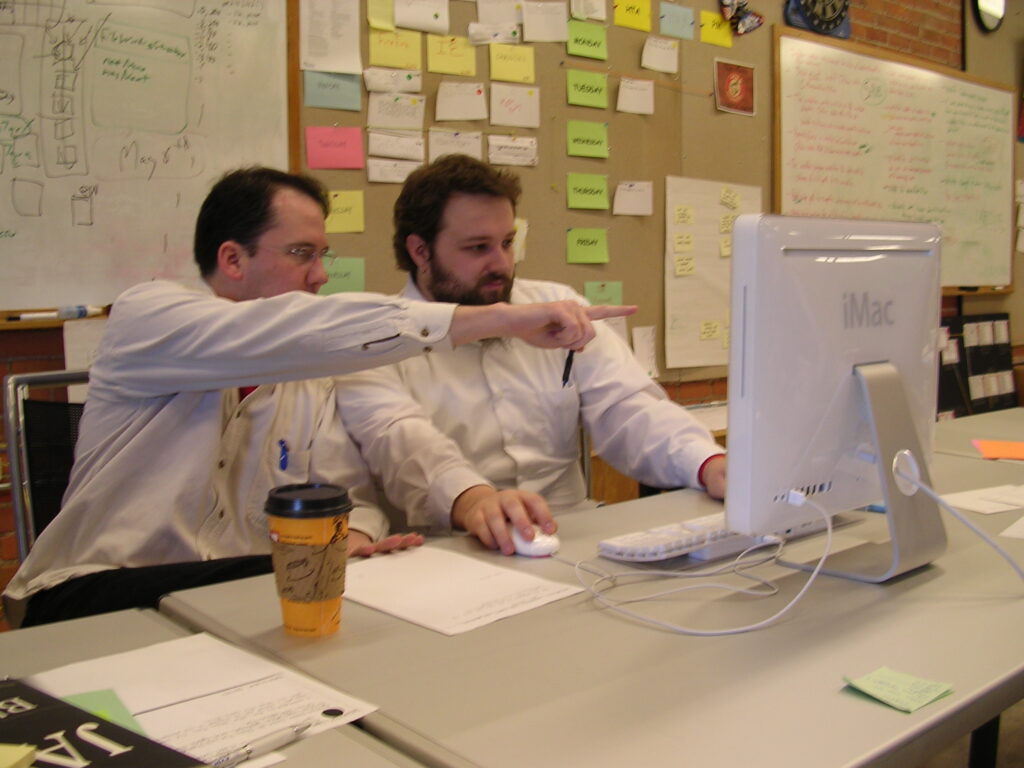
video game testing

QA Game Tester

If there’s a single bug or way to ‘break’ a game, you can guarantee the paying public will discover it so it’s the job of the testing team to find such glitches and identify areas for improvement before release. Widely considered to be the bottom rung of the production ladder despite the essential service they provide to the team.

Game Tester Career Path: Testers—or Quality Assurance Technicians—aren’t often required to have qualifications, though any programming knowledge or game design school experience will make the candidate more attractive. The majority of testers work on a freelance, per-project basis.

Pros: A good entry-point to a further career in programming or game design.

Cons: The job is nowhere near as fun as the general public assumes. You won’t get to “play games for a living;” it’s more a case of repetitiveness testing a single part of the game to the point of monotony and rigorously logging all observations into a spreadsheet.

Game Tester Salary: Very low—between $19,000 to $22,000—with little job security, but again, it’s a good springboard for a more established career in gaming.

Video Game Systems designer

Video Game System Designer

Everything above covers the creation of video games themselves, but who’s responsible for making the machines on which they’re played? That comes down to the system designer…

System Designer Career Path: Given the already advanced nature of modern consoles (and the lightning fast rate at which they continue to advance), system designers these days almost always hail from a computer-related engineering and industrial design backgrounds.

Pros: If you dream in circuitry and have no qualms about spending hours reading up on semiconductor theory just to get 0.1 extra teraflops out of your GPU, this is the job for you (especially since the pay isn’t too bad, either.)

Cons: Having to explain the limitations of what’s achievable to your non-tech savvy peers and superiors on a near daily basis.

System Designer Salary: A cool $80,000 as an average but $100k and up isn’t unheard of at the top console companies.


Local TV Viewership Grows With Alternative Time Slots

local newscasters

According a recent Pew Research report, local news viewership has grown in general, with total on-air ad revenue for affiliates hitting $20 billion in 2014, an increase of 7% over 2013. In particular, alternative time slots, like early morning, mid-day, and 7 pm newscasts are all rising in popularity.

Noon News and Early Evening Newscasts Growing

Noon news and 7 o’clock slots are doing especially well. Recent Nielsen data shows that the 7 pm slot had the most impressive growth among non-traditional time slots for 2014, growing 11% from the previous year. The overall audience has grown 8% since 2010, possibly because stations have realized they benefit from the national news lead-in.

These times also benefit from commuting patterns. In July, an AdWeek article about the trend noted that viewers who work during standard business hours and commute an hour each way often don’t make it home in time for the five or six o’clock news. This makes the 7 pm slot particularly attractive to stations that reach metro suburbs, where a large percentage of those who work outside the home commute into the city. It’s also handy for busy professionals who spend time running errands after work or socializing with friends.

What about prime time shows?

In cities outside of the Eastern time zone, 7 pm newscasts can be problematic. For example, ABC 7, the top-rated news station in Chicago, would have been deluged with angry phone calls if they decided to run the local news instead of top-rated ABC shows like Grey’s Anatomy or Dancing with the Stars at 7. (The national network would have had issues with that, too.)

An Opportunity to Team Up with Other Stations?

Instead, in December of 2014, ABC 7 announced it was starting an hour-long local news broadcast at 7 pm to air on WCIU “The U”, an independent station in Chicago. (Independent, in this case, means the station is not associated with one of the big four national networks; it is the flagship station of the Weigel Broadcasting group.) On January 12 of 2015, the early evening broadcast became the first in its time slot for the Chicago market.

What does that mean for ABC 7? It didn’t just lend its name to WCIU—the newscast is anchored by on-air talent from other ABC 7 (WLS-TV) time slots. A Chicagoland Media article noted that WLS dominated the May 2015 sweeps period for evening newscasts in general, although the 7 pm space wasn’t counted as there were no other stations in the market using it for news. It’s unclear how the 7 o’clock news on WCIU has impacted ABC 7’s ratings, but a recent Chicago Business Journal article notes that WLS has the top-rated 10 pm newscast and that the station generally leads the market.

Other News Opportunities at 7 O’Clock

Another ABC affiliate, WWSB in Tampa, Florida, recently began a 7 pm newscast with an investigative focus. Because prime time doesn’t begin until 8 in the Eastern time zone, WWSB has the opportunity to run a local news program in the time slot. However, it is different from the station’s usual local news because of its focus on in-depth investigations and digging deeper into the issues. Because the show features a live, round-table discussion with local people in the news, it’s more similar to cable news than other local broadcasts. Considering the recent decline of cable news ratings, finding a way to provide in-depth coverage of local, rather than national issues, is a possible opportunity for many local stations.

Early Morning Newscasts Also Growing, But More Slowly

Very early morning newscasts have also continued to grow, but more slowly, gaining only 6% in 2014, after 13% increases in the previous two years, according to the Pew Research report. Noon news, on the other hand, gained viewers in every sweeps period for the same year, while the 7 pm slot had the fastest growth.

It’s important not to put all your eggs into one time-slot basket, especially an alternative one. These spaces may be growing, but they still lag far behind traditional news times. The Pew Research report shows the 11 pm newscast is still the most-watched time, with close to 24 million viewers. That doesn’t mean that adding a 7 pm broadcast is a bad idea, but TV stations should ensure they have engaging local newscasts in all time slots they use.

[su_note]Learn more about the School of Broadcast Journalism at the New York Film Academy by clicking here.[/su_note]

Image Source

Legalities Of Drone Filming

Establishing shots have gotten a lot easier, grander in scope and, moreover, inexpensive thanks to the advent of drone filmmaking.

Long gone are the days that you’d have to hire a helicopter to get that perfect aerial shot, but the laws regarding drone filmmaking are yet to catch up. Given it’s a topic that comes up frequently amongst our filmmaking school students as they embrace drone technology, today we’re going to delve into the specifics.

Drone legalities

And the overview is quite a snappy one. In a nutshell:

– Do not fly above 400 feet
– Give way to all other aircraft
– No drones weighing more than 55lbs
– Do not fly within 5 miles of an airport (without first getting approval from air traffic control)
– No flying near people or stadiums

All well and good, and really, the above constitutes common sense (and as far as we know, there aren’t any filmmaking drones that weigh anywhere near 55lbs—the heaviest we could find is the $150,000+ Phantom 4K Flex drone clocking in at around 30lbs).

But one line that the FAA issued in recent times has caused quite a bit of head scratching and frustration:

“The aircraft should be flown strictly for hobby or recreational use and not for payment or commercial purposes.”

Huh?

Obviously, this is of concern to a filmmaker looking to produce a movie that they’ll ultimately sell or show for profit. So what gives with this little rule? Why does your financial situation have any kind of impact on drone flight safety?

Section 333

There’s a lot of literature issued by the FAA on this topic, but to boil it all down, the authority has deemed it necessary to draw a line in the sand when it comes to commercial drone piloting—i.e for-profit filmmakers—because that would come under “civil operating,” and unless the distinction is made there, it means that anyone and everyone could technically self-certify their own unmanned aircraft and commandeer the skies without limits.

Essentially, it’s to avoid unregulated chaos but this does add some extra red tape to us as filmmakers since a Section 333 exemption is required. Applying for one is a rather lengthy process and the average reviewal takes around 120 days—not hugely practical when you’re trying to get a production in the can.

The good news is that there is a lot of pressure being put on the FAA to relax its rules when it comes to filmmaking, and the recent news that it has just granted a blanket exemption to a handful of Hollywood companies suggests it’s considering this.

A Note on Locality & Privacy

As you can probably imagine, locality plays a big part in what is and isn’t permitted. You can fly a drone at 100ft in the middle of Death Valley to your heart’s content and not get into any trouble, but flying in around The Mall in Washington is prohibited and comes with some hefty fines for doing so.

Also, as a responsible filmmaker you’ll want to observe social etiquette and respect the privacy of the public i.e. no flying or filmmaking over or near private property (and even some public land prominently displays ‘no drone zone’ posters, which should be observed.)

Recent Developments

However, the landscape seems to be quickly changing, with two recent developments occurring this month. Firstly, the FAA issued a hefty $1.9 million fine against an aerial photography company that had been flying drones through crowded airspace in New York City and Chicago without permission. And just this week, the Obama administration announced plans for the FAA to start a drone registration program just as the holiday season begins, when drone sales are expected to rise significantly. While details of the plan are still being ironed out, it will effect hobbyists as well businesses.

In conclusion, as the regulation of drones continues to evolve, be sure to keep up to date on all drone-related news, always exercise your common sense, and look up local FAA guidelines and prohibitions where you are (and adhere to them!)

[su_note]Learn more about the School of Cinematography at the New York Film Academy by clicking here.[/su_note]

8 Masterpiece Films Shot by Directors Under 30

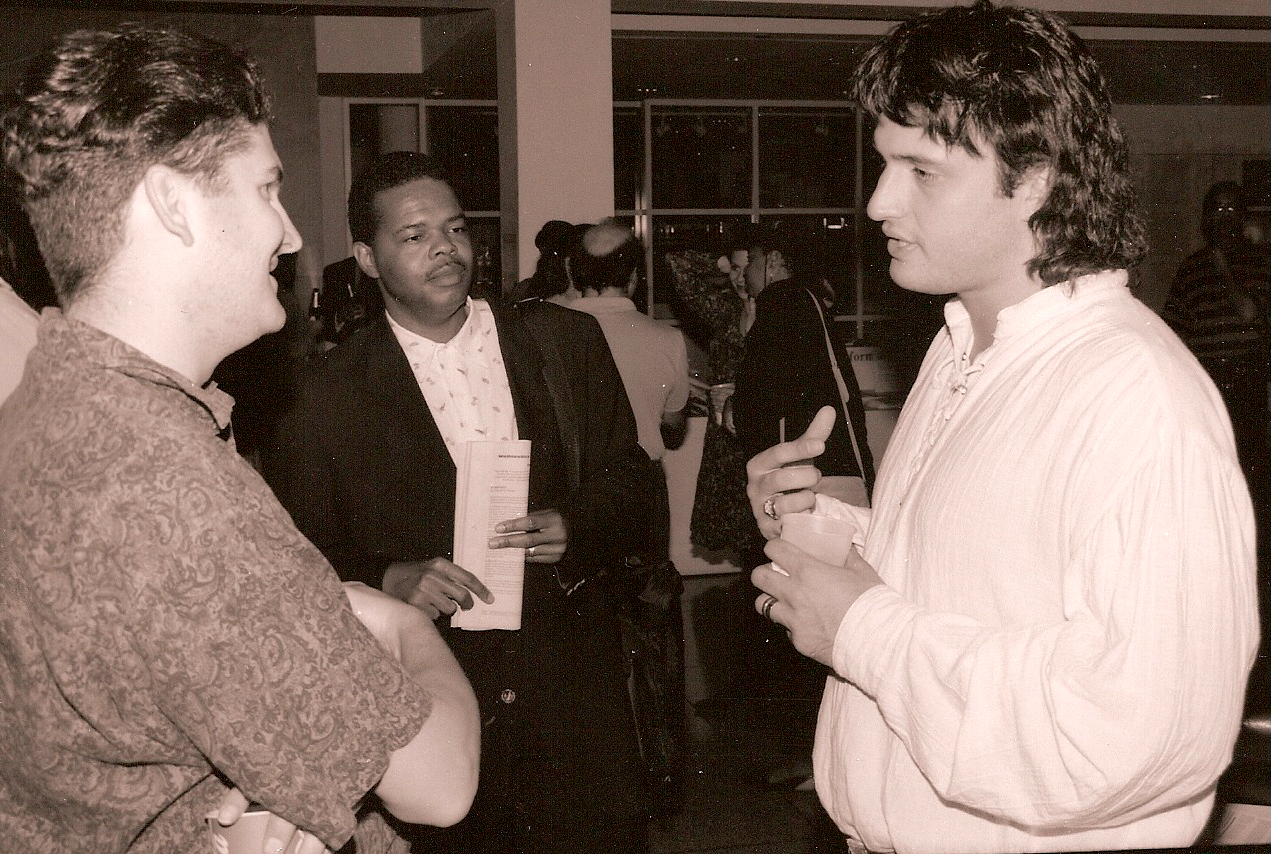
Robert Rodriguez at 1993 Atlanta Film Festival with El Mariachi
Robert Rodriguez (right) at the 1993 Atlanta Film Festival to showcase El Mariachi.

It’s commonly held that you’ve got to hustle for many years to work your way up to the hallowed position of director—and for the most part this is true—but there are a handful of directors who not only achieved success at a young age, but also ratcheted up some of their most career-defining titles before hitting the bit three-oh.

Here are number of superb movies from directors who were under 30 at the time of their release. Some of those listed below even went on to make even more spectacular titles, but the early efforts listed below are well-worth watching in their own right and serve as incredible examples of filmmaking spirit.

Blood Simple (1984)

As we discussed in our Coen Brothers Highlights post earlier in the week, Blood Simple was an amazing start to what would go on to be an amazing career for the duo…though technically, it was only Ethan that deserves a place here as he was 27 at the time. Joel was 30.

El Mariachi (1992)

The first of Robert Rodriguez’s ‘Mexico Trilogy,’ El Mariachi is one of the only movies we can think of which was produced for so little money yet still ended up in the National Film Registry and Library of Congress (Rodriguez raised the $7,000 budget largely by subjecting himself to paid clinical testing).

As a directorial debut, success stories don’t get much better than this (as was covered in the great book about the production, Rebel Without a Crew.)

Citizen Kane (1941)

It’s mind-boggling to think that what is frequently and consistently deemed to be one of the finest movies ever made was created by a director who was not only under 30—Orson Welles was just 26 at the time of Citizen Kane’s release—but also didn’t want to work in film in the first place.

Welles’ heart was dedicated to theatre for most of his early life, and it was only a very lucrative contract that swayed him over to the big screen to create Citizen Kane… and the rest, as they say, is history.

Clerks (1994)

The black and white oddball comedy that put Kevin Smith on the map, who was only 24 at the time and maxing out multiple credit cards in order to make his feature debut. It paid off, and laid the path to further titles in the View Askewniverse canon (including the similarly acclaimed Chasing Amy.)

Memento (2000)

Christopher Nolan got started really young, having earned his first directing (and writing, and producing) credits from the age of 19, honing his craft with a few shorts and low budget film noir feature (Following, 1998), it was his sophomore feature film—the deviously clever, nonlinear Memento—that really set him on the path to the big time. He was 29 at the time of filming.

The Tramp (1915)

While Charlie Chaplin would go on to craft more than a few masterpieces during his reign as the king of cinema’s silent era, it was his sixth release that would come to be considered as his first tour de force.

The Tramp’s titular character would also prove to be Chaplin’s most enduring, and though created by accident while trying on costumes for a previous short, the character evolved beyond simple slapstick for this essential feature outing.

Magnolia (1999)

The first entry on this list so far featuring a director who was already making waves at the time of release, Paul Thomas Anderson’s prior movie Boogie Nights was so successful he was told by studio executives that he could do whatever he wanted for his next film. Two years later and at the age of just 29, he made Magnolia.

American Graffiti (1973)

George Lucas’ work as a director needs no introduction (and nor can it be summed up in a single paragraph), but before his time creating adventures in a galaxy far, far away came two lesser-known titles: THX 1138 and American Graffiti. The former was not successful; the latter, however, became one of the most profitable features in cinema history (with a $200 million box office gross against its $777k budget) and garnered near unanimous praise. Lucas was a few months shy of his 30th birthday at the time of its release.

[su_note]Learn more about the Film School at the New York Film Academy by clicking here.[/su_note]

How To Use The Internet To Boost An Acting Career

745px-Internet1

Al Gore may have claimed to have invented the internet, and Barack Obama’s presidential campaign may have used the internet to aplomb, but it is another renowned American politician whose pre-political career could’ve benefited from the internet. Ronald “The Gipper” Reagan rose to Hollywood stardom before the internet. He had to go about spreading his name the old fashioned way, through auditions, callbacks, and pounding the pavement.

Nowadays, more film and television casting happens online than in person and casting directors aren’t the only ones turning to the web for professional support. Writers, producers, and directors all utilize the internet to search for talent and to display their own successes. Actors can follow suit to boost their own budding careers by making the most of the resources and networking opportunities that the World Wide Web has to offer.

Internet Movie Database

They call it IMDb in the industry and it is the holy grail of online advertisement for the entertainment industry. On the website, actors can post headshots, film credits, and basic biographical information for industry professionals (and the public) to view. A basic profile is free and if maintained, can provide a certain amount of credibility to an aspiring actor. The downside is that because IMDb is such a large site, profiles can get buried, never to be discovered by Hollywood decision makers.

Personal Website and Blog

 A personal domain and associated blog can act like as a marketing tool, reference site, and efficient means of communication. An actor website doesn’t have to be complex. In fact, it should be simple to use, yet neat and organized. On a personal website, actors can post their resumes, headshots, reels, contact information and more. Once you generate a following, a blog is an excellent way to keep in touch with your fans and inform them of upcoming projects. The advantage of a personal website is the control it affords the actor, at a low price. A custom WordPress domain can be purchased for about $4 a month, well worth the investment just for the ease of exposure.

YouTube Account

If you can’t beat ‘em, you might as well join ‘em. Committing to improving as an actor can go a long way toward a successful career. Taking classes at New York Film Academy, auditioning for local plays, and studying acting technique are important for all actors. However, as casting director Heidi Levitt (The Artist) says, “The Internet is now your casting room,” and the number one streaming video site is YouTube.

As we discussed in our prior piece on essential resources for actors, all over the world actors are producing their own short videos, sketches, and vlogs (video blogs) and receiving millions of views as a result. All you have to do is create a YouTube channel and begin making videos and the views will come. YouTube videos show talent and determination to casting directors, and they also act as generators of traffic for your personal website. Although the goal of the videos should be to expand your artistic and professional horizons, if enough people view them, actors can turn a profit on the hobby.

Social Media Presence

Some actors hate it, some actors love it, but the fact is that social media sites like Facebook and Twitter are changing the way the industry networks. As a general rule, a professional fan page should be different from you personal page and should focus on your acting accomplishments. Shameless self-promotion may not come naturally to some, but the practice is becoming a standard for many actors. Share photos and videos from the set, post updates and information regarding upcoming shows, and tweet to your heart’s content.

The internet is a crazy place, full of interference but brimming with opportunity. Any actor who is able to harness the promotional power of the net can serve themselves well in the future. Remember, all the above-mentioned websites are connected and they feed into one another. A little effort on the computer and a little creative thought are all that separate you from winning one for the Gipper.

[su_note]Learn more about the School of Acting at the New York Film Academy by clicking here.[/su_note]

Image Source

The Potentially Game-Changing Feature Introduced By Black Ops 3

Scene from Call of Duty Black Ops 2

It only takes one look at the most popular games in recent years to see that story has become very important to us. Sure, some of 2015’s biggest surprise hits have been multiplayer games, such as Rocket League and Splatoon. That being said, almost all of the biggest 2015 games had one thing in common: a story-driven single player experience.

The Growth of Story

Games like Batman: Arkham Knight, The Witcher 3: Wild Hunt, and Metal Gear Solid V: The Phantom Pain have so far blown us away with captivating characters, stories, and worlds wrapped around excellent gameplay. Even highly anticipated titles like Uncharted 4, Rise of the Tomb Raider, and Halo 5: Guardians will be purchased by fans anxious to experience the next chapter of each game’s iconic protagonists.

In short, there’s no better time to be a gamer than today for those who love games with a strong narrative (not to mention those who love to write those video game narratives). There’s no shortage of titles with excellent gameplay matched with a worthwhile story for just about any genre; role-playing, real-time strategy, action-adventure, first-person shooter—you name it.

Then there’s the meteoric rise to popularity of episodic games. Telltale Games were among the first to strike gold with their The Walking Dead games that asked little gameplay input from players but fascinated them with rich characters and story. Even if it leaned more toward being a TV show with interactive elements than a game, it would be the first of many episodic games where story progression was everything.

Not For Everyone

But for every player all about story, there is also one out there who just wants to enjoy the gameplay. Whether they’re the good or bad guy, fighting aliens or an evil government organization, these players just want to slay beasts, shoot enemies, solve puzzles, and more. They may still prefer a decent story over something terrible, but to them great level design and challenging obstacles are far more important than a likable protagonist and unique plot.

Perhaps that is why the newest Call of Duty will do something not very many games have done before: let you skip ahead to a level you haven’t played. This means that players can choose to hop from the first level to the very last one, which can be seen as the equivalent of reading the last pages of a good book before starting from the beginning.

An Archaic Mentality

Jason Blundell, the campaign director of Call of Duty: Black Ops III, explained to Eurogamer why this feature was important to include. “The unlocking level system is an archaic mentality,” he said. “Consumers and game players in general are far more mature these days. There are so many things vying for our interests today. It’s about, how do they want to consume it? Maybe they put it down on level two, and then they’re in work the next day, and some guy says, ‘dude, you’ve got to check out level four!’ And he’s like, ‘okay, I’ll have a quick look.’ That’s totally fine. I think it’s their choice.”

In other words, players shouldn’t have to play level 3 before getting to enjoy level 4 in much the same way that Netflix doesn’t force you to watch the episodes of a show in order. This is even if it gives players an irresistible way of spoiling the ending for them, and that’s fine.

Enjoying Games Your Way

As mentioned before, some gamers see skipping to the end as a sure-fire way of ruining the entire narrative experience. Perhaps they have a point when it comes to games with major plot twists that are the most impactful when you don’t see them coming. Even so, Blundell is confident that this feature will please plenty of gamers who like going about a game’s story their own way.

“If you see the end you’ll say, I need to understand this more,” Blundell added. “But it’s about the journey, though, right? Sure, people will jump on and play the last level. Okay. Cool. That’s up to them….I don’t think playing the last level will give you everything. You’ll just look at it and go, okay, there’s the last level.”

A Possible New Trend

It’s likely that the ability to skip through a story campaign’s levels or stages becomes the norm one day. After all, games are at their best when they give the player options, whether it be to skip cutscenes, tutorials, etc. If this feature ends up being very well-received by fans, you can count on many of the top developers considering it to give their own players the same level of choice many have been waiting for years.

[su_note]Learn more about the School of Game Design at the New York Film Academy by clicking here.[/su_note]

Image Source

Drones And News Gathering: How It’s Changing

Drone with GoPro digital camera

The idea of using drones for news gathering has excited journalists since the unmanned flying machines became popular a few years ago. In 2012 Congress passed the FAA Modernization Act, requiring the FAA to regulate commercial usage of drones. Commercial organizations (that includes TV stations and other for-profit news organizations) have to apply for permission to use drones in their endeavors, and currently the FAA hasn’t granted more than very limited permission to any media organizations.

CNN Aims to be the First

According to a May Business Insider article, CNN partnered with the FAA to “test” and “research” drone usage in news gathering efforts. The news giant volunteered to research using a drone within sight of populated areas approved by the FAA, although the extent of their research is not known.

Why Drones are Important to Journalists

As much as broadcast reporters love to prove their enthusiasm for the job by standing outside in a snowstorm, struggling through a crowd to nail that perfect shot, and enduring less-than-ideal travel conditions, there are some places journalists just can’t go, due to safety or regulatory reasons.

For example, drones can gather bird’s-eye video of forest fires or other natural disasters in areas to dangerous to traverse. They can also take aerial shots of crowds at events that a reporter on the ground couldn’t collect. Additionally, the technology offers opportunities for stations in smaller markets—while large-market stations sometimes have a helicopter for traffic reports and breaking news, smaller stations often can’t afford to rent a helicopter for the occasional story that would benefit an aerial view.

Drones aren’t cheap—a good quality one can cost from several hundred to a few thousand dollars. However, those costs would be small compared to the price of a helicopter—not to mention the cost of hiring a pilot to fly the helicopter and shelling out for insurance. Drones could also be sent to some locations faster than news crews could arrive during heavy traffic.

The Fight for the Right to Fly Drones

A Motherboard article questioned whether the FAA even had the right to stop news organizations from using drones. It cited a coalition of media companies, including the New York Times, Associated Press and Washington Post that came together last year to pen a legal brief for the FAA. In this brief, they took the position that the First Amendment prevents the FAA from blocking news reporting—which, in this modern age, could easily include drones. It went on to note that if individuals could use drones, surely the First Amendment-protected press should receive the same permission.

A Way Around the Problem?

Since hobbyists can fly a drone and take video, why can’t they just sell their video to the press? According to the FAA in a Media Use of UAS memo from May, individuals flying drones can give away video they capture, but not take video so they can sell it. Theoretically, a news station could get lucky and receive video from a viewer’s phone for free, but realistically, that isn’t likely to happen.

The FAA was also questioned about whether a person who happened to accidentally take video of a newsworthy event with a drone could later decide to sell it. The same memo goes on to say that if hobbyists don’t intend to capture news for the purpose of selling to a news organization, selling any video they do capture later is probably acceptable. Obviously, it’s difficult to prove what someone intended to do, so there’s a little room for interpretation.

Going Forward

But in the long term, the only real solution is for TV stations to use their own drones. While there are genuine concerns—hobbyists flying drones recently got in the way of firefighters trying to put out California forest fires—there’s no reason that the FAA can’t simply regulate the commercial use of drones for safety. In recent weeks, the FAA has grown increasingly tough on the use of drones, even slapping one aerial photography company with a $1.9 million lawsuit for flying through crowded airspace in New York City and Chicago without permission. In addition, the FAA has just announced new plans to require the registrations of drones for both businesses and hobbyists following the rise in incidents in which civilians’ safety has been compromised by drones.

What can reporters do for now? Not much, other than writing to your Congressperson and familiarizing themselves with the legalities of drone filming. News organizations can apply for permission to use drones, but the FAA has been stingy with granting it to commercial organizations and slow in processing requests.

[su_note]Learn more about the School of Broadcast Journalism at the New York Film Academy by clicking here.[/su_note]

4 Things That Top Game Developers Have In Common

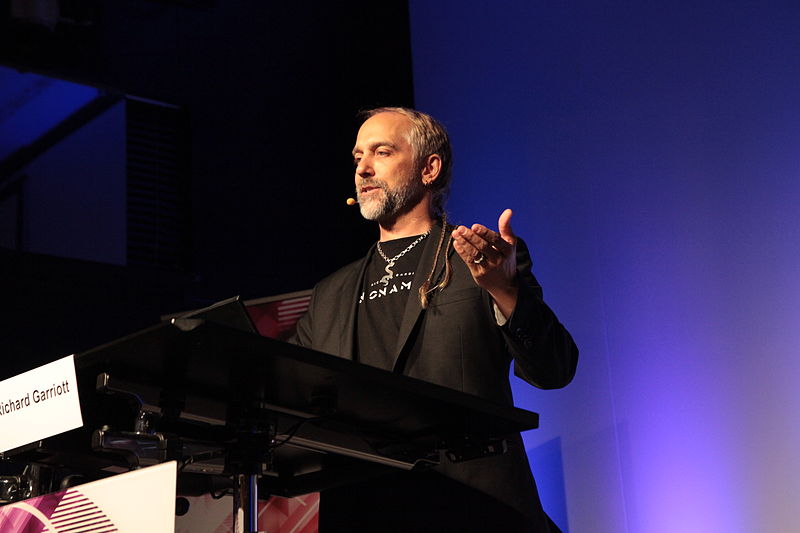
Developer Richard Garriott speaking at Game Developers Conference 2011

It’s never a bad idea to examine a particular game studio and see how their process helps them create successful games. Of course, what works for one team might not work for another due to a host of reasons. But when you start noticing the same characteristics across several of the best game developers, it’s time to start paying attention.

The following are a few similarities between some of today’s top game companies that industry veterans have noticed throughout their careers. They should serve to benefit anyone hoping to one day lead a game team or start their own. And if you haven’t, take a look at our profile of Satoru Iwata to learn more about the best practices of successful game developers.

1. Their Developers Test The Game Excessively Alongside QA

There are some developers out there who think playing their game during development only slows down progress. Instead, they think quality assurance people should do the majority of the testing during the Alpha and Beta stages while they focus on building the game. While it might not be wise for a developer to spend most of their time testing and little time developing, you’ll find that this isn’t how most people at the top studios do things.

Teams at successful game studios actually play their games to exhaustion, from the moment a build is playable to just before launch day. It can be difficult testing early builds since they often have many technical issues and placeholder art, but it’s also the best time for designers to notice any gameplay problems.

Game testers are of course essential for spending extended periods testing the game to catch more bugs than anyone else, but only designers who test can then go back and fine-tune any problems related to the gameplay and design.

2. Their Game Teams Start Small And Gradually Grow

We’ve all seen the near-endless list of credits after completing a big-budget title. Sometimes you’re looking at the names of hundreds of people who all contributed to the game’s development. While by the end the game did have help from both in-house developers and contractors, it more often than not was far from the case at the start.

Top studios don’t hire hundreds of people from the get-go, even if they already know they’ll eventually need them. Most game projects actually begin with a small group of the most experienced and talented people there. This allows for a more tight-knit setting so that communication and brainstorming can be done more efficiently to get the core of the game ironed out.

More programmers, artists, etc. are then introduced as the project continues development. Even if the team eventually grows large enough than the need for meetings becomes more common, the best studios make sure their size is never overwhelming.

3. They Make An Effort To Bond With Their Players

Whether you’re a company as large as Blizzard Entertainment or small as Yacht Club Games, having a community form around your game can offer benefits unlike anything else. That is why every good game studio starts each game project with the intention of pleasing players enough that they band together as loyal fans of their work.

To do so, a team must learn to make games while having their players in mind. There are plenty of companies and studios that amassed a community after a successful game only to inadvertently kill it with their second title. Usually this is the result of a team losing respect from players for doing things far too differently and not listening to their fanbase.

As an indie team, spending time interacting with your game’s fans through social media has become almost essential. The best take advantage of it to form strong communities around their games and thus create better titles.

4. They Take Risks And Ship Despite Any Early Critique

Although there are countless exceptions, some of the best games ever made were done by a team of people willing to do something different, and therefore, risky. Games require a lot of time, money and effort to build, which makes it easy for a team to start feeling pressure and questioning their own design choices if they don’t receive 100% positive feedback.

However, a team won’t know if their game is meant for success or failure until they actually ship it and see what the market decides. Nintendo risked everything with their non-traditional Wii console and its motion controls, and it blew away the competition. Then they took another risk with the Wii U’s second-screen gamepad and it didn’t go nearly as well.

When it comes to games, a perfect example is found in two of FromSoftware’s successful titles: Demon Souls and Dark Souls. These games were predicted to be failures for being too difficult in a time when hand-holding tutorials were the norm. They continued developing, shipped the game, and are now one of the top Japanese studios.

[su_note]Learn more about the School of Game Design at the New York Film Academy by clicking here.[/su_note]

Image Source

The Top TV Shows That Every Actor Should Watch

The_Office-logo

It’s called the small screen, but that doesn’t mean there aren’t big performances on television. Recently, we entered the Golden Age of TV, where Hollywood stars and big budget producers are shunning film in favor of episodic series. From an actor’s perspective, much can be learned from fellow thespians who act on television and attention should be given to the best of TV performances. Here are five of the top TV shows for actors.

1. Inside the Actor’s Studio, Bravo (1994-present)

This long-running talk show, hosted by James Lipton offers a unique insight into the life of the professional actor. Lipton invites the most successful of actors onto his show and discusses their history, career, and motivations for pursuing the craft of acting. Through his keen questioning, Lipton is able to unearth gems of wisdom from whoever sits next to him on stage. As a bonus, near the end of each episode, acting students in the studio audience have the opportunity to ask the guests pertinent questions about embarking upon a career in theatre and film. All the episodes and guests are great but browse through the history of the show to find your favorite actors to learn from.

2. The Office, NBC (2005-2013)

There is stiff competition at the top of the sitcom game but The Office is special because of a strong ensemble and a legendary comedic lead character, Michael Scott. Based on an English television series of the same name, the American Office was a trendsetter in broadcast TV. It introduced mainstream American audiences to the mockumentary style of comedy that has since become hugely popular with such TV shows as Parks and Recreation and Modern Family using a similar model. Aside from the influence on the industry, The Office features a strong ensemble cast led by the illustrious Steve Carell. Mr. Carell’s turn as the dubious boss Michael Scott is a teaching lesson in comedic timing and facial expression. Simply watch to be awed by the skill and enlightened by the humor.

3. Game of Thrones, HBO (2011-present)

One of the best written and thoroughly enveloping series on TV right now, Game of Thrones is an actor’s dream. The series, based on the books by George R.R. Martin is set in a land of dragons, the living dead, espionage, and war. For actors, especially classically trained actors, the heightened language and fantastical setting are a luscious combination. The cast of the show is highly skilled and the plots are unpredictable which challenges actors to stay grounded and in the moment. Although Game of Thrones may not offer much job security, even a brief appearance could make a career.

4. Arrested Development, FOX (2003-2006)

Like all good comedies, Arrested Development has a tragic side. The groundbreaking series was cancelled by FOX after only three seasons but in its short run, the story of the wealthy Bluth family split sides and won many fans. An all-star cast headlines the show, led by Jason Bateman, Jeffery Tambor, Portia de Rossi, Michael Cera, and Will Arnett. Each character is perfectly cast, and exquisitely acted. Besides the aforementioned folk, David Cross’ performance as Tobias Funke is a hilarious, if not a cringe-worthy comedic accomplishment. The verdict is still out on the Netflix revival, but the original seasons on FOX are comedic television acting at its best.

5. Mad Men, AMC (2007-2015)

AMC came of nowhere to the forefront of television programming with the release of this original drama series. Set in the 1960’s, Mad Men follows the lives of several employees of a New York advertising agency. The clever dialogue and well-developed characters are just two of the characteristics that make this period piece an acting powerhouse. Jon Hamm, Elizabeth Moss, John Slattery and the rest of the cast display incredible restraint in their portrayals of mid-century Americans. If Game of Thrones is for the classical actor, Mad Men is for the modern thespian. Each scene shows how less can be more when acting on camera, and when the stakes are high, great emotion can be conveyed with thoughts rather than action.

Curious what other productions every actor should see? Check out our list on the Top 5 Plays and Top Films Every Actor Should See.

[su_note]Learn more about the School of Acting at the New York Film Academy by clicking here.[/su_note]