So What Exactly Is A Logline (And Why Do I Need One?)

The definition of a logline: one line (or two at the most) which describes what your screenplay is about.

Job done. Simple, right?

Well, not really. As you’ve no doubt already noticed, this post extends onwards and that’s because a logline is a surprisingly tricky thing to master…

… as well as being something you should ignore at your peril!

Today we’ll be looking at how to get the best out of your logline, and why it should be a high priority.

Loglines: The What

So we’ve already covered the basic definition in that a logline should describe the story, but a great logline should go a little further for that. Consider the following examples, and decide for yourself which one is best in each case:

Terminator

Example 1: A cyborg from the future hunts down a woman destined to later become the mother of humankind’s savior.

Example 2: A woman must fight for her life against an unstoppable cyborg assassin, sent back from the future with one mission: to kill her and prevent a future human uprising.

Jurassic Park

Example 1: A group of survivors struggle to escape from a revolutionary wildlife park filled with dinosaurs after a bribed employee sabotages the predators’ security gates.

Example 2: A rich philanthropist leads a team of scientists to populate a wildlife park with living dinosaur clones.

The Wizard of Oz

Example 1: A young girl finds herself transported to a surreal land far way from home. Desperately seeking the one man that can help her return, an evil witch shadows her every move…

Example 2: Dorothy is whisked away by a tornado to the Land of Oz, where she meets a group of friends each searching for something unique.

While all of the above examples could use some tightening up, some are definitely more effective than others and we’ll unpack each one as we discuss the conventions of writing a logline.

Loglines: The How

A logline should convey what happens in the story. That much is a given, and all six of the above loglines definitely do that. But a good logline should include all the same elements and structure that make up a fine screenplay:

– A set of circumstances
– A protagonist with a clear goal
– An opposing antagonist
– A point of conflict between the two parties

The screenplay itself, of course, will have resolution but that isn’t necessary in the logline (as its absence results in enticement!)

So, for example: “A recently widowed wife finds herself in a bitter legal dispute with her late husband’s psychotic and overbearing mother.”

That hits all of the above criteria for an effective logline. So which of the earlier examples fail?

Terminator: In this case example 1 is the weaker of the two. It opens with the antagonist, and while his goal is laid out and the scenario set, we don’t know much about the protagonist except for the circumstance she’s in. Example 2 is far stronger, follows convention, and has a greater sence of urgency.

Jurassic Park: You probably guessed this one. Example 2 is the weaker logline; no conflict, just a setting.

Wizard of Oz: The lines are a little more blurry here–both hit all the criteria (save for the lack of an antagonist in example 2), but the first doesn’t waste words on superfluous detail. It’s extremely uncommon to give characters names in the logline and nor is it necessary to explain that she’s in Oz or how she got there; example 1 focuses squarely on the key players and their motivations, and is better for it.

Hopefully that has helped differentiate between what constitutes a strong and a weak logline, but here are a few more tips that’ll help you nail it:

– The golden rule: When we say don’t go more than two sentences with your logline, we really mean it.

– Remember that you’re trying to sell the screenplay itself, not the story therein. You’ll fail if you try to do justice to the latter in two sentences, but it’s entirely possible to make the script itself enticing in the same space.

– Read it out loud to someone. Their reaction will be very telling, and very valuable.

– The logline can actually be helpful to you, too. If you ever get stuck with the production or find yourself losing your original vision, read it back to yourself. That’s the very essence of your film, right there, and should shine through in every scene of the movie and on every page of the script.

Loglines: The Why

If you can’t sell your screenplay in one line, you’re not going to sell your movie to either investors or a paying audience. It really is that simple.

The importance of a killer logline cannot be understated—if you think of it in terms of a job interview and leaving a good first impression, a strong logline is like walking into the room with a Ted Baker suit and greeting the interviewer with a well-manicured hand. A weak logline is slouching into the room with your sweatpants on.

Come at it with laser-like focus, and your logline will be more that worth the time and effort you put into it in the long run. Best of luck!

[su_note]Learn more about the School of Screenwriting at the New York Film Academy by clicking here.[/su_note]

Candy Crushing It: What Acquiring King For $6 Billion Means For Activision-Blizzard

finger playing candy crush on iPad

There have been a couple of huge acquisitions in the gaming industry within the last few years. Last September Microsoft bought Mojang, allowing them to take the incredibly popular Minecraft franchise out of Notch’s hands for $2.5 billion. A couple months before that we heard the news that Facebook itself bought Oculus VR, the minds behind the virtual reality headset Oculus Rift, for a cool $2 billion.

The Latest Big Acquisition

Now, Activision-Blizzard has acquired King, the makers of the Candy Crush games, for $5.9 billion. For the few out there unaware, Candy Crush Saga has been a huge money maker with several hundred million monthly users making billions of microtransactions. Thus it make sense that a company with the cash to acquire one of the most popular Facebook and mobile games on the planet would do so.

Except that the move happened to catch not just game industry analysts but the entire industry by surprise. This is because Activision Blizzard has been making a name for itself lately in the profitable mobile game market with their own title, Hearthstone: Heroes of Warcraft. The digital card game, while not having nearly the network of gamers as King boasts, has been making the gaming giant a profit thanks to its addicting gameplay and popular cash shop features.

Why King?

Bobby Kotick, the CEO of Activision Blizzard CEO, knew people would be asking questions after learning of this huge acquisition. That is why he prepared the following statement for the announcement:

“The combined revenues and profits solidify our position as the largest, most profitable standalone company in interactive entertainment. With a combined global network of more than half a billion monthly active users, our potential to reach audiences around the world on the device of their choosing enables us to deliver great games to even bigger audiences than ever before.”

Despite previous attempts, perhaps Activision Blizzard accepted their own failure to build a mobile franchise with those kinds of incredible numbers. By acquiring one of the biggest mobile game franchises on the planet, they’ll very likely make back the $6 billion they spent in the long run.

In Need Of Funds

Of course, the massive acquisition could be an indicator of the company’s recent performance. While King has been very profitable the most recent quarters, Activision has been having a hard time with their own top franchises. For one, Call of Duty is finally seeing a decline in sales, which could mean that gamers are finally growing tired of the annual releases.

Also, the once-dominant Skylanders franchise is also now facing stiff competition from Disney INFINITY, Nintendo’s Amiibo figures, and Lego’s own toys-to-life titles. World of Warcraft subscriber numbers have also been plummeting lately as more and more popular MMORPGs and MOBA titles release. The fact that many of these are free-to-play while World of Warcraft still has a monthly subscription system may be a contributing factor.

With their existing franchises showing slow but steady declines, Activision Blizzard knew they needed a strong revenue to keep them afloat and profitable. Mobile games, which are arguably the most lucrative gaming market today, was an obvious choice. Now the Irvine-based company has quite a big stake in the mobile space that was perhaps unattainable even with their own successful Hearthstone game. Only time will tell how Activision plans to use the Candy Crush franchise in its future strategies and business.

[su_note]Learn more about the School of Game Design at the New York Film Academy by clicking here.[/su_note]

Image Source

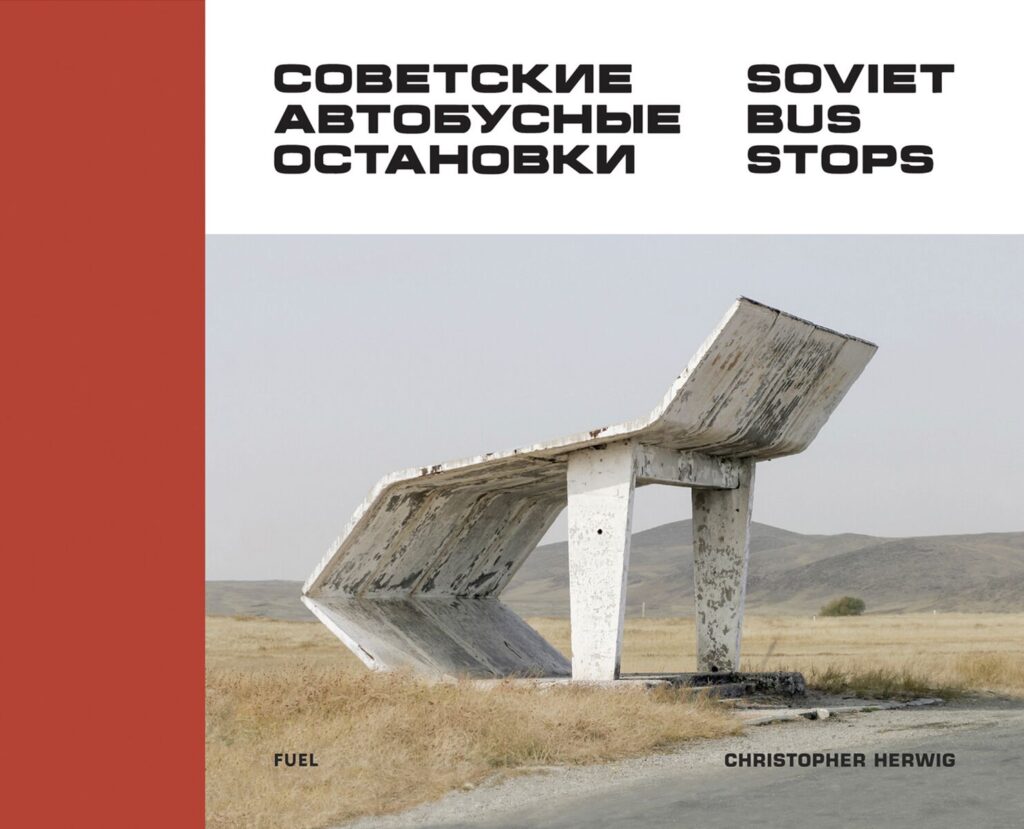
Capturing The Brutal Beauty Of Soviet Bus Stops

cover of soviet bus stops

You know you’re in the company of a great artist if they can envision beautiful creations where their peers wouldn’t look twice. This could easily be said of the architects responsible for building a multitude of incredible-looking bus stops in the Soviet Union, and indeed the photographer great enough to capture them.

woman standing by soviet bus stop

Christopher Herwig is the photographer/videographer who travelled over 18,000 miles through fourteen countries of the former Soviet Union to photograph these striking structures. Thirteen years later, his book, Soviet Bus Stops is born.

soviet bus stop

During a 2002 long-distance bike ride beginning in London through to St. Petersburg, the Canadian explorer challenged himself to take one picture every hour in an attempt to exercise not only his cardiovascular health, but also his creativity. This zest for discovery got him noticing some surprisingly designed bus stops on otherwise abandoned stretches of road. During a time where freedom of expression was forcefully regulated, it turns out all designated buildings related to transportation were spared from the scrupulous rule where function superseded aesthetic, and total creative freedom was given to the architects responsible for many captivating and bizarre statues, murals and inventive structures in train stations and bus stops. The results are highly geometric, rupturing the often arid surrounding landscapes with exaggerated angles and bombastic curves. Many of them retained hints of their original vivid colors from being maintained by locals as a nod to the die-hard creatives of a bleak past. One bus stop in Gagra, in the disputed region of Abkhazia (pictured below), rises exquisitely from dull, gray concrete like a wave, forming a shelter made of corrugated layers, each embellished in mosaics.

Mosaic bus stop in Abkhazia

Another in Pitsunda, also in Abkhazia (pictured below), caters to style over function, featuring no seats but flaunting an elaborate wall of mosaics and a fascinating Brutalist cover-structure that resembles rows of shark teeth.

Soviet bus stop in Pitsunda

To fulfil this “obsession” over finding more and more bizarre and oddly beautiful bus stops, Herwig ended up travelling by bike, car, bus, and taxi in his hunt; finding a variety of styles that went from strict Brutalism to exuberant whimsy. His assemblage includes examples from Kazakhstan, Tajikistan, Armenia, Turkmenistan, Ukraine, Uzbekistan, Kyrgyzstan, Georgia, Latvia, Moldova, Lithuania, Estonia, Belarus, and the disputed region of Abkhazia.

soviet bus stop

Herwig’s unique collection aims at preserving and sharing these amazing icons and treasures among quotidian surroundings with the rest of the world. After raising over $50,000 (CAD) through a Kickstarter campaign, he did just that and brought the project to life. The deluxe, limited edition book was released in August 2014, and again just last month after selling out the first round. Currently based in Jordan, the thrill-seeking photographer continues to be determined to find beauty and inspiration in all aspects of life.

two soviet bus stops

[su_note]Eager to go on your own photography adventure? Students enrolled in the degree and conservatory programs at NYFA’s Photography School get to go on a one-week photography expedition as part of their coursework. Learn more by clicking here.[/su_note]

Director’s Essentials: Kathryn Bigelow

In previous installments of our Director’s Essentials series, we’ve examined the works of the Coen Brothers and the late master of horror Wes Craven.

Today we’re looking at five must-watch essentials from one of the finest directors currently active, from the lesser-known back catalog entries to her global smashes.

Kathryn Bigelow speaking

And speaking of which, let’s start off with…

The Hurt Locker (2009)

“The rush of battle is a potent and often lethal addiction, for war is a drug.”

And so begins what is arguably Bigelow’s most well-known movie, and one that won her a slew of Oscars and other awards (including Best Director, making her the first woman to win the award in cinema history and also the lowest-grossing title to have ever been awarded Best Picture.)

And the accolades were well-earned. Heralded as a “near-perfect movie” by Time Magazine (and with a Rotten Tomatoes score of 98% to match), The Hurt Locker was many things at once: a top drawer thriller, a harrowing exploration into the mental effects of war, and ultimately the finest portrayal of the Iraq war yet presented in fictional drama form.

https://www.youtube.com/watch?v=2GxSDZc8etg

Must Watch If: You enjoyed American Sniper, and want to see an even better version of that.

The Loveless (1982)

Long before Bigelow reached near universal acclaim with The Hurt Locker, her first ever feature film as a director flew under the radar… which is virtually criminal, because it’s an excellent (if underwatched) movie that displays exactly the kind of director Bigelow was to become even from her very first steps into the industry.

As an extremely low-budget indie flick it’s so low-fi you can almost smell it, but if you can look past the aging you’ll find a hidden gem in both Willem Dafoe’s early performance chops as well as Bigelow’s sharp directing.

https://www.youtube.com/watch?v=TB8YDlxH1Ho

Must Watch If: You’re keen to see the origins of a legend.

Blue Steel (1990)

One of the hallmarks of Bigelow’s wider filmography is her ability to craft a good thriller, and Blue Steel is one of the best early examples of this.

It’s moody, it’s visceral, and leaves a horrible taste in the mouth… in all the best ways.

Must Watch If: You like your thrillers with a slice of eroticism.

Point Break (1991)

An iconic 90s cult hit which helped to put Keanu Reeves on the map (and further cement co-lead Patrick Swayze’s career), Point Break is by no means the best movie released that decade but Bigelow takes it beyond its gleefully dumb premise and it would have disappeared under the surf under the command of a lesser director.

Must Watch If: You don’t think Keanu Reeves is capable of dramatic range.

Zero Dark Thirty (2012)

With baited breath, the film industry waited to see how (or even if) Kathryn Bigelow could produce a war-themed follow-up even close to the masterpiece that was The Hurt Locker.

Collaborating once again with screenwriter Mark Boal (who had also written The Hurt Locker), the duo had previously developed a script covering the manhunt for Osama bin Laden and were on the cusp of filming before the news came in that the world’s most wanted terrorist had been killed.

Scrapping everything and starting pretty much from scratch, Boal and Bigelow returned with Zero Dark Thirty… and it didn’t disappoint.

With what has become a signature of her directing style, Bigelow tackled the gigantic and complicated story of Osama bin Laden’s death (and the circumstances surrounding it) with a masterful level of confidence. The resulting film pulled no punches whatsoever, and you’d be hard pressed to think of a director who could have executed the story better.

Must Watch If: You have eyes and like movies.

[su_note]Learn more about the Film School at the New York Film Academy by clicking here.[/su_note]

How To Elevate Your Craft As An Actor With Improv

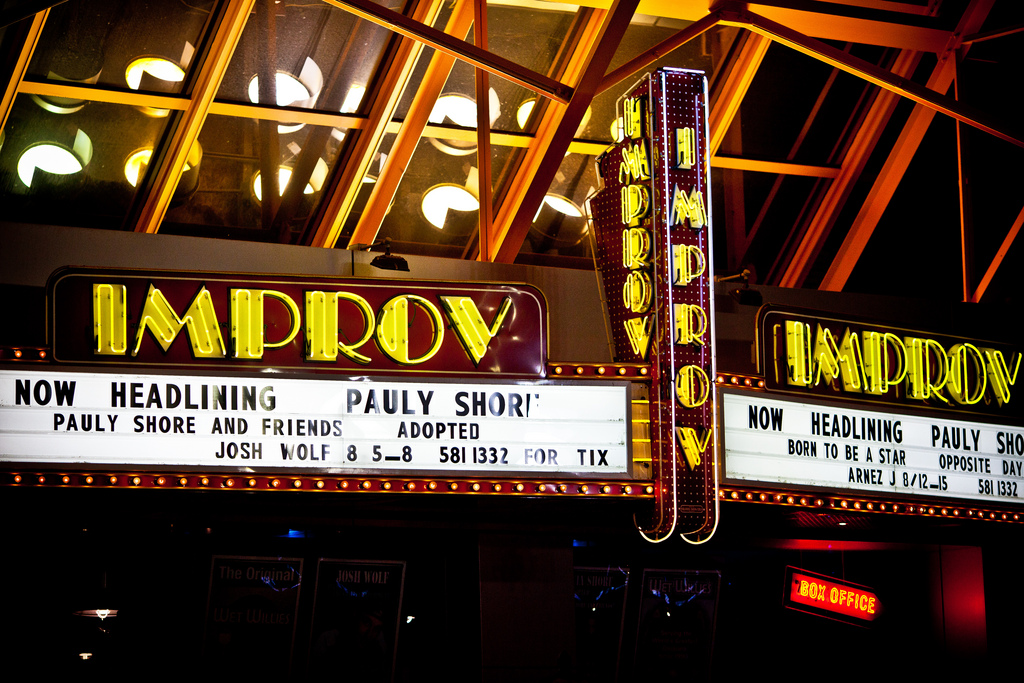
Improv theater marquee

In a city where we continuously elevate our fashion sense, our taste buds, and our little tiny city apartment spaces, why not constantly elevate our acting game? As actors we gravitate towards new styles and methods of performing. The one I found to be fun and most rewarding is Improvisation.

Forms of improvisation have been around for many years. Comedia del’ Arte, which in Italian means “comedy of professional artists” is a form of improvisation that became popular in the 18th century and is still performed to this day. The performers wore costumes, masks and used slapstick props while often performing in the back of their traveling wagons. The scenes often dealt with local events and scandal, which is also similar to our current day entertainment.

Improvisation by definition is a form of theatre where all, or most of, what is performed is created in the moment of that performance. Think of it as a ready, set, go, moment, in which it’s up to you to decide what you are adding to the performance through improv. Anything goes, so don’t think too much, just act.

For example, if your scene partner says you are at the airport and you forgot your luggage, go with the moment. Why not raise the stakes in the scene: be at the airport with no luggage and you just missed your flight to your best friend’s wedding. Now that makes it more interesting! Explore where your strong choices take you and the scene. Remember there is no wrong path!

Most performances are scripted and your job as the actor is to take those words on the page and bring them to life, turning them into a believable reality. By using the principles of improv, you can be more present and focused, and less concerned with memorizing the scene, even when acting alone. This lets you be more in the moment, and able to focus on other details of your character.  When doing improv there are no rehearsals. However you can apply the below guidelines at read-throughs, rehearsals or the technical rehearsal (which is the final rehearsal before the performance) to improve at each step of the way. The lessons that follow will elevate your performance from good to great!

Exercise your acting and improv muscles

Improv is an art form. With most art forms you need to train in that craft. Practice, practice, practice; which means sign up for improv classes, join a team (or even form your own), or anything else that flexes your improv muscles and keeps your acting chops strong.  It also doesn’t hurt to get out and watch other comedy/improv performances. Take notes, get inspired, and apply everything you can to all that practice you are doing.

Be daring and imaginative

There are many moments in life where we are fearful or cautious.  With improv this is your moment to let loose and not be afraid. Create characters, develop relationships, make strong and decisive choices, and see where it leads you in the scene. Trust you are in a safe space and go for it. After all, Amy Poehler said it best: “No one looks stupid when they’re having fun.”

Trust yourself and your partner or team

Avoid questioning yourself or your partner, which can often stop or block the movement of a scene. Like your high school coach once said, “There is no I in team.” This is also true with improv or any acting performance for that matter; it’s a team sport. This trust can be built through improv exercises or workshops in which each performer needs to rely on one another.

Be true to your character and scene

Stay in the present and make strong choices (there’s that “choice” word again). Don’t upstage. Rather, the better you make your scene partner look, the better you will look. Take the suggestions from your partner and go with it. Create a story. Most importantly, be true to the character you create and react truthfully. This will ground the scene, make it more believable, and give you the freedom to explore the scene you are creating. Storytelling is a word often used in improvisation but it means something a bit different. Storytelling is when the audience wants to see something happen, or a story developing. Just remember there are no mistakes when it comes to performing improv, just be true to your character and the scene.

Tina Fey once said, “Say yes and see where that takes you. “There is an improv principle called “Yes And,” which reminds performers to go with (“yes”) what their scene partner gives them and then add to it so the other person can “yes and” again.” These improv tools will help you on a performance level, as well as in your everyday life. Improv can elevate your mood in a positive way, give you a new way to approach daily obstacles and become more comfortable socially (plus you’ll probably meet all sorts of cool improv folks). So get out there and say YES!

[su_note]Learn more about the School of Acting at the New York Film Academy by clicking here.[/su_note]

The Feminist Cinema Of Kim Longinotto

Kim Longinotto

Oprah, Beyoncé, Emma Watson, Angelina Jolie; when talking feminism, art, and pop-culture, these are the names that immediately spring to mind. But what about the strong and talented females behind the camera that use their art to elevate women’s rights and their plight in trying to fight for them? Kim Longinotto (1952), a documentary filmmaker from the UK, is one of them and has been using her talent to highlight the oppression and discrimination of females from stifling traditions and authoritative rule for the last three decades.

Her debut film, 1976’s Pride of Place, a school project of hers during her years at England’s National School of Television and Film, was somewhat of a rebellion against her previous boarding school in Buckinghamshire, a repressive institution with absurd punishments and incalculable rules. This dark exposé used the students’ perspectives to condemn the school and resulted in it closing down a year after the film was released. This kind of observational documentation of the lives of females as they rose up against any situation that was unjust set the tone for a very long and prestigious career for Longinotto.

As an observational filmmaker, her techniques were unobtrusive—often steering away from any advanced planning, narration, scripting, or staging and yet somewhat also participatory. She would make sure that the audience would feel like they were involved, right there in the scene as her, watching what was happening through the camera. As a result, her work always exhibited her subjects with a fervent veracity that penetrated the camera lens, giving them a distinct voice and presence not always shown in other documentary genres.

Take Shinjuku Boys (1995), a candid look at the lives of three female-to-male transgender subjects working as hosts at the New Marilyn Club in Tokyo. This remarkable documentary followed the three subjects (all of whom don’t identify themselves as lesbians) at home and at work with an anthropological immersion as they entertained their exclusively heterosexual female clientele. Showcasing the complexities of sexuality in an ultra-conservative Japan, this film really thrust Longinotto into the filmmaking limelight and won Outstanding Documentary at the San Francisco Gay and Lesbian Film Festival. This then catapulted the career of the self-confessed “lover of the underdog” as she continued to be adorned with honours—including a two-week-long career retrospective at the Museum of Modern Art in New York. Among the 14 films featured at the event was Rough Aunties (2008), winner of the Sundance documentary award for its portrayal of five South African women, aka “Bobbi Bears,” who looked after abandoned and abused children. There was also Pink Saris (2010), with protagonist Sampat Pal, a relentless vigilante battling India’s endemic rape dilemma. And Sisters in Law (2005), following Cameroonian judge, Beatric Ntuba and prosecutor, Vera Ngassa as they help women fight cases of abuse; a film that also won the Prix Art et Essai at Cannes and was awarded a Peabody.

The consistent theme behind her works could easily be misinterpreted as continuous representations of female victims and their tragic stories. But Longinotto is quick to point out that none of her subjects are victims but rather survivors. “These stories are about rebels, and those rebels are usually women, because, in most situations, men have an awful lot more power,” she says. However she also clarifies that her work empathises with all of those who struggle. “If there was a place where men were being kicked around and women were locking them in cages, then you’d focus on the men,” she says.

Her passion for those who struggle without a voice comes as no surprise when considering her own history. Born to a Welsh mother and an Italian father, a photographer who later went bankrupt, Longinotto grew up in complete fear of her father’s next “blow-up,” followed by the fear of her boarding school headmistress’ next punishment. She eventually ended up as a homeless 17 year-old where she found herself at the brink of death from illness. It was only when she discovered her love of filmmaking at the National Film and Television School, that she felt she had a calling.

True to form, her latest film Dreamcatcher won the Directing Award and was nominated for the Grand Jury Prize at this year’s Sundance Film Festival. Following Brenda Myers-Powell, a former prostitute and addict as she dedicates her life to saving girls on the street, it’s clear from the get-go Longinotto’s intent to truly bring the audience in through all the harrowing accounts of rape, violence and abuse. It includes everything, from the shockingly nonchalant confession of a nine-year-old rape victim having witnessed her four-year-old sister receive the same treatment, to the opening scene, where a young sex-worker recalls being stabbed multiple times by a client. And through it all, Longinotto shoots with her resolute adherence to justice through awareness. And may she continue to do so.

[su_note]Learn more about the School of Documentary Filmmaking at the New York Film Academy by clicking here.[/su_note]

Game Design Jobs: Salary Expectations & Career Path Glossary

Over the past few decades, the video game industry has really come into its own—not only is it the fastest growing entertainment medium in terms of revenue, but has created (and continues to create) job disciplines that never existed previously.

What follows is a sampling of the main roles that go behind the creation of modern titles, each of which support thousands of jobs around the globe. We’ll be taking a look at what each role involves, as well as the salary expectations and career paths (and some of the pros and cons you can expect from the job once you land it.)

Ever wanted to score video game soundtracks for a living? How about engineering the actual consoles themselves? Scroll on as we unpack:

A Career in Gaming: 9 Major Roles

a face made by a game animator

Game Animator

An essential role in just about any production, the game animator draws upon a large skillset of both 2D and 3D techniques to bring characters and models to life within the limits of the game’s framework (and production budget.)

Game Animator Career Path: While it is possible to self-teach animation for video games, the cinematic nature of modern games (particularly triple A titles) usually calls for qualified professionals. In addition, game design school can dramatically accelerate the learning process, since there’s now a huge amount of varying software that must be mastered in order to slot into any design crew seamlessly.

Pros: A lot of job satisfaction when you finally nail that character movement after hours of graft, and it’s a challenging mix of both creativity and technical understanding.

Cons: Nothing is achieved quickly in game animation, and it can sometimes feel like an overwhelming grind (especially in a professional environment when deadlines loom.)

Game Animator Salary Expectations: Once you’ve got between 3-6 years of experience you do expect to have above average salary and will continue increase once you take on a senior animation roles and when heading teams.

a game audio engineer at work

Game Audio Engineer

A game’s soundtrack, voice acting, and audio effects can easily make or break a game, and the craft of audio engineering has become far more complex in recent times with the advent of more open-ended gaming experiences.

Game Audio Engineer Career Path: Sound engineering degree preferable, but an audio engineer’s portfolio is everything when it comes to attracting paid work in the gaming industry. The ability to compose and perform scores will be highly attractive (since this will save the development studio on commissioning/copyright costs), and understanding of major audio suites such as Logic is essential.

Pros: More varied than one might expect, from organizing recording sessions with voiceover artists to soundtrack scoring or simply working out what a character splitting a zombie’s skull with a hatchet should sound like.

Cons: Sandwiched in between multiple departments and having to work within the (often complex) engine of the game can result in a lot of pressure.

Game Audio Engineer Salary: Video game audio is one of the fastest growing fields in music, and the competition is tough. This has forced down the pay for entry-level positions (a junior audio assistant is around $18 per hour, or $30,000 annually) but this rises to $70,500 for experienced professionals salaried to a studio.

work of a game designer

Game Designer

Right at the bedrock of the production process is the game design itself, with one or more designers working tirelessly to devise concepts and bring them to life to form a playable experience.

Game Designer Career Path: Aside from the odd success story from indie hobbyists, most working in a professional capacity nowadays have graduated from game design school.

Pros: Pretty much the rock stars of the gaming industry. The public might not know the audio engineer of their favorite game by name, but the likes of Notch and John Romero are legendary.

Cons: Nobody can claim to know stress quite like that of a game designer spinning a thousand plates in the months leading up to release date.

Game Designer Salary: Anywhere between $45,000 to $120,000 and beyond. This huge variance is accounted for by a number of factors, including seniority and studio size.

laptop with coffee

Game Programmer

The designer dreams it up, and the programmer makes it happen… in theory, at least.

Game Programmer Career Path: Being able to code in C++ is essential, and other programming languages, a degree in computer science (or related), and a portfolio of work can all be hugely beneficial.

Pros: As with the rigors of animation, there can be a lot of satisfaction to be had from compiling a day’s worth of code and seeing it all just work.

Cons: Things rarely ‘just work.’

Game Programmer Salary: Not too bad at all  even with less than three years of experience, a salaried programmer in the game industry can expect an average of $72,000, and those with experience can command $95,000 (based on 2010 figures).

speaker at games developer conference

Creative Game Director

The chief in charge of shaping the artistic vision for the entire game, and one of the most senior positions on the development team in terms of responsibility for the overall quality of the game as a whole.

Creative Director Career Path: There isn’t one route in particular that will lead you to landing a role as creative director, though climbing the career ladder from more junior design and artistic roles is usually the way forward.

Pros: The “creative” part of the title really is just that; you’ll be calling the shots at the highest level.

Cons: Any substandard work from your team falls squarely on your shoulders, and it can be tough to marry all of the various departments and individuals together into a cohesive whole.

Creative Game Director Salary: Between around $54,000 to $81,000 per year. Some celebrity-level creative directors can double this.

6

Game Artist

Working directly under the creative director, the hierarchy of artists (mainly comprised of a lead game artist and those working beneath him or her) collaborate with the designers, programmers, and animators to create the visual elements of the game.

Game Artist Career Path: Qualifications from a graphic design school are common amongst those working within the field, and a strong portfolio demonstrating a variance of styles and techniques (from 3D modeling to texture design) is highly favorable. Starting off as a game artist before working up to a lead artist and then creative director is a common career path.

Pros: A great role for anyone looking to flex their creative muscle, and it’s very rare for any two projects to be the same.

Cons: You’re likely to spend a lot of time out of hours updating your skillset to stay ahead of the competition… and there’s a lot of it out there.

Game Artist Salary: Not bad, but the increased availability of talent has pushed salaries down over the years for game artists. The average starting salary used to be around $79,000 (adjusted for inflation) fifteen years ago, but is now around $45,000. Of course, this does improve with experience.

7

Game Marketer/PR

The hard work of all the professionals on this page would come to naught if nobody ever hears of the game, and that’s when the PR and marketing staff come into play. Getting the word out there, inspiring people to purchase the title and managing online reputation of both the studio and game are all part of the job, which can be easier said than done on some projects.

Game Marketer Career Path: A related degree in either marketing or communications (or both) is all but essential, with qualified individuals then going on to either work for a third party marketing agency or in some cases salaried directly by the game design studio itself.

Pros: Video game marketing is in high demand right now, so there’s no shortage of work and also the possibility to jump to other entertainment media with relative ease. PR staff members also get a lot of perks including traveling around to wine and dine others in the industry.

Cons: At some point in their career, a video game marketer will inevitably be tasked with promoting something that’s totally un-promotable, and a PR professional will have to quash a negative media firestorm. That said, for some, this is the thrill of the job.

Game Marketer Salary: Once again, a huge amount of variance here given that game marketing is filled with numerous sub-roles and levels of seniority. The average for all marketing jobs in the gaming industry is around $56,000, but megabucks are on the table for those who work their way up to management.

video game testing

QA Game Tester

If there’s a single bug or way to ‘break’ a game, you can guarantee the paying public will discover it so it’s the job of the testing team to find such glitches and identify areas for improvement before release. Widely considered to be the bottom rung of the production ladder despite the essential service they provide to the team.

Game Tester Career Path: Testers—or Quality Assurance Technicians—aren’t often required to have qualifications, though any programming knowledge or game design school experience will make the candidate more attractive. The majority of testers work on a freelance, per-project basis.

Pros: A good entry-point to a further career in programming or game design.

Cons: The job is nowhere near as fun as the general public assumes. You won’t get to “play games for a living;” it’s more a case of repetitiveness testing a single part of the game to the point of monotony and rigorously logging all observations into a spreadsheet.

Game Tester Salary: Very low—between $19,000 to $22,000—with little job security, but again, it’s a good springboard for a more established career in gaming.

Video Game Systems designer

Video Game System Designer

Everything above covers the creation of video games themselves, but who’s responsible for making the machines on which they’re played? That comes down to the system designer…

System Designer Career Path: Given the already advanced nature of modern consoles (and the lightning fast rate at which they continue to advance), system designers these days almost always hail from a computer-related engineering and industrial design backgrounds.

Pros: If you dream in circuitry and have no qualms about spending hours reading up on semiconductor theory just to get 0.1 extra teraflops out of your GPU, this is the job for you (especially since the pay isn’t too bad, either.)

Cons: Having to explain the limitations of what’s achievable to your non-tech savvy peers and superiors on a near daily basis.

System Designer Salary: A cool $80,000 as an average but $100k and up isn’t unheard of at the top console companies.


Online Radio And Millennials: Stats And Trends

Internet radio player


Over the past fifteen years, there has been nothing short of a sea change in how different generations listen to radio, While most radio listeners used to find a radio station by just a twist of the tuning knob, new data is shining light on the fact that more and more young listeners are finding radio stations through a click of the mouse or the automatic download of a podcast. According to the State of the News Media 2015 report by the Pew Research Center, more than half of Americans 12 and older tuned in to online radio in the previous month. In the past five years, the percentage of people who listened online has almost doubled, rising from 27% in 2010 to 53% in 2015. Simply put, the face of radio is changing dramatically with the rise of online stations and streaming services, but what does this say about the new generation of listeners?

Online Listening is Evolving, Too

First off, not only are more listeners enjoying radio online, but they’re using a bevy of different devices to listen to it. Smartphones are the leading way to listen— 73% of the online radio audience surveyed said they listened on their phones in 2015, a 13% increase from 2014. Desktops and laptops are still significant in the field, with 61% of respondents saying they listen to online radio via one of those devices. However, listening on traditional computers is still down 6% from 2014, when it was at 67% and it’s likely that mobile listenership will continue to grow.

In terms of what people are listening to online, it is generally a mixture of streaming audio services like Spotify and Tidal, user-controlled radio stations like Pandora, and the vast network of podcasts that cover seemingly every topic imaginable.

Even ‘Drive Time” Listening in Cars is Affected

For years, the “drive time” periods in the morning (usually between 7 and 8 AM) and evening (generally 5-7 PM) when people are driving to and from work have been coveted by advertisers on local and national radio. Trapped in their cars, unable to take their eyes off the road for other activities like reading emails, texting, or watching video, drivers are a captive audience for radio commercials.

But with more cars coming outfitted with online radio capability, more and more drivers are choosing online stations over traditional ones. As of January 2015, 35% of people surveyed said they tuned in to online radio in their cars, a growth of 14% over 2013, when only 21% listened while driving. In 2010, only 6% reported listening to online radio in their vehicles. At this rate, the meaning of “drive time” will likely change as more listeners choose internet radio over local and national radio, or simply load up a podcast they downloaded before getting into their car. And traditional radio stations are definitely getting the memo as prestigious institutions like WNYC starting to rebrand themselves as audio entertainment venues.

How to Reach Online Listeners

In March, a twice.com article noted that online listening skews younger, and is most common among 12- to 54-year-olds. More than three-quarters (77%) of listeners between the ages of 12 and 24 listened online in the past month, vs. 61% of 25- to 54-year-olds, revealing a distinct generational gap in listening habits. Barely more than a quarter (26%) of those older than 55 listened online. And while listeners in the younger age range often lack the financial resources to purchase a car with internet radio, that’s not stopping many listeners from streaming their favorite stations and artists through their car speakers via a cell phone connected to a car audio system, with 55% of those in the 12- to 24-years-old group saying they had done so.

So what are younger listeners listening to on internet radio? News geared to younger viewers, like entertainment and sports, is generally a good bet for online radio, although this can vary somewhat depending on your online station’s format. That doesn’t mean you should ignore hard news, but most Millennials aren’t going to mind if you spend sixty seconds on the latest Hollywood divorce or sports scandal.

Online Radio Advertising

In terms of how advertisers can use this data to maximize their reach with younger listeners, it’s likely that more companies will focus their online radio advertising sales efforts on products that will appeal to a younger demographic, particularly 18- to 34-year-olds during drive time and teenagers after 7 PM. The good news is that Millennials are more opposed to paying for subscriptions than listening to ads: According to data from Strategy Analytics, 89% of internet radio listeners prefer ad-supported online radio to subscription models.

A CRN Research Report about Millennials shows that 75% of the group prefers ads about things that interest them. That’s another benefit of online radio—you don’t have to rely on an Arbitron report to get a vague idea of who listens to what and what products/news items they might enjoy. Take advantage of one of the best benefits of online radio—require your viewers to sign in before listening to music. Most listeners don’t mind signing in for free, ad-supported radio; you can use their listening history and/or answers to questions asked during account sign-up to allow advertisers to better target them. This doesn’t just keep your audience interested—it’s also a huge benefit to your advertisers.

On a closing note, with services like Sirius XM, Pandora, Spotify, and the newly minted Tidal and Apple Music increasingly crowding the online radio market, it remains to be seen how much room for growth the industry can support. In the case of podcasts, it can sometimes seem like there’s no ceiling in sight, with a handful of new podcasts popping up everyday. And podcasts enjoy a particular advantage over both traditional and online radio in that you do not need radio or wireless reception to listen, which you can do anywhere you please. On the flip side, recent NYTimes article about Millennials’ predilection for streaming media argued that when Millennials start a family, they are more likely to return to a traditional cable service. Whether this trend will carry over to internet radio is something we’ll be closely watching.

[su_note]Learn more about the School of Broadcast Journalism at the New York Film Academy by clicking here.[/su_note]

In For The Kill: A Look At Different Types Of Stealth Games

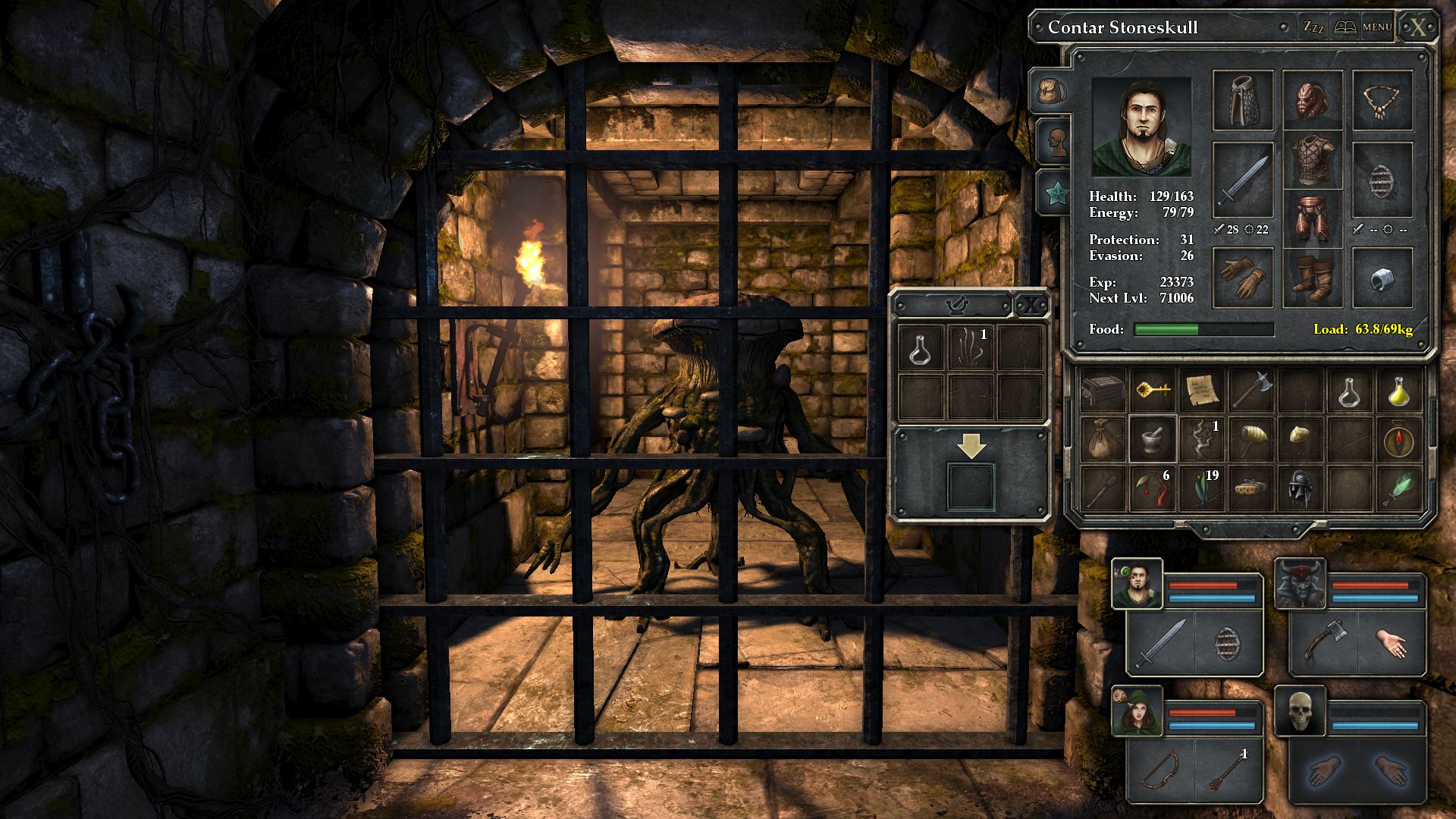
Legend of Grimrock dungeon

If there’s one mechanic that has stood the test of time and transcended genres, it’s stealth. Stealth elements can be seen in today’s action-adventure titles like Batman: Arkham Asylum, third-person shooters like Uncharted 2: Among Thieves, first-person shooters like Dishonored, and even 2D side-scrollers like Mark of the Ninja.

Since its introduction by early games like 005, Castle Wolfenstein, and Metal Gear, stealth has been a popular and captivating challenge in a lot of games. To the untrained eye, stealth is the same in every game—sneak around to kill people and/or complete an objective without being seen. But to stealth fans and game designers, there are different ways to look at stealth, including newer mechanics currently bringing innovation to the genre.

Below are only three of the many types of stealth found in games that are worth looking into if you ever find yourself working on a similar project:

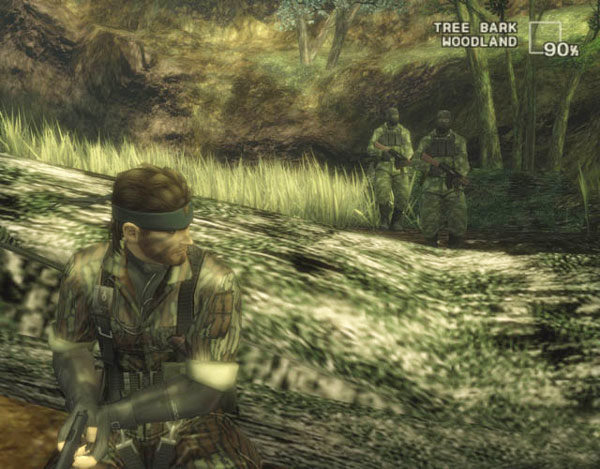
MgsCamoExample

Hiding To Avoid Visual Detection

Stealth doesn’t get any more basic than this. Avoiding visual detection means that the player character is not discovered by an enemy, which is usually done by line-of-sight mechanics. Some enemies merely see the player visually, while others can smell them or even sense them with fictional powers. The goal of the player is to avoid detection by hiding behind objects, in the shadows, above their line-of-sight, etc.

It’s amazing to consider that the recent Metal Gear Solid V would not exist if a ground-breaking NES game hadn’t been released more than 25 years ago. Metal Gear was one of the first titles to have a line-of-sight mechanic where players had to avoid the guards’ front view to not be detected. If you were seen, you had to fight the guards.

Since then, the number of games that employ this simple style of stealth has grown dramatically, with recent titles including Middle-Earth: Shadow of Mordor, Assassin’s Creed: Unity, and of course, the latest entry in the Metal Gear Solid franchise. Whether they make heavy use of stealth or players can get by without using it, players tend to appreciate the option of either jumping into combat or taking a slower, more calculating approach that involves picking off enemies one by one.

Hiding Via A Disguise

Using disguises to blend into groups and not stand out has been used in everything from movies and television shows to classic novels written ages ago. Everyone is familiar with the Trojan Horse from Virgil’s Aeneid, a Latin epic poem written more than two thousand years ago. After a decade of failing to conquer Troy, the Greeks used the massive wooden disguise to infiltrate the city’s impenetrable walls and lay waste to it, ending the war.

This kind of stealth, which is also referred to as social stealth, normally uses NPCs and a disguise as its two main ingredients. To avoid detection, players wear a specific costume that allows them to blend into a crowd of NPCs. This fools patrolling enemies into thinking that the player is just another bystander, party guest, etc.

One of the best examples of this is found in the multiplayer portion of Assassin’s Creed: Brotherhood, which involves players hunting and killing each other in an area filled with NPC characters. Most of the NPCs on the maps look identical to the player characters, which means you can walk casually or join a group of them to fool your pursuer. There are even abilities that change your look temporarily to have a better chance of blending in.

Hiding To Hunt

As opposed to games where detection means losing the game or a difficult combat encounter, games with a hunter stealth element have players find and kill targets. This mode empowers players with a sense of control and dominance as they strike fear in the hearts of enemies while taking them down, one by one.

One of the best examples of this stealth are the Batman games by Rocksteady, which include Arkham Asylum, Arkham City, and Arkham Knight. Players are usually more than free to run up to enemies and beat them to a pulp, but sometimes this isn’t the best approach. Instead, players must move undetected through vents and on high-placed gargoyles to single out enemies. There’s nothing better than hearing thugs panic as they notice more and more of their comrades lying unconscious.

Like Batman himself, this type of stealth mode is satisfying because it makes players feel like a hunter stalking its prey. The trick to making this kind of stealth work in your game relies heavily on the reaction of the enemies. The more frightened they get as this mysterious force hunts them, the cooler the player feels.

[su_note]Learn more about the School of Game Design at the New York Film Academy by clicking here.[/su_note]

Image Source