Kinetic typography is a fantastically engaging way of delivering text information in a visual way. It’s a great marketing vehicle for those looking to spread a heavy message without losing their audience, and is equally as good simply for entertaining the viewer – particularly with the advent of YouTube, there have been so many great examples of kinetic typography that it’s become something of an artform.
Rendering text in an appealing manner is a fundamental skill taught at graphic design school, and there are a lot of resources out there to get you started with the animation aspect. But putting technical factors aside, what makes for an aesthetically pleasing kinetic typography animation that stands a chance of going viral?
The Key Ingredients for a Great Kinetic Typography Animation
Don’t Go Over Three Minutes. This is a real biggie – no matter how excellent you think your material is shaping up, your audience’s mind will wander around this point (and all those hours you spend putting into the superfluous two minutes will be wasted). Keep it tight and concise, and your viewers will love you for it.
Don’t Use A Weak Soundtrack. Another huge mistake that can kill an otherwise good animation is using an audio file with a terrible bitrate, distortion or other issues. Although kinetic typography can be seen as primarily a visual media, it’s very much an aural one, too.
Render The Exported Video on the Highest Settings. Again, it’s all about not selling yourself short – why bother spending hours on a crisp-looking typography that would get you accepted into animation school, only to stick it on YouTube in a pixelated 320p resolution?
Triple-Check for Typos. This one sounds obvious, but it’s surprising how often we see excellent kinetic typography laden with spelling (and grammatical) errors. It can ruin the experience for an eagle-eyed viewer, and it’s very difficult to go back and correct these, so be sure to triple check for typos.
These four major guidelines should stand you in good stead and get you most of the way there, but next we’ll take a look at some nuanced aspects of kinectic typography when executed brilliantly…
… and dissect some poorer examples, too.
Picking Workable Audio
Having good sound quality is key, but that isn’t the be-all and end-all of an audio track that will look good when animated.
Let’s assume you’re looking to take some movie dialogue and give it the kinetic typography treatment purely for entertainment purposes (a great place to start out).
What you should be looking for is a scene that isn’t too “messy”, with numerous actors talking at once or overlapping, a big soundtrack detracting from the spoken words or abrasive sound effects that will be tricky to represent in animated form.
While there’re no strict laws here, you’ll probably want to start out with just a one or two actors speaking at a fairly even rate (more on pacing in a bit). If the script itself is instantly recognizable and/or iconic, even better – a superb example from Breaking Bad:
Do set aside some time to fiddle with the audio track in the editing suite before you begin animating to get the best out of the finished product; a little time spent tweaking the EQ and lowering any ambient noise that may be in the clip so that the words shine out can pay dividends.
Working in the Third Dimension
Check out this kinetic typography video from Zombieland (a movie which actually employs kinetic typography during the scene itself):
You’ll notice how – particularly towards the end – the animator employed back and forth motion with the type and graphics rather than just scrolling text along the X and Y axes.
One of the great benefits of the medium is that you’ve got an infinite canvas to work with, so do make good use of it in all three dimensions – it’s a lot more engaging to see the ‘camera’ move through the frame, especially since this technique makes it hard to predict which direction the font will start moving in.
The Art of Pacing
In the above two examples, it’s clear that the animators paid a great deal of attention to the pacing of the script; sticking with some words or lines longer than others, and dramatically speeding up or slowing down at points.
How you approach this depends hugely on the audio you’re working with, of course, and more often than not you just have to go with your gut as to what feels ‘right’.
That said, the best way to demonstrate the importace of pacing is perhaps to look at a poor example. This one comes from the movie Inception:
Hit Them With a Surprise
Much like any visual medium, throwing in the odd curveball or twist can be a very effective way of leaving an impression on your audience. This is especially true of kinetic typography, which is, at its heart, simply text moving around a screen.
Check out this delightful animated clip from The Social Network, which not only incorporates a lot of the above advice, but features a delightful twist at the end:
The Best Way to Make a Killer Kinectic Typography Video? Practice!
Your first few videos are likely to be very rigid and not particularly mindblowing, but that’s very much to be expected. The only way to better yourself is to have fun playing around and discovering what works and what doesn’t – by the same token, feel free to contravene every piece of advice offered above!
There are already a lot of tired clichés when it comes to typography, so there’s nothing wrong with trying to stand out from the crowd by experimenting. To demonstrate this in action, we’ll finish off with this marvelous Pulp Fiction clip in which the animator has even managed to incorporate video into the mix:
While it’s not uncommon for students at the New York Film Academy to come back to further their studies, filmmaker Tanner Cusumano has the distinction of attending our film camps five times in a row. The experiences enabled him to write, direct, and edit several short films that have appeared in a number of prestigious film festivals.
We recently sat down with Tanner to talk about his experiences at the New York Film Academy, what he learned over the course of his five summers at the Los Angeles campus, and how he’s applying the skills he acquired to his current projects. Check out the 4 minute teaser video below and scroll down to read the full transcript of his interview.
TRANSCRIPT
Hi, my name is Tanner Cusumano and I’m a five-time New York Film Academy alum.
NYFA: How did you into filmmaking?
TANNER CUSUMANO: My grandfather was really into film, just as a hobby. He originally worked for the Department of Water and Power. So I’d go over to his house and he would just do like little skits with his little camcorder and that’s how I kind of got started. And I think I was watching TV and there was an ad actually for the New York Film Academy and I was like “Oh, that sounds interesting.” And then I went on your guys’ website and looked up a couple of your programs. That’s how I actually got started at NYFA.
And then I went the first year and really liked it. Then I went the second year and really liked it. And did that five times. [laughs]
NYFA: Anything else that influenced your decision to pursue filmmaking?
TC: When I realized I loved film it was the second year at NYFA on the backlot and I just realized that I was just so happy. I was like telling my actors what to do and we were dealing with all these problems that arise on set. But it’s a fun stress, it’s a fun environment. That’s when I realized I really loved film.
NYFA: Why did you decide to pursue directing and producing?
TC: What got me interested in directing and producing and why I started to follow that path was I just love telling stories. Like I was working…you start with this idea. Something that’s in your head. Something totally original. And then you do a script, you know, you write a script. Then you take it to the next level. You go through pre-production. Then you flush it out and create these characters and the characters emerge. Then you go and do the location scouting and you make it this whole enterprise, this huge film from just this one idea that you’ve had. And there’s something really cool about that. That you can start from this one idea and make this whole film about it. And going through the whole process of location scouting, planning a budget, casting, getting your crew, dealing with actors; the whole process is something that is just fun. You know, it’s something that I enjoy. It’s very unique and it definitely beats working at an office in a 9-5 job. I think everyone has something, like a career they’re drawn to and I think you find it when you realize that whatever you’re doing makes you happy. And that’s what I found in film.
NYFA: What influenced your decision to attend the NYFA Advanced Program?
TC: I would say before I loved film, I was intrigued by it. If that makes sense. So when I saw the New York Film Academy ad and I read about, I was like “Oh, you get to film on the backlot, that looks fun.” [laughs] And you’re with other high school students so it’s a fun high school summer thing. But it turns into something more than that. The program turns into something where I realized, when you’re working on set, how much I enjoyed it and it makes sense. Like, “Wow, this is what I want to do for the rest of my life.” I would say I was intrigued by film before NYFA, I fell in love with film at NYFA.
One of the reasons I ended up going to NYFA was access to all the equipment. When I first started in the tween program I was a middle schooler. I didn’t have access to any of these lights or sound equipment or cameras or anything. I had a little mini DV camcorder. And being able to have access…you know, when I was a student, an HD camera was a big deal in regards to dolly track, c-stands, everything that makes a production possible, I didn’t have access to. And being a student at the New York Film Academy gives you access to all that equipment, which I think is a big deal.
NYFA: Why did you decide to attend so many times?
TC: The first program I did, I believe it was the two-week Tween program. So that was all filmed on the backlot. And I met a lot of really cool people and had access to a lot of really great equipment that was better than what I was working with at the time, which was just a mini DV camcorder for my home videos. And then I come to NYFA and they give me this HD Panasonic, which is just huge at the time. This was like 2006 so an HD camera was a pretty big deal. So that was really fun and I was like, “OK, I’ll do it again next year.” And I was talking to one of the teaching assistants who was like, “You know, there’s this really great program. It’s called the Six-Week Advanced Program where we give you a truck full of equipment and you can pretty much do whatever you want.” And I was like, “That sounds awesome.” And then, when I was in ninth grade, I was the youngest person in the advanced program and I remember talking to one of the TAs and I was like, “I want to go kind of crazy with this. I want to go film on the Queen Mary.” And they were like, you can film wherever you want. So the first film I did I actually filmed at the Queen Mary in Long Beach and we talked to them and they were actually very familiar with NYFA, they gave me a discount because I was a NYFA student and they were really accommodating to us because NYFA built a good reputation with them. And I found that in a lot of the places we filmed, NYFA had a really good reputation.
And I kept coming back, I think I did the advanced program three times. And the reason I kept doing it is because I don’t really know anywhere else where a high school student could get a truck full of equipment and just having professors tell you, “Go do whatever you want.” And that creative control…a lot of the students made really great films. My films went on to a lot of film festivals and a lot of other classmates had their films at a lot of film festivals as well. And it’s a really unique program and me enrolling in that program really allowed me to get in touch with my inner director and allowed me to explore things I wouldn’t be able to do before and is a reason why I love film so much.
NYFA: What did you learn from the Advanced Program?
TC: I think one of the major things is how to deal with actors. The first advanced program I did we actually held casting auditions, we had people come in from LA and we held auditions in the NYFA offices. The first time I didn’t really know what I was doing. We had instructors and stuff who would teach us methods on how to cast actors and all that. And I think that in order to find an actor that’s really right for the part, you have to look for the right things and I think I was looking for the wrong things at first. I was looking more for who looked the part and not really who became the character, and who fit the part best. So that’s important. A lot of it’s experience. You know, learning who’s good in a room, but not necessarily who’s good on set. Like who gives a really good audition, but isn’t necessarily able to perform on set. Those are things you can kind of tell in an interview and in follow-up auditions and reads and things like that.
Also in dealing with locations—I guess this is more of a producing issue—but some of the other locations…I think in the last advanced program I did we had an issue with the location where we ended up scrambling and we had to find a backup location. And I think being put in these situations are things people have to deal with this, but dealing with it in high school, being able to deal with the location dropping out on you, having to deal with having an actor drop out on you at two in the morning, something I actually had to deal with. Like the day before the shoot. So I’m scrambling at two in the morning to see who can I find to be on the set at 8AM. These are all things that a high school student, when you go to college or you go on and further your studies and have these experiences, it puts you that more ahead than everyone else.
NYFA: What was it about NYFA that kept drawing you back?
TC: I think what kept drawing me back to NYFA, coming five times in a row, I think definitely the teachers. I’m still friends with a lot of the teachers today. They were so incredible, they taught me so much. The equipment, being able to have the amazing equipment I had in high school and able to build an amazing reel for colleges and just for my overall career was very beneficial. The people you meet, the other students, are extremely talented. I had classmates who made these amazing films, absolutely incredible films. And they’re off doing great things, one of them is working at Google. It’s a really great experience, the high school programs.
NYFA: What was the collaborative process like?
TC: For the pre-production aspect of a film, you work with mostly your classmates. They read through your script and I want them to be brutal, like tear this thing apart because now’s the time. And so pre-production, it’s mostly your classmates and that’s the best way to flesh out a film I think. To go with your class, figure out the issues, fine-tune. And then when you get closer to casting, my classmates’ insight was invaluable to say, we’re going over the whole project and like, “Ok, what do you think of this person?” “Oh, I didn’t really like them.” “Oh, I really liked that person.” And you go through and you identify and find…and when you’re going through, they make points you necessarily wouldn’t have thought of.
Then later on when you go through, when you get past casting and you go through and you’re on set. It does become, the actors become more involved. One thing I like to do is when you get some takes in and the characters, the actors get comfortable with their characters, improv is a really interesting way, I think, for them to get in touch with their characters more and I’ve gotten some really great scenes just from characters, or from actors becoming their characters and kind of improv’ing a little bit. That’s an interesting technique. But the collaboration with my fellow students, and also the teachers, the teachers would come on set and would give their insight and be like “I think you should be doing this better. This could be improved.” And that’s really helped. So the collaboration from the teachers at NYFA and also my fellow students were invaluable.
NYFA: Are you still friends with some of those students?
TC: Oh absolutely. I’m friends with pretty much all of my classmates from the advanced program. It was interesting because they kept doing it every year as well. There was a friend of mine who did it pretty much every single year I did and so every year we would come back and we would work on projects together and that was a lot of fun. One of the actors who I had a really good connection with, actually I’m thinking of putting in a new film of mine and he was really something else. He was in the first film that I did at NYFA, the first advanced film that I did at NYFA. And then he was on, I guess it wasn’t really Broadway, he was in Las Vegas in the show Beatles Love and he had the main part. So I went to go see him and I was like “Oh my god, he’s like the main guy!” So that was really cool and I have a role in mind for him actually coming up.
NYFA: How do you feel about the international student body at NYFA?
TC: In the advanced class, there was, it was mostly from out of state. I think I was the only student from California, so that was really cool. We had one student from Egypt. But NYFA is a really international school, which I think is fantastic. It provides a lot of different viewpoints and culturally it’s very interesting. But that was one of the great things about being a student, like meeting all these different people. I wish the advanced program had more international students. People in the advanced program are from a lot different areas, like all different states, so that was really interesting in seeing their perspective and them flying out here. It was really cool. If everyone was from California, they’d probably all be commuters, which would be boring. I was a commuter and it was boring. But they were all in the dorms, in the Oakwood dorms, so that was fun.
NYFA: Is NYFA hands on?
TC: The New York Film Academy is incredibly hands on. I remember the first day I came into class I was expecting a boring lecture, just like “Okay, here’s the basics of film” and you’re doing diagrams and not really getting your hands on equipment. We got our hands on equipment day one. The first hour I was at the school they were bringing in cameras for us to play with. And I say play with, but the way, I think, you learn cinematography and the way you learn is through experience, you know? I don’t think a textbook fully can explain how to do a lighting set-up, how to do these certain things. I think that you have to do it yourself. A teacher has to show you and then you learn with your hands. And I think that’s what NYFA understands. I think that’s what’s so unique about NYFA is that you learn with your…it’s a hands-on experience. I remember second week, we were laying dolly track and we were gripping and we’d have a teacher actually direct a scene so all the students would experience the different roles besides the director because of how important that is on a set. Even if you’re directing, you need to know what all the other departments do. And so I remember we were gripping and switching positions, I would do sound, I would grip, I would do the sleigh, I’d be the camera, I’d be first AC, I would do everything. And that’s what so important about the New York Film Academy is that you get all these hands-on experiences and that’s how you learn.
NYFA: How did you feel about the instructors at NYFA?
TC: Whenever I was having an issue with a film, I was having an issue with my story, with a location, no matter what I was dealing with, if I asked one of my professors for help, they knew exactly what to do. And the fact they were all working in the industry, the fact that they were all seasoned veterans, seasoned professionals is something that I don’t think you can get a lot of places. I think that’s what makes the New York Film Academy so special.
NYFA: What was the benefit of having access to the Universal Studios backlot?
TC: The New York Film Academy having access to the Universal backlot is a big advantage. I actually tried to film there myself for a side project and they said, “Yeah, you need a million dollar insurance policy and like $50,000.” I’m like, “Okay, that’s not happening.” But the fact that when you’re a student at the New York Film Academy, you get full access. You have dolly track, you have lights, you have pretty much anything you can imagine, and the backlot, which is absolutely incredible. So I remember, it’s really a surreal experience when you’re walking around the backlot where they shot these incredible films. You can’t even begin to start to name all the incredible things they’ve shot there. But it’s a really special experience to film there.
NYFA: What’s the benefit of being in Los Angeles?
TC: The whole film industry is in Los Angeles. That’s what I think is so special about the LA campus. I think it’s really good that NYFA has a campus in LA. I’m kind of biased, but I think the LA campus is the best. [laughs] But all the studios are here. Whether you’re a directing student, you want to emphasize in directing, you want to emphasize in acting, I think you should be in LA. And being in LA, having access to internship opportunities, having access to the Universal backlot, gives you a lot more opportunities than being somewhere else.
NYFA: What skills did NYFA help you to develop as a filmmaker?
TC: I think what the New York Film Academy helped me develop the most for is being able to command a set. As a director, that’s extremely important. I started in the tween program which is a lot of middle schoolers. I don’t know how to effectively control a set. But I think that each year you learn more and more how to talk to actors, how to direct actors, how to treat a crew. If a crew doesn’t respect you as a director, that makes your shoot a living hell. So I think that when I’m going into a college thesis film shoot and having the experience of the New York Film Academy for those five years, I was able to go in there and effectively talk to my actors, talk to my crew, effectively command the set, which is a crucial skill for a director.
NYFA: In your career thus far, is there one moment that stands out?
TC: I would say there are two moments in my career that really stood out, which I think I couldn’t have done without the New York Film Academy. The first moment was when my film was accepted to the Santa Barbara Film Festival, which was a really big deal. The reason that that film festival in particular was so special to me was when you get accepted into…actually, I wasn’t even in the student section, they put me in shorts, so I was competing with college students even though I was a high school student at the time. What was so special is that they gave you a special badge that gives you unlimited access to the whole festival. I remember this was the year The Artist came out. I got to go walk on the red carpet with all of the actors, like Leonardo DiCaprio and all the big actors and artists. And I got to sit in the front row during The Artist Q&A because I was a filmmaker and you get treated like royalty there. And having that from like a high school student film from NYFA was a pretty amazing deal. That was a really special moment for me.
The second thing is probably, I would say when I got my first job. I had an internship at Warner Bros. for the television show The Mentalist. Even though this isn’t a traditional…how should I put this? I got the experience from NYFA in the sense of how to be respectful and how to do a good job on set. I worked in the production office for The Mentalist, but I also got to go on set occasionally.
NYFA: What have you worked on since NYFA?
TC: The last film I made at the New York Film Academy was a film called Amanda, it was about teenage drinking and driving and that film went into a lot of festivals. I wouldn’t even know where to begin. I pretty much copied everything I learned from NYFA in order to make that film. And it worked perfectly! And that was in a lot of film festivals. That was actually my favorite film I’ve done so far. After that, I did a lot of internships. I did an internship at Warner Bros. with The Mentalist and then the summer after that I worked for Warner Bros. again for the TV show Gotham on Fox. So I was a writer’s PA for that and I worked for them for them for several weeks. And then right now I’m working on a documentary, a feature length documentary about Fisker Automotive and a short film that I’m working on, that I’m still flushing out now, that I hope to have done by January.
NYFA: Do filmmakers have a responsibility to pursue social issues?
TC: I think that film is a very powerful medium and I think that filmmakers do have a responsibility to explore certain social issues and connect taboos in society. I think that’s what’s so important about film is that it really influences society and it can cause change. And I think that if you look at the film Bully, that was a big feature film, it was a documentary about bullying going on at this elementary school. I think it had a big impact and that it got people talking about an issue. And I think now schools have certain measures about dealing with it and they show these films and I think that filmmakers should be proactive and try and have their films give awareness to and have discussion about certain issues.
NYFA: Do you have any advice for young filmmakers?
TC: Part of being a student director and a student producer is really stretching a dollar, you have to know how to do that. You have to ask. Seriously. I’ve very rarely paid for a location. A lot of the times—people would think I’m crazy—so Tanner, we have to get a house. OK, we’re going to go door to door and knock and see who’s going to say yes. “Tanner, no one’s going to just let you film in their house, they don’t know you, they’re not going to let a huge student film crew walk into their house.” Every time that I’ve had to film either an interior house or exterior house location, I just knocked door to door, asked if we could film there, take a look around, and they said yes! It didn’t cost me anything. The only thing I had to pay for was the permit, which usually comes with a student discount. And, you know, people get afraid to ask, but I think especially in Los Angeles, I think people seem really eager to help out student filmmakers. And as long as you treat them with respect, you don’t damage the property, and you just show them how passionate you are about a project, they’re more likely to help you.
NYFA: What types of films interest you?
TC: Traditionally, I’ve done dramas. I’ve made films that are kind of depressing dramas. [laughs] But I’ve secretly wanted to do a comedy, so I’m trying to come up with a really funny script. But I’ve typically done dramas just because I think it’s good to do a film that can have some sort of impact and have people talking about it and hopefully, you know, inspire some sort of change or inspire someone to do something differently. But I think that can actually be done through comedy as well if it’s not…I think a lot of the comedies these days are not so much about like social issues, but are just dumb, stupid comedies. Like if you look at, I’m trying to think of a good example…I don’t know if you guys have ever seen the film Sullivan’s Travels. I would say that’s kind of a comedy, but it has a social message behind it. So I want to do a comedy with social messages behind it and I feel a lot of the comedies today are just about stupidity and that’s not something I’m a fan of. But I would say I’m drawn to films that have some sort of message that can inspire social change.
NYFA: Is there an advantage to being a young filmmaker?
TC: I’m not sure, honestly. I think I was fortunate to get into film at a young age. Because I started so young, I feel I’m a little step ahead of everyone else, but I don’t necessarily think there’s an age limit to get into film. I think that what’s important is that you’re passionate about it and you give it a 100%. I think that getting into it at an early age is an advantage to you, but I don’t think there’s necessarily a limit.
NYFA: Any final thoughts on aspiring filmmakers?
TC: I would say take the program seriously. Give it a 100% and don’t slack off. Be passionate and never give up.
Given that there’s only a single letter between them, it’s not surprising that many people have trouble discerning the difference between a BA vs a BFA Acting degree.
To add to the confusion, there is some overlap between the material covered by both the BA and BFA Acting programs, but as a whole they do have some distinct differences and what’s right for one prospective student isn’t always right for another.
In order to help you figure out whether it’s a BA or a BFA Acting program that you’ll need, let’s first look at the basic definitions before moving on to the key benefits (and downsides) of each.
BA vs BFA: What’s in a Name?
Naturally, you’ll be wondering what the ‘F’ stands for. In this case, it’s ‘Fine’, as in ‘Bachelor of Fine Arts’.
At a basic level, as the name suggests the Bachelor of Fine Arts is more intensely focused on the main discipline of study compared to the Bachelor of Arts (for instance, a BFA acting program will have a curriculum which is solely acting based, whereas the BA acting equivalent may branch out into other areas of performance art).
In a nutshell, a BA is deemed as a more general degree while a BFA is considered as more of a professional, specialized qualification. That’s not to denigrate the value of a BA acting degree; it simply reflects how attitudes towards each have formed in the industry over the years.
And it certainly doesn’t mean that a BFA acting program is better, or even right for everyone. To illustrate, let’s look at some of the factors that could be seen as downsides to the BFA.
Reasons You Shouldn’t Do a BFA Acting Degree
– As mentioned, a BFA acting program rarely deviates from the core subject: acting. If you were hoping to spend half of the semester acting and the other half focused on more general media studies, a BFA acting course is not for you.
– As well as being extremely intensive on the practical side of things, a BFA can also feature more coursework than the BA degree; this is useful in that it balances practice and theory and gives a more rounded education, but not everyone is up to task of delivering on both levels.
– A BFA in acting or any other profession can take a year longer to complete than the BA equivalent (though not always; our own BFA acting program is made up of extended semesters to reduce the overall study time.)
And of course, there are a number of benefits which have drawn many to choose the BFA over the BA.
Reasons You Should Choose the BFA Acting Degree
– The prestige is a big draw for many prospective students. Having a BFA in acting qualification on your resume can be a huge trump card which lets casting agents know you’ve studied the craft at the highest level.
– It isn’t just a nice certificate you can hang on your wall, either; the work involved to attain it will genuinely set you up for the rigors of real acting work. You won’t be stood on set confused at what to do, armed with “but I’m only fresh out of acting school” as an excuse – you’ll be a qualified actor with the skills to back it up.
– Given the intensity of the tuition offered on a BFA acting program, it’s something of a ‘trial by fire’ and only motivated individuals tend to apply. As a result, this means you’ll be studying in amongst like-minded individuals who are serious about their art; nothing creates a better study environment and sense of camaraderie among the classmates you’ll come to know very closely over the coming years.
BA vs BFA Acting: In Conclusion
Ultimately, when it comes to a BA vs BFA in acting it isn’t a case of which one is better than the other – it’d be impossible to give a blanket answer given the variables that come with what you’re looking to get out of your acting qualification (as well as personal circumstance).
Earn a Bachelor of Fine Arts in just 3 years with NYFA’s BFA in Acting for Film program. Taught by veterans of Hollywood, Broadway, and independent film, this program will prepare you for a career in acting for film, television, and more. Visit our BFA in Acting for Film program page to get started.
There are few areas of design that are as riddled with visual cliches as the West’s approach to Russia. When offered a brief that has a Russian or Communist connection, many designers stick to the same script: a tight palette of red, black and white, and a general Constructivist look, with a triangle or at least a healthy bias towards the diagonal, and, above all, a couple of Cyrillic letters thrown in.
Whether you’re honing your craft at graphic design school or are already a seasoned professional, we’re here to break down the pitfalls that just about everyone falls into when it comes to Russian-themed design (and how to get out of the rut).
From Russia With… Threadbare Clichés
It is easy to see why Constructivism is such a popular choice for graphic designers. The images created in the early years of the Soviet Union are bold, instantly recognizable and still strikes a chord, even though the style has been around for almost a hundred years.
First appearing in Russia in 1919, Constructivism developed as a form of art devoted to social purposes, rejecting the idea of ‘art for art’s sake’ that was so popular at the turn of the century.
The new movement developed a style that focused on a stripped-down palette of primary colors, the frequent use of photo-montage, and a preference for sharp angles and straight lines rather than curves. As you might expect for an art form that emphasized art’s social responsibilities, Constructivist artists such as Rodchenko, El Lissitzky and Lyubov Popova used their skills to produce fantastic posters with a social message, such as this one, which promotes books: Constructivism is a seductive style to adopt, and many designers have fallen for it when covering briefs about twentieth century Russia, or even for anywhere beyond the old Iron Curtain.
But the Constructivist style has appeared on book jackets, film posters, album covers and posters for decades now, and it’s beginning to look a little tired. On one hand, by tapping into this imagery a designer will immediately alert their audience to the subject of their work, but these days the designer will also be revealing their own inability to think outside of the box – or rather, outside of the famous red triangle.
However, while the Constructivist style is something that should be played with or used with caution by modern designers, the terrible habit of throwing in the odd Cyrillic letter into a sentence in Roman script should be avoided at all costs.
While it might signal ‘Russia’ to some, it is like nails on a blackboard to those who can read Russian, as it very often makes no sense. Lazy designers often flip the letter R in Russia, color the word in a good Communist red and think their job is done…
… Except ‘Яussia’ spells the non-existent word Yaoossia if the Я is pronounced properly. There’s nothing guaranteed to set a Russian speaker’s teeth on edge faster than these misplaced bits of Cyrillic. Using strong Russian-themed fonts will have the same recognisability without the potential for irritation – usually, a simple art deco font will give you all the flavoring you need without looking completely hammy:
Luckily, there is a way for designers to expand their Russian visual arsenal without having to learn the language fluently.
While the vocabulary of Constructivism itself has become overused, the style of the fantastically over-the-top Socialist Realism posters has not yet been fully explored. Colorful, broadly painted, muscular workers staring off into the blissful Communist Future, solid women in headscarves, factories glowing in the sunrise: there is plenty more mileage to be found in these images from an artistic point of view (if you ignore the political idolatry behind it!)
Designers can also turn to other artists for inspiration. Russian twentieth century art is every bit as good and as moving as that of the rest of the world, but the Cold War has rather stifled its reputation in the West. Aristarkh Lentulov‘s Russian Cubism, with its brightly-colored onion domes, are beautiful and memorable images, or the flamboyant imagery of Leon Bakst, the designer who worked with the Ballet Russe.
Looking closely at traditional Russian folk art can also produce fantastic results. The beautiful miniature paintings found on the tiny black boxes from Palekh look ancient, but these paintings only developed in the twentieth century and are ripe for adaptation:
Graphic design is at its best when constantly moving forward – precisely the reason why people study graphic design in order to better themselves – and the current obsession with Constructivism and backwards-looking letters is keeping designers stuck on a loop.
Sticking to these tropes for Russian or Communist-themed design is like illustrating everything remotely American with pictures of Cowboys and Indians. Russia has a rich and complex visual history that is waiting to be explored by more intrepid and adventurous designers.
While many people associate fireworks with the Fourth of July, fireworks are set off during many different times of the year. Many sports games offer fireworks at the end of a game, and many people set off fireworks for New Year’s Eve and other holidays. When a night of fireworks is promised, many people break out their cameras in attempt to capture the beautiful show of light and color. While many of these people can effectively capture fireworks images with a point-and-shoot camera, you can create even more beautiful and professional images with a bit of technique under your belt.
Important Equipment
A DLSR camera
A tripod
A remote shutter release (optional, but helpful)
Using a DSLR camera will allow you to have full control over the final image, which will allow you greater creative control during the process. A tripod will keep your camera steady while shooting, while a remote shutter release allows you to take photographs without directly touching the camera – which will reduce the amount of blur from camera shake in the final image. The lens you choose to use with your camera is up to you, but we’ll be going over a few popular lenses to help you make you decision.
Location
The location in which you shoot is one of the most important decisions you can make while photographing fireworks. The first step (and most obvious) is to find a location that is actually going to be setting off fireworks. You can even set off your own, just be aware of the restrictions in your own neighborhood.
If you’re going to be photographing fireworks in a place where a lot of people are expected to come and watch, it’s important to show up early. You’ll want to ensure that you get the best spot possible, and you want to give yourself enough time to set up your equipment before it gets dark and the fireworks start going off. If you’re not sure exactly where the fireworks are being set off, ask around until you find out, or try to watch people setting up.
If possible, it’s always better to be above the crowd. Make sure that there will be no people and no trees (or buildings, or other distractions) in your composition. When setting up, be sure to point your lens in the direction of the sky where the fireworks will go off to make sure there are no distractions.
Camera Settings
Before beginning to shoot, make sure your camera is in manual mode.
Your aperture should be set to somewhere between f/8 and f/16. Since the fireworks will be far away, it’s important that they remain in focus. The fireworks will be bright, so there’s no need to open up your aperture all the way. However, if your image is too dark, open it up a bit. If it’s too light, close it down.
Your shutter speed depends on what you want the final photograph to look like. While faster shutter speeds (1/250 and faster) will freeze the motion of the firework, slower shutter speeds will create a more dynamic photograph and will show the movement of the fireworks throughout the sky. You can do this by setting your camera to bulb. By using your remote shutter release, you can open the shutter as soon as the firework is set off and close it once it is gone. If you don’t have the option of bulb setting, try opening the shutter from 1-30 seconds (shorter to capture one firework, longer to capture multiple).
Your ISO should be set to 100 to reduce the amount of noise in the final image. This is especially important since the dark night sky will show noise very easily.
In order to focus on the fireworks, you should set your focus ring to infinity. This in combination with a smaller aperture / larger depth of field should ensure that the fireworks remain in focus throughout the entire session. Make sure you keep your lens on manual focus so it doesn’t try to adjust mid-shot. If you’re using a telephoto lens, you’ll probably have to adjust your focus accordingly.
Choosing a Lens
Do you want a close-up, more abstract shot of fireworks, or are you trying to capture fireworks in combination with a landscape shot? What you want your final photograph to look like will help you decide what lens is right for you.
Telephoto
Using a telephoto lens will allow you to get up close and personal with the fireworks, but they’re more difficult to use. Since the fireworks aren’t shot up into the exact same spot in the sky every single time, you’ll likely have to keep adjusting your composition. Focusing on the fireworks is also not as easy as it can be with other lenses. Don’t let these problems scare you away! When used correctly, telephoto lenses can create some of the most captivating firework images. Since there is no context around the firework, viewers are forced to take in all of the light, color, and pattern they create.
Wide Angle
Wide angle lenses are a good choice for those who want to photograph fireworks in addition to a landscape. Instead of focusing solely on the firework itself, wide angle lenses allow you to add context to your image. It’s important to be aware of your entire composition when photographing with a wide angle lens. While it can certainly add some beautiful context, the image should be weighted correctly. Take a look at the two images below: the first is too left-weighted, while the second is more accurately weighted. You can always crop your image in post-processing to get rid of unnecessary negative space, and sometimes a simple turn of the camera from horizontal to vertical can fix your problem! If photographing fireworks within a landscape or cityscape, make sure your horizon is completely level within your composition!
In the field of producing, the highest honor Hollywood can bestow is the Academy Award for Best Picture. When the final Oscar of the night is given out, it isn’t to the director or the writer of the nominated film—it’s to the primary producers. With the added prestige of the golden statue, producers have a little more clout when it comes to their future projects. Here’s what some of the most recent Best Picture winning producers are currently working on.
1. 12 Years a Slave
Last year’s Best Picture winner was the gripping true-life drama 12 Years a Slave. Director Steve McQueen co-produced the film, and is following up his win with Codes of Conduct—an HBO pilot he’s also writing—starring an unknown actor as a young black man making his way through Manhattan’s wealthy elite.
Brad Pitt, whose Plan B Entertainment produced the film, also picked up an Oscar for his effort, and is currently working on a Lewis & Clark miniseries, as well as a sequel to World War Z. His newest film as a producer, the Martin Luther King, Jr. drama Selma, comes out this Christmas.
2. Argo
Argo picked up Best Picture Oscars for George Clooney and Grant Heslov, who have been producing together since their first film, Good Night, and Good Luck. Their production company, Smokehouse Pictures, has two films currently in the pipeline—Our Brand is Crisis, a David Gordon Green directed adaptation of a documentary about political campaigns in South America starring Sandra Bullock, and Money Monster, a thriller with Clooney attached as the lead and Jodie Foster as its director.
Director Ben Affleck also produced the film, and is working on Live By Night, a prohibition era organized crime drama he plans to write, direct, and star in as well. He also took a break from producing to film Batman v. Superman as the titular Dark Knight.
3. The Artist
Thomas Langmann was the sole winning producer of the black and white silent Best Picture, The Artist. His next production is One Wild Moment, a French remake of a 1970s drama, starring Vincent Cassel.
4. The King’s Speech
Iain Canning and Emile Sherman, producing partners of The King’s Speech, are hoping to strike gold again with famous characters from the past. Their next films will be a new version of Macbeth with Michael Fassbender and Marion Cotillard as the Shakespearean couple, and Mr. Holmes, starring Ian McKellen as an elderly, retired Sherlock Holmes. They’re also hedging their bets with a real life legend, producing Life, a period film starring Dale DeHaan as James Dean.
5. The Hurt Locker
Mark Boal was famously banned from the ceremony where he won his Best Picture Oscar for breaking campaigning rules. His next project is a film adaptation of the wildly popular adventure video game, Uncharted.
Nicolas Chartier, one of The Hurt Locker’s other winners, is producing A Tale of Love and Darkness, Natalie Portman’s directorial debut. Co-producer Greg Shapiro’s next project is Child 44, an adaptation of the best-selling crime novel with an all-star cast and blockbuster potential.
6. Slumdog Millionaire
Christian Colson is hoping to following up his Best Picture win with another prestige picture—a biopic of Steve Jobs. His chances are good, considering Slumdog director Danny Boyle is helming the film with a script by Aaron Sorkin and with Michael Fassbender currently set to star as the Apple founder.
7. No Country for Old Men
Superproducer Scott Rudin picked up an Oscar for No Country for Old Men and has two huge projects very loosely in the works. One is Sinatra, Martin Scorsese’s long-gestating Frank Sinatra biopic. The other is a film adaptation of smash hit musical The Book of Mormon.
No Country’s directors, the Coen Brothers, are producing their next film—Hail, Caesar!—which in itself sounds like a parody of a Coen Brothers movie: a period film about the studio system in the Golden Age of Hollywood.
8. The Departed
Graham King, who won his award for Martin Scorsese’sThe Departed, is going in an entirely different route with his next project. The Fifth Wave, his current production, is an epic alien invasion science fiction film starring Chloe Grace Moretz. He’s also got a potential reboot of video game adaptation Tomb Raider in the works.
9. Crash
Crash co-producer Cathy Schulman has another potential hit currently in production. Dark Places is a thriller adapted from a novel by Gillian Flynn, who made waves this year with her screenplay adaptation of another of her novels—Gone Girl.
10. Million Dollar Baby
Albert S. Ruddy won his Best Picture Oscar over a decade ago, but he is still a busy producer. His current project is The Vatican Tapes, an exorcist horror film, and American Pastoral, a drama with a stellar cast including Dakota Fanning, Ewan McGregor and Jennifer Connolly.
Million Dollar Baby’s director, Clint Eastwood, also picked up an award for producing. The latest film with Eastwood as a producer is the hotly anticipated American Sniper, starring Bradley Cooper. We won’t have to wait long for this memoir of a Navy SEAL—American Sniper comes out this Christmas.
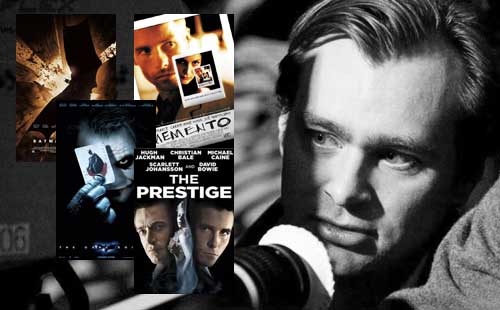
Make no mistake about it – Christopher Nolan is an exceptional writer who has the uncanny ability to bring innovative ideas to a plot while at the same time never straying from established storytelling conventions.
This balance – and knowing precisely when to push boundaries and when to stay within them – have resulted in a near-flawless filmography over the past fifteen years. His only real box-office and critical bomb was this year’s Transcendence, on which he only acted as a producer rather than a screenwriter.
But it could be argued that Christopher Nolan’s finished movies would look a lot more paint-by-numbers if it wasn’t for how stunningly beautiful they’re always packaged.
And for that, Nolan has one man to thank.
Wally Pfister: DP Extraordinaire
Like many of the industry’s most gifted professionals, Pfister started out young. He’d already discovered a passion for cinematography at the age of just 11, having become enthralled watching a lighting crew work on scenes for a movie being shot in his neighborhood.
Shortly after high school, he began turning his passion into a paying career, working as a production assistant for a news channel in Maryland. But it was to be a stretch of fifteen years shooting PSAs, doing odd grip and electrician work, and working on PBS documentaries before he was to form a partnership that would change the face of Hollywood.
When Wally Met Chris
In 1998, Pfister was working long into the night on a movie with a tiny budget. Feeling restless and looking for a change in career pace, he began leafing through a script that was doing the rounds on set. The other crew members and DP couldn’t see any value or merit in the choppy, confusing narrative; Pfister, however, was blown away.
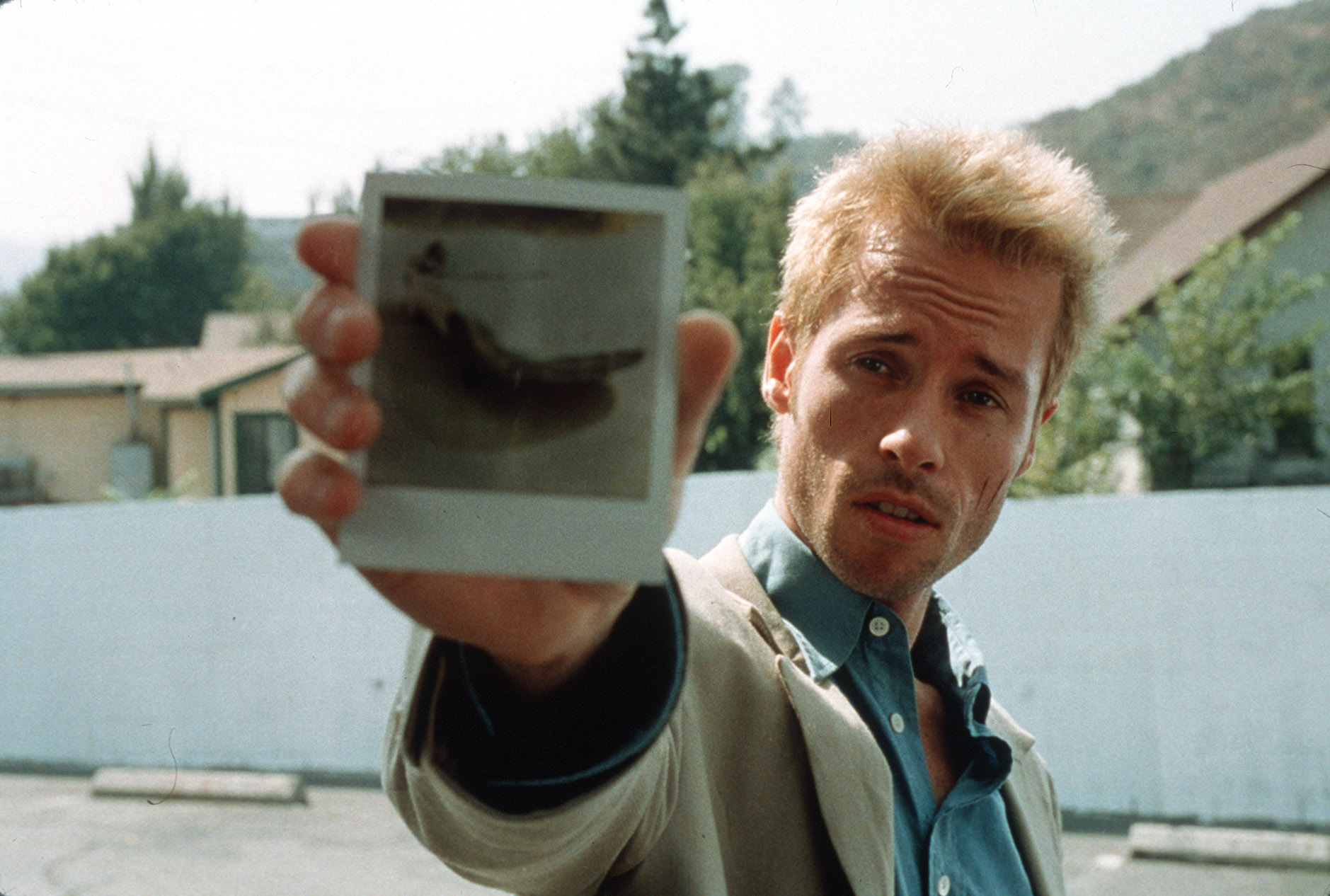
That screenplay was to be Memento.
By chance, Christopher Nolan had heard of Wally’s prior work and was interested in meeting him – but it was a one shot-chance with a finite window of opportunity. Pfister walked off set, caught the first plane from Alabama to Los Angeles and made it back in the same day to continue working.
“I hadn’t slept in 36 hours. I was a mess. I was rambling. Obviously, I was impressed by how intelligent Chris was. I was a little intimidated meeting him,” Pfister told The Daily Beast. “So I left there going, “Oh, well, that would have been great.”
But as fate would have it, not only did Nolan hire Pfister for the job of Director of Photography, but the quirky independent movie went on to great critical and commercial success, arguably thanks to Wally’s stylistic handling of the source material.
What Wally Brought to Chris
Following Memento, Christopher Nolan and Wally Pfister went on to even greater heights and many of the most defining moments in the duo’s shared filmography came from Wally.
The scene with Batman standing on the Sears Tower at dusk, overlooking the city? That was Pfister. The shot outside the Parisienne cafe in Inception where the city folds in on itself? Also Pfister.
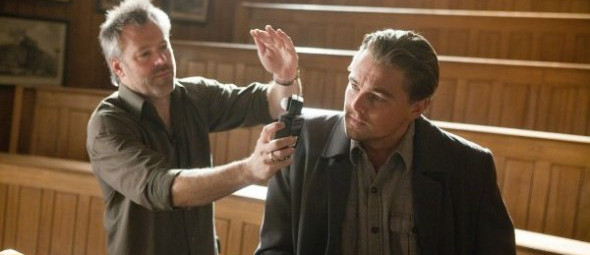
But as well as bringing his own visual elements to the table, one of the biggest reasons behind the success of the Nolan/Pfister partnership is that they’re in lock-step with each other. Nolan dreams up a scene involving an anti-gravity hotel corridor, and Pfister works out how to achieve it; Pfister pitches a visual involving a command module docking with a rapidly spinning spaceship, and Nolan writes it into the script.
What Chris and Wally Share
The other ingredient for success is that they both share a similar ethos when it comes to filmmaking. While it is Nolan that is famed for hating digital effects, 3D shooting and an over-reliance on CGI, it was Wally who helped him nurture this passion and turn it from a restriction to a benefit.
This even goes right down to how the pair utilize lighting, with Pfister stating: “Before you can know how to place a light, you have to understand natural light. You don’t need technology to have a good eye and an appreciation of the beauty of natural light. Go buy a book on Carvaggio or any of the Dutch Masters. To me, that’s beautiful lighting and it’s all natural and from 500 years ago.”
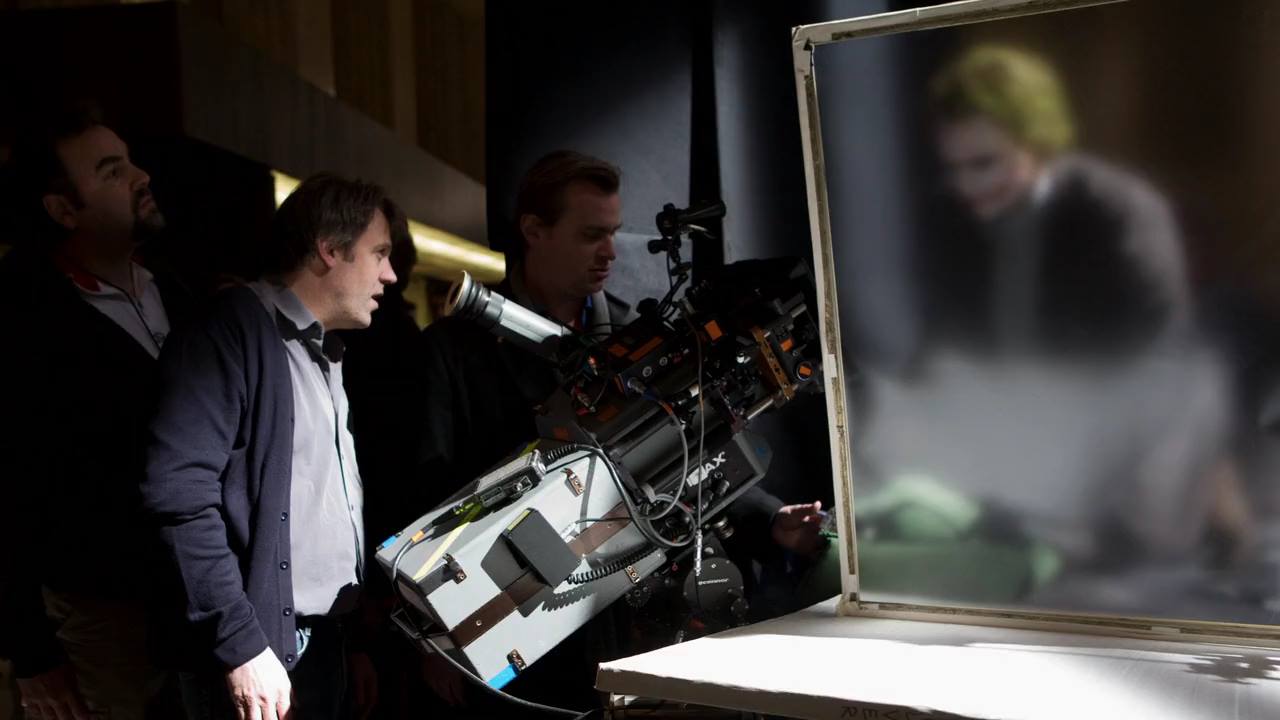
And the reason that Nolan and Pfister appears to pioneer the craft of filmmaking is because it is; the two came to iMax filming together for their work on the Dark Knight trilogy, and had to problem solve and figure it out together at a time when nobody else knew how.
What Wally Teaches Cinematography Students
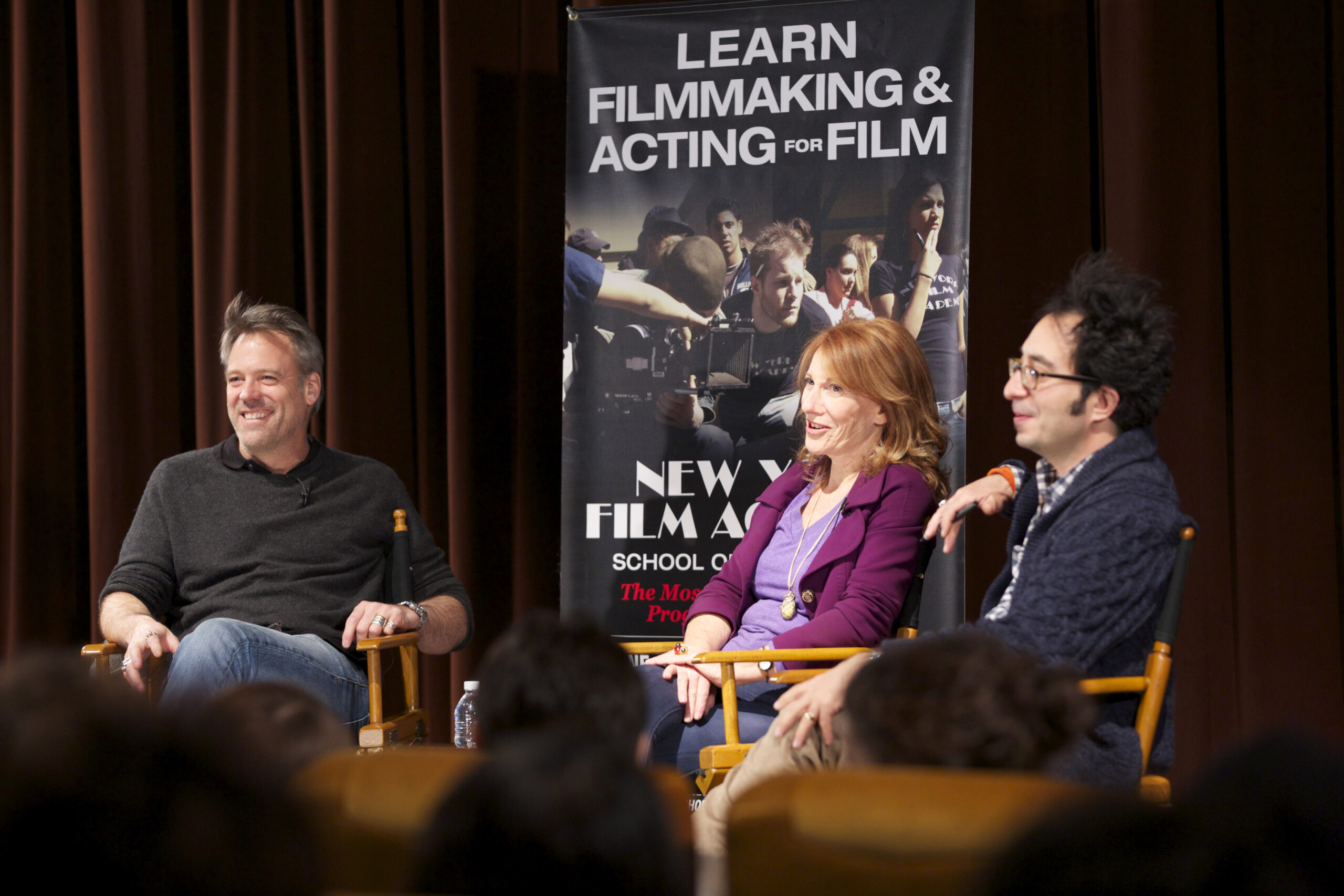
In a hugely popular talk and Q&A session given at the New York Film Academy, Pfister had this closing advice to offer students at the cinematography school: “You have to take risks. That’s what will make your career last longer. You have to fight to get your vision on the screen (but not fight with your director).”
It’s a big world out there, and Twitter has got it’s fair share of filmmakers and other movie professionals. You can’t possibly find them all let alone follow each and every one, so we’ve whittled down the list to 10 of the best Twitter accounts every filmmaker should follow – whether you’re currently attending film school or already working out in the field, these active accounts can serve as a good source of inspiration and help you take your career to the next level.
Okay, a little bit of self-promotion here but if you aren’t following the official NYFA account, you’re missing out! Primarily used to keep students updated with news and celebrate their great work, there’s also plenty of advice and inspiration on offer for filmmakers around the world.
NYFA has been a big fan of Film Courage for some time now, not least because they’re a great team but also for the extreme dedication they have for providing free (and quality) advice to independent filmmakers everywhere. Their Twitter account reflects this, offering a lot of practical advice delivered in video format with a dash of much-needed positivity.
Great actors can act with their backs. It’s known as ‘backting’. Practice by always having your back to the audience. — Tips For Actors (@Tips4Actors) November 26, 2014
Okay, you only need to take a quick look at Tips for Actors to realize it’s a spoof account, but it’s one of the funniest currently active. There’s nothing quite like a a dose of humor in your Twitter feed when the daily grind of self-promotion gets you down, so go follow Fergus Craig (and maybe buy his book!)
With a rollercoaster career spanning over three decades, what Peter D. Marshall doesn’t know about filmmaking could probably fit on the back of a postage stamp. The good thing is he doesn’t hold back in sharing what he’s learned, either in his official capacity as an instructor or via this Twitter account that every filmmaker should follow.
Ms. Dabis is something of an omni-talent in the industry, having a proficiency in not only filmmaking but also acting, photography and writing. Cherien started out writing on Showtime’s hit series the L World and has come a long way since – follow her latest work via her website, or, of course, via her Twitter account.
I stopped caring about new pop-cultural phenomena around 2007 and now I have no idea what any of you are talking about ever. — Diablo Cody (@diablocody) November 13, 2014
You’ll probably recognize Diablo as the name behind the success story that was Juno, coming right out of the gate with a screenplay that went on to win an Oscar, a BAFTA, a Writer’s Guild award and a whole host of others. Whether she’s talking about cinema or simply things that get on her nerves, Cody’s tweets are irreverent, candid and often pretty hilarious.
Ondi’s passion for film is infectious, and that alone earns her a place on the list of Twitter accounts every filmmaker should follow. A true champion of the arts, and worth keeping up with especially if you’re a creator (or fan) of documentary filmmaking.
Me thinks we need less talk about how to distribute microbudget movies and more about the craft, to make them worthy of an audience. — Zak Forsman (@zakforsman) November 21, 2014
Zak is another essential to add to your follow list, particularly if you want to master the tricky art of distribution and budgeting. Relatable anecdotes and useful advice for filmmakers following in Zak’s footsteps abound, so do follow if you’re mystified by the business end of the craft.
Candler literally wrote the book on how to market and sell movies (Selling Your Movie Outside the US), and as an expert at social media outreach her Twitter feed is a goldmine of info on what to do… and, possibly more important, what not to do when it comes to getting your movie out there.
Kevin Smith is a man that needs no introduction here given that he’s made a career out of not only making movies with an indie mindset, but also for being outspoken in his critique of the art form and the industry around it. Never one to pull his punches, Smith is a nerdy breath of fresh air in a world that often takes itself too seriously.
So your game is finally ready to launch and you want as many people as possible to know about it. By the time your game releases you should definitely have a plan set out for promoting it. Ideally, and as we made clear in the first half of this 2-part series, it isn’t a bad idea to start marketing your game well before launch.
Whether you did or didn’t promote your game before it was completed, now is as good a time as any to do everything you can so that people know your game exists. The following ideas are some of the best ways you can get your app or game all the attention it deserves.
Note that the more time and effort you put toward promoting your game, the greater your chances are of it becoming a success. In other words, expect marketing your game to feel like a full-time job if you want to see the best results.
Launch Date Decisions
After working long hard months, it’s no surprise that many developers simply want to release their game as soon as possible without considering a specific day. For instance, The App Store automatically releases any game or app as soon as it has been reviewed, which is what most app devs opt for.
However, there are plenty of upsides for deciding on a launch day yourself. The first being that you can start generating interest by letting people know when the game will be made available. You can then expect a buzz spike that will help your project receive even more attention simply because there were already people anticipating it.
When it comes to the App Store, the first couple of days are your best and possibly only chance of topping the charts. The more people that download your game on launch day, the more likely your app is to end up in the Best New Apps or Best New Games sections. The same thing holds true on other competitive game distribution platforms like Steam.
As for which day is actually best to launch, there’s plenty of debate so you’ll have to do some research. Most argue that Sunday is great since people are home and thus more likely to download a new game or app. However, many developers have seen success releasing both early in the week (Tuesday) or late (Thursdays) as buyers can look forward to playing the game over the weekend.
Promo Codes!
What better way to promote your game that to let people actually try it out for free? Distribution platforms like Steam and the App Store give you the option of handing out free codes for your game. The best case scenario is that these people, who will probably not buy your project now that they have it for free, will tell others about it and thus bring in new buyers.
Many devs even start handing out promo codes a few days before release. Since people love being the first to gain access to anything, they’re more likely to tell their friends about it if they like your game. You can even use them to grow your social media pages by offering them as giveaways for following your Facebook page, Twitter, etc.
Make a Press Kit
A press kit is everything a website or game reviewer will need to review your game, post an article about it on their site, etc. You’ll want to make it as easy as possible for them to check out your game as they are likely being bombarded by countless other developers asking for the same thing. The more convenient you make things for them, the more likely they are to give you a review or post an accurate article.
Some of the must-have items for a press kit are a short description of your game/app and key features. You’ll also want to add links to social media pages or websites where they can view videos, images, or even download the game itself. Make sure to include a contact e-mail so they can get back to you. If you have the resources, a trailer is also a great way to excite people and let them see what your game is all about.
As recommended in the first half of this series, you should also have a website for your game or team. Potential reviewers love the idea of clicking on a single link to see media and other information about a game they may write about. Once you have a press kit ready to go, you’ll want to whip up an attractive…
Press Release
Press releases are basically a few paragraphs about your game that you’ll be e-mailing to several media outlets, reviewers, etc. It’s what will attract the website writer’s attention before they ever open your press kit, so it should be well-written and capable of motivating the reader to consider your request.
More importantly, the content in your press release is very likely to be used by the media outlet when publishing an article or review. Since they don’t have the time to whip up articles on every press release or idea that comes their way, most media sites are much more eager to post about games if they already have some content to work with – i.e. your press release.
It’s also not a bad idea to make your press release available on your game or app’s website. For ideas on how to write a good press release, you can take a look at the Press Releases page on Gamasutra that has content from both indie titles and big budget games.
Post Everywhere!
If you take advantage of all the tools available on the world wide web, your game will have significantly greater chance of being a hit. From Facebook and Twitter to e-mail and forums, people all over the net are talking about games and eager to learn about a cool new experience. Keep busy while waiting for responses from gaming sites by posting your press release on message boards, creating contests with promo codes as an award, etc.
Aside from review and game sites, you can go a step further and ask dedicated YouTube and Twitch reviewers to make a video of themselves playing and/or reviewing your game. If they have an impressive fanbase, it can lead to thousands of potential buyers watching your game in action. Be sure to give them a promo code so they don’t have to buy the game, which will make them more likely to actually do something with your game.
[su_note]Before you can release and promote a brand new video game, you must create it first. Learn how to design and develop world-class video games at New York Film Academy’s Game Design School (campuses in New York City and Los Angeles). [/su_note]
Conclusion
Anyone who says the real work starts after you actually release an indie game may have a point. Although development is plenty of hard work, getting people to actually notice your project can be just as challenging. This especially holds true if you want to take advantage of every tool the internet has to offer for marketing your game without having to spend money on advertising.
So if you’re just starting to create a game or you’re already near release, we definitely recommend that you do all you can to spread the word. Even if your game is awesome, it doesn’t matter if people don’t know about it. Instead of counting on the lucky chance that your game spreads like wildfire via word of mouth, promote your game so that more people can enjoy the project you’ve worked so hard to create.
This website uses cookies to improve user experience. By using our website, you consent to all cookies in accordance with our Cookie Policy.
Functional
Always active
The technical storage or access is strictly necessary for the legitimate purpose of enabling the use of a specific service explicitly requested by the subscriber or user, or for the sole purpose of carrying out the transmission of a communication over an electronic communications network.
Preferences
The technical storage or access is necessary for the legitimate purpose of storing preferences that are not requested by the subscriber or user.
Statistics
The technical storage or access that is used exclusively for statistical purposes.The technical storage or access that is used exclusively for anonymous statistical purposes. Without a subpoena, voluntary compliance on the part of your Internet Service Provider, or additional records from a third party, information stored or retrieved for this purpose alone cannot usually be used to identify you.
Marketing
The technical storage or access is required to create user profiles to send advertising, or to track the user on a website or across several websites for similar marketing purposes.
To provide the best experiences, we use technologies like cookies to store and/or access device information. Consenting to these technologies will allow us to process data such as browsing behavior or unique IDs on this site. Not consenting or withdrawing consent, may adversely affect certain features and functions.
Functional
Always active
The technical storage or access is strictly necessary for the legitimate purpose of enabling the use of a specific service explicitly requested by the subscriber or user, or for the sole purpose of carrying out the transmission of a communication over an electronic communications network.
Preferences
The technical storage or access is necessary for the legitimate purpose of storing preferences that are not requested by the subscriber or user.
Statistics
The technical storage or access that is used exclusively for statistical purposes.The technical storage or access that is used exclusively for anonymous statistical purposes. Without a subpoena, voluntary compliance on the part of your Internet Service Provider, or additional records from a third party, information stored or retrieved for this purpose alone cannot usually be used to identify you.
Marketing
The technical storage or access is required to create user profiles to send advertising, or to track the user on a website or across several websites for similar marketing purposes.













![Video Game Marketing: Promoting Your New Game [Part 2]](https://www.nyfa.edu/wp-content/uploads/2022/11/pexels-photo-567452.jpeg)