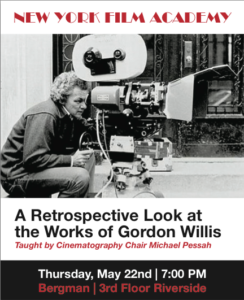
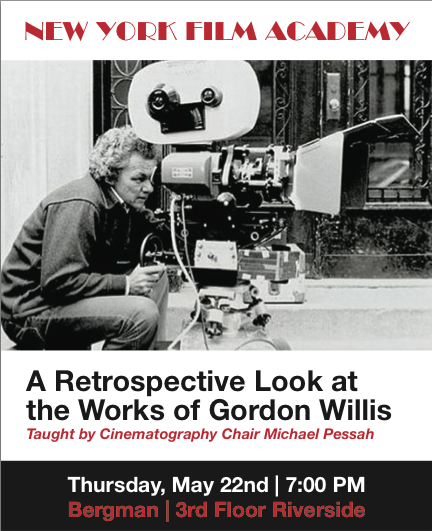
A Retrospective Look at the Works of Gordon Willis

gordon willisThis week began on sad note, as we learned of the passing of legendary cinematographer Gordon Willis, ASC. Many consider him the father of modern cinematography, and he is noted for both the precision of his compositions and the boldness of his lighting. Willis set the tone for Hollywood in the early 1970’s, shooting a string of classic films including “The Godfather I and II“, “Klute“, “Manhattan“, “All The President’s Men” and “Annie Hall” to name only a few.

Michael Pessah, Chair of the LA Cinematography School, has prepared a special lecture class to honor Willis’ contribution to the art form and present selected scenes from his films. Entitled “A Retrospective Look at the Works of Gordon Willis”, this lecture will take place at the LA campus on Thursday, May 22nd at 7pm. Willis’ images have inspired several generations of cinematographers, and New York Film Academy is proud to honor his legacy by presenting his work to our students.

15 Signs You Went to New York Film Academy

NYFA Universal Studios

Whether you studied at the original campus in Union Square, SoHo, the new Battery Park building, Universal Studios, or one of the many locations around the world, if you attended New York Film Academy, you’ve probably developed some of these traits.

  1. NYFA Union SquareYou tell your friend to move slightly to the left or right while conversing with them.
  2. You’ve had your hands on the Canon 5D and the RED.
  3. You immediately know where someone is from based on his or her accent.
  4. Even if you hate acting, you’ve acted in at least a scene or two.
  5. You’ve discovered Hershey’s syrup can be used to film a bloody scene.
  6. You paint your living room wall blue or green so you’re able to film a ‘green screen‘ scene in your home.
  7. At the theater, you are too busy looking for mistakes instead of enjoying the movie.
  8. All of your school friends are actors, performers or filmmakers scattered all over the world.
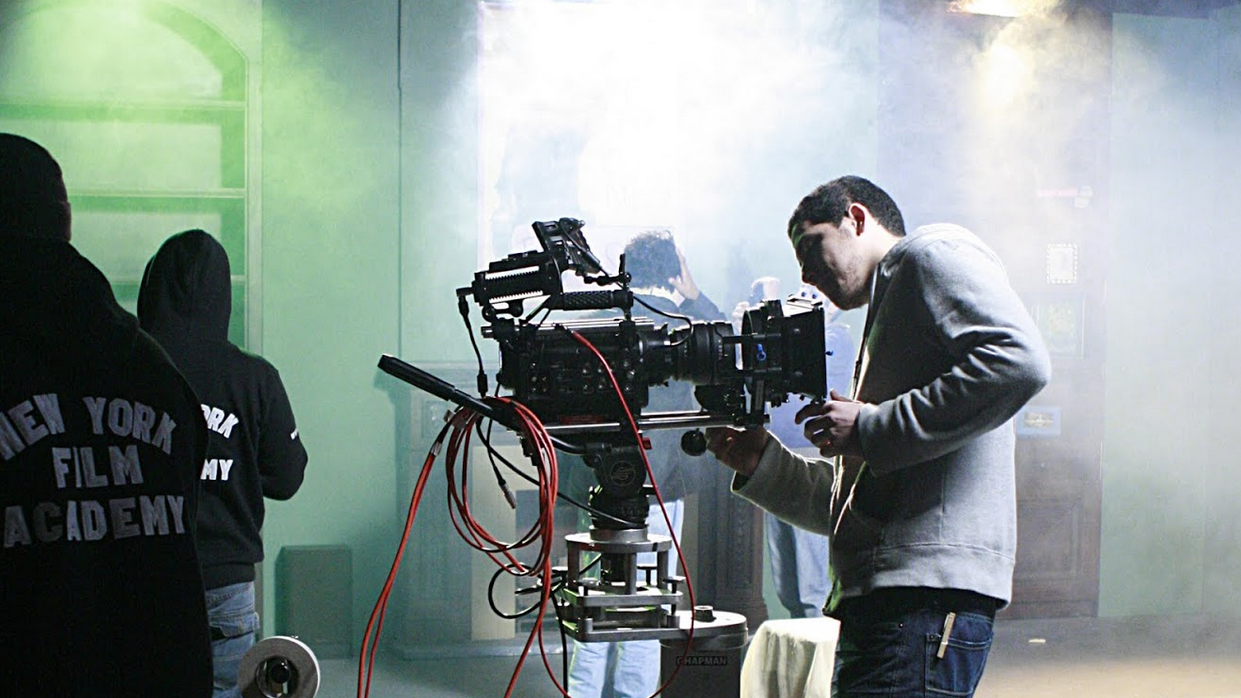
  9. You’ve shot a scene using the fog machine.
  10. fog machineYou check to make sure you “hit your mark” at random places like the grocery check out, ATM or even McDonald’s.
  11. You have a complete NYFA apparel collection for all seasons: T-shirts, hoodie, track jacket…even a NYFA messenger bag to carry them in.
  12. You’ve met a famous guest speaker.
  13. You’ve said ‘FADE OUT’ at the end of a regular conversation.
  14. You’ve yelled “Cut” when a friend’s story goes on too long.
  15. You want to go back!

Josh Brolin

There may be countless other signs of a true NYFA student. We’d love to hear some of yours in the comments below!

Remembering Cinematography’s Prince of Darkness

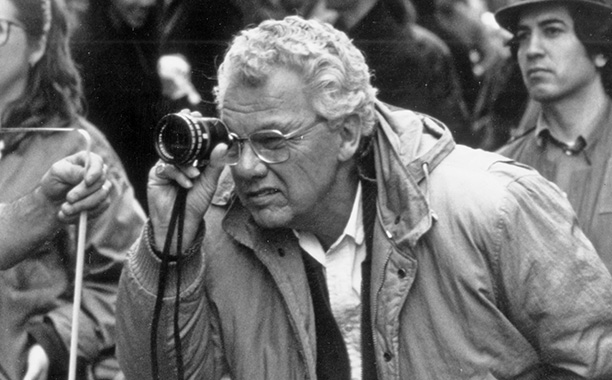
Cinematographer Gordon Willis on set preparing a shot

A cinematographer occupies a unique position in the creation of a film in that he or she must translate a director’s vision into shots that are both in service to the story while injecting his or her own vision into the film. Renowned cinematographer Gordon Willis, who died on Monday at the age of 82, perfectly captured this tension when he said a director of photography’s (DP) duty is to “fit the punishment to the crime,” meaning that a DP should render the material in an aesthetic manner that marries his or her own unique perspective in service of the film. To say that Willis accomplished this goal is an understatement as he was responsible for pioneering a style of 35mm cinematography that became synonymous with the golden era of Hollywood film in the 70s, working closely with three of that decade’s most notable auteurs—Alan J. Pakula, Francis Ford Coppola, and Woody Allen.

Donald Sutherland stares out the window in Klute

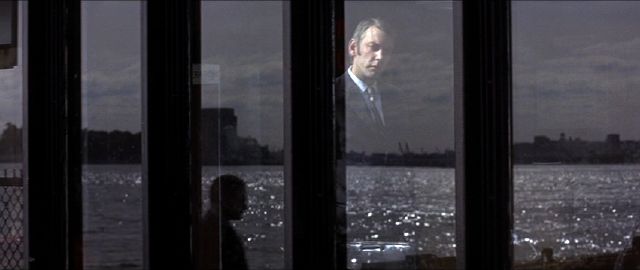
Starting his career as a DP with 1970’s End of the Road, Willis first came to prominence in Pakula’s neo-noir thriller Klute in 1971. Throughout the film, Willis makes use of long shots and unusual zooms and angles to essentially estrange the viewer, creating an unsettling mood through his imagery. In addition, Willis started to flex his more innovative and ambitious muscles. For example, in one scene the film’s protagonist Peter Kable stares outside his window upon the city when the camera effortlessly moves forward and appears to almost drop out of the window to create a dizzying shot that uses the building’s massive height, leaving viewers scratching their head at how such an impressive shot could be made to look so effortless.

Having served as the cinematographer on Coppola’s Godfather trilogy, The Godfather was a watershed moment not just in Willis’s own career, but for cinematography as a whole. The film’s opening scene is famous for its reserved use of light as the film’s bright wedding scene contrasts with Vito Corleone’s dimly lit office in which Marlon Brando’s eyes are almost completely obscured. It was this film that earned him the nickname of the Prince of Darkness as he parted with many of Hollywood’s conventional lighting techniques in favor of heavy underexposure and an orange palette that would become a hallmark of subsequent period films.

Library of Congress in All The President's Men

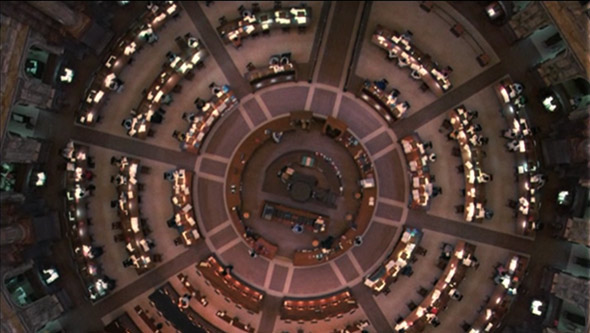
Willis was never afraid of using inventive and new techniques to create the right tone for the films he worked on. One incredible example of this was his re-teaming with Pakula for All The President’s Men in which he placed a winch he placed in the dome of the Library of Congress, allowing a remote-controlled camera to film a full view of the library in a single shot. Throughout the film, his mastery of light is seen as the above shot, showing the library cast in natural light, with the shadowy world of darkness, as exemplified in the under-lit scene in which Robert Redford meets with Deep Throat in a menacing parking garage.

Having first hooked up with Allen in 1977’s classic Annie Hall, his camera work in 1979’s Manhattan served as a love letter to his hometown. Filmed in a 2:35:1 anamorphic black and white format, Willis managed to help make a modern tale of romance look positively timeless; just take the film’s opening sequence in which iconic sights of the city are fantastically shot and paired with George Gershwin’s “Rhapsody in Blue.” But if one is to call to mind one particularly memorable shot from the film, it would undoubtedly be the scene in which Allen’s and Diane Keaton’s characters sit on a park bench and gaze at the Queensboro Bridge cast against a foggy dawn. Willis chose to emphasize the gigantic nature of the city, which can often make its inhabitants feel like ants, as the viewer only sees the backs of Allen and Keaton, creating a definitive statement on the beauty of both the city and love.

Remarkably enough, Willis was never nominated by the Academy for any of his work in the above films—although he did receive an honorary Oscar in 2009—but in the hearts of cinephiles and cinematographers alike, his work will continue to inspire and evoke awe for the foreseeable future.

Changing with the Times: The Evolution of Wolfenstein

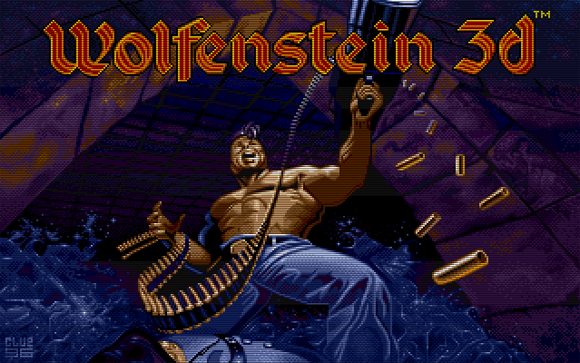
Home screen from Wolfenstein 3D

Tomorrow sees the release of Wolfenstein the New Order, the latest iteration of the legendary Wolfenstein franchise. While many gamers of a certain age will fondly remember the fast-paced kill-or-be-killed style of 1992’s Wolfenstein 3D, a deeper look reveals that Wolfenstein has been a trend-setter since its first incarnation in 1981. While many gamers will remember Wolfenstein 3D as ushering in an era of first-person shooters (FPS) with Doom and Quake being released shortly after, throughout its three-decade history, Wolfenstein has often been at the forefront of game design. Below we look at the major innovations and trends initiated by the series.

Phase I: Castle Wolfenstein and Beyond
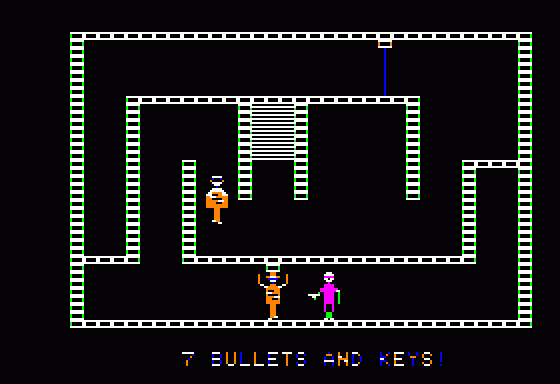
A screen shot from Castle Wolfenstein

Created by Silas Warner and released by Muse Software for the Apple II computer in 1981, Castle Wolfenstein stood out from the get-go with its permit to let game players go one-on-one with Nazi guards and SS Stormtroopers as the player traversed the levels of the castle to rescue a secret map and escape. It and its sequel, Beyond Castle Wolfenstein, were top-down action-adventure shooter games that actually placed less importance on shooting—players after all had a limited amount of ammo—and more on stealth, as players were more likely to succeed by outwitting their opponents through evasion and even disguise, presaging the late 90s boom in such stealth games as Metal Gear Solid and Thief: The Dark Project. The original was so successful that it resulted in the creation of the first game trainer, helping players to bend the rules of the game as needed.

Phase II: Wolfenstein 3D
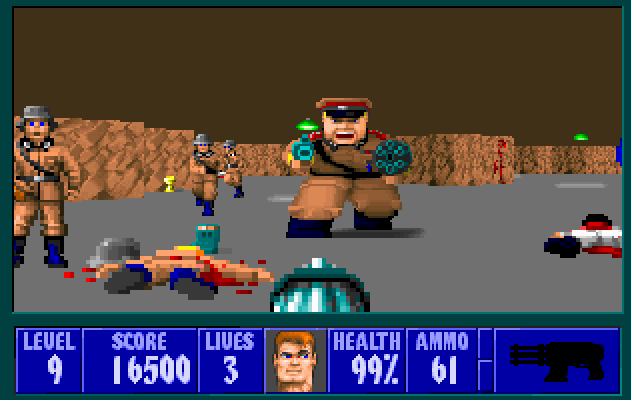
Facing off with a Nazi guard in Wolfenstein 3D

For gamers in the 90s, the release of Wolfenstein 3D in 1992 was a watershed moment, introducing many features of the first-person shooter whose influence is still felt today. As Muse Software had allowed their trademark on Wolfenstein to expire, iD software stepped in to create a wholly new gaming experience paired with an exhilarating (and blood-filled) storyline that helped to popularize the FPS genre for the PC while pioneering the run-and-gun model that would become a hallmark of subsequent FPS games. Compared to its predecessor, Wolfenstein 3D signified a quantum leap in game design as players were thrown into a pseudo-3D environment, playing as the protagonist William “B.J.” Blazkowicz as he makes his way through a series of map-like levels with ample ammunition.

A decidedly raunchier and more inventive version of its top-down predecessor, players stalked swastika-draped environs while encountering a seemingly endless onslaught of guards, manic guard dogs, Nazi mutants, and eventually Adolf Hitler himself, decked out in a robotic suit and multiple chainguns. Over the next few years, iD continued to pump out additional mission packs and expand to such ports as the SNES, Atari Jaguar, and the Mac OS—anyone remember the opening scene from 1995’s internet-thriller The Net where Sandra Bullock’s character “tests” the game for viruses? Priceless. However, the game lost steam as popular FPS games like Doom and Quake pushed the genre into even darker and bloodier territory, nudging the Wolfenstein franchise into hibernation.

Phase III: Return to Castle Wolfenstein
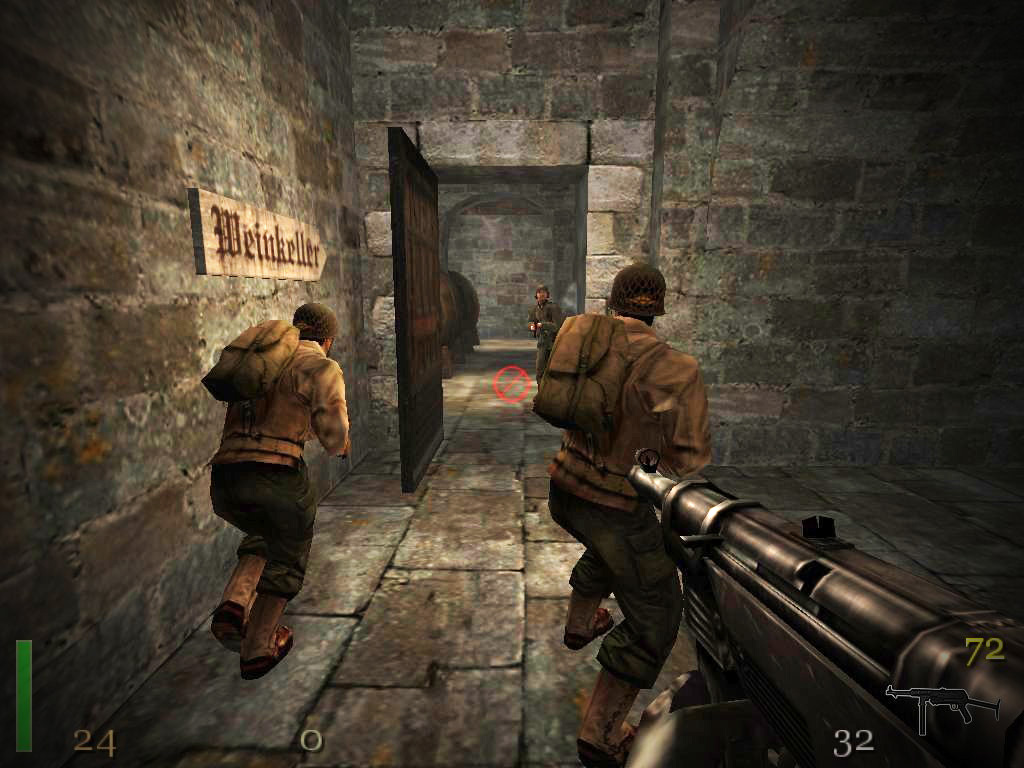
Playing multiplayer mode in Return to Castle Wolfenstein

Released when WWII FPS games seemed to be coming out faster than they could be played, Activision decided the time was ripe for a new generation of gamers to enter the world of Wolfenstein with 2001’s Return to Castle Wolfenstein. Players could choose between assuming the character of B.J. in a single-player version that featured even more fantastical foes or play together in the exceedingly popular multiplayer mode where players could fight in teams against each other in teams of either of Axis or Allies, which reflected the increasing popularity of historical FPS games that allowed players to assume the role of the enemy. Building on the success of its multiplayer version, Wolfenstein: Enemy Territory was released as a free, downloadable multiplayer game that still remains popular over a decade later.

Phase IV: Wolfenstein and the Future
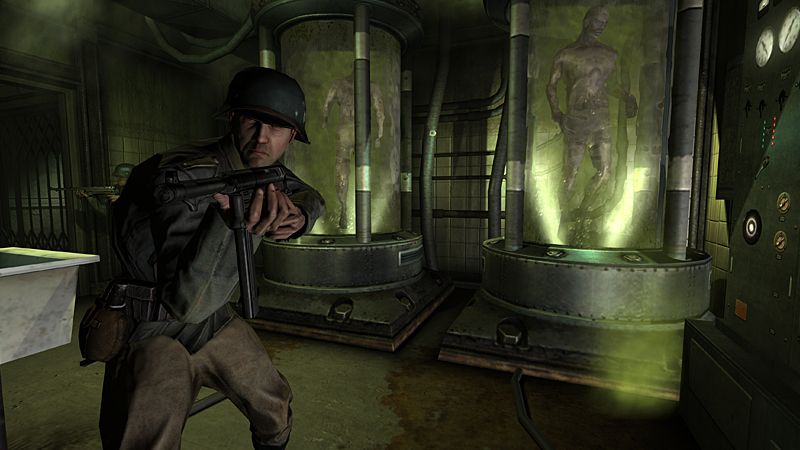
A soldier holds a rifle in Wolfenstein 2009

As military shooters retained their popularity with such franchises as Call of Duty, the 2009 Wolfenstein incarnation took players even deeper into the increasingly bizarre alternative history of the Wolfenstein universe, implementing even more sci-fi and fantasy elements. However, the game came out to mixed reviews and disappointing sales, seemingly putting a death nail in the franchise’s future.

And yet, developer MachineGames and its owner ZeniMax Media acquired id Software and its many classic franchises in 2009 and decided to start developing Wolfenstein: The New Order in 2010. This latest version takes the player back to the single-player origins of Wolfenstein 3D, placing them in an alternate 1960 where the Nazis have won WWII. While early buzz has been solid regarding the game play and plot, it’s a safe bet to assume that the Wolfenstein franchise could either flourish again or recede into video game history for another decade depending on its success. Either way, this writer will be happy to content himself playing Wolfenstein 3D on his iPhone for the foreseeable future and see how the franchise continues to both change with and influence the current video game landscape.

Kooky Kaiju: A Look at Some of Godzilla’s Most Outlandish Monsters

Godzilla and Momoko Kôchi on the set of Gojira

When it was announced that the latest reboot of the Godzilla franchise would center around the film’s titular character battling other creatures, you could almost hear the collective shriek of excitement from fans around the world. After all, with the exception of the original 1954 Gojira and 1998’s unfortunate US version, Godzilla has tended to serve as an ally, albeit a destructive one, to the human populace against invading monsters. Over the past sixty years, Godzilla has encountered numerous foes and friends that have ranged from the imposing—King Ghidorah anyone?—to the downright silly.

Gojira is a landmark film not only for its stark commentary on the effects of nuclear warfare—after all, it came out nearly a decade after the US dropped nuclear bombs on Nagasaki and Hiroshima—but it also helped to usher in the modern disaster film. However, with the massive success of the original film, Toho Studios soon found themselves with a franchise that needed additional kaiju—the Japanese term for monsters—to entertain their increasingly young fan base. While Roland Emmerich’s critically-panned Godzilla sought to take the film back to its roots, old and new fans of the iconic kaiju were understandably elated with the announcement that Godzilla would be returning to the screen to combat a terrifying new species of kaiju known as M.U.T.O (which stands for Massive Unidentified Terrestrial Organism) and save humanity in the process.

While the new film, which opens today, aims to amp up the intimidation factor of the new monsters as they appear in both eight-legged and winged incarnations, looking back at six decades of Godzilla movies reveals a veritable rogues gallery of often laughable kaiju whose campiness has only grown over time. To celebrate this return to form, we decided to take a look at some of the more outlandish characters that have crossed paths with the green monster.

King Kong

King Kong and Godzilla destroy building during battle

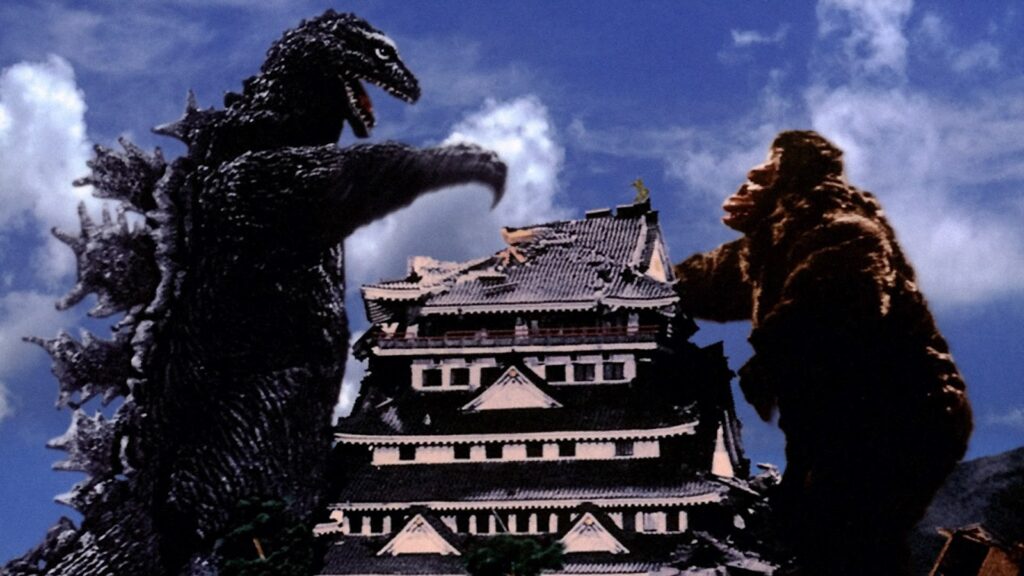
In what was probably a no-brainer for Toho studio execs, Godzilla’s third outing featured the classic American monster super-sized to make a worthy opponent for his much larger enemy. While undeniably hokey, King Kong vs. Godzilla remains the most profitable Godzilla film in Japan.

Mechagodzilla

Mechagodzilla from the film Godzilla vs. Mechagodzilla

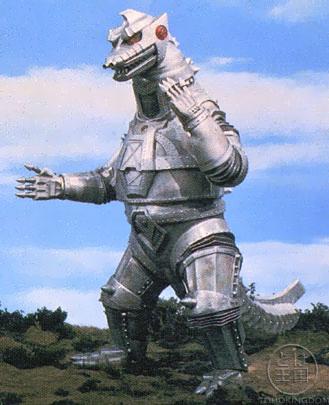
First introduced in Godzilla vs. Mechagodzilla, this robotic re-imagining of the green monster has made a number of appearances in subsequent films and is one of Godzilla’s most effective enemies, whose nearly indestructible “Space Titanium” outer shell and “Space Beam” laser has helped him win several battles.

King Caesar

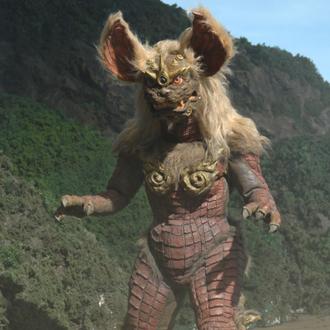
King Caesar in a scene from Godzilla vs. Mechagodzilla

Also making his debut alongside Mechagodzilla, this unusual beast combines elements of a dog, lion, and reptilian flesh to create an ally that helped Godzilla defeat Mechagodzilla through his speed and fighting skills. Unfortunately, his corny costume is not one of his special abilities.

Hedorah

Godzilla battles Hedorah the smog monster

Also known as the smog monster in 1971’s Godzilla vs. Hedorah, this nasty creature got its name from the Japanese word hedoro, which can translate as slime or vomit, an appropriate name given that this extraterrestrial kaiju derives its powers from pollution and attacks its opponent by spewing damaging sludge.

SpaceGodzilla

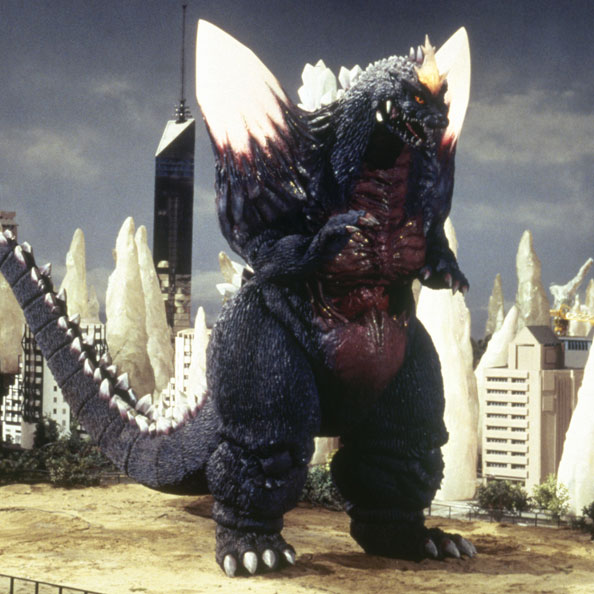
SpaceGodzilla in a scene from Godzilla vs. SpaceGodzilla

Not to be outdone by Mechagodzilla, this alien doppelganger somehow managed to best its predecessor in sheer silliness thanks to the awkward crystals protruding from its shoulders and dubious “space powers” that helped to make 1994’s Godzilla vs. SpaceGodzilla a camp classic.

Baby Zillas

Baby Zillas from Roland Emmerich's 1998 adaptation of Godzilla

Wait, Godzilla can procreate? And his/her babies look like Jurassic Park’s velociraptors on steroids? Though previous films had featured the monster’s offspring, Emmerich’s sequel-baiting ending to his 1998 film was more of a nail in the coffin for any moviegoer to take the film seriously. Here’s hoping that the 2014 film avoids such cheap gimmicks.

NYFA’s Director of Veterans Affairs to Air Documentary on AHC Films

brian iglesias
NYFA Director of Veterans Affairs (NY) Brian Iglesias

Some exciting news for student and indie documentary filmmakers: AHC FILMS, will be a new television home for documentary projects dedicated to heroes and people who have helped shaped the way we live. Fittingly enough, the network will debut on Memorial Day, kicking off with New York Film Academy NY’s Director of Veterans Affairs, Brian Iglesias’ GI Film Festival Best Documentary Feature CHOSIN. His film recounts the riveting story of the survivors of the Battle of the Chosin Reservoir in the Korean War. The project is very personal to Brian as he himself was in the U.S Marine Corps during the Iraq War.

The Battle of Chosin was an early conflict in the Korean War and known as one of the seminal skirmishes of the Marine Corps’ proud history. The brutal combat lasted seventeen days in subfreezing temperatures amongst rugged terrain clashing 15,000 U.S Marine soldiers with 67,000 Chinese troops.

“AHC FILMS is our way to step back and examine the nation’s critical moments – providing viewers with a unique, in-depth perspective, and a contemporary angle on stories you may or may not know,” said Kevin Bennett, executive vice president and general manager, American Heroes Channel. “We are proud to kick off AHC FILMS with the critically-acclaimed documentary, CHOSIN, giving viewers an amazing, first-person account about an historic battle, and shining a light on the true meaning of honor and solidarity.”

Brian’s award-winning documentary will air on AHC Films Monday, May 26 at 9/8c. Be sure to check it out!

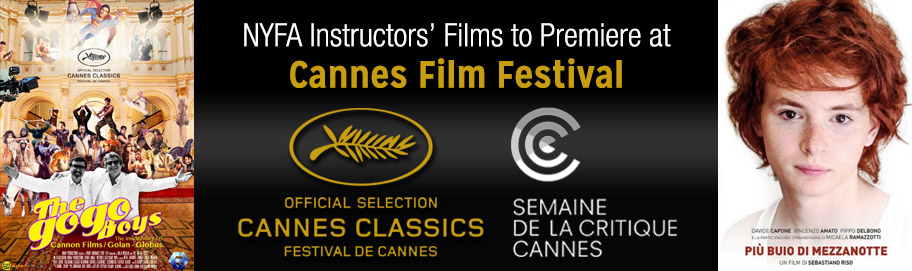
NYFA INSTRUCTORS’ FILMS TO PREMIERE AT CANNES FILM FESTIVAL

The New York Film Academy prides itself on its international student body and faculty. As such, the Cannes Film Festival is beheld as one of the premier film festivals to be associated with. It’s with great pleasure NYFA finds a few of its own instructors represented in the prestigious international film festival. Since its very beginnings in 1946, the Cannes Film Festival has been a Launchpad for numerous filmmakers – from Federico Fellini to Quentin Tarantino.

Cinematography instructor Piero Basso’s Italian film, Darker Than Midnight, directed by Sebastiano Riso, will have its world premiere during Cannes’ Critics’ Week and compete for the esteemed Caméra d’Or. Piero, a native to Italy, received his Laurea di Dottore in Cinema and Art Studies from the University of Turin. His understanding of the field of cinematography has brought about several award-winning features, shorts, and documentaries.

His most recent film surrounds a fourteen-year-old boy, Davide, who takes refuge in the company of hustlers and outcasts. His double life between the expectations of his family and his new friends becomes unsustainable, forcing Davide to make difficult decisions on his own.

Darker Than Midnight will be the first movie screened on Thursday, May 15th, while at the same time being released in general distribution throughout Italy.

In addition to Piero’s fine work, Documentary instructor, Hilla Medalia’s new documentary THE GO-GO BOYS: The Inside Story of Cannon Films will be featured in Cannes Classics. Hilla is a George Foster Peabody award-winning director and producer with three Emmy award nominations under her belt. She also won the Paris Human Rights Film Festival Jury Award, Fipa Biarritz Jury Award, Golden Warsaw Phoenix Award, Faito Doc Grand Jury Award, and more.

Her recent documentary to premier at Cannes tells the inside story of two Israeli-born cousins, Menahem Golan and Yoram Globus, who somehow managed to turn the Hollywood power structure upside down, producing over 300 films and becoming a powerhouse in the independent film world.

“Celebrated, condemned, loved and loathed, Cannon’s cultural impact and legacy is undeniable, wielding a kind of pop-cultural power that continues to seep into modern life today.”

Part of NYFA’s hands-on curriculum includes the fact that many of the instructors are integrally involved with the professional world of filmmaking. Having two NYFA instructors being a part of this year’s Cannes Film Festival is a great honor and a clear testament to NYFA’s commitment to providing the very best instructors from all around the world.

How H.R. Giger Changed the Way We See Aliens

alien head designed by H.R. Giger for the movie Alien

It’s hardly an understatement to say that H.R. Giger, who died on Monday at the age of 74, permanently altered the way Hollywood depicts aliens. When his frightening and singular extraterrestrial debuted in Ridley Scott’s 1979 film Alien, mainstream audiences had frankly never seen anything like it. Having pioneered a biomechanical style that infused robotic elements into his representation of biological organisms, Giger hit upon a truly original style that has continued to keep movie fans up at night thirty-five years after his creation first hit the screen.

Simply put, Giger created the first extraterrestrial that looked positively alien. After all, who can ever forget his creation’s mouth within a mouth moving Sigourney Weaver’s Ripley to terrified tears? From the metallic sheen of its over-exaggerated forehead to its sleek to its skeletal body—with what looked like steam valves protruding from its spring—and limber legs and threateningly ribbed tail, Giger fused together natural and mechanical motifs to create a creature that looked positively other. While his alien creation—also known as a “xenomorph”—became his calling card, Giger is also credited with creating the film’s “facehugger” and “chestburster”, embryonic versions of the xenomorph that emphasized the biological influences on his work.

H.R. Giger designed facehugger from the movie Alien

Though aliens have had a presence throughout the history of sci-fi, before Giger, aliens were often exaggerations of the human form with actors dressed in absurd make-up and costumes that often looked downright goofy. After all, the modern viewer will often be moved to laughter when viewing the creations of such schlock masters as Roger Corman or the aliens that plagued Doctor Who. But Giger’s alien is unlikely to elicit even a giggle from the most veteran sci-fi fan, a creature so terrifyingly original that it helped to spawn three sequels of diminishing quality and a prequel, Prometheus, that is essentially an exploration of Giger’s mind and aesthetic.

Once Alien entered the popular consciousness and helped to win Giger and his colleagues an Oscar for Best Achievement for Visual Effects in 1980, extraterrestrials on the big screen started to look nastier, more menacing, and truly otherworldly. Even though the adorable Wookies are often what first come to one’s mind when thinking of 1983’s Return of the Jedi, Giger’s influence can be seen in such terrifying creations as the Sarlacc, the sand pit beast that gleefully swallows its victims down its spikey opening. The height of Giger’s influence can arguably best be seen in Predator, whose titular creature fused human-like dreadlocks and reptilian mandibles with a technologically advanced creature that looked equal parts alien and machine. It only seemed a matter of fate that both creatures would face off countless times in comic books and movies like Alien vs. Predator.

To this day, Giger’s biomechanical vision of extra-terrestrial life continues to permeate popular culture, be it the aliens in movies such as The Avengers and Transformers to the cyberpunk creations of William Gibson to characters in countless graphic novels and comic books. While Giger was a true artist who created an extensive pantheon of paintings, movies, album covers, and works of interior design, when it comes to Hollywood and its many aliens, his influence is likely to be felt for decades to come.

DGA Training Program Chair Speaks at NYFA LA

Darrell Woodard

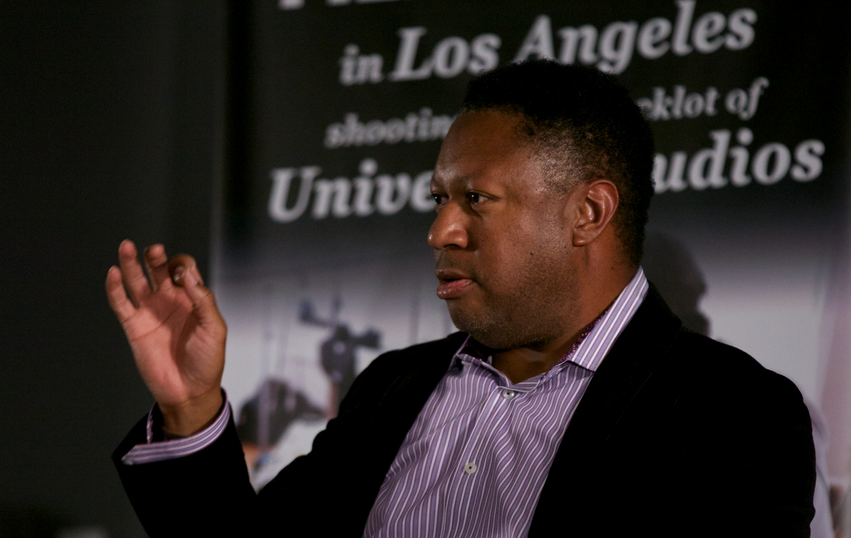
Special guest Darrell Woodard, co-chair of The Directors Guild of America’s Training Program for the west coast, recently visited the New York Film Academy in Los Angeles. He talked to students about the DGA Training Program, the submission process, and specifically encouraged minorities, women, and veterans to apply. Darrell attributes his successful assistant directing career to the opportunities he’s been given as a participant and graduate of the program himself. Cheryl Bedford, NYFA’s own producing instructor and Chair of Diversity Development, moderated the interview.

The first step of applying to the DGA’s Training Program for the west coast requires the applicant to fill out a form and write a personal essay. For this step, Darrell emphasized that best way you can “stand out” is by “following the rules.” One would be surprised by how often this isn’t done. So ensure you read the directions and fill out everything correctly. If you make it through the first phase, the second involves a group interview in which the applicants are judged on how well they work as team members. The difficulty here lies in not being too overbearing or passive—in other words, you must be a quiet leader. In the final stage you are interviewed intensely by a DGA Training Program committee. Be prepared, as they will leave no stone uncovered in regards to the information you’ve included on your application and your motivations for attending the program.

Mr. Woodward made it clear that assistant directing within the American film industry is NOT the best path to actually directing. In fact, the assistant director may be the closest person to the director, but he or she is the furthest from the director’s chair. The AD position is intentionally designed this way so there is no conflict of interest. While having allegiance to the director, the assistant director must simultaneously maintain autonomy from them. The AD is ultimately beholden to the producer and he must always do what’s best for the production as a whole. Because of this, the AD is obligated to finish the project with or without the director. Although there have been assistant directors who have made the transition to directing, it is not common. Therefore, assistant directing is a career path in and of itself, not a means to the end of becoming a director.

For those passionate about assistant directing, the DGA’s Training Program is as good as it get’s in terms of a platform to launch your career. If ADing is a passion of yours then apply this year! We sincerely thank Darrell Woodward for the time he spent with the New York Film Academy and the opportunities he’s giving up-and-coming professionals through the DGA Training Program.