The Importance Of Subtext For Actors

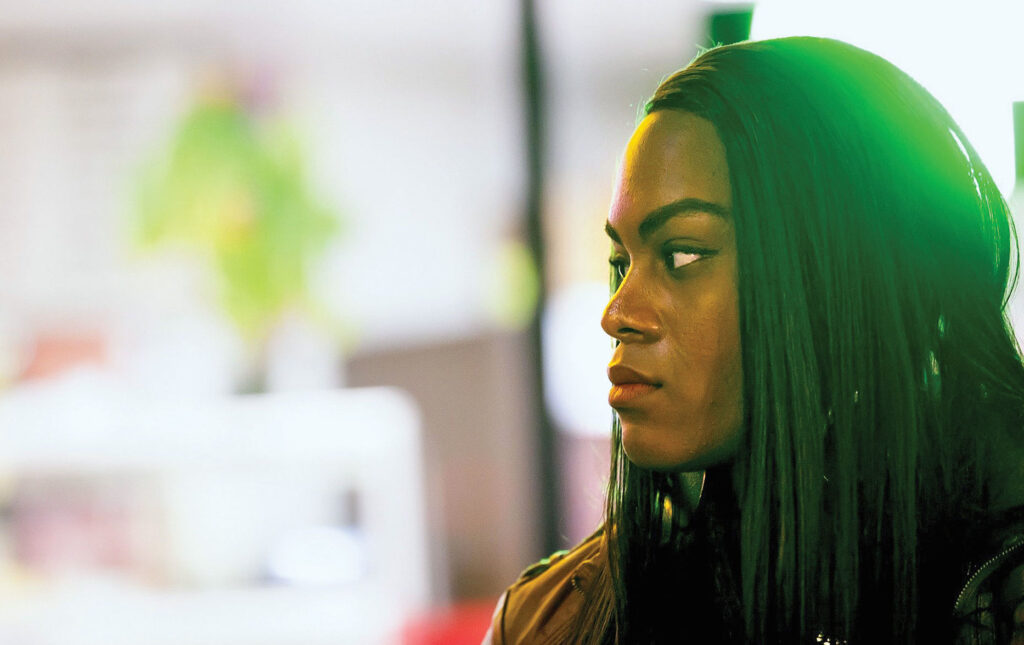
an actress shows off different emotions

Words are everything and nothing to an actor. A script is filled with words, all of which add up to a plot, theme, events, and characters but the actor is responsible for bringing the words to life. One of the best ways to infuse a performance with conflict and drama is to interpret and play the subtext of the script.

What is Subtext?

In a play or film, subtext is the underlying message being conveyed by a piece of dialogue. Some call it the “lines between the lines” or “the unsaid meaning.” Writers love to use subtext in scripts because it adds an extra layer of complexity to scenes and their characters.

Actors must act like investigators to identify the true meaning of their dialogue so that they can play the character’s subtextual intention, rather than just recite the lines. Overlaying the meaning of the subtext on top of the dialogue gives actors something to do and makes for a more interesting performance.

Finding the Meaning of the Subtext

How often do people say exactly what they mean? Probably not often because of the obstacles that stand in the way. Social conventions, other people in the room, and/or a fear of rejection are common reasons that people and characters do not speak literally. So, understanding a character’s objective and obstacles is the first step to finding their subtext.

After reading a script, take a moment to think about the objective of the character i.e. what do they want? Then, consider the different obstacles that they face. Characters adopt different strategies to try and conquer their obstacles, and these changes of tactic are often motivated by subtext.

When reading through the script, mark places where the character is communicating something great than what they say. This may be a feeling, an opinion, or a desire that is hidden within the words they say. Once the subtext is identified and assigned a meaning, experiment with ways to clearly play the scene so the subtext shines through.

Examples of Subtext

Subtext is a common convention of modern scripts and appears in every film and play we see today. Here is a simple two line exchange to illustrate subtext:

INT. LIVING ROOM

A man enters the room. A woman is sitting on the couch.

MAN

How are you?

WOMAN

I’m fine.

There are 1,000 different ways to play this scene and they all hinge of the choice of subtext. Is the Woman really fine? Does the Man really care?

An actor could decide that the Woman is happy, sad, angry, disappointed or any number of emotions which would change the delivery of the line (of course, do not play an emotion, play an action). The same can be said for the Man. He could be in a hurry, he could be sympathetic, or he could be sarcastic among other things.

This example is only to show how subtext can change. In a well-written script, there will be clues about the characters’ emotional state and the true meaning of the dialogue.

The Final Word, Between the Lines

Identifying and playing the subtext of a scene is an advanced skill that the best actors make good use of. Careful script analysis is needed to find and decide what the subtext is and solid acting technique is needed to honestly play the subtextual meaning. If the dialogue is what the actor says, and the action is what the character does, then the subtext is what the character ultimately means.

[su_note]Learn more about the Film School at the New York Film Academy by clicking here.[/su_note]

Avoiding Awkward On-Air Situations For Journalists

awkward reporters

Recently, on a local news program, the show’s anchors congratulated their meteorologist, who wasn’t there because she’d had a baby that morning, and had sent them a picture of the baby to share with viewers. The anchors gave the baby’s name and weight, noted how adorable she was, and then moved on to the next story.

Unfortunately, the next story involved a man being arrested for beating his infant son to death. Obviously, it was a tragic situation no matter where it appeared in the show, but the producer’s choice to go from a happy baby story to a tragic one made the story awkward as well, for everyone involved. It appeared that the news anchors didn’t know that would be the next topic, because they both had horrified looks on their faces when they started reading it. They stumbled through the story and managed to pitch to break, looking somewhat relieved.

How Do I Avoid These Situations?

Production of a nightly newscast is always chaotic, becoming more so as you approach air. This is especially true given how programs often include multiple “live shots” in the course of the broadcast. It’s the details that kill you, so as the producer you have to maintain the ability to stand back and consider the entire program. Equally important, you have to be open to comments and suggestions from the show staff. You will inevitably miss something. Story producers and junior staff need to know that they not only are permitted, but encouraged to speak up.

Some stories are sad, tragic, and awful. Unfortunately, there is some truth to the old adage about the news business, “If it bleeds, it leads.” If you plan to be on-air, you’re going to have to report on murders, accidents, domestic abuse, and many kinds of avoidable deaths. In general, it’s best to read these stories with a somber and respectful tone.

However, you can’t read the entire newscast that way or your viewers may start to get depressed and change the channel. An upbeat tone is fine for stories that don’t involve death or tragedy. The problem comes when you have two very different stories right next to each other. It’s difficult to transition from a happy story to a sad one—and vice versa. You have to change your tone and facial expression abruptly while on camera.

Pay Attention When Producing

If you are producing a show, you should pay attention to how you stack stories. Usually, the A block involves the biggest news of the day, and the biggest story is what you lead with, whether it’s a political story, an accident, a murder, or the weather. (If you work in a small market, it may be the weather more days than it isn’t.) Usually producers will start with the most important story and add other subjects in order of importance, continuing through the A block.

This is a good system, and in general you should follow it. However, with the exception of the lead story, most other topics in the A block can be moved around to avoid awkward transitions. This is sometimes done to avoid technical problems, like going from one camera shot to another without giving whoever is controlling the camera sufficient time to move the camera, set up and focus the new shot. However, it can also be done to avoid problematic transitions on-air.

One solution is to build your A block, then look at the stories. Think about their content and how the transitions will look and sound on air. Keep in mind that typical lead-ins to segments like, “And now John’s here to tell us what’s happening in the exciting world of sports today!” may sound perfectly normal in some circumstances, but tacky if they immediately follow a particularly tragic story.

When going over your A block, if you note a very sad or tragic story is immediately before or after a relatively happy one, consider whether you could add a more neutral story between them. Stories about business, the economy, road work, and city council meetings generally don’t require an especially happy or somber tone. Inserting one of those topics between two emotionally disparate stories can help make smoother transitions for everyone involved.

Anchors and Reporters Also Play a Role

Avoiding awkwardness isn’t just the producer’s job. Producers are often extremely busy, and may not always have time to consider the emotional impact of each story in a block. Anchors and other on-air talent should look over the scripts beforehand if possible. As a reporter, you should make note of the stories before and after yours, your tag, and any possible problems. As an anchor, you should look over all the stories, the lead-ins, the tags, and note if there are any drastic differences in emotional tone. If something looks problematic, let the producer know—he or she may be able to move things around for a better transition.

Several years ago, when this writer was working at a local TV station, the block dedicated to national news always ended with a teaser of the sports segment, which followed after the next commercial break. Usually the anchor’s tease was something like, “Well, our local team had an exciting day at the ballpark!” and the sports anchor would say something in agreement.

On this particular night, the world news included a story about gas prices, some sort of political news, and a story about a pregnant woman who was brutally murdered, after which the attacker cut the fetus out of her body and left the scene with it. It was an awful story, made worse by the fact that it immediately lead into an upbeat tease about an exciting day at the ballpark.

The anchors did their best to hide their discomfort and pitched to break as smoothly as possible. Afterward, they told the producer that she should have rearranged the stories in the block so the murder was in the middle, and either the gas price story or the political story lead into the sports tease. They were right, of course, but if they’d carefully read over their scripts beforehand, they could have let her know ahead of time and possibly avoided the awkward on-air situation.

Apply Now for a Broadcast Journalism Program

How To Stack A News Show

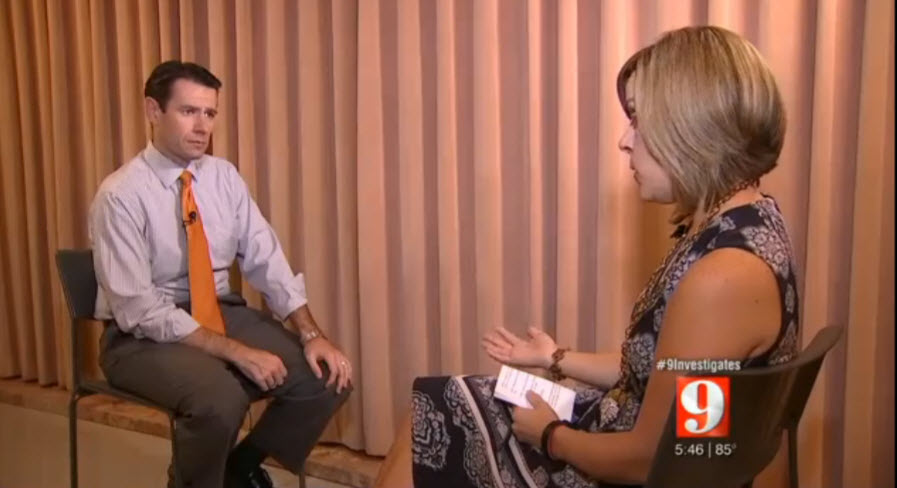
An on-air interview

What is Stacking a Show?

“Stacking a show” is a phrase broadcasters use to describe putting the segments of a newscast together. Usually the job of a producer, stacking the show is done after assignments are given—in other words, after the show’s topics have been chosen. However, new events can happen between the time of the morning news meeting and the five o’clock news, and stories frequently need to be rearranged multiple times before the show.

Where to Start

At the news meeting, the show’s producer or producers, reporters, an assignments editor, and usually the news director will discuss various story ideas. Sometimes these are continuations or new angles of news from the previous day or few days (“latest developments,” “new information,” etc.). Some are completely new events—say, a robbery in progress caught on the police scanner. On slow news days, meeting attendees may kick around human-interest or “in-depth look” type ideas when hard news is scarce. In most stations, each reporter is expected to offer at least one story suggestion each day.

The assignments editor usually decides what stories will be covered and what angles the reporter covering the story should look into. In some stations, the assignments editor chooses the general story, and the producer picks an angle. (If there is a big disagreement, the news director may make the final call.) Each story is then assigned to a reporter/photographer team. Frequently reporters are assigned the stories they pitched, but sometimes schedules and assignments have to be juggled for a variety of reasons.

Once assignments have been given, the producer begins creating a skeleton of the show, which at this point mostly consists of putting the stories in the order they are expected to air. Software varies from station to station, but generally the producer uses a program to create a show rundown (simply a list of everything appearing in the show in order), in addition to filling in each segment with scripts and directions for the production crew. Each segment can be moved if priorities change throughout the day.

What Goes First?

The A block is the first block of the show, usually slated for the biggest news stories of the day. Typically, a show will open with a brief tease of the two or three biggest subjects to be covered, a brief standard intro in which the anchors introduce themselves (“I’m so-and-so and this is your five o’clock news on such-and-such channel,” or something similar), then the top story. Some stations have a policy of doing a brief check of the weather near the top of every show, while others simply tease the weather report coming up in a later block, unless severe weather is imminent. Whoever is doing the weather usually has a small control device in his/her hand, which will change the CGI content being used. It is easier for the air talent to do it, since the CG operator might have to guess when to change given that there isn’t an actual script.

So, what’s the top story of the day? Sometimes the answer is easy. For example, if you work in a small market station (where most reporters begin their careers), where there is little hard news, you may only have one big news event a day. (Some days you may not have any, and you might have to lead with weather.) Generally, crimes, accidents, fires, and any type of new legislation from local government are all good contenders for the top spot.

If you have multiple options, you should usually start with crimes or accidents that involve death or serious injury, in that order. If there is more than one such event, go with the one that involves more people, if possible. This also works when you have multiple less-serious events, such as car accidents—if there were no deaths or injuries, a four-car pile-up beats a two-car fender-bender.

The rest of the A block should follow roughly the same pattern, going from serious accidents/crimes to more minor offenses or accidents. Local government news might go anywhere in the A block, depending on how important it is to a large number of viewers—typical city council meetings might warrant a brief mention near the end of the A block, but if a new law has been passed, that story might be closer to the front of the show. It could even lead if there was no other hard news to report. On the other hand, if the mayor was just arrested for purchasing the services of a prostitute or embezzling city funds, that story should be near the top of the show, if not the lead.

Should it be the lead? This can be a tough call. Will the majority of people be more interested in the mayor’s arrest than a story about a family killed in a car accident? Obviously both stories are newsworthy, but which one should you lead with? The car accident is sad, and involved multiple deaths, but the majority of viewers don’t personally know the victims, and won’t be directly affected. On the other hand, almost everyone knows of the mayor, who shapes or influences policies and laws all residents of the city are expected to follow. In this case, it might make more sense to lead with the local government corruption story, and follow with the car accident story.

In general, if you’re having a hard time choosing an order for two topics, it’s a good idea to think about how many people will be affected by each one, and put the story you think affects more of the viewing audience first. Some stations also take a cue from social media, teasing several stories for the upcoming newscast on Twitter or Facebook. If there is no clear-cut lead story, you can look at which one gathered more comments/shares/re-tweets to gauge audience interest.

The Rest of the Show

The rest of the show is usually divided into three or four blocks. These can vary by station, but usually one is dedicated to weather, another to national news and/or human interest type stories, and another to sports.

Weather is fairly easy to block, as the meteorologist usually ad-libs and doesn’t need any scripts. He or she will let the graphics operator know what needs to appear on the green screen, and in what order. Similarly, the sports director usually chooses the order of stories in his or her block and relays that to the producer.

The national news block should go in order of importance, although national stories, by nature, are important to most viewers. Deaths of VIPs or tragedies involving mass casualties usually lead. As we discussed in a previous article, if you end on a lighter story, try to add a more neutral topic in the middle for an easier transition.

The final block is usually brief, and involves a quick check of the weather, followed by what’s called a kicker—video of an upbeat event so the show can end on a pleasant note. Concerts, fairs, sporting events, spelling bees and other school events all make good kicker video. If there’s time (like on a slow news day), try a lighthearted national story—new world records, or human-interest stories about people doing anything unusual are good topics. The most important thing about the kicker is to have plenty of cover video, which will usually continue after the anchors sign off until the next commercial or network program rolls.

Other Considerations

In addition to choosing an order for stories, you will also need to write technical instructions for the director and production crew, letting them know what video and audio need to be “punched up” at any given time. This allows camera operators to prepare their shots, graphics operators to get graphics ready, audio operators to plan when to open and close mics, and the director to be prepared for all of the above. These technical considerations will be discussed in more detail in a future article.

[su_note]Learn more about the School of Broadcast Journalism at the New York Film Academy by clicking here.[/su_note]


“Opening Up Libel Laws” – Can the President Do That?

Donald Trump speaking on the campaign trail

Last week presidential candidate Donald Trump told supporters at a rally in Texas that, if elected, he wants to “open up libel laws” to make suing media organizations easier. A Business Insider article contains the full quote from his speech:

“I’m going to open up our libel laws so when they write purposely negative and horrible and false articles, we can sue them and win lots of money…. So that when The New York Times writes a hit piece, which is a total disgrace—or when The Washington Post, which is there for other reasons—write a hit piece, we can sue them and win money instead of having no chance of winning because they’re totally protected.”

But Isn’t That Already the Law?

In a previous article, we discussed the burdens of proof for a libel suit, which include proving the defendant made a statement about the plaintiff (the person suing) that was both injurious and false. So if a media organization said something that was “negative and horrible and false” about Donald Trump—or Hillary Clinton, Bernie Sanders, Ted Cruz, or anyone else running for public office—then yes, that candidate could sue for libel.

However, because Trump, Clinton, Sanders, Cruz, and everyone else running for public office are considered public officials, they would also have to prove something called “actual malice,” defined as knowing a statement is false and acting with reckless disregard for the statement’s truth or falsity.

Keep in mind, this only applies to three groups: Public officials, a group that includes politicians and many government employees; public figures, a group including celebrities, athletes, and heads of major corporations; and limited-purpose public figures—individuals who have inserted themselves into a particular controversy with the goal of influencing the outcome. If you don’t fall into any of the above categories, and a media outlet says something about you that is both false and injurious, you would not have to prove actual malice to win a defamation suit.

The idea of actual malice is to protect freedom of the press, which is guaranteed by the First Amendment. Public figures, after all, already command the media’s attention and can refute negative statements easily. If a media organization said something patently false and injurious about a presidential candidate like Trump, he could call a press conference and denounce the false statement any time he wanted. The average person would not have that luxury and would find it more difficult to refute a libelous statement.

While Trump wasn’t specific about what aspect of libel laws he wanted to change, actual malice would probably be the biggest stumbling block if a public figure wanted to sue for libel over a statement that met the other burdens of proof.

Does the President Have the Authority to Rewrite Libel Laws?

A Washington Post article notes that rewriting any of the country’s laws exceeds presidential authority in most circumstances. However, the article also notes that presidents nominate justices for the Supreme Court, and a president might appoint a justice who could swing the Supreme Court decision in the president’s favor, should a specific case about libel make its way to the highest court in the land. While it is theoretically possible for a president to change the libel laws (or other kinds of laws) in this way, future journalists can rest assured that this is a highly unlikely scenario.

[su_note]Learn more about the School of Broadcast Journalism at the New York Film Academy by clicking here.[/su_note]
Tips For Keeping Gamers Challenged But Not Overwhelmed

Bloodborn screenshot

Difficulty has always been an interesting subject when talking about video games. Some people have no problem playing a single-player campaign on Easy or Normal mode. A lighter challenge they can enjoy the game’s’ storyline and world without running into a barrier or getting slowed down by the gameplay. Others, however, cannot gain satisfaction from a game if it doesn’t test their skills and push them to get better and better.

This is the reason gamers today still have respect for classic titles like Super Metroid, Ghouls ‘n Ghosts, and Battletoads. In fact, some of the most popular titles today are admired for being more difficult than the average game. This includes big-budget titles like the Dark Souls series and Bloodborne as well as indie favorites like Super Meat Boy, Cave Story, and Braid.

But for all these “hard” games that became successful, there were plenty that did the one thing that should never be done— frustrate the player into submission. The problem that every designer faces is finding a balance of difficulty that leaves the gameplay demanding yet rewarding. The following are a few ways you can avoid over-punishing your players to the point where they’re no longer having fun.

Frequent Save Points

There’s nothing more intense than working through a tough room or fighting a boss while knowing full well that if you die, you’re restarting pretty far back. While this can help suck you into the game even more, it can also serve to annoy players since they’ll have to repeatedly do the same thing over and over if they keep dying.

Samus in tube in Super Metroid 7

But with enough save points, players don’t have to facepalm every time this happens. The best part about saving is that it’s usually optional (unless you have an auto-saving feature), which means players who think they’re good enough can skip it. The ones who don’t want to spend time traversing a tortuous corridor just to reach the boss that keeps killing them don’t have to because there’s save point just outside the room.

Let Players Keep Things After Death

For some gamers, losing tons of times is all part of the process and not a waste of time at all. Each death helps them figure out what they’re doing wrong, bringing them one step closer to adapting and overcoming the challenge. For other players this isn’t enough.

They hate the idea of losing anything they earned. For example, you gain a bunch of experience points exploring a dungeon but then suffer a dumb, careless death and lose it all. It can get annoying never feeling like you’re progressing or advancing your character. Thus it might not be a bad idea allowing players to hold on to items, currency, etc. even after they die.

Don’t Slow Them Down

If there’s one thing all of us gamers have in common, it’s the urgent desire to jump back in after failure. We recognize our defeat and are ready to try another option that may be the key to overcoming the current obstacle blocking our way. The sooner we get back into it and see if we learned from our mistake, the better. It’s the reason why long tutorials are frowned upon; we just want to play!

[su_note]Learn the skills you need to succeed as a game designer at the Game Design School at the New York Film Academy by clicking here.[/su_note]

Three Important Steps To Launching A Game On Steam

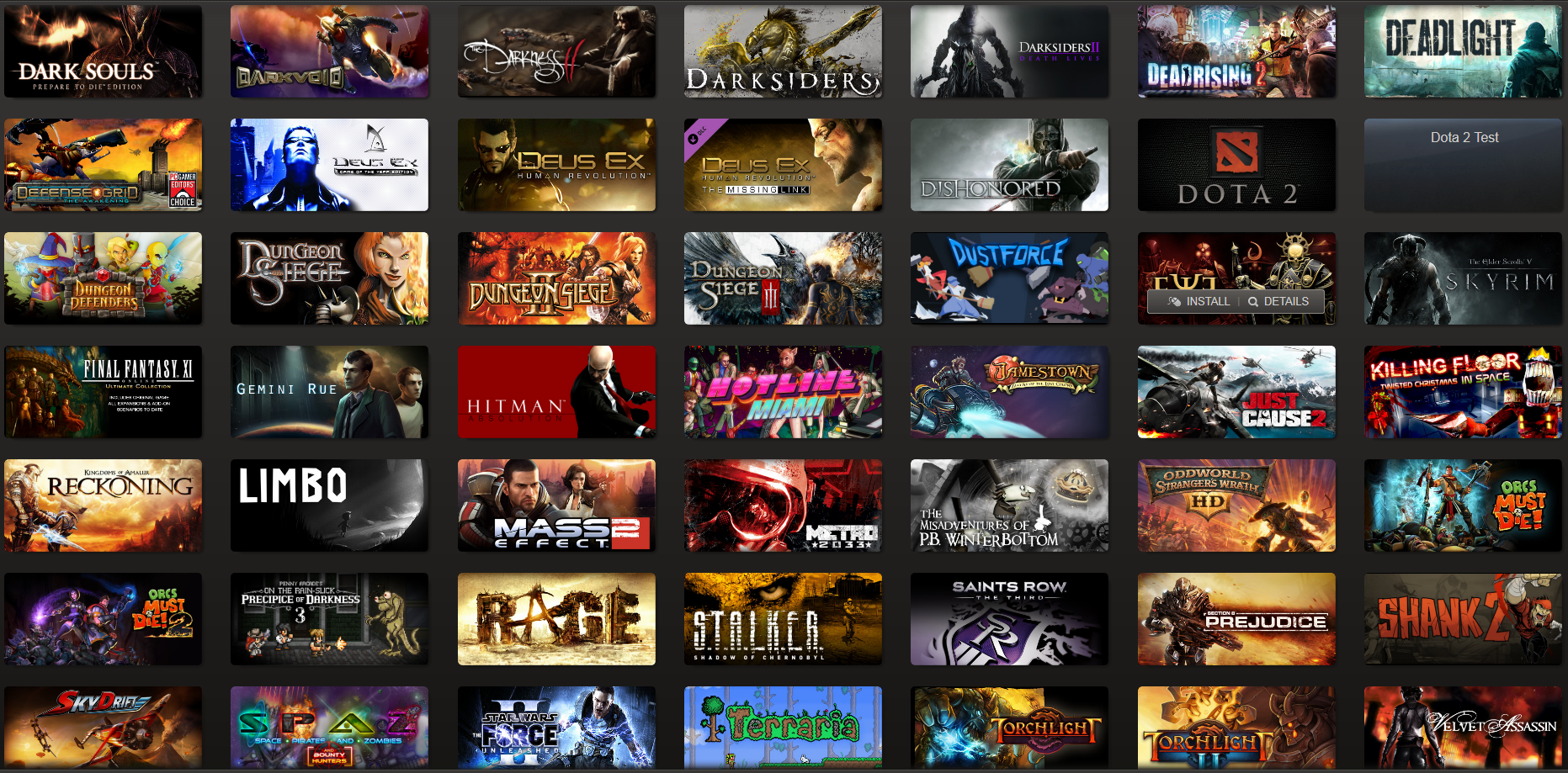
Steam Library of game titles

When Valve released Steam more than a decade ago, few could have imagined the impact it would have on the game industry. The online digital distribution platform is arguably the most popular one out there, boasting nearly 5,000 available titles and 125 million active users as of February 2015. It was recently estimated that three out of four games purchased online are downloaded via Steam.

It is then no surprise that developers dream of releasing their game on Steam. In doing so they make their game available to millions of potential customers. Whether you’ve already released your title on Steam or need helping getting Greenlit, below are three tips for those who want to do everything possible to make sure the game is a success via Steam.

1. Consider Starting With One Platform

Windows, OS X, and Linux are the main platforms supported by Steam. The mistake a many developers make is trying to support two or more platforms as soon as the game launches. While some teams can handle this, many end up overwhelmed when they run into early problems that require frequent updates. The negative feedback then starts streaming in as you struggle to juggle different updates for different platforms, hurting your team’s morale, and game’s reputation.

Mac, Linux and Windows Symbols

Instead, choose one platform first. Windows is a safe bet since it is the most widely-used desktop client out there. By focusing on a single platform, you’ll have a much easier time releasing updates, which are usually needed during the first few weeks of launch. Once your Windows version is stable, then consider adding OS X or Linux.

2. Don’t Rush Major Updates

We don’t blame developers for wanting to squash any unforeseeable bugs that rear their ugly head. You want your players to have the best experience possible and feel like their purchase was a wise choice. However, sometimes showing a bit of patience can allow you to make your game better in the long run.

For example, there are some devs that release an update every week to fix small issues. But here’s the cold hard truth—there will always be small problems to discover. A better choice might be to release major updates every three or four weeks. This gives you time to find and solve more problems while making sure they don’t cause another problem immediately after.

3. Sticky Threads Are A Must-Have

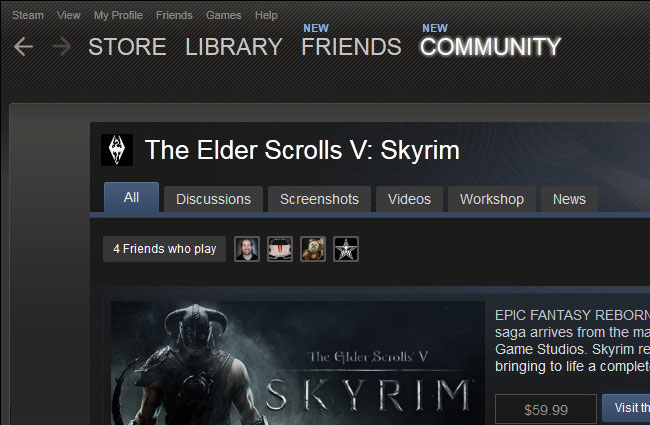
Every title released on Steam has its own “Discussions” section where people can ask questions, offer their opinion, etc. As a developer, there are few things more satisfying than seeing people discuss things about your game and having a good time sharing tips and secrets. The discussions section is also very useful for providing information that will help players get started and fix problems quickly.

Steam community

A sticky thread you’ll definitely want to add to your Community Hub is one providing download links for graphics drivers needed to play your game. A “Guides & FAQ” thread is also common so people that have a basic question about your game can find an answer. An updated thread on known bugs is also useful, as is one detailing the system requirements for the game. We recommend taking a look at the discussion section of other titles to see what kind of threads their developers thought important enough to make sticky.

[su_note]Learn the skills you need to succeed as a game designer at the Game Design School at the New York Film Academy by clicking here.[/su_note]

From Telltale Games To The Walking Dead: Why Episodic Games Are On The Rise

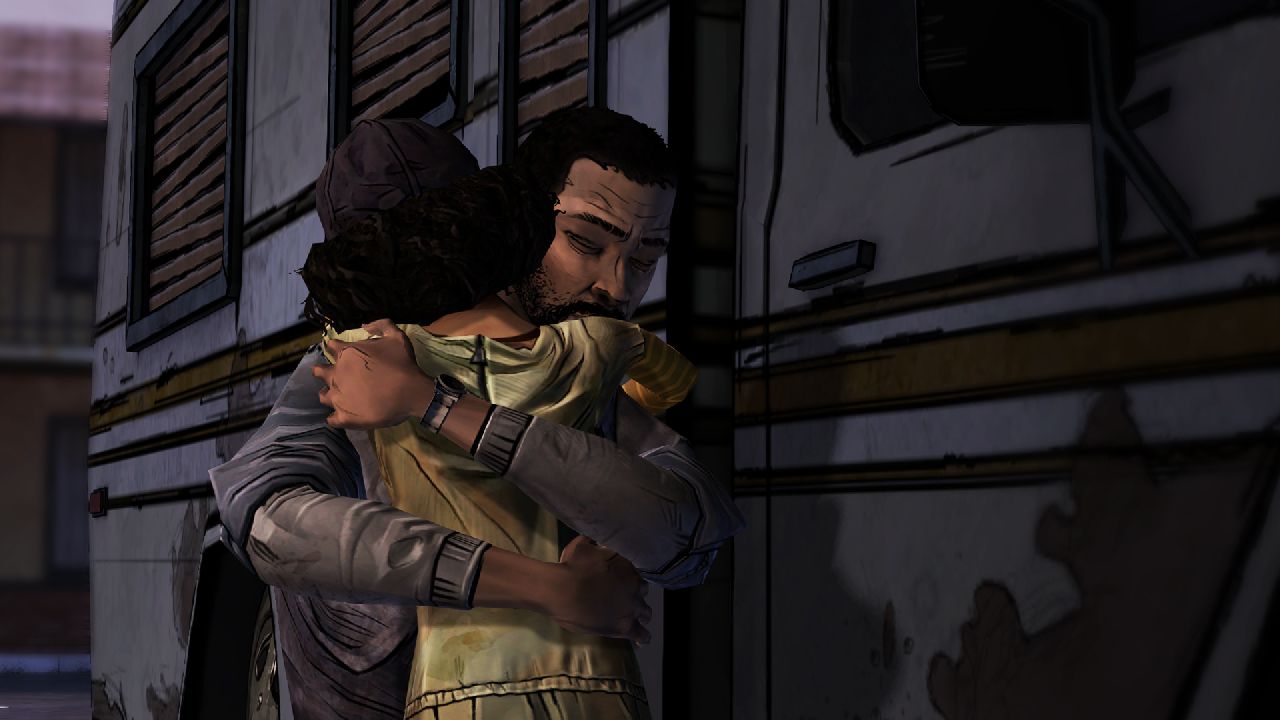
Screen shot from The Walking Dead video game

While many of us learned about episodic games by playing Telltale Games from the mid-late 2000s, this format has been around in various forms since the early ’80s. Titles like Dunjonquest, Wizardry, Dragon Slayer II: Xanadu, and Sorcerian were innovative for providing expansion-like episodes and/or being divided into small episodes that players could purchase to see the entire story.

Even though they’ve never held the spotlight like the FPS or RPG genre, episodic games recently became more common when a number of developers started churning out memorable, story-driven projects. The Walking Dead: Season One took the industry by storm when it was released a couple of years back, receiving wide critical acclaim and earning several Game of the Year awards.

The episodic model has continued rising in popularity thanks to more amazing titles boasting great stories. It’s still too early to say if they’ll remain a favorite or die down like many genres before. Either way, here are four reasons why people today enjoy episodic games so much.

1. Availability

Certain game types have trouble providing a consistent experience across platforms. For example, the controls on real-time strategy games on the PC provide much more precision and control than the controls on the same real-time strategy games on the smartphone. Similarly, you’re at a disadvantage playing a fighting game with a mouse and keyboard instead a console controller.

Tales of Monkey Island screenshot

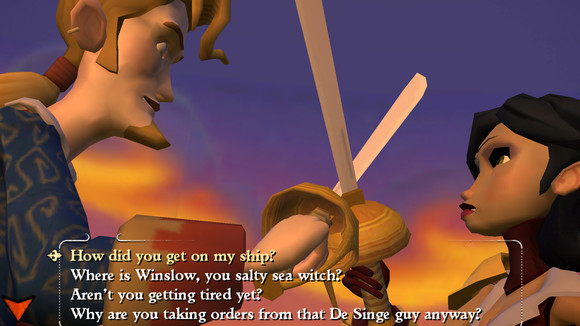
Leading episodic games today, however, play almost the same on all platforms. Whether you have a iPad, PC, or a next-gen console, you’re getting the same experience with titles like The Wolf Among Us, Tales of Monkey Island, and more. Why can these games transcend platforms much better than other game types? One such reason is…

2. Approachable Gameplay

As the years go by, more and more people are identifying themselves as gamers. But top-selling game series like Assassin’s Creed or hot MOBA titles like League of Legends aren’t solely responsible for the growth in gamers. The gaming community is expanding thanks to mobile games that are very approachable, which means someone who didn’t play games before now has far more access to gameplay. Nintendo is also responsible for introducing video games to many people across the globe with their motion-controlled Wii console.

In other words, the easier it is to pick up a game, the more likely it is to have a lot of fans. This is true for most episodic games today since few of them are demanding in terms of button inputs, reaction time, etc. All it takes is a button press or two to make dialogue choices, move a character, and complete a quick-time event. Someone who is intimidated by input-demanding games will have no trouble checking out your average episodic title.

3. Enticing Business Model

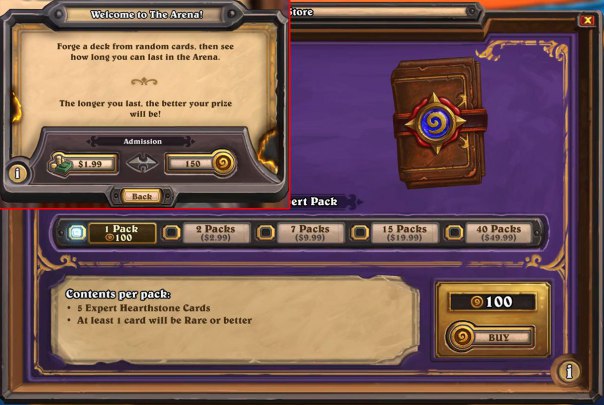
Just five years ago no one could have imagined that free-to-play games would be raking in serious dough. Hits like Clash of Clans, Candy Crush Saga, and Hearthstone have proven that people are willing to spend money on freemium content if they’re into the main game, which they downloaded for free. What’s interesting is that episodic games have a pretty similar business model as free-to-play games.

Hearthstone screen shot

For one, they both offer a taste of the game at no charge. It is now common for developers to make the first episode of their game for free. Gamers get invested enough into the story that they want to know what happens next, which means purchasing the following episode. These extra episodes come with small price tags that don’t feel too costly.

4. Story-driven Experiences

If there’s one thing history has shown us, it’s that people have always appreciated a good story. This is the reason why guys like Shakespeare and Homer are still remembered all these years later. It’s also the reason why so many people spend a lot of their time watching movies, binge-watching their favorite television series, or getting lost in a good book.

Since video games are interactive, they offer a narrative experience unlike any other. And while other genres are more than capable of telling an interesting tale, most would argue that episodic games are one of the best. Since the gameplay is simple, there’s more focus on the characters and how they interact and develop within game world. Having choice-driven dialogue and big player decisions that impact the story only serve to captivate the audience even more.

[su_note]Learn the skills you need to succeed as a game designer at the Game Design School at the New York Film Academy by clicking here.[/su_note]

Game Developers: What Not To Miss At GDC 2016

GDC 2016 Banner

It’s amazing to think that the Game Developers Conference started out in a small living room back in the 1980s. The annual event now takes place in the biggest convention and exhibition complex in San Francisco, California. Thousands of developers from across the globe do whatever it takes to attend and soak in the knowledge from the multitude of sessions. The time spent networking with other devs and talking about games alone is worth the trip.

To say that there’s a ton of things to do at GDC is an understatement. Whether GDC 2016 will be your first time attending or you’ve already been there before, below are some of the show’s highlights we’re sure you won’t want to miss.

Virtual Reality Developers Conference

This year a two-day summit will take place at GDC focusing entirely on the next big thing—VR. Experts from not just video games but also from the entertainment and tech industries will be there to talk about creating virtual and augmented reality content with today’s advanced tools. They may even touch on the biggest challenges facing VR.

User testing out Playstation VR at Madrid Games Week 2015

If you’re interested in what the PlayStation VR, Oculus Rift, and other companies are bringing to the table, you won’t want to miss talks by people from Crytek and Epic Games. The conference will also cover how VR can be used in other fields such as retail, product design, sports, and more.

Indie MEGABOOTH

The independent video game scene continues to thrive as more and more developers work with what little they can to make something amazing. This year’s Indie Megabooth will showcase more than a dozen games, allowing developers to exhibit their projects to people from around the world. If you can, be sure to also attend the 16th annual Independent Games Festival Awards.

The featured Megabooth games are Altered State, C-Wars, Elsinore, Fort Triumph, In The Shadows, Long Story, Metareal, Oneshot, Semispheres, Sentree, Sneaky Ninja, Streets of Rogue, sU, Sumer, and We Are Chicago. For a better look at these titles, check out the official site at http://indiemegabooth.com.

The Perfect Session For You

It’s easy to get overwhelmed looking at all the incredible sessions going on during the event. But since we can’t be in more than one place at a time, you’ll have to decide which will be the most beneficial to you. We recommend you look online and start planning your days so you don’t miss the sessions that can help you become a better game creator.

Screenshot from Fallout 4

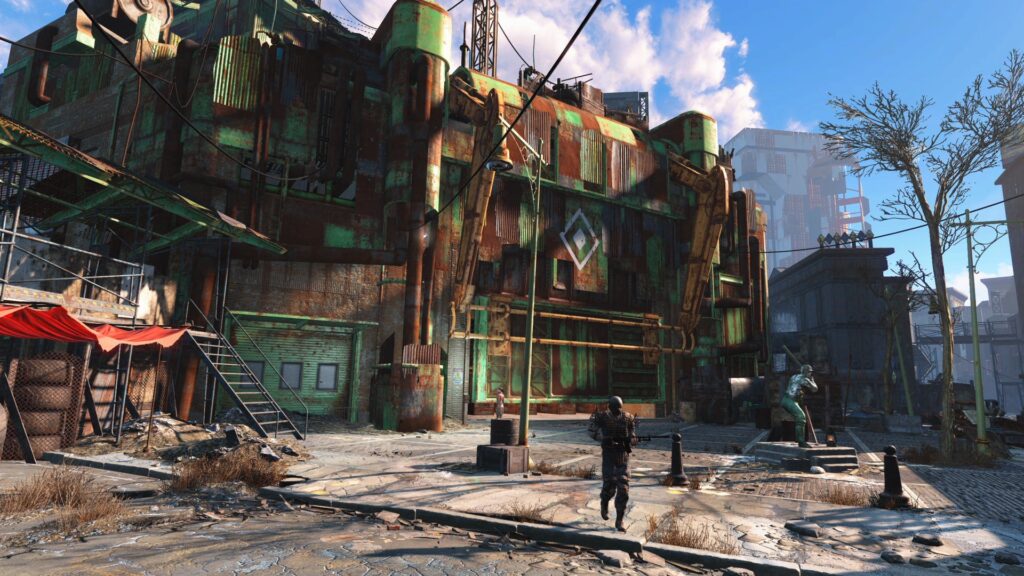
Interested in level design? Check out the “Fallout 4‘s Modular Level Design” session by two Bethesda veterans. Are you involved in the art side of game development? Perhaps the “Art Direction: Graphic Design is Key” by Ubisoft Montreal’s Liam Wong is your best choice. You can also view them later online on the GDC website, so don’t sweat it if you miss one.

16th Annual Game Developers Choice Awards

Just like in other entertainment industries, the best video games and developers deserve to be recognized. The annual choice awards is where developers come together to celebrate how far games have come and choose who they think deserves attention for their work.

This event takes place on Wednesday, March 16 and will feature awards in thirteen categories. The categories include the illustrious Game of the Year awards as well as awards for Innovation, Best Debut, Best Design, Best Narrative, and more. To take a peek at all of the finalists and honorable mentions here, see the official website: http://www.gamechoiceawards.com/.

[su_note]Learn the skills you need to succeed as a game designer at the Game Design School at the New York Film Academy by clicking here.[/su_note]

6 Outstanding Performances That Could Have Been Nominated For An Oscar in 2016

Oscar Trophies

Every year there are only five nominees in each of the four acting categories at the Academy Awards. As such, there is always disagreement among film fans and critics alike. Unfortunately, while not everyone can be nominated, that doesn’t mean there aren’t other performances that are worthy of the award. Here are some standout performances from 2015 that could have easily been nominated for an Oscar.

Michael B. Jordan (Creed), Lead Actor

Michael B. Jordan in Creed

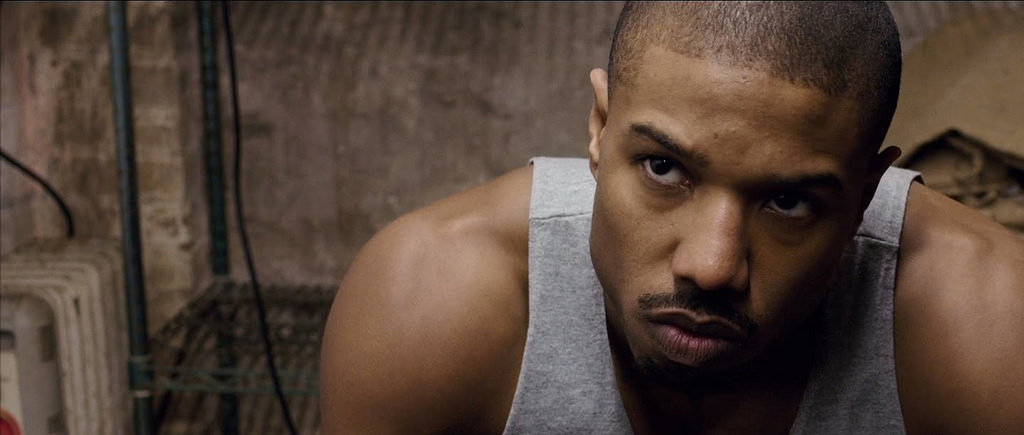
Mr. Jordan burst onto the big screen a few years back with his headline-grabbing performance in Fruitvale Station. It was a wonderful film; brilliantly acted while generating the kind of buzz that leads to future nominations. In Creed, Jordan plays boxer Adonis Johnson, son of Apollo Creed. The actor stacked on muscle like it was going out of style for the part and his character faces enough internal and external obstacles to have warranted a nomination. Maybe the planned sequel to Creed will generate some bigger Oscars buzz for him next time.

Charlize Theron (Mad Max: Fury Road), Lead Actress

Charlize Theron in Mad Max Fury Road

Another sequel, another overlooked performance. Charlize is almost unrecognizable as the tough, one-armed warrior Furiosa, but her rough exterior belies a tender heart. Furiosa is the protagonist of the Fury Road. She hatches a plan that jumpstarts the plot, shows her integrity, and artfully demonstrates her ultimate willingness to sacrifice herself for others. This isn’t the first time Theron has chopped her hair and gotten dirty (literally) for a role but the last time she did, she won for Monster.

Idris Elba (Beasts of No Nation), Supporting Actor

 Idris Elba in Beasts of No Nation

If you haven’t seen the debut feature film from Netflix, it’s well worth the watch and Elba steals the show. It’s a story about the tragic life of a child soldier who is taken in by a group of guerilla fighters led by the Comandant (Elba). Commandant is a charismatic (if not delusional) man of questionable moral fortitude and Elba embodies him with power and grace. Look out for that accent too; it is scary good. Curiously, Elba won this year’s SAG Award for Outstanding Supporting Actor. At least that’s a bit of a consolation.

Johnny Depp (Black Mass), Lead Actor

 Johnny Depp Black Mass

The brown-eyed, dark haired star donned blue contacts and blonde hair to portray legendary Boston gangster Whitey Bulger in Black Mass. His turn as the evil protagonist is chilling and detailed and is a testament to Depp’s skill at playing believably real people. Indeed, he is the most nominated actor on this list (3 nominations and counting) who is always in conversation for awards at year’s end. But Depp doesn’t seem to care much about the Oscars, which probably hurts his chances.

“I don’t want to win one of those things ever, you know… The idea of winning means that you’re in competition with someone and I’m not in competition with anybody.”

-Johnny Depp, Vanity Fair

Mya Taylor (Tangerine), Supporting Actress


Mya Taylor in Tangerine

Tangerine was a game-changing film to be sure, not only shining the light on a day in the life of a transgender sex worker, but also displaying the incredible cinematography that can be achieved with a mere iPhone. But, that doesn’t mean there is no humor to be found on the streets of LA. The film shows a hectic day in the life of two prostitutes, one of which, played by Taylor, is a musician on the side. Taylor is hard as nails and sweet as sugar in her performance. Tangerine is a landmark film for several reasons, largely because it is the first time transgender actresses—Taylor’s co-star Kitana Kiki Rodriguez also got quite a bit of critical attention for her stellar performance—have had their Oscar campaign backed by a major studio.

Jason Mitchell (Straight Outta Compton), Supporting Actor

Jason Mitchell from Straight Out of Compton

Although any of the five young actors in Straight Outta Compton could stake a claim to awards nominations, Mitchell’s turn as the charismatic mastermind Eazy-E is especially moving. He starts as an arrogant dope-slinging gangster and becomes a worldwide phenomenon before his ultimate downfall. The breadth of the man and his complicated personal relationships are brought to life by Mitchell in a way that makes you equally respect and despise his character throughout the film.

Awards are always subjective things. Nominations depend on a number of factors, popularity, past work, and politicking not least among them. But take it from Johnny Depp, awards are not the end-all be-all in acting. Truth, passion, and technical skill will always shine through in the visual telling of a story through film.

[su_note]Learn more about the School of Acting at the New York Film Academy by clicking here.[/su_note]