6 Elements That Make A Good Multiplayer Game

It’s amazing how many games these days offer both a vast single player campaign and some form of multiplayer. As online capabilities for both console and PC gaming improved, so too did the experiences developers have worked hard to deliver. Unfortunately we’ve all played that multiplayer game that is either a let-down from the get-go or only holds our interest for a while before being replaced by another game.

For the developer that hopes to one day create a game where the multiplayer stands out and leaves players craving more, it’s a good idea to look at titles that already have legions of players hooked. Although some entries on this list may not be appropriate for certain games, we’re sure many of them serve as the special ingredient that makes many of our favorite multiplayer games great.

Emphasis on Teamwork

This obviously applies to multiplayer games that require several players to be on the same team and not a 1v1 game like Hearthstone.

While many games have a multiplayer mode, the gameplay doesn’t necessarily emphasize teamwork. In other words, you should strive to create a game where the team that does a better job of working together, and fulfilling certain roles, is the team more likely to win.

There’s nothing more satisfying than winning simply because everyone did their part, and did it well. The Last of Us is a great example because, more so than most online shooters, it’s difficult to do things solo.

Instead, you’ll have one player dedicated to healing others, the second investing their perk points into better explosives, another focusing on close-range weapons, and the last sticking with a hunting rifle. They may each do a decent job individually, but together they’re a more efficient team.

Different Modes

Even if you have a solid mode that you know most players will stick to, it’s always a good idea to have varying modes that provide a different, yet familiar, experience. For example, most shooters have the classic “Team A vs Team B” mode where you must simply kill the other team, but many also offer capture the flag, objective-based modes, and other ways to compete.

Halo is a good example because it is known for having a good number of unique modes like Team Squat, Grifball, CtF, Dominion, and Regicide. Even the latest Smash Bros. offers different ways to play online, including For Glory mode and For Fun modes that differ in item use, stage types, and so on. Mapmaker, or level creating modes, have also proven popular among today’s gamers.

‘Easy To Learn, Fun To Master’ Gameplay

One of the best games to look for inspiration is chess, a strategic board game that has continued to be played for hundreds of years. Pretty much anyone can pick it up and learn the piece types, movements, and basic strategies. However, there is satisfaction in continuing to sharpen your skills and develop complex strategies that easily overwhelm novice players.

No matter what genre your game falls into, one of your main priorities should be to make a game that doesn’t appear daunting. Otherwise, people will feel intimidated and not play. Instead, make it easy to learn but also design it with enough depth so that dedicated players can progress their skills and improve.

League of Legends is a prime example, since everyone is essentially at the same level when they start a match but those who know more advanced strategies will advance their character faster.

A Progression System With Unlockables

For most of gaming history, we were satisfied with multiplayer games having no form of system where one match affects the next. You’d hop on Street Fighter II, beat your opponent with a certain character, and the next match that character would be exactly the same. You didn’t unlock new combos or attacks, nor did any attacks become stronger or better in any way for winning.

Although a game like that can still be fun, today most gamers want every match to serve as one step closer to a greater overall goal. Call of Duty is, of course, a good example, since every multiplayer match earns you XP to go higher up in rank. With certain ranks you unlock new weapons, killstreaks, and other perks that help you progress in the game. Even online card game Hearthstone has a system like this, where playing matches will allow you to earn currency that can be used to purchase card packs.

Downloadable Content

Many will hate to admit it, but there is no denying that multiplayer games that consistently release new content (in the form of DLC) tend to keep the attention of gamers for longer periods of time. It is human nature to want something new, especially if it combines with something you are already familiar.

From new maps and weapons, to modes and even skins, players have proven they are willing to invest a few more bucks into the game they love just to have something new. If possible, try to deliver a solid multiplayer gaming experience first, and then later consider how you can give your fans something more to enjoy.

Offline Options

I know it’s hard to believe that in this day and age people still think offline multiplayer is important, but for a lot of us there is still something about the old-school way of going toe-to-toe with a guy or gal sitting on the same couch. If you can make a multiplayer game where online isn’t the only way to take on other players, you definitely should.

Even though games like Mario Kart and Super Smash Bros now have great online modes, they are still mostly popular for their couch multiplayer. If you don’t believe us, ask the hundreds of Smash Bros. players that still gather together all over the world to see who the best of the best is.

In fact, it is the 14 year old Melee that still draws in the big crowds; a game that didn’t have an online mode to begin with, but is still arguably the most popular fighting game out there.

[su_note]Whatever type of video game you want to create, the School of Game Design at the New York Film Academy can help you gain the necessary knowledge to do it (campuses in New York and Los Angeles). [/su_note]

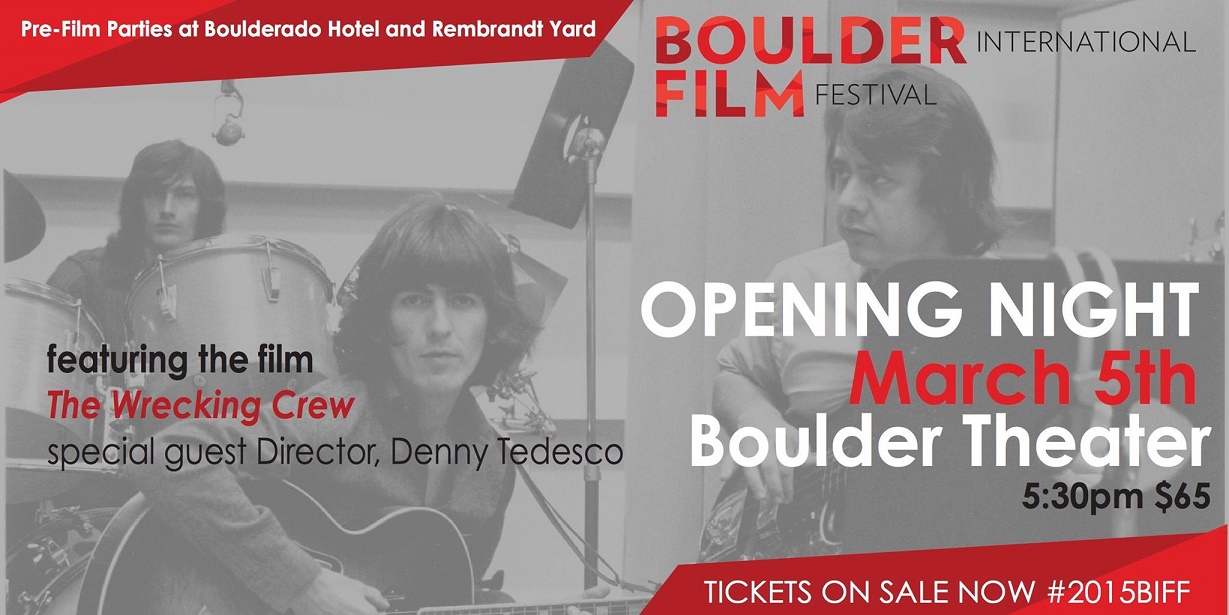
Image Source

Boulder International Film Festival 2015

BIFF 2015

Voted One of the “25 Coolest Film Festivals” by MovieMaker Magazine, the 11th Boulder International Film Festival (BIFF) will take place March 5-8, 2015 at the foothills of the stunning Rocky Mountains in Boulder, Colorado.

The festival will run over four days and feature some of the best new talent in filmmaking and is expected to be attended by more than 25,000 people. The festival is scheduled to feature between 50-70 films from all around the world with screenings held in the following venues –

  • Historic Boulder Theatre
  • NEW Church – First Pres Boulder
  • Boulder High Auditorium
  • eTown Hall
  • Boulder Public Library

BIFF has hosted a number of special guests over the past 10 years including Shirley Maclaine, Alec Baldwin, Oliver Stone, William H. Macy, Martin Sheen and Chevy Chase just to name a few.

Opening Night Red Carpet Gala kicks off with TWO simultaneous parties and will feature the film The Wrecking Crew. Tickets are on sale now and are expected to sellout fast. To secure your seat for this amazing night please click here to buy tickets and be sure to follow BIFF on their social channels below –

facebook  twitter youtubeinstagram

For the full BIFF 2015 Program and Schedule please visit here.

Documentary Filmmaking in 2014 – Trends & Five of the Best Documentary Films

All in all, 2014 was a great year for documentary filmmaking with some brilliant work having been released by both returning professionals and new talent fresh out of documentary filmmaking school. We also saw a few definite trends emerge and a few that were further cemented with last year’s output, and the most notable one is the increased amount of character studies which are being released.

The Rise of the Portrait

For a while now, character-centric documentary films have become a staple of the industry but this has reached influx levels very recently. However, it’s for this very reason that not all character studies are good—some filmmakers have seen the success of such emotional documentaries featuring colorful (and often tragic) subjects, and feel that it’s a magic bullet guaranteed to make for a great documentary.

Due to the slew of documentaries of this ilk, it’s no longer enough to point a camera at someone with an interesting story. Audiences have had their fill of these, and require a cherry on top in order to become fully engaged.

25wire-600

That said, thanks to the inherent nature of humankind’s love of storytelling, character study documentaries aren’t likely to lose their appeal – all we’re seeing now is that they have to be told exceptionally well in order to stand ahead of the competition.

And that is still achievable given that the subgenre offers a robust framework on which to tell a great story – character documentaries lend themselves extremely well to narrative story structure, can be less complicated to shoot (though not always) and often the story can unfurl in unexpected ways even as it’s being told.

NYFA’s Year in Documentary Film

In addition to the above trends, a number of instructors and students from NYFA’s documentary school have found significant success and awards season recognition for their documentary work. Curriculum Advisor and Master Class professor Geof Bartz edited the HBO documentary Larry Kramer in Love and Death that recently debuted at Sundance and was an Oscar contender this year. In addition, documentary graduate Muhammad Hamdy, who DP’d on the Oscar-nominated film The Square last year, had his most recent film We Are The Giant short-listed for this year’s Oscars.

A number of other films directed by NYFA instructors were also featured in this year’s Oscar race  including Jeremy Xido’s much buzzed-about film Death Metal Angola. In addition, instructor Hilla Medalia produced the acclaimed documentary and Oscar contender Dancing in Jaffa and wrote and directed The Go-Go Boys: The Inside Story of Cannon Films. And recent One-Year Documentary graduate Colleen Shaw’s short documentary All in my Head: The Patrick Stein Story was short-listed for the Best Documentary Short Oscar.

Subculture Club

An even more recent documentary trend which has formed as an offshoot to this is the idea of ‘community’ documentaries – that is, exploring a subculture (usually Internet based) which is misunderstood by the mainstream.

ash ball

Documentaries covering video gaming and religious subcultures (think King of Kong, Indie Game: The Movie, For the Bible Tells Me So and Jesus Camp) seem to be especially rising to the forefront of documentary filmmaking, which seems to correlate with how both topics have risen in popularity over the past decade.

Again, this trend for documentary filmmaking isn’t likely to go away given that there are bottomless depths to plumb in terms of subject matter.

Top 5 Must-Watch Documentaries of 2014

Unfortunately, the Golden Globes have eschewed the idea of an award for documentaries again this year (the last time it recognized the work of documentary filmmakers was 1977), but there were many documentaries in 2014 that would surely be eligible for such an award if it existed.

Actress
Rotten Tomatoes: 90%

Wire star Brandy Burr under the microscope, examining her decision to leave the show to start a family before trying to re-enter the limelight once again… but what starts off as a simple premise ends up twisting and turning in huge, unsettling ways.

Citizenfour
Rotten Tomatoes: 97%

The Edward Snowden story was always destined to be retold on celluloid in some form or another, but thankfully Citizenfour was the one to do it justice. This is hardly surprising given that the documentary was created by Laura Poitras, the woman Snowden reached out to in order to expose the United States government whilst she was making a different film on government surveillance (and thus making her implicit in the dramatic—and, by turns, horrific—tale which rapidly unfolded).

The Case Against 8
Rotten Tomatoes: 94%

A documentary covering a lengthy series of judicial proceedings may not sound incredibly engaging on paper, The Case Against 8 is truly deserving on a list of the top 5 must-watch documentaries of 2014. The fight for marriage equality which went all the way to the Supreme Court is a surprisingly emotional and deeply human one, with directors Ben Cotner and Ryan White carefully balancing the legal backstory with the relatable points.

Happy Valley
Rotten Tomatoes: 88%

The Jerry Sandusky scandal was one of the most explosive stories to have hit the headlines in the last decade. Emmy Award-winner Amir Bar-Lev manages to not only cover all the angles (and failings) behind this sensitive story, but also deftly explores the wider issues surrounding “team spirit” and the seeming invincibility of sports stars.

National Gallery
Rotten Tomatoes: 96%

For decades now, Frederick Wiseman has been an underrated master of cinéma vérité. His thirty-eight documentaries so far have primarily concerned themselves with exploring the workings of various major institutions—a ballet company, an air force training base, a major hospital—but last year’s study of London’s National Gallery might be one of his finest masterpieces.

Casting Director’s Checklist

As with many roles within the filmmaking industry, a tried and proven method of acquiring professional work as a casting director is to prove your worth with a strong portfolio.

Students at film school will naturally get the opportunity to build one over time through the course of their studies. If you’re just starting out, the most effective way to do this is by taking ownership of casting duties on your own film production.

To keep you on the right track, here’s a useful checklist covering the process from start to finish. Presenting:

The Casting Director’s Checklist

Casting director tips

1. Create a Casting Plan

For the purposes of the checklist, we’re going to assume you’ve already got a screenplay to work with. If it’s your own work, you’ll know better than anyone how the characters look in your mind’s eye and who will be suitable to portray them in the real world; if not, sit down with the screenwriter and draw up casting profiles for each of the lead roles. The profiles should include:

  • Age range (can be extremely variable depending on the project)
  • Gender
  • Ethnicity
  • Height and weight
  • Distinctive characteristics (unusual hairstyles, tattoos, etc.)
  • Special skills (such as dancing, singing or the ability to perform stunts)

It should be noted that, at this stage, you only need to focus on the leading roles. More often than not, actors for the smaller parts are selected from those who auditioned for larger parts but, for whatever reason, weren’t successful for those roles.

2. Repackage it for the Actors

The character profiles are to help all team members involved in the casting process figure out what kind of actors you’re looking for, but they’ll need some embellishment for those on the talent side.

Casting director checklist

You’ll want to keep your character breakdowns short and snappy, with a few choice adjectives to help give the actor an insight into the character (and help them figure out if they’re suitable for the part).

Character Breakdown Formula:

CHARACTER FORENAME / GENDER / AGE RANGE / ETHNICITY (if applicable) / One line character description. Special skills required, if any.

Character Breakdown Example:

Moira – FEMALE. 40-50. White. Moira is a strict and intimidating Irish school headmistress who hides her alcohol addiction from her students. Must be able to sing.

3. Put Out the Casting Call

Once you’ve got your character breakdowns all set, you’ll need to get them in front of the eyes of prospective actors. Consider posting to a number (or all) of the following best places to post casting notices:

Mandy.com
Breakdown Express
Backstage
Now Casting
Casting Networks
Actors Access
Casting360
New Faces
Actor Street

Some require registration and not all are free (at least for the more premium versions of the service), but even the local portals of Craigslist can yield some great talent.

where to put casting calls

Bear in mind that you’ll probably get an influx of emails from actors; keep your personal account from being swamped by setting up a free Gmail account (or similar) which can be used as a dedicated inbox for the project.

4. Set The Stage

When the acting portfolios start rolling in, you’ll need to organize an audition day; this is the part which will test your casting director and organizational skills to the extreme.

First of all, you’ll need to book a space in which to host auditions. We’ve previously covered a list of places to start your search, but bear in mind that you’ll ideally need:

  • A large room in which to host the auditions themselves, with tables and seating for the casting team
  • Space outside of this room, with seating, where the talent can wait (especially if things are running late)
  • Basic catering facilities to make tea, coffee and lunch for particularly long audition days
  • A function space that comes with its own security personnel or buzzer entrance system is beneficial
  • Some sort of registration desk where a team member can greet actors as they arrive

With an audition space secured, email (or call) all parties interested in auditioning with the location, precise time they’re expected and anything they’ll require on the day (such as identification or their ‘side’ – a copy of the scene they’ll be performing if you choose to send them one ahead of time).

Casting director jobs

Top Tip: Don’t rely on written notes to keep track of the day’s schedule and who’s expected to show up, and when; set up an online spreadsheet which all casting members can access and edit.

5. On the Day

Needless to say, you’ll want to arrive at the space early to get all set up. You’ll want to bring:

  • An overview of the day’s running order’
  • A list of the actors’ names (with copies to give to security/receptionist staff)
  • A stack of every actor’s resume, aligned with sections of the script you’d like them to read
  • A standard form for actors to fill out on arrival to gather contact info, agent details and any other information relevant to the project.
  • Recording equipment so you can view back the auditions later (you’ll need permission from the actors before you record them; this can simply be a tick box on the aforementioned registration form.)

While the casting director is in charge of calling the shots here, input from the director and other production members is highly important given that they’re the ones who will ultimately be working with the talent. Make sure you allow for enough time in between auditions to review the performance and actor with the team; this will also counteract the ‘sea of faces’ effect that is common with a packed audition day, making it hard to recall individual actors at the end.

Casting auditions

If you’ve followed the Casting Director’s Checklist, you’ll find yourself in the best position to make the right casting choices for your film. Two final golden rules to bear in mind:

– NEVER make a snap decision when casting; take your time to consider each actor thoroughly, even if that takes days or weeks.

– A follow-up call confirming time and location 24 hours before the audition can help combat no-shows, but on a given project, expect only around 50% of all people who initially expressed interest to turn up. It’s a sad fact of life, but don’t be tempted to squeeze auditions together in an attempt to reduce downtime caused by people missing slots.

Best of luck!

How to Pay For Film School: Student Financing Options

It would be disingenuous to pretend that attending film school – or any higher level education, for that matter – isn’t a costly endeavor. At the same time, it should be recognized that the costs associated with attending film school should be considered as a great investment rather than an unnecessary expense; graduating from film school can accelerate your whole career to follow and lead to better paying work, faster.

how to pay for film school

But the question of how to pay for film or acting school in the first place remains, and it’s one of the biggest concerns most prospective students have. Luckily, there are numerous ways to ease the financial burden. The main two for most students are loans and grants.

Student Loans for Film School

In the absence of a personal sponsor (i.e a family member willing to cover costs), most students rely on student loans to cover the bulk of the tuition fees and living expenses alongside part-time work in some cases. In fact, around 60% of the country’s 20 million college students rely on student loans to see them through.

The idea of taking on any kind of loan can be a daunting one, but bear in mind that a student loan can be one of the most affordable types of credit anyone is likely to be offered during their lifetime. Certain types of federal loans – given directly to the student by the government – are actually offered without any interest while attending school, these are known as ‘subsidized’ federal loans, so you won’t begin accruing interest on the loan until you begin repayment 6 months after you have completed or left the program. However, given that the government pays the interest for you in this scenario, subsidized loans are naturally more tricky to apply for as you’ll probably have to provide evidence that you’re really in need of the money. All applications for Federal student aid start by completing the Free Application for Federal Student Aid or FAFSA. The Financial Aid staff is available to assist with this application and can be contacted by emailing: [email protected]

Federal loans

Unsubsidized federal loans are made available to nearly every student who applies, and the interest rates are still remarkably low. And regardless of whether it’s a subsidized or unsubsidized loan, in most cases you won’t need to start paying it back until six months after you graduate.

How Much Will I Receive for my Student Loan?

There really isn’t a blanket answer to this question that wouldn’t run over multiple pages. This is mainly because the amount you’re eligible for varies on a wide number of factors, the main ones being:

  • Whether the loan is subsidized
  • If the US Department of Education determines you to be a dependent or independent student
  • To what level of education you’re studying (mainly under or post-graduate)
  • Your demonstration of financial need

In addition, the maximum limits for borrowing are set by Congress and are subject to change in any given year, but at the time of writing loan limits range between $5,500 to $12,500 depending on the factors listed above. Before borrowing, you should be clear on the total amount you will be required to re-pay and all repayment option available to you. The best course of action is to speak to one of our friendly Financial Aid experts who’ll be able to provide more personalized information and assist further.

Private Student Loans

While private loans offered specifically for studies come with attractive interest rates, they usually cost more in the long run than any kind of federal loan.

That said, if the maximum amount being lent by the government doesn’t quite cover your expected tuition fees and living expenses they can be the most affordable way to ‘top up’ your borrowing. Just be very aware of all the terms, rates and fine print before signing on the dotted line (as with any financial contract), and make doubly sure you understand the repayment terms and the implications of lapsing on these. More information on Private Loans can be found here.

Film School Grants and Scholarships

Who doesn’t like free money? That’s essentially what grants and scholarships are, but of course there are a few hoops you’ll need to jump through in order to find out if you’re able to get some. Once again, it largely depends on personal circumstance and the best thing to do is speak to the Financial Aid department. As an overview, the main distinction between grants and scholarships is that the former is usually awarded to those who are struggling financially, and demonstrate significant financial need, whereas scholarships are given to those who have displayed extreme academic prowess prior to applying.

Federal Pell Grants are offered to students that have completed a FAFSA and have been determined by the US Department of Education and the Financial Aid office at NYFA to be eligible for this grant program. Federal Pell Grant funds are gifts from the government and are not repaid. Grant awards vary per year and may range between $500 and $6,195 per calendar year.

Additional resources include State grant awards as well as the Federal Supplemental Educational Opportunity Grants (SEOG). The Parent PLUS loan program is another option.

NYFA is a proud member of the Yellow Ribbon program, a voluntary grant program which supplements the educational benefits given to veterans under the Post 9/11 GI Bill – factoring in the combination of educational benefits and tuition assistance offered by NYFA, it’s often the case that all of the veteran’s tuition fees are covered. Similar tuition assistance are offered to those who are registered with a disability, and the New York Film Academy also offers tuition assistance to students demonstrating financial need.

film school scholarships and grants

All in all, there are plenty of options out there for those wondering how to pay for film or acting school. All that remains is to check out the various options based on your individual situation, decide which is best for you, then prepare to embark on the biggest turning point of your career in cinema.

How To Self-Distribute Your Film

Producing and filming an independent movie is laborious work, though not impossible. And while bringing your vision to life outside the studio system might seem difficult, you’ll find it’s exponentially harder to get that vision to the masses. There’s a reason there is a huge industry dedicated entirely to distribution—the dissemination of movies in formats of all types. Doing it on your own is almost impossible.

However, with technological improvements and the decentralization of the Internet, more and more artists have turned to self-distribution. Some have it easier than others. Filmmakers like Kevin Smith have found success putting distribution in their own hands, but they also benefitted from built-in audiences and closer sources to financing. If no one has ever heard of you, let alone your movie, you’re in for a serious undertaking. Here are some tips to help you along the way.

1. Get Attention

While streaming and video-on-demand are growing in popularity, booking movie theaters is still vital for most unseen movies to get seen. If you haven’t picked up a distributor after major festival screenings, it’s probably up to you. Your first goal should be to find a talented graphic artist who shares your vision. Make art—posters, flyers, etc.—for your film that catches the eye while also conveying its tone or mood or theme. You’ll also need a skilled editor to craft a movie trailer that will get your movie noticed. Art and trailers aren’t just necessary for social media or buzz, they will also grab attention in theater lobbies and as windows to your film on streaming websites. Most importantly though, they’ll help you raise money.

2. Get Money

Distribution is more expensive than you would probably guess, and depending on your production’s budget, could actually cost more than it did to make the movie. Renting theaters and paying for prints and ad materials rack up big costs. You may also find the need to hire assistance even if you’re distributing on your own. Use platforms like Kickstarter and more traditional grassroots campaigns to raise initial startup cash. Use your sweet trailer and posters to make people want to get involved. Find those interested in what you have to say or patrons of the arts or wealthier citizens who would like to see their name in the credits!

3. Get Ads

You’ve got the art and you’ve got the money to make prints so it’s time to get the word out. Theaters want ad materials well in advance because if people aren’t seeing your movie, it’s costing them money too. Ideally you could keep them in good shape and reuse them if you’re moving from city to city, but it’s hard to keep perishable material safe in the hands of strangers. You’ll probably just have to pay for more copies, so be prepared. And remember to get them early.

4. Get Social

Social media is the best way to gain buzz around your film. Use Facebook, Twitter, Instagram—anything you can get your hands on that will get your story to the masses. Share your trailer and your cool poster. Post photos from the set or from your tour or time at festivals. Post your thoughts, even if unrelated to the film, just to keep your name and the name of your project in the air. Also, use your networks to find your audience. What cities or types of people seem to gravitate towards your project? When you self-distribute your distribution is limited—that makes efficient targeting very important.

5. Set Good Dates

Choosing the right release dates for your theatrical and online releases are key. You want to avoid the Fall and early Winter because the films with awards season buzz are already hogging the spotlight. You’ll also want to avoid sharing dates with major releases that are going to suck up all the audience, or, conversely, release concurrently with a film you think will turn off your potential audience so they’ll see yours instead. Counter-programming is a vital tactic used by distributors—if everyone is seeing the new sci-fi blockbuster, your low key drama would make a great alternative. And don’t forget to think small. If you’re doing one- or two-time screenings, choose Mondays and Tuesdays, days when an audience isn’t likely to be doing something else.

6. Go On Tour

Touring with your film may seem old school—it was originally done to save money on costly film prints, and has fallen out of fashion as digital prints have made distribution cheaper. But it’s a great way to focus resources and meet your audience in person, forging a stronger connection. Use social media and your art to keep locals in the know and go city-by-city, staggering your dates while building word of mouth.

7. Do Q&As

If you’re touring with your film, don’t just make it a series of run-of-the-mill screenings. Organize a Q&A, talking to your audience after the screening. Guest speakers make screenings more exciting and give people more incentive to come out and see it. You can also engage better with your audience and learn from them, increasing your buzz as well as teaching you how to better target a larger crowd

8. Stream

Once you feel your theatrical run has run its course, you should get your film online to stream. You can also make home video releases on DVD and Blu-Ray, though the format is quickly falling out of fashion. Distributing online later in the game is smart because it prevents potential piracy and forces people to come out to the theaters to see your film first. However, once you do go online, you’ll reach a much, much larger audience, especially considering all those who wanted to see your film but weren’t in the cities of your release. You can post on sites like YouTube, which isn’t as discriminating as companies like Netflix or Amazon, though it may give your film a less “professional” demeanor. But it’s a start.

9. Team Up

If you can’t make headway with the big companies like Netflix and Amazon, there are interesting and innovative organizations and companies you might have better luck with. Groups like Indieflix and Createspace back your film with screenings and streaming and help raise awareness of your project. Some, like Indieflix, have models that allow you to get paid for each minute your film is streamed. For self-distributors, organizations like these are becoming a must.

10. Be Prepared to Work

If all this sounds like a lot of work, it’s because it is. You may be physically and emotionally drained after finally getting your project on film or video, but if you’re going to distribute yourself you have to prepare for a great deal more effort. There’s a reason those with cash will pay someone else to do it for them. But if you’re an artist with no other choice, you’ll have to muscle through it. It’s not all bad though—self-distribution allows you to connect with your audience in a way many filmmakers never get to. And what’s making art and movies if not an attempt to connect?

5 Viral Videos Which Actually Changed the World

For many, the Internet is simply a wonderful playground of distraction full of cats, memes, and memes about cats.

YouTube is, technically, the second biggest search engine on the net and can also be classed as one of the biggest social networks. With this kind of influence and over 60 hours of video content being uploaded every minute, it’s only natural that once in a while a video surfaces and changes the world in a very tangible and big way, for better or worse.

From examples of citizen broadcast journalism to viral campaigns (and anomalies) that helped change our perceptions en masse, here we take a look at:

5 Viral Videos Which Actually Changed the World

Gangnam Style

This may seem like a fairly soft-ball entry – and some would question the impact a semi-comedic music video can really have – but Gangnam Style is likely to go down in history as a turning point for how the record industry at large viewed the efficacy of YouTube.

Having literally broken the YouTube view counter (the algorithm had a theoretical upper limit of 2,147,483,647), South Korean singer Psy managed to demonstrate that YouTube can not only create stars, but super stars. Billboard was forced to overhaul its methodology for ranking music sales as a result, and to boot, Gangnam Style kick started a cultural shift in the West with a massive surge of interest in K-Pop and J-Pop following the video’s release.

Much like Peter Jackson’s movies having had a big impact on New Zealand tourism, Psy also did the same for South Korea – it also created a boom in the Korean stock market, and was used to promote numerous peace projects. Not bad for a tongue-in-cheek dance song.

[su_note]The New York Film Academy in partnership with Rolling Stone Magazine offers a 4-week Hands-on Intensive Music Video Workshop. For details click here.[/su_note]

ALS Ice Bucket Challenge

Video marketing campaigns are not new in the sphere of charity, but it’s arguable that no social media outreach has been (or will be) as effective as the Ice Bucket Challenge craze which swept the globe in the summer of 2014.

The only parallel which came close to this was the Harlem Shake meme, but the ubiquitous Ice Bucket Challenge not only reached greater heights but also improved the world at the same time – it is estimated that well over $110 million was donated to related charities combating amyotrophic lateral sclerosis (also known as Lou Gehrig’s disease) and countless more going to other charitable causes participants were selecting particularly towards the end of the campaign.

All in all, it put us a lot closer to helping tackle the disease and also brought us all together, with numerous celebrities getting a dose of ice and humility. It truly was the feel-good viral campaign of the Summer.

Kony 2012

They say with video content, it’s best practice to deliver your message in 3 minutes or less. Kony 2012 had a 30 minute runtime, but spread faster than the most viral of cat videos.

The backstory and subsequent events following the release of the Joseph Kony documentary could fill volumes, but the almost instantaneous effect it had on the world following its upload to YouTube was unprecedented. Very few had heard of Kony, much less the war crimes and child abductions with which his name has become synonymous; as a result of the 100 million views the video quickly racked up, it was estimated that half of all young people in America were now conscious of Joseph Kony’s existence and even prompted the Senate to send troops to join in the manhunt.

While the merits of the film have since come under scrutiny (and director Jason Russell had a psychological meltdown following its release), there are very few shorts which have influenced international relations at this level.

At the time of writing, Kony is still at large and a sequel documentary did not garner as much interest.

It Gets Better

After a string of tragic suicides in the LGBT community – particularly among teens who were subjected to bullying due to their sexuality – journalist Dan Savage wrote of one case “I wish I could have talked to this kid for five minutes. I wish I could have told Billy [Lucas] that it gets better.”

With that, a huge force for change and positivity was born. Savage and husband Terry Miller founded the movement in 2010 with a simple premise: get everyday gay adults to sit in front of a webcam and share their inspirational stories with their younger peers, all centered around the ‘it gets better’ message. Before long, huge celebrities of all sexual persuasions added their voice to the project. It’s impossible to calculate the number of lives it has had a positive affect on, not to mention how many suicides it may have prevented.

As with the other entries above, the It Gets Better video campaign wasn’t a slow burner. Immediately after its launch, 200 videos were uploaded by supporters. This number tripled in the second week – now in its fifth year of activity, it stands at well over 50,000 entries.

Arab Spring Videos

There is no one video which single-handedly typifies the citizen coverage of the Arab Spring, which in turn fueled the uprising. We’ve gone with a two-minute breakdown of what the Arab Spring was for the uninitiated, but it cannot be understated how big a part social media played in the uprising (and YouTube is included in that.)

“They [the governments] couldn’t arrest every person with a phone that has a camera,” said Mohamed Abdel-Dayem, Middle East and North Africa program coordinator for the Committee to Protect Journalists. “When they shut down Al Jazeera in Egypt, Al Jazeera continued to cover Egypt using citizen footage. That created a new dynamic where news media didn’t need the blessing of the government to report the news. The state apparatus was bypassed.”

Never before has the Internet, and social media in particular, become a more powerful tool in the hands of everyday people and journalists/social commenters are struggling to keep up with this rapidly changing, virgin landscape. The above five video movements are just the start of this online revolution; it remains to be seen the new ways in which viral videos will change pop culture and the collective public consciousness in years to come.

10 Essential Twitter Accounts for Actors

Making a movie or television show requires many different people with many different talents, but actors are the ones in the spotlight. If you want to study acting, break into the acting business, or hone your acting skills, one good way to keep in touch with the acting industry is through social media and arguably Twitter is the best tool for the job. For all aspiring thespians out there, we’re pleased to present…

10 Must-Follow Twitter Accounts for Actors

New York Film Academy
@NYFA

The New York Film Academy offers multiple degrees, and workshops dedicated to acting over at our acting school. Want to keep up with student work and ways to take your career to the next level?  Our NYFA’s Twitter feed is a good place to start!

Backstage
@Backstage  

Auditioning is a way of life for actors, and actors who want to succeed need to be on top of casting calls. Backstage has been a source for casting information and acting advice since 1960.

Paul Russell Casting
@PaulRussellCstg

Paul Russell is the author of Acting: Make it Your Business, a guide for actors who want to succeed in the entertainment industry. His Twitter stream posts tips and links to longer advice articles for actors.

The Fictionals
@TheFictionals  

Many actors started their careers doing improvisational comedy. Think of John Candy and Chicago’s famous Second City improvisational group. The Fictionals is an up-and-coming Canadian improv group based in Vancouver.

Stage32.com
@Stage32online

Stage 32 is a social network site for film, theater, and television professionals. Its Twitter feed posts job listings for actors, as well as links to advice articles for actors.

Media Volt
@mediavolt  

Based in the UK, Media Volt posts auditions and casting calls for actors and models.

Actors Access
@ActorsAccess

Actors Access maintains a database of actor profiles for casting directors to search.

Variety
@Variety 

The entertainment business is huge, so actors need a good source for news about the business. Variety is a long-running magazine dedicated to the entertainment industry.

Inside Acting
@insideacting

Inside Acting is a podcast focusing on the acting business – everything from acting tips to finances, it’s one of the essential podcasts actors should listen to (and, by extension, one of the more useful Twitter accounts for actors).

SAG-AFTRA NEWS
@sagaftranews  

This is the official account of the Screen Actors Guild, the labor union for film and television performers. Follow this feed for news and press releases related to SAG.

And that wraps up our top pick of essential Twitter accounts for actors and anyone with a passing interest in acting. For more useful resources, check out our round-up of 5 great free resources for acting students.

Bachelor of Arts in Film vs BFA in Film: Which Is Best?

An amazing creative path in filmmaking can start with a great education, and prospective undergraduate students have more than a few options to choose from. However, the decision of which film degree, a Bachelor of Arts in Film or a BFA in Film, is a huge one (and, of course, it is not one that should be taken lightly.)

One of the biggest crossroads at which prospective film students find themselves involves the differences between the BA and BFA film programs. If you’re currently asking yourself “BA vs BFA Film: which is best for me?”, read on as we discuss the distinctions between these two popular filmmaking degrees.

Bachelor of Arts in Film vs BFA in Film

Both the BA and BFA film degrees are designed to give students of the craft a deep understanding of what goes into creating a movie masterpiece, as well as how the industry as a whole operates. With this in mind, does it particularly matter which one you choose?

In one sense, not particularly; both are recognized qualifications and will set you up for success following graduation. But if you’re a very motivated student who wants to dig a little deeper and get more out of your time at film school, you’ll probably fare better embarking on a BFA in film.

Benefits of Choosing a BFA

The Bachelor of Fine Arts degree, as the name implies, provides a slightly more in-depth study of the craft (as a whole) and as a result, is more intensive.

This is evidenced by the fact that a BFA degree can take longer to complete than the BA equivalent – usually four years vs. three years – though it should be noted that BFA Film degrees can be completed in three years when done on an accelerated basis (i.e. three semesters per academic rather than two).

BFA Filmmaking degrees

One of the added benefits of undertaking an accelerated BFA degree is, of course, the time saved; you’ll be able to start your creative goals a year early. A natural follow-on from this is the financial benefit of saving on tuition and living expenses which would have been otherwise used up by a fourth year of study.

Other considerations that should be made when weighing up your options include:

  • Will you be able to work with numerous film formats, e.g. 16mm, 35mm, HD and RED Dragon?
  • Does the course structure only cover a single aspect of the filmmaking process, or will you get the chance to master screenwriting, directing, producing, and editing for a more well-rounded understanding?
  • Does the film school location allow for a variety of shooting locations?
  • Is the program solely grounded in academic/theoretical study, or will you be learning through actually making films during the course of the year?
  • Will you graduate from the program with a polished and usable portfolio of completed film work that you can use to gain future creative projects?

Our own BFA in Film program – conducted at our Los Angeles campus – is worth checking out since it ticks all the right boxes in terms of offering a well-rounded learning experience. Students will also delve deep into liberal arts and science courses to help supplement the core understanding of the filmmaking process; students won’t simply learn how to shoot film, but will also gain an in-depth knowledge of how and why certain techniques are (and have been) used.

Learn Filmmaking and Essential Creative Skills at NYFA

Interested in more than just film? NYFA’s BA in Media Studies Program ensures students are well-versed in critical studies, communication and marketing, and interactive narrative.