7 Things You (Probably) Didn’t Know About Groundhog Day

Whether or not Punxsutawney Phil will see his shadow this year is yet to be observed, but one thing’s for certain: we’ll be seeing the much-loved Bill Murray classic Groundhog Day at some point over the course of the week.
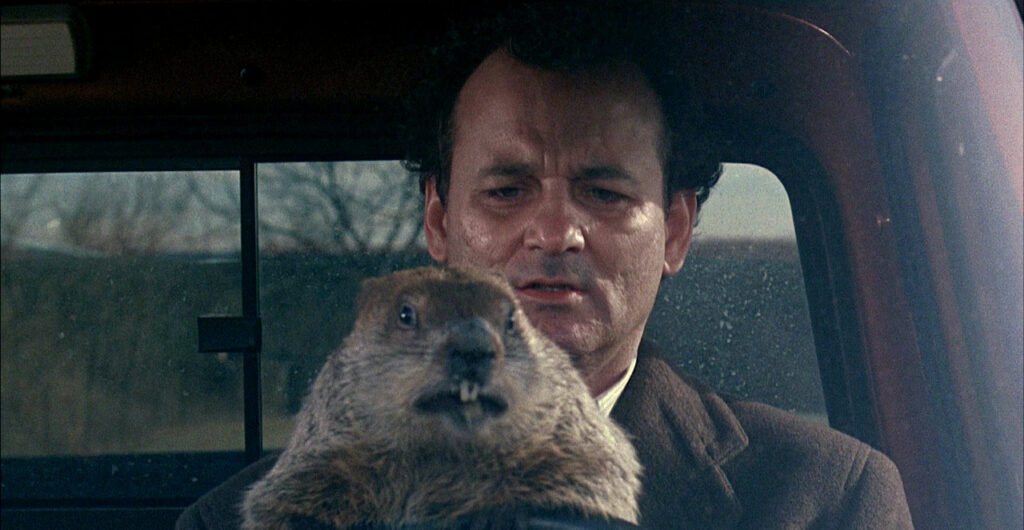
Bill Murray in Groundhog Day

It’s an enduringly re-watchable movie with plenty of appeal, striking a fine balance between comedy and speculative philosophy set against a holiday that hadn’t previously been portrayed in cinema.

But as with any movie as quirky as this, the lore surrounding it is just as strange. Presenting:

7 Surprising Facts About 1993’s Groundhog Day

1. Time Doesn’t Just Repeat, it Stands Still

Punxsutawney sure has some weird time flow problems. Not only does it trap the poor Phil in a near-endless cycle of the same day, but it even acts screwy when he gets out of the loop.

On the day after Groundhog Day, Phil wakes up next to Rita as the clock flips to 6am. But then, strangely, it stays at this time for far too long—the next time the camera cuts to the clock two and a half minutes later, it’s 6:01.

It might just be an editing goof, but it does create the tantalizing (and somewhat terrifying) possibility that the end of the story doesn’t coincide with the end of the movie. What if the couple is now trapped in some kind of ultra-slow dilation of time, in which the universe moves at less than half the usual speed?

It’s not an altogether baseless theory, given that the original ending of the script saw Rita trapped in her own time loop on February 3rd.

2. Ned Reyerson is a Local Hero

Stephen Tobolowsky, the actor who played Ned Reyerson was invited as the honorary grand marshal to the Groundhog Day celebrations in Punxsutawney in 2010.

There is also a commemorative plaque, which reads “Ned’s Corner” now in place at the scene where the annoying insurance salesman accosted Phil every morning, though this is in Woodstock, Illinois (where most of the movie was filmed.)

3. Rah-Rah-Rasputin?

In trying to explain his predicament to Rita, Phil explains: “I have been stabbed, shot, poisoned, frozen, hung….”

All of these were the methods used by those trying to kill Grigory Rasputin, and in that order. Save for electrocution they’re also the only scenes during Phil’s “death binge” that aren’t portrayed.

Curiously, they’re also mentioned as the methods used to kill Vigo the Carpathian in Ghostbusters II, an earlier Murray film.

4. The Groundhog Hated Murray

Bill Murray was bitten not just once, but twice by the groundhog used on set.

Groundhog Day

So severe were the bites that production was paused so that Murray could be treated with anti-rabies injections.

5. Tom Hanks and Tori Amos For the Leads?

Michael Keaton declined the leading role, and Chevy Chase, Steve Martin, Tom Hanks, and John Travolta were subsequently considered. Ultimately, they were deemed “too nice” to play Phil, and the role was given to Bill Murray instead.

“Audiences would have been sitting there waiting for me to become nice, because I always play nice. But Bill’s such a miserable S.O.B. on and off screen, you didn’t know what was going to happen,” said Tom Hanks of the decision.

As for the part of Rita, Tori Amos was nearly cast.

6. The Stage Version is Finally On Its Way

A musical adaptation of Groundhog Day has been toyed with since 2003, primarily driven by interest from composer Stephen Sondheim. Alas, he’d abandoned the idea in 2008, stating of the original movie “to make a musical of Groundhog Day would be to gild the lily. It cannot be improved.”

All went silent for the next five years before news broke that Tim Minchin and Matthew Warchus had joined with original Groundhog Day co-writer Danny Rubin to really get things moving.

The musical—which sees much of the production crew of Matilda reuniting—will premiere in London’s West End this year, and on Broadway in 2017.

7. 12,395

That’s the number of days Phil spends trapped in Punxsutawney…at least, as far as the best estimates go.

It’s a question that many had on reaching the end of the movie, and has been under hot debate ever since its release. Even Ramis seemed a little unsure, hazarding a guess at around 10 years in the director’s DVD commentary (contrary to his original idea of living the same day for 10,000 years, and something he’d told actor Stephen Tobolowsky early into the production.)

A detailed blog post by pop culture critic Wolfie G. Nards arrived at a specific answer of 8 years, 8 months and 16 days (using some conservative guesswork), which prompted Ramis to contradict both this and his earlier answer. In response to Nards’ calculation, he stated: “I think the 10-year estimate is too short. It had to be more like 30 or 40 years.”

Writer Simon Gallagher suspected this new estimate was closer to the mark.

And as it turns out, it is.

Combing through the movie scene by scene, Gallagher puts the figure at just under 34 years. Once again, conservative guesswork had to be employed to qualify the unknown elements of the movie, but it’s almost definitely the closest answer we’ll get to how long Phil spends trapped in the Groundhog Day loop…

…unless, of course, you have other ideas.

Feel free to post your guesses in the comments below, and Happy Groundhog day to one and all.

[su_note]Learn more about the School of Filmmaking at the New York Film Academy by clicking here.[/su_note]


10 Alan Rickman Characters We’ll Always Treasure

Alan Rickman outside of BAM

January 2016 will be remembered primarily as a month in which we lost too many treasured artists. David Bowie and Lemmy Kilmister were among the most prominent, alongside a string of other lesser-known (but no less loved) actors and musicians.

On January 14, the world awoke to the sad news that Alan Rickman, maestro of both stage and screen, has joined the list. With a heavy heart but eternal gratitude to a British legend, today we look back fondly on his incredible body of work.

Hans Gruber – Die Hard (1988)

Die Hard could have fallen squarely into the mire of ludicrous 80s action movies, but stood out from the crowd thanks to a great performance from the then-unknown Bruce Willis (originally, Frank Sinatra was offered the lead role.)

But for many, it was Rickman’s breakout performance as terrorist Hans Gruber, which stole the show and set him on a trajectory as one of the world’s most popular villain actors.

Jamie – Truly, Madly, Deeply (1991)

Although Rickman would become known for a number of bad guy-type roles over the course of his career, he was also to become known for his great versatility as evidenced here with his a performance that tugged on the heartstrings of critics and audiences alike.

The Sheriff of Nottingham – Robin Hood: Prince of Thieves (1991)

And back to villainy, cut with a dash of Rickman’s trademark wit. Incidentally, he had previously turned down the role of the Sheriff on two different occasions before being promised he could perform the character any way he wished for the 1991 movie. Luckily for us, he accepted.

Colonel Brandon – Sense and Sensibility (1995)

There are poor adaptations of Austen, there are great adaptations of Austen…

… and then there are adaptations which feature Alan Rickman. This is the bar for acting in a period drama, and has not been matched in the subsequent twenty years, let alone surpassed.

Rasputin – Rasputin: Dark Servant of Destiny (1996)

https://www.youtube.com/watch?v=z3lPEMYw0FM

Given that it was released as a TV movie, Rickman’s portrayal of the titular mad monk is an often-overlooked performance in his filmography.

It’s also a shame, too, given that it was so good it earned him an Emmy and a Golden Globe (the film also features a typically brilliant Sir Ian McKellen.)

Alexander Dane – Galaxy Quest (1999)

One of the funniest characters in the Rickman catalog, and to say it stood out in a movie full of great performances is testament to his acting prowess.

It’s safe to say that Galaxy Quest is a movie which will be heavily re-watched around the globe in the coming weeks and months.

Metatron – Dogma (1999)

Another exceptional turn at comedy came in the form of Metatron, The Voice of God.

After all, if an all-powerful being was going to select a human voice, why wouldn’t they choose Alan Rickman’s?

Harry – Love, Actually (2003)

We cannot think of a single actor who could have played the multi-layered character of Harry any better. Only an actor as beloved as Rickman could portray a man who is cheating on his long-standing wife and still command the sympathies of the audience.

Marvin – Hitchhiker’s Guide to the Galaxy (2005)

There were many grievances Hitchhiker fans had with the 2005 movie adaptation, but Alan Rickman’s portrayal as the depressed android Marvin was rarely one of them.

Although performing in a voice-acting capacity only, it still ranks amongst the best characters of his filmography.

Severus Snape – Harry Potter Series (2001-2011)

In decades to come, an entire generation will look back on Alan Rickman and fondly remember growing up with him as Severus Snape, a character so morally ambiguous that only someone with truly immense acting talent could have portrayed his depth of character effectively.

That man was Alan Rickman, and we will miss him always.

[su_note]Learn more about the School of Acting at the New York Film Academy by clicking here.[/su_note]

The Best Film Monologues Ever And Why You Have To See Them

NYFA student gives monologue

All great characters don’t have monologues; but all great monologues come from the mouths of great characters. Some of the most famous lines of dialogue ever uttered in the movies come from monologues. In various film monologues, De Niro asked, “You talkin’ to me?” Brando said he “coulda been a contender.” And Eastwood questioned if you feel lucky.

To deliver a block of speech in a memorable, entertaining way is one of the most difficult tasks for an actor, especially on film. There is less freedom of movement of film than on stage, and thus the actor is more limited in actions during a monologue. Training, technique, thought, and talent are all needed to make a monologue great—alone with nailing that audition—and these fine thespians have a surplus of all those qualities. Of course, it helps to have a good scriptwriter as well.

Here are four of the best film monologues ever and reasons why every actor should see them.

Alec Baldwin, Glengarry Glen Ross

Let’s start the list off with a bang shall we? Near the beginning of the movie, a group of slacker, suburban salesmen get a visit from Mr. Blake, a company executive from “downtown.” He lays into them from the beginning, famously demanding “Put that coffee down. Coffee is for closers.” In about seven minutes of screen time Baldwin owns the story with his profanity laced tirade on sales, greed, money, and capitalism. Interestingly, David Mamet, who wrote the screenplay based on his play of the same name, added Baldwin’s character specifically for the film. Blake isn’t exactly a likeable character, but Baldwin expertly shows how to act while holding all the power in a scene.

Jack Nicholson, A Few Good Men

“You can’t handle the truth!” In one moment, Col. Jessep makes a decision, a decision that blows his cover and sentences him to jail. His pent up rage and monologue of backwards logic is the dénouement of a tense and thrilling film and Nicholson unties the knot with complete commitment. He is wrong but he truly believes he is right, and it makes his monologue almost sympathetic. It’s the kind of snappy, intelligent dialogue that has made Aaron Sorkin the A-list scripter that he is. He also wrote The Social Network, The Newsroom, The West Wing, Moneyball, and the list goes on.

Samuel L. Jackson, Pulp Fiction

Most anything that Samuel L. Jackson says on screen is entertaining, but his monologue as contract killer Jules Winnfield in Quentin Tarantino’s Pulp Fiction might be his best work. Before committing murder, Winnfield first questions and then lectures his victim on life, specifically the mistakes that led his victim to this point. Jules caps his monologue by quoting a bible verse, Ezekiel 25:17. Jackson’s delivery is so unique, even when quoting the bible, and is a tactic that all actors can learn from, even if the script doesn’t make a whole lot of sense. We imagine he had a fun time memorizing this speech.

Matt Damon, Good Will Hunting

This movie has several awesome monologues. Damon has two and Robin Williams has at least one beautiful monologue on the park bench but the one that really sticks is Damon’s disarmament of the man in the bar. The monologue establishes the depth and intelligence that Will Hunting has, even if he is just a poor janitor from Boston. In one fell swoop he shows his loyalty to friends, bravery, and quick-wittedness. These are the qualities that make him an amazingly gifted person, but also mask his internal damage. It’s as if the writer knew exactly the actor he had to portray the character. (Damon shared the Academy Award for Best Original Screenplay with Ben Affleck that year)

There are four of the best, but there are so many more that could’ve been included. Each monologue is different and offers a different insight into acting for people who study them. Do you have a favorite monologue that teaches you something about acting? “Well, do ya, punk?”

[su_note]Learn more about the School of Acting at the New York Film Academy by clicking here.[/su_note]

The Best Broadway Shows From The 1940s

The 1940s marked the start of the Golden Age of American Musical theater. It was a time where Broadway featured hits from Cole Porter and Irving Berlin, and Americans were introduced to the influential and successful collaborations of Rodgers and Hammerstein. The style and unique sound of the Golden Age shows often captured a true sense of Americana. In a time of war, musical theater was an escape from the everyday issues that our country was facing. Here are some of the best Broadway Shows from the 1940’s.

Oklahoma!

Cue up the title song from Rodgers and Hammerstein’s first collaboration and you’re likely to have a room full of people singing along with its iconic lyrics: “Oklahoma where the wind comes sweeping down the plain and the waving wheat can sure smell sweet when the wind comes right before the rain.” Oklahoma! opened on March 31st, 1943 at the St. James Theater and it turned out to be a Broadway smash. Set in the West Indian Territory, Oklahoma! is the story of rivalry, love, cowboys, and farmers. The backdrop is the 1906 picturesque Oklahoma territory and the main characters include Curly McLain the handsome cowboy, Laurey the lovely farm girl, Will Parker the cowboy, and his fiancée Ado Annie. We are introduced to these characters as Curly the cowboy looks into the beautiful blue morning sky and encounters Laurey the farm girl where he sings “Oh What a Beautiful Morning. Rogers and Hammerstein were praised for their sophistication and creative collaboration. They were awarded a special Pulitzer Award for Oklahoma! in 1944 and the show was considered the first blockbuster Broadway show. If you are looking for a show that is a perfect slice of Americana, this is it.

Carousel

Recently put on by NYFA’s Musical Theatre department, Carousel is a classic and iconic American Musical that opened in 1945 at the Majestic Theater. This show dives into true human emotions with a beautiful score featuring the songs “If I Loved You,” “You’ll Never Walk Alone,” and “Mister Snow.” This was Rogers and Hammerstein’s second collaboration, following on the success of Oklahoma! . Rogers wrote that Carousel was of his favorite musicals to write. The plot takes place along the New England coastline revolving around a carnival barker named Billy Bigelow and a mill worker named Julie Jordan who fall in love. Their romance cost them both their jobs and we see their lives begin to un-ravel with unfortunate choices and events. Carousel, through its snazzy choreography and catchy songs, touches upon the power of forgiveness and love. This Tony Award winning show captures your heart and leaves you humming the operatic tunes.

Kiss Me Kate

This Tony Award-winning musical featured the songs “So In Love,” “Too Darn Hot,” and “Tom, Dick, or Harry.” Written by Samuel and Bella Spewack with music and lyrics by Cole Porter, it opened at the New Century Theater on December 30th, 1948. Kiss Me Kate was a battle of the sexes that also dealt with romance, conflict, show business, and some gangsters. The show centers around director and leading man Fred Graham and his ex-wife Lilli Vanessi, who also happens to be his leading lady. Although divorced they begin to realize their love has not completely faded away. Being somewhat of a play within a play, Kiss Me Kate is an updated version of Shakespeare’s Taming of The Shrew. By far the best part of Kiss Me Kate is the fun and dazzling lyrics by the talented Cole Porter. Toss in some heavy dance numbers and you have yourselves a toe-tapping comedic musical.

Annie Get Your Gun

This show is a fictionalized version of the real life of sharpshooter Annie Oakley. Set in the 1800’s, Annie Get Your Gun first opened on Broadway on May 16th, 1946. It follows the story of Annie Oakley and sharpshooter Frank Butler as they compete for who has the best shot.  This backwoods lady’s talent for being the best shot in town creates trouble and romance. The always amazing and talented Bernadette Peters starred as Annie in the Broadway revival. With its competitive spirit Annie Get Your Gun boasts an enchanting score with music and lyrics by Irving Berlin. It features the songs “There’s No Business Like Show Business” and “I Got The Sun in the Morning.” You”ll find yourself rooting for this naive, wild, and vibrant spirited country gal. Annie Get Your Gun is a darn tootin’ fun musical.

[su_note]Learn more about the School of Musical Theatre at the New York Film Academy, located in the capital of Broadway in New York City.[/su_note]

Three Principles Every Video Game Designer Should Follow

When asking experienced developers and game design professors what every aspiring designer should know, you’re bound to get a variety of tips. We’d expect no less when talking about one of the most creatively and technically demanding professions in the world. Below you’ll find three game design principles that successful game designers consider while creating their games. Even following one will increase player engagement and appreciation.

More Rewards than Punishments, More Power-Ups than Obstacles

The top designers in the world know just how powerful positive reinforcement can be in keeping us engaged and excited. We, of course, want challenging experiences that test our skills and keep us on our toes, but it’s no fun if we don’t get anything out of it. Just like athletes like winning medals and dogs like getting a treat for not ruining the carpet, gamers are also motivated by praise and reward.

Earlier games were limited to things like levels and scoring systems in order to give players something to gloat and boast about. These days game designers have a wide arsenal of tools they can use to reward players and make them feel like it’s worth moving forward. This doesn’t just include collectibles like new power-ups and abilities, but also secret areas, cutscenes, and optional bosses.

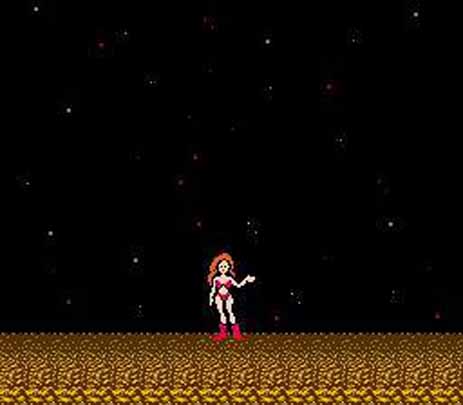
Ending scene of original Metroid

Even storytelling can be used as a reward where players see a different dialogue scene or ending based on their in-game accomplishments. A good example is the Metroid games that have always offered a better ending depending on how much the player completed. The original Metroid’s big reveal that Samus was actually female could only be unlocked by the best.

Start With A Core Mechanic And Build From It

Good game designers analyze and deconstruct every game they play. In doing so you will realize that most games can be narrowed down to a few key mechanics, if not one. If this core mechanic were to be changed or removed entirely from the game, the experience would fall apart and be a complete mess.

The reason it’s important to build up from one or a few game mechanics is because games tend to change during development. By focusing on one main idea that you know is fun, you’re less likely to end up with a Frankenstein game that tries to combine multiple cool ideas that don’t work well together. Show us a game that’s boring and derivative and we’ll show you a game that didn’t follow through on the initial game mechanic.

Mayan Temple in Minecraft

All it takes is one look at some of the best games of all time to see strength of this principle. The original Super Mario Bros. was a hit because Nintendo focused on mobility, which meant jumping and moving forward. It wasn’t until the platforming aspect of the game was nailed down that they started adding power-ups, different enemies, secret pipes, and more. Minecraft is another excellent example where Notch focused on one thing— building. If he hadn’t stuck to this core mechanic, perhaps his creation would not be the phenomenon it is today.

Easy to Learn, Hard to Master

Every designer strives to make a game that is accessible and easy to start playing. Great game designers also want their players to remained engaged and keep coming back. The ultimate is when the game is easy to learn but hard to master. This is the reason a game like chess, which has been around for over 1500 years, is still enjoyed today. While anyone can learn how to play and what each piece does, those who want to master it can continue learning new strategies for a lifetime.

With the abundance of casual games, this principle becomes more important than ever to making a game successful. The mobile market has become rife with poorly made or direct copies of existing games. Because of this, it is common for gamers download a game and play it for a few minutes before deleting it and moving onDesigners who want to cut through the clutter work to make games that hook players quickly (easy to learn) but keeps them engaged and telling their friends (hard to master).

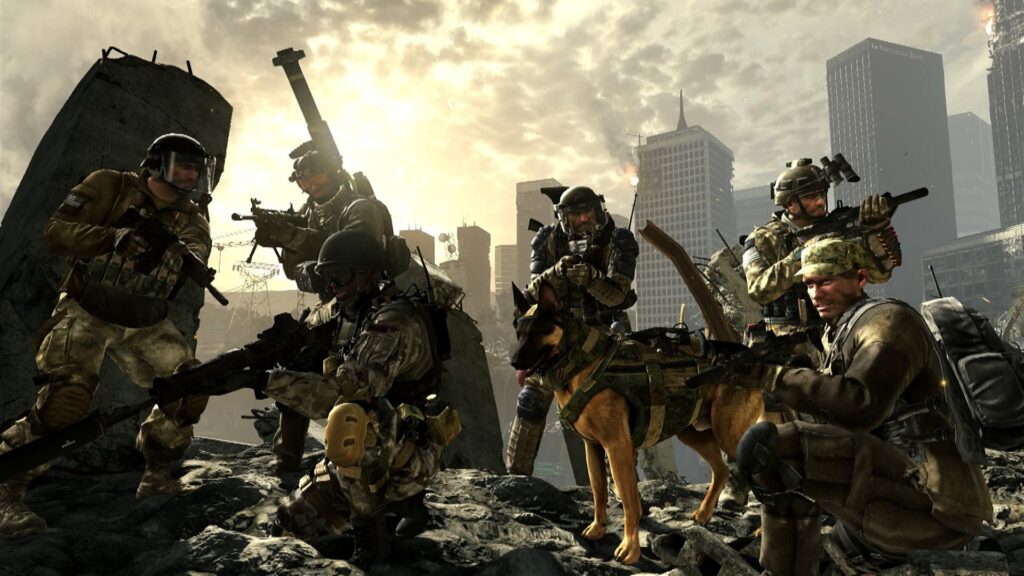
Call of Duty Ghosts

We’re not saying there isn’t room for games that immediately toss you into a brutal world, as Japan’s FromSoftware has shown us with their titles such as their King’s Field series and Souls series. However, most popular game series are filled with titles that people of any skill level can get into and eventually see a reason to stick around. Call of Duty has maintained its dominance for years because it’s easy to learn how to move, switch weapons, shoot, etc. At the same time, skilled players can hop into the multiplayer and get better and better.

[su_note]Our 16-month accelerated AFA in Game Design Program teaches students the fundamentals of design, artwork, and storytelling for video games through a hands-on approach. Learn more on our Associate of Fine Arts in Game Design page.[/su_note]

Three Types Of Tabletop Games That Can Make You A Better Video Game Designer

Of all the perks that come with being a video game developer, playing lots of video games is near the top of the list. While most people play them for relaxation and entertainment, designers play to study the artistry of their peers in order to craft better play experiences themselves. To do this a designer doesn’t have to be a highly skilled player to glean information you can incorporate. All it takes is an eye for identifying what works, what doesn’t, and why during your gaming sessions.

Tabletop games likewise can be an amazing source of knowledge and inspiration – particularly in the realm of play mechanics. The following are three kinds of tabletop games that can provide invaluable insights and lessons to digital designers.

Thinking Ahead with Strategy Games

Examples: Chess, Risk, Warhammer 40,000, Diplomacy

Tactical and real-time strategy have become two of the most popular game genres. From Fire Emblem and Starcraft to Total War and X-COM, there’s just something about planning a strategy and executing it to earn a victory. But before all these amazing video game titles existed, players waged war with only cardboard boards and plastic game pieces.

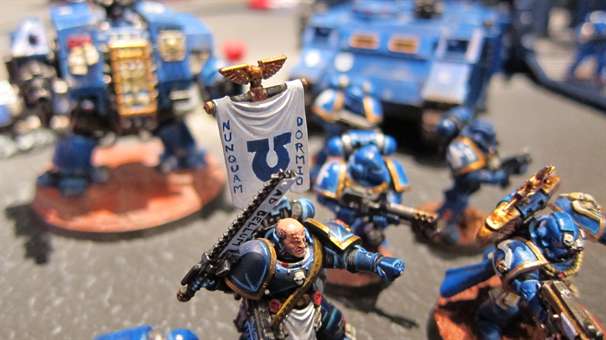
Warhammer 40,000
Warhammer 40,000

Tabletop strategy games have remained popular for decades because they require strong decision-making skills and situational awareness to win. A player who jumps into a game of Chess without considering each decision carefully will be quickly defeated by an opponent who thinks ahead and has a plan. The games that provide players autonomy and creative problem solving via choices and tactics they can employ tend to be the most fulfilling.

Tabletop strategy games can also use player-to-player social interaction as a key component. Diplomacy, for example, has players negotiating to form alliances and attack other players. This type of play (which is hard to incorporate into multiplayer online games for interface and technical reasons) represents but one example of how a table top game can inspire digital designers to innovate. For example, a digital designer may be exposed to player to player deal making via Diplomacy and then be inspired to figure out the interface and technology to bring this to a networked multiplayer game.

Telling A Story with Tabletop RPGs

Examples: Dungeons & Dragons, Call of Cthulhu, Numenera

Role-playing games have always played a prominent role in the video game industry. Franchises like Final Fantasy and Pokemon are known across the globe as hundreds of RPG titles release each year. Dragon Age: Inquisition, Skyrim, Mass Effect 3, and The Witcher 3: Wild Hunt are all titles with RPG elements that happened to win numerous Game of the Year awards.

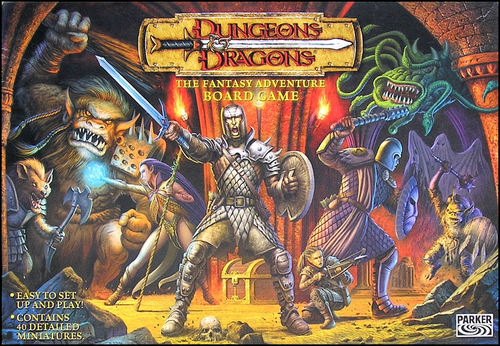
Dungeons & Dragons board game

Of course, it’s likely that the RPG genre would be very different if it weren’t for the tabletop RPGs that came before them. Dungeons & Dragons, for example, blew everyone away back in the day with its fictional settings and ability for players to take on the role of a fantasy character. Tabletop RPGs did more than just introduce things like experience points and character classes—they showed us that games can be a powerful storytelling tool.

If you’re an aspiring RPG designer looking to create breathtaking characters, stories, and worlds, definitely play at least one of the many great tabletop RPGs out there today. You’ll find yourself having a memorable role-playing experience as you participate with others and use your imagination more than you ever would playing a video game.

Simple Rules with Paper-and-Pencil Games

Examples: Connect 4, Tic-tac-toe, Dots and Boxes, Hangman, Battleship

Although it isn’t the most fun or exciting way of looking at them, video games are essentially a huge collection of rules. Glitches and technical bugs aside, every game has an arrangement of restrictions and laws. For example, in a Mario game you can only ever jump as high as the programmers allowed you to. Mario’s jump height is a rule with a specific number programmed by the developer but not disclosed explicitly to the player.

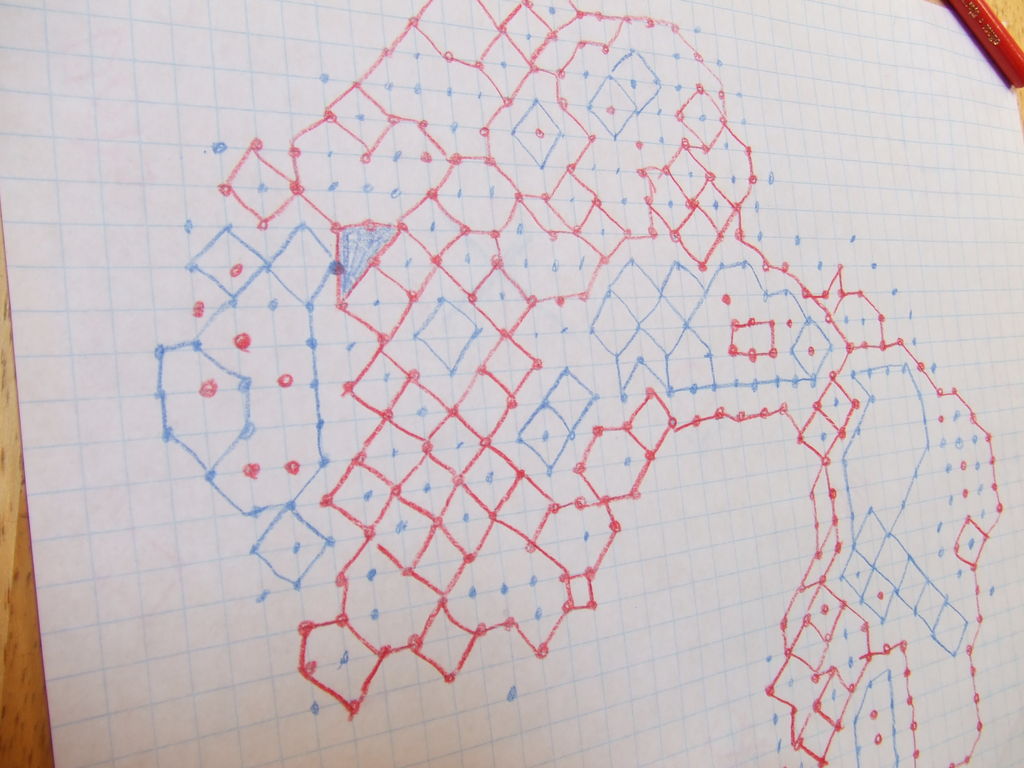
Paper-and-pencil game

That is what makes paper-and-pencil games so great. Thanks to well-designed rules, fun can be had from drawing Xs and Os on a 3×3 grid (Tic-tac-toe) or taking turns calling out grid space (Battleship).

Since making rules is part of being a game designer, playing paper-and-pencil games is common in college game design courses. They offer the most bare-bones example of how rules serve to make a game, and how changing them can make the game better or worse. Being able to prototype early game design ideas with only a paper and pen is also a huge skill every game designer needs.

[su_note]Learn the skills you need to succeed as a game designer at the Game Design School at the New York Film Academy by clicking here.[/su_note]

Common Misconceptions About Game Design And Development

If there’s one thing that the internet and social media have shown us, it’s that people really like expressing their feelings and opinions. Take a look at the page of a struggling sports team and you will likely see a legion of fans presenting their infallible ideas for making the team great. And although many of them do, in fact, love the sport, it’s safe to say that few (if any) of them have any sports management experience at all.

Even though more people than ever are playing video games today, only a small percent know what goes on behind the scenes. Perhaps this is why many gamers believe some of the following misconceptions surrounding the industry.

You Need A Programming Background To Be A Great Game Developer

Since video games are digital and thus created with the use of computers, programming is a useful skill to have. There’s great value in a game designer who not only presents ideas but also understands the technical aspects of implementing them. The late Satoru Iwata himself, who rose to become the president of Nintendo, got his start as a programmer. But the truth is, there are plenty of game designers working in our industry that have little to no programming knowledge.

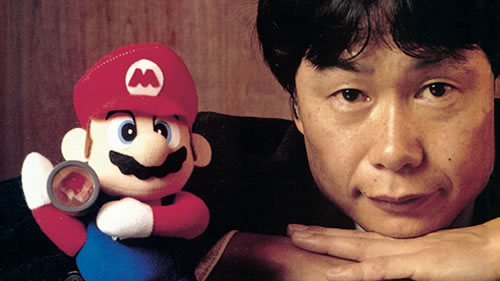
Shigeru Miyamoto and Mario figure
Shigeru Miyamoto with Mario in 1995.

In fact, some of the best game developers of all time did not study computer programming before breaking into the industry. For example, Nintendo’s Shigeru Miyamoto and Eiji Aonuma were hired by Nintendo as graphic artists before moving up to bigger roles. Hideo Kojima and Hironobu Sakaguchi, the men who helped turn Metal Gear and Final Fantasy into powerful franchises, studied scriptwriting and film directing.

Everyone Who Works In The Video Game Industry Is Rich

It’s easy to see why people think that everyone who makes games for a living owns mansions, yachts, and sports cars. News sites and social media pages talk about the giant franchises like Call of Duty and Grand Theft Auto, including the millions of units sold and billions of dollars made.

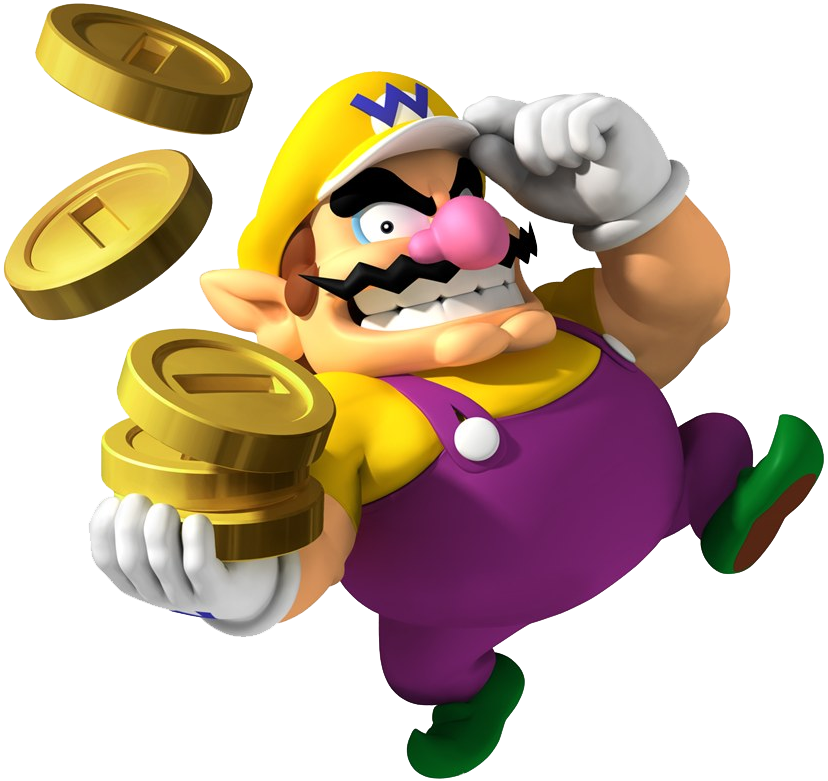
Wario with coins

The reality is that only an elite few who participate in the revenues from hit titlesup with enough cash to swim in. That said, game developers do in fact get paid pretty well. While you may not be able to buy a Lamborghini or private island, you will likely make a fine living while doing what you love— creating fun for others.

Good/Bad At Video Games = Good/Bad At Game Design

One common misconception among gamers is that because we are very good at a game, we automatically think we’d be good at making them. In turn, those who stink at games worry about their ability to make something great. Either way, the average gamer rarely understands the demanding process that goes into turning an idea into a fully-functioning game. So if you’re someone who wants to make games one day but aren’t as good at playing them as all your friends, fret not!

Professional Video Game Players

Of course, it does happen that pro players are sometimes hired to be designers. For example, Halo 5 developer, 343 Industries, hired Eric Hewitt (GH057ayame), one of the top Halo players in the world, to help design the new title’s multiplayer portion. Also Blizzard Entertainment hired pro Hearthstone player, Ryan Masterson (Realz), as an Associate Game Designer late last year. It is extremely rare. The norm is for people who build their skills making games (not necessarily playing them) to rise to the top in the game industry. Plenty of game developers can freely admit that although they’ve created some fantastic experiences, they suck at playing games themselves!

[su_note]Learn the skills you need to succeed as a game designer at the Game Design School at the New York Film Academy by clicking here.[/su_note]

The Lessons We Learned From Popular 2015 Video Games

Gamers are a blessed bunch. Each year, countless titles on numerous platforms release to help us have fun and escape from reality for a while. Of course, only a few end up being the best-selling games that everyone ends up talking about. Whether we like it or not, these games tend to have the most influence when it comes to where the industry is headed next.

That is why a year ago we talked about some things we learned from the top selling video games of 2014. Now we’ve taken a look at top titles of 2015 to see how the industry has grown as well as areas in need of serious improvement.

The Witcher 3: Wild Hunt—Worlds Are Only Getting Bigger And Better

In 1998 a little game called The Legend of Zelda: Ocarina of Time was released. While its gameplay and graphics (at the time) were impressive, it was the world that captivated us. Never before had we entered a place expansive enough to explore for hours on end, hoping to run into yet another secret around every corner. And while Ocarina of Time is still a game everyone should play, its world is nothing compared to the landscapes and settings of today’s adventure games.

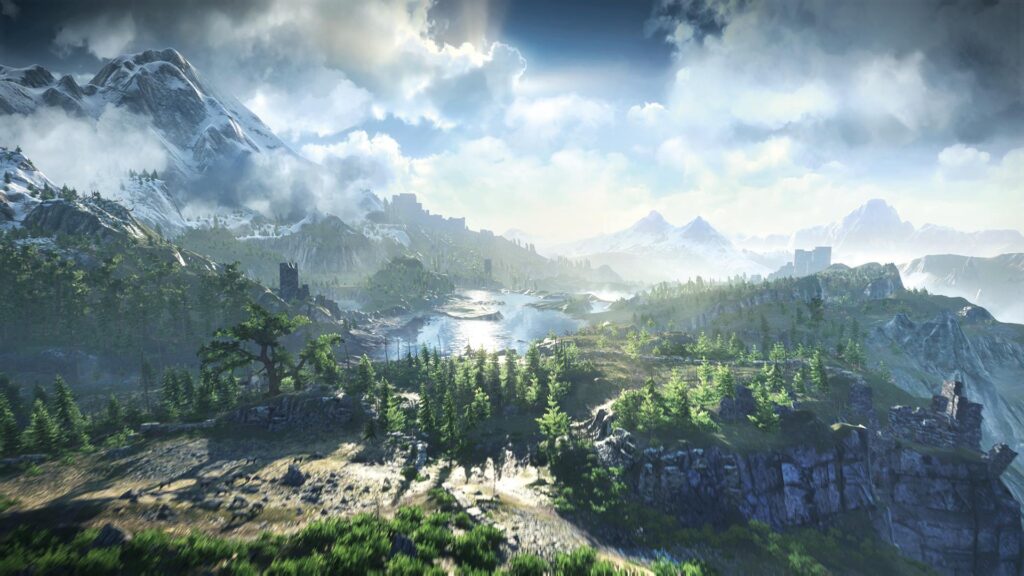
Witcher 3 world

The winner of numerous awards, The Witcher 3: Wild Hunt blew us away last year with one of the most stunning video game worlds we’ve ever encountered. You could potentially spend hundreds of hours visiting every area of the game. Thanks to advancements in technology, we’re now adventuring through places that aren’t just big but also filled with more detail than ever before.

Batman: Arkham Knight—PC Gamers & Broken Versions Of AAA Titles

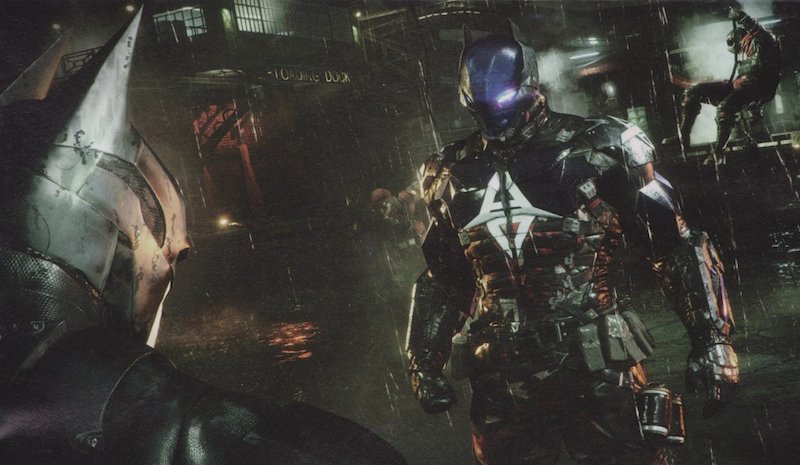
Rocksteady has made a name for itself with the Arkham series, which is why Batman: Arkham Knight was one of the most anticipated titles of 2015. Although it didn’t feel as big a leap forward as Arkham City was, it was still praised for its fantastic combat, excellent storytelling, and memorable level design. But while PS4 and Xbox One players smoothly sped through Gotham in the Batmobile, PC gamers were being bombarded by a ridiculous number of technical issues.

Arkham Knight

The winner of numerous awards, The Witcher 3: Wild Hunt blew us away last year with one of the most stunning video game worlds we’ve ever encountered. You could potentially spend hundreds of hours visiting every area of the game. Thanks to advancements in technology, we’re now adventuring through places that aren’t just big but also filled with more detail than ever before.

Star Wars Battlefront / Halo 5—We Like Multi AND Single Player

There are a number of ways Star Wars Battlefront and Halo 5: Guardian are alike. They’re shooters, were highly-anticipated titles, employ similar sci-fi elements, etc. Both games, especially Halo 5, even provided some of the best multiplayer experiences of the year. Unfortunately, these two great games also made the same mistake of releasing with a lackluster single-player experience.

Halo 5 screenshot

To be fair, Halo 5’s campaign was OK. The problem is that the story was hyped up to result in an epic showdown between two Spartan teams led by arguably the best of the best—Master Chief and Spartan Locke. Instead we got a convoluted narrative that required reading the tie-in books to understand. As for Battlefront, we got a few decent game modes and no single-player campaign whatsoever. Gamers have made it clear that while we love multiplayer, there will always be a desire for an awesome story-driven campaign as well.

Super Mario Maker—Gamers Really Like Making Things

If there’s one thing Mojang’s game showed us, it’s that players enjoy using their own creativity to build things from time to time. Minecraft is just that—a game that skips the storylines and next-gen graphics and instead lets people go wild with their imagination. Such is the demand for this game that it has even arrived on a console that was said would never support Minecraft.

Super Mario Maker screenshot

We’re of course talking about the Wii U, which had a pretty poor year in 2015 but still managed to land a few hit titles. One of them was Super Mario Maker, a Nintendo title that had a bigger reception than any of us could have imagined. For weeks it was impossible to visit a gaming news site that wasn’t talking about making and playing courses. While it would be great to see other similar Nintendo titles release, other game developers should also realize that gamers are always up for modes where they can build their own levels, worlds, etc.

[su_note]Learn the skills you need to succeed as a game designer at the Game Design School at the New York Film Academy by clicking here.[/su_note]
How To Find A (Good) Film Producer

Or, more importantly, how do you find the right producer for your film?

It’s a daunting prospect for any filmmaker, let alone for independent filmmakers who may not have a huge collection of previous box office successes with which to market themselves. And in this scenario, finding a good producer is even more importantwhile just about any producer may be able to get a production financed, will they be able to go the extra mile and market it successfully to the right audience?

Getting the movie made is only half the job, and getting it seen is arguably the more important half.

And of course, this is a two-way street. Simply finding a producer who you feel would be perfect for the project is no guarantee that they’ll want to get on board; as writer and director Ryan Koo puts it, “Finding a producer is like dating: you need to spend some time getting to know the other person, and you’re not going to like everyone you meet. Nor is everyone going to like you back.”

Assuming you’ve already crawled through IMDB and the like to construct a longlist of possible matches, here’s the NYFA guide to:

Finding the Right Film Producer

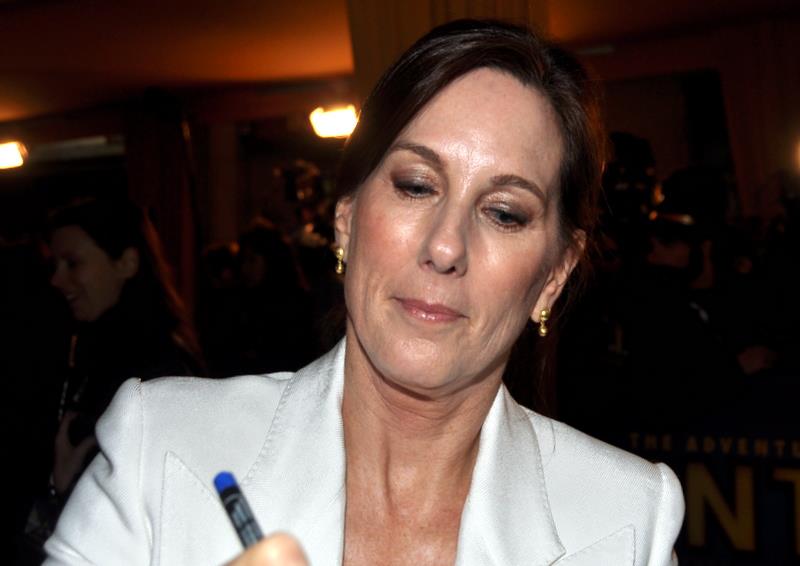
Super producer Kathleen Kennedy.
Super producer Kathleen Kennedy might not be the right producer for your microbudget feature.

The operative word here is ‘right’, and ultimately, only you can decide on who qualifies for that distinction but the following tips will at least help you begin whittling down the list in search for ‘the one.’

Avoid Pigeonholing

If you’re looking to craft a movie which centers around the theme of, say, addiction and substance abuse, don’t discard any and all producers who have never tackled the topic before since it doesn’t necessarily mean they don’t want to undertake it.

Also consider that just because a producer has worked on a number of titles similar to your own doesn’t mean they’ll want to retread the same ground againin fact, the converse is usually true.

Finding a Kindred Spirit

Given all of the above, it’s often wise to ignore producers who have worked in similar genres or themes and instead focus on those who share the same essence (for what of a better word.) Do they draw from the same influences? Approach storytelling in a similar manner? Do the kind of work you admire as an independent filmmaker? If their previous work makes it clear that they share the same sensibilities as you when it comes to making movies, you’ve potentially got a match.

Do Your Homework

This will come naturally in the process of finding out if they appear to be on the same page as you creatively, but you’ll also want to dig a little deeper and find out where they are in their career. It’s not uncommon for new filmmakers to make the mistake of trying to contact those who have retired from the industry, and it’s also a poor use of time to reach out to someone now working on multi-million dollar productions expecting them to drop everything to work on a micro-budget movie. The same goes for most producers who are working full time for a particular studio.

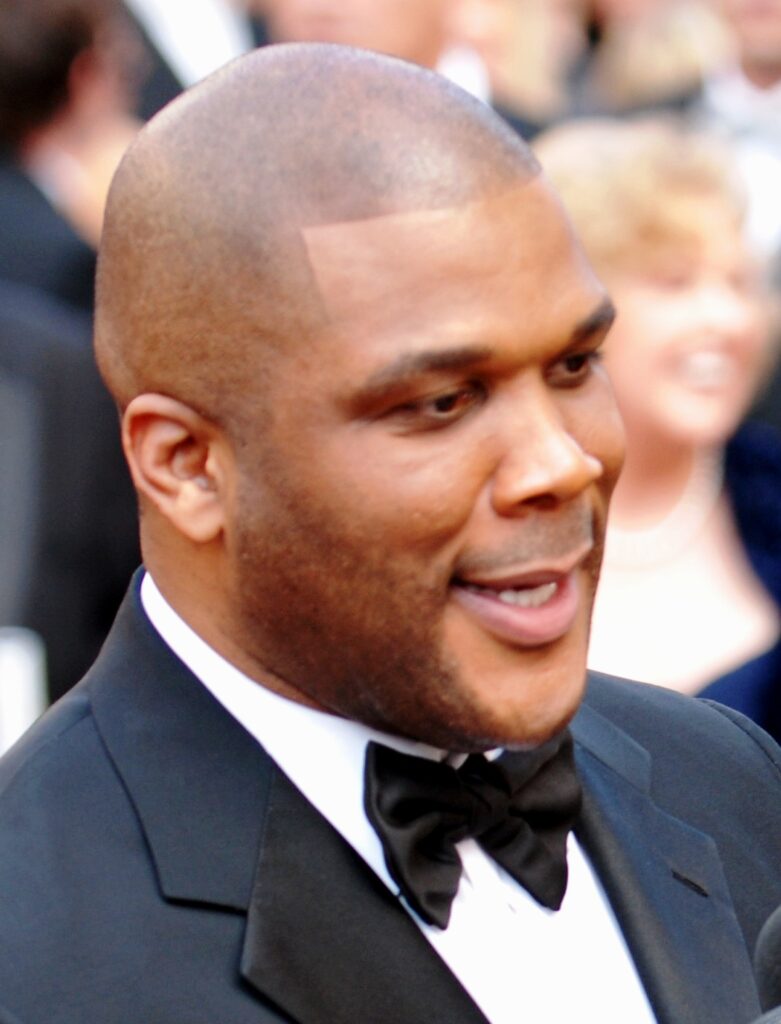
Tyler Perry
Tyler Perry’s Atlanta-based Tyler Perry Studios offers opportunities for filmmakers from the area.

Location, to a lesser extent, is also a factor for considerationwhile the producer being based on the other side of the planet isn’t necessarily a locked door, it makes sense to focus your search (at least initially) to your local area.

Word of Mouth

Tying into the idea of casting your net locally, never forget the power of a personal recommendation. Proportionately speaking, most matches between directors, screenwriters, and producers are forged thanks to personal introduction and very few arise from random emails fired into the aether.

Attend Film Festivals

Don’t feel like you’ve got any contacts to hit up? Get yourself to as many film festivals and screening events as you possibly can, and that’ll soon be rectified. You’ll be surprised at how many golden opportunities arise in extremely strange ways…casually mentioning you’ve got a killer screenplay about the civil war to a key grip at an after party who then goes on to mention it to an agent who just so happens to have a client looking for a writer who’s got a killer screenplay about the civil war, et cetera.

Producers Reception 2015 Tribeca Film Festival
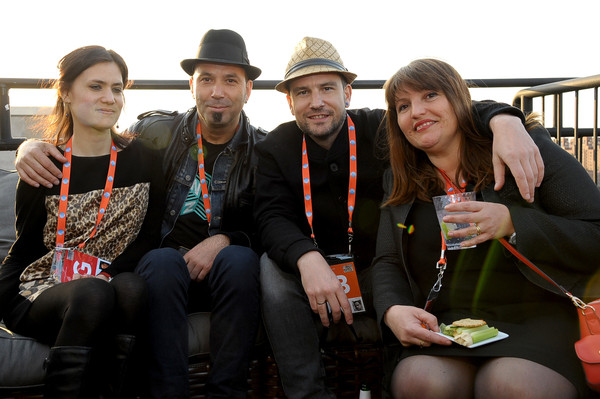
A group of producers at the 2015 Tribeca Film Festival’s Producers Reception.

These million-to-one occurances happen nine times out of ten in an industry as close-knit as filmmaking, so get out there and start making ripples (while being courteous to everyone you meet, given that you don’t know who may be the catalyst to turn one of those ripples into a wave.)

And most importantly of all…

Be Courteous to the Producer

As a screenwriter or director, you’ll no doubt be familiar with that dreaded line: “Oh, that’s neat! I’m something of a writer myself…will you read my screenplay?”

Effectively this is what a producer gets on a daily basis, ad nauseum. And while it is his or her job to read and select screenplays, it doesn’t negate the fact that when you email a producer you’re asking them to give their time for free.

You may have already figured out that they’re a good match for you, but you should strive to make it as easy as possible for them to do the same. A full script is industry standard, but becoming increasingly popular is the idea of a “presentation package.” This typically includes a director’s statement, mood reel, any stills or promo shots available (compiled into a ‘cookbook’), and all related contact info and social media links…and definitely make sure you’ve got a strong logline!

This generally only applies to outreach that has been previously welcomed; with unsolicited inquiries, a simple two-paragraph email explaining the movie and why you’re contacting that particular producer is preferable. No need to send the full screenplay until it’s invited.

Above all, keep your initial contact brief, to the point and free from any kind of gimmickry. Even if things fall through, if your professionalism leaves a lasting impact it may earn you a coveted recommendation.

With a bit of luck and perseverance, you’ll hopefully find a perfect match with your producer-to-be. Best of luck!

PS: Before you write a single email, be sure to get intimately familiar with what a producer actually does! Our previous guide on the topic is a great place to start your research.

[su_note]Learn more about the School of Producing at the New York Film Academy by clicking here.[/su_note]