How To Form A Solid Indie Game Development Team

It’s amazing just how far the gaming industry has come in terms of who can actually make a living creating games. For the longest time, the idea of forming a team of developers to create a profitable game without financial support from a game publisher was unheard of. These days, however, indie gaming is on the rise and even the big dogs with years of AAA experience are jumping into the independent game dev crowd.

If you’re an aspiring game developer then chances are you’ve thought about a cool game idea you wouldn’t mind seeing come to life. Of course, you probably don’t have all the talents or time necessary to develop this game yourself. That’s when the thought of starting your own small team of indie developers entered your mind, just like it did to some of the most successful indie developers out there.

The fact is, developing a game involves several roles that are rarely done by one person. Since you may not possess all of the needed talents – and each may take a lifetime to master – you should find others to help you.

So if you’re thinking of forming your own independent game development team, be sure to check out the following list of common roles. Although some of them can be overlooked depending on your game, such as if your game has no writing or audio in it, almost all of them are talents you should consider to increase the chances of your game being a success.

And even if you’re not thinking about starting your own team, it doesn’t hurt to see what most indie devs are comprised of. Maybe it will help you focus on a particular talent for you to start sharpening so you’re more than ready when you try joining someone else’s team.

Programmer

Your idea can be the best thing ever, but without a programmer it will probably never come to life. A computer programmer is the guy or gal that will spend most of their time developing codebase and the tools for the game. Since video games are electronic entertainment, no programmer usually means no video game.

Note that a programmer will usually be doing more than just coding the game while in an indie team. They’ll also take the responsibility of debugging and beta testing to make sure the game is polished and acceptable.

Preferably you’ll want more than one programmer to take on different tasks. However, plenty of indie games have been made with only one programmer so it mostly depends on the size and scope of your game.

Designer

More often than not, everyone in a small indie team contributes to the game design. In fact, usually someone who is already serving a different role is also the game designer. This can be the programmer, an artist, or even a writer.

Of course, it’s good to have a dedicated designer that has the final say on decisions and keeps the design loyal to the original idea. This involves making sure that any new ideas that will be implemented actually add to the experience and make it more fun.

The designer should also maintain some kind of game design document for use by the rest of the team. If they ever need a resource to look at, the game design document will be ready and updated.

Artist

Artists are the role that you’ll often find more than one of in an indie game team. This is because creating art takes time and will be what the players see as they play, making it a vital element to your project.

Working closely with programmers, designers, and even writers, the artists will produce the visuals of the game. This may start out with concept art before moving on to content that will appear in the game, including backgrounds, animations, etc.

The artists will also make sure the art they produce meets the technical requirements and captures the feel of the game. Preferably you’ll want more artists if your game demands it, such as if you’re making a 3D platformer. But if you’re making a retro platformer, one artist can take care of crafting the pixel art and animations.

Sound Designer/Composer

Since sound is incredibly important to most video game experiences, you’ll want someone that knows what they’re doing. The sound designer/composer will be in charge of creating all the sound effects and music for the game.

Sound can make all the difference as it is a vital element for giving atmosphere to a game. Even if it isn’t a horror title that needs scary music to enhance the experience, you’ll still want a catchy tune to go along with your puzzle game or action-platformer.

Although there are plenty of aspiring game sound designers out there, make sure you find a good one that has done similar work in the past. For example, you’ll want to find someone that has already done chiptune music for another game if that’s the music style you want for yours.

Project Manager

Just like the game designer, the role of project manager is usually taken by someone that’s already providing a different talent. Whoever it is, the project manager’s responsibility is to make sure the team works fast and efficiently.

The project manager will be the one that sets milestones for the team and sees to it that they are achieved in a reasonable time frame. This involves motivating team members that fall behind and making sure everyone is performing their tasks.

Whether you have one person as the sole project manager or someone already on the team takes the role, they’ll need to keep everyone motivated and on schedule. This is because it’s easy for indie developers to fall behind or miss milestone deadlines since they don’t have a publisher or higher entity breathing down their necks.

Quality Assurance / Tester

Ideally, everyone on the team should be tester and responsible for reporting bugs that they find with each new build. This makes sense since you’ll all be playing the game constantly as development progresses anyways.

It’s also not a bad idea to have someone on board specifically dedicated to finding bugs. This can be friends, people that supported your crowdfunding campaign, or anyone that can play the game and tell you in detail what went wrong.

Worth mentioning is that you may want a non-programmer on your team doing QA. This is because many programmers have a hard time overlooking issues in the code they spent hours working on.

Producer

A producer, which can also be someone that’s already on the team, will be the one who manages the business side of things. Unless you’re just making the game for fun, you probably want to sell your game and make some cash off of it.

The producer will take care of the marketing strategies, cash flow summary, and economic assessment. How much will the game cost to make, sell for, and make in profit once it launches? These are all questions the producer should find answers to.

Similar to project manager, the producer also maintains schedules and budgets as well as make sure milestones are hit on time. They’ll also act as your liaison if you ever do end up in talks with a publisher or someone looking to fund the development of your game.

Writer

One mistake many indie developers make is giving writing duties to an artist, programmer, or someone else on the team. Although it’s true that anyone can write or tell a story, you’re better off finding someone that has spent years sharpening their writing and storytelling skills.

The game writer will usually be responsible for coming up with the storyline or premise of the game. This can include creating a plot, characters, setting, and other narrative elements that may be needed. If your game is very story-driven, has dialogue, or a lot of in-game text, the writer will make sure it is all captivating and enhances the game experience.

We can’t stress how important it is to collaborate with a talented creative writer if you plan on having a lot of text or dialogue in your game. There’s nothing worse than an indie game with typos, terrible dialogue, or a boring story, even if the gameplay is decent.


Image Source

Why Ubisoft Doesn't Want To Be The New EA

You’d think that being compared to one of the more successful game companies would be a good thing.

Not only has EA remained afloat in one of the most competitive entertainment industries, but it also owns several franchises that you probably love – such as Madden NFL, Mass Effect, Dead Space, Battlefield, FIFA, and Dragon Age.

Despite providing great games for nearly three decades, EA has nonetheless been the unfortunate winner of “Worst Company In America” twice now.

Granted it was mostly anti-fans that did all the voting, but it still goes to show just how bad EA’s reputation has become. Day-one DLC, massive layoffs, terrible game launches, and the habit of acquiring small developers to prevent them from serving as competitors are few of the many reasons on the list.

Like any company that is considered worse than the much-hated Walmart corporation, EA has recently tried working on their reputation with some success. Hiding sales data of Titanfall aside, EA has stayed out of the negative spotlight for most of 2014 and even pleased fans with the new and acclaimed Dragon Age: Inquisition.

Now there’s a new company serving as the target of ireful gaming fans, and it too has plenty of popular game franchises.

Ubisoft is behind some of today’s most successful game series, including Assassin’s Creed, Far Cry, Just Dance, and Splinter Cell. Of course, it seems like the French game developer/publisher has finally pushed most gamers over the edge by releasing two mediocre games at the same time – although it didn’t start there.

A Dual Release and E3 Deception

Both Assassin’s Creed: Unity and Assassin’s Creed: Rogue released in November of 2014, and both have been the victims of public outrage due to low-scoring reviews and glitches.

For many, AC: Rogue serves as a huge step backwards for the series – enough that gamers feel it was just a quick cash-in title for those that still haven’t upgraded to PS4 and Xbox One consoles. Even worse is AC: Unity, a next-gen title, is plagued with ridiculous glitches and game breaking bugs.

Releasing two arguably mediocre games at the same time wouldn’t be such a big deal if last year’s Assassin’s Creed IV: Black Flag wasn’t so amazing. Ubisoft focused on one title for two console generations and provided one of the most memorable titles in the entire series.

The fact is, Ubisoft has been earning itself the nickname of “The New EA” since the E3 when they overdressed Watch Dogs footage to make it look much better than the final product would. Most developers do this, yes, but Ubisoft’s attempt was slightly more exaggerated.

They also gave a silly excuse for not featuring playable female characters and locking AC: Unity at 30 FPS, which didn’t go well with the public.

Worse still is Ubisoft’s stipulations for providing review copies with AC: Unity’s release. Basically, game critics that received a review copy could not release their review to the public until 12 hours after the game’s midnight launch.

In other words, Ubisoft knew their games weren’t quite polished (or good) and wanted to avoid losing potential buyers – before they could think twice about buying a $60 game that just isn’t worth its price tag.

[su_note]Create the next big game that’s worth every penny. Learn more by visiting the New York Film Academy’s game design school (campuses in New York City and Los Angeles). [/su_note]

$60 For Part Of A Game

Just like with EA, Ubisoft has begun to heavily introduce microtransactions into their games.

One of EA’s most recent blunders was with Dead Space 3, which gave players the choice of either tediously grinding for parts to make specific weapons or buying them instead. Fans have been left to wonder how much better the third entry in the Dead Space series could have been if EA didn’t add these ‘downloadable content’ features.

Ubisoft has started using this largely-disliked idea by offering $99 microtransaction bundles with AC: Unity. Suffice to say, people aren’t too happy with their attempt to squeeze more cash out of gamers that probably paid full price for the game.

Even if no one is forcing us to buy the $99 bundles, it’s still quite annoying to see a successful developer start implementing these ideas just to make some easy cash.

Of course, those that defend microtransactions will bring up the fact that developing games is pretty expensive. So why shouldn’t developers try to make more money this way?

The problem is that instead of simply releasing better games to make more money, they are giving us unpolished games with microtransactions. After all, the Assassin’s Creed franchise has given us amazing experiences in the past without the need for paid downloadable content.
The Same Hole

Just like EA did the past few years, Ubisoft is quickly losing consumer interest and is already the butt of many gamer jokes. From deceptive E3 footage to shifty review embargos, gamers are starting to distrust the French developer/publisher, which is never a good thing.

Ubisoft unfortunately shows no signs of trying to turn things around. For example, the Wii U version of Watch Dogs will release in November of 2014 for $59.99. Do they really expect people to pay that kind of money for a game that released half a year ago on other consoles? If they wanted to gain the favor of their small-but-important Wii U fans, you’d think they’d drop the price to something more reasonable.

Instead, Ubisoft will blame everyone but themselves when Watch Dogs for Wii U barely sells even though everyone saw it coming. In an industry where a little honesty and loyalty can go a long way, Ubisoft is instead digging themselves into the same hole that EA is still struggling to crawl out of.

7 Female Photographers You Really Need To Know

When you think of the most famous photographers of all time, who comes to mind? Often names such as Ansel Adams, Richard Avedon, and William Eggleston come to mind first. What about all of the notable female photographers? Dorothea Lange, Julia Margaret Cameron, and Cindy Sherman are all famous photographers who are well-praised for their affect on the photographic industry, as well as the more recent Annie Leibovitz and Rineke Dijkstra. While the lists of “masters” commonly name all of the notable male photographers, there are plenty of female photographers who have and will continue to take the photographic industry by storm. With female equality becoming more and more apparent each and every day (at least here in the United States), it’s important to bring light to those female photographers who don’t get enough exposure in the art world.

Diane Arbus

Born in 1923, Diane Arbus is famous for her sometimes controversial black and white portraits of people living on the fringes of society. She liked to photograph unconventional subjects, such as drag queens, twins, clowns, and – most notably – a little boy holding a hand grenade. Most of her work was taken on a twin-lens reflex Rolleiflex camera, and some was taken on a twin-lens reflex Mamiya camera. The square crop is seen in the majority of her work.

Diane Arbus

Julia Margaret Cameron

Born in 1815, Julia Margaret Cameron became a photographer very late in her life – at age 48 – and her photographic career only lasted 11 years. Even so, her work is widely praised in the photographic world, and her dreamy, soft portraits were inspiration for many female photographers to follow. Her subjects were all humans, and her work is characterized by a soft-focus and close crop. Since she was working in the 1800s, each of her subjects had to sit very still as she laboriously completed the photographic wet-plate process.

Julia Margaret Cameron

Dorothea Lange

Born in 1895, Dorothea Lange was both a documentary photographer and photojournalist, working mostly during the Depression-era for the Farm Security Administration. Her work is a collection of beautiful black and white images that illustrate the life of farm workers and their families in the Western United States. If you’ve ever taken a photography class (or, perhaps, even if you haven’t), chances are you have seen the photograph taken by Dorothea Lange below. “Migrant Mother” is her most well-known photograph, although she took many other influential images throughout the course of her career. “Migrant Mother” shows a starving mother and her two sons, who were all very willing to have their photograph taken. Because of this photograph, the government provided aid to the starving people in the camp.

Dorothea Lange

Mary Ellen Mark

Mary Ellen Mark was both in 1940, and is well-known for her portrait photography, advertising photography, and photojournalism. Each of her photographs are stunning in and of themselves, and each separate image tells its own story. She shoots many of her photographs with a 20×24 Polaroid camera, which produces exceptionally detailed, large-scale photographs. Since she doesn’t have the chance to post-process her images, each shot has to be perfect as soon as the shutter is clicked. This in itself speaks volumes about her ability to perfectly capture a scene and use lighting to her advantage. Being a very versatile photographer, she has photographed both famous people and ordinary people who would otherwise not get their story out to the world.

Mary Ellen Mark

Cindy Sherman

Cindy Sherman, born in 1952, is a photographer most well-known for her conceptual portraits, most notably her Untitled Film Stills series. Instead of only being a female photographer, she uses this identity to question the representation of women in the media, society, and art through her photographs. In her series Untitled Film Stills, she takes a series of self-portraits that portray her as a variety of different actresses in a variety of different imaginary films. Throughout her work, she challenges traditional stereotypes of women.

Cindy Sherman

Rineke Dijkstra

Rineke Dijkstra was born in the Netherlands in 1959. The majority of her work is characterized by single portraits that make up a whole. As in her Beach Portraits series, she sets people up in the same location and photographs them in similar positions. This way, the only aspects of her photographs that differ series to series are the humans themselves. She has also taken photographs of Israeli soldiers, portraits of people in a park, bullfighters, and mothers. Her subjects are often seen facing the camera directly while standing, and the background tends to be free of any distractions. This straight-on, simplistic style makes her photographs easy to identify.

Rineke Dijkstra
Rineke Dijkstra

Annie Leibovitz

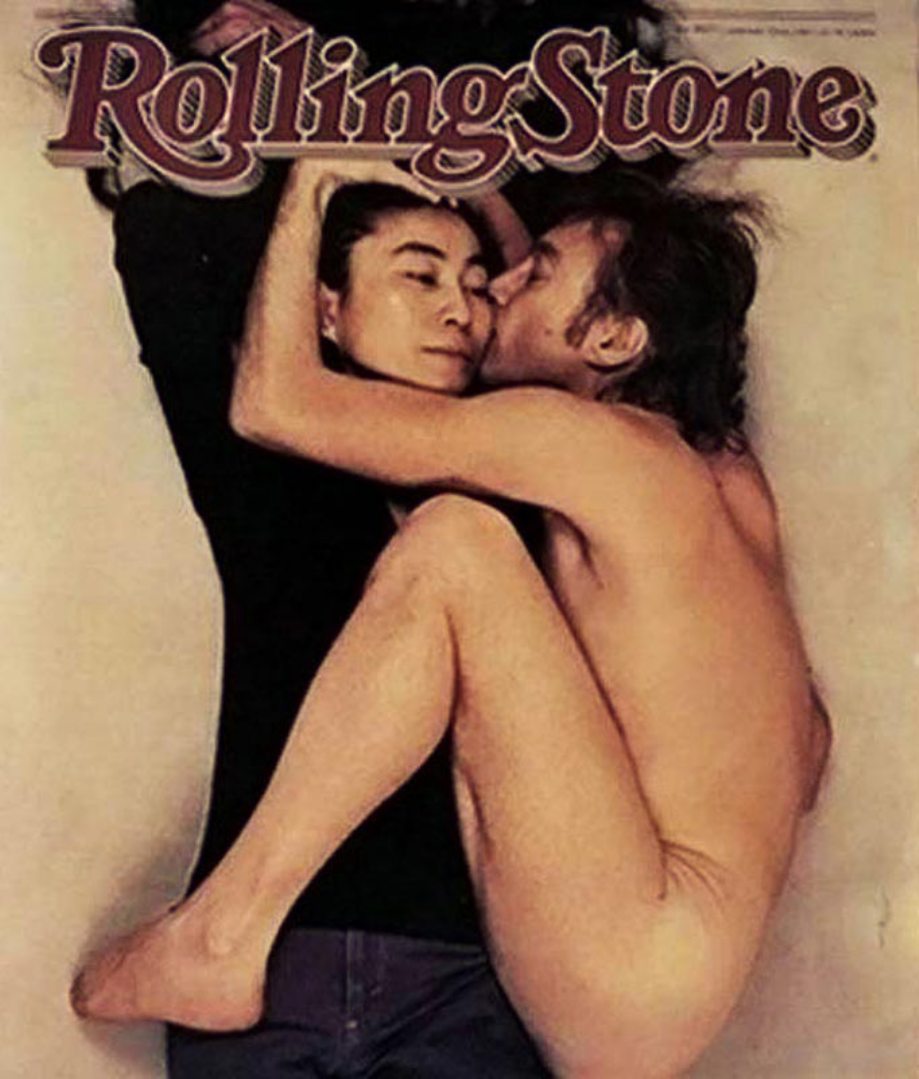
Born in 1949, Annie Leibovitz is one of the most famous female photographers still alive today. She began her photographic career by working for Rolling Stone shortly after it launched, and in the ten years she worked for Rolling Stone she photographed many different celebrities. One of the most famous photographs she took during this period of time was of John Lennon and Yoko Ono – a photograph that most of you will probably recognize. After her work at Rolling Stone ended, she continued to take assignments that required her to photograph a large number of famous celebrities. She takes especially stunning portraits, and many of her more recent photographs have a sense of fantasy and created worlds to them.

Annie Leibovitz

Who are your favorite female photographers? And if you are a female, do you feel as though you’re less represented in the art world than your male counterparts?

How To Guide: Motion Blur Photography

Throughout your photography classes (if any), you have likely heard that a blurry image is a ‘bad’ image, and you should try to keep your camera as still as possible when photographing. Luckily, most photographic rules are meant to be broken, and this one is no exception. Instead of merely stopping motion, why not embrace it? Why shouldn’t a moving subject appear to be moving? Once you get past the desire to stop all motion in its tracks, you’ll open up a whole new world of photography that you never knew existed. This technique isn’t only used in sports photography; there are plenty of different situations in which motion blur photography comes in handy.

The trick is knowing the difference between motion blur and camera shake. The former is a particular photographic technique, one that accentuates movement within a photograph. The latter, however, is something that happens when the photographer involuntarily moves the camera slightly while taking a photograph, and often ends up with less-than-desirable results.

Photo by Lorenzo Bianchi

In the photograph above, you can tell that the motorcyclist is moving at a fast pace, due to how blurred the background is. But how on earth could the photographer effectively stop the motion of the motorcyclist, while still getting a beautifully blurred background? This trick is known as panning.

Panning

While the idea behind panning is simple, the execution takes a bit of practice. You’ll need to get acquainted with following your subject with your camera, and then continuing to “follow through” as the shutter is released. If you have the means of acquiring a tripod with a swivel head, this will make panning significantly easier. If not, it’s important to keep the camera as steady as possible when you’re photographing your subject.

  • Choose a location that doesn’t have many foreground distractions. While the background of your image will be blurred, anything in the foreground will take away from your subject. Sometimes the background itself can be too distracting – too colorful, too many different shapes and textures, etc. If this is the case, find a simpler location to photograph. Panning will be easiest if you choose to set up your camera in a position that is parallel to the path your subject will be taking.
  • Check your camera manual to see if your camera has an AI Servo function. This artificial intelligence allows your camera to “track” moving subjects and constantly re-focuses on them, to ensure that your final image will be crisp.
  • If your camera doesn’t have this capability, you’ll have to pre-focus on a spot in the middle of your composition that your subject will likely pass through. Have someone stand in that spot, or place an object there to focus on. Once everything is in focus, switch your focus ring to manual to avoid camera re-focus mid-shot.
  • Your shutter speed will be determined by the speed of your subject and how blurred you want the background to be. The slower your subject, the slower your shutter speed should be – and vice versa. A good place to start is between 1/30 and 1/125, and then adjust as necessary. Your ISO should be set to 100 or 200, and your aperture should be set between f/8 and f/16 to ensure that the subject remains in focus. If the day is particularly cloudy, you may need to open up your aperture more or bump up your ISO, each situation is different.
  • When you’re ready to take the photograph, start moving the camera in the direction your subject is moving before you press the shutter, and continue to move it in the same direction after you press the shutter. This will ensure a sharp subject and a beautiful, consistent blurred background.

Zoom Blur

Photograph by Gav Wyatt

When using the technique of zoom blur, you don’t need to have a moving subject. Instead, you’ll use a zoom lens to create the illusion of movement. It’s important to note that these images can be incredibly distorting, especially when printed in larger sizes. While this can be good if that’s the effect you’re going for, it’s likely that you won’t want to use this technique for the majority of your photographs.

  • In order to really achieve zoom blur, you’ll need to use a slow shutter speed, often around 1 second. Start with 1 second, and then increase or decrease the amount of time the shutter is open depending on your own personal preferences.
  • If you’re photographing during the day, using a long shutter speed will often end up with overexposed images. In order to reduce the chances of this happening, you should shoot at a low ISO – around 100 – and shoot at an aperture of f/22. This will let the least amount of light into your camera, allowing for a longer shutter speed.
  • When you’re ready to take your photographs, zoom in or out while pressing the shutter button. Because you’re zooming while the shutter is open, you’ll achieve the blurred look above.

Movement at Night

Photo by Marjo Laitakari

Using a long shutter speed to photograph motion at night can create especially compelling images, especially when you get creative with your subject matter. Whether you’re standing above a busy street (as seen in the photograph above) or right down in the middle of a big city, there’s always some motion of light to capture. You’ll need to use a long shutter speed at night as well (at least 30 seconds, upwards of 2 minutes) in order to capture the movement of cars, but the lack of daylight will ensure that you won’t have an overexposed image.

If you want to get even more creative at night, try shooting a portrait in front of a busy street! The combined use of a flash and long shutter speed will ‘freeze’ your subject the second the flash is fired, but will allow for a beautiful blurred background of lights.

You can use a long shutter speed during the day to blur a moving head or other body part, such as in the image below, or you can use a flash and long exposure at night with flashlights and other lights to capture the movement of each light source throughout the frame of the photograph. Once you learn how to play with motion, you’ll be able to create stunningly beautiful images that have a sense of mystery, urgency, or are simply aesthetically pleasing. Have fun!

Photo by Kiri Rowan
Photo by Kiri Rowan

From new to experienced photographers, breaking the rules and using motion in photos can create truly captivating images. Utilizing panning, zoom blur, and long shutter speeds are just some of the photography techniques in our How To’s and our Photography School that help you build your photography skills.

Genre Revival: 2D Platformers

If there’s one genre that has stood the test of time despite a long-lasting hiatus from the spotlight, it’s the 2D platformer.

From early 1980s games like Space Panic and Donkey Kong to today’s gems like Shovel Knight and Donkey Kong Country: Tropical Freeze, the side-scrolling platformer has been around in some form or another throughout the fast-evolving gaming industry.

However, even this widely-popular genre saw a fall in popularity when 3D graphics took over the living room, only to see a revival with the help of the indie community.

When Mario and Sonic Ruled The Industry

For those of us that grew up during the 8-bit and 16-bit era, it’s hard to believe that two decades ago 2D platformers were the top dogs in the industry.

The two biggest game developers, Nintendo and Sega, each had their own side-scrolling series that sought to outdo outdo their rival and please fans with each iteration.

Super Mario World popularized the SNES with its colorful worlds, variety of enemies, and rideable Yoshi companion. Sonic The Hedgehog came a year later to blow players away with challenging, fast-paced gameplay.

To say that the early 90s was the golden era of 2D platformers is an understatement. If gamers wanted tough yet rewarding adventures, they had the Mega Man and Donkey Kong Country games to test their reflexes.

Those who preferred the ability to explore areas freely and collect upgrades could check out the Metroid and Castlevania series of games.

In short, there was something for everyone in the expansive platforming library.

3D Steals The Show

Like many genres that thrived when pixel graphics were the standard, 2D platformers suffered a decline in popularity when 3D visuals arrived.

The platforming genre didn’t die entirely – instead, the opposite occurred when 3D platformers became the must-have games on every console. It was one thing to jump and run from left to right, but to have 360-degree movement was nothing short of breathtaking.

The Nintendo 64 had a good number of top-selling 3D platformers with Super Mario 64, Donkey Kong 64, and Banjo-Kazooie all selling several million copies.

Although RPGs and driving simulators were the more popular gamess, Sony’s PlayStation also saw amazing 3D platformers release. Titles like Spyro the Dragon and Crash Bandicoot became the start of widely-popular game series that gave PlayStation owners their own platformers to enjoy.

Not Entirely Dead

While 3D game worlds continued to wow on home consoles, plenty of excellent 2D platformers saw a release on handheld devices. The Game Boy Advance had brand new  titles like Metroid Fusion, Sonic Advance, and Castlevania: Aria of Sorrow for side-scroller fans to enjoy while on the go or in the comfort of their own home.

Nintendo’s GBA even introduced older 2D platformers to a new generation of gamers. Titles like the original Metroid, almost every previous 2D Mario game, and Donkey Kong Country were remade for the handheld and even ended up being some of the best-selling games.

While console 2D platformers like Yoshi’s Story and Kirby 64: The Crystal Shards were met with mixed reviews, the Game Boy Advance proved to be the go-to gaming system for fans of the genre.

Future consoles and mobile devices also had a few side-scrollers worth playing but they hardly matched the popularity of first-person shooters and action-adventure games. The Nintendo DS’ highest selling game, New Super Mario Bros, may have been a 2D platformer but the rest of the list was dominated by RPGs and simulation titles.

Indie Brings 2D Back

It took several years but eventually players saw a growing interest in 2D platformers once again. Whether it was a yearning for nostalgic gameplay or fatigue from 3D shooters is anyone’s guess.

What matters is that side-scrolling games began their new ascent with the help of the indie game community.

Surprisingly, it was on the shooter-dominated PC and Xbox 360 platforms where indie devs released some of the first 2D platformers to revitalize the genre.

Braid is still considered a masterpiece for its unique platform and puzzle elements that proved the long-lasting genre still had something to offer.

Santa Cruz based Team Meat also released Super Meat Boy on the Xbox Live Arcade service to critical acclaim as gamers praised the challenging gameplay.

Since then, we’ve seen plenty more 2D platformers release to the point where the indie scene is close to becoming saturated with the genre. Rex Rocket, Shovel Knight, Guacamelee!, and Giana Sisters: Twisted Dreams are only some of the countless side-scrolling games we’ve seen hit digital download platforms in the past two years.

[su_note]Whether your passions is for 3D games or 2D platformers, you can work on creating the next big hit. Learn more by visiting the New York Film Academy’s game design school (campuses in New York City and Los Angeles). [/su_note]

Giving Gamers What They Want

Realizing that there are plenty of gamers still craving a side-scrolling adventure, many high-profile developers have recently been releasing their own as well.

Both the Wii and Wii U saw big  2D platformer releases like New Super Mario Bros. U and Donkey Kong Country Returns.

Even Sega took another stab at the genre by releasing Sonic the Hedgehog 4 and introducing 2D levels to their 3D console games Sonic Colors and Sonic Generations.

The best part is that many developers are using innovative elements to keep 2D platformers from becoming stale. From procedural generation to physics-based puzzles, new side-scrolling titles are trying to recapture the addicting gameplay of platforming while also offering something unique.

For those of us that grew up with the genre and still enjoy it to this day, we have plenty to look forward to as both big budget and indie developers figure out ways to reinvigorate the beloved genre in fun, new ways.

Image Source

The Game Development Team: How To Be An Awesome Member

If you have recently completed the storyline or single-player campaign of a big-budget game, chances are you didn’t sit there trying to read every name that popped up. And if you tried, you’d probably end up reading several hundred names. The reality is that today most major game studios hire an incredible number of people to create games in a specific time span.

Even in the indie scene the number of people working on a project is rarely just one. Usually you have two or more people using their specific talents toward the creation of a game. Programming, art, sound and music composition, and even writing – all skills that are usually required to make a fun game that players can enjoy.

The point is, it’s very likely that as a game developer you will end up working with several other human beings. And although most people are finally shying away from the notion that all gamers are anti-social nerds, there are still plenty of aspiring developers that fail to develop traits that make them a team player while growing up.

The following is a list of excellent qualities to have that will make you more attractive during the hiring process, no matter what team-based job you apply to. More importantly, these traits will help you and your team make better games once you finally jump into game development, whether it’s at a game studio or a small indie team.

Be Cooperative And Flexible

Just like in a team-based sport such as soccer or basketball, how well a team does overall is almost always dependent on how effective each player is at cooperating with others. Someone who is cooperative has no trouble working with others and solving problems, even if there are major differences in perspectives, work styles, etc.

At the end of the day, you’re all trying to make the game as fun and successful as possible – if you can cooperate effectively, the chances of that happening are much higher than in a dysfunctional team.

Of course, cooperation becomes easier when you show yourself to be a flexible individual. If there’s one thing you can expect in game development, its that change happens constantly.

Effective team players are able to adapt no matter how the situation changes, whether it’s to the project or the team. Flexible means you don’t succumb to stress or frustration when new directions or ideas are introduced that you may not agree with.

Be A Good Listener and Communicator

One of the best qualities you can have in a team setting is the ability to both listen and speak up when necessary.

A good listener means someone that is willing to understand and consider other people’s ideas without always trying to debate. A terrible listener is the person that never hesitates to criticize ideas and then acts defensively when their own are scrutinized.

Make it a habit to listen first and thoughtfully consider your words so that dialogue remains meaningful and potential problems are solved smoothly.

At the same time, it’s also important to express your ideas clearly and directly. Some people have trouble explaining their thoughts in a non-defensive, respectful way.

If your teammates aren’t comfortable disagreeing with one of your ideas because you immediately react negatively when they do so, there’s definitely a problem.

You’ll become a constructive communicator if you can both listen respectfully and offer your ideas in a positive and confident manner.

Be A Reliable, Active Participant

There’s nothing worse than being the teammate that everyone knows not to hand an important assignment.

Instead, you should strive to follow through on tasks, be consistent, and deliver high-quality work all or most of the time. A good team player is someone who others can rely on to do their part and not force them to pick up the slack.

It also doesn’t hurt to be the kind of teammate that’s always looking to contribute or help out in any way.

Many game design studios have meetings where people of all skills join to discuss different aspects such as gameplay, story, etc. This is to promote participation and emphasize the idea that everyone is a vital part of the project.

Every team wants someone that is engaged, makes things happen, and is willing to help others– do your best to be that person.

Be Committed and Passionate

Good team players show a genuine care about both their own work and the team’s overall results. Everyone has a bad day once in a while but you should still try to be the person that motivates others by demonstrating great care and effort toward the project.

After all, you can’t expect others to consistently show commitment if you can’t do it yourself.

Just as important, is how much passion you exhibit each and every day.

If you’re still under the impression that game development is nothing but fun every time you go to work, you’re in for a big surprise. Even when things get tough and hours become long, you should be able to remind yourself and others that making games is what you’ve already dreamed of doing.

In fact, most game studios make it an effort to never hire someone that fail to present an honest passion for game development.

In Conclusion…

If you look at the curriculum of most game design degrees offered at colleges and universities, they usually require students to complete a capstone game project where they form teams and create a game.

More than just a way to show future game developers the fundamentals of game development, these requirements also give students a taste of what it’s like to work with others effectively.

If you work on developing some of the qualities mentioned in this article, you’ll probably have no problem fitting into most game studios. Perhaps you’ll even become that essential teammate who motivates everyone and is responsible for making the development process go smoother than ever.

Image Source

Nonfiction for November: 10 New Documentaries On Netflix

Netflix is constantly adding new titles to its vast library of movies and television shows. If you find yourself in a nonfiction mood this November, there’s no short supply of fascinating, well-made documentary films that cover a wide variety of topics, from politics to music docs. Here are ten you should definitely check out, especially if you have some time to kill during the long Thanksgiving weekend.

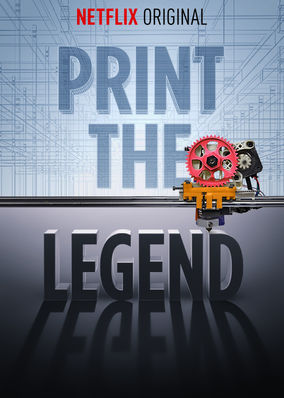
1. Print the Legend

Print The Legend movie poster

3D printers haven’t quite taken over the world yet, as many have predicted, but they’re well on their way. If you really want to get to know a device you’ll unquestionably be using in your own home sooner than later, Print the Legend is a great introduction. The Netflix Original charts the creation and rise of the 3D printing industry and focuses on the companies and individuals leading the charge. Now’s your chance to see what everyone else has been talking about, and where they’ve been getting all those new keychains.

2. Virunga

Virunga movie poster

Virunga tells the story of a battle being waged in the Democratic Republic of Congo, but not one of warlords and tyrants. Rather, it chronicles the struggles of park rangers in charge of Virunga National Park, a mind-blowingly beautiful tract of land in Africa that is home to the last of the mountain gorillas, among thousands of other species. While war is a constant menace, the bigger danger comes from an oil company looking to exploit the land, and Virunga focuses on the rangers’ fight to keep the park safe from all threats. Just two days before the film debuted at the Tribeca Film Festival, Virunga’s chief park warden was gunned down near the park’s headquarters. He survived, but the incident only highlighted the dangers and atrocities those protecting Virunga see every day.

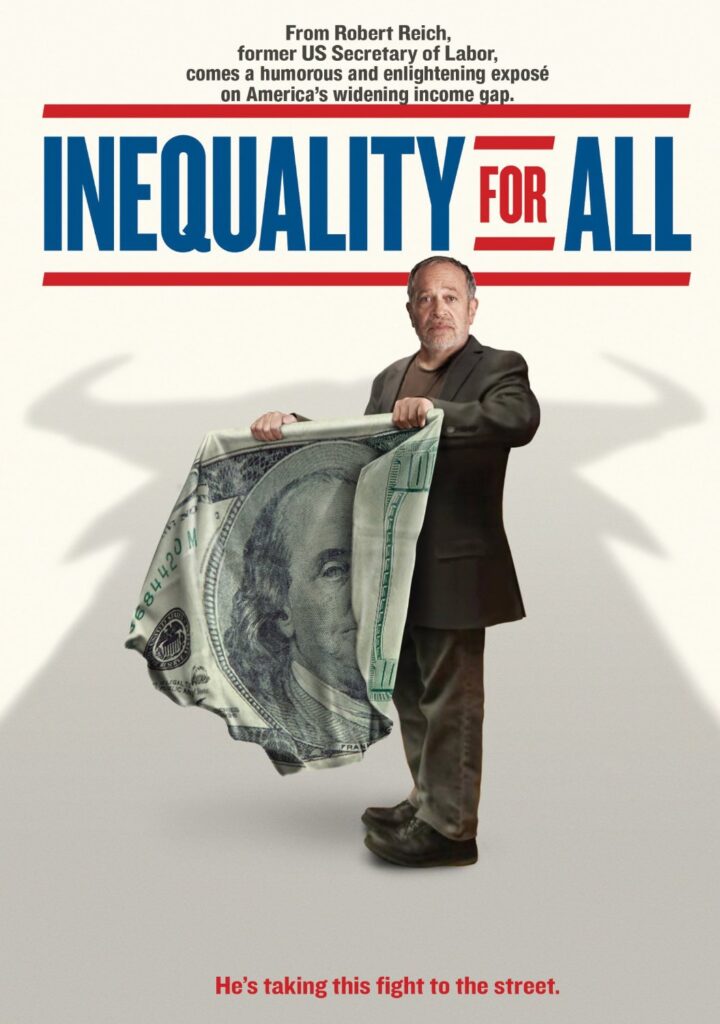
3. Inequality for All

Inequality for All

The income gap between rich and poor is the largest it’s ever been. In Inequality for All, former Secretary of Labor Robert Reich emcees a look at how this came to pass and what it means for our country. Using a mixture of graphics, archival footage, interviews, and a keynote speech by Reich, the documentary is the An Inconvenient Truth for the hazardous storm of economic climate change. Concerned with more than just the facts, Inequality for All dares to ask what the existence of the income gap means for us as a compassionate society.

4. Lost for Life

Lost For Life movie poster

While many films document the lives of prisoners and those on death row, Lost for Life tackles subjects not chronicled quite as often. Not only does the film focus specifically on those serving life without parole, but its subjects were all juveniles when they were sentenced. Following those who will spend decades—their entire adult lives—behind bars is a fascinating, gut-wrenching look at a life nothing like our own, yet not one as rare as you would think. Lost for Life also follows the families of these prisoners’ victims, showing that even a life contained in a tiny cell does not exist in a vacuum.

5. 30 for 30: Playing for the Mob

Playing for the Mob cover

ESPN’s 30 for 30 series is an uneven but never unexciting look at all corners of the world of sports. Its most remarkable achievement is its revelation that athletics exist more off the field than on, its influence spreading into every facet of American life. Playing for the Mob, like several of the series, doesn’t focus directly on an athlete. Rather, it reports on Henry Hill, the mobster famously played by Ray Liotta in the Martin Scorsese film Goodfellas. Liotta narrates this documentary as it tells the story of how Hill created a point-shaving scheme involving the basketball program at Boston College. Combining two of the nation’s passions—sports and gangster life—makes for an enthralling look at a darker side of one of America’s pastimes.

6. Deadliest Battle

Deadliest Battle movie poster

There is no shortage of World War II documentaries for sure, but PBS’s Secrets of the Dead: Deadliest Battle chronicles one of the war’s biggest events, yet one of its lesser known. The Battle of Stalingrad was a crucial turning point in the Second World War, turning the table on the Nazis and establishing Stalin as a powerful leader and the Soviet Union as a world superpower not to be reckoned with. Such a massive historical event came with a horrifying amount of violence and fatalities, and Deadliest Battle uses the prism of that destruction to recount the momentous clash.

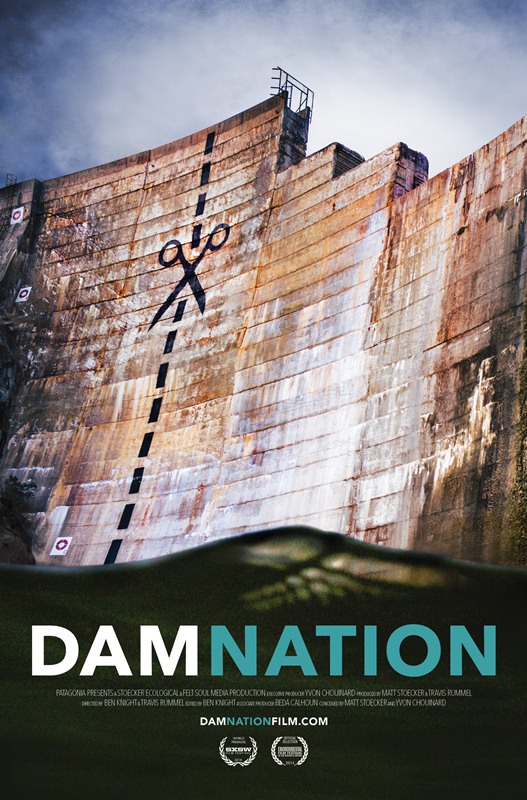
7. DamNation

DamNation movie poster

DamNation not only shows us the majestic beauty of dams and the rivers and landscapes that surround them, it also analyzes our fascination with these amazing feats of engineering, as well as the cultural shift away from that fascination. The country has steadily moved dams out of a positive light and into the shadow of climate change—acknowledging the huge impact such massive manmade constructions can have on a fragile ecosystem. DamNation tells the story of dam removal projects, revealing the full arc of our country’s attitude toward these beautiful monsters of concrete.

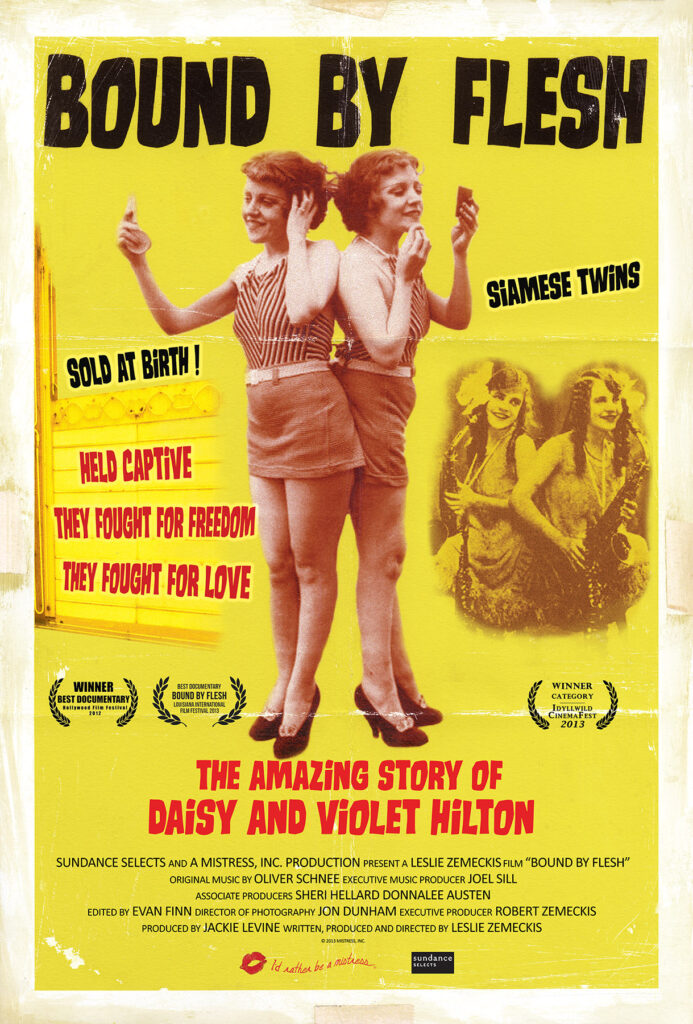
8. Bound by Flesh – Daisy and Violet Hilton

Bound by Flesh movie poster

Daisy and Violet Hilton were conjoined twins who rose from sideshow attractions to A-list stardom in the early twentieth century. While the story of their condition and their rise to fame is captivating in itself, this documentary really shines in recounting the sisters’ struggle for dignity as they sued for freedom from cruel and exploitative managers, at great cost. Bound by Flesh is revelatory in its portrayal of the real freak show—the entertainment business.

9. My Bionic Pet

My Bionic Pet movie poster

For many of us, our pets are one of the most important aspects of our lives. My Bionic Pet takes a look at the state of modern prosthetics for animals of all kinds who have lost legs, paws, flippers and more. Advances in prosthetics for humans are remarkable and this uncommon angle My Bionic Pet looks at the science from is all the more interesting. Besides being an informative look at a branch of medicine and science not always in the spotlight, My Bionic Pet has no short supply of adorable little animals whose titanium hooks make them that much more special.

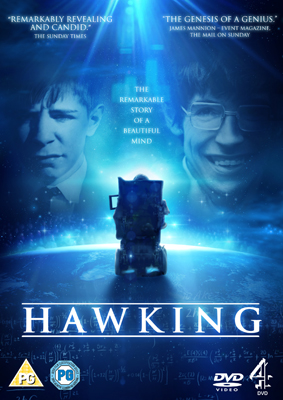
10. Hawking

Hawking movie poster

Stephen Hawking biopic The Theory of Everything is gaining a lot of buzz before its theatrical release. A great way to prepare for the movie would be to catch the documentary told from the real man’s perspective. It’s a wonder a film at this scope hasn’t been done before, considering Hawking’s contributions to science and his level of popularity. The modern day Einstein, Hawking has achieved so much despite his debilitating battle with ALS. Like Einstein, part of Hawking’s power and charm is in his ability to tell stories, breaking down complicated quantum theory and abstract astrophysics into terms anyone can understand. Using him to tell his own story, in his own trademark voice, is a stroke of brilliance by the Hawking filmmakers, and makes for an engrossing look at one of the great minds of our time.

12 Movies That Revolutionized Visual Effects

Special effects have been part and parcel of moviemaking since the days of Thomas Edison and the dawn of cinema. King Kong revolutionized stop motion animation as action filmmaking, The Ten Commandments commanded meticulously detailed miniatures, Jaws scared millions with life-like animatronics.

But as comic books and science fiction transition from niche genre flicks to mainstream blockbusters, and Hollywood makes things bigger and brighter to compete with an ever expanding number of entertainment options, special effects have only become more prominent.

As even the last vestiges of analog give way to creating art digitally, computer effects have become the chief way of creating images that would otherwise be impossible to film.

Where once the question filmmakers had to answer was “How can we make this?” the question now is “What should we make now?” seeing that literally anything a screenwriter can come up with is now possible to put on screen.

In the new age of cinema, digital animating is as important to the filmmaking process as cinematography and editing. The following twelve movies were milestones in the art of computer visual effects.

This is by all means not a complete list—computer technology is a complicated, subtle science. Hollywood effects houses, indie animators, and even intrepid film school students make breakthroughs in technology all the time, and lucky for audiences, movies are constantly showing us something new.

These are 12 milestones. Feel free to add and talk about the many others in the comments.

Movies Visual Effects

1. Westworld

Before Westworld, any movies about killer robot cowboys had to make do with practical analog effects. The box office hit used computerized raster graphics to represent the pixelated point-of-view of Yul Brynner’s cyborg Gunslinger, a clever trope later made famous by The Terminator and Robocop.

2. Superman

It wasn’t until 1978 that a Hollywood film had its first computer generated opening credits sequence — the iconic flying Superman titles backed by John Williams’ heroic score. The floating blue names are still more exciting than many contemporary action scenes, and never before have the words “Associate Producer Charles F. Greenlaw” looked so cool.

3. The Last Starfighter

The 1984 space adventure replaced all of its spaceship models with CGI, a move remarkably ahead of its time and not even considered by George Lucas for a Star Wars film for another fifteen years.

The Last Starfighter was also the first movie to use integrated CGI, using computer-generated images to represent actual real world objects. Before then, computer images were only used to portray other computer images, or blocky holograms with corners sharp enough to cut yourself on.

Computer VFX

4. Terminator 2: Judgment Day

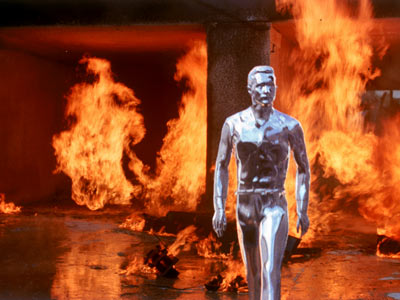
Besides being the first blockbuster to use a personal computer for major 3D effects and including multiple morphing effects, Terminator 2 is really more famous for making CGI a cool water cooler topic for the average layperson.

In 1991, everyone was talking about the T-1000, Robert Patrick’s killer cop made of computer-generated liquid metal that moved realistically like a human. We movie audiences love shiny things, and it didn’t come shinier than the T-1000. Suddenly, moviegoers were wondering aloud just what Hollywood would make next.

5. Jurassic Park

Steven Spielberg is considered one of the all-time best directors for a reason. He knows how to draw an audience into his world, and how to best utilize technologies of all kinds to make a collaborative work of genius like 1993’s Jurassic Park.

He didn’t limit himself to his trademark animatronics to create larger-than-life dinosaurs, including the use of state-of-the-art CGI. By combining both effects, the photorealistic full bodies of brachiosaurs and Tyrannosaurus Rex caused us to drop our jaws as they opened wide theirs.

6. Casper

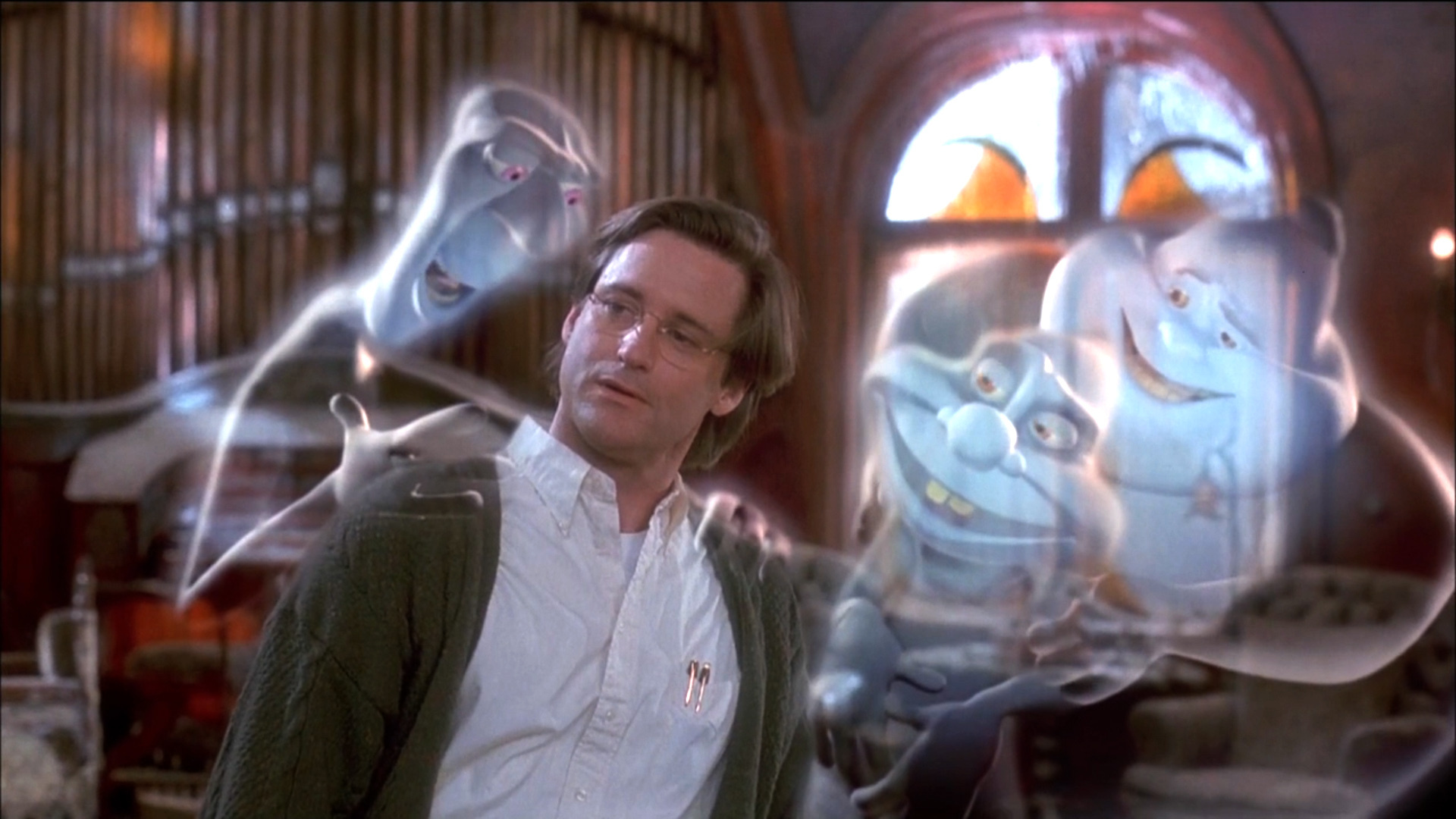
The kid-friendly film Casper was the first Hollywood feature to include a completely computer-generated protagonist, in the days before Andy Serkis held a monopoly over that particular niche.

It was also the first big film to have its CG characters interact with real-life human actors, a revolutionary idea that is now standard training for those looking for careers in acting.

VFX in Film

7. Toy Story

In 1995, just a few months after Casper and his brothers hogged up screentime from their flesh-and-blood costars, Pixar released the first CGI feature-length animated film.

Toy Story was a smash hit, with Tom Hanks’ non-robot, non-killer cowboy Woody becoming a Disney star and computer animation soon replacing traditional hand-drawn animation as the king of Hollywood kids movies.

8. The Matrix

Like T2, while The Matrix’s technical milestones were somewhat small, it was the first film to use CG interpolation for the now-ubiquitous “bullet time”— the 1999 release did wonders for the public perception of computerized special effects.

Today, modern blockbuster filmmaking can be seen as either pre-Matrix or post-Matrix, with the use of CGI transforming from a Hollywood gimmick to an essential part of twenty-first century filmmaking.

9. The Lord of the Rings: The Fellowship of the Ring

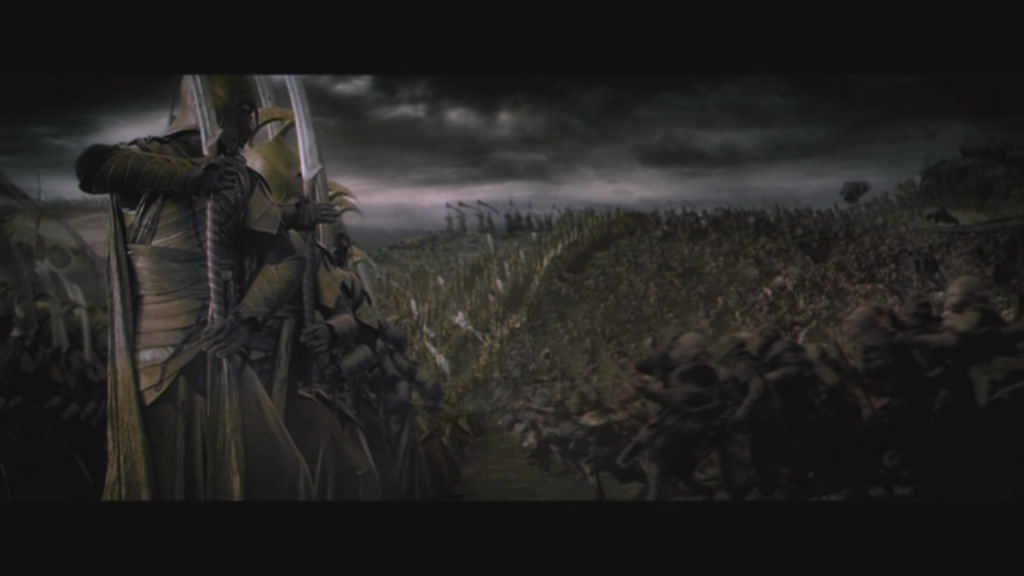
Using Weta Digital’s Massive software, 2001’s epic Middle Earth opening chapter includes a colossal battle scene with thousands of battling elves and orcs.

Rather than recruiting half of New Zealand to portray the armies, Peter Jackson used computer-generated imagery. And rather than having animators painfully orchestrate the motions of each and every soldier, the software allowed the digital extras enough artificial intelligence to battle each other on their own, a Hollywood first. Because teaching AI computers how to wage war isn’t a terrible idea at all….

Best Visual Effects in Movies

10. The Lord of the Rings: The Two Towers

How do you top a battle scene with thousands of sentient CG creatures? With one incredibly charming and technologically advanced CG creature, by the name of Gollum.

Andy Serkis’ motion-captured creature was the first photorealistic CG character that movie audiences took seriously, at least seriously enough to believe he was the same part of the world as Ian McKellen and Elijah Wood.

Serkis became the first recipient of an acting award without ever actually appearing on camera, heralding the age of motion-capture thespianism.

11. Sky Captain and the World of Tomorrow

2004’s Sky Captain is not remembered as a particularly good movie, but it doesn’t have to be. It did its service to the cinematic arts simply by being the first movie to use all-CG backgrounds with live actors. While producers love this because it’s much cheaper than practical sets, it also allowed for a greater creative freedom to the filmmakers behind the movie. While Sky Captain was a flop, it showed us at the time yet another use for computer VFX in Hollywood moviemaking—one that, if fine-tuned, could make something as mesmerizing and memorable as, let’s say, Avatar.

12. Avatar

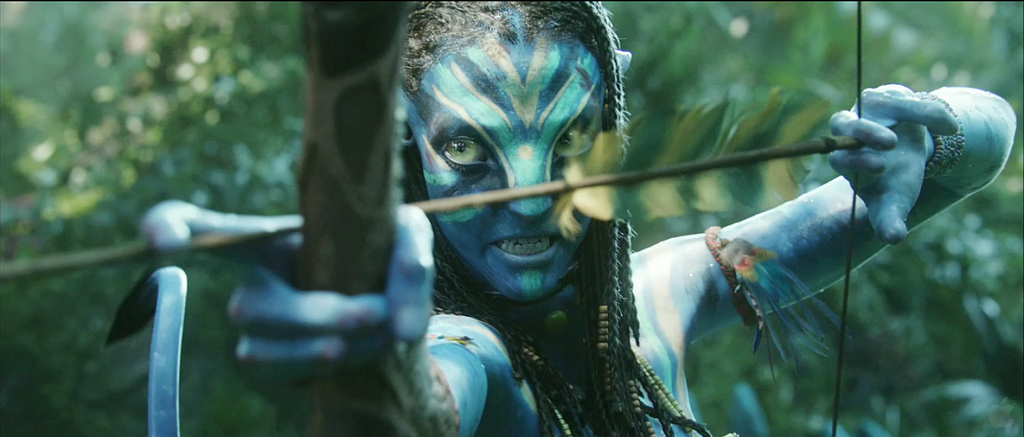
James Cameron’s working title for Avatar might as well have been The Kitchen Sink, because he threw everything into his 2009 space epic.

Not content with the most advanced technology of its time, Cameron even delayed production and invented his own techniques to bring the world of Pandora and its blue-skinned inhabitants to the big screen.

Avatar was the first mainstream feature to combine both photorealistic backgrounds and motion-captured characters, making an adventure that completely blurred the line between live-action and animation without taking the audience out of the movie.

It was also a boon for motion-capture actors and filmmakers as the first production to use real-time animation to show live feedback as what the mo-capped performers would like as their virtual characters.

Avatar Computer Animation

It’s hard to say what milestones are left to be reached, but that’s a good thing. After all, the stop-motion animators behind King Kong would have never imagined the 3D renderings of the Na’vi.

A film with visual effects that would blow the mind of James Cameron will definitely be something to behold. That is, if the AI extras from Lord of the Rings haven’t revolted and killed us all by then.

The Life and Films of Mike Nichols

mikenichols

Oscar-winning—no, scratch that, EGOT-winning Mike Nichols died this week at the age of 83. A great loss for the world of stage and screen, Mike Nichols will undoubtedly go down in history as one of the all-time great actor-directors—in both senses of the term. He was a renowned performer and director, and also a director who worked incredibly well with other actors and brought out some of their greatest performances. Without Mike Nichols, we would be deprived of some of Hollywood’s most celebrated films and some of its iconic quotes, characters and scenes.

Mike Nichols was born Michael Igor Peschkowsky in Berlin in 1931, fleeing to the United States to escape Hitler’s rule when he was seven years old. In his early twenties he studied in the Actors Studio under Lee Strasberg. Soon after, Nichols joined the earliest incarnation of Chicago improve troupe Second City, along with Elaine May and Del Close, who would later train future Second City players Bill Murray, John Belushi and dozens of other famous comedians.

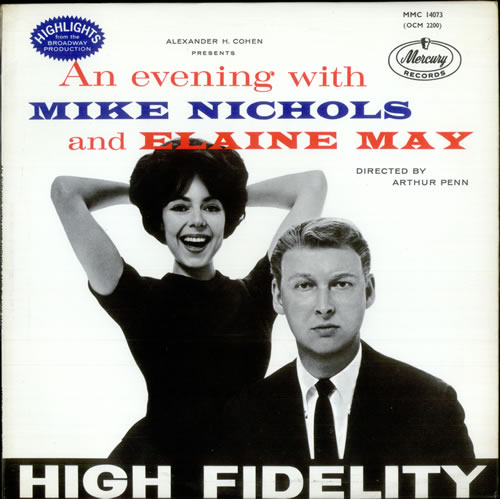
Nichols and May formed a comedy duo that won a Grammy for their comedy album in 1962. Soon after, Nichols started directing theater, quickly earning a Tony for his direction of Barefoot in the Park. It would be the first of several for the prolific director.

mike nichols elaine may an evening with

In 1966, he was hired to helm his first film, a screen adaptation of Who’s Afraid of Virginia Woolf? starring A-list couple Elizabeth Taylor and Richard Burton. The movie was a smash hit with critics and audiences alike and earned Nichols his first Oscar nomination.

It only took him another year to win the award though, with his second nomination for the Dustin Hoffman starring The Graduate. Considered one of the greatest films of all time, it cemented Nichols as one of Hollywood’s strongest directors, despite only two film credits to his name.

Nichols continued to bounce between theater and film, equally passionate about both. In the 1970s, he directed movies Catch-22, Carnal Knowledge, The Day of the Dolphin, and The Fortune. He kicked off the 1980s with a filmed version of Gilda Radner’s Broadway show, Gilda Live, and followed it with films Silkwood, Heartburn, Biloxi Blues and Working Girl.

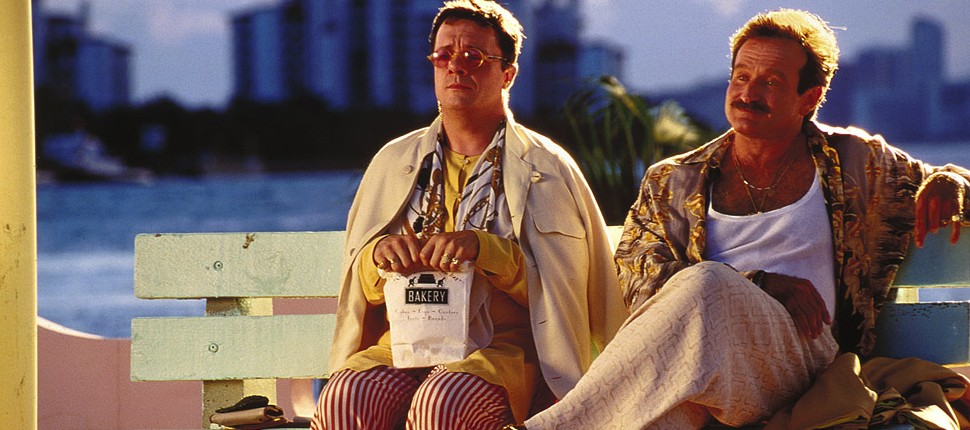
Hitting his sixties didn’t slow Nichols down as he continued to direct through the 1990s, including Postcards from the Edge, Regarding Henry, and Jack Nicholson monster movie Wolf. Wolf was a critical flop, but Nichols’ follow-up became one of the biggest movies of all time: The Birdcage. Nichols ended the decade with an adaptation of Primary Colors, a story loosely based on the presidential campaign of Bill Clinton.

the-birdcage

Mike Nichols continued his streak into the next century, following What Planet Are You From? with the HBO miniseries Angels in America, which earned him an Emmy. His final two films earned several Oscar nominations for its actors—Closer and Charlie Wilson’s War. In 2012, at the age of 80, Nichols won a Tony for directing Death of a Salesman. Before his death, he was working on a J.J. Abrams-produced film, One Last Thing Before I Go.

Having studied acting and becoming a talented performer himself, Nichols spoke the language of actors, both on a technical and emotional level. For film school students and aspiring filmmakers, he is the pinnacle of an actor’s director, embodying the best of what a director can bring out of his performers through careful guidance and collaboration.

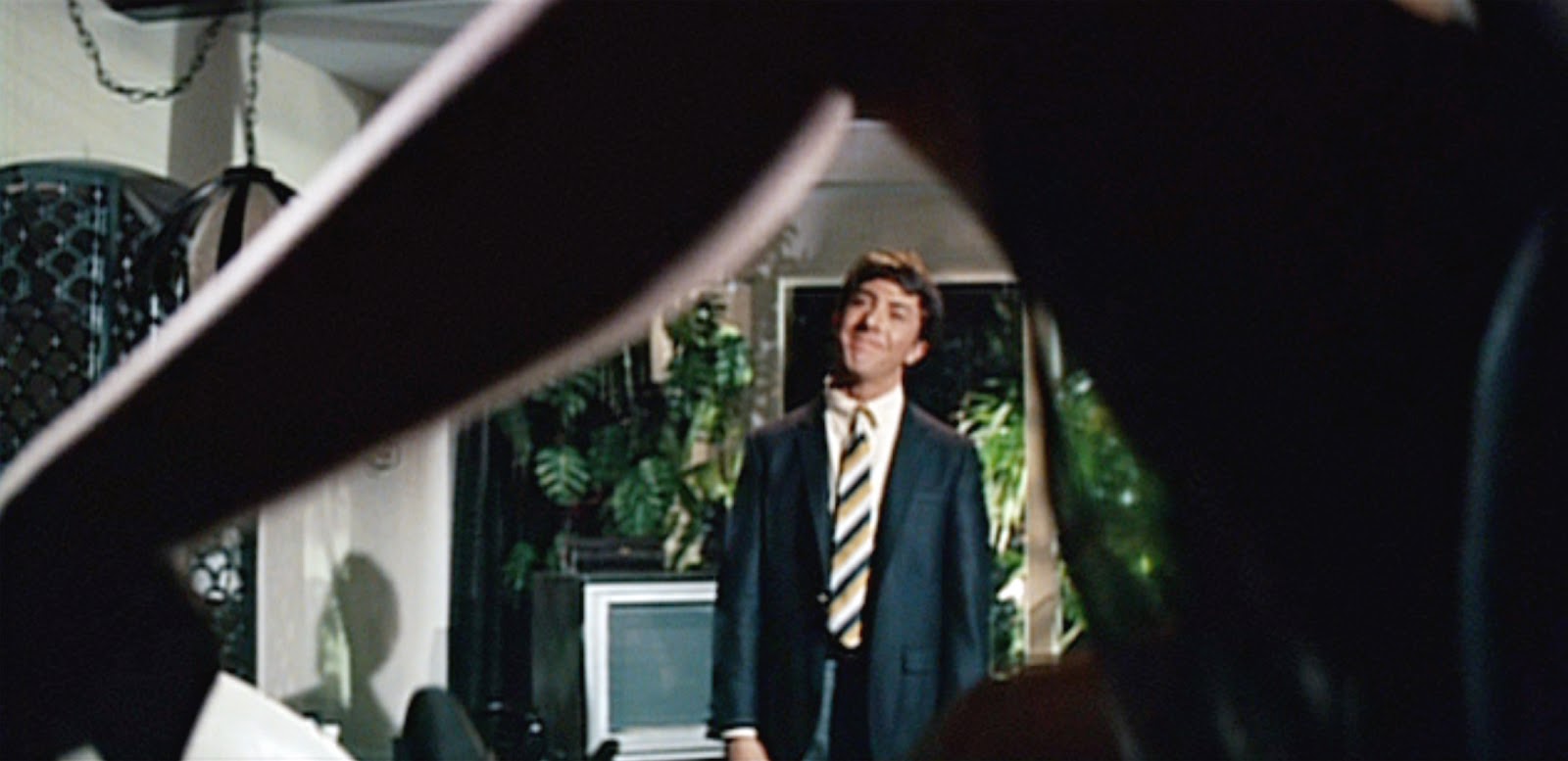
That isn’t to say he wasn’t great with a camera though. Famous for long, aerial shots, including the beautifully composed beginning and ending of Closer with the streets of New York, Nichols also framed one of cinema’s most famous images—Dustin Hoffman’s Benjamin Braddock nervously standing behind Mrs. Robinson’s stocking-sheathed leg.

Dustin Hoffman Graduate

One of the few people ever to win the EGOT—an Emmy, Grammy, Oscar and Tony—it goes without saying that Nichols’ talents were as varied as the stories of his work. But no words could truly do justice to his legacy—his oeuvre will have to speak for itself. Crafting them with hard work and great care, Mike Nichols has assured his films will do just that, entertaining and teaching the wonders of film and acting for generations to come. Here’s to you, Mr. Nichols. Koo-koo-ka-choo.