A Q&A With NYFA Acting for Film Student Dustin Ardine

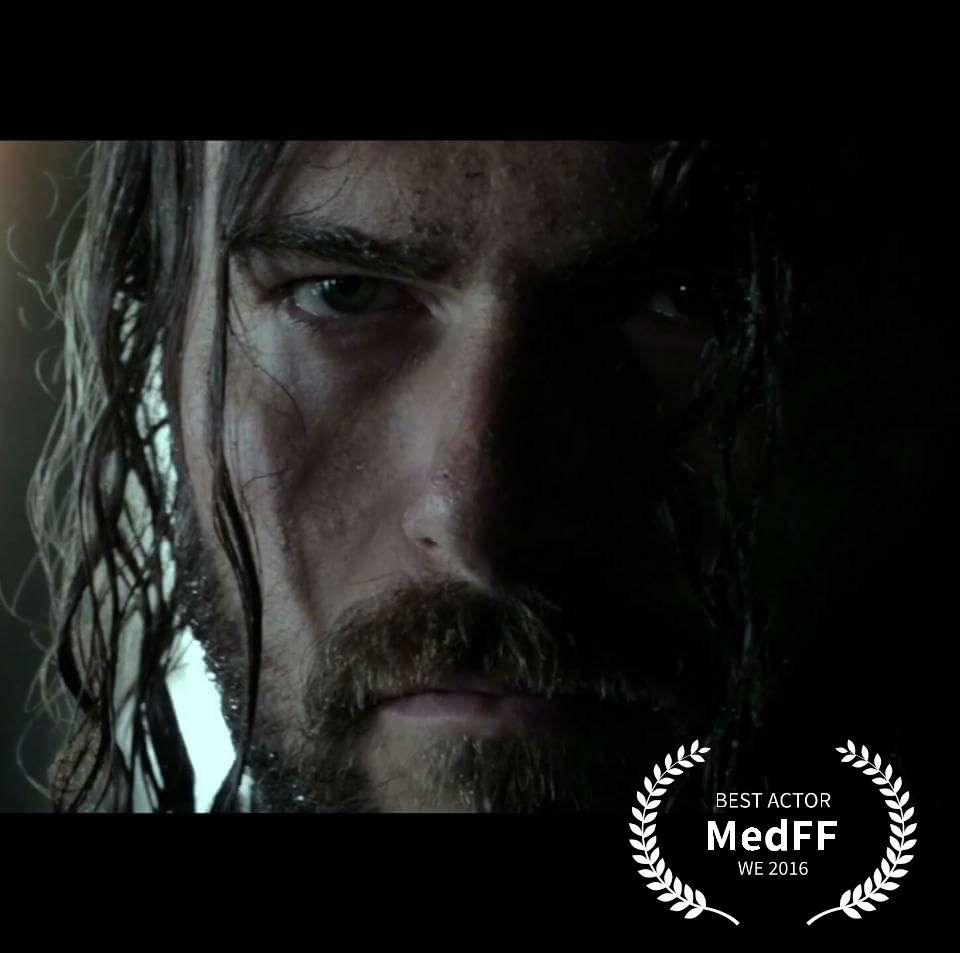
New York Film Academy acting for film student Dustin Ardine has seen a lot of success in his short career. Ardin won the best actor award at the Mediterranean Film Festival, a huge festival that takes place in Italy. Ardine’s film “The Red Oak” won top prize. The horror film screened at the Villa Dunardi, a haunted landmark in Italy. Recently, NYFA correspondent Joelle Smith sat down with Ardine to discuss his recent success and what projects he’ll be tackling next.
Dustin profile

Joelle Smith: Hi Dustin, congratulations on your recent award wins! Tell me a little about your film.

Dustin Ardine: Our film is called “The Red Oak.” It is a psychological thriller that touches on a subject that we all felt wasn’t something explored a lot in films. It was written and directed by Danyal Zafar. It stars myself in the lead role of Dr. Rahal. It also stars Abe Cohen and Brooklyn Sarver.

When I met with Danyal for the first time he gave me the script and we talked about the story we wanted to tell. We then worked together to perfect everything so that we told the story the exact way we wanted. At its heart, “The Red Oak” is about all those many people in the world who dedicate their lives to helping others … but we all rarely see the toll that their choice takes upon them.

Doctors, nurses, firefighters, cops, teachers, and many others choose to dedicate their lives to helping others regardless of the toll it takes on them and the scars they live with every day of their lives. My character Dr. Rahal is a lifelong psychiatrist who has dedicated himself to helping his patients. But what kind of toll does that take on him? What kind of weight does he carry around with him every day of his life? This is the story we wanted to tell. 

JS: How did you get involved in the project?

DA: The director Danyal Zafar had seen my past work and called me in to discuss the project. He told me that he knew I had the talent to bring the character of Dr. Rahal to life but wanted to know more about me and how I see the character and story. He had me read, and once he knew I was 100 percent who he wanted to cast as the lead we met again and talked about everything — from the script to the characters to the subtext we wanted the film to have and the overall message we wanted the film to say. We worked hard to make sure that the story was told in the right way so that exactly what we wanted to say came across on screen. 

JS: What do you hope people get out of the film? 

DA: I hope that when people watch “The Red Oak” they do see and appreciate all hard work that myself, the director, and the rest of the cast and crew put into it. The other actors and I had to go to very dark places to bring these characters to life. As a method actor, I fully engulfed myself in this role and lived as Dr. Rahal during the entire shoot on and off the set.

But also I hope that when people watch “The Red Oak,” they are also taken on a journey that will not only entertain them but will also make them think — about the people they have in their own lives who have dedicated themselves to helping others even at a great personal cost to themselves, so those people stop being taken for granted. 

JS: What did you learn at NYFA that helped you with this project? 

DA: I have been acting since I was six and went to school for theater. So I came to NYFA with a great background in the arts. However, I can say that the connections I made at NYFA were 100 percent key to not only bring the cast in this film, but also on so many other projects. The great thing about NYFA is that so many talented people come together to go after their dreams. As long as you prove yourself to be a hardworking professional, which I pride myself to be, that will make other hardworking professionals want to work with you. 

JS: What’s up next for you?

DA: I just wrapped a short film called “A Scream That’s Trapped Inside,” directed by Savvas Christou (who is still at NYFA), and a full-length indie feature film called “Ariadne,” originally titled Minotaur, in which I play the lead. “Ariadne” is directed by Adrian Rodriguez. That film should be out within a few months. Also, I just got the lead role in two other indie full-length feature films. One is called “Religion,” directed by Salifu Zakari, and the other is called “Apathy Equals Death,” directed by Aijia Li. Both films will be shooting later this year. 

The New York Film Academy would like to thank Dustin Ardine for taking the time to speak with us about his work. 

Interested in learning more about acting for film? Check out NYFA’s acting for film programs.

Animated Series to Watch for Inspiration

Visual effects and 3D animation have really grown over the last few decades with the help of improved tools for animations. If you are interested in learning the theory of animation and visual effects, and getting the professional skills you’ll need, the New York Film Academy’s 3D & Visual Effects School is for you.

The professors of NYFA’s Animation School are working animators and visual effects artists who have designed a hands-on curriculum for students to help prepare them for a competitive industry. Our students use programs such as Maya, ZBrush, Mudbox, Motion Builder, and Nuke.  

Speaking of animation and visual effects, there is something about animated series that brings the kid out in all of us. If you’re feeling nostalgic or need some inspiration for your own animated series, take to Netflix, Hulu or just resort to some Saturday morning cartoons. We’ve rounded up some great animated series to watch for inspiration:

“Rugrats”

In the early years, “Rugrats” used cel animation and the show’s animators drew everything by hand. But by the time “Rugrats in Paris” movie hit theaters, the team used a combination of 2D and 3D animation. The animators created more than 300,000 drawings by hand and then scanned the drawings into Toon Boom Technologies US Animation software. For the 3D animation, the team used Maya. Once all the images were created, they used Animo Inkworks renderer to seamlessly combine everything.

“The Wild Thornberrys”

Nickelodeon’s “The Wild Thornberrys” was about 12-year-old Eliza and her family, who travel the world to record a nature documentary. It was full of travel and excitement for the family, and Eliza even had a secret power – she could communicate with animals. For a children’s animated series, there are a few notable entertainers who voiced characters. Lacey Chabert, who played Gretchen Weiner in “Mean Girls,” voiced Eliza. None other than Flea from the Red Hot Chili Peppers voiced Donnie, the jungle wild child. Tim Curry voiced Eliza’s beloved yet quirky dad, Nigel. The all-star cast is just another reason why we love “The Wild Thornberrys.”

Here are some other great child-friendly animated series to watch for inspiration:

  • “Looney Toons”
  • “Tom and Jerry”
  • “Scooby Doo”
  • “The Flinstones”
  • “Spongebob Squarepants”
  • “Pinky and the Brain”
  • “The Bugs Bunny Show”
  • “Dexter’s Laboratory”
  • “Teenage Mutant Ninja Turtles”
  • “The Jetsons”
  • “The Powerpuff Girls”
  • “Pokemon”
  • “Hey Arnold”
  • “Doug”
  • “The Fairly Odd Parents”

The list of animated series goes on and on. If you’re into animated series featuring mature content — which you can find on channels like Adult Swim — that’s cool too. There’s nothing like staying up late to get some good chuckles. Many of the animated series for older audiences rely on bawdy humor, adult topics, and mature language — a recipe that many animation fans appreciate as they cross the threshold from childhood to adulthood.

“Family Guy”

“Family Guy” follows the dysfunctional Griffin family and the animated series is now in its 15th season. Creator Seth MacFarlane attended the Rhode Island School of Design and, two weeks before graduating, received a surprise job offer from animation studio Hanna-Barbera. He moved out to Los Angeles and joined Hanna-Barbera’s team as a writer. Before “Family Guy,” he worked on other shows like “Johnny Bravo,” “Dexter’s Laboratory,” and “Cow and Chicken.”

If that isn’t enough reason to love McFarlane’s “Family Guy,” actress Mila Kunis voices the outcast daughter Meg, and Carrie Fisher voiced Peter Griffin’s boss, Angela.   

“South Park”

Southpark_wikilogo

This year marks the 20th anniversary for Comedy Central’s “South Park.” The show focuses on the lives of four elementary students, Kenny, Kyle, Cartman and Stan, in the quiet town of South Park in Colorado. When the show first aired in 1997, creators Matt Stone and Trey Parker used photos and cardboard cutouts for the show. Then they started scanning the cutouts into computers, where they imported the images into PowerAnimator and linked to a 54-processor that could render 10 to 15 shots an hour. Now, Stone and Parker use a 120-process render that produces 30 shots or more an hour. Watching how “South Park” has evolved with new technology and software is truly impressive.

On a side note, Stone and Parker helped co-write the book, music and lyrics for the hit Broadway show, “The Book of Mormon.”

Here are some other great animated series with mature content to watch for inspiration:

  • “King of the Hill”
  • “American Dad!”
  • “Bob’s Burgers”
  • “The Simpsons”
  • “Futurama”

What are some of your favorite animated series? Let us know in the comments below! And check out NYFA’s animation programs to learn more about animation.

Virtual Reality Film Festivals to Keep an Eye On

Now that more industries and artists are exploring virtual reality technology, they are also showing off their work and products at conferences and festivals. One of the best ways to keep up with what is going on in any industry is attending events such as these where you can hear from the pros, take workshops, see films and test equipment and new products. While there aren’t many VR-only festivals, several of the major film and entertainment festivals are devoting time and space to VR practitioners. Here is New York Film Academy’s roundup of festivals to put on your list:

VR Fest

From the website: “The Virtual Reality Festival (VRF) is a community based organization dedicated to the development and expansion of virtual reality, augmented reality and other immersive entertainment technologies for use by both studio and independent artists, technologists, content creators, game designers and their audiences.”

Found by Christopher Crescitelli in 2014, VR Fest is a fully-curated touring Virtual Reality Film and Immersive Technology Festival. The festival co-sponsors with Extreme Tech Challenge (XTC) and MaiTai Global on a the global VR competition called the Extreme Virtual Reality Challenge, where VR/AR pioneers and entrepreneurs compete for a cash prize and a chance to display their work at the VR Lounge on Sir Richard Branson’s private Necker Island during the XTC Finals Event.

Tribeca Film Festival — Festival Hub

While the Tribeca Film Festival has film screenings, musical performances, and other events around Manhattan, the future of filmmaking is discussed and innovative work is on display at the Hub. In addition to Storyscapes, which features VR films, the Hub is also where you can learn about the intersection of art and technology in media, gaming, music, and documentary filmmaking.

On the festival’s website, Festival Director Genna Terranova explains, “Our experiential program is what happens when artists create wildly different adventures that go outside traditional methods. Here, stories are not passively watched, they are actually ‘experienced’ — you are a participant. Today, virtual reality offers a new landscape for creating worlds and stories. At its best it can be a powerful vehicle for magically transportive explorations that test the limits of our imaginations and psyches.”

SXSW

Founded in 1987 in Austin, Texas, SXSW is best known for its conference and festivals that celebrate the convergence of the interactive, film, and music industries. The SXSW Conference provides networking and educational opportunities as well as entertainment.

From the website: “Featuring a variety of tracks that allow attendees to explore what’s next in the worlds of entertainment, culture, and technology, SXSW proves that the most unexpected discoveries happen when diverse topics and people come together.”

The 2017 festival sessions included panels on funding VR projects, production in extreme environments, how VR and documentary filmmaking connect, using VR in live events and for global engagement, and several mentoring sessions  as well as demos and screenings.

Kaleidoscope

pexels-photo-123318-2

Kaleidoscope produces events around the world that showcase the best in virtual reality from independent artists. Each season Kaleidoscope produces curated, traveling exhibitions of work from VR creators around the world. The 2017 Showcase Vol. 2 will be organized by local VR creators in the following cities: New York, London, Berlin, Sydney, Kyiv, Los Angeles, Paris, Leipzig, Seoul, and Hong Kong.

Sundance

The New Frontier section of Sundance features innovations in film and art. VR filmmaking has had an increasing presence at the festival. In addition to showings of new VR films, there are now panels about crafting narratives and audience interaction with VR films. On the festival website, you can also find a selection of films that were featured at the 2016 festival that can be viewed using Cardboard. From the website: “The line up represents some of the most compelling narrative and documentary VR storytelling being independently created today.”

SF Indiefest — CyberiaVR

pexels-photo-106936

Imagine a film festival that you can attend from your own living room. That’s what the Cyberia Film Festival does for VR fans and filmmakers. The free, three-day festival allowed viewers from around the world to watch scheduled films and participate in Q&A sessions with filmmakers without having to travel anywhere.

From the website: “The CYBERIA Film Festival is the first conventionally-styled filmfest to be held in a Virtual Reality environment. CYBERIA seeks to explore a new frontier in cinema appreciation, reaching across the globe to bring together an audience as diverse as its content.”

VR Days Europe

Held in Amsterdam this year, VR Days Europe is a four-day festival that includes workshops, lectures, and demos that explore everything from feature film storytelling to business applications for VR filmmaking. The festival currently has an open call for the October 2017 event.

Dubai International Film Festival

The Dubai International Film Festival (DIFF) launched its VR program, DIFFerent REALITY, at the 2016 festival. The DIFFerent REALITY program offers festival goers an international selection of VR films, including fiction, documentary, and animation. There is also a business hub of the festival that includes panels with VR creators, interactive installations, and the chance to network.
On the festival’s website, DIFF’s Chairman, Abdulhamid Juma commented: “We have always been committed to discovering new talent and original storytelling to present exciting content that will entertain, educate and inspire DIFF audiences. VR gives filmmakers a new, immersive medium which is an exciting new direction for cinema and our compelling and engaging line-up of VR films push the technological boundaries of storytelling. We are extremely excited to bring some of the best VR experiences to DIFF this December and invite film fans to experience the future of storytelling firsthand.”

Raindance

Now in its 25th year, the Raindance Film Festival is the largest and most important independent film festival in the UK. In January 2016, the festival announced it was launching Raindance VR, a section of the festival dedicated to VR filmmaking. The 2017 festival takes place from Sept. 21 to Oct. 2 and is accepting submissions.

Festival organizers see VR presenting opportunities for low-budget independent filmmakers.

Raindance Founder Elliot Grove says, “We believe VR is the most exciting change in cinema and filmmaking since the onslaught of internet distribution which started with Youtube in 2005.”

FIVARS

FIVARS is the first Canadian festival dedicated solely to VR storytelling and filmmaking. The festival was started in 2015 and is the first VR festival to be listed on WithoutABox.com — a marketplace for filmmakers to submit their works to film festivals, owned by Amazon.com

VR filmmaking continues to evolve as the audience for it grows and the technology improves. Filmmakers and other creative professionals are exploring ways to use VR storytelling to expand the way they communicate and share ideas with an audience.

Virtual Reality is a growing field with endless possibilities for creation. To learn more about how NYFA can help you build your VR world, visit our VR page.

3 Daily Tips to Help You Become A Better Photographer

If you’re a photography student, chances are you know how tough the competition is in your chosen field. These days, the term “photographer” can encompass anyone who knows how to take decent enough snaps on an iphone and amass thousands of followers on Instagram. But photography is more than that. And when you work with DSLRs, you know that understanding the rules, theories, and techniques also isn’t enough to guarantee successful photographs. To be a better artist, you need that extra thing — that’s your own unique style. Which is why NYFA’s photography programs encourage hands-on experience, offering our students the opportunity to practice and develop their own visual style.

But your style is not something that can be taught easily. You have to experiment, discover, and then cultivate it your voice as a visual artist. Here are some daily tips that might make the process easier.

1. Photograph WISELY Every Day

pexels-photo-296649

Yes, wisely is the operative word here. Plenty of books, workshops and seminars will tell you that to be successful in any field, you need to practice every day. And to a certain extent, that’s true. But if we tell you that to improve as a photographer you simply need to photograph something every day, we’re only doing half our job. You could set a goal of taking at least three decent pictures every day, and a year later, find yourself still complaining that your style hasn’t evolved much.

Here’s the crux of the matter: For your style to evolve, you need to challenge yourself. One simple exercise to help you do this is to choose a particular word or theme and take a few pictures interpreting it every day. For instance, if the word is black, you could photograph objects that are black, and then move onto abstract stuff, like a play of shadows, the dark and somber expressions on someone’s face, and so on. By pushing yourself to intentionally investigate a subject past your first and obvious interpretation, you may discover new perspectives that can offer you inspiration and lead you to something you wish to say with your images.

2. Set Yourself Limits When Taking Photographs

pexels-photo-134469

To force your style to develop, it can help to set limits and conditions on the way you photograph. As necessity is the mother of invention, constraints can force your mind to think out of the box. You can do this in a number of ways. For example, for a particular subject or topic you can set yourself a limit of not taking more than seven photos, or working only in black and white, or restricting yourself to a particular area while working, and so on. The fewer options you have, the more your brain has to work to make the best of the circumstances. In other words, it’s not all about the expensive equipment and endless options: it’s about the choices you make as a photography, and how you make do with what you have.

3. Expose Yourself to More of the Stuff You Like

pexels-photo

You must realize that all creative works are a two-way process: There’s always a creator and an audience, and it’s important to play both the roles. When you’re photographing very diligently for an assignment, realize that you must take time out to see other great and not-so-great photographs as well, and learn from them. You know your interests and passions, so make sure you get a decent exposure to media that reflects, feeds, or challenges your tastes.

For instance, if you’ve always had a childhood interest in fairy tales, then you can definitely spend time studying Tim Walker’s fashion photographs, or checking out some surreal paintings or even watching art house cinema that uses fantasy tropes. Not only will that make you closer to figuring out your personal style, but it will also prove to be an entertaining and enriching experience.

At the end of the day, remember that you are a unique individual, with a unique history and personality. So no matter what you do, be authentic. Yes, it’s okay to imitate when you’re practicing, but nothing beats originality. Put your heart and soul into whatever you do, and make sure you actively enjoy the process of creating and making mistakes, and not just the end results.

Ready to learn more about photography? Check out NYFA’s Photography School.

Apply Now for a Photography Program

HBO Documentaries: Which Ones Make the Cut?

HBO is known for their premium television shows like “Game of Thrones,” “Boardwalk Empire,” and “True Blood.” But the network has also produced some riveting and chilling documentaries. HBO produces a handful of documentaries per year, but only a few still stick around in recent memory as truly captivating. While there are many more documentaries worth viewing, these are four of the many worthy documentaries shown on HBO within the past few years:

Spoiler Alert: May Contain Spoilers.

“The Jinx: The Life and Deaths of Robert Durst”

587750444_1280x720

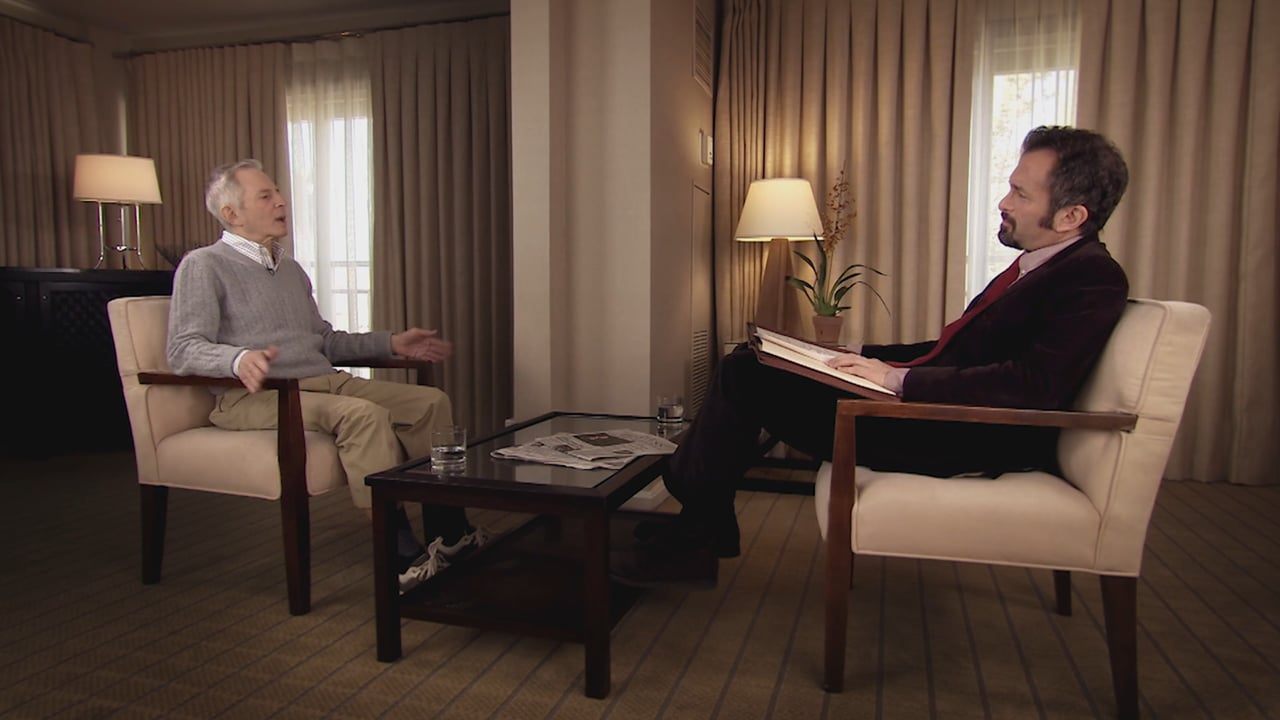
The six-part 2015 documentary series was already popular before the filmmakers unintentionally caught Robert Durst — a real-estate heir — making a startling admission. But even without the shocking discovery, the series captured the attention of many interested in a high-profile murder case. Rotten Tomatoes gave the film a whopping 94 percent and a. 8.8 out of 10 rating on IMDb. The film combines both past and contemporary interviews, news footage, reenactments, and more exciting visuals to make it a worthy documentary.

“Going Clear: Scientology and the Prison of Belief”

Based on the 2015 book  of the same name by Lawrence Wright, the documentary premiered in 2016 and received heavy criticism from the Scientology community. Regardless, the film won three Primetime Emmys. The New York Times wrote, “[Director Alex] Gibney, who enters swinging and keeps on swinging, comes across as less interested in understanding Scientology than in exposing its secrets, which makes for a lively and watchable documentary if not an especially enlightening one.”

“Beware the Slenderman”

The film initially appeared in 2016 at South by Southwest, but was released on HBO January 23, 2017. The documentary analyzes the case of two preteens who stabbed their friend repeatedly to avoid being murdered by an internet folklore legend called Slenderman. The film lifts stills and footage from the indie game inspired by Slenderman called “Slender: The Eight Pages,” fan sites, and from the homemade “mockumentary” by Marble Hornets. IMDb rates the film at 6.3 stars out of 10 and Rotten Tomatoes gave it an 83 percent rating.

“What really compelled us about that case was how the girls blurred fantasy with reality,” producer Sarah Bernstein told Rolling Stone. Bernstein added, “[That] notion of, as a parent, can you really police what your children are watching online?”

The film itself would more than likely be nothing new to those familiar with the Slenderman myth, but for those who are just getting acquainted with the faceless forest-stalker, it’s nightmarish.

“The Loving Story”

Centered on the historic Supreme Court case on interracial marriage, “The Loving Story” follows the story of Richard and Mildred Loving, an interracial couple who married and started a family regardless of discriminatory laws in Virginia. The film received a 100 percent rating on Rotten Tomatoes and fittingly premiered on Valentine’s Day in 2012, just in time for Black History Month. The film combines new interviews as well as home video footage from the Loving family with previously unseen photographs of the Lovings and their lawyers from LIFE magazine.

Interested in learning more about documentary film? Check out NYFA’s documentary programs!

Analysis: the Advancement of CGI in Video Games

CGI and video games: computer generated images (or, at least, computer interpreted images) are, by definition, the visual recipe for every video game we play and part of what makes games one of the most complex and captivating forms of entertainment on the planet. From great stories and characters to awesome gameplay and sound design, there are numerous reasons why video games are a part of more people’s lives than ever before. But if there’s one aspect of games that has evolved the most over time, it’s the element many care about most — visuals.

For as long as video games have been around, people have gravitated towards games that are not only fun to play but also look amazing. In fact, even the film industry is now studying how game developers create realistic graphics and movement to tell a story. Of course, much like movies themselves, games have gone through an evolution in becoming the visually jaw-dropping experiences they are today. And CGI has played a major role in the evolution of game visuals.

The Early Days

In the beginning, or the early ‘70s, all you had was a few white pixels over a black screen. Although Pong wasn’t officially the first video game ever made, it was one of the earliest arcade games to become popular across the globe. Other games like Midway’s Boot Hill and Gotcha only used black and white computer-generated images, but this was enough at the time to fill arcades.

The success of these black-and-white titles led to a desire for more attractive visuals and shapes. Namco’s Galaxian astonished gamers everywhere in 1979 with its brightly colored ships, and a year later the enormously popular Pac-Man arrived. Developers would continue pushing the limits of the video game consoles at the time to deliver games that were a joy both to view and play.

The Sprite Era

In 1985 a little game called Super Mario Bros. jumped onto the scene, almost single-handedly resurrecting the video game industry after a devastating market crash. At the same time, games like Street Fighter II, Teenage Mutant Ninja Turtles, and Strider revived arcades as a social and game hub. Revolutions in memory, storage capacity, and graphics cards/ screen resolution allowed these games to offer more vibrant colors and diverse shapes than ever, leading to improved user experiences.

The increased hardware power of systems like the Super NES and Sega Genesis also inspired developers to create jaw-dropping visuals for their time. Games like Chrono Trigger, Sonic The Hedgehog, and Super Metroid are to this day considered masterpieces of an era when designers were able to craft charming worlds and atmospheric places with sprites alone. While 2D graphics still have their fans to this day, the mid-‘90s are arguably the period of greatest CGI advancement in video games.

The 3D Takeover Unfolds

Increased power in the average home computer gave developers the freedom to use tricks to simulate 3D. One of the games to do this best was the critically praised Doom, a pioneer in perhaps the most popular genre today: first-person shooter. True 3D graphics finally took over in the mid-’90s with the release of the Nintendo 64 and PlayStation.

With these consoles, gamers could truly begin exploring fully-3D worlds. There was nothing more incredible than seeing Mario jump, fly, and slide in Super Mario 64, the first successful 3D platformer. Games like PlayStation’s Crash Bandicoot and PC-favorite Quake continued pushing CGI in games until developers needed better hardware to take things further.

The Modern Age

pexels-photo-127604

The jump from 2D to 3D still stands as the most significant advancement of CGI in video games. Ever-improving technology in the early 2000s opened the door to head-turning games like Halo: Combat Evolved, Grand Theft Auto III, and Metroid Prime. Never before were video game visuals so capable of creating environments that sucked players in and made them feel like part of the virtual worlds.

Today, 3D continues dominating the industry as games become more and more realistic. The latest video game consoles allow for the best cinematic realism ever to grace the industry, while computer users are able to constantly boost their system’s graphics capabilities. With the advent of virtual and augmented reality, there’s no telling where video game CGI will go next.


What are your favorite video games visuals? Let us know in the comments below!

NYFA Mumbai: Inspiration From Bollywood

Oh, Bollywood! From tragic epics to side-splitting comedies, the Hindi film industry  based in Mumbai, India) has blessed us with numerous classic films since its inception in 1913. As one of the world’s largest film industries, Bollywood provides no shortage of inspiration; deep character portrayals, riveting love stories, and humorous adventures lie in wait for the intrepid viewer. Whether you’re preparing to study at NYFA Mumbai or are simply a film enthusiast, here are a few great Bollywood movies to satisfy, intrigue, and inspire you along your film journey.

“Mughal-e-Azam” (1960)

https://youtu.be/Kj6nveaC4uY

This epic historical drama is considered a landmark in Hindi cinema, holding the top-grossing box office record for 15 years after its release — and for good reason. It’s the tale of a sweeping romance between a young Mughal prince and his forbidden love, which leads to a war between the prince and his father the king. Also of note is the soundtrack, which received universal critical acclaim and features some of Bollywood’s most famous songs. The sheer scope of this movie, as well as its high cost for the time, set a new high standard for Hindi film quality.  

“Anand” (1971)

https://youtu.be/wTqcXXRANkw

With a title meaning “Bliss,” this graceful drama tells the story of a physician who draws inspiration from a lively and cheerful end-stage cancer patient. Although originally a low-budget film, it has become a cult classic since its release. Lead actors Rajesh Khanna and Amitabh Bachchan both received significant praise for their emotionally resonant performances. If you’re in the mood for a film with pure heart, rent “Anand” to restore your faith in humanity.

“3 Idiots” (2009)

You know a comedy is pure gold when it’s remade as far away as Mexico and China. This riotous romp follows the lives of three students learning that friendship isn’t just something out of an engineering textbook. Its appeal reached beyond India, becoming one of the most popular movies in Southeast Asia — and even Hollywood briefly dabbled with creating an American version. If you’re feeling crushed under the weight of your studies, take a short break to watch the light-hearted “3 Idiots” and sympathize with the stress of school.   

“Kuch Kuch Hota Hai” (1998)

https://youtu.be/lpjSF9HUX0c

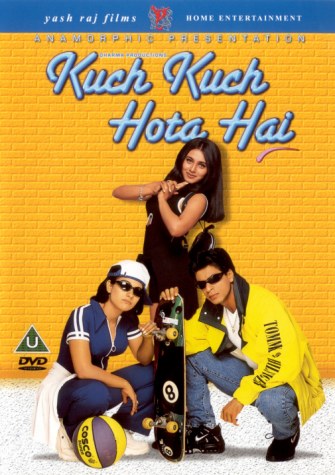
If you’re looking for an excellent coming-of-age story, look no further than this film from famed director Karan Johar. This heartfelt drama combines two intertwining love triangles set years apart. On-screen pair Kajol and Shah Rukh Khan have an undeniable chemistry that cements this film as a cult classic. Don’t forget to check out a young Sana Saeed, a NYFA alumna, as a young girl struggling under the weight of family secrets. This was the first Bollywood film to ever crack the UK’s Top Ten.

“PK” (2014)

Bollywood isn’t all romance and tragedy, as this science fiction satire proves. “PK” tells the story of an alien who falls to earth and becomes friends with a television journalist. It received both critical and commercial success, becoming the highest-grossing Bollywood film of all time. Aamir Khan, one of Bollywood’s most influential actors, played the scene-stealing lead role of the confused alien to much praise from viewers.

Inspired to learn more about filmmaking? Study with NYFA Mumbai!

5 Social Justice Documentaries to Watch on Netflix

Whether you call it the Civil Rights Movement of the millennial generation or however you prefer to phrase it, there’s no denying that the world is politically tumultuous at present, and folks are speaking out loud and proud about those social justice issues that matter to them most. And while we’re all busy learning, protesting, challenging the status quo, or creating meaningful art, there’s nothing like a good documentary to keep us inspired, informed, and engaged, while on the path to making radical changes to improving our world as we know it.

Whether you are advocating for racial justice and reconciliation, gender equality, animal rights, or equal rights for those of the LGBTQ and transgender community, here are five social justice documentaries available to stream online right now, courtesy of Netflix.

1. “13th” Ava DuVernay, Dir.

https://youtu.be/V66F3WU2CKk

An in-depth examination of the judicial system in the U.S. and how it reveals our nation’s racial bias at the intersection of justice and mass incarceration, Ava DuVernay’s Academy Award-winning documentary posits that slavery in the U.S was never fully abolished. Her thesis is that slavery only evolved into our nation’s current prison industrial complex that criminalizes certain behaviors, unfairly targeting African-Americans. Named after the 13th Amendment, which freed slaves and prohibited slavery, “13th” demands that viewers recognize the existence of modern-day American slavery by another name.

2. “Miss Representation” Jennifer Siebel Newsom, Dir.

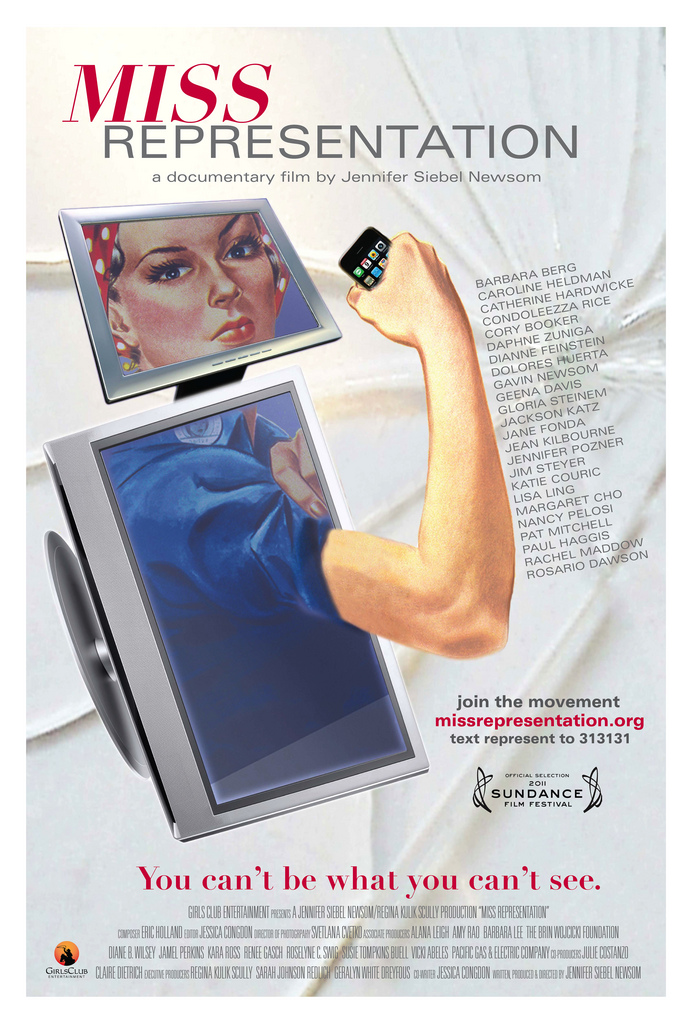
Premiering at the 2011 Sundance Film Festival, Jennifer Siebel Newsom draws on the experiences of everyday women and celebrities like Hillary Clinton, Oprah Winfrey, Sarah Palin, and Ellen DeGeneres, who concede that women cannot aspire to become what they know nothing of. In short, the film questions why there aren’t enough strong women role models in mainstream media, and implores those who view it to take a pledge against gender misrepresentation: #DisruptTheNarrative!

3. “Prescription Thugs” Chris Bell, Dir.

In this sobering look at America’s legal drug abuse problem, director Chris Bell turns his camera to the abuse of prescription drugs and big pharma, and eventually to his own harrowing addiction. This film explores the goals of pharmaceutical companies, the doctors involved in this epidemic, and the nature of addiction. This thought-provoking expose is one to watch to better understand how ordinary people deal with pain, and their response to addiction in an economy that profits off of them.

4. “Second Chance Dogs” Kenn Bell, Dir.

https://youtu.be/S7ZjxPqL_EQ

*Trigger warning for animal lovers.

In this emotionally charged documentary, we follow several dogs who’ve experienced various situations of abuse through puppy mills and hoarding, and despite it all, have been rescued and rehabilitated. Originally aired on Animal Planet, the film follows a facility dedicated to their recovery through patience and innovative techniques at the ASPCA Behavioral Rehabilitation Center.

5. “A Sinner in Mecca” Parvez Sharma, Dir.

https://youtu.be/o7CugLjIigU

On his own pilgrimage to Mecca, openly gay Muslim director Sharma documents his own personal journey, fulfilling a lifelong dream. In the film, he strives to make a place for himself in the Wahabi Islam he’s always known, and the extremism Islam he’s come to know but that has no resemblance to his religious and spiritual beliefs.

What are your favorite social justice documentaries to stream right now? Let us know in the comments below, and check out NYFA’s documentary programs.

How to Write a Scene for Film

Screenwriting is a visual medium that requires a writer to create words on a page that can be transformed into images on the big screen. Writing for a script that will be visualized into a film is very different from writing for a novel. It’s a common beginner’s curve to break. We have seen many scripts that tend to focus too much on prose and unnecessary fluff. Generally, what a scriptwriter needs to understand is that their script is going to be analyzed by dozens if not hundreds of people in production, people who do not have time to interpret any vague ideas. That is why it’s important to be as descriptive as possible, as succinctly as possible. As NYFA Screenwriting Program Chair Melanie Williams Oram notes, “I always tell my students you cannot write what you do not see.”

So in order to successfully write a scene for a screenplay, it’s important to remember that less is more. By that, we don’t mean less description is more. We mean that less wording in your description is more.

For example, let’s try describing a scene in which a character enters a hotel room. You may be tempted to describe it as vividly as possible. When writing a script, it’s helpful to also imagine which crew members will be reading the script and what information they will need to bring the script to life.

Example 1:

Susie, a 42 year old neurosurgeon from Connecticut, enters her hotel room, which entraps a blue hue that spreads from a ethereal neon glow just two yards from outside the window. She is contemplating the death of her brother, someone she will never see again. Susie says to herself, “I’m driving to Kansas tomorrow.”

This sounds like a pretty descriptive text. You can picture it in your mind, right? The actor, director, and camera and lighting crew have a lot to work with here. But if you were the costume designer, what clothes would you use for this scene? If you were the set designer, what sort of objects would be in the room? How much do they have to work with?

Let’s break it down and format all these details like a script.

hotel-bed-bedroom-room

Example 2:

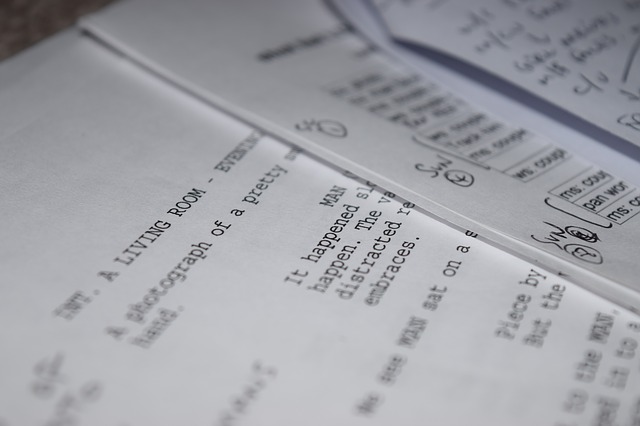
INT. HOTEL ROOM – NIGHT.

SUSIE (42), a Connecticut neurosurgeon, enters a mostly bare HOTEL ROOM. Bible on the dresser. Notepad on the desk. Empty boxes in the corner.

Broken, she is dressed in black. When Susie enters the room she places a funeral program down on the table.

Outside the window is a NEON BLUE sign.

SUSIE

I’m driving to Kansas tomorrow.

Writing your scripts like this gives ample descriptions that everybody in production can work with and properly sets the tone for the remainder of the scene. We won’t know unless we’ve seen Susie previously that the funeral program belongs to her brother. But that’s okay. We can learn that later.  From here, the director, director of photography, actor, costume designer, art director, and set designer have enough to work with in order to bring the scene to life.

Saying more with less is a skill that can take time and practice to master. If you’re interested in learning more about how to write and break down a script for production, visit the Screenwriting Program at York Film Academy.