5 Popular Olympic Movies

For much of human history, athletes have inspired unity, strength, and respect. Popular culture idolizes athletes, and today that doesn’t just mean that their achievements are documented in books or that they are written about in newspapers’ it means that there are feature films made about them, that they star in reality shows, and have an unprecedentedly large number of followers on social media.

People are drawn to stories of perseverance. We feel and respond to the plight of aspiring athletes, struggling to represent their countries and pursue their dreams. That’s why we love watching sports and movies — anything that presents us with a tale of redemption or success. And we love watching the Olympics; the world comes together to compete in a healthy — and hopefully fair — competition, an event populated by dedicated, hard workers.

As 2016’s games in Rio begin, here is a quick look at some Olympics films, including true stories and side-splitting parodies.

“Cool Runnings” (Jon Turteltaub, 1993)

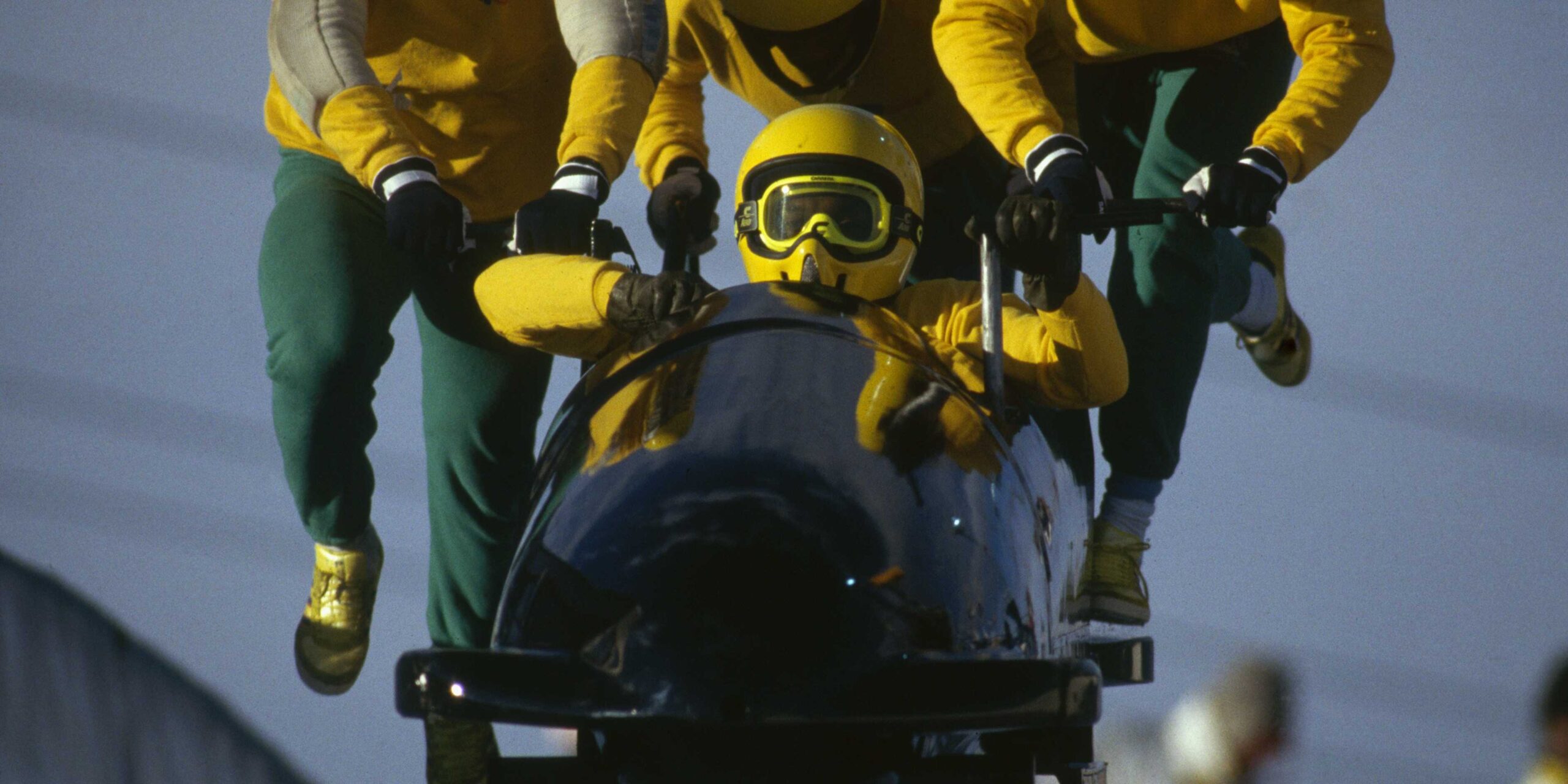
Jamaica’s first-ever bobsled team must battle expectations and inexperience as they take on uncharted, frozen territory: the Winter Olympics. Based loosely on a true story, “Cool Runnings” will make you laugh out loud and bite your nails — and you’ll have the bobsledders’ chant stuck in your head for weeks beyond viewing the film. “Feel the rhythm. Feel the rhyme. Get on up, it’s bobsled time!”

“Chariots of Fire” (Hugh Hudson, 1981)

https://youtu.be/PWle59ZHPIM

A pair of runners prepare for the 1924 Summer Olympics in Paris. Set in the U.K. in the 1920s, the two young men differ in their religious beliefs — one a Christian, the other a Jew —  but not in their desire to run and prove themselves.

“Without Limits” (Robert Towne, 1998)

https://youtu.be/e8s5DJBDjnA

“Without Limits” is one of several feature films that tell the biographical story of Olympic runner Steve Prefontaine. Often credited as one of the media stars who inspired the 1970’s “running boom,” Prefontaine was a national record holder and star. He died shortly after his career began,at age 24, in a tragic driving incident. About 20 years after his death, the film industry took great interest in his life.

“Blades of Glory” (Josh Gordon & Will Speck, 2007)

Two male figure skaters are banned from the sport after tying for a gold medal and getting into a fist fight. Figuring out that they can enter later competitions as a pair, they revive their skating careers and shock the world with their excruciatingly odd yet impressive routines. This is a classic Will Ferrell comedy and a nice way to get some chuckles while feasting the eyes on what appears to be some excellent figure skating.

“Munich” (Steven Spielberg, 2005)

Based on Operation Wrath of God, the Israeli counterterrorism mission carried out in retaliation for the 1972 massacre at the Summer Olympics, “Munich” is a political action film. It is also an acclaimed and lesser-known Spielberg movie. Though this telling of the operation is fictional, critics say that its general depiction of events is historically accurate — sans the parts  left out, dramatized, or treated with creative liberty.
The Real “Suicide Squad:” 7 Cinema Bad Guys We Can’t Help But Love

Screen Shot 2016-08-05 at 2.26.20 PM

The wait is over.

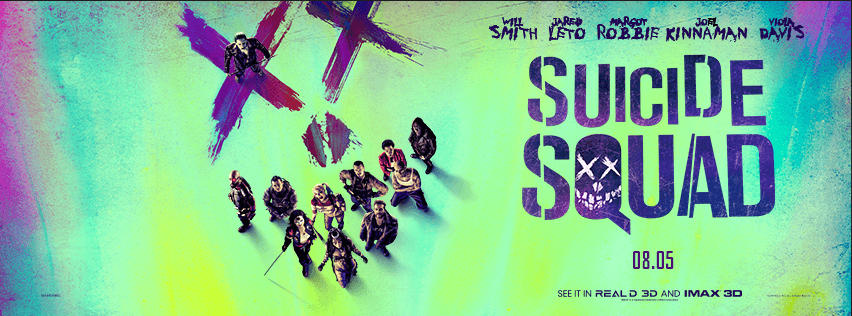
“Suicide Squad” has hit the theaters, and while the initial reviews are looking less than favorable, it’s undoubtedly the biggest coming-together of lovable rogues for one single movie.This got us thinking: what is it about certain bad guys that we’re drawn to. And which in cinema are the most endearing?

Today we’re not just talking antagonists with likable qualities, but bona fide bad guys who you can’t help but want to see win.

  1. Dr. Hannibal Lecter (The “Hannibal” Franchise)

It’s an exceptional feat of writing to make an audience root for a murderous psychopath who thinks nothing of turning a flautist’s liver into pate and serving it to dinner guests.

In theory, we should despise Dr. Hannibal Lecter as the monster that he is. But due to his limitless charm, willingness to help the story’s underdog (Clarice Starling), and the gleeful delight he takes in torturing characters we also dislike (Dr. Chiltern, Paul Krendler, and Mason Verger, among others), it’s hard not to feel like he’s on our side.

We’ll ignore “Hannibal Rising.”

  1. Gru (“Despicable Me” franchise)

Animated features rarely switch up the notion of good guy/bad guy. More often than not, it’s very clearly defined which characters are “evil” and which ones we should be rooting for as an audience.

“Despicable Me,” on the other hand, places a classical super villain in the role of the protagonist –and to great effect. There is a more super-villainy super villain in the form of Vector, which frames Gru as a good guy in a relative sense and gives him someone to work against. But throughout the movie, Gru is very much intent on being the most typical bad guy on the planet.

Until, of course, his sensibilities change in the third act, giving Gru a story arc that follows The Hero’s Journey beat for beat.

  1. The Firefly Family (“Devil’s Rejects” and “House of 1000 Corpses)

Make no mistake about it: the Firefly family are terrible, terrible people whose sadism and penchant for violence is utterly horrifying.

But paradoxically we want them to kill the dumb kids, and we definitely want them to escape from the rather unlikable Captain Wydell. In the universe Rob Zombie crafted across the two movies, their tale is one of outlaws sticking it to the man. Horror aside, it becomes something of a buddy road movie, and one which those with a strong stomach are invited to enjoy.

  1. Jareth (“The Labyrinth)

If you can think of another baby-kidnapper who is more enigmatic, charming, and likable than Jareth, we want to hear about it in the comments.

Rest in piece, David Bowie.

  1. Patrick Bateman (“American Psycho)

Like many of the other entries on this list, Patrick Bateman doesn’t have many redeemable character traits going for him. Not only is he a serial killer, but he’s a vain, materialistic investment banker.

Ultimately, however, we take a perverse joy in watching a man live an anarchic life and indulging in whatever whim takes his fancy.

  1. Alex Burgess (“A Clockwork Orange)

https://youtu.be/v90KPJ6n4Ew

From one anarchist to another, Alex Burgess (or DeLarge in the novel) is similar to Bateman in the sense that he eschews all social convention in favor of simply doing whatever he pleases: in Alex’s case, it’s spreading his own brand of “ultraviolence.”

But above it all, he’s sophisticated and charming – and even recognizes that not everyone should act like him, lest society completely collapse. He’s a complicated and endearing one-off, and for that we delight in his unruliness.

  1. The Joker (“The Dark Knight”)

Closing off with arguably the greatest interpretation of the greatest super villain of all time: Heath Ledger’s The Joker.

Bateman and Burgess have nothing on the Clown Prince of Crime. He not only displays zero affection for organized society or even the notion of “good and bad,”  but he’s obsessed with forcing others over to his way of thinking.

A common thread here is that we secretly enjoy watching people act outside of “the rules,” and nobody does it with more flair and drama than The Joker.

Any we missed? Head on down to the comments and let us know your top super villains you can’t help but love…

… and your thoughts on “Suicide Squad” if you’ve seen it!

Words of Wisdom from Paul Feig

FRANK

Recently, we had an opportunity to sit down with Paul Feig, famed director of Spy, Bridesmaids, and the recent re-launch of Ghostbusters. Feig is also an actor, producer, and screenwriter. He’s worked every job there is in the industry. We asked if he had any advice for students at the New York Film Academy and this is what he had to say…

  1. Now is the Time to Start

Paul Feig: “If you’re starting as a filmmaker now, you are doing it at the greatest possible time. Coming up, when I was trying to do it, just to shoot a movie was prohibitive because you had to get film—and film costs a ton of money—and how do you get all this stuff together? And then, if you were lucky enough to have enough money to make it, how do you possibly distribute it? Even just post-production costs a fortune, and then you’ve got to distribute it.”

Unless you choose to shoot on film, which you absolutely should try at least once, you may never know the struggle of perfectly timing your shots, so you don’t run out of footage. Today, with the advent of digital filmmaking, you do not have to pay hundreds of thousands of dollars just to shoot your idea. There’s no better time than right now to begin your career because…

  1. You Already Havethe Materials

Paul Feig: “Now, with this cell phone sitting on the desk, I can shoot a high definition movie. All of these takes [can be] downloaded into my computer. My computer comes with non-linear editing software.”

If you buy a computer or touch screen phone, chances are you’ve got all you need to make a short or even feature film. Both Tangerine and 9/Rides were shot on iPhones. Both films had major festival releases and helped launch their director’s career.

  1. The Internet is Your Friend

Paul Feig: “And then the INTERNET. You can literally distribute your movie to the entire world by hitting an upload button.”

In other words, don’t take for granted the easy access to potential fans. The Internet is all around, and it’s easy to forget what a valuable resource it is. In fact, the UN just declared the Internet a human right, which means more people than ever are using it. Shouldn’t they be using it to watch your films?

  1. No Disclaimers

Paul Feig: “The fact that you’ve made it doesn’t mean it’s great. Hopefully it will be, but you’ve got to be really hard on it. You’ve got to let people around you be hard on it. You’ve got to work it; work it because once you put something out there, you want it to be your calling card. You don’t want to have to go, ‘Oh yeah, well it would be better, but we didn’t do this or that…’

No disclaimers. That was the biggest lesson I learned when I was at film school. We would show our student films and you would get up and say ‘Oh, no, the reason [was] we didn’t have this…’ And my teacher wouldn’t let you talk. He’d just say, ‘No disclaimers. The audience doesn’t care.’”

Your audience doesn’t know you or the blood, sweat, and tears you put into making your film. All they know is they came to be entertained. So, when you screen your film, don’t tell viewers about the struggle, and try to get people who can be brutally honest. By putting your film through a rigorous screening you’re helping to ensure its success in the real world.

  1. Story First

Paul Feig: “What they care about is a great story with great characters. They don’t care if it looks professional. If you capture them and intrigue them with a great story and great characters then you are a filmmaker and you will be found.”

At the end of the day, it’s all about the story you’ve told. Do the characters pull on the heartstrings? Is the audience pleasantly surprised to be proven wrong? If you can create that kind of magic then you can truly call yourself a filmmaker.

“Nerve” Like Movies

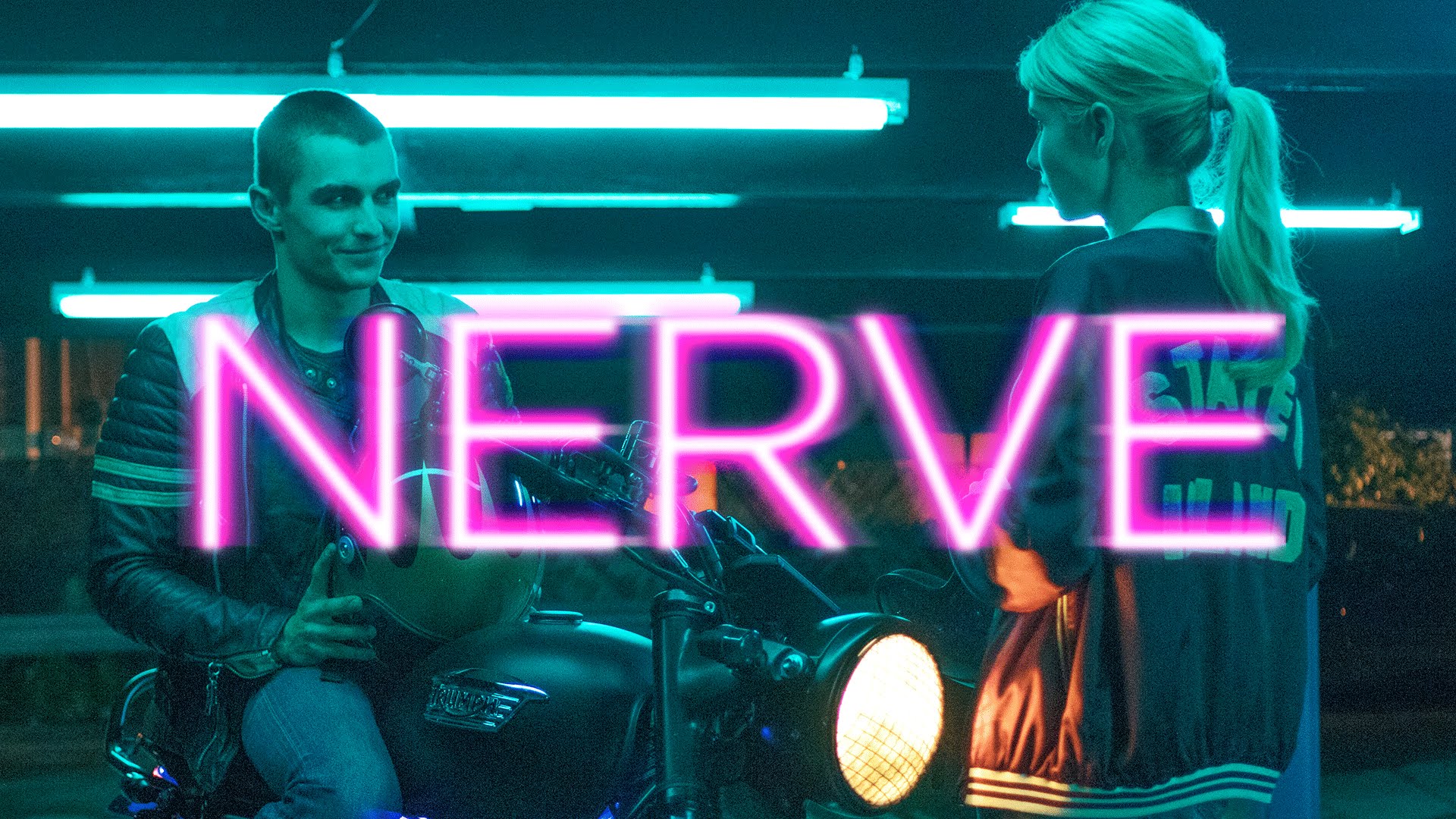
Nerve is coming out on July 27. In the film, Emma Roberts and Dave Franco are brought together by a real world, high stakes game, where “players” are given tasks with cash prizes assigned upon completion. The game generates money from its “watchers,” who pay to watch the game take place. It’s hard to tell how the plot will unravel before the movie actually hits theatres. The trailers, however, hint that there may be a twist at the end, that the players will end up stuck in the game, or even that their lives may be at stake. It seems that the film excitingly combines elements of a teen action movie, with its young lead actors, and elements of a cyber conspiracy movie, as the players are controlled through surrounding technology, and the game controllers are able to hack into their lives using the Internet. Here are 5 other suspenseful movies where an overbearing organization – an anonymous hacker, a group of activists, or the government – takes control of the protagonist, leaving them with no means of escape other than to fight their way out.

Nerve ( 2016)

Eagle Eye (2008)

A regular guy is suddenly thrust into fugitive status as he discovers he has been framed for a serious crime, and the FBI wants to catch him. This is all controlled by a mysterious agency that communicates with him through surrounding technology in order to manipulate his life.

Source Code (2011)

The military is using top-secret technology to transport Captain Colter Stevens into the body of a man who died in a train explosion. This should help them catch the bomber before he makes another attack. But where is the Captain’s body?

The Purge: Election Year (2016)

In The Purge’s twisted version of America’s future, it becomes clear that the government is using the annual night of murder for political gain. Conspiracy, mystery, rebellion, mind games: you’ll find all of that and much more in this eerily real seeming film.

V for Vendetta (2005)

A vigilante terrorist faces off with a fascist government. But underneath the violent physical combat, a cyber war is taking place.

Her (2013)

Falling in love over the phone is one thing. But falling in love with the artificial intelligence operating system inside of your phone? That can’t be good.

The Perfect Storm of Game Design: How Did Pokémon GO Become so Popular, So Quickly?

If you went back in time, even just by twenty years, and told the first person you met that one day millions of people would suddenly start running around their neighborhood looking for imaginary creatures with their mobile phones, they’d suspect you’d gone nuts.

And who could blame them? Who could have possibly predicted the future in which something like this would be a reality:

P1

But here we are, and we’ve barely even begun. Pokémon GO is performing better than any game designer could ever dream of, and it’s not even been out a month. This phenomenon is borderline immeasurable in its scale – not only has it done the impossible by beating Candy Crush and Mobile Strike (by a huge margin), but its become more popular than Snapchat, Tinder and even Twitter.

Rightfully so, every game designer and developer on the planet is now staring, mouths agape, at the figures and wondering how to emulate this kind of viral insanity.

There’s no telling where the apex is yet, but it’s certainly not too soon to at least begin examining the ingredients of this recipe, because it’s undoubtedly one that will be discussed at game design school for quite some time to come.

1. Innovation and Accessibility

Augmented reality is a new thing, but it was a little slapshod in the early days of mobile gaming – usually added as an afterthought – and the technology instead got put to better use in the health and fitness niches of app development.

Pokémon GO, on the other hand, is the first to put AR at the center of the gaming experience in such a big way. Coupled with the fact that you go from download to chasing Pokémon in less than two minutes, it’s of no surprise that the sheer novelty has gotten players deliriously excited.

It’s almost like it had to happen sooner or later–it was just a question of who would be the first to make a viral AR masterpiece. That someone was Niantic.

P2

2. Provenance… and even more accessibility

Building a strong franchise pays dividends for game designers further down the line, but it’s also a double-edged sword.

When the universally applauded Witcher 3 came out, many people who were unaware of the series prior to its release asked “Do I need to play the first two games to understand Witcher 3?”

Luckily the answer was ‘not really’, because otherwise it could have turned off thousands of potential players who didn’t want to wade through two lengthy predecessors just to get up to date. A fine balance was struck between furthering the lore for fans of the series and serving as an accessible point for new players to jump in and pick up the backstory as they go along.

While Pokémon may be less literary in its roots than The Witcher, its history is even more extensive – nearly a thousand episodes of the cartoon show, eighteen movies and seventeen games (if you include GO itself.)

P3

That’s a hugely intimidating canon for anyone new to the series, but Pokémon GO reassures all newcomers that the slate is clean and the objective is as clear as it is singular: gotta catch ‘em all.

A game that is inviting – from the design to the branding – is a heck of a lot easier to market. And that brings us neatly on to another point…

3. Adults are Playing It

This sounds like a flippant point, but it’s an important one.

Historically, and without wanting to denigrate adult players who have enjoyed the series so far, Pokémon has always been seen (at least from the outside looking in) as a ‘game for kids’; that game your younger brother played while you pursued more ‘serious’ games like Magic: The Gathering.

That’s a hard misconception to overcome, but what better way to breach that perceived age divide than to have near countless numbers of adults suddenly join the craze?

P4
It’s self-perpetuating marketing, and moreover…

4. The Marketing Does Itself

You see everyone reading 50 Shades of Grey on your daily commute, and you wonder what you’re missing. You see everyone playing the Dark Souls 3, and… well, nothing.

You don’t see them, because they’re behind closed doors.

On the other hand, one of the key stories of Pokémon GO is the sheer number of people giddily running around the streets in the search for rare Pokémon. Even from the NYFA offices we’ve been watching – with no small amount of amusement – people zipping past the windows with their phones outstretched, pausing only to talk to other trainers, and when lunchtime rolls round, we tend to go out and join them for an hour.

This kind of visibility is what has truly pushed Pokémon GO into a league of its own in terms of viral success, above and beyond even the likes of multi-million dollar enterprises such as Candy Crush and Mobile Strike [LINK TO OTHER ARTICLE HERE.] Indeed, the latter had to spend vast sums of money in advertising just to get where they are, while Pokémon GO has relied primarily on its own self-generating interest.

By proxy, people running around the streets playing a video game naturally leads to some interesting headlines in a way that sitting at home does not. A lot of it is positive: the mental and physical benefits of roaming outdoors, the uptick for businesses listed as Pokestops, and the increase in visitors to cultural attractions.

Admittedly not all of it great – reports of muggings have been frequent, as have accidents and even a couple of grisly discoveries – but it has helped the game completely saturate the media, nonetheless.

Some of the images people are encouraged to take using the in-game camera are very shareworthy, too…

P5

Even the most reckless of gamblers wouldn’t put a bet on how far or how long this phenomenon with stretch, but it’s almost certainly changed the landscape of mobile gaming forever, despite its young age.

Over to you guys. Do you have any thoughts on the design of the game itself? Do you think the hype is justified? Let us know your experiences with Pokémon GO down in the comments…

… in the mean time, happy hunting!


The Top Ten Highest Grossing Mobile Games (And How They Got There)

At this point, you may have heard of a little mobile game called Pokémon GO. It’s doing rather well and is gaining a bit of popularity?

But while Pokémon GO is busy redefining everything we know about mobile gaming and the revenue potential thereof, it stands on the shoulders of giants. Over the past half decade, we’ve seen more than a few games go on to gross more money than stockbrokers would dream of earning in a lifetime.

Here’s the current top ten, and today we’ll be looking at them with a simple game design question in mind: how did they get so successful in the first place?

Highest Grossing Free-to-Play Games, Examined

Chart placements may vary if all platforms are considered, but for consistency we’ve stuck to the US App Store data as of 15 July 2016.

And bear in mind that the revenue isn’t the amount the app has earned over its life time, but per day.

Yikes.

1. Pokémon GO

Revenue: $1,635,048
Days on App Store: 9
Publisher: Niantic Inc.

M1
How it Got There: Needless to say, even at this very early stage in Pokémon GO’s life it has become a global phenomenon the likes of which gaming – mobile or otherwise – has never seen before. Its insane performance is down to a perfect storm of factors, which we discuss in more detail here.

2. Mobile Strike

Revenue: $1,271,560
Days on App Store: 246
Publisher: Epic War Llc
M2
How it Got There: Advertising as aggressive as a napalm firestorm. Mobile Strike was one of the first free-to-play app games to have gotten on board with TV advertising, coupled with an A-list endorsement by none other than Arnold Schwarznegger. If you haven’t seen Mobile Strike’s marketing campaign in action either on screens or across promoted social media ads, you’re probably on board the International Space Station.

3. Game of War – Fire Age

Revenue: $865,409
Days on App Store: 645
Publisher: Machine Zone Inc

M10

How it Got There: Having never strayed far from the highest grossing game spot since its release in 2014, Game of War has maintained its throne in very much the same way as Mobile Strike: sheer advertising bucks and celebrity endorsement.

$40 million was thrown at the game in 2014 and included a campaign with a very scantily-clad Kate Upton (since replaced with Mariah Carey.) In terms of return on investment, the developers came good – players spend a whopping $550 on average in the game, compared to just $87 typically spent a year in other titles.

4. Candy Crush Saga

Revenue: $442,296
Days on App Store: 1338
Publisher: King

M4

How it Got There: Before Pokémon GO came along, Candy Crush Saga was pretty much the first game anyone would name when you mentioned the phrase ‘addictive mobile game.’

While aggressive advertising is once again a big factor in Candy Crush’s app store dominance (particularly in the far East and with a clever spot in Psy’s then-to-go-superviral Gangnam Style), it’s the addictiveness that has really pushed the game to stratospheric heights.

And it’s literally addictive. By combining simple, accessible game mechanics with a perfectly sloped difficulty system as well as a reward system that physically releases neurochemical dopamine in the player’s brain, it’s a model of game design, which many developers are scrabbling to implement in their own apps.

5 and 6: Clash of Clans and Clash Royale

Revenue: $321,783 and $271,718
Days on App Store: 1043 / 136
Publisher: Supercell

M5

How it Got There: Arguably, it got there because it got there first.

Supercell’s two Clash titles aren’t wholly dissimilar to Mobile Strike and Game of War and they all share the same winning formula, but Clash of Clans beat them to the punch by a good couple of years. The fact that the gameplay is generally lauded as a good game and that the developers have kept on top of updates has helped keep it near the top ever since.

7. DoubleDown Casino & Slots

Revenue: $238,166
Days on App Store: 669
Publisher: DoubleDown

M6

How it Got There: Let’s face it, it’s a straight-forward gambling app – this essentially operates on an ‘if you build it, they will come’ philosophy.

Being installed nearly 20,000 times a day, most of the success here lies in the fact that DoubleDown have succeeded where similar apps have failed: making a real-money gambling app that abides by Apple’s strict policies while still delivering a slick user experience for the player.

Or perhaps we’re reading into it too much, and they may have simply been lucky with keyword searches. The app’s full name is DoubleDown Casino & Slots – Free Vegas Games, Win Big Jackpots, & Bonus Games!

8. Candy Crush Soda Saga

Revenue: $202,003
Days on App Store: 612
Publisher: King

M7

How it Got There: See above.

9. CSR Racing 2

Revenue: $174,150
Days on App Store: 15
Publisher: NaturalMotion

M8

How it Got There: While it may only stand at No. 9 on the highest grossing apps chart currently, this is exceptional given how recently it was released (rivaled only by Pokémon GO in growth) and it did peak at No. 1 in its first few days.

CSR Racing 2’s success can be largely attributed to the performance of its predecessor, which got healthy showcase promotion at the 2012 WWDC and went on to take a gigantic $12 million a month shortly afterwards.

10. MARVEL Contest of Champions

Revenue: $154,910
Days on App Store: 583
Publisher: Kabam

M9

How it Got There: The developers can thank the Chinese.

While a game based around a brand as strong as Marvel is almost always guaranteed to do well, it was only when Kabam carefully redesigned the game to appeal to the Chinese market and released it there in late 2015 did the game really take off. The lesson for game designers here? Don’t neglect your potential foreign markets!

——–

In conclusion, the take-home message for game designers looking to make a financial success from their work is this: there’s more than one way to skin a cat, but there are also proven tricks that seem to work every time, too.

Then again, Pokémon GO has completely changed the landscape of mobile gaming in less than a month.

 Whatever happens from here, it has certainly thrown the Meowth amongst the Pidgeys.

10 Popular Scenes in Movie History

Combing through cinema history, we thought we’d list ten unforgettable and well executed scenes that have stood the test of time. While we’re not listing these as the top ten best scenes of all time, they’re arguably some of the most memorable. Let us know which scene is your favorite whether it’s on this list or not.

On the Waterfront

Marlon Brando delivers his famous line in the back of a car with his brother. Unhappy with his current position as a “bum,” Brando lets his brother know his disappointment for having to take dives—back when he was a boxer—in order for his brother to make a few extra bucks. He could’a had class.

Casablanca

“Here’s looking at you, kid” Humphrey Bogart is forced to selflessly let go of his former love portrayed by Ingrid Bergman. At least they’ll always have Paris.

The Godfather

In this final scene from Francis Ford Coppola’s The Godfather, Michael Corleone has officially taken over all family business as he’s crowned the new Don. His business affairs are now officially off limits for Kay.

Manhattan

Such a breathtaking shot from Gordon Willis of the Queensboro Bridge as Woody Allen professes his love for New York City while having a romantic evening with his best friend’s mistress.

Jaws

Epic monologue from Robert Shaw as he recounts horror tales of the sea from his time in World War 2.

8 ½

Federico Fellini delivers masterful filmmaking in this scene where his main character, Guido, falls into a fantasy where he’s surrounded by all the women from his past.

Duck Soup

This scene is remarkable on several levels. Just consider the time and commitment it must’ve taken Groucho Marx.

The Shining

At the height of his cabin fever, Jack Nicholson chases down his wife and son with an axe. “Here’s Johnny!”

Rocky II

After finally defeating Apollo Creed to become the world champion, Rocky Balboa wastes no time in telling the love of his life, “Yo, Adrian, I did it.”

The Deer Hunter

The harsh reality of Vietnam POW prisoners forced to play Russian Roulette. Some incredible acting chops displayed from Robert De Niro and Christopher Walken. “Mao!”

5 Movies Starring Female Ensembles

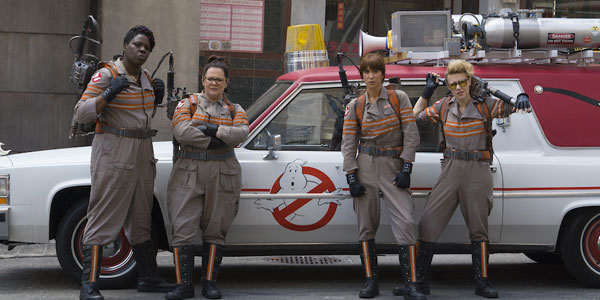
This past weekend, Paul Feig’s remake of the 1984 supernatural comedy, Ghostbusters (Ivan Reitman), is hitting theatres. Unlike the original film, which starred Bill Murray, Dan Aykroyd, Ernie Hudson, and Harold Ramis, the 2016 version has cast four women – Kristen Wiig, Leslie Jones, Melissa McCarthy, and Kate McKinnon – in the leading roles.

GB111

At New York Film Academy, we love to see women taking charge, amassing recognition for their talent, and spearheading the way for our students and future actors. However, movies dominated by female stars are fairly new to the industry. This variety of film is often critiqued for its tendency to appeal more to female viewers and to deal with issues that are specific to women. To this, we say: sorry, but we’ve been deprived. Bring on the ladies!

A League of Their Own (Penny Marshall, 1992)

Yes, Tom Hanks was one of the major characters in this film, but the rest of the cast were almost entirely female. We’re talking Rosie O’Donnell, Lori Petty, Geena Davis, Madonna, and the list goes on. The actresses blended a humorous sensibility with moments of strength and compassion to create onscreen chemistry and an emotional, inspiring viewing experience. Plus, women breaking into a strictly male industry – like baseball – and taking it by storm? That’s how it’s done.

Whip It (Drew Barrymore, 2009)

Start with an established actress like Drew Barrymore, deciding she wants to direct a movie for the first time. Add a cast of incredible women, including Ellen Page, Kristen Wiig, Juliette Lewis, and Alia Shawkat. You get Whip It, the comedy-drama about roller derby, adolescence, expectations, and independence. The sometimes silly, sometimes powerful film truly understands what it’s like to be a teenager, trying to fit in and simultaneously trying to separate from the artifacts of childhood and immaturity.

Bridesmaids (Paul Feig, 2011)

Like Ghostbusters, Bridesmaids was directed by Paul Feig, and it stars several of the same actresses. The now-iconic comedy possesses a unique ability to make you cringe with its raunchy humor and simultaneously give you all the feels. When the film became a sensation back in 2011, it was hard not to adore Bridesmaids’ girl gang full of comedy veterans and upcoming stars.

Sisterhood of the Traveling Pants (Ken Kwapis, 2005)

The Sisterhood of the Traveling Pants

This beloved teen-drama chick flick is all about the bonds of friendship. Lined with subplots that explore romance, family conflict, the pursuit of identity, and the difficulties of change, Sisterhood of the Traveling Pants is based on a single, magical premise: a pair of jeans acquired by chance are somehow able to fit and flatter the very different body types of four best friends, played by Blake Lively, America Ferrera, Alexis Bledel, and Amber Tamblyn.

The Help (Tate Taylor, 2011)

https://youtu.be/UVTMkINRChk

The Help

Based on an award winning book penned by a female author, The Help delves into the experiences of women residing in a small, insular, Mississippi community, afflicted with racism and scandal. The film stars Emma Stone as a young woman who returns home from college with dreams of becoming a writer. She gives the disenfranchised women in her town an opportunity to speak and be heard, liberating them from the agony of silence.

The Best “Hamilton” Quotes

Three leading actors from Broadway musical Hamilton’s original cast officially departed the show. Hamilton started making headlines in 2015 as it became one of the most sensationalized and beloved modern musicals to date. Now, an international following full of avid fans and musical theatre lovers has its eyes on the cast members taking over the vacant roles. And the verdict? Praise and approval on all counts. Some people even say that the new cast is better than the original.

New York Film Academy students know that in any well-written musical, song numbers serve as structural elements; they further the plot, acquaint the audience with character dynamics, and enhance the show’s innate themes. As each musical number has great value, it is vital that performers sing every lyric with a clarity and attention to expression that properly represents the meaning behind it.

This undoubtedly applies to the show at hand. Hamilton is acclaimed for its writing, and its musical numbers have managed, not only to benefit the structure of the show, but to move and inspire a vast audience. In honor of Hamilton’s explosive success, its meaning to New York City and to our students, here are 10 of the most insightful quotes, ripped from the soundtrack, ordered chronologically.

  1. “If you stand for nothing Burr what’ll you fall for?” – Hamilton, Aaron Burr, Sir
  1. “I’m past patiently waitin’ I’m passionately smashin’ every expectation. Every action’s an act of creation!” —Hamilton, My Shot
  1. “’We hold these truths to be self-evident that all men are created equal.’

And when I meet Thomas Jefferson … I’m ‘a compel him to include women in the sequel!” – Eliza/Angelica/Peggy, The Schuyler Sisters

  1. “Why do write like you’re running out of time? Write every day like you’re running out of time? Every day you fight like you’re running out of time.” – Burr, Non-Stop
  1. “ ‘Everyone shall sit under their own vine and fig tree, and no one shall make them afraid.’ ” – Washington, One Last Time
  1. “I’m only nineteen but my mind is older. Gotta be my own man, like my father, but bolder. I shoulder his legacy with pride. I used to hear him say that someday I would – blow us all away.” – Philip Hamilton (and Ensemble), Blow Us All Away
  1. “We push away what we can never understand. We push away the unimaginable” – Angelica Schuyler, It’s Quiet Uptown


  1. “I don’t pretend to know the challenges we’re facing. I know there’s no replacing what we’ve lost and you need time. But I’m not afraid, I know who I married. Just let me stay here by your side. That would be enough.” – Alexander Hamilton, It’s Quiet Uptown
  1. “Legacy. What is a legacy? It’s planting seeds in a garden you never get to see.” – Alexander Hamilton, The World Was Wide Enough
  1. “America, you great unfinished symphony, you sent for me. You let me make a difference. A place where even orphan immigrants can leave their fingerprints and rise up.” – Hamilton, The World Was Wide Enough