Developing Your Core Acting Technique

If you’re thinking about becoming an actor, there are some basic things like your type, age range, and preferred medium (stage or film, or both) to which you’ve likely given some thought. But have you considered your acting technique?

Actors can train in several techniques developed by master acting instructors, including those based on the work of Constantin Stanislavski, who inspired Stella Adler, Uta Hagen, Michael Chekhov, Sanford Meisner, and Lee Strasberg.  Strasberg’s technique is commonly known as “The Method” and looks at a deep investigation of characters’ emotional lives to intensify the connection between actor and character. Using information gathered from the script, the life of the character is made multi-dimensional through investigating the actor’s own imagination and developing a fuller sense of humanity via techniques such as a detailed and rich back story that provides the actor with a deep connection to character that integrates the writer’s intentions.

And how does one do that, you ask? While no actor is the same, we’ve got you covered with four tips to help you get started on developing your own acting technique.

1. Relaxation

pexels-photo-209995

Relaxation or the release of muscular tension is a key skill in any technique. Muscles tense in order to block emotion and the anxious actor is often so full of that one emotion that they are incapable of feeling any others. Removing thoughts and tension that block emotional range and limit the actor’s imagination is an imperative. If you’re just starting out, find a quiet area and lie down with your arms at your side and your palms facing upward. Take several long deep breaths, preferably on a five count in and a five count out. With each inhale, imagine you are breathing in pure energy. With each exhale, allow all toxicity and negative thoughts to flow away from and out of your body. Allow your muscles to release and become pliant and available. Set a timer and do this for five minutes, beginning with breath and visualizing release and repeating the then slowly revive yourself by wiggling fingers and toes before you slowly sit up.

While there are a number of relaxation and breathing exercises, like these published on our blog, the trick is finding one or a few that work well for you, and then practice, practice, practice! This kind of training can seem very slow at first, and you may even fall asleep the first few times, but hang in there! This is the foundation of your technique. Many actors train with relaxation and breathing exercises that can be found in Stanislavski’s “An Actor Prepares.”

2. Sense Memory

pexels-photo-38972

Sense memory is an exercise to help actors recall objects, places, or things and allow the senses to react. For example, if someone were to ask you to recall the scent of a lemon, could you re-create in this moment the sensations you originally experienced? The first step in doing this would be to take a real lemon and sit with it. Explore in in your hands, with your fingertips. Bring it up to your nose. Memorize how it feels in your hands, and the scent of it as you bring it closer to your nose. Once you’ve explored this object with your senses – touch, sight, sound and taste (if necessary) — take it away! Now that it’s gone, try to recreate your sensory experience of this object. Recall the scent, the taste, the touch of it on your fingertips — your palms. The more you practice doing this, the easier it becomes!

3. Personal Object

red-bear-child-childhood

Let’s say you’ve been cast to play a corrections officer. Through the information provided in the script, you know your character clocks in at work Monday through Friday from nine in the morning to five in the evening. That’s a good chunk of the day that your character in on the job. Would he or she be carrying a ring of keys on their belt buckle? Perhaps you could experiment with the sensation of wearing a heavy key ring all day. Does it affect how you walk? Do you immediately reach for them when facing a door? Do you ever mistakenly reach for them in your personal life at home?

On the other hand, what if you are playing a character who just lost their mother? Perhaps your own mother gave you a bracelet when you were young and that object holds a key to certain memories of her. Can you imagine losing your own mother, and wearing that bracelet every day in remembrance of her? Use this exercise to brainstorm ways in which an object stirs emotions.  What if you saw the bracelet every time you wash your hands? Could your character also have an object their mother gave to them that elicits feelings? In this way, using an object of personal significance is helpful in developing a template to investigate the inner life of a character.  

4. Music/Sound

mobile-phone-iphone-music-38295

Music is another very effective tool that can be used to ground a character’s inner life. If you think about a time where you were excited and very optimistic about something — a first date, a graduation, the birth of a child — you may associate those events with a particular song. And if you don’t, you can find one that calls those feelings to mind. Now, let’s say you are playing a character who just got hired for her dream job. This calls for feelings of excitement, hope, and wonder at what’s to come. It’s also a time of transition. Can you find a song that inspires the emotions you need to ground the reality of this character’s experience?

There are plenty of songs in many genres, so feel free to go outside of your comfort zone. Music has a way of calling to mind different events in our lives, the people who were there, and the feelings we experienced in those moments. You may even be triggered by simple sounds. The sound of footsteps or a door opening and closing, and the jangle of keys can bring on a sense of anticipation, or excitement, or fear. Meditating to sound or recreating it in your mind while developing the backstory of your character can help you get into a role faster, and with more ease.

While these tips are not conclusive in preparing one’s own technique, they can certainly be used as an introduction while you are honing your craft. Remember, this is training! Taking on a character is like running a marathon, and like any runner will tell you, it takes the right training to succeed.

What are some of the exercises you practice to help develop your method acting technique? Let us know in the comments.


CoSA, Zero Effect, Brickyard, & Beyond: VFX Studios to Know

Of all the computer technologies that you have to try for yourself to truly understand, virtual reality is the king. Unless you put on a VR device and find yourself in a completely virtual world, you’ll never understand the immersive power of virtual reality, and why it’s poised to play such a vital role in the futures of many industries.

In the past, attempts to make VR something the average consumer can enjoy at home failed due to technological limitations and high costs. But today, many companies are investing in devices that most people can afford to purchase. 

Among these companies are Sony, Google, Microsoft, Oculus (Facebook), tech and video game companies, and communications/media companies like Time Warner and Viacom. Communications and media companies like Time Warner and Viacom are also investing in VR/AR. But without talented VFX companies to help create captivating experiences, the devices are all but useless. The following are some of the most talented VFX companies that have a future creating amazing VR projects:

CoSA VFX

The Company of Science and Art was a founded by Tom Mahoney and Jon Tanimoto, two guys who previously worked together in post-production and broadcast design. They served as VFX artists and supervisors on big films like “Titanic,” “The Lord of the Rings: The Two Towers,” and “The Chronicles of Narnia: The Lion, The Witch and the Wardrobe.”

Now, as VFX studio CoSA, the duo has grown a team that serves various clients. Working with the likes of Marvel, Warner Bros, Disney, and more, they’ve worked on popular shows and movies like “Gotham,” “Minority Report,” and “Guardians of the Galaxy.” If there’s anyone who could provide ground-breaking VR scenes for film and television, it’s CoSA.

Framestore

Founded way back in 1968, VFX studio Framestore has grown to become an award-winning company that uses creativity and technology unlike anyone else. In collaboration with some of the best directors and producers today, they’ve helped provide visual effects for films like “Fantastic Beasts and Where to Find Them,” “Guardians of the Galaxy Vol. 2,” “Doctor Strange,” and “Beauty and the Beast.”

Even more exciting is the fact that Framestore is very interested in VR, enough that they’ve already developed experiences for many devices. These include HTC Vive, Oculus, and Samsung’s Gear VR. They are also currently working on exciting projects for the popular PlayStation VR and anticipated Microsoft HoloLens.

The Endless Collective

Some of the former Framestore folks, award-winning game developers, and VFX artists have joined forces in a VFX studio called The Endless Collective that’s been doing some very cool stuff. Their company mission to push boundaries on the edge where technology meets the impossible is reimagining commercial campaigns.

With a client list that runs the gamut from Warner Brothers studios to the Hubble Telescope, credits have included “Gravity,” “Inception,” and “Batman Returns.” The Endless Collective was part teams that won two Academy Awards and two BAFTAs for the film “Gravity.”

Zero VFX

Starting out in a basement in 2010, Zero VFX has since grown to become one of the most artistic and innovative technology companies around. They also developed the world’s first fully cloud-based rendering solution, which Google eagerly purchased in 2014.

In five short years, Zero VFX already has an impressive resume of projects where they provided ground-breaking illusions. These include: “The Magnificent Seven,” “Ghostbusters,” “Southpaw,” “Black Mass,” and countless other films and commercials.

Industrial Light & Magic

ILM is a giant in the film industry. The acclaimed special effects company was founded 40 years ago by George Lucas to create all the illusions we know and love from the original Star Wars. Since then, ILM has amassed an incredible resume of award-winning projects.

It’s no surprise that ILM is interested in the virtual reality space. In mid 2015, it was revealed that a new division called the ILM Experience Lab was formed to focus on virtual reality. While they have worked on any retail projects, many game-like experiments have shown off that feature interacting with Jurassic Park dinosaurs and even speeding through a Star Wars battle.

Brickyard VFX

Brickyard Pacific Works began in 2004 at the helm of industry leaders in the visual effects world. As one of the top VFX companies, especially in the advertising trade, chances are you’ve seen one of their many commercials.

Their clients include everyone from Disney, Doritos, and Carl’s Junior to Puma, Cadillac, and LEGO Systems. If the day comes where we’ll be watching television on VR devices, you can bet Brickyard will be responsible for many of the immersive commercials you see.

This is only the beginning of the list of companies joining in the quest to advance and develop exciting new virtual reality technologies. It’s an exciting time and an exciting industry, which is why the New York Film Academy is pleased to now offer three innovative and unique workshop programs to bridge the worlds of VR, filmmaking, and game design.

Learn more NYFA’s new VR workshops, and let us know which VR developments you are most excited about in the comments below!

Lights, Camera, Travel: The Importance of International Education for the Visual Arts

Through social media and emerging technologies it’s become so easy to connect with friends from all over the world, offering the illusion that the world is small. When you travel, you realize that the world is actually quite vast and there is so much to explore. And like many other artistic disciplines, the visual arts are heavily influenced by environment and geography. But what’s included in the visual arts?

Visual arts encompass many fields, influence, and inspirations, and international education can feed a person’s work for years to come. In our own visual arts programs like cinematography, photography, illustration, and graphic design, studying in an international community or location will enrich your studies as you experience local architectural, environmental, and industrial arts, as well as the folk arts and culture — ceramics, jewelry, woodwork and paper (book arts anyone?).

So how can international travel play a role in your visual artistry? We’ve got some ideas listed below. International education:

1. Provides perspective.

6791264918_5937d2ecca_b

Whether traveling domestically or internationally, travel forces us out of our comfort zones. And for visual artists, the world provides a diversity of landscapes from which we can be inspired. From the rolling hills in a California countryside, to a sprawling Brazilian metropolis, the world is a canvas. From it, we can draw inspiration and in turn contribute by making our own mark. Whether sculpting or painting, or even designing urban spaces, exposure to different countries and cultures — both the good and the uncomfortable of it — forces us to increase our knowledge and open up our perspective.

2. Builds courage.

pexels-photo

Being thrown into unknown situations and learning how to come out on the other side takes courage! Not only have you survived, but you’ve become a little more independent, self-reliant, and perhaps more importantly, self-reflective. It takes courage to step into the unknown and even more to survive. This newfound courage can easily spill over into other areas of your life, where suddenly, playing around with that new idea — a new brush stroke, an additional sketch — doesn’t seem so scary. You’ll find that it becomes easier to stretch yourself, to dare yourself to take those experimental leaps that it seems none of the other artists are doing, and yet you are inspired and driven to do it. International education helps to build your courage to dig deeper into your authentic self.

3. Enhances Creativity

uf-global-photo-1775561_960_720

The more time spent immersed in foreign experiences, the more flexibility and depth you are able to bring to your art. But the key here is immersion. While you may not necessarily experience cultural immersion on a trip to a Cancun resort, going there and spending time with local schoolteachers may do the trick of offering you an authentic perspective of life in a different place and culture. Traveling exposes you to different experiences while forcing you to problem-solve in a foreign environment, and at times in a foreign language, while you build alliances with people who may be very different from you. Traveling teaches you how to develop creative solutions. Add this to your education, and you are learning on a whole other level. Creative problem solving is a skill built out of necessity, that has the potential to beautifully elevate your artistic palette as well as your understanding of the world around you.

4. Exposure to the interconnectedness of art.

pexels-photo-30161

There are connections everywhere, and the more you travel, the more you realize that the world is a patchwork of seemingly very different people who fundamentally want a lot of the same things. International education encourages the discovery of interconnectedness — in art, in knowledge, in people. And visually speaking, seeing some of the bastions of life translated in another culture expands your definition of them. Church might have a universal definition, but architecturally it is expressed a myriad of ways from Spain to Senegal. In Japan, animation has exploded with new forms being developed regularly that can be borrowed from and built upon. Like Monet and his seascapes, the relationship between artist and his or her environment can provide a fascinating artistic oeuvre.

How has international education, studying abroad, or studying in an international community helped you develop your visual art?

Women to Know in the Gaming Industry

Wondering where all of the diversity is in the video game industry? Don’t worry — it’s not all guys. Of course, it’s not surprising that that is the perception. According to a survey distributed by the International Game Developers Association in 2016, 75 percent of the 3,000 respondents identified as male. Meanwhile, 23 percent identified as female and 2.5 percent identified as transgender or “other.” For women looking to get into the industry, those numbers may be discouraging. But rest assured, there are role models to be found.

Take, for example, NYFA’s own Phoebe Elefante, who chairs not one but three departments at our New York campus: game design, virtual reality, and 3D animation and visual effects! Phoebe’s game credits include Wonder City, a superhero adventure game companion for the award-winning documentary, Wonder Women! The Untold Story of American Superheroines, and a list of games and apps that target the intersection of play and pedagogy.

Looking for more inspirational role models in the gaming industry? Here are four incredible women to know in the gaming industry.

1. Bonnie Ross. Ross is the corporate Vice President at Microsoft and the head of 343 Industries. That means that she is the queen of the Halo kingdom. She established 343 Industries, the studio that manages the full Halo franchise. Her job involves running the business side of studio. That’s a lot of responsibility, considering that Halo is — to borrow Bloomberg’s words — Microsoft’s biggest video game ever.

Watch her talk about how merging art and technology fuels storytelling in this video she did for Glamour Magazine.

maxresdefault

2. Kiki Wolfkill: Wolfkill is the studio head at Hallo Transmedia in 343 Industries. Her job focuses on the Halo universe and she made major contributions to the creation of Halo 4: Forward Unto Dawn. These contributions included helping develop the story, script writing, and creating the new Promethean enemy class. She counts supervising digital cross-media Halo entertainment, managing and producing Halo: Nightfall, and developing the Halo Channel among her other accomplishments.

Listen to an interview Wolfkill did with The Women in Tech Show in 2016.

sitting

3. Jennifer Hale: Someone has to voice the characters in video game, and Hale voices a fair number of some of the most recognizable female voices out there. In fact, the New Yorker called her “the Meryl Streep of the medium,” so she must be good. Most recently, she did the voice for Pellinore in World of Final Fantasy, Sharon Carter in Lego Marvel Avengers, and Sarah Palmer in Halo: Guardians. See her full list of credits on BehindTheVoiceActors.com.

Watch this video, “The Many Voices of Jennifer Hale in Video Games.” (She has quite the range!)

4. Corrinne Yu: Yu is a gaming programmer. Today she is the principal development manager at Amazon Prime Air. Previously, she worked as the graphics programmer at Naughty Dog, the principal engine programmer for Halo, and the studio wide director of technology at Gearbox Software. In 2010, Kotaku named her one of the 10 most influential women in gaming in the last decade — and it looks like she continues to live up to the honor years later. She currently sits on the SIGGRAPH Game Development Committee, the Microsoft Graphics Advisory Board.

Yu doesn’t have much in the way of recent interviews (due to shyness or modesty, maybe?), but you should check out this video interview she did in 2009

maxresdefault-2

For more inspiration, read Den of Geek’s list, “25 Awesomen Women in Gaming.”

Who are your game industry role models? Want to give a shout out to more women to know in the gaming industry? Let us know in the comments below!

Filmmaking Lessons You Only Learn When You Study Abroad

Studying abroad opens your mind to new ideas and your eyes to new perspectives. For filmmakers, it is especially useful to look at the world as if you are seeing it for the first time, and to be able to translate that freshness to your audience. Now, more often than ever before, that audience is an international one. Here are a few lessons that can only be learned by stepping out of your comfort — and time — zone.

Seeing the world through a new lens.

rio-1303951_960_720

Travel, if it is done well, can be both disorienting and inspirational — setting you up for a great learning experience! Studying filmmaking in another country exposes you to a new culture, shaking you out of your biases and helping you to see new stories in the world around you.

The Hollywood way is not the only way.

bolivia-1756155_960_720

Although it is sometimes difficult to see past the Hollywood giants, filmmakers from around the world have made their marks on American cinema. Consider the work of Akira Kurosawa (Japan), Wim Wenders and Werner Herzog (Germany), Peter Jackson (New Zealand), and Guillermo del Toro (Mexico), to name just a few. Studying in the countries of your favorite directors can offer insight into the histories and landscapes that influenced them, and can also help you gain an understanding of their international appeal. Not to mention, that you might discover new inspirations and influences of your own.

Making your way in a global market.

paris-902996_960_720

Globalization has forced the film industry to reinvent itself, according to The Hollywood Reporter. As international box office sales continue to increase, having an understanding of foreign markets will be vital for filmmakers. According to Wikipedia, China has become the biggest market after the United States and Canada in terms of box office dollars, while India actually sells the most tickets worldwide (at a lower cost). India is also considered the largest film industry in the world, followed by Nigeria and the United States. Breaking away from your hometown tendencies to live and work in a culture whose tastes differ from your own can help you create films that are compelling to global audiences.

Having friends in far-away places.

action-1807516_960_720

More than ever, making blockbusters involves an international group effort. A glorious example of this is the magical 10-year collaboration between Americans and Brits on the Harry Potter films. Studying abroad is a great way to learn to collaborate with people from around the world, and make connections that may serve you well in the future.

NYFA offers study abroad opportunities and filmmaking workshops in cities from Berlin to Mumbai. Check out our international campuses and study abroad programs, and prepare to take off!

dawn-1840298_960_720

Have you studied in a country other than your own? How did study abroad influence your work as an artist? Tell us about your study abroad experience in the comments below!

What Aspiring Artists Can Learn from The New Yorker Cartoons

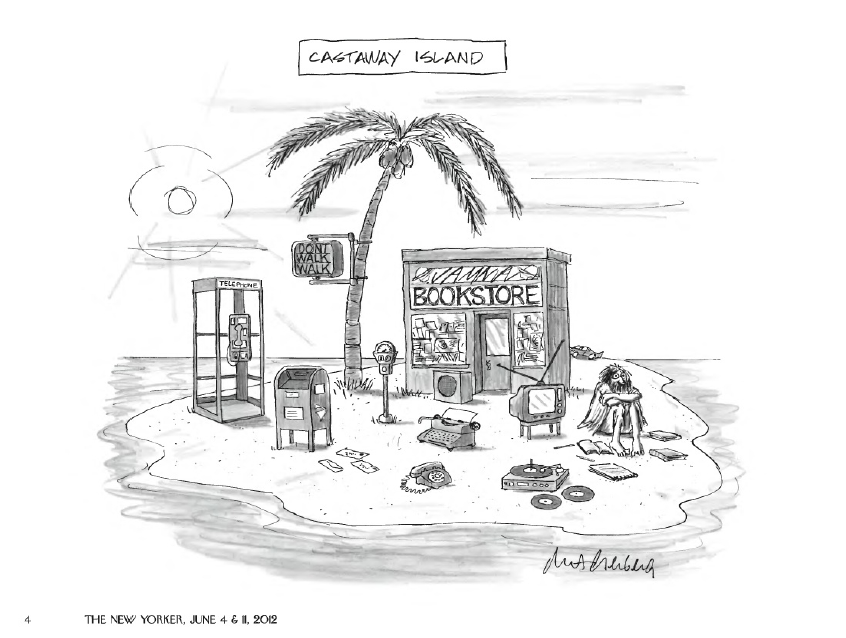
In The New Yorker you’ll find fiction, poetry, reportage — you name it. But if there’s one thing we can’t imagine disappearing from one of the most popular and successful American magazines of all time, it’s the cartoons. Below are a few things every up-and-coming animator, designer, and visual artist can learn from the cartoons that have been making people laugh and think since 1925.

Find Your Voice

ny2

Of course, learning which style brings out the best of your skills and creativity is only part of becoming a professional visual artist. You also need to find a way to set yourself apart from the rest so that people see something fresh and satisfying in your work. This is by far one of the toughest things to accomplish, and many animators take several years and hundreds of drawings to do so.

Three New Yorker cartoonists who developed iconic voices are Roz Chast, Michael Maslin and Peter Arno. Despite providing countless popular cartoons for the famed magazine, one can tell the subtle yet particular differences between their cartoons. Finding your voice means allowing your own personality to reveal itself and unfold through your work, whether you are animating a film or creating graphics for a client.

Stay On Top of Current, Popular Trends

One of the biggest reasons New Yorker cartoons have remained popular for nearly a century is because they’re made for you and me. In other words, the artists hoping to get their cartoon published make sure their work relates to cultural trends and what’s going on today. They speak to the times, as well as the culture.

The lesson to learn here is that every aspiring animator should have an understanding of what companies and clients are looking for. If your portfolio is brimming with work that’s contemporary and speaks to the technology and trends of the moment, you’ll better demonstrate your ability to speak to a specific audience.

The Career Path Is Competitive


It’s no secret that getting your work accepted by the New Yorker is an accomplishment worthy of celebration. They receive thousands of cartoons each year from hundreds of artists looking to make a name for themselves, and yet, only a few will be published. And even cartoonists who do secure coveted space for their work in the prestigious magazine will likely tell you that their success was hard-won, and built upon a pile of rejection letters. The moral of the story: the visual arts are competitive, and you will need determination, patience, and openness to criticism as well as talent in order to succeed.

Even the most focused, adaptable, and talented illustrator will sooner or later face rejection. The key is to have persistence and thick skin, which means never allowing a failure to keep you from moving forward and plugging away to secure and create great work.

Try Different Styles

Whether you’re looking to work in comic books, fashion, design, visual effects, or film, the best thing any artist can do is equip themselves with different tools. Part of becoming a diverse, flexible animator is learning to try other techniques and approaches, even if it’s new territory. The worst that could happen is that you discover your strengths and weaknesses, which is valuable information to help you focus on strengthening your professional skills.

This is why you’ll find all sorts of styles while skimming through the best New Yorker cartoons. Bob Mankoff, one of the most famous cartoonists in America, had over 500 cartoons rejected before he found success with “Surely You Jest,” which was made with a pointillist style consisting of dots to create the images. Although this cartoon served as his first step toward making cartoons for a living, he didn’t stick to this style alone and went on to make countless others via different techniques.

What inspirations have you drawn from The New Yorker cartoons? Let us know in the comments below!

Lessons You Can Learn from Freelance Graphic Design

There are many career paths you can choose from if you want to be a full-time graphic designer. Companies are always looking for new talent to design their logos, give their website a modern look, or make their product irresistible. But today, working as a graphic designer doesn’t necessarily mean working in the same office or on the same project for weeks, months, and even years. Thanks to the power of the internet, graphic designers have more freedom than ever to carve their own paths as freelancers.

Even if your ultimate goal is to have a comfortable position at a company, here are a couple of lessons you can only learn as a freelance graphic designer:

It’s All About Self-Promotion

startup-photos

In this day and age there are countless other graphic designers grasping for the same opportunities as you. As a freelance designer your goal is to get yourself noticed no matter what it takes. Whether you’re a veteran or new to the business, it is essential to self-promote and cultivate a vibrant professional network.

This is why every graphic designer should have a robust portfolio that showcases their skills. Your portfolio is your way of giving potential clients a taste of your talent and creativity, so be sure to put up and feature work that will leave them craving more. Freelance graphic designers learn the valuable lesson of carefully and diligently marketing themselves to stand out and win jobs, which in turn pushes them to produce better work that they can later show off.

Balance & Organization Is Everything

The average freelance professional often works from their own home, which is where they keep their TV, video game systems, and other temptations. Freelancers also make it their responsibility to earn enough projects to pay the bills without making the common mistake of spreading themselves too thin. This is why a freelancing professional won’t make it long without proper organization of workflow to keep them focused and on track.

As a freelance graphic designer you’ll learn the value of staying organized. Instead of missing deadlines, you’ll deliver fantastic work because you made sure to give yourself enough time to do it. Success as a freelancer also comes down to how well you balance your work and regular life — otherwise you’ll either burn yourself out or always fall behind.

Good Work = Continued Work

The best graphic designers of our time didn’t reach the heights they achieved on their first try. Much like any other creative career, graphic designers don’t really discover what they’re truly capable of until after they’ve had years of experience. And there’s no better way to continue growing and learning than by winning repeat clients who are willing to keep paying you for your work.

Repeat clients are the best thing for a freelance graphic designer because it means you’ve found someone who not only loves your work, but trusts you and depends upon you for consistency. But to hook a repeat client, you have to impress them with the first work you produce. As a freelancer you’ll learn the value of always putting your best into each project, since you never know which client will end up filling your wallet for years.

Rejection & Failure Will Only Make You Better

If there’s one phobia most people can relate to, it’s the fear of rejection (you may have discovered this feeling with the person you had a crush on in school or during your very first job interview). As a freelance graphic designer, you’ll most likely run into rejection sooner or later, but that isn’t entirely a bad thing.

Losing a client for not meeting a deadline or delivering something that wasn’t accurate to their request is a valuable learning experience. It will teach you to be better organized and take more time to understand what the client wants. You may even get the courage to take risks and get more creative if you find that clients aren’t impressed when you give them exactly what they asked for.

There’s always something new to learn even from a project that doesn’t end well. Freelance graphic designers sometimes learn this the hard way, but this too can become a positive. Freelancers must learn to take rejection and failure and turn it into encouragement to do better the next time around.

What have you learned as a freelance graphic designer? Let us know in the comments below!

Hollywood’s Funny Women

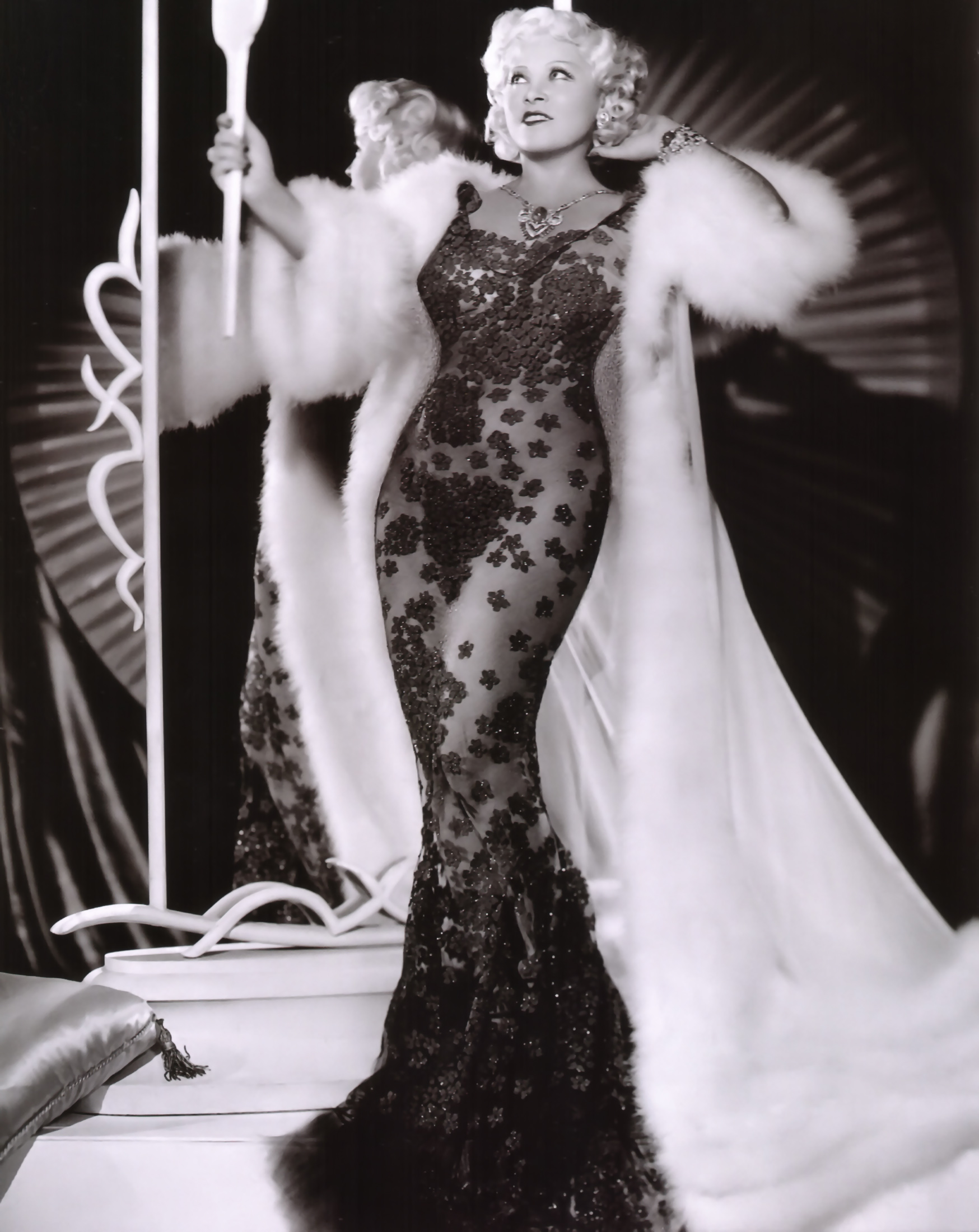
Mae West

West,_Mae_(Go_West_Young_Man)

In the beginning, there was Mae West — sassy, sexy, and smart. West’s early career in Vaudeville helped her develop a larger-than-life persona that came across on screen as wisecracking and worldly. West famously quipped, “I believe in censorship. I’ve made a fortune out of it.” Her work pushed the limits with censors, and West went to jail in 1927 to defend her right to free speech with her play, “Sex.”

Comedy in Hollywood films has often been in dominated by men. When women got to be funny, it was usually part of a romantic comedy or in some kind of domestic situation where the male actor still got the best lines. Yet the screwball comedies of the 1930s and ‘40s did have a group of actresses who gave as good as they got — Myrna Loy, Carole Lombard, and Katharine Hepburn held their own against the likes of William Powell and Carey Grant, dishing out one-liners and snappy comebacks. But, as World War II came to a close, film comediennes were once again relegated to bit parts and setting up the jokes for the male actors.


From the mid-50s to the 1970s, Lucille Ball and Carol Burnett helped producers see that women could not only do physical comedy, but that they could be the main attraction — at least on the small screen. Their influence on film comediennes (both onscreen and behind the scenes as writers and businesswomen) for the next few decades cannot be underestimated. Without them, there would be no Tina Fey and Amy Pohler.

The 1980s and ‘90s saw actresses make the leap from television to the big screen. Lily Tomlin, Catherine O’Hara, Whoopi Goldberg, and Teri Garr were just a few of the actresses who successfully transferred original character development and comedic timing learned from years of sketch comedy and improv to quirky film roles.

Photograph_of_US_American_Actress_Uzo_Aduba

The 2000s have seen actresses like Margaret Cho,  Melissa McCarthy, Uzo Aduba, and Mindy Kaling bring new perspectives to American comedy. They have used their personal lives as inspiration for character-driven comedy and, in McCarthy’s case, shown that funny women can, indeed, bring in audiences and sell tickets just as well as male stars.

Want some suggestions for great female-led films? Check out NYFA’s 5 Movies Starring Female Ensembles.

Who are your favorite funny women in Hollywood? Let us know in the comments below!

Is Social Media Success the New Way to Get an Acting Gig?

SONY DSC

Actors, like everyone else, have found their lives and careers changed by social media. Few could have predicted the impact social media would have on the world. Whether it’s to stay in touch with friends and family or read up on the latest news, the average person uses one or more social media pages each day. But who could have imagined that social media might influence how you pursue acting jobs?

If you’re reading this, you’re probably an aspiring actor. You’re probably eager to use all the tools available to you in the pursuit of professional work. And you’re probably wondering if the power of social media can help you build recognition or bankability in an industry full of actors and actresses competing for the same roles. The short answer is: it depends.

The role that social media plays in a professional actors career is complex. When used carefully and well, social media can certainly help connect you to your network, to potential audiences, to opportunities. But like every tool in a professional actor’s toolkit, social media comes with no guarantees save one: social media alone will not book you work as an actor. However, used wisely, social media can become a very powerful tool for an actor indeed.

Having A Professional Online Presence Doesn’t Hurt…

twitter-head

You may have noticed that just about every actor who is serious about their career owns a social media page on the major platforms: Facebook, Twitter, LinkedIn, and Pinterest. Since the internet can be accessed by anyone at any time, having a page where people can see your bio, major credits, and relevant experience, is a must-have. Many casting directors and agents will give young actors in workshops the advice to invest in a high quality website, and to spend time cultivating a real social media presence and following, so that potential collaborators can “get to know you.” It’s an opportunity to create and showcase your personal brand. And it’s important to be mindful about how you do this.

You’ll notice that actors who use social media wisely have more than words on their pages. After all, acting is one of the most visual and physical arts of all! That’s why you’ll also find short videos, photos, and other media that demonstrates an actor’s abilities. Of course, the question still on your mind is if doing all this actually helps develop an acting career in a significant way.

The answer? Perhaps no.

…But It Won’t Get You There Alone.

21910887703_eef220a4dd_b

The fact is, you shouldn’t expect your acting career to skyrocket just based on our social media presence alone. Sure, there have been instances where a famous YouTube personality was given the chance to act in an actual film, or where an unknown actors personal social media followings helped encourage a casting director to take a risk and give them a chance.

But rarely will a top agent use social media alone to find their next client. A casting director may check out your stuff online, but most likely only after you’ve already won consideration or established a promising connection.

To reiterate, contracts and starring roles are hardly ever cast through communication done via social media. And word to the wise: the last thing you want to do is pester anyone about an acting gig online by sending numerous tweets and emails, especially if they’re someone you’ve never met in person.

Social Media Pages: Still A Must-Have In Our Industry

640px-HollywoodSignJAN09

Just because social media isn’t necessarily going to lead directly to an acting gig, again, it is an important tool in your toolkit. Social media can have great purpose and effect in the hands of a savvy professional actor. Treat your pages like a resume, tailor your online presence to reflect the type of professional image you’d like to project both to those you know, and those you don’t know. Social media is one of many tools you can use to pursue for a specific role, but again, nothing is ever guaranteed. And it is important to remember that your professional online presence is visible to everyone.

In the end, social media sites are best used to stay in touch with people you’ve worked with. Developing relationships with others, including other actors, can increase your chance of finding out about a new opportunity. Be wise, be genuine, and good luck.

Actors, what are your social media tips for each other? Do you have any success stories about how your social media presence has served your acting pursuits in a positive way? Let us know in the comments below!