5 Patriotic Films to Commemorate Memorial Day

This upcoming Monday marks Memorial Day, a holiday honoring the brave veteran men and women who have served our nation. For many of us the day involves BBQs and gatherings with friends and families, but for some of us the bonus day off is a time to unwind, relax and catch up on some classic films. If you’re in that boat, we thought we’d highlight some of the films that best commemorate this special day.

Independence Day

Nothing screams American Hollywood blockbuster more than a Roland Emmerich action-packed film, involving the White House getting blown up by a giant spaceship and Will Smith actually punching a space alien in the face. When the common enemy comes from outside this world, it’s up to Bill Pullman, Will Smith, Jeff Goldblum, Judd Hirsch, and the American military to fight off the invading aliens. Together with its inspirational speeches, explosions, romance, and 90’s special effects, this modern classic has everything you could want in a Memorial Day flick. If you still haven’t seen this, be sure to check it out before its long-awaited sequel is releases this upcoming Fourth of July.

Rocky

If you’re still paying for cable and just so happen to be flicking through the channels, chances are you’ll land on a Rocky marathon this Memorial Day weekend. Nobody stands the test of time more than the iconic hero, Rocky Balboa, played by Sylvester Stallone. With his underdog, South Philly charm and American flag boxer trunks, Rocky can win over any crowd and any generation—even the Cold War Russians as we saw in Rocky 4. With Bill Conti’s unforgettable original score and Burgess Meredith’s rousing speeches, there’s nothing that’ll get you more motivated this holiday weekend than a healthy dose of the Italian Stallion.

Patton

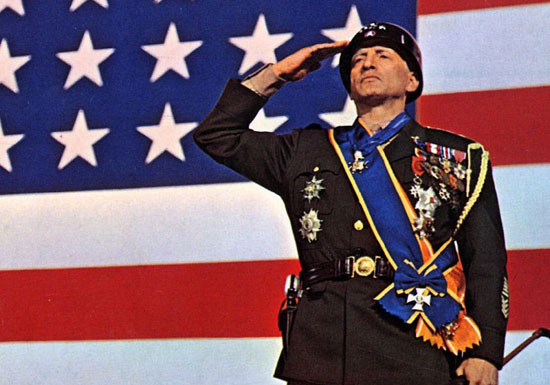
Earning George C. Scott an Oscar for Best Actor, this 1970 biopic of American General George S. Patton showcases its patriotism from the very beginning of the film as Patton delivers an inspirational speech to his soldiers in front of a giant U.S. flag. Few may know that the screenplay was written by The Godfather director Francis Ford Coppola and directed by Franklin Schaffner, who was behind the original Planet of the Apes. Coming in on close to three hours in length, this WWII epic chronicles the battles led by the controversial figure, Patton, a man who stops at nothing to defeat his enemies. Not without his flaws, the General exemplifies America’s military strength and confidence during its ultimate defeat of Nazi Germany.

The Hunt for Red October

New York Film Academy founder, Jerry Sherlock, produced this 1990 hit, based on Tom Clancy’s best-selling novel. Starring Sean Connery and Alec Baldwin, the film is set during the late Cold War era and involves a rogue Soviet naval captain who wishes to defect to the United States with his officers and the Soviet Navy’s newest and most advanced nuclear missile submarine. The question is: is he really trying to defect or is he out to start war with the US? For a “war” that involved no real battles, this thriller creates a scenario in which the Cold War could ultimately erupt in an underwater confrontation. That is unless Jack Ryan can save the day.

Born on the Fourth of July

Considered one of Tom Cruise’s most memorable performances and earning him his first Oscar nomination, this captivating Oliver Stone film surrounds the life of Ron Kovic, who was paralyzed in the Vietnam War. Kovic, played by Cruise, becomes an anti-war and pro-human rights political activist after feeling betrayed by the country he fought for. Battling obstacles both with his own mind and body, as well as against the country he once fought for, the film captures the tragedy and difficulties many of our armed servicemembers face when returning home.

Dog Eat Dog: The Sleeper Hit of Cannes 2016?

While there’s always something to get excited about when it comes to Cannes, 2016 in particular feels like a bumper year.

4dogeatdog

The promise of further Studio Ghibli collaborations are heralded by The Red Turtle. Director Andrea Arnold, one of Britain’s finest exports of late, looks set to break the US market with American Honey. Even the staunchest of cynics have been won over by the latest trailers of a Spielberg-helmed, live action adaptation of The BGF.

And amongst surefire smashes like Money Monster and Nice Guys premiering at Cannes 2016, there are more than a few potential sleeper hits that have piqued our interest, too.

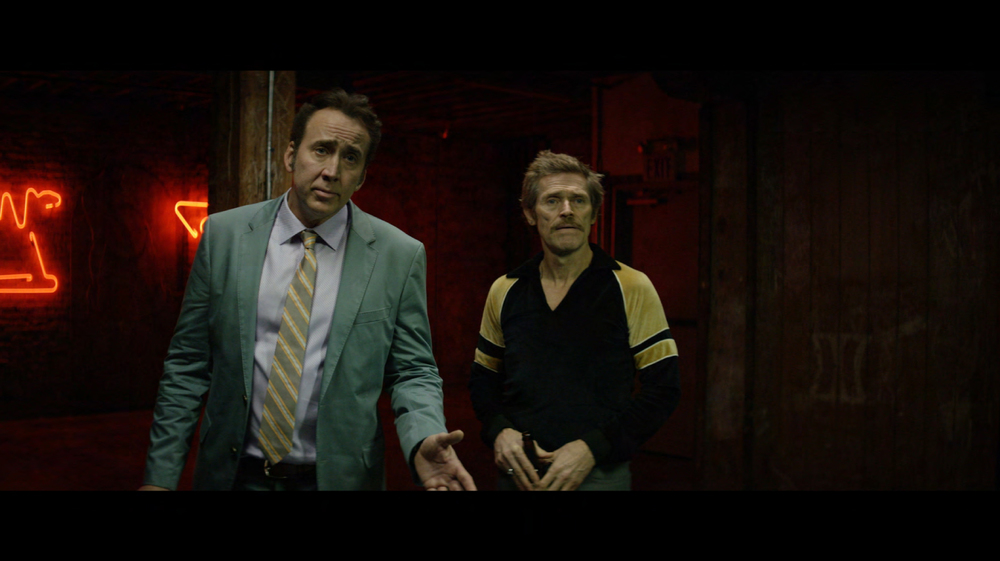
One such low-key title that isn’t garnering quite as much press as Clooney or Gosling’s respective outings – but is no less full of promise – is the novel adaptation of Dog Eat Dog

1dogeatdog

… and here’s why it might be the biggest success story of Cannes 2016, as well as the flick that potentially restores two careers to their former glory.

Schrader Meets Cage: A Collaboration Made in Heaven?

As the closing film for the Director’s Fortnight section of the festival, Dog Eat Dog is a tale of a crime going horrifically wrong as a baby kidnapping scheme by two crooks slowly falls apart.

Naturally we won’t spoil anything, but let’s just say that if it’s anything close to the Edward Bunker novel of the same name, it’ll be a hugely engaging emotional rollercoaster.

But more interesting still is that it might serve as a turn of good fortune for two of the people involved.

Paul Schrader (who directed, co-wrote the screenplay and stars in the movie) has long been an industry favorite. Precisely forty years ago at the Cannes festival, his breakout script for Scorsese’s Taxi Driver won the Palme d’Or and a string of similar hits followed over the decades.

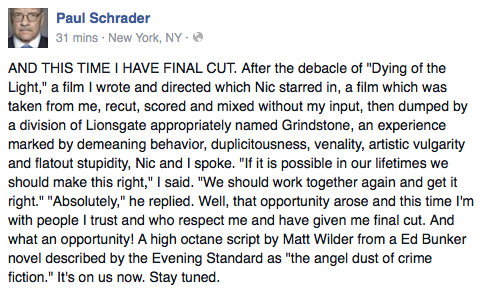
Unfortunately however, Schrader’s winning streak became derailed after spending the ten years struggling to finance feature films. He finally overcame this by embracing crowdfunding for 2013’s The Canyons, but production became a nightmare; as lead star Lindsay Lohan underwent a highly publicized struggle with addiction, filming became fraught with problems and Schrader himself claimed Lohan did little to support the movie.

Ultimately, along with intense arguments about how the film should be cut, it ended up as a flop.

It goes without saying that this is a huge shame given Schrader’s pedigree, but if Dog Eat Dog proves to be as good as it looks, it should hopefully put Paul Schrader back on top. Where he belongs.

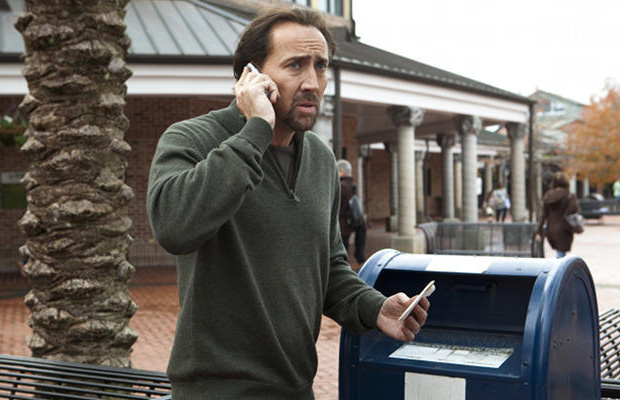
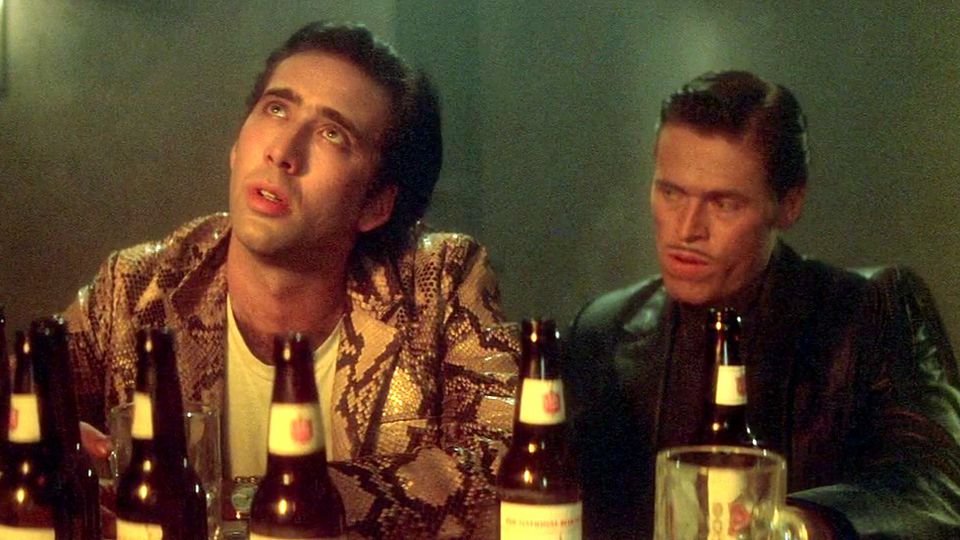
But given that this is a crucial movie for the director, it’s perhaps odd that he should choose to put Nicholas Cage in a leading role. It is not the first time the two have worked together, and it didn’t go well the first time around (though through no fault of Cage’s):

3dogeatdog

And it’s not that Cage isn’t a highly engaging actor and one that can effortlessly steal scenes (not always for reasons he might intend), but his name alone has become exceptionally volatile at the box office. While capable of soaring to great heights, his filmography of late has become increasingly stranger and the misses seem more common than the hits.

2dogeatdog

As such, it’s heartening to see Cage playing what looks like a ‘straighter’ role in a more conventional thriller. With a bit of luck it’ll also signal a return to form for him, and there’s every chance that it will given Cage can be a phenomenal actor when there’s a skillful director channeling his manic energy. Paul Schrader could well be that director.

So, could this be the big sleeper hit of Cannes 2016? The first signs look good…

Dog Eat Dog: The Early Reviews

At the time of writing, we’re within an hour of the film’s premiere credits rolling and already journalists at Cannes are beginning to post their reviews.

On the whole, it’s being hailed as a fresh twist on the classic crime story, and stylistically on-point. Both Nicolas Cage and Willem Dafoe are starting to get great write-ups of their respective performances, and the only common criticism is that Schrader himself slightly slacks in the acting department (at least in comparison to the two leads.)

It remains to be seen whether or not this momentum snowballs and becomes a critical moment in the careers of both Cage and Schrader, but this is definitely one to watch in amongst the post-Cannes hubbub to follow this coming week.

Arclight_Dog%20Eat%20Dog_screen%20grabs.pdf

In the mean time, we welcome your thoughts – could this be a make-or-break movie for the parties involved? Are you planning on seeing it the second it gets a release date, or will you wait for the DVD?

See you down in the comments below!

Creative Jobs Ideal For Broadcast Journalists: Looking Beyond The Nightly News

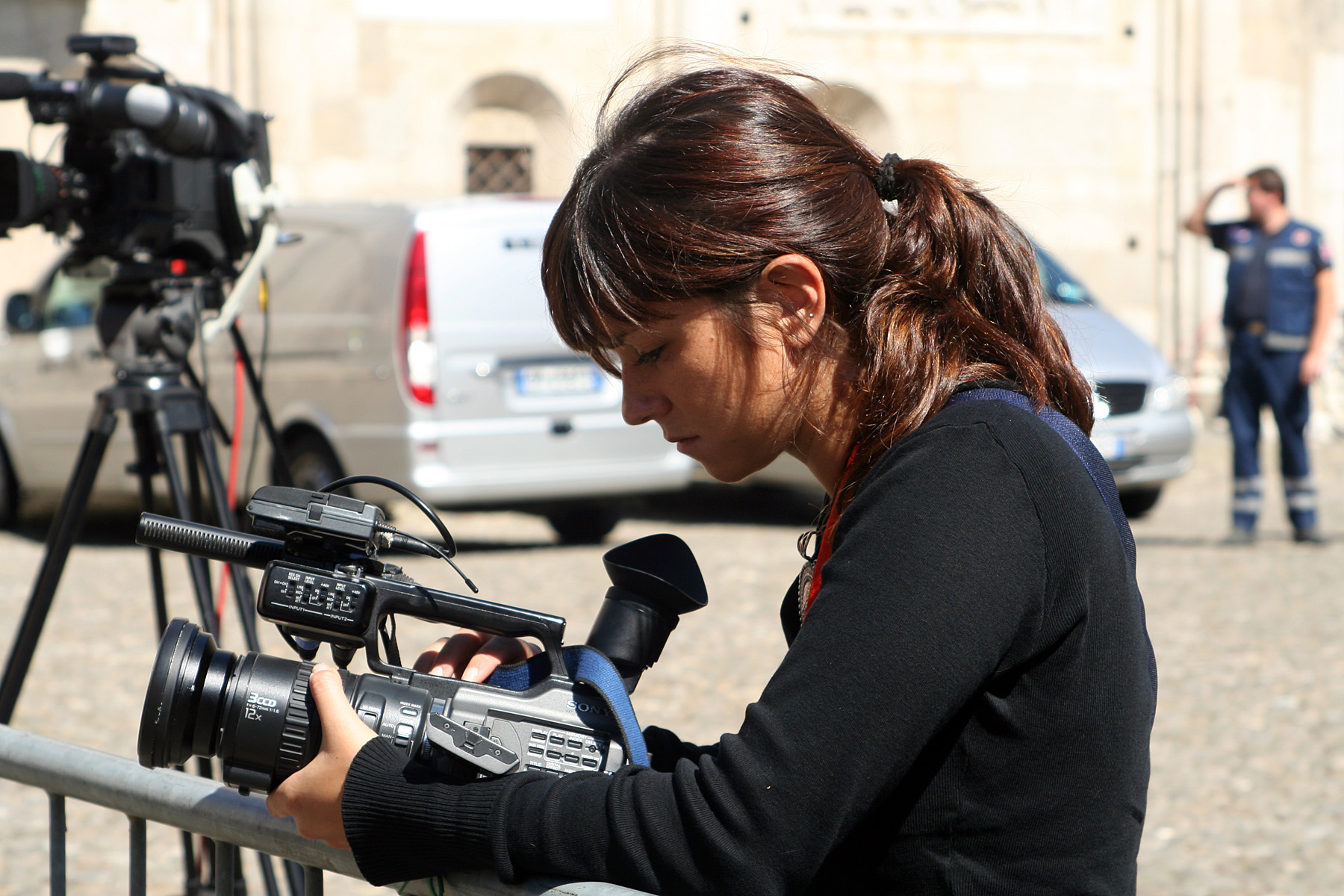
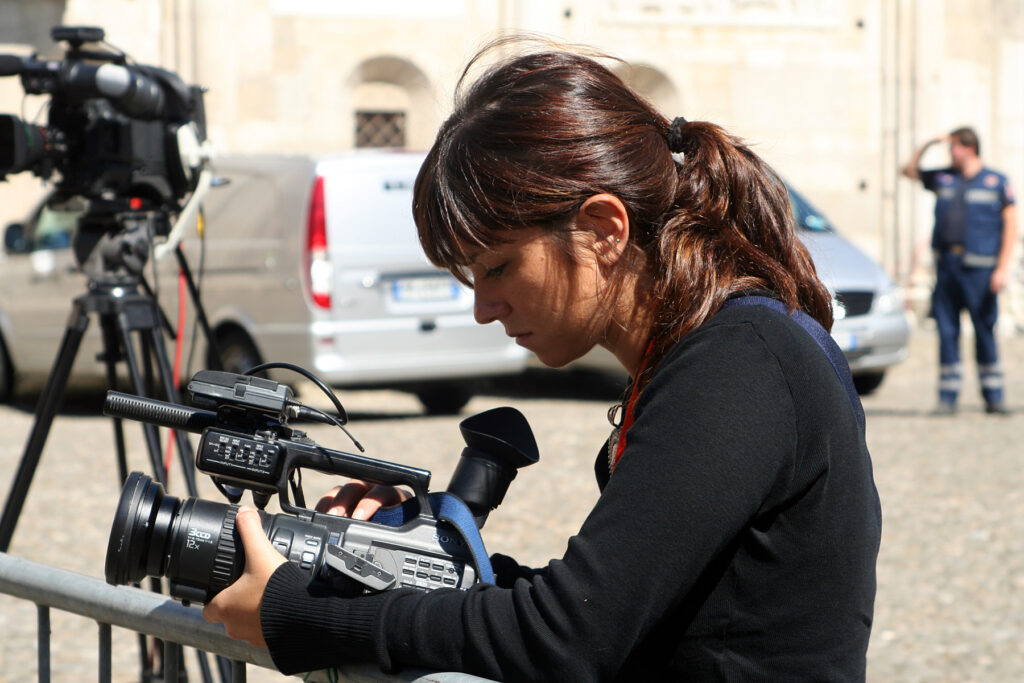
Woman setting up a camera

In the past, we’ve discussed some of the different job roles at TV stations, but not every graduate with a broadcast journalism degree works in television or radio permanently. Studying broadcast journalism provides graduates with a wide variety of skills that can be useful in other areas of the news business, or different fields entirely.

Why Some Broadcast Journalists Change Careers

The average Millennial changes jobs every 4.4 years, according to this Forbes article from a few years ago. That’s an average for all workers; individuals in television news often change jobs every two or three years, especially if they’re in on-air positions where contracts are typically renegotiated that often. While some people may work at one station for twenty years or more, it’s much more common to change stations and job titles at least a few times.

Some broadcast journalists acquire new job titles as they work their way up to a career goal—say, evening news anchor in a “Top 100” station. However, some broadcast journalists leave the broadcasting business entirely, moving to print journalism or related fields like PR, marketing, or photography.

Reasons to Explore Other Options

There are a lot of reasons people look for creative jobs in a different field. Sometimes journalists enjoy the job, but after a while they realize they’d prefer a career with a nine-to-five schedule. In television news, dayside schedules usually start around two or three in the morning; those working evening shifts usually start work some time in the afternoon, and stay until well after the ten or eleven o’clock news. Larger stations may have a mid-day shift that starts in the morning and ends after the six o’clock news—but those shifts are highly coveted and someone still has to work the other time slots.

Some journalists change careers for financial reasons. Most people start their broadcast careers in smaller markets where pay is generally low, even for on-air positions. There have been situations where a reporter and three photographers were all living together because none of them could afford his own apartment—and there were frequent arguments in the newsroom about who was late with his share of the rent.

Working your way up to a bigger market is a way to improve your pay grade, but if you’ve chosen to stay in a city to be close to a significant other, family members, or friends, you might find that a career in television news or radio may not help you to reach your financial goals in a timely manner—if ever.

Sometimes leaving broadcasting can be an involuntary situation, especially if you work on-air. Stations often decide not to renegotiate contracts for reasons anchors and reporters have little or no control over—they may want someone younger, someone who appeals to a different demographic, or someone who does better in ratings. Often station managers think they can improve ratings by replacing an anchor with “a new face.” A non-compete clause in your contract may keep you from doing on-air work in your DMA for a certain period of time after the contract ends—usually two or three years. Again, you might find work in another market, but if you don’t want to move, you’ll have to consider another career choice.

Different Career Paths In Journalism and Other Fields

Regardless of your reasons for leaving a broadcasting job, a broadcast journalism certificate or diploma provides a versatile set of skills that will serve you well in many fields.

Public Relations and Marketing

Many public relations firms like to hire former journalists. Someone who has evaluated what is and isn’t newsworthy is in the perfect position to shape publicity efforts. You know what caused you to ignore a press release, and you also know what made you pursue a story, or pitch it to your supervisor. These skills could extend into a marketing or advertising career, where experience with a TV station’s production of local ads is also helpful.

Sales

The connection may not seem obvious at first, but journalists also build skills that boost sales careers. In a broadcasting job, you spend a lot of time trying to talk people into things—granting interviews, telling you the truth, and giving you a useful tip. Building rapport with interview subjects leads to better, more emotionally honest soundbites; in a sales jobs, it leads to a lasting relationship with customers, which ultimately leads to more sales.

Corporate

Many large corporations have their own in-house “news” operations. In order to keep employees at far-flung locations across the country or around the world up-to-date, they produce their own “news programs.” These can be half-hour programs suitable of viewing on desktop computers, or short stand-alone stories that can be watched on mobile devices. The era of the “company newsletter” is long past, replaced by corporate video. Large companies also produce Video News Releases (VNRs), which supplement or replace convention press releases. Sometimes they consist entirely of raw footage stations can then edit as they choose, while others include a fully produced package that a station need only insert a voiceover based on an accompanying script. As more and more people use full-motion video as their primary source of information, video producers will continue to play a key role corporate communications.

Photography and Documentary Films

People who have worked behind the camera sometimes find rewarding careers using their skills in other photography or videography jobs. You might work in still photography, possibly for print or online news sources. If you like the idea of working for yourself, you could do some freelance work, taking video of weddings and other personal events people want professionally recorded. If you prefer a steady paycheck, you might work for a business that provides these services.

Print Journalism, Blogs, Vlogs, and Websites

Some broadcasters may move to print or online news sources. You might enjoy the opportunity to write longer, more in-depth stories—especially for websites, where there is neither a time limit like you would have in broadcast, nor a page space limit like you would find at a newspaper. Although your editor will still give you word count limits to keep you focused on the most interesting parts of the story, you will have the opportunity to provide more detail, or different perspectives. While newspapers and magazines do have page-space limits, they still pride themselves on providing a more in-depth look at news than television or radio.

You can also choose to start your own blog or vlog (video blog) about news—or a particular type of news, like entertainment or sports. Some former journalists enjoy using their writing skills to tell stories in their own way, while others like being able to editorialize, instead of trying to keep their opinions out of their news coverage. Your skills in shooting and editing will also come in handy if you want to do a vlog or post video.

Successful blogs and vlogs are sometimes financially rewarding—however, it usually takes time to build a following, and not every video goes viral. You should plan to have a day job while building your blog into a viable source of income.

[su_note]Learn more about the School of Broadcast Journalism at the New York Film Academy by clicking here.[/su_note]

No Surprises: Radiohead’s 5 Most Filmic Music Videos

Karma Police screenshot of fire on road

A shade over twenty years ago, a little indie band from Oxfordshire, England released their debut single. That single was “Creep,” and it immediately put Radiohead on the map.

Having come out of the gate swinging, the band only grew in popularity and managed to stay ahead of the game thanks, in part, to a deep commitment to dramatically evolving their style along the way.

Thom Yorke and his merry band’s penchant for experimentation hasn’t solely been confined to music, either. Their accompanying music videos are also a strange mix—at times avant-garde, at others outright bizarre, but more often than not they’ve served as food for thought for both musicians and filmmakers alike.

With this in mind—and with the new album A Moon Shaped Pool has just landed with the film referencing music video for “Burn the Witch”—let’s take a look back over Radiohead’s five most thought-provoking music videos with a cinematographic eye.

Lotus Flower (2011)

Directed By: Garth Jennings

Black and white, sparsely shot, slightly unhinged, and not making a lick of sense. If that sounds like David Lynch to you, you’re not the only one.

Going on to gain a Grammy nomination, the video was directed by Garth Jennings who notably directed 2005’s Hitchhikers Guide to the Galaxy, which is pretty much the polar opposite in feel to the “Lotus Flower” short. Jennings has never revealed whether Yorke’s white shirt and bowler hat is a nod to Stanley Kubrick.

No Surprises (1997)

Directed by: Grant Lee

Lo-fi simplicity is something of a hallmark of a good Radiohead video, as proven with this visually arresting, one-shot video for one of OK Computer‘s finest songs (and one that the band spontaneously played in one take on getting set up for the album’s first recording session.)

While the song itself is inspired by the nursery rhyme, the music video is very reminiscent of Paul Thomas Anderson’s cinematic style—simple ideas executed without distraction, preferring to put the subject at the forefront of the frame.

There’s also a touch of David Fincher about it, owing to the moody palette and lighting, but the take-home here is that a captivating, suspenseful idea usually trumps any visual effects wizardry (and countless similar music videos have followed in the wake of “No Surprises”).

We won’t reveal how they minimized the risk of drowning poor ol’ Thom; for that, you’ll need to see the Radiohead documentary Meeting People is Easy.

Karma Police (1997)

Directed by: Jonathan Glazer

Following deftly on from “No Surprises” was the record’s second single “Karma Police”, which had an equally captivating video to match. Curiously, the idea was originally pitched to Marilyn Manson, who declined.

Directed by maestro Jonathan Glazer (who also directed “Street Spirit” and Jamiroquai’s “Virtual Insanity,” among feature films such as Under the Skin), the video is a typically surreal depiction of an antagonistic situation, and if it looks like it was inspired by some kind of fever dream, that’s because it actually was. But in terms of presentation, the Coen Brothers is strong with this one but Glazer has also admitted borrowing liberally from Kubrick throughout his career.

Of the working process and of getting collaborators on board with bizarre ideas, Glazer says: “It starts with an idea that I’ll be able to articulate, and then it’s about almost putting that idea in a laboratory and inspecting it… and it’s a long process. We don’t start with a story, we start with a feeling, and [that feeling] is your North Star.”

Alas, despite being one of most people’s favorite Radiohead music videos, Glazer himself saw it as a failed experiment.

Just (1995)

Directed by: Jamie Thraves

Even Radiohead’s most conventional music videos have an air of mystery around them.

The overdriven melodrama here is almost certainly inspired by Douglas Sirk, whose influence can also be seen in Pulp Fiction (and directly alluded to by Tarantino, also, when Vincent Vega orders the “Douglas Sirk steak.”) Thraves was picked out especially by the band to direct the short after seeing his experimental University efforts; it was Thraves’ first assignment, and he’s gone on to work with the likes of Coldplay and Damien Rice since.

We can’t help but wonder if the sidewalk guy’s mysterious final line gave inspiration to Sofia Coppola—at the end of Lost in Translation, a similar scenario plays out and also drove viewers up the wall with intrigue.

Pretty clever marketing trick when you think of it.

Burn The Witch (2016)

Directed by: Chris Hopewell

At the time of writing, this one’s fresh on the ‘tubes, so it may be a little premature to call this an enduring Radiohead classic, but we suspect it will be and serves as a great point to close off.

Hugely different from everything that has come before for the band, The Wicker Man is clearly the main influence on this one. The story is as creepy as it always was, but made even more sinister here when presented in the style of a 1960s English kid TV show (a la Trumpton and Camberwick Green.)

In reference to the most glaring contrast between the bright art style and the sinister undertones, animator Virpi Kettu revealed that this was at the behest of the band themselves who wanted to satirize the idea of idyllic rural communities as espoused by right-wing politicians.

It’ll be interesting to see which single follows from A Moon Shaped Pool, but in the meantime do let us know your thoughts—got a favorite Radiohead music video you wish had made the cut? Any neat film tricks you’ve been inspired to try out? We’ll see you down in the comments!

[su_note]Learn more about the School of Cinematography at the New York Film Academy by clicking here.[/su_note]

6 Lessons On-Screen Mothers Have Taught us About Acting

6 Lessons On-Screen Mothers Have Taught us About Acting
Angelina Jolie, Susan Sarandon, Mo’Nique, Essie Davis, Jodie Foster, and Meryl Streep — all mothers — teach us all a little something about acting.

Mothers: we salute you.

You’ve cooked us countless meals. You’ve put up with our laundry-strewn bedroom floors. You’ve been a shoulder to cry on when we got snubbed by that crush we were infatuated with in high school. But, ultimately, you’ve helped nurture and encourage the next generation of filmmaking talent and for that you deserve unending praise.

And so, in tribute to mothers everywhere, today we’re paying homage to six cinematic mothers who have taught us all a little something about acting over the years.

Presenting…

1. Angelina Jolie – The Changeling

What We Learned: Motherhood isn’t a character trait

With stunning cinematography and a tight script reminiscent of Rosemary’s Baby, The Changeling sees Jolie’s character distraught to find her nine year-old son missing. But on being reunited, things go from bad to worse; when she adamantly declares that the boy isn’t actually her son, authorities conspire to brand her psychotic.

From start to finish, the audience is locked into an emotional rollercoaster and herein lies the key to Angelina’s impressive performance: motherhood isn’t just a line on her character spec sheet. Even though it’s central to her story arc, it’s not the be-all-and-end-all of her character – under the umbrella of motherhood, she runs the gamut of emotion. At times she’s broken and in despair; at others she’s fierce and strong. Depending on the situation the plot finds her in, she’s nurturing, sexy, divisive, hopeful, frustrated, joyful and desperate…

… in short, she acts as a real person would in real situations. The fact that she has a child is purely circumstantial.

Read more: The importance of subtext

2. Susan Sarandon – Stepmom

What we learned: It’s okay to play to type

While keeping Jolie’s lesson in mind for how to play a multi-dimensional mom character, there’s also no shame in playing that character often if it’s something you are terrific at.

Susan Sarandon is proof of this, and despite having played a mother figure in numerous movies, no two of her performances are alike as she ekes out and embellishes the role in different ways as the script demands.

Stepmom is a classic example – just make sure you have a handkerchief at the ready.

Read more: How to find your type as an actor

3. Mo’Nique – Precious

(Caution: NSFW Language)

What we learned: It’s not all sunshine and roses

 When you think of on-screen moms, usually the first image that springs to mind is one of a domestic housewife living in marital bliss.

But of course, art imitates life, warts and all. That means some performances call for a frighteningly abusive relationship between parent and child, and nobody captured the darkness with more authenticity than Mo’Nique and her on-screen daughter Gabourey Sibide in Precious.

Some characters are more monstrous than others, and parents are no exception. As actors, it’s important to give it our all in order to bring that character to life no matter whether it calls for domestic happiness or terrifying dysfunction.

4. Essie Davis – The Babadook

What We Learned: A duty of care

So terrifying and demented was Essie Davis’ performance as a slowly-unraveling mother (and the entire movie in general) that many viewers were left wondering how the crew didn’t mentally scar 6 year-old actor Noah Wiseman for real.

Director Jennifer Kent, however, took great pains to make sure that Wiseman’s welfare was at the forefront of production. The child’s mother was on set at all times in what was described as a ”very protective, loving environment” and Wiseman himself wasn’t present during more traumatic scenes with an adult extra taking his place: “During the reverse shots where Amelia was abusing Sam verbally, we had Essie [Davis] yell at an adult stand-in on his knees. I didn’t want to destroy a childhood to make this film – that wouldn’t be fair.”

Ultimately, no matter whether we’re directing a film, in acting school or performing opposite a very young actor, we all have a duty of care to understand that great cinema doesn’t need to come at the expense of a child’s well-being.

Read more: 5 performances by child actors we can all learn from

5. Jodie Foster – Panic Room

What We Learned: Not all on-screen bonds are purely fictional

David Fincher’s 2002 thriller worked on many levels, but it was arguably the close bond between the mother and daughter characters which propelled the drama and kept the film emotionally grounded.

And the reason it worked so well is that the bond was real – Jodie was deeply nurturing of her 10 year-old costar Kristen Stewart, who in turn looked up to the acting veteran (Foster was also responsible for having the script changed to make her on-screen daughter a tougher character.)

To this day the pair remain close, with Foster calling Stewart “my other daughter” and Stewart having honored Foster while receiving her Walk of Fame star.

And on a similar (if a lot darker) vein…

6. Meryl Streep – Mamma Mia!

What We Learned: We draw from the strong women around us

The ultimate Mother’s Day movie, and one which sees Meryl Streep performing at her finest (though really, when is she not?).

While her filmography is as varied as it is extensive, Streep is no stranger to performing as an on-screen mother and her career is loosely typified as being one that exudes feminine strength, of which Mamma Mia! is a good example.

And perhaps a lot of her acting prowess is rooted in her close bond with her real-life maternal figures – Streep drew extensively from both her mom and grandmother’s experiences to as a career mother and war survivor respectively for her celebrated roles in Kramer vs. Kramer and Sophie’s Choice.

And the inspiration may even run deeper than that. Of her highly encouraging mother, Streep says: “She was a mentor because she said to me, ‘Meryl, you’re capable… If you’re lazy, you’re not going to get it done. But if you put your mind to it, you can do anything.’”

Amen to that.

Happy Mother’s Day to all those that continue to inspire us, as well as those who are sadly no longer with us.

E3 2016: Predictions for Nintendo

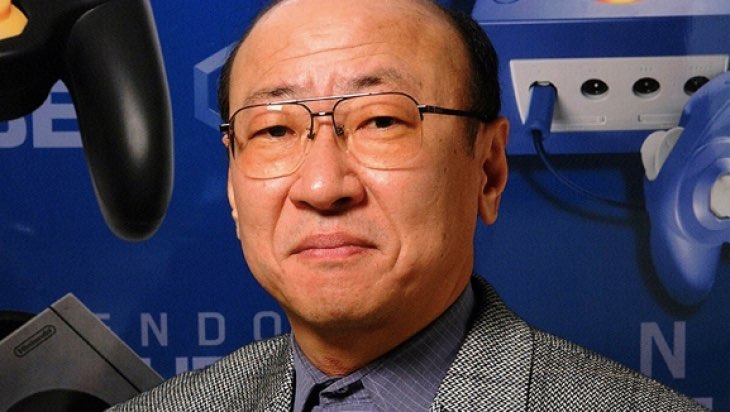
Tatsumi Kimishima
Nintendo President Tatsumi Kimishima

It’s been a rough generation for Nintendo. Plenty of amazing titles have graced the Nintendo 3DS and Wii U, but the latter has definitely left gamers wanting more. Great experiences like Pikmin 3, Splatoon, and Super Mario 3D World were superb experiences, but the lack of third party titles meant Wii U’s were left to collect dust for long periods of time.

Nintendo fans, however, are quite resilient. There’s always a high level of optimism that has them positive that their beloved game developer will soon give them what they want. From new Metroid and F-Zero games to a new console as powerful as the competition in the shape of the NX, hopes are always high.

Unfortunately, Nintendo released a wave of news recently that all but crushed most of those hopes. Not only will the NX not be released until March of 2017 but the next The Legend of Zelda title will also be pushed back to make a simultaneous NX and Wii U release possible. As if that weren’t enough, Nintendo announced that they’ll only be showing off Zelda at E3 2016—the same game we were promised to see release at the end of the year.

But as dire as all this news sounds, here’s why these decisions will help Nintendo succeed during the next console generation:

1. Good Launch Lineup for NX

If there’s one thing that Nintendo didn’t get right with the Wii U, it was preparing a launch lineup that would’ve made it irresistible from the start. To be fair, even Sony and Microsoft released their latest consoles with a less-than-stellar collection of games to play. The difference is that previous Nintendo consoles have released fantastic (and innovative) titles like Wii Sports, Super Mario 64, and Super Mario World.

Wii Sports screenshot

Pushing the NX’s launch from Holiday 2016 to early 2017 means Nintendo will have more time to prepare good games to release alongside it. We may be despondent now, but it’ll be worth the wait when the NX goes on sale with not just the next Zelda but other intriguing titles as well.

2. More Time To Get the NX Right

Nintendo took a massive risk with the original Wii. Instead of a standard gamepad and high-definition graphics, they pitched a low-spec machine with motion controls. The risk paid off as the Wii went on to sell like hotcakes and become one of the most successful consoles in gaming history.

The Wii U was a whole other story. Although the gamepad seemed interesting on paper, it’s clear that developers didn’t really find ways to make great use of it. Worse still, even Nintendo seemed like they struggled selling their two-screen concept. The extra months will no doubt help Nintendo (and other developers) figure out if whatever the NX’s big feature is will actually work.

3. Little E3 Presence, No Problem

E3 is easily the most anticipated video game trade fair. It’s the biggest opportunity for developers and publishers from all over the world to show off what they’re developing. The problem, as you can imagine, is trying to stand out when so many devs have something to show.

Star Fox puppets from E3 2015

While Nintendo always used to find a way to get people talking at E3, it seems they got tired of trying to fight for the spotlight. This is evident by their Nintendo Direct approach instead of a live conference. This year they’re apparently only having The Legend of Zelda on the show floor, which means they can use their online presentations for their big reveals.

4. More Time for Third Party Support And Mobile Growth

As we already mentioned earlier, the Wii U’s third party support was pretty sad. The fact that the Wii U’s technical specs didn’t match those of the Xbox One and PlayStation 4 meant that developers didn’t feel like spending time and money to make ports. Hopefully the extended development time will give other studios the opportunity to understand the NX and make something great early in its life.

But while the Wii U loses what little steam it had and only a few worthwhile 3Ds title releases, all eyes will be on Nintendo’s mobile efforts. The success of Miitomo, which barely passes off as a game, is proof that people are excited to play Nintendo titles on their smartphone. Hopefully the reveal of a mobile Animal Crossing and Fire Emblem is only the beginning of a great 2016 for Nintendo’s mobile efforts.

[su_note]Click here to learn more about The School of Game Design at the New York Film Academy.[/su_note]

How To Produce Sweeps Pieces Or Stories In Series Form

Brian Williams interviewing Mitt Romney
National elections make for ideal story series during sweeps.

In broadcast journalism, most stories are reported as they happen, and covering the new developments of a story for several days or even weeks doesn’t necessarily mean you’re producing a series on the topic. Generally, reporters and producers don’t think in terms of “I want to do a series of stories about X or Y.” Instead, they think in terms of, “I’d like to do a story about X and then I’m going to follow up to see if there are any new developments in the story about Y.”

However, there is a place for the production of a series in broadcast journalism. There are several situations in which you might want to do a series:

Sweeps weeks, when TV station ratings are measured—Nielsen sweeps months typically occur for the better part of November, February, May, and July, but as the measurement period increasingly straddle months, weeks have become a more common measurement period. And for major markets, where the numbers come in the next morning, every week is essentially sweeps week. To attract viewers during a ratings measurement period, broadcasters frequently run a series about a topic of local interest, looking at different angles of the story for each installment. Typical marketing messages will say something like: “How safe is the drinking water at area schools? If you are a parent, you’ll want to see this.” In small and medium markets, they still do the sweeps drill about four times a year.
• Big stories that can’t be covered all at once. These may include political topics, controversial local legislation, large disasters that continue for days after the main event (say, flooding and the resulting damage to property), or a local scandal or crime wave in which new information arises frequently.
• Small stations undergoing slow news periods may do a series to provide a more in-depth look at the few news topics that are available. This should not be done just as a way to fill time during a show—you should use the opportunity to provide value to your viewers, in the form of additional information or a new perspective on the same story.

How to Get Started

Approaching a series is not all that different than approaching your story or stories of the day. However, you will probably have a little more time to examine different angles if you’re working on a series. Ideally, that’s something you should do for every story, but sometimes, when you’re running around covering multiple topics, you may only have time to report the facts and move on to your next assignment.

Many broadcasters will ask each reporter to pitch an idea for a series to run during the upcoming sweeps month. There are a few ways to approach this. You can look back at recurring topics or issues you’ve reported on in the last few weeks or months and consider whether there are unexplored angles or simply opportunities to provide a more in-depth look at a story.

A profile on a prominent community member or close look at a local issue or problem is another option. You can also look at the many different stories you’ve covered and think about whether there might be a connection between some of them. Did you cover several different car accidents at the same intersection? Have you covered a lot of theft stories at a particular chain of local stores?

Another way to develop material for a special series is through the contacts and sources you build up over time. A good reporter always nurtures sources. Checking back occasionally with individuals you have interviewed in the past can lead to new, perhaps even bigger stories.

Alternatively, you can spend some time on your station’s social media feeds and try to get an idea of what viewers find interesting. Granted, some viewers’ suggestions may not be right for a series, and others may not be based in fact. However, if you keep seeing different people inquiring about a certain topic, or suggesting it should be covered in more detail, that might be worth considering.

Here’s an example: Several years ago, a local TV station covered a tragic story about a road worker who was killed by an intoxicated driver. She had no previous record, and claimed to have mixed up her daytime and nighttime medications on the day of the collision. Although she pled guilty to negligent homicide as part of a plea deal, she only served about ninety days, plus twelve months probation. A few years later, she was arrested on a DWI charge, bonded out of jail, and was subsequently arrested several more times for DWI and a variety of other charges. When local media covered each arrest, her previous conviction for negligent homicide was frequently mentioned.

As you might imagine, many viewers were outraged by the situation. After every story about a subsequent arrest was posted to local stations’ social media feeds, a deluge of comments from audience members followed. Many asked how an individual with such a history kept getting out of jail. Some suggested she was bribing a judge. Others demanded DWI laws should be toughened.

During a sweeps month, one local station ran a series about state and local DWI laws, as well as sentencing statistics, in an attempt to answer some of these viewer questions. The first installment described the arrest, conviction, and sentencing history of the habitual drunk driver. The reporter explained the leeway judges have in sentencing after a conviction of negligent homicide, and noted reasons judges typically give light sentences—first-time offenders, mitigating circumstances, etc.

The second installment looked at rates of DWI/DUI arrests and convictions, statistics on how many people actually served time for such offenses, and the frequency of repeat offenses for the same individual. A third installment included interviews with local legislators about proposed changes to local DWI laws that, in their opinion, would make the area safer from repeat offenders.

Tips for Covering a Series or Sweeps Piece

• Choose a different angle for each installment.
• Either provide new information or a new perspective in each installment.
• You are usually given more time for a series or sweeps piece. Use it to give the audience a more in-depth picture of the issue or story.
• If you’re doing a profile of a person, try to include details that have an emotional impact, in addition to the facts of the story. Show us the local scholarship recipient studying while riding the bus to his second job. Show us the pile of cold cases the police detective keeps on her desk and looks at once a week, even when she knows there are no new leads. Show us the mayoral candidate emptying the trashcans at his campaign headquarters like a regular person. Things like this often tell us more about a subject’s personality than the rehearsed talking points or nervous rambling you might hear in an interview.

[su_note]Learn more about the School of Broadcast Journalism at the New York Film Academy by clicking here.[/su_note]

5 (Even More) Game Design Mistakes To Avoid

Xbox 360 demos

Like in life, learning the hard way is never a pleasant experience. Instead of identifying your game design mistake beforehand and avoiding it, you get hit by it extra hard when players ask how something so terrible could be in your product. Although even the best and most experienced designers have launched a title with decisions they later regret, only a fool doesn’t study other games to see what mistakes they can avoid in their own.

We’ve talked about five common mistakes before, and then we went over five more. The following are five additional design choices that leave a bad taste in the player’s mouth and are way more common than they should be.

1. Bad Save Point Placement

Anyone who played games in the late 80s and early 90s—before save points were commonplace—knows that automatic save points are a good thing. There was nothing worse than playing for hours or defeating a tough boss, only to die and lose it all because you forgot to save. Our beef is with save points that seem to be placed just to frustrate the player.

For example, we’ve all played a game where a save point happens just before a difficult boss. The problem is that prior to the boss fight we have to watch a long cut scene that can’t be skipped, which means you’ll probably be forced to watch it a few times. Even though they’re also very proud of the cool cut scene in their game, good designers will have the decency to place the save point after it so you can jump back into the fight after every defeat.

2. Bosses with Insane Health

A good boss battle is the result of careful and lengthy design, testing, and iteration by the developer. All of our favorites were designed to give us a challenging yet rewarding experience that made the trek through the dungeon worthwhile. Unfortunately, we’ve also faced an annoying boss that felt more like a chore than an epic encounter.

One way to bore players with your bosses is by making them a “bullet sponge”. These bosses take a ridiculous amount of damage before finally dying, which often involves the repetitive act of shooting/attacking its weak point for a very long time. A good example is the final showdown with the boss, Shao Khan,in Mortal Kombat 9. Defeating him is a boringly repetitive chore of Down, Left, Square over and over until he is dead. Unless the boss changes tactics often and keeps this fresh, it’s better to avoid designing bosses that take several minutes of doing the same thing over and over.

3. Psychic A.I. Enemies

We’ve all been there. You see a group of enemies and creep near them, waiting until one separates from the group. Once it is safe to do so, you take the lone enemy out far enough away so that no other enemy notices. But instead, all the other enemies in the room magically know what you did and start charging straight at you.

Or worse, they find you no matter where you hide and can shoot you even though they’re on the other side of the room. An example of a game suffers in this regard is Assassins Creed Rogue. Specifically, the Aggro distance (meaning the cone of awareness around an enemy AI within which a player’s actions trigger the enemy to attack the player) is overly long and sensitive. In particular the vertical view distance and cone of vision of enemy Snipers are unrealistically large. As a result it feels like Paris is on hair trigger alert to attack the player. It feels like the enemy AI have eyes in the back of their heads. The end result is a frustrating play experience that does not allow the player to use stealth mechanics to her satisfaction. What’s the solution? Tweak and test the numbers for the enemy view distance to allow the player more satisfying stealth play. This issue is becoming less common thanks to improvements in technology, but it still happens. Instead of engrossing players into the stealth gameplay, they are taken out of it when enemies unrealistically seem to possess psychic abilities.

4. Escort Missions with Dumb NPCs

Escort missions aren’t the most common type of quests/objectives but they can be tremendously fun when done right. Players get frustrated with escort missions when the NCPs that the player must work with test the player’s patience. We’re talking about the ones that never seem to move at an appropriate speed.

assassin's creed screenshot

Nothing tests your patience more than an escort NPC that walks at a mind-numbingly slow pace. The destination is already in site, but if you run too far away from the NPC, you’ll fail the mission. So instead you have to walk alongside the snail of an NPC as he or she delivers some kind of monologue. This is even more annoying when you’re being attacked by enemies, which means you always have to babysit the NPC in case they fall behind or run ahead into a pack of enemies. A game that famously frustrates players in this regard is Resident Evil 4 wherein you have to save the President’s daughter, Ashley. Ashley is given to cowering when she should run thereby requiring you to expose yourself more than you would like.

5. Unbelievable Map Barriers

Designing 3D levels that both feel expansive and look believable is no easy matter. But the good news is that developers are relying less on invisible barriers that jar you when you run into one unexpectedly. The bad news is that a lot of the obstacles they place restrict players from moving outside the map are just as unbelievable.

A good example is a waist-high fence or wall in a game where your character is able to jump 10 feet into the air. You can hop over that fence/wall anywhere else on the map, but now it’s being used to indicate where the map ends. Even though we get it, it would still be nice to have a wall that is obviously unreachable despite the character’s jumping abilities.

[su_note]Click here to learn more about The School of Game Design at the New York Film Academy.[/su_note]

How To Find And Get Journalism Internships

Internships Next Exit road sign

Internships are helpful for students who want a hands-on learning experience in a real TV or radio station. Interning with a broadcaster can help you narrow down what kind of job you’d like to do in the field. It’s also an asset to your resume when you’re ready to apply for jobs after graduation.

How Do I Find an Internship?

First of all, start looking sooner rather than later. If you’re hoping for a summer internship, it’s best to start looking early in the spring semester, or even the previous fall. Many summer internships have application deadlines in February or March. Please note that the days of work-for-free interns are gone. Due to a recent lawsuit and subsequent court decisions, interns must either be paid or receive academic credit. Some schools allow students to get class credit for doing an internship during a semester, usually with an approved local company, but you’ll also need to apply for those months in advance.

Several websites dedicated to helping students find internships in their field allow you to search for journalism openings. Many schools maintain a list of resources for students seeking internships. You can also check with local broadcasters in your area—some may list these positions on their “job opportunities” page.

Time to Write or Revise Your Resume and Cover Letter

The application process often varies from one broadcaster to another, so it’s important to read the requirements carefully and make sure you’ve met all of them before clicking the “submit” icon. Some may want a video audition explaining why you’d make a great intern, while others may ask for samples of packages you’ve produced in class. Regardless of other requirements, most companies want a resume and cover letter.

If you haven’t written a resume yet, now is a good time to start—it’s definitely better than waiting until you graduate and start applying for jobs. If you have written a resume, this is a good time to update it.

In general, a resume should have your name and contact info at the top, then subheadings for education, work experience, and possibly volunteer work or student associations.

If a student is responding to a posting, it’s always advisable to integrate some of the language from the posting into the cover letter. They have provided a checklist of what they are looking for, so you give them their own words back. This is especially helpful in an era when, at large companies, software often scans incoming job applications and selects only some of them to be forwarded on to a real person.

Education

Under “Education,” you should list your school, your major, where you are in your program (“Completing one-year program in May of 2016,” for example), and your GPA, if it’s high enough to be beneficial. If your GPA is not where you’d like it to be, you may consider leaving it off. On one hand, employers may assume your GPA isn’t listed because it was a low number—on the other hand, if you actually list your 1.8 GPA, they’ll know for sure. (Obviously, the best option is to make every effort to get good grades.)

Work History

You should list any work experience you have, even if it’s not related to broadcast journalism. The fact that you worked at Joe’s Hamburger Barn the last three summers suggests you were a reliable and hard-working employee—otherwise, Joe probably would have hired someone else instead of hiring you back for the next summer.

Under each job, you should add a list of bullet points describing what you did—in particular, goals you met or exceeded, or innovative ways you improved your employer’s business. Be as specific as possible. “Earned a five-star average on customer comment cards” sounds better than, “Waited on customers.”

If you don’t have any work history, you can list volunteer work or student association activities—especially if they’re related to broadcast journalism. Definitely list any work you did for the campus TV or radio station, even if it was only for a brief period of time. Again, be specific about your accomplishments. Examples of good bullet points:

  • Interviewed news witnesses, asking follow-up questions as appropriate
  • Wrote package scripts answering the questions of who, what, when, why, where, and how
  • Made beat calls to local police and fire agencies and followed up on all leads
  • Engaged with students on social media to learn the types of news stories that most interested them, then shifted our editorial focus to those topics, resulting in a 5% viewership increase over last semester

Cover Letters

A cover letter should do three things: It should tell the reader who you are, why you want the internship, and what you can do for the company. Although you may repeat some sentences or paragraphs about your education, experience, and goals, you should not send the exact same letter to every company.

First, address your letter to the correct individual. Usually applications list a contact person. If not, search the organization’s website—you may find an “internship coordinator” or “hiring manger” listed in the directory. If that doesn’t work, simply call the company and ask for the name of the person in charge of the internship program.

You should use the first paragraph of your letter to briefly introduce yourself and explain why you want to work for this particular broadcaster. Although you can touch on your desire to learn more about journalism, you should focus on why you want to learn from this organization. To show that you’ve thoroughly researched the company, give concrete examples of what you like about it. Here’s an example:

“As a student studying Broadcast Journalism, I’ve always wanted to work at a TV station with excellent live coverage of the latest local news. When I come home from school and watch WXYZ News, I’m always impressed by how professional your reporters are, and how quickly and accurately they report news and show how it affects the average person. Your three-part special on the city’s homeless population really helped me see the subject from a new perspective. I would love to learn from the team that was voted “Best Newscast in Cleveland” three years in a row, and when I saw that you had a summer internship program, I knew this was the perfect opportunity to do just that.”

The next paragraph should tell more about your education and work history, especially any broadcast journalism-related experience. Your final paragraph should mention that you’ve attached your resume (and any other requested materials). Close by thanking the recipients for their time and note that you look forward to hearing from them.

Apply Widely

Even if you’re a great candidate, you will be vying with hundreds of other applicants for each internship. For that reason, you should apply for as many as you can to improve your chances of landing one.

There’s no reason to stick with your city, either. You can apply for internships all over the country. Keep in mind, however, that some internships are unpaid. Some larger companies may provide housing for a pool of interns, but most will expect you to pay your own expenses. Even a paid internship might not pay enough for all your expenses while living in an unfamiliar city. If traveling and renting an apartment out of town isn’t financially feasible, you might want to focus on an internship closer to home—even if it doesn’t pay at all. Or, you could look for one in a city where you could stay with a friend or relative.

Unpaid Vs. Paid

Obviously, most students would rather take a paid internship—which is probably why there’s even more competition for these spots. There’s nothing wrong with trying to land one, but in case that doesn’t work out, you can at least get academic credit if your school allows it.

And while you might not make any money, you will learn about the different job roles in a TV or radio station. If you’re unsure which career path you want to follow, working at a TV or radio station might help you figure out which position most interests you. Also, you get to network and make contacts, which can help when you graduate and start looking for a job in broadcast journalism.