Top Emerging Screenwriters Of 2015

Even some of the most talented screenwriters making great strides in the industry get very little credit or recognition for their work—in fact, notoriously so.

Today, let’s buck that trend by paying homage to some of the hottest new talent to ever emerge from screenwriting school and who look set for great things in 2015 and beyond.

Top New Emerging Screenwriters: 2015 Edition

1. Justin Simien

After a series of highly-acclaimed shorts between 2006 and 2009, Simien put out a conceptual trailer for a movie back in 2012, hoping to raise enough money to turn it into a feature via crowdfunding.The campaign was a phenomenal success, with Simien nearly doubling his target asking amount.

That trailer went on to become Dear White People, a breakout hit that not only grossed $344,000 despite being screened in only 11 theatres (on hell of an achievement) but also won the Dramatic Special Jury Award for Breakthrough Talent at last year’s Sundance.

With the movie sitting at 92 percent on Rotten Tomatoes, we’re all eagerly awaiting Justin Simien’s next career move.

2. Lucinda Coxon

Lucinda Coxon is fairly new to writing for the big screen, but by no means is she a novice writer.

Having enjoyed award-winning success as a playwright for over two decades—predominantly between England and Scotland — her prolific work in theatre eventually saw her cross over to film with 2003’s The Heart of Me. With a long stretch of time lying between the period drama and her other forays into feature film writing, it looks like 2015 is going to be her year; this November will see the release of The Danish Girl, an adaptation of the fantastic novel of the same name by David Ebershoff.

3. Tess Morris

Another British luminary whose success has been written in the stars for quite some time.

Way back in the late 90s, Morris won a prestigious short film challenge for her original screenplay and went on to work as a script editor and writer on two high-profile TV series (Hollyoaks and My Family). Jumping back over to the big screen in 2011, her romcom screenplay Man Up garnered significant interest and was eventually released this year with Simon Pegg and Lake Bell in the leading roles.

Given the success of her first feature and the background from which she comes, it’s little wonder that we’re all looking forward to seeing Morris’ next screenplay.

4. Oren Uziel
Uziel formed one third of the screenwriting team behind 2014’s 22 Jump Street, and as his debut work, it’s fair to say that he came out of the gate running.

22 was far funnier and far more tightly written than any sequel based on a movie based on a TV show should be, and it’s for this reason alone that Uziel is worthy of putting on the ‘one to watch’ list. If he can work this kind of magic and collaborate this well on a franchise title, it’ll be fascinating to see his work on original intellectual properties. We won’t have to wait long—his first solo feature, Kitchen Sink, will be out in September…

… and that’s only one of many upcoming, high-profile Uziel projects in the works, including a rumored Men In Black 4. Expect huge things.

5. Dan Sterling

Dan Sterling has long been a powerhouse comedy writer, having contributed to such national TV hits as The Sarah Silverman Program, The Office, King of the Hill, and The Daily Show.

After proving his chops as both a comedic writer and producer over the course of the last two decades, it was of little surprise that Sony Pictures entrusted him to write what was to become one of the most controversial comedy features in recent memory—The Interview.

How he’ll top that is anyone’s guess, but we’re definitely keen to find out.

The Comeback Of Toys In The Gaming Industry

When one looks at the relationships between video games and other forms of entertainment, few are as fascinating as that of games and toys. Today it is easy to see the influence that figurines have considering the incredible success of Amiibo, Disney Infinity, and Skylanders. However, when you look back a decade or two, you’ll find an industry desperately trying to present itself as more than just for kids. Of course, it was thanks to a particular toy that the video game industry was able to grow into what it is today.

The Crash

Whether you were alive at the time or not, most gamers are familiar with the video game crash of the early 1980s. These dark years saw revenues plummet from $3 billion to less than $100 million, all caused by a market flooded with terrible games, poor publishing decisions, and a few other reasons. Thanks to high-profile disasters like the infamous Atari 2600 console and E.T. game, no one wanted anything to do with video games from 1983 to 1985 (including the stores that once sold them).

As one may guess, this didn’t fare well for companies that still had hope in their medium. Looking to win back the hearts of gamers who had lost all confidence in video games, Nintendo completely changed their strategy by implementing plans like the Official Nintendo Seal of Quality. This guaranteed that games developed for their Nintendo Entertainment System were not only good, but also honest in their marketing. Beforehand, developers would use exaggerated visuals in commercials and on the game pack itself, which left consumers feeling deceived when the game was of far lesser quality.

Nintendo’s Toy

Although these new plans were working, many retailers were still hesitant about carrying video game consoles on their store shelves. Due to this, Nintendo decided to pair up their NES system with an accessory that most people are only familiar with thanks to the Super Smash Bros. games: R.O.B. (Short for “Robotic Operating Buddy”). This toy helped convince retailers to sell Nintendo’s console, seeing as it was enough to differentiate the NES from previous consoles that collected dust on their shelves for years.

Even though R.O.B. was only produced for a short while, it is considered as part of one of the smartest moves in gaming history for one reason: it worked. Despite being a simple accessory with very few uses, it helped spark enough interest in video games again; enough so that pretty soon the industry would be stronger than ever before.

Not Just For Kids

Fast-forward to the 90’s, and you’ll find yourself in an era where the video game industry is doing everything it can to separate itself from the label of “toy”. The idea that video games were only for children and younger teenagers was still very strong, brought on mostly by the fact that they were the ones filling up arcades in the late 80s and early 90s. Knowing that this demographic consists of people with no jobs, game companies tried their best to catch the interest of adults capable of purchasing more games and consoles.

Companies like Sony and Microsoft proved very effective in drawing the attention of older teenagers and adults by making their consoles look more like high-tech machines than toys. Popular games like Halo, Final Fantasy VII, and GoldenEye 007 were a few of the many titles used to attract older gamers by delivering mature storylines and gameplay. It wasn’t as much an attempt to differentiate video games from toys as it was to finally be considered a legitimate entertainment medium akin to movies and television.

The Toys To Life Era

In the year 2015 (as of this writing), things have drastically changed, as some of the most successful games today can only be fully enjoyed with physical figurines. It all started when Activision hit a goldmine upon releasing Skylanders in 2011, which proved far more popular than they could have ever imagined. This lead to Disney stepping in with their own “toys to life” series with Disney Infinity, which has seen its own explosion in popularity by using their expansive catalog of iconic characters.

Who would have thought that Nintendo would end up benefiting the most out of selling such figures? Amiibo are so hot right now that Iwata and company can’t even keep up with demand, as fans frantically search for ways to get their hands on a particular figurine. It appears as though toys have made a full comeback in the gaming industry, which leads us to wonder what else may make a return in the near future.

[su_note]Want to design and develop video games? Learn more about the School of Game Design at the New York Film Academy.[/su_note]

Image Source

Learning From The Best: RPGs

One of the most beloved genres in gaming continues to be the role-playing game (RPG). It’s in these games that we often truly feel like we are in the shoes of the characters as they explore different lands, face titanic enemies, and befriend others throughout their adventure. It’s the feeling of helping to shape the world by completing quests, defeating bosses, and progressing through the main story that has always engrossed us.

We can all think of an RPG that in our opinion serves as the perfect embodiment of a certain element that makes this genre so captivating. Below are a few of our own choices along with what any aspiring RPG developer can take from these superb titles:

1. Have a Meaningful Story and Characters

Even though there are plenty of RPGs that are known for their gameplay, it’s often the charming stories that draw us in. We fall in love with a good RPG narrative after spending several dozen hours with a group of characters as they overcome challenges, form special bonds, and perhaps even suffer unexpected fates. When it comes to characters and story, it’s hard not to bring up the Final Fantasy series.

Almost every title in the main series has boasted its own cast of interesting characters that must prevent a certain evil from destroying the world. Even if the plots sound the same, titles like FF6 and FF7 feel like entirely different experiences thanks to the unique characters, great protagonists they face, and more. Unless you’re able to yourself, there’s no other genre we recommend more that you find yourself a talented writer.

2. Go For Something Inventive

Considering how many RPGs release each year, your best bet at having yours stand out from the crowd is by having it deliver something that feels new. We know this is easier said than done, but we’re willing to assume that if a gamer has just dropped 40+ hours on a turn-based RPG with practically the same gameplay as yours, they may not be as interested. You don’t have to completely change the genre, but your RPG should have a gameplay twist of some kind that makes it feel fresh and exciting.

There’s no better example than the original Pokemon Red and Blue titles. Despite having the same turn-based combat and random battle encounters as other RPGs, these games started a revolution by offering 151 different Pokemon to catch and train. By also pushing the idea of trading with others, Game Freak created a franchise that to this day remains for the most part unchanged in terms of gameplay but still continues selling like crazy across the globe.

3. Give Players A World to Get Lost In

Even if your RPG boasts great characters and fun gameplay, having a dull world to explore may just be the reason why many will be turned off. If there’s anything we have learned in the industry when it comes to some of the more recent RPGs, it’s that gamers love traversing massive worlds in hopes of encountering new quests, hidden treasures, exotic towns, dangerous dungeons, and more.

Two fantastic titles come to mind when thinking about worlds that immediately entice players: Fallout 3 and The Elder Scrolls: Skyrim. Despite being very different games in terms of setting, Bethesda Softworks was able to have both; offer fascinating worlds by sprinkling notable characters, moving quests, and interesting places to check out. At every corner we felt like the digital world in these titles were alive and connected.

4. Why Not All of The Above?

This is the part where we take the opportunity to mention why Chrono Trigger is a must-play for anyone who ever plans on designing their own role-playing game. There are countless amazing titles that released in the 90s, but very few have stood the test of time the way that Crono’s time-traveling adventure has. Spearheaded by some of the most creative minds in the industry at the time, this game perfectly embodies everything you should want in your own RPG.

From fantastic gameplay, an engrossing world, and memorable story, to the multiple endings, meaningful side-quests, and emotional dramatic moments, this legendary title was nothing short of groundbreaking when it released. We’re confident that those who have tried capturing the same magic of Chrono Trigger, whether they succeeded or not, were inspired to make an excellent RPG.

[su_note]Want to design and develop video games? Learn more about the School of Game Design at the New York Film Academy. Campuses in New York and Los Angeles.[/su_note]

9 Essential Books on Filmmaking and Directing

Even if you’re at the top of your game or currently getting hands-on at an intensive filmmaking school program, it can pay dividends to do some additional learning behind the scenes.

Thankfully, for those who live and breathe the craft, there are more than a few excellent books in which to immerse yourself and get even further ahead of the game…

… in fact, it could be argued that there are too many to choose from. With this in mind, join us as we separate the wheat from the chaff with:

9 Best Books on Filmmaking and Directing

The following is a summary of the best filmmaking books written by filmmakers, for filmmakers. Naturally, any list of this kind features a certain level of subjectivity, but all of the below are industry renowned titles and come highly recommended.

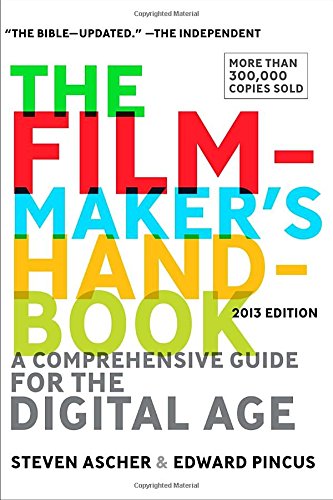
The Filmmaker’s Handbook

51IY7buC3sL

The Filmmaker’s Handbook: A Comprehensive Guide for the Digital Age (2013 Edition) by Steven Ascher and Edward Pincus

A staple of filmmaker’s bookshelves for well over a decade, the latest edition of The Filmmaker’s Handbook has revitalized all of the essential knowledge which it has become known for and brought it right up to date. If you don’t own this book already, you’re doing yourself a disservice.

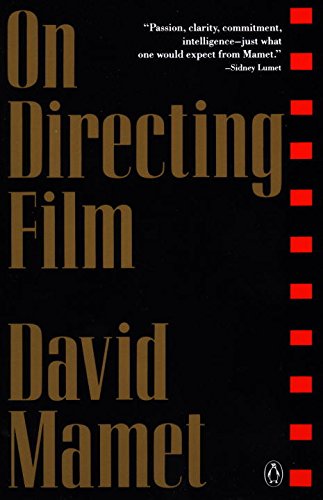
On Directing Film

4137b+O+oyL

On Directing Film (1992) by David Mamet

David Mamet is heralded for both his on-stage work (for which he has won Pulitzer and Tony prizes) and also his work on the screen, having ratcheted up a couple of Oscar nominations. As such, Mamet has more than a few nuggets of wisdom to share throughout the pages of On Directing Film, making it a mandatory read for directors… or really, anyone working in film.

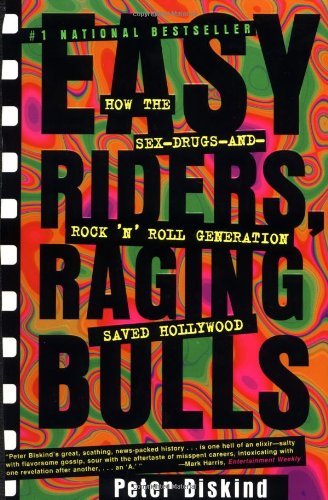
Easy Riders, Raging Bulls

518rj0P+NoL

Easy Riders, Raging Bulls: How the Sex-Drugs-and-Rock ‘N’ Roll Generation Saved Hollywood (1999) by Peter Biskind

While not a manual on filmmaking, Peter Biskind’s Easy Riders is essential reading in order to fully understand the foundations on which modern-day Hollywood was built. We could have chosen any title by this highly engaging cultural critic – Down and Dirty Pictures is also highly recommended – but Easy Riders is a great place to start.

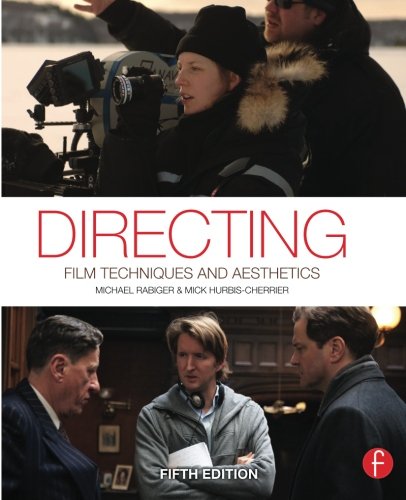
Directing: Film Techniques & Aesthetics

51imQ+UNnbL

Directing: Film Techniques & Aesthetics (Fifth Edition, 2013) by Michael Rabinger and Mick Hurbis-Cherrier

Another must-read for either those at filmmaking school or looking to make a career hop over to the director’s seat. What isn’t covered on the profession in this book could probably fit on the back of a postage stamp. From start to finish, this truly is one of the most comprehensive books ever written – and frequently updated – on the art and science of directing.

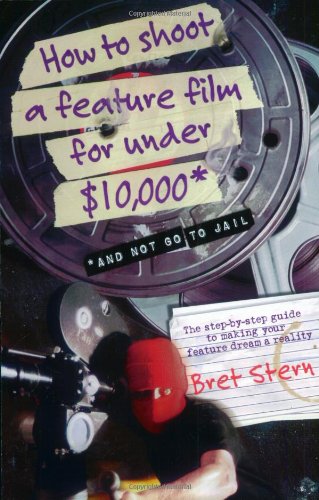
How to Shoot a Feature Film for Under $10,000

51YnpWkaHQL

How to Shoot a Feature Film for Under $10,000 (And Not Go to Jail) by Bret Stern (2002)

Coupled with one of the more authoritative, traditional tomes on filmmaking listed here, Bret Stern’s very liberating approach to the topic will have you on the road to becoming an indie maverick in no time. How To Shoot a Feature Film For Under $10,000 is guaranteed to revolutionize your approach to problem solving (and hopefully make you a much better filmmaker in the process.)

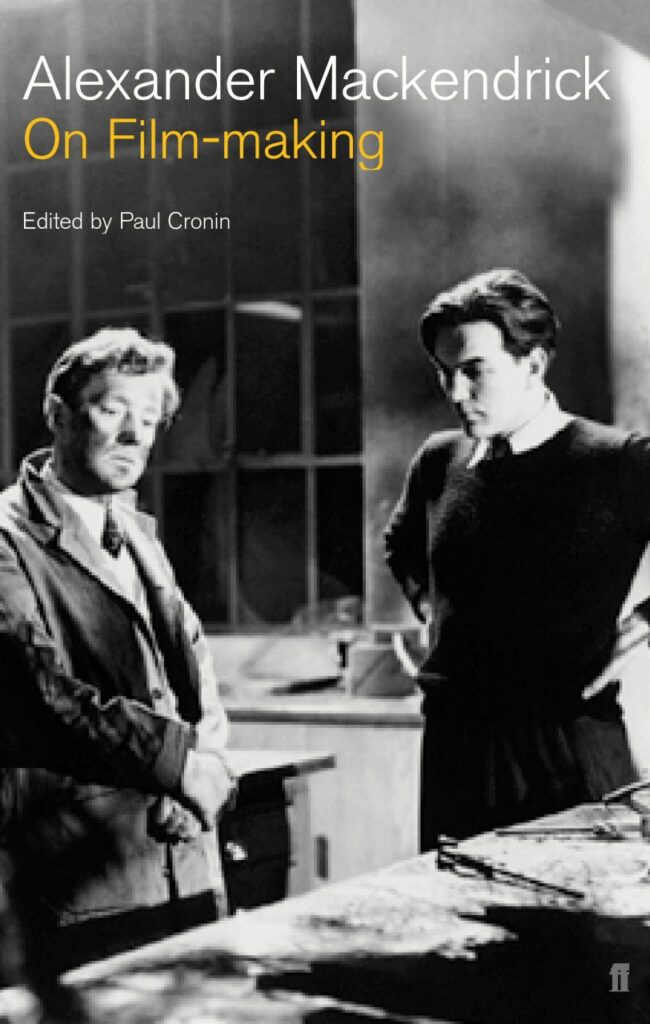
On Film-Making

71lMG8LU7uL

On Film-making: An Introduction to the Craft of the Director (2005) by Alexander Mackendrick, edited by Paul Cronin

Alexander Mackendrick’s seminal volume on the craft of filmmaking has long been an industry standard text, and one that has helped countless individuals find their own cinematographic eye and achieve success in directing. Following the great director and teacher’s death in 1993, the various handouts he would give to his students were collated by Paul Cronin and presented in this book (with a foreword from Martin Scorsese.)

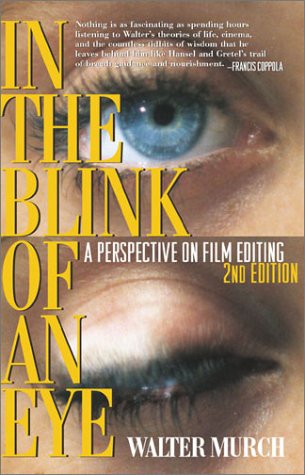
In the Blink of an Eye

51KFHHJJAZL

In the Blink of an Eye (2nd Edition, 2001) by Walter Murch

As a thought-provoking treatise on the practicalities and aesthetics of cutting film, In the Blink of an Eye is a book everyone who works in editing should read. Don’t be put off – this isn’t a technical manual on the hows of editing, but more of a meditation on the whys.

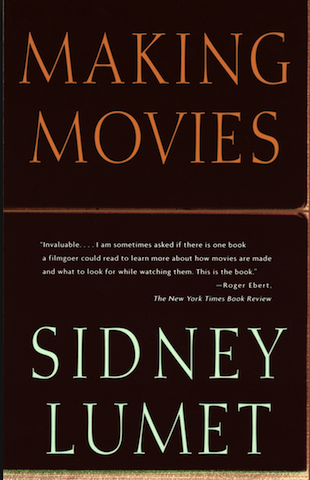
Making Movies

Making Movies by Sidney Lumet (1995)

Legendary director Sidney Lumet didn’t see filmmaking as magic, so this magician was more than happy to share his secrets. Lumet wasn’t just a visionary–he was very much a workman, and believed having a clear, firm control of his set would lead to a smooth production that would allow everyone, from crew to cast, to do their best. The five-time Oscar nominee backs up his ideas with sample shot lists and schedules and other practical templates filmmakers can use to this day.

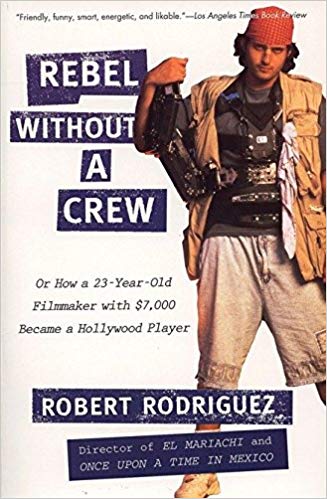
Rebel without a Crew

While Mexican director Robert Rodriguez is now more known for his blockbuster epics like Alita: Battle Angel and the Spy Kids movies, Rodriguez first rose to prominence with his independent film El Mariachi, which he shot with only $7,000. One way he saved money was by serving as his own editor, cinematographer, writer, producer, director, and film scorer–roles he still fills for many of his much higher-budgeted films to this day. His guerilla-style, ultra low-budget take on indie filmmaking is detailed in his book Rebel without a Crew, a must-read for filmmakers who don’t have millions of dollars at their disposal to make the movie of their dreams.

Rebel without a Crew by Robert Rodriguez (1995)

Read any other excellent books on filmmaking that we should be checking out and including here? Don’t hesitate to drop your suggestion in the comments below, and let’s chat books! And check out NYFA’s filmmaking programs to learn more about movie making.

5 Tips That Will Instantly Make You a Better Portrait Photographer

Want to be a better portrait photographer? You’ve come to the right place!

All of the tips below – and a heck of a lot more – are covered when you attend any good photography school, but it’s always worth refreshing ourselves of the golden rules from time to time. So, without further ado, here are our top 5 tips that will instantly make you a better portrait photographer.

1. Aperture + Focal Length + Distance From Subject = Background Blur

A subtly blurred background can make a world of difference to portrait photography, and puts the focus squarely on your subject without having a swathe of background detail stealing away attention (as well as adding depth of composition when done right.)

portrait photography tips

The main method most people rely on to achieve this is to use a large aperture for a shallow depth of field (between f2.8 and f5.6 is ideal), but it’s not the only factor to consider.

For best results, use a larger aperture combined with a long focal length lens (around 55mm to 105mm should do it.) Another thing which will come into play is how far you’re standing away from the subject, which hinges upon the focal length you’re working with and the amount of space available, but balancing all three factors is the key here.

You could always isolate the background and apply a little gaussian blur in post production, but that’s time consuming and the results often turn out looking obviously manufactured. Save yourself a lot of headache by learning how to produce the effect right there in the camera.

2. You Can Move Things

Speaking of backgrounds and reducing visual noise, you’ll sometimes find yourself in an interior setting with a lot of junk in the background (if you’re photographing someone at work for their portfolio, for instance.)

This is one of the simplest tips in the book, but one which is often forgotten: you’re allowed to pick something up and put it out of shot.

Whether it’s through trying to be polite in someone else’s environment or through fear of being too obtrusive, many photographers – even professionals – seem to get shy about clearing the shot of junk.

Don’t be. During brief period of time that you’re shooting, that place is your studio and you owe it to whoever you’re photographing to roll your sleeves up and set up a killer shot.

3. Become a Master of Light

portrait photography light

The difference between a good photographer and a great photographer is the masterful use of light sources. Some solid tips to bear in mind when you’re out on a shoot:

  • Have the subject face the lightsource and shoot with your back to it.
  • If you’re outside and the main light source is directly above you – i.e the sun – have the subject tilt their face ever so slightly upwards. You’ll be amazed at how great this looks.
  • Natural is nearly always better. Of course, it’s not possible to use solely natural light in every occasion and sometimes you might want to bring in studio lighting, but an over-reliance on artificial lighting can make your portrait photography look like stock photography.
  • As we discussed earlier in our How to Master Ocean Photography post, the “golden hour” is an indispensable tool and a gift you should accept with both hands when doing portrait photography outside; here’s a very handy tool that can help you figure out exactly when that is for your location and time of year.

4. Aperture Priority Mode

It’s not “cheating” to let your camera do the hard work for you… in fact, making the job easier is one of the main benefits of the DSLR age.

Screen Shot 2015-06-23 at 19.43.59

Turn your camera mode to aperture priority mode – look for either the ‘A’ or ‘Av’ icon on most camera mode dials – and let the camera select the shutter speed for you based on your selected aperture value. It’s a great mode to shoot in while conducting portrait photography, as nine times out of ten it’ll produce the effect we covered in Tip One of this post… and it’s easy to override if not.

And that leads us onto the what is possibly the best advice you might ever put into practice as a portrait photographer:

5. Be Creative, Not Technical

One thing you’ll always notice is that, contrary to an extremely talented and experienced portrait photographer that tends to carry no more than a few lenses around with him or her, someone just starting out nearly always has a car full of equipment.

Don’t get bogged down in the technicalities of it all. The client invariably doesn’t care about any part of your job, except for one thing: how good the photos look.

woman-735757_640

So, in a nutshell, stop fiddling with your five spare lenses and start taking more photos!

Voice Exercises for Actors

voice exercises for actors

Before Clark Gable was known as “The King of Hollywood” he spent years rigorously training his voice. His naturally high-pitched voice was lowered with better posture, body control, and breathing. Eventually, he developed the famous baritone that uttered one of Hollywood’s most iconic lines of dialogue, “Frankly my dear, I don’t give a damn.” Gable is an example of how an actor’s voice can be improved through proper training and understanding.

Basic Mechanics of Voice

People are noise making machines. We have evolved the anatomy to create meaning by vibrating air. It is helpful for an actor to understand the mechanics of their voice in order to train most effectively.

All human sound production starts with breathing. Our diaphragm muscle pulls downward and our rib cage expands outward, allowing our lungs to fill with air that can be funneled upward to vibrate our vocal chords.

Actors use their voice to project outward emotion, matching it with body movements to interpret text and present a story. Because of this, voice cannot be thought of as an isolated skill, but rather a skill that requires coordination of the entire body.

Breathing

All vocal sounds start with a breath, so good breathing habits are the base of a good voice. Think of the each breath as traveling down into your lungs with each inhale and pushed up each time you exhale. Actors should remain relaxed throughout breathing and speaking, seeking to reduce tension in the neck, shoulders, jaw, back and stomach.

Posture

The best voice is produced when body posture is erect yet relaxed. Throughout breathing and voice exercises, the spine should be straight, the head facing forward and the crown of the head parallel to the ceiling. This posture supports the body’s respiratory system so that it can function smoothly.

Warm-Up Exercises

Before beginning voice exercises, a good warm-up routine is important. A long and slow warm-up allows the muscles to activate and can reduce strain during a performance or exercise session.

Actors can start by stretching their tongue. Stick the tongue out, point up and down. Brace the tongue behind the front bottom teeth and push the center out. Massage the muscles of the jaw and face to further reduce tension. Stretch the neck lightly by leaning to the sides, front and back.

Start making sounds quietly and slowly. Stick your tongue out and pant like a dog to open up your breath. To reduce the tension in the lips and cheeks, flap your lips by blowing air and producing a “BEE” or BRR” sound.

Yawn widely to stretch the jaw. Smile while you are yawning. Make a sighing sound for as long as you can.

Other Voice Exercises

Shake out tension and connect the body to the voice with this simple exercise…

Bend at the waist and let your arms hang freely. Begin shaking your arms while making the “AH” sound. As you stand, shaking body and arms, travel through your entire vocal range until you are standing, shaking your arms at your sides. Repeat with all the vowel sounds.

Next, work out your voice by making an “MMM” sound with your lips closed. Maintain the “MMM” sound steadily for as long as you can. Next, open your mouth and release an “A.” Think of shooting the “A” across the room like an arrow. Repeat with all vowel sounds.

Finally, work on articulation with some fun tongue twisters:

  1. Whether the weather is cold, or whether the weather is hot, we’ll be together whatever the weather, whether we like it or not.
  2. Serious Sally sells seashells on the salty seashore.
  3. Red leather, yellow leather, red leather, yellow leather…

Text work is another great way to train your voice alone or before a performance. Read or recite your text aloud, focusing on your breath and voice. Change the exercise by over annunciating the words, whispering, and speaking loudly. By working with your text aloud, actors can discover new emotions and intentions while developing specific muscle memory for the text in their voice.

Regular voice exercise is paramount for actors to fully connect their voice and body. Use these exercises to get started and look for voice training classes and workshops. Any top acting school will have voice work as part of its curriculum.

Development of a natural voice will infuse any actor’s performance with truth and emotional flexibility. Train your voice to speak like you give a damn.

Clark Gable did.

Image Source 

Six Tips for Becoming An Actor

Tips for becoming an actor

In the movie A League of Their Own Tom Hanks says, “If it wasn’t hard everyone would do it.” He was speaking of becoming a professional baseball player, but his words also apply to becoming an actor. It may not be easy, but there are proven pathways that any aspiring actor can take to further their dream.

Here’s our six tips on how to succeed in becoming an actor for film.

1. Study the Craft          

A person wouldn’t perform surgery without going to medical school, so why would a person perform on film or on stage without going to acting school? Studying the craft of acting is the best way to establish a foundation. Acting schools teach techniques and provide resources in a structured curriculum that helps beginners learn the acting ropes. Most accomplished actors have at least some formal training from an acting school.

If you can’t enroll full-time in an acting school, consider attending acting workshops and classes that are offered locally. You will have the chance to learn about acting and the entertainment industry while networking with other artists.

Additionally, actors can study on their own time by reading acting books and plays to increase their knowledge. Also, watching movies with an analytical eye is a great way to learn about film acting.

2. Audition, Audition, Audition

If training is practice, then auditioning is the actor’s game. After you have a solid base of skills and a monologue or two memorized, it is time to begin seeking out acting roles. Student films and community theatre are excellent places for beginning actors to audition. Another advantage of attending an acting school is that they offer auditioning opportunities for their students in films and plays.

Auditioning for roles is a skill, and the best way to develop your auditioning skills is by auditioning. As you progress up the audition ladder, auditions will become more demanding and experience in the audition room will serve you well.

3. Build Your Resume and Take Some Headshots

Once you have landed a few acting roles, put together a resume that you can bring to future auditions. An acting resume is a quick way to show casting directors that you are an experienced actor. Have a digital copy for e-mail submissions and updated hard copies on you at all times.

Good headshots are perhaps the most important component of a good resume. Headshots make the first impression on casting and should communicate type, personality, and emotion.

Believe it or not, you can start auditioning for acting roles without a headshot and resume. Have a friend with a nice camera snap a few photos and use them to show casting directors until you can have professional portraits taken.           

4. Get an Agent When You Are Ready

When the time is right, and you have accumulated enough experience, you can begin to research talent agencies in your area in the hopes of finding an agent. Talk to your friends and other actors about their agents and decide which agency is the best fit for you.

Having an agent is a nice luxury, but for a beginner it is more important to focus energy on improving as an actor. Even so, it is helpful to have the future in mind while building your acting career and searching for an agent is an inevitable step for a professional actor.

5. Practice Daily to Stay Sharp

Unemployment is a part of life as a working actor, but dry spells between jobs are no excuse to let acting skills go dull. Classes and workshops make excellent practice grounds for actors. Also, involvement in stage productions or on film sets, even if you aren’t acting, is a chance to improve by learning from others.

Actors can practice their craft independently with voice exercises, script analysis, and monologue practice. Any activity related to performance, such as singing and practicing impressions, are other fun ways to practice your skills.

6. Market Yourself

Actors are small business owners and need to market their services to continue working. Social media outlets like Facebook and Twitter provide exposure to a wide audience. Creating your own actor web site is a great way to advertise your skills and acts as a reference for casting directors. Finally, video sites like YouTube and Vimeo are excellent self-marketing opportunities to display your acting reels and past projects.

There are no rules to follow if you want to become an actor, but the steps above make a loose guideline. Most importantly, actors are doers who understand the challenge and rise to meet it. In A League of Their Own, Tom Hanks makes another great point about becoming an actor when he says, “It’s supposed to be hard…the hard is what makes it great.”

Ready to take your acting career to the next level with a degree? Explore our Acting for Film degrees and conservatory programs to find one that will help you land the next big gig.


Image Source

How To Adapt A National News Story For A Local Audience

Adapt national story for local news

Adapting a big news story for local audiences is an increasingly popular trend in today’s news landscape, which is dominated by social media and viral videos. It helps everyone from small-market journalists who don’t have enough local news to fill a half-hour broadcast to Top 100 market journalists who want to provide a local perspective on popular national stories. This trend helps local broadcasters stay relevant in social media spheres, while giving their audience a look at the issue from within their own community.

So how do you start? How do you take a large, national news item and relate it to local people, places, or events?

Ask: How Does This News Affect People in Our Community?

First, start with the events and issues involved in the national story, and ask yourself how these might be affecting local people. For example, in the wake of the tragic June 17 church shooting in Charleston, South Carolina, people all over the country were shocked and saddened. Many were also frightened, wondering if they were safe in their own churches. Individuals in many parts of the country started to worry about race relations in their communities. Many questioned if a similar tragedy could happen right down the street.

Use Social Media as a Guide

In the global sphere of social media, this played out in many ways. News site posts about the tragedy were flooded with comments about everything from the confederate flag flying at South Carolina’s state capitol to whether or not the media should call accused shooter Dylann Roof a thug. Some argued about the definition of a hate crime, while others questioned Roof’s treatment by police when he was captured. Still others wondered how society shaped Roof and his outlook.

Relate These Concerns to the Local Community

These are all issues that could be explored in a local piece. Using this story as an example, here are some ways you could localize the issues: Do person-on-the-street interviews, asking individuals how they feel about the confederate flag. Do they think it should still fly at South Carolina’s capitol? How about in their own state? Do they see it as an expression of southern pride or a symbol of racism?

Another angle would be polling audience members about how safe they feel at their own religious establishment. Do they worry a similar tragedy could happen here? You could interview authorities at a nearby place of worship to ask if they’ve taken any security measures to protect their constituents. How does a local church balance being a welcoming place for everyone with protecting its members from violent crime?

Still other angles stem from addressing the issue of race relations in the local community. One option is to interview local civil rights leaders to get their opinion on how future racially-motivated crimes could be prevented. Find out what local people can do to improve race relations and make the community safer for everyone. Ask viewers how they would respond if someone they knew made racially-charged statements, as a friend of Roof’s alleges he did.

If Possible, Relate the National News to a Local Individual

Some of the most moving pieces of broadcast journalism focus on one person, while relating his or her struggles or triumphs to a larger issue. If at all possible, you should seek an individual who has had a similar experience to someone in the national story you want to localize. This can personalize almost any topic, from the Charleston shooting tragedy to Caitlyn Jenner’s transition to Tropical Depression Bill.

For example, if your story was about the Charleston shooting, you could interview a local person who was previously the victim of a hate crime. How did that person deal with the situation? Does he or she feel safe in the local community now? What does your subject think could be done to prevent future tragedies like the one in Charleston?

If you wanted to localize the Caitlyn Jenner story, you could interview a local transgender individual. Ask how he or she feels about the public reaction to Jenner’s transition. Did your subject experience similar reactions when coming out as transgender to friends and family? Has this person experienced discrimination in the nearby community?

If Tropical Depression Bill is causing rain in your area, interview a local business owner whose store has been affected by flooding. Does this problem mean a popular shop will be closed for a week? What effect will that have on the store owner and the business’ financial future? Ask an expert what steps businesses and individuals can take to protect themselves from flooding—sandbagging their doorsteps, investing in flood insurance, choosing a higher elevation to build a new location.

While you may expand the story to include expert opinion and even national perspectives, always remember to end by circling back to the individual you focused on at the beginning. Show the audience how the neighborhood business owner is cleaning out her store and filing an insurance claim. Remind your viewers of the national story’s close-to-home impact.

Always Remember to Relate Facts to the Local Community

Most national news stories can be localized with many different angles. No matter which one you choose to pursue, always remember to relate the facts you share—local or more general—to your viewers and the community’s concerns. Often, doing this one simple thing can encourage your audience members to consume local news coverage of a national story instead of just reading about it on a national news site.

[su_note]Pursue a future in broadcast journalism. Learn more about the School of Broadcast Journalism at the New York Film Academy. [/su_note]

Image Source

Learning From The Best: Fighting Games

Fighting Video Games

Last on our “Learning From The Best” series is a genre that only recently began making a comeback after a few years of seeing little attention. For many of us, it all started back in the late 80s and early 90s, when teenagers and adults alike flooded arcades to see who was the best at Street Fighter, The King of Fighters, and other great titles. Console gamers also enjoyed a rich library of fighting games throughout the decade, with groundbreaking (and often controversial) games like Mortal Kombat, Tekken, and Marvel vs. Capcom.

But eventually the genre started suffering a descent in popularity that would continue for nearly two decades. Plenty of great games from renowned franchises were released, but it was clear that fighting games were past their most prominent days. Fortunately, our fire for these games began growing again with the help of titles like Super Smash Bros, Street Fighter IV, and a few reboots.

The following are some ideas that we agree help make a fighting game both irresistible to play, and fun to watch:

Characters That Stand Out

It doesn’t matter how great a fighting game’s mechanics are, or how large their character roster is, if every fighter feels the same. In fact, they should not only have unique movesets, but should also look attractive and interesting. We’re not saying that one or few characters can’t play somewhat the same, like Ryu and Ken from Street Fighter, but there should be some variety or else your players will quickly get bored.

Besides the fast-paced gameplay, BlazBlue has always attracted gamers due to its colorful cast of characters. Robotic girls with floating swords, black blob-like creatures, giant red cyborgs, and the inevitable scantily-clad girl with animal ears; suffice to say, there’s no lack in diversity. But more importantly, every character not only looks different, but also plays nothing like the rest. Even if your fighting game ends up having less than 10 characters, make each one of them fun to play and you’ll have no problem gaining a crowd of fans.

A Great Story Mode

Truth be told, the average fighting game enthusiast isn’t likely to invest their time and money in a title simply for its single-player mode. This may be because this genre, which is far from the best in terms of a storytelling tool, is more about competing against other human players. However, it’s a huge plus when there’s a good story mode that lets you get familiar with characters, learn interesting backstories, and more.

A well-crafted game that ended up being a major success, both critically and commercially, Soul Calibur II had one of the better single-player modes of any fighting game at the time. It involved completing a variety of missions that offered interesting story texts as well as gold, which was used to buy new weapons and other unlockables. Watching the narrative unfold as you fight with characters wielding an arsenal of different weapons was far more enjoyable than the “fight through the roster” story modes that other games have.

A Fun, Approachable Combo System

There’s nothing more fun that putting together a string of hits that completely devastates your foe, especially when you’ve spent hours trying to perfect that very combo. At the same time, it’s easy for players to pick up a fighting game once and never touch it again if they find themselves frustrated by the fact that it only takes one failed block for their opponent to bring their health down to zero. In other words, combos should be fun to perform but not impossible to break out of.

Although there are plenty of good examples, we can’t help but go with Tatsunoko vs. Capcom. Despite being a Wii title with a roster filled with Japanese anime characters, it was praised for serving as the return of vs.-style gameplay. These titles have a mechanic called “Mega Crash” that can be performed at almost any time to break your opponent’s combo.

A Dab Of Innovation

To the average person, every fighting game appears the same. After choosing your characters (and sometimes stage), the players then press buttons either wildly or intelligently until one of the two is defeated. But to a game designer and avid fighting gamer, this is hardly the case. We know why Marvel vs Capcom, Tekken, and Guilty Gear, – or Dead or Alive and Killer Instinct – are different. To anyone considering developing their own fighting game, we recommend that you study how the little gameplay differences, not visuals or story, are what  truly what set them all apart.

Of course, there’s only one game series we can think of that was infused with enough novelty to truly feel unlike any other fighting game out there: Super Smash Bros. Now one of the most popular games of the genre, the original Smash was groundbreaking for its gameplay that involved trying to knock opponents off the stage instead of depleting a health bar. Four players, unique character playstyles, and a percent-based system are a few of the many ways Nintendo did what they do best: innovate.

[su_note]Want a career in game design? Learn more about the School of Game Design at the New York Film Academy. [/su_note]